Buy Mucolite (Ambroxol Hydrochloride 30mg) Online - Multi Mechanism Mucolytic Expectorant for Productive Cough and Bronchitis


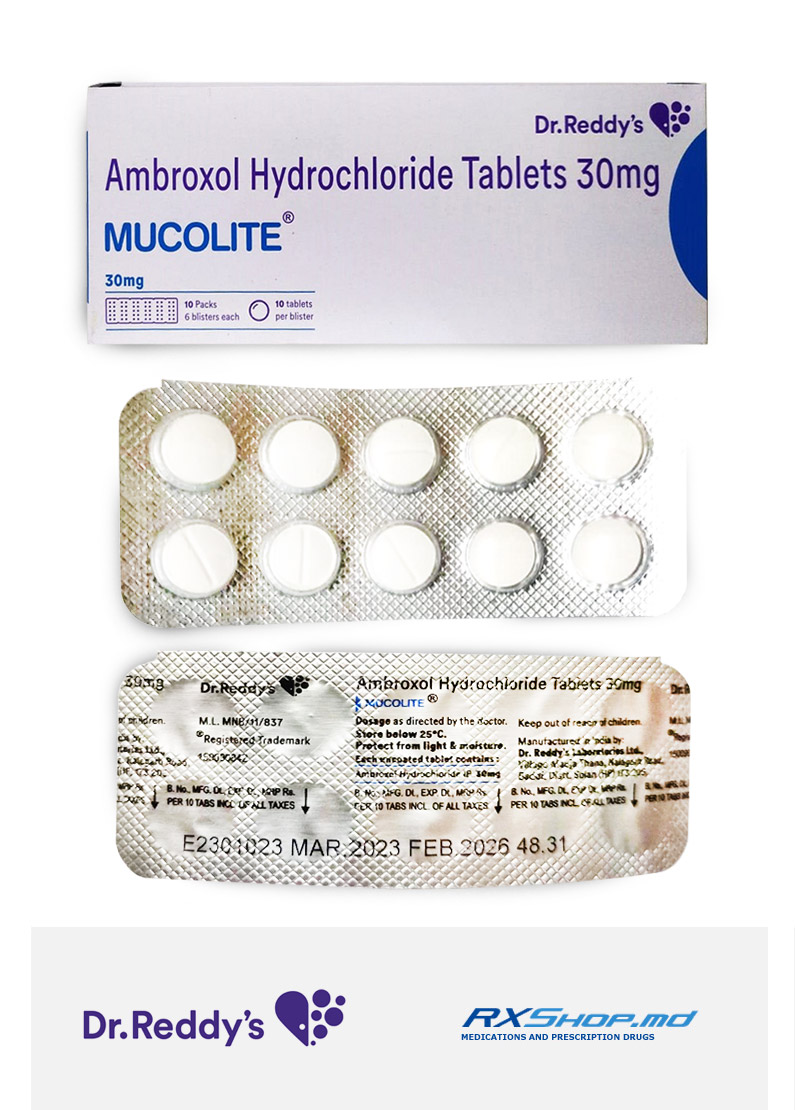
Mucolite (Ambroxol Hydrochloride 30mg) represents the foundational multi-mechanism mucolytic expectorant for respiratory conditions characterized by excessive or abnormal mucus secretion. Originally developed by Boehringer Ingelheim as Mucosolvan in Germany and available since 1978, ambroxol has become one of the most widely-used respiratory medications globally — particularly across Europe, Asia, and Latin America where it is available both by prescription and over-the-counter. Manufactured by Dr Reddy's Laboratories India as bioequivalent generic under WHO-GMP and US FDA-inspected standards, Mucolite offers proven efficacy for productive cough conditions where mucus clearance is impaired. Available as 30 mg oral tablets — the standard adult dose used 3 times daily for acute conditions or as maintenance therapy for chronic respiratory diseases.
Ambroxol hydrochloride works through multiple complementary mechanisms distinguishing it from simple expectorants. First, ambroxol demonstrates direct mucolytic action by reducing viscosity of bronchial secretions through breaking disulfide bonds in mucus glycoproteins and depolymerizing mucopolysaccharides. Second, it stimulates production of pulmonary surfactant by type II alveolar cells — enhancing normal lung function and mucus transport. Third, ambroxol improves ciliary movement of respiratory epithelium accelerating mucociliary clearance. Additional beneficial mechanisms include antioxidant action (scavenging reactive oxygen species from inflammation), anti-inflammatory effects (reducing pro-inflammatory cytokines), and local anesthetic activity (sodium channel blockade providing sore throat pain relief particularly in lozenge form). This produces enhanced mucus clearance, reduced coughing, improved respiratory symptoms, and faster recovery from respiratory conditions. Clinical response: symptom improvement within 30 minutes, peak effect at 1-3 hours, and sustained mucolytic action over the 7-12 hour dosing interval.
Mucolite serves multiple respiratory conditions with impaired mucus clearance. Primary uses include chronic bronchitis long-term maintenance therapy; acute bronchitis productive cough with mucus; chronic obstructive pulmonary disease (COPD) mucus hypersecretion management; pneumonia adjunctive mucolytic therapy; bronchial asthma when mucus plugging complicates; bronchiectasis chronic dilated bronchi with mucus accumulation; and various respiratory conditions with abnormal mucus secretion.
Mucolite typically dosed 30 mg three times daily (or 60 mg twice daily) with food. Peak at 1-3 hours, 7-12 hour half-life. Dr Reddy's India under WHO-GMP, US FDA standards.
Free prescription
Discrete packaging
Have questions?
Quality Assurance

- Acute Bronchitis: Acute bronchial inflammation with productive cough;
- Chronic Obstructive Pulmonary Disease: COPD with mucus hypersecretion component;
- Bronchial Asthma: Asthma with mucus plugging or chronic mucus symptoms;
- Pneumonia: Adjunctive mucolytic therapy for pneumonia with productive cough;
- Bronchiectasis: Chronic dilated bronchi with persistent mucus accumulation;
- Productive Cough: Wet cough with mucus responding to mucolytic action;
- Mucus Hypersecretion: Various conditions with excessive mucus production;
- Abnormal Mucus Secretion: Conditions with impaired mucus clearance;
- Thick Mucus Clearance: High-viscosity mucus responding to mucolytic breakdown;
- Respiratory Infections: Various infections with mucus accumulation;
- Post Surgical Respiratory Care: Post-operative mucus clearance support;
- Neonatal Respiratory Distress Prevention: Surfactant stimulation in premature infants;
- Sore Throat Pain Relief: Local anesthetic effect particularly with lozenge forms;
- Sinusitis: Sinus congestion with thick mucus responding to mucolytic;
- Rhinitis: Nasal congestion with mucus overproduction;
- Cystic Fibrosis Adjunct: Adjunctive mucolytic therapy for CF mucus clearance;
- Multi Mechanism Mucolytic Class: Drug class targeting mucus viscosity surfactant and inflammation;
- Foundational Respiratory Therapy: 45+ years clinical experience since 1978;
- Generic Mucolite Therapy: Bioequivalent generic alternative to brand-name Mucosolvan at substantially lower cost.
- Less Mucus Viscosity: Thick mucus becomes thinner and easier to expectorate;
- Less Persistent Coughing: Productive cough decreases as mucus is cleared effectively;
- Better Surfactant Production: Pulmonary surfactant stimulation improves alveolar function;
- Better Ciliary Movement: Enhanced mucociliary clearance mechanism;
- Better Respiratory Symptoms: Overall respiratory function improves substantially;
- Fast Symptom Relief: Symptom improvement begins within 30 minutes of dosing;
- Better Chronic Bronchitis Management: Chronic bronchitis maintenance therapy improves quality of life;
- Better Acute Bronchitis Recovery: Acute bronchitis resolves faster with mucolytic support;
- Better COPD Mucus Control: COPD patients with mucus hypersecretion improve substantially;
- Better Pneumonia Recovery: Adjunctive mucolytic therapy supports pneumonia treatment;
- Better Asthma Mucus Component: Asthma with mucus plugging improves with therapy;
- Less Sore Throat Pain: Local anesthetic effect provides throat pain relief;
- Better Antioxidant Effect: Scavenges reactive oxygen species from respiratory inflammation;
- Better Anti Inflammatory Effect: Reduced pro-inflammatory cytokines in respiratory tissue;
- Better Sputum Expectoration: Effortless clearing of respiratory secretions;
- Better Sleep Quality: Reduced nighttime coughing supports restorative sleep;
- Better Well Established Safety: 45+ years clinical experience with proven safety profile;
- Better Generic Cost: 85-95% lower cost than brand Mucosolvan makes proven therapy accessible;
- Better Quality of Life: Daily wellbeing improves as respiratory symptoms resolve.
Generic Mucolite (Ambroxol Hydrochloride 30 mg) Medication guide:
💊 Introduction to Mucolite and the Mucolytic Class
Mucolite is a 30 mg ambroxol hydrochloride tablet made by Dr Reddys Laboratories India. The active ingredient belongs to a drug class called mucolytics, or more precisely secretolytic agents, whose job is to make thick airway mucus thinner and easier to cough up. Ambroxol has been in use across Europe since 1979 and across Latin America, Russia, Asia and India since the 1980s, where it is one of the most commonly prescribed cough and bronchitis medicines.
Ambroxol was synthesised in the late 1970s as a next-generation metabolite of bromhexine, an older mucolytic. The chemistry change was small but useful: ambroxol has stronger surfactant-stimulating action and better oral bioavailability than its parent molecule. German regulators approved it in 1979, and the drug spread across Europe over the following decade. Boehringer Ingelheim marketed the original brand (Mucosolvan, also Lasolvan in some countries); dozens of generic brands including Mucolite from Dr Reddys followed when the patent expired.
💡 What Mucolite actually does for your cough
Thins the mucus already in your airways — makes a productive cough easier and less exhausting.
Raises the volume of normal thin airway fluid — helps the natural cilia move mucus upward and out.
Boosts surfactant production in the alveoli — keeps the smallest air sacs from collapsing when inflammation is heavy.
Helps antibiotic concentrations in bronchial secretions — useful when a bacterial bronchitis is being treated.
Does NOT stop a cough — it changes what you cough up, making the cough shorter and more effective.
Who gets Mucolite? Adults and children with a productive (wet, phlegmy) cough from acute bronchitis, chronic bronchitis flare-ups, pneumonia recovery, or exacerbations of chronic obstructive pulmonary disease (COPD). The drug does not treat a dry cough and does not treat a cold without mucus production. For a dry hacking cough, a cough suppressant is the right choice, not ambroxol.
Where Mucolite is not approved is the United States. Ambroxol never gained FDA approval and is not sold in US pharmacies. The reasons are historical rather than safety-based — the drug was never submitted for US review, and the US cough medicine market was dominated by guaifenesin and dextromethorphan during the critical approval window. US patients travelling to Europe or Latin America often encounter ambroxol as the standard mucolytic there.
The guide ahead walks through how ambroxol works in three different ways, why the dose matters, how long a course should last, who should avoid the drug, and when a cough that keeps producing mucus for weeks is a signal to look for something other than a simple bronchitis.
🔬 How Ambroxol Thins Mucus Three Actions In One Molecule
Ambroxol is not a one-trick drug. It changes airway mucus through three distinct actions that work together. Older patients may remember carbocisteine or acetylcysteine, both of which rely on a single mechanism — breaking disulfide bonds in mucus to lower viscosity. Ambroxol does something similar but adds two other effects, which is why its clinical result in bronchitis is often reported as broader than the older agents.
Action one is mucus thinning at the biochemical level. Airway mucus is a gel formed by long chains of mucopolysaccharides (mucin molecules) cross-linked by disulfide bonds and other weak bonds. Thick, sticky mucus has longer chains and more cross-links. Ambroxol stimulates airway cells to produce enzymes that break down these cross-links, so the mucus becomes less sticky and more easily moved by cilia and by coughing.
Action two is the serous fluid boost. Below the sticky mucus layer that lines the airways sits a watery layer called the periciliary fluid in which the microscopic cilia (hair-like projections) sit and beat. If this layer is depleted (dehydration, inflammation), the cilia drag through the mucus layer directly and cannot move it. Ambroxol stimulates the serous submucosal glands to produce more of this thin fluid, giving the cilia a working layer and restoring their ability to sweep mucus upward.
Action three is the surfactant stimulation covered in detail in the next section. Alveolar type II cells make more of the surface-active lipid that keeps the alveoli open and stabilises the smallest airways. This is the mechanism that distinguishes ambroxol from pure mucolytics such as acetylcysteine.
🔬 A fourth proposed action and why it matters
Published research since the 2000s has pointed to a fourth ambroxol action: mild anti-inflammatory and antioxidant effects at airway mucosal cells. This includes reduced release of inflammatory mediators from macrophages and a lysosomal-related anti-inflammatory effect. The clinical weight of this fourth action is modest, but it is part of why ambroxol often outperforms expectations in moderately inflamed airways and part of why it is being investigated for other conditions like Parkinson disease and Gaucher disease where the lysosomal effect may be central.
The three actions do not kick in at the same speed. The mucus-fiber-breaking action begins within hours of the first dose. The serous fluid boost takes a couple of days to build up as the submucosal glands upregulate their output. The surfactant stimulation takes several days to produce measurable change in alveolar surface tension. Clinically this is why day 3 to day 5 is when most ambroxol users notice their cough becoming more productive and less difficult, not day 1.
Note what ambroxol does not do. It does not kill bacteria. It does not block viral replication. It does not relax airway smooth muscle. It does not suppress the cough reflex. It is a secretolytic agent that changes the character of mucus; everything else about a chest infection or bronchitis needs its own treatment.
🫁 The Surfactant Boost Why Ambroxol Does More
Surfactant is the soap-like lipid film that lines the inside of each alveolus, the microscopic air sac where oxygen enters the blood. Without surfactant, the surface tension in these tiny bubbles would collapse them during exhalation. Premature infants whose lungs cannot yet make enough surfactant develop respiratory distress syndrome; it is treated with artificial surfactant delivered through an endotracheal tube.
Ambroxol enters this story because it stimulates the alveolar type II cells that make natural surfactant. The Weiss and Dorow 1997 publication was the first to document this clearly: oral ambroxol raised surfactant production in human alveolar lavage samples. In chronic bronchitis and in some pneumonia settings, the small alveoli are stressed by inflammation and the surfactant film is partially consumed; ambroxol helps restore it.
💡 Why the surfactant boost matters clinically
Keeps small airways open — reduces micro-atelectasis (tiny collapsed alveoli) during a chest infection.
Lowers energy cost of breathing — with better surfactant, the lung is more compliant and expands with less effort.
Improves mucus movement from the deep alveoli — the surfactant film carries mucus toward the central airways where cilia can take over.
Partially explains the pneumonia recovery signal — ambroxol in post-pneumonia care correlates with faster productive cough resolution.
Is the basis of the premature infant trials — prenatal ambroxol has been studied for respiratory distress prevention in some European trials, though not routine practice.
The surfactant effect sets ambroxol apart from acetylcysteine. Acetylcysteine thins mucus biochemically (through its sulfhydryl group breaking disulfide bonds) but has no direct surfactant action. For pneumonia recovery, post-operative chest care and chronic bronchitis with impaired alveolar function, this difference can matter. For simple acute bronchitis with sticky mucus in the large airways, the surfactant effect is less relevant.
Historical use of this effect: in some European centres, ambroxol was given to pregnant mothers in preterm labour as an alternative or adjunct to corticosteroids for fetal lung maturation. This use peaked in the 1980s and 1990s, mostly in Italy, Germany and Austria. Current obstetric guidelines prefer corticosteroids (betamethasone, dexamethasone) because the evidence is stronger, and ambroxol is no longer first-line in this setting. The pharmacologic basis of the historical practice was the real surfactant effect that still underpins ambroxol pharmacology today.
In adult hospital practice, ambroxol intravenous or oral is sometimes given in post-operative patients to prevent atelectasis after thoracic or upper abdominal surgery, where the combination of pain-limited breathing and anaesthesia residues often causes partial lung collapse. The surfactant stimulation and the airway secretion thinning work together.
For the typical Mucolite user with a productive cough from acute bronchitis, the surfactant action is a background benefit. You will not feel it directly. You will feel the mucus becoming easier to clear and the cough becoming less exhausting. The surfactant piece is why the drug is more than a mucus thinner.
🧬 Ambroxol vs Bromhexine The Parent Metabolite Story
Ambroxol is the pharmacologically active metabolite of bromhexine, an older mucolytic that was introduced in Germany in 1963. When you swallow bromhexine, your liver converts about 25 to 30 percent of it to ambroxol in the first hours after the dose. Clinicians eventually asked a reasonable question: why not just give the active metabolite directly and skip the conversion step?
That question produced ambroxol, approved in 1979. The two drugs are related but not interchangeable, and the differences are worth knowing if you have been prescribed one and been offered the other.
| ⚖️ Feature | Bromhexine | Ambroxol |
|---|---|---|
| Chemical relationship | Parent drug | Active metabolite of bromhexine |
| Approval year | 1963 (Germany) | 1979 (Germany) |
| Oral bioavailability | About 20-30 percent (needs conversion) | About 70-80 percent |
| Mucus thinning | Through its metabolites, including ambroxol | Direct, stronger |
| Surfactant stimulation | Weak | Clearly measurable |
| Adult dose | 8-16 mg three times daily | 30 mg three times daily (or 75 mg SR once daily) |
| Price | Lower, generic | Slightly higher, generic widely available |
| SJS warning (EU 2015) | Yes | Yes |
Clinically, ambroxol has mostly replaced bromhexine in European practice because of the higher bioavailability and the clearer surfactant action. Bromhexine persists in many countries including Russia and parts of Latin America because of long-standing prescriber familiarity and lower cost. Both drugs are reasonable choices, but ambroxol delivers its effect more directly, which matters especially in older or liver-impaired patients whose bromhexine-to-ambroxol conversion may be sluggish.
🔄 Should you switch from bromhexine to ambroxol?
Not necessarily. If bromhexine has been working well for you and you tolerate it, there is no benefit to switching. The two drugs cannot be stacked meaningfully — adding bromhexine to ambroxol just means a small extra ambroxol dose by the long route. The switch makes sense when: bromhexine seems less effective than expected (possibly a liver conversion issue), you want a simpler once-daily sustained-release option (ambroxol 75 mg SR exists; bromhexine SR is less common), or your clinician recommends the more direct molecule for other reasons.
Allergic cross-reactivity between the two drugs is possible but not inevitable. A patient with a confirmed allergy to bromhexine may still react to ambroxol because the molecules share a common structural core; a careful rechallenge under medical supervision is the standard approach, not routine assumption of cross-sensitivity.
In some markets, especially Russia and Eastern Europe, both drugs are available as syrups, drops and tablets under multiple brand names. The pharmacist can confirm which molecule the specific brand contains if the active ingredient line is unclear. The practical rule for a patient with cough and viscous mucus is simple: whichever is prescribed, take the full labelled dose for the full labelled duration, and stop if a serious skin reaction or significant GI intolerance appears.
⚖️ Ambroxol vs Acetylcysteine vs Carbocisteine
Three mucolytic drug classes are used worldwide for productive cough. Ambroxol is the one in your Mucolite tablet. The other two are acetylcysteine (NAC, sold as Fluimucil, Mucomyst and other brands) and carbocisteine (sold as Mucodyne, Mucofar). Each works slightly differently, and the clinical choice between them is not always obvious.
| 💊 Feature | Ambroxol | Acetylcysteine (NAC) | Carbocisteine |
|---|---|---|---|
| Mechanism | Three actions: mucus thinning, serous fluid boost, surfactant | Breaks disulfide bonds; antioxidant | Changes mucin ratio; reduces viscosity |
| Onset | Day 2-3 for mucus thinning; day 3-5 for full effect | Day 1-2 (fastest) | Day 2-4 |
| Adult dose | 30 mg three times daily or 75 mg SR once daily | 600 mg once daily or 200 mg three times daily | 750 mg three times daily initially, then twice daily |
| Taste | Neutral tablet | Sulfurous (effervescent) | Neutral |
| Antioxidant action | Mild | Strong (also used in paracetamol overdose) | Mild |
| Side effect profile | Low; GI mild; rare SJS warning | Low; GI; rare bronchospasm with nebulised form | Low; GI |
| Surfactant stimulation | Yes, clinically relevant | Minimal | Minimal |
| Available in US | No | Yes (prescription and OTC supplement) | No |
The three mucolytics are more alike than different for simple productive cough. Head-to-head trials have been small and have shown broadly similar effects on sputum clearance and symptom resolution. The clinical choice usually rests on:
Availability. In Europe, all three are widely available. In the US, only acetylcysteine is sold. In India, Russia, Latin America, and most of Asia, ambroxol is the dominant mucolytic.
Patient preference and tolerability. Acetylcysteine has a distinctive sulfurous taste in the effervescent form that some patients cannot stand. Ambroxol tablets are taste-neutral. Carbocisteine is neutral but requires three-times-daily dosing in standard form.
Underlying condition. For a chest infection with alveolar involvement (pneumonia with productive cough; post-operative chest care), ambroxol has the theoretical advantage of surfactant stimulation. For simple viscous airway mucus in acute bronchitis, all three work. For paracetamol overdose or antioxidant uses, only acetylcysteine. For Parkinson disease or Gaucher research, only ambroxol.
✅ When to prefer ambroxol specifically
Pneumonia recovery or post-op chest care — surfactant action is useful.
Chronic bronchitis in a current smoker or former smoker — the AMETHIST trial showed exacerbation reduction specifically with ambroxol.
Children over age 2 — ambroxol has the most paediatric experience in European practice, with syrup and drops dosing established.
Patient does not tolerate the taste of effervescent NAC — a neutral tablet matters for adherence.
Bronchitis with concurrent antibiotic — the antibiotic penetration effect covered in section 14 is specific to ambroxol.
Mixing two mucolytics is not advised. Ambroxol plus acetylcysteine has no documented additive benefit, and the GI side-effect rate rises when both are given. If one mucolytic is not helping after 5 days of use, stop it and either switch to a different class or reconsider the diagnosis — a cough that is not responding to a reasonable mucolytic may not be a simple bronchitis.
⏱️ Mucolite Pharmacokinetics and the 10-Hour Half-Life
Mucolite 30 mg is well absorbed after a swallowed tablet, and the pharmacokinetics explain the standard three-times-daily dosing of the immediate-release form. Peak plasma arrives within 1 to 3 hours after the dose, and the drug is cleared with a plasma half-life of about 10 hours. Steady state is reached in 2 to 3 days of regular dosing.
Oral bioavailability of immediate-release ambroxol is about 70 to 80 percent. Food does not meaningfully reduce absorption but can slow the peak by roughly 30 minutes, so taking the tablet with or without food is a matter of patient preference and gastric comfort.
Distribution is wide. Ambroxol concentrates in airway secretions and in lung tissue at levels 3 to 10 times higher than plasma, which is why the clinical effect in the bronchi is larger than the modest plasma level would suggest. The drug does not cross the blood-brain barrier at standard oral doses, which is why ordinary ambroxol dosing has no central nervous system effects. The very high doses studied in Parkinson disease research (1,000-1,260 mg per day) do produce measurable brain penetration; this is covered in section 16.
Metabolism is predominantly hepatic. The liver conjugates ambroxol into inactive metabolites that are then excreted by the kidneys. Phase 1 oxidation by CYP3A4 is a minor pathway. The main metabolic step is phase 2 glucuronidation, which is reliable and not affected by most common drugs.
Elimination is renal. About 90 percent of a dose leaves the body in urine as inactive metabolites within 72 hours. Only about 5 percent appears as unchanged ambroxol. In severe kidney disease (eGFR under 30), the inactive metabolites can accumulate; the clinical response is similar in these patients, but some clinicians lower the dose to 30 mg twice daily or 30 mg once daily to avoid any accumulation concern.
🧪 Pharmacokinetic groups worth noting
Older adults — clearance drops modestly; standard dose usually fine, but 30 mg twice daily is reasonable in frail elderly.
Severe liver disease — half-life extends; use 30 mg twice daily or 30 mg once daily; monitor for excessive sedation signals (rare).
Severe kidney disease (eGFR under 30) — metabolite accumulation; use 30 mg twice daily or 30 mg once daily.
Children — weight-based dosing; see section 18 for exact paediatric schedule.
Pregnancy — placenta is crossed; see section 23.
The 10-hour half-life is why Mucolite 30 mg is dosed three times a day at roughly 8-hour intervals (breakfast, lunch, dinner work well). The alternative is the 75 mg sustained-release form, which gives a comparable total daily exposure in a single morning tablet — useful for adherence but not stocked at every pharmacy and not sold on this site.
Clinically, the pharmacokinetics explain two useful rules. First, if you take only the morning dose and skip the rest of the day, the plasma level drops to about half by 10 PM and most of the clinical effect fades — the three-times-daily schedule exists for a reason. Second, if you miss a dose and remember within 3 hours, take it; after 3 hours, skip it and take the next one on schedule — doubling up is unnecessary and raises GI side effects.
📏 Mucolite 30 mg Three Times Daily Adult Dose
The standard adult oral dose of ambroxol in immediate-release form is 30 mg three times daily, which matches one Mucolite tablet taken with breakfast, lunch and dinner. This is the dose established in the original European registration trials and still carried in modern labelling across EU, Russian, Indian and Latin American monographs.
The clinical ceiling for most adults is 90 mg per day (three 30 mg doses). Studies at higher daily doses (120-180 mg) show no reliably better mucus thinning but do show more GI side effects. The one exception is the neurology research dosing for Parkinson disease and Gaucher disease, which uses several hundred milligrams per day under specialist supervision; this is a different clinical setting and is covered in section 16.
| 💊 Daily dose | Typical scenario | Expected effect |
|---|---|---|
| 30 mg once daily | Mild cough, residual mucus after a cold | Light effect; usually not enough for active bronchitis |
| 30 mg twice daily | Reduced dose for elderly, hepatic or renal impairment | Partial effect; reasonable in sensitive patients |
| 30 mg three times daily | Standard adult dose for acute or chronic bronchitis | Full therapeutic effect expected |
| Beyond 90 mg daily | Not standard; neurology research doses only | GI side effects without extra mucolytic benefit |
💡 Day-by-day what to expect on Mucolite 30 mg three times daily
Day 1-2: you may notice no change yet, or a very slight increase in cough productivity. The drug is building up in airway secretions.
Day 3-4: the mucus becomes clearly thinner and easier to clear. Cough feels more productive, often less exhausting.
Day 5-7: clinical peak. If the underlying bronchitis is resolving, the cough starts to settle.
Day 7-10: standard treatment course for acute bronchitis. Most patients stop here.
Day 10-14: extension for slower-resolving cases, usually acceptable.
Beyond 14 days: treatment extension requires a clinician review; a cough still productive at 2 weeks deserves a diagnostic look.
The usual duration of treatment is 5 to 10 days for acute bronchitis, longer in chronic bronchitis settings. For acute cough during a viral or bacterial bronchitis, 7 days is standard. For slow-to-resolve chest infections with lingering productive cough, 10 to 14 days is reasonable. For chronic bronchitis management, long-term use is possible under clinician supervision, especially during the autumn-winter period when exacerbations are more common.
Missed doses are a practical question with three-times-daily dosing. If you remember within 3 hours of the scheduled time, take the dose. If more than 3 hours have passed and the next scheduled dose is less than 5 hours away, skip and take the next one on time. Never double up to catch up; the extra dose only raises nausea without extra benefit.
Hydration matters more with ambroxol than with most drugs. The mucolytic effect depends partly on the body providing enough thin airway fluid for ciliary clearance. Drink 1.5-2 litres of water a day across treatment; more if you have a fever. Hot drinks (tea, broth) and steam from a hot shower are useful supplementary measures. Insufficient hydration during ambroxol therapy means the drug is doing its job but your body cannot complete the clearance.
Lying flat is suboptimal for mucolytic action. If you are confined to bed during a bad chest infection, sit propped up on pillows at a 30-45 degree angle. Mucus clears better against gravity than with it, and sitting up by day plus the semi-upright position by night meaningfully improves what Mucolite can do.
📅 Ambroxol 75 mg Sustained Release Once Daily Option
The 75 mg sustained-release ambroxol capsule exists as a once-daily alternative to the standard 30 mg three-times-daily tablet. It is widely available in Germany, Italy, Spain and other European markets, and in some Latin American and Asian pharmacies. It is not currently sold on this site; this section describes it so you know the option exists if you encounter it in another market.
The pharmacokinetic logic: 75 mg of ambroxol released slowly over 10-14 hours produces an average plasma level similar to 30 mg every 8 hours. The peak is lower and the trough is higher, so the drug sits in a steadier therapeutic range throughout the day. Clinically, the mucolytic effect is similar; the main gain is adherence.
| ⚖️ Comparison | Mucolite 30 mg IR tablet | Ambroxol 75 mg SR capsule |
|---|---|---|
| Daily schedule | 3 tablets per day (breakfast, lunch, dinner) | 1 capsule per day (morning) |
| Total daily ambroxol | 90 mg | 75 mg |
| Plasma peak profile | Three peaks across the day | One lower, broader peak |
| Clinical effect | Standard | Similar; perhaps slightly smoother |
| Adherence advantage | Three doses to remember | One dose to remember |
| Suitable for splitting | Yes, if scored | No, must be swallowed whole |
| Price per month | Lower | Slightly higher where available |
Who benefits most from the 75 mg SR option?
Patients on chronic bronchitis maintenance. Taking a drug three times a day for weeks or months tests adherence. A once-daily capsule often wins the long-term game even if the per-dose effect is similar.
Older adults with memory issues. One dose with morning coffee is easier to track than three doses across the day. A pill organiser with one slot per day is simpler than one with three slots.
Shift workers. Three-times-daily dosing is awkward on a 12-hour hospital or shop shift. A single morning (or pre-shift) dose fits better.
Combination with antibiotic therapy. If the patient is already on a once-daily antibiotic (azithromycin, doxycycline), adding a once-daily ambroxol feels like one capsule rather than four schedules.
⚠️ Why the SR capsule cannot be crushed or split
The sustained-release matrix inside a 75 mg capsule is designed to release ambroxol gradually over 10-14 hours. Crushing or splitting the capsule destroys the matrix and dumps the full 75 mg into the stomach at once. The result is a higher plasma peak with more GI side effects and a shorter duration of action. Patients who cannot swallow capsules should use the 30 mg immediate-release tablet (which is scored and can be split), or the paediatric syrup form (which contains an immediate-release liquid).
What the 75 mg SR capsule does not do differently from the 30 mg IR tablet:
- It does not thin mucus faster.
- It does not reach a higher clinical effect ceiling.
- It does not cross the blood-brain barrier at a different rate (both routes do not reach brain levels at standard doses).
- It does not have a different side-effect profile at steady state.
So the choice is purely practical: do you want three tablets a day or one capsule a day? If adherence is a concern, the SR is worth asking about if you can obtain it. For most patients taking a short 7-day course for acute bronchitis, the 30 mg IR tablet from Mucolite does the full job without complication.
🧴 Mucolite Other Forms Syrup Drops and Injection
Ambroxol is sold worldwide in several liquid formats besides the Mucolite 30 mg tablet. The syrup is the most common paediatric form: 15 mg per 5 mL for children and 30 mg per 5 mL for adults. The oral drops (7.5 mg per mL) are a concentrated liquid for infants and small children, where volume matters. There are also effervescent granules, injectable solution for hospital use, and throat lozenges containing 20 mg ambroxol for sore throat.
None of these forms are sold on this site; Mucolite comes as the 30 mg oral tablet. This section covers them because patients travelling or shopping at a bricks-and-mortar pharmacy may encounter them under names like Mucosolvan, Lasolvan, Mucobron, Mukoltin and dozens of generic equivalents.
| 📦 Form | Typical strength | Who uses it |
|---|---|---|
| 30 mg tablet (Mucolite) | 30 mg per tablet | Adults, older adolescents |
| 75 mg SR capsule | 75 mg sustained release | Adults needing once-daily dosing |
| Adult syrup | 30 mg per 5 mL | Adults who cannot swallow tablets |
| Children syrup | 15 mg per 5 mL | Children 2-12 years |
| Oral drops | 7.5 mg per mL | Infants and small children; precise weight dosing |
| Effervescent granules | 30 or 60 mg per sachet | Adults who prefer dissolved doses |
| Throat lozenges | 20 mg per lozenge | Local sore throat relief; see section 15 |
| Injectable | 15 mg per 2 mL ampoule | Hospital use; post-op atelectasis, severe secretions |
The syrups are water-based solutions, often sweetened with sorbitol or sucrose and flavoured with raspberry, orange or similar flavours for paediatric acceptability. They are stable at room temperature for about 2 to 3 years unopened and about 6 weeks after opening. A tablespoon or oral syringe measures the dose; a kitchen teaspoon is unreliable because its actual volume varies between 2.5 and 7 mL.
The oral drops (7.5 mg per mL) are the paediatric workhorse in Europe and Russia. One millilitre contains 7.5 mg of ambroxol. For an infant aged 6-12 months, the typical dose is 0.5 mL (3.75 mg) twice daily. The drops have the advantage of precise weight-based dosing and small volumes, which matters when a toddler has to swallow medicine between coughs.
💡 Choosing between syrup and tablets for an adult
Tablets are simpler — smaller to carry, no spoon or syringe needed, no risk of spilling.
Syrup is useful if you cannot swallow tablets — dental work, severe sore throat, swallowing problems.
Syrup has sugar — a diabetic patient should choose the sugar-free or sorbitol-only syrup if available, or just use tablets.
Syrup clinical effect is identical — same drug, different vehicle; both reach the same airway levels.
Dose equivalence — one Mucolite 30 mg tablet equals 10 mL of adult 30 mg per 5 mL syrup, or 20 mL of child 15 mg per 5 mL syrup.
Measuring syrup correctly matters more than most patients realise. An oral syringe (sold with the syrup or at any pharmacy for a few cents) draws up a precise volume. A dosing cup from the bottle box is also accurate; a kitchen teaspoon is not. For a 5 mL dose, use the 5 mL mark on the oral syringe, not a soup spoon or a tea spoon.
Patients who stock the syrup for intermittent use through the autumn-winter season should keep it in the fridge after opening (not frozen) and discard any remaining liquid 6 weeks after the first use. Opened syrups collect bacteria over time regardless of preservatives, and a 3-month-old opened syrup is not recommended for use.
The injectable form is strictly hospital or clinic use. It is given intravenously as 15 mg two to three times a day for post-operative atelectasis prevention or for severe secretion management when oral dosing is not possible (intubated patients, severely nauseated patients). Patients should not expect ambroxol injection in standard outpatient settings; the oral forms achieve equivalent airway levels.
🐸 Mucolite in Acute Bronchitis From a Viral Infection
Acute bronchitis is inflammation of the large airways (bronchi) that lasts under 3 weeks and typically follows a viral upper respiratory infection. Cough is the dominant symptom. The cough is often non-productive for the first 2-3 days and then becomes productive as the airway cells start producing mucus in response to the inflammation. Mucolite enters the picture at the productive cough stage, not before.
Who gets acute bronchitis? Everyone, repeatedly. It is one of the most common reasons for a primary care visit in adults worldwide. Most cases are viral (rhinovirus, influenza, coronavirus, respiratory syncytial virus) and resolve on their own in 7-14 days whether or not treatment is given. Antibiotics are usually not needed because the cause is viral; the exception is bacterial superinfection, which produces persistent fever, worsening sputum colour and systemic symptoms past day 7.
How Mucolite fits into this timeline:
Day 1-3 (dry cough): Mucolite is not useful yet because there is no mucus to thin. A warm fluid, honey (adults; not for infants under 1 year), rest and symptom relief for sore throat and headache are the right measures. Taking Mucolite from day 1 of a cold does not shorten the illness.
Day 3-5 (wet cough begins): as the cough becomes productive, start Mucolite 30 mg three times daily. By day 5-7 the mucus is clearly thinner, cough is more productive and more satisfying, and the mucus starts to decrease in volume as the airway inflammation settles.
Day 7-10 (clinical improvement): cough frequency drops. Mucus becomes clearer. Continue Mucolite for the full 7-day course unless clearly improved earlier.
Day 10-14 (resolution): some lingering cough is normal in post-viral bronchitis and can last up to 3 weeks. If the cough is still productive at day 14 and not improving, see a clinician; the diagnosis may need revisiting.
⚠️ When acute bronchitis is actually something else
- Fever over 38.5 degrees C after day 5 — suggests bacterial component; see clinician
- Shortness of breath at rest — suggests pneumonia or asthma; see clinician
- Chest pain with cough — may be pneumonia or pleurisy; see clinician
- Blood in sputum — needs clinician evaluation same day
- Cough lasting more than 3 weeks — evaluate for asthma, GERD, post-nasal drip or ACE inhibitor side effect
- Night sweats or weight loss — evaluate for tuberculosis in appropriate epidemiological contexts
- Current smoker over 40 with new persistent cough — chest imaging to rule out lung cancer
Antibiotics in acute bronchitis are a specific question. The majority of acute bronchitis cases are viral and antibiotic-free care is standard. Antibiotics are considered when the cough persists beyond 7 days with purulent (yellow-green) sputum and systemic illness, when the patient has COPD and the exacerbation looks bacterial, when the patient is immunosuppressed, or when post-influenza bacterial superinfection is suspected. In these cases, ambroxol is often paired with the antibiotic because of the penetration-enhancer effect covered in section 14.
Smoking during acute bronchitis is a common question. The honest answer is that stopping smoking during the illness significantly speeds recovery. The ciliary damage from active smoking cancels much of the mucolytic benefit. If stopping entirely is not possible, cutting back meaningfully during the illness and avoiding smoking indoors around sick family members helps.
Mucolite plus other symptomatic measures — warm fluids, honey and lemon tea, humidified air, saline nasal rinse, rest — combines well. The guide avoids combination cough-and-cold products containing a cough suppressant (dextromethorphan, codeine); the interaction with mucolytics is covered in section 22.
🌫️ Mucolite in Chronic Bronchitis and COPD Flares
Chronic bronchitis is one of the two main phenotypes of chronic obstructive pulmonary disease (COPD), defined clinically as a cough productive of mucus on most days for at least 3 months in each of 2 consecutive years. The underlying problem is permanent inflammation and remodelling of the airways from decades of inhaled irritant exposure, usually tobacco smoke. Mucolite does not reverse the underlying damage but reduces exacerbations and makes daily mucus clearance easier.
Two large pieces of evidence support ambroxol in chronic bronchitis:
The AMETHIST trial (Malerba et al., 2004) randomized 242 patients with chronic bronchitis to ambroxol 75 mg SR daily or placebo for 12 months. Patients on ambroxol had roughly 20 percent fewer acute exacerbations, fewer days with worsened symptoms, and a measurable improvement in quality-of-life scores. The reduction was most pronounced in the autumn-winter period when exacerbations peak.
The meta-analytic evidence on mucolytics in COPD, including ambroxol, acetylcysteine and carbocisteine, shows a consistent 15 to 25 percent reduction in exacerbations in patients with chronic bronchitis phenotype who are not already on inhaled corticosteroids. The effect is smaller in patients already receiving inhaled steroids, suggesting the two therapies partially overlap in their anti-inflammatory effect.
💬 Expert view
Prof. Mario Cazzola, University of Rome Tor Vergata, respiratory pharmacology review author: Ambroxol has a defined but narrow place in COPD maintenance. The patient who gains most is the chronic bronchitis phenotype — productive cough on most days, two or more exacerbations in the past year, not on inhaled corticosteroids or ineligible for them. For this patient, ambroxol 75 mg sustained release daily or 30 mg three times daily year-round can reduce exacerbation frequency by about 20 percent. For emphysema-dominant COPD without chronic mucus production, ambroxol does not help, and the clinical signal is absent.
The practical approach to Mucolite in chronic bronchitis:
Daily dosing year-round is the most studied regimen in chronic bronchitis. Patients tolerate it well, GI side effects are mild, and the exacerbation reduction accumulates over months.
Seasonal dosing (October through March in temperate climates) is a reasonable alternative in patients who want to minimise drug exposure. The exacerbation protection is centred on the colder months anyway.
Flare-time only dosing is less effective. Starting Mucolite when you are already in an exacerbation delays the full benefit by 3-5 days (the time to steady state), and the exacerbation has often resolved on its own or progressed by then.
In an acute exacerbation of chronic bronchitis, Mucolite 30 mg three times daily is continued or started alongside the acute treatment. The standard exacerbation package includes:
- Short-acting bronchodilators (albuterol, with or without ipratropium) for airway opening
- Oral corticosteroid (prednisone 40 mg daily for 5 days is the current standard) when symptoms are moderate-to-severe
- Antibiotic if sputum has turned purulent or increased in volume, usually amoxicillin-clavulanate, azithromycin or doxycycline for 5-7 days
- Mucolytic such as Mucolite, continuing through the exacerbation and beyond
- Supplemental oxygen if oxygen saturation drops below 88-92 percent
🔄 When Mucolite is working during an exacerbation
Day 1-2 after start: no visible change; the drug is building up in airway secretions.
Day 3-5: mucus becomes less sticky; cough feels more productive; the volume of expectorated mucus may briefly increase (this is good — the airways are clearing).
Day 5-7: mucus volume decreases; cough frequency decreases; general symptoms improve alongside the other exacerbation treatments.
Day 7-10: clinical peak; continue through the end of the exacerbation and into the maintenance phase.
If no improvement by day 7: re-evaluate; the exacerbation may need additional antibiotic coverage or hospital admission for IV therapy.
Patients with chronic bronchitis who smoke should know that stopping smoking is the single intervention that changes the long-term slope of lung function decline. Ambroxol reduces exacerbations; stopping smoking reduces the rate of underlying lung damage. Both matter; one does not replace the other. Smoking cessation counselling and nicotine replacement or bupropion/varenicline are reasonable to combine with Mucolite.
🫁 Mucolite in Pneumonia and the Productive Cough
Community-acquired pneumonia is an infection of the lung parenchyma — the alveoli and surrounding tissue — usually caused by Streptococcus pneumoniae, Haemophilus influenzae, Mycoplasma pneumoniae or respiratory viruses. The productive cough that accompanies pneumonia is the lung expelling inflammatory debris and infected secretions. Mucolite is a reasonable addition to standard pneumonia treatment to help with this clearance process.
What ambroxol brings to pneumonia care:
Thinner secretions are easier to cough up, which helps clear infected material from the lower airways and alveoli where the standard pneumonia infection sits.
Surfactant stimulation (section 3) helps keep small airways open in the inflamed region. Pneumonia inflammation damages local surfactant; replenishing it is theoretically useful.
Antibiotic penetration enhancement (section 14) is relevant because pneumonia is treated with antibiotics. Co-administering ambroxol raises the concentration of amoxicillin, erythromycin, cefuroxime and some other antibiotics in bronchial secretions by about 20-40 percent.
Earlier productive-cough resolution (Zhang 2008 in Scand J Infect Dis) was documented in a trial comparing ambroxol plus antibiotic versus antibiotic alone in community-acquired pneumonia; the ambroxol group had faster cough resolution and faster subjective recovery.
| Pneumonia situation | Mucolite approach |
|---|---|
| Community-acquired pneumonia with productive cough | 30 mg three times daily for 7-10 days alongside antibiotics |
| Walking pneumonia (Mycoplasma) with dry cough | Less useful; mucus is minimal, treat the infection |
| Aspiration pneumonia in an older patient | IV or oral ambroxol as part of hospital care |
| Post-pneumonia residual cough (weeks later) | Short course of 7-10 days if mucus is still produced |
| COVID-19 pneumonia with productive cough | Reasonable as symptom relief; not disease-modifying |
| Severe pneumonia requiring ICU | IV ambroxol used in some European ICUs; part of hospital care |
Standard pneumonia treatment is the main thing. Mucolite does not replace any of it. The standard package:
- Antibiotic targeted at the likely organism (amoxicillin for most community-acquired; macrolide added for atypical coverage; respiratory fluoroquinolone in some cases)
- Rest and hydration
- Antipyretic for fever (paracetamol or ibuprofen)
- Oxygen supplementation if saturation drops below 92-94 percent
- Chest physiotherapy in some settings
- Mucolytic such as Mucolite for productive cough
🚨 Pneumonia warning signs that need urgent reassessment
- Oxygen saturation under 92 percent on finger probe
- Respiratory rate over 24 per minute at rest
- Confusion or new disorientation
- Blood pressure drop (systolic under 90)
- Chest pain with breathing suggesting empyema or infarct
- No improvement by day 3 of antibiotic
- Progressive breathlessness at rest
Any of these are reasons for same-day re-evaluation and possible hospital admission.
Post-pneumonia residual cough is a specific use case. Many patients recover from pneumonia but keep a productive cough for 2-6 weeks afterward as the airways slowly clear and heal. A 7-10 day Mucolite course during this phase can shorten the duration of productive cough and make daily life easier. If the residual cough persists past 6 weeks without improvement, a chest X-ray and clinician review are indicated.
Hospitalized patients receiving IV ambroxol typically transition to oral ambroxol (such as Mucolite 30 mg three times daily) on discharge and continue for a week or two post-discharge. The combination of antibiotic finish, continued mucolytic, and gradual return to normal activity usually completes the recovery over 2-4 weeks.
🌀 Mucolite in Bronchiectasis Long-Term Daily Use
Bronchiectasis is permanent widening of the bronchi caused by chronic inflammation from recurrent infections, cystic fibrosis, severe childhood pneumonias, or less common causes like primary ciliary dyskinesia. The widened airways produce large amounts of thick, infected mucus that pools in the dilated passages and is harder to clear than normal secretions. Daily mucus clearance is the central problem.
Mucolite has a role in long-term bronchiectasis management as an adjunct to airway clearance physiotherapy (chest percussion, postural drainage, oscillating positive-expiratory-pressure devices like the Flutter or Acapella) and inhaled therapies. The drug does not replace physiotherapy; it makes physiotherapy work better by thinning the mucus the techniques are trying to move.
💡 Daily routine with Mucolite in bronchiectasis
Morning: 30 mg Mucolite with breakfast; then 15-30 minutes of airway clearance physiotherapy; then light activity.
Midday: 30 mg Mucolite with lunch; hydration (water, warm drinks); walking or gentle exercise aids clearance.
Evening: 30 mg Mucolite with dinner; second physiotherapy session before bed.
Night: head of bed elevated 15-20 degrees to reduce mucus pooling.
Monthly: clinician check for exacerbations; sputum culture if colour or volume changes.
Annually: pulmonary function test, chest imaging as indicated; review of long-term plan.
Alongside Mucolite, modern bronchiectasis care typically includes:
Inhaled bronchodilators if there is bronchoconstriction — usually a long-acting beta-agonist or a long-acting muscarinic antagonist taken once or twice daily.
Inhaled corticosteroid in a subset of patients with asthmatic overlap or eosinophilic airway inflammation.
Hypertonic saline nebulization (3-7 percent saline) once or twice daily — this draws water into airway mucus and complements the ambroxol effect.
Macrolide antibiotic three times a week (azithromycin 500 mg Monday-Wednesday-Friday is a common regimen) in patients with frequent exacerbations — this has anti-inflammatory as well as antibacterial effects.
Antibiotic for acute exacerbations based on sputum culture results, usually a 10-14 day course covering the colonising organism (often Pseudomonas aeruginosa, Haemophilus influenzae or Staphylococcus aureus in bronchiectasis patients).
Vaccinations: annual influenza, pneumococcal (both PCV13/15 and PPSV23), updated COVID.
| Bronchiectasis severity | Daily mucus volume | Mucolite dose | Duration |
|---|---|---|---|
| Mild | Under 10 mL | 30 mg twice daily | Seasonal (autumn-winter) |
| Moderate | 10-30 mL | 30 mg three times daily | Year-round |
| Severe | Over 30 mL | 30 mg three times daily year-round | Long-term with physiotherapy |
Long-term safety at years of continuous use is reasonably well established. European chronic bronchitis and bronchiectasis patients have been on ambroxol for 5+ years in observational studies without new safety signals. The main issues reported are mild GI complaints and the rare Stevens-Johnson warning covered in section 21.
Cystic fibrosis is a special case of bronchiectasis caused by a genetic defect in chloride transport. These patients have thick dehydrated mucus by mechanism, not by inflammation alone. Ambroxol has been used in cystic fibrosis bronchitis in European centres for decades, often alongside dornase alfa (recombinant DNase that cuts the DNA in CF mucus) and inhaled hypertonic saline. Modern CF care now focuses on CFTR modulator drugs (elexacaftor-tezacaftor-ivacaftor), which address the underlying channel defect; ambroxol remains a symptomatic option alongside these newer agents.
Patients on long-term Mucolite should have a clinician review every 6-12 months. The review covers symptom pattern, exacerbation frequency, sputum culture if indicated, lung function trend, and side-effect check. Many patients run on the drug for years without issue once the right dose and routine are established.
💉 Ambroxol as Antibiotic Penetration Enhancer
One of the less-known effects of ambroxol is that it raises the concentration of several antibiotics in bronchial secretions. This matters because the antibiotic has to reach the site of infection to work, and for a chest infection, the airway mucus and bronchial wall are that site. If more antibiotic reaches the airway for the same oral dose, the clinical response can be better and the course of treatment shorter.
The Fraschini 1988 study was the clearest early demonstration of this effect. Patients with respiratory infections who received amoxicillin alone versus amoxicillin plus ambroxol had their bronchial secretion concentrations measured. The ambroxol group had amoxicillin levels in bronchial secretions that were 23 to 42 percent higher, with no difference in the systemic blood level. The ambroxol was changing where the antibiotic ended up, not how much there was.
Which antibiotics have shown this effect in published trials?
Amoxicillin, ampicillin, amoxicillin-clavulanate (penicillin class).
Erythromycin, clarithromycin, azithromycin (macrolide class).
Cefuroxime, cefotaxime, ceftriaxone (cephalosporin class).
Doxycycline, tetracycline (tetracycline class).
💬 Expert view
Prof. Felix Herth, Thoraxklinik Heidelberg, head of pneumology in one of the largest European lung centres: The antibiotic penetration effect of ambroxol is documented but modest. It is not a reason to prescribe ambroxol in a patient without productive cough; the primary indication for ambroxol remains the mucolytic action. However, when a patient has bronchitis or pneumonia with productive sputum and is receiving one of the amoxicillin-class or macrolide antibiotics, co-administering ambroxol supports the antibiotic treatment through both mechanisms — thinner mucus for clearance and higher antibiotic levels where the infection sits. The combination is standard practice in German and Italian respiratory medicine.
How does ambroxol do this? Two mechanisms are proposed. First, ambroxol stimulates serous submucosal glands to produce more airway fluid, and because many antibiotics are water-soluble, the extra fluid carries more antibiotic from blood plasma into the bronchial lumen. Second, ambroxol may alter the properties of the bronchial epithelial cells themselves, making the airway wall more permeable to drugs crossing from blood to secretions.
What this means for a patient on antibiotics for a chest infection:
- If your clinician has prescribed Mucolite alongside an antibiotic, the pairing has a specific rationale. Take both as directed.
- Do not skip the mucolytic to "simplify" the regimen when you have a productive bacterial bronchitis or pneumonia; you may be reducing the antibiotic effectiveness.
- Ambroxol does not need to be timed exactly with the antibiotic; the effect works at steady state in the airway tissue.
- The combination does not shorten the standard antibiotic course; take the full prescribed days (typically 5-10) even if you feel better by day 3.
Not every antibiotic sees a penetration boost. Fluoroquinolones (ciprofloxacin, levofloxacin) have already high bronchial penetration without ambroxol; co-administration does not change the clinical result much. Aminoglycosides (gentamicin, tobramycin) are not typically given orally and are rarely paired with ambroxol in standard practice.
The effect is also used clinically in chronic lung infections where sputum cultures grow a specific organism and the patient is on long-term suppressive antibiotics (azithromycin three times weekly in bronchiectasis is a common pattern). Ambroxol in parallel supports both the clearance and the antibiotic concentration at the infection site.
🍬 Ambroxol Lozenges for Sore Throat Local Anaesthesia
Ambroxol has a surprising second life as a sore-throat remedy because it blocks sodium channels in sensory nerve endings, producing a mild local anaesthetic effect on the throat mucosa. This was discovered in the 2000s and led to a specific product form: the 20 mg ambroxol lozenge, sold in Europe over the counter under brands like Mucoangin, Lysopaine Ambroxol and similar.
These lozenges are not sold on this site; Mucolite is the 30 mg oral tablet, meant to be swallowed. This section is here because many European patients know ambroxol primarily as a sore-throat lozenge rather than as a cough tablet, and because the mechanism of local anaesthesia explains an interesting aspect of ambroxol pharmacology.
How the lozenge works:
- The ambroxol dissolves slowly in saliva over 20-30 minutes while the lozenge is held in the mouth.
- The high local concentration of ambroxol on the throat mucosa blocks voltage-gated sodium channels on sensory nerve endings, similar to how lidocaine and benzocaine work.
- The result is reduced sensation of soreness, scratchiness and irritation for about 2-3 hours.
- The effect is local; systemic absorption from a 20 mg lozenge is small and the usual mucolytic dose is not reached.
| 🍬 Comparison | Ambroxol 20 mg lozenge | Benzocaine throat spray | Lidocaine lozenge |
|---|---|---|---|
| Local anaesthesia | Mild to moderate | Strong, fast | Strong |
| Onset | 15-30 min | 1-2 min | 5-10 min |
| Duration | 2-3 hours | 15-30 min | 30-60 min |
| Numbing feel | Subtle; patient notices less pain | Strong numbness | Clear numbness |
| Additional effect | Mild anti-inflammatory, small mucolytic action | None | None |
| Allergy risk | Rare; SJS reports exist | Local allergic reactions | Allergy and systemic absorption |
Can you achieve a similar effect by sucking on a Mucolite 30 mg tablet? Only partially. The Mucolite tablet is designed to be swallowed and to disintegrate in the stomach; it does not dissolve smoothly in the mouth and the taste is not optimised for lozenge use. Patients with a sore throat who want a local anaesthetic effect are better served by a dedicated throat lozenge, whether that is a 20 mg ambroxol lozenge where available, a benzocaine spray, or a hard sweet with menthol.
💡 Dual therapy for pharyngitis with productive bronchitis
If you have both a sore throat and a productive cough from the same viral illness, a reasonable combined approach is to take Mucolite 30 mg three times daily for the cough and use a separate throat lozenge (benzocaine, menthol, or ambroxol 20 mg if available) for the sore throat as needed. Do not exceed 90 mg of ambroxol per day across all forms; two 20 mg lozenges per day plus three 30 mg tablets is already 130 mg, which is over the daily ceiling. Choose the form that matches the dominant symptom.
For pure acute pharyngitis without productive cough (viral sore throat without lower airway involvement), the Mucolite 30 mg tablet is not the right choice. The dose is designed for mucolytic action in the bronchi; the throat effect from swallowed Mucolite is incidental and small. A lozenge or spray product is the better pharmacy choice.
The ambroxol lozenge studies are modest — mostly placebo-controlled trials of 100-200 patients showing meaningful improvement in sore throat pain scores for 2-3 hours after dosing. The effect is real but not revolutionary. For most adults, a few days of symptom relief and resolution of the viral pharyngitis without any specific treatment is the normal course.
🧠 Ambroxol in Gaucher and Parkinson Disease Research
Ambroxol has an unexpected second scientific life in neurology research. Over the past decade, the drug has been investigated as a pharmacological chaperone for the enzyme glucocerebrosidase (GCase), which is deficient in Gaucher disease and reduced in some forms of Parkinson disease. At high oral doses (several hundred milligrams per day), ambroxol crosses the blood-brain barrier and raises GCase activity in the brain. This is a completely different clinical use from the mucolytic indication.
Gaucher disease is a rare inherited lysosomal storage disorder caused by GCase deficiency. Lipid substrates accumulate in cells, especially in the spleen, liver, bone marrow and brain in the severe neuronopathic forms. The standard treatment is enzyme replacement therapy or substrate reduction therapy, both of which are expensive and have access limitations. Ambroxol as a pharmacological chaperone offered a potential oral alternative, especially for the neuronopathic (type 2 and 3) forms where injected enzyme does not cross into the brain.
Parkinson disease relates to Gaucher through the GBA gene. Carriers of certain GCase gene variants have an elevated risk of Parkinson disease, and GCase activity is reduced in brains of patients with Parkinson disease even without the GBA mutation. The hypothesis: raising GCase activity in the Parkinson brain might slow disease progression.
💬 Expert view
Prof. Anthony Schapira, UCL Queen Square Institute of Neurology, principal investigator on the AiM-PD trial (JAMA Neurology 2020): The 2020 open-label study in 18 patients with Parkinson disease showed that oral ambroxol at escalating doses up to 1,260 mg per day is tolerated and does raise brain glucocerebrosidase activity measurably. This is not approved use, not available at primary care prescribing scale, and not something a patient should attempt on their own with Mucolite tablets. The research doses are 40 times higher than mucolytic doses, require clinician supervision for GI tolerance, and are being tested in formal placebo-controlled trials before any clinical recommendation can be made. For the typical Mucolite patient taking 30 mg three times daily for bronchitis, the Parkinson research has no direct relevance except as a reminder that ambroxol has a wider pharmacology than a cough medicine description suggests.
Where the research currently stands as of 2026:
Gaucher disease: ambroxol is being used off-label in some referral centres as a complement to enzyme replacement, especially for the neuronopathic forms. The evidence is from case series and small open-label trials; a formal regulatory approval has not been pursued. Patients with Gaucher disease should discuss with their specialist whether ambroxol fits their care; this is a highly individualised decision.
Parkinson disease: the AiM-PD open-label trial published in JAMA Neurology 2020 established the tolerability of high-dose ambroxol in 18 patients and showed GCase elevation. A larger phase 3 placebo-controlled trial began in 2024 and is expected to read out in the late 2020s. Until then, high-dose ambroxol for Parkinson is a research-only use, not routine care.
Other lysosomal disorders: early research is looking at ambroxol in GM2 gangliosidosis, Fabry disease, and other conditions. These are experimental.
🚨 Do not attempt high-dose ambroxol at home for Parkinson disease
Patients or family members hearing about the Parkinson research have occasionally tried to self-dose ambroxol at high levels. This is not safe. The research doses are 40 times higher than the mucolytic dose, cause significant GI side effects without careful titration, and may interact with Parkinson medications. The clinical trials use pharmaceutical-grade oversight that cannot be reproduced at home. If you have Parkinson disease and want to join the research, contact the trial centres listed on ClinicalTrials.gov; do not self-escalate your Mucolite dose for this purpose.
For the typical Mucolite patient on 30 mg three times daily for bronchitis, none of this changes the drug they are using. The dose does not cross the blood-brain barrier meaningfully and the mucolytic action is unaffected. The research is relevant mostly as context: ambroxol is a reasonably safe drug with a surprisingly wide pharmacology, which is part of why it has stayed in common use for 45 years without significant safety signals.
Patients with Parkinson disease who happen to need Mucolite for an unrelated cough can take the standard 30 mg three times daily course for 7-10 days safely. The mucolytic dose does not reach brain levels that would modulate the Parkinson disease, and there is no need to adjust Parkinson medications for a short Mucolite course.
🕰️ Mucolite in Older Adults Clearance and Hydration
Mucolite is reasonably well tolerated in older adults, but there are three practical adjustments worth knowing about. The drug does not have the usual geriatric red flags (no anticholinergic burden, no sedation, no cognitive impairment, no fall risk), but older adults have slower hepatic and renal clearance and often multiple other medications, which changes the dosing calculus.
The main issue is slower clearance. Patients over 65 clear ambroxol about 20 percent more slowly than younger adults because of lower hepatic metabolic capacity and lower renal function. In practical terms, this means plasma levels run modestly higher on the same dose. Clinically significant effects are rare at 30 mg three times daily, but reducing to 30 mg twice daily is reasonable in a frail elderly patient or one with multiple comorbidities.
🕰️ Practical adjustments after age 65
Start at 30 mg twice daily in frail elderly or those with multiple comorbidities; escalate to three times daily after a week if tolerated.
Check for swallowing difficulty — some older adults do better with the syrup form than tablets.
Hydration monitoring — elderly patients often drink less and the mucolytic depends on adequate airway fluid.
Review for concurrent diuretic use — furosemide and thiazides can dry airway secretions and partly cancel the mucolytic effect.
Watch for silent aspiration — thinner mucus means a dense bolus of coughed-up material; in a patient with weak cough reflex, this can be aspirated. Treat the cough weakness, not the ambroxol.
Timing with meals — older adults with mild gastritis tolerate the drug better with food than on empty stomach.
Older adults with COPD and chronic bronchitis are a common Mucolite user group. The AMETHIST trial exacerbation reduction applies to this population; in fact, the mean age of the AMETHIST cohort was 67, so the trial evidence maps well. Many patients in this group benefit from year-round or seasonal (autumn-winter) ambroxol use alongside their other COPD medications.
Polypharmacy is a real concern in older adults. Ambroxol has few drug interactions (section 25), but patients on 8-15 medications already should still have the full list reviewed when a new drug is added. The pharmacist can run an automated interaction check in a minute; a short visit for a medication review every 6 months is good practice.
In hospitalized older patients with pneumonia, ambroxol IV or oral is often given alongside antibiotics to improve mucus clearance. This use is well-established in European hospital practice. The IV form is used when oral is not practical; the oral form resumes on discharge and continues for a week or two post-discharge.
Older adults with swallowing difficulty (dysphagia) often struggle with tablets of any kind. The ambroxol syrup is a reasonable alternative; a 30 mg dose equals 10 mL of adult syrup. For patients with severe dysphagia who aspirate thin liquids, a thickened syrup version is sometimes made by compounding pharmacies, or a transition to no mucolytic may be appropriate if the risk-benefit does not favour continuation.
Chair-bound or bed-bound patients present a specific challenge. Gravity does not help clear mucus from a horizontal or recumbent position. Pairing Mucolite with regular position changes (sitting up for 30 minutes every 2-3 hours during the day), chest physiotherapy if available, and upright positioning after each meal maximises what the drug can do. Without position changes, the mucolytic action is partly wasted.
🍼 Mucolite in Children Age Rules and Paediatric Dosing
Ambroxol has one of the longest paediatric track records of any respiratory medicine, with European and Russian use in children since 1979. The syrup and oral drops formulations are the paediatric workhorses, dosed by weight and age. The Mucolite 30 mg tablet is not suitable for young children because the dose is too large and the tablet is too big to swallow safely.
Age cutoffs and typical doses:
| Age group | Form | Typical dose | Schedule |
|---|---|---|---|
| Under 2 years | Oral drops, specialist decision | 7.5 mg (1 mL) | Twice daily; usually paediatrician-prescribed |
| 2-5 years | Children syrup (15 mg per 5 mL) | 7.5 mg (2.5 mL) | Two to three times daily |
| 6-12 years | Children syrup | 15 mg (5 mL) | Two to three times daily |
| 12+ years (adult-size) | Adult syrup or Mucolite 30 mg tablet | 30 mg (one tablet or 10 mL adult syrup) | Three times daily; adult schedule |
Children under 2 years are a specific area of caution. EU regulators have historically restricted mucolytic use in children under 2 for most agents (including bromhexine, carbocisteine and acetylcysteine) because of case reports of increased airway secretions and poor clearance in infants whose cough reflex and mucociliary function are not fully developed. Ambroxol has a somewhat better track record in this age group than other mucolytics, but it is still a specialist-only decision; a general paediatrician is best placed to prescribe for infants.
⚠️ Before giving Mucolite to a child
Confirm productive cough — a dry cough does not need mucolytic.
Confirm age and weight — the Mucolite 30 mg tablet is for 12+ years. Younger children need the syrup or drops.
Confirm swallowing ability — children under 6 should not have whole tablets; crushed tablets have inaccurate dosing.
Hydration — children on mucolytics need extra fluids; water, dilute juice, or oral rehydration solutions.
Supervise coughing — the mucus thins but a small child may need help clearing it (back patting, positioning).
Fever over 38 C in a child under 3 months — see a clinician same day regardless of cough.
Dosing by weight as a rough guide: ambroxol 1.0-1.5 mg per kg per day, divided into 2-3 doses. A 15 kg child (around 3-4 years old) would receive roughly 15-22 mg per day, which equals 2.5-3.5 mL of 15 mg per 5 mL syrup split across the day. The exact dose should be set by the paediatrician.
Measuring doses in children: always use a graduated oral syringe or the dosing cup that comes with the syrup. Kitchen teaspoons are unreliable (actual volume varies 2.5-7 mL). Pharmacies sell oral syringes for a few cents; one dedicated syringe per medication prevents cross-contamination.
Common paediatric uses:
Acute bronchitis following a cold, with productive cough from day 3-4 onwards. Course 5-7 days.
Pneumonia recovery with productive cough, as part of standard antibiotic plus mucolytic therapy. Course 7-10 days.
Cystic fibrosis bronchitis, often combined with hypertonic saline nebulisation and dornase alfa in specialist centres.
Not useful in children:
Simple cold without productive cough — the child does not have mucus to thin.
Asthma — this is an inflammatory airway problem, not primarily a mucus problem. Treat the asthma.
Bronchiolitis in infants — current paediatric guidance recommends against mucolytic use in bronchiolitis; the condition responds to supportive care only.
Growth, weight gain and school performance are unaffected by ambroxol at labelled doses. The paediatric experience across Europe over 45 years has not revealed any growth or developmental signals. Children can be on short courses or longer-term CF management without concern on this axis.
🚨 Mucolite Side Effects You May Notice
Mucolite is one of the best-tolerated respiratory drugs in common use. The majority of patients complete a course without any noticeable side effect. The small number of side effects that occur fall mostly into the gastrointestinal category and are usually manageable. The rare but serious reactions are important to recognise early.
| 📊 Frequency | Effect | What to do |
|---|---|---|
| Common (1-10 percent) | Nausea, mild stomach upset | Take with food; usually settles in 2-3 days |
| Common | Taste change (metallic or altered sweetness) | Resolves after stopping; benign |
| Less common (less than 1 percent) | Diarrhea, loose stools | Hydration; usually self-limited |
| Less common | Dry mouth or throat | Sip water; rinse mouth |
| Less common | Headache | Hydration; mild analgesic if needed |
| Less common | Mild skin rash (benign) | Stop drug, clinician review to distinguish from SJS |
| Rare but serious | Stevens-Johnson Syndrome, TEN | Stop drug immediately; emergency care |
| Rare but serious | Anaphylaxis | Emergency care; medical alert tag after recovery |
| Rare but serious | Angioedema (facial, lip, tongue swelling) | Emergency care |
The common two — mild GI upset and taste change — are the usual reasons patients contact the clinician in the first week. Both are manageable. Taking the tablet with food cuts the GI effect by a lot. Taste change is temporary and reverses on stopping.
📋 What the next sections cover
Section 20 — GI side effects: nausea, loose stools and the practical management.
Section 21 — Rash signal and SJS warning: the EU 2015 regulatory warning and recognition pattern.
Section 22 — Interaction with cough suppressants: why mucolytics and codeine do not pair well.
Section 23 — Pregnancy: the current European and WHO guidance.
Section 24 — Breastfeeding: the generally reassuring data.
A side effect that lasts beyond 1 week of steady use, or interferes with daily life, is a reason to call the clinician. Dose reduction, splitting the dose, or switching to a different mucolytic (acetylcysteine, carbocisteine) are usually workable solutions.
Report serious effects urgently: a new rash with fever or mucosal involvement, lip or tongue swelling, difficulty breathing after a dose, or widespread skin peeling. These are reasons to stop the drug immediately and seek emergency care.
The Stevens-Johnson Syndrome warning added by EMA in 2015 after post-marketing case reports put ambroxol in the same formal category as several other drugs that can rarely trigger this severe reaction. The absolute rate is very low — less than 1 in 100,000 users — but the consequence is severe enough that recognition in the first 4-8 weeks of use is mandatory. Section 21 describes the pattern in detail.
For most patients, Mucolite is taken for 7-14 days with no visible side effect, the cough resolves, and the drug is discontinued without incident. The side-effect profile is one reason ambroxol has stayed in widespread use for 45 years across many countries despite the US regulatory gap.
🤢 GI Side Effects on Mucolite Nausea and Loose Stools
Gastrointestinal effects are the most common complaints on Mucolite. The rate is 1 to 10 percent of users and includes nausea, mild stomach upset, feeling full, and occasionally loose stools or diarrhea. The symptoms are usually mild, appear in the first few days of treatment, and settle as the body adjusts.
The underlying reason is local irritation of gastric and intestinal mucosa. Ambroxol stimulates serous secretion in airway cells; the same cellular machinery exists in gut mucosa, and some stimulation of gastric and intestinal secretions can produce the GI complaints. The effect is dose-related: 30 mg three times a day is the labelled dose, but the GI effect is small enough that most patients tolerate it; at higher doses (90-120 mg or more), the GI rate climbs noticeably.
💧 Practical steps for GI side effects
Take with food — cuts the GI rate by more than half. A tablet with breakfast, lunch and dinner usually works.
Drink water with the tablet — helps dissolution and reduces local gastric contact.
Avoid very acidic drinks — cola, orange juice, coffee on an empty stomach can increase nausea when combined.
Try a half-dose for 2-3 days — 15 mg (half tablet) twice daily during adjustment, then back to full dose.
Over-the-counter antacid — a mild antacid 30-60 minutes before dose can help patients with sensitive stomach.
Switch to syrup form — some patients tolerate the diluted liquid form better than concentrated tablet.
Give it 3-4 days — most GI effects fade with continued use as the body adjusts.
Patients with pre-existing peptic ulcer disease or chronic gastritis should know ambroxol can briefly worsen local gastric irritation. The drug is not strictly contraindicated in these patients, but the risk-benefit should be weighed. If the mucolytic is really needed, taking the dose with meals and continuing an existing proton pump inhibitor or H2 blocker usually handles the issue.
Patients on other GI-irritating medications stack risk. Common offenders:
NSAIDs (ibuprofen, naproxen, aspirin) — stack gastric irritation. If both are needed, take with food and consider gastric protection.
Oral corticosteroids during a COPD exacerbation — both drugs can irritate; the combination is common and usually tolerated but worth watching.
Oral antibiotics — especially amoxicillin-clavulanate, erythromycin and clindamycin, which have their own GI effects. The ambroxol usually makes little additional difference.
Iron supplements and metformin — both commonly cause GI upset; the pairing with ambroxol may feel worse than either alone.
🚨 GI symptoms that warrant stopping and seeing a clinician
- Vomiting that will not stop — dehydration risk, cannot keep medication down
- Severe abdominal pain — worse than usual, interferes with daily activity
- Blood in stool or black tar-coloured stool — same-day evaluation
- Blood in vomit — emergency care
- Diarrhea lasting more than 3 days or with fever — may be C. difficile if also on antibiotics
- Severe cramping and weight loss — evaluate for other GI causes
The diarrhea signal is interesting because it is partly a reflection of ambroxol acting on gut secretions the same way it acts on airway secretions. Mild loose stools in the first 2-3 days of use are common and settle as the gut adapts. Persistent diarrhea beyond 3-4 days is unusual and worth a clinician conversation.
Important check in a patient also taking antibiotics: diarrhea on antibiotic plus ambroxol combinations may actually be C. difficile infection, which is caused by the antibiotic (not the ambroxol). The pattern — watery diarrhea, abdominal cramps, sometimes fever, no improvement off the drug — is distinct from simple drug-related loose stools. A stool test for C. difficile toxin is the answer; the ambroxol is incidental.
Overall GI tolerability on Mucolite is good enough that the drug has become a mainstay in European and Latin American practice for productive cough. The one-in-ten rate of mild GI complaints is similar to or lower than most other mucolytics. For most patients, taking the tablet with meals and drinking water handles the issue entirely.
🛑 Mucolite Rash Signal and the SJS Warning
Ambroxol carries a Stevens-Johnson Syndrome warning on EU labelling since 2015, when the European Medicines Agency reviewed post-marketing case reports of serious skin reactions. The absolute rate is very low — well under 1 in 100,000 users — but the consequences are severe. Any new skin rash in the first 4-8 weeks of ambroxol use deserves a careful look.
The reaction pattern:
- Appears usually 1 to 6 weeks after starting ambroxol
- Begins with fever and feeling unwell for 1-3 days before the rash
- Then a painful rash appears (not just itchy; actually painful to touch, like a sunburn)
- The rash spreads over hours to days, often starting on the trunk
- Mucous membranes become involved: mouth sores, red painful eyes, genital soreness
- Blistering develops on affected skin
- Peeling of the skin surface follows — this is the "epidermal necrolysis" part of the TEN name
Any new rash on Mucolite in the first 8 weeks is a reason to stop the drug and seek evaluation. The further right the pattern looks, the more urgent the response.
🚨 Warning signs that need immediate emergency care
- Any new rash in the first 8 weeks on ambroxol
- Fever with the rash
- Mouth sores, red eyes, genital soreness with the rash
- Painful skin that feels like a sunburn without having been in the sun
- Blistering or peeling skin
- Facial swelling, lymph node enlargement with the rash (suggests DRESS)
- Difficulty breathing or wheezing within an hour of a dose (anaphylaxis signal)
- Lip, tongue or throat swelling (angioedema)
Action: Stop Mucolite immediately and go to the emergency department. Bring the medication package.
Why did the EMA add this warning in 2015? The regulator reviewed roughly 150 case reports accumulated over decades of EU use. Causality was not always clear-cut (patients were often on multiple medications), but the pattern was consistent enough that the signal warranted formal labelling across all ambroxol products. The German and other national regulators adopted the warning, and current ambroxol packaging in the EU carries the SJS caution.
SJS and TEN are at the severe end of a spectrum of immune-mediated drug reactions. They are called severe cutaneous adverse reactions (SCAR) and include DRESS (Drug Reaction with Eosinophilia and Systemic Symptoms) and AGEP (Acute Generalised Exanthematous Pustulosis). All of them are rare, all of them are drug-triggered, and all of them share the pattern of appearing weeks after starting the trigger drug.
Which patients may be at higher risk?
Those with a previous SCAR from any drug — shared immunologic mechanisms; strict avoidance of multiple potential triggers.
HLA genetic variants that predispose to drug hypersensitivity — not routinely tested before ambroxol, but documented for other drugs.
Children — may have a slightly higher rate of serious skin reactions to some mucolytics; this is one reason paediatric ambroxol use requires paediatrician supervision.
Patients taking multiple triggering drugs simultaneously — allopurinol, lamotrigine, carbamazepine, some antibiotics, and ambroxol all carry SJS warnings; combinations stack theoretical risk.
Minor skin reactions — a transient mild itch, a localised patch of mild rash without fever or systemic signs — are not necessarily SJS, do not always indicate a serious problem, and often resolve on stopping the drug. The challenge is that early SJS can look like a minor rash. The safe default is to stop ambroxol with any new rash in the first 8 weeks and let the clinician evaluate. If the rash turns out to be minor and unrelated (viral exanthem, contact dermatitis, drug reaction to something else), ambroxol can be resumed. If it was early SJS, you stopped in time.
Rechallenge after a confirmed severe skin reaction is not advised. If ambroxol or bromhexine was the confirmed trigger of SJS or TEN, both should be permanently avoided along with any related mucolytic in the same chemical family. The patient should carry a medical alert tag listing the sensitivity, and the pharmacy should flag the chart to prevent accidental re-prescription.
🥊 Mucolite and Cough Suppressants Why Not Together
One drug combination deserves specific attention: Mucolite plus a cough suppressant. Pharmacologically, the pairing works against itself. A mucolytic thins mucus and encourages productive coughing; a cough suppressant tells the brain to stop coughing. The result is thinner mucus that just sits in the airways with no mechanism to clear it. This is called mucus retention and can worsen the chest infection.
Cough suppressants (antitussives) to avoid during Mucolite therapy:
- Dextromethorphan — the active ingredient in many OTC cough medicines (DayQuil, Robitussin DM, Delsym)
- Codeine — opioid cough suppressant in some combination products
- Pholcodine — opioid-like cough suppressant used in some European markets
- Noscapine — non-opioid cough suppressant in some Russian and European markets
- Levodropropizine — peripherally-acting antitussive in some European markets
- Butamirate — central antitussive in some markets
- Benzonatate — peripheral antitussive available in US
⚠️ Why the combination is a bad idea
Mucolite loosens mucus so you can cough it up. Cough suppressants stop the cough reflex. If you take both, you have loose mucus pooling in airways that are not being cleared. Clinically this can mean worse breathlessness, longer illness, and in some cases secondary bacterial superinfection. European and Latin American product information explicitly lists antitussives as a relative contraindication during mucolytic therapy.
Over-the-counter cough and cold medicines in most markets combine several ingredients, often including a cough suppressant. Read the active ingredient label carefully before pairing with Mucolite. If the OTC product contains dextromethorphan, codeine, or pholcodine, skip it while on Mucolite. The acceptable OTC additions during ambroxol therapy are:
Paracetamol or ibuprofen — for fever, headache, body aches. No cough interaction.
Antihistamines in nighttime cold formulas — can be fine for sleep if the drug does not also contain a cough suppressant. Diphenhydramine, chlorpheniramine do not interfere with mucolytic action.
Decongestants (pseudoephedrine, phenylephrine) — no mucolytic interaction, but check blood pressure.
Expectorants like guaifenesin (another mucolytic by a different mechanism) — not typically combined with ambroxol because they overlap in action; one or the other.
Local throat lozenges without cough suppressant — menthol, benzocaine lozenges are fine.
| Night-time cough suggestion | Approach |
|---|---|
| Dry cough keeping you awake | Low-dose cough suppressant is acceptable IF productive mucus has already resolved; otherwise elevate head of bed |
| Productive cough keeping you awake | Elevate head of bed; use pillow stack; drink warm water; do NOT add cough suppressant |
| Mix of productive and dry phases | Mucolite during the day, position tricks at night; avoid suppressant combination |
| Honey and warm liquids | Safe for adults (not infants under 1 year); mild antitussive effect without pharmacologic suppression |
| Humidifier | Useful; add moisture to room air to reduce airway irritation |
The sequence within a cough illness often changes which drug is right:
- Dry cough phase (day 1-3): no need for Mucolite. A short course of OTC cough suppressant at night can help sleep.
- Productive cough phase (day 3-10): Mucolite 30 mg three times daily. No cough suppressant.
- Residual cough phase (after acute resolution): if there is a lingering dry cough after mucus has cleared, Mucolite can be stopped and a brief cough suppressant at night is acceptable.
Patients who have been taking a cough-and-cold combination product and are now prescribed Mucolite should check the ingredients of their current OTC and switch to something simpler, usually just paracetamol for symptom relief, during the mucolytic treatment phase.
Hospital-level exceptions exist. Patients with cystic fibrosis or chronic bronchiectasis sometimes receive codeine or morphine for specific indications (dyspnea in palliative care, intractable cough) alongside long-term mucolytic. These are specialist decisions with physiotherapy support to compensate for the suppressed cough; they are not transferable to primary care use.
🌱 Mucolite in Pregnancy Current Guidance
Ambroxol in pregnancy has reasonably reassuring data. The drug has been used widely across Europe and Latin America for over 45 years, and the published registry data show no clear pattern of birth defects or pregnancy complications linked to ambroxol exposure. Current regulatory guidance is to avoid in the first trimester when possible and to use with caution in later trimesters when the clinical need is clear.
Why first-trimester caution? The first trimester is when fetal organogenesis occurs, and no drug should be used without a specific indication during this window. Animal studies at doses many times the human therapeutic dose did not show teratogenicity for ambroxol. Human experience through case reports and registry data is substantial but not formally quantified in a prospective trial. The default is caution in the window where any avoidable exposure should be avoided.
🌱 Trimester-by-trimester approach to Mucolite
First trimester (weeks 1-12): avoid when possible. For a short-course bronchitis, favour non-drug measures (hydration, warm fluids, honey, saline rinse) first. If a mucolytic is really needed, discuss with the obstetrician.
Second trimester (weeks 13-27): acceptable when clinically needed. Standard dose, short course.
Third trimester (weeks 28 to delivery): acceptable; the historical surfactant-stimulation use for fetal lung maturation was done in this window.
Delivery and immediate postpartum: no specific issues; continue if indicated.
Breastfeeding: acceptable; see next section.
Historical use in pregnancy is worth knowing because it informs the safety view. In the 1980s and 1990s, European obstetric centres (especially in Italy and Germany) used ambroxol in pregnant women facing preterm labour to stimulate fetal lung maturation before delivery. The dose was higher than mucolytic dosing (around 500-1,000 mg per day), given over several days. Thousands of pregnancies were treated this way, and follow-up data showed no pattern of fetal harm. Modern practice uses corticosteroids (betamethasone, dexamethasone) for this purpose because the evidence is stronger, but the historical ambroxol use adds confidence that ordinary mucolytic doses are not harmful in pregnancy.
Specific pregnancy scenarios:
Pregnant with acute bronchitis in second trimester: Mucolite 30 mg three times daily for 7 days is acceptable. Non-drug measures first; drug when needed.
Pregnant with pneumonia: standard antibiotics plus Mucolite as supportive therapy. The infection is the bigger pregnancy risk than the mucolytic.
Pregnant with chronic bronchitis exacerbation: the standard COPD exacerbation package including Mucolite is acceptable. Oral corticosteroids need obstetric input (prednisone first-trimester cleft lip signal is debated).
Pregnant with sinusitis-related productive cough: saline nasal rinse first; ambroxol lozenge or syrup acceptable in second and third trimesters.
Trying to conceive: no need to stop Mucolite for conception planning. The drug has no documented fertility effect and no teratogenic signal that would preclude use during the attempt phase.
Unplanned pregnancy on ambroxol: the drug exposure should be noted in the obstetric chart, but there is no specific need for additional screening beyond standard first-trimester ultrasound and anatomy scan at 18-20 weeks. The pattern of exposure around conception does not require termination counselling.
📋 Non-drug measures to try first in pregnancy
Hydration — 2-2.5 L per day of water, warm broths, decaffeinated herbal tea.
Steam inhalation — 5-10 minutes two to three times daily; hot shower works similarly.
Honey — 1-2 teaspoons as needed for cough comfort; safe in pregnancy (not for infants under 1 year).
Humidifier — adds moisture to room air; useful especially in dry winter heating.
Saline nasal rinse — for post-nasal drip component of productive cough.
Elevated head of bed — reduces mucus pooling, helps sleep.
Rest and fever control — paracetamol is first-line antipyretic in pregnancy.
The WHO EML (Essential Medicines List) does not list ambroxol as essential, but the European Pregnancy Pharmacovigilance Research Network has not raised specific signals about the drug. The practical take: for a short course of 5-10 days of Mucolite in the second or third trimester for a legitimate productive cough, the risk-benefit is favourable; in the first trimester, non-drug measures first.
🍼 Mucolite in Breastfeeding and Infant Exposure
Ambroxol in breastfeeding is generally considered acceptable. The drug crosses into breast milk in small amounts, but the levels are low and no infant effects have been documented in available case series. The clinical consensus across European obstetric and paediatric practice is that a nursing mother who needs ambroxol for a productive cough can continue to breastfeed.
What is known:
- Ambroxol is detected in breast milk at low concentrations relative to maternal plasma
- The relative infant dose (RID) estimate is under 1-2 percent of the maternal weight-adjusted dose, well below the standard 10 percent safety threshold
- No published case series of adverse effects in breastfed infants exposed to maternal ambroxol
- The LactMed database lists ambroxol as compatible with breastfeeding
- The e-lactancia.org Spanish lactation safety database rates ambroxol as "very low risk" (level 0 of 4, where 0 is best)
✅ Practical approach for a nursing mother
Continue breastfeeding on standard schedule — no need to time feeds around Mucolite doses.
Standard Mucolite dose — 30 mg three times daily for 7-10 days as needed for productive cough.
Hydration — nursing mothers need extra fluids anyway; Mucolite mucolytic effect depends on adequate hydration.
Watch the infant for unusual signs — feeding changes, irritability, loose stools; unlikely but worth noting.
Prefer tablets or sugar-reduced syrup — the standard adult syrup contains sorbitol or sucrose that is of no concern to the infant but may bother the mother if diabetic.
Short course when possible — 7 days is usually sufficient for acute productive cough; no need for extended ambroxol in a nursing mother.
Why is ambroxol more comfortable in breastfeeding than many other respiratory drugs? Three reasons:
Low oral bioavailability of the metabolites. The small amount that reaches the breast milk is mostly inactive metabolite rather than active parent drug.
No central nervous system effects. The drug does not cross the blood-brain barrier at standard doses in adults, and would not do so in a nursing infant either.
Decades of use. European nursing mothers have been taking ambroxol for productive cough since the 1980s. If there were a significant infant signal, it would have appeared by now.
Contrast with some other respiratory drugs:
Codeine — converted to morphine in some ultra-rapid metabolisers; infant respiratory depression cases have been reported. Avoid in breastfeeding.
Diphenhydramine — can cause infant sedation; avoid in breastfeeding when possible.
Pseudoephedrine — can reduce milk supply; acceptable in short courses but not long-term.
Guaifenesin — limited breastfeeding data; generally considered compatible.
Acetylcysteine — compatible; similar profile to ambroxol.
Combination cough-and-cold products are a specific concern. The ambroxol component is fine for a nursing mother, but combination products often include diphenhydramine, codeine or pseudoephedrine. The pure ambroxol tablet (Mucolite) or syrup is simpler than the combination products in nursing situations.
The Mucolite 30 mg tablet is well-suited to nursing use because it is a single-ingredient product with no additional components to worry about. Taken with meals three times a day, it does not require timing around feeds, and the mother can nurse on her normal schedule.
If the mother notices anything unusual in the infant after starting Mucolite — poor feeding, unusual irritability, rash, loose stools — she should mention it to the paediatrician. The connection is likely to be coincidental (infants have many non-drug reasons for these signs), but the correlation deserves a check. The usual outcome is that the drug can continue; occasionally a change to a different mucolytic or a brief pause is tried.
Nursing mothers wanting to be extra cautious can:
- Take the dose immediately after a feed, so the peak plasma level occurs during the longest gap before the next feed
- Choose the shortest effective course — 5 days instead of 10 if the clinical response has already resolved by then
- Monitor hydration carefully — both for themselves and for the infant
🔗 Mucolite Drug Interactions Beyond Cough Suppressants
Beyond the cough suppressant pairing covered in section 22, ambroxol has very few drug interactions. It is one of the cleanest respiratory drugs on the market from an interactions perspective. Most patient medication lists do not require any adjustment when Mucolite is added for a 7-10 day course.
| 🔗 Severity | Drug or class | Nature of the interaction | What to do |
|---|---|---|---|
| Avoid together | Cough suppressants (dextromethorphan, codeine, pholcodine) | Mucus retention risk; working against each other | Treat sequential illness phases, not both at once |
| Positive interaction (intended) | Amoxicillin, erythromycin, cefuroxime, doxycycline | Raises antibiotic concentration in airway secretions | Use together deliberately in productive bacterial infections |
| Mild caution | Other mucolytics (acetylcysteine, carbocisteine, bromhexine) | No added benefit; stacked GI side effects | Choose one, not both |
| Mild caution | NSAIDs (ibuprofen, naproxen, aspirin high dose) | Stacked gastric irritation | Take with food; gastric protection if needed |
| Mild caution | Oral corticosteroids during COPD exacerbation | Stacked GI irritation but combination is standard | Standard pairing; monitor for GI symptoms |
| Low concern | Bronchodilators (albuterol, ipratropium, salmeterol) | No pharmacologic interaction | Standard combination in COPD care |
| Low concern | Inhaled corticosteroids | No interaction | Use together as prescribed |
| Low concern | Antihypertensives, statins, diabetes drugs | No interaction | No adjustment needed |
| Low concern | Oral contraceptives, HRT | No CYP3A4 effect; no contraceptive interaction | No adjustment needed |
The intentional interaction with amoxicillin, erythromycin, cefuroxime and doxycycline is a positive one and is covered in section 14. For acute bronchitis with purulent sputum requiring an antibiotic, Mucolite is often prescribed deliberately alongside the antibiotic to raise airway tissue levels.
Among the mild caution combinations, the NSAID stacking deserves a note. Patients with a productive cough and body aches often take ibuprofen or paracetamol-ibuprofen for symptom relief. The combination with ambroxol is not pharmacologically problematic but does stack mild gastric irritation. Taking both with food and limiting the NSAID course to 3-5 days usually handles this.
💡 Food and over-the-counter products
No food interaction. Grapefruit juice, dairy, calcium supplements, iron supplements — none have a documented effect on ambroxol levels. Take Mucolite with or without food based on your GI tolerance. Grapefruit juice inhibits CYP3A4, which plays a minor role in ambroxol metabolism, but any effect is clinically negligible. Antacids taken within 2 hours of a dose do not reduce ambroxol absorption. Vitamins and standard dietary supplements have no documented interaction.
Patients on warfarin or direct oral anticoagulants (apixaban, rivaroxaban, dabigatran) do not need dose adjustment for either drug when Mucolite is added. There is no documented effect on INR or on anticoagulant levels.
Patients on opioids for pain or palliative care do not have a pharmacokinetic interaction with ambroxol. The pharmacodynamic concern is the same as cough suppressants: opioids suppress the cough reflex, which can leave loosened mucus in the airways. For a palliative-care patient on long-term morphine or oxycodone, this is usually managed through other means (physiotherapy, suctioning in bed-bound care). For a short-term use of opioids for an acute pain reason (post-surgery, dental procedure), the two can overlap briefly without major issue.
Patients on chemotherapy or targeted cancer therapy who develop a productive cough can take Mucolite without pharmacologic interaction. The clinical judgement is whether the cough reflects a chest infection that needs antibiotics, or lung metastases that need oncology input, or pulmonary toxicity from the cancer drug itself. The oncologist and pulmonologist usually make this call together.
Vaccinations are fully compatible with Mucolite. The annual influenza vaccine, pneumococcal vaccines, COVID vaccines and other adult immunizations have no interaction with ambroxol.
The overall take: ambroxol is one of the lowest-interaction respiratory drugs available. For most patients adding Mucolite to an existing medication list, no changes to other drugs are needed. The exceptions are the specific pairings covered in sections 22 (cough suppressants) and 14 (antibiotics).
🍷 Alcohol and Mucolite During a Chest Infection
Alcohol and ambroxol have no pharmacologic interaction. The drug is metabolised by phase 2 glucuronidation, not through alcohol-metabolising pathways. There is no documented change in blood alcohol levels on ambroxol, and no change in ambroxol levels with alcohol intake. The two drugs do not compete for the same enzymes.
That said, there are three practical reasons to limit alcohol while on Mucolite for a productive cough.
Alcohol dehydrates. Ambroxol depends on the body providing enough thin airway fluid for the mucolytic effect to translate into actual mucus clearance. A dehydrated patient on ambroxol has thinner mucus but less ability to clear it. Alcohol as a mild diuretic adds to the dehydration during an illness when hydration is already often inadequate.
Alcohol worsens cough and bronchitis. Nightly alcohol intake disrupts sleep architecture, raises respiratory inflammation markers, and can lead to upper airway muscle relaxation that worsens coughing fits during the night. Patients recovering from acute bronchitis who drink most evenings tend to have longer illness duration than those who abstain or drink lightly.
Alcohol fights the gastric comfort of the drug. Mild stomach irritation is the main side effect of ambroxol. Alcohol worsens gastric irritation in most patients. The combination can turn a tolerable mild stomach upset into a reason to stop the medication.
🍷 Practical drinking rules on Mucolite
Short course (5-10 days): consider stopping alcohol entirely for the duration. The illness and the medication both work better in a non-drinking week.
If drinking anyway: keep intake modest (1 drink per day for women, 1-2 for men), prefer evenings so it does not affect daytime mucus clearance.
Water with each drink — alcohol dehydrates; counter with hydration.
Avoid heavy drinking during an acute flare — delays recovery, worsens cough.
Avoid alcohol if also on antibiotics for bronchitis — some antibiotics (metronidazole, cefotetan) have disulfiram-like reactions; others simply work better in a sober patient.
Long-term use (chronic bronchitis maintenance): moderate drinking is acceptable; heavy drinking undermines the exacerbation reduction gains.
Patients with chronic bronchitis or COPD who drink regularly face a specific trade. The AMETHIST trial showed ambroxol reduces exacerbations by about 20 percent; heavy alcohol intake can offset much of that gain by worsening airway inflammation and sleep quality. For patients taking Mucolite long-term for COPD, cutting back on alcohol is often a bigger clinical win than any medication change.
Patients with bronchiectasis on long-term ambroxol face the same calculation plus a stronger infection risk. Alcohol is immunosuppressive at heavy levels, which makes recurrent bronchiectasis infections more likely. Modest intake (up to a drink or two per day) is generally acceptable; heavy drinking is counterproductive on top of the daily mucus clearance regimen.
No lab monitoring is required for Mucolite in a patient who drinks moderately. Liver enzymes do not rise meaningfully from ambroxol alone or from the ambroxol-plus-alcohol combination. Patients with established alcohol-related liver disease have slower ambroxol clearance (section 30) and may benefit from a dose reduction, but the interaction is between alcohol and liver, not between alcohol and the drug directly.
The honest frame: alcohol is not a strict contraindication to Mucolite, and no label warning restricts moderate drinking. The real-world result is that patients who abstain during an acute bronchitis course recover faster and feel better than those who continue drinking, even moderately. For a 7-10 day course, a sober week is often the smart choice.
Patients using alcohol as self-medication for cough-related sleep problems (a nightly whiskey to help with sleep) should know this pattern works against recovery. Honey in warm water, elevated head of bed, and a good humidifier are kinder to the airway than alcohol-assisted sleep.
🚬 Smoking Caffeine and Cannabis on Mucolite
Three everyday substances deserve a quick note alongside Mucolite: smoking, caffeine, and cannabis. None of them have strict pharmacologic interactions with ambroxol, but each affects the airway or the mucolytic effect in practical ways worth knowing.
Smoking is the main one. Active tobacco smoking damages the ciliary cells that clear mucus from the airways and triggers extra mucus production in the goblet cells. The ambroxol mucolytic effect depends on functioning cilia moving the thinned mucus upward; cigarette smoke reduces the ciliary beat frequency by half within 2 hours of smoking and keeps it reduced for several hours. The practical result: a smoker on Mucolite gets much less benefit than a non-smoker.
🚬 Smoking cessation and Mucolite
Smoking during a productive cough treatment undoes much of the mucolytic benefit. The ciliary damage from each cigarette lasts hours; a pack-a-day smoker is essentially never in a state of good ciliary function. Patients being treated for acute bronchitis or chronic bronchitis exacerbation should treat the course of Mucolite as a cessation opportunity. Even a 7-day pause from smoking during an illness improves recovery substantially. Nicotine replacement patches, gum, lozenges, varenicline and bupropion are all compatible with Mucolite and have no interaction.
Second-hand smoke is also a factor. A non-smoker on Mucolite who lives with an active smoker gets reduced benefit from the drug because of the ambient smoke exposure. Smoke-free indoor policies help both patients.
Vaping (electronic cigarettes) is not a free alternative. The aerosols from most e-cigarettes irritate the airway lining and reduce ciliary function similarly, though less severely than combustion smoking. For a Mucolite user, the practical advice is the same: during the treatment course, avoid vaping or minimize it.
Cessation support during a Mucolite course has specific advantages. The patient is already feeling the respiratory consequences of smoking (that is often why they are coughing), the drug is giving them a daily reminder of lung health, and the social support of a short structured plan during a 7-10 day medication course can be a reasonable launching point for long-term cessation.
Caffeine has no pharmacologic interaction with ambroxol. Coffee, tea and cola can be continued at normal intake. The one minor consideration: caffeine is a mild diuretic, and heavy coffee drinkers (4+ cups per day) can be mildly dehydrated, which partly cancels the mucolytic effect. If dry mouth or thickened mucus persists during Mucolite therapy, cutting back from 5 cups to 2 cups per day often helps.
Caffeine actually has a small mild bronchodilator effect at high intake, which overlaps with asthma or COPD symptomatic relief. This is why strong coffee was historically recommended for asthma attacks before beta-agonists arrived. The clinical effect at normal intake is small; patients should not count on coffee as a bronchodilator.
Cannabis smoked by combustion is similar to tobacco smoking in airway irritation terms. It damages ciliary function and produces thick mucus. For a Mucolite patient, smoked cannabis works against the drug the same way tobacco does. If cannabis is medically indicated for pain, nausea or sleep, vaporising at low temperature or using oral or sublingual products avoids the airway damage.
THC and CBD do not have documented pharmacokinetic interactions with ambroxol. The relevant interaction is pharmacodynamic: cannabis can reduce cough reflex via central nervous system effects, which partially overlaps with the cough suppressant concern in section 22. Loose mucus plus suppressed cough is the same bad combination regardless of whether the suppressant is codeine or marijuana.
💡 Overall airway irritant rule on Mucolite
Anything you inhale that is not clean air works against the mucolytic. Reducing or stopping tobacco smoking, cannabis combustion, vaping, and heavy exposure to dust, cold dry air, wood smoke or incense during a Mucolite course improves the result. A clean air environment plus a hydrated patient plus the drug is the full therapeutic package.
Patients taking a Mucolite course can also help their recovery by minimizing environmental irritants: a humidifier in dry winter air, avoiding wood-stove or fireplace smoke, keeping room ventilation good, and avoiding scented candles or air fresheners that irritate sensitive airways. These are small environmental tweaks that add up over a 7-10 day treatment course.
✈️ Travel Flying and Mucolite For Chest Infections
Travel and chest infections intersect in two ways: patients taking Mucolite who need to travel, and patients who develop a chest infection during travel. Both have practical angles worth knowing.
Flying on Mucolite is unrestricted. The drug has no interaction with cabin pressure or in-flight medications. There is no requirement to inform the airline about ambroxol therapy. The medication can be carried in hand luggage with its original prescription label.
Cabin air during long-haul flights is dry (relative humidity 5-15 percent) and this works against the mucolytic effect. Mucolite depends on airway hydration to translate the thinner mucus into actual clearance. During flights longer than 4 hours:
- Drink 250 mL of water every 2 hours while awake
- Avoid alcohol and heavy coffee intake in-flight
- Use a nasal saline spray every 2-3 hours to keep nasal passages moist
- Elevate the head of the seat for sleep if possible
- Avoid air conditioning vents blowing directly on the face
✈️ Air travel on Mucolite checklist
Carry-on medication — keep tablets with you, not in checked luggage.
Keep prescription label — useful for security questions, especially internationally.
Set a dosing anchor to local time — three doses roughly 8 hours apart on the local meal schedule at the destination.
Bring extra tablets — delays and lost luggage sometimes extend a trip by a day or two.
Hydrate on the plane — water, not coffee or wine.
Night flights — skip the usual evening dose if it would land in the middle of your intended sleep time; take it on arrival.
Flying with an active chest infection is a different question. Patients with acute bronchitis producing lots of mucus often feel worse at cabin altitude; the air pressure change equivalent to 2,400 metres can worsen oxygen uptake in an already inflamed airway. For a mild bronchitis, a scheduled flight is usually fine. For moderate to severe bronchitis or pneumonia, consider:
- Postponing by a few days if the trip is flexible
- Checking with the clinician about fitness-to-fly if symptoms are severe
- Not flying with pneumonia until the fever has resolved and the acute symptoms are settling
- Carrying symptomatic medications for in-flight comfort: paracetamol, cough suppressant for after the mucolytic phase, saline nasal spray, lozenges
| Travel scenario | Mucolite approach |
|---|---|
| Short domestic trip, stable chronic bronchitis | Continue normal schedule; carry supply |
| International travel, chronic bronchitis maintenance | Carry 1-2 week supply; prescription label; adjust to local meal times |
| Travel to a country where ambroxol is not sold (US, Canada, Australia, UK) | Bring full supply; cannot refill at local pharmacy; emergency alternative is acetylcysteine |
| Travel starting with acute bronchitis | Consider postponing short trip; for longer essential travel, carry Mucolite and consult clinician before departure |
| Developing acute bronchitis during travel | Consult local pharmacy (ambroxol is OTC in many countries) or local clinic; carry symptom relief |
| High altitude destination over 2,500 m | Hydration more important than usual; same Mucolite dose |
Travel to countries where ambroxol is not available (US, UK, Australia, Canada) is a specific concern. If you take a long international trip to one of these countries and run out of Mucolite, you cannot buy a replacement at a local pharmacy. The practical options:
- Carry enough from home for the full trip plus a 2-3 day buffer
- Switch to acetylcysteine locally (widely available over the counter in the US as a supplement; prescription in some other countries)
- Switch to guaifenesin locally (available OTC in the US) — different mechanism but similar basic mucolytic effect
- Pause mucolytic entirely for the trip duration if the condition allows
Cruise ship chest infections are common because of close quarters and shared air handling. Mucolite packed in a travel kit is a reasonable addition for a cruise, especially a long one, if productive cough has been a recent issue. The onboard medical centre usually has basic cough and cold remedies but may not stock ambroxol specifically.
Scuba diving with a chest infection is a specific hazard. Any respiratory infection with mucus congestion in the airways is a contraindication to diving independent of medications. The combination of pressure change, poorly-equalising sinuses, and mucus plugs produces risk of barotrauma to the sinuses and lungs. Postpone diving until the chest infection has fully cleared and productive cough has resolved for at least 3-7 days.
🏥 Pre-Op Dental and Illness Day Planning on Mucolite
Mucolite is usually continued through elective surgery and dental procedures without issue. The drug has no significant anaesthetic interaction, does not affect bleeding, and does not affect wound healing. The practical issues are peri-operative pulmonary care and the oral mucosa during dental work.
Elective surgery on Mucolite:
- Continue the usual dose up to the morning of surgery
- The morning dose on the surgery day is usually held per standard fasting rules (nothing by mouth within 6 hours of general anaesthesia), but can be taken with a small sip of water if the anaesthesia team specifies that
- Post-operatively, resume Mucolite as soon as oral intake is secure, usually 2-6 hours after waking
- For thoracic surgery and upper abdominal surgery, ambroxol (oral or IV) is often increased pre-operatively and continued post-operatively to reduce the risk of post-operative atelectasis and pneumonia
🏥 Pre-op planning on Mucolite
Tell anaesthesia at the pre-op visit — mention the mucolytic drug and the indication.
Hold the day-of-surgery morning dose under standard fasting rules; sips of water are allowed per anaesthesia protocol.
Resume post-op within hours once awake and tolerating oral intake.
For chronic bronchitis patients — discuss pre-op mucolytic optimisation with the surgeon; sometimes a short IV ambroxol course before surgery reduces post-op complications.
For patients with productive cough from acute infection — delay elective surgery until the infection has cleared.
Chest physiotherapy after surgery is a strong complement to mucolytic therapy; ask the ward team for early mobilisation and incentive spirometry.
Post-operative atelectasis prevention is one of the historical uses of ambroxol in hospital practice. After thoracic or upper abdominal surgery, pain-limited breathing and anaesthesia residues often cause partial lung collapse (atelectasis), which can progress to pneumonia. The combination of:
- Pre-op ambroxol starting 2-3 days before surgery
- IV ambroxol during the hospital stay
- Early mobilisation and incentive spirometry
- Adequate pain control that allows deep breathing
- Chest physiotherapy in the first 48-72 hours
...reduces post-operative pulmonary complications substantially. European post-operative protocols routinely include ambroxol for high-risk thoracic and upper abdominal surgery patients.
Dental procedures on Mucolite are straightforward. The drug has no interaction with:
- Local anaesthetics (lidocaine, articaine, bupivacaine)
- Dental anxiety medications (benzodiazepines, nitrous oxide)
- Post-procedure antibiotics (amoxicillin, azithromycin, clindamycin)
- Non-opioid pain medications (paracetamol, ibuprofen)
- Short courses of opioids for post-extraction pain
The one practical note: patients with productive cough during a dental procedure (longer-than-15-minute cleaning or extraction) may find the lying-back position uncomfortable because of mucus pooling. Taking the morning Mucolite dose and clearing throat before the appointment usually settles this. For a dental visit while actively coughing, cancelling and rescheduling is often the right call — coughing fits during a dental procedure increase complications.
| Sick day signal | Mucolite approach |
|---|---|
| Mild cold, no productive cough yet | Not needed; non-drug measures |
| Productive cough starting day 3-4 | Start Mucolite 30 mg three times daily |
| Fever above 38 degrees C after day 5 | See clinician; may need antibiotic plus continue Mucolite |
| Nausea or vomiting | Hold dose until oral tolerance returns |
| Hospitalization for severe pneumonia | Hospital team manages; IV ambroxol often used |
Vaccinations are compatible with Mucolite. Annual influenza, pneumococcal, updated COVID, shingles, Tdap boosters all unaffected by the drug. Vaccination during an acute bronchitis illness is usually deferred by 1-2 weeks until the fever has resolved; vaccination during Mucolite therapy for chronic bronchitis maintenance is fine.
Elective procedures that generate aerosols (dental cleanings, upper endoscopy, bronchoscopy) during active productive cough are postponed because of infection transmission risk to clinic staff. Mucolite treatment of the cough first, then procedure after the acute phase, is the standard sequence.
🫀 Mucolite in Kidney and Liver Disease Dose Adjustments
Kidney and liver disease change ambroxol dosing less than they do for many drugs, because the molecule is cleared through phase 2 glucuronidation and renal excretion of inactive metabolites rather than through complex CYP pathways. The practical adjustments are modest but worth noting.
Kidney disease:
Ambroxol itself is only about 5-10 percent eliminated unchanged in urine; most of what leaves the kidney is inactive glucuronide metabolites. These metabolites can accumulate in severe kidney disease, but they do not have the clinical effect of the parent drug. The practical approach:
| eGFR | Mucolite dose adjustment |
|---|---|
| eGFR above 60 (normal to mild CKD) | Standard 30 mg three times daily |
| eGFR 30-60 (moderate CKD) | Standard dose; no adjustment required |
| eGFR 15-30 (severe CKD) | 30 mg twice daily; monitor response |
| eGFR under 15 or dialysis | 30 mg once daily; consult clinician |
eGFR stands for estimated glomerular filtration rate, a laboratory calculation that tells how well your kidneys filter waste from blood. Normal is above 60. The number is calculated automatically from a serum creatinine blood test. If you have had recent blood work, the lab usually reports the eGFR.
Dialysis patients can take Mucolite but at reduced frequency. The drug and its metabolites are partially removed by haemodialysis, so dosing after the dialysis session rather than before works best. The dialysis team should know about Mucolite use even for short-course treatment.
Liver disease:
The liver is where ambroxol is metabolised by glucuronidation. Mild hepatic impairment does not require dose change. Moderate to severe hepatic impairment extends ambroxol half-life from 10 hours toward 15-20 hours, so plasma levels run higher at the same dose.
| Liver function | Mucolite dose adjustment |
|---|---|
| Normal liver function | Standard 30 mg three times daily |
| Mild liver disease (Child-Pugh A) | Standard dose; no adjustment required |
| Moderate liver disease (Child-Pugh B) | 30 mg twice daily |
| Severe liver disease (Child-Pugh C) | 30 mg once daily; close monitoring |
| Hepatic encephalopathy | Specialist decision; usually avoid |
Child-Pugh is a scoring system clinicians use to classify liver cirrhosis severity. The classification combines bilirubin level, albumin level, prothrombin time, ascites and encephalopathy. If you have liver disease, your clinician can tell you which category applies to you.
💛 Patients with chronic liver disease on Mucolite
Hepatitis B or C (compensated): standard dose is fine. Check liver enzymes at baseline and 2-4 weeks into chronic therapy.
Alcohol-related liver disease: reduce dose if moderate-severe; avoid alcohol during treatment.
Non-alcoholic fatty liver (NAFLD): no adjustment usually; standard dose is fine.
Cirrhosis with portal hypertension: reduce dose per Child-Pugh class.
Primary biliary cholangitis or sclerosing cholangitis: standard dose if liver synthetic function preserved; reduce if impaired.
Post-transplant on immunosuppressants: no documented interaction; standard dose.
Patients with combined kidney and liver disease (hepatorenal syndrome, cardiorenal plus hepatic congestion) require individualized dosing. The usual approach is 30 mg once daily with close monitoring; a specialist clinician should be involved in the decision.
Blood tests to consider during long-term Mucolite therapy in patients with pre-existing kidney or liver disease:
- Serum creatinine with eGFR at baseline and every 6 months
- Liver function (ALT, AST, bilirubin, alkaline phosphatase) at baseline and every 6 months
- Full blood count at baseline if long-term use planned
For a short 7-10 day Mucolite course in a patient without known kidney or liver disease, no blood tests are needed before or during. The drug has such a favourable profile that routine monitoring is reserved for longer courses or specific disease situations.
Ambroxol does not raise liver enzymes meaningfully in healthy users. The rare cases of hepatic reaction in post-marketing databases typically involve concurrent drugs with higher hepatotoxic potential. The main hepatic safety consideration remains the Stevens-Johnson Syndrome signal (section 21), which can include liver involvement as part of a DRESS-type reaction.
🌎 Why Ambroxol Is Not Approved in the United States
Ambroxol is not approved by the FDA in the United States and is not available at US pharmacies. This fact catches US-based patients off guard when they travel abroad and discover that the standard mucolytic across most of the world is a drug they have never heard of. The reasons are historical rather than safety-based, and worth understanding so travellers can make informed choices.
Why ambroxol never came to the US:
Boehringer Ingelheim developed ambroxol in the 1970s for the European market and never submitted the drug for FDA approval. By the time the drug was established in Europe, the US cough-and-cold market was already dominated by guaifenesin (an expectorant) and dextromethorphan (a cough suppressant), both of which had been grandfathered through the OTC monograph system without formal FDA approval. The commercial calculus did not favour a new ambroxol submission, and the drug stayed in Europe.
In the 1990s and 2000s, when ambroxol patents expired and generic manufacturers entered, there was still no US pathway. The FDA requires formal NDA approval for each new drug or new generic version of a drug that was never approved; this is more rigorous than the European process once a drug is established elsewhere. No manufacturer has pursued the pathway for ambroxol.
🌍 Where ambroxol is available
EU (all member states): prescription or OTC depending on country.
Russia, Ukraine, Belarus, Moldova, Kazakhstan: OTC; one of the most commonly used respiratory medicines.
Latin America (Mexico, Brazil, Argentina, Chile): OTC in most countries.
India, Pakistan, Bangladesh: OTC and widely used.
China: prescription; widely used.
Southeast Asia (Vietnam, Thailand, Indonesia, Philippines): OTC or prescription depending on country.
Middle East (varies): most GCC countries have ambroxol as prescription or OTC.
Not available: USA, Canada, UK (removed from some OTC products), Australia.
For a US patient:
- Ordering online for personal use is a legally grey area. The FDA generally does not prosecute individual patients ordering a short supply of a legitimate medication for personal use, but customs can seize shipments without warning. The practical experience of US patients ordering Mucolite from international pharmacies is highly variable.
- Carrying ambroxol into the US from a trip abroad is acceptable in the amounts a traveler would reasonably use (typically a 90-day supply with the prescription label). Larger amounts raise customs attention.
- Alternatives in the US are guaifenesin (OTC, as Mucinex and generic), acetylcysteine (OTC supplement and prescription), and (for severe productive cough or chronic bronchitis) referral for inhaled hypertonic saline or dornase alfa in bronchiectasis settings.
For a UK patient (also no ambroxol):
- Standard UK OTC mucolytic is guaifenesin in Mucinex and generic products
- Prescription option is carbocisteine (Mucodyne, generic)
- Patients returning to the UK from a trip abroad with Mucolite can carry a reasonable supply with prescription label
For a Canadian or Australian patient (also no ambroxol):
- Similar situation to the UK
- Guaifenesin is the standard OTC
- Acetylcysteine is available
- Carbocisteine is available in some countries
| Country/region | Equivalent to Mucolite 30 mg | Common brand |
|---|---|---|
| Germany, Austria, Switzerland | Mucosolvan 30 mg | Mucosolvan (originator) |
| Italy | Fluibron 30 mg; Mucosolvan | Multiple generics |
| Spain | Mucosan; Mucoangin lozenges | Mucibron |
| Russia, CIS | Ambrobene; Lasolvan | Multiple local brands |
| Latin America | Mucobron, Mucosolvan | Multiple generics |
| India | Mucolite (Dr Reddys); Ambrolite; Mucocite | Multiple generics |
The US regulatory gap does not reflect a safety concern. Decades of use in dozens of countries have accumulated safety data that most other drugs would require to achieve. The main lesson for travellers is practical: know the alternatives in the country you are visiting, and if you take ambroxol regularly, carry your own supply with prescription documentation.
📦 Mucolite Storage and When To Stop Treatment
Mucolite tablets are stable and have a straightforward storage profile. The 30 mg immediate-release tablet keeps its potency for the labelled shelf life (typically 2-3 years from manufacture) when stored at room temperature in the original packaging. Treatment duration is the more interesting question — some patients benefit from a short 7-day course, others take ambroxol for months during chronic bronchitis management.
Storage:
- Room temperature, 15-25 degrees Celsius
- Protected from direct light
- Protected from moisture (do not store in bathroom with high humidity)
- Original blister pack preferred over pill organiser for long-term storage
- Keep out of reach of children (not because the drug is dangerous but because the tablet dose is not appropriate under 12 years)
- Do not use beyond the expiry date on the carton
🌡️ Storage conditions by form
Mucolite 30 mg tablets: room temperature, dry, up to 2-3 years shelf life.
Adult or child syrup: room temperature unopened; refrigerate after opening; use within 6 weeks of first opening.
Oral drops: room temperature; use within the labelled period after opening (usually 3 months).
Lozenges: room temperature; keep sealed until use.
Injectable: hospital use only; refrigerated storage.
Treatment duration depends on the indication:
| Indication | Duration | Stop criterion |
|---|---|---|
| Acute bronchitis | 5-10 days | Productive cough resolved |
| COPD exacerbation | 7-14 days | Exacerbation resolved; may continue as maintenance |
| Pneumonia recovery | 7-14 days | Productive cough resolved; mucus clear |
| Chronic bronchitis maintenance | Seasonal (3-6 months) or year-round | Annual clinician review |
| Bronchiectasis | Long-term, often indefinite | 6-12 month clinician review |
| Cystic fibrosis | Long-term alongside other CF therapy | Specialist decision |
| Post-op atelectasis prevention | 5-7 days post-surgery | Normal lung function restored; mobile |
Signs that it is time to stop:
- The productive cough has resolved and is now a mild residual dry cough
- Mucus volume has decreased to near-normal baseline
- Fever has resolved and general illness has settled
- The exacerbation (in chronic bronchitis context) has clearly ended
- A clinician has reviewed and recommends stopping
Signs that treatment should continue:
- Mucus is still thick and difficult to clear
- Cough is still productive multiple times a day
- Chronic bronchitis patient wants seasonal exacerbation protection
- Bronchiectasis patient on daily clearance regimen
- Cystic fibrosis patient on long-term CF care protocol
🔄 Stopping Mucolite
No taper is needed. You can stop Mucolite abruptly after any treatment duration. There is no withdrawal syndrome, no rebound effect, no sudden worsening of the underlying condition. If the underlying bronchitis is still active, the cough will reflect that; the drug was treating the symptom, not the illness. For long-term chronic bronchitis users considering a trial off the drug, a 2-4 week pause is a reasonable test: if the exacerbation rate climbs or the daily mucus burden worsens, resume the drug; if things stay stable, continuation is not needed.
Running out while treatment is still active: contact the clinician for a refill if you still need the drug past your prescribed course. Running out mid-course is better handled by a short refill than by stretching the dosing (one tablet twice a day instead of three times) because the sub-therapeutic dose does not deliver the full effect.
Keeping tablets for future use is a common practice in Europe where ambroxol is OTC. Patients buy a 20-pack for a cough episode, use 15 tablets, and keep 5 for the next bout. This is reasonable as long as the tablets are stored properly and used within the expiry date. For prescription-only use (US travellers with a doctor-written travel supply), using leftover tablets for a new episode of productive cough is acceptable but a brief clinician check for the second episode is still good practice.
Disposing of expired tablets: return to the pharmacy or follow local medication disposal guidance. Expired ambroxol does not become dangerous, just less potent. Flushing medications down the toilet is not advised because of water-system contamination concerns, even though ambroxol itself is not particularly environmentally harmful.
⛔ Mucolite Contraindications When Not To Take Ambroxol
Mucolite has a short list of contraindications and a somewhat longer list of relative cautions. The drug is one of the lower-risk prescription medications in common use, and the "do not use" list is correspondingly short.
⛔ Absolute contraindications — do not use Mucolite
- Known hypersensitivity to ambroxol or any component of the formulation
- Known hypersensitivity to bromhexine or any related mucolytic (shared immunologic risk)
- Previous Stevens-Johnson Syndrome, TEN, or DRESS from ambroxol, bromhexine, or any related drug
- Previous anaphylaxis or angioedema from ambroxol or related compounds
- Children under 2 years except on paediatrician decision; the 30 mg tablet specifically is not for use under 12
🟡 Relative contraindications — use with monitoring or caution
Severe liver disease — reduce dose; see section 30.
Severe kidney disease (eGFR under 30) — reduce dose.
Active peptic ulcer disease — use with food and gastric protection.
Pregnancy first trimester — avoid when possible; see section 23.
Severe asthma with bronchial hyperreactivity — thinner mucus can briefly provoke more coughing fits; usually settles.
Impaired cough reflex — weak elderly, neurologic conditions — thinner mucus without ability to clear can lead to aspiration; needs physiotherapy support.
Concurrent cough suppressants — working against each other; see section 22.
Patients on multiple mucolytics — stack GI side effects without extra benefit; use one.
✅ What is NOT a contraindication
Age over 65 — may reduce dose but not contraindicated.
Mild to moderate controlled hypertension, cardiovascular disease — no interaction, no cardiovascular effect from ambroxol.
Diabetes — no effect on blood sugar; tablets have no significant sugar content.
Mild chronic liver or kidney disease — standard dose acceptable.
History of mild drug allergies that do not involve ambroxol or related drugs — not a contraindication.
Pregnancy second and third trimesters — see section 23.
Breastfeeding — compatible; see section 24.
Prior tolerance to similar OTC cough remedies — a reasonable sign the patient will tolerate Mucolite.
The absolute contraindications are firm. A patient with a documented hypersensitivity reaction to ambroxol or bromhexine should not be rechallenged with either drug or with any mucolytic in the same chemical family. A patient with a prior SJS or DRESS from any mucolytic should carry a medical alert note and avoid all related drugs permanently.
The relative contraindications allow use with specific adjustments. A patient with severe liver disease on reduced dose, close monitoring, and clinician agreement can safely use Mucolite. A patient in the first trimester of pregnancy with a short productive cough can often be managed with non-drug measures and reserve Mucolite for later in pregnancy if needed.
Specific "look like contraindications but are not" patterns worth clearing up:
Patient allergic to penicillin, cephalosporin, or sulfa drugs. No cross-reactivity with ambroxol. These are different drug classes with different immunologic triggers. Ambroxol is fine.
Patient on five or more medications. Polypharmacy is a reason to review all drugs, but ambroxol has so few interactions that it does not typically add to the problem. Fine to add if the medication list is already reviewed.
Patient over 85 years old. Age alone is not a contraindication. Consider 30 mg twice daily instead of three times daily; see section 17 for geriatric adjustments.
Patient with lactose intolerance. Some tablet formulations contain lactose as excipient. Severe lactose intolerance patients should check the specific tablet composition with the pharmacist; alternative formulations without lactose exist.
Patient with diabetes using the syrup form. Some syrups contain sugar; sugar-free versions exist. Tablet form has no significant sugar.
Patient with phenylketonuria using the syrup. Some syrups contain aspartame; check the specific product label.
If a contraindication is present and Mucolite is clearly not the right drug, alternatives:
- Acetylcysteine (where available) — different mechanism, similar mucolytic effect
- Carbocisteine — another mucolytic class
- Guaifenesin (expectorant) — different mechanism, OTC in US and UK
- Hypertonic saline nebulization — non-drug approach
- Supportive measures only — hydration, honey, steam, head of bed elevated — often adequate for mild bronchitis
Rechallenge after a reaction has rules. A patient who had a mild GI upset on Mucolite can safely retry at a lower dose or with food. A patient who had a minor rash of uncertain cause can rechallenge under medical supervision after a careful history. A patient with any mucous involvement, systemic signs, or clinical pattern consistent with SJS or DRESS should never be rechallenged with ambroxol or bromhexine.
The broadest frame: Mucolite is a low-risk symptomatic treatment for productive cough. Most contraindications relate to prior drug reactions or specific disease states. For the typical adult with acute productive bronchitis, no contraindications apply, and a 7-10 day course is one of the lowest-risk prescriptions in common use.
Mucolite — Frequently Asked Questions
-
What is Ambroxol Hydrochloride (Mucolite)?
It's a medication used to treat conditions with abnormal mucus production, improving symptoms by reducing mucus viscosity and facilitating its removal. -
How does Mucolite work?
Mucolite acts as a mucolytic, breaking down the structure of phlegm in the respiratory tract, making it easier to cough up. -
What conditions is Mucolite used to treat?
It's used for respiratory diseases like chronic bronchitis, COPD, and asthma where mucus clearance is a problem. -
How should I take Mucolite?
Mucolite can be taken orally in tablet or syrup form. Follow the dosing instructions provided by your healthcare provider. -
Can children take Mucolite?
Yes, Mucolite is safe for children at doses specifically recommended for their age group. -
How quickly does Mucolite start working?
Effects can begin within the first day of treatment, but maximum benefits might take longer to observe. -
Is Mucolite safe during pregnancy?
Consult a healthcare provider before using Mucolite during pregnancy, especially in the first trimester.
See all Mucolite questions (32)
📚 Drug Description Sources:
The information in this Mucolite (ambroxol hydrochloride) guide is compiled from authoritative pharmaceutical, medical, and regulatory sources covering the mucolytic drug class, the three-action mechanism of ambroxol (mucus thinning, surfactant stimulation, local anesthesia), and decades of European and Latin American clinical practice in acute and chronic bronchitis.
🏛️ Regulatory and government agencies
- EMA referral on ambroxol and bromhexine (2015, EMA/718798/2015) - European review that added the Stevens-Johnson Syndrome and anaphylaxis warning to all ambroxol products across EU member states
- German BfArM (Federal Institute for Drugs and Medical Devices) ambroxol monograph - the original European regulatory file on ambroxol, approved in Germany in 1979
- Russian State Register of Medicines ambroxol monograph - active since 1992; dosing and indications for the CIS market
- India CDSCO (Central Drugs Standard Control Organization) ambroxol listing - 30 mg immediate-release tablet, 75 mg sustained-release and syrup formulations manufactured by Dr Reddys Laboratories and other Indian manufacturers
- Ambroxol is NOT FDA-approved in the United States - never gained US regulatory approval and is not available as a prescription or over-the-counter product in US pharmacies
📚 Professional societies and clinical guidelines
- GOLD 2024 Global Strategy for COPD - mucolytic agents including ambroxol can reduce exacerbations in patients with chronic bronchitis who are not on inhaled corticosteroids
- CHEST Guideline 2006 on cough (Irwin RS et al., Chest 2006;129:1S-23S) - the US consensus statement on cough management that lists mucolytic agents as a second-line option
- Spanish SEPAR Guidelines on COPD (Miravitlles et al., 2017) - endorses ambroxol as an acceptable mucolytic for symptomatic treatment of chronic bronchitis with viscous mucus
- German Federal Pharmaceutical Society practical ambroxol dosing guidance - adult 30 mg three times daily or 75 mg sustained-release once daily; paediatric dosing by weight
🔬 Landmark clinical research
- AMETHIST trial (Malerba M et al., Pulm Pharmacol Ther 2004;17:27-34) - ambroxol 75 mg daily reduced acute COPD exacerbations by about 20 percent over 12 months in 242 patients with chronic bronchitis
- Olivieri D et al., Respiration 1987;51 Suppl 1:42-51 - the original randomized trial establishing ambroxol efficacy in bronchial secretion viscosity, 120 patients with chronic bronchitis
- Fraschini F et al., Curr Ther Res 1988;43:734-742 - demonstrated 23 to 42 percent increase in amoxicillin concentration in bronchial secretions when ambroxol was co-administered
- Zhang S et al., Scand J Infect Dis 2008;40:314-319 - ambroxol in community-acquired pneumonia; shorter resolution time for productive cough
- Schapira AHV et al., Nat Med 2020 (and subsequent trials) - ambroxol as a glucocerebrosidase chaperone being investigated in Gaucher disease and Parkinson disease; off-label trials ongoing
📖 Medical references and textbooks
- Cazzola M and Page CP, Expert Opin Pharmacother 2012;13:1313-1324 - standard pharmacology review of mucolytic drugs including ambroxol in COPD and bronchitis
- Barnes PJ, Chronic Obstructive Pulmonary Disease, NEJM 2000;343:269-280 - mucus hypersecretion mechanisms that mucolytics address
- Fishmans Pulmonary Diseases and Disorders, 5th edition, mucociliary clearance chapter - airway secretion handling and the role of secretolytic agents
- Weiss T and Dorow P, Progress in Respiration Research 1997;30:146-155 - original description of ambroxol surfactant-stimulating action on alveolar type II cells
Note: This information is educational and does not replace consultation with qualified healthcare providers. Ambroxol is widely used in Europe, Russia, Latin America and Asia but is not available in the United States. Dosing, formulation and duration must be individualised by a physician familiar with the patient history and local prescribing standards.
🩺 Medical Expert Review:
Content based on the published research and clinical practice of respiratory pharmacology and mucus clearance authorities with particular expertise in mucolytic agents, chronic bronchitis management and the broader pharmacology of ambroxol. The following experts represent authoritative research and clinical practice perspectives on ambroxol hydrochloride.
Prof. Mario Cazzola, MD
Professor of Respiratory Medicine, University of Rome Tor Vergata — Rome, Italy
Author of the Expert Opinion on Pharmacotherapy 2012 review of mucolytic drugs that defined the clinical placement of ambroxol in modern European practice. His decades of work on respiratory pharmacology have shaped how clinicians across Europe choose between ambroxol, acetylcysteine and carbocisteine. Past chair of the European Respiratory Society pharmacology assembly and author on more than 500 publications in Thorax, European Respiratory Journal and Chest.
Prof. Antonio Anzueto, MD
Professor of Medicine, Pulmonary and Critical Care, University of Texas Health Science Center at San Antonio — San Antonio, Texas, USA
Senior investigator on multiple COPD exacerbation trials and co-author of the GOLD scientific committee documents that discuss mucolytic therapy. His work on bronchitis treatment outcomes has informed how mucolytic agents are placed alongside bronchodilators and inhaled corticosteroids. Author of over 400 publications on COPD, pneumonia and respiratory tract infections.
Prof. Anthony H.V. Schapira, MD, DSc, FMedSci
Chair of Neurology, UCL Queen Square Institute of Neurology; Head of Clinical Neurosciences, University College London — London, United Kingdom
Principal investigator on the AiM-PD (Ambroxol in Disease Modification in Parkinson Disease) trial published in JAMA Neurology 2020, the first clinical trial showing that ambroxol crosses the blood-brain barrier at high dose and raises brain glucocerebrosidase activity. His work established ambroxol as a candidate pharmacological chaperone for Gaucher disease and GBA-related Parkinson disease. Author of over 700 publications and senior editor on the standard neurology textbook.
Prof. Peter J. Barnes, FRS, FMedSci
Margaret Turner-Warwick Professor of Thoracic Medicine, National Heart and Lung Institute, Imperial College London — London, United Kingdom
The single most-cited author in respiratory medicine worldwide. His NEJM 2000 review of chronic obstructive pulmonary disease described the mucus hypersecretion pathways that mucolytics address. His textbook chapters in Fishmans and in Goodman and Gilman shape how a generation of pulmonologists understand the role of ambroxol in airway inflammation and secretion handling. Fellow of the Royal Society.
Prof. Felix J.F. Herth, MD, PhD, FCCP
Chairman and Head of Pneumology and Critical Care Medicine, Thoraxklinik, University of Heidelberg — Heidelberg, Germany
Head of one of the largest European pneumology units with daily clinical experience of ambroxol use in bronchiectasis, chronic bronchitis and post-operative pneumonia. His work on bronchoscopic airway clearance and the role of secretolytic therapy informs the German approach to mucolytic dosing. Author of over 500 publications on interventional pneumology and airway clearance strategies.
Disclosure: Expert names and credentials are cited for educational reference. This content is not endorsed by named experts. Content prepared by RXshop editorial team based on published literature and clinical guidelines.
More Respiratory Medications