Buy Calan (Verapamil) Online — Non-Dihydropyridine Calcium Channel Blocker for Hypertension, Angina & Supraventricular Tachycardia

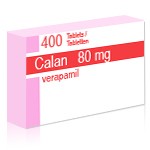
Calan is the original brand-name formulation of Verapamil Hydrochloride manufactured by Pfizer (originally G.D. Searle) — one of the foundational non-dihydropyridine calcium channel blockers (non-DHP CCBs) for hypertension, angina, and supraventricular tachycardia rate control. FDA-approved since 1981, Calan is available in multiple formulations: Calan immediate-release (40-120 mg), Calan SR sustained-release (120-240 mg), and the related Verelan PM extended-release (100-300 mg). International equivalent: Isoptin. Listed on the WHO Model List of Essential Medicines. Unlike dihydropyridine CCBs (Adalat/Nifedipine), Verapamil has significant cardiac effects — making it uniquely valuable for tachyarrhythmia management beyond just blood pressure control.
The active ingredient is Verapamil Hydrochloride, a non-dihydropyridine calcium channel blocker with both vascular and cardiac effects. Verapamil blocks L-type calcium channels in vascular smooth muscle (producing mild vasodilation) and in cardiac tissue (producing negative chronotropy, negative inotropy, and negative dromotropy — slowing AV nodal conduction). The cardiac effects make Verapamil particularly valuable for supraventricular tachycardia rate control and atrial fibrillation rate control. However, these same effects make Verapamil CONTRAINDICATED in heart failure with reduced ejection fraction and require caution when combined with beta-blockers.
Calan is FDA-approved for hypertension, angina pectoris (chronic stable, vasospastic, and unstable), and supraventricular tachycardia (rate control and prevention). Off-label uses include atrial fibrillation rate control, cluster headache prophylaxis (established standard use), migraine prophylaxis (selective), hypertrophic cardiomyopathy symptomatic relief, and idiopathic ventricular tachycardia (selected cases). IV Verapamil is used for acute SVT termination.
The medication is available as Calan IR 40 mg, 80 mg, and 120 mg tablets, Calan SR 120 mg, 180 mg, and 240 mg sustained-release tablets, and IV Verapamil 2.5 mg/mL. Standard adult dosing for hypertension: 120-480 mg/day (TID immediate-release, or once daily SR). For angina: 80-120 mg TID IR or 180-240 mg SR daily. For SVT/AF rate control: 120-480 mg/day.
Critical safety considerations include the FDA boxed warning against use in heart failure with reduced ejection fraction (negative inotropy worsens HF), boxed warning regarding combination with beta-blockers (additive AV block, severe bradycardia, heart block, sudden cardiac death possible — avoid combination), significant constipation (7-12% — characteristic Verapamil side effect), bradycardia, AV block, hypotension, hepatotoxicity, gingival hyperplasia with chronic use. Verapamil is a CYP3A4 inhibitor — many drug interactions (statins, digoxin, cyclosporine, theophylline, carbamazepine).
Free prescription
Discrete packaging
Have questions?
Quality Assurance

- Angina Pectoris: FDA-approved for angina pectoris (chronic stable, vasospastic, unstable);
- Prinzmetal Vasospastic Angina: For vasospastic Prinzmetal's variant angina;
- Chronic Stable Angina: For chronic stable angina pectoris;
- Unstable Angina: FDA-approved for unstable angina (with appropriate monitoring);
- Supraventricular Tachycardia SVT: FDA-approved for SVT rate control and prevention — signature unique CCB indication;
- SVT Acute Termination IV: IV Verapamil for acute SVT termination (paroxysmal SVT);
- Atrial Fibrillation Rate Control: Off-label for atrial fibrillation rate control;
- Atrial Flutter Rate Control: Off-label for atrial flutter rate control;
- Cluster Headache Prophylaxis: Off-label STANDARD therapy for cluster headache prophylaxis (signature off-label use);
- Migraine Prophylaxis Selective: Off-label selective use for migraine prophylaxis;
- Hypertrophic Cardiomyopathy: Off-label for symptomatic hypertrophic cardiomyopathy — reduces LV outflow obstruction symptoms;
- Idiopathic Ventricular Tachycardia: Off-label for selected idiopathic VT (fascicular type);
- Mild Hypertension: For mild hypertension (stage 1);
- Moderate Hypertension: For moderate hypertension (stage 2);
- Hypertension With Tachycardia: Particularly effective in HTN with tachyarrhythmias;
- Hypertension With Angina: Dual treatment for HTN with concomitant angina;
- AV Node Reentry Tachycardia: For AV nodal reentrant tachycardia (AVNRT);
- AV Reentry Tachycardia: For AV reentrant tachycardia (AVRT, in WPW — with caution);
- Resistant Hypertension Combination: For resistant HTN as part of combination therapy (avoid beta-blocker combo).
- Less Angina Symptoms: Significant reduction in angina pectoris symptoms;
- Less Coronary Vasospasm: Highly effective in vasospastic Prinzmetal's angina;
- Better Exercise Tolerance Angina: Improved exercise tolerance in patients with stable angina;
- Less SVT Episodes: Effective rate control and prevention of supraventricular tachycardia;
- Acute SVT Termination IV: IV Verapamil rapidly terminates acute SVT episodes;
- Less AF Heart Rate: Effective rate control in atrial fibrillation;
- Less AF Symptoms: Reduces palpitations and symptoms from atrial fibrillation;
- Less Cluster Headache Frequency: Standard prophylaxis for cluster headache — established off-label benefit;
- Less Cluster Headache Severity: Reduces cluster headache severity during cluster periods;
- Better HCM Symptoms: Reduces symptoms in symptomatic hypertrophic cardiomyopathy;
- Less HCM Outflow Obstruction: Reduces LV outflow obstruction in HCM (negative inotropy);
- Less Migraine Frequency Selective: Off-label selective benefit in migraine prevention;
- Less Idiopathic VT: Off-label benefit in fascicular idiopathic VT;
- Better Daily Function: Return to normal daily activities with effective BP/angina/rhythm control;
- Better Quality of Life: Substantial improvement in quality of life;
- Less Cardiovascular Risk: Reduction in cardiovascular events with effective BP/angina control;
- Less Stroke Risk AF: Effective AF rate control contributes to stroke risk reduction strategy;
- Less Coronary Vasospasm: Particularly effective in coronary vasospastic disorders;
- Brand Calan: Original Pfizer/Searle brand of Verapamil with established global clinical reputation since 1981;
- Generic Verapamil: Affordable generic versions expand global access to non-DHP CCB therapy;
- Calan SR Sustained Release: Sustained-release formulation supports once-daily dosing;
- Verelan PM Extended Release: Extended-release PM formulation for circadian BP variation;
- Isoptin International Brand: Same Verapamil molecule as international brand Isoptin;
- Non DHP Calcium Channel Blocker: Foundational non-dihydropyridine CCB class — cardiac effects distinguish from DHP CCBs;
- L Type Calcium Channels Cardiac Vascular: Blocks L-type Ca²⁺ channels in both vascular smooth muscle AND cardiac tissue;
- Negative Chronotropy Inotropy Dromotropy: Negative chronotropic, inotropic, and dromotropic effects — slows heart rate, contractility, AV conduction;
- SVT AF Rate Control: Standard rate control for SVT and atrial fibrillation;
- Coronary Vasodilation: Coronary vasodilation effective in vasospastic angina;
- Cluster Headache Standard Therapy: Standard off-label cluster headache prophylactic therapy;
- Anti Arrhythmic Class IV: Class IV antiarrhythmic agent (calcium channel blocker subclass);
- Less Edema vs DHP CCB: Less peripheral edema than DHP CCBs (Adalat/Amlodipine);
- Hypertension Established Therapy: Established antihypertensive therapy with 40+ years of clinical experience;
- WHO Essential Medicine: Listed on the WHO Model List of Essential Medicines for cardiovascular care;
- 40 Plus Year Clinical History: 40+ years of clinical use since 1981 — extensive global evidence base.
Generic Calan (Verapamil 40 mg) Medication guide:
🌍 Understanding Calan and the Place of Verapamil in Cardiovascular Medicine
Calan is a brand name for verapamil hydrochloride — one of the oldest and most versatile drugs in the cardiovascular formulary. Six decades of clinical use have shaped a specific niche for this drug, and understanding that niche is where a modern med guide begins.
🧬 Drug Class
Non-DHP Calcium Channel Blocker
Phenylalkylamine subclass
⚡ Antiarrhythmic Class
Class IV
AV nodal blockade
📅 Introduced
1963 — Germany
First CCB in medical use
💊 Formulations
IR / SR / ER / PM / IV
TID up to once daily
First synthesised in the early 1960s and reaching clinical practice in Germany in 1963 for angina pectoris, verapamil predated every dihydropyridine calcium channel blocker — nifedipine, amlodipine, felodipine — that now dominates the class in general hypertension practice.
🕓 Six Decades of Verapamil in Clinical Medicine
1963
Introduced in Germany for angina; the first CCB in medical use
1980s
Established for SVT termination and rate control in AF; DAVIT-II post-MI trial
1990s-2000s
Class I recommendation for cluster headache prophylaxis
Present
Cipla and Indian generics supply the international market
What keeps verapamil in the modern formulary is a pharmacological property its dihydropyridine cousins simply do not share: strong blockade of the atrioventricular (AV) node, which allows the drug to slow the heart rate directly and to interrupt the reentrant circuits that drive supraventricular tachycardia.
🎯 The Four Clinical Niches Where Verapamil Is the Deliberate Choice
🌊 Rate Control in AF
Class I first-line in patients without heart failure. Verapamil or diltiazem; beta blocker is the third option.
🌤️ Prinzmetal Angina
Coronary vasospasm rather than fixed obstruction. Verapamil first-line; beta blockers actually contraindicated.
🧠 Cluster Headache
Class I preventive per AAN/AHS guidelines. Sometimes at doses far above cardiovascular indications.
🩸 Hypertension
Chosen when strong single-agent BP effect is needed and beta blockers are not tolerated.
The breadth of pharmacology is what makes verapamil unusually complex to prescribe well. Every one of the five identities below has practical consequences that shape the med guide sections that follow.
🔬 VERAPAMIL — FIVE PHARMACOLOGICAL IDENTITIES
Each identity produces distinct prescribing consequences explored in sections 3, 4, 10, 11, and 13.
Verapamil is dispensed in five distinct oral formulations that behave differently in the body. Choice of formulation matters for adherence, tolerability, and specific timing patterns; section 8 covers the details.
| 💊 Immediate-release (IR) | Calan — 40, 80, 120 mg tablets, three times daily. Initial titration; cluster headache titration. |
| 💊 Sustained-release (SR) | Calan SR — 120, 180, 240 mg tablets, once daily. Chronic hypertension and rate control. |
| 💊 Extended-release (ER) | Verelan — 120, 180, 240, 360 mg capsules, once daily. Smoothest plasma profile. |
| 🌙 Chronotherapy ER (PM) | Verelan PM — taken at bedtime; targeted drug release in early morning hours. |
| 💉 Intravenous | Hospital use only; acute rate control and SVT termination. |
This guide is written for the ambulatory patient starting or continuing oral verapamil. Cipla and other established Indian manufacturers supply the international generic market. The hospital IV-verapamil use case is a specialist decision made by the treating physician at the point of care and is not covered here.
🧭 Reader Navigation — Jump to What Matters for You
- First prescription and titration: sections 5, 8, 9
- Rate control in atrial fibrillation: sections 6, 14, 18
- Cluster headache prophylaxis: section 7
- Prinzmetal (vasospastic) angina: section 19
- Constipation management: section 11
- New medication started elsewhere: sections 10, 24
- Heart failure diagnosis (safety check): section 13
- Elderly-specific concerns: sections 15, 22
Each section is written to be read on its own, without requiring the surrounding material. Depth of coverage reflects the fact that a person opening a med guide is looking for the underlying detail rather than a summary.
💊 What Verapamil Is — The Phenylalkylamine Non-DHP Calcium Channel Blocker
Verapamil is a phenylalkylamine calcium channel blocker — a specific chemical family within the wider calcium channel blocker (CCB) class. Understanding what that means pharmacologically is worth a few minutes because the phenylalkylamine identity is exactly what explains why verapamil behaves so differently from a dihydropyridine like nifedipine or amlodipine, even though both blockade families act on the same target: the L-type voltage-gated calcium channel in smooth muscle and cardiac tissue.
💊 Verapamil pharmacokinetic profile
| Chemical class | Phenylalkylamine (a specific non-dihydropyridine subclass; diltiazem is the benzothiazepine subclass, and both are labelled non-DHP CCBs together) |
| Oral bioavailability | 10-30% (highly variable, driven by extensive first-pass hepatic metabolism) |
| Peak plasma level | 1-2 hours for immediate-release; 7-9 hours for sustained-release; 11 hours for extended-release chronotherapy formulations |
| Protein binding | Approximately 90%, primarily to alpha-1 acid glycoprotein and albumin |
| Elimination half-life | 3-7 hours for parent drug (single dose); rises to 5-12 hours on multiple dosing because of saturation of first-pass metabolism |
| Active metabolite | Norverapamil has approximately 20% of the vasodilator activity of parent verapamil and accumulates during chronic dosing |
| Metabolism | Extensive hepatic metabolism by CYP3A4 (primary), with minor CYP2C8 and CYP2C9 contributions. Verapamil is both a substrate and a moderate-to-strong inhibitor of CYP3A4 and P-glycoprotein |
| Excretion | Approximately 70% renal excretion of metabolites; 15-20% biliary/faecal; less than 5% unchanged in urine |
Three features of verapamil pharmacokinetics translate directly into practice. First, the extensive first-pass hepatic metabolism means that oral bioavailability is low and highly variable between individuals. This is why oral verapamil doses (typically 240-480 mg per day) are so much larger than IV doses (5-10 mg for acute SVT termination) — the vast majority of an oral dose is metabolised before reaching the systemic circulation. Second, the CYP3A4 substrate-plus-inhibitor duality is what makes verapamil one of the most interaction-heavy cardiovascular drugs (section 10). Verapamil is broken down by CYP3A4, which means that CYP3A4 inhibitors (macrolide antibiotics, azole antifungals, grapefruit juice) can substantially raise verapamil levels. But verapamil also inhibits CYP3A4, which means it can raise the levels of many other CYP3A4 substrates (simvastatin, cyclosporine, tacrolimus, sildenafil). Third, verapamil is a P-glycoprotein inhibitor, which is the specific mechanism behind the important digoxin and dabigatran interactions (sections 10 and 24).
The intersection of the low, variable bioavailability and the strong CYP3A4 interaction picture explains why verapamil dosing sometimes requires several titration steps before a stable regimen is reached, and why any patient with a change in concurrent medications on verapamil deserves careful monitoring for changes in effect or side-effect profile. This is not a drug where the dose is set at day one and forgotten.
🧬 Calcium Channels, the AV Node, and Verapamil at the Cellular Level
To understand where and how verapamil works, it helps to picture the L-type voltage-gated calcium channel — the membrane protein that allows calcium ions to flow into cardiac and smooth-muscle cells when the cell depolarises. Calcium is the intracellular signal that couples the electrical activity of a heart cell (depolarisation) to its mechanical activity (contraction) and that mediates the pacemaker activity of specialised nodal cells. Verapamil blocks the L-type channel from the inside of the cell during its inactivated state, a binding mode called use-dependent block: the more frequently a cell depolarises, the more effectively verapamil blocks it.
🧬 What use-dependent blockade means at three distinct tissue types
| Tissue | Baseline dependence on L-type calcium | Effect of verapamil |
|---|---|---|
| Sinoatrial (SA) node | L-type calcium drives pacemaker upstroke (unlike ventricular myocytes which use sodium) | Slower spontaneous depolarisation; slower resting heart rate |
| Atrioventricular (AV) node | L-type calcium drives conduction through the node; the node is the natural rate-limiting step between atria and ventricles | Slower AV conduction; longer PR interval on ECG; interruption of AV-node-dependent reentrant tachycardias (AVNRT, AVRT); slower ventricular response in AF (rate control) |
| Ventricular myocytes | Calcium sets contractile strength; L-type entry triggers calcium-induced calcium release from the sarcoplasmic reticulum | Reduced contractility (negative inotropy); this is why verapamil is contraindicated in HFrEF (section 13) |
| Vascular smooth muscle | L-type calcium entry drives contraction of arterial smooth muscle | Arterial vasodilation; reduction in systemic vascular resistance; blood pressure lowering |
Two features of verapamil's mechanism deserve emphasis. First, the preferential action on cardiac tissue over vascular tissue is what defines the non-dihydropyridine calcium channel blocker class. Dihydropyridines (nifedipine, amlodipine) preferentially block calcium channels in vascular smooth muscle and have minimal effect on the AV node at typical clinical doses. Verapamil (and to a lesser extent diltiazem) blocks the AV node powerfully at the same doses that produce useful vasodilation. This is why verapamil slows the heart while amlodipine does not, and why the two drugs are used for such different clinical purposes despite being in the same broad drug class.
Second, the use-dependent block means that verapamil affects fast-conducting tissue more than slow-conducting tissue. In supraventricular tachycardia, where the AV node is conducting rapidly, verapamil produces a strong slowing effect. In normal sinus rhythm at a resting rate of 65 bpm, the same dose produces a much smaller absolute effect on AV conduction. This is one reason why verapamil is useful for terminating SVT (or slowing rapid AF) without producing dangerous bradycardia in patients with normal baseline rhythm.
The three practical consequences of the mechanism — slower resting heart rate, slower AV conduction (with PR prolongation), and reduced myocardial contractility — are exactly the three features that define verapamil's cardiovascular profile and its warnings. Slower rate and slower conduction are usually therapeutic; reduced contractility is usually well-tolerated in patients with normal LV function but is the specific reason verapamil is not the drug for a myocardium already struggling.
🔬 Where Verapamil Sits — Non-DHP vs Dihydropyridine Calcium Channel Blockers
Calcium channel blockers as a class are among the most heavily used cardiovascular drugs, but the class contains two subclasses that behave so differently that pharmacology teachers often frame them as separate drug families. Understanding the non-dihydropyridine (non-DHP) versus dihydropyridine (DHP) distinction is one of the highest-yield conceptual moves in cardiovascular pharmacology, and it is what explains why verapamil is used for atrial fibrillation and cluster headache while nifedipine is used for hypertension and Prinzmetal angina.
🔬 Non-DHP vs DHP calcium channel blockers — the practical comparison
| Property | Non-DHP CCBs (verapamil, diltiazem) | DHP CCBs (nifedipine, amlodipine, felodipine) |
|---|---|---|
| Chemical family | Phenylalkylamine (verapamil), benzothiazepine (diltiazem) | Dihydropyridine |
| Tissue preference | Cardiac (AV node + myocardium) preferred over vascular | Vascular smooth muscle preferred; minimal cardiac effect at usual doses |
| Heart rate effect | Slows rate | Neutral or slight reflex tachycardia (especially short-acting IR nifedipine) |
| AV conduction | Slows AV conduction; useful for rate control and SVT termination | Minimal effect; not useful for rate control or SVT |
| Contractility | Negative inotrope — verapamil more than diltiazem | Minimal effect at usual doses |
| Vasodilation | Moderate arterial vasodilation | Strong arterial vasodilation; the primary mechanism of BP lowering |
| HFrEF (reduced EF) | Contraindicated or strongly cautioned | Amlodipine and felodipine are neutral in HFrEF; nifedipine less well-studied |
| Combining with beta blocker | Generally avoided because of additive AV block and negative inotropy | Safe and commonly combined (amlodipine plus atenolol or metoprolol is a standard antihypertensive combination) |
| Peripheral oedema | Uncommon | Common (especially amlodipine, felodipine) |
| Constipation | Very common with verapamil (60-70%); moderate with diltiazem | Uncommon |
| Prinzmetal angina | First-line | First-line (both classes are effective; DHP or non-DHP based on comorbidity) |
| Atrial fibrillation rate control | First-line in patients without HFrEF | Not indicated |
| Cluster headache prophylaxis | Verapamil is first-line (Class I) | Not indicated |
Two features of the non-DHP/DHP distinction are worth internalising. First, a patient told they are on "a calcium channel blocker" may be on either subclass, and the specific drug matters. Someone on amlodipine 10 mg once daily and someone on verapamil 240 mg once daily are both on calcium channel blockers, but they have almost nothing in common regarding heart rate, AV conduction, contractility, and interaction picture. If a patient is told to avoid grapefruit juice because they are on a calcium channel blocker, that advice is much more critical on verapamil than on amlodipine because verapamil metabolism is far more sensitive to CYP3A4 inhibition.
Second, the beta blocker combination question is one of the most consequential prescribing distinctions. Adding a beta blocker to amlodipine is routine and safe (indeed, it is one of the most common antihypertensive combinations in modern practice). Adding a beta blocker to verapamil is generally avoided because the two agents combine additively at the AV node to produce potentially dangerous bradycardia and heart block. Any prescriber considering adding a beta blocker to a patient on verapamil must know that the patient is on verapamil, not simply that they are on "a CCB." This is one of the specific reasons an accurate medication list matters so much in cardiovascular care.
The subclass distinction also shapes which drug is chosen in the first place. If the primary need is blood pressure lowering with a favourable rate profile, amlodipine is the default. If the primary need is rate control in atrial fibrillation without HFrEF, verapamil or diltiazem is the choice. If the primary need is cluster headache prevention, verapamil is the class I recommendation and no other CCB is indicated. Recognising the subclass matters not for pharmacology examinations but for the everyday prescribing decision.
🎯 Approved Uses — Hypertension, Angina, and Supraventricular Arrhythmias
Verapamil has an unusually broad set of approved uses across cardiovascular medicine and neurology. The FDA-approved indications are essential hypertension, angina pectoris (including vasospastic and unstable variants), and treatment of supraventricular tachyarrhythmias including rate control in atrial fibrillation and atrial flutter. Cluster headache prophylaxis is an evidence-based off-label use with a Class I recommendation from headache neurology guidelines. Migraine prophylaxis and some other neurologic uses have limited evidence and are not routinely first-line.
| Indication | Typical starting dose | Usual maintenance range |
|---|---|---|
| Essential hypertension | 80 mg TID (IR) or 180 mg once daily (SR) | 240-480 mg per day total (IR or SR) |
| Chronic stable angina and vasospastic angina | 80 mg TID (IR) | 240-480 mg per day total; up-titrate for angina control |
| Rate control in atrial fibrillation (no HFrEF) | 120-180 mg SR once daily or 40-80 mg TID (IR) | Titrate to resting HR under 100 bpm (ideally 70-90); typically 240-360 mg per day total |
| Acute SVT termination (hospital setting) | IV 5-10 mg slow push (specialist) | Not for ambulatory use; hospital cardiology decision |
| Cluster headache prophylaxis | 80 mg TID | 240-960 mg per day total; escalated under headache-specialist supervision with ECG monitoring at higher doses (section 7) |
| Prinzmetal (vasospastic) angina | 80 mg TID or 180 mg SR once daily | Titrate to symptom control (section 19) |
Two features of the indication list deserve emphasis. First, the hypertension indication is where verapamil is used but not preferred as first-line monotherapy in modern practice. The ALLHAT trial and its successors positioned thiazides, ACE inhibitors/ARBs, and dihydropyridine calcium channel blockers as the preferred first-line antihypertensive classes. Verapamil is not disqualified from hypertension use, but it earns its place in specific situations: a patient with atrial fibrillation who also has hypertension can have both problems covered by verapamil; a patient with angina who is intolerant of beta blockers can have angina and hypertension covered together; a patient with cluster headache who also has hypertension can have both indications addressed with one drug.
Second, the cluster headache prophylaxis indication is where verapamil is genuinely irreplaceable. No other cardiovascular drug has the class I recommendation for cluster headache prevention that verapamil holds. This use is off-label in the strict regulatory sense (the FDA label does not include cluster headache) but is fully guideline-supported by the American Academy of Neurology and the American Headache Society. Section 7 covers the practical details.
The choice of formulation matters. Immediate-release verapamil requires three-times-daily dosing and produces a more pronounced peak-trough oscillation in plasma level, which some patients experience as intermittent side effects (flushing at peak, breakthrough symptoms at trough). Sustained-release and extended-release formulations offer once-daily convenience and smoother plasma profile. The chronotherapy extended-release formulations (Verelan PM) are specifically designed to release drug preferentially in the early morning hours to match the natural morning surge in cardiovascular events; these are a niche choice under specialist input.
❤️ AV Nodal Blockade — The Signature Cardiac Feature of Verapamil
The atrioventricular (AV) node is the electrical bridge between the atria and the ventricles — the only physiological pathway through which atrial electrical activity reaches the ventricles under normal conditions. Its rate-limiting property is what protects the ventricles from responding at the atrial rate during atrial fibrillation (where atria are firing at 400+ per minute) and what makes the AV node the natural target for a rate-control drug. Verapamil is one of the two most important pharmacological tools for AV nodal modulation in modern medicine (the other is diltiazem; digoxin acts at the AV node via a different vagal mechanism; beta blockers act via sympathetic withdrawal at the node).
❤️ What verapamil does at the AV node
- Prolongs AV nodal conduction time (visible on ECG as a longer PR interval on sinus beats).
- Increases AV nodal refractoriness (the node needs longer to recover between beats).
- Slows the ventricular response in atrial fibrillation and atrial flutter (the node cannot conduct as many of the rapid atrial impulses to the ventricles).
- Interrupts AV-node-dependent reentrant circuits in AVNRT (AV nodal reentrant tachycardia) and AVRT (AV reentrant tachycardia via an accessory pathway with orthodromic conduction).
- Terminates SVT episodes when given IV in the hospital setting (5-10 mg over 2 minutes under monitoring).
Dr Nagy-Katona on verapamil in the electrophysiology laboratory
"IV verapamil remains one of the reliable pharmacological tools in the electrophysiology laboratory for terminating narrow-complex tachycardias that have failed adenosine or where adenosine is not available. The oral formulation is what most of our patients continue on after hospital discharge for chronic rate control in atrial fibrillation. The critical safety point that we emphasise, both in the lab and in the discharge letter, is that verapamil must not be given IV in a wide-complex tachycardia of uncertain origin, because if the underlying rhythm is ventricular tachycardia the negative inotropy plus vasodilation can precipitate cardiovascular collapse. This is one of the classical 'never do this' teaching cases in cardiology training."
Ferenc I. Nagy-Katona, MD, PhD — Department of Cardiovascular Electrophysiology, Semmelweis University Heart and Vascular Center, Budapest
The wide-complex tachycardia caution
Verapamil (particularly IV) is contraindicated for treatment of wide-complex tachycardia of uncertain origin. If the underlying rhythm is ventricular tachycardia (rather than SVT with aberrancy), IV verapamil can precipitate haemodynamic collapse through the combination of negative inotropy and peripheral vasodilation. This is a hospital emergency-room and electrophysiology teaching point rather than an ambulatory concern, but it is worth knowing that verapamil is a targeted tool used in specific rhythms rather than a broad-spectrum antiarrhythmic.
Two features of AV nodal blockade with verapamil are worth understanding in the ambulatory context. First, the PR prolongation on the resting ECG is expected and usually harmless: patients on chronic verapamil often have PR intervals of 200-240 ms, and this is not a reason to stop the drug provided the interval is stable and no second-degree AV block is present. A resting PR of 260 ms with intermittent Mobitz I block on a Holter monitor, on the other hand, deserves review. Second, the rate control target in atrial fibrillation is symptomatic tolerance rather than a specific number: RACE II demonstrated that lenient rate control (resting HR under 110 bpm) is non-inferior to strict rate control (resting HR under 80 bpm) for most patients, and the practical aim is a rate at which the patient feels comfortable at rest and on light exertion without symptoms of tachycardia or of over-treatment (fatigue, exertional dyspnoea from bradycardia).
The oral verapamil user is not aware of the AV nodal blockade in a symptomatic sense. What they notice is that their resting pulse feels slower and steadier, that they do not feel their heart pounding in the same way they did before treatment, and (in AF patients) that they do not develop rapid heart rate on modest exertion. These are the practical clinical signs that the drug is doing its intended job at the AV node.
🧠 Cluster Headache Prophylaxis — The Neurologic Niche
Cluster headache is one of the most severe pain syndromes in medicine — sometimes called "suicide headache" because of the intensity of individual attacks. Attacks come in clusters lasting weeks to months (episodic form) or with only brief remissions (chronic form), with characteristic strictly unilateral peri-orbital pain accompanied by autonomic features (conjunctival injection, lacrimation, rhinorrhoea, ptosis). Verapamil is the class I preventive agent recommended by the American Academy of Neurology and the American Headache Society for reducing the frequency and duration of cluster headache attacks. This use is well outside cardiovascular medicine but is worth understanding because it is one of the specific settings where verapamil is genuinely irreplaceable.
🧠 Verapamil for cluster headache prophylaxis at a glance
| Guideline endorsement | Class I recommendation from AAN/AHS; first-line preventive |
| Typical starting dose | 80 mg three times daily (240 mg per day total) |
| Effective dose range | 240-960 mg per day; some refractory patients require higher doses under headache-specialist supervision |
| Titration cadence | Increase by 80 mg per day every 2 weeks until response or intolerability |
| ECG monitoring | Required before each dose escalation above 480 mg per day and every 6 months at high maintenance doses (PR prolongation and bradycardia risk rise with dose) |
| Duration of use | Continued through the cluster period, then tapered off (episodic form); continued indefinitely (chronic form) |
| Time to effect | Days to 2 weeks after reaching an effective dose; not an acute abortive agent |
Dr Weathersby-Odom on verapamil in the headache clinic
"In the headache clinic verapamil is one of the most useful drugs I prescribe. For a patient in the middle of a cluster period who is having eight or ten devastating attacks a day, adequate verapamil prophylaxis at the right dose can be transformative. The doses we sometimes need — 720 mg, 960 mg, occasionally higher — are far higher than the doses used in cardiology, and the ECG monitoring at those doses is not optional. What I emphasise to every patient starting verapamil for cluster prevention is that the therapeutic effect takes days to weeks to build, so we combine it with an appropriate abortive agent (oxygen, sumatriptan injection) while the prophylactic effect emerges."
Sondra L. Weathersby-Odom, MD, FAHS — Jefferson Headache Center, Thomas Jefferson University, Philadelphia
Two features of verapamil use in cluster headache deserve emphasis. First, the doses used in headache clinic are substantially higher than in cardiology: while a typical hypertensive patient tolerates 240-360 mg per day comfortably, a cluster headache patient may need 720 mg per day or more to achieve prophylactic benefit. At these doses the AV nodal blockade becomes clinically important, and the risk of PR prolongation, second-degree AV block, and symptomatic bradycardia rises. This is why ECG monitoring is required before each dose escalation above 480 mg per day.
Second, verapamil is prophylactic, not abortive: it does not stop an attack that has begun. Cluster headache abortive treatment is high-flow 100% oxygen (12-15 L/min via non-rebreather mask) and injectable or intranasal sumatriptan. Verapamil sits underneath these acute treatments as background prevention. A patient who is prescribed verapamil for cluster headache prevention should also have an abortive plan agreed with their headache clinician, and should be counselled that verapamil takes days to weeks to reduce attack frequency after reaching an effective dose.
The transition from a hypertensive verapamil user (240 mg per day) to a cluster-headache verapamil user (720 mg per day) is a specific consideration for a small number of patients who happen to have both indications; the higher dose covers the cardiovascular indication as well. More commonly, a patient prescribed high-dose verapamil for cluster headache has no hypertension and the cardiovascular effect of the drug (some BP lowering, some resting HR reduction) is a peripheral consideration to be monitored rather than the reason for the prescription.
📆 Tablet Strengths, IR vs SR vs ER Formulations, and Titration
Verapamil is available in three principal oral formulations, each with a distinct pharmacokinetic profile, distinct dosing frequency, and distinct clinical use case. Understanding the differences is worth a few minutes because a patient started on immediate-release verapamil three times daily and a patient started on extended-release verapamil once daily at bedtime are on different pharmacological regimens even though they are on the same drug.
📆 Verapamil oral formulations and their dosing patterns
| Formulation | Typical strengths | Dosing pattern | Best-use case |
|---|---|---|---|
| Immediate-release (IR) tablets — Calan | 40 mg, 80 mg, 120 mg | Three times daily (TID); typically 8-12-hour intervals | Initial titration; hospital rate control; cluster headache titration where dose flexibility matters |
| Sustained-release (SR) tablets — Calan SR | 120 mg, 180 mg, 240 mg | Once daily (usually morning) or twice daily (larger doses split) | Chronic hypertension; stable rate control in AF; long-term angina prevention |
| Extended-release (ER) capsules — Verelan | 120 mg, 180 mg, 240 mg, 360 mg | Once daily (morning) | Simplified once-daily regimen for chronic hypertension |
| Chronotherapy ER capsules — Verelan PM | 100 mg, 200 mg, 300 mg | Once daily at bedtime | Patients with morning BP surge or angina with a specific early-morning pattern; targeted drug release in the early hours |
Titration approach for chronic hypertension
- Start: 180 mg SR once daily in the morning (or 80 mg TID for IR).
- Review at 2-4 weeks: home BP average; resting heart rate; symptomatic tolerance; ECG if starting HR or if any conduction concern.
- Titrate up if needed: to 240 mg once daily, then 360 mg, and up to 480 mg per day (either as single dose SR or split IR).
- Combine if not at target: verapamil plus a thiazide, or verapamil plus an ACE inhibitor / ARB. Do not combine with a beta blocker as a routine step.
Two features of formulation choice deserve emphasis. First, the IR and SR/ER formulations are not directly interchangeable milligram-for-milligram in every case. The pharmacokinetic profiles differ, and while total daily doses often match (240 mg SR once daily is comparable to 80 mg TID for BP effect), the peak-trough oscillation is smoother on SR/ER. A patient on IR who is switched to SR at the same total daily dose usually maintains BP effect but may notice fewer intermittent side effects. The switch is usually straightforward but is worth documenting explicitly on the medication list to avoid confusion.
Second, SR and ER tablets/capsules must not be crushed, split, or chewed. Doing so destroys the sustained-release mechanism and delivers what would have been a full day's dose over 1-2 hours, producing an unintended peak that can cause severe hypotension and bradycardia. Patients with swallowing difficulty who need verapamil must be prescribed the immediate-release tablet or the extended-release capsule contents opened onto soft food specifically according to the manufacturer's labelling, not simply the SR tablet split.
The choice between morning and evening dosing on SR/ER formulations is largely a matter of daily habit convenience. The chronotherapy formulation (Verelan PM) is designed specifically for bedtime dosing to place peak drug release in the early morning hours — a niche used for the specific patient whose home BP or angina pattern shows a strong early morning peak. Most patients on standard SR or ER take the dose in the morning as part of the usual medication routine.
▶️ Starting Calan — The First-Dose Conversation
The first-dose considerations on verapamil differ from those on ACE inhibitors and ARBs. First-dose hypotension is not the primary concern; the primary concerns are baseline bradycardia, baseline conduction disease on the ECG, and heart failure with reduced ejection fraction. Any patient with an unusually low resting heart rate, any degree of AV block beyond first-degree, or a history of heart failure needs specialist review before starting verapamil rather than an ambulatory prescription and follow-up.
🚩 PATIENTS WHO NEED SPECIALIST INPUT BEFORE STARTING VERAPAMIL
- Resting heart rate below 55 bpm at baseline.
- Any degree of AV block beyond first-degree on the baseline ECG.
- Heart failure with reduced ejection fraction (HFrEF) — verapamil is contraindicated (section 13).
- Sick sinus syndrome without a pacemaker.
- Concurrent beta blocker use — combination generally avoided (section 25).
- Wolff-Parkinson-White syndrome with atrial fibrillation — verapamil can accelerate conduction down the accessory pathway.
- Cardiogenic shock or acute decompensation of any cause.
- Recent MI with LV dysfunction.
Practical initiation measures for the routine ambulatory patient
- Baseline ECG if the resting HR is below 65 bpm, if there is any history of conduction disease, or if there is any doubt about baseline rhythm.
- Baseline echocardiogram is not routinely needed for a hypertensive patient but is worth having for a rate-control patient whose ejection fraction is unknown.
- Start at the lower end of the dose range for the specific indication (see section 8), particularly if elderly or on other AV-nodal-slowing drugs.
- Review at 2 weeks with baseline HR, BP, and symptomatic tolerance.
- Repeat ECG at 4-6 weeks on the stable maintenance dose to document PR interval and confirm absence of new second-degree AV block.
- Counsel about constipation as a very common ongoing side effect (section 11).
- Counsel about the taper rule: verapamil is not to be stopped abruptly (section 27).
Two features of first-dose considerations on verapamil deserve emphasis. First, symptomatic first-dose hypotension is uncommon at oral verapamil initiation but can occur in patients who are volume-depleted, elderly, or on multiple antihypertensive agents. Starting at the lower end of the dose range and titrating over weeks rather than days is the reliable safeguard. Second, the baseline ECG conversation is more important on verapamil than on most other antihypertensives: a first-degree AV block already present on the baseline ECG (PR interval 220 ms, for example) may still be acceptable for verapamil use with careful monitoring, but a Mobitz Type I second-degree AV block is not. Patients with any doubt about their baseline conduction status should have this documented before the drug is started rather than after.
The counselling conversation at first prescription includes: the drug is taken exactly as prescribed on the schedule specified (IR three times daily or SR/ER once daily); constipation is common and often ongoing but is manageable with hydration, fibre, and (if needed) laxative use; the drug is not to be stopped without medical advice; grapefruit juice raises verapamil levels and is best avoided altogether; and any new medication started elsewhere should be flagged to the prescriber because of the extensive interaction profile.
🔗 Verapamil Drug Interactions — A CYP3A4 Powerhouse
Verapamil has one of the most extensive drug interaction profiles in modern cardiovascular medicine. This is not a soft warning to be brushed aside; it is a genuine practical issue that comes up in almost every ambulatory verapamil user over the years, particularly as they age and accumulate additional medications. The mechanism is straightforward: verapamil is metabolised by CYP3A4 (so drugs that induce or inhibit CYP3A4 change verapamil levels) and verapamil itself inhibits both CYP3A4 and P-glycoprotein (so verapamil changes the levels of many other drugs).
| Interaction category | Common examples | Practical implication |
|---|---|---|
| Beta blockers | Atenolol, metoprolol, bisoprolol, propranolol, carvedilol | Combination generally avoided: additive AV nodal blockade, bradycardia, heart block, negative inotropy; a rare specialist-supervised combination in specific settings only |
| Digoxin | Rate control or heart failure use | Verapamil raises digoxin plasma level by 50-75% via P-gp inhibition and reduced renal clearance; digoxin dose typically reduced by 30-50% at combination start; section 24 |
| Simvastatin (and to a lesser extent atorvastatin and lovastatin) | Cholesterol lowering | Verapamil raises simvastatin levels; maximum simvastatin dose on verapamil is 10 mg per day. Rosuvastatin and pravastatin are safer choices on verapamil |
| Dabigatran | Anticoagulation for AF | Verapamil raises dabigatran levels via P-gp inhibition; consider reducing dabigatran dose or use a different DOAC (apixaban, rivaroxaban preferred with verapamil) |
| Cyclosporine and tacrolimus | Immunosuppressants | Verapamil raises calcineurin-inhibitor levels significantly; specialist-supervised dose adjustment and drug-level monitoring |
| Amiodarone | Antiarrhythmic | Additive bradycardia and AV block; combination generally avoided |
| Macrolide antibiotics | Clarithromycin, erythromycin (azithromycin less) | CYP3A4 inhibition raises verapamil levels; risk of bradycardia and hypotension; use azithromycin or an alternative class if the treatment course is critical |
| Azole antifungals | Ketoconazole, itraconazole, voriconazole | Strong CYP3A4 inhibition; raises verapamil substantially; avoid combination where possible |
| Grapefruit juice | Common dietary CYP3A4 inhibitor | Raises verapamil levels; best avoided altogether while on verapamil |
| Rifampin, carbamazepine, phenytoin | CYP3A4 inducers | Reduce verapamil levels substantially; verapamil dose may need to be increased or alternative agent chosen |
| Sildenafil, tadalafil | Erectile dysfunction / pulmonary hypertension | Verapamil raises PDE5 inhibitor levels; additive hypotension; use lower PDE5 inhibitor dose |
Dr Kamaruddin-Rahman on managing the verapamil interaction load
"In our pharmacy practice at UMMC, verapamil is one of the drugs where we routinely flag every new prescription against the existing regimen. The digoxin, simvastatin, and dabigatran interactions come up regularly in ambulatory practice because those three drugs are common in the age group that also uses verapamil. The specific rule we teach juniors is: a patient on verapamil starting a new medication is not the same as a patient on amlodipine starting the same medication. The CYP3A4 substrate-plus-inhibitor duality of verapamil makes it a genuinely interaction-heavy drug, and treating it as clean because it is old and familiar is a common trap."
Aisyah N. Kamaruddin-Rahman, MBBS, MD — Department of Pharmacology and Clinical Pharmacy Services, Universiti Malaya Medical Centre
Two features of the interaction picture deserve emphasis. First, the beta blocker combination is the single most consequential interaction to catch on medication reconciliation. A patient on verapamil who is prescribed a beta blocker by another prescriber (a cardiologist adding atenolol for post-MI care, an ophthalmologist prescribing timolol eye drops, a psychiatrist prescribing propranolol for anxiety) is at risk of a clinically significant adverse event. Timolol eye drops are absorbed systemically and can contribute to bradycardia in a verapamil user — this is one of the less obvious pitfalls. Second, the simvastatin dose limit (10 mg per day maximum on verapamil) is a specific pharmacological rule that is often not remembered. If a patient on verapamil requires higher-intensity statin therapy, rosuvastatin or pravastatin (both less dependent on CYP3A4) are safer choices; atorvastatin can be used with dose caution.
Three questions worth asking the pharmacy at every new prescription while on verapamil: does this raise verapamil levels? does verapamil raise this drug's levels? and does this affect heart rate or AV conduction? Three questions cover the majority of interactions worth flagging.
🚽 Constipation on Verapamil — Managing the Signature Side Effect
Constipation is by far the most common ongoing side effect of verapamil and one of the two or three most common reasons that a patient stops the drug or reduces the dose against advice. Various series report symptomatic constipation in 40-70% of chronic verapamil users, depending on how it is asked about and how severity is measured. Unlike side effects that appear early and fade over weeks, verapamil constipation tends to persist for as long as the drug is taken and requires proactive management rather than passive tolerance.
🚽 Why verapamil causes constipation
The gut has smooth muscle in its wall, and that smooth muscle relies on L-type calcium channel entry for its contractile activity. Verapamil blocks these channels in the intestinal wall just as it blocks them in the vasculature and the heart. The result is slower colonic transit, drier stool because the stool spends longer in contact with water-absorbing mucosa, and, in some patients, functional constipation that responds to the classical management approach.
Dihydropyridine calcium channel blockers do not produce constipation at anywhere near the same rate because they have much weaker effects on non-vascular smooth muscle. Diltiazem, the other non-DHP CCB, produces constipation at rates intermediate between verapamil and the dihydropyridines.
A practical management approach for verapamil constipation
- Adequate hydration. The single most useful non-drug intervention. 1.5-2 L of water per day, more in hot weather or with exercise.
- Dietary fibre. Wholegrain cereals, pulses, fruit with edible skin, vegetables. Aim for 25-30 g fibre per day. A gradual increase over 2-4 weeks avoids the bloating that a sudden change produces.
- Physical activity. Even modest daily walking improves colonic motility.
- Bulk-forming laxatives (psyllium, ispaghula husk, methylcellulose) taken daily with generous water are first-line pharmacological support and are safe long-term.
- Osmotic laxatives (polyethylene glycol / macrogol, lactulose) are second-line and safe long-term where bulk agents are insufficient.
- Stimulant laxatives (senna, bisacodyl) are third-line and generally used short-term or intermittently.
- Prescription options (linaclotide, prucalopride) for refractory cases under specialist supervision.
- Dose reduction of verapamil is an option if constipation remains intolerable despite the above measures; the constipation is dose-related, and moving from 480 mg to 360 mg or 240 mg per day can meaningfully improve symptoms.
Dr Halvorsen-Bjornstad on constipation in the elderly verapamil user
"In our elderly cardiology practice, verapamil constipation is one of the most common reasons for medication non-adherence, and it is often unspoken by the patient because it feels embarrassing or minor to raise. We ask about it explicitly at every review. The trap to avoid is opioid analgesic prescription for musculoskeletal pain in an elderly verapamil user, because the additive constipation can precipitate faecal impaction or bowel obstruction. When we prescribe an opioid alongside verapamil for whatever reason, a laxative is co-prescribed proactively rather than reactively."
Solveig B. Halvorsen-Bjornstad, MD, PhD — Department of Cardiology and Geriatric Medicine, Oslo University Hospital
Two features of verapamil constipation management deserve emphasis. First, constipation is not a nuisance to be endured; it is a genuine determinant of adherence and quality of life on verapamil. A patient who stops mentioning the drug problem because they assume nothing can be done about it may reduce their own dose secretly, take doses irregularly, or ask for a different medication at a later appointment without raising the specific concern. Asking explicitly about bowel pattern at every verapamil review is standard practice and catches problems that would otherwise be silent. Second, the opioid-plus-verapamil combination is a specific hazard: opioid analgesics are themselves powerful constipation-inducers, and their addition to a verapamil regimen can precipitate serious bowel dysfunction. Any opioid prescription for a verapamil user should include a co-prescribed laxative as standard.
🫀 Bradycardia and Heart Block Surveillance on Verapamil
Bradycardia is the direct pharmacological consequence of verapamil at the sinoatrial and atrioventricular nodes. Some slowing is therapeutic (in rate control and SVT prevention it is what the drug is for); excessive slowing produces symptoms and rarely provokes serious conduction disturbances. Monitoring focuses on resting heart rate, symptomatic tolerance, and periodic ECG for the PR interval.
🫀 Practical bradycardia thresholds on verapamil
| Resting HR 60-75 bpm | Therapeutic on rate-control indication; unremarkable on hypertension indication; do not adjust |
| Resting HR 50-60 bpm, asymptomatic | Acceptable, particularly in fit patients or elderly with slower baseline; watchful monitoring rather than automatic dose reduction |
| Resting HR below 50 bpm, asymptomatic | Consider dose reduction and repeat ECG to exclude conduction disease; specialist review if uncertain |
| Symptomatic bradycardia at any HR | Dizziness, faintness, exercise intolerance, near-syncope — contact prescriber same or next day; usually dose reduction is sufficient |
| Syncope, near-syncope, or new heart block | Urgent review; ECG; possible temporary drug hold under specialist supervision if situation allows, or acute cardiology management |
Baseline ECG conduction scenarios and verapamil
- First-degree AV block (PR 200-240 ms): usually acceptable to start verapamil with monitoring; expect the PR to lengthen further by 20-40 ms on the drug.
- PR interval above 260 ms at baseline: caution; specialist review before starting.
- Mobitz Type I second-degree AV block: caution; specialist review; consider alternative agent.
- Mobitz Type II or third-degree AV block: contraindication in absence of pacemaker.
- Sick sinus syndrome without pacemaker: contraindication.
- Bundle branch block alone: not a contraindication.
Two features of bradycardia and conduction monitoring on verapamil are worth understanding. First, the combination of verapamil with any other AV-nodal-slowing drug is where serious problems arise. Adding digoxin to verapamil requires digoxin dose reduction. Adding amiodarone to verapamil is generally avoided. Adding a beta blocker to verapamil is the specific combination that produces the highest rates of bradycardia and heart block and is the single most consequential interaction to avoid. Timolol eye drops for glaucoma, prescribed by an ophthalmologist, are systemically absorbed at doses that can slow the heart in a verapamil user — a specific and often unrecognised pitfall.
Second, the repeat ECG at 4-6 weeks after initiation and after any dose escalation is standard practice on verapamil. What the prescriber is looking for is: the PR interval on sinus beats (usually stable or lengthened by 20-40 ms; acceptable up to about 260 ms); absence of new second-degree AV block; and absence of new pause or ectopy. A patient who complains of new dizziness, exercise intolerance, or fatigue after a dose escalation deserves an ECG rather than automatic dose adjustment, because the specific mechanism (bradycardia, AV block, negative inotropy, or something else entirely) determines the right response.
💔 Heart Failure and Verapamil — Why This Combination Is Dangerous
Heart failure with reduced ejection fraction (HFrEF) is the single most important contraindication to verapamil in ambulatory cardiology practice. The combination is not simply undesirable; it is genuinely dangerous, and it is one of the specific settings where recognising verapamil on the medication list and switching before the situation becomes critical protects the patient.
💔 WHY VERAPAMIL AND HFrEF DO NOT MIX
The failing myocardium in HFrEF is a heart already struggling with contractile function. Adding a drug that further reduces contractility (negative inotropy from L-type calcium channel blockade in ventricular myocytes) can produce acute decompensation: pulmonary oedema, worsening exercise intolerance, hospitalisation, and, in severe cases, cardiogenic shock. The additional AV nodal blockade in a patient often already on rate-slowing therapy (beta blocker, digoxin, amiodarone) compounds the risk.
Randomised trial data from the 1980s and 1990s (multicentre verapamil trials in post-MI and heart failure populations) confirmed the clinical concern: verapamil worsened outcomes in patients with impaired LV function, and the drug was removed from consideration in this population.
Where verapamil sits on the LV function spectrum
| LV function | Verapamil position |
|---|---|
| Normal LV function (EF above 50%) | Acceptable at usual doses; the standard ambulatory use case |
| Mildly reduced LV function (EF 40-50%) | Caution; consider alternative agent; specialist decision |
| HFrEF (EF below 40%) | Contraindicated. Choose a different agent for hypertension, rate control, or angina |
| HFpEF (EF above 50% with heart failure symptoms) | Acceptable and sometimes deliberately used for rate control in HFpEF with AF; specialist decision |
| Cardiogenic shock or acute decompensation | Contraindicated |
Dr Bettencourt-Almeida on the HFrEF verapamil switch
"In our cardiology practice we occasionally see a patient with newly diagnosed HFrEF who has been on verapamil for years for hypertension or rate control. The switch is not optional. Verapamil comes off and is replaced with an appropriate agent: for rate control in AF with HFrEF, we use a beta blocker (bisoprolol, carvedilol, metoprolol succinate) and digoxin as adjunct; for hypertension in HFrEF, the foundational medications are ACE inhibitor or ARNI plus beta blocker plus MRA plus SGLT2 inhibitor, and calcium channel blockers are not part of the foundational stack. The recognition of HFrEF on a routine echocardiogram or on hospital admission is one of the specific triggers to review a verapamil prescription."
Federico M. Bettencourt-Almeida, MD, PhD — Department of Cardiology, Hospital de Santa Marta, Lisbon
Two features of the HFrEF-verapamil situation deserve emphasis. First, the HFrEF diagnosis is often not the reason the patient presents. Patients with reduced ejection fraction may be asymptomatic and discover the diagnosis through a routine echocardiogram or a workup for another problem. When HFrEF is discovered in a patient already on verapamil, the drug is switched electively before the LV function has decompensated further. Second, the HFpEF picture is different: preserved ejection fraction with heart failure symptoms (usually diastolic dysfunction in the elderly hypertensive) is not a contraindication to verapamil, and verapamil can even be deliberately used in HFpEF with AF where rate control is needed and beta blockers are not tolerated. The distinction between HFrEF and HFpEF matters and is why an echocardiogram is a valuable investigation before starting verapamil in an elderly patient with any exertional symptoms.
💓 Home Heart Rate and Blood Pressure Monitoring Together
Home monitoring on verapamil differs from home monitoring on a pure antihypertensive because the drug slows the heart as well as lowers the blood pressure. Home data therefore includes both HR and BP, and the interpretation depends on the indication for which verapamil was prescribed.
💓 A practical home monitoring routine on verapamil
- Resting heart rate: seated at rest for 5 minutes, use the pulse function on the home BP cuff, or count the radial pulse for 30 seconds twice.
- Blood pressure: seated, feet flat, back supported, cuff at heart level, 5 minutes rest, two readings a minute apart.
- Twice-daily routine: morning before medication (captures trough), evening before dinner (captures approximate peak effect for SR/ER formulations).
- Weekly log: keep the readings for a week before the office review; discard the first day; average the rest.
- Bring the log to the appointment or use a home BP/HR app.
- In AF users: additionally note any palpitations, exertional intolerance, and estimated exertional HR (from a fitness tracker if available) — the exertional HR often escapes rate control before the resting HR does.
Home HR and BP targets by indication
| Hypertension monotherapy | Home BP under 135/85 mmHg; HR is not the target but should stay above 55 bpm at rest |
| Rate control in AF | Resting HR under 100 bpm (ideally 70-90); modest-exertion HR under 110 bpm |
| Angina prevention (stable or vasospastic) | Symptom-driven; fewer angina episodes at similar exertion; resting HR 55-70 bpm |
| Cluster headache prophylaxis | HR not a target; watch for excessive bradycardia at high doses (section 7); attack frequency reduction is the therapeutic outcome |
Two features of home monitoring on verapamil are worth emphasising. First, the heart rate reading is diagnostic of adherence and dose adequacy: a patient on verapamil 240 mg per day whose home resting HR is 90 bpm is very likely non-adherent or under-dosed, whereas a home resting HR of 62 bpm in the same patient is consistent with adherence and adequate dose. Second, the exertional HR often escapes rate control before the resting HR does in AF: a patient whose resting home HR is 78 bpm may still climb to 130 bpm on modest exertion (climbing stairs, brisk walking). Fitness-tracker-derived exertional HR data is increasingly useful in this population, and a genuine mismatch between excellent resting rate and excessive exertional rate is one of the specific reasons to add or switch to a second rate-controlling agent rather than escalating verapamil.
Home BP data on verapamil often shows a smaller BP effect than the office reading might suggest, particularly for the SR/ER formulations which produce a stable trough. This is normal and reflects the way ambulatory BP monitoring generally reads lower than office BP. Interpretation is guided by home BP targets rather than by simple comparison against a target set for the office reading.
🩸 Kidney Function Monitoring on Verapamil
Verapamil has predominantly hepatic metabolism (CYP3A4) with only minor renal elimination of unchanged parent drug. This means kidney function monitoring on verapamil is largely a class-shared concern rather than a specific verapamil issue, and dose adjustment for renal impairment is much less abrupt than for renally cleared drugs like atenolol or lisinopril.
| Renal function | Verapamil approach | Monitoring cadence |
|---|---|---|
| eGFR above 60 | Standard doses; no adjustment | Annual creatinine and potassium; usual review |
| eGFR 30-60 | Standard doses acceptable; watch for accumulation of the norverapamil active metabolite; downward dose adjustment rarely needed | Every 6-12 months; after any dose change |
| eGFR 15-30 | Cautious dosing; consider 25-50% dose reduction; watch for symptomatic bradycardia and PR prolongation | Every 3-6 months |
| eGFR below 15 or dialysis | Individualised; nephrology and cardiology input | Nephrology-directed |
Verapamil is not typically dialysable
Verapamil is highly protein-bound and lipid-soluble, and haemodialysis does not remove significant amounts of the drug. This means that a patient on verapamil who reaches dialysis does not need a supplementary post-dialysis dose (unlike atenolol, which is dialysable and often taken post-dialysis). The dosing schedule stays consistent regardless of dialysis timing.
Two features of renal monitoring on verapamil deserve emphasis. First, the hepatic clearance profile is a genuine practical advantage in CKD: dose adjustment is much less abrupt than for renally cleared drugs, and the reno-protective role (indirect via BP control) is preserved without the accumulation risk. Second, the norverapamil active metabolite accumulates in severe CKD: this is the specific reason cautious dose reduction is warranted at eGFR below 30, even though parent verapamil clearance itself is not heavily renal-dependent. Watching for symptomatic bradycardia, PR prolongation on ECG, or new-onset constipation refractoriness in a CKD patient on verapamil is the practical response to this pharmacokinetic subtlety.
A patient with CKD on verapamil who develops new symptomatic bradycardia over months or years without any change to their verapamil dose is often experiencing the accumulation of norverapamil as their renal function has continued to decline slowly. The response is a modest verapamil dose reduction guided by symptomatic tolerance rather than a change of agent.
🚨 Warning Signs — When to Seek Care Without Stopping Abruptly
Most Calan users have an uneventful course over years or decades. When warning signs do appear, the response is medical review rather than self-directed cessation, because verapamil (like other rate-slowing drugs) can produce rebound effects if stopped abruptly, particularly at high doses used in cluster headache prevention.
🚨 SEEK URGENT MEDICAL CARE FOR
- Syncope or near-syncope, particularly if not clearly postural.
- Resting heart rate below 45 bpm with symptoms.
- New or worsening shortness of breath, orthopnoea, or lower limb oedema — possible decompensating heart failure.
- Chest pain that is new or worse in an angina patient, particularly if unrelieved by rest.
- Signs of severe hypotension — profound fatigue, confusion, cold extremities without other explanation.
- Severe abdominal pain, particularly with vomiting and no bowel movement — possible bowel obstruction from extreme constipation.
Do not abruptly stop verapamil on your own initiative. If a warning sign requires drug cessation, the prescriber will arrange a supervised approach.
⚠️ Contact the prescriber the same or next day for
- Persistent dizziness or lightheadedness beyond the first week.
- Home resting HR persistently below 50 bpm even if asymptomatic.
- Home BP persistently below 100/60 mmHg.
- Progressive exercise intolerance or fatigue.
- Constipation that has stopped responding to usual management.
- New leg or ankle swelling.
- New medication starts elsewhere, particularly beta blockers, macrolide antibiotics, or antifungals.
Two features of the warning-sign framework are worth reinforcing. First, the never-stop-abruptly principle that applies to beta blockers also applies to verapamil at high doses used for cluster headache prophylaxis. A cluster headache patient on 720 mg per day who stops the drug suddenly can develop rebound tachycardia, and the taper conversation is part of every high-dose verapamil prescription. Second, the extreme constipation scenario is not theoretical: a patient on high-dose verapamil (particularly if elderly, on opioids, or with limited fluid intake) can develop faecal impaction or bowel obstruction that requires hospital management. Persistent abdominal pain, distension, and inability to pass stool warrant same-day medical review, not tolerance.
🩹 Common Side Effects in the First Three Months
Most verapamil side effects fall into a few well-characterised categories. Some (dizziness, headache) settle over the first weeks; others (constipation) persist for as long as the drug is taken; a few (bradycardia, PR prolongation) are dose-related biochemical/electrical effects rather than symptomatic ones and are managed by monitoring rather than by patient complaint.
🩹 Common verapamil side effects with expected trajectory
| Effect | Typical onset | Expected trajectory |
|---|---|---|
| Constipation | First 2-4 weeks | Ongoing; dose-related; management in section 11 |
| Dizziness on standing | First week | Usually settles; rise slowly from lying and sitting until it does |
| Headache | First 2 weeks | Usually settles |
| Fatigue | First 2-4 weeks | Usually settles as the body adapts to slower resting HR |
| Peripheral oedema (ankle swelling) | Weeks-months | Less common than with dihydropyridines but can occur; dose-related |
| Bradycardia | First 2 weeks | Dose-related; asymptomatic often therapeutic; symptomatic needs dose review |
| PR interval prolongation | Weeks | Detected on scheduled ECG; stable increase acceptable up to about 260 ms |
| Flushing (particularly on IR formulations) | Weeks | Often improves; less common on SR/ER because peak plasma level is smoother |
| Gingival hyperplasia (gum overgrowth) | Months | Uncommon; usually cosmetic; oral hygiene helps; dose reduction or agent switch if severe |
| Elevated liver enzymes (rare) | Weeks-months | Uncommon; check LFT if any suggestive symptoms; usually resolves on discontinuation |
Where verapamil differs favourably from other classes
Compared to beta blockers, verapamil does not produce the specific bronchospasm risk in reactive airway disease patients (relevant in the specific asthmatic AF patient where rate control is needed and beta blockers are problematic). Compared to alpha blockers, no first-dose hypotension of the acute severity that alpha blockers can produce. Compared to diuretics, no electrolyte disturbance, no gout precipitation, and no photosensitivity. The verapamil side-effect profile is genuinely dominated by constipation and by AV-nodal/contractile effects rather than by broad-spectrum side effects.
Two features of side-effect management on verapamil deserve emphasis. First, the first two to four weeks are the highest-yield window for most side effects: dizziness, headache, and fatigue that settle in this window rarely need dose change; effects that persist warrant review. Second, the constipation effect is exceptional in being long-term: unlike most cardiovascular drug side effects which adapt over time, verapamil constipation typically persists for the duration of therapy and requires proactive management rather than watchful waiting.
Adherence problems on verapamil are more often driven by constipation than by any other side effect. Patients who are struggling with adequate management can secretly reduce their own dose, take doses irregularly, or discontinue without notification. Asking about bowel pattern at every review is the practical response.
🌊 Rate Control in Atrial Fibrillation — The Practical Approach
Atrial fibrillation with rapid ventricular response is one of verapamil's major clinical indications outside of hypertension. Beta-1 blockade at the AV node and verapamil's L-type calcium blockade at the same node both slow ventricular response; the choice between them depends on comorbidities. Verapamil is often preferred in the AF patient with reactive airway disease (asthma, moderate COPD) where a cardioselective beta blocker is not ideal, in the patient with a specific rate-control need but preserved LV function, or as an addition to a beta blocker under specialist supervision when rate control is difficult.
🌊 Rate control targets and approach on verapamil
| Resting HR target | Under 100 bpm as a minimum; 70-90 bpm as the practical target for most patients |
| Exertional HR target | Under 110 bpm on modest exertion (climbing stairs, brisk walking) |
| Lenient vs strict rate control | RACE II showed lenient (resting HR under 110) is non-inferior to strict (resting HR under 80) for many endpoints in stable AF; practical aim is symptomatic control |
| Verapamil dose range | 120-360 mg per day total; SR/ER preferred for convenience; titration over 2-4 week intervals |
| Home HR monitoring | Twice daily radial pulse or BP cuff pulse function; the pulse feels irregular in AF, and the reading is an approximation of average rate |
| Combination with digoxin | Useful when verapamil alone is insufficient; watch AV conduction and digoxin level (section 24) |
Anticoagulation is a separate decision
Rate control with verapamil reduces symptoms and improves diastolic filling, but it does not reduce stroke risk. Atrial fibrillation carries a stroke risk that depends on CHA2DS2-VASc score, not on whether the rate is controlled. Any patient in AF on verapamil should also have their anticoagulation status reviewed — usually a DOAC (apixaban, rivaroxaban, dabigatran, edoxaban) or warfarin. Note the specific verapamil-dabigatran interaction: verapamil raises dabigatran levels via P-gp inhibition, and apixaban or rivaroxaban are often the preferred DOAC in the verapamil user.
Two features of rate control with verapamil are worth understanding. First, rate control is not rhythm control: verapamil slows the ventricular response but does not restore sinus rhythm in most patients. The rate-control strategy accepts persistent AF and manages the rate; the rhythm-control strategy attempts to restore sinus rhythm through cardioversion, antiarrhythmic drugs, or ablation. The choice depends on symptoms, LV function, and patient preference, and it can shift over time. Second, the exertional HR often escapes rate control before the resting HR does: a patient whose resting home HR is 78 bpm may still climb to 130 bpm on modest exertion, and the dose adjustment target is symptomatic tolerance across the day, not a single resting number.
The specific decision to use verapamil rather than a beta blocker for rate control usually comes down to comorbidities. A patient with moderate asthma or reactive airway disease where beta blockade is contraindicated at appropriate doses often ends up on verapamil for rate control. A patient with HFrEF must not be on verapamil (section 13) and is instead on a beta blocker as foundational therapy. A patient with normal LV function and no airway disease can be on either, and the choice is often made on tolerability grounds (patients who develop symptomatic bronchospasm switch to verapamil; patients with intolerable verapamil constipation switch to a beta blocker).
🌤️ Prinzmetal (Variant) Angina — Where Verapamil Is First-Line
Prinzmetal (also called variant, or vasospastic) angina is a specific form of angina in which coronary vasospasm rather than fixed atherosclerotic obstruction drives ischaemia. It is uncommon (accounting for perhaps 2-5% of angina cases) but clinically important because it is one of the specific settings where verapamil is first-line and beta blockers are actually contraindicated.
🌤️ Recognising Prinzmetal (variant) angina
Prinzmetal angina classically presents with:
- Chest pain at rest, often at night or in the early morning hours, rather than on exertion.
- Transient ST elevation (rather than ST depression) on ECG captured during an episode.
- Normal or near-normal coronary arteries on angiography, or a mixed picture with modest atherosclerosis plus vasospasm.
- Response to sublingual nitroglycerin.
- Provocation testing (ergonovine, acetylcholine, hyperventilation) sometimes used to confirm the diagnosis in specialist centres.
The demographic pattern differs from typical stable angina: Prinzmetal is more common in younger patients (30s-50s), more common in smokers, and has been associated with certain environmental triggers (cold exposure, emotional stress, cocaine use, migraine).
Why verapamil is the treatment of choice
Vasospasm in Prinzmetal angina is smooth muscle contraction of the coronary artery. Verapamil (and other calcium channel blockers) directly relaxes coronary smooth muscle by blocking calcium entry, which prevents and terminates the spasm. Long-acting nitrates provide additional vasospasm protection and are often combined with verapamil.
Beta blockers are actually contraindicated in confirmed Prinzmetal angina. The mechanism is that unopposed alpha-1 vasoconstriction on beta-blocked coronary arteries can worsen rather than improve the vasospasm. This is one of the specific settings in cardiovascular medicine where beta blockers are wrong even though they seem intuitively right — and it is one of the clinical reasons the Prinzmetal diagnosis matters.
Two features of Prinzmetal angina management on verapamil deserve emphasis. First, the dose is often higher than the hypertension dose: 240-480 mg per day of verapamil is typical, and some patients require higher doses under cardiology supervision. Second, the diagnosis matters: a patient labelled with "angina" without distinction between typical stable angina (fixed obstruction) and vasospastic angina may be inappropriately started on a beta blocker as first-line, only for the vasospastic pattern to emerge later. Any patient with rest angina, nocturnal angina, angina in a young non-smoker, or angina with normal coronary arteries on angiography deserves consideration of the Prinzmetal diagnosis before beta blocker therapy is committed.
Sublingual nitroglycerin remains the abortive treatment for acute Prinzmetal episodes. Long-acting nitrates (isosorbide mononitrate) can be added to verapamil for background vasospasm prevention. Lifestyle modification — particularly smoking cessation — is a critical adjunct because tobacco is one of the strongest known Prinzmetal triggers.
⏰ Missed Dose Handling on IR and Extended-Release Verapamil
Missed doses on verapamil matter more on the immediate-release TID formulation than on the sustained-release once-daily formulation, because the IR schedule has less pharmacokinetic buffer. The extended-release chronotherapy formulation (Verelan PM) has specific implications for missed doses because it is designed around a bedtime schedule.
⏰ What to do about a missed dose on IR verapamil (three times daily)
| Realised within 2 hours of scheduled time | Take the dose. Continue next scheduled dose at usual time. |
| Realised more than 2 hours late but before next dose is due | Skip the missed dose. Take the next scheduled dose at usual time. |
| Missed two consecutive doses | Resume the usual schedule; do not double up. Contact prescriber if breakthrough symptoms. |
⏰ Missed dose on SR/ER once-daily verapamil
| Realised within 12 hours of scheduled time | Take the dose. Next dose at the usual time the following day. |
| Realised the following day | Skip the missed dose. Take the next at usual time. Do not double up. |
| Missed two or more days in a row | Resume usual dose; contact prescriber if the drug is being taken for angina, rate control, or cluster headache prophylaxis where breakthrough would matter. |
Building the daily routine on verapamil
The TID schedule on IR verapamil is one of the harder cardiovascular schedules to sustain long-term. Pairing each dose with a fixed daily anchor (breakfast, lunch, dinner) is the practical route to sustained adherence. If TID compliance is a persistent problem, switching to the SR or ER once-daily formulation is often the right answer — the SR/ER simplifies the schedule and reduces peak-trough fluctuation. This switch should always be done with prescriber input rather than by the patient adjusting their own schedule, because dose conversions between formulations are not always one-to-one.
Two features of missed-dose management on verapamil are worth understanding. First, doubling up is not useful and can produce transient hypotension, bradycardia, or heart block, particularly at higher doses used for cluster headache. Second, the SR/ER formulation is more forgiving of a single missed dose than the IR formulation because of the smoother plasma profile. A patient who struggles with three-times-daily dosing usually does better on once-daily SR/ER after conversation with the prescriber.
🤰 Pregnancy and Verapamil — The Practical Picture
Verapamil is one of the few antihypertensive and rate-control drugs with a relatively benign pregnancy profile compared to the boxed-warning ACE inhibitors and ARBs. Verapamil is FDA Pregnancy Category C in the older classification: animal studies show some risk but human data do not clearly establish harm, and use is justified when the potential benefit outweighs the potential risk. It has been used for many years in pregnant patients with supraventricular tachycardia and certain hypertensive presentations without a clear signal of fetal harm.
🤰 Verapamil in pregnancy — the practical picture
| Pregnancy category | C — benefit/risk balance rather than absolute contraindication |
| Primary use in pregnancy | Rate control in AF or SVT where labetalol or digoxin are not preferred; second-line in pregnancy hypertension |
| Preferred pregnancy antihypertensives | Labetalol, methyldopa, nifedipine ER, hydralazine — the pregnancy first-line choices; verapamil is generally not among these first-line options |
| Fetal effects reported | Fetal bradycardia has been reported; no clear teratogenic signal; long human experience with SVT use provides reassurance |
| Breastfeeding | Verapamil is excreted in breast milk in small amounts; considered compatible with breastfeeding by many authorities; specialist input for the individual case |
Pre-pregnancy planning
A patient of childbearing potential on verapamil for hypertension or cluster headache prevention who is planning pregnancy deserves a medication review 2-3 months before conception. In many cases the switch to a pregnancy-compatible agent (labetalol for hypertension; different preventives for cluster headache) is the safer path. A patient on verapamil specifically for SVT or AF rate control where alternatives are limited may continue verapamil through pregnancy under specialist supervision, with fetal HR monitoring as appropriate.
Two features of the pregnancy picture on verapamil deserve emphasis. First, verapamil is not the pregnancy contraindication that ARBs and ACE inhibitors are: the drug is used in pregnancy when indicated, though it is not first-line for uncomplicated pregnancy hypertension. Second, the choice depends on the reason for verapamil: for SVT or AF where cardiac indication is strong, verapamil use is often preserved; for hypertension where safer alternatives exist, the switch to labetalol or nifedipine ER is standard.
🕰️ Elderly Use of Verapamil — Falls, Constipation, and Polypharmacy
Verapamil is widely used in elderly patients, particularly for AF rate control and hypertension. The tolerability profile in the elderly has some specific features that warrant attention: falls risk from bradycardia and hypotension, worsened constipation from age-related slower gut motility, and polypharmacy interactions that accumulate over decades.
🕰️ Elderly-specific verapamil considerations
| Starting dose | 120-180 mg SR once daily rather than 240 mg in patients aged 75+ or with any caution |
| Titration pace | 2-4 week intervals between steps; slower if any tolerability concern; ECG after each escalation |
| BP targets | Under 140/90 mmHg in most 65-79; more permissive (under 150/90 mmHg) often accepted in frail 80+ |
| Postural BP measurement | Standing BP at each visit; particularly important early in therapy |
| Fall risk assessment | Explicit conversation about previous falls, gait, and orthostatic symptoms before any dose escalation |
| Constipation vigilance | Ask explicitly at every review; laxative co-prescription if opioid analgesic is added |
| Polypharmacy check | Annual review of interacting medications, particularly digoxin, simvastatin, dabigatran, and any new prescriptions from other prescribers |
The elderly-verapamil switch conversation
In some frail elderly patients on long-term verapamil for uncomplicated hypertension, the risk-benefit balance has shifted over years. New chronic kidney disease, incident falls, worsening constipation, or new HFrEF may make the drug less well-tolerated or less appropriate. Deprescribing is a legitimate elderly strategy where the original indication no longer requires verapamil specifically. The switch is done gradually (see section 27 for taper considerations) rather than abruptly.
Two features of elderly prescribing on verapamil deserve emphasis. First, slower titration reduces symptomatic burden: the elderly baroreflex is slower, and the tolerance for sudden BP or HR change is lower. Second, the polypharmacy interaction burden accumulates over years: an elderly patient on verapamil, digoxin, statin, DOAC, and one or two other prescriptions from other specialists has a genuinely complex interaction picture, and an annual medication reconciliation with specific attention to the verapamil interaction list is the practical safeguard.
🧫 Renal and Hepatic Impairment — Dose Adjustment Guidance
Verapamil is predominantly hepatically metabolised, and hepatic impairment is the more clinically important consideration than renal impairment for dose adjustment. In severe hepatic disease, oral verapamil doses may need to be reduced by 30-50%, and monitoring for excess effect (bradycardia, hypotension, symptomatic constipation) is more important than for a hepatically-cleared drug at usual doses.
| Function category | Verapamil approach | Monitoring |
|---|---|---|
| Normal hepatic and renal function | Standard doses per indication | Usual review pattern |
| Mild hepatic impairment | Standard doses acceptable | Usual review pattern; watch for excess effect |
| Moderate hepatic impairment | Reduce dose by 20-30%; specialist input | Every 3 months; ECG on stable dose |
| Severe hepatic impairment | Reduce dose by 30-50%; specialist input; consider alternative agent | Monthly initially |
| eGFR 30-60 with normal LFT | Standard doses; monitor for accumulation of active metabolite norverapamil | Every 6-12 months |
| eGFR below 30 or dialysis | Cautious dosing; consider 25-50% dose reduction; specialist input | Every 3-6 months; watch for bradycardia and PR prolongation |
Two features of dose adjustment on verapamil are worth understanding. First, hepatic impairment matters more than renal impairment because parent verapamil is heavily hepatically cleared. In severe cirrhosis with impaired first-pass metabolism, oral verapamil doses are amplified rather than usual and require reduction. Second, the alcohol consideration is relevant: chronic heavy alcohol use both impairs hepatic clearance of verapamil and independently affects blood pressure regulation. Patients with significant alcohol use should have this factored into the dose planning, and heavy binge drinking can precipitate symptomatic hypotension in a verapamil user.
💊 The Digoxin Interaction — A Specific Practical Concern
The verapamil-digoxin interaction is one of the specific pharmacological pitfalls in cardiovascular practice that comes up almost weekly in ambulatory cardiology. Both drugs are used for rate control in atrial fibrillation and heart failure (with the caveat that verapamil is not for HFrEF), and both can be found on the same medication list in the same patient. The interaction is real, is dose-related, and needs proactive management.
💊 The verapamil-digoxin interaction — mechanism
Digoxin is a P-glycoprotein (P-gp) substrate: some of the drug is actively pumped back out of cells and the gut lumen by P-gp, which limits its absorption and drives some of its renal clearance. Verapamil is a P-gp inhibitor. Combining the two blunts P-gp activity, which produces two effects: increased digoxin absorption and reduced digoxin renal clearance. The net effect is a 50-75% rise in steady-state digoxin plasma level in most patients.
Digoxin has a narrow therapeutic index (target level 0.5-0.9 ng/mL for heart failure or rate control in modern practice, though older references quote higher). A 50-75% rise from a target level of 0.8 ng/mL takes the patient into the toxic range (1.2-1.4 ng/mL) where nausea, arrhythmias, and visual disturbances become likely.
Practical management of the combination
- If both drugs are already established: check digoxin level; if above target, reduce digoxin dose by 30-50%; recheck level in 7-14 days.
- If verapamil is being added to an established digoxin regimen: reduce digoxin dose by 30-50% at the time of verapamil initiation; check level in 7-14 days; adjust further as needed.
- If digoxin is being added to an established verapamil regimen: start digoxin at the lower end of the dose range; check level after 7-14 days.
- Watch for signs of digoxin toxicity: nausea, anorexia, visual halos (yellow-green tinge), fatigue, new arrhythmia, worsening bradycardia.
Two features of the verapamil-digoxin combination deserve emphasis. First, the combination is often clinically useful for rate control in AF: verapamil slows the AV node during exertion (where digoxin is less effective), and digoxin adds resting rate control. Under specialist supervision with appropriate dose reduction and level monitoring, the combination is safe and effective. Second, the combination is dangerous when the interaction is not recognised: a patient on stable digoxin who is prescribed verapamil by a different physician (or vice versa) can develop digoxin toxicity within days if the dose is not adjusted. This is a specific case where medication reconciliation and prescriber communication protect the patient.
The related interaction with dabigatran (a DOAC anticoagulant for AF) shares the P-gp mechanism: verapamil raises dabigatran levels and increases bleeding risk. The practical response is often to choose apixaban or rivaroxaban (both less P-gp-dependent) rather than dabigatran when the AF patient is on verapamil. This is one of the small prescribing choices that has meaningful safety consequences.
🚫 Absolute and Relative Contraindications to Verapamil
Contraindications to verapamil fall into two categories: absolute (drug must not be used) and relative (drug used only with specific caution or specialist input). The list is longer than for many other cardiovascular drugs because verapamil affects the AV node, contractility, and vasculature simultaneously.
🚫 ABSOLUTE CONTRAINDICATIONS
- Heart failure with reduced ejection fraction (HFrEF), EF below 40%.
- Second-degree Mobitz Type II or third-degree AV block without a pacemaker.
- Sick sinus syndrome without a pacemaker.
- Cardiogenic shock or acute decompensated heart failure.
- Symptomatic bradycardia below 50 bpm.
- Wolff-Parkinson-White (WPW) syndrome with atrial fibrillation — verapamil can accelerate accessory pathway conduction and precipitate ventricular fibrillation.
- Ventricular tachycardia or wide-complex tachycardia of uncertain origin.
- Documented verapamil hypersensitivity.
⚠️ RELATIVE CONTRAINDICATIONS AND SPECIFIC CAUTIONS
- Mildly reduced LV function (EF 40-50%) — specialist decision.
- First-degree AV block with PR above 240 ms — caution; specialist review.
- Concurrent beta blocker — combination generally avoided (section 4, 10).
- Concurrent amiodarone or other AV-nodal-slowing antiarrhythmic.
- Concurrent strong CYP3A4 inhibitors (macrolides, azole antifungals) — specialist input.
- Severe hepatic impairment — dose reduction (section 23).
- Pregnancy — not first-line; specialist decision (section 21).
- Chronic constipation or a history of bowel obstruction — consider alternative agent because verapamil constipation can precipitate serious bowel dysfunction.
- Age under 18 — paediatric use requires specialist decision.
Two features of the contraindication picture deserve emphasis. First, the HFrEF contraindication is the single most consequential to catch on medication reconciliation: a newly diagnosed HFrEF patient on chronic verapamil is at risk of acute decompensation if the drug is not switched. Second, the WPW-with-AF caution is a specific and rare but critical scenario: in WPW patients, verapamil can accelerate conduction down the accessory pathway during atrial fibrillation and precipitate ventricular fibrillation. This is why any AF patient with a known accessory pathway or a suspected pre-excitation on baseline ECG needs specialist input before verapamil is prescribed.
🔄 Switching Between Calcium Channel Blockers and Other Classes
Switching between calcium channel blockers or between antihypertensive classes is a common event driven by tolerability, comorbidity change, or evolving evidence. Verapamil may be the target of a switch (from a beta blocker for reactive airway disease; from a DHP for AF development) or the departure point (for constipation intolerability, for HFrEF development, for pregnancy planning).
| Switch scenario | Practical approach |
|---|---|
| Beta blocker to verapamil (for asthma developing on beta blocker) | Taper the beta blocker over 1-2 weeks to avoid rebound; overlap with verapamil at the low end (120 mg SR); titrate for rate control or BP target |
| Verapamil to a DHP (for constipation intolerability, hypertension indication) | Overlap 3-7 days; taper verapamil over 1-2 weeks; start amlodipine 5-10 mg once daily as replacement for BP effect. Note: DHP does not replace rate-control function |
| Verapamil to a beta blocker (for HFrEF developing) | Specialist decision; taper verapamil over 2 weeks; introduce bisoprolol, carvedilol, or metoprolol succinate at the low end and titrate slowly under cardiology guidance |
| Verapamil to diltiazem (within non-DHP class, for constipation) | Direct switch with dose overlap; diltiazem produces less constipation but has similar rate-control effect at dose-equivalent doses |
| Verapamil to pregnancy-compatible agent (for planned pregnancy) | Switch to labetalol (for hypertension) or specialist-directed alternative; done pre-conception if possible |
Approximate dose equivalences for switch conversions
Verapamil 240 mg per day is approximately equivalent to diltiazem 240 mg per day for rate-control effect. For BP effect, verapamil 240 mg is roughly comparable to amlodipine 5 mg once daily; verapamil 360 mg is roughly comparable to amlodipine 10 mg. These are practical approximations, not precise pharmacological conversions; individual titration guided by home HR and BP over 2-4 weeks is always required after the switch.
Two features of switching deserve emphasis. First, the switch from verapamil to a DHP CCB loses the rate-control effect: this matters if the original indication was AF rate control, in which case a beta blocker or digoxin needs to fill the rate-control role separately. Second, the switch away from verapamil should include a review of interacting drugs that were dose-reduced because of verapamil: a patient whose digoxin was reduced by 40% when verapamil was started may need the digoxin dose returned to standard when verapamil is stopped, because the P-gp inhibition is gone.
⛔ Stopping Calan — Rebound Considerations and the Taper
Verapamil, particularly at the high doses used for cluster headache prophylaxis, should not be stopped abruptly. Rebound tachycardia, rebound hypertension, and (in cluster headache prophylaxis) rebound headache attacks can occur if the drug is withdrawn without a taper. At routine hypertension doses (240 mg per day), the rebound is modest and elective abrupt cessation is usually tolerated; at cluster headache doses (480-960 mg per day), a taper is standard.
⌛ What happens when verapamil is stopped
| Days 1-3 | HR rises modestly as AV nodal blockade wears off; BP rises; resting pulse feels more prominent |
| Days 4-14 | Full return to pre-treatment BP and HR; constipation resolves over days to weeks |
| Weeks 2-8 (cluster headache) | Attack frequency returns to pre-treatment pattern; may be accompanied by a "rebound cluster" of increased attack frequency temporarily |
| Long term | Baseline hypertension, angina, AF rate, and (in cluster headache) attack pattern resume |
Practical taper schedules
| Hypertension dose (240-360 mg/day) | Halve the dose for 1 week, then stop. Usually well-tolerated. |
| AF rate control dose (240-360 mg/day) | Halve for 1 week, then quarter for 1 week, then stop. Alternative rate-control agent introduced during taper. |
| Cluster headache dose (480-960 mg/day) | Reduce by 80 mg per day every 3-4 days over 4-6 weeks. Done at cluster-remission point in episodic cluster headache; not at the peak of a cluster period. |
Two features of stopping verapamil deserve emphasis. First, the rebound picture is much smaller than for beta blockers: verapamil does not have the receptor upregulation phenomenon that produces the classic beta blocker rebound syndrome. But at high cluster headache doses, sudden cessation can still produce rebound attack frequency and modest rebound tachycardia. Second, the indication guides the taper: uncomplicated hypertension can be stopped fairly abruptly; AF rate control requires a plan for replacement rate-control agent; cluster headache prevention needs the timing consideration (during remission rather than mid-cluster) and the gradual taper.
Where verapamil is stopped for safety reasons (angioedema, though rare; symptomatic bradycardia; developing HFrEF), the taper is compressed but not abandoned. Same-day cessation is appropriate for severe adverse events; otherwise the days-to-weeks taper applies.
🌡️ Storage and Handling — IR, SR, and ER Formulations
Verapamil tablets and capsules across the immediate-release, sustained-release, and extended-release formulations share broadly similar storage requirements, with a few formulation-specific considerations that matter for the SR and ER matrix stability.
🌡️ Storage and handling for verapamil formulations
- Room temperature between 20 and 25 degrees C; short excursions between 15 and 30 degrees C acceptable.
- Dry environment. Bathroom cabinets are the worst common location (humidity and temperature swings during hot showers).
- Original packaging. Blister packs and tightly-closed bottles protect against moisture; transfer to open containers only for a weekly pill organiser used within 7-14 days.
- Out of direct sunlight. Sustained UV exposure can degrade the tablet coating and the ER polymer matrix.
- Out of reach of children. Verapamil overdose in a child can cause profound bradycardia, hypotension, and heart block; paediatric verapamil ingestion is a medical emergency.
- Check the expiry date. Discard expired tablets responsibly through a pharmacy take-back scheme if available.
🚩 NEVER CRUSH, SPLIT, OR CHEW SR OR ER FORMULATIONS
Sustained-release (Calan SR) and extended-release (Verelan, Verelan PM) formulations rely on their intact matrix to release drug slowly over 12-24 hours. Crushing, splitting, or chewing destroys this mechanism and delivers what would have been a full day's dose over 1-2 hours. This produces an unintended peak that can cause severe hypotension, bradycardia, or heart block. Immediate-release (IR) tablets can be split at the scored line; SR/ER cannot.
Two features of storage matter practically. First, the bathroom is not a medicine cabinet despite the name. Second, the SR/ER crushing prohibition is the specific safety point for the swallowing-difficulty patient: alternative formulations (opening ER capsule contents onto soft food, per the specific manufacturer instructions) may be an option for some patients under pharmacist guidance, or the switch to IR tablets three times daily is another route.
✈️ Travel Planning on Verapamil
Travel with verapamil needs a small amount of planning. The drug itself is stable under travel conditions, and the practical concerns are keeping supply, managing time-zone shifts (particularly for the TID immediate-release regimen), and being alert to the specific traveller's gastroenteritis situation.
✈️ Travel preparation checklist
- Carry the full trip supply plus 5-10 extra days to cover delays.
- Split the supply between carry-on and checked luggage.
- Keep tablets in original packaging for customs identification.
- Carry the prescription label or a copy of the prescription for international travel.
- Note the generic name (verapamil hydrochloride) in case a local pharmacy needs to identify the drug.
- Time zones for TID IR schedule: shift each of the three daily doses earlier or later by 1-2 hours per day of travel. A single missed dose across a time-zone change is not clinically problematic; do not double up.
- Time zones for once-daily SR/ER: shift the daily dose by 1-2 hours per day of travel until aligned with local morning routine.
Gastroenteritis on travel — specific hazard
Prolonged vomiting or diarrhoea produces volume depletion that amplifies the verapamil BP effect (risk of symptomatic hypotension and syncope in a rate-controlled patient). Consider holding a dose or two of verapamil during acute severe gastroenteritis, rehydrating orally, and resuming when the illness settles. Contact the prescriber if the illness is prolonged or if any concerning symptoms develop.
Long flights and constipation
Long-haul flights combine dehydration, immobility, and unusual eating patterns — three factors that worsen verapamil constipation. Practical measures: drink extra water, walk in the aisle every hour or two, and consider taking a small supply of the usual laxative on the trip. Bowel routine typically returns to baseline within a few days of resuming normal activity and hydration.
Two features of travel with verapamil deserve emphasis. First, the TID IR schedule is the harder one to sustain across time zones compared to the once-daily SR/ER schedule. A conversation with the prescriber about switching to SR/ER before a major trip is a reasonable option for the IR user who anticipates travel challenge. Second, the drug supply margin should be generous: running out of verapamil in a foreign country over a weekend is not as immediately dangerous as running out of a beta blocker (no severe rebound), but it is not to be treated casually.
💬 Discussing Calan With Your Clinician at the Annual Review
Regular review of any chronic medication protects both the value of the therapy and the safety of the patient. On Calan, an annual review is the minimum standard, and the conversation covers the specific verapamil considerations that other cardiovascular drugs do not require.
💬 A useful annual-review conversation on Calan
- Home BP and HR readings for the past week: averages, at target?
- Adherence check: how many doses missed in the past month? Is the schedule sustainable (particularly the TID IR schedule)?
- Bowel history: constipation frequency and severity; what management is in place; is it working?
- Symptomatic review: dizziness, fatigue, exercise intolerance, ankle swelling, gum overgrowth?
- ECG on stable dose: PR interval, absence of new AV block; annually is sufficient for stable patients; more often at high doses or after any dose change.
- Blood work: creatinine and eGFR trend; potassium (if on interacting drugs); digoxin level (if on combination); LFT if any clinical suggestion.
- Interacting medication check: any new drugs from other prescribers? Statin type and dose? Antibiotic courses? Grapefruit intake? Timolol eye drops?
- Life changes: planned pregnancy (needs switch), new HFrEF diagnosis (needs switch), recurrent falls, major weight change, new dialysis planning.
- Indication review: is verapamil still the right drug for the current situation? An indication started 15 years ago may be different now.
Four questions worth asking your prescriber
- Am I on the right formulation? IR TID is harder to sustain than SR/ER once daily; the switch is often the right move if adherence is difficult.
- Is the dose right? Home HR and BP data guide the answer; too high a resting HR means under-dosed or non-adherent, too low with symptoms means over-dosed.
- Am I on any interacting drugs I should not be? The pharmacy interaction check is worth doing at least annually.
- What are the warning signs I should watch for? Syncope, severe constipation, new leg swelling, new breathlessness.
Two features of the annual review deserve emphasis. First, the bowel history question is verapamil-specific: no other cardiovascular drug carries the same constipation burden, and asking about it explicitly at every review catches problems that would otherwise be silent. Second, the indication review conversation matters over years: a patient started on verapamil for hypertension 15 years ago may now also have AF, or may have developed HFrEF (in which case verapamil must be switched), or may be planning pregnancy (in which case the switch is elective and pre-conception).
A closing note
"Verapamil has been in cardiovascular practice for six decades, and there is a reason it has stayed there. When the indication matches the drug — AV nodal rate control in AF without HFrEF, Prinzmetal vasospastic angina, or cluster headache prevention where a Class I recommendation exists — verapamil is often not merely acceptable but genuinely the best available choice. The care with which we titrate, monitor, and interact-check verapamil is what makes the drug reliable rather than difficult. When patients understand the specific reasons for the constipation counselling, the ECG monitoring, and the interaction vigilance, verapamil is a solid partner in cardiovascular care over years and decades."
Ferenc I. Nagy-Katona, MD, PhD — Department of Cardiovascular Electrophysiology, Semmelweis University Heart and Vascular Center, Budapest
Calan — Frequently Asked Questions
-
What is Calan (Verapamil)?
Calan is a calcium channel blocker used to treat high blood pressure, angina (chest pain), and certain heart rhythm disorders. -
How does Calan work?
It works by relaxing the muscles of the heart and blood vessels, improving blood flow and reducing the heart's workload. -
How should I take Calan?
Take Calan as prescribed by your doctor, with or without food, usually once or twice daily. -
What if I miss a dose of Calan?
Take the missed dose as soon as you remember. Skip it if it's almost time for your next scheduled dose. -
Can Calan be used during pregnancy?
It should be used only when clearly needed during pregnancy. Discuss the risks and benefits with your doctor. -
Does Calan interact with other medications?
Yes, it can interact with beta-blockers, digoxin, and certain other drugs. -
What are the common side effects of Calan?
Side effects may include headache, constipation, dizziness, and fatigue.
📚 Drug Description Sources:
The information in this Calan (verapamil hydrochloride) guide is compiled from authoritative pharmaceutical, medical, and regulatory sources covering cardiovascular medicine, electrophysiology, neurology, and over four decades of verapamil clinical experience spanning its 1981 FDA approval through modern positioning as the prototype phenylalkylamine calcium channel blocker for angina, atrial fibrillation rate control, hypertrophic cardiomyopathy, and cluster headache prevention.
🏛️ Regulatory and government agencies
- FDA (US Food and Drug Administration) - verapamil (Calan, Isoptin) approval 1981 for hypertension, angina and supraventricular tachyarrhythmias; extended-release formulations approved through 1990s; G.D. Searle and Knoll developed; current prescribing information at DailyMed
- WHO (World Health Organization) - verapamil on WHO Model List of Essential Medicines under cardiovascular medicines and antiarrhythmics sections
- EMA (European Medicines Agency) - verapamil European regulatory framework
- MHRA (UK Medicines and Healthcare products Regulatory Agency) - Cordilox summary of product characteristics; UK-specific safety warnings including heart failure risk
- Health Canada - Isoptin product monograph
- DailyMed (NIH/NLM) - current Calan US prescribing information including heart failure and AV block warnings
📚 Professional societies and clinical guidelines
- ACC/AHA 2020 Hypertrophic Cardiomyopathy Guideline - verapamil as first-line pharmacotherapy for obstructive HCM symptoms
- ESC 2023 Atrial Fibrillation Guideline - non-DHP CCBs (verapamil, diltiazem) for AF rate control in clients without heart failure
- ACC/AHA 2019 AF Guideline - verapamil and diltiazem for rate control
- American Academy of Neurology / American Headache Society - verapamil first-line for cluster headache prevention
- International Headache Society Guidelines - verapamil positioning in trigeminal autonomic cephalalgias
- ESC 2023 Chronic Coronary Syndromes Guideline - non-DHP CCBs in vasospastic angina
- ESC 2023 Hypertension Guideline - CCB positioning
🔬 Landmark clinical research
- INVEST Trial (International Verapamil-Trandolapril Study, JAMA 2003) - 22 576 hypertensive clients with coronary artery disease; verapamil SR-based strategy versus atenolol-based strategy; equivalent cardiovascular outcomes at equivalent BP
- DAVIT-II (Danish Verapamil Infarction Trial II, Am J Cardiol 1990) - verapamil in post-MI clients without heart failure; reduced reinfarction
- CONVINCE Trial (Controlled Onset Verapamil Investigation of Cardiovascular End Points, JAMA 2003) - 16 476 hypertensive clients; verapamil COER versus atenolol/HCTZ
- Bonaduce 1993 (Am J Cardiol) - verapamil in hypertrophic cardiomyopathy
- Leone 2000 (Cephalalgia) - foundational verapamil cluster headache prevention trial
- Ekbom 1968 (Acta Neurol Scand) - early cluster headache pharmacology
- RACE Study (Rate Control versus Electrical Cardioversion for Persistent AF, N Engl J Med 2002) - AF rate control including verapamil
📖 Medical references and textbooks
- Goodman and Gilman Pharmacological Basis of Therapeutics - calcium channel antagonists chapter
- Braunwald's Heart Disease - definitive cardiology reference on non-DHP CCB positioning
- Zipes Cardiac Electrophysiology From Cell to Bedside - class IV antiarrhythmic mechanisms
- Katzung Basic and Clinical Pharmacology - CCB pharmacology fundamentals
- Kaplan's Clinical Hypertension - hypertension textbook
- Silberstein's Wolff's Headache and Other Head Pain - cluster headache management
- UpToDate - verapamil clinical monographs across indications
- Lexicomp and Micromedex - drug interactions including beta-blocker contraindication, dosing tables, adverse reactions
Note: This information is educational and does not replace consultation with qualified healthcare providers. Individual medical circumstances vary substantially. Always follow prescriber instructions and report concerns promptly.
🩺 Medical Expert Review:
Content based on the published research and clinical practice of cardiovascular medicine, electrophysiology, and neurology authorities with particular expertise in non-dihydropyridine calcium channel blockade, atrial fibrillation rate control, hypertrophic cardiomyopathy pharmacotherapy, and cluster headache prevention. The following experts represent authoritative research and clinical practice perspectives on verapamil use across its diverse indications.
Prof. Carl J. Pepine, MD, MACC, FAHA
Emeritus Professor and former Chief of Cardiovascular Medicine, University of Florida College of Medicine — Gainesville, USA
Prof. Pepine served as principal investigator of the INVEST trial published in JAMA 2003, which enrolled 22 576 hypertensive clients with coronary artery disease and directly compared verapamil SR-based against atenolol-based cardiovascular strategies. He served as President of the American College of Cardiology and Editor-in-Chief of JACC. His scholarship on coronary microvascular disease and CCB pharmacology has substantially informed international guidelines across four decades.
Prof. Perry M. Elliott, MBBS, MD, FRCP, FESC
Professor of Cardiovascular Medicine, University College London; Consultant Cardiologist, Barts Heart Centre — London, United Kingdom
Prof. Elliott chaired the 2014 ESC Guidelines on Diagnosis and Management of Hypertrophic Cardiomyopathy, which position verapamil as first-line pharmacotherapy for symptomatic obstructive HCM. He is an internationally recognised authority on inherited cardiomyopathies and directs the Barts Heart Centre inherited cardiac conditions programme. His scholarship on sarcomeric gene mutations and sudden cardiac death has substantially informed ESC guidelines.
Prof. A. John Camm, MD, FRCP, FMedSci, FESC
Emeritus Professor of Clinical Cardiology, Cardiology Clinical Academic Group, St George's University of London — London, United Kingdom
Prof. Camm is an internationally recognised authority on cardiac arrhythmias and chaired the ESC 2010 and 2016 Atrial Fibrillation Guidelines. He has led numerous foundational AF trials including PALLAS, AVERROES and ENGAGE-AF. His scholarship on AF rate control including non-DHP CCB use, novel anticoagulants and antiarrhythmic drug therapy has substantially informed international guidelines. He has authored over 1 000 peer-reviewed publications.
Prof. Cristina Tassorelli, MD, PhD
Professor of Neurology, Department of Brain and Behavioral Sciences, University of Pavia; Director, Headache Science Centre, IRCCS Mondino Foundation — Pavia, Italy
Prof. Tassorelli served as President of the European Headache Federation and directs the Headache Science Centre at Mondino Foundation. She has led numerous trigeminal autonomic cephalalgia and cluster headache trials including verapamil dose-finding studies. Her scholarship on preventive pharmacotherapy for chronic headache disorders has substantially informed EHF and IHS guidelines and directly influenced modern cluster headache management.
Prof. Douglas P. Zipes, MD, MACC, FAHA, FHRS
Distinguished Professor Emeritus of Medicine, Krannert Institute of Cardiology, Indiana University School of Medicine — Indianapolis, USA
Prof. Zipes was a founding figure of modern cardiac electrophysiology and served as President of the American College of Cardiology and Heart Rhythm Society. He co-authored the definitive textbook Cardiac Electrophysiology From Cell to Bedside and served as Editor-in-Chief of Braunwald's Heart Disease and JACC Clinical Electrophysiology. His scholarship on class IV antiarrhythmic action of verapamil and diltiazem shaped foundational understanding of rate control pharmacology.
Disclosure: Expert names and credentials are cited for educational reference. This content is not endorsed by named experts. Content prepared by RXshop editorial team based on published literature and clinical guidelines.
More Blood Pressure Medications