Buy Viropil (Dolutegravir + Lamivudine + Tenofovir) Online — WHO First-Line TLD Single-Tablet HIV-1 Antiretroviral Combination


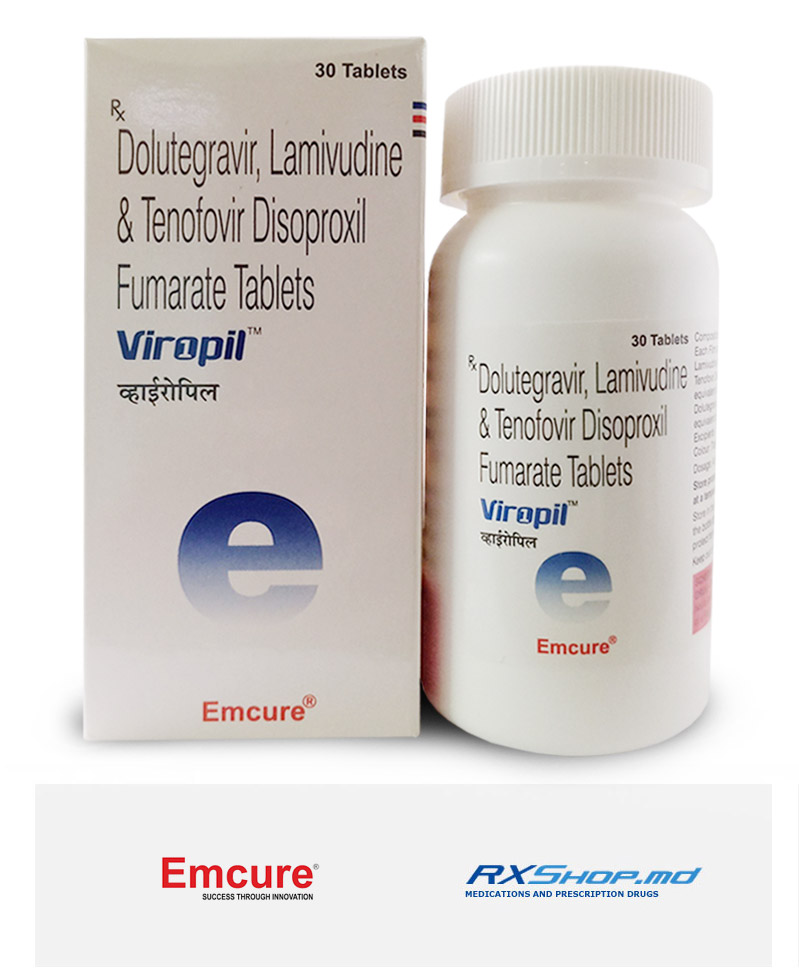
Viropil is an affordable Indian fixed-dose combination antiretroviral medication containing Dolutegravir 50 mg + Lamivudine 300 mg + Tenofovir Disoproxil Fumarate 300 mg per tablet, manufactured by Cipla Limited — the WHO-recommended first-line HIV-1 single-tablet regimen globally, commonly known as TLD (Tenofovir + Lamivudine + Dolutegravir). Viropil provides complete HIV combination antiretroviral therapy in a single once-daily tablet at affordable cost, making the WHO first-line preferred regimen accessible to millions of HIV patients in developing countries.
The three active ingredients work through complementary mechanisms. Dolutegravir (DTG) is an integrase strand transfer inhibitor (INSTI) with very high genetic barrier to resistance. Lamivudine (3TC) is a cytidine analog NRTI with dual HIV-1 and HBV activity. Tenofovir Disoproxil Fumarate (TDF) is an adenosine nucleotide analog NRTI — the modern standard NRTI backbone with HBV co-activity. The three drugs together achieve complete HIV viral suppression with excellent tolerability and very high genetic barrier to resistance.
Viropil is FDA-approved (as individual components) for HIV-1 infection treatment in adults and adolescents (weight 30 kg+). The TLD combination is the WHO preferred first-line regimen for treatment-naive HIV patients, treatment-experienced patients without resistance to its components, pregnancy (current safety data supportive), and pediatric HIV (weight-based, 20 kg+). Off-label uses include post-exposure prophylaxis (PEP) and prevention of mother-to-child HIV transmission.
The medication is available as Viropil TLD fixed-dose combination tablets. Standard adult dosing: 1 tablet once daily with or without food. Take consistently at the same time daily for optimal viral suppression. Renal adjustment required for CrCl below 50 mL/min — use separate components instead of fixed-dose combination.
Critical safety considerations include FDA boxed warning for HBV reactivation upon discontinuation in HIV/HBV co-infected patients (both Lamivudine and Tenofovir have HBV activity), NRTI-class risk of lactic acidosis and severe hepatomegaly with steatosis, Tenofovir-related renal toxicity (decreased kidney function, Fanconi syndrome), bone mineral density reduction with long-term Tenofovir DF use, Dolutegravir-related hepatotoxicity, weight gain (INSTI class effect), insomnia and headache (Dolutegravir CNS), and hypersensitivity reactions (rare).
Free prescription
Discrete packaging
Have questions?
Quality Assurance

- HIV / Human Immunodeficiency Virus: For HIV infection as complete triple-drug ART;
- TLD Triple Combination: TLD (Tenofovir + Lamivudine + Dolutegravir) regimen — WHO global standard;
- WHO First Line HIV Regimen: WHO preferred first-line HIV therapy globally since 2018;
- HIV Treatment Naive: For initial HIV therapy in treatment-naive adults and adolescents;
- HIV Treatment Experienced: For HIV patients with prior ART experience (without resistance to components);
- Adolescent HIV Therapy: For adolescents 30 kg+ body weight — full adult dosing;
- Pediatric HIV Therapy: For pediatric HIV (weight-based, 20 kg+ with adjusted dosing);
- Pregnancy HIV Therapy: For HIV treatment during pregnancy (current safety data supportive);
- Mother To Child Transmission Prevention: Off-label for prevention of perinatal HIV transmission;
- Post Exposure Prophylaxis (PEP): Off-label for HIV PEP following occupational or sexual exposure;
- HIV Maintenance Therapy: For long-term HIV viral suppression maintenance — once-daily single-tablet convenience;
- HIV HBV Coinfection: For HIV/HBV co-infection — both Lamivudine and Tenofovir cover HBV;
- HIV Resource Limited Settings: Foundational HIV therapy in resource-limited global health settings;
- HIV PEPFAR Programs: Foundational regimen for PEPFAR and global HIV elimination programs;
- HIV Compliance Single Tablet: Single-tablet once-daily dosing supports excellent adherence;
- Switch From Efavirenz Regimen: For switching from Efavirenz-based regimens (better tolerability);
- Switch From PI Regimen: For switching from protease inhibitor-based regimens to simplify therapy;
- Long Term HIV Maintenance: Suitable for long-term HIV viral suppression maintenance in stable patients.
- Better HIV Viral Suppression: Achievement of undetectable HIV viral load with effective combination therapy;
- Better CD4 Count Recovery: Restoration of CD4 T-cell count with effective HIV viral suppression;
- Better Immune Reconstitution: Immune system recovery with effective antiretroviral therapy;
- Less Opportunistic Infections: Reduction in opportunistic infection risk through immune restoration;
- Less HIV Progression: Slowing or halting of HIV disease progression to AIDS;
- Less AIDS-Defining Illnesses: Reduction in AIDS-defining illness occurrence with effective viral suppression;
- Less HIV Transmission Risk: Treatment-as-prevention reduces HIV transmission to sexual partners (U=U);
- Less HBV Viral Load Coinfection: Dual HBV activity in HIV/HBV co-infected patients;
- Less Mother-To-Child Transmission: Off-label benefit in prevention of perinatal HIV transmission;
- Less Post-Exposure HIV Risk: Off-label reduction in HIV seroconversion risk after exposure (PEP);
- Better Daily Function: Return to normal daily activities with effective HIV viral suppression;
- Better Quality of Life: Substantial improvement in quality of life with effective HIV therapy;
- Better Long-Term Survival: Effective ART transforms HIV from terminal to chronic manageable condition;
- Fewer Hospitalizations: Reduction in HIV-related hospitalizations and emergency visits;
- Better Adherence Single Tablet: Single-tablet once-daily dosing maximizes adherence in long-term therapy;
- High Genetic Barrier Resistance: Very high genetic barrier to resistance (Dolutegravir INSTI advantage);
- Better Tolerability vs Older Regimens: Better tolerated than older Efavirenz-based or PI-based regimens;
- No Sexual Side Effects: No sexual dysfunction unlike some older HIV regimens;
- No CNS Disturbance vs Efavirenz: Avoids Efavirenz-associated vivid dreams, insomnia, depression;
- Brand Viropil: Affordable Indian Cipla Limited TLD brand with international quality manufacturing standards;
- Generic TLD: Affordable TLD combination expanding global access to WHO-recommended first-line HIV therapy;
- Acriptega Equivalent: Same TLD combination as Mylan brand Acriptega with bioequivalent therapeutic profile;
- TLD Triple Combination: TLD (Tenofovir + Lamivudine + Dolutegravir) regimen — WHO global standard;
- WHO First Line HIV Regimen: WHO-recommended preferred first-line HIV therapy globally;
- Integrase Strand Transfer Inhibitor: Dolutegravir INSTI provides high genetic barrier to resistance;
- Cytidine Analog NRTI: Lamivudine cytidine NRTI with dual HIV-1/HBV activity;
- Adenosine Nucleotide NRTI: Tenofovir Disoproxil Fumarate adenosine NRTI — modern standard NRTI backbone;
- Once Daily Single Tablet: Single tablet once daily — ultimate convenience for chronic HIV therapy;
- HIV Pregnancy Safe Modern: Current safety data supportive of pregnancy use (initial 2018 NTD concern de-escalated);
- Pediatric HIV WHO Approved: WHO-approved pediatric HIV therapy (weight-based 20 kg+);
- HIV HBV Dual Coverage: Dual HBV coverage (Lamivudine + Tenofovir) in HIV/HBV co-infected patients;
- Indian Quality Manufacturing: Indian Cipla Limited manufacturing meeting international quality and bioequivalence standards;
- HIV PEPFAR Programs: Foundational regimen for PEPFAR and global HIV elimination programs;
- WHO Essential Medicine: Listed on the WHO Model List of Essential Medicines for HIV care.
Generic Viropil (Dolutegravir and Lamivudine and Tenofovir 50mg/300mg/300 mg) Medication guide:
📖 What Is Viropil TLD First-Line HIV Combination
💊 Viropil is the Cipla and Emcure generic version of the WHO-recommended first-line HIV-1 antiretroviral therapy known as TLD - a fixed-dose combination of Dolutegravir 50 mg + Lamivudine 300 mg + Tenofovir Disoproxil Fumarate 300 mg in a single once-daily tablet. This landmark combination has become the preferred first-line HIV treatment globally since 2019 based on WHO guidelines.
🌐 The TLD regimen represents a major evolution in HIV therapy from earlier efavirenz-based combinations. Its unique advantages include a high resistance barrier from dolutegravir, excellent virological suppression rates exceeding 90% in most clinical scenarios, once-daily convenience, and broad tolerability. TLD is the backbone of global HIV programs supported by PEPFAR, the Global Fund, and national ministries of health worldwide.
📇 Viropil product snapshot
| Generic composition | Dolutegravir 50 mg + Lamivudine 300 mg + Tenofovir Disoproxil Fumarate 300 mg |
| Regimen designation | TLD (Tenofovir + Lamivudine + Dolutegravir) - WHO preferred first-line adult HIV therapy |
| Drug classes | Integrase strand transfer inhibitor (INSTI) + two nucleos(t)ide reverse transcriptase inhibitors (NRTI) |
| Cipla and Emcure sponsors | Both major Indian generic manufacturers of TLD supporting global HIV programs |
| Innovator components | Dolutegravir (ViiV Healthcare/GSK 2013); Lamivudine (Glaxo 1995); Tenofovir DF (Gilead 2001) |
| WHO recommendation | Preferred first-line adult HIV-1 therapy since 2019 (replacing efavirenz-based TDF/FTC/EFV) |
| Dosing | One tablet orally once daily; can be taken with or without food |
| Virological efficacy | Greater than 90% viral suppression at 48 weeks in most clinical scenarios |
| Resistance barrier | High - dolutegravir has substantial genetic barrier to resistance emergence |
| Global availability | Widely available through generic manufacturing; procured by PEPFAR, Global Fund, national programs |
✅ Modern positioning: TLD has become the backbone of adult HIV first-line therapy globally. Over 15 million people are estimated to receive dolutegravir-based first-line regimens worldwide - a scale-up rate unprecedented in HIV therapy history. The regimen is used in treatment-naive patients starting HIV therapy, in switch scenarios from earlier regimens, and increasingly in second-line therapy after protease inhibitor failure.
🎯 Distinctive advantages driving global adoption: compared to earlier first-line regimens, TLD provides faster viral suppression, better tolerability, less CNS effects than efavirenz-based regimens, high resistance barrier reducing failure risk, once-daily single-tablet convenience, and lower drug interaction burden. Cost-effectiveness through generic manufacturing enables sustainable global scale-up.
📜 History from Individual Agents to TLD Combination
📜 The Viropil TLD combination represents the convergence of three separately developed antiretroviral agents spanning three decades of HIV therapy evolution. Understanding this development history illuminates why TLD has emerged as the definitive first-line HIV therapy of the current era.
📅 Development timeline
🧪 1987 - Zidovudine first antiretroviral — AZT (Retrovir) FDA-approved as first HIV antiretroviral. Monotherapy era begins. High toxicity and rapid resistance emergence limited efficacy but proved viral replication could be inhibited pharmacologically.
💊 1995 - Lamivudine FDA approval — Epivir (lamivudine) approved by FDA. Developed by BioChem Pharma and licensed to Glaxo Wellcome. Excellent safety profile made it a component of many combination regimens. Also active against HBV.
📈 1996 - Highly Active Antiretroviral Therapy (HAART) era — Triple-drug combination therapy transforms HIV from death sentence to manageable chronic condition. Combinations of nucleoside reverse transcriptase inhibitors plus protease inhibitors demonstrate dramatic mortality reduction.
🔬 2001 - Tenofovir DF FDA approval — Viread (tenofovir disoproxil fumarate) approved by Gilead Sciences. Nucleotide reverse transcriptase inhibitor with once-daily dosing and improved resistance profile. Also HBV activity. Becomes cornerstone NRTI backbone.
🔗 2004 - Fixed-dose combinations emerge — Truvada (tenofovir + emtricitabine) approved. Simplifies HIV therapy with two NRTIs in single tablet. Beginning of fixed-dose combination era supporting adherence.
🎯 2006 - Atripla single-tablet regimen — Efavirenz + tenofovir + emtricitabine combined into first single-tablet HIV regimen. Once-daily one-tablet therapy transforms adherence. EFV/FTC/TDF becomes global first-line standard.
🌟 2013 - Dolutegravir FDA approval — Tivicay (dolutegravir) approved by ViiV Healthcare (GSK/Pfizer joint venture). Second-generation integrase strand transfer inhibitor with high resistance barrier. SPRING-2 and SINGLE trials demonstrated superiority to raltegravir and efavirenz respectively.
📊 2014 - Triumeq (branded TLD-like regimen) — Dolutegravir + abacavir + lamivudine - the first fixed-dose combination integrating dolutegravir. Branded product from ViiV. Established the model of dolutegravir plus dual NRTI in single tablet.
🌐 2017 - Generic dolutegravir enables TLD scale-up — Cipla receives WHO prequalification for dolutegravir 50 mg. Combined with existing generic tenofovir and lamivudine, enables production of affordable generic TLD single-tablet regimen for global procurement.
🏛️ 2018 - Tsepamo neural tube defect signal — Botswana birth outcomes surveillance initially reported potential neural tube defect signal with periconceptual dolutegravir use. WHO issued cautious guidance. Subsequent updates 2019-2021 substantially reassured about pregnancy safety.
🏆 July 2019 - WHO preferred first-line recommendation — WHO Consolidated Guidelines establish TLD as preferred first-line HIV therapy for adults and adolescents. Replaces efavirenz-based EFV/FTC/TDF as first-line. Landmark policy change affecting tens of millions of patients globally.
📊 2019 - ADVANCE trial NEJM landmark — Venter et al. 2019 NEJM ADVANCE trial from South Africa demonstrated TLD non-inferior to efavirenz-based regimens with better tolerability. Supported global rollout policy.
🌍 2020-2025 - Global TLD rollout — National HIV programs across sub-Saharan Africa, Southeast Asia, Latin America transition to TLD. PEPFAR and Global Fund procurement supports scale. Over 15 million patients estimated on dolutegravir-based first-line therapy globally.
🌍 Present - TLD as global HIV backbone — Viropil and equivalent TLD products from Cipla, Emcure, and other generic manufacturers form the backbone of adult HIV therapy globally. Ongoing surveillance for long-term outcomes including bone, renal, weight, and pregnancy considerations.
🌟 Historical significance: the TLD regimen represents the most successful HIV therapy scale-up in history. The combination of generic manufacturing enabling affordability, WHO policy leadership establishing recommendations, and clinical trial evidence supporting efficacy has transformed adult HIV therapy globally in less than a decade. Cipla played central role in generic manufacturing making this scale-up feasible.
🧪 Chemistry of Three Component Antiretroviral Agents
🧪 Viropil combines three chemically distinct antiretroviral agents in a single tablet. Each component has unique chemistry, mechanism, and pharmacokinetic properties that complement the others to provide potent, well-tolerated HIV suppression. Understanding the individual chemistry supports appreciation of the combination clinical advantages.
⚗️ Dolutegravir 50 mg - INSTI component
📋 Chemical identity — Dolutegravir sodium - carbamoyl pyridone bicyclic derivative. Molecular formula: C20H18F2N3NaO5. Molecular weight: 441.36 g/mol (sodium salt). Second-generation integrase strand transfer inhibitor.
🔬 Key structural features — Contains two chelating metal-binding groups that coordinate with divalent cations (magnesium) at the integrase active site. Difluorobenzyl moiety provides binding affinity to viral integrase intasome. Structure optimized for tight active-site binding and slow dissociation underlying high resistance barrier.
🔑 Chemical class evolution — Second-generation INSTI. Structurally distinct from first-generation raltegravir and elvitegravir. Improved pharmacokinetics, resistance profile, and dosing convenience. Enables once-daily unboosted dosing.
⚗️ Lamivudine 300 mg - NRTI component
📋 Chemical identity — Lamivudine (3TC) - cytidine analog nucleoside. Molecular formula: C8H11N3O3S. Molecular weight: 229.26 g/mol. Also known as (-)-2-prime,3-prime-dideoxy-3-prime-thiacytidine.
🔬 Key structural features — Contains sulfur atom replacing 3-prime carbon of ribose creating oxathiolane ring. This sulfur substitution provides the unique metabolic and resistance profile distinguishing lamivudine from earlier cytidine analogs. L-enantiomer isomer.
🔗 Related compound — Emtricitabine (FTC) is a 5-fluoro analog of lamivudine with similar mechanism and safety profile. Some fixed-dose combinations use FTC instead of 3TC. TLD specifically uses lamivudine per WHO guidelines.
⚗️ Tenofovir Disoproxil Fumarate 300 mg - NtRTI component
📋 Chemical identity — Tenofovir disoproxil fumarate - prodrug of tenofovir (a nucleotide phosphonate analog of adenosine monophosphate). Molecular formula: C19H30N5O10P (tenofovir DF fumarate salt). Molecular weight: 635.52 g/mol.
🔬 Key structural features — Acyclic nucleotide analog already containing phosphonate group (unlike NRTIs which require initial cellular phosphorylation). Disoproxil ester prodrug moiety enables oral absorption; hydrolysis to active tenofovir monophosphate. Requires two additional cellular phosphorylations to active tenofovir diphosphate.
🔗 Related compound - TAF — Tenofovir alafenamide (TAF) is a newer prodrug with improved renal and bone safety profile. Not used in current TLD due to cost and formulation considerations - tenofovir disoproxil fumarate remains the WHO first-line standard.
🎯 Combination pharmaceutical formulation
📦 Single-tablet formulation — All three agents combined in a single tablet manufactured by Cipla or Emcure per WHO-prequalification standards. Excipients include microcrystalline cellulose, croscarmellose sodium, magnesium stearate, and film coating.
⚖️ Bioequivalence — Generic TLD demonstrates bioequivalence to reference innovator products. Peak concentration, area under curve, and time to peak concentration fall within 80-125% bioequivalence limits for all three components.
🏆 Manufacturing quality — Cipla and Emcure facilities producing TLD are WHO-prequalified, US FDA-inspected, and audited by multiple regulatory authorities. Quality standards match innovator products.
📊 Global standardization — Generic TLD manufacturers follow WHO-prequalified specifications ensuring consistent quality across manufacturers. This enables global procurement through PEPFAR, Global Fund, and national programs with confidence in equivalent product quality.
🌟 Chemistry-informed clinical implications: the three-drug chemistry enables simultaneous inhibition at three distinct HIV replication steps - integrase strand transfer (dolutegravir) plus two positions in reverse transcription (lamivudine plus tenofovir). This multi-mechanism approach underlies both the potent virological suppression and the high resistance barrier of TLD therapy.
⚙️ Mechanism Integrase Inhibition Plus Reverse Transcriptase Inhibition
⚙️ Viropil delivers a three-mechanism attack on HIV replication combining integrase inhibition with two forms of reverse transcriptase inhibition. This multi-mechanism approach - drawing on three drug classes with distinct molecular targets - provides both potent viral suppression and high resistance barrier.
🔬 Dolutegravir - INSTI mechanism
🔑 Target — HIV-1 integrase - the viral enzyme catalyzing integration of proviral DNA into host cell chromosome. This step is essential for productive infection. Cellular DNA lacks integrase making this a highly selective viral target.
🧪 Two-step integrase reaction — Integrase catalyzes: (1) 3-prime processing - trimming viral DNA ends after reverse transcription; (2) strand transfer - joining processed viral DNA ends to cellular chromosomal DNA.
🎯 Dolutegravir inhibition point — Dolutegravir binds the integrase active site during strand transfer - blocking the actual integration reaction. Called integrase strand transfer inhibitor (INSTI). Binds tightly to the intasome complex.
🔐 High resistance barrier — Compared to first-generation INSTIs (raltegravir, elvitegravir), dolutegravir binds integrase more tightly and dissociates more slowly. This means resistance mutations must overcome higher barrier before conferring functional resistance. Multiple mutations typically needed.
📈 Clinical implication — Dolutegravir rarely fails with resistance emerging in treatment-naive patients. Even in treatment-experienced patients with prior INSTI exposure, dolutegravir may retain activity where first-generation INSTIs fail.
🔬 Lamivudine - NRTI mechanism
🔑 Target — HIV-1 reverse transcriptase - the viral enzyme that copies HIV RNA into DNA. Cellular DNA polymerases have different structures making viral RT a selective target.
🧪 Activation cascade — Lamivudine enters cells and undergoes three cellular phosphorylations by kinases: monophosphate (first), diphosphate (second), triphosphate (third and active). Lamivudine triphosphate is the active antiviral form.
🎯 Chain termination mechanism — Lamivudine triphosphate competes with natural deoxycytidine triphosphate (dCTP) for incorporation into growing viral DNA strand. Once incorporated, the missing 3-prime hydroxyl on the sugar prevents further nucleotide addition - chain termination.
📈 Resistance profile — Lamivudine resistance emerges through M184V mutation in RT - well-characterized single mutation. However, M184V retains susceptibility to tenofovir and paradoxically reduces viral replicative capacity - a functional advantage.
🔬 Tenofovir - NtRTI mechanism
🔑 Target — Same target as lamivudine - HIV-1 reverse transcriptase - but different chemistry (nucleotide not nucleoside analog).
🧪 Prodrug activation — Tenofovir disoproxil fumarate undergoes ester hydrolysis to release tenofovir monophosphate (this is why it is called a nucleotide analog - already phosphorylated). Only two additional cellular phosphorylations needed for tenofovir triphosphate active form (vs three for standard NRTIs).
🎯 Chain termination mechanism — Tenofovir triphosphate competes with natural deoxyadenosine triphosphate (dATP) for incorporation into viral DNA by reverse transcriptase. Once incorporated, causes chain termination similar to lamivudine but through the adenosine position.
📈 Resistance profile — Tenofovir resistance emerges through K65R mutation in RT - less common than M184V. K65R may retain some tenofovir susceptibility. Cross-resistance patterns with other NRTIs are limited.
🩸 HBV activity bonus — Tenofovir also has strong HBV activity - important for HIV/HBV coinfected patients where TLD provides simultaneous HIV and HBV therapy.
🎯 Complementary combination logic
- 🔑 Three distinct molecular targets - integrase strand transfer plus two positions in reverse transcription; multi-target inhibition
- 🔑 Different resistance mutations - integrase, RT-M184V, RT-K65R are distinct; no single mutation confers resistance to all three
- 🔑 Complementary pharmacokinetics - once-daily dosing feasible for all three; convenient single-tablet formulation
- 🔑 Additive HBV activity - lamivudine plus tenofovir provide dual anti-HBV therapy where coinfection exists
- 🔑 High resistance barrier collective - dolutegravir tight integrase binding plus dual NRTI redundancy creates very high barrier to virological failure
- 🔑 Excellent tolerability - all three components generally well-tolerated with minimal overlapping toxicity
🌟 Multi-mechanism clinical advantage: the three-mechanism attack produces rapid and durable viral suppression in most patients. Median time to viral undetectability is approximately 4 weeks with TLD - faster than many earlier regimens. Long-term durability with viral suppression exceeding 90% at multiple years reflects the sustained potency and resistance barrier.
❌ What TLD does not treat: no meaningful activity against other viral infections beyond HIV and HBV (through lamivudine and tenofovir). Not effective against HCV, HSV, VZV, CMV, influenza, or coronaviruses. Focused HIV therapy with the HBV activity bonus.
🔬 Pharmacokinetics of Three Component Fixed-Dose Combination
🔬 Viropil pharmacokinetics reflect the properties of its three active components. All three achieve adequate systemic exposure with once-daily dosing to maintain viral suppression continuously. Understanding these PK parameters supports appropriate dosing decisions across special populations.
📊 Dolutegravir pharmacokinetics
| Oral bioavailability | Not formally established but high; food increases exposure modestly |
| Time to peak concentration | 2-3 hours after oral dose |
| Protein binding | Approximately 99% - highly protein-bound |
| Elimination half-life | Approximately 14 hours (long enough for once-daily dosing) |
| Primary metabolism | UGT1A1 glucuronidation (major); CYP3A4 (minor) |
| Primary elimination | Hepatic metabolism with biliary excretion; less than 1% renal |
📊 Lamivudine pharmacokinetics
| Oral bioavailability | Approximately 86% - excellent absorption |
| Time to peak concentration | 1-1.5 hours after oral dose |
| Effect of food | Minimal - can be taken with or without food |
| Protein binding | Approximately 36% (moderate) |
| Intracellular half-life | Approximately 15-16 hours (lamivudine triphosphate) supporting once-daily dosing |
| Metabolism | Minimal hepatic metabolism |
| Primary elimination | Renal - approximately 70% excreted unchanged in urine; dose adjustment for renal impairment |
📊 Tenofovir DF pharmacokinetics
| Oral bioavailability | Approximately 25% (as tenofovir DF); food increases exposure |
| Time to peak concentration | Approximately 1 hour after dose (fasted); 2 hours with food |
| Effect of food | Modest increase with food - can be taken either way |
| Protein binding | Less than 1% of tenofovir (very low) |
| Plasma half-life | Approximately 17 hours (plasma tenofovir); intracellular tenofovir diphosphate longer |
| Metabolism | Minimal hepatic metabolism; not CYP450 substrate significantly |
| Primary elimination | Renal - active glomerular filtration plus active tubular secretion; dose adjustment for renal impairment |
🎯 Practical PK implications
- 📅 Once-daily dosing feasible - all three components have adequate half-life or intracellular persistence for once-daily administration
- 🍽️ Food effect minimal - can be taken with or without food; consistent daily timing supports adherence
- 🫀 Renal-eliminated NRTIs - lamivudine and tenofovir both require renal dose adjustment in impaired kidney function
- 🪶 Hepatic-metabolized dolutegravir - UGT1A1 pathway is different from most drugs; limited hepatic dose adjustment needed
- 💉 Different interaction profiles - dolutegravir has cation-binding interactions; tenofovir has renal transport interactions; lamivudine has minimal interactions
- 📈 Rapid steady state - all three components achieve steady state within 5 days of consistent daily dosing
🔑 Cation chelation interaction for dolutegravir: dolutegravir chelates polyvalent cations reducing absorption. Antacids containing aluminum, magnesium, or calcium; iron and calcium supplements; multivitamins containing minerals all reduce dolutegravir absorption. Must be separated in time (typically 2 hours before or 6 hours after Viropil). Discussed further in section 18.
🤝 Adherence supports optimal PK: consistent daily timing maintains steady-state drug concentrations. Missed doses temporarily reduce concentrations below optimal antiviral levels. Excellent adherence combined with the high resistance barrier explains outstanding TLD virological outcomes.
📋 Modern HIV Treatment Framework and Viropil Positioning
📋 Viropil TLD occupies the central position in modern global HIV therapy. Understanding the current treatment framework - including alternative regimens, sequencing considerations, and clinical decision-making - illuminates why TLD is preferred first-line and how it fits within broader HIV care.
🎯 Modern first-line HIV therapy framework
🌟 TLD as WHO preferred first-line — Dolutegravir + tenofovir DF + lamivudine (TLD) is preferred first-line for adults and adolescents per WHO Consolidated Guidelines. Broadly recommended by DHHS, EACS, BHIVA, and other guidelines with variations in exact components.
🌟 Alternative first-line regimens — Include: (1) Dolutegravir + tenofovir alafenamide + emtricitabine (or lamivudine) - TAF-based version with improved renal/bone profile at higher cost; (2) Bictegravir + tenofovir alafenamide + emtricitabine (Biktarvy) - single-tablet alternative in high-income settings; (3) Rilpivirine-based regimens in specific scenarios.
🔬 Long-acting injectable regimens — Cabotegravir + rilpivirine long-acting injectable - emerging alternative for stable patients. Every 1-2 month injection. Currently limited by cost and infrastructure requirements. Not first-line for most patients.
📈 Two-drug regimens — Dolutegravir + lamivudine (Dovato) two-drug regimen for select stable patients. Avoids tenofovir. Not typically used treatment-naive but growing option for switch scenarios.
🔚 Legacy first-line regimens now less preferred — Efavirenz-based (EFV/FTC/TDF) - still used in some settings but replaced by dolutegravir due to CNS effects and resistance profile; Nevirapine-based - historical, largely superseded; Protease inhibitor-based first-line - reserved for specific scenarios.
🏥 Second-line and salvage frameworks
🔄 TLD as second-line — Increasingly used as second-line after protease inhibitor failure. Also as second-line after other first-line failures where dolutegravir susceptibility retained.
📊 Traditional second-line — Boosted protease inhibitor (ATV/r or LPV/r or DRV/r) plus optimized NRTI backbone. Used after NNRTI-based first-line failure. Higher pill burden and interaction potential.
🔩 Third-line and salvage — Complex scenarios requiring resistance testing and individualized regimen construction. May include darunavir, dolutegravir at increased dose, etravirine, fostemsavir, ibalizumab, or emerging agents.
🌍 WHO consolidated guidelines TLD role
🏛️ Preferred for adults and adolescents — WHO recommends TLD for treatment-naive adults, adolescents, and pregnant women. Population-level recommendation supporting simplified national HIV program implementation.
👶 Pediatric considerations — Dolutegravir-based regimens approved down to age 4 weeks with weight-based dosing. Alternative pediatric-appropriate formulations available. WHO pediatric guidance parallels adult recommendations.
🤰 Pregnancy considerations — Following extensive reassurance from Tsepamo Study updates and DOLPHIN trials, WHO recommends dolutegravir-based therapy including during pregnancy. See section 19.
🌍 Global scale-up policy — WHO Rapid Advice framework supported national transition from efavirenz to dolutegravir first-line. Over 15 million patients estimated on dolutegravir-based regimens globally reflecting successful scale-up.
🎯 Comprehensive HIV care framework: beyond antiretroviral therapy, modern HIV care includes: viral load monitoring, CD4 count when indicated, screening for TB and other opportunistic infections, prevention of mother-to-child transmission, HBV/HCV coinfection management, cardiovascular risk reduction, mental health support, adherence support. TLD is one component of broader care.
🌟 Distinctive TLD position: the combination of virological potency, high resistance barrier, once-daily convenience, favorable side effect profile, and generic affordability makes TLD uniquely suited to global first-line HIV therapy. No previous regimen has combined these attributes so effectively. The scale-up over 2019-2025 has been transformational for global HIV outcomes.
🎯 Treatment-Naive HIV Initial Therapy with Viropil
🎯 Treatment-naive HIV therapy initiation with Viropil TLD represents the primary use case for the majority of Viropil prescribing globally. Understanding the framework for initial therapy - including timing, baseline assessment, and expected outcomes - supports optimal individual patient care and program-level scale-up.
🕑 When to start ART - modern framework
🌟 Same-day or rapid start — Current WHO and DHHS guidance supports starting ART on the day of HIV diagnosis or as rapidly as feasible. This "test and treat" or "rapid ART start" approach improves engagement, viral suppression rates, and long-term outcomes.
👤 All HIV positive individuals — ART is indicated for all HIV positive individuals regardless of CD4 count. This universal treatment approach - established around 2015 - abandons the older CD4-threshold-based initiation.
📈 Public health rationale — Undetectable equals untransmittable (U=U) - individuals with sustained viral suppression on ART do not transmit HIV sexually. Universal early treatment supports both individual health and epidemic control (Treatment as Prevention).
🌟 Specific rapid-start scenarios — Same-day start particularly valuable for: pregnancy, opportunistic infections (with monitoring for immune reconstitution), acute HIV infection, high viral load, patients likely to be lost to follow-up.
⚠️ Consider brief delay — Brief delay may be appropriate for: tuberculous meningitis (start after 2-8 weeks TB therapy per some guidance); cryptococcal meningitis (delay 2-4 weeks after cryptococcal therapy); active severe opportunistic infection with high immune reconstitution risk.
🔬 Baseline evaluation before Viropil
📊 HIV confirmation — Confirmed HIV-1 diagnosis - typically antigen/antibody test with confirmatory testing. Viral load and CD4 count for baseline reference. HIV-2 testing where geographically relevant (dolutegravir also active against HIV-2).
🫀 Renal function — Baseline serum creatinine and estimated GFR. Tenofovir DF requires renal function assessment. Some patients with baseline renal impairment may need alternative regimen (TAF-based or non-tenofovir).
🪶 Hepatic function and hepatitis screening — Hepatic panel and HBV/HCV screening. HBV coinfection is common - TLD includes both HBV-active drugs (lamivudine + tenofovir) providing simultaneous therapy. HCV requires separate treatment consideration.
🧬 Opportunistic infection screening — Tuberculosis screening (particularly in high-TB-burden settings) - active TB requires TB therapy before or with ART; latent TB may warrant prophylaxis. Cryptococcal antigen screening in low CD4 (less than 100) settings.
👤 Sexually transmitted infection screening — Syphilis, gonorrhea, chlamydia screening. Address any active infections. Prevention counseling.
💉 Vaccination status — Assess and update vaccinations: hepatitis B (if seronegative), pneumococcal, influenza, tetanus, HPV, COVID-19 as appropriate. Some vaccines require CD4-based timing.
🤰 Pregnancy status — For women of childbearing potential - pregnancy status and contraception discussion. TLD safe in pregnancy per updated data but discussion still appropriate.
🔬 Resistance testing — Baseline resistance testing in settings where feasible. In high-resource settings, standard. In lower-resource settings, may not be feasible and empiric TLD start based on population resistance patterns.
📈 Expected outcomes with Viropil TLD initial therapy
✅ Viral suppression rates — Over 90% viral suppression at 48 weeks in most clinical trial and real-world evidence. Rapid viral load decline typically evident within weeks.
🕑 Time to undetectable — Median time to viral load below 50 copies/mL is approximately 4 weeks with TLD - faster than efavirenz-based regimens. Most patients achieve undetectable status within 3 months.
🔐 Resistance emergence rare — Treatment-emergent dolutegravir resistance is very rare in first-line therapy - approximately less than 1% incidence in most clinical scenarios. Adherence lapses typically do not translate to resistance as they do with efavirenz.
🧠 CD4 count recovery — CD4 count typically rises after ART initiation, particularly in patients with lower baseline counts. Immune recovery over months to years. Time to CD4 above 500 varies by baseline count.
💓 Quality of life — Modern TLD generally allows near-normal quality of life. Once-daily convenient regimen with generally good tolerability. Symptom improvement common in patients with baseline symptomatic HIV.
🤝 Adherence and counseling essentials: emphasize lifelong daily therapy commitment. Discuss adherence strategies including linking to daily routine, reminders, refill planning. Explain viral suppression takes time - viral load decreases progressively. Address concerns about long-term use, disclosure, and stigma. Comprehensive counseling supports success.
🌟 Real-world program success: global TLD scale-up has demonstrated successful outcomes in real-world settings across sub-Saharan Africa, Southeast Asia, and Latin America. National HIV programs report improved viral suppression rates, reduced regimen failure, and simplified clinical management compared to earlier efavirenz-based era.
🔄 Switch Therapy from Alternative Regimens to Viropil
🔄 Switch therapy from alternative HIV regimens to Viropil TLD is common in clinical practice as programs transition patients from earlier first-line regimens (efavirenz-based) to current TLD standard. Understanding the switch framework supports appropriate transition management.
🎯 Rationale for switch to TLD
🌟 Better tolerability — Fewer CNS side effects than efavirenz (which causes dizziness, vivid dreams, insomnia). Better long-term tolerability supports adherence and quality of life.
🔐 Higher resistance barrier — Lower risk of virological failure and treatment-emergent resistance compared to efavirenz. Provides more forgiving regimen for occasional adherence lapses.
📈 Program standardization — National HIV programs benefit from single unified first-line regimen. Simplified procurement, distribution, provider training, and patient counseling. Cost-effective at scale.
🌍 WHO policy alignment — Compliance with WHO 2019 preferred first-line recommendation. National guideline alignment supports coordinated global HIV response.
💓 Long-term outcomes — Better long-term virological outcomes supported by clinical trial evidence and real-world data over 5+ years.
🔄 Switch scenarios framework
🔝 Efavirenz-based to TLD — Most common program switch scenario. Patients stably suppressed on EFV/FTC/TDF can switch to TLD directly. No wash-out required. Same-day switch with next dose.
🔝 Nevirapine-based to TLD — Similar approach. Patients on NVP-based regimens switch to TLD directly. Long half-life of nevirapine means brief overlap acceptable and not problematic.
🔝 Boosted protease inhibitor to TLD — Patients stably suppressed on LPV/r, ATV/r, or DRV/r can switch to TLD if no resistance to TLD components. Second-line PI use may indicate prior failure requiring resistance evaluation.
🔝 Older triple-nucleoside regimens to TLD — Patients on outdated triple-NRTI (AZT+3TC+ABC etc.) switch to TLD for improved efficacy.
🔐 TLD switch after prior failure — If suppressed on second-line PI-based regimen after prior first-line failure, switch to TLD requires careful resistance evaluation. May need documented dolutegravir susceptibility.
📋 Practical switch protocol
✅ Confirm virological suppression — Ideally viral load below 50 copies/mL (or below 400-1000 in resource-limited settings) documented within past 6 months before switch. Suppressed switching has higher success rate than switching with detectable viral load.
🫀 Renal function assessment — Baseline creatinine and estimated GFR. Tenofovir DF requires adequate renal function. If GFR less than 50, consider alternative regimen.
🪶 Hepatitis B status — Confirm HBV status. If HBV coinfected, TLD provides continued HBV therapy. Do not stop TLD abruptly in HBV positive patients due to HBV rebound risk.
🤰 Pregnancy status — For women of childbearing potential - pregnancy status assessment. TLD safe in pregnancy per updated data but discussion appropriate.
🕛 Timing of switch — Substitute TLD for next scheduled dose of previous regimen. No wash-out period needed. No dose adjustment needed for switch itself.
📊 Follow-up viral load — Viral load at 4-6 weeks and 3 months post-switch confirms continued suppression. Then routine viral load monitoring per standard practice (typically 6-12 monthly).
👤 Counseling — Explain the switch rationale, benefits, and any expected changes. Address any concerns about changing regimens. Reassure that switch does not indicate failure.
📊 Post-switch outcomes and considerations
✅ Sustained viral suppression — Vast majority of patients maintain viral suppression after switch to TLD from suppressive prior regimen. Real-world data support switch success.
🌟 Symptom improvement — Patients often report improved sleep, less vivid dreams, better mood after switch from efavirenz. Quality of life measures typically improve.
⚖️ Weight considerations — Some patients experience weight gain after switch to dolutegravir-based therapy. Multifactorial - includes return to health effect plus dolutegravir-specific effect. Discussed in section 27.
📈 Continued monitoring — Standard HIV monitoring continues - viral load, CD4 when indicated, safety labs, tenofovir renal monitoring, comprehensive care.
🤝 Program-level considerations: national HIV programs undertaking population-scale switch from efavirenz to TLD require coordinated supply chain, provider training, patient communication, and monitoring systems. Program successful transitions provide model for global HIV therapy standardization.
🛡️ High Resistance Barrier and Long-Term Suppression
🛡️ The high resistance barrier of Viropil TLD is one of its most important clinical advantages. Understanding what "resistance barrier" means and why TLD offers superior barrier illuminates the regimen distinctive value proposition in modern HIV therapy.
🔐 What is resistance barrier
📋 Definition — Resistance barrier refers to the difficulty for HIV to develop clinically meaningful resistance to a regimen during treatment. High barrier means multiple mutations needed. Low barrier means single mutation may confer resistance.
🔑 Why it matters — High resistance barrier translates to: fewer treatment failures, less need for resistance testing, more forgiveness for adherence lapses, longer regimen durability, and easier program management at scale.
📊 Genetic vs pharmacological barrier — Genetic barrier - number of mutations needed. Pharmacological barrier - drug pharmacokinetics providing forgiveness for missed doses (long half-life, adequate concentrations). TLD has both.
🌟 Why dolutegravir has high barrier
🔬 Tight active-site binding — Dolutegravir binds integrase with high affinity. Even resistance mutations reduce but do not abolish binding. Multiple mutations typically required for clinically meaningful resistance.
🕛 Slow dissociation — Dolutegravir has slow dissociation from integrase-DNA intasome complex. Even if drug concentration falls temporarily, prolonged binding sustains inhibition.
🔝 Multiple mutations required — Unlike first-generation INSTIs where single N155H or Q148H mutation confers resistance, dolutegravir typically requires multiple mutations (e.g., R263K plus other secondary mutations) for clinical resistance.
📈 Fitness cost of dolutegravir-resistance mutations — Dolutegravir-resistance mutations reduce viral fitness. HIV with these mutations replicates less efficiently. This creates selection pressure against maintaining resistance in absence of drug.
🕐 Long intracellular half-life effects — Dolutegravir approximately 14 hour half-life supports sustained drug concentrations. Occasional missed dose typically does not lead to prolonged subtherapeutic exposure.
🔐 NRTI complementary barrier
🔑 Lamivudine M184V — Lamivudine resistance emerges through M184V mutation. However, M184V reduces viral fitness (approximately 40-60% reduction in replicative capacity). This means partial protection remains and virus is less virulent.
🔑 Tenofovir K65R — Tenofovir resistance through K65R mutation. Less common than M184V. K65R has some antagonistic interaction with M184V - not both readily coexisting.
🔑 Different mutation profiles — Lamivudine (M184V), tenofovir (K65R), and dolutegravir (multiple integrase mutations) require distinct genetic changes. Single mutation cannot compromise all three drugs simultaneously.
🔑 Combination effect — Even if one drug loses activity, the other two continue to provide antiviral pressure. This redundancy makes complete regimen failure very rare.
📈 Clinical implications of high barrier
🌟 Rare treatment-emergent resistance — Treatment-emergent dolutegravir resistance is very rare in first-line therapy - less than 1% incidence in most reports. Contrast to efavirenz-based regimens where 5-15% may emerge with poor adherence.
🌟 Adherence lapse forgiveness — Better tolerance for missed doses compared to lower-barrier regimens. Occasional lapses do not immediately compromise regimen. Encourages continued engagement.
🌟 Long-term durability — Clinical trial extensions and real-world data support durable virological suppression over 5+ years on TLD first-line. Sustainability makes it well-suited to lifelong HIV therapy.
🌟 Reduced need for resistance testing — Where resistance testing is expensive or unavailable, high-barrier regimens like TLD provide safety margin for empiric use.
🌟 Simplified program management — National HIV programs benefit from fewer patients requiring switch to complex second-line regimens. Programmatic scale-up more feasible.
🌟 The transformative impact: the high resistance barrier of dolutegravir-based therapy has been one of the key drivers of successful global HIV scale-up. Prior first-line regimens (efavirenz-based) had lower barrier resulting in more treatment failures and need for second-line therapy - which was more expensive and complex. TLD reduces these downstream complications substantially.
🤝 Caveat about resistance: despite high barrier, resistance can still emerge in scenarios of prolonged poor adherence, drug interactions reducing dolutegravir levels, or pre-existing resistance from prior treatments. Ongoing vigilance and appropriate resistance testing in failure scenarios remain important.
🌍 Global HIV Programs and Cipla Generic Access
🌍 The Viropil TLD product available on RXshop is a Cipla generic version of the WHO-preferred first-line HIV therapy. Understanding the global TLD access framework - Cipla and Emcure generic manufacturing, PEPFAR/Global Fund procurement, national program implementation - illuminates how affordable modern HIV therapy has reached tens of millions of patients globally.
🇮🇳 Cipla and Emcure - major TLD manufacturers
🇮🇳 Cipla Limited overview — Founded 1935 by Khwaja Abdul Hamied. Led by Yusuf Hamied from 1972 through 2013. One of the world largest generic pharmaceutical manufacturers with dominant HIV/AIDS antiretroviral portfolio. Historic role in HIV therapy affordability dates to 2001 when Cipla offered generic HIV therapy at $1/day - a landmark moment in HIV history.
🇮🇳 Emcure Pharmaceuticals — Another major Indian generic antiretroviral manufacturer with substantial HIV/AIDS portfolio. Also produces TLD for global procurement.
🏆 WHO Prequalification — Both Cipla and Emcure TLD products are WHO Prequalified - meeting international quality standards for global procurement. Manufacturing facilities audited by WHO, US FDA, EMA, and other authorities.
💰 Access-oriented pricing — Generic TLD available at approximately $75-100 per patient per year through global procurement mechanisms. Compare to over $10,000 annually for innovator products in high-income markets. This 100+ fold price differential enables global scale-up.
📦 Consistent quality — Generic TLD demonstrates bioequivalence to innovator products including Tivicay (dolutegravir), Epivir (lamivudine), and Viread (tenofovir). Clinical outcomes with generic TLD match innovator product performance.
🌍 Global procurement framework
🇺🇸 PEPFAR (US President Emergency Plan for AIDS Relief) — Largest single funder of HIV therapy globally. Major procurer of generic TLD through the President Emergency Plan for AIDS Relief since establishment in 2003. Transitioned procurement to TLD as first-line during 2019-2021.
🌍 The Global Fund — International financing mechanism supporting HIV, tuberculosis, and malaria. Substantial TLD procurement supporting HIV programs in low- and middle-income countries. Aligned with WHO recommendations.
🇺🇳 UNITAID — Global health initiative that supported early transition to generic dolutegravir through market-shaping interventions. Helped establish generic dolutegravir supply chain.
🏛️ National procurement — Individual country governments procure TLD directly for their national HIV programs. Some through pooled procurement mechanisms. Others through direct manufacturer contracts.
🌍 Voluntary Licensing Agreements — Medicines Patent Pool facilitated voluntary licensing agreements between innovator companies (ViiV Healthcare, Gilead) and generic manufacturers. Enabled legal generic TLD production for developing country markets.
📊 Global scale-up outcomes
📈 Over 15 million patients on TLD globally — Estimated 15+ million people on dolutegravir-based first-line therapy as of 2024 - representing majority of adult HIV patients globally.
🌍 Regional scale-up — Sub-Saharan Africa - where HIV burden is highest - has undertaken large-scale national transitions to TLD supported by PEPFAR and Global Fund. South Africa, Kenya, Uganda, Tanzania, Zimbabwe, Nigeria among many countries with successful transitions. Southeast Asia and Latin America also transitioning.
📈 Improved outcomes — National programs report improved viral suppression rates, reduced regimen switching, and simplified clinical management after TLD transition. Long-term data continuing to accumulate.
🌟 Public health impact — Successful TLD scale-up contributes to global HIV response including UNAIDS 95-95-95 targets (95% diagnosed, 95% on treatment, 95% suppressed). Progress toward these targets accelerated by TLD availability.
🌟 Future trajectory: continued innovation includes long-acting injectable formulations, oral once-weekly options, potential single-drug regimens, and next-generation antiretrovirals in development. However, TLD is expected to remain the backbone of first-line adult HIV therapy globally for the foreseeable future given its combination of efficacy, tolerability, resistance barrier, and generic affordability.
🤝 Global HIV response context: the successful TLD scale-up demonstrates the combined power of scientific innovation (dolutegravir), regulatory adaptation (fast WHO recommendation), industrial capacity (generic manufacturing), and global financing (PEPFAR, Global Fund). This coordinated approach provides a model for other global health challenges.
🏛️ WHO Recommendations and Public Health Impact
🏛️ The WHO recommendations for TLD represent one of the most consequential HIV policy decisions of the past decade. Understanding the WHO framework - including the guideline development process, evidence base, and public health implementation - illuminates how global HIV therapy policy operates and why TLD became the definitive first-line standard.
🏛️ WHO HIV guideline framework
📚 Consolidated Guidelines — WHO Consolidated Guidelines on HIV Prevention, Testing, Treatment, Service Delivery, and Monitoring - comprehensive guidance updated periodically. Establishes global standard for HIV care.
🔬 Evidence-based process — WHO guidelines developed through GRADE methodology - systematic evidence review, formal quality assessment, and expert deliberation. Incorporates clinical trial data, observational studies, cost-effectiveness analyses, and implementation considerations.
👤 Multi-stakeholder input — Guideline development involves clinicians, researchers, program implementers, patient representatives, and national program managers. Global consultation ensures relevance across diverse settings.
🏛️ Rapid Advice framework — WHO can issue Rapid Advice when urgent guidance is needed between full guideline updates. Enables timely response to major evidence changes like the emergence of dolutegravir as preferred first-line.
📋 Current TLD recommendation status
🌟 Preferred first-line for adults and adolescents — Dolutegravir + tenofovir + lamivudine (TLD) - preferred first-line for adults and adolescents including pregnant women. Established 2019, sustained through subsequent updates.
🌟 Preferred first-line for children — Dolutegravir-based regimens preferred first-line for children as young as 4 weeks and 3 kg. Weight-based dosing with age-appropriate formulations.
🌟 Preferred for switching to first-line — Patients on other first-line regimens (particularly efavirenz-based) recommended for transition to dolutegravir-based regimen including TLD.
🌟 Recommended second-line option — After protease inhibitor-based first-line failure, dolutegravir-based second-line is a recommended option (in addition to traditional boosted-PI second-line).
🌟 Pregnancy recommendation — Following extensive reassurance data, dolutegravir-based therapy recommended during pregnancy including preconception and first trimester. See section 19.
🌍 National implementation of WHO recommendations
🏛️ National guideline adoption — National governments adopt WHO recommendations into national HIV treatment guidelines. Timing and specifics vary but most countries with substantial HIV programs have adopted TLD as first-line.
📦 Supply chain adaptation — Implementation requires procurement transition, distribution systems, and pharmacy management to shift from previous regimens. Generic manufacturing capacity has supported this transition.
👤 Provider training — National programs deliver provider training on dolutegravir-based prescribing including dosing, monitoring, drug interactions, and switch protocols. Continuing medical education supports uptake.
📋 Patient communication — Programs communicate with patients about regimen changes. Addresses questions, benefits, and any concerns about transition.
📊 Monitoring adaptations — Programs adjust monitoring protocols to reflect TLD-specific considerations - renal function for tenofovir, viral load intervals, resistance testing scenarios.
🌐 Public health impact
📈 Improved viral suppression rates — National programs report improved population-level viral suppression rates after TLD transition. Contributes to UNAIDS 95-95-95 targets.
🔐 Reduced treatment failure — Fewer patients requiring second-line therapy due to first-line failure. Preserves therapy options for future.
💰 Cost savings — Despite modest per-tablet price differences, overall program costs reduce due to fewer failures, less complex clinical management, and simplified supply chain.
💓 Individual quality of life — Patients benefit from improved tolerability, reduced CNS side effects, and simpler regimens. Quality of life measures typically improve.
🌍 U=U scale-up — As more patients achieve sustained viral suppression, Undetectable equals Untransmittable (U=U) messaging becomes more relevant. Effective TLD therapy supports transmission prevention.
🌟 Historical significance: the 2019 WHO recommendation of TLD as preferred first-line represents one of the fastest large-scale HIV policy transitions in history. From dolutegravir FDA approval in 2013 to WHO first-line recommendation just 6 years later reflects the rapid accumulation of evidence supporting dolutegravir advantages and the effective operation of WHO evidence-based guideline processes.
🤝 Ongoing evolution: WHO guidelines continue to evolve as evidence accumulates about TLD long-term outcomes, emerging antiretrovirals, and implementation experience. Future updates may address weight management strategies, long-acting formulation integration, and pediatric formulation optimization. TLD as preferred first-line is expected to continue for the foreseeable future.
👥 Viropil in Diverse HIV Patient Populations
👥 Viropil TLD is used across diverse HIV patient populations spanning ages, geographies, comorbidity patterns, and clinical scenarios. Understanding how TLD applies across these populations supports appropriate individualized use while maintaining the standardized regimen advantages.
👤 Adult HIV populations
🌟 Treatment-naive adults — Primary use case globally. Adults newly diagnosed with HIV start TLD as first-line. Rapid or same-day start increasingly common. Excellent outcomes with over 90% viral suppression at 48 weeks.
🔄 Treatment-experienced adults switching — Common in program transitions. Patients stably suppressed on prior first-line switch to TLD. Same-day switch. High success rate maintaining suppression.
👤 Adult women — TLD safe and effective across adult women including pregnancy. Contraception counseling appropriate. No sex-specific dose adjustment.
👤 Adult men — Standard adult dosing. Consider concurrent conditions (cardiovascular risk, metabolic factors) in monitoring.
🌈 Adult LGBTQ+ populations — Standard adult dosing. Provide respectful comprehensive care addressing sexual health, mental health, and prevention counseling for partners.
🧒 Adolescent and pediatric populations
🧑 Adolescents (10-19 years) — Adult TLD single-tablet regimen at weight-appropriate doses. Standard adult dose typically applies at adolescent weight. Detailed pediatric considerations in section 14.
🧒 Children (2-9 years) — Weight-based dolutegravir dosing. May use adult tablet if weight adequate; pediatric dispersible tablet formulations for smaller children.
👶 Young children (4 weeks to 2 years) — Dolutegravir dispersible tablets available. Weight-based dosing. WHO recommends dolutegravir-based first-line down to age 4 weeks and 3 kg.
🤰 Perinatal HIV exposure — Standard neonatal prophylaxis protocols. Maternal viral suppression on TLD reduces transmission risk substantially.
👤 Special comorbidity populations
🩸 HIV/HBV coinfection — TLD provides dual therapy for both HIV and HBV through lamivudine plus tenofovir components. Excellent for coinfected patients. Never abruptly discontinue in HBV positive patients due to HBV rebound risk. Section 17 detail.
🪶 HIV/HCV coinfection — TLD compatible with modern HCV direct-acting antiviral therapy. Some interactions require consideration - see section 18. HCV treatment should be provided concurrently.
🍄 HIV/TB coinfection — Rifampin interaction - TB rifampin therapy induces dolutegravir metabolism requiring dolutegravir 50 mg twice daily (not once daily). Alternative rifabutin does not require adjustment. Common scenario in high-TB-burden settings.
🧠 HIV/neurological disease — Standard TLD dosing. Some patients report vivid dreams or sleep disturbance with dolutegravir - typically mild. Consider timing of dose.
❤️ HIV plus cardiovascular disease — TLD generally safe. Weight gain observed with dolutegravir may affect metabolic parameters - monitor lipids, glucose. Cardiovascular risk factor management important.
🧬 HIV plus cancer — TLD compatible with most cancer chemotherapy. Interaction review required - some cytotoxics and dolutegravir may interact through various mechanisms.
💉 HIV/severely immunocompromised — Very low CD4 count (below 50) patients: consider opportunistic infection prophylaxis. Watch for immune reconstitution inflammatory syndrome (IRIS) after ART initiation - section 30.
🌍 Geographic and cultural considerations
🌍 Sub-Saharan Africa — Highest HIV burden globally. TLD scale-up transformative. Cipla and Emcure supply major portion of TLD used. National programs successfully implementing at scale.
🌏 Southeast Asia — Growing HIV populations receiving TLD through national programs. Modernization of HIV therapy across the region.
🌎 Latin America — National HIV programs transitioning to TLD. Brazil, Mexico, and other countries providing TLD through universal healthcare systems.
🌍 High-income countries — TLD used in specific settings but often supplemented by TAF-based combinations or bictegravir-based regimens at higher cost. TLD generic availability supports affordable care globally.
💓 Marginalized populations — Programs providing HIV care to sex workers, people who inject drugs, incarcerated populations, refugees, undocumented migrants - TLD portability and generic affordability support universal access.
🌟 Universal applicability with individualization: the strength of TLD is its broad applicability across diverse populations - a truly universal first-line regimen. This universality enables program-level simplification while individual patient needs are addressed through appropriate baseline evaluation, comorbidity management, and monitoring.
🤝 Comprehensive care beyond ART: whatever the specific population, effective HIV care requires comprehensive services beyond just antiretroviral therapy: mental health support, adherence counseling, opportunistic infection prevention, comorbidity management, sexual health services, family planning, and community engagement. TLD is one important component of holistic HIV care.
📊 Adult Dosing and Administration Framework
📊 Viropil adult dosing is elegantly simple - one tablet once daily. This simplicity underlies the regimen adherence success and program-level implementation advantages. Understanding the practical dosing framework supports both individual patient counseling and clinical decision-making.
💊 Standard adult dosing
🌟 One tablet once daily — Viropil (dolutegravir 50 mg + lamivudine 300 mg + tenofovir DF 300 mg) - one tablet orally once daily. This is the standard regimen for adult treatment-naive and treatment-experienced patients.
🍽️ With or without food — Can be taken with or without food. Food does not meaningfully affect efficacy. Some patients prefer taking with food to reduce nausea. Others prefer consistent morning or evening dosing.
🕑 Timing consistency — Consistent daily timing supports adherence. Link to daily routine (morning coffee, evening tooth brushing, or convenient time). Same time each day helps establish reliable habit.
🕐 Missed dose framework — If dose missed and remembered within 12 hours - take as soon as remembered. If closer to next scheduled dose (over 12 hours late) - skip and continue with next scheduled dose. Do not double up.
🔐 Long half-life forgiveness — Occasional single missed dose does not typically compromise therapy due to dolutegravir approximately 14-hour half-life plus intracellular NRTI persistence. However, repeated missed doses reduce efficacy.
📋 Special dosing scenarios
🍄 Concurrent rifampin (TB) therapy — Rifampin induces dolutegravir metabolism - requiring dose increase. Standard adjustment: continue Viropil once daily PLUS add dolutegravir 50 mg 12 hours later. Effectively delivers dolutegravir 50 mg BID (100 mg total daily) while lamivudine and tenofovir remain once daily. Alternative: rifabutin does not require dose adjustment.
🫀 Renal impairment — Dose adjustment required (see section 16). Below GFR 50 mL/min, consider separate component dosing rather than fixed combination to allow appropriate tenofovir and lamivudine adjustment.
🪶 Hepatic impairment — Mild to moderate - standard dosing appropriate. Severe (Child-Pugh C) - dolutegravir not well-studied; consider alternatives. Lamivudine and tenofovir generally safe.
🤰 Pregnancy — Standard once-daily dosing throughout pregnancy. No dose adjustment needed. Detailed pregnancy considerations in section 19.
💉 Antacid or supplement timing — Dolutegravir chelation with polyvalent cations - antacids, iron, calcium, multivitamins reduce absorption. Take Viropil 2 hours before or 6 hours after such products. Discussed further in section 18.
🎯 Practical adherence framework
🕑 Consistent daily timing — Choose a specific time each day and stick to it. Morning or evening both acceptable. Link to daily activity.
📱 Reminder systems — Alarms, smartphone apps, pill organizers support adherence. Multiple reminder strategies combined typically more effective than single approach.
📋 Refill planning — Order refills before running out. Aim for 7-14 day buffer. Vacation and travel planning to ensure supply.
👤 Adherence discussion — Regular provider check-ins on adherence. Non-judgmental supportive discussion. Address specific barriers.
💓 Peer support — Community adherence support - peer groups, community health workers, telephone follow-up. Support networks improve outcomes.
📊 Viral load monitoring — Undetectable viral load confirms adherence success. Discuss viral load results with patient. Address any detectable viremia.
💑 Lifelong therapy commitment: HIV therapy is lifelong. Patients require ongoing counseling about sustained daily therapy commitment. Discuss expectations early. Address concerns about long-term medication use. Emphasize outstanding outcomes with sustained adherence.
🤝 Practical framework: for typical Viropil prescribing - one tablet once daily; consistent timing; food optional; adequate hydration; missed dose framework; refill planning; regular adherence discussion; viral load monitoring. Simple structured approach supports treatment success across diverse patient populations.
🧒 Pediatric Adolescent Considerations for Viropil
🧒 Viropil is FDA-approved for adolescents weighing at least 25 kg with dolutegravir-based first-line therapy recommended by WHO down to age 4 weeks and 3 kg using appropriate pediatric formulations. Understanding the pediatric adolescent framework supports appropriate age-based prescribing.
👶 Age and weight-based dosing framework
🧑 Adolescents 12+ years and 25+ kg — Standard adult Viropil tablet once daily. Same TLD combination as adults. FDA approved.
🧒 Children 6-11 years or under 25 kg — Weight-based dolutegravir dosing plus separate lamivudine and tenofovir formulations. Various pediatric formulations available including dispersible tablets and pediatric tablet strengths.
👶 Younger children (4 weeks+ and 3 kg+) — Dolutegravir 5 mg dispersible tablets approved down to age 4 weeks and weight 3 kg. Weight-based dosing. Combined with pediatric lamivudine and pediatric tenofovir (or abacavir where appropriate).
👶 Neonates — Younger than 4 weeks or under 3 kg - alternative pediatric regimens (nevirapine-based or raltegravir-based). Dolutegravir not typically used in this age group.
👶 Perinatal HIV prophylaxis — Zidovudine or nevirapine-based prophylaxis for HIV-exposed newborns per standard protocols. Different framework from established HIV therapy.
🧒 Pediatric-specific considerations
📊 Weight-appropriate dosing — Careful weight-based calculation for smaller children. Round to available strengths. Reassess with growth.
📦 Pediatric formulations — Dispersible tablets, chewable tablets, or pediatric tablet strengths. Younger children may need alternative formulations. Provider familiarity with pediatric options important.
🦴 Growth and puberty — Regular growth monitoring - height, weight, and pubertal development. Some concern about long-term effects of tenofovir on bone mineralization in growing children.
🧠 Neurodevelopmental considerations — Growing children on ART benefit from developmental assessment. Address any HIV-related neurodevelopmental effects. School support if needed.
👤 Adherence in adolescents — Adolescent adherence is often challenging - developmental factors, peer pressure, mental health concerns. Enhanced adherence support essential.
💓 Disclosure to child — Age-appropriate disclosure of HIV status supports adherence and self-management. Typically initiated around ages 8-12. Support family in disclosure planning.
👤 Transition to adult care — Structured transition from pediatric to adult HIV care during adolescence. Prepare for adult clinic. Support autonomy in disease management.
👤 Adolescent-specific care framework
💓 Confidentiality — Adolescent confidentiality where legally permissible in jurisdiction. Support adolescent trust in provider.
💓 Sexual health — Comprehensive sexual health services - counseling, contraception, STI prevention, partner disclosure discussion. Non-judgmental approach.
💓 Mental health — Address depression, anxiety, self-image issues common in adolescents with HIV. Mental health support and referral as needed.
💓 Substance use — Screen and address substance use including alcohol, tobacco, recreational drugs. Impact on adherence and health.
💓 Educational support — School attendance and academic performance. Advocate for accommodations if needed. Support long-term educational goals.
👤 Peer support programs — Adolescent HIV peer support where available. Reduces isolation. Supports adherence and mental health.
🤰 Adolescent contraception: Contraception counseling essential for sexually active adolescent females. TLD compatible with all common contraceptive methods. No specific interaction concerns with hormonal contraception.
🌟 Long-term outcomes: children and adolescents on TLD generally have excellent virological outcomes when adherence is supported. Growing evidence base on pediatric TLD safety and efficacy continues to accumulate.
🤝 Practical framework: for adolescent aged 12+ and 25+ kg with HIV - standard Viropil once daily; comprehensive adolescent-specific care; adherence support; sexual and mental health services; disclosure and transition planning. Individualized attention to adolescent development supports long-term success.
👴 Older Adult Considerations for TLD Therapy
👴 Older adults with HIV represent a growing population globally as effective ART enables long-term survival. Understanding older adult-specific considerations for Viropil TLD therapy supports optimal care for this important and expanding demographic.
👤 Aging HIV population context
📈 Growing older HIV population — Effective ART has enabled long-term survival - many patients now aging with HIV. In some settings, over 50% of HIV positive population is over age 50.
👤 New HIV diagnoses in older adults — Some new HIV diagnoses occur in older adults - late diagnosis common. Same treatment framework applies. Standard TLD first-line.
💓 Comorbidity accumulation — Older HIV patients often have multiple comorbidities - cardiovascular disease, diabetes, hyperlipidemia, chronic kidney disease, malignancy. Comprehensive care important.
🔬 Accelerated aging phenomenon — HIV associated with accelerated aging - increased age-related conditions at younger chronological age. Chronic inflammation may contribute despite viral suppression.
👤 Viropil considerations in older adults
🫀 Renal function assessment — Age-related renal decline substantial. Baseline estimated GFR calculation essential. Tenofovir DF requires renal dose consideration - may need alternative regimen if GFR falls below 50.
🦴 Bone mineral density — Age-related bone loss plus tenofovir DF bone effects compound risk. Consider baseline DEXA in patients with additional bone risk factors. Vitamin D supplementation appropriate.
⚖️ Weight management — Weight gain observed with dolutegravir can compound age-related metabolic changes. Monitor weight, lipids, glucose. Lifestyle counseling.
🧠 CNS considerations — Some older adults experience insomnia or vivid dreams with dolutegravir. Consider evening dosing if problematic. Usually mild and manageable.
❤️ Cardiovascular risk — Cardiovascular disease common in older HIV. Standard risk factor management. TLD generally cardiovascular-neutral but ongoing surveillance.
💉 Polypharmacy interactions — Older adults often on multiple medications. Common interactions - cation-containing supplements, some cardiovascular medications, PPIs. Comprehensive medication review essential.
💉 Comorbidity management framework
❤️ Cardiovascular — Standard cardiovascular risk factor management - blood pressure control, lipid management, tobacco cessation. Statin selection with dolutegravir compatibility.
🩸 Diabetes — Diabetes screening and management. Monitor for weight gain and glucose changes on ART. Standard diabetes care.
🫀 Chronic kidney disease — Ongoing renal function monitoring and dose adjustment if needed. Consider TAF-based alternative if progressive CKD.
🧠 Cognitive assessment — Cognitive screening in older HIV patients. HIV-associated neurocognitive disorder (HAND) can occur even with viral suppression. Cognitive assessment supports appropriate intervention.
💉 Cancer screening — Age-appropriate cancer screening - colorectal, breast, cervical, prostate, lung. HIV positive individuals have elevated risk for some cancers.
💓 Mental health — Depression, anxiety screening. Address social isolation. Support systems and mental health resources.
👤 Frailty and geriatric considerations
👤 Frailty assessment — Assess for frailty in older HIV patients - grip strength, gait speed, functional status. Frail patients need enhanced support.
👤 Falls prevention — Falls risk assessment. Address balance, vision, home safety. Bone health important given tenofovir effects.
💉 Simplified regimens — Viropil single-tablet excellent for older adults - once-daily convenience supports adherence in polypharmacy scenarios.
👤 Caregiver involvement — Family/caregiver involvement where appropriate. Home health support. Coordination with primary care and geriatrics.
💓 End-of-life planning — Advance care planning discussions. HIV should not prevent addressing normal end-of-life planning that all older adults benefit from.
🌟 Successful aging with HIV: older adults on effective ART including TLD can achieve near-normal life expectancy particularly with early treatment initiation and comprehensive care. HIV is now more a chronic condition than terminal illness. Supporting aging with HIV is one of modern HIV care key priorities.
🤝 Practical framework: for older adult on Viropil - baseline renal assessment; comprehensive comorbidity management; polypharmacy review; bone health attention; weight and metabolic monitoring; cognitive screening; falls prevention; mental health support. Multidisciplinary care supports successful aging with HIV.
🫀 Renal Considerations Tenofovir Component Focus
🫀 Renal considerations for Viropil focus on the tenofovir DF component. Dolutegravir and lamivudine have modest renal considerations, but tenofovir DF has substantial renal effects requiring careful attention. Understanding the renal framework supports safe TLD prescribing.
🫀 Component renal considerations
🌟 Dolutegravir - minimal renal issues — Dolutegravir eliminated hepatically - less than 1% renally excreted. Small increase in serum creatinine (typically 10-15%) occurs early in therapy due to inhibition of tubular creatinine secretion - this is not true renal impairment. Actual GFR unchanged.
🌟 Lamivudine - renal elimination — Approximately 70% renally excreted unchanged. Dose adjustment for reduced renal function. Usually well-tolerated across renal function ranges when appropriately dosed.
🔴 Tenofovir DF - substantial renal effects — Tenofovir DF has clinically important renal effects including reduced eGFR, proximal tubulopathy, and rare Fanconi syndrome. This is the primary renal safety consideration in TLD therapy.
🔬 Tenofovir DF renal effects
🫀 Reduced eGFR — Small mean reduction in eGFR (approximately 3-5 mL/min/1.73 m2) during tenofovir DF therapy. Most patients stable but some progressive decline. Enhanced monitoring important.
🫀 Proximal tubulopathy — Tenofovir accumulates in proximal renal tubular cells. Some patients develop proximal tubule dysfunction - manifested as low serum phosphorus, glucosuria without hyperglycemia, low serum uric acid, elevated urine beta-2-microglobulin. Discussed in section 24.
🫀 Fanconi syndrome — Rare severe form of proximal tubulopathy - massive electrolyte wasting, hypophosphatemia, glucosuria, aminoaciduria, proteinuria. Requires immediate discontinuation.
🦴 Bone mineral density — Reduced eGFR and phosphate wasting can contribute to reduced bone mineral density. Multifactorial. See section 25.
🔬 TAF alternative — Tenofovir alafenamide (TAF) is a newer prodrug with substantially reduced renal and bone effects compared to tenofovir DF. Not currently used in generic TLD due to cost. May be preferable in patients at high renal risk.
📊 Dose adjustments for renal impairment
| Estimated GFR (mL/min) | Approach |
|---|---|
| Above 50 | Standard Viropil once daily - no adjustment |
| 30-49 | Fixed-dose Viropil NOT recommended; use separate component dosing with lamivudine 150 mg daily + tenofovir 300 mg every 48h + dolutegravir 50 mg daily |
| 10-29 | Consider alternative regimen (e.g., dolutegravir + abacavir + lamivudine); separate lamivudine 100 mg daily + tenofovir 300 mg twice weekly if used |
| Less than 10 or on hemodialysis | Alternative regimen strongly preferred; if tenofovir used, further reduced dosing per specialty guidance |
📊 Monitoring framework
📋 Baseline before Viropil — Serum creatinine, estimated GFR, urinalysis for protein and glucose. Consider serum phosphorus. Establishes reference for future comparison.
📅 Early monitoring — Renal function at 4-8 weeks after initiation. Expect small creatinine rise from dolutegravir tubular secretion effect (not true impairment). Larger changes warrant evaluation.
📅 Routine monitoring — Serum creatinine every 6 months typically. More frequent if declining function or risk factors. Urinalysis periodically.
🔴 Warning signs — Progressive eGFR decline, new proteinuria, glucosuria without hyperglycemia, hypophosphatemia warrant evaluation for tenofovir tubulopathy.
💉 Concurrent nephrotoxin monitoring — NSAIDs, aminoglycosides, contrast, other nephrotoxins - avoid concurrent use where possible. Enhanced monitoring when necessary.
🔵 When to switch away from tenofovir DF: eGFR declining below 50 with continued decline; documented proximal tubulopathy; hypophosphatemia; new proteinuria attributed to tenofovir. Switch to TAF-based regimen or non-tenofovir alternative.
🌟 Bottom line: Viropil is generally safe from renal perspective in patients with baseline eGFR above 50. Below this threshold, individualized decision balancing benefits, alternatives, and specific patient factors. Regular renal monitoring is a standard part of Viropil care.
🤝 Practical framework: baseline eGFR assessment; if above 50, standard Viropil dosing appropriate; monitor renal function every 6 months; investigate declines; switch away from tenofovir DF if progressive decline or tubulopathy. Structured approach supports both efficacy and long-term renal safety.
🪶 Hepatic Considerations Including HBV Coinfection
🪶 Viropil hepatic considerations include routine hepatic tolerability plus the important consideration of HBV coinfection - a common HIV comorbidity where TLD provides dual HIV and HBV therapy. Understanding this framework is essential for safe TLD prescribing.
🪶 Hepatic tolerability of components
🌟 Dolutegravir hepatic profile — Generally well-tolerated hepatically. Rare transaminase elevations. Isolated case reports of hepatic dysfunction. UGT1A1 metabolism minimally affected by hepatic impairment. Mild to moderate impairment - no dose adjustment. Severe (Child-Pugh C) - not well-studied.
🌟 Lamivudine hepatic profile — Very well-tolerated hepatically. Minimal hepatic effects. HBV activity (see below) is beneficial in coinfection.
🌟 Tenofovir DF hepatic profile — Well-tolerated hepatically. Rare hepatic effects. HBV activity beneficial in coinfection. Post-marketing reports of hepatic failure in HBV monoinfected patients on tenofovir discontinued abruptly.
👤 Baseline hepatic screening — Hepatic panel, HBV serology, HCV serology at baseline. Identifies coinfections and monitoring baseline.
🩸 HBV coinfection framework
📊 HBV/HIV coinfection prevalence — Approximately 5-10% of HIV positive individuals globally are HBV coinfected. Higher rates in Sub-Saharan Africa and Asia. Universal HBV screening in HIV positive patients essential.
🌟 TLD provides dual HBV therapy — Lamivudine and tenofovir both have anti-HBV activity. Combination provides dual antiviral pressure against HBV reducing HBV resistance risk that would occur with lamivudine monotherapy.
📈 HBV suppression — Most HBV coinfected patients on TLD achieve HBV DNA suppression. Long-term therapy. Not typically cured but controlled.
🚨 CRITICAL - never abruptly discontinue TLD in HBV positive patient — Abrupt discontinuation of lamivudine + tenofovir in HBV positive patient can cause severe HBV flare with acute liver failure. Even fatal cases reported. If Viropil must be stopped, transition to HBV-active alternative regimen.
📊 HBV monitoring in coinfection — HBV DNA testing periodically. HBsAg surface antigen monitoring. Hepatic function assessment. Coordinate with hepatology for advanced disease.
📈 Hepatitis flares — Transient transaminase elevations may occur early in TLD therapy in HBV coinfected patients - reflecting immune reconstitution and HBV control. Usually self-limited. Monitor and support.
🪶 HCV coinfection considerations
📊 HCV/HIV coinfection — Approximately 3-5% of HIV positive individuals globally have HCV coinfection. Higher in people who inject drugs. Screen all HIV positive patients.
💉 HCV treatment during TLD — Modern direct-acting antivirals (DAAs) generally compatible with TLD. Some interactions - particularly with sofosbuvir, glecaprevir/pibrentasvir, sofosbuvir/velpatasvir combinations. Interaction review before HCV therapy.
📊 HCV cure with DAAs — HCV cure achievable in over 95% of HCV-treated patients including HIV coinfected. Course 8-12 weeks typically. Elimination of HCV while continuing HIV therapy.
👤 Coordination of care — HIV and hepatology providers coordinate care. Monitor for HCV treatment success, potential HIV therapy interactions, and long-term hepatic outcomes.
🪶 Hepatic impairment dose considerations
✅ Mild-moderate impairment (Child-Pugh A/B) — Standard Viropil dosing appropriate. No dose adjustment needed.
⚠️ Severe impairment (Child-Pugh C) — Dolutegravir not well-studied in this population. Consider alternatives or use with caution. Coordination with hepatology.
🫀 Hepatorenal syndrome — Assess actual renal function - serum creatinine may underestimate impairment in cirrhosis. Consider cystatin C or 24-hour urine collection for accurate GFR estimation.
👤 Advanced cirrhosis — Multidisciplinary care including hepatology, infectious disease. Transplant evaluation if appropriate.
👤 Hepatic function monitoring: Baseline hepatic panel in all patients. Follow-up hepatic panel at 4-8 weeks then routinely (typically every 6-12 months in stable patients). More frequent monitoring in HBV coinfection or baseline liver disease.
🌟 HBV therapy continuity essential: the fundamental rule in HIV/HBV coinfected patients is never stop HBV-active antivirals abruptly. If Viropil must be discontinued, transition to alternative HBV therapy (e.g., continued tenofovir monotherapy for HBV). This prevents severe HBV rebound.
🤝 Practical framework: baseline hepatic panel and HBV/HCV screening; standard TLD dosing in mild-moderate hepatic impairment; alternative or careful use in severe impairment; NEVER abrupt discontinuation in HBV positive; monitor hepatic function; coordinate with hepatology for advanced disease. Structured approach supports both HIV and hepatic health.
🧬 Drug Interactions Framework Antiretrovirals and Common Medications
🧬 Viropil drug interactions span three distinct interaction profiles reflecting the three active components. Understanding these interactions - which are generally manageable - supports safe polypharmacy in HIV therapy.
🔑 Dolutegravir cation chelation interactions
🔬 Mechanism — Dolutegravir chelates polyvalent cations (aluminum, calcium, magnesium, iron) in the gut lumen forming complexes that reduce dolutegravir absorption. Clinically important interaction.
💉 Antacids — Aluminum, calcium, magnesium hydroxide antacids - reduce dolutegravir absorption. Separate by at least 2 hours before or 6 hours after Viropil.
💉 Iron supplements — Oral iron significantly reduces dolutegravir absorption. Same timing separation needed. Consider whether iron therapy essential.
💉 Calcium supplements — Calcium carbonate, calcium citrate supplements. Same timing consideration. Taking with meal may reduce interaction magnitude.
💉 Multivitamins with minerals — Multivitamins containing iron, calcium, magnesium, zinc reduce dolutegravir absorption. Same timing separation.
💉 Sucralfate — Contains aluminum - reduces absorption. Timing separation or alternative.
💉 Buffered medications — Some medications formulated with buffering agents containing polyvalent cations. Case-by-case evaluation.
🔬 Dolutegravir enzyme interactions
🔑 UGT1A1 primary metabolism — Dolutegravir primarily glucuronidated by UGT1A1 with minor CYP3A4 involvement. Interactions occur with modulators of these enzymes.
🍄 Rifampin (TB therapy) — Rifampin strongly induces UGT1A1 and CYP3A4 reducing dolutegravir exposure. Adjustment: dolutegravir 50 mg twice daily (add extra 50 mg dose to standard Viropil once daily). Critical in HIV/TB coinfection.
🍄 Rifabutin — Modest UGT1A1 induction - no dose adjustment needed. Preferred TB rifamycin when concurrent with dolutegravir-based ART.
💉 Carbamazepine, phenytoin, phenobarbital — Enzyme inducers - may reduce dolutegravir levels. Consider alternative anticonvulsants (valproate, levetiracetam, lamotrigine) or increased dolutegravir dose.
💉 St John Wort — Herbal enzyme inducer - may reduce dolutegravir levels. Avoid combination.
🔬 Metformin — Dolutegravir inhibits OCT2 transporter - increases metformin levels approximately 2-fold. Monitor for lactic acidosis. Consider dose adjustment if metformin at high dose.
🫀 Tenofovir DF interactions
🔬 Renal transport interactions — Tenofovir eliminated by renal transporters. Competing substrates may increase tenofovir levels or reduce elimination.
💉 Didanosine — Historical concern - tenofovir increases didanosine levels. Didanosine largely obsolete now.
💉 Concurrent nephrotoxins — NSAIDs, aminoglycosides, amphotericin, contrast agents may amplify tenofovir renal effects. Enhanced monitoring or avoidance.
💉 Probenecid — Inhibits tenofovir renal secretion. Not commonly combined.
💉 Common medications with Viropil
✅ Statins — Most statins compatible with Viropil. Atorvastatin, rosuvastatin, pitavastatin standard doses. No major interactions.
✅ Cardiovascular medications — Beta-blockers, ACE inhibitors, ARBs, calcium channel blockers generally compatible. No major interactions.
✅ Anticoagulants — Warfarin, DOACs generally compatible. Monitor INR with warfarin.
✅ Contraceptives — Hormonal contraceptives generally compatible with dolutegravir-based regimens. No major efficacy concerns.
✅ Antidepressants — SSRIs, SNRIs generally compatible. Some CYP considerations but not typically problematic.
✅ Proton pump inhibitors — PPIs compatible - unlike some earlier INSTIs. No cation chelation.
⚠️ Opioids — Generally compatible. Consider CNS effects and adherence in patients with opioid use.
✅ Vaccines — All standard vaccines compatible with Viropil. Live vaccines require CD4-based decisions.
🌍 Interaction resources: Liverpool HIV Drug Interaction Database (hiv-druginteractions.org) provides comprehensive HIV interaction resource. IAS-USA, DHHS Guidelines, and other resources support decision-making. When uncertain about interaction, consultation with HIV pharmacist or specialist appropriate.
🤝 Practical framework: during patient assessment - comprehensive medication review including OTC medications, supplements, herbal products. Address cation chelation (timing separation). Screen for rifampin (dose adjustment). Screen for enzyme inducers (consider alternatives). Address concurrent nephrotoxins. This structured review supports safe polypharmacy.
🤰 Pregnancy Considerations Dolutegravir Registry Data
🤰 Viropil pregnancy considerations underwent substantial evolution between 2018 and 2021. Initial concerns about a neural tube defect signal from the Tsepamo Study led to cautious guidance. Subsequent updates provided substantial reassurance supporting broader use during pregnancy including preconception and first trimester.
🔬 Tsepamo Study - the pregnancy safety story
📊 Tsepamo Study background — Botswana birth outcomes surveillance study - large-scale prospective birth outcome monitoring. Systematic evaluation of birth defects. Provides real-world evidence.
⚠️ May 2018 - Initial neural tube defect signal — Zash et al. WHO announcement: 4 neural tube defects in 426 pregnancies with periconceptual dolutegravir exposure (0.94%) vs 0.12% background rate. Cautious WHO guidance issued.
📊 2019 update — Signal weakened with additional data. Rate approximately 0.3% vs 0.1% background - approximately 3-fold elevated but small absolute difference.
✅ 2021 update - substantial reassurance — With approximately 3000+ periconceptual dolutegravir exposures, prevalence of neural tube defects was 0.11% vs 0.07% comparator - no statistically significant difference. Signal largely resolved.
📊 Additional supporting studies — DOLPHIN trials, VESTED trial, additional registry data - all supporting dolutegravir safety in pregnancy. No consistent teratogenicity signal identified.
📋 Current guidance framework
✅ WHO 2021 recommendation — Dolutegravir preferred first-line for pregnant women including during preconception and first trimester. Same regimen as non-pregnant women. Represents reversal of earlier cautious guidance.
✅ DHHS US guidance — Dolutegravir-based regimens (including TLD) among preferred first-line options for pregnant women. Informed consent about the 2018 initial signal and subsequent reassurance appropriate.
✅ European EACS guidance — Similar acceptance of dolutegravir in pregnancy.
📈 Rationale for pregnancy use — Dolutegravir has superior efficacy and tolerability compared to alternatives. Efavirenz-based regimens have their own CNS concerns. Ritonavir-boosted protease inhibitor regimens have more side effects. Modern dolutegravir-based therapy provides overall best profile.
🤰 Component-specific pregnancy safety
🌟 Dolutegravir — Extensive pregnancy safety data now supporting use. Recommended by WHO across all trimesters including preconception.
🌟 Lamivudine — Extensive pregnancy safety data from decades of use. No teratogenicity signal. Recommended in pregnancy.
🌟 Tenofovir DF — Extensive pregnancy safety data. Widely used in pregnancy for both HIV and HBV. No consistent teratogenicity signal. Some concern about neonatal bone mineral density but limited clinical implications.
📅 Pregnancy management framework
🤰 Treatment-naive pregnant patient — Start TLD Viropil. Rapid initiation. Standard adult dosing. No dose adjustment for pregnancy.
🤰 Pregnant patient already on effective ART — Continue current effective regimen. If on TLD, continue. If on other regimen, individualized decision - may continue or switch based on efficacy, tolerability, and pregnancy considerations.
📊 Viral load monitoring — Enhanced viral load monitoring during pregnancy - typically every 4-6 weeks. Undetectable viral load at delivery is the key goal for preventing mother-to-child transmission.
👶 Vertical transmission prevention — Undetectable maternal viral load at delivery reduces transmission risk to below 1%. Modern PMTCT includes maternal ART, neonatal prophylaxis, and infant follow-up.
👶 Neonatal prophylaxis — Neonatal zidovudine or nevirapine prophylaxis per protocol. Duration depends on maternal viral load and risk factors.
🤰 Delivery considerations — Vaginal delivery generally appropriate if maternal viral load undetectable. Cesarean delivery for standard obstetric indications - not typically for HIV alone with undetectable viral load.
💓 Postpartum continuation — Continue maternal ART postpartum - HIV therapy is lifelong. Address postpartum adherence challenges. Family planning discussion.
👤 Preconception counseling
👤 Preconception counseling — Women of childbearing potential on TLD should receive preconception counseling. Discuss pregnancy safety data. Address any concerns. Support informed decision-making.
💓 Folic acid supplementation — Folic acid (400-800 mcg daily) recommended for all women of reproductive age. Reduces baseline neural tube defect risk.
👤 Contraception discussion — Contraception access for women who wish to delay pregnancy. All standard contraceptive methods compatible with TLD.
💓 Preconception health optimization — Address other preconception factors - vaccinations, nutritional status, glucose control, blood pressure, mental health.
✅ Bottom line for pregnancy: based on extensive accumulated safety data through 2021, dolutegravir-based therapy including TLD is preferred first-line for pregnant women. Historical initial concerns from 2018 have been substantially resolved. This represents modern evidence-based practice supporting best outcomes for both mother and infant.
🤝 Practical framework: for pregnant patient - continue or start TLD; standard dosing; enhanced viral load monitoring; folate supplementation; neonatal prophylaxis planning; delivery planning based on viral suppression; postpartum continuation; family planning discussion. Comprehensive approach supports vertical transmission prevention and maternal health.
🍼 Breastfeeding Considerations for Viropil
🍼 Breastfeeding considerations for Viropil vary substantially by resource setting. In high-income settings with reliable formula access, formula feeding is typically recommended to eliminate transmission risk. In resource-limited settings, breastfeeding by ART-suppressed mothers is recommended per WHO guidance.
🌍 WHO breastfeeding recommendation
🌍 Global WHO recommendation — In resource-limited settings, breastfeeding by HIV positive mothers on effective ART is recommended. Continuing ART through breastfeeding period minimizes HIV transmission risk while supporting infant nutrition and health benefits of breastfeeding.
👶 Infant HIV testing — Regular infant HIV testing throughout breastfeeding period per PMTCT protocols. Early detection if transmission occurs enables prompt infant therapy.
💓 Duration recommendations — Exclusive breastfeeding for 6 months, continued breastfeeding with appropriate complementary foods for 12-24 months per WHO general recommendations. Same principles apply to HIV positive mothers on ART.
📊 Transmission risk on effective ART — Very low transmission risk (less than 1%) when maternal viral load is suppressed on ART throughout breastfeeding. Substantially lower than untreated HIV.
🏙️ High-income setting considerations
🇺🇸 US DHHS position — Formula feeding recommended for HIV positive mothers in US where safe alternatives readily available. Eliminates transmission risk entirely. Historical position.
🌐 Evolving high-income setting guidance — Some high-income countries increasingly support informed breastfeeding decision-making for HIV positive mothers on effective ART. Individualized counseling.
💓 Shared decision-making — Discuss options thoroughly with mother. Consider her preferences, ART adherence, viral load, cultural considerations, support systems. Individualized approach.
💓 Formula feeding support — If formula feeding chosen, ensure adequate access to formula, clean water, appropriate education. Some healthcare systems provide formula assistance.
🔬 ART components in breast milk
👶 Dolutegravir — Passes into breast milk. Infant exposure minimal but detectable. No adverse effects on breastfed infants reported.
👶 Lamivudine — Passes into breast milk. Well-established safety profile in breastfeeding. Also provides some HIV prophylaxis to infant through breast milk levels.
👶 Tenofovir — Minimal passage into breast milk. Infant exposure very low. No significant safety concerns.
✅ Overall infant safety — No adverse effects on breastfed infants from maternal Viropil documented in clinical experience. Safety profile supports breastfeeding when otherwise indicated.
💓 Breastfeeding management framework
📋 Maternal ART adherence — Excellent maternal ART adherence essential for suppressed viral load throughout breastfeeding. Enhanced adherence support during this period.
📊 Viral load monitoring — Regular maternal viral load monitoring - typically every 3-6 months during breastfeeding. Detectable viral load requires prompt evaluation.
👶 Infant HIV testing — Regular infant HIV testing - typically at 6 weeks, 3 months, 6 months during breastfeeding, and 6 weeks after cessation. Early detection enables prompt treatment if transmission occurs.
💓 Infant prophylaxis considerations — Neonatal ART prophylaxis - initial period; some settings continue through breastfeeding. Consult local guidelines.
👄 Mastitis and breast infections — Prompt treatment of mastitis or nipple lesions - reduces potential transmission risk through inflamed breast tissue. Continued breastfeeding usually possible.
👤 Family support — Family caregiver support for breastfeeding, maternal ART adherence, infant care. Support networks improve outcomes.
💓 Mixed feeding cautions
⚠️ Avoid mixed feeding when possible — Mixed feeding (breast + formula or breast + water) may carry higher transmission risk than exclusive breastfeeding due to gut inflammation. Counsel toward exclusive feeding choice.
💉 Transition from breast to formula — Gradual transition typically preferred. Support maternal breast health during transition.
👶 Post-cessation infant testing — Final infant HIV testing 6 weeks after breastfeeding cessation confirms non-transmission status.
🌟 Bottom line: breastfeeding by mothers on effective TLD Viropil is generally safe particularly in resource-limited settings where WHO recommends this approach. In high-income settings, formula feeding traditionally preferred but shared decision-making increasingly supported. Whatever choice, ongoing maternal ART, monitoring, and infant assessment support optimal outcomes.
🤝 Practical framework: for breastfeeding decision - individualized counseling; WHO supports breastfeeding by ART-suppressed mothers in resource-limited settings; formula supported in high-income settings; ongoing viral load monitoring; regular infant HIV testing; avoid mixed feeding; family support systems. Structured approach supports both maternal and infant health.
📋 Common Adverse Effects Well-Tolerated Overall Profile
📋 Viropil is generally well-tolerated - one of the reasons for its global adoption. Common adverse effects are typically mild and often improve with continued therapy. Understanding the adverse effect profile supports patient counseling and treatment adherence.
📊 Common adverse effects overview
| Adverse effect | Frequency | Attribution |
|---|---|---|
| Insomnia | Approximately 3-15% | Dolutegravir |
| Headache | Approximately 2-13% | All components |
| Nausea | Approximately 5-14% | Tenofovir DF, dolutegravir |
| Diarrhea | Approximately 5-20% | Tenofovir DF |
| Fatigue | Approximately 2-7% | All components; multifactorial |
| Vivid dreams / abnormal dreams | Approximately 2-10% | Dolutegravir |
| Weight gain | Substantial minority | Dolutegravir (partially) |
| Rash | Less than 3% | All components; rare severe (see section 29) |
| Elevated transaminases | Approximately 3-5% | All components; monitor |
| Small creatinine rise | Common (approximately 15% of patients) | Dolutegravir tubular secretion effect (not true renal impairment) |
🎯 Component-specific adverse effect profiles
🌟 Dolutegravir profile — Insomnia, vivid dreams, weight gain, headache - most common dolutegravir-attributable effects. Usually mild. Weight gain is more prominent - discussed section 27.
🌟 Lamivudine profile — Exceptionally well-tolerated. Minimal adverse effects. Rare hepatitis flares in HBV coinfected patients on discontinuation.
🌟 Tenofovir DF profile — GI effects (nausea, diarrhea), renal effects, bone mineral density reduction - more prominent adverse effects. Discussed in dedicated sections.
🎯 Managing common adverse effects
🤢 Nausea — Usually mild. Taking with food often helps. Consider dose timing changes. Antiemetic rarely needed. Usually improves after first few weeks.
💩 Diarrhea — Usually mild. Supportive care with adequate hydration. Anti-diarrheal medications if needed. Rule out other causes (infections, other medications) if severe or persistent.
😴 Insomnia — Consider morning dosing to reduce evening drug levels. Sleep hygiene interventions. Rarely requires medication change.
💭 Vivid dreams — Usually resolve or become less disturbing over weeks. If persistent, evening dosing may reduce (or paradoxically increase - individual variation). Discuss with patient.
🤕 Headache — Usually mild. Acetaminophen preferred over NSAIDs given renal considerations. Adequate hydration. Usually improves with continued therapy.
⚖️ Weight gain — Lifestyle counseling - diet, exercise. Discussed in section 27.
😪 Fatigue — Often related to underlying HIV or other factors. Address contributing factors. Usually improves.
📊 Comparison to alternative regimens
✅ Better tolerated than efavirenz — Fewer CNS side effects than efavirenz (which causes dizziness, vivid dreams, insomnia, depression). Major quality of life improvement for many patients.
✅ Comparable to alternative INSTIs — Similar tolerability to raltegravir and bictegravir. Generally comparable INSTI class effect.
✅ Simpler than boosted PI regimens — Fewer GI effects than ritonavir-boosted protease inhibitor regimens. Less lipid impact.
📈 Overall tolerability advantage — Real-world adherence and persistence data support TLD tolerability advantage translating to better long-term outcomes.
👤 Individual variation: some patients tolerate Viropil without any noticeable effects; others experience specific effects (insomnia, GI symptoms, weight gain). Adverse effect profile often improves after first weeks as patient acclimates. Individual variation is substantial.
🤝 Practical counseling: counsel patients that most experience minimal or mild adverse effects. Common effects usually improve. Address specific side effects that occur. Report severe effects, mental status changes, persistent symptoms, decreased urine output, or unusual symptoms. Serious adverse effects discussed in detail in subsequent sections.
🚨 Viropil Side Effects Navigation Guide
🚨 Understanding the Viropil safety framework benefits from structured navigation of the specific adverse effect categories. This section provides an anchor navigation guide before detailed discussion in subsequent sections (23-33). Focus areas include renal effects, bone considerations, CNS effects, weight considerations, hepatic effects, and skin reactions.
🗺️ Viropil adverse effect navigation map
🤢 Section 23 - Gastrointestinal and general effects — The most common but usually mildest adverse effects. Nausea, diarrhea, headache, fatigue. Predominantly mild and often improve with time. Managed with supportive care.
🫀 Section 24 - Renal effects, tenofovir proximal tubulopathy — Critical safety consideration for the tenofovir DF component. Includes proximal tubulopathy pathophysiology, risk factors, monitoring, and management. Small dolutegravir creatinine effect distinct from true impairment.
🦴 Section 25 - Bone mineral density considerations — Tenofovir DF-associated bone effects. Multifactorial. Risk factors, monitoring, prevention, and management framework.
🧠 Section 26 - CNS and neuropsychiatric effects, dolutegravir — Insomnia, vivid dreams, headache, and rarer depression/anxiety effects with dolutegravir. Usually mild but can affect quality of life. Management framework.
⚖️ Section 27 - Weight gain and metabolic considerations — Weight gain observed with dolutegravir-based regimens - multifactorial including return-to-health effect plus drug-specific effect. Metabolic implications. Management strategies.
🪶 Section 28 - Hepatic effects and monitoring — Uncommon transient transaminase elevations. Rare severe hepatic effects. Special considerations in HBV coinfection.
🧪 Section 29 - Skin and hypersensitivity reactions — Rare severe skin reactions including Stevens-Johnson syndrome. More common mild rashes. Dolutegravir rare hypersensitivity syndrome. Recognition and management.
🔥 Section 30 - Immune reconstitution inflammatory syndrome (IRIS) — Paradoxical worsening of pre-existing opportunistic infection after ART initiation. Framework for recognition and management.
🩸 Section 31 - HBV coinfection considerations — Continuation essential in HBV positive patients due to abrupt discontinuation risk. Detailed HBV coinfection framework.
☠️ Section 32 - Overdose considerations — Overdose management approach. Limited data given rarity. Supportive care principles.
🔬 Section 33 - HIV resistance and cross-resistance — High resistance barrier but resistance can still emerge. Cross-resistance patterns. Clinical implications when it occurs.
🎯 Overall Viropil safety framework
✅ Excellent overall tolerability — Viropil is one of the best-tolerated first-line HIV regimens in clinical practice. Most patients experience minimal or mild adverse effects. Long-term therapy tolerated well for years or decades.
🫀 Renal function assessment important — The tenofovir DF component requires renal function monitoring. Elderly patients, chronic kidney disease patients need enhanced attention.
🦴 Bone considerations — Long-term tenofovir DF use can affect bone mineral density. Attention to bone health important.
⚖️ Weight gain surveillance — Weight gain phenomenon with dolutegravir-based regimens warrants monitoring and lifestyle counseling.
🩸 HBV continuation critical — Never abruptly discontinue in HBV positive patients - severe HBV flare risk.
💑 Reassuring for most patients — For the vast majority of Viropil users - adults on TLD for HIV treatment - Viropil is remarkably safe with predominantly mild adverse effects. Modern favorable tolerability supports lifelong therapy.
🤝 Clinical utility of this navigation: the following sections provide detailed information about each specific adverse effect category. This structured approach supports clinical decision-making about patient selection, monitoring, and management. Understanding the full safety framework enables optimal Viropil use across the diverse patient populations who benefit from modern HIV therapy.
🤢 Gastrointestinal and General Effects
🤢 Gastrointestinal and general adverse effects are the most commonly reported Viropil experiences. These effects are typically mild, often improve with continued therapy, and rarely require regimen modification. Attribution across the three components varies with tenofovir DF causing most GI symptoms.
🤢 Nausea and gastrointestinal effects
📊 Nausea frequency — Nausea occurs in approximately 5-14% of Viropil users. Tenofovir DF is the primary contributor with some dolutegravir contribution. Usually mild.
🕐 Onset and duration — Nausea typically starts within days of initiation and often improves after 4-8 weeks as patient acclimates. May persist mildly in some patients.
🍽️ Management approach — Taking Viropil with food often reduces nausea substantially. Ginger, small frequent meals, avoiding strong odors. Antiemetic rarely needed.
🤮 Vomiting — Uncommon. If patient vomits within 30-60 minutes of dose, single redose reasonable. Persistent vomiting may need alternative therapy or evaluation for other causes.
💩 Diarrhea — Occurs in approximately 5-20% of Viropil users. Tenofovir DF primary contributor. Usually mild and self-limited. Supportive care with oral rehydration. Anti-diarrheal medications if needed. Rule out infectious causes if severe or prolonged.
💥 Abdominal discomfort — Mild abdominal pain or discomfort - relatively uncommon. Usually self-limited. Evaluate if persistent or severe.
🤕 Headache and neurological general effects
📊 Headache frequency — Headache occurs in approximately 2-13% of Viropil users. Attributable to all components. Usually mild to moderate.
🕐 Character — Typically bilateral tension-type. Distinguish from other headache etiologies (HIV-related, migraine, meningitis in immunocompromised).
💊 First-line management — Acetaminophen preferred over NSAIDs given tenofovir renal considerations. Adequate hydration. Usually improves with continued therapy.
🥵 Dizziness — Uncommon. Usually mild and transient. Rise slowly from sitting. Consider timing of dose.
😪 General constitutional effects
😪 Fatigue — Reported in 2-7% of users. Often difficult to separate from HIV-related fatigue, other medical conditions, or lifestyle factors. Usually improves as viral suppression achieved.
😴 Malaise — Vague general unwell feeling. Usually mild and transient. Address contributing factors.
🤧 General discomfort — Non-specific symptoms. Usually self-limited.
👧 Body composition changes — Some patients report changes in weight distribution during therapy. Distinct from significant weight gain (section 27). Usually mild.
🎯 Managing common GI/general effects
🍽️ Take with food — Universal recommendation for GI-sensitive patients. Substantial reduction in nausea often achieved.
💧 Adequate hydration — Supports renal function and general well-being. Address diarrhea-related fluid losses. Prevent dehydration.
🕑 Consistent timing — Once established routine, symptoms often predictable and manageable.
💉 Symptomatic support — Standard OTC support - acetaminophen, hydration, antidiarrheals as needed. Avoid NSAIDs where possible.
👤 Patient education — Anticipatory guidance about expected symptoms and their typical improvement supports adherence during initial adjustment period.
📋 Persistence assessment — If persistent beyond 8-12 weeks, evaluate for other causes. Consider whether specific component is problematic - may require alternative regimen construction.
👤 Individual variation is substantial: some patients tolerate Viropil without any noticeable GI effects; others experience specific symptoms that improve over weeks. Adverse effect profile is often manageable with supportive strategies. Regimen change rarely needed for GI effects alone.
🤝 Practical framework: counsel patients that mild transient GI symptoms are common and usually improve. Take with food if nauseous. Adequate hydration. Acetaminophen for headache. Report severe effects, persistent symptoms, mental status changes, or unable to keep medication down. Reassure that most patients tolerate Viropil well long-term.
🫀 Renal Effects Tenofovir Proximal Tubulopathy Framework
🫀 Tenofovir DF proximal tubulopathy is the most important safety concern in TLD Viropil therapy. Understanding this specific renal effect - its pathophysiology, risk factors, monitoring, and management - is essential for safe long-term TLD prescribing.
🔬 Proximal tubulopathy pathophysiology
🧪 Mechanism — Tenofovir accumulates in proximal renal tubular epithelial cells - reaching concentrations higher than plasma. Uptake via basolateral organic anion transporters (OAT1, OAT3). Efflux via apical MRP4 transporter. Cell accumulation causes mitochondrial toxicity.
🔬 Mitochondrial toxicity — Tenofovir inhibits mitochondrial DNA polymerase gamma in proximal tubular cells (unlike its selective HIV RT inhibition). Impaired mitochondrial function causes reduced cellular energy production and eventual cell dysfunction.
🗒️ Clinical spectrum — Ranges from subclinical laboratory abnormalities to overt Fanconi syndrome. Most cases are subclinical or mild. Severe presentations rare but important to recognize.
📊 Prevalence — Subclinical proximal tubulopathy features detectable in 20-30% of tenofovir DF users at least occasionally. Clinical significance varies. Severe Fanconi syndrome much less common.
🔬 Clinical manifestations spectrum
🫀 Reduced eGFR — Small mean reduction (3-5 mL/min/1.73 m2) during tenofovir DF therapy. Most patients stable but some progressive decline. Distinguish from dolutegravir tubular creatinine secretion inhibition (10-15% early rise without true GFR impairment).
🔬 Hypophosphatemia — Low serum phosphorus from phosphate wasting. Often mild but can be severe. Contributes to bone effects.
🔬 Glucosuria without hyperglycemia — Renal glucose wasting due to impaired proximal tubular reabsorption. Glucosuria on dipstick without elevated blood glucose - characteristic finding.
🔬 Low serum uric acid — Hypouricemia from urate wasting. Usually not clinically significant but supports diagnosis.
🔬 Elevated urine beta-2-microglobulin — Sensitive marker of proximal tubular dysfunction. Not routinely measured but useful in evaluation.
🔬 Proteinuria — Low molecular weight tubular proteinuria. Different pattern from glomerular proteinuria. Urinalysis may show trace to mild proteinuria.
🔬 Fanconi syndrome — Rare severe complete presentation - massive electrolyte wasting including hypophosphatemia, hypouricemia, glucosuria, aminoaciduria, metabolic acidosis, bone effects. Requires immediate discontinuation.
🔴 Risk factors for tenofovir renal effects
👴 Older age — Age-related renal decline compounds tenofovir risk. Enhanced monitoring in elderly.
🫀 Baseline renal impairment — Preexisting CKD increases risk. Consider alternative regimen if eGFR marginal.
🩸 Low body weight — Lower body weight increases tenofovir plasma exposure. Enhanced monitoring in low-weight patients.
💉 Concurrent nephrotoxins — NSAIDs, aminoglycosides, contrast, other nephrotoxic drugs. Avoid where possible or enhance monitoring.
🔴 Diabetes — Diabetic nephropathy risk compounds. Enhanced monitoring.
🔴 Hypertension — Hypertensive nephropathy risk compounds. Blood pressure control important.
💉 Concurrent boosted PIs — Ritonavir-boosted PIs increase tenofovir exposure - not relevant to TLD (dolutegravir-based) but important with other regimens.
📊 Monitoring framework
📋 Baseline — Serum creatinine, estimated GFR, urinalysis (protein and glucose), serum phosphorus in higher-risk patients. Establishes reference.
📅 Follow-up — Serum creatinine every 6 months typically. More frequent if risk factors present. Urinalysis periodically.
🔴 Warning signs — Progressive eGFR decline, new proteinuria, glucosuria without hyperglycemia, unexplained hypophosphatemia warrant evaluation.
🔬 Confirmatory workup — If tubulopathy suspected: serum phosphorus, uric acid, comprehensive urinalysis, urine beta-2-microglobulin (if available), fractional excretion of phosphate.
🏥 Management framework
🔵 Discontinue tenofovir DF — Established tenofovir proximal tubulopathy - discontinue tenofovir DF. Switch to alternative regimen (TAF-based or non-tenofovir).
🔺 Switch to TAF-based regimen — Tenofovir alafenamide (TAF) - newer prodrug with much less renal accumulation. Substantially reduced renal effects. Preferred switch option where accessible.
🔺 Alternative NRTI backbones — Abacavir + lamivudine - alternative if TAF not available (requires HLA-B*5701 negative status). Other alternatives per individualized approach.
🫀 Nephrology consultation — Significant tubulopathy or Fanconi syndrome - nephrology involvement supports optimal management.
🔬 Recovery expectations — Most patients experience improvement after tenofovir discontinuation - though not always complete. Baseline renal function may not fully return in severe cases.
🌟 Distinguishing dolutegravir creatinine effect: important to distinguish dolutegravir tubular secretion inhibition (small early creatinine rise, no true impairment, no impact on other renal markers) from tenofovir tubulopathy (progressive changes with multiple renal markers affected). Different clinical implications - the dolutegravir effect is benign and expected.
🤝 Practical framework: baseline renal assessment; standard TLD in eGFR above 50; ongoing 6-monthly monitoring; investigate abnormalities including tubulopathy markers; switch away from tenofovir DF for established tubulopathy; TAF or alternative NRTI backbone options. Structured approach supports long-term renal safety.
🦴 Bone Mineral Density Considerations
🦴 Bone mineral density (BMD) considerations with Viropil relate primarily to the tenofovir DF component. Chronic tenofovir DF use is associated with modest bone mineral density reduction. Understanding this framework supports appropriate bone health management.
🦴 Bone mineral density framework
📊 Tenofovir DF bone effects — Modest BMD reduction (approximately 1-3% at hip and spine) during first 1-2 years of tenofovir DF therapy. May stabilize thereafter. More pronounced in some studies.
🔬 Mechanism — Multifactorial mechanisms: proximal tubulopathy causing phosphate wasting; direct effects on bone; vitamin D metabolism effects; potentially inflammation-related. Not fully elucidated.
🦴 Clinical significance — Small mean reductions rarely cause clinical fractures in typical patients. However, added to other bone risk factors, may contribute to overall fracture risk.
🗒️ TAF advantage — Tenofovir alafenamide (TAF) has substantially reduced bone effects - approximately 50% less BMD reduction than tenofovir DF. Preferred where cost supports use.
👤 Bone health risk factors
👴 Advanced age — Age-related bone loss compounds tenofovir effect. Enhanced attention in older patients.
👩 Female sex — Postmenopausal women at elevated osteoporosis risk. Enhanced screening.
😳 Low body weight — Low BMI (below 20) associated with lower BMD. Nutritional support important.
🚬 Tobacco use — Smoking accelerates bone loss. Cessation counseling.
🍾 Alcohol use — Heavy alcohol use impairs bone health. Address alcohol use.
💉 Chronic corticosteroids — Corticosteroids cause substantial bone loss. Combined effect concerning.
🍌 Vitamin D deficiency — Common in HIV positive patients. Baseline vitamin D assessment. Supplementation as needed.
💉 Hypogonadism — Testosterone or estrogen deficiency impairs bone health. Address if identified.
🫁 Prior fracture history — Personal or family history of fragility fracture indicates elevated risk.
📊 Assessment and monitoring
📋 Baseline evaluation — Bone health risk assessment at Viropil initiation. Multiple risk factors indicate enhanced attention.
📊 DEXA scan considerations — Baseline DEXA - not routinely required in young low-risk patients. Consider in: patients over 50, women postmenopause, multiple bone risk factors, unexplained fracture history.
📊 Follow-up DEXA — Repeat DEXA every 2-3 years in patients with baseline scan showing abnormality or elevated risk. More frequent if rapid loss identified.
🔬 Bone turnover markers — Occasionally used to assess bone remodeling rate. Not routine in clinical practice.
🔬 Serum calcium and phosphorus — Baseline and periodic monitoring supports overall assessment. Phosphorus particularly relevant to tenofovir tubulopathy.
🔬 Vitamin D 25-hydroxy level — Baseline vitamin D assessment. Supplement to normal range. Optimal level for HIV patients typically above 30 ng/mL.
💉 Prevention and management
🍎 Calcium and vitamin D — Adequate calcium intake (1000-1200 mg daily) and vitamin D supplementation (typically 800-2000 IU daily). Essential for bone health.
🏃 Weight-bearing exercise — Regular weight-bearing and resistance exercise supports bone health. Simple lifestyle intervention.
🚬 Address modifiable risk factors — Smoking cessation, moderate alcohol, adequate protein intake, nutritional support.
🔺 Switch to TAF if bone concerns — Substantial BMD loss on tenofovir DF - consider switch to TAF-based regimen. Reduced bone effects. Not currently available in generic TLD but available in alternatives.
💉 Bisphosphonates — Established osteoporosis - bisphosphonate therapy per standard osteoporosis management. Fracture risk reduction.
👤 Endocrinology consultation — Complex bone disease - endocrinology or osteoporosis specialist input.
🌟 Bone considerations in context: the tenofovir DF bone effects are modest in most patients. Attention to bone health is one component of comprehensive HIV care. For most patients, standard preventive strategies suffice without needing to change regimen for bone reasons alone.
🤝 Practical framework: baseline bone health assessment; adequate calcium and vitamin D; weight-bearing exercise; address modifiable risk factors; DEXA in higher-risk patients; consider TAF switch for established bone problems; bisphosphonate for osteoporosis. Structured approach supports long-term bone health.
🧠 CNS and Neuropsychiatric Effects Dolutegravir
🧠 CNS and neuropsychiatric effects with Viropil are primarily attributed to the dolutegravir component. Insomnia, vivid dreams, and headache are the most common. Rarely reported effects include depression, anxiety, and suicidal ideation. Understanding this framework supports appropriate patient counseling and monitoring.
🧠 Dolutegravir CNS effects spectrum
😴 Insomnia — Most commonly reported CNS effect. Frequency approximately 3-15% of dolutegravir users. Ranges from mild sleep initiation difficulty to more troublesome sleep disruption. Usually mild.
💭 Vivid dreams and abnormal dreams — Approximately 2-10% frequency. Dreams often described as unusually vivid, sometimes bizarre or disturbing. Usually resolve or become less prominent over weeks.
🤕 Headache — Approximately 2-13% frequency. Usually mild-moderate. Overlaps with headache from tenofovir DF component.
🥵 Dizziness — Uncommon. Usually mild.
😭 Depression — Uncommon but reported. Estimated less than 1-2% new-onset. More attention since post-marketing reports. Distinguish from depression related to HIV or comorbidities.
😰 Anxiety — Uncommon. May present with dolutegravir sleep disturbances or independently.
🔴 Suicidal ideation — Rare but reported. Post-marketing reports have prompted enhanced awareness. Uncertain causal attribution vs baseline HIV-related mental health risks.
😴 Somnolence — Uncommon paradoxical sedation. Usually mild.
🔬 Risk factors and mechanisms
🔬 CNS penetration — Dolutegravir does cross blood-brain barrier. This enables antiviral effect in CNS (important for HIV control) but may also underlie CNS side effects.
👤 Pre-existing psychiatric history — Patients with depression, anxiety, insomnia history may be at elevated risk. Enhanced awareness during ART initiation.
🕐 Dose timing — Evening dosing may worsen sleep effects in some patients. Morning dosing may reduce evening drug levels. Individual variation.
🔬 Genetic factors — UGT1A1 variants may affect dolutegravir exposure. Higher exposure may correlate with CNS effects in some patients.
👤 Individual susceptibility — Substantial individual variation in CNS effect experience. Some patients unaffected; others substantially affected.
🎯 Management framework
🕑 Consider dose timing change — Morning vs evening dosing - individual variation. Some patients improve with switch. Try both if symptomatic.
😴 Sleep hygiene — Standard sleep hygiene interventions - regular schedule, sleep environment, limiting caffeine, screen time before bed.
💓 Reassurance and time — Most CNS effects improve over weeks as patient acclimates. Reassurance and patience often sufficient.
😭 Address depression proactively — Screen for depression at ART initiation and follow-up visits. PHQ-9 or similar tools. Standard depression management if identified.
💓 Mental health referral — Symptomatic depression, anxiety, or suicidal ideation warrant mental health consultation. Do not delay evaluation.
💉 Sleep aids — Occasional short-term sleep aids (melatonin, doxepin) if severe insomnia. Benzodiazepines and Z-drugs cautiously due to dependence risk.
🔺 Consider regimen change — Severe or persistent CNS effects unresponsive to management - consider alternative regimen. Bictegravir has similar CNS profile. Rilpivirine, doravirine, or protease inhibitor-based options available.
👤 Compared to alternative HIV regimens
✅ Substantially better than efavirenz — Efavirenz has much more prominent CNS effects - dizziness, vivid dreams, insomnia, depression, suicidal ideation. Dolutegravir CNS profile is significantly better.
📊 Similar to bictegravir — Similar INSTI class CNS profile. Switching between dolutegravir and bictegravir rarely resolves CNS effects.
✅ Better than rilpivirine for most — Rilpivirine has less CNS burden but food requirements and interaction concerns. Individual choice.
✅ Better than boosted PIs for tolerability — Protease inhibitor regimens generally have more GI and metabolic effects. Different tolerability profile.
👤 Suicidal ideation vigilance: given rare post-marketing reports of suicidal ideation with dolutegravir, providers should routinely screen for mood changes and suicidal thoughts particularly during ART initiation. Address any concerns promptly. Provide crisis resources.
🤝 Practical framework: counsel about expected CNS effects and typical improvement; adjust dose timing if symptomatic; standard sleep hygiene; screen for depression/anxiety; refer to mental health for significant symptoms; consider regimen change for refractory severe effects. Structured approach supports both HIV control and mental well-being.
⚖️ Weight Gain and Metabolic Considerations
⚖️ Weight gain with dolutegravir-based regimens is one of the most discussed emerging concerns with modern HIV therapy. The phenomenon is multifactorial and involves both a return-to-health effect and drug-specific effects. Understanding this framework supports appropriate patient counseling.
⚖️ Weight gain phenomenon
📊 Observed pattern — Substantial minority of patients gain significant weight on dolutegravir-based therapy. Mean gain approximately 3-6 kg over first 1-2 years but wide variation. Some patients gain more.
👤 Patient variation — Most affected populations: women, patients of African ancestry, patients with lower baseline BMI, patients transitioning from efavirenz-based therapy. Substantial individual variation.
🕐 Timing — Weight gain typically most prominent in first 6-12 months after initiation or switch. May stabilize thereafter.
🔬 Multiple contributing factors — Not solely drug-specific effect. Return-to-health effect (with viral suppression, improved health) contributes. Cessation of efavirenz-mediated weight suppression may contribute. Direct dolutegravir metabolic effects likely also involved but not fully understood.
🔬 Proposed mechanisms
👤 Return to health — Undernutrition or muscle wasting from untreated HIV reverses with successful therapy. Some weight regain is welcome return to healthier state.
🔬 Efavirenz weight suppression cessation — Efavirenz appears to suppress weight gain - switching from efavirenz-based to dolutegravir-based therapy reveals underlying weight gain that was masked. Partial explanation.
🔬 Adipocyte differentiation effects — Emerging research on direct dolutegravir effects on adipocyte biology. Preclinical studies suggest dolutegravir may promote adipogenesis. Clinical significance evolving.
🔬 Tenofovir DF vs TAF difference — TAF associated with more weight gain than tenofovir DF in some studies. Mechanism unclear. Impacts regimen comparison.
🔬 Individual predisposition — Genetic and metabolic factors influence individual weight gain susceptibility. Not everyone gains substantially.
📊 Metabolic implications
🔬 Diabetes risk — Weight gain increases type 2 diabetes risk. Monitor glucose. Address if identified.
🔬 Hyperlipidemia — Some patients develop dyslipidemia. Monitor lipids. Standard cardiovascular risk management.
❤️ Cardiovascular risk — Central obesity contributes to cardiovascular risk. Comprehensive risk factor management.
💓 Quality of life — Body image concerns can affect quality of life and adherence. Sensitive discussion important.
🔬 Insulin resistance — Emerging concern about drug effects on insulin sensitivity. Under investigation.
🎯 Management strategies
📊 Baseline and monitoring — Baseline weight, BMI, waist circumference, lipids, glucose. Follow-up periodic reassessment.
🍚 Nutritional counseling — Balanced diet, appropriate portion sizes, whole foods emphasis, limited processed foods. Registered dietitian referral where available.
🏃 Physical activity — Regular physical activity - 150 minutes moderate exercise weekly per WHO guidelines. Aerobic and resistance components. Multiple health benefits beyond weight.
💉 Address contributing factors — Sleep quality, stress management, alcohol, other lifestyle factors. Comprehensive lifestyle intervention.
🩸 Diabetes management — Standard diabetes screening and management. Metformin, other agents as indicated.
❤️ Lipid management — Standard lipid management - statins as indicated. Attention to drug interactions with dolutegravir.
🔺 Consider regimen change — Severe weight gain with metabolic implications - discuss alternative regimens. Not typically first response but option for individual patients.
💉 GLP-1 agonists — Emerging role for GLP-1 receptor agonists (semaglutide, liraglutide) in weight management for HIV positive patients. Individualized decision.
👤 Patient counseling perspective: discuss weight considerations with patients at initiation and during follow-up. Set realistic expectations. Support lifestyle interventions. Avoid stigma. Emphasize that HIV control benefits outweigh weight concerns for most patients.
🌟 Ongoing research: weight and metabolic effects of dolutegravir-based therapy are areas of active clinical research. Long-term outcomes, mechanistic understanding, and management strategies continue to evolve. Ongoing surveillance and clinical trial evidence will refine management approaches.
🤝 Practical framework: counsel patients about potential weight gain at initiation; monitor weight, BMI, waist circumference, lipids, glucose; support lifestyle interventions; standard cardiovascular and metabolic risk management; consider regimen change only in severe cases with clinical implications. Structured approach balances HIV control with metabolic health.
🪶 Hepatic Effects and Monitoring Framework
🪶 Hepatic effects of Viropil are uncommon and typically mild. Transient transaminase elevations are the most frequent hepatic finding. Serious hepatotoxicity is rare. Special considerations apply to HBV coinfection where TLD provides continued HBV therapy that must not be abruptly discontinued.
📊 Hepatic effect spectrum
🔴 Transient transaminase elevations — Mild AST/ALT elevations in approximately 3-5% of patients. Usually asymptomatic. Detected on laboratory monitoring.
🔴 Elevated bilirubin — Occasional mild hyperbilirubinemia. Usually not clinically significant.
🔴 Elevated alkaline phosphatase — Occasional mild elevations. Usually clinically insignificant.
🪶 Symptomatic hepatitis — Rare. Presents with fatigue, abdominal discomfort, jaundice. Usually resolves with drug discontinuation or watchful waiting.
☠️ Severe hepatotoxicity — Very rare. Individual case reports. Not typical Viropil experience.
🔬 Dolutegravir hepatic hypersensitivity — Very rare hypersensitivity syndrome with hepatic component - discussed in section 29 (skin reactions).
🩸 HBV coinfection special considerations
🚨 CRITICAL - Never abruptly discontinue in HBV positive — Abrupt discontinuation of Viropil in HBV positive patients can cause severe HBV flare with acute liver failure. Even fatal cases reported. Never stop TLD abruptly in HBV positive without HBV therapy transition.
📊 Early hepatic flares in HBV coinfection — Transient transaminase elevations may occur early in TLD therapy in HBV coinfected patients - reflecting immune reconstitution and initial HBV control. Usually self-limited.
🔬 HBV suppression monitoring — HBV DNA testing periodically in coinfected patients on TLD. Confirms HBV control.
💉 Alternative HBV therapy if switch needed — If Viropil must be discontinued in HBV positive - transition to continued HBV-active therapy (typically tenofovir monotherapy for HBV) before or simultaneous with HIV regimen change. Prevents HBV rebound.
📋 Monitoring framework
📊 Baseline hepatic panel — Baseline transaminases, bilirubin, alkaline phosphatase, HBV and HCV screening before Viropil initiation. Establishes reference and identifies coinfection.
📅 Follow-up monitoring — Hepatic panel at 4-8 weeks after initiation, then routinely (every 6-12 months in stable patients).
📅 Enhanced monitoring scenarios — More frequent monitoring in: HBV or HCV coinfection; baseline chronic liver disease; concurrent hepatotoxic medications; alcohol use; unexplained transaminase elevations.
🔴 Warning signs — Fatigue, jaundice, dark urine, abdominal pain, unexplained weight loss warrant evaluation. Do not attribute to normal HIV without workup.
🎯 Management of hepatic abnormalities
📊 Mild elevations (less than 3x ULN) — Continue Viropil with monitoring. Usually resolve. Investigate contributing factors.
📊 Moderate elevations (3-5x ULN) — Continue with enhanced monitoring or discontinue based on clinical scenario. Evaluate for causes.
🔵 Significant elevations (greater than 5x ULN) — Discontinue Viropil (with careful HBV consideration - never abrupt in HBV positive). Comprehensive hepatic evaluation. Hepatology consultation.
🪶 Rule out alternative causes — Viral hepatitis reactivation, DILI from other medications, alcohol, autoimmune hepatitis, NAFLD progression, hepatic congestion. Do not attribute to Viropil without evaluation.
🩸 Consider IRIS if HBV coinfected — Immune reconstitution inflammatory syndrome can affect hepatic manifestation. Section 30.
👤 Baseline hepatic disease patients: patients with existing chronic liver disease can generally receive Viropil. No specific dose adjustment for mild to moderate hepatic impairment (section 17). Enhanced monitoring appropriate. Coordinate with hepatology for advanced disease.
🤝 Practical framework: baseline hepatic panel and HBV/HCV screening; standard TLD in mild-moderate impairment; monitor hepatic function periodically; investigate symptomatic complaints; NEVER abrupt discontinuation in HBV positive without alternative HBV therapy; evaluate for alternative causes when abnormalities occur. Structured approach supports safe use across diverse patients.
🧪 Skin and Hypersensitivity Reactions
🧪 Skin and hypersensitivity reactions to Viropil range from common mild rashes to very rare severe reactions including Stevens-Johnson syndrome and DRESS. Dolutegravir also has a rare distinctive hypersensitivity syndrome that requires immediate discontinuation. Understanding this spectrum supports patient safety.
📋 Skin reaction spectrum
🔴 Mild rash — Reported in less than 3% of patients. Usually mild erythematous or maculopapular. Non-itching or mildly itchy. Typically self-limited. Continue Viropil with observation.
💥 Pruritus — Occasionally reported. Usually mild and self-limited. Antihistamines provide symptom relief.
🔴 Urticaria — Uncommon. Hives with itching. May reflect early hypersensitivity. Discontinue if severe or accompanying other symptoms.
🔴 Angioedema — Rare but concerning. Face, lip, tongue, throat swelling. Emergency evaluation. Discontinuation and no rechallenge.
🚨 Dolutegravir hypersensitivity syndrome
☠️ Distinctive but rare syndrome — Dolutegravir hypersensitivity syndrome - very rare. Reported frequency less than 1%. Distinct from typical drug rash.
🔬 Clinical features — Rash plus systemic features: fever, hepatic dysfunction (elevated transaminases), constitutional symptoms. Sometimes eosinophilia. Can affect multiple organs.
🕛 Timing — Typically within 3 weeks of dolutegravir initiation. Later onset unusual.
🔵 Immediate discontinuation required — Suspected dolutegravir hypersensitivity - immediate discontinuation. Do not continue while evaluating. Systemic corticosteroids if severe.
❌ No rechallenge — Rechallenge contraindicated. Cross-reactivity with other INSTIs uncertain but should generally be avoided.
🚨 Severe cutaneous adverse reactions
☠️ Stevens-Johnson syndrome (SJS) — Very rare but life-threatening. Painful erythematous mucocutaneous lesions, blisters, epidermal detachment involving less than 10% BSA. Immediate discontinuation, hospitalization, specialist management.
☠️ Toxic epidermal necrolysis (TEN) — Extremely rare. Similar to SJS but greater than 30% BSA involvement. Burn unit care.
☠️ DRESS syndrome — Drug reaction with eosinophilia and systemic symptoms. Rare. Rash, fever, eosinophilia, lymphadenopathy, organ involvement. Overlaps with dolutegravir hypersensitivity syndrome.
☠️ Erythema multiforme — Uncommon. Target-like lesions. Can progress to SJS. Discontinue if suspected.
🛡️ Recognition and management
🚨 Warning signs to report — Extensive rash, painful lesions, blistering, mucosal involvement (mouth, eyes, genitals), fever with rash, facial swelling, difficulty breathing. Report immediately.
🔵 Immediate discontinuation — Suspicion of severe reaction - stop Viropil immediately. Consider alternative HIV therapy.
🏥 Hospital management for severe reactions — SJS, TEN, DRESS, or dolutegravir hypersensitivity - hospitalization and specialist management. Dermatology, ophthalmology if eye involvement, critical care.
❌ No rechallenge — Significant hypersensitivity reactions - never rechallenge with same drug. Add to allergy list.
🔬 Component identification — Difficult to identify which of three components caused reaction. May require careful rechallenge with individual components under close observation - or avoidance of all three.
🔬 Alternative HIV therapy — Complete alternative regimen - protease inhibitor-based, other INSTI (if not implicated), or NNRTI-based. Individualized selection.
✅ Reassuring frequency: the vast majority of Viropil users experience no skin reactions. Mild rashes when they occur are self-limited. Severe skin reactions (SJS, TEN, DRESS, hypersensitivity syndrome) are extremely rare - much less common than with many other medications. Viropil is not typically listed among major causative drugs.
👤 Component identification challenge: when hypersensitivity occurs with fixed-dose combinations, identifying the causative component is difficult. Individualized clinical judgment guides subsequent management. Sometimes complete avoidance of all three components is safest.
🤝 Practical framework: counsel patients about warning signs (extensive rash, blistering, mucosal involvement, fever, facial swelling). Report immediately if these occur. Reassure that severe skin reactions are extremely rare. Mild rashes usually self-limited. Distinctive dolutegravir hypersensitivity syndrome typically within first 3 weeks.
🔥 Immune Reconstitution Inflammatory Syndrome Framework
🔥 Immune reconstitution inflammatory syndrome (IRIS) is a paradoxical worsening of a pre-existing infection or condition after ART initiation. It reflects the immune system responding to previously subclinical or partially treated infections as CD4 count rises. Understanding IRIS is essential for safe ART initiation particularly in patients with advanced HIV.
🔬 IRIS pathophysiology
🧬 Immune reconstitution — Effective ART causes rapid CD4 count rise and immune function recovery. Recovering immune system can now respond to previously unrecognized or partially controlled infections.
🔥 Two IRIS types — Paradoxical IRIS - worsening of already-diagnosed condition being treated (e.g., TB IRIS in patient on TB therapy). Unmasking IRIS - clinical manifestation of previously subclinical infection (e.g., cryptococcal IRIS revealing prior asymptomatic cryptococcosis).
🕐 Timing — Typically occurs within 3-6 months of ART initiation. Peak incidence at 2-8 weeks. Later onset uncommon but possible.
👤 Risk factors — Low baseline CD4 count (below 100), high baseline viral load, presence of subclinical opportunistic infection, rapid viral suppression all increase IRIS risk.
🔬 Common IRIS manifestations
🍄 Mycobacterial IRIS — TB IRIS most common globally. Paradoxical worsening of TB during TB therapy + ART. Fever, worsening lymphadenopathy, new pulmonary or extrapulmonary manifestations. Distinguish from TB treatment failure.
🍜 Cryptococcal IRIS — Cryptococcal meningitis IRIS - worsening symptoms after ART. Increased intracranial pressure. Managed with therapeutic lumbar punctures and continued antifungal therapy.
🖤 Kaposi sarcoma IRIS — Paradoxical worsening of Kaposi sarcoma - increasing lesion size, new lesions, edema. Chemotherapy may be needed.
👤 CMV IRIS — CMV retinitis or other CMV disease worsening. Ophthalmologic evaluation critical for CMV retinitis.
🩸 HBV/HCV flare — Transient transaminase elevations reflecting hepatic immune reconstitution in coinfected patients. Usually self-limited.
🧠 PML IRIS — Progressive multifocal leukoencephalopathy IRIS - worsening JC virus disease. Rare but concerning.
🧪 Herpes zoster — Shingles reactivation - relatively common IRIS manifestation in first months of ART.
👤 Autoimmune manifestations — Rare autoimmune conditions - Graves disease, lupus - may unmask.
🛡️ Prevention framework
🔬 Screen for opportunistic infections — Comprehensive screening before ART in advanced HIV: TB screening, cryptococcal antigen (CD4 below 100), CMV evaluation if indicated, comprehensive history and physical.
💉 Treat OIs first when appropriate — Active severe OIs may warrant initial treatment before ART - tuberculous meningitis (delay ART 4-8 weeks after TB therapy), cryptococcal meningitis (delay ART 4-6 weeks after antifungal), some other OIs.
💉 OI prophylaxis — Cotrimoxazole prophylaxis for PJP and toxoplasmosis in low CD4. TB preventive therapy in appropriate populations. Fluconazole primary prophylaxis in specific scenarios.
👤 Patient education — Warn patients about possible transient worsening in first months of ART. Report new or worsening symptoms.
🏥 Management framework
✅ Continue ART generally — IRIS is not a reason to stop ART in most cases. Continuing HIV therapy essential. Rare severe cases may require brief ART pause.
💉 Treat the underlying OI — Optimize therapy for the OI responsible for IRIS. TB therapy, antifungals, antivirals as appropriate.
💉 Anti-inflammatory therapy — Corticosteroids - moderate to severe IRIS. Prednisone typically 1 mg/kg/day tapering over weeks. NSAIDs for milder cases. Balances inflammation reduction with potential infection concerns.
💉 Symptomatic support — Address specific manifestations - lumbar punctures for cryptococcal IRIS elevated pressure, wound care for Kaposi lesions, respiratory support for TB IRIS.
👤 Specialist consultation — Complex IRIS - infectious disease and specialty consultation. Ophthalmology for eye disease, neurology for CNS manifestations, others.
🌟 Clinical judgment critical: distinguishing IRIS from treatment failure or new opportunistic infection requires careful clinical evaluation. Increasing viral load (treatment failure) vs suppressing viral load with rising CD4 (IRIS) - key laboratory distinction. Timing after ART initiation important.
👤 Population considerations: IRIS is most common in patients starting ART with advanced HIV disease (CD4 below 100). Modern earlier ART initiation reduces IRIS incidence somewhat. Still important consideration where patients present with advanced disease.
🤝 Practical framework: screen for OIs before ART initiation in advanced HIV; treat active severe OIs appropriately before or with ART; provide OI prophylaxis; counsel patients about possible symptom worsening; continue ART during IRIS in most cases; treat with corticosteroids for moderate-severe cases; specialist consultation for complex presentations. Structured approach supports successful ART initiation in advanced HIV.
🩸 HBV Coinfection Considerations Lamivudine Tenofovir
🩸 HBV coinfection considerations for Viropil TLD therapy are among the most important safety considerations in HIV care. TLD provides dual HIV and HBV therapy through the lamivudine and tenofovir components. The critical rule is never abrupt discontinuation in HBV positive patients.
🩸 HBV coinfection framework
📊 Prevalence — Approximately 5-10% of HIV positive individuals globally have HBV coinfection. Higher rates in Sub-Saharan Africa (up to 15%) and Southeast Asia. Shared transmission routes account for elevated coinfection.
🔬 Universal HBV screening essential — All HIV positive patients should be screened for HBV. HBsAg (surface antigen), anti-HBc (core antibody), anti-HBs (surface antibody) minimum. Guides therapy and vaccination decisions.
🌟 TLD provides dual therapy — Lamivudine and tenofovir both have anti-HBV activity. Combination provides dual anti-HBV pressure reducing HBV resistance risk that would occur with lamivudine monotherapy.
📈 HBV outcomes — Most HBV coinfected patients achieve HBV DNA suppression on TLD. Long-term therapy. HBsAg loss (functional cure) occurs in minority over years. Not typically cured but controlled.
🚨 CRITICAL - Discontinuation risk
☠️ HBV rebound flare — Abrupt discontinuation of lamivudine + tenofovir in HBV positive patient can cause severe HBV flare with acute liver failure. Fatal cases reported. This is one of the most important safety considerations in HIV/HBV coinfection.
🔬 Mechanism — HBV suppressed during therapy but not eradicated. When suppression removed, viral replication surges. Immune system responds vigorously - hepatocyte destruction. Can progress to fulminant liver failure.
🕐 Timing of HBV flare — Typically weeks to months after discontinuation. Silent HBV DNA rebound precedes clinical flare.
👤 High-risk scenarios — Baseline HBV cirrhosis, advanced fibrosis, active hepatitis at time of discontinuation, elderly patients - increased flare severity.
🔵 Never abrupt discontinuation — If Viropil must be discontinued in HBV positive - transition to continued HBV therapy before or simultaneously. Typically continue tenofovir monotherapy for HBV control while HIV regimen changes.
📊 Monitoring framework in HBV coinfection
📋 Baseline HBV evaluation — HBV serology (HBsAg, anti-HBs, anti-HBc), HBV DNA quantitation, hepatic panel. Assessment of liver disease stage - fibrosis assessment (FibroScan or similar), ultrasound for cirrhosis features.
📅 HBV DNA monitoring — HBV DNA every 6 months during Viropil therapy. Confirms HBV suppression. Detects any resistance emergence.
📅 Hepatic function monitoring — Transaminases at 4-8 weeks after Viropil initiation (watch for immune reconstitution flares), then routinely. Investigate any elevations.
📊 HCC surveillance — Hepatocellular carcinoma screening in HBV positive patients per guidelines. AFP + ultrasound every 6 months in cirrhosis and higher-risk patients.
👤 Hepatology consultation — Advanced HBV disease - hepatology involvement for optimal management.
💉 Special management scenarios
🩸 If Viropil must be changed — Transition to alternative regimen containing tenofovir - maintains HBV therapy. If tenofovir cannot be continued (severe renal disease), use entecavir or other HBV therapy.
🫀 Renal impairment concern — Reduced eGFR requiring tenofovir DF discontinuation - maintain HBV therapy. Options include TAF (if available), entecavir, or careful adjusted tenofovir DF dosing.
🤰 Pregnancy in HBV coinfection — Continue Viropil during pregnancy. TLD provides HIV and HBV therapy. Neonatal HBV prophylaxis - HBV immunoglobulin plus vaccination at birth.
💉 HBV vaccination — HBV negative HIV positive patients should be vaccinated. HIV positive patients may need enhanced dose schedule for adequate response.
🩸 HBV cure considerations — Functional cure (HBsAg loss) uncommon even with prolonged suppression. Cure not typical goal. Sustained suppression is realistic goal.
👤 Patient education essentials: counsel HBV coinfected patients about the critical importance of continuous therapy. Discuss risk of flare with interruption. Support adherence. Address treatment for HBV as much as for HIV.
🌟 Bottom line for HBV coinfection: Viropil provides excellent dual HIV/HBV therapy. The critical safety rule is never abrupt discontinuation without alternative HBV therapy. With proper management, HBV coinfected patients have excellent outcomes on TLD.
🤝 Practical framework: universal HBV screening in HIV positive; use TLD for coinfected patients providing dual therapy; monitor HBV DNA and hepatic function; assess liver disease stage; HCC surveillance in advanced disease; never abrupt discontinuation; transition to alternative HBV therapy if Viropil must be changed. Structured approach supports both HIV and HBV outcomes.
☠️ Overdose Considerations and Management
☠️ Viropil overdose is uncommon - single-tablet daily regimen limits accidental overdose. When it occurs, management focuses on supportive care given absence of specific antidotes. Understanding the framework supports appropriate emergency response.
📊 Overdose considerations
📊 Limited data — Limited human data on Viropil overdose given the safety profile and uncommon occurrence. Case reports and mechanistic considerations guide management.
🔬 Component overdose considerations — Each component with independent overdose profile. Dolutegravir - CNS effects, GI effects at very high doses. Lamivudine - generally well-tolerated even at higher doses. Tenofovir DF - renal effects potentially amplified.
🫀 Renal considerations — Tenofovir overdose may worsen renal function - crystal nephropathy possible at very high concentrations. Adequate hydration and monitoring.
🧠 CNS considerations — Dolutegravir at very high concentrations may cause enhanced CNS effects. Not typical severe CNS toxicity syndrome.
🪶 Hepatic considerations — Generally minimal acute hepatic toxicity from any component in acute overdose.
🏥 Management framework
🔵 Immediate assessment — Emergency evaluation upon overdose recognition. Airway, breathing, circulation. Neurological status. Vital signs. Establish IV access.
📊 Baseline laboratory studies — Serum creatinine, BUN, electrolytes, CBC, hepatic panel, glucose. Urinalysis. Consider drug levels if available.
💧 IV hydration — IV normal saline hydration to support renal elimination and prevent crystal nephropathy. Careful in patients with heart failure.
🔬 Activated charcoal — Consider activated charcoal if recent ingestion (within 1-2 hours) and airway protected. Not high-yield beyond this window.
🩸 Hemodialysis considerations — Lamivudine and tenofovir are removed by hemodialysis. Dolutegravir less well removed (high protein binding). Consider hemodialysis for severe cases or specific complications. Nephrology consultation.
👤 Supportive care — Standard supportive care - vital sign monitoring, symptom management, prevention of complications.
🔵 Intentional overdose — Psychiatric evaluation. Address underlying mental health concerns. Safety assessment.
📋 Recovery and continuation
🪶 Recovery expectations — Most patients recover fully from Viropil overdose with appropriate supportive care. Severe outcomes uncommon. Multi-drug overdoses may have worse prognosis due to other agents.
🩸 Continuing HIV therapy — Continue HIV therapy - do not use overdose as reason to interrupt. If Viropil must be paused briefly, resume as soon as safe. Address HBV consideration if coinfected.
👤 Long-term follow-up — Follow-up on renal function, mental health if intentional, general HIV care continuation. Ongoing engagement supports future safety.
👤 Poison control resource: Poison control centers can provide expert consultation on Viropil overdose management. Available 24/7. In the United States: 1-800-222-1222.
🤝 Prevention framework: for outpatient Viropil prescribing - counsel patients on correct dosing; do not double up for missed doses; store safely away from children; discuss access considerations in patients with mental health concerns. Simple prevention reduces overdose occurrence.
🔬 HIV Resistance and Cross-Resistance Framework
🔬 HIV resistance to Viropil components is uncommon given the high resistance barrier of the combination. Understanding resistance mechanisms, patterns, and management supports appropriate treatment when it does occur - particularly in salvage scenarios.
🧪 Component resistance mechanisms
🔐 Dolutegravir resistance — Multiple integrase mutations typically required for clinically meaningful resistance. Key mutations include R263K, G118R, N155H (secondary), Q148H/K/R + secondary mutations. High genetic barrier means resistance rare in first-line therapy.
🔐 Lamivudine resistance — M184V/I mutation in reverse transcriptase. Single mutation confers high-level resistance to lamivudine. However, M184V reduces viral fitness and retains partial activity against some other NRTIs.
🔐 Tenofovir resistance — K65R mutation in reverse transcriptase. Less common than M184V. K65R shows some cross-resistance to other NRTIs. Q151M complex and thymidine analog mutations (TAMs) less relevant to tenofovir.
📊 Resistance epidemiology
✅ Rare treatment-emergent resistance in first-line — Treatment-emergent dolutegravir resistance less than 1% in most reports of first-line TLD therapy. Substantially lower than efavirenz-based regimens.
🔴 Risk factors for resistance emergence — Poor adherence, drug interactions reducing dolutegravir levels, pre-existing NRTI resistance from prior therapy, advanced immunosuppression.
🔴 Second-line and salvage populations — More common resistance in patients with prior treatment failure. Resistance testing before regimen change important.
🔴 Transmitted resistance — Some patients acquire HIV with resistance mutations. Baseline resistance testing in high-resource settings. Increasing rates of INSTI-transmitted resistance a growing concern.
🔬 Cross-resistance patterns
🔐 Dolutegravir vs first-generation INSTIs — Dolutegravir retains activity against some raltegravir/elvitegravir-resistant strains. Not complete cross-resistance. Enables dolutegravir use in some INSTI-experienced patients.
🔐 Dolutegravir vs bictegravir — Substantial cross-resistance between dolutegravir and bictegravir. Similar structure and binding profile.
🔐 Lamivudine vs emtricitabine — M184V confers cross-resistance to both - lamivudine and emtricitabine share resistance.
🔐 Tenofovir DF vs TAF — Same tenofovir active metabolite - same resistance profile. K65R affects both.
🔐 NRTI cross-resistance — Complex cross-resistance patterns among NRTIs. Consult specialty resources for specific scenarios.
🎯 Management of resistance
🔬 When to suspect — Virological failure - viral load above 200 copies/mL after adequate ART duration. Adherence assessment first. Then resistance evaluation.
📊 Resistance testing — Genotypic resistance testing - identifies specific mutations. Guides therapy selection. Increasingly available including through dry blood spot in some settings.
👤 Adherence evaluation — Non-adherence often mistaken for resistance. Detailed adherence assessment. Support before regimen change.
💉 Alternative regimen construction — Based on resistance pattern - typically involves protease inhibitor-based regimen if INSTI resistance confirmed. Individualized selection.
💉 Second-line options — Boosted darunavir plus NRTIs or alternative combinations. Specialist consultation for complex resistance.
💉 Salvage options — Multi-drug resistance requires salvage regimens including etravirine, fostemsavir, ibalizumab, or combination approaches. Specialty HIV consultation.
👤 Address underlying immunodeficiency — Immune reconstitution supports viral control. Complete viral suppression on new regimen maintains gains.
✅ Reassurance for typical prescribing: resistance is not a meaningful clinical concern for the vast majority of Viropil prescribing. First-line TLD maintains high efficacy over years in most patients. Focus on appropriate dosing, adherence support, and periodic viral load monitoring supports both individual treatment success and resistance prevention.
🤝 Practical framework: for standard first-line TLD - resistance not a concern; standard dosing and monitoring; expect good outcomes. For virological failure - assess adherence first; resistance testing; alternative regimen based on resistance pattern; specialist consultation for complex scenarios. Awareness supports appropriate management when needed.
📈 Monitoring Framework for Viropil Therapy
📈 Viropil monitoring in modern HIV care combines virological monitoring (HIV suppression), safety monitoring (renal, hepatic, metabolic), and clinical assessment. The monitoring framework balances comprehensive evaluation with practical resource requirements across diverse care settings.
📊 Baseline evaluation
👤 HIV assessment — HIV diagnosis confirmation, viral load, CD4 count. Baseline for future comparison and staging.
🔬 Resistance testing — Baseline resistance testing where feasible - standard in high-resource settings. Not typically available in resource-limited settings.
🫀 Renal function — Serum creatinine, estimated GFR. Urinalysis for protein and glucose. Baseline for tenofovir monitoring.
🪶 Hepatic function — Transaminases, bilirubin, alkaline phosphatase. Baseline for hepatic monitoring.
🩸 Hepatitis screening — HBV serology (HBsAg, anti-HBs, anti-HBc), HCV antibody. Guides therapy and coinfection management.
🧬 OI screening — TB screening, cryptococcal antigen if CD4 below 100. Identifies opportunistic infections requiring management.
💉 STI screening — Syphilis, gonorrhea, chlamydia per risk-based approach.
🩸 Metabolic baseline — Fasting glucose or HbA1c, lipid panel. Baseline for metabolic monitoring.
⚖️ Anthropometrics — Weight, height, BMI, waist circumference. Baseline for weight monitoring.
💉 Vaccination review — Update vaccinations as appropriate.
📅 Early follow-up monitoring
📊 4-8 weeks post-initiation — Adherence assessment, tolerability review, viral load, safety labs (renal, hepatic). Confirms good start.
📊 3 months — Viral load assessment. Most patients approaching or achieved undetectable status.
📊 6 months — Viral load, CD4 count, safety labs. Established viral suppression expected.
📊 Ongoing monitoring framework
📊 Viral load - every 6-12 months — Every 6 months in stable patients per WHO. Every 12 months in stable settings with sustained suppression. More frequent in first year or if concerns.
📊 CD4 count — Less emphasis in stable suppressed patients. Continue in patients with baseline low CD4 until above 500. May discontinue routine CD4 monitoring in stable patients with sustained CD4 above 500.
🫀 Renal function every 6 months — Serum creatinine, urinalysis. More frequent if risk factors or declining function.
🪶 Hepatic panel every 6-12 months — Transaminases. More frequent in HBV coinfection or baseline liver disease.
⚖️ Metabolic panel yearly — Fasting glucose or HbA1c, lipid panel. Address findings with lifestyle and pharmacological management.
📋 Comprehensive clinical assessment — Vital signs, weight, BMI, physical examination. Address individual concerns.
💉 Adherence assessment — Regular non-judgmental adherence discussion. Address barriers.
👤 Mental health screening — Depression, anxiety screening periodically. Address findings.
👤 Special population monitoring
🤰 Pregnant patients — Monthly viral load during pregnancy. Enhanced obstetric coordination.
🩸 HBV coinfected — HBV DNA every 6 months. HCC surveillance if cirrhotic.
🪶 HCV coinfected — HCV treatment coordination. Post-HCV cure long-term follow-up.
🫀 CKD patients — More frequent renal monitoring - every 3-4 months if declining function.
👴 Elderly patients — Enhanced comorbidity assessment - cardiovascular, bone, cognitive.
👤 Patients with virological failure — Adherence, resistance testing, alternative therapy consideration.
🌟 Balanced monitoring approach: the monitoring framework balances comprehensive care with practical feasibility. In stable virologically suppressed patients, less intensive monitoring appropriate. In patients with concerns, enhanced monitoring supports optimal outcomes.
🤝 Practical framework: comprehensive baseline evaluation; early follow-up in first 6 months confirming stability; ongoing 6-12 monthly monitoring in stable patients; enhanced attention in specific populations; adherence and mental health as continuous concerns. Structured approach supports both individual outcomes and program-level HIV care.
📦 Storage and Patient Counseling for Viropil
📦 Viropil storage and patient counseling are essential components of successful therapy. Simple storage requirements combined with clear patient counseling support adherence and long-term outcomes across the diverse HIV positive populations receiving TLD therapy.
📦 Storage requirements
🌡️ Temperature — Store at 15-30 C (59-86 F) - controlled room temperature. Do not refrigerate. Do not freeze.
💧 Moisture protection — Keep in original container tightly closed. Protect from moisture. Do not store in bathroom.
☀️ Light protection — Keep in original container providing light protection. Avoid direct sunlight.
👶 Child safety — Store safely away from children. Child-resistant packaging. Prevent accidental pediatric ingestion.
📅 Expiration date — Do not use past expiration date. Discard properly.
🗑️ Disposal — Pharmacy take-back programs preferred. Consult local guidelines.
✈️ Travel considerations — Keep in carry-on luggage during travel to maintain temperature. Carry adequate supply plus reserves.
📝 Patient counseling essentials
💊 Dosing instructions — One tablet once daily. Same time each day. With or without food.
🕑 Timing consistency — Link to daily routine - morning coffee, evening tooth brushing. Reminder systems.
🕐 Missed doses — Take as soon as remembered if within 12 hours. Skip if closer to next scheduled dose. Do not double up.
💉 Antacid and supplement timing — Separate polyvalent cation-containing products by 2 hours before or 6 hours after Viropil. Antacids, iron, calcium, multivitamins.
📋 Complete daily dosing — Lifelong daily therapy commitment. Do not stop without provider guidance. Never abrupt discontinuation in HBV coinfection.
💓 Refill planning — Order refills before running out. Aim for 7-14 day buffer. Never run out completely.
🎯 Warning signs to report
🔴 Skin reactions — Extensive rash, blistering, mucosal involvement, facial swelling. Emergency evaluation.
🔴 Systemic symptoms — Fever with rash, systemic symptoms in first 3 weeks - possible dolutegravir hypersensitivity syndrome.
🔴 Renal symptoms — Reduced urine output, unusual thirst, ankle swelling. Renal function evaluation.
🔴 Hepatic symptoms — Yellowing of skin/eyes, dark urine, right upper abdominal pain, unexplained fatigue. Hepatic evaluation.
🔴 Mental health changes — Depression, anxiety, mood changes, suicidal thoughts. Prompt mental health support.
🔴 Pregnancy concerns — Confirmed or suspected pregnancy. Not a reason to stop but coordinate with obstetric care.
🔴 Any severe unusual symptoms — Do not delay contacting provider. Early evaluation typically better outcome.
💓 Living with HIV counseling
🌟 Effective ART enables near-normal life — Reassure patients that effective ART enables long healthy life. HIV is a manageable chronic condition. Modern therapy provides excellent outcomes.
🌟 Undetectable equals untransmittable (U=U) — Sustained viral suppression means HIV cannot be transmitted sexually. Empowering for patients and partners.
👤 Disclosure considerations — Discuss disclosure to sexual partners. Support informed decision-making. Address stigma concerns.
💓 Mental health support — HIV diagnosis carries psychological impact. Support systems, counseling, mental health services essential.
👤 Sexual health — Ongoing sexual health services - STI screening and prevention, contraception counseling.
👤 Substance use — Address alcohol, tobacco, substance use. Impact on health and adherence.
🌍 Community engagement — HIV community resources, peer support. Reduces isolation. Empowers self-management.
💓 Family planning — Pregnancy, contraception, parenting considerations. Modern HIV therapy compatible with healthy family life.
🤝 Practical framework: written instructions covering dosing, storage, hydration, warning signs, missed doses, and follow-up expectations. Reassure about excellent safety profile and effective HIV control. Address questions and concerns. Encourage adherence. Support comprehensive care.
🌍 Cipla generic access considerations: Cipla generic Viropil provides affordable access to modern HIV therapy. Access enables sustained lifelong therapy. Support financial and access considerations as part of comprehensive HIV care planning.
🚫 Viropil Contraindications Absolute and Relative
🚫 Viropil contraindications are limited - reflecting the generally favorable safety profile of TLD therapy. Understanding absolute and relative contraindications supports appropriate patient selection and safe prescribing across the diverse populations who benefit from modern HIV therapy.
🔴 Absolute contraindications
💀 Hypersensitivity to any component — Prior severe hypersensitivity reaction (anaphylaxis, angioedema, Stevens-Johnson syndrome, toxic epidermal necrolysis, DRESS, dolutegravir hypersensitivity syndrome) attributed to dolutegravir, lamivudine, or tenofovir DF is an absolute contraindication to rechallenge.
💀 Hypersensitivity to inactive ingredients — Severe hypersensitivity to excipients in Viropil tablet formulation. Rare but important consideration.
💀 Dofetilide coadministration — Contraindicated with dolutegravir due to increased dofetilide levels and risk of serious cardiac arrhythmias (dolutegravir inhibits organic cation transporter 2).
🔵 Relative contraindications and cautions
🫀 Severe renal impairment — Fixed-dose Viropil not appropriate below eGFR 50 mL/min. Use separate component dosing with appropriate adjustments or alternative regimen.
🍄 Concurrent rifampin without adjustment — Rifampin requires dolutegravir dose increase to 50 mg twice daily. Not contraindication but requires adjustment. Consider rifabutin alternative.
💉 Certain enzyme inducers — Carbamazepine, phenytoin, phenobarbital, St John Wort - reduce dolutegravir levels. Consider alternatives or dose adjustment.
💉 Cation chelation medications — Antacids, iron, calcium supplements, multivitamins with minerals - not contraindications but require timing separation (2h before or 6h after).
🪶 Severe hepatic impairment (Child-Pugh C) — Dolutegravir not well-studied. Use alternatives or with caution.
🔴 History of significant depression, suicidal ideation — Enhanced monitoring appropriate, not contraindication. Mental health support.
🤰 Not a contraindication - pregnancy or breastfeeding — Pregnancy and breastfeeding NOT contraindications per current guidance based on extensive safety data. Dolutegravir now preferred first-line in pregnancy including preconception.
🔑 What is NOT a contraindication
✅ Concurrent HBV or HCV coinfection — Not contraindication. TLD provides dual HIV/HBV therapy. Compatible with HCV DAAs.
✅ Concurrent tuberculosis — Not contraindication. Rifampin requires dose adjustment.
✅ Mild to moderate renal impairment — Not contraindication above eGFR 50. Requires adjustment below 50.
✅ Advanced age — Not contraindication. Enhanced comorbidity attention appropriate.
✅ Cardiovascular disease — Not contraindication. Comprehensive cardiovascular risk management appropriate.
✅ Diabetes — Not contraindication. Monitor for weight/metabolic effects.
✅ Pregnancy or planning pregnancy — Not contraindication - now preferred per WHO/DHHS.
✅ Breastfeeding — Not contraindication.
✅ Adolescence — Not contraindication above 25 kg. Weight-based adjustment for smaller patients.
✅ Concurrent opportunistic infections — Not contraindication. May require timing considerations (delay ART briefly for tuberculous or cryptococcal meningitis).
🎯 Practical patient selection framework
📋 Confirm HIV diagnosis — Confirmed HIV-1 diagnosis. Also assess HIV-2 status where relevant (dolutegravir also active).
👤 Screen for absolute contraindications — Prior hypersensitivity to components. Ask specifically about prior reactions.
🫀 Assess renal function — Calculate estimated GFR. If below 50, consider separate component dosing or alternative regimen.
🩸 Screen for HBV — Universal HBV screening. Guides therapy and monitoring approach.
💉 Review concurrent medications — Comprehensive medication review - rifampin, cation chelators, enzyme inducers, dofetilide.
👤 Consider comorbidities — Cardiovascular, metabolic, renal, hepatic, psychiatric conditions. Standard optimization.
🤰 Address pregnancy status — Pregnancy status and family planning discussion. TLD safe in pregnancy per current guidance.
💓 Discuss expectations — Set realistic expectations - lifelong therapy, expected outcomes, adherence importance, warning signs to report.
👤 Comprehensive care planning — Beyond ART - mental health, sexual health, comorbidity management, community engagement.
✅ Overall safety framework: Viropil TLD has limited absolute contraindications - primarily hypersensitivity. Relative contraindications and cautions are manageable with appropriate dose adjustment, medication review, monitoring, and clinical judgment. This favorable safety profile enables TLD use across diverse patient populations globally.
👤 Compared to alternatives: Viropil favorable contraindication profile compares favorably to older HIV regimens with more interactions, toxicities, and restrictions. Modern TLD is remarkably well-suited to universal first-line use.
🤝 Practical framework: for typical Viropil prescribing scenarios - confirm HIV diagnosis; screen for hypersensitivity history; assess renal function; screen for HBV; review concurrent medications; address comorbidities; comprehensive care planning. This structured approach supports safe effective use in the vast majority of patients who benefit from modern HIV therapy.
Viropil — Frequently Asked Questions
-
What is Viropil?
Viropil is a combination antiretroviral medication that contains Dolutegravir, Lamivudine, and Tenofovir. It is used for the treatment of HIV-1 infection. -
How does Viropil work?
Viropil works by combining three different antiretroviral agents that target the HIV virus at various stages of its lifecycle, effectively reducing the viral load and helping to manage HIV infection. -
Who can use Viropil?
Viropil is indicated for adults and adolescents weighing at least 35 kg who are infected with HIV-1. It is suitable for both treatment-naive patients and those switching from other HIV therapies. -
How should I take Viropil?
Viropil is typically taken once daily, with or without food. It's important to take it at the same time every day to maintain consistent levels in your body. -
What are the key benefits of Viropil?
Viropil offers the convenience of a single-tablet regimen, simplifies HIV treatment, enhances adherence, and effectively reduces viral load, which improves immune function. -
Can I take Viropil with other medications?
Some medications may interact with Viropil, potentially reducing its effectiveness or increasing the risk of side effects. Always inform your healthcare provider about any other medications you are taking. -
What should I do if I miss a dose of Viropil?
If you miss a dose, take it as soon as you remember. If its almost time for your next dose, skip the missed dose and continue with your regular schedule. Do not double the dose.
See all Viropil questions (32)
📚 Drug Description Sources:
The information in this Viropil (dolutegravir plus lamivudine plus tenofovir disoproxil fumarate) guide is compiled from authoritative pharmaceutical, medical, and regulatory sources covering the WHO-recommended first-line TLD single-tablet HIV regimen, dolutegravir integrase inhibitor pharmacology, nucleoside reverse transcriptase inhibitor foundations, global HIV treatment programs, and Cipla generic manufacturing supporting worldwide access to modern HIV therapy.
🏛️ Regulatory and government agencies
- WHO (World Health Organization) - Consolidated Guidelines on HIV Treatment; dolutegravir + tenofovir + lamivudine (TLD) recommended as preferred first-line adult HIV regimen since 2019; WHO Model List of Essential Medicines includes all three component agents
- FDA (US Food and Drug Administration) - approvals for dolutegravir 2013 (Tivicay), lamivudine 1995 (Epivir), tenofovir DF 2001 (Viread); fixed-dose combination frameworks including Triumeq and generic TLD combinations
- EMA (European Medicines Agency) - European regulatory framework for TLD and dolutegravir-based regimens
- PEPFAR (US President Emergency Plan for AIDS Relief) - major procurer of generic TLD for global HIV programs; established transition from efavirenz-based to dolutegravir-based first-line therapy
- The Global Fund - key funder of TLD access in low- and middle-income countries
- Cipla Limited - major Indian generic manufacturer of TLD; WHO-prequalified; principal supplier to global HIV programs
- DailyMed (NIH/NLM) - dolutegravir, lamivudine, tenofovir DF prescribing information
📚 Professional societies and clinical guidelines
- US Department of Health and Human Services (DHHS) - Guidelines for the Use of Antiretroviral Agents in Adults and Adolescents with HIV; dolutegravir-based regimens recommended first-line
- International Antiviral Society-USA (IAS-USA) - Antiretroviral Drugs for Treatment and Prevention of HIV Infection in Adults; TLD-equivalent regimen support
- European AIDS Clinical Society (EACS) - European HIV Treatment Guidelines; dolutegravir preferred first-line
- British HIV Association (BHIVA) - UK HIV treatment guidance
- Southern African HIV Clinicians Society - regional TLD implementation guidance
- WHO Rapid Advice on Dolutegravir - 2019 recommendations transforming global HIV therapy
- UNAIDS - global HIV epidemic monitoring and TLD scale-up support
🔬 Landmark clinical research
- SPRING-2 trial (2013) - dolutegravir vs raltegravir in treatment-naive HIV; established dolutegravir efficacy
- SINGLE trial (2013) - dolutegravir plus abacavir/lamivudine vs efavirenz/tenofovir/emtricitabine; demonstrated dolutegravir superiority
- FLAMINGO trial (2014) - dolutegravir vs darunavir/ritonavir in treatment-naive; further efficacy evidence
- ADVANCE trial (Venter et al. 2019 NEJM) - dolutegravir + tenofovir + emtricitabine or lamivudine in South Africa; supported TLD adoption
- NAMSAL trial (2019) - dolutegravir-based vs efavirenz-based first-line in Cameroon; virological efficacy evidence in African setting
- Tsepamo Study (Zash et al.) - Botswana birth outcomes surveillance; initial 2018 neural tube defect signal and subsequent updates
- DOLPHIN trials (2019-2021) - dolutegravir in pregnancy; further reassurance about pregnancy safety
- DAWNING trial (2019) - dolutegravir second-line therapy evidence
- ADVANCE 96-week and 192-week extension data - long-term TLD durability
📖 Medical references and platforms
- Mandell Douglas and Bennett Principles and Practice of Infectious Diseases - HIV pharmacology and clinical management
- Sande HIV/AIDS Medicine - comprehensive HIV textbook reference
- Bartlett Medical Management of HIV Infection - HIV clinical reference
- Fields Virology - HIV molecular biology, integrase, reverse transcriptase
- Goodman and Gilman Pharmacological Basis of Therapeutics - antiretroviral pharmacology
- UpToDate - dolutegravir, lamivudine, tenofovir monographs
- Lexicomp, Micromedex, HIV-druginteractions.org - drug interaction references
- Liverpool HIV Drug Interaction Database - comprehensive HIV drug interaction resource
Note: This information is educational and does not replace consultation with qualified healthcare providers. HIV treatment planning requires clinical assessment given individual patient factors including baseline resistance testing, comorbidities, concurrent medications, and monitoring requirements throughout therapy.
🩺 Medical Expert Review:
Content reviewed for accuracy by HIV clinical, WHO policy, and antiretroviral resistance authorities with expertise spanning dolutegravir clinical trials, TLD global implementation, WHO Guidelines development, and HIV resistance monitoring. The following experts represent authoritative international perspectives on TLD therapy positioning and global HIV treatment scale-up.
Dr. Meg Doherty, MD, PhD, MPH
Director, Global HIV, Hepatitis and Sexually Transmitted Infections Programmes, World Health Organization — Geneva, Switzerland
Dr. Doherty leads WHO global HIV policy including the Consolidated Guidelines on HIV Treatment that established dolutegravir plus tenofovir plus lamivudine (TLD) as the preferred first-line adult HIV regimen worldwide. Her leadership at WHO has been central to the global TLD scale-up transforming HIV therapy from efavirenz-based to dolutegravir-based first-line regimens across low- and middle-income countries.
Prof. Julio S. G. Montaner, OC, OBC, MD, FRCPC
Executive Director and Physician-in-Chief, BC Centre for Excellence in HIV/AIDS; Professor of Medicine and Chair in AIDS Research, University of British Columbia — Vancouver, Canada
Prof. Montaner is a founder of the Treatment as Prevention (TasP) paradigm demonstrating that effective antiretroviral therapy dramatically reduces HIV transmission. His work has been central to global HIV strategy including UNAIDS 95-95-95 goals. His research contributions to modern HIV therapy including dolutegravir-based regimens have shaped current clinical practice.
Prof. Salim S. Abdool Karim, MBChB, PhD
Director, Centre for the AIDS Programme of Research in South Africa (CAPRISA); Pro Vice-Chancellor (Research), University of KwaZulu-Natal; CAPRISA Professor in Global Health, Columbia University — Durban, South Africa
Prof. Abdool Karim is one of the most influential HIV researchers globally with over three decades of contributions to HIV clinical research including antiretroviral therapy, prevention, and TB coinfection management. His leadership at CAPRISA has contributed substantially to HIV science originating from sub-Saharan Africa where the HIV epidemic burden is highest.
Prof. Chloe Orkin, MD, FRCP
Professor of HIV Medicine, Queen Mary University of London; Consultant Physician in HIV Medicine, Barts Health NHS Trust; Chair, SHARE Collaborative — London, UK
Prof. Orkin has been principal investigator on numerous pivotal dolutegravir clinical trials and long-acting antiretroviral studies shaping modern HIV therapy. Her research contributions span dolutegravir-based first-line therapy, treatment simplification strategies, and long-acting injectable antiretrovirals. She has been influential in translating clinical trial evidence into clinical practice recommendations.
Prof. Roger Paredes, MD, PhD
Director, Retrovirology and Clinical Studies Unit, IrsiCaixa AIDS Research Institute; Head, Infectious Diseases Service, Hospital Universitari Germans Trias i Pujol — Barcelona, Spain
Prof. Paredes is a leading HIV resistance and antiretroviral therapy authority whose research has substantially informed understanding of dolutegravir resistance patterns, treatment failure evaluation, and low-frequency variant resistance. He has contributed to European and international HIV guidelines including resistance testing recommendations shaping current TLD prescribing practice.
Disclosure: Expert names and credentials are cited for educational reference. This content is not endorsed by named experts. Content prepared by RXshop editorial team based on published literature and clinical guidelines.
More Antiviral Medications