Buy Robaxin (Methocarbamol 500mg) Online - Non Controlled Muscle Relaxant for Acute Spasms and Back Pain

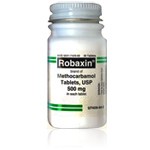
Robaxin (Methocarbamol 500mg) represents the non-controlled centrally-acting skeletal muscle relaxant for acute musculoskeletal pain — the medication providing rapid muscle spasm relief since AH Robins Laboratories (now part of Pfizer) received original FDA approval in 1957. Manufactured by Khandelwal Pharma India as bioequivalent generic, Robaxin offers safe acute pain relief without abuse potential — a critical distinction from other centrally-acting muscle relaxants like carisoprodol that are DEA-scheduled controlled substances. This makes methocarbamol particularly valuable for patients requiring effective muscle relaxation but concerned about dependence risks or those needing therapy in occupations with drug testing requirements.
Methocarbamol works through general central nervous system depression at the brainstem and spinal cord level rather than direct action on skeletal muscle or neuromuscular junction. The precise mechanism involves modification of central pain perception, reduced polysynaptic reflex activity in the spinal cord, and general CNS depressant effects that promote muscle relaxation without paralysis. Unlike carisoprodol which metabolizes to the controlled anxiolytic meprobamate, methocarbamol has no active metabolites with abuse potential — making it a substantially safer profile centrally-acting muscle relaxant. This produces reduced muscle spasm, relieved paralyzing pain syndrome, improved muscle tone regulation, and enhanced comfort during acute injury recovery. Clinical response: relief begins within 30 minutes, peak effect at 1-2 hours, and consistent pain reduction lasting 4-6 hours allowing patients to resume mobility during acute recovery.
Robaxin serves the full range of acute muscle spasm indications from various causes. Primary uses include pathologically elevated muscle tone, acute muscle spasms from any cause, multiple sclerosis spasticity as adjunct therapy, post-stroke muscle tension during rehabilitation, myelopathy and spondylosis with muscle guarding, arthrosis with painful muscle spasm around affected joints, post-orthopedic surgery muscle tension during recovery phase, and various vascular-related muscle conditions including atherosclerosis, diabetic angiopathy, thromboangiitis obliterans (Buergers disease), and Raynauds disease.
Robaxin requires 4 times daily dosing (typically 1500 mg QID initially, tapering to 750 mg QID maintenance) with total daily dose 4-4.5 g divided. Peak concentrations at 1-2 hours, 1-2 hour half-life requires frequent dosing. Khandelwal Pharma India manufactures under WHO-GMP standards.
Free prescription
Discrete packaging
Have questions?
Quality Assurance


- Muscle Pain Syndrome: Paralyzing pain from muscle spasm responding to central relaxation;
- Elevated Muscle Tone: Pathologically increased muscle tension from various neurologic causes;
- Non Controlled Muscle Relaxant: Effective muscle relaxation without abuse potential or DEA scheduling;
- Acute Back Pain: Sudden lower back pain from muscle strain responding to central muscle relaxation;
- Multiple Sclerosis Muscle Spasms: MS-related muscle tension as adjunct to primary spasticity therapy;
- Post Stroke Muscle Tension: Cerebral stroke rehabilitation with muscle guarding responding to therapy;
- Myelopathy: Spinal cord dysfunction with painful muscle spasm and guarding;
- Spondylosis: Degenerative spine changes with associated muscle spasm and pain;
- Arthrosis: Joint degeneration with protective muscle spasm around affected joints;
- Post Orthopedic Surgery Recovery: Muscle tension during post-surgical rehabilitation phase;
- Atherosclerosis Related Muscle Symptoms: Vascular disease with associated muscle discomfort;
- Diabetic Angiopathy: Diabetes-related vascular disease with muscle spasm component;
- Thromboangiitis Obliterans: Buergers disease with vascular muscle spasms;
- Raynauds Disease: Vasospastic disorder with associated muscle discomfort;
- Musculoskeletal Injuries: Acute muscle strains sprains and trauma-related pain;
- Post Injury Muscle Guarding: Protective muscle spasm around injured area responding to central relaxation;
- Physical Therapy Adjunct: Muscle relaxation enhancing physical therapy effectiveness;
- Occupational Safe Muscle Relaxant: Safe for patients in drug-tested occupations requiring muscle therapy;
- Generic Robaxin Therapy: Bioequivalent Indian generic alternative to brand-name Robaxin Pfizer at lower cost.
- Less Muscle Pain Syndrome: Paralyzing pain from muscle spasm decreases substantially with central action;
- Less Acute Back Pain: Lower back pain from muscle strain and injury improves with muscle relaxation;
- Better Muscle Tone Regulation: Pathologically elevated muscle tension normalizes to more functional levels;
- Better Safety Profile: No controlled substance status no abuse potential no dependence risk;
- Better Range of Motion: Joint mobility improves as muscle guarding around affected area decreases;
- Better Physical Therapy Effectiveness: Physical therapy sessions more productive with muscle relaxation adjunct;
- Better Injury Recovery: Reduced pain and muscle guarding accelerates natural healing processes;
- Better Post Stroke Rehabilitation: Stroke recovery improves as muscle tension no longer impairs rehabilitation;
- Better MS Adjunct Therapy: Multiple sclerosis patients gain adjunctive muscle relaxation benefit;
- Better Post Surgical Recovery: Orthopedic surgery patients experience reduced muscle guarding and faster recovery;
- Better Spondylosis Pain Relief: Degenerative spine muscle spasm improves substantially with therapy;
- Better Arthrosis Comfort: Joint degeneration muscle guarding decreases improving comfort and function;
- Better Sustained 4-6 Hour Relief: Consistent pain reduction between doses supporting stable daily function;
- Better Occupational Safety: Safe for patients in drug-tested occupations requiring effective muscle therapy;
- Better Long Term Safety: No dependence risk allows appropriate duration therapy without abuse concerns;
- Better Alternative to Controlled Substances: Non-scheduled option for patients avoiding DEA-controlled medications;
- Better Daily Function: Reduced pain enables resumption of walking sitting and daily activities;
- Better Generic Cost: 85-95% lower cost than brand Robaxin Pfizer makes proven muscle therapy accessible;
- Better Quality of Life: Daily wellbeing improves dramatically as muscle spasm resolves and function returns.
Generic Robaxin (Methocarbamol 500 mg) Medication guide:
Robaxin (Methocarbamol 500mg by Khandelwal Pharma India) is a centrally-acting skeletal muscle relaxant used for the short-term management of acute muscle spasms, muscle strain, and musculoskeletal pain. Unlike baclofen which targets chronic neurological spasticity, Robaxin is specifically indicated for ACUTE musculoskeletal conditions — back injuries, muscle strains, sports-related muscle pain, whiplash, post-injury muscle guarding, and post-surgical muscle spasm. Its most distinctive advantage over similar muscle relaxants: methocarbamol is a NON-CONTROLLED substance with minimal abuse potential, unlike carisoprodol (Soma) which is Schedule IV. This makes Robaxin preferred for patients who need muscle relaxation without addiction risk, and appropriate for longer clinical courses when needed. Methocarbamol's exact mechanism remains only partially understood — it appears to work as a central nervous system depressant modifying spinal cord reflexes rather than directly relaxing muscle tissue, meaning it addresses the pain-spasm-pain cycle at the neurological level. Manufactured by Khandelwal Pharmaceuticals, an established Indian generic manufacturer. This guide covers the acute musculoskeletal treatment approach with focus on appropriate short-term use, the pain-spasm cycle interruption strategy, and when Robaxin fits versus alternative muscle relaxants.

💊 What Robaxin Provides
Robaxin treats acute painful muscle conditions where sudden muscle spasm and pain result from injury, strain, or overuse. It addresses the pain-spasm-pain cycle: injured muscles spasm to protect themselves, spasm causes more pain, more pain triggers more spasm. Breaking this cycle allows healing to proceed.
Conditions Treated
- Acute low back pain with muscle spasm
- Neck strain (whiplash-type injuries)
- Muscle strain from sports or physical activity
- Post-injury muscle guarding
- Post-orthopedic surgery muscle spasm
- Musculoskeletal injuries with reflex muscle contraction
- Torticollis (wry neck)
- Trigger point pain with associated spasm
- Physical therapy adjunct for movement restoration
- Muscle pain syndromes (adjunctive)
- Post-stroke muscle tension (short-term)
- Emergency use in tetanus (specific formulation, injectable)
What Robaxin Does
- Reduces acute muscle spasm
- Relieves muscle pain associated with spasm
- Interrupts pain-spasm-pain cycle
- Facilitates movement and physical therapy
- Improves sleep disrupted by muscle pain
- Reduces need for opioid pain medications
- Helps recovery from acute musculoskeletal injuries
What Robaxin Does NOT Do
- Does not treat chronic neurological spasticity (baclofen for that)
- Does not treat inflammation directly (NSAIDs needed)
- Does not treat nerve pain (different medications)
- Does not treat chronic pain conditions (short-term use only)
- Does not heal underlying injury (only symptomatic)
- Does not replace physical therapy
- Does not directly relax muscle tissue (works centrally)
🔬 How Methocarbamol Works
The CNS Depressant Approach
Methocarbamol's precise mechanism remains only partially understood — it does not directly relax muscle tissue like some other muscle relaxants. Instead, it appears to act as a general central nervous system depressant that modifies spinal cord polysynaptic reflexes.
Proposed Mechanisms
Current understanding of methocarbamol action:
- Depresses polysynaptic spinal cord reflex arcs
- Reduces transmission through nerve pathways carrying pain-spasm signals
- General central nervous system dampening effect
- May affect neurotransmitters in spinal cord
- Does not act directly on muscle fibers
- Does not act at neuromuscular junction
- Sedating properties contribute to therapeutic effect
The Pain-Spasm Cycle
Muscle injury triggers protective muscle guarding — the body's attempt to immobilize the injured area. This protective spasm causes additional pain, which triggers more spasm, creating a self-perpetuating cycle that delays healing and increases suffering. Methocarbamol interrupts this cycle at the spinal cord level.
Mechanism Comparison
| Muscle Relaxant | Mechanism |
|---|---|
| Methocarbamol (Robaxin) | CNS depressant (spinal reflex modification) |
| Baclofen | GABA-B agonist (spinal cord) |
| Cyclobenzaprine | Central serotonergic effects (like TCA) |
| Carisoprodol | CNS depressant (metabolized to meprobamate) |
| Tizanidine | Alpha-2 adrenergic agonist |
| Dantrolene | Direct muscle action (calcium release blocker) |
✅ The Non-Controlled Substance Advantage
Methocarbamol is a NON-CONTROLLED substance with minimal abuse potential — a critical distinction from carisoprodol (Soma) which is Schedule IV controlled due to metabolism into meprobamate (a barbiturate-like sedative with high abuse potential).
Why This Matters
- No DEA prescription restrictions
- Can be prescribed for longer courses when appropriate
- Refills easier to obtain
- Safer for patients with substance use history
- No risk of physical dependence
- Minimal risk of psychological dependence
- Withdrawal not clinically significant
- Insurance coverage typically easier
Muscle Relaxant Abuse Potential Ranked
| Medication | Abuse Potential | Controlled Status |
|---|---|---|
| Methocarbamol (Robaxin) | Minimal | Non-controlled |
| Metaxalone (Skelaxin) | Minimal | Non-controlled |
| Orphenadrine (Norflex) | Minimal | Non-controlled |
| Cyclobenzaprine (Flexeril) | Low | Non-controlled |
| Tizanidine (Zanaflex) | Low | Non-controlled |
| Baclofen | Low | Non-controlled |
| Carisoprodol (Soma) | Significant (metabolizes to meprobamate) | Schedule IV controlled |
| Diazepam (Valium) | High | Schedule IV controlled |
🎯 Who Should Use Robaxin
✅ Robaxin is appropriate if you have:
- Acute muscle strain or sprain
- Sudden onset back pain with muscle spasm
- Whiplash-type neck injury
- Sports injury with muscle guarding
- Post-injury muscle tightness
- Muscle spasm interfering with sleep
- Muscle pain limiting physical therapy
- Adjunct to NSAID pain treatment
- Substance use history (avoiding controlled medications)
- Need for muscle relaxation without addiction risk
🚨 Do NOT use Robaxin if you have:
- Hypersensitivity to methocarbamol
- Severe kidney impairment (dose adjustment/avoidance)
- Myasthenia gravis
- Coma or severely decreased consciousness
- History of severe allergic reaction to muscle relaxants
Special Populations
- Elderly: reduced dose starting, monitor sedation carefully
- Pregnancy: discuss with doctor, limited data
- Breastfeeding: generally not recommended
- Children: only under specialist guidance for tetanus
- Athletes: check anti-doping regulations for competition
- Kidney disease: dose reduction needed
- Liver disease: caution and possible dose reduction
💊 Dosing Protocol
Standard Adult Dosing
| Phase | Dose Schedule | Daily Total |
|---|---|---|
| Initial (Days 1-2) | 1500 mg (3 tablets) four times daily | 6000 mg/day |
| Maintenance | 1000 mg (2 tablets) four times daily | 4000 mg/day |
| Alternative maintenance | 750 mg (1.5 tablets) six times daily | 4500 mg/day |
| Elderly starting | 500 mg (1 tablet) three-four times daily | 1500-2000 mg/day |
Treatment Duration
Robaxin is intended for SHORT-TERM use:
- Typically 2-3 weeks maximum
- Higher doses reduced after first 48-72 hours
- Duration should be shortest effective period
- Longer courses require re-evaluation of underlying condition
- Chronic muscle pain requires different approach
- Ongoing need suggests need for physical therapy or specialist
Titration Strategy
- Start at higher dose during acute phase (first 48-72 hours)
- Reduce to maintenance dose as spasm improves
- Continue lower dose while combining with physical therapy
- Taper as symptoms resolve
- Discontinue once acute episode resolved
- If needed again for recurrence, resume short course
📋 How to Take Robaxin
Standard Administration
- Take with or without food (food may reduce nausea)
- Swallow tablets whole with plenty of water
- Space doses evenly through day (every 4-6 hours)
- Take last dose several hours before sleep unless sedation desired
- Combine with rest, ice, physical therapy as appropriate
- Combine with NSAIDs for enhanced pain relief when tolerated
- Reduce dose as symptoms improve
- Discontinue once acute episode resolved
- Do not drive until effects known
Combination Therapy Approach
Most effective acute back pain management:
- Robaxin for muscle spasm relief
- NSAID (ibuprofen, naproxen) for inflammation and pain
- Ice application first 48 hours, then heat
- Gentle movement as tolerated (avoid complete bed rest)
- Physical therapy for lasting recovery
- Address underlying posture, ergonomics, or lifting technique
Missed Dose
- Take as soon as remembered if within 2 hours
- If closer to next scheduled dose, skip and continue schedule
- Never double dose
- Set alarms during acute phase for consistent dosing
- Consistent dosing important during first 48-72 hours

😴 Common Side Effects
Frequently Reported
- Drowsiness (most common, especially initial doses)
- Dizziness
- Lightheadedness
- Nausea
- Headache
- Blurred vision
- Nasal congestion
- Flushing
- Fatigue or weakness
Unique Side Effect: Urine Color Change
Methocarbamol can cause urine to turn brown, black, blue, or green in color. This is HARMLESS and simply reflects drug metabolites being excreted. This side effect is unique to methocarbamol and can be alarming without warning. No action needed — color normalizes after stopping medication.
Managing Drowsiness
- Take first dose at home when you can rest
- Do not drive until you know your response
- Avoid operating machinery
- Drowsiness typically improves after first several days
- Take larger dose at bedtime if daytime drowsiness
- Avoid alcohol and other sedating medications
Managing Dizziness
- Rise slowly from sitting or lying positions
- Sit at bedside before standing
- Hold onto stable surfaces when getting up
- Stay well hydrated
- Report persistent dizziness
- Extra fall precautions for elderly patients
⚠️ Serious Side Effects
Rare But Serious
Contact doctor immediately for:
- Signs of allergic reaction (rash, itching, swelling)
- Difficulty breathing
- Yellowing of skin or eyes (jaundice)
- Slow or shallow breathing
- Extremely low blood pressure symptoms (severe dizziness, fainting)
- Confusion or altered mental status
- Seizures
- Fever with rash
- Bleeding or unusual bruising
Overdose Signs
Methocarbamol overdose symptoms:
- Extreme drowsiness or coma
- Confusion
- Difficulty breathing
- Loss of consciousness
- Severe dizziness
- Slowed heart rate
- Slowed reflexes
Overdose particularly dangerous when combined with:
- Alcohol
- Opioids
- Benzodiazepines
- Other CNS depressants
- Sleep medications
💊 Drug Interactions
Major CNS Depressant Interactions
Avoid or use with extreme caution:
- Alcohol (dangerous additive sedation)
- Opioid pain medications (respiratory depression risk)
- Benzodiazepines (Valium, Xanax, Ativan)
- Sleep medications (Ambien, Lunesta)
- Sedating antihistamines (Benadryl)
- Other muscle relaxants (additive effects)
- Gabapentin, pregabalin (additive CNS depression)
- Tricyclic antidepressants (additive sedation)
- Barbiturates
Other Interactions to Watch
- Anticholinergic medications (additive dry mouth, constipation)
- Antihypertensive medications (potential blood pressure drops)
- Pyridostigmine and other anticholinesterase inhibitors (may worsen myasthenia)
- Lithium (potentially additive CNS effects)
- Certain antidepressants (monitor for excessive sedation)
Generally Safe Combinations
- NSAIDs (ibuprofen, naproxen) — common effective combination
- Acetaminophen
- Most antibiotics
- Most cardiovascular medications
- Statins
- Diabetes medications
🍺 Alcohol Warning
🚨 Do NOT combine Robaxin with alcohol.
Both are CNS depressants with dangerous additive effects on breathing, coordination, and consciousness.
Specific Concerns
- Severe additive drowsiness
- Impaired coordination and balance
- Respiratory depression (breathing slowed dangerously)
- Impaired judgment
- Increased fall risk
- Blackout or memory loss
- Potential unconsciousness at higher doses
- Delayed reaction times
Practical Rules
- Avoid alcohol completely during Robaxin treatment
- Minimum 12-24 hours after last dose before alcohol
- Never drive after combining substances
- Never operate machinery after combining
- Explain to family/friends why not drinking during treatment
🏋️ Combining With Other Treatments
The Comprehensive Approach
Robaxin works best as one component of comprehensive musculoskeletal recovery, not as sole treatment. Medications alone rarely resolve muscle spasm optimally.
Recommended Combination
- NSAIDs (ibuprofen, naproxen) — reduce inflammation and pain
- Robaxin — interrupt pain-spasm cycle
- Ice first 48-72 hours — reduce inflammation
- Heat after inflammation phase — promote healing and comfort
- Gentle movement — avoid prolonged bed rest which prolongs recovery
- Physical therapy — proper movement patterns and strengthening
- Ergonomic adjustments — workstation, sleeping surface, lifting technique
- Return to activity progressively — not immediate maximum activity
What to Avoid
Common mistakes that delay recovery:
- Extended bed rest (worsens deconditioning)
- Ignoring underlying causes (posture, ergonomics)
- Return to full activity too quickly
- Relying only on medication without addressing behaviors
- Skipping physical therapy
- Combining with alcohol despite warnings
- Extending medication use beyond acute period
🤰 Pregnancy and Special Populations
Pregnancy
Limited data on methocarbamol use during pregnancy. Use only when clearly needed and benefit outweighs risk. Most muscle spasm situations can be managed with alternative approaches during pregnancy (physical therapy, heat, positioning, acetaminophen for pain).
Breastfeeding
Methocarbamol excreted in breast milk. Generally not recommended during breastfeeding. Alternative approaches preferred for nursing mothers with acute muscle pain.
Elderly Considerations
Special considerations for older adults:
- Start at lower dose (500 mg 3-4 times daily)
- Increased sensitivity to sedation and dizziness
- Higher fall risk requiring precautions
- Slower clearance in older kidneys
- More vulnerable to cognitive side effects
- Consider non-drug alternatives first when possible
Kidney Impairment
Methocarbamol is primarily excreted through kidneys. Reduced kidney function requires dose reduction. Severe kidney impairment may require avoiding methocarbamol entirely due to accumulation risk.
🌡️ Storage
Standard Storage
- Room temperature 15-30°C
- Original packaging with cap tight
- Away from bathroom humidity
- Away from direct sunlight and heat
- Out of reach of children
- Away from pets (curious about pills)
Handling
- Handle with dry hands
- Swallow whole with water
- Can be crushed if swallowing difficult (bitter taste)
- Do not divide if scored line absent
- Check expiration dates
- Discard damaged tablets
💊 Robaxin vs Other Muscle Relaxants
Comprehensive Comparison
| Medication | Primary Use | Duration |
|---|---|---|
| Methocarbamol (Robaxin) | Acute muscle spasm, back injury | Short-term (2-3 weeks) |
| Cyclobenzaprine (Flexeril) | Acute muscle spasm | Short-term (2-3 weeks) |
| Metaxalone (Skelaxin) | Acute muscle spasm | Short-term |
| Orphenadrine (Norflex) | Muscle spasm with anticholinergic activity | Short-term |
| Carisoprodol (Soma) | Acute spasm (controlled substance) | Very short (2 weeks max) |
| Tizanidine (Zanaflex) | Spasticity or spasm | Short or long-term |
| Baclofen | Chronic neurological spasticity | Long-term |
When Robaxin Is Preferred
- Need non-controlled substance option
- History of substance use disorder
- Less sedating than cyclobenzaprine for some patients
- Elderly patients (though still cautious dosing)
- Longer acute treatment course needed
- Combined use with opioids (safer than carisoprodol)
When Alternatives May Be Better
- Neurological spasticity: baclofen (Baclof)
- Nighttime dosing preferred: cyclobenzaprine (more sedating)
- Failed methocarbamol: try different class (cyclobenzaprine, tizanidine)
- Anti-inflammatory needed: NSAID as primary + optional muscle relaxant
- Refractory acute pain: combine methocarbamol + NSAID + short opioid
Robaxin vs Baclof Clarification
These medications treat DIFFERENT conditions. Robaxin (methocarbamol) is for ACUTE muscle spasm from injury or strain — short-term use. Baclof (baclofen) is for CHRONIC neurological spasticity from MS, spinal cord injury, cerebral palsy — long-term use with mandatory taper. Do not substitute one for the other — different mechanisms, different indications, different treatment approaches.
🛑 When to Reevaluate
Reasons to Reconsider
- Muscle spasm not improving after 3-5 days
- Persistent pain beyond expected acute recovery period (2-4 weeks)
- Recurrent similar episodes requiring repeated courses
- Severe or intolerable side effects
- Signs of complication requiring different diagnosis
- Chronic pattern developing (need different approach)
- Underlying condition worsening despite treatment
Warning Signs Requiring Different Evaluation
Seek evaluation for:
- Numbness or tingling in extremities
- Weakness in legs or arms
- Loss of bowel or bladder control
- Fever with back pain
- Weight loss with back pain
- Night pain not relieved by rest
- Pain not improving with any treatment
- History of cancer with new back pain
Stopping Robaxin
Because Robaxin is short-term, no gradual taper needed. Simply reduce dose as symptoms improve and stop when acute episode resolved. Not habit-forming and no withdrawal syndrome. If needed again for future episode, can restart another short course.
☎️ When to Contact Your Doctor
Emergency Care
Seek emergency care for:
- Severe allergic reaction (swelling, difficulty breathing)
- Very slow or shallow breathing
- Extreme drowsiness or unresponsiveness
- Confusion or altered mental status
- Seizures
- Chest pain
- Loss of consciousness
- Signs of overdose
Same Day Doctor Contact
- Persistent severe drowsiness
- Vision changes
- Yellowing of eyes or skin
- Persistent nausea preventing dosing
- Skin rash
- Muscle spasm significantly worsening
- New numbness or weakness
- Signs of underlying condition (fever, weight loss)
Follow-Up Visits
- Within 1 week if symptoms not improving
- After acute episode resolved to plan prevention
- If recurrent episodes to assess underlying cause
- If lifestyle modifications needed (ergonomics, posture, exercise)
- For physical therapy referral
- Any concerns about ongoing muscle symptoms
Medical disclaimer: This guide provides general usage information for Robaxin (methocarbamol 500mg by Khandelwal Pharmaceuticals India) and does not replace individualized medical advice. Robaxin is a centrally-acting skeletal muscle relaxant for SHORT-TERM management of ACUTE muscle spasm and musculoskeletal pain from injuries, strains, and back pain — NOT for chronic neurological spasticity (use baclofen for that). Methocarbamol works as a CNS depressant modifying spinal cord reflexes rather than acting directly on muscle tissue. KEY ADVANTAGE: methocarbamol is NON-CONTROLLED with minimal abuse potential, unlike carisoprodol (Soma) which is Schedule IV due to meprobamate metabolite. This makes Robaxin preferred for patients with substance use history or when longer clinical courses appropriate. Standard adult dosing: 1500 mg (3 tablets) four times daily initially for 48-72 hours, reduced to 4000 mg/day maintenance in divided doses. Elderly start at 500 mg 3-4 times daily. Treatment duration typically 2-3 weeks maximum. UNIQUE side effect: urine may turn brown, black, blue, or green from drug metabolites — this is HARMLESS but can be alarming without warning. Most common side effects include drowsiness (especially initial doses), dizziness, nausea, and headache. Do NOT combine with alcohol, opioids, benzodiazepines, or other CNS depressants (dangerous additive sedation and respiratory depression). Requires dose adjustment for kidney impairment. Do not drive until you know your response to medication. Best combined with NSAIDs, ice/heat, rest, gentle movement, and physical therapy for optimal acute musculoskeletal recovery. Manufactured by Khandelwal Pharmaceuticals, an established Indian generic manufacturer. Not for use in myasthenia gravis. Limited pregnancy data — use only when clearly needed. Robaxin addresses acute pain-spasm-pain cycle but does NOT address underlying causes (posture, ergonomics, injury mechanism) — complete recovery requires attention to these factors alongside medication. Warning signs requiring different evaluation include numbness/tingling in extremities, weakness in legs or arms, loss of bowel/bladder control, fever with back pain, night pain not relieved by rest, or history of cancer with new back pain.
Robaxin — Frequently Asked Questions
-
What is Robaxin (Methocarbamol)?
Robaxin is a muscle relaxant used to treat muscle spasms and pain associated with acute musculoskeletal conditions. -
How does Robaxin work?
It works by depressing the central nervous system, leading to relaxation of muscles. -
What conditions does Robaxin treat?
It's primarily used for muscle spasms due to injuries, strains, sprains, or back pain. -
How quickly does Robaxin start working?
It usually starts working within 30 minutes to an hour after ingestion. -
How long do the effects of Robaxin last?
The effects typically last for 4-6 hours. -
Can I take Robaxin for general muscle pain?
It's best used for muscle spasms, not general muscle pain. -
What are the side effects of Robaxin?
Common side effects include dizziness, drowsiness, nausea, blurred vision, and headache.
See all Robaxin questions (33)
More Muscle Relaxers Medications