Buy Antabuse (Disulfiram) Online — First FDA-Approved Medication for Chronic Alcohol Use Disorder

Antabuse is one of the most clinically important medications in the long-term treatment of chronic alcoholism — the first medication ever approved by the FDA for the management of alcohol use disorder, authorised in 1951. The active ingredient is Disulfiram, a unique deterrent agent that has supported millions of patients in their recovery from alcohol dependence over more than 70 years of continuous clinical use. With its inclusion on the WHO Model List of Essential Medicines, Antabuse remains a foundational treatment option in addiction medicine worldwide.
Disulfiram works through an unusual but highly effective mechanism: it inhibits aldehyde dehydrogenase, the enzyme that normally breaks down acetaldehyde — a toxic intermediate produced when the body metabolises alcohol. When a patient on Antabuse consumes even small amounts of alcohol, acetaldehyde rapidly accumulates in the bloodstream and triggers the well-known "Antabuse reaction": facial flushing, intense nausea and vomiting, headache, rapid heartbeat, sweating, and shortness of breath. This deeply unpleasant reaction creates a strong psychological deterrent against drinking, supporting behavioural change in motivated patients.
Antabuse is FDA-approved as part of a comprehensive management programme for chronic alcoholism — including behavioural therapy, counselling, support groups (such as Alcoholics Anonymous), and family involvement. It is most effective in motivated patients who have already decided to maintain abstinence and want pharmacological reinforcement for their commitment. Disulfiram is not a cure for alcoholism — it is a tool that supports recovery alongside other therapeutic interventions.
The standard dose is 250-500 mg once daily, typically taken in the morning. Disulfiram has a remarkably long duration of action: the enzyme inhibition persists for approximately 2 weeks after the last dose. This means even after stopping the medication, patients must remain alcohol-free for 14 days to avoid potential reactions.
An important practical aspect of Antabuse therapy is the need to avoid all sources of alcohol — not only alcoholic beverages, but also alcohol-containing mouthwash, cough syrups, cooking wine, vanilla extract, certain aftershaves, and some OTC medications. Patients must be carefully educated about hidden sources of alcohol exposure.
Antabuse is most commonly used in partnership with family-supervised dosing protocols, where a spouse, family member, or counselor witnesses daily administration — significantly improving adherence and long-term outcomes in early recovery.
Free prescription
Discrete packaging
Have questions?
Quality Assurance

- Outpatient Recovery: For patients in community-based addiction treatment programmes requiring sustainable affordable long-term pharmacotherapy;
- Long Term Maintenance: For patients establishing 6-month, 1-year, and multi-year sobriety milestones with pharmacological commitment reinforcement;
- Affordable Recovery: For patients without insurance coverage or with high deductibles — generic affordability makes long-term treatment viable;
- Self Pay Recovery: For patients paying out-of-pocket — eliminates major financial barrier to medication-assisted alcohol treatment;
- Inpatient Outpatient Transition: Discharge planning from residential addiction treatment programmes to community-based recovery;
- Sober Living Therapy: For patients in structured sober living environments where pharmacological adherence is encouraged or required;
- Halfway House Recovery: As part of structured transitional housing programmes for recovering individuals;
- AA Programme Adjunct: For patients combining medication-assisted treatment with Alcoholics Anonymous or similar fellowship programmes;
- SMART Recovery Adjunct: As part of evidence-based self-management addiction recovery programmes;
- Faith Based Recovery: Compatible with religious or spiritually-oriented recovery programmes seeking pharmacological reinforcement;
- Veterans Recovery: As part of veteran-focused addiction treatment in VA and similar healthcare systems;
- Geriatric Recovery: For older adults with late-onset or chronic alcohol use disorder requiring sustainable long-term therapy;
- Rural Recovery: Affordable generic supports access in regions where addiction medicine specialist care is geographically limited;
- Multi Year Therapy: Suitable for years of continuous pharmacotherapy without prohibitive medication cost burden;
- Spouse Supervised Dosing: For couples-based recovery where partner involvement supports daily adherence and trust rebuilding;
- Child Custody Sobriety: For court-ordered or family-court-required documented abstinence therapy in custody arrangements;
- Pre Bariatric Surgery: To support documented abstinence before bariatric surgery in patients with alcohol use disorder history.
- More Sober Days: Documented increase in cumulative abstinent days, particularly with supervised dosing protocols;
- Reduced Relapse: Lower relapse rates compared to unsupervised behavioural therapy alone in motivated patients;
- Stable Sobriety: Daily medication-taking ritual supports cognitive identity shift from "drinker" to "person in recovery";
- Better Family Life: Successful abstinence supports family healing, child welfare, and relationship recovery;
- Better Work Life: Sustained sobriety improves workplace performance, attendance, and career advancement;
- Better Liver Health: Successful abstinence prevents ongoing alcoholic hepatic injury and reduces progression to cirrhosis;
- Better Mental Health: Continued sobriety improves outcomes in co-occurring depression, anxiety, and PTSD;
- Reduced Healthcare Costs: Successful adherence reduces ER visits, hospitalisations, and acute alcohol-related medical care;
- Reduced Legal Issues: Successful abstinence prevents DUI recurrence and civil legal complications;
- Once Daily Dosing: Single morning tablet supports adherence in busy recovery patients managing work, therapy, and support groups;
- Generic Disulfiram: Highly affordable generics across multiple manufacturers expand access in cost-sensitive recovery settings;
- Antabuse Equivalent: Same Disulfiram molecule as branded Antabuse at fraction of the cost — meets bioequivalence standards;
- Esperal Equivalent: Same Disulfiram molecule as European brand Esperal — familiar option across international markets;
- Affordable Alcohol Treatment: Generic pricing makes long-course alcohol recovery therapy financially feasible for self-pay and insurance-limited patients;
- Sustainable Recovery: Affordable enough for years of continuous pharmacotherapy matching the chronic relapsing nature of alcohol use disorder;
- Insurance Friendly Recovery: Low tier on most insurance formularies — reduces copay burden across long treatment courses;
- Multiple Manufacturers: Wide international generic competition keeps prices low and supply chains diversified;
- Alcohol Deterrent: Unique aversion mechanism creates strong psychological reinforcement of the decision to remain alcohol-free;
- Aldehyde Dehydrogenase Inhibitor: Distinct mechanism from naltrexone or acamprosate — complementary therapy option in multi-modal management;
- Long Acting Enzyme Block: Enzyme inhibition persists up to 2 weeks after last dose — provides resilience against impulse-driven relapse attempts;
- Non Controlled Recovery: Not a controlled substance — no abuse potential, no withdrawal risk, no dependence development;
- Behavioural Therapy Adjunct: Designed to support — not replace — psychological treatments like CBT, motivational interviewing, and 12-step programmes;
- Family Supervised Adherence: Witnessed daily dosing by spouse or family member improves outcomes — rare advantage among addiction medications;
- Combinable Naltrexone: Can be combined with anti-craving medications for multi-modal alcohol use disorder management;
- Combinable Acamprosate: Pairs effectively with acamprosate for patients needing both deterrent and craving-reduction approaches;
- Workplace Recovery Tool: Supports return-to-work programmes in safety-sensitive professions requiring documented abstinence;
- Verifiable Sobriety Treatment: Adherence can be confirmed through clinical follow-up and witnessed dosing protocols;
- Healthcare System Cost Saving: Generic therapy reduces overall addiction medicine spending in national, regional, and institutional healthcare programmes;
- Pre Transplant Support: Helps maintain the 6-month sobriety requirement for liver transplant evaluation in alcohol-related liver disease;
- WHO Essential Medicine: Listed on the WHO Model List of Essential Medicines for addiction therapy globally;
- 70 Plus Year History: Disulfiram has one of the longest clinical track records of any medication still in routine modern use;
- Stable Storage: No refrigeration required — practical for home, travel, and long-term medication management;
- Globally Available: Wide international availability under multiple brand names (Antabuse, Antabus, Esperal) supports continuity of recovery care.
Generic Carnotol (Disulfiram 250 mg) Medication guide:
💊 What is Carnotol (Disulfiram by Cipla)
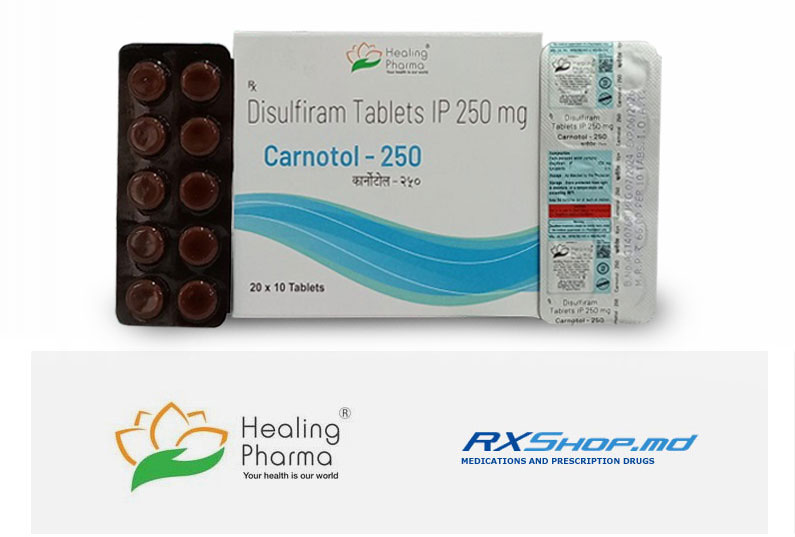
Carnotol is a brand name for disulfiram, manufactured by Cipla, one of India's largest and most internationally recognised pharmaceutical companies. The active ingredient is the same molecule found in branded Antabuse and other global disulfiram products. Carnotol is widely used across India and export markets for the medical treatment of alcohol use disorder (AUD), providing a chemical deterrent that makes drinking alcohol immediately and severely unpleasant.
Indian pharmaceutical branded version of disulfiram, manufactured in WHO-GMP certified facilities.
Same molecule used in disulfiram globally since 1951; identical mechanism.
Not a craving-reducer; works by making alcohol consumption produce a severe physical reaction.
Used as part of comprehensive AUD treatment including counseling and support groups.
What makes Carnotol distinctive
| Feature | What it means in practice |
|---|---|
| Indian generic origin | More affordable than branded Western versions of disulfiram |
| Cipla manufacturing | WHO-GMP certified; facilities inspected by US-FDA and EU-EMA |
| Bioequivalent to reference | Same disulfiram molecule; same pharmacological effect |
| Wide export reach | Available in many countries beyond India through Cipla distribution network |
| Cost-effective AUD treatment | Major contribution to access in resource-limited settings |
🏭 Cipla and the Indian generic pharmaceutical story
Understanding Carnotol requires understanding Cipla - one of the most important pharmaceutical companies in the Indian and developing-world healthcare landscape. Founded in 1935, Cipla has become a global player in generic pharmaceuticals and a major contributor to medication access worldwide. Carnotol reflects Cipla's broader role: making essential medications affordable and accessible.
📜 Cipla milestones timeline
Founded in Mumbai by Dr. Khwaja Abdul Hamied as "The Chemical, Industrial and Pharmaceutical Laboratories."
Built nationwide manufacturing capability; began producing essential medications including disulfiram for AUD.
Made global headlines offering generic HIV antiretrovirals at ~$350/year vs branded $10,000+, transforming AIDS treatment access.
Operates in 80+ countries; one of the world's largest generic pharmaceutical companies by volume.
Why this matters for Carnotol users
Cipla facilities are inspected and certified by US-FDA, EU-EMA, UK-MHRA, WHO and other major regulators. The same disulfiram quality required for Western markets.
Cipla products reach over 80 countries through established distribution networks. This makes treatment access feasible in many regions where branded alternatives are unavailable or unaffordable.
Generic pricing makes AUD treatment financially feasible for patients in developing countries and for those without insurance coverage in developed markets.
Cipla quality credentials at a glance
When you receive Carnotol, you are receiving a disulfiram product manufactured under the same quality systems that produce medications for the most regulated markets in the world. The "generic Indian" origin reflects pricing and distribution, not quality standards.
💰 Why Carnotol matters for global access to AUD treatment
Alcohol use disorder affects an estimated 283 million people worldwide according to the WHO. Yet medication-based AUD treatment remains unavailable to most of them due to cost, geographic distribution gaps, or absence of approved options in their region. Carnotol fills this gap in many parts of the world - bringing disulfiram-based treatment within financial and practical reach.
WHO estimates that only 2 in every 100 people with severe AUD globally receive any pharmacological treatment. In high-income countries it is closer to 10-15%; in low/middle-income countries it can be near 1%. Cost is one of the biggest barriers.
Regional access through Carnotol
📊 Cost perspective (illustrative)
A rough comparison of monthly costs for disulfiram from different sources (250 mg daily). Actual prices vary by location and insurance.
Indicative only. Actual pricing varies considerably by region, pharmacy, and insurance coverage.
Access ladder - why generics matter
🧬 The disulfiram-alcohol reaction in practical terms
The defining feature of Carnotol (and all disulfiram products) is the disulfiram-alcohol reaction (DAR). This is not a side effect - it is the intentional therapeutic mechanism. When alcohol is consumed by someone taking Carnotol, the body cannot properly clear acetaldehyde (a toxic alcohol metabolite), causing acetaldehyde levels to rise sharply and producing a severe, predictable, and unpleasant physical reaction.
This is not a "warning" reaction designed to give a mild discomfort. At significant alcohol amounts, the DAR can be severe enough to require emergency care. Even tiny amounts produce noticeable reactions. There is no "safe small drink" while on Carnotol.
The 5 stages of a disulfiram-alcohol reaction
Alcohol absorbed; acetaldehyde begins forming
Facial flushing, warmth, heart rate begins rising
Peak symptoms: throbbing headache, vomiting, hypotension
Sustained intensity; cardiovascular strain peaks
Gradual resolution; exhaustion remains for many hours
Symptom intensity profile
Estimated typical intensity (0 = barely noticeable, 10 = severe) of common reaction features. Actual intensity varies by alcohol amount and individual sensitivity.
How much alcohol triggers what?
- Chest pain or feeling of crushing pressure
- Severe shortness of breath or difficulty breathing
- Feeling like passing out or actually fainting
- Confusion or altered mental state
- Irregular or very rapid pulse
🔬 How Carnotol works at the molecular level
Carnotol works through a single, precise molecular mechanism: irreversible inhibition of the enzyme aldehyde dehydrogenase 2 (ALDH2). Understanding this mechanism explains why the disulfiram-alcohol reaction happens, why it is so predictable, and why effects persist for 1-2 weeks after stopping the medication. The pharmacology is elegant in its simplicity.
🧬 Before vs after Carnotol
Acetaldehyde clears so fast it never accumulates. You feel intoxicated, not poisoned.
Acetaldehyde reaches 5-10x normal levels. The toxic state IS the DAR.
Pharmacokinetic profile
Why the inhibition lasts so long
Disulfiram metabolites bind ALDH2 covalently. The enzyme is permanently disabled - not just temporarily occupied.
For function to return, the body must synthesise brand new ALDH2 protein. This biological process is slow.
ALDH2 regeneration half-life is approximately 5-7 days. Two half-lives = significant recovery; ~14 days = essentially complete recovery.
🍺 Carnotol for alcohol use disorder - role in modern treatment
Modern alcohol use disorder (AUD) treatment is multimodal. Carnotol, like all disulfiram products, is one element in a broader treatment toolkit - not a standalone solution. Understanding where Carnotol fits in modern AUD care helps patients and providers make appropriate treatment choices. AUD is now firmly recognised as a treatable medical condition involving brain reward circuits, stress systems, and executive function - not a moral failing.
🧰 The modern AUD treatment toolkit
Safely managing acute alcohol withdrawal when needed
Carnotol, naltrexone, acamprosate
CBT, motivational enhancement, family work
AA, SMART Recovery, other groups
For severe AUD or co-occurring conditions
Treating co-occurring depression, anxiety, trauma
Where Carnotol specifically fits
For highly motivated patients who want a powerful deterrent against impulsive drinking. The medication does not change cravings or motivation - it changes consequences.
Carnotol provides deterrent while counseling builds coping skills; naltrexone or acamprosate may also be added for combined effect in specific cases.
Some patients use Carnotol for specific risky periods (holidays, travel, life stressors) rather than continuously - providing protection while sober coping skills develop or are tested.
The landmark NIAAA-funded COMBINE Study (2006) demonstrated that pharmacotherapy combined with brief behavioral intervention was as effective as more intensive behavioral therapy for AUD. While COMBINE focused on naltrexone and acamprosate (not disulfiram), the broader finding - that medication PLUS behavioral support outperforms either alone - applies fully to Carnotol-based treatment.
Decision flow: is Carnotol a good fit?
🎯 Identifying patients who benefit from Carnotol
The single biggest predictor of successful Carnotol treatment is patient selection. The medication works exceptionally well for the right patient and fails predictably for the wrong patient. Identifying who will benefit - and who will not - is part of providing safe and effective addiction medicine care. This section provides practical guidance for that assessment.
✅ The ideal candidate profile
Good fit vs poor fit
7 patient profile types where Carnotol particularly helps
📝 Readiness self-check (0 to 10)
Patient self-rates each item. Higher scores suggest better readiness for Carnotol.
👮 Supervised dosing - the evidence and how to implement
One of the most important findings in disulfiram research is the dramatic difference between supervised and unsupervised dosing. Multiple Cochrane reviews and clinical trials consistently show that witnessed daily dosing produces 2-3x better outcomes than unsupervised use. For Carnotol to work well, building reliable supervision into the treatment plan should be considered from the start - not added later after failure.
👮 Supervisor types ranked by effectiveness
Daily supervision protocol
For spouse / family supervisors
- Be calm, kind, and matter-of-fact
- Make it part of daily routine, like breakfast
- Discuss medication during calm times, not arguments
- Remember: you are witnessing, not policing
- Stay engaged with treatment team if concerns arise
- Celebrate sobriety milestones together
- Using medication as leverage in conflicts
- Lecturing or moralising during dosing
- Skipping supervision "just for today"
- Trying to be the patient's therapist
- Holding the medication as your responsibility, not theirs
- Hiding concerns rather than discussing with treatment team
Cochrane systematic reviews of disulfiram for AUD have consistently found that supervised dosing is more effective than unsupervised. Studies show 2-3x higher rates of sustained abstinence with witnessed dosing. The mechanism is straightforward: removing the daily "should I take it today?" decision dramatically improves adherence, and high adherence is what makes the medication therapeutic.
🤝 Why Carnotol works best with counseling support
Carnotol is not a standalone treatment. The strongest evidence for AUD treatment success comes from combining medication with structured counseling and mutual support groups. Carnotol provides the chemical safety net during early recovery; counseling builds the skills needed for sustained sobriety once medication eventually ends. Patients who use Carnotol alone, without engagement in counseling or support, have notably poorer long-term outcomes.
Major counseling approaches for AUD
Mutual support group options
Treatment phases over time
Carnotol provides a powerful chemical safeguard against impulsive drinking - but it does not teach coping skills, address underlying psychological issues, repair relationships, or build a sober social network. Counseling and support groups do these things, but cannot prevent impulsive drinking in the moment when willpower fails. Combining them creates protection during early recovery while skills develop. Patients who use only Carnotol typically relapse when the medication eventually stops.
✅ Treatment plan checklist
📋 Standard Carnotol dosing schedule
Carnotol dosing is straightforward and identical to other disulfiram products: standard adult dose is 250 mg once daily, with an optional higher loading phase (500 mg/day for 1-2 weeks) when faster steady-state effect is desired. Some patients tolerate well on the lower 125 mg dose. The dose is taken at a consistent time each day, with or without food. Critical timing requirement: must be alcohol-free for at least 12-24 hours before the first dose.
When to use lower or modified doses
Start at 125 mg/day; may stay at this dose long-term. Slower metabolism + more side effect sensitivity.
Consider 125-250 mg/day with more frequent LFT monitoring. Liver clears the drug.
Drop to 125 mg/day; usually adequate ALDH2 inhibition with better tolerability.
Generally avoid Carnotol; use behavioral approaches. Discuss in special-population section.
When in the day to take Carnotol
Practical daily-use tips
🏋️ Two-phase approach - loading and maintenance
Carnotol therapy uses a two-phase approach common to most pharmacological treatments: an initial loading phase to rapidly establish full effect, followed by a maintenance phase at a lower dose. This structure balances rapid clinical onset against long-term tolerability. Understanding both phases helps patients know what to expect at different points in their treatment journey.
Phase comparison
First 14 days - what to expect daily
Step-down decision ladder
Monitoring schedule
- Baseline LFTs done
- 2-week LFTs check
- Weekly side effect review
- Adherence verification
- LFTs monthly
- Side effects each visit
- Counseling engagement check
- Adherence patterns
- LFTs every 3-6 months
- Clinical assessment quarterly
- Recovery progress review
- Step-down readiness check
⏳ Carnotol timeline - when it starts and how long it lasts
Carnotol has a distinctive pharmacological timeline: full effect develops within 12 hours of the first dose and persists 7-14 days after stopping. This combination of rapid onset and long residual action is one of disulfiram's most clinically valuable features. The timeline is identical to other disulfiram products since the active ingredient is the same.
⏱️ The Carnotol timeline at a glance
Full effect
Building
Steady state
after stop
How Carnotol compares to other AUD medications
Practical scenarios - what the timeline means
Still protected for many days. Take when remembered; do not double the next day. The 7-14 day residual is real safety net.
Cannot. Effect persists 7-14 days after stopping. Drinking will trigger DAR. The medication is designed to make this impossible.
Tell surgeon and anesthesiologist about Carnotol. Many procedures use alcohol-containing preparations. May need to stop 2-3 weeks before procedure.
Effect continues 7-14 days. Plan recovery support carefully. Cannot drink during washout period regardless.
The 7-14 day residual effect after stopping is not optional waiting. ALDH2 enzyme inhibition is irreversible - your body must synthesise new enzymes for alcohol metabolism to return to normal. Drinking during this washout window produces full DAR with all its dangers. Plan any deliberate stop (surgery, procedure, change to alternative medication) at least 2 weeks ahead.
🕑 The 7 to 14 day residual effect explained
Carnotol's residual effect - the persistence of ALDH2 inhibition for 7 to 14 days after the last dose - is one of its most distinctive pharmacological features. This is not a quirk; it is the direct consequence of the irreversible covalent binding that makes the medication work in the first place. Understanding the residual is critical for patient safety: drinking during this window produces a full disulfiram-alcohol reaction even though the patient may feel they have "stopped" the medication.
"Stopping Carnotol" means stopping the daily dose. It does NOT mean the medication's effect has stopped. The chemical disabling of ALDH2 lasts long after the last tablet because the body must synthesise entirely new enzyme protein.
🔍 Why the effect persists so long
Disulfiram's active metabolite (diethyldithiocarbamate) forms a permanent chemical bond with ALDH2's active site. The enzyme is not blocked - it is destroyed.
ALDH2 has a long biological half-life. The liver produces new enzyme slowly - estimated 5-7 days for half-recovery.
Disulfiram itself stays in the body 60-120 hours, continuing to generate active metabolite even after dosing stops.
14-day residual effect decay (after last dose)
Approximate percentage of ALDH2 still inhibited. Drinking during any day shaded above ~30% will likely produce a reaction.
100%
95%
90%
80%
72%
62%
55%
45%
36%
28%
20%
14%
8%
3%
Planning a stop - timeline table
🚨 What a disulfiram-alcohol reaction feels like
Reading about the disulfiram-alcohol reaction is not the same as understanding what it feels like. For patients considering Carnotol and for family members supporting them, a more vivid sense of the experience helps make informed decisions. The DAR is not subtle; it is one of the most intense pharmacological reactions in routine clinical use.
👤 Where the reaction shows up - body map
- Bright red facial flushing
- Throbbing headache
- Sense of pressure / pulsation
- Sweating, particularly on face
- Sense of overheating
- Pounding rapid heartbeat
- Sensation of palpitations
- Tightness in chest
- Sometimes mild chest pain
- Shortness of breath
- Intense nausea
- Vomiting (often repeated)
- Stomach cramping
- Sometimes diarrhea
- Loss of appetite
- Dizziness / lightheadedness
- Anxiety, sense of dread
- Weakness, exhaustion
- Difficulty concentrating
- Sometimes mental confusion
How the reaction unfolds over time
DAR vs hangover - they are not the same
🍷 Hidden alcohol sources - the survival guide
One of the most under-appreciated aspects of taking Carnotol is the surprising number of hidden alcohol sources in everyday life. Many products contain alcohol that most people never think about. For patients on disulfiram, exposure to any of these can trigger a reaction. This section is a practical inventory: where alcohol hides, which exposures are most likely to cause problems, and how to keep yourself safe.
📚 Hidden alcohol by category
🥋 Top 10 most dangerous hidden sources
Daily avoidance checklist
⚠️ Severity spectrum of reactions
Not every disulfiram-alcohol reaction is the same. The severity depends on how much alcohol was consumed, how recently the last Carnotol dose was taken, individual variation in metabolism, and other factors. Understanding the severity spectrum helps patients, families, and clinicians know when home management is appropriate and when emergency care is necessary.
📏 The DAR severity scale
The 5 severity tiers in detail
Vital signs at each tier (typical ranges)
If unsure about severity, treat as more severe and seek medical help. A "tier 3" reaction with one bad sign (chest pain, fainting, confusion) is functionally a tier 4-5 and needs immediate ER care.
💔 Cardiovascular risks during a reaction
The cardiovascular system bears the brunt of a disulfiram-alcohol reaction. Marked tachycardia, blood pressure shifts, increased cardiac workload, and in severe cases ischemic events make cardiac safety central to safe Carnotol use. Patients with existing heart disease face significantly higher risk; even apparently healthy patients can experience cardiac complications during a serious reaction.
Acetaldehyde produces direct cardiotoxicity, while the body's stress response causes catecholamine surge with tachycardia and vasoconstriction. The combination creates significant myocardial oxygen demand at the same time blood pressure may drop - a dangerous mismatch for any heart with limited reserve.
💓 What happens to the heart during a DAR
Higher-risk patient profiles
Even moderate DAR may precipitate angina or MI. Generally a contraindication to Carnotol.
Tachycardia and fluid shifts during DAR can precipitate decompensation.
DAR can trigger rapid ventricular response or new arrhythmias. Discuss carefully before starting.
DAR causes paradoxical BP swings; significant risk if baseline poorly controlled.
Recent injury makes heart more vulnerable to DAR-induced ischemia.
Aortic stenosis particularly dangerous with hypotension during DAR.
Potential cardiac complications during severe DAR
Increased oxygen demand at the time hypotension reduces coronary perfusion. Highest risk in CAD patients.
Catecholamine surge can trigger atrial fibrillation, ventricular tachycardia, or new conduction problems.
Severe BP drop with end-organ hypoperfusion. Can be life-threatening, particularly with prolonged vomiting.
Very rare but documented. Most cases involve large alcohol exposures in high-risk patients.
Pre-Carnotol cardiac screening checklist
🛟 Emergency response - what to do when a reaction happens
When a disulfiram-alcohol reaction occurs, knowing what to do - and what not to do - can dramatically affect outcomes. The patient cannot make decisions during the reaction; they will be acutely unwell, often vomiting, anxious, and disoriented. Family members and bystanders need to know the emergency response in advance. This section provides a practical framework.
🚨 Decision: call emergency services?
- Chest pain or pressure of any kind
- Severe shortness of breath
- Fainting or unable to stand
- Heart rate >140 or irregular
- Confusion or altered mental status
- Vomiting that will not stop
- Patient was high-risk (heart disease, etc.) before this
- Large alcohol exposure (multiple drinks)
- Anything that seems "more wrong" than expected
- Trace exposure (faint flushing only)
- Heart rate <110, BP normal
- No chest pain or breathing difficulty
- Patient remains coherent and oriented
- Single mouthwash incident, etc.
- Patient at low cardiac risk baseline
- Symptoms improving within first hour
🛠️ Step-by-step emergency response
📝 What to tell paramedics / ER staff
🔹 Last Carnotol dose: "[time/date]"
🔹 Daily dose: "[125/250/500 mg]"
🔹 Alcohol exposure: "[what was consumed]" at "[time]"
🔹 Other medications: "[list]"
🔹 Medical history: "[heart disease, BP, liver, mental health]"
🔹 Allergies: "[any]"
❌ Things NOT to do during a reaction
- Don't try to induce more vomiting - patient is already vomiting; risks aspiration
- Don't give activated charcoal at home - not effective for this; aspiration risk
- Don't give more alcohol (a folk myth) - worsens the reaction dramatically
- Don't leave the patient alone - reactions can rapidly worsen
- Don't drive the patient yourself if any red flags - call ambulance
- Don't blame or shame - addiction is a medical condition; focus on safety
- Don't give other medications unless specifically directed by emergency services
After the reaction
Contact the prescribing provider within 24 hours. May need labs (LFTs, cardiac enzymes if severe).
What led to the exposure? Address underlying issues. Reinforce avoidance strategies.
Increase counseling frequency; engage support groups; family conversations about what happened.
🚨 Carnotol Side Effects Overview
Carnotol side effects fall into two completely different categories: side effects from the medication itself (which patients on Carnotol can experience even without any alcohol exposure), and the disulfiram-alcohol reaction (which only happens when alcohol is consumed). This section covers side effects of Carnotol itself - the routine, non-alcohol-related effects experienced during daily use.
📊 How common are Carnotol side effects?
Approximate frequency from clinical experience with disulfiram (the active ingredient).
Side effects by category
- Drowsiness, fatigue
- Metallic / garlic taste
- Mild headache
- Body odor changes
- Mild GI upset
- Acne flare
- Sexual side effects
- Reduced appetite
- Vivid dreams
- Hepatotoxicity
- Peripheral neuropathy
- Optic neuritis
- Psychotic symptoms
- Severe rash
The most common side effects (drowsiness, taste changes) are mild and typically resolve as the body adapts over 2-4 weeks. Serious side effects requiring discontinuation occur in approximately 3-5% of patients. Most patients on long-term Carnotol report no significant ongoing side effect burden.
🟢 Day-to-day side effects of Carnotol
This section focuses on the routine, manageable side effects that many Carnotol patients experience during daily use. Most are mild, develop in the first 2 weeks, and improve as the body adapts. Understanding each one - what it feels like, why it happens, and what helps - reduces unnecessary worry and improves treatment adherence.
📞 Common day-to-day side effects
Mild to moderate tiredness, particularly afternoon. Most patients adapt within 2-3 weeks.
From disulfiram metabolites; not from oral hygiene. Often most noticeable morning.
Dull, mild headache during adjustment period. NOT the throbbing headache of DAR.
Generally mild; not severe like during DAR. Usually with morning dose.
Mild acne flare or dry skin reported. Severe rash is rare but requires evaluation.
Less common than with SSRIs but reported. May respond to dose reduction.
Some patients report unusually vivid or memorable dreams. Usually self-limiting.
Some patients notice subtle body odor change. From disulfiram metabolites in sweat.
When to call vs manage at home
Side effect resolution timeline
💧 Uncommon and rare side effects to know about
Beyond the common side effects, Carnotol can occasionally cause less frequent but more serious reactions. These rare effects make periodic monitoring (especially liver function tests) and patient awareness of warning symptoms important. This section catalogues the uncommon and rare side effects, their early warning signs, and what to do if they occur.
⭐ Rarity scale for Carnotol side effects
Uncommon side effects (0.1-1%)
Hives, eczematous rash. Can develop after weeks of use. May require discontinuation.
Depression, irritability, anxiety. More likely if baseline mental health concerns.
Beyond mild garlic taste; persistent distortion affecting appetite.
Severe or persistent; rule out other causes.
Rare side effects (0.01-0.1%)
Liver injury ranging from mild LFT elevation to severe hepatitis. Critical to monitor.
Numbness, tingling, burning in hands/feet. Discontinue at first signs.
Vision changes, eye pain. Urgent evaluation needed.
Confusion, paranoia, hallucinations. More common at higher doses; usually reversible.
Very rare but serious (<0.01%)
Severe liver injury. Has caused fatalities. Why LFT monitoring is critical.
Confusion, altered mental state. Stop immediately.
Stevens-Johnson syndrome rare but possible.
In susceptible individuals; particularly at high dose.
Warning signs - call provider immediately
| 🟡 Yellow skin or eyes | Possible hepatotoxicity - stop and call same day |
| 🌠 Dark urine | May indicate liver injury |
| 🫢 Numb / tingling hands or feet | Possible neuropathy - early discontinuation prevents permanence |
| 👁️ Vision changes / eye pain | Possible optic neuritis - urgent ophthalmology |
| 🤯 Confusion / personality change | Possible encephalopathy or psychotic effect |
| 🌈 Widespread rash / blisters | Possible severe allergic reaction |
Rare serious side effects are why Carnotol requires medical supervision, periodic LFT monitoring, and patient awareness of warning signs. Most serious effects can be detected early - while still reversible - if patients know what to watch for and stay engaged with their treatment team.
🚫 Carnotol Contraindications and Warnings
Carnotol is contraindicated in several specific conditions where the risk of taking the medication outweighs the benefit. Absolute contraindications mean the medication must not be used. Relative contraindications mean special caution, additional monitoring, or alternative treatments should be considered. Pre-treatment screening for these is part of safe Carnotol prescribing.
🛑 Absolute contraindications
Carnotol must NOT be prescribed if any of the following apply.
CAD with recent events, severe CHF, severe valvular disease. DAR can precipitate fatal cardiac event.
Carnotol can worsen psychotic symptoms; impaired judgment about adherence and alcohol exposure.
Severe hepatitis, cirrhosis with decompensation. Carnotol is metabolised by liver; hepatotoxicity risk too high.
Insufficient safety data; theoretical fetal risk from acetaldehyde exposure. Use non-pharmacological approaches.
Carnotol cannot be initiated within 12-24 hours of last drink. Would precipitate immediate reaction.
Known allergy to disulfiram or related compounds. Risk of serious allergic reaction.
⚠️ Relative contraindications
Use only with caution; additional monitoring; alternatives often preferred.
Pre-treatment screening checklist
Special populations - quick reference
Generally avoid; use behavioral approaches and other modalities
Avoid; passes into breastmilk
Start lower; closer monitoring; risk of falls, side effects
Not FDA-approved <18; rarely used; specialist consultation
Stable, treated mental illness OK; active psychosis or instability NO
Mild: caution; Moderate-severe: avoid
🫀 Liver safety - why monitoring matters
The liver metabolises Carnotol, and hepatotoxicity is the most clinically significant rare side effect. While severe liver injury is uncommon (estimated 1-2% of patients), it can be serious - fulminant hepatic failure has caused fatalities in rare cases. This makes pretreatment LFT baseline, periodic monitoring during treatment, and patient awareness of warning symptoms essential parts of safe Carnotol use.
🫀 Understanding your LFTs
Standard LFT monitoring schedule
🟡 Warning signs of liver injury
Jaundice - direct sign of significant liver dysfunction. Stop Carnotol and call provider same day.
Tea or cola-coloured urine suggests bilirubin spillover - same urgency.
Persistent unexplained GI symptoms can be early sign of hepatotoxicity.
Notable change from baseline tolerability; sense of being unwell.
Liver region discomfort, particularly with palpation.
Sign of impaired bile excretion; significant liver finding.
Risk factors for Carnotol-related liver injury
When to stop Carnotol for liver concerns
🤰 Carnotol during pregnancy
Carnotol (disulfiram) is generally avoided during pregnancy. While the medication itself has not been definitively shown to cause birth defects in humans, there is insufficient safety data, and the theoretical concern about fetal exposure to acetaldehyde during any disulfiram-alcohol reaction is significant. For pregnant patients with alcohol use disorder, non-pharmacological treatments are preferred, with specialist consultation when AUD treatment is essential.
Disulfiram is classified as having insufficient pregnancy safety data. Animal studies have shown some teratogenicity at high doses. Human case reports are limited. The combination of unknown disulfiram safety + the known severe harms of alcohol in pregnancy makes prevention of alcohol use the priority - through non-pharmacological methods when possible.
Trimester-specific considerations
Period of organogenesis. Highest concern for any drug exposure. Carnotol particularly avoided. Many women may not yet know they are pregnant - reinforces need for pregnancy testing before starting.
Organ systems established but still developing. Carnotol still avoided. Behavioral approaches remain mainstay; specialist consultation if severe AUD.
Fetal growth phase. Still avoided. Planning for postpartum AUD management important - support during high-risk period after delivery.
🧡 Preferred approaches during pregnancy
CBT, motivational enhancement, brief intervention - all safe during pregnancy and supported by evidence.
Integrated services addressing addiction and pregnancy care together.
AA, SMART Recovery; some groups specifically for pregnant or new mothers.
Inpatient programs designed for pregnant women with severe AUD exist in many regions.
More safety data than disulfiram during pregnancy in some severe cases; specialist decision.
Limited data; sometimes used in severe cases under close monitoring.
📝 Pre-conception planning checklist
For women on Carnotol who may become pregnant or are planning pregnancy.
🤱 Carnotol during breastfeeding
Carnotol use during breastfeeding is generally not recommended. Disulfiram and its metabolites pass into breastmilk, and the safety of infant exposure has not been adequately studied. For breastfeeding mothers with AUD, alternative approaches that allow continued safe breastfeeding are preferred whenever possible. This section covers the considerations and alternatives.
Disulfiram passes into breastmilk in detectable amounts. The infant could theoretically experience effects from these metabolites. Insufficient long-term safety data means caution is warranted. Most guidelines recommend either avoiding Carnotol while breastfeeding, or weaning before starting treatment.
❓ Common questions about Carnotol & breastfeeding
Generally not recommended. Discuss with your provider. Alternative AUD treatments or weaning are usually preferred.
Standard washout: 2 weeks after the last dose. By then ALDH2 inhibition has resolved and disulfiram metabolites have cleared.
Contact provider. Often the advice is to "pump and discard" milk for several days while Carnotol clears. Single exposures are unlikely to cause harm but consultation is important.
Some mothers with severe AUD may choose to wean to access Carnotol. This is a personal decision; balance benefits of breastfeeding against benefits of pharmacological AUD treatment.
Alternatives during breastfeeding
Compatible with breastfeeding. CBT, motivational enhancement therapy, group support.
Partner involvement; family therapy; can dramatically improve outcomes without medication.
Some data supports limited breastfeeding compatibility; case-by-case decision with specialist.
Limited data; sometimes considered when AUD severity warrants pharmacotherapy.
If choosing to wean for Carnotol treatment
👴 Carnotol in older adults
Older adults (typically 65 and over) require special considerations when using Carnotol. Age-related changes in liver and kidney function, increased side effect sensitivity, higher likelihood of cardiovascular comorbidity, and frequent polypharmacy all affect how the medication should be used. With appropriate adjustments, Carnotol can be safely used in older adults, but the threshold for caution is lower than in younger patients.
👴 Why aging matters for Carnotol
Hepatic clearance declines with age; disulfiram metabolites can accumulate at standard doses.
Even normal-for-age kidney function clears metabolites more slowly than in younger adults.
Higher rates of CAD, CHF, AF; any DAR potentially more dangerous than in younger patients.
Average older adult takes 5+ medications; more chances for interactions with Carnotol.
Dose adjustment in older adults
Common issues to watch for
Recommended monitoring in older adults
🪷 Carnotol with kidney or liver impairment
Both liver and kidney function affect Carnotol metabolism and elimination. Patients with impaired organ function need adjusted dosing, more intensive monitoring, or (in severe cases) avoidance of Carnotol altogether. This section provides practical guidance for the spectrum of organ impairment that may be encountered.
🫀 Liver impairment severity matrix
🧫 Kidney impairment considerations
Standard dosing typically fine. No specific adjustment needed.
Consider 125 mg; more frequent monitoring; watch for accumulation.
Generally avoid; specialist decision if used.
Decision flow for impaired patients
📈 Monitoring intensity by impairment level
🧠 Carnotol in patients with co-occurring mental illness
Alcohol use disorder commonly co-occurs with other mental health conditions: depression, anxiety, PTSD, bipolar disorder, and others. Carnotol can be used in patients with mental illness, but the underlying psychiatric condition must be stable and adequately treated first. Active psychosis or untreated severe mental illness are contraindications.
Mental health stability before starting Carnotol. The medication requires consistent adherence, judgment about avoiding alcohol exposure, and acceptance of supervision - all of which are impaired during acute psychiatric instability. Treat the psychiatric condition first; then add Carnotol.
Condition-by-condition compatibility
Depression on consistent antidepressant therapy is compatible. Many SSRIs have no significant interaction. Sobriety often improves depression.
GAD, panic disorder, social anxiety - all compatible if stable. Address anxiety adequately so it does not drive return to alcohol.
PTSD with active treatment can proceed. Trauma-informed counseling alongside AUD treatment essential.
Stable on mood stabiliser, no recent manic episodes - can use Carnotol. Active mania is contraindication.
Common with AUD. Stimulants and Carnotol can coexist with monitoring. Impulsivity may affect adherence; supervision helps.
Contraindication. Carnotol can worsen psychotic symptoms; judgment about adherence and alcohol exposure impaired.
Stabilise first. Carnotol can be misused in self-harm attempts (deliberately drinking to trigger reaction). Address risk first.
Address depression first. Untreated patients may misuse Carnotol or stop adhering. Treat together but stabilise depression first.
Special considerations for dual diagnosis patients
Both the psychiatric provider and the addiction medicine provider need to know what the other is doing. Avoid the silo problem - patients can get conflicting advice.
Single-condition counseling (just AUD or just depression) is less effective than integrated approaches addressing both simultaneously.
Watch for depression worsening on Carnotol. Some patients report low mood that improves with dose adjustment or alternative treatment.
More important than usual for dual diagnosis - family members are often key to recognising deterioration in either condition.
Coordinating Carnotol with psychiatric medications
| Psychiatric medication | Carnotol compatibility |
|---|---|
| SSRIs (sertraline, fluoxetine, etc.) | Generally compatible |
| SNRIs (venlafaxine, duloxetine) | Generally compatible |
| Mood stabilisers (lithium, lamotrigine) | Compatible; routine monitoring |
| Atypical antipsychotics | Use with caution; coordinate |
| Benzodiazepines | Caution; check for alcohol-containing formulations |
| MAOIs | Avoid combination - serious interactions |
| Stimulants (for ADHD) | Generally compatible with monitoring |
🧴 The complete guide to alcohol-containing products
This section is the comprehensive reference for alcohol-containing products you should know about while taking Carnotol. It expands beyond the basic hidden alcohol section into specific products you may encounter, including approximate alcohol content, the level of risk each poses, and safe alternatives where available.
📖 Master reference table
Common product categories
- Mouthwash
- Aftershave / cologne
- Perfume
- Hand sanitizer
- Hair spray
- Some sunscreens
- Astringent toners
- Vanilla extract
- Cooking wine
- Tiramisu, rum cake
- Wine/cream sauces
- Some chocolate liqueurs
- Kombucha
- Communion wine
- Cough syrups (multi-symptom)
- Liquid cold medicines
- Some elixir formulations
- Some herbal tinctures
- Some liquid antibiotics
- Topical analgesic rubs
Daily-life scenarios and how to handle them
Ask: "Is there any wine, beer, liqueur in this dish?" Tell server you have a medical reason to avoid alcohol. Most kitchens accommodate easily. Particular caution with desserts.
For communion: discuss with religious leader; many traditions allow grape juice substitution for medical reasons. Most clergy are familiar and accommodating.
Pre-op skin preparations often use alcohol. Inform your surgical team about Carnotol. Plan to stop 2+ weeks before elective procedures when possible.
Many traditional foods contain alcohol (rum cake, eggnog, mulled wine). Ask hosts about ingredients. Bring an alcohol-free dessert to share. Have non-alcoholic drink options.
🔄 Drug interactions to know about
Carnotol can interact with several other medications through different mechanisms: by inhibiting hepatic enzymes that metabolise other drugs, by additive cardiovascular effects, by combined hepatotoxicity, or by sharing alcohol-containing vehicles. Pre-treatment medication review and ongoing vigilance about new prescriptions are essential parts of safe Carnotol use.
🔄 Interaction severity tiers
Specific high-priority interactions
Metronidazole itself has disulfiram-like activity. Combination causes severe DAR-like reactions and possible psychosis. Avoid the combination.
Carnotol inhibits warfarin metabolism; INR can rise significantly. Monitor INR more frequently when starting/stopping Carnotol or changing dose.
Carnotol inhibits phenytoin metabolism; levels can rise to toxic range. Monitor phenytoin levels; may need dose reduction.
Combination can cause altered mental status, gait disturbance, drowsiness. Monitor for neuropsychiatric symptoms; coordinate with TB treatment provider.
Carnotol can increase theophylline levels. Monitor levels; watch for theophylline toxicity (nausea, tachycardia, tremor).
Mechanism summary
Management approach
🆚 Carnotol vs other disulfiram brands (Antabuse, Esperal)
Disulfiram is sold under several brand names across the world: Antabuse (the original Western brand), Carnotol (Cipla, India), Esperal (used in parts of Europe and Asia), Tetradin and others in specific regional markets. All contain the same active ingredient at standard doses. This section compares the brands you may encounter and helps you understand when each may be most appropriate.
🌍 Disulfiram brands worldwide
The key reassurance: bioequivalence
Disulfiram is the active ingredient in every brand listed above. Each branded version must demonstrate bioequivalence to reference disulfiram - meaning it produces the same drug levels in the body. The clinical effect, side effects, drug interactions, and contraindications are identical across brands.
What differs between brands: price, distribution, regional availability, inactive ingredients (excipients), and brand reputation - NOT therapeutic effect.
When to choose which brand
- Insurance covers it (US patients)
- Patient prefers brand-name familiarity
- Local availability of generic disulfiram limited
- Specific excipient sensitivities
- Cost is a significant consideration
- Indian or developing market patient
- International online pharmacy purchase
- Cipla's reputation and quality preferred
- Uninsured patients globally
- Implant form is desired (specific markets)
- European patient in Esperal-distribution country
- Familiarity through European treatment culture
- Maximum cost reduction needed
- Available at local pharmacy
- Patient prefers unbranded option
- Pharmacy benefit plan favors generic
Switching between brands
🆚 Carnotol vs Naltrexone for AUD
Naltrexone is the most commonly prescribed AUD medication in many countries today, particularly the United States. It works by a completely different mechanism than Carnotol - reducing the rewarding effects of alcohol rather than creating an aversive reaction. Many patients face a choice between these two approaches, and understanding the differences is essential for making the right selection.
🆚 Side-by-side comparison
| Mechanism | Aversive (causes unpleasant reaction with alcohol) |
| Goal | Total abstinence |
| Onset | 12 hours |
| After stop | 7-14 days residual |
| Dose | 125-500 mg/day |
| Cardiac risk | Significant if alcohol consumed |
| Liver risk | Yes - LFT monitoring needed |
| FDA approved | 1951 |
| Mechanism | Anti-craving (blocks alcohol reward) |
| Goal | Abstinence OR reduced drinking |
| Onset | Hours (oral) / days (injection) |
| After stop | 1-3 days oral / ~1 month inj |
| Dose | 50 mg/day oral, 380 mg monthly inj |
| Cardiac risk | Minimal |
| Liver risk | Yes - LFT monitoring needed |
| FDA approved | 1994 oral, 2006 injection (Vivitrol) |
🔬 The core mechanism difference
Blocks ALDH2 enzyme. If alcohol is consumed, acetaldehyde builds up and causes severe physical reaction. Patient learns to associate alcohol with terrible feelings.
Blocks mu-opioid receptors that normally release endorphins when alcohol is consumed. Removes the reward; alcohol becomes "uninteresting" rather than aversive.
Patient selection - when each is better
🆚 Carnotol vs Acamprosate for AUD
Acamprosate (brand names Campral and others) is the third FDA-approved medication for alcohol use disorder. It works by modulating glutamate and GABA neurotransmission to reduce the prolonged withdrawal-related discomfort that drives relapse. Acamprosate represents yet another mechanism - completely different from Carnotol's aversive approach and naltrexone's anti-reward approach.
🆚 Side-by-side comparison
| Mechanism | ALDH2 inhibition (aversive) |
| Goal | Total abstinence |
| Dose | Once daily |
| Pills/day | 1 |
| Most useful for | Preventing impulsive drinking |
| Liver concerns | Yes - LFT monitoring |
| Kidney concerns | Mild |
| Mechanism | NMDA/GABA modulation |
| Goal | Maintain abstinence |
| Dose | Three times daily |
| Pills/day | 6 (2 tablets x 3) |
| Most useful for | Sustaining sobriety after detox |
| Liver concerns | Minimal |
| Kidney concerns | Yes - renally excreted |
Mechanism difference visualised
🍺 Alcohol → 💥 Reaction
Prevents drinking by threat
🧠 Brain heals → 😌 Less urge
Reduces discomfort that drives relapse
Patient profile matching
- Pattern of impulsive single-drink-becomes-binge behavior
- Need external deterrent more than internal craving reduction
- Supervision available for daily dosing
- Liver healthy enough for monitoring
- Just completed detox; in early recovery
- Experiencing post-acute withdrawal (sleep, anxiety, restlessness)
- Cannot use aversive medication (cardiac, liver issues)
- Willing to take medication 3 times daily reliably
Comparison of effectiveness
Both medications have demonstrated efficacy in clinical trials. They work through different mechanisms and may benefit different patient subgroups. Direct head-to-head comparisons are limited.
| Outcome | Carnotol | Acamprosate |
|---|---|---|
| Initial abstinence | Strong (deterrent) | Moderate |
| Long-term sobriety | Variable (depends on adherence) | Strong (sustained use) |
| Days drinking reduction | Substantial | Moderate |
| Time-to-first-drink | Long (residual effect) | Improved |
📅 If you miss a dose of Carnotol
Missing a dose of Carnotol is generally not an emergency - the medication's long residual effect provides several days of protection after the last dose. However, repeated missed doses or sustained gaps undermine the treatment. Understanding what to do when a dose is missed helps prevent both unnecessary panic and casual non-adherence.
📅 What to do if you miss a dose
Scenarios - what to do
"I usually take it at breakfast, but forgot. It's now noon."
"I'm going to bed and just realised I forgot today's dose."
"I forgot yesterday's dose; it's now morning of next day."
"I forgot doses for 3-4 days in a row."
Important reminders about missed doses
Even if you missed yesterday's dose, the residual effect from previous doses lasts 7-14 days. Drinking is NOT safer just because you missed a dose. The same rules about alcohol avoidance apply.
Missing one dose is human. Missing several is a signal to discuss the situation with your provider. Why is it happening? Pill scheduling problem? Ambivalence about the medication? Each cause has its own solution.
If you have a daily supervisor (spouse, program, etc.), let them know about missed doses promptly. They are part of your accountability system; transparency helps the system work.
Prevention - reducing missed doses
🧊 Storing Carnotol safely
Carnotol is a stable medication that does not require refrigeration or special handling. But like all medications, proper storage extends shelf life and prevents accidental misuse. This brief practical section covers how to store Carnotol safely at home, what to do when traveling, and basic shelf-life information.
🧊 Storage conditions
Do and don't
- Keep in original container with intact label
- Store in a cool, dry location
- Keep tablets in their blister pack until use
- Check expiration date periodically
- Use a pill organiser for daily access
- Tell family members where it is stored
- Store in the bathroom (humidity)
- Store on a hot windowsill or near radiator
- Keep in unmarked containers
- Use expired tablets
- Share with anyone else
- Hide it so completely you forget your own dose
✈️ Traveling with Carnotol
Shelf life and disposal
Carnotol tablets typically have a 2-3 year shelf life when stored properly. Check the expiration date on the package. Do not use expired tablets - potency may decline and unintended reactions could occur.
Return unused tablets to a pharmacy for proper disposal. Do not flush down toilet. Do not throw in trash where children or pets could access. Many pharmacies have medication take-back programs.
Carnotol — Frequently Asked Questions
-
What is Carnotol (Disulfiram) used for?
Carnotol is primarily used to help individuals with chronic alcohol dependence maintain sobriety. This drug works by causing unpleasant reactions when alcohol is consumed, discouraging further drinking and supporting recovery when combined with therapy.
-
How does Carnotol work in the body?
The active ingredient Disulfiram blocks the enzyme aldehyde dehydrogenase, leading to a buildup of acetaldehyde if alcohol is consumed. This causes flushing, nausea, headache, and palpitations, creating a strong deterrent against alcohol use.
-
Can Carnotol help me stop drinking permanently?
This medication is not a cure but a supportive treatment tool. It reinforces abstinence by associating alcohol with discomfort. For long-term success, it should be combined with counseling, therapy, and medical supervision. -
Who is the right candidate for Carnotol therapy?
Motivated adults who want to stop drinking and are willing to follow strict medical supervision are the best candidates. It is suitable after detoxification and for patients at risk of relapse. -
How long does Carnotol treatment usually last?
Treatment duration varies by patient, but therapy can continue for several months to years. Doctors usually decide based on treatment response, motivation, and overall health status. -
What happens if I drink alcohol while on Carnotol?
Even small amounts of alcohol can trigger severe reactions, including flushing, nausea, chest pain, rapid heartbeat, and anxiety. In rare cases, collapse or cardiovascular complications may occur. Strict alcohol avoidance is essential. -
What are the common side effects of Carnotol?
Mild side effects include nausea, fatigue, headache, and metallic taste. These often improve over time. However, medical monitoring is required because serious issues like liver toxicity may occur in some patients.
See all Carnotol questions (32)
📚 Drug Description Sources:
📚 Drug Description Sources
Information on disulfiram (the active ingredient in Carnotol) is drawn from regulatory approvals across India and major Western markets, international addiction medicine guidelines, and peer-reviewed clinical evidence. Carnotol is manufactured by Cipla, one of India's largest pharmaceutical companies, and is used widely across India and export markets for the treatment of alcohol use disorder.
| DCGI (India) | Drug Controller General of India - regulatory authority for Carnotol manufacture |
| U.S. FDA | Disulfiram approved 1951 as reference for generic equivalence |
| EMA | European Medicines Agency oversight of disulfiram |
| WHO Essential Medicines | Disulfiram listed for AUD treatment globally |
| UK MHRA, Health Canada, TGA | Other major regulators recognising disulfiram |
| Cipla manufacturing quality | WHO-GMP certified facilities; US-FDA and EU-EMA inspected |
- Indian Psychiatric Society AUD guidelines
- NIAAA (U.S.) pharmacotherapy guidance
- WHO substance use treatment framework
- APA Practice Guideline for AUD
- Indian Association of Private Psychiatry
- SAMHSA Treatment Improvement Protocols
- ASAM National Practice Guideline
- European AUD treatment standards (WFSBP)
Disulfiram in Carnotol is supported by over 70 years of clinical literature including:
- Cochrane Library systematic reviews on supervised disulfiram
- NIAAA-funded COMBINE Study reference data
- UpToDate, DynaMed clinical decision support
- Indian addiction medicine journals (Indian Journal of Psychological Medicine, etc.)
- LactMed lactation safety database
- FDA pharmacovigilance database (FAERS) and EMA EudraVigilance
- Boyer EW et al, NEJM 2005 - serotonin syndrome reference
Cipla bioequivalence studies establish therapeutic equivalence with reference disulfiram products.
🩺 Medical Expert Review:
👨⚕️ Medical Expert Review Panel
The Medication Guide content for Carnotol reflects published research and clinical guidance from internationally recognised authorities in addiction psychiatry, with one expert from Indian psychiatry given the medication's primary market context. All listed authorities have substantial peer-reviewed publication records.
Director of NIMHANS and Professor of Psychiatry at India's premier mental health institute. Past President of the Indian Psychiatric Society and leading Indian authority on addiction medicine including disulfiram use in Indian populations. Extensive publications on alcohol use disorder treatment in resource-limited settings.
Emeritus Professor of Addiction Psychiatry at Amsterdam UMC and one of Europe's most cited addiction medicine researchers. Past President of the International Society of Addiction Medicine (ISAM). Hundreds of peer-reviewed publications on pharmacotherapy for alcohol and substance use disorders.
Professor of Psychiatry at Yale and Director of the Yale Center for Alcohol Research and Treatment Development. Internationally recognised researcher on AUD pharmacotherapy with foundational work on naltrexone and contributions to disulfiram research. Co-investigator on the landmark COMBINE Study.
Professor of Pharmacology at the University of Cagliari and lead author of multiple Cochrane systematic reviews on alcohol use disorder pharmacotherapy including disulfiram. Member of the European Federation of Addiction Societies. Extensive research on supervised vs unsupervised disulfiram outcomes.
Associate Professor of Psychiatry at Yale and addiction psychiatrist with extensive Indian and U.S. clinical training. Active researcher on cross-cultural aspects of addiction treatment including disulfiram use in Indian populations and South Asian diaspora.
Note: this panel reflects published evidence and guidance from the listed authorities; it does not imply individual endorsement of this specific medication guide.
More Anti-Alcohol Medications