Buy Wymox (Amoxicillin) Online — Wyeth Brand Aminopenicillin Antibiotic for Pediatric & Adult Bacterial Infections


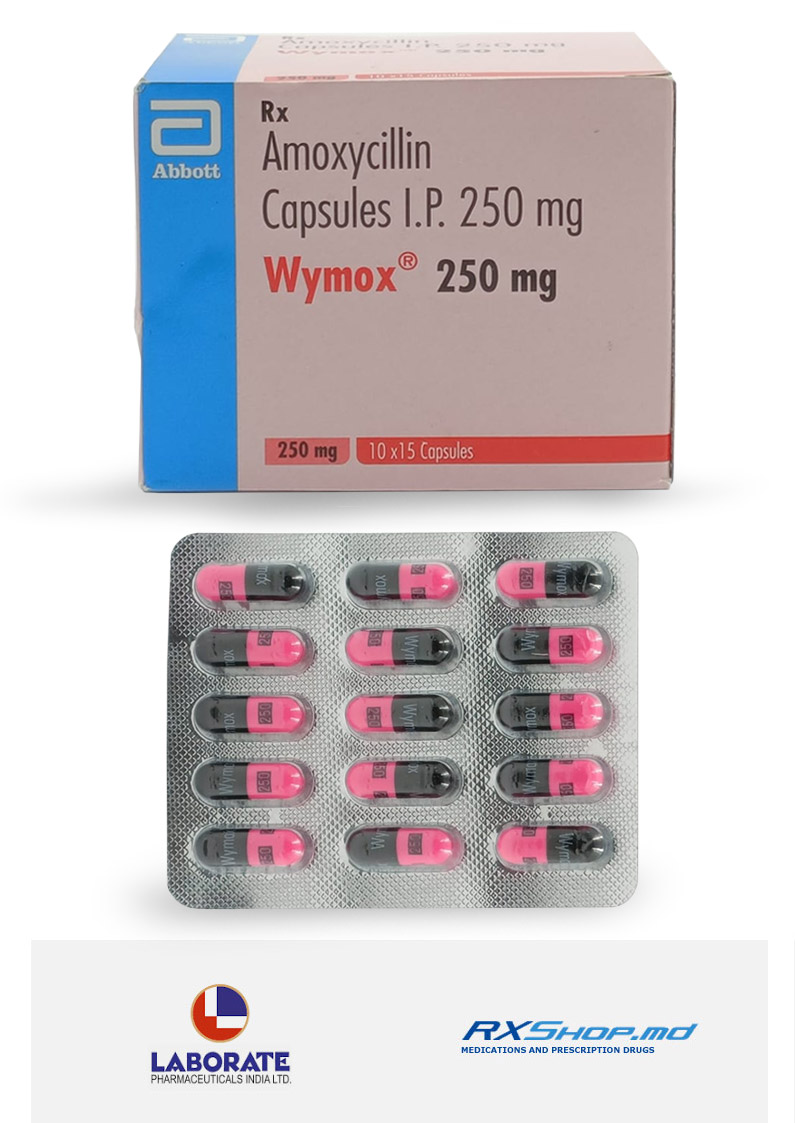
Wymox is a brand-name formulation of Amoxicillin originally marketed by Wyeth Pharmaceuticals (now Pfizer) — one of the most globally recognized brand names for this foundational aminopenicillin antibiotic. Amoxicillin has been the gold-standard first-line antibiotic for many common bacterial infections since 1972, particularly in pediatric and adult outpatient practice where its excellent safety profile and broad clinical applications make it one of the most-prescribed antibiotics worldwide.
The active ingredient is Amoxicillin, which works by inhibiting bacterial cell wall synthesis through binding to penicillin-binding proteins (PBPs). By blocking the cross-linking of peptidoglycan layers, Amoxicillin causes bacterial cell lysis and death. This β-lactam mechanism is selectively toxic to bacteria because human cells lack cell walls — supporting one of the safest antibiotic safety profiles in modern medicine.
Amoxicillin offers excellent activity against many Gram-positive bacteria (Streptococcus pyogenes, Streptococcus pneumoniae, methicillin-sensitive Staphylococcus aureus), useful Gram-negative coverage (Haemophilus influenzae, Neisseria, select E. coli), and superior oral bioavailability (~95%) compared to earlier penicillins. The combination of broad spectrum and safety profile makes it a foundational antibiotic in modern medicine.
Wymox is approved for treatment of acute otitis media, acute bacterial sinusitis, streptococcal pharyngitis (strep throat), tonsillitis, community-acquired pneumonia, urinary tract infections, dental infections, and various pediatric bacterial infections. It is also used as part of triple therapy for Helicobacter pylori eradication, early Lyme disease in pregnant women and young children, and bacterial endocarditis prophylaxis before dental procedures in high-risk cardiac patients.
The medication is available in standard formulations: 250 mg and 500 mg capsules, 500 mg and 875 mg tablets, chewable tablets, and pediatric oral suspensions. Standard adult dosing is 500 mg every 8 hours or 875 mg every 12 hours. Pediatric dosing is weight-based at 25-50 mg/kg/day in divided doses.
Common side effects include mild diarrhea, nausea, and rash. Amoxicillin allergy occurs in approximately 1-5% of patients. Generic Amoxicillin is widely available worldwide.
Free prescription
Discrete packaging
Have questions?
Quality Assurance

- High Dose Amoxicillin Otitis Media: High-dose Amoxicillin (80-90 mg/kg/day) for resistant pediatric otitis media;
- Adult Dental Abscess: For adult dental abscesses and odontogenic infections requiring oral antibiotic therapy;
- Adult Sinusitis 875mg BID: For adult acute bacterial sinusitis with twice-daily 875 mg dosing for better adherence;
- Adult Strep Throat 500mg TID: For adult streptococcal pharyngitis with three-times-daily 500 mg standard dosing;
- Pediatric Strep Throat Standard: Standard first-line therapy for pediatric streptococcal pharyngitis;
- Adult Endocarditis Prophylaxis Dental: Single 2g pre-dental procedure dose for endocarditis prophylaxis in high-risk cardiac patients;
- Pediatric Endocarditis Single Dose: Pre-procedure 50 mg/kg single dose for pediatric endocarditis prophylaxis;
- Pediatric Joint Replacement Prophylaxis: Pre-procedure prophylaxis in pediatric patients with joint prostheses;
- Acute Bronchitis With S Pneumoniae: For acute bacterial bronchitis caused by Streptococcus pneumoniae;
- Adult CAP Outpatient: For adult outpatient community-acquired pneumonia caused by Streptococcus pneumoniae;
- Pediatric CAP Standard: Standard first-line therapy for pediatric community-acquired pneumonia per international guidelines;
- H Pylori Triple Therapy Component: Standard component of triple therapy with PPI and clarithromycin for H. pylori eradication;
- Lyme Disease Pregnant: First-line for early Lyme disease in pregnant women where doxycycline is contraindicated;
- Lyme Disease Children Under 8: First-line for early Lyme disease in children under 8 where doxycycline is contraindicated;
- Pediatric Skin Infections: For pediatric skin infections caused by Streptococcus or MSSA;
- Pediatric Cellulitis Standard: Standard for pediatric streptococcal cellulitis with pediatric-friendly suspension dosing;
- Animal Bite Prophylaxis Adjunct: Adjunct in animal bite wound prophylaxis — typically combined with clavulanate;
- Listeria Adult Selective: Alternative for adult Listeria monocytogenes infection where Ampicillin is unavailable;
- Diphtheria Carrier Eradication: Selective use for diphtheria carrier state eradication in close contacts;
- Post Surgical Dental Prophylaxis: Single-dose post-extraction antibiotic prophylaxis in high-risk surgical situations;
- American Pediatrician Familiar Brand: Brand familiar to American pediatricians and primary care providers since the 1970s.
- Less Ear Pain: Rapid relief from otitis media pain in adults and children;
- Less Throat Pain: Resolution of strep throat pain enabling return to normal activities;
- Less Sinus Pain: Reduction in facial pressure and pain of sinusitis;
- Less Tooth Pain: Resolution of dental abscess pain following antibiotic therapy;
- Less Cough: Resolution of productive cough in bacterial pneumonia and bronchitis;
- Better Breathing: Improvement in dyspnea as bacterial respiratory infection resolves;
- Better Wound Healing: Skin infections heal as bacterial colonization clears;
- Less Stomach Pain: Resolution of H. pylori-related epigastric pain following eradication therapy;
- Less Burning Urination: Resolution of dysuria in UTI within 24-48 hours;
- Better Energy: Recovery from fatigue and malaise as bacterial infection clears;
- Better Appetite: Restoration of normal appetite as systemic infection resolves;
- Better Sleep: Resolution of nighttime pain in children with otitis media or other infections;
- Faster Recovery: Most patients show clinical improvement within 48-72 hours of starting therapy;
- Better Daily Function: Return to school, work, and normal activities;
- Brand Wymox: Wyeth Pharmaceuticals brand of Amoxicillin — established American clinical reputation since the 1970s;
- Generic Amoxicillin: Affordable generic Amoxicillin expanding global access to foundational antibiotic therapy;
- Amoxil Equivalent: Same Amoxicillin molecule as original Amoxil brand — bioequivalent therapeutic profile;
- Wyeth Pharmaceutical Heritage: Brand from Wyeth (now Pfizer) with decades of American pharmaceutical heritage;
- Aminopenicillin Antibiotic: Broad-spectrum aminopenicillin class with improved oral bioavailability over older penicillins;
- Beta Lactam Antibiotic: Foundational β-lactam mechanism — safe and effective bacterial cell wall inhibitor;
- First Line Pediatric Antibiotic: Most-recommended antibiotic in pediatric practice across multiple international guidelines;
- High Oral Bioavailability: Approximately 95% oral absorption supports reliable oral therapy without parenteral administration;
- Pediatric Suspension Amoxicillin: Pleasant-tasting liquid formulations support accurate weight-based dosing in young children;
- Amoxicillin Chewable: 200 mg and 400 mg chewable tablets for school-age children unable to swallow capsules;
- Penicillin Sensitive Streptococcus: Excellent activity against penicillin-sensitive Streptococcus species — mainstay therapy;
- Ear Infection Treatment: First-line for acute otitis media in pediatric practice — most common pediatric bacterial infection;
- Strep Throat Treatment: First-line for streptococcal pharyngitis — prevents rheumatic fever and post-streptococcal complications;
- Sinusitis Treatment: First-line antibiotic for acute bacterial sinusitis per international rhinology guidelines;
- Pneumonia Treatment: First-line outpatient therapy for community-acquired pneumonia in adults and children;
- Dental Antibiotic: First-line for dental abscesses and odontogenic infections per dental association guidelines;
- H Pylori Triple Therapy: Foundation component of PPI-based triple therapy for Helicobacter pylori eradication;
- Pregnancy Safe Antibiotic: Considered safe and first-line for bacterial infections during pregnancy when therapy is needed;
- Breastfeeding Safe Antibiotic: Safe during lactation in routine clinical practice;
- Endocarditis Prophylaxis Therapy: Standard pre-dental procedure antibiotic for high-risk cardiac patients per AHA guidelines;
- Lyme Disease Pregnancy Pediatric: First-line for early Lyme disease where doxycycline is contraindicated;
- WHO Essential Medicine: Listed on the WHO Model List of Essential Medicines as a foundational antibiotic;
- 50 Plus Year Antibiotic History: Extensive real-world safety and efficacy data since 1972 across billions of patient courses;
- Generally Well Tolerated: Most patients tolerate well — mild diarrhea is the most common side effect;
- Penicillin Allergy Caution: Approximately 1-5% incidence of Amoxicillin allergy — avoid in penicillin-allergic patients;
- Stable Storage: Capsules and tablets stable at room temperature — oral suspension requires refrigeration after reconstitution;
- Globally Available: One of the most internationally recognised antibiotics, familiar to clinicians worldwide.
Generic Wymox (Amoxicillin 250 mg) Medication guide:
📖 What is Wymox amoxicillin aminopenicillin antibiotic
Wymox is a brand name for amoxicillin, one of the most widely prescribed antibiotics in the world and a cornerstone of outpatient bacterial infection treatment for five decades. Amoxicillin belongs to the aminopenicillin subclass of beta-lactam antibiotics. It is on the WHO Model List of Essential Medicines and remains first-line therapy for streptococcal pharyngitis, acute otitis media, acute bacterial sinusitis, dental infections, uncomplicated community-acquired pneumonia, and as a component of H. pylori triple therapy.
🔑 Core identity in one paragraph
Amoxicillin was developed by Beecham (later merged into GlaxoSmithKline) as an improved oral aminopenicillin with better absorption and tolerability than ampicillin. FDA approved in 1974 and rapidly adopted globally, amoxicillin's combination of broad activity against streptococci, susceptible pneumococci, some Gram-negatives, and Helicobacter pylori, together with excellent oral bioavailability, twice or thrice daily dosing convenience, low cost, and Category B pregnancy safety, made it one of the defining antibiotics of modern outpatient practice.
| Attribute | Value |
|---|---|
| Generic name | Amoxicillin (amoxicillin trihydrate for oral formulations) |
| Drug class | Aminopenicillin (semi-synthetic beta-lactam) |
| First FDA approval | 1974 (Amoxil originator by Beecham; multiple brands since) |
| Originator brand | Amoxil (Beecham, later GSK); Wymox by Wyeth/Abbott among many alternatives |
| Available formulations | 250 mg and 500 mg capsules; 500 mg, 875 mg tablets; chewable tablets; oral suspension (125, 200, 250, 400 mg per 5 mL) |
| Standard adult dose | 500 mg every 8 hours OR 875 mg every 12 hours (higher for H. pylori) |
| Bactericidal vs bacteriostatic | Bactericidal via cell wall synthesis inhibition |
| Age range | Neonates through adults (weight-based paediatric dosing) |
| Pregnancy category | B (generally considered acceptable in pregnancy) |
| Regulatory status | WHO Essential Medicine; approved worldwide |
🧪 Why amoxicillin transformed outpatient practice
Ampicillin (approved 1961) was the first aminopenicillin but had modest oral bioavailability (approximately 40 percent) and required 4-times-daily dosing. Amoxicillin's improved bioavailability (near 95 percent) and simpler TID or BID dosing dramatically improved outpatient adherence. Combined with excellent tolerability, low cost, and pregnancy safety, amoxicillin became the routine outpatient bacterial infection drug across primary care globally.
✅ Clinical role today
- Streptococcal pharyngitis first-line (10-day course)
- Acute otitis media in children first-line high-dose amoxicillin (AAP guideline)
- Acute bacterial sinusitis when amoxicillin-clavulanate not required
- Community-acquired pneumonia (outpatient healthy adult) monotherapy option
- Dental infections and endocarditis prophylaxis standard
- Helicobacter pylori eradication as component of triple or quadruple therapy
- Early Lyme disease in children under 8 and pregnant women (alternative to doxycycline)
- Uncomplicated UTI in pregnancy where susceptible pathogen
- Anthrax post-exposure prophylaxis in specific scenarios
🕰️ History and development of amoxicillin since 1972
Amoxicillin was developed by Beecham Research Laboratories (later merged into SmithKline Beecham, then GlaxoSmithKline) in the early 1970s as a next-generation aminopenicillin with improved oral absorption compared with ampicillin. Sutherland, Croydon, and Rolinson first described amoxicillin in the British Medical Journal in 1972. FDA approval followed in 1974 as Amoxil, and generic manufacturing expanded rapidly after patent expiration. Wymox is one of many amoxicillin brands available globally.
📅 Development timeline
- 1940s to 1950s — penicillin era
- Penicillin G isolated and developed. Narrow Gram-positive spectrum. Requires injection for reliable levels.
- 1961 — ampicillin launched
- Beecham chemists develop ampicillin: first aminopenicillin with extended Gram-negative activity. Orally available but bioavailability approximately 40 percent, requires 4-times-daily dosing.
- 1972 — amoxicillin described
- Sutherland R, Croydon EAP, and Rolinson GN publish description of amoxicillin in British Medical Journal. Key improvement: hydroxyl group at position 4 of the phenyl ring enhances absorption dramatically (approximately 95 percent bioavailability).
- 1974 — FDA approval as Amoxil
- Beecham launches Amoxil in the US. Rapid adoption over ampicillin driven by simpler TID or BID dosing and better GI tolerability.
- 1970s to 1980s — global expansion
- Approved worldwide. Multiple generic manufacturers begin producing amoxicillin after patent expiration. Wyeth launches Wymox as one of many US brands. Global generic availability drives cost to very low levels.
- 1984 — amoxicillin-clavulanate launched
- Beecham launches Augmentin combining amoxicillin with clavulanic acid to extend coverage against beta-lactamase-producing organisms. Amoxicillin alone remains widely used where beta-lactamase resistance is not a concern.
- 1990s to 2000s — H. pylori role established
- Amoxicillin becomes core component of H. pylori triple therapy (with PPI and clarithromycin) after H. pylori's role in peptic ulcer disease elucidated by Marshall and Warren.
- 2004 — high-dose amoxicillin AOM recommendation
- AAP guidelines emphasise high-dose amoxicillin (80 to 90 mg/kg/day) for paediatric AOM to overcome intermediate pneumococcal resistance.
- Present — foundational role continues
- Amoxicillin remains one of the most prescribed antibiotics globally. WHO Essential Medicine status ensures continued availability. Rising resistance in some pathogens (H. pylori clarithromycin resistance affects triple therapy, some pneumococcal resistance) shapes evolving use.
🇬🇧 The Beecham penicillin chemistry legacy
Beecham Research Laboratories were pioneers in modifying the 6-aminopenicillanic acid (6-APA) core structure to produce new penicillins with improved properties. This work produced methicillin (1959, first anti-staphylococcal penicillin), ampicillin (1961, first aminopenicillin), amoxicillin (1972, improved absorption), and amoxicillin-clavulanate (1984, beta-lactamase inhibitor combination). The scientific legacy shaped the entire semi-synthetic penicillin era.
✅ Why amoxicillin persisted as first-line
Despite five decades since introduction, amoxicillin retains first-line status for many indications because Streptococcus pyogenes (Group A strep) has never developed penicillin resistance, susceptible S. pneumoniae remains widespread, and cost-effectiveness at extremely low generic pricing is unmatched. The combination of proven efficacy, excellent safety profile, oral bioavailability, and near-negligible cost keeps amoxicillin foundational to outpatient bacterial infection treatment globally.
🧬 How amoxicillin kills bacteria via cell wall
Amoxicillin, like all beta-lactams, works by inhibiting bacterial cell wall synthesis. It binds penicillin-binding proteins (PBPs) that catalyse peptidoglycan cross-linking, preventing formation of a strong cell wall. Growing bacteria burst under osmotic pressure. This action is bactericidal.
🧬 Mechanism step by step
- Absorption and distribution: amoxicillin is orally absorbed with high bioavailability, reaches target tissues in effective concentrations
- Entry into bacterial cell: crosses Gram-negative outer membrane via porin channels; readily accesses periplasmic space in Gram-positives and susceptible Gram-negatives
- PBP binding: the beta-lactam ring binds specific penicillin-binding proteins (particularly PBP1a, 1b, 3) at the bacterial cytoplasmic membrane
- Transpeptidase inhibition: bound PBP cannot catalyse the transpeptidation step that cross-links adjacent peptidoglycan strands
- Cell wall weakening: newly synthesised peptidoglycan is not cross-linked and lacks mechanical strength
- Autolysin activation: the imbalance triggers bacterial autolysins that further degrade cell wall material
- Cell lysis: growing bacteria burst under internal osmotic pressure. Non-growing bacteria are less susceptible
- Host cell sparing: mammalian cells lack peptidoglycan cell walls; selectivity is inherent
🔬 The aminopenicillin advantage
Amoxicillin's amino group extends the Gram-negative spectrum beyond penicillin G by allowing better penetration through Gram-negative porin channels. This gives amoxicillin activity against H. influenzae, E. coli, Proteus mirabilis, Salmonella, and other Enterobacteriaceae that penicillin G cannot reach. The trade-off is susceptibility to beta-lactamases produced by many Gram-negative organisms, addressed by amoxicillin-clavulanate combination.
| Mechanism feature | Clinical consequence |
|---|---|
| Bactericidal action | Kills growing bacteria directly |
| Excellent Streptococcus pyogenes activity | Reliable strep pharyngitis eradication |
| Good pneumococcal activity (susceptible) | First-line for CAP, otitis, sinusitis |
| Susceptible to beta-lactamases | Limits activity against beta-lactamase-producing H. influenzae, Moraxella, MSSA |
| Time-dependent killing | Efficacy depends on T>MIC; TID or BID with high-dose supports adequate exposure |
| Reduced Gram-positive activity vs anti-staphylococcal penicillins | Not preferred for MSSA (use dicloxacillin, cephalexin) |
| No activity against Enterococcus (except some strains) | Amoxicillin retains E. faecalis activity; not E. faecium |
| No activity against Pseudomonas | Antipseudomonal alternative needed |
✅ The high-dose amoxicillin concept
For infections where intermediate-resistant Streptococcus pneumoniae is a concern (AOM, sinusitis, CAP), high-dose amoxicillin (80 to 90 mg/kg/day in children; 3 to 4 g/day in adults) can overcome intermediate resistance by maintaining higher tissue concentrations above the MIC. This approach was formalised in AAP AOM guidelines and remains standard practice where pneumococcal resistance is a concern. High-dose regimens generally do not increase adverse effect rates meaningfully.
🔬 Amoxicillin in the penicillin family evolution
Amoxicillin sits within the aminopenicillin subclass alongside ampicillin. Understanding where it fits within the broader penicillin family clarifies its distinctive properties.
| Penicillin subclass | Representative members | Spectrum profile |
|---|---|---|
| Natural penicillins | Penicillin G (IV/IM), Penicillin V (oral) | Narrow Gram-positive; strep excellent |
| Anti-staphylococcal penicillins | Methicillin (historical), oxacillin, nafcillin, dicloxacillin | MSSA activity; narrow spectrum otherwise |
| Aminopenicillins (Wymox here) | Ampicillin, amoxicillin | Extended Gram-negative (H. influenzae, some Enterobacteriaceae); retain penicillin Gram-positive activity |
| Extended-spectrum penicillins | Carbenicillin (historical), ticarcillin, piperacillin | Broad Gram-negative including Pseudomonas |
| Penicillin/beta-lactamase inhibitor combinations | Amoxicillin-clavulanate, ampicillin-sulbactam, piperacillin-tazobactam | Extended coverage including beta-lactamase producers |
🔑 Amoxicillin versus ampicillin
- Oral bioavailability
- Amoxicillin: approximately 95 percent. Ampicillin: approximately 40 percent oral. Amoxicillin's much better absorption makes it the preferred oral aminopenicillin.
- Effect of food
- Amoxicillin: minimal effect. Ampicillin: absorption reduced by food (30 to 50 percent).
- Dosing frequency
- Amoxicillin: TID or BID. Ampicillin: QID typically.
- Diarrhoea rate
- Amoxicillin causes less diarrhoea than ampicillin because more is absorbed and less remains to disrupt gut flora.
- Rash with mononucleosis
- Both amoxicillin and ampicillin cause the characteristic morbilliform rash in nearly 100 percent of patients with acute EBV mononucleosis. This is not a true allergy.
- Antibacterial spectrum
- Essentially identical between amoxicillin and ampicillin. Choice for oral therapy is always amoxicillin.
🔬 Aminopenicillin spectrum extension
The amino group at position 4 of the phenyl ring in aminopenicillins allows access through Gram-negative outer membrane porins, extending coverage beyond narrow-spectrum penicillin G to include H. influenzae, non-beta-lactamase E. coli, Proteus mirabilis, Salmonella, Shigella, and other Enterobacteriaceae. This spectrum extension made amoxicillin useful for otitis media, sinusitis, UTI, and enteric infections in addition to strep pharyngitis.
⚠️ Beta-lactamase susceptibility
Amoxicillin remains susceptible to beta-lactamases produced by many Gram-negative organisms and by staphylococci. When beta-lactamase-producing organisms are suspected (beta-lactamase-producing H. influenzae, Moraxella catarrhalis, MSSA), amoxicillin-clavulanate is preferred. Clavulanate inhibits many common beta-lactamases and restores amoxicillin's activity against these organisms.
🦠 Bacterial spectrum and pathogen coverage overview
Amoxicillin covers a broad spectrum including many Gram-positives and susceptible Gram-negatives. Its coverage pattern determines the indications where it is first-line and where amoxicillin-clavulanate or an alternative is preferred.
✅ Reliable coverage
- Streptococcus pyogenes (Group A strep) — no resistance ever documented
- Streptococcus pneumoniae (susceptible strains) — regional variability
- Streptococcus agalactiae (Group B strep)
- Viridans group streptococci
- Enterococcus faecalis (retains activity; E. faecium mostly resistant)
- Listeria monocytogenes (aminopenicillins are first-line for listerial infections)
- Haemophilus influenzae (non-beta-lactamase producing; approximately 60 to 70 percent of strains)
- Helicobacter pylori (part of triple therapy; low resistance rates globally)
- Borrelia burgdorferi (Lyme disease early)
- Treponema pallidum (syphilis; benzathine penicillin preferred but amoxicillin usable in some settings)
- Actinomyces
- Corynebacterium diphtheriae
🟡 Variable or reduced coverage
- Streptococcus pneumoniae with reduced penicillin susceptibility — regional variability; high-dose amoxicillin overcomes intermediate resistance
- Streptococcus pneumoniae with high-level penicillin resistance — some regions; alternative therapy needed
- Haemophilus influenzae beta-lactamase producing (approximately 30 percent) — requires amoxicillin-clavulanate
- Moraxella catarrhalis — nearly all produce beta-lactamase; requires amox-clav
- Escherichia coli — substantial community resistance (40 to 60 percent in many regions)
- Klebsiella pneumoniae — intrinsically resistant to amoxicillin alone (beta-lactamase)
- Salmonella and Shigella — regional resistance variable
🔴 Gaps: do not use for these
- Staphylococcus aureus MSSA — nearly all produce beta-lactamase; use dicloxacillin, cephalexin, or amox-clav
- MRSA — not effective
- Pseudomonas aeruginosa — no activity
- Anaerobes below the diaphragm (Bacteroides fragilis group) — limited activity; use amox-clav or metronidazole
- Atypical respiratory pathogens (Mycoplasma, Chlamydia, Legionella) — no beta-lactam covers these
- Enterococcus faecium — mostly resistant
- Extended-spectrum beta-lactamase (ESBL) producers — resistant
- Enterobacter, Serratia, Citrobacter — AmpC beta-lactamase producers
- Mycobacteria — not effective
🧪 Practical spectrum takeaway
Amoxicillin is a reliable choice for streptococcal and susceptible Gram-negative infections in outpatient practice. Streptococcus pyogenes has never developed resistance, making amoxicillin the enduring first-line for strep pharyngitis. For pneumococcal-driven infections (AOM, sinusitis, CAP), susceptibility is regionally variable, and high-dose regimens address intermediate resistance. When beta-lactamase-producing organisms are the target (H. influenzae, Moraxella, MSSA), amoxicillin-clavulanate is preferred over amoxicillin alone.
💊 Pharmacokinetics absorption distribution and elimination
Amoxicillin has excellent oral bioavailability (approximately 95 percent) that is minimally affected by food. Half-life is 1 to 1.5 hours, and elimination is predominantly renal.
| PK parameter | Value / behaviour |
|---|---|
| Oral bioavailability | Approximately 95 percent (excellent) |
| Effect of food | Minimal reduction; can be taken with or without food |
| Time to peak concentration (Tmax) | 1 to 2 hours after oral dose |
| Protein binding | Low (approximately 18 percent) — free fraction abundant |
| Distribution volume | Wide tissue distribution; good middle ear, sinus, tonsil, lung penetration |
| CSF penetration | Limited normally; increased with inflamed meninges (bacterial meningitis) |
| Half-life | 1 to 1.5 hours (longer in renal impairment) |
| Metabolism | Minimal hepatic metabolism (approximately 30 percent metabolised to penicilloic acid) |
| Primary excretion route | Renal (approximately 60 to 70 percent unchanged in urine within 8 hours) |
| Renal impairment effect | Accumulation; dose adjustment at CrCl below 30 mL/min |
| Haemodialysis removal | Effectively removed; dose after dialysis |
| Urinary concentrations | Very high — useful for UTI treatment |
🔬 Why the pharmacokinetics work well
Amoxicillin's combination of high oral absorption, low protein binding, wide tissue distribution, and predominantly renal elimination produces a clean, predictable profile. Middle ear fluid concentrations reach approximately 30 to 50 percent of serum levels — adequate for AOM pathogens. Sinus mucosa penetration is excellent. Tonsillar tissue penetration supports strep pharyngitis eradication. Urinary concentrations are extremely high, supporting UTI treatment in susceptible pathogens. Lung tissue concentrations support CAP treatment.
🕑 Practical dosing implications
- TID (every 8 hours) or BID (every 12 hours) both work for most indications; BID with higher single dose supports adherence
- Take with or without food — convenience advantage
- Full course completion important given time-dependent killing
- Renal dose adjustment at CrCl below 30 mL/min (see dedicated section)
- Not for meningitis empirically as monotherapy — use IV ampicillin or third-generation cephalosporin
- High urinary concentrations make amoxicillin natural choice for pregnancy UTI where organism is susceptible
✅ Convenience advantage
Amoxicillin's combination of BID dosing option, minimal food effect, low interaction burden, and excellent tolerability make it one of the most patient-friendly oral antibiotics available. For a 10-day treatment for streptococcal pharyngitis or AOM, the practical burden on the patient is minimal compared with QID tetracyclines or TID amoxicillin-clavulanate. Amoxicillin 875 mg BID for adults is a particularly convenient regimen.
🗣️ Streptococcal pharyngitis first-line treatment role
Streptococcal pharyngitis is the defining amoxicillin indication. Amoxicillin (or penicillin V) is first-line, with reliable efficacy against Group A Streptococcus that has never developed resistance to penicillins over decades of use.
🗣️ Strep pharyngitis treatment framework (IDSA guideline)
- First-line: penicillin V or amoxicillin
- Penicillin V 500 mg BID for adults, 250 mg BID for children under 27 kg, OR amoxicillin 500 mg BID or 1000 mg once daily for adults, 50 mg/kg once daily (max 1000 mg) for children. Full 10-day course required.
- Why amoxicillin often preferred over penicillin V
- Amoxicillin's longer half-life allows once-daily or twice-daily dosing (versus penicillin V TID for reliable levels). Palatable suspension for children improves adherence. Both are highly effective; choice often reflects local practice preference.
- Non-severe penicillin allergy
- Cephalexin, cefpodoxime, or cefadroxil for 10 days.
- Severe penicillin allergy (anaphylaxis)
- Avoid all beta-lactams. Use clindamycin or macrolide (azithromycin, clarithromycin). Note regional macrolide resistance.
- Duration
- 10 days full course is standard for streptococcal eradication and rheumatic fever prevention. Shorter courses (5 days) have been studied with cefpodoxime and other cephalosporins but 10 days remains the reference standard.
| Feature | Amoxicillin | Penicillin V |
|---|---|---|
| Efficacy for GAS | Excellent, no resistance | Excellent, no resistance |
| Dosing frequency | Once or twice daily | Two or three times daily |
| Palatable suspension for children | Yes, well-tolerated | Less palatable to some children |
| Cost | Very low | Very low |
| Pregnancy category | B | B |
| Broader coverage than needed for GAS | Yes (some Gram-negative) | No; narrower is a stewardship advantage |
🧪 Testing before treatment
Most sore throats are viral. Rapid antigen detection tests (RADT) or throat culture confirm streptococcal aetiology before antibiotic prescription. In adults, negative RADT is sufficient given lower rheumatic fever risk. In children and adolescents, negative RADT should be confirmed with throat culture given higher rheumatic fever risk. Empirical antibiotic treatment for undifferentiated sore throat is not appropriate.
⚠️ Complete 10 days regardless of symptom resolution
Full 10-day antibiotic course is required for streptococcal eradication and prevention of post-streptococcal complications (rheumatic fever, acute glomerulonephritis, PANDAS). Symptomatic improvement typically occurs within 24 to 48 hours; the extended course serves microbiological eradication rather than symptom control. Stopping amoxicillin early after symptom improvement risks these serious sequelae.
👂 Acute otitis media pediatric first-line therapy
Acute otitis media (AOM) in children is the second most common amoxicillin indication. High-dose amoxicillin (80 to 90 mg/kg/day) is first-line per AAP guidelines, chosen to cover Streptococcus pneumoniae including intermediate-resistant strains.
👂 AOM treatment framework (AAP guideline)
- First-line: high-dose amoxicillin
- Amoxicillin 80 to 90 mg/kg/day divided BID or TID for 10 days in children under 2 years; shorter courses (5 to 7 days) in older children with mild disease. High-dose regimen chosen for pneumococcal coverage.
- Second-line: amoxicillin-clavulanate
- Same amoxicillin dose plus clavulanate. For treatment failure at 48 to 72 hours, severe presentation, or recent amoxicillin exposure (30 days).
- Watchful waiting option
- For children 6 months to 2 years with mild unilateral AOM without severe symptoms, observation with symptomatic treatment for 48 to 72 hours is acceptable with reliable follow-up. If no improvement, initiate amoxicillin.
- Penicillin allergy
- Non-severe: cefdinir, cefuroxime, cefpodoxime. Severe (anaphylaxis): macrolide (azithromycin, clarithromycin) — noting macrolide resistance in some regions limits reliability.
- Duration by age
- Under 2 years: 10 days full course. 2 to 5 years: 7 days may suffice. Over 6 years with mild disease: 5 to 7 days often adequate.
| Common AOM pathogen | High-dose amoxicillin coverage |
|---|---|
| Streptococcus pneumoniae (susceptible) | Excellent |
| Streptococcus pneumoniae (intermediate resistance) | Good (high-dose regimen overcomes) |
| Streptococcus pneumoniae (high-level resistance) | Reduced; ceftriaxone or clindamycin |
| Haemophilus influenzae (non-beta-lactamase) | Good |
| Haemophilus influenzae (beta-lactamase producing) | Reduced; requires amox-clav |
| Moraxella catarrhalis | Reduced; requires amox-clav |
| Streptococcus pyogenes | Excellent |
🔬 The pneumococcal conjugate vaccine effect
Since introduction of pneumococcal conjugate vaccines (PCV7 in 2000, PCV13 in 2010, and now PCV15/PCV20), the epidemiology of paediatric AOM has shifted. Vaccine-covered pneumococcal serotypes have declined dramatically. Non-vaccine serotypes (including some with higher resistance) have partially replaced them. The overall effect: reduced AOM burden, changing pathogen mix with more H. influenzae relative proportion, and continued reliance on amoxicillin high-dose first-line.
✅ Amoxicillin AOM advantages
Amoxicillin has excellent middle ear fluid penetration, reliable coverage of the dominant AOM pathogens at appropriate doses, palatable suspension formulations for children, low cost, decades of paediatric experience, and Category B pregnancy safety for pregnant caregivers or occasional use. High-dose regimens allow overcoming intermediate pneumococcal resistance without switching to broader-spectrum agents unnecessarily.
👇 Acute bacterial sinusitis treatment options
Acute bacterial sinusitis is commonly treated with amoxicillin or amoxicillin-clavulanate. Amoxicillin alone is appropriate when beta-lactamase-producing organisms are not a major concern, though many contemporary guidelines have shifted to amoxicillin-clavulanate as first-line for adults.
👇 Acute bacterial sinusitis treatment framework
- IDSA first-line: amoxicillin-clavulanate
- Amoxicillin-clavulanate 875 mg BID for 5 to 10 days (adults); paediatric weight-based. Preferred over amoxicillin alone for adults due to concerns about beta-lactamase-producing H. influenzae and Moraxella.
- Amoxicillin high-dose alternative
- Amoxicillin 1000 mg TID or 2000 mg BID (high-dose) for 5 to 10 days can be used in regions with low beta-lactamase producer rates or in children where paediatric guidelines still recommend amoxicillin monotherapy first.
- Duration
- 5 to 10 days; shorter courses (5 to 7 days) increasingly supported by evidence for uncomplicated adult sinusitis.
- Penicillin allergy alternatives
- Non-severe: doxycycline, cefpodoxime, cefuroxime. Severe (anaphylaxis): doxycycline or macrolide (with atypical resistance concerns).
| Clinical scenario | Recommended agent |
|---|---|
| Uncomplicated adult sinusitis (IDSA) | Amoxicillin-clavulanate first-line |
| Paediatric sinusitis | High-dose amoxicillin first-line (AAP); amox-clav for treatment failure |
| Non-severe penicillin allergy | Doxycycline or cephalosporin |
| Severe penicillin allergy | Doxycycline (avoid all beta-lactams) |
| Treatment failure at 72 hours | Amoxicillin-clavulanate if not already; consider levofloxacin or ENT referral |
| Pregnancy | Amoxicillin or amoxicillin-clavulanate (Category B) |
🧪 Distinguishing viral from bacterial sinusitis
Most sinus symptoms are viral and do not benefit from antibiotics. Bacterial sinusitis is suggested by: symptoms persisting more than 10 days without improvement; severe symptoms with high fever and purulent discharge lasting 3 to 4 days; symptoms that improved then worsened (double sickening). Only when bacterial sinusitis is suspected does amoxicillin or any antibiotic become an appropriate choice.
✅ Amoxicillin sinusitis role
In paediatric sinusitis, high-dose amoxicillin remains first-line per AAP guidelines. In adult sinusitis, IDSA guidelines favour amoxicillin-clavulanate for beta-lactamase-producing pathogen coverage. Amoxicillin alone remains appropriate in patients with low regional beta-lactamase rates, cost-sensitive situations where amox-clav is unavailable, or in pregnancy where a beta-lactam is chosen. Complete a 5 to 10 day course based on severity and response.
🫁 Community-acquired pneumonia outpatient monotherapy
Community-acquired pneumonia (CAP) in healthy adults is a major amoxicillin indication. ATS/IDSA guidelines list amoxicillin high-dose as one of three acceptable monotherapy options for outpatient CAP without comorbidities.
🫁 CAP treatment framework (ATS/IDSA 2019)
- Outpatient healthy adult (no comorbidities)
- Amoxicillin 1000 mg TID OR doxycycline OR macrolide (azithromycin, clarithromycin) as monotherapy. Local resistance patterns matter.
- Outpatient with comorbidities
- Combination: beta-lactam (amoxicillin-clavulanate, cefpodoxime) plus macrolide (or doxycycline), OR respiratory fluoroquinolone monotherapy.
- Hospitalised non-ICU
- IV therapy first; amoxicillin as step-down oral once patient improves for susceptible pathogens.
- Duration
- Minimum 5 days; typically 5 to 7 days if afebrile for 48 hours and clinically improved; longer for severe disease or delayed response.
- Penicillin allergy
- Non-severe: cephalosporin plus macrolide, or doxycycline monotherapy. Severe: doxycycline or respiratory fluoroquinolone.
| CAP scenario | Amoxicillin role |
|---|---|
| Uncomplicated outpatient healthy adult | First-line monotherapy option (high-dose 1 g TID) |
| Outpatient with comorbidities | Not preferred; amox-clav or respiratory FQ instead |
| Pregnancy CAP | Amoxicillin or amox-clav plus azithromycin for atypical |
| Paediatric CAP (children over 3 months) | High-dose amoxicillin first-line for outpatient |
| Step-down from IV ampicillin or ceftriaxone | Amoxicillin step-down when susceptible |
🔬 The atypical coverage question
Approximately 20 to 30 percent of outpatient CAP is caused by atypical pathogens (Mycoplasma, Chlamydia, Legionella). Amoxicillin does not cover these organisms — no beta-lactam does. ATS/IDSA 2019 guidelines list amoxicillin monotherapy as acceptable for healthy adult outpatients, reflecting that most typical CAP is pneumococcal and that atypical CAP may resolve without antibiotic-specific therapy or with unrecognised concurrent treatment. In outpatient CAP with comorbidities, combination therapy (beta-lactam plus macrolide or doxycycline) or respiratory fluoroquinolone monotherapy provides atypical coverage.
✅ When amoxicillin CAP treatment fits
Healthy adult outpatient CAP without comorbidities in region with low macrolide-resistant pneumococcus and where atypical pathogens are less concerning; paediatric CAP (children over 3 months) as first-line high-dose; pregnancy CAP where beta-lactam is preferred over fluoroquinolone; step-down oral after IV ampicillin or ceftriaxone. Amoxicillin high-dose 1000 mg TID for 5 to 7 days is the standard adult monotherapy regimen when chosen.
🦷 Dental infections and endocarditis prophylaxis
Amoxicillin has established roles in dental infections and infective endocarditis prophylaxis. It is the standard first-line oral option in both scenarios.
🦷 Dental infection treatment framework
- Uncomplicated acute dental abscess
- Primary treatment is drainage (through the tooth or extraction). Antibiotics adjunctive only when infection spreading or systemic features. Amoxicillin 500 mg TID for 3 to 7 days if antibiotics needed.
- Cellulitis of odontogenic origin
- Amoxicillin 500 mg TID or amox-clav 875 mg BID for 5 to 7 days. Amox-clav preferred when anaerobic coverage matters (Fusobacterium, Prevotella).
- Severe dental infection with systemic signs
- Hospital-based IV therapy often needed. Ampicillin-sulbactam IV, or clindamycin plus ceftriaxone.
- Chronic periodontitis
- Antibiotics adjunctive to scaling. Amoxicillin 500 mg TID plus metronidazole 400 mg TID for 5 to 7 days sometimes used for aggressive periodontitis.
- Penicillin allergy alternatives
- Non-severe: clindamycin, cephalexin. Severe (anaphylaxis): clindamycin, azithromycin.
❤️ Infective endocarditis prophylaxis (AHA guidelines)
- Standard indication
- Amoxicillin 2 g orally 30 to 60 minutes before dental procedures that involve manipulation of gingival tissue or periapical region of teeth, or perforation of oral mucosa.
- Who needs prophylaxis
- Prosthetic cardiac valves; prior infective endocarditis; congenital heart disease (unrepaired cyanotic or with prosthetic material); cardiac transplant with valvulopathy. AHA guidelines have narrowed indications significantly since 2007.
- Paediatric dose
- 50 mg/kg orally 30 to 60 minutes before procedure (max 2 g).
- Penicillin allergy
- Non-severe: cephalexin 2 g adult, 50 mg/kg paediatric. Severe (anaphylaxis): clindamycin 600 mg adult, 20 mg/kg paediatric; azithromycin 500 mg adult.
- If unable to take oral
- Ampicillin 2 g IM or IV within 30 to 60 minutes before procedure.
| Dental prophylaxis situation | Recommendation |
|---|---|
| Prosthetic heart valve + dental cleaning | Amoxicillin 2 g 30-60 min prior |
| Mitral valve prolapse without prior IE | No prophylaxis needed |
| Prior infective endocarditis + dental extraction | Amoxicillin 2 g 30-60 min prior |
| Prosthetic joint (hip, knee) + dental cleaning | Routine prophylaxis no longer recommended (2015 AAOS-ADA) |
🧪 The 2007 AHA guideline change
In 2007 the American Heart Association substantially narrowed indications for infective endocarditis prophylaxis. The reasoning: only bacteraemia intense enough to cause endocarditis is what would occur many times during daily oral hygiene activities, not primarily dental procedures. Prophylaxis is now reserved for patients at highest risk of adverse outcomes from endocarditis rather than all patients with cardiac valve conditions. Prophylaxis for prosthetic joints was similarly narrowed in 2015 by AAOS-ADA guidelines.
🩹 Helicobacter pylori eradication triple therapy
Amoxicillin is a core component of Helicobacter pylori eradication therapy. It is used in triple therapy (with a PPI and clarithromycin or metronidazole), sequential therapy, concomitant therapy, and non-bismuth quadruple therapy. Amoxicillin resistance in H. pylori remains very low globally (under 5 percent), which sustains its role.
🩹 H. pylori eradication regimens
- Clarithromycin triple therapy (PAC)
- PPI BID + amoxicillin 1000 mg BID + clarithromycin 500 mg BID for 14 days. Historical first-line; failing where clarithromycin resistance over 15 percent.
- Non-bismuth quadruple (concomitant) therapy
- PPI BID + amoxicillin 1000 mg BID + clarithromycin 500 mg BID + metronidazole 500 mg BID for 14 days. Higher eradication than triple in resistance-prone regions.
- Sequential therapy
- PPI + amoxicillin for 5 days, then PPI + clarithromycin + metronidazole for 5 days.
- Bismuth quadruple therapy
- PPI + bismuth + tetracycline + metronidazole for 10 to 14 days. Alternative or salvage; uses tetracycline instead of amoxicillin.
- Levofloxacin triple therapy
- PPI + amoxicillin + levofloxacin. Salvage after clarithromycin failure.
- Rifabutin triple therapy
- PPI + amoxicillin + rifabutin. Salvage regimen; higher-dose amoxicillin often used.
🔑 Why amoxicillin persists in H. pylori therapy
Amoxicillin has several properties that make it uniquely useful in H. pylori regimens: (1) very low H. pylori resistance globally (under 5 percent); (2) synergy with PPI-elevated gastric pH increasing amoxicillin gastric tissue concentrations; (3) synergy with clarithromycin and metronidazole in combination; (4) tolerability in extended 14-day regimens; (5) low cost. It appears in nearly every current H. pylori regimen recommended by international consensus (Maastricht VI, ACG, Toronto Consensus).
| Regimen | Amoxicillin dose | Duration |
|---|---|---|
| Clarithromycin triple | 1000 mg BID | 14 days |
| Concomitant quadruple | 1000 mg BID | 14 days |
| Sequential therapy phase 1 | 1000 mg BID | 5 days |
| Levofloxacin triple (salvage) | 1000 mg BID | 10 to 14 days |
| Rifabutin triple (salvage) | 1000 mg TID or higher | 10 to 14 days |
| Vonoprazan triple (Japan/Asia) | 1000 mg BID | 7 to 14 days |
🧪 Practical considerations
- 14-day duration is standard for triple and quadruple regimens; shorter courses reduce eradication
- Take with meals may improve tolerability of the multi-drug regimen
- Adherence is critical — incomplete regimens select resistance and doom future attempts
- Confirm eradication 4 weeks after treatment (urea breath test or stool antigen)
- Salvage therapy after failure uses different regimen (avoid clarithromycin if already failed)
✅ Global amoxicillin H. pylori susceptibility
Unlike clarithromycin (rising resistance globally, over 30 percent in some regions), amoxicillin H. pylori resistance rates remain under 5 percent globally with very rare regional exceptions. This stability makes amoxicillin the reliable backbone across nearly all current H. pylori regimens. Its role is expected to continue for the foreseeable future.
💊 Adult dosing by clinical indication
Amoxicillin adult dosing is indication-driven, with standard doses ranging from 500 mg TID for mild infections to 1000 mg TID or BID for higher-dose regimens (H. pylori, CAP, high-dose sinusitis). The 875 mg BID formulation offers a convenient twice-daily option for many indications.
| Indication | Adult regimen | Duration |
|---|---|---|
| Streptococcal pharyngitis | 500 mg BID or 1000 mg OD | 10 days |
| Acute otitis media (adult) | 875 mg BID or 500 mg TID | 5 to 10 days |
| Acute bacterial sinusitis (high-dose) | 1000 mg TID or 2000 mg BID | 5 to 10 days |
| Community-acquired pneumonia (outpatient) | 1000 mg TID (high-dose) | 5 to 7 days |
| Dental infection (adjunctive) | 500 mg TID | 3 to 7 days |
| Infective endocarditis prophylaxis | 2000 mg single dose 30-60 min before procedure | Single dose |
| H. pylori eradication (triple therapy) | 1000 mg BID plus PPI + clarithromycin | 14 days |
| Uncomplicated UTI in pregnancy | 500 mg TID or 875 mg BID | 7 days |
| Early Lyme disease | 500 mg TID | 14 to 21 days |
| Anthrax post-exposure prophylaxis | 500 mg TID | 60 days |
💊 TID versus BID dosing choice
Both TID and BID amoxicillin work for most indications. Choice depends on practical factors:
- 875 mg BID: simpler adherence, particularly for adults; supports 10-day pharyngitis course
- 500 mg TID: traditional dosing; every 8 hours; smoother steady-state
- 1000 mg TID: high-dose for CAP, H. pylori, and high-dose sinusitis where higher tissue concentrations matter
- 50 mg/kg once daily: paediatric strep pharyngitis (children with palatable suspension)
🕑 Practical administration tips
- Take with or without food — convenience advantage
- Space doses evenly (every 8 hours for TID; every 12 hours for BID)
- Complete the full course even if symptoms resolve early
- Do not double doses if one is missed — see missed dose section
- Chewable tablets should be chewed thoroughly
- Shake suspensions before each dose
- Full glass of water with each dose supports swallowing and hydration
✅ Why the dose varies by indication
Different infection sites require different tissue concentrations to reliably exceed pathogen MICs. Streptococcal pharyngitis tolerates lower doses because tonsillar concentrations are excellent and strep MICs are very low. Higher-dose regimens for CAP, H. pylori, and high-dose sinusitis are chosen to overcome intermediate resistance in pneumococci or achieve gastric mucosal concentrations for H. pylori. Matching dose to indication is a stewardship strength — not always giving maximum dose.
👶 Pediatric dosing high-dose and standard
Amoxicillin has a foundational paediatric role from neonates through adolescents. Weight-based dosing with palatable oral suspension formulations makes amoxicillin one of the most patient-friendly paediatric antibiotics available.
| Age / weight and indication | Amoxicillin dose |
|---|---|
| Neonates (under 3 months) | 20 to 30 mg/kg/day divided BID (with specialist input) |
| Infants and children (3 months+): standard dose | 25 to 50 mg/kg/day divided TID or BID |
| Acute otitis media (high-dose, AAP) | 80 to 90 mg/kg/day divided BID or TID |
| Streptococcal pharyngitis paediatric | 50 mg/kg once daily (max 1000 mg) OR 25 mg/kg BID (max 500 mg) |
| Community-acquired pneumonia paediatric | 80 to 90 mg/kg/day divided BID or TID |
| Acute bacterial sinusitis paediatric | 80 to 90 mg/kg/day divided BID or TID |
| Early Lyme disease paediatric | 50 mg/kg/day divided TID (max 500 mg per dose) |
| IE prophylaxis paediatric | 50 mg/kg single dose (max 2000 mg) 30-60 min before procedure |
| Over 40 kg or adolescent | Adult regimen |
👶 Paediatric formulations
- Oral suspension (multiple strengths)
- 125 mg per 5 mL, 200 mg per 5 mL, 250 mg per 5 mL, 400 mg per 5 mL. Reconstituted with water. Palatable flavours (bubblegum, strawberry) usually well-accepted. Refrigerate after reconstitution; use within 10 to 14 days.
- Chewable tablets
- 125 mg, 200 mg, 250 mg, 400 mg strengths. Chew thoroughly before swallowing. For children able to chew reliably.
- Capsules and tablets
- For children able to swallow, typically age 8+ years.
✅ Paediatric practical tips
- Shake suspension well before each dose
- Measure with provided dosing device (syringe or cup) — NOT household teaspoons
- Refrigeration after reconstitution required by most product labels; improves palatability
- Complete the full course — explain to parents that symptom improvement does not mean infection is cleared
- Watch for diarrhoea (common but usually mild)
- Report rash promptly — distinguish EBV-associated rash from true allergy (see dedicated section)
- 10-day course for strep pharyngitis even if child feels better in 24 to 48 hours
🧪 Weight-based dosing worked examples
For a 15 kg child (approximately 3 years) with AOM (high-dose 80 mg/kg/day): 15 kg × 80 mg = 1200 mg/day. Divide BID: 600 mg BID. Using 400 mg per 5 mL suspension: approximately 7.5 mL BID. For a 25 kg child (approximately 8 years) with strep pharyngitis (50 mg/kg/day once daily): 25 kg × 50 mg = 1250 mg, cap at 1000 mg daily. Give 1000 mg once daily as tablet or suspension. For 30 kg child with sinusitis (80 mg/kg/day): 2400 mg/day divided BID = 1200 mg BID (tablets or suspension).
⚠️ The EBV rash consideration
If a child develops a widespread morbilliform rash while on amoxicillin, evaluate for infectious mononucleosis (EBV). Amoxicillin given during acute EBV infection causes a distinctive rash in nearly 100 percent of patients that is not a true allergy. Distinguishing this from true allergy prevents inappropriate lifetime penicillin avoidance. See dedicated section 25.
🪀 Renal impairment and dose adjustment
Amoxicillin is predominantly renally eliminated. In kidney impairment, drug accumulation occurs and dose adjustment is required at CrCl below 30 mL/min. Amoxicillin remains an option in advanced CKD with appropriate adjustment.
| Renal function (CrCl mL/min) | Amoxicillin dose adjustment |
|---|---|
| Over 30 (normal to moderate) | Standard dose per indication |
| 10 to 30 (severe) | Extend interval: 500 mg every 12 hours instead of every 8 hours |
| Under 10 (end-stage renal disease) | 500 mg every 24 hours |
| Haemodialysis | 500 mg every 24 hours; give supplemental dose after each dialysis session |
| Peritoneal dialysis | 500 mg every 24 hours |
🧪 Why kidney disease affects amoxicillin
Amoxicillin is eliminated approximately 60 to 70 percent unchanged in urine. In CKD, unchanged drug accumulates because glomerular filtration and tubular secretion are reduced. Standard dosing at CrCl below 30 mL/min can produce plasma levels above the therapeutic range, increasing adverse effect risk (particularly neurotoxicity at very high accumulated levels) without additional efficacy benefit. Dose adjustment addresses this.
✅ Practical prescribing in CKD
- Check recent creatinine and eGFR before prescribing
- Standard dose acceptable if CrCl above 30 mL/min
- Extend interval to q12h if CrCl 10-30 mL/min
- Extend interval to q24h if CrCl below 10 mL/min or on dialysis
- Time dose after dialysis session to avoid removing much of the dose
- Watch for CNS effects (rare seizures) at high accumulated levels
- Watch for adverse effects more carefully in CKD
| Hepatic impairment scenario | Action |
|---|---|
| Mild to moderate hepatic impairment | Standard dose acceptable (amoxicillin minimally metabolised) |
| Severe hepatic impairment | Standard dose usually acceptable; monitor |
| Cholestatic liver disease | Standard dose; monitor LFTs if extended course |
🧪 Hepatic elimination is minor
Unlike some antibiotics (macrolides via CYP3A4, metronidazole hepatic), amoxicillin is not extensively hepatically metabolised. This means liver disease alone rarely requires dose adjustment. However, combined kidney and liver disease can compound; monitor for accumulation. Amoxicillin-clavulanate has more hepatotoxicity concern (from the clavulanate component) than amoxicillin alone — a distinction worth noting when choosing between them in liver disease.
🔗 Drug interactions with anticoagulants and others
Amoxicillin has a relatively clean drug interaction profile. The main interactions to know involve anticoagulants, probenecid, methotrexate, and allopurinol.
| Interaction partner | Mechanism | Clinical action |
|---|---|---|
| Warfarin | Reduces vitamin K-producing gut flora; possible protein binding effects | Monitor INR; expect modest elevation |
| Direct oral anticoagulants (DOACs) | Minor; not clinically significant | Standard monitoring |
| Probenecid | Inhibits renal tubular secretion; increases amoxicillin levels | Increased levels; used deliberately in some historical STI regimens |
| Allopurinol | Increased incidence of amoxicillin rash (approximately 3 to 5 fold) | Aware of the interaction; discuss with patient |
| Methotrexate | Reduced renal clearance of methotrexate; can produce toxicity | Monitor methotrexate toxicity signs |
| Oral contraceptives | Historical concern; modern data shows minimal effect | Back-up not strictly needed for short courses |
| Live oral typhoid vaccine (Ty21a) | Amoxicillin may inactivate vaccine | Space by 3 days minimum |
| Live oral cholera vaccine (Vaxchora, Dukoral) | Amoxicillin may inactivate vaccine | Space by 14 days if possible |
| Antacids and food | Minimal effect on amoxicillin absorption | Take with or without food |
🔑 Warfarin interaction in practice
Amoxicillin, like most broad-spectrum antibiotics, can potentiate warfarin's anticoagulant effect. The mechanism is reduction of vitamin K-producing gut flora. INR elevation of 0.5 to 1.5 points during a course is not unusual. Check INR at 3 to 5 days after starting, and anticipate modest reduction in warfarin dose or more frequent monitoring. This is a class effect for many antibiotics.
⚠️ The allopurinol-amoxicillin rash
Concurrent allopurinol increases the risk of amoxicillin (and ampicillin) morbilliform rash approximately 3 to 5 fold. The mechanism is not fully understood but may involve altered immune responses or metabolic effects. In patients on allopurinol who develop a rash on amoxicillin, this specific interaction should be considered before labelling the reaction as a true allergy. Documenting the concurrent allopurinol use is important for future prescribing.
✅ Clean interaction profile advantages
- No CYP interactions unlike macrolides
- No chelation issues unlike tetracyclines or fluoroquinolones
- No QT prolongation concern
- Safe with common medications: statins, digoxin, most seizure medications, antihypertensives
- Take with or without food — simplest possible administration
- This exceptionally clean profile is one of amoxicillin's major clinical advantages, particularly in polypharmacy and elderly patients
🤰 Pregnancy and lactation safety considerations
Amoxicillin is FDA Pregnancy Category B and is one of the most commonly prescribed antibiotics during pregnancy. Extensive human experience over five decades supports its safety for appropriate indications.
✅ Pregnancy safety considerations
- Animal reproductive studies
- No teratogenic effects observed at doses several-fold higher than human therapeutic doses.
- Human pregnancy data
- Decades of human use with extensive registry and epidemiological data. No clear signal for increased birth defects. Amoxicillin is considered one of the safest antibiotics for pregnancy use.
- Placental transfer
- Amoxicillin crosses the placenta. Fetal serum concentrations approach maternal levels. This is generally advantageous for treating maternal infections while providing potential fetal exposure.
- FDA Category B
- Category B (older FDA categories still commonly cited). Extensive human data support routine use.
| Pregnancy indication | Amoxicillin role |
|---|---|
| Uncomplicated cystitis | Excellent option if organism susceptible |
| Asymptomatic bacteriuria (screening positive) | First-line if susceptible |
| Streptococcal pharyngitis | First-line |
| Acute sinusitis | First-line or amox-clav |
| Community-acquired pneumonia | First-line beta-lactam combined with azithromycin for atypical coverage |
| Early Lyme disease | First-line in pregnancy (avoid doxycycline) |
| Group B strep colonisation intrapartum prophylaxis | Alternative to penicillin G in mild allergy |
| H. pylori | Delay treatment until after pregnancy where possible |
| Dental infection | Standard choice |
🍼 Lactation
Small amounts of amoxicillin transfer into breast milk (milk-to-plasma ratio approximately 0.02 to 0.13). Estimated infant dose is well below therapeutic levels. Amoxicillin is generally considered compatible with breastfeeding. Watch the breastfed infant for signs of diarrhoea, oral thrush, or rash; discontinuation of maternal treatment for these is rarely necessary.
🧪 Why amoxicillin is a "go-to" antibiotic in pregnancy
Unlike tetracyclines (Category D, tooth staining), fluoroquinolones (Category C, cartilage concerns), or trimethoprim-sulfamethoxazole (folate antagonism first trimester; kernicterus concern late pregnancy), amoxicillin has an outstanding pregnancy safety record with five decades of experience. When a beta-lactam-appropriate infection occurs in pregnancy, amoxicillin is very often the first-line choice.
✅ Pre-conception and post-partum
Women of childbearing potential do not need special counselling about amoxicillin. If a patient becomes pregnant during an amoxicillin course, the exposure is reassuring and continuation is typically appropriate to complete the necessary treatment. Amoxicillin can continue safely throughout lactation. No special congenital anomaly screening is warranted.
⚠️ Common adverse effects overview and management
Amoxicillin is exceptionally well tolerated. Adverse effects are generally mild and self-limiting. Serious adverse effects are uncommon. This tolerability profile is one of the drug's major clinical advantages.
| Adverse effect | Frequency | Management |
|---|---|---|
| Diarrhoea (mild) | 5 to 15 percent | Symptomatic; watch for CDI if severe |
| Nausea | 3 to 7 percent | Take with small meal |
| Skin rash (non-allergic morbilliform) | 3 to 5 percent | Distinguish from allergic; consider EBV if applicable |
| Vaginal or oral candidiasis | 2 to 5 percent (women) | Antifungal treatment |
| Vomiting | 2 to 4 percent | Take with food; consider antiemetic |
| Abdominal pain | 2 to 4 percent | Usually resolves |
| Headache | 1 to 3 percent | Symptomatic |
| Taste changes | Uncommon | Resolves after treatment |
| Transient LFT elevation | Under 1 percent | Usually resolves after stopping |
✅ Practical management
- Diarrhoea: usually mild and self-limiting; take with meals; if watery/frequent/bloody, evaluate for CDI
- Nausea: take with a small meal; usually well-tolerated overall
- Skin rash: distinguish types — non-allergic morbilliform rash (especially with EBV) versus true allergic hypersensitivity; see dedicated sections
- Candidiasis: symptomatic treatment (topical antifungal); probiotic yoghurt may help
- Complete the course despite mild side effects when possible
🧪 Comparison with amoxicillin-clavulanate
Amoxicillin alone has substantially lower diarrhoea and GI adverse effect rates than amoxicillin-clavulanate. The clavulanate component causes prokinetic effects on the gut and hepatobiliary irritation, producing more diarrhoea, nausea, and rare hepatotoxicity. When either drug would work, amoxicillin alone is often better tolerated. This is one reason paediatric AOM guidelines start with amoxicillin high-dose before escalating to amoxicillin-clavulanate.
⚠️ When to stop treatment
Most mild side effects allow completion of the course. Reasons to discontinue and reassess: progressive rash suggesting true allergic reaction (versus non-allergic morbilliform); severe watery or bloody diarrhoea suggesting CDI; jaundice or right upper quadrant pain; signs of hypersensitivity reaction (angioedema, wheezing). Contact the prescriber — do not simply switch antibiotics without medical review.
⚔️ Amoxicillin versus amoxicillin-clavulanate comparison
Amoxicillin alone versus amoxicillin-clavulanate (Augmentin) is a common practical decision. Understanding when each fits helps optimise prescribing and avoid unnecessary broad-spectrum use.
| Feature | Amoxicillin | Amoxicillin-clavulanate |
|---|---|---|
| Streptococcus pyogenes | Excellent | Excellent (unnecessary broad-spectrum for GAS alone) |
| Streptococcus pneumoniae | Good; high-dose overcomes intermediate | Good (clavulanate does not enhance pneumococcal coverage) |
| Haemophilus influenzae (non-beta-lactamase) | Good | Excellent |
| Haemophilus influenzae (beta-lactamase producing) | Reduced | Excellent |
| Moraxella catarrhalis (beta-lactamase producing) | Poor | Excellent |
| Staphylococcus aureus MSSA | Poor (beta-lactamase) | Excellent |
| Anaerobes (Bacteroides fragilis, Prevotella) | Poor | Good |
| GI tolerance | Excellent | Moderate (clavulanate causes more diarrhoea) |
| Hepatotoxicity | Very rare | Documented cholestatic hepatitis |
| C. difficile risk | Lower | Moderate to high |
| Cost | Very low | Low |
✅ When amoxicillin alone is preferred
- Streptococcal pharyngitis (Group A strep never produces beta-lactamase)
- Pneumococcal-driven AOM in first episode
- Community-acquired pneumonia in healthy outpatient adult
- Dental infection uncomplicated
- H. pylori triple therapy
- Early Lyme disease
- Anthrax post-exposure prophylaxis
- Pregnancy where beta-lactam appropriate and beta-lactamase not concerning
- Amoxicillin-clavulanate GI intolerance
🔑 When amoxicillin-clavulanate is preferred
- Acute bacterial sinusitis in adults (IDSA first-line)
- AOM after amoxicillin monotherapy failure at 48-72 hours
- AOM in children with recent amoxicillin exposure (past 30 days)
- Skin/soft tissue infection with MSSA suspicion
- Bite wound infections (anaerobic coverage)
- Aspiration pneumonia (mixed flora)
- Dental infection with anaerobic component (severe cellulitis of odontogenic origin)
- Regions with high beta-lactamase-producing H. influenzae rates
🧪 The clavulanate GI effect
Amoxicillin-clavulanate causes more diarrhoea than plain amoxicillin due to the clavulanate component's prokinetic effect on the intestines and rare hepatobiliary effects. In patients previously intolerant of amoxicillin-clavulanate, amoxicillin alone is often well-tolerated. When either drug would work therapeutically, amoxicillin alone should be preferred for tolerability, cost, and stewardship.
⚔️ Amoxicillin versus macrolides pharyngitis CAP
For streptococcal pharyngitis and community-acquired pneumonia, macrolides and amoxicillin represent different empirical strategies. Understanding when each fits helps optimise outpatient prescribing.
| Feature | Amoxicillin | Macrolides (azithro, clarithro) |
|---|---|---|
| Streptococcus pyogenes | Excellent (no resistance) | Rising resistance in some regions |
| Streptococcus pneumoniae | Good (high-dose overcomes intermediate) | Regional macrolide resistance concern |
| Mycoplasma pneumoniae | None | Excellent (except high-resistance regions) |
| Chlamydia pneumoniae | None | Excellent |
| Legionella pneumophila | None | Excellent |
| CYP3A4 interactions | None | Substantial (clarithromycin) / minimal (azithromycin) |
| QT prolongation | Not a concern | Documented risk |
| Penicillin allergy safe | Contraindicated (penicillin allergy) | Safe (different class) |
| Pregnancy | Category B (safest choice) | Azithromycin B; clarithromycin C |
| Cost | Very low | Low |
| Duration | 10 days pharyngitis; 5-7 CAP | Shorter (3-5 days azithro) |
✅ When amoxicillin is preferred over macrolides
- Streptococcal pharyngitis without penicillin allergy (macrolide reserved for severe allergy)
- Uncomplicated typical bacterial CAP in low-resistance regions
- Concurrent QT-prolonging medications
- Regions with high macrolide resistance in S. pneumoniae or S. pyogenes
- Cost sensitivity (though both are very cheap)
- Pregnancy where beta-lactam appropriate
🔑 When macrolides are preferred
- Severe penicillin allergy (anaphylaxis) — avoid all beta-lactams
- Suspected or confirmed atypical pneumonia (Mycoplasma, Chlamydia, Legionella)
- Pertussis
- Combined therapy: amoxicillin plus macrolide for outpatient CAP with comorbidities
- Prior amoxicillin GI intolerance (though usually amox is well-tolerated)
- Short-course therapy preferred (azithromycin 3-5 days)
🧪 Group A strep resistance
Group A Streptococcus has never developed resistance to penicillin in over 70 years of use. This unique feature makes amoxicillin (or penicillin V) the enduring first-line for strep pharyngitis. Macrolide resistance in Group A strep, in contrast, has risen substantially in some regions (Japan, parts of Asia, some European regions) reaching 20 to 30 percent or higher. This makes amoxicillin the more reliable choice where penicillin allergy is not a factor.
⚔️ Amoxicillin versus cephalexin first-generation cephalosporin
For skin and soft tissue infections and streptococcal pharyngitis in penicillin-allergic patients, amoxicillin and cephalexin represent alternative first-line options. Their spectra overlap but differ in useful ways.
| Feature | Amoxicillin | Cephalexin (1st gen cephalosporin) |
|---|---|---|
| Class | Aminopenicillin | First-generation cephalosporin |
| Streptococcus pyogenes | Excellent | Excellent |
| Streptococcus pneumoniae | Good | Good |
| Staphylococcus aureus MSSA | Poor (beta-lactamase susceptible) | Excellent (beta-lactamase stable) |
| Haemophilus influenzae | Good (non-beta-lactamase) | Poor |
| E. coli community | Regional variability | Modest activity; regional variability |
| Enterococcus | E. faecalis good; E. faecium poor | None |
| Dosing | BID or TID | QID (typically) or BID with 500 mg twice daily |
| Pregnancy | Category B | Category B |
| Penicillin allergy compatibility | Contraindicated with penicillin allergy | Acceptable in non-severe allergy (shared side chain concern with amoxicillin) |
| Cost | Very low | Very low |
✅ When amoxicillin is preferred over cephalexin
- Streptococcal pharyngitis (both work; amoxicillin has once-daily option)
- AOM (amoxicillin has Haemophilus coverage that cephalexin lacks)
- Sinusitis (Haemophilus coverage matters)
- CAP (amoxicillin has pneumococcal high-dose option)
- H. pylori (specific triple therapy component)
- Uncomplicated UTI where susceptible
- Enterococcus faecalis infection
- Listeria coverage needed
🔑 When cephalexin is preferred over amoxicillin
- Staphylococcus aureus MSSA skin infection (cellulitis, wound infection)
- Impetigo (staph or strep)
- Non-severe penicillin allergy where beta-lactam appropriate
- Streptococcal pharyngitis in non-severe penicillin allergy
- Simple UTI in some settings
- Prophylactic role in some surgical settings
🧪 The shared R1 side chain caveat
Cephalexin shares its R1 side chain with amoxicillin (both have a 4-hydroxyphenylglycyl side chain). This means patients with true IgE-mediated amoxicillin allergy have somewhat elevated cross-reactivity risk with cephalexin compared with other cephalosporins. For patients with confirmed amoxicillin allergy, cefadroxil (also shares R1) is similarly not preferred, while cefpodoxime, cefixime, ceftriaxone, and cefepime have different side chains and lower cross-reactivity risk.
🚨 Severe adverse effects comprehensive overview
Amoxicillin has an outstanding overall safety profile, but severe adverse effects can occur and need recognition. Most amoxicillin courses complete uneventfully; awareness of the important safety concerns supports safe use.
🔴 Severe adverse effects to recognise
- Severe hypersensitivity reactions
- Anaphylaxis (rare but life-threatening); angioedema (rare); Stevens-Johnson syndrome / toxic epidermal necrolysis (very rare); DRESS syndrome (very rare). Any severe skin reaction requires immediate discontinuation and lifetime penicillin avoidance.
- Clostridioides difficile-associated diarrhoea (CDI)
- Amoxicillin has lower CDI risk than clindamycin, fluoroquinolones, or broad-spectrum cephalosporins but is not zero. Severe watery or bloody diarrhoea during or after therapy warrants evaluation.
- Serum sickness-like reaction
- More common in children. Fever, arthralgia, urticarial rash 1 to 3 weeks after starting. Usually resolves with discontinuation.
- Hepatotoxicity
- Rare with amoxicillin alone. Amoxicillin-clavulanate causes cholestatic hepatitis at higher rate; amoxicillin alone is much lower risk.
- Interstitial nephritis
- Rare hypersensitivity-mediated kidney injury. Fever, rash, eosinophilia plus acute kidney injury 1 to 3 weeks after starting. Requires discontinuation and often corticosteroids.
- Crystalluria and rare crystal nephropathy
- Very rare; associated with high doses, dehydration, alkaline urine. Ensure adequate hydration during treatment.
- Haemolytic anaemia
- Rare drug-induced immune haemolytic anaemia; positive Coombs test.
- Seizures
- Very rare with amoxicillin at usual doses; higher risk with impaired renal function and accumulation.
- Pseudomembranous colitis
- Severe C. difficile colitis. Persistent severe diarrhoea after treatment ends requires urgent evaluation.
⚠️ Warning signs requiring immediate medical attention
- Difficulty breathing, throat tightness, or wheezing
- Rapid swelling of face, lips, or tongue
- Widespread rash with blistering, mucosal involvement, or peeling skin
- Severe watery or bloody diarrhoea (during or after treatment)
- Yellow skin or eyes, dark urine, or right upper quadrant pain
- Reduced or absent urine output
- Unusual bleeding or bruising
- Severe joint pain, rash, and fever 1 to 3 weeks after starting
- Confusion, altered consciousness, or seizure
- Rash with fever, facial swelling, and eosinophilia (DRESS)
🔑 Higher-risk patient groups for severe adverse effects
- Prior severe reaction to any penicillin or beta-lactam
- Prior confirmed anaphylaxis or SJS/TEN/DRESS from beta-lactam
- Renal impairment (accumulation without adjustment)
- Concurrent allopurinol (increased rash rate)
- Concurrent EBV mononucleosis (near-100% rash rate, not true allergy)
- Immunocompromised patients
- Concurrent methotrexate (methotrexate toxicity)
- Children (serum sickness-like reaction more common)
- Prolonged courses (H. pylori 14 days, anthrax 60 days)
✅ Overall risk perspective
The vast majority of amoxicillin courses complete uneventfully with only mild GI symptoms or no adverse effects at all. Amoxicillin has one of the cleanest safety profiles among all antibiotics, which is why it remains first-line for so many indications. Serious adverse effects listed here are important to know but statistically uncommon. Recognition speed matters: identifying an evolving allergic reaction, severe diarrhoea, or interstitial nephritis early converts a potentially serious event into a manageable one. When in doubt, contact the prescriber rather than continuing through worsening symptoms.
🧪 Penicillin allergy prevalence and delabelling
Penicillin allergy is massively over-reported in medical records. Approximately 10 percent of the general population is labelled "penicillin-allergic," but only 1 to 2 percent actually have true IgE-mediated allergy on formal testing. Modern penicillin allergy delabelling programmes recognise this discrepancy and safely remove inappropriate labels.
🧪 The penicillin allergy epidemic
- Reported prevalence
- Approximately 10 percent of Americans report a penicillin allergy. Similar rates in UK, Europe, Australia.
- True prevalence
- Only 1 to 2 percent have true IgE-mediated penicillin allergy on formal testing. This means approximately 90 percent of "penicillin-allergic" patients are inappropriately labelled.
- Consequences of inappropriate labelling
- Alternative antibiotics used instead of first-line penicillins. More broad-spectrum use. Higher CDI rates. More treatment failures. Higher costs. Increased selection pressure for resistance. Higher surgical infection rates when perioperative prophylaxis is compromised.
- Why the epidemic exists
- Childhood viral rashes mislabelled as penicillin allergy; family history noted without personal history; drug side effects (nausea, diarrhoea) mistaken for allergy; label carried forward through decades without re-evaluation.
✅ Delabelling framework (Blumenthal Lancet 2019)
- Detailed history: what was the reaction (rash type, timing, severity), was it definitely from penicillin, are there additional exposures since without reaction
- Low-risk history: mild rash 40+ years ago, gastrointestinal side effects, family history only, no anaphylaxis, no organ involvement — consider delabelling with direct oral amoxicillin challenge in supervised setting
- Moderate-risk history: significant rash but not anaphylaxis, occurred less than 10 years ago — consider penicillin skin testing followed by graded challenge if negative
- High-risk history: prior anaphylaxis, SJS/TEN/DRESS, angioedema, hypotension — maintain allergy label; formal allergist evaluation with careful skin testing if beta-lactam critically needed
- Direct oral challenge: increasingly used for low-risk patients, gives definitive answer, cost-effective at scale
| Delabelling scenario | Approach |
|---|---|
| Childhood rash, no details, decades ago | Consider direct oral amoxicillin challenge |
| GI side effects labelled as allergy | Delabel; take detailed history |
| Family history only (parent penicillin-allergic) | Delabel; family history is not personal allergy |
| Amoxicillin rash during EBV mononucleosis | Delabel; not true allergy |
| Prior anaphylaxis to penicillin | Maintain label; formal allergist if beta-lactam essential |
| SJS, TEN, DRESS history | Maintain label; do not challenge |
🧪 Impact of successful delabelling
Studies from major delabelling programmes at hospitals in the US, UK, and Australia show that after formal evaluation, over 90 percent of "penicillin-allergic" patients can safely receive penicillins. Delabelling improves clinical outcomes, reduces broader antibiotic use, lowers CDI rates, and reduces costs. Amoxicillin can then be used first-line as intended, particularly important in scenarios like syphilis in pregnancy where penicillin is genuinely irreplaceable.
✅ The 10-year rule
A useful epidemiological observation: penicillin allergies typically wane over time. Approximately 80 percent of people with true IgE-mediated penicillin allergy lose their allergy after 10 years without exposure. This is one reason many patients labelled decades ago are safely tolerating amoxicillin now on formal testing. This is important to convey to patients considering delabelling — a 40-year-old label from childhood is very likely no longer relevant.
🤕 Allergic reactions and hypersensitivity types
Allergic reactions to amoxicillin span from mild rash to life-threatening anaphylaxis. Recognition and appropriate categorisation determines future antibiotic choices and the value of formal allergist evaluation.
🔴 Allergic reaction spectrum
- Non-allergic morbilliform rash
- Diffuse pink or red rash without systemic features. Common (3 to 5 percent). Often not true allergy; may relate to EBV mononucleosis (see dedicated section), allopurinol co-medication, or non-immunologic mechanisms.
- True IgE-mediated rash (urticaria)
- Raised itchy welts developing within hours of dose. Discontinue and evaluate. Suggests IgE-mediated allergy.
- Angioedema
- Swelling of face, lips, tongue. Emergency care; lifetime penicillin class avoidance.
- Anaphylaxis
- Rapid onset (typically within minutes to 1 hour). Hives, wheezing, throat swelling, hypotension. Life-threatening. Emergency care; lifetime penicillin class avoidance.
- Stevens-Johnson syndrome / TEN
- Very rare. Widespread rash with skin peeling and mucosal involvement. Emergency burn-centre care; lifetime avoidance of all beta-lactams.
- DRESS syndrome
- Very rare. Widespread rash with fever, facial swelling, eosinophilia, organ involvement. Delayed onset (2 to 8 weeks).
- Serum sickness-like reaction
- More common in children. Fever, arthralgia (particularly large joints), urticarial rash 1 to 3 weeks after starting. Usually resolves with discontinuation and antihistamines.
- Acute interstitial nephritis
- Rare hypersensitivity-mediated kidney injury. Fever, rash, eosinophilia plus acute kidney injury 1 to 3 weeks after starting.
| Reaction severity | Action | Future penicillin use |
|---|---|---|
| Non-allergic morbilliform (esp. EBV) | Consider continuing or switching | Delabelling recommended |
| Urticaria, mild angioedema | Discontinue; document | Avoid; specialist input |
| Anaphylaxis | Emergency; discontinue | Lifetime class avoidance |
| SJS, TEN, DRESS | Emergency; discontinue | Lifetime beta-lactam avoidance |
| Interstitial nephritis | Discontinue; nephrology | Avoid class |
| Serum sickness-like | Discontinue; supportive | Avoid; alternatives available |
🧪 Distinguishing true allergy from non-allergic rash
Timing and pattern of rash matter. IgE-mediated rash typically develops within 1 to 72 hours of dosing, often as urticaria. Non-allergic morbilliform rash typically develops 5 to 10 days after starting therapy, is diffuse and not itchy or is mildly itchy without hives. EBV-associated rash follows the pattern of non-allergic morbilliform. Careful history plus clinical examination help distinguish. When uncertain, formal allergist evaluation gives a definitive answer.
✅ Documentation matters
A confirmed severe amoxicillin reaction should be documented with the specific reaction type, timing, severity, and reversibility. Vague "amoxicillin allergy" labels without detail contribute to the over-labelling epidemic and restrict future antibiotic choices unnecessarily. If possible, refer for allergy evaluation and delabelling if the initial reaction description does not fit true IgE-mediated allergy or severe cutaneous reaction.
🔴 Amoxicillin rash with mononucleosis EBV
A defining feature of amoxicillin is the near-universal rash that occurs when it (or ampicillin) is given during acute Epstein-Barr virus (EBV) mononucleosis. This rash is not a true allergic reaction and does not indicate lifetime penicillin avoidance. Recognising it prevents inappropriate labelling.
🔴 The EBV-amoxicillin rash
- Frequency
- Approximately 80 to 95 percent of patients with acute EBV mononucleosis develop a morbilliform rash when given amoxicillin or ampicillin. This is one of the highest rash rates for any drug-condition combination.
- Onset
- Typically 5 to 10 days after starting the antibiotic. Diffuse maculopapular rash spreading over trunk and extremities.
- Character
- Widespread pink to red macules and papules. Usually not itchy or mildly itchy. Not typically urticarial. No fever from rash itself (may have fever from underlying EBV). No mucosal involvement.
- Duration
- Resolves over 5 to 10 days after antibiotic discontinuation. Post-inflammatory desquamation may occur.
- Not true allergy
- The mechanism is not IgE-mediated. It appears to reflect altered immune response during acute EBV infection. Patients typically tolerate amoxicillin without rash after the EBV illness resolves. This is a critically important distinction for future prescribing.
🧪 The clinical scenario
A common story: teenager or young adult presents with severe sore throat, fever, malaise. Prescribed amoxicillin for presumed strep pharyngitis (empirical or on positive RADT). Develops widespread rash 5 to 7 days later. Rash is often mistakenly labelled "amoxicillin allergy." In fact, EBV mononucleosis is the underlying diagnosis (often mistaken for or coexisting with strep), and the rash is the classic EBV-amoxicillin interaction. Testing for EBV (heterophile antibody, VCA IgM) is warranted in this clinical picture.
✅ Management
- Discontinue amoxicillin when the rash develops
- Test for EBV (heterophile antibody, VCA IgM) if not already established
- Reassess pharyngitis diagnosis — EBV pharyngitis mimics strep; some patients have concurrent infections
- Symptomatic treatment for rash: antihistamines if itchy
- Document as "amoxicillin rash during EBV mononucleosis, not IgE allergy" — this specific documentation prevents future inappropriate avoidance
- Future amoxicillin exposure after EBV illness typically well-tolerated without rash
- Consider allergist evaluation if labelling is uncertain, particularly if the diagnosis has significant future prescribing implications
🧪 Why the mechanism is not fully understood
The exact mechanism of the EBV-amoxicillin rash is uncertain. Proposed mechanisms include altered immune response during acute EBV, T-cell-mediated hypersensitivity specific to the EBV-antibiotic combination, or a transient state of drug intolerance not seen in the absence of active EBV infection. What is well-established is that it is not IgE-mediated allergy and that patients typically tolerate amoxicillin uneventfully after the EBV illness resolves.
⚠️ Ampicillin has the same effect
Ampicillin shares this rash characteristic with amoxicillin. The two aminopenicillins produce essentially the same EBV-associated rash pattern. Patients who had this reaction to amoxicillin should typically avoid ampicillin during any future EBV illness, though they can safely receive both amoxicillin and ampicillin in non-EBV contexts.
🧫 Clostridioides difficile diarrhea risk assessment
Amoxicillin has a lower CDI risk profile than clindamycin, fluoroquinolones, or third-generation cephalosporins, but the risk is not zero. Awareness and prompt recognition of severe diarrhoea during or after amoxicillin therapy support appropriate management.
✅ Amoxicillin CDI risk perspective
- Amoxicillin has lower CDI risk than clindamycin, fluoroquinolones, ampicillin-sulbactam, and broad-spectrum cephalosporins
- Amoxicillin has similar or slightly higher CDI risk than macrolides or tetracyclines
- Amoxicillin-clavulanate has higher CDI risk than amoxicillin alone (clavulanate contribution)
- This favourable profile is one reason amoxicillin remains first-line for many indications
- Older adults and immunocompromised patients still warrant attention
🧫 CDI mechanism explained
Amoxicillin's broad activity against gut anaerobes and commensal streptococci that normally suppress C. difficile spore germination and outgrowth allows C. difficile proliferation. When these bacteria are depleted, C. difficile can produce toxins A and B and cause colitis. Risk increases with prolonged courses, older age, hospitalisation, concurrent proton pump inhibitors, and prior CDI history.
🔴 CDI warning signs during or after amoxicillin
- Frequent watery diarrhoea (over 3 times daily)
- Bloody or mucous stools
- Abdominal cramping, tenderness, or distention
- Fever
- Symptoms persisting after antibiotic course completed
- Diarrhoea developing 1 to 8 weeks after antibiotic exposure (delayed CDI is common)
- New leukocytosis in this context
| CDI severity | Standard first-line treatment |
|---|---|
| Mild-moderate initial episode | Oral vancomycin or fidaxomicin for 10 days |
| Severe episode | Oral vancomycin plus IV metronidazole |
| Fulminant CDI | Emergency surgical consultation; IV vancomycin plus IV metronidazole |
| Recurrent CDI | Fidaxomicin; bezlotoxumab; fecal microbiota transplantation |
✅ Reducing CDI risk with amoxicillin
- Use only when clearly indicated for a bacterial infection
- Complete the appropriate course length (over-treatment increases risk)
- Prefer amoxicillin alone over amoxicillin-clavulanate when possible
- Avoid concurrent unnecessary antibiotics
- Review indication for concurrent PPI (they modestly increase CDI risk)
- Encourage adequate hydration during and after the course
- Advise patients to report severe or prolonged diarrhoea promptly
- In patients with prior CDI, careful antibiotic stewardship regardless of choice
🧪 Amoxicillin CDI risk comparison table
Relative CDI risk by class (approximate): clindamycin (highest), fluoroquinolones (very high), broad-spectrum cephalosporins (high), ampicillin-sulbactam (high), amoxicillin-clavulanate (moderate-high), amoxicillin (moderate-low), macrolides (low), tetracyclines (low), sulfonamides (very low). This ranking guides antibiotic selection in patients at higher CDI risk or with prior CDI history.
🫀 Hepatotoxicity biliary sludge crystalluria rare
Amoxicillin has a very low hepatotoxicity signal and minimal renal effects. This is distinct from amoxicillin-clavulanate, which has more documented hepatic and biliary concerns from the clavulanate component. Crystalluria is a rare consideration at very high doses.
🫀 Hepatic adverse effect spectrum
- Asymptomatic LFT elevation
- Under 1 percent. Usually resolves after course ends without intervention.
- Cholestatic hepatitis
- Very rare with amoxicillin alone. Amoxicillin-clavulanate has well-documented cholestatic hepatitis rate approximately 1 in 100,000, particularly in elderly males with prolonged courses. Amoxicillin monotherapy is much lower risk.
- Acute liver failure
- Very rare with oral amoxicillin.
- Hypersensitivity hepatitis
- Part of severe hypersensitivity reactions (DRESS syndrome); very rare.
🧫 Renal adverse effects
- Acute interstitial nephritis (AIN)
- Rare hypersensitivity-mediated kidney injury. Classic presentation: fever, rash, eosinophilia plus acute kidney injury 1 to 3 weeks after starting. Requires discontinuation and often corticosteroids.
- Crystalluria
- Very rare at usual doses. Occurs with very high doses, dehydration, and alkaline urine. Can produce crystal nephropathy in extreme cases. Prevention: adequate hydration during high-dose regimens (H. pylori, anthrax post-exposure prophylaxis).
- Dose-related accumulation in CKD
- Failing to adjust dose in CKD leads to elevated amoxicillin levels, increasing risk of neurotoxicity (seizures) and other adverse effects.
- Rare direct tubular effects
- Less pronounced than aminoglycosides.
| Risk factor | Management |
|---|---|
| Pre-existing liver disease | Standard dose usually acceptable |
| Prior amox-clav hepatitis | Amoxicillin alone usually acceptable; avoid amox-clav |
| Renal impairment | Dose adjust; ensure hydration for high-dose regimens |
| Dehydration + high-dose regimen | Ensure adequate fluid intake |
| Extended course (H. pylori, anthrax) | Consider periodic LFT and renal monitoring |
🔬 The amoxicillin-clavulanate hepatitis distinction
The clavulanate component of amoxicillin-clavulanate is responsible for the well-documented cholestatic hepatitis association with the combination. Amoxicillin alone lacks this. In patients with prior amoxicillin-clavulanate hepatitis, amoxicillin monotherapy is typically well-tolerated. This distinction is clinically important and worth emphasising to patients who blame "amoxicillin" for a hepatic reaction when the culprit was actually clavulanate.
✅ Monitoring approach
For short courses (5 to 14 days) in patients without liver disease, routine LFT and renal monitoring is not required. For extended courses (H. pylori 14 days, anthrax 60 days), consider baseline and periodic monitoring. Ensure adequate hydration for high-dose or extended regimens. In older adults with polypharmacy, standard clinical observation is generally adequate.
🧪 Bacterial resistance and beta-lactamases
Amoxicillin resistance patterns are dominated by beta-lactamase production. Understanding which organisms produce beta-lactamases and which mechanisms are relevant guides appropriate prescribing.
🧪 Resistance mechanisms
- Beta-lactamase production
- Dominant mechanism. Enzymes hydrolyse the beta-lactam ring, inactivating amoxicillin. Chromosomal in some species (many Enterobacteriaceae have SHV or TEM); plasmid-mediated in others. Amoxicillin-clavulanate overcomes many of these enzymes.
- Altered penicillin-binding proteins (PBPs)
- Streptococcus pneumoniae with reduced penicillin susceptibility has altered PBPs (particularly PBP2a) that reduce amoxicillin affinity. High-dose amoxicillin (80-90 mg/kg/day or 1-3 g/day adult) overcomes intermediate resistance. High-level resistance requires alternative therapy.
- Extended-spectrum beta-lactamases (ESBL)
- Plasmid-mediated enzymes (CTX-M, TEM, SHV variants) that hydrolyse amoxicillin, most cephalosporins, and other beta-lactams. Amoxicillin-clavulanate has variable ESBL activity. Carbapenems remain reliable.
- Carbapenemases
- Hydrolyse virtually all beta-lactams including amoxicillin. KPC, NDM, OXA-48. Increasing globally.
- Efflux pumps and porin loss
- Less common; contribute to some Gram-negative resistance.
| Organism / setting | Amoxicillin resistance |
|---|---|
| Streptococcus pyogenes (Group A) | None ever documented |
| Streptococcus pneumoniae (susceptible) | None |
| Streptococcus pneumoniae (intermediate) | Overcome by high-dose amoxicillin |
| Streptococcus pneumoniae (high-level resistance) | Regional; alternative therapy needed |
| H. influenzae (non-beta-lactamase) | Susceptible |
| H. influenzae (beta-lactamase producing) | Approximately 30 percent; requires amox-clav |
| Moraxella catarrhalis | Nearly all produce beta-lactamase |
| MSSA | Nearly all produce beta-lactamase |
| E. coli community | 40 to 60 percent depending on region |
| H. pylori | Under 5 percent globally |
🧪 The Streptococcus pyogenes miracle
Group A Streptococcus has never developed resistance to penicillin or amoxicillin in over 70 years of use, despite widespread deployment globally. The reasons are not fully understood but likely relate to specific PBP configurations that cannot mutate to reduce beta-lactam affinity without losing viability. This unique feature makes amoxicillin the enduring first-line for strep pharyngitis and rheumatic fever prevention. It remains one of the most remarkable phenomena in antimicrobial resistance evolution.
✅ The high-dose amoxicillin strategy
For pneumococcal infections in regions with rising intermediate resistance, high-dose amoxicillin regimens (80-90 mg/kg/day paediatric; 1 g TID or 2 g BID adult) can achieve tissue concentrations that overcome intermediate resistance. This is the standard approach in current AOM, sinusitis, and CAP guidelines. High-level resistance (rare regionally) still requires alternative therapy such as respiratory fluoroquinolones or third-generation cephalosporins.
🛡️ Antibiotic stewardship considerations for amoxicillin
Antibiotic stewardship considers amoxicillin favourably because of its relatively narrow spectrum compared with alternatives and its lower CDI risk. Amoxicillin is a stewardship-preferred agent when it covers the target pathogen, with the important caveat that unnecessary amoxicillin prescription for viral illness contributes to resistance and CDI burden.
🛡️ Stewardship principles for amoxicillin
- First-line for suitable indications
- Amoxicillin is stewardship-preferred over broader agents when the target pathogen is covered. Strep pharyngitis, AOM, sinusitis, and outpatient CAP are examples where amoxicillin is often first-line.
- Avoid antibiotics for viral illness
- Most sinusitis, bronchitis, and pharyngitis are viral. Antibiotic prescription for these contributes to community CDI and resistance burden without patient benefit. Amoxicillin is not immune to this concern; it should be reserved for confirmed or likely bacterial infection.
- Right dose for the indication
- Match dose to indication. Streptococcal pharyngitis needs only 500 mg BID or 1000 mg once daily. High-dose 80-90 mg/kg/day for AOM and CAP. Not every indication needs maximum dose.
- Right duration
- 10 days for strep pharyngitis is non-negotiable (rheumatic fever prevention). Shorter courses (5-7 days) increasingly supported for AOM in older children, sinusitis, and CAP. Do not extend without indication.
- Delabel penicillin allergy
- Approximately 90 percent of "penicillin-allergic" patients can safely take amoxicillin. Delabelling programmes improve outcomes and reduce broader-spectrum antibiotic use.
- Amoxicillin over amoxicillin-clavulanate when possible
- When either would work, amoxicillin alone is preferred for lower CDI risk, better GI tolerance, and narrower spectrum. Reserve amox-clav for beta-lactamase-producing pathogen scenarios.
✅ Legitimate amoxicillin uses (where amoxicillin genuinely fits first-line)
- Streptococcal pharyngitis (confirmed by testing)
- Acute otitis media in children
- Acute bacterial sinusitis in children
- Community-acquired pneumonia in healthy adult outpatient
- Dental infection with drainage first
- H. pylori eradication (as component of regimen)
- Early Lyme disease (particularly in children under 8 or pregnant women)
- Uncomplicated UTI in pregnancy where susceptible pathogen
- Infective endocarditis prophylaxis for appropriate patients
- Anthrax post-exposure prophylaxis
🔴 Situations where amoxicillin should NOT be used
- Viral URI, viral bronchitis, viral pharyngitis (no antibiotic indicated)
- MSSA skin infection (use cephalexin or dicloxacillin instead)
- MRSA infections
- Pseudomonas infections
- ESBL-producing Enterobacteriaceae
- Empirical gonorrhoea treatment (use ceftriaxone IM)
- Empirical severe pneumonia in hospitalised patient (broader coverage)
- Documented penicillin anaphylaxis
- Bacterial meningitis empirically as monotherapy (ampicillin IV plus cephalosporin preferred)
🧪 The narrow spectrum advantage
Compared with broader alternatives (amoxicillin-clavulanate, cephalosporins, fluoroquinolones), amoxicillin has a narrower spectrum that spares more of the beneficial gut microbiome. This translates to lower CDI risk, less selection pressure for resistance in unrelated organisms, and reduced adverse effect burden. When amoxicillin genuinely covers the target pathogen, using it instead of a broader agent is a straightforward stewardship win.
📦 Storage stability and suspension requirements
Amoxicillin tablets and capsules have standard storage requirements. The oral suspension requires reconstitution and refrigeration, with specific rules for use throughout the treatment course.
| Formulation | Storage conditions | Shelf life |
|---|---|---|
| 250 mg, 500 mg capsules | Below 25 degrees C, dry, original packaging | Until printed expiry |
| 500 mg, 875 mg tablets | Below 25 degrees C, dry, original packaging | Until printed expiry |
| Chewable tablets | Below 25 degrees C, dry, original packaging | Until printed expiry |
| Powder for oral suspension (unreconstituted) | Room temperature, dry, original bottle | Until printed expiry |
| Oral suspension (reconstituted) | Refrigerated (2 to 8 degrees C) per label | 10 to 14 days after reconstitution |
📦 Suspension reconstitution and use
- Reconstitute with water per manufacturer's marking on the bottle
- Shake vigorously after reconstitution to fully suspend
- Shake well before every dose as suspension can settle
- Use manufacturer-provided dosing device (syringe or cup) for accuracy — NOT household teaspoons
- Refrigeration after reconstitution required by most product labels; improves palatability
- Discard remaining suspension 10 to 14 days after reconstitution even if the course is not complete
- Do not freeze suspension
- Take with or without food
✅ Tablet and capsule storage rules
- Original blister or bottle for extended storage
- Cool, dry location (not bathroom cabinet)
- Keep out of reach of children
- Do not use tablets with damaged coating or altered appearance
- Discard past printed expiration date
- Travel-friendly at typical ambient temperatures for tablets and capsules
🧪 Practical paediatric tip
For a 10-day AOM course with suspension: reconstitute, refrigerate, shake before each dose. Cold suspension is more palatable than room-temperature. Amoxicillin suspension is generally well-accepted by children due to bubblegum or strawberry flavours in most formulations. If a child refuses, chewable tablets in the correct dose may be acceptable for older children (typically 4+ years).
⏰ Missed dose management practical guidance
Missed dose management for amoxicillin is relatively forgiving due to the 1 to 1.5 hour half-life and TID or BID dosing. Standard antibiotic missed dose rules apply.
⏰ Missed dose rules by regimen
- TID (every 8 hours)
- If under 4 hours late: take as soon as remembered. If over 4 hours late (more than halfway to next dose): skip and take next dose at usual time.
- BID (every 12 hours)
- If under 6 hours late: take as soon as remembered. If over 6 hours late: skip and take next dose at usual time.
- Once daily (strep pharyngitis)
- If under 12 hours late: take as soon as remembered. If over 12 hours late: skip and take next dose at usual time next day.
- Multiple doses missed in a day
- Resume the regular schedule at the next dose time. Do not double up. Contact prescriber if serious infection course.
🔴 Do not double-dose
Taking two doses close together does not improve outcome and increases GI upset risk. Continue with regular schedule after any missed dose.
💡 Adherence tips
- Anchor doses to routine activities (breakfast, lunch, dinner for TID; morning and evening for BID)
- Set phone alarms — particularly important for TID
- Take with or without food — simple routine
- Complete the full course even if symptoms improve early
- 10-day course for streptococcal pharyngitis: strict adherence required for rheumatic fever prevention
- For paediatric suspension: mark daily doses on a chart or use tracking apps
- For H. pylori 14-day regimen: strict adherence essential to prevent resistance selection
🧪 If several doses missed in a short course
For a 5 to 10 day course, missing multiple doses risks sub-therapeutic tissue levels and treatment failure. Contact the prescriber — they may extend the course, restart, or reassess treatment approach. This is particularly important for pharyngitis (rheumatic fever risk with under-treatment), H. pylori (resistance selection with incomplete therapy), and other serious infections.
👴 Geriatric prescribing special considerations
Amoxicillin is particularly well-suited for older adults due to its clean drug interaction profile, minimal QT concerns, favourable CDI risk profile (lower than broader-spectrum alternatives), and simple administration with or without food.
✅ Advantages of amoxicillin in older adults
- Take with or without food — simple routine
- Minimal drug interactions in polypharmacy compared with macrolides or fluoroquinolones
- No CYP interactions — safe with statins, DOACs, seizure meds
- No QT prolongation concerns
- No tendon or aortic risks like fluoroquinolones
- Lower CDI risk than amox-clav, cephalosporins, fluoroquinolones
- Well-tolerated generally with mild GI upset only
- Category B pregnancy (relevant for occasional caregiver exposure)
🔴 Key concerns in older adults
- Renal function decline: even with normal creatinine, GFR often declines with age; amoxicillin accumulates in severe CKD
- Warfarin monitoring: INR may rise; more frequent checks needed
- Concurrent allopurinol: increased rash rate
- Prior CDI history: even with amoxicillin's lower CDI risk, careful monitoring warranted
- Streptococcus pneumoniae in region: check local resistance patterns
| Elderly prescribing check | Action |
|---|---|
| Confirm bacterial indication | Avoid unnecessary antibiotics; not for viral URI |
| Check recent creatinine and eGFR | Adjust dose if CrCl below 30 |
| Review medication list | Warfarin monitoring; note allopurinol (rash) and methotrexate |
| Check penicillin allergy label | Take detailed history; consider delabelling if appropriate |
| Check CDI history | Amoxicillin better than broader alternatives |
| Counsel on completing course | Explain that stopping early reduces effectiveness |
| Monitor for CDI | Advise reporting severe or prolonged diarrhoea |
✅ Bottom line for older adults
Amoxicillin is one of the most senior-friendly antibiotics available. Its clean interaction profile, simple administration, favourable CDI risk profile, and gentle adverse effect burden make it well-suited for older adults with polypharmacy or CKD. Attention to renal dose adjustment when CrCl below 30 mL/min and to warfarin INR monitoring in warfarin users covers the main practical considerations. Amoxicillin should be preferred over broader-spectrum alternatives when it covers the target pathogen.
👶 Pediatric special populations considerations
Amoxicillin is widely used in paediatric practice from neonates through adolescents. Its foundational role in AOM, streptococcal pharyngitis, sinusitis, and CAP makes it one of the most common paediatric antibiotics globally.
👶 Paediatric special populations
- Neonates (under 3 months)
- Ampicillin IV is generally preferred for neonatal sepsis empirical therapy plus gentamicin. Oral amoxicillin has limited role in this age group. Specialist neonatology input required.
- Infants and toddlers
- Amoxicillin is one of the most commonly prescribed paediatric antibiotics for AOM. High-dose regimens (80-90 mg/kg/day) are standard for AOM per AAP guidelines.
- School-age children
- Standard-dose amoxicillin for strep pharyngitis, sinusitis, dental infections. Once-daily 50 mg/kg regimen for strep supports adherence.
- Adolescents with mononucleosis
- Watch for EBV-associated rash. See dedicated section 25.
- Children with recurrent AOM
- Amox-clav for step-up; consider ENT consultation; consider pneumococcal vaccination status.
- Children with penicillin allergy label
- Take detailed history; consider allergy delabelling evaluation. Most "penicillin-allergic" children can safely take amoxicillin. Delabelling improves outcomes.
- Children with cystic fibrosis
- Not for pulmonary exacerbation (no Pseudomonas). Amoxicillin may be used for non-pulmonary infections.
- Children with prior serum sickness-like reaction
- Avoid rechallenge; use non-beta-lactam alternative.
✅ Paediatric counselling essentials
- Explain the specific indication and expected response time
- Give each dose with or without food
- Complete the full course even if child seems better
- Correct dose measurement with syringe or cup (not household spoons)
- Refrigerate reconstituted suspension
- Shake well before each dose
- Report new rash promptly — distinguish EBV-associated (not true allergy) from IgE-mediated
- Report severe or prolonged diarrhoea
- Follow up after treatment if symptoms persist
- Have information available on what to do if a dose is missed
⚠️ Serum sickness-like reaction in children
Serum sickness-like reaction (fever, arthralgia, rash 1 to 3 weeks after starting) is more common in children than adults for beta-lactam therapy. Amoxicillin shares this risk. Recognition and discontinuation with supportive care (antihistamines, short-course NSAIDs) generally result in full recovery. Future amoxicillin use is avoided; alternatives are appropriate for future infections in the child.
🔄 When to choose an alternative antibiotic
Amoxicillin has broad first-line status but there are situations where alternatives are preferred. This section summarises when to reach for an alternative.
⛔ Do not use amoxicillin
- Prior anaphylaxis to any penicillin or beta-lactam
- Prior SJS, TEN, DRESS from beta-lactam
- Prior amoxicillin-related interstitial nephritis
- Documented true amoxicillin urticarial reaction (not EBV-associated rash)
- Suspected MRSA
- Suspected ESBL-producing Enterobacteriaceae infection
- Pseudomonas infections
- Empirical gonorrhoea treatment (use ceftriaxone IM)
- Empirical severe bacterial meningitis (broader coverage IV)
- Atypical pneumonia as monotherapy (no atypical coverage)
- Non-bacterial infection (viral URI, viral bronchitis)
🟡 Consider alternative
- Sinusitis in adults where beta-lactamase-producing organisms are concerning (use amox-clav)
- Skin infection with MSSA concern (use cephalexin)
- Bite wound infection requiring anaerobic coverage (use amox-clav)
- Aspiration pneumonia (mixed flora; use amox-clav or clindamycin)
- High regional pneumococcal high-level resistance (use alternative)
- Non-severe penicillin allergy (use cephalosporin or non-beta-lactam)
- Streptococcal pharyngitis in region with concurrent macrolide resistance rising (penicillin V works)
- Complicated urinary tract infection (use fluoroquinolone or IV therapy)
✅ Where amoxicillin genuinely fits first-line
Streptococcal pharyngitis; acute otitis media in children; acute bacterial sinusitis in children (high-dose); community-acquired pneumonia in healthy adult outpatient; dental infections; H. pylori eradication (as regimen component); early Lyme disease in children under 8 or pregnant women; infective endocarditis prophylaxis; anthrax post-exposure prophylaxis; pregnancy UTI where susceptible pathogen; asymptomatic bacteriuria in pregnancy.
🔄 Common alternatives
For strep pharyngitis penicillin allergy: cephalexin, cefadroxil, macrolide, or clindamycin. For AOM step-up: amox-clav. For sinusitis in adults: amox-clav first-line. For MSSA skin: cephalexin or dicloxacillin. For MRSA: doxycycline, TMP-SMX, or clindamycin. For CAP with atypical concern: azithromycin, doxycycline, or respiratory fluoroquinolone. For H. pylori penicillin-allergic: bismuth quadruple therapy without amoxicillin. For anthrax prophylaxis penicillin-allergic: ciprofloxacin or doxycycline.
💰 Cost availability and future outlook
Amoxicillin is one of the cheapest antibiotics available globally. Multiple generic manufacturers produce it at extremely low prices. Its WHO Essential Medicine status ensures continued availability.
| Formulation and setting | Typical course cost USD |
|---|---|
| Generic amoxicillin 500 mg capsules (US) | 5 to 20 per course |
| Generic amoxicillin international | 1 to 10 per course |
| Amoxil (originator brand GSK) | Modest premium over generic |
| Wymox (Wyeth/Abbott brand) | Modest premium over generic |
| Paediatric suspension | 5 to 20 per course |
| 14-day H. pylori component | 10 to 40 |
| 10-day strep pharyngitis course | 5 to 20 |
🔭 Future outlook
- Continued foundational role
- Amoxicillin will remain foundational to outpatient bacterial infection treatment globally. WHO Essential Medicine status ensures continued availability at extremely low cost.
- Streptococcus pyogenes susceptibility remains stable
- The remarkable absence of Group A strep resistance to penicillin over 70 years shows no signs of changing. Amoxicillin's strep pharyngitis role will continue.
- Pneumococcal resistance trends
- Pneumococcal conjugate vaccine effects have altered pneumococcal population dynamics. High-dose regimens continue to work for intermediate resistance. Regional monitoring guides local practice.
- H. pylori resistance is largely stable
- Amoxicillin H. pylori resistance remains under 5 percent globally. Its role in eradication regimens is stable.
- Growing focus on delabelling
- Penicillin allergy delabelling programmes are expanding globally. This will support more appropriate amoxicillin use in patients previously inappropriately labelled.
- Stewardship emphasis continues
- Amoxicillin as narrow-spectrum first-line is a stewardship-preferred option and this positioning is expected to persist.
✅ Overall value
Amoxicillin (Wymox) represents one of the most important antibiotics in medical history. Its combination of proven efficacy across many indications, excellent oral bioavailability, outstanding safety profile including in pregnancy and paediatrics, minimal drug interactions, extremely low cost, and WHO Essential Medicine status make it foundational to outpatient bacterial infection treatment. Five decades of clinical experience have established its enduring role. For appropriate patients with appropriate indications, amoxicillin delivers reliable, safe, and cost-effective therapy that few other antibiotics can match. Its position as first-line for streptococcal pharyngitis, paediatric AOM, sinusitis, dental infections, and H. pylori eradication is expected to continue indefinitely.
⛔ Absolute contraindications and precautions summary
Final consolidation of all situations where Wymox (amoxicillin) must not be used, or must be used only with specific safeguards.
⛔ Absolute contraindications
- Prior anaphylaxis to any penicillin
- Lifetime penicillin class avoidance.
- Prior SJS, TEN, or DRESS from any beta-lactam
- Lifetime avoidance of all beta-lactams.
- Prior amoxicillin-associated interstitial nephritis
- Avoid rechallenge with amoxicillin or other penicillins.
- Confirmed IgE-mediated urticaria to amoxicillin
- Avoid; alternative available. Note: distinguish from EBV-associated non-allergic rash.
- Suspected MRSA infection
- Not effective. Use MRSA-active alternative.
- Documented ESBL-producing organism
- Amoxicillin resistant. Use carbapenem or susceptibility-guided alternative.
- Pseudomonas infections
- No activity. Use antipseudomonal agent.
- Non-bacterial infection (viral URI, viral bronchitis)
- Antibiotic not indicated.
🟡 Relative contraindications and cautions
- Renal impairment
- Dose adjustment required at CrCl below 30 mL/min. See dedicated section.
- Concurrent warfarin
- Monitor INR; expect modest elevation.
- Concurrent allopurinol
- Increased rash rate (3-5 fold); discuss with patient; document if rash occurs.
- Concurrent methotrexate
- Reduced methotrexate clearance; monitor toxicity.
- Prior mild non-anaphylactic penicillin reaction
- Consider delabelling evaluation; direct oral challenge in low-risk cases.
- Prior CDI history
- Amoxicillin better than broader alternatives; still monitor.
- Live oral typhoid or cholera vaccine within 3 days
- Space by 3 days minimum (typhoid) or 14 days (cholera).
- Acute EBV mononucleosis
- Very high rash rate; consider deferring amoxicillin if EBV confirmed.
- Pregnancy
- Category B; excellent safety record; often first-line choice.
- Lactation
- Compatible with breastfeeding.
| Warning sign during therapy | Action |
|---|---|
| Hives, throat tightness, breathing difficulty | Emergency care; stop drug |
| Widespread rash with fever, mucosal or blistering | Emergency care; stop drug; lifetime avoidance |
| Diffuse rash without systemic features (esp. adolescent) | Consider EBV mononucleosis; test if not already established |
| Severe watery or bloody diarrhoea | C. difficile testing; stop drug if severe |
| Yellow skin or eyes, dark urine | Stop drug; urgent LFTs |
| Reduced urine output or new peripheral oedema | Stop drug; urgent creatinine; consider interstitial nephritis |
| Fever, joint pain, rash 1 to 3 weeks after starting | Serum sickness-like reaction; stop drug |
| Symptoms unchanged after 48 to 72 hours | Reassess diagnosis; consider resistance |
| Confusion or altered consciousness (renal impairment) | Check renal function; possible drug accumulation |
📋 Populations requiring extra care
- Documented true penicillin allergy (anaphylaxis)
- Prior severe cutaneous reactions (SJS, TEN, DRESS)
- Renal impairment (dose adjustment)
- Concurrent allopurinol (rash risk)
- Concurrent methotrexate (toxicity monitoring)
- Concurrent warfarin (INR monitoring)
- Acute EBV mononucleosis (rash risk near 100 percent)
- Prior CDI history (though amoxicillin better than broader alternatives)
- Children with prior serum sickness-like reaction
- Very young infants (safety in specific age groups)
Used within these boundaries, amoxicillin (Wymox) remains one of the most valuable antibiotics in modern practice. Its foundational role in streptococcal pharyngitis, acute otitis media, acute bacterial sinusitis, community-acquired pneumonia, dental infections, H. pylori eradication, early Lyme disease, and infective endocarditis prophylaxis reflects five decades of proven efficacy. Its combination of excellent oral bioavailability, outstanding safety profile including Category B pregnancy safety, minimal drug interactions, low CDI risk compared with broader alternatives, palatable paediatric suspension formulations, and extremely low cost make it foundational to outpatient bacterial infection treatment globally. The remarkable stability of Streptococcus pyogenes susceptibility over 70 years, low H. pylori resistance, and continued utility of high-dose regimens for intermediate pneumococcal resistance ensure amoxicillin's enduring role. Attention to renal dose adjustment in advanced CKD, monitoring warfarin INR, awareness of the EBV-amoxicillin rash phenomenon to prevent inappropriate allergy labelling, and stewardship-informed prescribing to avoid unnecessary use for viral infections shape its safe and effective application in contemporary practice. For appropriate patients matched to appropriate indications, amoxicillin delivers reliable therapy with a track record few other antibiotics can approach.
Wymox — Frequently Asked Questions
-
What is Wymox (Amoxicillin)?
Wymox is an antibiotic containing Amoxicillin, widely used to treat bacterial infections by stopping bacterial growth and eliminating harmful bacteria in the body. -
How does Wymox work?
Wymox works by disrupting the formation of bacterial cell walls, preventing bacteria from growing and spreading. This bactericidal action helps clear infections effectively. -
What infections does Wymox treat?
Wymox treats various infections, including respiratory infections (bronchitis, pneumonia), ear infections, urinary tract infections, skin infections, and gastrointestinal infections. -
How long does it take for Wymox to work?
You may start to feel relief within 1 to 2 days, but completing the entire course is essential to fully clear the infection and prevent recurrence. -
Can I take Wymox on an empty stomach?
Yes, Wymox can be taken with or without food. However, if it causes stomach discomfort, taking it with food may help. -
How often should I take Wymox?
Typically, Wymox is taken every 8 or 12 hours, depending on your doctors instructions and the infection being treated. -
What should I do if I miss a dose?
Take the missed dose as soon as you remember. If its near the time for the next dose, skip the missed one. Do not double the dose to make up for it.
📚 Drug Description Sources:
The information about Wymox (amoxicillin) presented on this page draws from peer-reviewed publications, international regulatory dossiers, and authoritative clinical references covering five decades of aminopenicillin use across streptococcal, otologic, respiratory, dental, gastrointestinal, and urinary infections.
📚 Regulatory sources and product monographs
- US Food and Drug Administration (FDA) product labelling for amoxicillin (originally approved 1974)
- European Medicines Agency (EMA) national summaries for amoxicillin across member states
- World Health Organization (WHO) Model List of Essential Medicines — amoxicillin
- Australian Therapeutic Goods Administration (TGA) product information
- Multiple generic manufacturers product information (Wymox by Wyeth/Abbott, Amoxil originator Beecham/GSK, and numerous international generics)
🔬 Peer-reviewed clinical evidence
- Sutherland R, Croydon EAP, Rolinson GN. Amoxycillin: a new semi-synthetic penicillin. Br Med J. 1972 (original description).
- Hoberman A, Paradise JL, Rockette HE et al. Treatment of Acute Otitis Media in Children under 2 Years of Age. N Engl J Med.
- Fine MJ, Auble TE, Yealy DM et al. A prediction rule to identify low-risk patients with community-acquired pneumonia. N Engl J Med.
- Malfertheiner P, Megraud F et al. Maastricht VI/Florence Consensus Report on Helicobacter pylori infection management. Gut. 2022.
- Wormser GP, Dattwyler RJ, Shapiro ED et al. IDSA Clinical Assessment, Treatment, and Prevention of Lyme Disease.
📘 Treatment guidelines and framework references
- Shulman ST, Bisno AL, Clegg HW et al. IDSA Clinical Practice Guideline for the Diagnosis and Management of Group A Streptococcal Pharyngitis. Clin Infect Dis.
- Lieberthal AS et al. The Diagnosis and Management of Acute Otitis Media. AAP Clinical Practice Guideline. Pediatrics.
- Chow AW, Benninger MS, Brook I et al. IDSA Clinical Practice Guideline for Acute Bacterial Rhinosinusitis. Clin Infect Dis.
- Metlay JP, Waterer GW, Long AC et al. ATS/IDSA Community-Acquired Pneumonia in Adults 2019.
- Wilson W, Taubert KA, Gewitz M et al. Prevention of Infective Endocarditis: Guidelines from the American Heart Association. Circulation.
🌍 Comparative safety and delabelling literature
- Blumenthal KG, Peter JG, Trubiano JA, Phillips EJ. Antibiotic allergy. Lancet. 2019 (penicillin allergy prevalence and delabelling framework).
- Amoxicillin-mononucleosis rash characterisation studies
- Streptococcus pneumoniae penicillin susceptibility surveillance (SENTRY, ECDC, CDC data)
- C. difficile risk profile by antibiotic class (amoxicillin lower risk than clindamycin, fluoroquinolones, third-generation cephalosporins)
- Global amoxicillin resistance trends in Streptococcus pyogenes, S. pneumoniae, H. pylori, and other pathogens
🩺 Medical Expert Review:
Below are five internationally recognised clinicians and researchers whose peer-reviewed work directly informs the clinical use of amoxicillin (Wymox): streptococcal pharyngitis guidelines, paediatric otitis media evidence, Lyme disease frameworks, pneumococcal biology, and paediatric antibiotic stewardship in global settings.
Stanford T. Shulman, MD
Northwestern University Feinberg School of Medicine, Ann & Robert H. Lurie Children's Hospital of Chicago — Chicago, Illinois, USA
Prof Shulman chaired the IDSA Clinical Practice Guideline for the Diagnosis and Management of Group A Streptococcal Pharyngitis, the definitive US framework for strep throat treatment. His work establishes penicillin V and amoxicillin as first-line therapy, with the 10-day course requirement for rheumatic fever prevention. He has led extensive research on Group A streptococcal biology, treatment failure, and post-streptococcal sequelae.
Michael E. Pichichero, MD
Rochester General Hospital Research Institute, Legacy Health System — Rochester, New York, USA
Prof Pichichero is one of the world's leading researchers on paediatric acute otitis media, pneumococcal biology, and penicillin allergy delabelling. His work directly informs the AAP framework where high-dose amoxicillin is first-line for AOM, and his research on penicillin cross-reactivity with cephalosporins has helped correct decades of overstated allergy concerns.
Gary P. Wormser, MD
New York Medical College, Westchester Medical Center — Valhalla, New York, USA
Prof Wormser is a leading authority on Lyme disease and other tick-borne infections and has served on multiple IDSA Lyme disease guideline panels. His work informs the framework where amoxicillin serves as first-line therapy for early localised Lyme disease in children under 8 years and pregnant women where doxycycline is not appropriate.
Debby Bogaert, MD, PhD
University of Edinburgh Centre for Inflammation Research, Royal Hospital for Children and Young People — Edinburgh, United Kingdom
Prof Bogaert is a leading European researcher on Streptococcus pneumoniae biology, respiratory microbiome, and antibiotic effects on colonisation. Her work informs the framework where amoxicillin remains highly effective against susceptible pneumococci and the role of high-dose regimens in overcoming intermediate resistance in AOM, sinusitis, and pneumonia.
Angela Dramowski, MB ChB, PhD
Stellenbosch University Faculty of Medicine and Health Sciences, Tygerberg Hospital — Cape Town, South Africa
Prof Dramowski is a leading African researcher on paediatric infectious diseases, antibiotic stewardship, and healthcare-associated infections in resource-limited settings. Her work informs the framework where amoxicillin remains foundational as a WHO Essential Medicine for common paediatric bacterial infections globally, balanced against emerging resistance concerns.
More Antibiotics Medications