Buy Lotrel (Amlodipine + Benazepril) Online — Novartis ACE Inhibitor + Calcium Channel Blocker Combination for Hypertension with ACCOMPLISH Trial CV Benefit

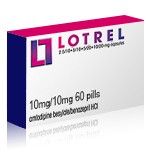
Lotrel is the original brand-name fixed-dose combination antihypertensive manufactured by Novartis — pairing the dihydropyridine calcium channel blocker Amlodipine Besylate with the ACE inhibitor Benazepril Hydrochloride. FDA-approved since 1995, Lotrel established the ACE inhibitor + CCB combination class and remains the most clinically validated combination of its type, thanks to the landmark ACCOMPLISH trial 2008 — Lotrel demonstrated 19.6% reduction in primary composite cardiovascular endpoint vs Benazepril + hydrochlorothiazide combination, with trial stopped early due to clear benefit. This evidence changed international hypertension treatment guidelines, establishing ACE-i + CCB as the preferred combination over ACE-i + thiazide for high-risk patients. Available in six strength options (2.5/10, 5/10, 5/20, 5/40, 10/20, 10/40 mg) for flexible titration.
The active ingredients work through complementary mechanisms producing synergistic BP reduction. Amlodipine Besylate blocks L-type calcium channels in vascular smooth muscle — producing peripheral vasodilation, reduced peripheral vascular resistance, and BP reduction. Benazepril Hydrochloride is an ACE inhibitor prodrug activated to benazeprilat — blocking angiotensin I to II conversion, reducing aldosterone secretion, producing arterial and venous vasodilation. The combination delivers favorable physiologic interactions: Benazepril reduces Amlodipine-induced peripheral edema (by reducing capillary hydrostatic pressure), and Benazepril blocks the reflex RAAS activation that Amlodipine alone can trigger. Reduced ACE-i dose ? combo also lowers cough incidence vs Benazepril monotherapy.
Lotrel is FDA-approved for hypertension when combination therapy is appropriate, and as initial therapy in patients likely to need multiple medications for BP control. Off-label uses include resistant hypertension, HTN in diabetics (renoprotection + BP), and HTN with concomitant angina or proteinuric kidney disease.
Available as Lotrel capsules in six strengths: 2.5/10, 5/10, 5/20, 5/40, 10/20, and 10/40 mg. Standard adult HTN dosing: typically 5/10 mg once daily start, titrate based on response (ACCOMPLISH target was 10/40 mg).
Critical safety: boxed warning regarding pregnancy (Category D in 2nd/3rd trimester — fetal renal toxicity from ACE-i). Hyperkalemia, first-dose hypotension, renal dysfunction, angioedema (rare), dry cough (less than ACE-i monotherapy), peripheral edema (less than Amlodipine monotherapy), flushing, headache, dizziness, gingival hyperplasia.
Free prescription
Discrete packaging
Have questions?
Quality Assurance

- Hypertension Combination Therapy: For HTN when ACE-i or CCB monotherapy inadequate — primary combination indication;
- HTN Initial Therapy Combination: FDA-approved as initial therapy when combination likely needed (high baseline BP);
- High CV Risk HTN: For high cardiovascular risk hypertensives — ACCOMPLISH-supported preferred combination;
- CV Outcomes Reduction: For cardiovascular outcome reduction — landmark ACCOMPLISH trial benefit;
- ACCOMPLISH Trial CV Outcomes: Landmark ACCOMPLISH 2008 trial — 19.6% primary endpoint reduction vs ACE-i+HCTZ;
- Resistant Hypertension: For resistant hypertension — combination simplifies regimen;
- Step Up From ACE Monotherapy: For step-up therapy when Benazepril monotherapy inadequate — convenient single-pill switch;
- Step Up From CCB Monotherapy: For step-up therapy when Amlodipine monotherapy inadequate;
- Moderate Hypertension: For moderate hypertension (stage 2);
- Severe Hypertension: For severe hypertension combination management;
- HTN With Diabetes: HTN in diabetic patients — ACE-i renoprotection + CCB BP synergy;
- HTN With Proteinuric Kidney Disease: HTN with proteinuric CKD — ACE-i renoprotection benefit;
- HTN With Angina: HTN with concomitant angina — Amlodipine anti-anginal + ACE-i;
- HTN Edema Sensitive Patients: For patients sensitive to Amlodipine peripheral edema — ACE-i offsets edema;
- HTN ACE Cough Sensitive: For patients sensitive to high-dose ACE-i cough — lower ACE-i dose ? combo;
- Single Pill Combination Compliance: Single-pill combination improving compliance vs separate prescriptions;
- Elderly Hypertension Combination: For elderly hypertensive patients requiring combination therapy;
- HTN With Heart Failure: HTN with concomitant HF (ACE-i HF benefit + Amlodipine vasodilation);
- Step Down From Three Drug: Step-down convenience from three-drug regimens to two-drug combination.
- Better BP Synergy: Synergistic BP reduction vs either component alone — complementary mechanisms;
- Less Cardiovascular Events: Reduces cardiovascular events — ACCOMPLISH 19.6% reduction in primary endpoint;
- Less CV Mortality: Reduces cardiovascular mortality vs ACE-i+HCTZ — ACCOMPLISH landmark;
- Less MI Risk: Reduces non-fatal MI — ACCOMPLISH benefit;
- Less Stroke Risk: Reduces stroke risk — ACCOMPLISH benefit;
- Less Coronary Revascularization: Reduces coronary revascularization need;
- Less Angina Symptoms: Reduces angina symptoms — Amlodipine anti-anginal benefit;
- Less Amlodipine Edema: Reduces Amlodipine-induced peripheral edema — signature combo advantage;
- Better Edema Tolerability: Better edema tolerability vs Amlodipine monotherapy;
- Less ACE-i Cough vs Monotherapy: Lower Benazepril dose in combo — less cough incidence vs ACE-i monotherapy;
- Better Renoprotection: ACE-i component provides renoprotection;
- Less Proteinuria: Reduces proteinuria — ACE-i benefit preserved ? combination;
- Less Reflex Tachycardia: ACE-i blocks reflex RAAS activation from Amlodipine;
- Better Compliance Single Pill: Single combination capsule improves compliance vs separate prescriptions;
- Less Pill Burden: Reduces pill burden in combination antihypertensive regimens;
- Better Daily Function: Return to normal daily activities with effective BP control;
- Better Quality of Life: Substantial improvement in quality of life;
- Better Combination Therapy Convenience: Convenient ACE-i + CCB combination for high-risk patients;
- Better Diabetes BP Control: Particularly effective in diabetic hypertensives;
- Brand Lotrel Novartis: Original Novartis brand — pioneer ACE-i + CCB combination since 1995;
- Generic Amlodipine Benazepril: Affordable generic Amlodipine + Benazepril combinations expand global access;
- Six Strength Options: Six strength options (2.5/10, 5/10, 5/20, 5/40, 10/20, 10/40) — broadest titration flexibility;
- ACE Inhibitor Plus CCB Combination: Foundational ACE-i + CCB fixed-dose combination class;
- L Type Calcium Channels Vascular: Amlodipine blocks L-type Ca²⁺ channels in vascular smooth muscle;
- Angiotensin Converting Enzyme Inhibitor: Benazepril component — blocks angiotensin I to II conversion;
- Physiologic Complementarity ACE CCB: Physiologic complementarity — ACE-i reduces CCB edema;
- ACCOMPLISH Trial CV Outcomes: Landmark ACCOMPLISH 2008 trial — superior CV outcomes vs ACE-i + HCTZ;
- Trial Stopped Early Benefit: ACCOMPLISH trial stopped early due to clear Lotrel benefit;
- Guideline Changing Evidence: ACCOMPLISH evidence changed international HTN treatment guidelines;
- Preferred Combo High Risk HTN: Preferred combination for high-risk hypertensives (over ACE-i + thiazide);
- Once Daily Combination: Convenient once-daily combination dosing;
- Single Pill Convenience: Single-pill convenience vs separate ACE-i + CCB prescriptions;
- 30 Plus Year Clinical History: 30+ years of clinical use since 1995 — foundational combination with extensive evidence base.
Generic Lotrel (Amlodipine and Benazepril Hydrochloride 5/10 mg) Medication guide:
💊 What Lotrel Is and Who Should Take It
Lotrel is the brand name of a prescription pill that combines two different blood pressure medicines in a single capsule: amlodipine and benazepril. Both ingredients lower blood pressure, but they work through different routes - which is exactly why doctors prescribe the combination. Amlodipine is a calcium channel blocker; it relaxes the small blood vessels directly. Benazepril is an ACE inhibitor; it blocks a hormone that would otherwise tighten those same vessels. Together they lower blood pressure more than either alone at a comparable dose.
Lotrel has been in use since the late 1990s and became one of the most-prescribed combination blood pressure pills after a large study called ACCOMPLISH (2008) showed clear cardiovascular benefit compared to other common two-pill combinations. This guide walks through everything a client on Lotrel needs to know in plain language - how the pill works, how to take it, and how to handle everyday situations like alcohol, food, travel, and the mild ankle swelling that some clients notice.
This guide is written for you if:
- A doctor has just prescribed Lotrel (or the generic amlodipine + benazepril combination) and you want to understand what you are about to take
- You have been on Lotrel for months or years and want a plain-language refresher
- You were previously on benazepril alone and your doctor added amlodipine (or vice versa)
- You notice ankle swelling and want to know if it is Lotrel-related
- You need to know how the pill fits with alcohol, food, travel, exercise, an upcoming operation, or pregnancy planning
BRAND
Lotrel
Originator: Novartis; also sold as generic amlodipine-benazepril
TWO ACTIVE INGREDIENTS
Amlodipine + Benazepril
A calcium channel blocker and an ACE inhibitor in one capsule
STRENGTHS
2.5/10, 5/10, 5/20, 5/40, 10/20, 10/40 mg
First number = amlodipine mg, second = benazepril mg
HOW OFTEN
Once a day
Amlodipine has a 30-50 hour half-life; benazepril lasts ~24 hours
What Lotrel is not:
- Not a beta blocker - it does not slow the heart rate directly
- Not a water pill (diuretic) - the ACCOMPLISH study showed this combination was better than an ACE-inhibitor-plus-diuretic combination for high-risk clients
- Not an ARB combination - benazepril is an ACE inhibitor, not an ARB. Section 4 explains the difference.
- Not addictive - the body does not develop craving or withdrawal
- Not a rescue pill - it must be taken every day to keep blood pressure controlled
How to use this guide
Sections 2-5 explain how the two ingredients work together, what they treat, and the ACCOMPLISH study. Sections 6-15 cover practical daily use: timing, food, alcohol, coffee, salt, exercise, home BP, blood tests. Section 16 is the Side Effects anchor. Section 17 covers ankle swelling. Section 18 covers the ACE cough. Section 19 is the important angioedema emergency warning. Section 20 covers missed doses. Sections 21-34 cover specific situations. Section 35 is the Contraindications anchor. Section 36 covers switching, stopping and yearly review.
🧬 How Lotrel Works - Two Mechanisms Working Together
To understand what Lotrel does, imagine two teams working in your body to lower blood pressure. One team (amlodipine) works directly on the walls of the small blood vessels and relaxes them. The other team (benazepril) blocks a hormone that would otherwise tighten those same vessels. Both effects lower blood pressure - but through completely different routes. Together they add up to more BP lowering than either alone, and they cancel out some of each other's side effects.
The two mechanisms side by side
| Ingredient | How it lowers BP | Main side effect |
|---|---|---|
| Amlodipine (calcium channel blocker) | Directly relaxes muscle in the walls of small blood vessels; vessels widen; blood flows with less pressure | Ankle swelling (from vessel dilation); some flushing and headache early on |
| Benazepril (ACE inhibitor) | Blocks the enzyme that makes angiotensin II (a hormone that tightens vessels); vessels stay wider | Dry cough in 15-20%; rare angioedema; potassium may rise mildly |
| Combination (Lotrel) | Both effects at the same time; bigger BP drop than either alone | Ankle swelling is LESS than on amlodipine alone (benazepril offsets it); cough and other ACE inhibitor issues remain |
Why the combination is often better than either alone
- Bigger BP drop from complementary mechanisms. Two different routes, added together, drop BP more than pushing either drug to its maximum dose
- Fewer side effects at lower doses of each. 5/10 mg Lotrel usually feels better than amlodipine 10 mg alone or benazepril 20 mg alone
- Ankle swelling reduced. The benazepril half relaxes the venous side of the circulation and offsets the fluid pooling that pure amlodipine causes
- One capsule is easier to remember than two separate prescriptions
How quickly does Lotrel work?
The benazepril half starts within about 1 hour and peaks at 2-4 hours. The amlodipine half is slower - it starts within a few hours and builds up over 5-7 days to steady state. The full BP result you and your doctor are aiming for usually settles over 2 to 4 weeks. Do not judge the drug by day one - it needs a couple of weeks to show its true effect.
📝 What Doctors Prescribe Lotrel For
Doctors prescribe Lotrel almost exclusively for one reason: high blood pressure that is not controlled well enough on a single pill. Occasionally it is chosen right at the start for someone whose BP is very high and who benefits from two mechanisms from day one. This section covers the main scenarios.
1. Add-on to an existing pill
You were on amlodipine alone or benazepril alone, and BP did not reach target. The doctor added the other ingredient. Now both are combined into a single capsule for convenience.
Typical use: long-term daily; one capsule at the same time every day.
2. Starting combination for high BP
Your BP was very high at diagnosis (usually 20/10 mmHg above target), and the doctor thought two milder medicines together would work better and cause fewer side effects than one at its maximum dose.
Typical use: long-term daily; often at the lower strength (5/10 mg).
3. High BP with diabetes or kidney concerns
The benazepril half gives kidney protection in diabetes and CKD; the amlodipine half gives strong BP lowering. The ACCOMPLISH trial showed this combination has particularly good outcomes in high-risk clients.
Typical use: long-term, alongside other cardiovascular medicines.
What Lotrel is NOT usually prescribed for
- Occasional headaches or one-off high readings - Lotrel is a daily maintenance drug, not a rescue pill
- Heart failure with reduced pumping strength (HFrEF) - other combinations are preferred; amlodipine is neutral in HFrEF and benazepril alone (with proper HF drugs) is usually chosen
- Post-heart-attack recovery alone - ACE inhibitor with a beta blocker is more standard
- Angina alone - amlodipine alone is often chosen if BP is normal
- Pregnancy - ACE inhibitors are specifically avoided (Section 26)
One question worth asking at your next appointment
"Doctor, what is my target BP at home, and how will we know if this combination is working?" Home BP readings for two weeks (Section 14) are the best way to answer that.
⚖️ The Two Ingredients Explained - Amlodipine and Benazepril
Lotrel contains two ingredients from very different drug families. Understanding what each one does helps you understand your treatment - and helps you spot which ingredient may be responsible if a side effect appears.
Amlodipine - the calcium channel blocker half
Amlodipine was first approved in 1990 (Norvasc, Pfizer) and became one of the most-prescribed BP drugs worldwide. It belongs to the dihydropyridine (DHP) calcium channel blocker subfamily - members block calcium entry into the smooth muscle of small blood vessels, which makes the muscle relax and the vessel widen.
Amlodipine is different from other calcium channel blockers you may have heard about:
- Vessel-selective: relaxes blood vessels but does not slow the heart much (unlike verapamil and diltiazem)
- Very long-acting: half-life 30-50 hours, so missed doses are more forgiving
- Once-daily dosing: predictable, smooth 24-hour effect
- Main side effect: ankle swelling (Section 17) - from fluid pooling in the widened small vessels of the legs
Benazepril - the ACE inhibitor half
Benazepril was first approved in 1991 (Lotensin, Novartis). It belongs to the ACE inhibitor family - which blocks an enzyme that normally makes a hormone (angiotensin II) that tightens vessels and holds salt and water. Blocking the enzyme means less of the hormone is made; vessels stay wider; kidneys pass a bit more salt and water; BP drops.
- Class effect: kidney protection in diabetes and CKD with protein leakage
- Prodrug: the liver converts benazepril into the active form (benazeprilat) after absorption
- Main side effect: dry cough (Section 18) in 15-20% of clients - a class effect of all ACE inhibitors
- Rare but serious: angioedema (Section 19)
- Boxed pregnancy warning (Section 26)
Why they work well together
Amlodipine widens small vessels but leaves the venous return relatively normal, so fluid tends to pool in ankle tissue. Benazepril, by blocking the RAAS hormone system, relaxes both the arterial AND venous sides - and drains the leg fluid more effectively. Result: the ankle swelling from amlodipine is significantly less on the combination than on amlodipine alone. This is one of the practical reasons the combination is often better than either drug pushed to its maximum dose alone.
🔬 The ACCOMPLISH Study - Why This Combination Is Preferred
The reason Lotrel-style combinations became first-choice for many doctors is a large study called ACCOMPLISH, published in 2008. It compared two very common BP combinations head to head in high-risk clients and found a clear winner. Understanding what ACCOMPLISH showed helps you understand why your doctor picked Lotrel rather than a benazepril-plus-water-pill combination.
ACCOMPLISH - the study, in plain language
| What was tested | Benazepril + amlodipine (like Lotrel) versus benazepril + hydrochlorothiazide (a water pill) |
| Who was in it | Over 11,000 high-risk hypertension clients (mostly with diabetes or established cardiovascular disease) |
| How long | Roughly 3 years, then stopped early because of a clear result |
| Main result | The amlodipine combination (like Lotrel) had about 20% fewer heart attacks, strokes and cardiovascular deaths than the water-pill combination |
Why this matters for you
Before ACCOMPLISH, doctors often paired an ACE inhibitor with a water pill by default. After ACCOMPLISH, guidelines changed - for high-risk clients, an ACE inhibitor plus a calcium channel blocker became the preferred combination. Lotrel is one of the most convenient ways to deliver that combination as a single capsule.
If your doctor prescribed Lotrel and you are a high-risk client (diabetes, established heart or vascular disease), ACCOMPLISH is the study behind that choice.
Where a water pill combination still makes sense
Water pill combinations (like benazepril-hydrochlorothiazide) still have a role: uncomplicated hypertension in someone with fluid retention or salt-sensitive BP, older clients with isolated systolic hypertension where a water pill has strong evidence, and BP not controlled on ACE + amlodipine where a third pill is added. The ACCOMPLISH result changed the default but did not eliminate water pill combinations.
The kidney sub-analysis of ACCOMPLISH
A follow-up analysis (Lancet, 2010) looked specifically at kidney outcomes. The Lotrel-style combination also had slower kidney function decline than the water pill combination in most clients - though in the small group with heavy protein in the urine at baseline, benazepril-water pill did slightly better. This nuance is why nephrology input can matter for CKD clients.
▶️ Your First Week on Lotrel - What to Expect
The first week on Lotrel is a settling-in period. Your body is adjusting to a new fluid balance, a lower blood pressure, and the amlodipine level is climbing toward steady state. Most clients feel fine after a few days; some notice mild dizziness on standing, a bit of ankle swelling, or a slight headache in the mornings. Knowing what to expect makes the first week easier.
Day-by-day: what you might notice
Day 1 to 3
Mild dizziness on standing up quickly is common. Some flushing feeling from amlodipine. Mild headache possible. Drink water. Stand up slowly. Avoid alcohol.
Day 4 to 7
BP is starting to fall. Amlodipine is climbing toward its steady blood level. Some clients notice ankles feel slightly puffy at the end of the day - see Section 17.
Day 8 to 14
Amlodipine has reached full steady state. BP is close to its new baseline. This is when your doctor usually orders the first follow-up blood test (potassium and kidney function - Section 15). Ankle swelling, if it is going to happen, is usually visible by now.
End of week 2 and beyond
Discuss with your doctor whether to keep the strength, step up, or step down. Home BP logs guide the decision.
✅ Normal in the first two weeks
- Mild dizziness when standing up quickly
- Feeling a bit tired or headachy the first few days
- Blood pressure readings dropping toward target
- Mild dry cough in about 15-20% (Section 18)
- Mild ankle puffiness at end of day
- Small increase in creatinine on the blood test
🚩 Call your doctor or go to emergency if:
- You faint or nearly faint
- BP drops below 90/60 with symptoms
- Sudden severe ankle or leg swelling
- Any facial swelling, lip swelling, or trouble swallowing - EMERGENCY (Section 19)
- Muscle weakness or unusual tingling (possible high potassium)
One practical tip for the first two weeks
Buy a home blood pressure monitor if you do not already have one. Take a morning reading before your pill and an evening reading before dinner. Two weeks of readings is what your doctor uses to decide the next step. Section 14 explains exactly how to measure correctly.
🕐 Best Time of Day to Take Lotrel
Lotrel can be taken at any time of day. Because amlodipine has a very long half-life (30-50 hours), the timing on the clock matters less than for many other BP pills - a few hours variation between doses does not meaningfully change the blood level. But consistency still matters. Take it at roughly the same time every day so your routine stays reliable.
Morning versus evening dosing - practical comparison
| Time | Good for | Less good for |
|---|---|---|
| Morning (with breakfast or after) | People with high morning BP; easy to remember with the daily routine | People with morning flushing or headache from amlodipine - evening dosing may suit better |
| Evening (with dinner or before bed) | People with high night-time BP; those who prefer to sleep off the early flushing effect | Rarely a problem |
Trick for not forgetting
Take Lotrel at a fixed moment in your daily routine you never skip: right after brushing your teeth in the morning, or with your first coffee, or with dinner, or just before bed. A weekly pillbox with seven compartments is one of the most reliable adherence tools.
A note about the amlodipine long half-life
Because amlodipine stays in your system for 30-50 hours, a single missed dose does not usually let BP swing dramatically the way it can on shorter-acting drugs. This forgiving profile is one of the reasons amlodipine is so widely prescribed. It does not mean you can skip doses regularly - just that an occasional slip is less problematic than on a shorter-acting BP pill.
🍽️ Should You Take Lotrel with Food or on an Empty Stomach?
Lotrel can be taken with food or on an empty stomach. Neither ingredient has a strong food-interaction warning. What matters more is consistency - take it the same way every day. If you decide with breakfast, do that every day; if you decide before breakfast, do that every day. This keeps your daily routine reliable.
Practical guidance
| With food | Fine. Gentler on the stomach if you have any nausea. |
| Without food | Also fine. Some clients prefer this to make the pill part of their first-thing morning routine. |
| Swallow whole with water | Lotrel capsules should be swallowed whole. Do not open the capsule. |
Foods to be aware of (details in Section 13)
- Grapefruit and grapefruit juice: mild interaction with amlodipine - can raise the drug's blood level slightly. Not the strong interaction seen with some other calcium channel blockers (felodipine, nisoldipine), but worth knowing. Occasional grapefruit is fine; regular daily grapefruit intake is best avoided or discussed with your doctor.
- Salt substitutes labelled "low sodium": often contain potassium chloride. Because the benazepril half already tends to hold potassium in your body, using these freely can push potassium too high. Section 12.
- Very high potassium foods eaten in huge amounts: normal servings of bananas, oranges, potatoes are fine. Extreme intake with potassium supplements can be a problem.
- Licorice (real licorice root): can raise blood pressure. Avoid regular use.
Fasting and Lotrel
During a religious fast like Ramadan, or during intermittent fasting for weight management, Lotrel can usually be shifted to the eating window without difficulty. The long amlodipine half-life means that shifting the time by a few hours is largely absorbed by the drug's own smoothness. Talk to your doctor before starting or continuing a fast.
🍷 Alcohol and Lotrel - What You Really Need to Know
Alcohol and Lotrel need care because both lower blood pressure. Alcohol relaxes blood vessels and reduces adrenaline signalling. Combined with Lotrel, the BP drop can be sharper than either alone, particularly on standing. This section explains what happens and gives simple rules for social drinking.
What actually happens when you drink on Lotrel
Alcohol lowers blood pressure temporarily. Lotrel lowers blood pressure over 24 hours. Combined effects can produce:
- Sharper drop in blood pressure than usual, with dizziness on standing
- Feeling warmer or flushed than usual - amlodipine already causes some flushing; alcohol adds to it
- Stronger hangover, since dehydration adds to the BP drop
- Rarely, fainting - particularly standing up quickly after a long dinner
Long-term heavy drinking has separate harms: it can push BP UP over time (paradoxically) and damage the heart and liver.
✅ Usually acceptable
1 standard drink per day for women, up to 2 for men, ideally not every day
One standard drink = 350 ml beer / 150 ml wine / 45 ml spirit
⚠️ Use caution
A glass or two at a party. Sit down, drink water alongside, do not stand up quickly. Especially avoid on hot days.
🚩 Avoid
Binge drinking. Daily drinking. Drinking during stomach illness. Drinking before driving. Drinking if you have liver disease.
Practical rules for a night out
- Take your Lotrel at the usual time. Do not skip it because you plan to drink.
- Alternate every alcoholic drink with a full glass of water.
- Eat while you drink.
- Stand up slowly at the end of the evening.
- Do not drive.
Situations where you should not drink at all
- You have liver disease
- You are older than 75 and frail
- You have already fainted once on Lotrel
- You are on multiple blood pressure medicines at high doses
- You are pregnant or trying to become pregnant (Lotrel itself is unsafe in pregnancy - Section 26)
☕ Lotrel with Coffee, Tea and Energy Drinks
Caffeine - the stimulant in coffee, tea, cola, chocolate and energy drinks - has a temporary effect on blood pressure. This does not mean you must give it up on Lotrel, but you should know how it interacts with your home reading.
How caffeine affects your blood pressure on Lotrel
One cup of coffee typically raises the top blood pressure number by about 5-10 mmHg for 1-3 hours in most adults. Lotrel is still working during those hours - but a reading right after coffee looks higher than the same reading taken before coffee. That is why the standard advice for home BP measurement is: no caffeine for at least 30 minutes before you measure.
Regular daily coffee drinkers develop partial tolerance, so the effect is smaller than for occasional drinkers.
Typical caffeine amounts
| Drink | Caffeine (approximate) | Lotrel-friendly? |
|---|---|---|
| Espresso, single shot | 60-80 mg | 1-3 per day, fine |
| Filter coffee, standard mug | 80-120 mg | 1-3 per day, fine |
| Black tea, cup | 30-50 mg | Generally very safe |
| Green tea, cup | 20-40 mg | Very safe |
| Cola / soft drink, 330 ml | 30-45 mg | Occasional, watch the sugar |
| Energy drink, 250 ml can | 80-160 mg (plus other stimulants) | Avoid or limit sharply |
| Pre-workout supplements | 150-300 mg (plus other stimulants) | Avoid; ask doctor |
🚩 Energy drinks and pre-workouts
Energy drinks contain high caffeine plus other stimulants (taurine, guarana, ginseng) that raise BP and heart rate. On Lotrel, this pushes against everything the pill is doing. Avoid energy drinks. Avoid pre-workout stimulant powders.
A note on decaf and herbal teas
Decaffeinated coffee is generally fine. Most herbal teas are fine. Two to note: hibiscus tea slightly lowers BP (adds mildly to Lotrel's effect); licorice tea can raise it (avoid regular use). Green tea in normal amounts is not a concern.
🚬 Smoking, Vaping and Your Blood Pressure Pill
Tobacco smoking is one of the strongest independent causes of high blood pressure and heart disease. If you are on Lotrel and still smoking, the pill is trying to protect your heart and vessels while cigarettes are actively damaging them. This section covers the picture and what to expect if you stop.
What smoking does while you are on Lotrel
- Every cigarette raises BP temporarily - the top number climbs 10-20 mmHg for 20-30 minutes
- Nicotine speeds up the heart rate and constricts vessels - opposite of what Lotrel does
- Smoking damages the inner lining of blood vessels, making them stiffer over years
- Smoking can worsen the ACE cough from the benazepril half
What about vaping (e-cigarettes)?
Vaping still delivers nicotine, which still raises BP and heart rate. Vaping is less harmful than smoking because combustion products are absent, but it is not harmless. If you are already vaping, aim to reduce and eventually quit nicotine too.
What to expect when you stop smoking on Lotrel
- Within 24 hours: BP and heart rate begin to return to baseline
- Within 2-4 weeks: Lotrel may work relatively more strongly - home BP drops a bit further; tell your doctor as dose may need reduction
- Within 3 months: circulation improves; walking distance improves; cough clears if it was smoking-related
- Within 1 year: risk of heart attack falls by about half
Practical advice
Ask your doctor about nicotine replacement (patches, gum, lozenges) or a smoking cessation medication. Most are safe with Lotrel. Stopping tobacco is likely the single most impactful thing you can do for your heart while on Lotrel.
🧂 Salt, Salt Substitutes and Potassium on Lotrel
Salt and potassium balance on Lotrel needs attention because the benazepril half tends to hold potassium in the body. Combined with a potassium-based salt substitute, potassium supplements, or certain other drugs, potassium can rise into the danger zone. This section explains the practical rules.
Why cutting salt helps Lotrel work
Extra sodium pulls water into your bloodstream, raising blood volume and BP. Lotrel lowers BP through two routes (vessel relaxation + hormone blockade), but on a high-salt diet the effect is blunted. Cutting salt makes Lotrel work better.
Target for most adults: under 2,300 mg of sodium per day (about a level teaspoon of table salt). For heart failure or kidney disease: under 1,500 mg per day.
🚩 The "low sodium" salt substitute trap
Products labelled "low sodium salt", "heart salt" or "reduced sodium salt" usually replace half or more of the sodium chloride with potassium chloride.
On Lotrel, the benazepril half already holds potassium in your body. Adding potassium chloride at every meal can push blood potassium into the danger zone - high potassium can affect heart rhythm.
Rule: do not switch to a potassium-based salt substitute on Lotrel without asking your doctor.
Safer ways to reduce salt
- Read labels: aim for under 400 mg sodium per serving on packaged foods
- Cook more at home; restaurant food is a huge hidden salt source
- Use lemon juice, vinegar, herbs, garlic, chili, pepper for flavour
- Rinse canned beans and vegetables (removes about 40% of the added salt)
- Watch hidden salt in bread, cheese, cured meats, soy sauce, condiments, olives, pickles
Do I need to eat more potassium on Lotrel?
Not usually. The benazepril half already helps hold potassium in your body. Normal servings of high-potassium foods (banana, orange, tomato, potato, avocado, spinach) are fine. Do not add potassium supplements without your doctor's advice.
🍊 Foods, Grapefruit, Supplements and Other Drugs That Interact
Several drugs, supplements and foods interact with Lotrel. The most important are the potassium considerations (already covered in Section 12), the grapefruit interaction with amlodipine, the CYP3A4 drug interactions with amlodipine, and the sacubitril-valsartan (Entresto) rule with benazepril.
Items to be careful with on Lotrel
| Item | Concern | Guidance |
|---|---|---|
| Potassium supplements and salt substitutes with potassium chloride | Raises blood potassium - heart rhythm risk | Do not take without doctor's advice (Section 12) |
| ARBs (losartan, valsartan) and aliskiren | Dual RAAS blockade - kidney and potassium risks; no benefit | Do not combine routinely |
| Grapefruit and grapefruit juice | Mild interaction with amlodipine - raises the blood level slightly (about 15-20%) | Occasional grapefruit is fine; avoid daily heavy intake |
| Clarithromycin, erythromycin (some antibiotics) | Block CYP3A4 - raise amlodipine level significantly | Doctor may reduce Lotrel dose during the antibiotic course, or pick a different antibiotic |
| Ketoconazole, itraconazole (antifungals) | Also block CYP3A4 | Doctor coordinates dosing |
| Cyclosporine, tacrolimus (transplant drugs) | Amlodipine raises cyclosporine levels | Specialist manages |
| Simvastatin | Amlodipine slightly raises simvastatin level; limit simvastatin to 20 mg per day | Or switch to atorvastatin/rosuvastatin |
| Ibuprofen, naproxen, diclofenac (NSAIDs) daily | Blunt BP effect; kidney damage risk | Occasional dose fine; avoid daily use. Prefer paracetamol. |
| Lithium (mood stabiliser) | Benazepril reduces lithium clearance | Do not start Lotrel without telling the psychiatrist |
| Cold/flu remedies with pseudoephedrine or phenylephrine | Raise BP | Ask pharmacist for a Lotrel-friendly alternative |
| Sacubitril-valsartan (Entresto) | Contains an ARB; combining with ACE inhibitor causes angioedema | Never combine. 36-hour gap if switching. |
| Rifampicin | Speeds amlodipine breakdown - Lotrel effect drops | Doctor may adjust dose |
The "triple whammy" combination to know about
The combination of an ACE inhibitor (like the benazepril half of Lotrel), a water pill, plus a daily painkiller from the ibuprofen family (NSAID) is nicknamed the "triple whammy" - it can damage kidneys quickly, especially during a stomach bug or dehydration. Use paracetamol for regular pain, not ibuprofen or naproxen.
The pharmacist counter rule
Whenever a new medicine is added, take 30 seconds to say: "I take Lotrel - it is amlodipine and benazepril, a calcium channel blocker plus an ACE inhibitor." That one sentence prevents most bad interactions.
🩺 Home Blood Pressure Monitoring - A Simple Step-by-Step Guide
A home blood pressure monitor is one of the most useful tools you can own once you start Lotrel. Office readings can be misleading. Only home data shows what is happening across your ordinary days.
What kind of monitor to buy
- Upper arm cuff, automatic (digital) - most accurate for home use
- Right cuff size - cuff should cover about 80% of the arm circumference
- Validated model - ask your pharmacist
- Wrist and finger monitors are usually less accurate - do not use them for tracking
- Cost - a good monitor costs around 30-70 US dollars and lasts years
How to take a correct reading - step by step
- No caffeine, no cigarette, no exercise, no big meal for 30 minutes before
- Empty your bladder
- Sit in a chair with back support, feet flat on floor, uncrossed legs
- Rest quietly for 5 minutes
- Put the cuff on bare skin, arm at heart level supported on a table
- Two readings a minute apart - write down both
- Repeat morning (before pill) and evening (before dinner) for two weeks before your appointment
Understanding the numbers
| Home reading (average) | Category |
|---|---|
| Under 120/75 | Excellent |
| 120-134 / 75-84 | Good target for most |
| 135-149 / 85-94 | Above target - talk to doctor |
| 150+ / 95+ | Uncontrolled - see doctor |
| Under 100/60 with dizziness | Too low - talk to doctor |
Bring your log to every appointment
A two-week log with morning and evening readings is 100 times more useful than one reading in the clinic. Most doctors change Lotrel doses based on home readings, not office readings.
🩸 Understanding Your Blood Tests on Lotrel
Your doctor will order blood tests periodically while you are on Lotrel. This section explains what each test measures, why it matters, and what typical results look like.
The three main tests your doctor watches
1. Potassium
What it is: a mineral in your blood essential for heart rhythm.
Normal range: roughly 3.5 to 5.0 mmol/L.
Why on Lotrel: the benazepril half holds potassium in your body. Amlodipine is neutral on potassium. In most people the level stays normal. In reduced kidney function, on certain other drugs, or with potassium supplements, it can rise into the danger zone.
2. Creatinine and kidney filter score
What creatinine is: a waste product from muscle metabolism. Higher creatinine = kidneys filtering less.
Kidney filter score (eGFR): higher is better. 90+ excellent, 60-89 mild reduction, 30-59 moderate, under 30 severe.
Why on Lotrel: a small rise in creatinine (10-15%) after starting is EXPECTED - it means the benazepril half is protecting your kidneys. A bigger rise (over 30%) needs investigation.
3. Sodium (only if you are also on a water pill)
What it is: the main mineral in your salt balance.
Why on Lotrel: Lotrel itself does not significantly affect sodium, but if you take a diuretic separately (a water pill), sodium can drop. Symptoms include confusion, tiredness, headache.
Typical blood test schedule
| Before starting Lotrel | Baseline potassium, sodium, creatinine, kidney filter score |
| 1-2 weeks after starting | Repeat |
| 1-2 weeks after any dose change | Same |
| Annually on stable dose | More often in higher-risk clients |
| Extra test if you start a new interacting drug | Especially spironolactone, potassium supplements, some antibiotics, lithium |
Ask for a copy of your results
Keep the numbers in a folder or on a patient portal. Trends over time matter more than any single reading.
🩹 Side Effects - Common Reactions and What to Expect
Most people tolerate Lotrel well. This section walks through the side effects you might notice, how likely each is, whether it usually settles, and when it deserves a call to your doctor. Three important side-effect topics have their own sections: ankle swelling (Section 17), the ACE cough (Section 18), and the angioedema emergency (Section 19).
✅ The honest picture
Both amlodipine and benazepril have been in wide use since the early 1990s. Most clients tolerate Lotrel well long term. Of those who stop, the most common reasons are the ACE cough (which is a nuisance rather than danger) and, less often, persistent ankle swelling.
Common and less common side effects
| Effect | How likely | When it happens / what to do |
|---|---|---|
| Ankle / foot swelling | Common (about 5-10% - less than amlodipine alone) | Section 17 - amlodipine-related; mild is usually manageable |
| Dry cough | Common (15-20%) | Section 18 - benazepril class effect |
| Dizziness on standing | Common early on | Usually settles in 1-2 weeks. Stand up slowly. |
| Flushing / warm feeling | Common early on | Amlodipine-related. Usually settles. |
| Mild headache | Common early on | Usually settles. Paracetamol safe if needed. |
| Feeling tired | Common early on | Usually settles in 2-4 weeks |
| Small rise in creatinine on blood test | Very common | 10-15% rise EXPECTED and shows drug is working (Section 15) |
| Potassium rise | Uncommon | Blood test picks it up before symptoms |
| Gum swelling or overgrowth | Uncommon (amlodipine class effect) | Good dental hygiene reduces risk; tell your dentist |
| Palpitations | Uncommon | Reflex fast heart rate from BP drop; usually settles |
| Skin rash | Rare | Tell doctor if persistent |
| Angioedema (facial/throat swelling) | Rare | EMERGENCY - Section 19 |
Call your doctor if:
- You feel dizzy or faint more than a few days after starting or after a dose change
- Home BP is repeatedly under 100/60 with symptoms
- Ankle swelling is severe or asymmetric (one side much worse than the other)
- Persistent dry cough that affects your sleep or daily life
- Muscle weakness or unusual tingling (possible high potassium)
- Palpitations that do not settle
Keeping side effects in perspective
High blood pressure is often called "the silent killer" because it damages arteries, heart, brain and kidneys silently over years. The side effects of treating it are almost always smaller and more reversible than the damage from leaving it untreated. If a specific side effect is affecting your life, talk to your doctor - alternatives exist.
🦶 Ankle and Foot Swelling on Lotrel - Why It Happens
Ankle swelling on the amlodipine half of Lotrel is one of the most distinctive features of this drug class. It happens in about 5-10% of Lotrel clients (less than on amlodipine alone), more often in women, and more often at higher doses. It is not dangerous - but it can be uncomfortable and cosmetically distressing. This section explains why it happens and what to do.
Why the swelling happens
Amlodipine widens small arteries in the legs. More blood flows into leg tissues. But the veins do not widen at the same rate. Result: fluid pushes out of the small arteries into surrounding tissue faster than the veins can return it. Fluid pools in ankle and foot tissue - especially by the end of the day when you have been standing.
This is NOT the same as fluid retention from heart failure. Your body is not holding on to extra fluid; the fluid is just distributed differently.
Why Lotrel causes LESS swelling than amlodipine alone
The benazepril half relaxes both the arterial AND venous sides of the circulation. It drains leg fluid back into circulation more effectively. Studies consistently show that the amlodipine-benazepril combination has about half the ankle swelling of amlodipine alone at equivalent BP reduction. This is one of the practical advantages of the Lotrel-style combination.
Practical steps to reduce ankle swelling
- Elevate legs when sitting - even 15-30 minutes with feet up above heart level reduces swelling
- Walk regularly - the calf muscle pump helps return fluid
- Compression stockings (knee-high, 15-20 mmHg) worn during the day help significantly
- Avoid standing still for long periods
- Reduce salt intake - Section 12
- Loosen tight socks or waistbands that cut off return flow
When to worry about ankle swelling
- Sudden severe swelling - not amlodipine; could be a blood clot, especially if one leg is much worse than the other
- Swelling PLUS shortness of breath - could be heart failure
- Swelling PLUS calf pain, redness, or warmth - possible deep vein thrombosis (DVT)
- Sudden weight gain of 2 kg or more - possible fluid retention
In these cases, do not assume it is Lotrel. Contact your doctor promptly.
If the swelling is bothering you but not dangerous
Options: reduce the amlodipine dose (Lotrel comes in 2.5/10 and 5/10 strengths); switch to a different calcium channel blocker with less swelling (nifedipine XL or nicardipine have similar profiles; verapamil and diltiazem cause less ankle swelling but affect the heart differently); or switch away from calcium channel blockers entirely to a different class. Discuss with your doctor.
🌬️ The Dry Cough - Recognising the ACE Component
The dry, tickly cough that appears in some clients on ACE inhibitors is one of the most distinctive features of this drug class. It happens in roughly 15-20% of Lotrel clients (from the benazepril half), more often in women, and more often in East Asian populations. It is not dangerous - but it can be really annoying, and it is the #1 reason clients switch from an ACE inhibitor to an ARB. This section explains why the cough happens and what to do.
Why the cough happens
The ACE enzyme has two jobs - it makes angiotensin II AND it breaks down another chemical called bradykinin. When ACE is blocked, bradykinin accumulates in the airways. In sensitive people, bradykinin irritates the cough reflex.
This is a class effect of ALL ACE inhibitors - not specific to benazepril. Switching from benazepril to captopril or ramipril will not solve it.
What the ACE cough is like
- Dry - no phlegm
- Tickly - starts in the throat
- Persistent - not linked to colds or allergies
- Worse at night when lying flat
- Worse in cold air or with talking a lot
- Appears weeks to months after starting the drug
- Cough syrups do not help
Is the cough dangerous?
No - it is a nuisance, not a danger to your lungs or heart. But it can disrupt sleep, make you self-conscious in meetings, or lead to voice hoarseness over months.
✅ What to do if you develop the ACE cough
- Give it 2-4 weeks - occasionally it settles
- Confirm it is Lotrel-related - tell your doctor; short pause may confirm
- Switch to an ARB combination - such as amlodipine + valsartan (Exforge) or amlodipine + olmesartan. The amlodipine half stays; the ACE half is swapped for an ARB. The cough resolves in 1-2 weeks.
- Do not push through if the cough is severely affecting your life
The switch to an ARB combination
The switch does not need a washout period. Stop Lotrel one evening, start the ARB combination the next morning at the equivalent dose. The cough should resolve over 1-2 weeks. If it does not, it may not have been the ACE cough after all - and further investigation is needed.
🚩 Angioedema - The Rare But Emergency Warning
This section is the most important warning in this guide. Angioedema is a rare but potentially life-threatening allergic-type swelling that can happen with ACE inhibitors like the benazepril half of Lotrel. It affects roughly 0.1-0.5% of clients - uncommon, but when it happens it can be fatal, and it is completely different from a normal side effect. You need to know the signs so you can act fast if it ever happens.
🚩 STOP LOTREL AND GO TO EMERGENCY IF YOU HAVE:
- Swelling of lips, tongue, or inside of the mouth
- Swelling around the eyes or face
- Trouble swallowing, breathing, or speaking
- Sudden change in voice or hoarseness
- A feeling of throat tightness
- Severe unexplained abdominal pain (rare visceral form)
Airway swelling can close the throat within minutes. Do not wait. Call emergency services even if the swelling seems small at first.
Why does angioedema happen on ACE inhibitors?
The same bradykinin that causes the ACE cough (Section 18) also plays a role in angioedema. In a small proportion of people, bradykinin builds up in tissues, causing painless swelling of the deeper skin layers. In the face, mouth or throat, that swelling can obstruct the airway.
Standard allergy treatments (antihistamines, steroids) do not work well against bradykinin-mediated angioedema. Specific antidotes (icatibant, C1-inhibitor concentrate) exist and may be given in emergency.
When can angioedema appear?
- Any time - not only in the first days. Some cases appear after months or years of trouble-free use.
- Usually without warning - no rash, no itching
- Sometimes triggered by dental work, minor mouth injury, or upper respiratory infection
- More common in people of African descent, though it happens in all populations
- More common in smokers, women, and those with prior angioedema
If it happens once, you must never take an ACE inhibitor again
Even mild angioedema on Lotrel means all ACE inhibitors are off the table permanently. ARBs (losartan, valsartan, etc.) can rarely also trigger it, so the switch is done cautiously with clear counselling on emergency signs. Make sure the incident is on your medical record and, if possible, wear a medical alert bracelet or add the drug to allergy alerts on your phone.
⏰ What to Do If You Forget or Miss a Dose
Missing a dose of Lotrel is more forgiving than on many other BP pills because amlodipine has such a long half-life. But you still should not skip regularly. This section tells you what to do so a missed dose does not cause a BP swing.
Rules for missed doses
| Situation | What to do |
|---|---|
| Realised within 12 hours | Take the dose now. Continue usual schedule tomorrow. |
| More than 12 hours late | Skip that dose. Take the next one at the usual time. Do not double up. |
| Missed 2-3 days in a row | Resume as normal. Amlodipine takes several days to fall out of your system anyway, so BP does not swing dramatically. Monitor at home. |
| Missed a week or more | Resume, monitor home BP for a week, and tell your doctor at the next appointment. |
Do not double up
Doubling a dose of Lotrel does not give you extra protection - but it does raise the risk of a BP drop and ankle swelling.
Practical tricks to not forget
- Weekly pillbox with 7 compartments
- Phone alarm at the same time daily, labelled "Lotrel"
- Anchor to a habit - brushing teeth, coffee, dinner
- Leave the bottle where you will see it
- Refill before you run out
- If you travel, take a few extra days' supply in your carry-on
🌙 Lotrel for People Who Work Night Shifts
If you work night shifts, rotating shifts, or have a very irregular schedule, taking a daily BP pill still works well on Lotrel because amlodipine's long half-life smooths out timing variations. This section is for shift workers.
Why shift work matters less on Lotrel than on some other BP pills
Amlodipine has a 30-50 hour half-life, so BP stays smooth even if you vary the time by a few hours day to day. Shift workers on Lotrel usually have less trouble maintaining BP control than shift workers on shorter-acting drugs.
Two approaches for shift workers
Approach 1: Same clock time every day
Pick one clock hour (say 8 AM or 8 PM) and take Lotrel then whether you are sleeping, working or between shifts.
Approach 2: Same body clock time
Take Lotrel at the same point in your personal day - on waking, or with your main meal, or before your main sleep.
Both approaches work with Lotrel. Consistency of routine matters more than a specific clock hour.
Extra tips for shift workers
- Take home BP readings at consistent points in your shift cycle
- Watch caffeine and energy drinks on night shifts
- Carry the pill to work in original packaging
- Prioritise sleep quality - poor sleep raises BP directly
- Tell your doctor about your schedule
🚗 Lotrel for Drivers and People Who Operate Machinery
Driving and machine operation on Lotrel need some attention because the drug can cause dizziness, especially early on. Amlodipine also can cause mild ankle swelling that may affect long driving comfort.
When Lotrel-related dizziness is most likely
- First 1-2 weeks after starting
- First 1-2 weeks after a dose increase
- After alcohol (Section 9)
- After a hot bath or sauna
- When dehydrated
- Standing up quickly
Practical rules for drivers and machine operators
- Do not drive right after your first Lotrel dose or after any dose increase
- Do not drive if you feel dizzy
- Avoid alcohol before driving
- Stand up slowly from a car seat after a long journey
- Keep water within reach in the vehicle
- For truckers: get up and walk during breaks to reduce ankle swelling
Commercial drivers and safety-critical jobs
Pilots, commercial drivers and other safety-critical workers should check specific rules of their regulator or employer. Lotrel is generally acceptable once you are stable on the dose, but declaration may be required.
🏃 Lotrel, Exercise and Sports - Practical Advice
Regular exercise is one of the best things you can do for your BP and heart - it usually adds to the benefit of Lotrel. Physical activity relaxes vessels, improves heart pumping strength, and lowers BP by 5-10 mmHg on its own.
✅ What is generally safe on Lotrel
- Walking, jogging, cycling, swimming at moderate intensity
- Gym cardio at moderate intensity
- Yoga, pilates, tai chi
- Moderate weight training with rest between sets
- Recreational team sports
- Aim for at least 150 minutes of moderate activity per week
What to be careful with
- Very heavy strength training - spikes BP acutely
- Long-duration endurance in hot climates - dehydration adds to BP drop
- Hot yoga, saunas after workout - can cause faint
- Pre-workout stimulant supplements - see Section 10
- Sudden intense workouts after months of inactivity - build up gradually
Exercise and ankle swelling
Regular walking and calf exercises help reduce ankle swelling from the amlodipine half. If you sit or stand still all day, exercise breaks are one of the best natural remedies for the swelling (Section 17). Cycling and swimming are particularly good because they engage leg muscles without prolonged standing.
🍬 Lotrel If You Also Have Diabetes
Diabetes and Lotrel often go together. The benazepril half of Lotrel is one of the preferred BP treatments in diabetes because ACE inhibitors protect the kidneys from the specific damage diabetes causes. The amlodipine half is metabolically neutral - it does not raise blood sugar or cholesterol the way older BP drugs sometimes do.
Why doctors often pick Lotrel for people with diabetes
Diabetes damages small blood vessels - especially in the kidneys. The benazepril half slows this damage. The amlodipine half is metabolically neutral and adds strong BP lowering without affecting glucose or lipids meaningfully. The ACCOMPLISH trial specifically showed that the amlodipine-benazepril combination had better cardiovascular outcomes than a benazepril-water-pill combination in high-risk clients, and diabetics were well-represented in the trial.
Lotrel and blood sugar
- Amlodipine does not affect blood sugar meaningfully
- Benazepril may slightly improve insulin sensitivity - a mild side benefit
- Neither ingredient requires diabetes medicine adjustment in most cases
- Rare cases of hypoglycemia on insulin have been reported with ACE inhibitors - watch home glucose when starting
Extra kidney monitoring for diabetic clients
People with diabetes should have a urine test roughly once a year that checks for early protein leakage from the kidneys (called albumin-to-creatinine ratio or ACR). If protein appears in the urine, the benazepril dose is often pushed higher because that is the situation where ACE inhibitors give the most kidney protection. Section 25 covers this in detail.
Sick day rules if you have both diabetes and Lotrel
During episodes of vomiting, diarrhoea or fever, Lotrel, metformin and SGLT2 inhibitors may all need to be paused temporarily to protect your kidneys. See Section 31 for full guidance.
🧫 Lotrel for Chronic Kidney Disease and Protein in the Urine
One of the strongest evidence-based uses of the benazepril half of Lotrel is slowing chronic kidney disease progression, especially when there is protein leaking into the urine. If your kidney filter score is dropping and there is protein in the urine, Lotrel is one of the standard combinations prescribed to protect what remains.
Why ACE inhibitors protect kidneys
Angiotensin II (the hormone benazepril blocks) puts pressure on the tiny filters inside the kidney. In high BP, diabetes, or existing kidney damage, that pressure destroys the filters over years. Benazepril reduces the pressure and slows the damage.
The protection is measurable through two markers: the kidney filter score (which drops more slowly on benazepril) and the amount of protein leaking into the urine (which decreases).
✅ The expected small creatinine rise (normal)
After you start Lotrel, your creatinine may rise by 10-15% and your kidney filter score may drop by a similar amount. This is expected. It reflects the drug taking pressure off the filtering system - it does NOT mean the kidney is being damaged. The number usually stabilises within 2-4 weeks.
A rise of more than 30% is NOT expected and needs investigation.
What kidney function means for your Lotrel dose
| Kidney filter score | Approach |
|---|---|
| 60 or higher | Standard doses; standard monitoring |
| 30-59 (moderate CKD) | Standard doses often useful; blood tests every 3 months; watch potassium |
| 15-29 (severe CKD) | Start lower (2.5/10); careful monitoring; nephrology input |
| Under 15 / dialysis | Nephrology-led decisions |
One kidney condition where Lotrel must NOT be used
If both of your kidney arteries are severely narrowed (bilateral renal artery stenosis), or if you have only one working kidney and its artery is narrowed, Lotrel is not safe. The kidney relies on angiotensin to maintain filtration, and blocking it can cause acute kidney failure. Your doctor screens for this before starting.
🤰 Lotrel and Pregnancy - Serious Warning
Lotrel and pregnancy do not mix. Both ingredients raise concerns during pregnancy - benazepril carries a boxed pregnancy warning (as do all ACE inhibitors), and amlodipine has limited safety data. If you are pregnant, might be pregnant, or are planning to become pregnant, you must talk to your doctor before continuing Lotrel.
🚩 STOP LOTREL IMMEDIATELY IF PREGNANCY IS CONFIRMED OR SUSPECTED
Benazepril crosses the placenta and can seriously harm the developing baby, especially in the second and third trimester. Reported harms include:
- Kidney failure in the baby
- Reduced amniotic fluid (oligohydramnios)
- Poor development of the baby's lungs
- Skull deformation
- Newborn death in the worst cases
First-trimester exposure carries less risk than later exposure but is still avoided.
If you are planning to become pregnant
Do not wait for a positive pregnancy test. Talk to your doctor BEFORE you start trying. Your doctor will switch you to a pregnancy-safe BP medication before conception.
Common pregnancy-safe alternatives include: labetalol, methyldopa, and slow-release nifedipine (which is a related calcium channel blocker with better pregnancy data than amlodipine).
If you find out you are pregnant while taking Lotrel
- Do not panic and do not stop cold-turkey without a plan.
- Call your doctor or obstetrician the same day.
- Your doctor will arrange a switch to a pregnancy-safe pill, usually within 24-48 hours.
- You may be offered a detailed ultrasound to check on the baby.
- First-trimester exposure is thought to be less severe than exposure later in pregnancy.
Contraception is important on Lotrel
If you are a woman of childbearing age on Lotrel, use effective contraception. Lotrel does not reduce the effectiveness of hormonal birth control.
🤱 Lotrel While Breastfeeding
The evidence on Lotrel during breastfeeding is limited. Both ingredients are considered relatively compatible with breastfeeding at usual doses, but because pregnancy-safe alternatives with better lactation data exist, Lotrel is not usually the first-choice BP pill for a breastfeeding mother.
Current guidance for breastfeeding on Lotrel
- For newly diagnosed high BP after birth, doctors usually pick a well-established pill: labetalol, nifedipine, or one of the ACE inhibitors with more lactation data (captopril, enalapril)
- If you were on Lotrel before pregnancy, you were likely switched off it early in pregnancy; the same alternative is usually continued through breastfeeding
- Amlodipine amounts in breast milk are very low and the drug is considered acceptable if needed
- Baby is monitored for slow feeding or unusual sleepiness in the first days
Practical tips for new mothers
- Take home BP readings - the first months after birth are a time of change
- Ask about safe painkillers: paracetamol is generally fine while breastfeeding
- Report any severe headache, vision change, or persistent very high BP promptly
- Continue whichever BP pill your doctor chose, at the recommended time each day
Returning to Lotrel after weaning
Once you have stopped breastfeeding, you can generally return to Lotrel if it worked well for you before. Blood tests should be repeated at the switch and 1-2 weeks after.
👶 Lotrel for Children and Teenagers
Lotrel is not usually prescribed for people under 18. Neither of the two individual doses that make Lotrel has strong paediatric evidence at the combination level, and children with high BP are almost always assessed and treated by a paediatric specialist.
Why Lotrel is a poor first choice for children
- Fixed-dose combinations do not allow flexible titration that children need
- Paediatric BP targets and drug studies are usually done on single ingredients, not combinations
- Underlying causes of high BP in children (kidney disease, hormonal problems, coarctation) need dedicated investigation first
- ACE inhibitors are avoided in girls approaching childbearing age unless there is a specific indication
If your teenager was somehow started on Lotrel
Talk to a paediatric cardiologist or paediatric nephrologist to confirm the diagnosis, look for a reversible cause, and rebuild the regimen from scratch. This is one of the few areas where a second opinion is standard of care rather than optional.
Safe storage away from children
Amlodipine and benazepril can both cause dangerous BP drops in a child who accidentally swallows a pill. Store Lotrel out of reach and out of sight, ideally in a locked drawer or medicine cabinet. If a child swallows any amount, call poison control immediately.
👵 Lotrel for Older Clients (65 and Above)
Lotrel is commonly used in clients over 65. The combination is well tolerated in older adults, but some cautions apply because older bodies handle BP swings less gracefully than younger ones. This section covers the practical adjustments for older clients.
Why Lotrel is often a good pick in older adults
- Once-daily dosing - simpler routine
- Two mechanisms, one pill - less pill burden
- Amlodipine is very effective in isolated systolic hypertension, the most common BP pattern after 65
- Benazepril protects heart and kidneys, which age faster after 65
- Metabolically neutral - does not worsen diabetes or gout risk
The three age-related cautions
1. Fall risk
Dizziness on standing is more dangerous in older clients because a fall can break a hip. Start with 2.5/10 mg dose, get up slowly, and if there is any dizziness on standing tell your doctor.
2. Kidney function declines with age
Kidney filter score naturally drops after 65 even in healthy people. Blood tests every 6-12 months on Lotrel help catch changes early.
3. Ankle swelling is more common and more troublesome
Older clients often already have some ankle swelling from weaker vein function; amlodipine adds to it. Elevation and moderate activity help (Section 17).
BP targets in older adults
Under 80: aim for under 130/80. Over 80 or frail: usually under 150/90 is a reasonable target. Aggressive targets in frail older adults raise fall and faint risk without proportional benefit. Your doctor individualises this.
🏥 Lotrel If You Have Kidney or Liver Problems
Lotrel is processed by both the kidneys (benazepril) and the liver (amlodipine). Understanding your kidney and liver status shapes the starting dose and monitoring plan.
Kidney disease and Lotrel
Section 25 covers this in detail. The short version:
- Mild-moderate CKD (kidney filter 30-59): standard doses, more frequent blood tests
- Severe CKD (15-29): lower starting dose, nephrology involvement
- End-stage/dialysis: nephrology-led decisions
- Bilateral renal artery stenosis: Lotrel not safe
Liver disease and Lotrel
Amlodipine is broken down by the liver and its blood levels rise if liver function is poor. Benazepril is activated in the liver from a pro-drug form, which usually still works even in mild-moderate liver problems.
- Mild liver problems: standard doses in most cases
- Moderate liver problems: start at 2.5/10 mg; watch BP closely
- Severe liver disease/cirrhosis: Lotrel is used cautiously; alternatives may be preferred
- Avoid alcohol on Lotrel if you have liver disease
One condition to watch for
Very rarely, ACE inhibitors including benazepril have been reported to cause a specific liver problem - cholestatic jaundice. If your skin or the whites of your eyes turn yellow while on Lotrel, or your urine turns dark and stools pale, contact your doctor. Blood tests will clarify what is happening.
🤒 Lotrel During Illness - Vomiting, Diarrhoea, Fever
Getting sick with a stomach bug, food poisoning, flu with vomiting, or a bad case of diarrhoea puts you at risk of dehydration - and dehydration plus ACE inhibitors is a well-known combination that can cause acute kidney injury. This is where the "sick day rules" come in.
🚩 PAUSE Lotrel temporarily if you have:
- Vomiting for more than 24 hours
- Diarrhoea for more than 24 hours
- High fever with poor fluid intake
- Cannot keep water down
- Working outdoors in extreme heat and cannot drink enough
Resume Lotrel 24-48 hours after you can eat, drink and urinate normally again.
Why dehydration + Lotrel is risky
Both dehydration and the drug lower BP. Together they can drop BP too far and reduce blood flow to the kidneys enough to injure them. Kidney injury after just 2-3 days of severe illness in someone on ACE inhibitors is a recognised cause of hospital admissions - and it is preventable.
Other drugs to pause with Lotrel during illness
- NSAIDs (ibuprofen, naproxen, diclofenac) - kidney stress
- Water pills (furosemide, HCTZ, spironolactone) - dehydration amplifier
- SGLT2 inhibitors (empagliflozin, dapagliflozin) - if you are diabetic
- Metformin - if you have diabetes and severe dehydration
Practical recovery plan
- Sip small amounts of water or oral rehydration solution frequently
- Do not restart Lotrel until you have kept fluids down for a full day
- Once you resume, take home BP for a few days
- If you feel dizzy on standing after restarting, contact your doctor
- If illness lasted 3+ days, ask about a blood test 5-7 days after restart
💉 Lotrel Before Surgery, Dental Work or Anaesthesia
Planning a surgery, tooth extraction, or any procedure with anaesthesia? Lotrel needs a bit of pre-planning. It is generally continued right up to the operation, but there are situations where a short pause is safer.
General rule
Continue Lotrel normally through the day before your procedure. On the morning of the procedure, follow the anaesthetist's instructions - which may be to take it or to skip that one dose.
When anaesthetists commonly skip the morning dose of Lotrel
- Long operations under general anaesthesia (over 2 hours)
- Procedures with expected big blood loss
- Fluid-restricted procedures (some heart or brain surgery)
- If your baseline BP is already on the lower side
The concern is that anaesthesia + Lotrel together can drop BP too far during the operation.
When Lotrel is usually continued right through
- Local anaesthetic procedures (skin biopsies, small excisions)
- Most dental work including extractions
- Colonoscopy, gastroscopy under light sedation
- Cataract surgery
- Short operations under general anaesthesia in stable clients
Bring your Lotrel to the hospital or clinic
Take the actual bottle, in original packaging, so staff can confirm dose and brand. Resume as soon as you can eat, drink and urinate normally - usually the same day for minor procedures, next day for bigger ones. Section 31 sick-day rules apply if surgery is followed by prolonged fasting, vomiting, or fluid loss.
✈️ Travelling With Lotrel - Practical Checklist
Travelling with Lotrel is straightforward if you plan for four things: enough supply, correct storage, time-zone changes, and the interaction of long-haul flights with ankle swelling.
Before you leave
- Take 3-5 extra days' supply in case of delays
- Split between carry-on and checked luggage - if one bag goes missing, you still have supply
- Keep pills in original packaging - customs, security, and if you need a pharmacy at destination
- Consider a copy of your prescription for long trips
- Note your BP and heart rate baseline before travel
Time-zone changes
Amlodipine's long half-life is very forgiving of time-zone shifts. For jumps of up to 4 hours you can just switch to local time on your first morning. For bigger jumps (crossing 6+ time zones), shift gradually - take the pill 2-3 hours earlier or later each day until it matches your new local morning.
Do not double up if the shift makes doses closer together, and do not skip if it makes them further apart - Lotrel is forgiving.
Long-haul flights and ankle swelling
Sitting for hours makes ankle swelling worse on Lotrel. Get up and walk every 90 minutes. Do calf exercises in your seat. Drink water rather than alcohol. Consider medical-grade compression socks for flights over 6 hours. If a leg becomes swollen, painful, red or warm during or shortly after travel - see a doctor to rule out blood clot.
Hot climates and altitude
- Hot climates - Lotrel already opens blood vessels; heat opens them more. Drink extra water; watch for faint on standing.
- High altitude - BP can rise briefly on arrival then fall. Ascend gradually.
- Grapefruit at hotel breakfast buffets - remember amlodipine grapefruit interaction from Section 10.
📦 How to Store Lotrel Properly at Home
Lotrel is stable and easy to store, but a few rules protect its potency and keep your family safe.
Storage rules
- Room temperature - approx 15-30°C
- Keep in original packaging - protects from light and moisture
- Dry place - NOT the bathroom cabinet (moisture) or windowsill (heat/light)
- Do not refrigerate unless the label tells you to
- Away from children and pets - lockable cabinet if possible
- Check the expiry date before starting a new pack
Signs a pill has degraded
- Discoloration compared to a fresh pack
- Unusual smell
- Softening, sticking together, chipping
- Packaging torn, wet, or clearly damaged
If in doubt, do not take. Return to pharmacy for safe disposal.
Do NOT throw expired Lotrel in the bin or flush it
Return leftover or expired Lotrel to a pharmacy for proper disposal. This keeps it out of water supply and out of the hands of anyone who might take it accidentally.
Refill on time
Do not wait until you take the last pill to reorder. Aim to have at least a week's supply on hand at all times. This buffers against pharmacy delays, holidays and unexpected travel.
🛑 Contraindications - When Lotrel Must NOT Be Used
This is one of the most important sections. Contraindications are conditions and situations where you must NOT take Lotrel because the risk clearly outweighs the benefit. Some are absolute; some are relative and depend on the specific situation. Show this list to any doctor or dentist who is about to prescribe you a new drug.
🛑 Absolute contraindications - do NOT take Lotrel
- Known allergy to amlodipine, benazepril, or any other ACE inhibitor
- Previous history of angioedema on any ACE inhibitor (see Section 19)
- Hereditary or idiopathic angioedema
- Pregnancy - any trimester (Section 26)
- Combination with aliskiren in people with diabetes or moderate kidney disease
- Combination with sacubitril/valsartan without at least a 36-hour washout
- Severe aortic stenosis - amlodipine can drop pressure below the level the narrowed valve tolerates
Relative contraindications - Lotrel may be used but needs specialist input
- Bilateral renal artery stenosis or single kidney with narrowed artery (Section 25)
- Severe kidney impairment (kidney filter score under 30) - specialist decision on dose
- Baseline potassium over 5.0 mmol/L - correct first, then use with monitoring
- Severe symptomatic low BP without an active cause being fixed
- Active severe liver disease (Section 30)
- Recent heart attack with borderline BP - may need slower titration
- Cardiogenic shock or unstable heart failure
Drugs you must NOT combine with Lotrel
| Drug/Class | Reason |
|---|---|
| Aliskiren (in diabetes/CKD) | Increases kidney/potassium risk severely |
| Sacubitril/valsartan (Entresto) same day | Severe angioedema risk |
| Another ACE inhibitor | Redundant, harmful |
| Potassium supplements at high dose without monitoring | Dangerous hyperkalaemia |
Situations to notify your doctor before continuing Lotrel
- Recent illness with vomiting/diarrhoea (Section 31)
- Planned surgery or dental extraction (Section 32)
- Starting a new drug (especially NSAIDs, potassium-sparing drugs, lithium)
- Planning pregnancy or suspected pregnancy (Section 26)
- Any face, lip or tongue swelling - stop immediately, seek emergency care
📈 Switching, Stopping and Your Yearly Review
Lotrel is usually a long-term treatment - most people stay on it for years or the rest of their lives, because high BP itself is a lifelong condition. But at least once a year, you and your doctor should sit down and check that Lotrel is still the right pill for you.
Your yearly Lotrel review should cover
- Blood pressure control - at home over the past few months, not just clinic reading
- Kidney function and potassium blood tests
- Weight changes - big weight change can shift dose need
- Symptoms you have on Lotrel - cough, swelling, dizziness
- New drugs added since last review, interaction check
- Lifestyle changes - alcohol, salt, exercise, weight loss
- Adherence honestly - are you actually taking it every day?
- Refill plan for the next 12 months
Switching to a different regimen
Reasons your doctor might consider a switch include:
- Persistent dry cough - switch to an ARB combination (losartan/amlodipine or valsartan/amlodipine)
- Troublesome ankle swelling - lower amlodipine dose, add small water pill, or switch calcium blocker
- BP too low or dizziness - halve the dose or switch
- BP not controlled - add third pill (usually a low-dose water pill) or optimise dose
- Pregnancy planning - switch to pregnancy-safe combination
- New heart failure with reduced pumping - may switch to sacubitril/valsartan (with 36-hour washout)
🚩 Do NOT stop Lotrel abruptly on your own
If you stop Lotrel cold-turkey:
- BP rises back to your untreated baseline within 3-7 days as amlodipine washes out
- Silent damage to arteries, heart, kidneys, and brain resumes immediately
- Cardiovascular event risk rises - especially in the first weeks after stopping
- Rebound BP surge is uncommon on Lotrel (unlike some other BP drugs) but can happen
Always talk to your doctor before stopping.
When Lotrel can be reduced or stopped safely (with medical guidance)
- After sustained large weight loss with normalised BP off medication
- After successful treatment of a specific cause of high BP
- In frail older adults where BP has drifted low
- In severe illness where BP falls persistently
Any planned reduction is done gradually with home BP monitoring.
The bigger picture
Lotrel is a strong, well-studied, well-tolerated BP medicine. The ACCOMPLISH trial (Section 5) showed the amlodipine-benazepril combination reduces heart attacks, strokes, cardiovascular deaths and kidney disease progression more than other combinations in high-risk clients. It is once a day, works for years, and combines two mechanisms in a single pill.
Your job is simple: take it every day, know the emergency signs (angioedema, severe dizziness, sudden weight gain), keep your yearly review appointment, and stay in touch with your doctor about anything unusual. High BP is a lifelong condition, but with Lotrel and a healthy routine, most clients live full, active, normal lives.
📚 Drug Description Sources:
The information in this Lotrel (amlodipine and benazepril hydrochloride) guide is compiled from authoritative pharmaceutical, medical, and regulatory sources covering cardiovascular medicine, hypertension treatment guidelines, and over two decades of clinical experience with this fixed-dose combination of the world's most-prescribed calcium channel blocker with a proven ACE inhibitor. Content spans its 1995 FDA approval through the landmark ACCOMPLISH trial that fundamentally reshaped combination antihypertensive therapy.
🏛️ Regulatory and government agencies
- FDA (US Food and Drug Administration) - amlodipine + benazepril combination (Lotrel) approval 1995 for hypertension; Ciba-Geigy (now Novartis) developed and commercialized; current prescribing information at DailyMed
- EMA (European Medicines Agency) - amlodipine/benazepril European regulatory framework
- MHRA (UK Medicines and Healthcare products Regulatory Agency) - fixed-dose combination summary of product characteristics
- Health Canada - Lotrel product monograph
- DailyMed (NIH/NLM) - current Lotrel US prescribing information
📚 Professional societies and clinical guidelines
- ACC/AHA 2017 Hypertension Guideline - fixed-dose ACE inhibitor + CCB combinations preferred in stage 2 hypertension based on ACCOMPLISH
- ESC/ESH 2023 Hypertension Guideline - single-pill combination as preferred initial therapy; ACE inhibitor + CCB pairs preferred for high-risk clients
- NICE NG136 - ACE inhibitor + CCB combinations at step 2
- ISH 2020 Global Hypertension Practice Guidelines - fixed-dose ACE inhibitor + CCB positioning
- Canadian Cardiovascular Society BP Guidelines - combination therapy positioning
- Japanese Society of Hypertension - ACE inhibitor + CCB combinations in Japanese populations
🔬 Landmark clinical research
- ACCOMPLISH Trial (Avoiding Cardiovascular Events through Combination Therapy in Patients Living with Systolic Hypertension, N Engl J Med 2008) - 11 506 high-risk hypertensive clients; benazepril + amlodipine reduced cardiovascular events by 20 percent versus benazepril + hydrochlorothiazide; trial stopped early due to overwhelming benefit; foundational trial for ACE inhibitor + CCB combination positioning
- ACCOMPLISH Renal Outcomes Substudy (Lancet 2010) - benazepril + amlodipine reduced CKD progression by 48 percent versus benazepril + HCTZ
- ASCOT-BPLA (Lancet 2005) - conceptually similar amlodipine + perindopril combination showed similar superiority over atenolol + bendroflumethiazide
- Wald 2009 Meta-analysis - foundational support for combination initial therapy
- PATHWAY-3 Trial (Lancet Diabetes Endocrinol 2016) - metabolic considerations in thiazide-based combinations
- Marin 2001 Meta-analysis - benazepril + amlodipine comparative effectiveness
📖 Medical references and textbooks
- Goodman and Gilman Pharmacological Basis of Therapeutics - RAAS inhibitors and CCB chapters
- Braunwald's Heart Disease - definitive cardiology reference on combination antihypertensive therapy
- Brenner and Rector's The Kidney - RAAS blockade in nephroprotection
- Harrison's Principles of Internal Medicine - hypertension chapters
- Katzung Basic and Clinical Pharmacology - ACE inhibitor and CCB pharmacology
- Kaplan's Clinical Hypertension - dedicated hypertension textbook
- UpToDate - amlodipine/benazepril clinical monographs
- Lexicomp and Micromedex - drug interactions, dosing tables, adverse reactions
Note: This information is educational and does not replace consultation with qualified healthcare providers. Individual medical circumstances vary substantially. Always follow prescriber instructions and report concerns promptly.
🩺 Medical Expert Review:
Content based on the published research and clinical practice of cardiovascular medicine and hypertension authorities with particular expertise in fixed-dose combination antihypertensive therapy, ACE inhibitor + CCB combinations, and the landmark ACCOMPLISH trial that fundamentally reshaped modern hypertension pharmacotherapy. The following experts represent authoritative research and clinical practice perspectives on amlodipine-benazepril combination therapy.
Prof. Kenneth A. Jamerson, MD
Professor of Internal Medicine, Division of Cardiovascular Medicine, University of Michigan Medical School — Ann Arbor, USA
Prof. Jamerson served as principal investigator of the ACCOMPLISH trial published in N Engl J Med 2008, which enrolled 11 506 high-risk hypertensive clients and directly compared benazepril + amlodipine against benazepril + hydrochlorothiazide. ACCOMPLISH demonstrated 20 percent superiority of the ACE inhibitor + CCB combination and was stopped early due to overwhelming benefit. He also led the ACCOMPLISH renal outcomes substudy showing 48 percent reduction in CKD progression.
Prof. George L. Bakris, MD, FASH, FACP, FASN
Professor of Medicine and Director, Comprehensive Hypertension Center, University of Chicago Pritzker School of Medicine — Chicago, USA
Prof. Bakris is an internationally recognised authority on diabetic kidney disease and hypertension and served as President of the American Society of Hypertension. He co-authored the 2017 ACC/AHA Hypertension Guideline and served on the ACCOMPLISH steering committee for the renal outcomes substudy. His scholarship on combination RAAS blockade, diabetic nephropathy and resistant hypertension has substantially informed international guidelines.
Prof. Paul K. Whelton, MB, MD, MSc, FACC, FAHA
Show Chwan Professor of Global Public Health, Department of Epidemiology, Tulane University School of Public Health and Tropical Medicine — New Orleans, USA
Prof. Whelton chaired the 2017 ACC/AHA Hypertension Guideline that established modern US BP targets and treatment thresholds. He also served on the ALLHAT Steering Committee and led numerous foundational hypertension trials. His scholarship on hypertension epidemiology, SPRINT trial implementation and combination therapy has substantially informed ACC/AHA, ISH and international guidelines across five decades.
Prof. Josep Redon, MD, PhD, FESC, FRCP
Emeritus Professor of Internal Medicine; Head, INCLIVA Research Institute, University Hospital Clinico of Valencia — Valencia, Spain
Prof. Redon served as President of the European Society of Hypertension and chaired multiple ESH Guidelines writing groups. His scholarship on ambulatory blood pressure monitoring, RAAS blockade, cardiovascular-renal risk and hypertension in metabolic syndrome has substantially informed European and international guidelines. He has authored over 500 peer-reviewed publications and served on multiple ESH and ESC guideline task forces.
Prof. Jose R. Banegas, MD, PhD, MPH
Professor of Preventive Medicine and Public Health, Department of Preventive Medicine, School of Medicine, Universidad Autonoma de Madrid — Madrid, Spain
Prof. Banegas is an internationally recognised authority on hypertension epidemiology and ambulatory BP monitoring. He led the landmark Spanish Ambulatory Blood Pressure Registry - one of the largest ambulatory BP databases in the world with over 100 000 clients. His scholarship on masked hypertension, sustained hypertension and combination therapy effectiveness has substantially informed European guidelines and hypertension quality improvement programmes.
Disclosure: Expert names and credentials are cited for educational reference. This content is not endorsed by named experts. Content prepared by RXshop editorial team based on published literature and clinical guidelines.
More Blood Pressure Medications