Buy Zebeta (Bisoprolol) Online — Teva Highly Cardioselective Beta-1 Blocker with CIBIS-II Heart Failure Mortality Benefit for Hypertension & Angina

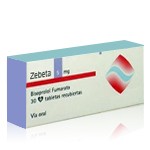
Zebeta is the US brand-name formulation of Bisoprolol Fumarate manufactured by Teva (originally Lederle/Wyeth) — distinguished as the most cardioselective beta-1 adrenergic blocker available, with a β1:β2 selectivity ratio of approximately 75:1 (vs ~20:1 for Metoprolol and ~15:1 for Atenolol). This exceptional cardioselectivity makes Bisoprolol the safest β-blocker option for patients with mild asthma or COPD. FDA-approved since 1992, Bisoprolol holds another distinction as one of only THREE beta-blockers with proven heart failure mortality benefit (alongside Carvedilol/Coreg and Metoprolol Succinate/Toprol XL) — established by the landmark CIBIS-II trial 1999 demonstrating 34% all-cause mortality reduction in HFrEF. International brand equivalents: Concor (Merck KGaA Europe) and Cardicor (UK). Available as standalone Zebeta and as Ziac (Bisoprolol + hydrochlorothiazide combination).
Pharmacology combines exceptional β1 receptor selectivity with balanced 50/50 renal and hepatic elimination — uniquely flexible among β-blockers (Atenolol is renal-only, Metoprolol is hepatic-only, requiring dose adjustment in either renal OR hepatic impairment). Bisoprolol blocks β1 receptors with minimal β2 effects at therapeutic doses, reducing heart rate, contractility, cardiac output, and renin release with minimal bronchoconstriction risk. Long half-life ~10-12 hours supports convenient once-daily dosing. Intermediate lipid solubility — fewer CNS side effects than Propranolol, more than Atenolol.
Zebeta is FDA-approved for hypertension. International/established off-label uses include heart failure (CIBIS-II/III-supported, internationally FDA-approved equivalent), angina pectoris, and atrial fibrillation rate control. CIBIS-III trial demonstrated Bisoprolol non-inferior to Enalapril as initial HFrEF therapy.
Available as Zebeta 5 and 10 mg tablets, plus Ziac combinations. Standard adult HTN dosing: 5 mg once daily start, max 20 mg/day. Heart failure: start very low at 1.25 mg once daily, titrate slowly over weeks to target 10 mg. Angina: 5-10 mg once daily.
Critical safety: boxed warning regarding abrupt withdrawal. Caution in severe asthma (cardioselectivity lost at high doses), decompensated HF, 2nd/3rd degree AV block, severe bradycardia. Fatigue, bradycardia, hypotension, cold extremities. Masks hypoglycemia symptoms.
Free prescription
Discrete packaging
Have questions?
Quality Assurance

- Heart Failure Reduced EF HFrEF: International FDA-equivalent approval for HFrEF — CIBIS-II signature indication;
- CIBIS II Trial HF Mortality: Landmark CIBIS-II 1999 trial — 34% all-cause mortality reduction in HFrEF;
- CIBIS III Trial Non Inferior ACE: CIBIS-III — non-inferior to Enalapril as initial HF therapy;
- Heart Failure NYHA III IV: For HF NYHA III-IV (CIBIS-II population);
- Angina Pectoris: International/off-label for chronic stable angina pectoris;
- Atrial Fibrillation Rate Control: Off-label for atrial fibrillation rate control;
- Atrial Flutter Rate Control: For atrial flutter rate control;
- Supraventricular Tachycardia SVT: For SVT rate control;
- Post Myocardial Infarction: Off-label for post-MI long-term management;
- Mild Hypertension: For mild hypertension (stage 1);
- Moderate Hypertension: For moderate hypertension (stage 2);
- HTN With Asthma Mild: For HTN in patients with mild asthma — SAFEST β-blocker (highest cardioselectivity);
- HTN With COPD: For HTN in patients with mild COPD — cardioselectivity advantage;
- HTN With HFrEF: HTN with concomitant HFrEF — dual benefit;
- HTN With Angina: Dual treatment for HTN with concomitant angina;
- HTN With Renal Impairment: For HTN in renal impairment — balanced elimination advantage (50/50 renal/hepatic);
- HTN With Hepatic Impairment: For HTN in hepatic impairment — balanced elimination advantage;
- HTN CNS Side Effect Sensitive: For patients sensitive to β-blocker CNS effects (intermediate lipid solubility);
- Hyperthyroid Symptomatic: For symptomatic hyperthyroidism control;
- Resistant Hypertension Combo: For resistant HTN — Ziac combination available;
- Once Daily Compliance Sensitive: For patients requiring once-daily convenience.
- Better HFrEF Survival: 34% all-cause mortality reduction in HFrEF — CIBIS-II landmark benefit;
- Less HF Hospitalizations: Reduces HF-related hospitalizations;
- Better Ejection Fraction: Improves LV ejection fraction in HFrEF over time;
- Better Cardiac Remodeling: Reverses adverse cardiac remodeling in HFrEF;
- Less HF Symptoms: Reduces dyspnea, fatigue, edema in HF;
- Better Exercise Tolerance HF: Improved exercise tolerance in HF patients;
- Better NYHA Class: Improves NYHA functional class in HFrEF patients;
- Less Angina Symptoms: Significant reduction in angina pectoris symptoms;
- Less AF Heart Rate: Effective rate control in atrial fibrillation;
- Less AF Symptoms: Reduces palpitations and symptoms from atrial fibrillation;
- Less Cardiovascular Events: Reduces cardiovascular events in high-risk patients;
- Better Daily Function: Return to normal daily activities with effective BP/HF control;
- Better Quality of Life: Substantial improvement in quality of life;
- Better Compliance Once Daily: Once-daily dosing improves compliance;
- Better Tolerability Mild Asthma: SAFEST β-blocker in mild asthma/COPD — highest cardioselectivity (β1:β2 ~75:1);
- Less Bronchospasm Risk: Minimal bronchospasm risk at therapeutic doses — signature benefit;
- Better Renal Impairment Flexibility: Balanced renal/hepatic elimination — flexible in renal impairment;
- Better Hepatic Impairment Flexibility: Balanced elimination — flexible in hepatic impairment;
- Less CNS Side Effects vs Propranolol: Intermediate lipid solubility — fewer CNS effects than Propranolol;
- Brand Zebeta Teva: US brand of Bisoprolol since 1992 — established cardioselective β1 reputation;
- Generic Bisoprolol: Affordable generic Bisoprolol versions expand global access;
- Concor Cardicor International: Same Bisoprolol molecule as international brands Concor (Europe), Cardicor (UK);
- Ziac Combination: Ziac combination with hydrochlorothiazide — convenient dual therapy;
- Highly Cardioselective Beta1: ⭐ HIGHEST cardioselectivity among β-blockers (β1:β2 ~75:1);
- Balanced Renal Hepatic Elimination: Balanced 50/50 renal + hepatic elimination — unique organ flexibility;
- Intermediate Lipid Solubility: Intermediate lipid solubility — balanced CNS profile;
- CIBIS II Trial HF Mortality: ⭐ Landmark CIBIS-II 1999 — 34% mortality reduction in HFrEF;
- CIBIS III Trial Non Inferior ACE: CIBIS-III — non-inferior to Enalapril as initial HF therapy;
- One Of Three HF Mortality Beta Blockers: One of THREE β-blockers with proven HF mortality benefit (Bisoprolol, Carvedilol, Metoprolol Succinate);
- Long Half Life Once Daily: Long half-life ~10-12h supports true once-daily dosing;
- Class II Antiarrhythmic: Class II antiarrhythmic agent;
- Guideline Recommended HFrEF: Guideline-recommended foundational HFrEF therapy (ACC/AHA, ESC);
- 30 Plus Year Clinical History: 30+ years of clinical use since 1992 — established cardioselective β1 blocker.
Generic Zebeta (Bisoprolol 10 mg) Medication guide:
🎯 What Zebeta Is and Who Should Take It
Zebeta is the brand name for bisoprolol fumarate, a cardioselective (beta-1 selective) beta-blocker. It has the highest beta-1 selectivity of any beta-blocker in widespread use - blocking cardiac beta-1 receptors approximately 75 times more strongly than lung beta-2 receptors at usual doses. Bisoprolol was originally developed by E. Merck (Germany) and reached the US market as Zebeta in 1992. It is also marketed as Cardicor, Emcor, and Concor in Europe.
Zebeta occupies an important place in modern cardiovascular medicine as one of only three beta-blockers with proven mortality benefit in heart failure (alongside carvedilol and metoprolol succinate). The landmark CIBIS-II trial (1999) demonstrated 34 percent reduction in all-cause mortality in HFrEF and was stopped early due to overwhelming benefit. Modern ACC/AHA and ESC guidelines specifically name bisoprolol as evidence-based therapy for HFrEF.
Who is Zebeta typically prescribed for
- Adults with heart failure with reduced ejection fraction (HFrEF) - one of three evidence-based beta-blockers
- Adults after a heart attack - beta-blocker post-MI mortality reduction
- Adults with chronic stable angina - reduces exertional chest pain
- Adults with atrial fibrillation where rate control (not rhythm control) is the goal
- Adults with hypertension AND another beta-blocker indication
- Clients with mild asthma or COPD where beta-blocker is essential - highest cardioselectivity minimises bronchospasm risk
- Clients with diabetes where beta-blocker is essential - less metabolic effect than non-selective
- Clients with peripheral vascular disease where beta-blocker is essential - less peripheral vasoconstriction than non-selective
- Clients preferring once-daily dosing over twice-daily metoprolol succinate - simpler regimen
Zebeta is NOT the pill for: severe asthma (bronchospasm risk despite high cardioselectivity), severe heart block (2nd or 3rd degree without pacemaker), heart rate below 50 at rest, cardiogenic shock, acute decompensated heart failure (must first be stabilised), or as emergency BP treatment. Modern guidelines do not recommend starting Zebeta for uncomplicated hypertension unless another beta-blocker indication is present.
This guide will walk you through what Zebeta does, how to take it, what to eat and drink alongside, which side effects to expect - especially the fatigue, cold extremities and possible mood/sleep changes - and the three critical warnings that apply to every bisoprolol client: never stop suddenly, watch out with asthma (though safer than atenolol), and understand the balanced kidney/liver elimination. By the end you should know Zebeta the way you know a familiar tool.
🔬 How Zebeta Works - The Highest Beta-1 Selectivity Among Beta-Blockers
To understand Zebeta you need to know about beta receptors - the docking stations on cells where adrenaline (epinephrine) and noradrenaline (norepinephrine) attach. When adrenaline binds a beta receptor, the cell responds. Beta-blockers occupy these receptors and prevent adrenaline from binding. Bisoprolol acts most selectively of any beta-blocker on beta-1 receptors on the heart.
Step 1 - Beta-1 versus beta-2 receptors
Beta-1 receptors live mostly on the heart. When stimulated: heart rate rises, contractions strengthen, blood pressure climbs. Blocking them slows the heart, softens contractions, lowers BP.
Beta-2 receptors live on airway smooth muscle and blood vessel walls. Blocking them narrows airways - the source of asthma trouble on non-selective beta-blockers.
Step 2 - Zebeta has the highest beta-1 selectivity
Bisoprolol is the most beta-1 selective clinically-available beta-blocker. At usual doses (5-10 mg daily):
- 75:1 beta-1 to beta-2 selectivity ratio - higher than atenolol (20:1) or metoprolol (20:1)
- Safer in mild-to-moderate asthma than other beta-blockers
- Less peripheral vasoconstriction than non-selective drugs
- Preferred for clients with COPD, PAD, diabetes where beta-2 effects matter
- Selectivity fades at maximum doses (20 mg) - not truly cardioselective at ceiling
Step 3 - Neurohumoral protection in heart failure
In HFrEF, the body chronically activates sympathetic nervous system in a maladaptive attempt to maintain circulation. Over time this damages heart muscle further.
Zebeta interrupts sympathetic activation, protects heart muscle from toxic catecholamine exposure, reduces arrhythmia risk, and allows gradual reverse remodelling. This is why CIBIS-II showed 34 percent mortality reduction - not from immediate hemodynamic effects but from long-term cardioprotection.
Timeline you actually feel
| Timeframe | What happens |
|---|---|
| Hours 2-4 after dose | Heart rate falls by 10-15 bpm; BP starts to drop |
| Days 1-3 | Steady state; effect stabilises |
| Weeks 2-4 | Full BP effect (~8-12 mmHg systolic); angina attacks reduce |
| Months 3-12 (HFrEF) | Reverse remodelling; ejection fraction improves; mortality benefit accrues |
The half-life of bisoprolol is 10-12 hours allowing reliable once-daily dosing. This is longer than metoprolol tartrate (3-4 hours, needs BID) but similar to metoprolol succinate extended-release.
📋 What Doctors Prescribe Zebeta For
Zebeta has five main indications with strong evidence, plus several off-label uses in specialist care.
1. Heart failure with reduced ejection fraction (HFrEF)
The most important indication. CIBIS-II (1999) enrolled 2 647 HFrEF clients and demonstrated 34 percent mortality reduction with bisoprolol. Trial stopped early. Modern ACC/AHA and ESC guidelines specifically name bisoprolol as one of three evidence-based beta-blockers for HFrEF. Section 6 covers this.
2. Secondary prevention after a heart attack (post-MI)
Beta-blockers reduce mortality by 20-25 percent when started within days of a heart attack. Zebeta shares this class benefit. Section 7 covers this.
3. Atrial fibrillation rate control
Beta-blockers slow conduction through the AV node so ventricular rate stays reasonable. Zebeta's once-daily dosing is convenient for AF rate control. Section 8 covers this.
4. Chronic stable angina
Beta-blockers are first-line therapy for chronic stable angina. By slowing the heart and reducing contractility, they cut oxygen demand and let a client exercise further before angina appears.
5. Hypertension - second-line
Beta-blockers are no longer first-line for uncomplicated hypertension after LIFE and ASCOT trials. But they remain a good option when there is a coexisting indication (HFrEF, angina, prior MI, AF).
Off-label but reasonable uses
- Migraine prevention - beta-blocker class effect (propranolol more studied but bisoprolol used)
- Essential tremor - propranolol more effective but bisoprolol tried when propranolol not tolerated
- Hyperthyroidism symptom control - blunts palpitations, tremor, anxiety while thyroid treatment works
- Aortic dissection maintenance (BP + heart rate lowering)
- Long QT syndrome - some subtypes benefit
What Zebeta is NOT prescribed for
- Rescue treatment for BP spikes or angina attacks
- Acute rhythm conversion in AF (rate control, not rhythm control)
- Severe acute decompensated heart failure - stabilise first
- Vasospastic (Prinzmetal) angina
- Emergency treatment of any kind
If your doctor prescribed Zebeta, the reason is usually HFrEF, post-MI, AF rate control or angina. Ask if you are unsure.
💊 Bisoprolol Explained - The Balanced Elimination Beta-Blocker
Bisoprolol has three distinctive properties that separate it from other beta-blockers and make it particularly useful: highest beta-1 cardioselectivity, moderate lipid solubility, and balanced 50/50 renal/hepatic elimination. These three properties combine to make it one of the most versatile beta-blockers.
Where bisoprolol sits among the beta-blocker family
| Drug | Selectivity ratio | Solubility | Elimination |
|---|---|---|---|
| Bisoprolol (Zebeta) | 75:1 (highest) | Moderate | 50/50 renal/hepatic |
| Metoprolol | 20:1 | Lipid-soluble | Hepatic CYP2D6 |
| Atenolol | 20:1 | Water-soluble | Renal (90%) |
| Propranolol | Non-selective | Highly lipid-soluble | Hepatic |
| Carvedilol | Non-selective + alpha | Lipid-soluble | Hepatic |
| Nebivolol | Beta-1 selective + NO | Lipid-soluble | Hepatic |
Highest cardioselectivity - what it means in practice
At usual doses (5-10 mg), bisoprolol's 75:1 beta-1:beta-2 selectivity is the highest of any clinically-available beta-blocker. This translates into:
- Safest beta-blocker for mild asthma if beta-blocker is essential
- Preferred beta-blocker for COPD - minimal bronchospasm risk
- Less peripheral vasoconstriction - less cold hands and feet than propranolol
- Less impact on beta-2 mediated bronchodilation from salbutamol inhalers
- Selectivity fades at 20 mg - watch asthma at maximum doses
Balanced 50/50 renal/hepatic elimination
Bisoprolol is eliminated 50 percent by kidneys and 50 percent by liver. This is unique among beta-blockers and provides:
- Modest dose adjustment needed in either kidney or liver disease - less than atenolol (all renal) or metoprolol (all hepatic)
- Less accumulation in advanced CKD than atenolol
- Less pharmacogenomic variability than metoprolol (CYP2D6 variants matter less)
- Predictable pharmacokinetics across most clients - simpler dose adjustments
Available Zebeta strengths
- 1.25 mg tablets - HFrEF starting dose
- 2.5 mg tablets - HFrEF titration; some hypertension starting
- 5 mg tablets - hypertension standard starting
- 10 mg tablets - HFrEF target dose (from CIBIS-II) and hypertension maintenance
- 20 mg tablets - occasional maximum (cardioselectivity fades at this dose)
📊 CIBIS-II - The Landmark Heart Failure Mortality Trial
The Cardiac Insufficiency Bisoprolol Study II (CIBIS-II) is the single most important trial defining Zebeta's modern positioning. Published in Lancet 1999, it established bisoprolol as one of only three beta-blockers with proven mortality benefit in heart failure.
The trial in short
- Who: 2 647 clients with HFrEF - NYHA class III or IV, LVEF under 35 percent
- What: Randomised to bisoprolol or placebo, on top of standard therapy (ACE inhibitor, diuretic)
- Dose: Titrated from 1.25 mg to target 10 mg once daily over 4 months
- Follow up: Mean 1.3 years before early termination
What CIBIS-II showed
- 34 percent reduction in all-cause mortality
- 44 percent reduction in sudden cardiac death
- 32 percent reduction in heart failure hospitalisation
- Trial stopped early after mean 1.3-year follow-up - Data Safety Monitoring Board judged benefit overwhelming
- Benefit consistent across NYHA class, age, sex, ejection fraction, aetiology
- Tolerability comparable to placebo - drop-outs similar between arms
Why CIBIS-II still matters
CIBIS-II confirmed and extended the beta-blocker HFrEF mortality benefit shown earlier by the US Carvedilol Program (1996). Along with MERIT-HF (metoprolol succinate, 1999) and COPERNICUS (carvedilol, 2001), CIBIS-II established the three-beta-blocker consensus that remains modern HFrEF standard.
Modern ACC/AHA and ESC guidelines specifically name bisoprolol (Zebeta) as one of three evidence-based beta-blockers for HFrEF alongside carvedilol and metoprolol succinate. All three are Class I recommendations.
Two other important bisoprolol trials
- CIBIS-I (Circulation 1994) - 641 HFrEF clients; first proof-of-concept for bisoprolol in HFrEF; established safety and suggested benefit
- CIBIS-III (Circulation 2005) - 1 010 HFrEF clients; tested "bisoprolol-first" strategy - starting beta-blocker before ACE inhibitor; showed equivalent safety and outcomes as ACE-first strategy; freed clinicians to individualise titration order
- TIBBS (JACC 1995) - 333 stable coronary disease clients; bisoprolol reduced silent ischemic burden more than nifedipine
- BISOMET (2005) - hemodynamic comparison with metoprolol; bisoprolol showed better BP-lowering profile
The practical takeaway: if you take Zebeta for HFrEF, you are receiving one of the three most evidence-based drugs in heart failure medicine. The 34 percent mortality reduction from CIBIS-II has been replicated in clinical practice for over two decades.
🫀 Zebeta for Heart Failure with Reduced Ejection Fraction
Heart failure with reduced ejection fraction (HFrEF) is a condition in which the heart's pumping strength has fallen below normal (ejection fraction under 40-50 percent). Zebeta is one of the cornerstone treatments and has one of the strongest evidence bases in modern cardiology through CIBIS-II.
The four pillars of guideline-directed medical therapy (GDMT)
Modern HFrEF pharmacotherapy uses four evidence-based drug classes together:
- ARNI (sacubitril/valsartan) or ACE inhibitor/ARB - RAAS blockade
- Beta-blocker (Zebeta, carvedilol, or metoprolol succinate) - sympathetic blockade
- Mineralocorticoid receptor antagonist (spironolactone or eplerenone) - aldosterone blockade
- SGLT2 inhibitor (dapagliflozin or empagliflozin) - metabolic/renal benefit
Zebeta dose titration in HFrEF
| Step | Dose | Timing |
|---|---|---|
| Starting | 1.25 mg once daily | Start when stable, no active decompensation |
| Week 2 | 2.5 mg once daily | Check for hypotension, bradycardia |
| Week 4 | 3.75 mg once daily | Continue titration |
| Week 8 | 5 mg once daily | Half target dose reached |
| Week 12 | 7.5 mg once daily | Approach target |
| Target dose | 10 mg once daily (from CIBIS-II) | Reached over 12-16 weeks |
Common concerns during HFrEF titration
- Transient worsening in first 1-2 weeks - fatigue, mild fluid retention; usually settles
- Do NOT stop for mild symptoms - long-term mortality benefit proven
- Adjust diuretic dose if fluid retention rather than reducing Zebeta
- Slow titration if hypotension or bradycardia - go back one dose step
- Higher benefit at target dose 10 mg - reach it if tolerated
Warning signs during HFrEF titration
- New severe breathlessness or inability to lie flat
- Rapid weight gain (over 1 kg per day) from fluid retention
- Resting heart rate under 50 bpm with symptoms
- Dizziness, near-fainting or faints
- New wheeze in asthma client
Contact your cardiology or heart failure team. Do NOT stop Zebeta without supervision - abrupt withdrawal in HFrEF carries specific rebound risks.
❤️ Zebeta After a Heart Attack
The evidence for beta-blockers after a heart attack is among the strongest in cardiology. Starting a beta-blocker within days of a myocardial infarction reduces mortality by 20-25 percent. Zebeta shares this class benefit.
Why beta-blockers help after a heart attack
1. Reduced myocardial oxygen demand. After a heart attack, the surviving heart muscle has to work harder. Beta-blockers slow the heart and soften contractions, giving healing muscle a chance.
2. Reduced risk of dangerous arrhythmias. Beta-blockers stabilise the electrical system of the heart.
3. Reduced risk of a second heart attack. By keeping heart work down and reducing arterial pressure surges, beta-blockers protect vulnerable coronary plaques.
4. Reduced risk of heart failure development from adverse remodelling.
The trial evidence
- BHAT (1982) - propranolol reduced 1-year mortality by 26 percent
- MIAMI (1985) - metoprolol similar benefit
- ISIS-1 (1986) - IV atenolol reduced early mortality
- Class effect established - bisoprolol shares benefit
- Modern trials often use bisoprolol as reference beta-blocker in post-MI cohorts
Post-MI dosing on Zebeta
- Started 24-48 hours after admission, once client haemodynamically stable
- Typical dose: 2.5-10 mg once daily
- Target resting heart rate: 55-65 bpm
- Continued for at least 12 months, often lifelong
- May be lifelong in clients with reduced LV function
Choosing between bisoprolol and metoprolol succinate post-MI
Both work equally well. Bisoprolol's advantages: once-daily dosing (simpler than metoprolol tartrate BID; equivalent to metoprolol succinate); highest cardioselectivity; balanced elimination. Metoprolol succinate advantages: extensively studied MERIT-HF trial evidence. Individual preference and side effect profile guide the choice.
The stopping rule after MI
Never stop a post-MI beta-blocker suddenly. Withdrawal rebound can trigger unstable angina or another MI. Section 23 covers this.
🥁 Zebeta for Atrial Fibrillation Rate Control
Atrial fibrillation (AF) is a common heart rhythm disorder where the upper chambers of the heart quiver chaotically. Beta-blockers are workhorses for rate control, and Zebeta's once-daily dosing makes it especially convenient.
How Zebeta controls ventricular rate in AF
In AF, electrical impulses fire chaotically at 400-600 per minute from the atria. The AV node filters these impulses. Beta-blockers slow the AV node, reducing impulses that reach the ventricles. Result: ventricular rate drops from 120-160 bpm to 70-90 bpm, and the client feels much better.
Target heart rate in AF
| Situation | Target resting HR |
|---|---|
| Lenient rate control (most clients) | Under 110 bpm per RACE-II |
| Strict rate control (symptomatic) | Under 80 bpm at rest |
| Reduced ejection fraction | Under 90 bpm |
Zebeta dosing for AF rate control
- Start 1.25-2.5 mg once daily
- Titrate to target heart rate
- Maximum 10 mg daily
- If not enough alone, digoxin can be added
- Never combine with verapamil or diltiazem - dangerous bradycardia
Advantage of Zebeta for AF: once-daily convenience
AF clients often take multiple daily medications (anticoagulant, rate control, sometimes rhythm control). Zebeta's once-daily dosing compared with metoprolol tartrate's twice-or-three-times daily improves adherence. This convenience often tips choice toward Zebeta among cardioselective options.
Anticoagulation is separate from rate control
Zebeta controls the rate but does not prevent strokes. Anticoagulation (apixaban, rivaroxaban, edoxaban, dabigatran, warfarin) is what prevents this. Your AF care usually involves both a rate-control drug and an anticoagulant.
💓 Zebeta for Chronic Stable Angina and Hypertension
Zebeta is prescribed for chronic stable angina and hypertension when other beta-blocker indications are present. Both are well-established uses with long clinical experience.
Chronic stable angina
Beta-blockers are first-line therapy for chronic stable angina. Slower heart and softer contractions cut oxygen demand.
- Reduces angina attack frequency by 50-70 percent in responders
- Improves exercise tolerance
- Reduces need for short-acting nitrate rescue
- Dose: 5-10 mg once daily, titrated to resting HR 55-65 bpm
- Combined with amlodipine if beta-blocker alone insufficient
Hypertension - now second-line
Once first-line, beta-blockers are no longer first choice for uncomplicated hypertension after LIFE and ASCOT trials. But Zebeta remains a good BP option when there is a coexisting indication (HFrEF, angina, prior MI, AF).
Modern guidelines position Zebeta as step 2-3 antihypertensive when specific reason exists rather than first-line for uncomplicated hypertension.
When Zebeta fits the hypertension picture
- Hypertension + HFrEF - Zebeta treats both
- Hypertension + prior MI - Zebeta provides post-MI cardioprotection plus BP control
- Hypertension + AF - Zebeta provides rate control plus BP control
- Hypertension + angina - Zebeta treats both
- Hypertension + mild asthma requiring beta-blocker - Zebeta's highest cardioselectivity is safest option
- Hypertension + diabetes requiring beta-blocker - less metabolic effect than non-selective
What Zebeta does NOT do for angina
- It does not stop an acute attack - use short-acting nitrates
- It does not treat unstable angina - emergency
- It does not open blocked arteries - only stents or bypass
- It does not replace aspirin and statin
- Not appropriate for vasospastic (Prinzmetal) angina - can worsen coronary spasm
📅 The First Few Weeks on Zebeta
Starting Zebeta has a predictable rhythm. The pattern differs somewhat between HFrEF (very slow titration) and hypertension/angina (moderate).
Days 1-3
Heart rate falls by 10-15 beats per minute within hours. If usual resting rate is 80 bpm, expect 65-70 bpm in first days. This is the intended effect.
Mild fatigue is common in first days. Usually fades within 1-2 weeks.
Cold hands and feet may become noticeable - less than other beta-blockers due to high cardioselectivity.
Week 1-2
Steady state reached - blood levels stabilise within 3-5 days.
Exercise tolerance may feel worse - the heart cannot ramp up as quickly. Usually improves within 2-4 weeks.
Home BP drops by 8-12 mmHg systolic on average.
Week 3-8 (or 12-16 weeks in HFrEF)
Full effect matures.
Fatigue usually improves as body adapts.
Exercise tolerance returns closer to baseline.
HFrEF titration continues up to target 10 mg over 12-16 weeks.
Signs that ARE normal early on
- Resting heart rate in 55-65 range
- Mild fatigue in weeks 1-2
- Mild cold hands and feet in cool weather
- Feeling exercise is harder than before
- BP drops of 8-12 mmHg systolic
Signs that need urgent medical review
- Resting heart rate below 50 bpm with symptoms
- Severe wheeze or breathlessness
- New chest pain
- Fainting or near-fainting
- HFrEF: rapid weight gain (over 1 kg per day)
- Very cold, painful, or discoloured hands or feet
- Severe fatigue that does not improve after 4-6 weeks
Most clients notice a slower heart rate and mildly reduced exercise capacity in first weeks - both intended effect. If first month passes without incident, long-term outlook is smooth.
⏰ When to Take Zebeta - Timing Rules
Zebeta timing is straightforward. Once-daily dosing provides steady 24-hour cover. The main practical rule is consistency.
The best time to take Zebeta
Morning is most common - anchors to waking and provides drug cover across busiest cardiovascular hours. Evening dosing is acceptable and may benefit clients with nocturnal hypertension.
Once you have chosen a time, stick with it.
Practical anchors
- With breakfast - simplest for most people
- When you brush your teeth in the morning
- Right after your morning coffee
- With your evening meal
- Weekly pillbox filled every Sunday - the single best system for consistency
Can Zebeta tablets be split?
Zebeta tablets typically have a functional score line and can be split in half to achieve intermediate doses (e.g., 3.75 mg from 5 mg + half of 2.5 mg). Unlike extended-release Toprol XL, splitting Zebeta does not destroy any delivery mechanism because bisoprolol is immediate-release.
Do not take just before intense exercise
Because Zebeta blunts your heart rate rise on exertion, taking a dose immediately before running a race or intense workout can leave you feeling exhausted. Take dose either after exercise or at least 2 hours before. Section 30 covers exercise timing.
What to do if you cannot swallow the tablet
Zebeta tablets can be crushed and mixed with soft food or water if needed - unlike extended-release preparations. This makes Zebeta easier for clients with swallowing difficulties. Talk to your pharmacist if this is a regular issue.
🍽️ Food, Drink and Zebeta
Food and drink interactions with Zebeta are simple. There is no grapefruit warning, no strict meal timing requirements.
Food rules for Zebeta
- Take with or without food - your choice, be consistent
- Food does not significantly affect absorption
- Grapefruit is FINE on Zebeta - bisoprolol not metabolised by CYP3A4
- Salt intake still matters for BP - keep total daily salt under 5-6 grams
- Potassium-rich foods (bananas, oranges) are fine and beneficial for BP
- HFrEF: fluid restriction may apply - discuss with your cardiologist
DASH-style pattern helps BP alongside Zebeta
- Vegetables, especially leafy greens, tomatoes, root vegetables
- Oily fish twice a week - salmon, mackerel, sardines
- Beans, lentils, chickpeas
- Nuts and seeds - unsalted, moderate portions
- Whole grains
- Fresh fruit - all safe on Zebeta
- Low-fat dairy or yoghurt
- Cut ultra-processed foods - main source of hidden salt
Herbal supplements to be careful with
- Ephedra (ma huang) - avoid; raises BP
- Yohimbe - avoid; raises BP
- Liquorice root in large quantities - raises BP
- Ginseng, ginkgo - probably harmless in moderation
Specific note for HFrEF clients on Zebeta
Sodium restriction (typically under 2-3 g daily) and sometimes fluid restriction are important complements. Monitor daily weight - sudden weight gain over 1 kg per day suggests fluid retention and needs prompt review.
Overall, Zebeta fits into ordinary eating without special rules. The BP-friendly dietary pattern helps every cardiovascular client.
🍷 Alcohol on Zebeta
Alcohol on Zebeta needs thought. There is no absolute ban, but there are specific interactions - some worth knowing about.
Sensible limits on Zebeta
- Modest drinking is generally acceptable - 1 unit per day for women, 2 for men
- Never drink more than 3-4 units in a single session
- 2-3 alcohol-free days per week
- Avoid binge drinking - amplifies BP drop and dehydration
- Avoid drinking on empty stomach at time of dose
- HFrEF clients should discuss strict limits or abstinence with cardiologist
What happens when Zebeta and alcohol mix
- Alcohol lowers BP short-term. Zebeta also lowers BP. Combined effect can drop BP too low - dizziness, faints
- Fatigue can be more pronounced the day after drinking
- Hypoglycaemia risk in diabetics - Zebeta masks warning signs; alcohol lowers glucose
- Chronic heavy drinking is a cause of alcoholic cardiomyopathy - if you have HFrEF, alcohol should generally be avoided
- Sleep on Zebeta may be more disrupted after drinking
When to skip alcohol entirely
- HFrEF clients - alcohol worsens heart failure
- First 4 weeks starting Zebeta or during titration
- Any active arrhythmia (AF, PVCs) - alcohol triggers arrhythmias
- Liver disease
- Diabetics on insulin/sulfonylurea - masking of hypoglycaemia
- Post-MI clients in first month
Bottom line: a glass of wine with dinner is usually fine. Binge drinking and daily heavy drinking are always harmful. HFrEF is a specific reason to abstain.
☕ Coffee, Caffeine and Energy Drinks
Coffee and Zebeta coexist without any special prohibition. There is no drug-level interaction - bisoprolol is not affected by caffeine metabolism.
The basic rules
- 2-3 cups of coffee per day - safe for most
- Under 400 mg total caffeine per day from all sources
- Watch heart rate response in first week
- No caffeine after 3 PM if you have Zebeta-related sleep changes
- Beware energy drinks - often 150-300 mg caffeine plus other stimulants
Approximate caffeine content
| Drink | Caffeine (mg) |
|---|---|
| Espresso (30 ml) | 65 |
| Filter coffee (240 ml) | 95 |
| Instant coffee (240 ml) | 60 |
| Black tea (240 ml) | 45 |
| Green tea (240 ml) | 30 |
| Cola (330 ml) | 35 |
| Energy drink (250 ml) | 75-160 |
Energy drinks are the real problem
Energy drinks combine caffeine + taurine + guarana + sugar + often ephedra derivatives. They can overcome Zebeta's beta-blockade and cause arrhythmias, palpitations, spikes in BP. Multiple case reports of dangerous events in beta-blocker clients. Best avoided if you take Zebeta.
Coffee itself is not a Zebeta problem. Watch caffeine total from all sources and avoid energy drinks.
🩺 Home BP and Heart Rate Monitoring
Home BP and heart rate monitoring is one of the most valuable habits any Zebeta client can build. A cheap monitor plus 5 minutes twice a week gives your doctor better data than any occasional office measurement.
The right way to measure
- Sit quietly for 5 minutes before measuring
- Sit with your back supported, feet flat, arm at heart level
- Use an upper-arm monitor (not wrist)
- Take 2-3 readings 1 minute apart, discard the first, average the others
- Measure morning and evening
- Same times each measurement day
- Write down BP AND heart rate - both matter on beta-blockers
Reasonable targets on Zebeta
| Client | BP target | Heart rate target |
|---|---|---|
| Most adults | Under 135/85 home | 55-70 bpm resting |
| Diabetics, CKD | Under 125/75 home | 55-70 bpm resting |
| Age over 80 | Under 140/85 home | 55-75 bpm resting |
| HFrEF titration | Systolic above 90 mmHg | 55-70 bpm resting |
Values that need urgent review
- Heart rate under 50 bpm resting with dizziness or fatigue
- Systolic BP under 90 mmHg
- Systolic BP over 180 mmHg - hypertensive urgency
- Irregular pulse pattern - new AF
Recommended monitors
Upper-arm cuff models validated by the British Hypertension Society, ESH, or AAMI. Look for models with automatic heart rate readout (essential on Zebeta) and irregular heartbeat detection. Cost typically $30-80.
🚨 Side Effects of Zebeta
Zebeta has a well-mapped side effect profile after three decades of clinical use. Because bisoprolol has the highest cardioselectivity of clinically-available beta-blockers, many side effects are less common than with other beta-blockers.
Common (5-15 percent of clients)
- Fatigue - especially first 2 weeks, then improves; Section 18
- Bradycardia - heart rate 50-60 bpm, usually well tolerated
- Cold hands and feet - Section 17; less than non-selective beta-blockers
- Dizziness - especially on standing quickly
- Reduced exercise tolerance - Section 18
Less common (1-5 percent)
- Sleep disturbance, vivid dreams, nightmares - Section 20
- Mood changes, low mood - Section 20
- Sexual dysfunction in men - Section 19
- Nausea, mild GI upset
- Headache
Uncommon (under 1 percent)
- Bronchospasm - much less common than other beta-blockers due to highest cardioselectivity; still watch in asthma; Section 24
- Heart block in predisposed clients
- Peripheral vascular symptoms worsening
- Hypoglycaemia unawareness in diabetics - Section 25
- Skin rash
Rare but serious - stop and seek review
- Severe wheeze or breathing difficulty - urgent
- Severe bradycardia (under 40 bpm) or fainting
- Chest pain (new or worsening)
- Signs of heart failure worsening - breathlessness on lying flat, rapid weight gain
- Very cold, painful or discoloured extremities
- Severe depression or suicidal thoughts
Do NOT stop Zebeta abruptly. Withdrawal rebound is dangerous. Section 23 explains.
Most side effects either fade in 2-4 weeks or respond to a dose adjustment. Very few clients need to stop bisoprolol permanently. Bisoprolol's tolerability is generally rated higher than atenolol's in trials.
🧊 Cold Hands and Feet on Zebeta
Cold hands and feet is one of the more common noticeable side effects of beta-blockers. Bisoprolol's highest cardioselectivity means it causes less cold extremities than propranolol or nadolol, but it still occurs in some clients.
Why cold extremities happen on Zebeta
Beta-2 receptors in peripheral blood vessels normally cause vasodilation. Even with cardioselective drugs, some beta-2 blockade occurs, leaving alpha-1 vasoconstriction unopposed. Result: reduced blood flow to hands and feet, especially in cold weather.
Bisoprolol's 75:1 beta-1 selectivity is the highest available and produces the least peripheral effect of any beta-blocker at usual doses.
Practical management
- Warm layers on hands and feet - wool socks, thermal gloves
- Avoid tight cuffs, boots, jewelry that restrict circulation
- Regular hand and foot movement - flex fingers/toes hourly
- Warm the room in winter - especially bedroom
- Warm foot bath before bed if disruptive
- Regular exercise improves circulation - Section 30
- Stop smoking - amplifies peripheral vasoconstriction
When cold extremities need urgent review
- Painful cold hands or feet - not just mild coolness
- Bluish or purplish discolouration that does not warm back to pink
- Ulcers or wounds not healing on toes/fingers
- Numbness or loss of sensation
- Sudden severe cold and paleness - possible acute limb ischemia; emergency
These signs may indicate peripheral arterial disease worsening and need vascular assessment. In severe cases, switch to a different antihypertensive may be considered. Bisoprolol is generally the preferred beta-blocker in mild peripheral arterial disease if beta-blocker is essential.
🔋 Fatigue and Reduced Exercise Tolerance
Fatigue is the most commonly reported symptom on any beta-blocker including Zebeta. It has both a physical (slower heart rate limits maximum output) and central (drug crossing to brain) component. Understanding it prevents unnecessary drug discontinuation.
Timeline
| When | What most clients report |
|---|---|
| Week 1 | Noticeable tiredness, especially afternoons |
| Week 2-3 | Fatigue peaks then starts to fade |
| Week 4-8 | Most clients feel largely normal |
| Beyond 8 weeks | If still fatigued, review dose |
Why bisoprolol may cause less central fatigue than metoprolol or propranolol
Bisoprolol has moderate lipid solubility - less than metoprolol or propranolol but more than atenolol. It crosses blood-brain barrier somewhat less than metoprolol, producing somewhat fewer CNS side effects including fatigue, sleep disturbance, and depressed mood. Individual variation is large.
Managing fatigue on Zebeta
- Wait it out in first 4 weeks - usually improves
- Split dose - some clients switch to twice-daily 2.5+2.5 mg to smooth peak (uncommon but occasionally helps)
- Evening dosing - shifts peak drug effect to sleep hours
- Regular light exercise - counterintuitive but improves fatigue
- Check thyroid, iron, B12, kidney function - other fatigue causes
- Optimise sleep - fatigue often overlaps insomnia
- Reduce dose if persistent - may need dose adjustment or drug change
The exercise paradox
Zebeta blunts your heart rate response, so a workout that used to take heart rate to 150 bpm now takes it to 120 bpm. Same work, different physiology. Perceived exertion increases - it feels harder. Adjust expectations: use rate of perceived exertion, not target heart rate. Aim for "somewhat hard" (6-7 out of 10) rather than a heart rate number. Most clients adapt within 4-8 weeks and exercise tolerance returns close to baseline.
💗 Sexual Function on Zebeta
Sexual side effects with Zebeta are less common than commonly feared, and lower with bisoprolol than with older beta-blockers. But they exist and are worth knowing about.
What the evidence shows
- Beta-blockers as a class have modest ED risk - roughly 5 percent absolute increase versus placebo
- Bisoprolol tolerability comparable to other cardioselective beta-blockers
- Propranolol worse than bisoprolol
- Nebivolol may have less impact due to nitric oxide effect
- Half the reported effect is likely nocebo - expectation effect
- Hypertension itself impairs erectile function - hard to separate drug from disease
Managing sexual side effects on Zebeta
- Give it 4-8 weeks - many clients adapt
- Time dose to reduce peak overlap with sexual activity - morning dose peaks 4-6 hours later
- Lifestyle: exercise, weight loss, smoking cessation help erectile function directly
- PDE-5 inhibitors (sildenafil, tadalafil) compatible with Zebeta
- Never combine PDE-5 with nitrates
- Consider switching to nebivolol if persistent
- Do NOT stop Zebeta unilaterally - discuss with prescriber
In women
Data are limited. Some women report reduced libido on beta-blockers. If symptoms are troublesome, discuss with prescriber. Alternative antihypertensive classes exist.
Sexual side effects should be brought up openly with your doctor. Many effective solutions exist - but only if the problem is on the table.
🌙 Mood, Sleep and Nightmares
Mood, sleep, and dreams on Zebeta are real but often subtle. They arise because bisoprolol crosses the blood-brain barrier to some extent (moderate lipid solubility).
What some clients notice
- Vivid dreams or nightmares - probably the most reported CNS effect
- Difficulty falling asleep or restless sleep
- Mild low mood or emotional flatness
- Mental fog or slower thinking - often overlaps with fatigue
- Reduced anxiety, calmer physical response - actually a benefit for some
- Less common than with propranolol or metoprolol due to bisoprolol's moderate (not high) lipid solubility
Sleep hygiene helps
- Consistent bedtime and wake time
- Cool, dark bedroom
- No screens 1 hour before bed
- No caffeine after 3 PM
- Alcohol makes dreams worse on Zebeta - moderate
- Consider morning-only dosing if evening dose disturbs sleep
When mood changes need medical review
- Persistent low mood beyond 4-6 weeks
- Loss of interest in activities you used to enjoy
- Sleep changes lasting more than a month
- Thoughts of self-harm or suicide - urgent
- Family or friends noticing mood shift
Many mood issues attributed to beta-blockers turn out to be under-treated depression predating drug initiation. But drug-related CNS effects are real. Bisoprolol's moderate lipid solubility places it between atenolol (low CNS effect) and metoprolol/propranolol (higher CNS effect). If mood or sleep effects are persistent, switching to atenolol (very low CNS penetration) is a reasonable option to discuss.
⚖️ Zebeta Doses and How They Are Adjusted
Zebeta dosing is tailored to indication. Here are the practical ranges.
Doses by indication
| Indication | Starting | Target | Max |
|---|---|---|---|
| Hypertension | 5 mg OD | 5-10 mg OD | 20 mg |
| Angina | 5 mg OD | 5-10 mg OD | 20 mg |
| HFrEF | 1.25 mg OD | 10 mg OD (CIBIS-II) | 10 mg |
| Post-MI | 2.5 mg OD | 5-10 mg OD | 20 mg |
| AF rate control | 2.5 mg OD | Titrate to HR | 10 mg |
How doses are adjusted
- Hypertension/angina: increase every 2-4 weeks based on BP and heart rate
- HFrEF: much slower - every 2-4 weeks with close monitoring
- Target resting heart rate 55-65 bpm
- Home BP diary guides titration
- Selectivity fades at 20 mg - watch asthma at maximum dose
- Some clients respond well to 5 mg and no need to escalate
When to consider reducing dose
- Resting heart rate below 55 bpm with symptoms
- Systolic BP below 100 mmHg with dizziness
- Persistent troublesome fatigue beyond 8 weeks
- New bronchospasm
- Very cold extremities becoming painful
⚠️ Drug Interactions You Need to Know About
Zebeta interacts with several important medicine classes. The most dangerous interactions concern heart-rate-slowing calcium channel blockers - a well-documented cause of severe bradycardia.
Serious - usually avoid together
- Verapamil (Calan) IV - contraindicated; can cause asystole
- Verapamil oral - severe bradycardia risk; only under specialist supervision
- Diltiazem (Cardizem) - similar bradycardia risk
- Clonidine withdrawal + Zebeta - dangerous rebound; stop Zebeta first
- Ivabradine - additive bradycardia; use only if HR remains above 60
Moderate - watch closely
- Digoxin - additive AV node slowing
- Amiodarone - additive bradycardia; also QT effect
- NSAIDs (ibuprofen, naproxen, diclofenac) - reduce BP-lowering effect; kidney effects
- Insulin and sulfonylureas - masking of hypoglycaemia; Section 25
- Anaesthetic drugs - inform anaesthetist
- Cocaine - life-threatening BP spike; never mix
- Rifampicin - reduces bisoprolol levels via induction
Usually safe together
- ACE inhibitors, ARBs, ARNI - often deliberately combined
- Diuretics (thiazide, loop, MRA)
- Amlodipine (Norvasc), nifedipine - dihydropyridine CCBs safe with beta-blockers
- SGLT2 inhibitors (dapagliflozin, empagliflozin) - modern HFrEF combination
- Statins
- PPIs, most antibiotics
- Paracetamol - preferred pain reliever
- PDE-5 inhibitors (sildenafil, tadalafil)
Practical rules
- Tell pharmacist EVERY time you fill a new prescription that you take Zebeta
- Prefer paracetamol over NSAIDs for pain relief
- NEVER combine with cocaine
- Confirm rifampicin interaction if prescribed for TB
- Inform anaesthetist before any surgery
⛔ NEVER Stop Zebeta Suddenly - The Withdrawal Warning
This is the single most important warning about Zebeta and every beta-blocker. Stopping suddenly is not just "not ideal" - it can trigger angina, heart attack, or dangerous rhythm disturbances.
Why you must NEVER stop Zebeta suddenly
Long-term beta-blockade causes upregulation - beta-receptors multiply and become more sensitive as compensation. When you suddenly remove the block, those extra sensitised receptors are hit by full adrenaline force.
Consequences: heart rate surge, BP spike, unstable angina, MI, ventricular arrhythmia. Documented since the 1970s in every beta-blocker studied.
Highest-risk clients
- Coronary artery disease - highest rebound risk
- Post-MI clients - can trigger reinfarction
- HFrEF - decompensation on abrupt cessation
- Angina clients - immediate return of symptoms
- AF clients - rate loss of control
- High doses (10-20 mg) - worse rebound than low doses
The correct way to stop Zebeta (only if genuinely needed)
- NEVER stop without medical supervision
- Halve the dose for 1-2 weeks
- Then quarter dose for another 1-2 weeks
- Then stop
- Total taper: minimum 2 weeks, often 4 weeks
- Rest and avoid strenuous exertion during taper period
- HFrEF taper very gradually over 4-6 weeks
Common scenarios where clients accidentally miss
- Ran out of tablets - order refill 2 weeks before running out
- Went abroad without enough supply - always pack 30 percent extra
- Feeling better and stopped - Zebeta works because you take it, not despite it
- Read a scary article online - discuss concerns; do not stop unilaterally
- Hospitalised for surgery and forgot to take - hospital should continue
If you miss a few doses accidentally, restart at previous dose. If you miss more than a week, discuss with your prescriber - some clients need a slower reintroduction. Never simply stop.
🫁 Zebeta and Asthma - The Highest Cardioselectivity Advantage
Zebeta and asthma is a nuanced conversation. Bisoprolol has the highest cardioselectivity of any clinically-available beta-blocker. This makes it the safest beta-blocker choice when a beta-blocker is essential in a client with mild asthma or COPD.
Why bisoprolol is the preferred beta-blocker in mild asthma
75:1 beta-1 to beta-2 selectivity is the highest available. This means at usual doses (5-10 mg), only about 1.3 percent of bisoprolol effect is on beta-2 receptors that control bronchial smooth muscle. Compare with:
- Bisoprolol: 75:1 - highest selectivity
- Nebivolol: 47:1 - very high selectivity
- Metoprolol: 20:1
- Atenolol: 20:1
- Propranolol: 1:1 - non-selective
When Zebeta may be acceptable in asthma/COPD
- Mild well-controlled asthma - no wheezing weeks/months
- Compelling cardiac indication - HFrEF, post-MI, AF
- Start at low dose (1.25-2.5 mg) under specialist supervision
- Peak flow monitoring recommended in first weeks
- Continue inhaled therapy - short-acting salbutamol still works
- Stay well under 20 mg - selectivity fades at high doses
- COPD without significant reversibility - bisoprolol generally acceptable
Zebeta should be AVOIDED in
- Severe or poorly controlled asthma
- History of near-fatal asthma attack
- Steroid-dependent asthma
- Frequent hospital admissions for asthma
- Documented bronchospasm from previous beta-blockers
Warning signs to stop and seek review
- New wheeze - especially after starting or increasing dose
- Increased need for salbutamol inhaler
- Fall in peak flow of 20 percent or more
- Waking at night with breathlessness
- Any severe or new breathing difficulty
Bottom line: Zebeta is the safest beta-blocker choice when someone with asthma or COPD needs a beta-blocker. Not risk-free, but the highest cardioselectivity makes it the least likely to trigger bronchospasm. Specialist assessment is essential before starting.
🍬 Zebeta and Diabetes - Hypoglycaemia Masking
Zebeta in diabetes needs particular attention because of two effects: masking of hypoglycaemia warning signs and subtle glucose metabolism effects. Bisoprolol's high cardioselectivity mitigates these concerns compared with non-selective beta-blockers.
The hypoglycaemia masking problem
Normal low blood sugar warning signs include fast heart rate, tremor, sweating, anxiety. These come from adrenaline release. Beta-blockers blunt the fast heart rate and tremor. Sweating and hunger still occur.
Result: hypoglycaemia can develop further before the client notices. Highest-risk clients: type 1 diabetes on insulin, type 2 on insulin or sulfonylureas.
Practical management
- Check glucose more often in first weeks on Zebeta
- Trust sweating and hunger - these hypo signs still work on beta-blockers
- Carry glucose tablets or fast sugar at all times
- Learn your individual pattern - what does hypo feel like on Zebeta
- Continuous glucose monitor (CGM) ideal if available
- Adjust insulin/sulfonylurea if hypos occur
- Bisoprolol's high selectivity minimises but does not eliminate risk
Why bisoprolol is preferred over atenolol/propranolol in diabetes
- Least metabolic effect among common beta-blockers due to highest cardioselectivity
- Less impact on insulin sensitivity than propranolol
- Less impact on lipid profile than propranolol
- Once-daily dosing improves adherence in complex diabetic regimens
- Established use in HFrEF + diabetes from CIBIS-II
Zebeta remains beneficial in diabetics with
- HFrEF - CIBIS-II benefit preserved in diabetics
- Post-MI - beta-blocker mortality benefit important
- AF requiring rate control
- Angina
Do not avoid Zebeta if a diabetic client has a strong cardiac indication. Just monitor glucose more carefully.
🧪 Zebeta If You Have Kidney or Liver Problems - Balanced Elimination
Bisoprolol has balanced 50/50 renal and hepatic elimination - unique among beta-blockers. This provides modest dose adjustments in either kidney or liver disease compared with atenolol (all renal) or metoprolol (all hepatic).
Dosing in kidney disease
| eGFR | Adjustment |
|---|---|
| Above 40 | Standard dosing |
| 20-40 | Start low, monitor |
| Below 20 | Maximum 10 mg daily |
| Dialysis | Not significantly removed; standard dose after dialysis |
Dosing in liver disease
- Mild-moderate impairment (Child-Pugh A-B): Standard dosing usually acceptable
- Severe liver disease (Child-Pugh C): Maximum 10 mg daily
- Kidneys handle other 50 percent - compensate when liver fails
- Bisoprolol preferred over metoprolol in significant liver disease
The balanced elimination advantage
The advantage of 50/50 elimination: if kidneys fail, liver picks up the slack (up to a point). If liver fails, kidneys do the same. This makes bisoprolol's clearance more predictable across a range of organ function than any other beta-blocker.
Compare: atenolol accumulates dramatically in kidney disease (90 percent renal), metoprolol has 4-6 fold pharmacokinetic variability from CYP2D6 genetic polymorphism.
Practical implications
- Kidney function should be checked at baseline and periodically
- Liver function should be checked at baseline if abnormal
- Bisoprolol handles most clinical scenarios without complicated dose adjustment
- Preferred beta-blocker when kidney/liver function is uncertain
⏱️ What to Do If You Miss or Forget a Dose
Missing an occasional Zebeta dose is common. Handled correctly, it causes no problem. Handled wrong, it means either double-dosing (too much) or letting BP surge back up.
The rule for missed doses
- If within 12 hours of usual time: Take missed dose now
- If more than 12 hours past: Skip it, take next dose as usual
- NEVER double-dose to catch up - can cause hypotension
- If you miss two or more in a row: Contact prescriber; do not restart at high dose
How a missed dose feels
Bisoprolol's 10-12 hour half-life means drug remains in system 24-36 hours after last dose. One missed dose usually causes no noticeable change.
- 1 dose missed: Usually no noticeable effect
- 2-3 doses missed: BP starts to rise, heart rate may accelerate
- 5+ doses missed: Withdrawal rebound risk begins
- 2 weeks off: Full drug clearance; restart needs supervision
Systems to prevent missing doses
- Weekly pillbox filled every Sunday - the single best system
- Phone reminder at exact time each day
- Anchor to a fixed daily habit (breakfast, teeth brushing)
- Refill prescription 2 weeks before you run out
- Keep extra week supply in case delivery delayed
- Travel with extra 30 percent
What to do if you have missed a week or more
- Do NOT restart at old dose - upregulated receptors will be exposed
- Contact prescriber for restart plan
- Rest and avoid strenuous activity until stabilised
- If chest pain, palpitations, severe hypertension during missed period - emergency
🌃 Zebeta for Night Shift Workers
Night shift work adds a genuine complication to any medication schedule. On Zebeta, the challenge is aligning drug peak effects with the reversed daily rhythm and unusual sleep periods.
Timing on rotating shifts
- Anchor Zebeta to your body clock, not the calendar clock
- Take within 1 hour of your "morning" whenever that is
- On rotation, keep 24 hours between doses - do not double if shift changes
- Bisoprolol's 10-12 hour half-life allows some flexibility
- Set phone alarms tied to a specific meal like "post-work meal"
Common night shift issues on Zebeta
- Fatigue during shift - beta-blockers reduce peak alertness
- Difficulty getting up quickly for emergencies - orthostatic drop
- Sleep quality during day sleep - light-blocking mask, cool room
- Vivid dreams may be more disruptive when sleeping in daytime
- Cold hands in cool night environments
Tips
- Have your Zebeta dose in your bag for when your shift schedule is unpredictable
- Keep a shift-work log for BP diary - clarify what "morning BP" means
- Take a short walk each break to combat sluggishness
- Coffee is fine but not in last 3 hours of shift
- Discuss with occupational health if driving or safety-critical role
🚗 Zebeta for Drivers and Machine Operators
Zebeta and driving is generally fine after the initial 2-4 week adjustment period. Most clients drive normally on long-term therapy. But fatigue, occasional dizziness, and slowed reactions in the first weeks deserve care.
First 2-4 weeks - be cautious
- Fatigue is common - limit long-distance driving
- Postural dizziness - stand slowly before driving
- Slowed reaction time in some clients
- Cold hands can affect wheel grip in winter
- Take shorter journeys until stabilised
After stabilisation - usually normal
Most clients drive at their usual level once adapted. Zebeta itself does not have significant psychomotor effects at usual doses.
Do NOT drive if
- Feeling dizzy, faint, or lightheaded
- Just took first dose or dose increase - wait 4-6 hours
- Heart rate under 50 bpm with symptoms
- New chest pain
- Severe fatigue affecting concentration
- Any alcohol in system
Commercial drivers, pilots, machinery operators
Professional driving standards vary by country. Most permit driving on beta-blockers if BP controlled, no side effects affecting performance, no cardiac events in past 3 months. Discuss with occupational health and disclose to licensing authority as required.
Emergency planning
Carry emergency medical information in wallet listing Zebeta and dose. Wear a medical alert bracelet if you have HFrEF or serious cardiovascular history.
💪 Zebeta, Exercise and Sports
Zebeta and exercise coexist well. Athletes and active clients do very well on bisoprolol. The main adjustment is how you measure exercise intensity because Zebeta blunts heart rate response.
What Zebeta does to exercise physiology
- Reduces maximum heart rate by 20-30 percent
- Reduces peak exercise capacity by 5-15 percent
- Same absolute work feels harder at first
- Endurance not affected long-term - body adapts
- Reduced adrenaline response protects the heart during intense effort
Practical adjustments
- Use RPE (Rate of Perceived Exertion) instead of heart rate targets
- Aim for "somewhat hard" 6-7 out of 10 - talk-test level
- Expect 4-8 weeks of adaptation
- Longer warm-up (10 minutes) - your heart takes longer to ramp up
- Longer cool-down (10 minutes) - stops orthostatic BP drop
- Take dose at least 2-4 hours before intense exercise
- Hydration matters more - lower cardiac output
Competitive athletes
Beta-blockers are banned in specific sports - archery, shooting, some others requiring steady hand. Check WADA guidance. In endurance sports, allowed but usually reduces peak performance 5-10 percent.
If cardiac indication makes Zebeta essential, work with a sports cardiologist. HFrEF athletes benefit from continued exercise on beta-blockers.
Stop exercise and seek review
- Chest pain or unusual shortness of breath
- Dizziness or near-fainting
- Very cold, painful legs during walking
- Palpitations or irregular rhythm
🌱 Zebeta and Pregnancy
Bisoprolol in pregnancy needs individualised assessment. Beta-blockers are not first-line for hypertension in pregnancy, but sometimes essential for cardiac indications.
Key concerns
- Fetal growth restriction - beta-blockers cross placenta, may reduce fetal growth
- Neonatal bradycardia and hypoglycaemia - if given close to delivery
- Beta-blockers are pregnancy category C - use if benefit outweighs risk
- Labetalol is preferred beta-blocker for hypertension in pregnancy - not bisoprolol
If you become pregnant on Zebeta
- Do NOT stop suddenly - withdrawal rebound risk
- Contact your cardiologist urgently
- Cardiologist + maternal-fetal medicine specialist should decide together
- For hypertension: switch usually to labetalol or methyldopa
- For HFrEF: continue Zebeta under close monitoring - HFrEF risk outweighs fetal risk
- For post-MI or angina: individualised decision
- Serial fetal growth ultrasounds if continued
Planning pregnancy on Zebeta
- Discuss with cardiologist 3-6 months before conception
- Optimise cardiac condition before pregnancy
- Consider drug substitution if hypertension is main indication
- Maintain if HFrEF or other strong indication
Delivery considerations
- Inform obstetric team you take Zebeta
- Newborn will be monitored 24-48 hours for bradycardia, hypoglycaemia
- Neonatologist alerted at delivery
- Continue Zebeta post-delivery if cardiac indication
🍼 Zebeta While Breastfeeding
Bisoprolol passes into breast milk in small amounts. Whether to breastfeed on Zebeta is individualised.
What the data show
- Limited data on bisoprolol in breast milk
- Relative infant dose (RID) estimated low based on bisoprolol pharmacokinetics
- No reported adverse events in breastfed infants when mothers on usual doses
- Metoprolol preferred over bisoprolol for breastfeeding when either would work - more data
- Propranolol preferred over both for breastfeeding - most extensive data
Practical guidance
- Continue Zebeta if you need it - do not stop for breastfeeding alone
- Take dose immediately after breastfeeding - peak drops before next feed
- Monitor baby for: unusual sleepiness, weak feeding, slow heart rate, cool extremities
- Alert pediatrician you are on bisoprolol
- Consider switching to metoprolol or propranolol if hypertension is only indication
In most cases, breastfeeding on Zebeta is acceptable
The benefits of breastfeeding usually outweigh the theoretical risk from small drug transfer. Discuss with pediatrician if concerned.
📚 Zebeta for Children and Older Clients
Zebeta use in different age groups has some specific considerations.
Children (under 18)
- Not routinely prescribed in children
- Occasional pediatric cardiology use for congenital heart disease
- Specialist supervision required
- Weight-based dosing when used
- Propranolol more common in pediatric practice
Adults 18-65
- Standard doses
- Full evidence base applies
- Regular titration to target
Older adults (65-80)
- Start at 2.5 mg rather than 5 mg
- Titrate more slowly - every 3-4 weeks
- Monitor for postural hypotension - fall risk
- Check for renal impairment - common at this age
- Watch cognitive changes - discuss any confusion
- Simplify regimen - once-daily dosing helps adherence
Very old adults (80+)
- Start at 1.25 mg
- Assess frailty - if severely frail, benefit may be limited
- Target BP under 145/85 (less aggressive than younger adults)
- Falls history - beta-blockers can worsen falls
- Simplify polypharmacy where possible
- SENIORS trial supports beta-blocker use in elderly HFrEF
Considerations across all older age groups
- Higher risk of falls
- Higher risk of bradycardia
- Slower drug clearance if kidney function declining
- Regular medication review every 6-12 months
- Home BP monitor is invaluable
🔗 Combining Zebeta With Other Cardiovascular Medicines
Zebeta is commonly combined with other cardiovascular medicines. Some combinations are guideline-recommended and safe; others need care.
Guideline-preferred combinations
- Zebeta + ACE inhibitor/ARB/ARNI - HFrEF and post-MI cornerstone
- Zebeta + MRA (spironolactone, eplerenone) - HFrEF triple therapy
- Zebeta + SGLT2 inhibitor (dapagliflozin, empagliflozin) - modern HFrEF quadruple
- Zebeta + loop diuretic - fluid management in HFrEF
- Zebeta + amlodipine - hypertension and angina second-step
- Zebeta + ivabradine - HFrEF with heart rate above 70
- Zebeta + statin + aspirin - post-MI standard bundle
Reasonable but monitor
- Zebeta + thiazide/thiazide-like diuretic - hypertension
- Zebeta + digoxin - AF or HFrEF; watch for excess bradycardia
- Zebeta + amiodarone - watch for bradycardia and QT
- Zebeta + long-acting nitrate - angina; watch BP drops
Combinations to avoid or use with caution
- Zebeta + verapamil (Calan) - dangerous bradycardia; specialist only
- Zebeta + diltiazem (Cardizem) - similar bradycardia risk
- Zebeta + clonidine withdrawal - severe rebound hypertension
- Zebeta + another beta-blocker - never combine two
The modern HFrEF quadruple therapy
Contemporary HFrEF treatment combines four evidence-based drug classes initiated in the first 4-8 weeks after diagnosis:
- ARNI (sacubitril/valsartan) or ACE inhibitor/ARB
- Bisoprolol (Zebeta), carvedilol, or metoprolol succinate
- MRA (spironolactone or eplerenone)
- SGLT2 inhibitor (dapagliflozin or empagliflozin)
Each drug delivers separate mortality benefit. Combined relative mortality reduction approximately 60-70 percent in HFrEF.
🛑 Contraindications - When Zebeta Must Be Avoided
These are situations where Zebeta must not be started, or must be stopped if already prescribed. Some are absolute; others are relative and depend on how the risk-benefit weighs.
Absolute contraindications
- Severe bradycardia - resting HR under 50 bpm with symptoms
- Second or third degree AV block without pacemaker
- Sick sinus syndrome without pacemaker
- Cardiogenic shock
- Severe uncontrolled asthma
- Untreated pheochromocytoma - use alpha-blocker first
- Acute decompensated heart failure - stabilise first
- Severe peripheral arterial disease with rest ischemia
- Known hypersensitivity to bisoprolol
Relative contraindications
- Mild-moderate asthma - use with care due to highest cardioselectivity
- Moderate peripheral arterial disease
- Diabetes with hypoglycaemia unawareness
- Severe depression
- Vasospastic (Prinzmetal) angina
- First trimester of pregnancy for hypertension (labetalol preferred)
- Metabolic acidosis
Special populations - use carefully
- Age over 80 - start low, titrate slow
- Severe renal impairment (eGFR under 20) - reduce maximum dose to 10 mg
- Severe hepatic impairment - reduce maximum dose to 10 mg
- Frailty with high fall risk
- Multiple negative inotropes/chronotropes (verapamil, diltiazem, digoxin, amiodarone)
When to stop Zebeta permanently
- Severe bronchospasm not responding to inhaler
- Persistent severe bradycardia after dose reduction
- Critical limb ischemia development
- New severe depression or suicidal ideation
- Severe intolerance despite dose adjustments
Always taper Zebeta over 2-4 weeks - never stop suddenly. Section 23.
🔄 Sick Days, Surgery, Travel, Storage and Yearly Review
Final practical topics: what to do when sick, before surgery, when travelling, how to store Zebeta, and the yearly review checklist.
Sick days - vomiting, diarrhoea, fever
- If you can keep tablet down: continue Zebeta
- If severe vomiting/diarrhoea: contact doctor - dehydration + Zebeta can cause hypotension
- Hold ACE inhibitor or ARB temporarily in severe dehydration; Zebeta usually continued
- Home BP more often during illness
- Extra fluids and rest
- Restart normal dose when eating and drinking normally
Surgery and dental procedures
- Inform anaesthetist and surgeon
- Continue Zebeta through most surgeries - abrupt cessation is dangerous
- Take usual dose morning of surgery with sip of water
- Anaesthetist may adjust based on procedure and hemodynamics
- Continue post-op once eating/drinking
- Dental procedures: no adjustment needed
Travel
- Pack Zebeta in hand luggage, not checked
- Bring 30 percent extra supply
- Original packaging in case customs checks
- Carry prescription copy
- Time zone changes: shift by 1-2 hours per day until aligned
- Long-haul flights: hydration, ankle exercises, compression stockings
- High altitude: Zebeta may reduce altitude tolerance; discuss with doctor for skiing above 3000m
- Travel insurance: declare cardiovascular condition
Storage
- Room temperature (below 25 C)
- Keep in original packaging - protects from light and moisture
- Do not store in bathroom - humidity degrades tablets
- Do not use past expiry date
- Keep out of reach of children - overdose is dangerous
- Return unused tablets to pharmacy for disposal
Yearly review checklist
- Home BP diary review
- Resting heart rate
- Kidney function (eGFR, creatinine)
- ECG - AV conduction check
- HFrEF clients: echocardiogram every 1-2 years or with clinical change
- Side effect review - fatigue, cold extremities, sexual function, mood
- Drug interactions - any new medications
- Cardiovascular risk factors - lipids, diabetes, smoking, weight
- Adherence check
Final thought
Zebeta is a well-established, highly cardioselective beta-blocker with one of the strongest mortality benefits in HFrEF from the landmark CIBIS-II trial. Taken correctly, monitored simply, tapered rather than stopped, it delivers reliable cardiovascular protection across three decades of evidence. Learn your usual response, keep a simple diary, and involve your prescriber in decisions.
Zebeta — Frequently Asked Questions
-
What is Zebeta (Bisoprolol)?
Zebeta is a beta-blocker used primarily to treat high blood pressure and heart failure. -
How does Zebeta work?
It works by blocking the action of certain natural substances in your body, such as epinephrine, on the heart and blood vessels, reducing heart rate, blood pressure, and strain on the heart. -
What are the uses of Zebeta?
It's used to treat hypertension (high blood pressure) and prevent angina (chest pain), and it can be used in the treatment of heart failure. -
How should I take Zebeta?
Take this medication by mouth with or without food, usually once a day, or as directed by your doctor. -
Can Zebeta be taken with food?
Yes, Zebeta can be taken with or without food. Consistency in taking it with respect to meals is recommended. -
What if I miss a dose of Zebeta?
If you miss a dose, take it as soon as you remember. If it is near the time of the next dose, skip the missed dose. -
Can I suddenly stop taking Zebeta?
Stopping Zebeta suddenly can worsen your condition, so it's important to talk to your doctor before doing so.
📚 Drug Description Sources:
The information in this Zebeta (bisoprolol fumarate) guide is compiled from authoritative pharmaceutical, medical, and regulatory sources covering cardiovascular medicine, heart failure management, and coronary artery disease. Content spans over three decades of bisoprolol clinical experience from its 1992 US FDA approval through modern positioning as one of only three beta-blockers with proven heart failure mortality benefit (with carvedilol and metoprolol succinate), shaped by the landmark CIBIS-II trial.
🏛️ Regulatory and government agencies
- FDA (US Food and Drug Administration) - bisoprolol fumarate (Zebeta) US approval 1992 for hypertension; subsequent expansions to angina; heart failure indication supported by CIBIS-II evidence; Merck (Germany) originally developed; current prescribing information at DailyMed
- WHO (World Health Organization) - bisoprolol on WHO Model List of Essential Medicines under cardiovascular medicines section
- EMA (European Medicines Agency) - bisoprolol European regulatory framework; Concor summary of product characteristics
- MHRA (UK Medicines and Healthcare products Regulatory Agency) - Cardicor and Emcor summary of product characteristics; UK-specific HFrEF titration guidance
- Health Canada - Monocor product monograph
- TGA (Australian Therapeutic Goods Administration) - bisoprolol product information
- DailyMed (NIH/NLM) - current Zebeta US prescribing information
📚 Professional societies and clinical guidelines
- ACC/AHA/HFSA 2022 Heart Failure Guideline - bisoprolol specifically named as one of three evidence-based beta-blockers for HFrEF (with carvedilol and metoprolol succinate)
- ESC 2021 Heart Failure Guideline - bisoprolol Class I recommendation for HFrEF based on CIBIS-II
- ESC 2023 Acute Coronary Syndrome Guideline - beta-blocker use post-myocardial infarction
- ACC/AHA 2017 Hypertension Guideline - beta-blockers not first-line unless other indication
- ESC 2020 Atrial Fibrillation Guideline - bisoprolol for rate control
- American Academy of Neurology Migraine Prevention Guidelines - beta-blocker class Level A
- Kidney Disease Improving Global Outcomes (KDIGO) - beta-blocker considerations in CKD
🔬 Landmark clinical research
- CIBIS-II Trial (Cardiac Insufficiency Bisoprolol Study II, Lancet 1999) - 2 647 HFrEF clients; bisoprolol reduced all-cause mortality by 34 percent; foundational bisoprolol heart failure evidence; trial stopped early due to overwhelming benefit
- CIBIS-I Trial (Circulation 1994) - 641 HFrEF clients; first proof-of-concept for bisoprolol in HFrEF; established safety
- CIBIS-III Trial (Circulation 2005) - 1 010 HFrEF clients; bisoprolol first strategy (before ACE inhibitor) equally safe as ACE inhibitor first
- TIBBS Trial (Total Ischemic Burden Bisoprolol Study, JACC 1995) - bisoprolol in silent myocardial ischemia
- BISOMET Trial (Cardiology 2005) - bisoprolol versus metoprolol hemodynamic comparison
- SENIORS Trial (Eur Heart J 2005) - broader beta-blocker HF class evidence in elderly
- MERIT-HF and COPERNICUS - reference class evidence for beta-blocker HF positioning
📖 Medical references and textbooks
- Goodman and Gilman Pharmacological Basis of Therapeutics - beta-adrenergic blocking agents chapter
- Braunwald's Heart Disease - definitive cardiology reference on beta-blocker use in heart failure
- Mann's Heart Failure A Companion to Braunwald - dedicated heart failure reference
- Harrison's Principles of Internal Medicine - heart failure and coronary artery disease chapters
- Katzung Basic and Clinical Pharmacology - beta-blocker pharmacology fundamentals
- Kaplan's Clinical Hypertension - dedicated hypertension textbook
- UpToDate - bisoprolol clinical monographs
- Lexicomp and Micromedex - drug interactions, dosing tables, adverse reactions
Note: This information is educational and does not replace consultation with qualified healthcare providers. Individual medical circumstances vary substantially. Always follow prescriber instructions and report concerns promptly.
🩺 Medical Expert Review:
Content based on the published research and clinical practice of cardiovascular medicine authorities with particular expertise in beta-blocker pharmacology, heart failure trials, and the landmark CIBIS-II trial that established bisoprolol as one of only three evidence-based beta-blockers for heart failure with reduced ejection fraction. The following experts represent authoritative research and clinical practice perspectives on bisoprolol use within contemporary cardiovascular management.
Prof. Willem J. Remme, MD, PhD, FESC
Founder and Director, Sticares Cardiovascular Research Foundation; formerly Erasmus Medical Center Rotterdam — Rhoon, Netherlands
Prof. Remme served as principal investigator of the CIBIS-II trial published in Lancet 1999, which enrolled 2 647 HFrEF clients and demonstrated that bisoprolol reduced all-cause mortality by 34 percent. The trial was stopped early due to overwhelming benefit. He also served on the ESC 2001 Heart Failure Guidelines task force. His scholarship on neurohumoral biology of heart failure and beta-blocker positioning has directly informed European guidelines across three decades.
Prof. Ronnie Willenheimer, MD, PhD, FESC
Professor of Cardiology, Department of Cardiology, Lund University; Malmo University Hospital — Malmo, Sweden
Prof. Willenheimer served as principal investigator of the CIBIS-III trial published in Circulation 2005, which enrolled 1 010 HFrEF clients and directly tested the bisoprolol-first strategy - whether starting a beta-blocker before ACE inhibitor was equally safe as the traditional ACE-first approach. CIBIS-III demonstrated equivalent safety and outcomes, freeing clinicians to individualise HFrEF titration order. His scholarship on guideline-directed medical therapy sequencing has substantially influenced European guidelines.
Prof. Aldo P. Maggioni, MD, FESC
Scientific Director, ANMCO (Associazione Nazionale Medici Cardiologi Ospedalieri) Research Center — Florence, Italy
Prof. Maggioni directs the ANMCO Research Centre - the coordinating hub for major Italian and pan-European cardiovascular trials. He served as investigator on numerous landmark trials including GISSI-HF, VALIANT, SHIFT, EMPEROR-Reduced and PARADIGM-HF. His scholarship on real-world heart failure pharmacotherapy including bisoprolol implementation has substantially informed European clinical practice. He has served on multiple ESC Heart Failure Association writing groups.
Prof. Frank Ruschitzka, MD, FESC, FRCP
Professor and Chair, Department of Cardiology; Director, Heart Failure Programme, University Heart Center, University Hospital Zurich — Zurich, Switzerland
Prof. Ruschitzka served on the writing group for the ESC 2021 Heart Failure Guidelines and served as President of the ESC Heart Failure Association. He directs one of Europe's largest advanced heart failure programmes at the University Heart Center Zurich. His scholarship on beta-blocker positioning, iron deficiency, and CRT-D optimisation in heart failure has substantially informed international guidelines.
Prof. Stefan D. Anker, MD, PhD, FESC
Professor of Cardiology and Metabolism; Director, Department of Cardiology (CVK); Berlin Institute of Health Center for Regenerative Therapies (BCRT); Charite Universitatsmedizin Berlin — Berlin, Germany
Prof. Anker is an internationally recognised authority on cardiac cachexia, iron biology, and metabolic aspects of heart failure. He led numerous landmark trials including FAIR-HF, CONFIRM-HF, EMPEROR-Reduced, EMPEROR-Preserved and FINEARTS-HF. He served on multiple ESC Heart Failure Association writing groups and has authored over 800 peer-reviewed publications. His scholarship on bisoprolol tolerability in cachectic and elderly HFrEF clients has directly informed European guidelines.
Disclosure: Expert names and credentials are cited for educational reference. This content is not endorsed by named experts. Content prepared by RXshop editorial team based on published literature and clinical guidelines.
More Blood Pressure Medications