Buy Biaxin XL (Clarithromycin Extended Release) Online — Once-Daily Macrolide Antibiotic for Adult Respiratory Infections

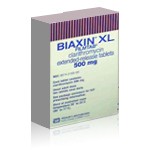
Biaxin XL is the extended-release formulation of Clarithromycin — engineered to deliver sustained antibacterial drug levels over 24 hours with the convenience of once-daily dosing. Developed by Abbott Laboratories and FDA-approved in 2000, Biaxin XL represents an important refinement of immediate-release Biaxin (twice-daily) macrolide antibiotic, providing significant adherence advantages for outpatient treatment of respiratory tract infections.
The active ingredient is Clarithromycin in a specially formulated extended-release matrix. The standard 1000 mg once-daily dose (two 500 mg tablets) provides plasma concentrations comparable to immediate-release 500 mg twice daily, but with smoother peak-to-trough variations that may reduce gastrointestinal side effects. Clarithromycin works by binding the 50S ribosomal subunit of susceptible bacteria, blocking bacterial protein synthesis. Its broad-spectrum activity covers typical respiratory pathogens (S. pneumoniae, H. influenzae, M. catarrhalis) and atypical organisms (Mycoplasma, Chlamydia) that commonly cause community-acquired respiratory infections.
Biaxin XL is FDA-approved specifically for three respiratory tract infections: acute maxillary sinusitis, acute bacterial exacerbations of chronic bronchitis, and community-acquired pneumonia in adults. Unlike immediate-release Biaxin, the extended-release formulation is not approved for pediatric otitis media, pharyngitis, Mycobacterium avium complex (MAC) treatment, or Helicobacter pylori eradication — these indications continue to use the immediate-release formulation.
The XL formulation should be taken with food to optimise absorption (food increases bioavailability of extended-release Clarithromycin by 20-30%). Standard dosing is 1000 mg (two tablets) once daily for 7-14 days. The once-daily schedule particularly benefits working adults, elderly patients, and those with polypharmacy where missed doses are common.
Important safety considerations include QT prolongation, cardiac death risk in patients with coronary heart disease (FDA boxed warning), and potent CYP3A4 drug interactions. Contraindicated with simvastatin, lovastatin, and colchicine in renal impairment. Generic Clarithromycin extended-release is widely available as an affordable alternative.
Free prescription
Discrete packaging
Have questions?
Quality Assurance
- Mild Pneumonia: For mild-to-moderate community-acquired pneumonia not requiring hospitalisation;
- Adult Sinusitis: FDA-approved for acute maxillary sinusitis in adults — convenient once-daily course;
- COPD Acute Exacerbation: FDA-approved for acute bacterial exacerbations of chronic bronchitis in COPD patients;
- Smoker Bronchitis Exacerbation: For bacterial bronchitis exacerbations in smokers and ex-smokers with chronic airway disease;
- Mycoplasma Pneumonia Outpatient: For outpatient treatment of Mycoplasma pneumoniae pneumonia in adults;
- Chlamydia Pneumonia Outpatient: For outpatient treatment of Chlamydia pneumoniae pneumonia — common atypical pathogen;
- Atypical Bronchitis: For bronchitis caused by atypical organisms requiring macrolide coverage;
- Elderly Outpatient Pneumonia: For elderly adults with mild community-acquired pneumonia where once-daily dosing supports adherence;
- Adherence Challenged Antibiotic: For patients with history of missed doses where once-daily dosing improves compliance;
- Working Adult Antibiotic: For working adults where once-daily dosing fits busy schedules without missed work-day doses;
- Travel Antibiotic Course: For respiratory infections during travel where simplified once-daily dosing is easier to maintain;
- Polypharmacy Patient Antibiotic: For patients on multiple medications where reduced pill burden supports compliance;
- Diabetic Outpatient Respiratory: For respiratory infections in stable diabetic outpatients with mild-moderate severity;
- Step Down From IV: For oral step-down from IV macrolide therapy following initial parenteral treatment;
- Hospital Discharge Antibiotic: Common discharge prescription for completing respiratory infection courses at home;
- CAP Outpatient Standard: Standard outpatient option for community-acquired pneumonia in healthy adults;
- Maxillary Sinusitis Adult: Specifically for adult acute maxillary sinusitis where once-daily dosing is preferred;
- Penicillin Allergic Adult Respiratory: Alternative for adult respiratory infections in penicillin-allergic patients;
- 14 Day Antibiotic Course: For longer 14-day courses where once-daily dosing dramatically improves completion rates.
- Less Cough: Resolution of productive cough in pneumonia and bronchitis;
- Better Breathing: Improvement in dyspnea and respiratory symptoms as pneumonia clears;
- Less Sinus Pain: Reduction in facial pressure and pain of acute sinusitis;
- Less Chest Tightness: Resolution of bronchitis-related chest tightness;
- Better Sleep: Resolution of nighttime cough and respiratory discomfort during recovery;
- Better Energy: Recovery from systemic infection-related fatigue;
- Better Appetite: Restoration of normal appetite as systemic infection resolves;
- Faster Recovery: Most outpatients show clinical improvement within 48-72 hours;
- Better Daily Function: Return to work and normal activities as respiratory infection clears;
- Less Treatment Disruption: Once-daily dosing fits naturally into morning or evening routine without disruption;
- Less Missed Doses: Single daily dose dramatically reduces missed doses compared to twice-daily regimens;
- Brand Biaxin XL: Original Abbott extended-release brand of Clarithromycin engineered for once-daily convenience;
- Generic Clarithromycin XL: Affordable generic versions of extended-release Clarithromycin expand patient access;
- Extended Release Macrolide: Sustained-release formulation provides 24-hour drug levels from single daily dose;
- Once Daily Macrolide: True once-daily macrolide for respiratory infections — supports patient adherence;
- Sustained Release Matrix: Specially engineered tablet matrix releases Clarithromycin gradually over 24 hours;
- Smoother Drug Levels: Lower peak concentrations and higher trough levels compared to immediate-release;
- Reduced GI Side Effects: Smoother peak-to-trough profile may reduce gastrointestinal upset;
- Macrolide Antibiotic: Foundational macrolide class with established broad-spectrum activity;
- 50S Ribosomal Inhibitor: Inhibits bacterial protein synthesis at the 50S ribosomal subunit;
- Atypical Coverage Antibiotic: Excellent activity against Mycoplasma, Chlamydia, and Legionella respiratory pathogens;
- Typical Respiratory Coverage: Active against S. pneumoniae, H. influenzae, and M. catarrhalis — the main CAP pathogens;
- CAP Outpatient Therapy: FDA-approved for outpatient community-acquired pneumonia in healthy adults;
- Adult Sinusitis Therapy: FDA-approved for acute maxillary sinusitis in adults — specific approved indication;
- COPD Exacerbation Therapy: FDA-approved for acute bacterial exacerbations of chronic bronchitis;
- Adherence Friendly Antibiotic: Once-daily dosing supports adherence in elderly, busy adults, and polypharmacy patients;
- Pneumonia Step Down Therapy: Oral step-down following IV antibiotic therapy with simplified once-daily dosing;
- Penicillin Allergy Alternative: Alternative for adult respiratory infections in penicillin-allergic patients;
- Outpatient Antibiotic Choice: Designed specifically for outpatient management of common bacterial respiratory infections;
- Working Schedule Friendly: Single daily dose fits busy work and family schedules without disruption;
- Acid Stable Macrolide: Stable in gastric acid — reliable oral absorption with food enhancement;
- Superior Tissue Penetration: Concentrated in lung tissue, sinuses, and macrophages — ideal for respiratory infections;
- Take With Food Required: Food increases extended-release bioavailability by 20-30% — always take with meals;
- Do Not Crush Tablets: Extended-release matrix requires intact tablet swallowing — crushing would defeat the sustained release;
- QT Monitoring Required: Avoid in patients with QT prolongation risk or on QT-prolonging medications;
- Cardiac Warning: FDA caution in patients with coronary heart disease due to increased cardiac event risk;
- CYP3A4 Interactions: Potent CYP3A4 inhibitor — review medication list before use, particularly statins;
- Statin Interaction: Contraindicated with simvastatin and lovastatin — avoid or pause statin during course;
- Stable Storage: Tablets stable at room temperature — convenient for home and travel use;
- Globally Available: Widely stocked in international markets in branded and generic extended-release forms.
Generic Biaxin XL (Clarithromycin XL 500 mg) Medication guide:
📖 What is Biaxin XL - extended-release clarithromycin for respiratory infections
Biaxin XL is the extended-release (modified-release) formulation of clarithromycin, a semi-synthetic second-generation macrolide antibiotic. The extended-release formulation was developed by Abbott Laboratories to provide once-daily dosing for selected respiratory tract infection indications, building on the established efficacy and safety profile of regular twice-daily Biaxin. FDA approval of Biaxin XL (NDA 050698) was granted in 2000, approximately nine years after the original Biaxin approval (NDA 050662) in 1991.
The XL formulation has a restricted set of approved indications compared to regular Biaxin. While regular Biaxin is approved for a broad range of indications including community-acquired pneumonia, sinusitis, bronchitis, pharyngitis, skin infections, Helicobacter pylori eradication, and Mycobacterium avium complex disease, Biaxin XL is approved only for three respiratory tract infection indications: community-acquired pneumonia, acute bacterial sinusitis, and acute exacerbations of chronic bronchitis. The indication restriction reflects both the clinical trial programme conducted for XL approval and the pharmacological characteristics of the extended-release delivery.
📌 Quick distinction
Biaxin XL = same active drug (clarithromycin), once-daily dosing, restricted to respiratory infections. Regular Biaxin = same active drug, twice-daily dosing, full indication range including H. pylori and MAC.
- 💊 Drug class
- Macrolide antibiotic (14-membered ring lactone); semi-synthetic second-generation derivative of erythromycin; same active compound as regular Biaxin in extended-release matrix.
- 🏢 Manufacturer
- Biaxin XL originally marketed by Abbott Laboratories (now AbbVie); generic clarithromycin extended-release available from multiple manufacturers since patent expiration. Same parent company heritage as regular Biaxin.
- 🌍 International brand names
- Biaxin XL (US, Canada); Klacid XL (UK, Europe); Klaricid XL (UK, Australia); other regional brand names for extended-release clarithromycin formulations.
- 📜 FDA approval
- Biaxin XL extended-release tablets: NDA 050698 (2000); multiple generic clarithromycin XL approvals since mid-2000s.
- 📏 Available strength
- 500 mg extended-release tablets only. Standard adult dose is 2 tablets (1000 mg) once daily for most indications.
- ⏱️ Dosing frequency
- Once daily with food. The defining feature distinguishing XL from regular Biaxin (twice daily).
- 🍴 Food requirement
- Take with food - this is essential for proper XL absorption. Unlike regular Biaxin (which is food-independent), Biaxin XL bioavailability is significantly affected by food intake.
- ✅ FDA-approved indications
- Community-acquired pneumonia (CAP), acute bacterial sinusitis, acute exacerbations of chronic bronchitis (AECB). NOT approved for H. pylori, MAC, pediatric use, pharyngitis, or skin and soft tissue infections.
The distinguishing features of Biaxin XL among contemporary respiratory antibiotics include once-daily oral dosing convenience, established efficacy in CAP/sinusitis/AECB from pivotal Abbott trials, the same antibacterial spectrum and active 14-OH metabolite as regular clarithromycin, and the safety profile carried over from extensive regular Biaxin clinical experience. The trade-offs include the food requirement, the tablet integrity requirement (no crush/split/chew), the limited indication range, and the same strong CYP3A4 inhibition that affects all clarithromycin formulations.
The research positioning of Biaxin XL is anchored in the IDSA/ATS Community-Acquired Pneumonia guidelines led by Mandell (2007) and updated by Metlay (2019), the IDSA Acute Bacterial Rhinosinusitis guideline led by Chow (2012), and the pivotal Phase III clarithromycin XL trials conducted by Anzueto and colleagues. These references support extended-release clarithromycin as an appropriate option within the respiratory antibiotic armamentarium.
🕰️ Biaxin XL heritage - from 1991 Biaxin to 2000 XL formulation approval
The development of Biaxin XL represents Abbott Laboratories' formulation extension of an already-successful product. By 2000, regular Biaxin had been on the market for nearly a decade with strong clinical acceptance for respiratory infections, but the twice-daily dosing requirement was a competitive disadvantage versus azithromycin (Zithromax, approved 1991 with once-daily dosing as standard). Developing an extended-release once-daily version of clarithromycin allowed Abbott to retain market share against azithromycin in the outpatient respiratory infection segment.
The scientific challenge in developing Biaxin XL was creating an oral formulation that delivered clarithromycin over a 24-hour period at sufficient concentrations to maintain antibacterial efficacy throughout the dosing interval. Clarithromycin parent compound has a 3-7 hour half-life - too short for once-daily dosing without modification. The XL solution was a sustained-release matrix that releases clarithromycin gradually over many hours, producing more constant plasma concentrations than would occur with two pulses from twice-daily immediate-release dosing.
Biaxin XL development timeline:
1991
Regular Biaxin FDA approval (NDA 050662) for community-acquired respiratory infections, skin/soft tissue, and other indications. Twice-daily dosing standard.
1992
Azithromycin (Zithromax) FDA approval in US with once-daily dosing as standard. Creates competitive pressure for once-daily macrolide options.
Mid-1990s
Abbott begins extended-release formulation development for clarithromycin. Goal: once-daily dosing with maintained antibacterial efficacy.
1997-1999
Pivotal Phase III trials conducted for Biaxin XL: Adler et al for AECB (Clinical Therapeutics 2000;22:1410), Anzueto et al for AECB vs amoxicillin-clavulanate (Clinical Therapeutics 2001;23:72), and CAP trials. Demonstrated equivalent efficacy to regular Biaxin with once-daily dosing convenience.
2000 FDA Approval
FDA approval of Biaxin XL extended-release tablets (NDA 050698) for community-acquired pneumonia, acute bacterial sinusitis, and acute exacerbations of chronic bronchitis. Once-daily 1000 mg or 1500 mg dosing established.
2001
Guay, Gustavson, Devcich et al publish foundational pharmacokinetic and tolerability paper on Biaxin XL (Clinical Therapeutics 2001;23:566), characterising the extended-release profile.
2007 Landmark Guideline
Mandell, Wunderink, Anzueto and colleagues publish IDSA/ATS CAP Guidelines (Clinical Infectious Diseases 2007;44:S27-S72), positioning macrolides including clarithromycin XL as appropriate empirical therapy for outpatient CAP.
2012 Sinusitis Guideline
Chow, Benninger, Brook and colleagues publish IDSA Acute Bacterial Rhinosinusitis Guidelines (Clinical Infectious Diseases 2012;54:e72-e112), establishing clarithromycin as appropriate alternative in penicillin-allergic patients.
Mid-2000s
Generic clarithromycin XL becomes available with patent expiration. Multiple manufacturers produce bioequivalent extended-release formulations. Cost decreases substantially from brand pricing.
2013
Abbott Laboratories spins off its pharmaceutical division as AbbVie. Biaxin XL marketing transfers to AbbVie.
2019
ATS/IDSA CAP Guidelines update (Metlay et al, American Journal of Respiratory and Critical Care Medicine 2019;200:e45-e67) refines macrolide positioning amid rising pneumococcal macrolide resistance.
The commercial impact of Biaxin XL was meaningful but moderate. The once-daily formulation captured market share from regular Biaxin and competed with azithromycin in outpatient respiratory infection prescribing during the 2000s. However, azithromycin retained advantages including shorter course durations (3-5 days for many indications versus 7-14 days for clarithromycin) and fewer drug interactions, limiting Biaxin XL displacement of azithromycin. Generic availability from the mid-2000s reduced brand revenue but expanded patient access.
The contemporary role of Biaxin XL remains as an option within the respiratory antibiotic toolkit - chosen when its specific properties align with patient needs: once-daily macrolide preferred, indication is CAP/sinusitis/AECB, patient takes with food consistently, drug interaction profile acceptable, no need for indications outside XL approval (where regular Biaxin would be needed instead).
🧬 How clarithromycin works - 50S ribosomal protein synthesis inhibition
Biaxin XL contains the same active drug as regular Biaxin - clarithromycin - and exerts antibacterial effect through the same molecular mechanism: reversible binding to the 50S ribosomal subunit of bacterial ribosomes, blocking the peptidyl transferase centre and inhibiting bacterial protein synthesis. The extended-release formulation does not change the mechanism of action; it changes the delivery profile so that clarithromycin is released gradually over many hours rather than as a single pulse.
💡 Same mechanism, different delivery
Extended-release does not mean different drug - it means the SAME clarithromycin delivered more gradually. Bacterial ribosomal binding, antibacterial spectrum, drug interactions, and adverse effect profile are all identical between Biaxin XL and regular Biaxin.
Mechanism summary:
- 🧬 50S ribosomal binding
- Clarithromycin binds the bacterial ribosome at the entrance to the polypeptide exit tunnel near domain V of the 23S rRNA. This binding blocks the translocation step of peptide chain elongation.
- 🔘 Translocation block
- After binding, the peptide chain growing on the ribosome cannot translocate from the A site to the P site. Peptide elongation halts. The ribosome eventually dissociates without completing the protein.
- 🎯 Bacteriostatic effect
- At typical clinical concentrations, clarithromycin is bacteriostatic (halts bacterial growth). Bactericidal effect may occur at higher concentrations or against highly susceptible organisms (Streptococcus pyogenes, Haemophilus influenzae at therapeutic levels).
- 🏛️ Selectivity
- Bacterial 70S ribosomes differ structurally from mammalian 80S ribosomes. Clarithromycin selectively binds bacterial 50S with much higher affinity than mammalian 60S, providing therapeutic selectivity.
- 🔍 Intracellular activity
- Clarithromycin penetrates and concentrates in macrophages and other cells, supporting activity against intracellular respiratory pathogens (Legionella, Chlamydia, Mycoplasma).
XL-specific pharmacodynamic consideration:
Macrolides demonstrate time-above-MIC (time during which free drug concentration exceeds the minimum inhibitory concentration) as the principal pharmacodynamic predictor of efficacy. This is the same principle that applies to beta-lactam antibiotics. The pharmacodynamic implication is that maintaining clarithromycin concentrations above the MIC for typical respiratory pathogens throughout the dosing interval is the goal.
The extended-release formulation supports time-above-MIC through gradual drug release: clarithromycin concentrations rise over several hours after the once-daily dose, plateau at intermediate levels, and decline gradually over the 24-hour interval. This produces a more stable concentration profile than the peak-and-trough pattern of immediate-release twice-daily dosing, theoretically improving consistency of antibacterial pressure.
📘 Why this matters for outpatient adherence
The once-daily XL profile is not just convenience - it produces more stable drug exposure compared to a patient who misses one of two daily doses with immediate-release dosing. For respiratory infections where consistent antibacterial pressure matters across a 7-14 day course, the adherence advantage translates to better real-world outcomes when XL is appropriately matched to the indication.
The active metabolite 14-hydroxyclarithromycin is produced from extended-release clarithromycin just as it is from regular Biaxin - via hepatic CYP3A4 hydroxylation. The metabolite contributes enhanced Haemophilus influenzae activity (relevant for sinusitis and bronchitis indications) and circulates alongside the parent compound. The XL formulation does not change metabolite production or activity.
💊 The macrolide class - clarithromycin and its siblings
Biaxin XL is a member of the macrolide class of antibiotics, characterised by a macrocyclic lactone ring of 14, 15, or 16 atoms with attached sugars. Clarithromycin (the active drug in Biaxin XL and regular Biaxin) is a 14-membered second-generation macrolide. Understanding clarithromycin XL among its macrolide siblings clarifies the contemporary choice landscape, particularly in the comparison with azithromycin (the other widely-used once-daily macrolide).
Macrolides in outpatient respiratory infection use:
Erythromycin FIRST-GEN QID
Original macrolide (1952); largely displaced by second-generation agents. Four-times-daily dosing, significant GI side effects, no extended-release formulation. Now uncommon for routine respiratory infections.
Clarithromycin (regular Biaxin) SECOND-GEN BID
Twice-daily dosing; full indication range including H. pylori and MAC. Active 14-OH metabolite enhances Haemophilus activity. Strong CYP3A4 inhibition; many drug interactions.
Clarithromycin XL (Biaxin XL) SECOND-GEN ER QD This guide
Once-daily with food; restricted to CAP/sinusitis/AECB indications. Same active drug as regular Biaxin in extended-release matrix. Same drug interaction and adverse effect profile.
Azithromycin (Zithromax) AZALIDE QD
Once-daily standard (no separate extended-release needed); 3-5 day courses for many indications due to long tissue half-life. Weak CYP3A4 inhibition (fewer drug interactions than clarithromycin). The other widely-used once-daily macrolide.
Comparative profile - clarithromycin XL vs azithromycin:
| Feature | Biaxin XL | Azithromycin |
|---|---|---|
| Dosing | QD with food | QD, food-independent |
| Course duration | 7-14 days | 3-5 days typical |
| CYP3A4 interactions | Strong inhibitor | Weak/minimal |
| Haemophilus activity | Enhanced via 14-OH metabolite | Adequate |
| GI tolerability | Moderate; taste disturbance | Generally well tolerated |
| QT effect | Moderate | Lower |
| Tablet integrity | Cannot crush/split/chew | Tablets can be crushed |
📘 The XL vs Z-Pak decision
Both are once-daily macrolides for outpatient respiratory infections. Choose Biaxin XL when the indication needs the 14-OH H. influenzae enhancement (sinusitis, bronchitis), longer course duration is appropriate, patient takes with food consistently, drug interactions are manageable. Choose azithromycin when shorter course is preferred, drug interaction burden is high, food-independent dosing matters, taste sensitivity is a concern.
The shared macrolide resistance pattern applies across the class. Bacteria that develop macrolide resistance through erm gene-mediated ribosomal methylation or efflux mechanisms typically show cross-resistance across erythromycin, clarithromycin (regular and XL), and azithromycin. A pathogen resistant to one macrolide is generally resistant to others. This shared resistance is a critical consideration when rising regional macrolide resistance affects empirical choice.
🦠 Biaxin XL bacterial spectrum - respiratory pathogens covered
The bacterial spectrum of clarithromycin XL is identical to regular Biaxin clarithromycin - the XL formulation does not change which organisms the drug can or cannot cover. For Biaxin XL specifically, the clinically relevant spectrum centres on the community-acquired respiratory tract infection pathogens that drive the approved indications (CAP, sinusitis, AECB). Understanding the respiratory-focused spectrum is the practical priority for XL prescribing.
Respiratory pathogens relevant to Biaxin XL indications:
- 🦠 Streptococcus pneumoniae
- Principal target. Most common bacterial cause of CAP, sinusitis, AECB. Susceptibility variable by region - 25-40% macrolide resistance in many US/EU regions. Clarithromycin XL reliable in low-resistance regions; combination therapy or alternative agents preferred where resistance is high.
- 🦠 Haemophilus influenzae
- Common respiratory pathogen especially in AECB and sinusitis. The active 14-OH-clarithromycin metabolite provides enhanced H. influenzae activity beyond the parent compound - this is a distinctive clarithromycin XL advantage versus azithromycin for indications where H. influenzae matters.
- 🦠 Moraxella catarrhalis
- Common upper respiratory pathogen in sinusitis and AECB. Reliable clarithromycin XL susceptibility.
- 🦠 Atypical respiratory pathogens
- Mycoplasma pneumoniae, Chlamydia pneumoniae, Legionella pneumophila - intracellular respiratory pathogens accounting for 10-25% of CAP cases. Clarithromycin XL reliably effective via intracellular drug accumulation. The atypical coverage is one of the principal reasons for macrolide use in CAP.
- 🦠 Bordetella pertussis
- Whooping cough pathogen. Clarithromycin XL effective for treatment and post-exposure prophylaxis (though regular Biaxin BID more commonly used).
Pathogens NOT covered or NOT appropriate for Biaxin XL:
❌ Resistant or intrinsically not covered
- Methicillin-resistant Staphylococcus aureus (MRSA) - commonly resistant
- Pseudomonas aeruginosa - intrinsically resistant
- Enterobacterales (E. coli, Klebsiella) - not reliably covered
- Enterococcus - intrinsic resistance
- Most anaerobes - limited activity
- Mycobacterium tuberculosis - not effective monotherapy
⚠️ Wrong-indication for XL formulation
- Helicobacter pylori - clarithromycin susceptible BUT XL formulation NOT approved for H. pylori (regular Biaxin BID needed for triple therapy)
- Mycobacterium avium complex (MAC) - clarithromycin core agent BUT XL formulation NOT approved (regular Biaxin BID required)
- Streptococcus pyogenes (Group A strep) - susceptible BUT XL not approved for pharyngitis (regular Biaxin 250 mg BID standard for this indication)
- Mycobacterium leprae - susceptible to clarithromycin but XL not appropriate (combination regimens use regular formulation)
📘 Key takeaway for XL prescribing
Biaxin XL spectrum coverage matches regular Biaxin but its approved indications are restricted to respiratory infections. For any other clarithromycin indication (H. pylori, MAC, pharyngitis), regular Biaxin is the appropriate formulation. The XL once-daily dosing is matched to the respiratory infection use case, not the broader clarithromycin indication range.
The regional resistance considerations for Biaxin XL prescribing mirror regular clarithromycin. Where pneumococcal macrolide resistance exceeds 25% (common in many US, European, and Asian regions), empirical macrolide monotherapy for CAP is no longer recommended; combination therapy with a beta-lactam, or alternative class (respiratory fluoroquinolone, doxycycline) is preferred. Local antibiograms should inform the empirical decision. The atypical pathogen coverage (Mycoplasma, Chlamydia, Legionella) remains reliable as these organisms have not developed widespread macrolide resistance.
⚗️ Active metabolite 14-OH-clarithromycin - the Haemophilus advantage
Clarithromycin (and therefore Biaxin XL) produces an active metabolite, 14-hydroxyclarithromycin (commonly written as 14-OH-clarithromycin), through hepatic CYP3A4 metabolism. This metabolite is one of the distinguishing pharmacological features of clarithromycin among macrolides and contributes meaningfully to the therapeutic effect, particularly against Haemophilus influenzae. Understanding the metabolite is relevant to Biaxin XL prescribing because the H. influenzae enhancement supports the XL approved indications (sinusitis, AECB) where Haemophilus is a frequent pathogen.
💡 Why the metabolite matters for XL indications
Biaxin XL is approved for CAP, acute bacterial sinusitis, and AECB. Two of those three indications (sinusitis and AECB) commonly involve Haemophilus influenzae as a pathogen. The 14-OH-clarithromycin metabolite is more active against H. influenzae than the parent compound - providing enhanced clinical efficacy in these specific indications.
Key facts about 14-OH-clarithromycin:
- 🧪 Production
- Produced by hepatic CYP3A4 hydroxylation of clarithromycin parent compound at the 14-position. Both Biaxin XL and regular Biaxin produce the metabolite at similar rates relative to parent compound exposure.
- 📊 Plasma concentrations
- Approximately 15-30% of parent clarithromycin concentrations in plasma after typical dosing. With XL extended-release providing more sustained parent levels, metabolite levels are also sustained.
- ⏱️ Half-life
- 5-9 hours, slightly longer than parent compound (3-7 hours). Sustained presence during the once-daily Biaxin XL dosing interval.
- 🔍 Mechanism
- Binds the same 50S ribosomal site as parent clarithromycin via similar binding affinity for most organisms, but with structurally different binding to certain organism ribosomes.
- 🎯 Spectrum advantage
- 14-OH-clarithromycin is approximately 2-4 fold more active against Haemophilus influenzae than parent clarithromycin alone. For most other organisms (streptococci, atypical respiratory pathogens), the metabolite is comparably active to parent compound.
Why this matters for Biaxin XL indications:
🐸 Acute bacterial sinusitis
H. influenzae accounts for 20-35% of cases. The 14-OH metabolite contribution improves clarithromycin XL efficacy against this common sinusitis pathogen. This is one of the differentiating advantages of clarithromycin over azithromycin for sinusitis specifically.
🪴 Acute exacerbations of chronic bronchitis
H. influenzae and M. catarrhalis dominate AECB pathogens. The enhanced H. influenzae activity from 14-OH metabolite supports clarithromycin XL efficacy in AECB. Anzueto et al 2001 Phase III trial demonstrated equivalent AECB efficacy to amoxicillin-clavulanate, supporting macrolide XL as alternative for AECB.
🫁 Community-acquired pneumonia
H. influenzae is a less dominant CAP pathogen than pneumococcus but still occurs. The 14-OH metabolite provides additional CAP coverage breadth. For CAP, the principal value of clarithromycin XL is atypical pathogen coverage rather than the H. influenzae enhancement specifically.
CYP3A4 dependence on metabolite production:
- Patients on CYP3A4 inhibitors
- Concurrent strong CYP3A4 inhibitors (ritonavir, ketoconazole, certain antifungals) reduce 14-OH metabolite formation while parent clarithromycin levels rise. Net H. influenzae coverage may decrease. Drug interaction review is essential.
- Patients on CYP3A4 inducers
- Concurrent inducers (rifampin, phenytoin, carbamazepine) may increase 14-OH formation while decreasing parent clarithromycin levels. Net effect on antibacterial activity is complex.
- Healthy patients without interactions
- Predictable parent and metabolite production. Standard prescribing applies.
The practical implication is that Biaxin XL provides essentially the same parent compound exposure plus metabolite contribution as regular Biaxin, just delivered over a longer time interval. The XL formulation does not enhance or reduce metabolite production - it simply spreads parent compound exposure across 24 hours, with metabolite formation following the same pharmacokinetic profile. The H. influenzae advantage from the metabolite applies equally to XL and regular Biaxin.
📊 Extended-release pharmacokinetics - how XL formulation works
The pharmacokinetic profile of Biaxin XL extended-release differs from regular Biaxin in several important ways that result from the sustained-release formulation. While the parent active compound (clarithromycin) is identical and the active metabolite (14-OH-clarithromycin) is produced through the same pathway, the delivery profile, time to peak, peak concentrations, and food dependency all differ between the two formulations.
Key pharmacokinetic parameters - Biaxin XL specific:
- 📏 Oral bioavailability
- Approximately 50% with food; significantly reduced without food. Food is essential for proper XL absorption - patients taking Biaxin XL on an empty stomach may have inadequate drug exposure for therapeutic efficacy.
- ⏱️ Time to peak (Tmax)
- 5-8 hours after oral dose (significantly later than regular Biaxin Tmax of 2-3 hours). The delayed and prolonged absorption is the defining feature of the XL formulation.
- 📊 Peak concentration (Cmax)
- Approximately 1.7-3.0 mcg/mL after 1000 mg XL dose. Lower peak than equivalent regular Biaxin twice-daily dosing (which produces 2-3 mcg/mL peaks twice daily).
- 📉 Trough concentration (Cmin)
- Maintained at therapeutic levels throughout the 24-hour dosing interval. The XL formulation aims to keep clarithromycin levels above MIC for common respiratory pathogens for the full 24-hour cycle.
- ⏳ Half-life
- 3-7 hours after absorption (same as regular Biaxin); the apparent half-life appears longer because of continued slow release from the matrix.
- 🍴 Food effect
- Critical: Food increases Cmax by approximately 30% and AUC by approximately 30%. Without food, absorption is reduced and therapeutic levels may not be achieved. This contrasts sharply with regular Biaxin which is food-independent.
- 📍 Tissue penetration
- Excellent penetration into respiratory tissues, sinus mucosa, alveolar macrophages - same as regular clarithromycin. The XL formulation does not change tissue distribution; it changes delivery timing.
- 🧬 Metabolism and elimination
- Same as regular clarithromycin: hepatic CYP3A4 metabolism producing 14-OH-clarithromycin, renal elimination 30-40% unchanged, biliary elimination approximately 40%. The XL formulation does not change metabolic or eliminative routes.
Concentration-time profile comparison:
📈 Two distinct profiles, similar AUC
Regular Biaxin BID: Sharp peaks 2 hours after each dose, troughs 12 hours later. Two peaks per day. Patient experiences both high and low concentration phases. Biaxin XL once daily: Single gradual rise over 5-8 hours, sustained plateau, gradual decline. More constant exposure but lower peak height. The total AUC over 24 hours is similar between regimens with equivalent total daily dose.
The food requirement - mechanistic explanation:
The extended-release matrix of Biaxin XL relies on gradual disintegration in the gastric environment. Food in the stomach prolongs gastric residence time and provides the appropriate acid/enzyme environment for the matrix to release clarithromycin at the designed rate. Without food, the matrix may pass through the stomach too quickly for proper drug release, resulting in incomplete absorption and reduced bioavailability. This is a fundamental design constraint of the XL formulation, not a matter of preference or convenience.
⚠️ Practical implication
Patients prescribed Biaxin XL must be counselled explicitly: take with food, every time. The food does not need to be a large meal - a substantial snack (sandwich, cereal with milk, yogurt with fruit) is sufficient. The dose should be taken during or immediately after eating, not on an empty stomach or with only a beverage.
The practical pharmacokinetic implications for Biaxin XL prescribing:
- Take once daily, ideally at the same time each day, with food
- Establish a consistent eating routine to support reliable absorption
- Do not switch between empty stomach and with-food dosing - inconsistency affects absorption variability
- Patients with poor appetite or unable to eat consistently may be poor candidates for XL formulation
- The longer Tmax means peak effects (and any concentration-dependent adverse effects) develop later than with regular Biaxin
- Drug interaction screening for CYP3A4 substrates is identical to regular clarithromycin
- Renal dose adjustment for eCrCl below 30 mL/min applies as with regular formulation
🎯 FDA-approved indications for Biaxin XL (CAP, sinusitis, AECB only)
Biaxin XL has a deliberately restricted set of FDA-approved indications compared to regular Biaxin. The restriction reflects the clinical trial programme conducted for XL approval (which focused on respiratory tract infections) and the appropriateness of once-daily dosing for the specific clinical scenarios involved. Understanding the indication restrictions is essential for appropriate Biaxin XL prescribing.
🚨 FDA-approved indications - exhaustive list
Biaxin XL is approved ONLY for three indications: (1) acute bacterial exacerbation of chronic bronchitis (AECB), (2) acute maxillary sinusitis (acute bacterial sinusitis), and (3) community-acquired pneumonia (CAP) of mild to moderate severity. No other indications.
The three approved Biaxin XL indications:
🫁 Community-acquired pneumonia (CAP)
Pathogens covered: Streptococcus pneumoniae (when susceptible), Haemophilus influenzae, Mycoplasma pneumoniae, Chlamydia pneumoniae, Legionella pneumophila, Moraxella catarrhalis.
Dose: 1000 mg once daily for 7-14 days. Setting: Mild-to-moderate outpatient CAP in patients suitable for oral therapy. Not appropriate for: severe CAP requiring hospitalisation, where combination therapy with beta-lactam is preferred per Mandell 2007 IDSA/ATS guidelines.
🐸 Acute bacterial sinusitis
Pathogens covered: Streptococcus pneumoniae, Haemophilus influenzae (with 14-OH metabolite enhancement), Moraxella catarrhalis.
Dose: 1000 mg once daily for 14 days. Setting: Confirmed bacterial sinusitis (symptoms over 10 days, severe initial symptoms, or worsening "double sickening") in patients suitable for outpatient oral therapy. Positioning: alternative to first-line amoxicillin-clavulanate per Chow 2012 IDSA guidelines.
🪴 Acute exacerbations of chronic bronchitis (AECB)
Pathogens covered: Haemophilus influenzae, Moraxella catarrhalis, Streptococcus pneumoniae, Haemophilus parainfluenzae.
Dose: 1000 mg once daily for 7 days. Setting: Acute exacerbation in COPD patients with increased dyspnoea, sputum volume, or sputum purulence (Anthonisen criteria). Evidence: Anzueto 2001 Phase III trial demonstrated equivalent efficacy to amoxicillin-clavulanate for AECB.
Indications NOT approved for Biaxin XL (use regular Biaxin BID):
❌ Use regular Biaxin BID, not XL
- Helicobacter pylori eradication
- Triple therapy requires twice-daily clarithromycin dosing for synergistic effect with amoxicillin and PPI. XL once-daily delivery is inadequate for H. pylori eradication regimens.
- Mycobacterium avium complex (MAC)
- MAC treatment and prophylaxis requires twice-daily clarithromycin dosing in combination with ethambutol. XL is not approved for MAC.
- Streptococcal pharyngitis
- Standard pharyngitis dose is 250 mg twice daily (lower than XL 1000 mg once daily). XL would be inappropriate dosing for pharyngitis.
- Pediatric indications (all)
- Biaxin XL is NOT FDA-approved for pediatric patients. Pediatric use requires regular Biaxin (suspension or tablets) with appropriate weight-based dosing.
- Skin and soft tissue infections
- Not in approved XL indication list; regular Biaxin or alternative agents preferred.
- Pertussis
- While clarithromycin is effective, regular Biaxin BID is more commonly used. XL not specifically approved for pertussis treatment.
📘 The XL indication restriction principle
Biaxin XL is matched to respiratory tract infections in adults where once-daily dosing is appropriate and patient takes with food. For any clarithromycin indication outside this scope - especially H. pylori and MAC where dosing frequency is critical for efficacy, or pediatric use where XL is not studied - regular Biaxin is the correct formulation. The choice between XL and regular is not just convenience; it reflects whether the dosing pattern is appropriate for the indication.
🫁 Community-acquired pneumonia treatment with Biaxin XL
Community-acquired pneumonia (CAP) is one of the three FDA-approved indications for Biaxin XL and represents the largest volume of XL prescribing. The framework for CAP antibiotic selection comes from the IDSA/ATS Consensus Guidelines led by Mandell, Wunderink, and Anzueto (2007), and updated by the ATS/IDSA 2019 guideline led by Metlay. Both guidelines position macrolides including clarithromycin XL as appropriate options for outpatient CAP in specific clinical scenarios.
📘 Guideline foundation
Mandell 2007 (IDSA/ATS): Macrolide monotherapy appropriate for outpatient CAP in healthy adults where local pneumococcal macrolide resistance is under 25%. Metlay 2019 (ATS/IDSA update): Amoxicillin OR doxycycline OR macrolide for low-risk outpatient CAP; combination therapy or respiratory fluoroquinolone where comorbidities or recent antibiotics present.
Biaxin XL positioning by CAP scenario:
✅ Appropriate use
- Outpatient adult CAP in patients without significant comorbidities or recent antibiotics
- Local pneumococcal macrolide resistance under 25%
- Patient suitable for oral therapy and can take with food consistently
- No clinically significant CYP3A4 substrate co-medications
- Penicillin-allergic patients where alternative respiratory antibiotic appropriate
- Patient values once-daily dosing convenience
⚠️ Use with caution / combination therapy
- Outpatient CAP in adults with comorbidities (COPD, diabetes, heart failure)
- Recent antibiotic exposure within 3 months
- Local pneumococcal resistance 15-25% - consider combination with beta-lactam
- Elderly patients on multiple medications
❌ Avoid - use alternative
- Severe CAP requiring hospitalisation (ICU or high-acuity ward)
- Local pneumococcal macrolide resistance above 25%
- Patient cannot take with food consistently
- Significant CYP3A4 substrate co-medications (statins requiring continuation, warfarin, immunosuppressants)
- Documented macrolide allergy or intolerance
- Suspected MRSA or Pseudomonas CAP
- Aspiration pneumonia with anaerobic concerns
Biaxin XL dosing for CAP:
💊 Standard CAP regimen
1000 mg (two 500 mg ER tablets) once daily with food for 7-14 days. Most CAP courses are 7-10 days; longer in patients with slower clinical response or suspected atypical pathogens with longer treatment recommendations.
Practical clinical workflow for CAP with Biaxin XL:
- Confirm CAP diagnosis: appropriate clinical presentation plus chest radiograph showing infiltrate or consolidation
- Assess severity using CURB-65 or PSI scoring to determine outpatient vs inpatient management
- Review local pneumococcal macrolide resistance from regional surveillance
- Review patient comorbidities, recent antibiotics, allergies, current medications (especially CYP3A4 substrates)
- Confirm patient can take medication with food consistently throughout the course
- For appropriate outpatient CAP: prescribe Biaxin XL 1000 mg once daily for 7-10 days
- Counsel about: take with food, complete full course, drug interactions (statins, warfarin), warning signs of severe reactions
- Follow-up at 48-72 hours for clinical response assessment; switch therapy if no improvement
- For complicated patients: consider combination therapy with beta-lactam, or alternative class (respiratory fluoroquinolone, doxycycline)
- Document indication, regimen, duration, drug interaction review, and clinical follow-up
The contemporary role of Biaxin XL in CAP reflects its specific clinical match: outpatient adult CAP in low-resistance regions, patient values once-daily convenience, food intake is reliable, drug interactions are manageable. For patients outside this profile, alternative agents (azithromycin for shorter course, amoxicillin-clavulanate for typical bacterial coverage, doxycycline for atypical) often provide better matched options.
🐸 Acute bacterial sinusitis - Biaxin XL positioning
Acute bacterial sinusitis is one of the three FDA-approved indications for Biaxin XL. The framework for sinusitis antibiotic selection comes from the IDSA Clinical Practice Guideline for Acute Bacterial Rhinosinusitis led by Chow, Benninger, and Brook (Clinical Infectious Diseases 2012;54:e72-e112), which positions amoxicillin-clavulanate as first-line and clarithromycin as an appropriate alternative in penicillin-allergic patients and certain other scenarios.
📘 Sinusitis antibiotic stewardship principle
Most acute sinusitis is VIRAL and does not require antibiotics. Antibiotic therapy is appropriate only for confirmed bacterial sinusitis: symptoms over 10 days, severe initial symptoms with fever above 39 and purulent discharge, OR worsening after initial improvement ("double sickening"). Even when antibiotics are appropriate, the duration trend is shorter (10-14 days) rather than the historical longer courses.
Sinusitis pathogens and clarithromycin XL activity:
- 🦠 Streptococcus pneumoniae (30-40% of bacterial cases)
- Reliably susceptible to clarithromycin where macrolide resistance is preserved (most regions under 25%). Rising resistance limits empirical use in some areas.
- 🦠 Haemophilus influenzae (20-35% of bacterial cases)
- Variable susceptibility; the active 14-OH-clarithromycin metabolite provides enhanced coverage. Biaxin XL generally reliable for non-beta-lactamase-producing H. influenzae.
- 🦠 Moraxella catarrhalis (5-10% of bacterial cases)
- Reliably susceptible to clarithromycin XL. One of the indications where macrolide choice is particularly well-matched.
- 🦠 Staphylococcus aureus (uncommon)
- MSSA susceptible; MRSA resistant. Less common but important in selected cases.
Biaxin XL positioning in sinusitis:
📖 First-line: Amoxicillin-clavulanate
Augmentin 875/125 mg twice daily for 10-14 days. Broad coverage of all common sinusitis pathogens including beta-lactamase-producing H. influenzae. First-line per Chow 2012 IDSA guidelines.
💈 Alternative: Biaxin XL
1000 mg once daily with food for 14 days. Appropriate when Augmentin is unsuitable due to penicillin allergy, recent exposure, C. difficile risk, or once-daily preference. The 14-OH-clarithromycin metabolite provides enhanced H. influenzae coverage.
📝 Other alternatives
- Doxycycline 100 mg twice daily for 10-14 days - good atypical coverage
- Levofloxacin 500 mg once daily for 10-14 days - reserved for treatment failures or complicated cases
- Azithromycin - shorter course alternative (though arguably less effective for sinusitis specifically than clarithromycin XL due to lower H. influenzae activity)
Practical workflow for sinusitis with Biaxin XL:
- Confirm bacterial sinusitis diagnosis: symptoms over 10 days, OR severe initial symptoms with high fever and purulent discharge, OR "double sickening" pattern
- Distinguish from viral rhinosinusitis (most cases under 10 days are viral - do not prescribe antibiotics)
- Assess for penicillin allergy or contraindications to first-line Augmentin
- If first-line not contraindicated: Augmentin 875/125 mg twice daily preferred
- If penicillin allergy or other reason to avoid Augmentin: Biaxin XL 1000 mg once daily with food for 14 days
- Consider local resistance: if over 25% pneumococcal macrolide resistance, alternative agents preferred
- Counsel about: take with food (essential for XL), CYP3A4 drug interactions, common adverse effects (taste disturbance, GI), complete course
- Follow-up if no improvement at 48-72 hours, worsening symptoms, severe headache, vision changes, or systemic symptoms
- Document indication confirmation, antibiotic choice rationale (especially if alternative used), and follow-up plan
💡 Why clarithromycin XL may be preferable over azithromycin for sinusitis
For acute bacterial sinusitis specifically, the 14-OH-clarithromycin metabolite enhancement of H. influenzae activity is clinically advantageous because H. influenzae is the second most common sinusitis pathogen. Azithromycin lacks this active metabolite and has less reliable H. influenzae coverage. When choosing between once-daily macrolides for sinusitis, the 14-OH advantage favours clarithromycin XL over azithromycin in scenarios where macrolide is the appropriate choice.
🪴 Acute exacerbations of chronic bronchitis (AECB)
Acute exacerbation of chronic bronchitis (AECB) is the third FDA-approved indication for Biaxin XL and the indication where the most direct clinical trial evidence exists for the XL formulation specifically. The pivotal study by Anzueto, Fisher, Busman, and Olson (Clinical Therapeutics 2001;23:72) demonstrated equivalent efficacy of Biaxin XL once daily compared to amoxicillin-clavulanate twice daily for AECB - establishing the XL formulation as a legitimate alternative for outpatient AECB management.
📘 The Anzueto landmark trial
Anzueto 2001 Phase III randomised double-blind study compared Biaxin XL 1000 mg once daily for 7 days versus amoxicillin-clavulanate 875/125 mg twice daily for 7 days in 401 patients with AECB. Clinical cure rates: Biaxin XL 86% vs Augmentin 84% - statistically equivalent. The trial established that once-daily extended-release clarithromycin is comparably effective to the standard beta-lactam regimen for AECB.
AECB pathogens and clarithromycin XL activity:
- 🦠 Haemophilus influenzae (the dominant pathogen)
- Most common bacterial pathogen in AECB (30-50% of cases). The 14-OH-clarithromycin metabolite provides enhanced H. influenzae activity - one of the principal reasons for clarithromycin XL effectiveness in AECB.
- 🦠 Moraxella catarrhalis
- Common in AECB (15-25% of cases). Reliably susceptible to clarithromycin XL.
- 🦠 Streptococcus pneumoniae
- Common AECB pathogen. Susceptibility variable by regional macrolide resistance.
- 🦠 Pseudomonas aeruginosa (advanced COPD)
- Pseudomonas becomes increasingly common in severe COPD exacerbations. Clarithromycin XL does NOT cover Pseudomonas - patients with frequent exacerbations, severe airflow limitation (FEV1 below 50%), or recent broad-spectrum antibiotic exposure may need anti-Pseudomonal coverage (fluoroquinolones or other classes).
When AECB requires antibiotic therapy:
Per Anthonisen criteria (Anthonisen et al, Annals of Internal Medicine 1987), AECB warrants antibiotic therapy when at least 2 of the 3 cardinal symptoms are present:
📝 Anthonisen criteria for antibiotic decision
- Increased dyspnoea compared to baseline
- Increased sputum volume
- Increased sputum purulence (color change toward yellow/green)
Antibiotic appropriate when 2+ criteria present, particularly when sputum purulence is one of them. If only 1 criterion is present or no purulence: antibiotic generally NOT needed; bronchodilator and corticosteroid management may suffice.
Biaxin XL positioning in AECB:
✅ Good fit for AECB
- Outpatient AECB in COPD patients meeting Anthonisen criteria
- Mild to moderate COPD severity (FEV1 above 50%)
- No recent broad-spectrum antibiotic exposure (over 3 months since last)
- No risk factors for Pseudomonas (severe COPD, frequent exacerbations, recent hospitalisation)
- Penicillin allergy or other contraindication to Augmentin
- Patient values once-daily dosing convenience
- Patient takes medications with food consistently
⚠️ Use with caution or consider alternative
- Severe COPD with frequent exacerbations (over 2 per year)
- Recent hospitalisation for AECB
- Recent broad-spectrum antibiotic exposure
- Severe airflow limitation (FEV1 below 50%) - higher Pseudomonas risk
❌ Not appropriate - use alternative
- AECB requiring hospitalisation - broader-spectrum agents needed
- Suspected Pseudomonas - anti-Pseudomonal fluoroquinolone or other class needed
- Patient unable to take with food consistently
- Significant CYP3A4 drug interaction burden
Biaxin XL dose for AECB:
💊 Standard AECB regimen
1000 mg (two 500 mg ER tablets) once daily with food for 7 days. Shorter course than CAP (7 days vs 7-14) and sinusitis (14 days), reflecting AECB clinical trial evidence.
Practical workflow for AECB with Biaxin XL:
- Confirm AECB diagnosis: COPD patient with acute worsening of respiratory symptoms
- Apply Anthonisen criteria - is antibiotic therapy actually indicated? (only when 2+ criteria, especially purulence)
- Assess severity - mild/moderate appropriate for outpatient; severe requires hospitalisation evaluation
- Consider risk factors for resistant pathogens or Pseudomonas (severe COPD, frequent exacerbations, recent broad-spectrum exposure)
- Review drug interactions, allergies, food consistency
- For appropriate outpatient AECB: Biaxin XL 1000 mg once daily with food for 7 days
- Counsel about: take with food, complete full course, drug interactions, warning signs of severe reactions or worsening
- Follow-up at 48-72 hours; reassess if no improvement
- Optimise bronchodilator and inhaled corticosteroid therapy alongside antibiotics
- Document indication, Anthonisen criteria met, regimen, follow-up plan
💡 The XL formulation - how extended-release matrix works
The defining feature of Biaxin XL is the extended-release tablet matrix that delivers clarithromycin gradually over many hours rather than as a single immediate-release pulse. Understanding how the XL formulation works clarifies why food intake matters, why the tablets cannot be crushed or split, why the indications are restricted to specific scenarios, and how the resulting pharmacokinetic profile differs from regular Biaxin.
The extended-release matrix technology:
- 💡 Hydrophilic matrix design
- Biaxin XL tablets contain clarithromycin embedded in a hydrophilic polymer matrix (cellulose-based polymers). When the tablet enters the gastrointestinal tract and encounters water, the polymer hydrates and forms a gel layer on the tablet surface.
- 💧 Gel layer controls release
- The gel layer slows water penetration into the tablet core and controls the rate at which clarithromycin diffuses out. The polymer gradually erodes from the tablet surface as drug is released, exposing fresh matrix. This combination of diffusion through the gel and matrix erosion produces a sustained-release profile.
- ⏱️ Release duration
- Clarithromycin is released over approximately 8-12 hours from the matrix, with continued absorption from the lower GI tract providing therapeutic levels for the full 24-hour dosing interval.
- 🍴 Gastric environment dependence
- The matrix release rate is influenced by gastric residence time and the local environment. Food in the stomach extends gastric residence, providing the appropriate environment for optimal matrix release. Empty stomach administration shortens gastric residence and reduces drug absorption.
- 🚨 Tablet integrity required
- The entire matrix must remain intact for proper sustained release. Crushing, splitting, or chewing disrupts the matrix structure, causing rapid release of the full dose (dose-dumping). This defeats the purpose of the extended-release formulation and increases risk of adverse effects.
🚨 CRITICAL: Tablet integrity warnings
- Do NOT crush Biaxin XL tablets. Crushing destroys the matrix structure and causes rapid release of the full dose (1000 mg at once instead of over 24 hours).
- Do NOT split or break Biaxin XL tablets. Even partial tablet breakage can disrupt the matrix.
- Do NOT chew Biaxin XL tablets. Chewing destroys the matrix.
- Swallow whole with water and food. The tablet must reach the stomach intact.
- For patients unable to swallow whole tablets: use regular Biaxin (immediate-release tablets or suspension) with appropriate twice-daily dosing.
Why the food requirement is fundamental:
🍴 Food is not optional for Biaxin XL
Unlike regular Biaxin (food-independent absorption), Biaxin XL bioavailability decreases approximately 30% without food. This is because the matrix tablet requires adequate gastric residence time and the appropriate stomach environment for proper drug release. A substantial snack (not just a glass of water) immediately before or during the dose is necessary.
Examples of appropriate food intake for Biaxin XL dosing:
- Breakfast: cereal with milk, eggs and toast, yogurt with granola
- Lunch or dinner: any meal
- Substantial snack: sandwich, peanut butter on bread, cheese and crackers, fruit and yogurt
- NOT acceptable: only coffee/tea, water alone, candy or small treats, "I just had a few crackers"
How XL release compares to regular Biaxin:
| Feature | Regular Biaxin (IR) | Biaxin XL (ER) |
|---|---|---|
| Dosing frequency | Twice daily (BID) | Once daily (QD) |
| Tablet release | Immediate | Extended over 8-12 hours |
| Food requirement | None (food-independent) | Required (with food) |
| Crush/split allowed | Yes if needed | NO - tablet must be intact |
| Peak concentration timing | 2-3 hours after dose | 5-8 hours after dose |
| Concentration profile | Two peaks/troughs per day | Single gradual peak, sustained level |
| Total daily AUC | Similar to XL at equivalent total dose | Similar to IR at equivalent total dose |
The practical significance of understanding the formulation is that patient counselling must explicitly address the food requirement, tablet integrity requirement, and the rationale for these constraints. Patients who fail to take Biaxin XL with food or who crush/split tablets may experience reduced efficacy (subtherapeutic exposure) or excessive adverse effects (dose-dumping). Both outcomes are preventable with appropriate counselling at the time of prescribing.
The matrix technology used in Biaxin XL represents standard sustained-release pharmaceutical engineering applied to clarithromycin. Similar hydrophilic matrix approaches are used in other extended-release products. The technology is well-established, predictable, and reliable when patients follow the dosing instructions. The constraints (food requirement, tablet integrity) are intrinsic to the technology rather than arbitrary - they cannot be worked around.
🕑 Once-daily dosing advantage - adherence and outcomes
The defining patient-facing advantage of Biaxin XL over regular Biaxin is once-daily dosing. The reduced dosing frequency translates into measurable improvements in patient adherence, which in turn affects treatment outcomes for outpatient respiratory infections. Understanding the adherence-efficacy relationship clarifies why the XL formulation has been adopted in practice despite the food requirement and indication restrictions.
📊 The adherence advantage by the numbers
Real-world adherence research has consistently shown that once-daily regimens achieve 70-85% adherence versus 60-75% for twice-daily and 40-60% for four-times-daily. The gap widens with longer treatment durations - for a 14-day antibiotic course, the difference between once-daily and twice-daily adherence can mean 20+ percent additional doses taken correctly.
Why once-daily matters for outpatient antibiotics:
- 🕑 Single dose easier to remember
- One dose per day fits more naturally into daily routines - taken with the same meal each day. Twice-daily requires remembering 12-hour intervals, which patients commonly miss especially in the evening.
- 📱 Fewer interruptions to schedule
- Work schedules, travel, social activities, and family responsibilities can interfere with mid-day dosing. Once-daily avoids the mid-day requirement that twice-daily regimens demand.
- 👨👩👦 Caregiver burden reduced
- For elderly patients or those needing caregiver-administered medication, once-daily dosing reduces caregiver burden compared to twice-daily.
- 📈 Better completion rates
- Studies consistently show higher full-course completion with once-daily versus more frequent dosing. Completion matters - incomplete courses are associated with treatment failure and resistance emergence.
- 🏥 Outpatient-specific benefit
- The adherence advantage is most relevant for outpatient management where patients self-administer without supervision. Inpatient settings (where nurses administer scheduled doses) do not see the same adherence variation between dosing frequencies.
The translation from adherence to outcomes:
✅ Direct adherence benefits
- Higher percentage of prescribed doses actually taken
- Fewer missed doses creating subtherapeutic exposure windows
- More consistent antibiotic concentration in tissues
- Higher likelihood of completing full course duration
📐 Indirect clinical benefits
- Reduced risk of treatment failure from incomplete courses
- Lower resistance emergence pressure from subtherapeutic exposure
- Better patient satisfaction and treatment experience
- Reduced healthcare costs from fewer follow-up visits for treatment failures
⚠️ The XL adherence advantage has caveats
The once-daily benefit assumes the patient actually takes the dose with food consistently. A patient who takes Biaxin XL on an empty stomach (because they forgot to eat first, or they take all medications first thing in the morning before breakfast) may have reduced absorption that negates the adherence advantage. The food requirement is a real constraint that must be addressed at counselling.
Comparison to other once-daily macrolides:
The principal once-daily macrolide alternative is azithromycin (Zithromax), which has different advantages and disadvantages compared to Biaxin XL:
- Azithromycin achieves once-daily dosing through inherent long tissue half-life (60-80 hours), not through formulation engineering. No food requirement; tablets can be crushed if needed.
- Biaxin XL achieves once-daily dosing through formulation matrix design. Food required; tablets must remain intact.
- Course duration: Azithromycin typically 3-5 days; Biaxin XL 7-14 days. Shorter azithromycin courses are an additional adherence advantage in many scenarios.
- Drug interactions: Azithromycin has substantially fewer CYP3A4 interactions than clarithromycin (regular or XL).
- Spectrum-specific: Clarithromycin XL has 14-OH H. influenzae enhancement; azithromycin lacks this metabolite advantage.
The practical choice between Biaxin XL and azithromycin for once-daily macrolide therapy depends on patient-specific factors and indication-specific considerations. Both are valid options; the optimal choice matches the indication, drug interaction profile, food tolerance, and patient preference.
💊 Standard adult Biaxin XL dosing
Biaxin XL dosing is straightforward compared to regular Biaxin: 1000 mg (two 500 mg extended-release tablets) once daily with food is the standard adult regimen for all three approved indications. The duration varies by indication (7-14 days). The simplicity of one regimen across indications is one of the practical advantages for prescribers and patients.
Standard Biaxin XL dosing by indication:
| Indication | Dose | Duration |
|---|---|---|
| Community-acquired pneumonia (CAP) | 1000 mg once daily with food | 7-14 days |
| Acute bacterial sinusitis | 1000 mg once daily with food | 14 days |
| Acute exacerbations of chronic bronchitis (AECB) | 1000 mg once daily with food | 7 days |
💡 Why 1000 mg once daily (not 500 mg)
The 1000 mg XL daily dose is therapeutically equivalent to the standard 500 mg twice-daily regimen of regular Biaxin (total daily dose 1000 mg). The XL formulation distributes this total exposure across a 24-hour interval rather than two discrete pulses. Single 500 mg XL tablets are NOT a complete dose - the FDA-approved standard is two 500 mg ER tablets taken once daily.
Practical administration:
- 🍴 Take with food
- Take both tablets with a meal or substantial snack. Not just a glass of water or coffee. The food requirement is essential for proper absorption (see Section 15).
- 🕑 Same time each day
- Choose a consistent meal time - breakfast, lunch, or dinner. Whichever fits the patient routine best. Consistency matters more than specific time.
- 💧 Swallow whole with water
- Take the two tablets together with adequate water. Do not crush, split, or chew. Tablet integrity is essential.
- 🍽️ What counts as food
- Any meal or substantial snack. Examples: breakfast cereal with milk, eggs and toast, sandwich, yogurt with granola, peanut butter on bread. NOT: only coffee/tea, only water, only candy, or "I had a few crackers."
- 📅 Daily routine integration
- Pair with an established daily eating habit. Many patients find dinner most reliable; others prefer breakfast. The key is consistency.
Special dosing scenarios:
🔥 Renal impairment
eCrCl above 30: No dose adjustment. eCrCl 10-30: Reduce to 500 mg XL once daily (single tablet) - or consider switching to regular Biaxin BID with appropriate dose reduction. eCrCl below 10: Avoid where possible; consider alternative agents.
🍔 Hepatic impairment
Mild-moderate: Standard dose acceptable. Severe: Use with extreme caution or alternative agent; consider azithromycin which has less hepatic metabolism.
❌ NOT for pediatric patients
Biaxin XL is NOT FDA-approved for children. Pediatric clarithromycin therapy requires regular Biaxin (suspension or appropriate tablets) with weight-based dosing.
Practical clinical workflow:
- Confirm indication is approved (CAP, sinusitis, or AECB) - if not, use regular Biaxin or alternative agent
- Review drug interactions (CYP3A4 substrates) - critical for safe prescribing
- Review renal function (eCrCl) - adjust dose if below 30
- Review patient ability to take with food consistently - if unable, choose alternative formulation
- Prescribe Biaxin XL 1000 mg once daily with food for appropriate duration (7-14 days)
- Counsel about: must take with food, swallow whole (no crush/split/chew), drug interactions, common adverse effects, warning signs
- Provide written instructions emphasising food requirement and tablet integrity
- Schedule follow-up at 48-72 hours for clinical response
- Document indication, dose, duration, drug interaction review, and food counselling
🍴 Why Biaxin XL must be taken with food
One of the most important and most easily overlooked aspects of Biaxin XL prescribing is the food requirement. Unlike regular Biaxin (which is food-independent), Biaxin XL bioavailability is significantly affected by food intake. Taking Biaxin XL on an empty stomach reduces absorption substantially, potentially producing subtherapeutic drug exposure and treatment failure. This is not a preference or convenience matter - it is a fundamental design constraint of the extended-release formulation.
🍴 THE CRITICAL FOOD RULE
Biaxin XL must be taken with food, every dose, every day. Without food, bioavailability drops approximately 30% - meaning the patient receives about 30% less drug exposure than the dose suggests. This level of reduction can produce treatment failure for some indications and certainly produces inconsistent therapy.
Why food matters - the mechanistic explanation:
- 🧪 Gastric residence time
- The extended-release matrix releases clarithromycin gradually over 8-12 hours. Food in the stomach prolongs gastric residence, allowing the matrix to release drug in the appropriate gastric environment before passing into the intestine.
- 💧 Hydration of the polymer matrix
- The hydrophilic polymer matrix requires water and the appropriate stomach environment to form the gel layer that controls drug release. Food contributes to this environment.
- 📈 Predictable absorption profile
- With food, the absorption profile is consistent across doses - predictable Cmax, AUC, and time-above-MIC. Without food, the profile is variable and reduced.
- 📉 Without food consequences
- Cmax reduced approximately 30%; AUC reduced approximately 30%; time-above-MIC shortened. Translation: less drug exposure, less effective antibiotic concentration, potentially subtherapeutic against borderline-susceptible pathogens.
What counts as "food":
✅ YES - these count as food
- Full meal: breakfast, lunch, or dinner
- Substantial snack: sandwich, pasta, rice dish
- Breakfast items: cereal with milk, eggs and toast, oatmeal
- Yogurt with granola or fruit
- Peanut butter on bread or crackers (substantial amount)
- Cheese and crackers (multiple)
- Bowl of soup with bread
- Smoothie or protein shake (substantial)
❌ NO - these do NOT count as food
- Only coffee or tea (no food alongside)
- Only water
- Only juice or soda
- Single piece of candy or chocolate
- A few crackers (less than substantial snack)
- One piece of fruit (banana, apple) - borderline; substantial fruit OK
- Chewing gum
- Coffee with cream (cream alone is not adequate food)
Practical timing strategies:
🕑 Best practices for consistent dosing
- Pair with a regular meal - choose breakfast, lunch, or dinner as your "Biaxin XL meal"
- Take the dose during or immediately after eating, not before
- For breakfast pairing: have a substantial breakfast (not just coffee) every day during the course
- For dinner pairing: many patients find dinner most reliable
- If your meal schedule is irregular (shift work, travel): plan ahead what your "Biaxin XL meal" will be each day
- Set a phone alarm if needed - paired with meal time, not arbitrary clock time
When the food requirement is problematic:
- Patients with poor appetite (acute illness, advanced age, depression) may not eat consistently - Biaxin XL may not be appropriate
- Patients with nausea or vomiting from infection cannot tolerate food reliably - alternative formulation needed
- Patients on fasting regimens (intermittent fasting, religious fasting periods) need to ensure dose timing aligns with eating window
- Patients with feeding tubes or NPO status - cannot use Biaxin XL; use IV antibiotics or alternative oral formulation
- Patients who skip meals as a habit - counsel about importance of consistent meal pairing, or choose alternative
⚠️ If you missed the food and already took the dose
If a patient realises they took Biaxin XL without food (perhaps forgot, or had only coffee), they should: (1) Eat something substantial as soon as possible if within an hour of the dose - some food during early absorption may still help. (2) Continue with the next scheduled dose tomorrow taken properly with food. (3) Do NOT take a second dose to compensate - this would risk excessive exposure. (4) Note the issue if treatment response is inadequate at follow-up.
⚖️ Biaxin XL vs regular Biaxin - when each is appropriate
Biaxin XL and regular Biaxin contain the same active drug (clarithromycin) but differ in formulation, dosing frequency, and approved indications. Understanding when each is appropriate prevents two common prescribing errors: using XL for indications where it does not work (H. pylori, MAC, pediatric) and using regular Biaxin where XL convenience would benefit adherence.
Side-by-side comparison:
💊 Regular Biaxin (immediate-release)
- Available strengths
- 250 mg and 500 mg tablets; oral suspension 125/200 mg per 5 mL
- Standard dosing
- Twice daily (every 12 hours)
- Food requirement
- Food-independent (take with or without food)
- Tablet manipulation
- Tablets can be crushed if needed; suspension available for non-tablet patients
- FDA-approved indications
- Full range: CAP, sinusitis, AECB, pharyngitis, SSTI, H. pylori, MAC, pertussis, pediatric (6 months+)
- Pediatric use
- FDA-approved for children 6 months and older with appropriate weight-based dosing
💊 Biaxin XL (extended-release)
- Available strengths
- 500 mg extended-release tablets only (no other strengths or formulations)
- Standard dosing
- Once daily (every 24 hours)
- Food requirement
- REQUIRED with food (bioavailability reduced 30% without food)
- Tablet manipulation
- Must swallow whole - NO crushing, splitting, or chewing
- FDA-approved indications
- RESTRICTED: only CAP, acute bacterial sinusitis, and AECB
- Pediatric use
- NOT FDA-approved for pediatric patients (use regular Biaxin)
Common ground - identical between formulations:
- Active drug - same clarithromycin in both
- Antibacterial spectrum - identical coverage of respiratory and other organisms
- Mechanism of action - same 50S ribosomal binding
- Active metabolite - same 14-OH-clarithromycin produced from both
- Drug interactions - same CYP3A4 inhibition; same statin warning; same QT considerations
- Adverse effects - same profile (GI, taste, headache, rare severe)
- Allergy potential - patient allergic to one is allergic to the other
- Resistance impact - same bacterial resistance patterns affect both
- Renal dose adjustment - same eCrCl thresholds
- Hepatic considerations - same metabolism-related issues
Therapeutic equivalence:
📘 XL 1000 mg QD ≈ Regular 500 mg BID
For the three XL-approved indications, Biaxin XL 1000 mg once daily provides therapeutically equivalent total daily exposure to regular Biaxin 500 mg twice daily (both deliver 1000 mg total daily). The pharmacokinetic profiles differ (single gradual peak vs two sharper peaks) but the antibacterial efficacy is comparable per pivotal clinical trials. Adler 2000 and Anzueto 2001 demonstrated this equivalence in AECB; subsequent trials in CAP and sinusitis confirmed similar findings.
Why both formulations exist:
- Regular Biaxin necessary for
- H. pylori triple therapy (twice-daily dosing required for synergy), MAC therapy (twice-daily for combination efficacy), pediatric patients (XL not studied or approved), pharyngitis (lower 250 mg BID dose appropriate), patients who cannot take with food consistently, patients who cannot swallow whole tablets, patients with combined renal/hepatic impairment requiring careful dose adjustment.
- XL preferred when
- Adult outpatient with CAP, sinusitis, or AECB; once-daily dosing supports adherence; patient takes medications with food consistently; no contraindication to longer course duration; drug interaction profile manageable; patient prefers single daily dose.
The practical takeaway is that XL and regular Biaxin are complementary formulations, not interchangeable in all scenarios. The XL once-daily convenience is genuinely valuable for outpatient respiratory infections in patients who can take with food. Regular Biaxin remains essential for indications where XL is not appropriate. Prescribers should know both formulations and choose based on the specific clinical scenario.
🤔 When to use XL vs regular formulation - decision framework
Choosing between Biaxin XL and regular Biaxin (or alternative antibiotics) involves several decision points. A structured framework helps ensure consistent appropriate selection across diverse clinical scenarios. The framework below addresses the typical decision sequence at the time of prescribing.
The decision framework - step by step:
📝 Step 1: Is clarithromycin the right antibiotic class?
Yes if: Indication is respiratory infection (CAP, sinusitis, AECB), H. pylori, MAC, pertussis, or pharyngitis in PCN-allergic; spectrum matches; local resistance allows; no macrolide allergy.
No if: Different spectrum needed (Pseudomonas, MRSA, anaerobes); macrolide resistance too high; macrolide allergy. Action if No: Choose alternative class entirely, do not proceed to XL vs regular decision.
📝 Step 2: Is the indication on the XL approved list?
XL approved: CAP, acute bacterial sinusitis, AECB. XL NOT approved: H. pylori, MAC, pediatric, pharyngitis, SSTI, others.
If NOT on XL list: Use regular Biaxin with appropriate twice-daily dosing for the indication. Do not proceed to XL selection.
📝 Step 3: Can the patient take with food consistently?
Yes: Patient has regular eating routine, can pair Biaxin XL with a daily meal, willing to commit to with-food rule.
No: Poor appetite, irregular meal schedule, NPO or feeding tube, severe nausea from infection. Action if No: Use regular Biaxin (food-independent) or alternative agent.
📝 Step 4: Can the patient swallow whole tablets?
Yes: Patient can swallow standard-sized tablets without difficulty.
No: Pediatric patient, elderly with dysphagia, anatomic issue. Action if No: Use regular Biaxin (tablets crushable or use suspension for pediatric).
📝 Step 5: Are drug interactions manageable?
Yes: No CYP3A4 substrate interactions, OR interactions identified and managed (statin held, alternative blood thinner, etc).
Significant burden: Multiple unmanageable interactions, patient declines to hold/adjust co-medications. Consider alternative: Azithromycin has substantially fewer CYP3A4 interactions; may be preferable.
📝 Step 6: Renal function adequate for full XL dose?
eCrCl above 30: Standard Biaxin XL 1000 mg once daily appropriate.
eCrCl 10-30: Reduce to 500 mg XL once daily, OR switch to regular Biaxin with dose reduction. eCrCl below 10: Avoid clarithromycin altogether where possible.
Quick decision matrix:
| Scenario | Preferred formulation |
|---|---|
| Adult outpatient CAP, healthy, low resistance area | Biaxin XL (once-daily convenience) |
| Adult acute bacterial sinusitis (PCN allergy) | Biaxin XL (14-OH H. influenzae advantage) |
| Adult AECB (mild-moderate COPD) | Biaxin XL (Anzueto trial evidence) |
| H. pylori eradication | Regular Biaxin (BID required) |
| MAC treatment or prophylaxis | Regular Biaxin (BID required) |
| Pediatric respiratory infection | Regular Biaxin (XL not approved for kids) |
| Streptococcal pharyngitis (PCN allergy) | Regular Biaxin (250 mg BID standard) |
| Pertussis treatment/prophylaxis | Regular Biaxin (BID standard) |
| Patient cannot take with food consistently | Regular Biaxin (food-independent) |
| Patient cannot swallow whole tablets | Regular Biaxin (crushable or suspension) |
| Severe renal impairment (eCrCl below 10) | Alternative agent (azithromycin or non-macrolide) |
| Multiple unmanageable CYP3A4 interactions | Azithromycin (fewer interactions) |
💡 The simple summary
Biaxin XL is the right choice for adult outpatient respiratory infections (CAP, sinusitis, AECB) in patients who can take with food and swallow whole tablets, with manageable drug interactions. For any other clarithromycin indication, or for patients who do not meet these criteria, regular Biaxin or an alternative agent is more appropriate.
❌ Why Biaxin XL is NOT for H. pylori, MAC, or pediatric
Biaxin XL is approved only for community-acquired pneumonia, acute bacterial sinusitis, and acute exacerbations of chronic bronchitis. The exclusion of other common clarithromycin indications (H. pylori, MAC, pediatric, pharyngitis) is not arbitrary - it reflects specific pharmacokinetic and clinical considerations that make XL inappropriate for those indications. Understanding why XL is excluded from these uses prevents inappropriate prescribing.
❌ The exclusions are not arbitrary
When the FDA approved Biaxin XL, the indication restrictions reflected: (1) the clinical trial programme conducted specifically for the XL formulation, (2) the pharmacokinetic appropriateness of once-daily dosing for the specific clinical scenario, and (3) the lack of demonstrated efficacy of XL in indications not studied. Prescribers should respect these restrictions because the alternative formulations exist and work appropriately for the excluded indications.
Why Biaxin XL is NOT for these indications:
🦠 Helicobacter pylori eradication
Why XL does not work: H. pylori triple therapy requires twice-daily clarithromycin dosing for synergistic effect with amoxicillin and PPI. The peak-and-trough profile of twice-daily immediate-release dosing creates two periods of high gastric tissue concentrations per day, which is the dosing pattern that has been validated for H. pylori eradication.
What about XL: Once-daily extended-release produces a more sustained but lower-peak profile. The trial evidence for XL in H. pylori is absent or negative. Use regular Biaxin 500 mg twice daily for H. pylori triple therapy.
🔥 Mycobacterium avium complex (MAC)
Why XL does not work: MAC treatment requires combination therapy with twice-daily clarithromycin (500 mg BID) plus ethambutol. The MAC therapeutic exposure target requires the higher peak concentrations achieved by twice-daily immediate-release dosing. Macrolide monotherapy at any dose is contraindicated due to rapid resistance emergence.
What about XL: No MAC clinical trial evidence for XL formulation. Use regular Biaxin 500 mg twice daily as part of combination MAC regimen per CDC/IDSA opportunistic infection guidelines.
👶 Pediatric patients (all ages)
Why XL does not work: Biaxin XL has not been studied in pediatric patients. Pediatric clarithromycin dosing is weight-based (15 mg/kg/day divided BID) and uses lower total doses than the 1000 mg adult XL dose. The XL tablet strength (500 mg only) cannot be appropriately divided for pediatric weights. Tablet integrity requirement prevents dose modification.
What about XL: NOT FDA-approved for any pediatric age. Use regular Biaxin (suspension or appropriate tablet strength) with weight-based BID dosing per pediatric guidelines.
👄 Streptococcal pharyngitis (penicillin allergy)
Why XL does not work: Standard clarithromycin dose for Group A streptococcal pharyngitis is 250 mg twice daily - much lower than the 1000 mg XL dose. Using XL would deliver 4-fold higher than needed daily exposure for this indication.
What about XL: Not appropriate dosing for pharyngitis. Use regular Biaxin 250 mg twice daily for 10 days per IDSA Shulman 2012 guidelines.
💨 Pertussis treatment and prophylaxis
Why XL does not work: CDC pertussis guidelines specify regular clarithromycin 500 mg twice daily for treatment and prophylaxis. XL has not been studied for pertussis specifically.
What about XL: Use regular Biaxin 500 mg twice daily, or azithromycin (which also has CDC guideline support for pertussis).
🩹 Skin and soft tissue infections
Why XL does not work: SSTI was not included in the XL clinical trial programme. While clarithromycin can be effective for selected mild SSTI, the XL formulation lacks demonstrated efficacy for this indication.
What about XL: Use regular Biaxin or alternative agents (cephalexin, dicloxacillin, TMP-SMX, doxycycline depending on suspected pathogen) for SSTI.
✅ The XL approved indications - to remember
Biaxin XL is appropriate for three adult outpatient respiratory infections: CAP, acute bacterial sinusitis, and AECB. That is the entire scope. Any other clarithromycin indication requires the regular Biaxin formulation with appropriate dosing for that specific indication.
🚫 Tablet integrity - do not crush, split, or chew XL tablets
Biaxin XL tablets must be swallowed whole. Unlike regular Biaxin tablets (which can be crushed if needed for patients with swallowing difficulties), Biaxin XL tablets contain a sustained-release matrix that requires intact tablet structure for proper drug delivery. Crushing, splitting, or chewing the tablets defeats the extended-release mechanism and can cause excessive adverse effects.
🚨 CRITICAL TABLET INTEGRITY RULES
- Do NOT crush Biaxin XL tablets
- Do NOT split or break Biaxin XL tablets
- Do NOT chew Biaxin XL tablets
- Do NOT dissolve in water or other liquid before swallowing
- Swallow whole with adequate water and food
- If patient cannot swallow whole tablets, use regular Biaxin (immediate-release tablets or suspension) with appropriate twice-daily dosing instead
Why tablet integrity matters - dose-dumping risk:
If a Biaxin XL tablet is crushed, split, or chewed, the sustained-release matrix is destroyed. Instead of clarithromycin being released gradually over 8-12 hours, the full dose (1000 mg from two tablets) is released immediately. This is called "dose-dumping" and produces:
- 📈 Excessive peak concentrations
- Plasma clarithromycin concentrations far higher than therapeutic target. Can reach 2-3x normal Cmax.
- 📉 Inadequate trough levels
- After the rapid initial release, clarithromycin concentrations decline more quickly. The 24-hour dosing interval cannot maintain therapeutic levels because there is no sustained release.
- 🤒 Increased adverse effects
- Higher peak concentrations amplify dose-dependent adverse effects: severe GI upset, nausea, vomiting, taste disturbance, QT prolongation risk, hepatic effects, and drug interaction severity.
- 📉 Reduced therapeutic exposure
- Net AUC across the 24-hour interval is reduced because the rapid release does not maintain therapeutic concentrations for the full dosing cycle. Net effect: more side effects AND reduced efficacy - the worst possible outcome.
Common situations where tablet integrity is at risk:
⚠️ Difficulty swallowing whole tablets
Some patients have difficulty swallowing larger tablets. Biaxin XL 500 mg tablets are reasonably sized but may be challenging for selected patients. Do NOT crush. Instead, switch to regular Biaxin tablets (smaller 250 mg) or suspension formulation with appropriate twice-daily dosing.
⚠️ Feeding tubes (NG, gastrostomy)
Patients with feeding tubes cannot take Biaxin XL because the tablets cannot be crushed for tube administration. Do NOT crush for feeding tube. Use IV clarithromycin (where available) or alternative oral agent (regular Biaxin suspension via feeding tube).
⚠️ Pediatric patients
Pediatric patients are often unable to swallow whole tablets. Biaxin XL is NOT approved for pediatric use anyway. Use regular Biaxin suspension with weight-based BID dosing for pediatric clarithromycin therapy.
⚠️ Pill organisers and tablet manipulation
Storing Biaxin XL tablets in pill organisers is acceptable IF the organiser provides moisture protection. Patients should not break tablets in half to fit smaller compartments. Original packaging or appropriate intact-tablet storage is preferred.
Counselling patients about tablet integrity:
- Explicitly state: "These tablets must be swallowed whole - do not crush, split, or chew them"
- Demonstrate or describe how to swallow whole tablet with adequate water
- Provide written instructions that include the no-crush warning
- Ask the patient if they have difficulty swallowing pills - if yes, choose different formulation BEFORE prescribing XL
- Address concerns about tablet size proactively
- For patients on multiple medications: discuss medication management strategies that maintain XL tablet integrity
📘 The tablet integrity principle
Extended-release tablets are engineered devices for controlled drug release - they are not just compressed powder containing drug. The matrix structure is essential for the formulation to work as designed. Treat XL tablets the way you would treat any engineered medical device: do not modify the structure. If a patient cannot swallow the device intact, use a different formulation that works for their situation.
⚠️ CYP3A4 drug interactions - same risks as regular clarithromycin
Biaxin XL has the same CYP3A4 inhibition profile as regular Biaxin - the extended-release formulation does not reduce or eliminate the drug interaction burden. Strong CYP3A4 inhibition by clarithromycin causes co-administered CYP3A4 substrate medications to accumulate, producing clinically significant drug interactions ranging from minor (manageable) to severe (potentially lethal). Drug interaction screening is mandatory at every Biaxin XL prescription.
⚠️ Universal drug interaction principle
If you prescribe Biaxin XL, review every concurrent medication for CYP3A4 metabolism. The XL formulation provides no advantage over regular Biaxin in terms of drug interactions - the same risks apply. Common high-risk co-medications include statins (especially simvastatin/lovastatin - contraindicated), anticoagulants, antiarrhythmics, calcium channel blockers, immunosuppressants, and many other agents.
Major drug interaction categories - Biaxin XL same risk as regular Biaxin:
🚨 Class I: CONTRAINDICATED combinations
- Simvastatin and lovastatin
- Contraindicated with all clarithromycin including XL. Risk of severe rhabdomyolysis and death. See Section 21.
- Ergot derivatives (ergotamine, dihydroergotamine)
- Contraindicated. Risk of ergot toxicity with peripheral vasospasm.
- Cisapride, pimozide, ranolazine
- Contraindicated. Risk of severe QT prolongation and arrhythmia.
⚠️ Class II: Major interactions requiring action
- Warfarin
- INR can rise substantially. Monitor INR every 3-4 days during Biaxin XL therapy; expect dose reduction needs.
- Direct oral anticoagulants (DOAC)
- Apixaban, rivaroxaban levels rise; bleeding risk increases. Consider alternative antibiotic.
- Calcium channel blockers
- Amlodipine, felodipine, verapamil levels rise; hypotension risk. Monitor BP.
- Tacrolimus and cyclosporine
- Immunosuppressant levels rise substantially. Levels monitoring required.
- Digoxin
- Digoxin levels rise. Monitor levels; reduce dose.
- Theophylline
- Theophylline levels rise; toxicity risk. Monitor levels.
📘 Class III: Significant interactions requiring monitoring
- Atorvastatin, rosuvastatin, pravastatin
- Less severe than simvastatin/lovastatin but still significant. Hold or reduce statin dose during Biaxin XL therapy.
- Benzodiazepines (alprazolam, triazolam, midazolam)
- Benzodiazepine levels rise; sedation increases. Reduce dose or avoid.
- Antiretroviral therapy
- Complex bidirectional interactions especially with protease inhibitors. HIV/ID specialist consultation.
- PDE-5 inhibitors (sildenafil, tadalafil)
- Levels rise; hypotension risk. Dose reduction recommended.
XL-specific consideration:
💡 Does the XL profile change interaction dynamics?
The extended-release formulation creates more sustained but slightly lower peak clarithromycin concentrations. CYP3A4 inhibition is generally concentration-dependent, so theoretically the XL profile might produce slightly less peak inhibition but more sustained inhibition than regular Biaxin BID. In practice, clinically significant drug interactions occur with both formulations and the management approach is identical: identify the interaction, manage the co-medication or choose alternative antibiotic.
Practical interaction management workflow:
- Review patient complete medication list at Biaxin XL prescription
- Identify Class I (contraindicated) combinations - if present, choose alternative antibiotic (azithromycin preferred)
- Identify Class II combinations - implement specific monitoring or temporary co-medication adjustment
- Identify Class III combinations - counsel patient; monitor clinically
- Counsel patient: bring any new symptoms to attention immediately during therapy
- Document interaction screening in patient chart
- Consider whether the indication justifies Biaxin XL given interaction burden, or whether azithromycin (fewer interactions) is equally appropriate for the indication
💡 Azithromycin alternative for interaction-burdened patients
Azithromycin is a much weaker CYP3A4 inhibitor than clarithromycin (XL or regular) and has substantially fewer drug interactions. For patients with multiple CYP3A4 substrate co-medications where interactions are difficult to manage, azithromycin is often the better macrolide choice. The trade-off is that azithromycin lacks the 14-OH H. influenzae enhancement; for sinusitis specifically this is relevant. For uncomplicated CAP without H. influenzae considerations, azithromycin convenience often wins.
🚨 Statins and Biaxin XL - critical interaction warning
The Biaxin XL-statin interaction is identical to regular Biaxin-statin interaction in clinical significance - the extended-release formulation provides no protection against this critical drug interaction. Statins are among the most commonly prescribed medications worldwide for cardiovascular disease prevention; Biaxin XL is one of the once-daily antibiotic options for outpatient respiratory infections. The combination occurs frequently in clinical practice, and awareness of this specific interaction is mandatory.
🚨 CRITICAL CONTRAINDICATION
Simvastatin and lovastatin are CONTRAINDICATED with Biaxin XL - same as regular Biaxin.
Mechanism: clarithromycin (XL or regular) strongly inhibits CYP3A4; simvastatin and lovastatin are heavily CYP3A4-dependent for metabolism. Co-administration produces 5-10 fold increase in statin levels. Documented cases of severe rhabdomyolysis, acute kidney injury, and death.
Statin-by-statin interaction profile with Biaxin XL:
❌ Simvastatin (Zocor)
CONTRAINDICATED. If Biaxin XL is essential, hold simvastatin for the duration of Biaxin XL therapy plus 7-14 days after. Resume statin only after clarithromycin clearance complete.
❌ Lovastatin (Mevacor)
CONTRAINDICATED. Same as simvastatin. Avoid combination; hold during Biaxin XL therapy.
⚠️ Atorvastatin (Lipitor)
Use with caution; reduce dose. Reduce atorvastatin dose to maximum 20 mg daily during Biaxin XL therapy, OR hold atorvastatin for short Biaxin XL courses (7-14 days).
⚠️ Pravastatin (Pravachol)
Moderate interaction; monitor. Less CYP3A4-dependent but still affected. Monitor for myopathy symptoms.
✅ Rosuvastatin (Crestor)
Minimal CYP3A4 interaction. Rosuvastatin is primarily eliminated unchanged with minimal CYP3A4 metabolism. Generally safe combination with Biaxin XL.
✅ Fluvastatin (Lescol)
Minimal CYP3A4 interaction. Fluvastatin is primarily CYP2C9-metabolised. Safe with Biaxin XL.
Why Biaxin XL does not reduce statin interaction risk:
- CYP3A4 inhibition is the same with both formulations
- Both XL and regular Biaxin produce clarithromycin in plasma at therapeutic concentrations sufficient to strongly inhibit CYP3A4. The extended-release profile changes the timing but not the magnitude of CYP3A4 inhibition.
- Sustained exposure means sustained interaction
- XL maintains plasma clarithromycin levels above the inhibition threshold throughout the 24-hour dosing interval. Co-administered statins are exposed to CYP3A4 inhibition continuously rather than during peak periods only.
- Statin accumulation follows interaction duration
- Whether the inhibition is intermittent (regular Biaxin BID) or sustained (Biaxin XL QD), accumulation of statin to dangerous levels still occurs over the 7-14 day antibiotic course. The end result for the patient is the same risk profile.
Practical management algorithm:
- Identify all statin use at Biaxin XL prescription - ask specifically about statins
- If patient takes simvastatin or lovastatin: hold statin for Biaxin XL duration plus 7-14 days, OR choose alternative antibiotic (azithromycin preferred)
- If patient takes atorvastatin: reduce to maximum 20 mg, OR hold for short courses, OR consider azithromycin
- If patient takes rosuvastatin or fluvastatin: continue statin without modification; monitor clinically
- Counsel patient about muscle pain warning signs (severe muscle pain, dark urine, weakness)
- Provide written instructions about which medications to hold
- Document decision and counselling
- Resume held statins after appropriate washout (7-14 days after Biaxin XL completion)
💡 Why this matters in every Biaxin XL prescription
Statins are taken by approximately 30% of adults over 50 years. Biaxin XL is one of the once-daily macrolides for outpatient respiratory infections. The combination occurs frequently. Patient deaths from clarithromycin-induced statin rhabdomyolysis have been documented and reported. The XL formulation provides no protection - the interaction risk is identical to regular Biaxin. Check for statins at every prescription.
💓 QT prolongation considerations
Biaxin XL has the same QT prolongation risk as regular Biaxin - the extended-release formulation does not reduce this cardiac safety consideration. Clarithromycin can prolong the cardiac QT interval, and in susceptible patients or with concurrent QT-prolonging medications can precipitate torsades de pointes and rare sudden cardiac death. The QT effect is a class effect of macrolides shared across erythromycin, clarithromycin, and azithromycin.
💓 QT risk applies to Biaxin XL
The FDA safety communications regarding macrolide QT prolongation apply equally to Biaxin XL and regular Biaxin. While the absolute risk in healthy patients is low, the risk increases substantially in patients with QT risk factors. Awareness of QT risk factors and concurrent QT-prolonging medications is essential for safe Biaxin XL prescribing.
QT prolongation risk factors:
🚨 High-risk patient categories
- Congenital long QT syndrome (any LQT subtype)
- Acquired prolonged QT documented on prior ECG (QTc above 500 ms)
- History of torsades de pointes or polymorphic VT
- Significant bradyarrhythmia (sinus bradycardia under 50, AV block)
- Recent acute myocardial infarction
- Severe heart failure with reduced ejection fraction
⚠️ Moderate-risk patient categories
- Elderly patients (age over 65, especially female sex)
- Pre-existing structural heart disease
- Concurrent diuretic use (especially loop diuretics with K/Mg wasting)
- Renal impairment (clarithromycin accumulation amplifies QT effect)
- Hepatic impairment
- Concurrent CYP3A4 inhibitors (further raising clarithromycin levels)
🧪 Modifiable QT amplifiers
- Hypokalemia (K below 3.5) - correct before starting Biaxin XL
- Hypomagnesemia (Mg below 1.7) - correct before starting
- Hypocalcemia - correct before starting
- Concurrent QT-prolonging medications - review and modify list
Common concurrent QT-prolonging medications:
| Drug class | Examples |
|---|---|
| Antiarrhythmics | Amiodarone, sotalol, dofetilide, dronedarone, quinidine |
| Antipsychotics | Haloperidol, ziprasidone, thioridazine, pimozide (CI), iloperidone |
| Antidepressants | Citalopram (over 40 mg), escitalopram (high dose), TCAs |
| Antiemetics | Ondansetron (high dose), domperidone, droperidol |
| Other antibiotics | Fluoroquinolones (avoid concurrent macrolide) |
| Other | Methadone, certain antifungals (voriconazole), some anti-cancer agents |
XL-specific QT consideration - does the profile help?
📘 QT effect is sustained with XL
QT prolongation is generally concentration-related. The XL formulation produces lower peak concentrations than regular Biaxin BID at equivalent total daily dose - but maintains sustained levels above QT-prolonging threshold throughout the 24-hour interval. Net effect: similar overall QT risk profile. The XL does NOT provide cardiac safety advantage; it provides convenience and adherence advantage.
Practical QT risk management workflow:
- Review patient cardiac history at every Biaxin XL prescription (especially long courses or elderly)
- Review concurrent medications for QT-prolonging agents
- Check electrolytes (K, Mg, Ca) in at-risk patients before initiation
- If multiple risk factors present, consider alternative antibiotic (doxycycline for respiratory, beta-lactam for non-atypical, azithromycin has similar but somewhat lower QT effect)
- For high-risk patients on Biaxin XL: baseline ECG; correct electrolyte abnormalities; consider during-therapy ECG
- Counsel patient about warning symptoms: palpitations, presyncope, syncope
- Discontinue Biaxin XL immediately for any concerning cardiac symptoms during therapy
💡 Risk perspective
The absolute risk of clarithromycin-induced torsades in healthy patients without risk factors is very low (less than 1 in 10000 short-course prescriptions). Routine cardiac screening before Biaxin XL in healthy patients is not necessary; risk-factor-based assessment is the appropriate approach. The combination of Biaxin XL with multiple known QT-prolonging medications in elderly patients with electrolyte abnormalities is the high-risk scenario warranting alternative antibiotic selection.
🔥 Renal dose adjustment for Biaxin XL
Biaxin XL renal dose adjustment follows the same principles as regular Biaxin clarithromycin since the parent drug and active metabolite are the same. However, the XL formulation introduces a practical complication: the 500 mg ER tablets cannot be split for dose reduction. Renal dose reduction often means switching to single-tablet dosing or converting to regular Biaxin for finer dose control.
Renal function thresholds:
eCrCl above 60
Standard Biaxin XL dosing: 1000 mg once daily. No adjustment needed. Normal or mildly reduced renal function.
eCrCl 30-60
Standard dosing acceptable. No mandatory reduction; monitor for adverse effects and review co-medications carefully. Encourage adequate hydration.
eCrCl 10-30
Reduce to 500 mg XL once daily (single tablet) OR consider switching to regular Biaxin with appropriate BID dose reduction. Limit duration where possible.
eCrCl below 10
Avoid Biaxin XL where possible. Severe accumulation risk. The XL 500 mg single-tablet dose may still be too much; alternative antibiotic (azithromycin) often preferred.
⚠️ XL formulation limitation in renal impairment
Because Biaxin XL tablets cannot be split, dose reduction options are limited to single-tablet dosing (500 mg once daily). For finer dose adjustment - say to 250 mg or 375 mg equivalent - switch to regular Biaxin which offers more dosing flexibility (250 mg tablets, suspension).
Why renal adjustment matters:
- Clarithromycin clearance in renal impairment
- Approximately 30-40% of clarithromycin is renally cleared. In severe renal impairment, parent compound half-life can extend from 3-7 hours to over 20 hours. Steady-state concentrations rise substantially.
- Adverse effect amplification
- Accumulated drug increases risk of GI adverse effects, QT prolongation, hepatic effects, and amplified drug interactions. CYP3A4 inhibition is concentration-dependent - higher levels produce stronger interaction with co-medications.
- Drug interaction amplification in renal impairment
- Patients in renal impairment often take multiple other medications. The combination of accumulated clarithromycin plus other agents requires extra caution. Statins, anticoagulants, immunosuppressants - all affected more strongly.
The hemodialysis consideration for Biaxin XL: clarithromycin is not significantly removed by hemodialysis, so supplemental post-dialysis doses are not needed. For dialysis-dependent patients requiring clarithromycin, regular Biaxin at reduced dose (rather than XL) is often more appropriate due to the dosing flexibility. Renal/ID specialist input recommended for dialysis patients.
🍔 Hepatic considerations in extended-release macrolide therapy
Biaxin XL hepatic considerations are identical to regular Biaxin: clarithromycin is predominantly metabolised by hepatic CYP3A4, approximately 40% is biliarily eliminated, and rare hepatic adverse effects can occur. The XL formulation does not change hepatic metabolism or eliminate hepatic safety considerations. Patients with pre-existing liver disease or developing hepatic symptoms during therapy need the same management approach as with regular Biaxin.
🏗️ Two hepatic concerns
1. Pre-existing hepatic impairment affecting clarithromycin metabolism. 2. Clarithromycin-induced hepatic adverse effects as rare consequence of therapy. Both apply identically to XL and regular formulations.
Dosing in pre-existing hepatic impairment:
- Mild hepatic impairment (Child-Pugh A)
- No dose adjustment for Biaxin XL. Standard 1000 mg once daily is appropriate.
- Moderate hepatic impairment (Child-Pugh B)
- Consider dose reduction; possibly 500 mg XL once daily, or switch to regular Biaxin with 50% dose reduction. Particularly cautious if concurrent renal impairment.
- Severe hepatic impairment (Child-Pugh C)
- Use with extreme caution. Consider alternative agent (azithromycin which has less hepatic metabolism). If Biaxin XL essential, reduce dose and monitor closely.
- Combined hepatic + renal impairment
- Both elimination pathways compromised. Alternative agents strongly preferred where possible.
Clarithromycin-induced hepatic adverse effects (rare):
📊 Mild transaminase elevation (1-3%)
Modest ALT/AST elevation, usually asymptomatic, resolves with discontinuation or completion. No specific intervention typically needed.
📈 Moderate hepatic effects (less than 1%)
Higher transaminase elevation (3-5x ULN), possibly with mild bilirubin elevation. May warrant discontinuation; normally resolves within weeks of stopping.
🚨 Severe hepatotoxicity (very rare)
Severe hepatitis, cholestatic injury, or fulminant hepatic failure. Requires immediate discontinuation and hepatology consultation. Most cases resolve but rare fatalities reported.
Warning signs of hepatic adverse effects:
- Unexplained nausea, vomiting, fatigue out of proportion
- Right upper quadrant pain or abdominal discomfort
- Jaundice (yellow skin or eyes)
- Dark urine
- Pale or clay-colored stools
- Pruritus (itching) without other explanation
- Loss of appetite
📘 Patient counselling
Counsel patients on Biaxin XL to contact prescriber immediately if they develop yellow skin/eyes, dark urine, severe nausea/vomiting, or right upper abdominal pain during therapy. These warning signs warrant immediate evaluation and possible discontinuation.
Monitoring recommendations for Biaxin XL:
- Routine short-course (7-14 days): No routine liver function monitoring needed for healthy patients. Patient education about warning signs sufficient.
- Pre-existing liver disease: Baseline LFTs before starting; periodic monitoring during treatment as appropriate to baseline status.
- Patient on other hepatotoxic medications: More cautious monitoring; consider whether Biaxin XL is essential vs alternative agents.
- Prolonged courses (rare for XL): Periodic LFT monitoring; XL is approved only for 7-14 day courses, so prolonged use is unusual.
🤰 Pregnancy and lactation - Biaxin XL safety profile
Biaxin XL pregnancy and lactation considerations are identical to regular Biaxin since the active drug is the same. The historical FDA pregnancy category was C; subsequent human exposure data has provided some reassurance for selected gestational windows while concerns persist for first trimester use. For most respiratory infections in pregnancy where macrolide therapy is needed, azithromycin is generally preferred over clarithromycin due to more reassuring pregnancy safety data.
🤰 General principle for pregnancy
Biaxin XL should be used in pregnancy only when benefit clearly outweighs potential risk and alternative agents are unsuitable. For most respiratory infection indications during pregnancy, alternative agents (azithromycin, Augmentin) are preferred. Consultation with obstetric and infectious disease specialists is appropriate for complex cases.
Trimester-specific considerations:
- First trimester (weeks 1-13)
- Avoid Biaxin XL where possible. Some case-control studies have suggested potential association with congenital cardiac anomalies and other malformations. The data is inconsistent but precaution is appropriate. If respiratory infection requires macrolide therapy, azithromycin is generally preferred.
- Second trimester (weeks 14-27)
- Use with caution if essential. Major organogenesis complete; safety data more reassuring. Acceptable for clear indications where alternatives are unsuitable.
- Third trimester (weeks 28-40)
- Use with caution if essential. No specific late-pregnancy concerns. Standard precautions apply.
- Lactation (postpartum)
- Clarithromycin appears in breast milk at approximately 5-10% of maternal serum levels. Generally considered compatible with breastfeeding (LactMed L2). Monitor breastfed infant for GI symptoms or thrush.
Specific clinical scenarios:
🫁 Pregnant patient with CAP
First-line: amoxicillin (typical pneumococcus). If atypical coverage needed: azithromycin preferred over Biaxin XL. Avoid Biaxin XL in first trimester; cautious use later trimesters if azithromycin unsuitable.
🐸 Pregnant patient with acute sinusitis
First-line: Augmentin (penicillin allergy alternative: azithromycin). Biaxin XL not preferred during pregnancy due to safer alternatives available.
🪴 Pregnant patient with AECB
Augmentin generally preferred. If macrolide indicated: azithromycin preferred over Biaxin XL during pregnancy.
🍼 Lactation specifics
- Compatibility
- Generally compatible with breastfeeding per major lactation references (LactMed, Hale L2).
- Infant exposure
- Approximately 5-10% maternal serum concentration appears in breast milk. Infant systemic exposure is low.
- Monitor infant for
- GI symptoms (diarrhoea, vomiting), thrush, rash, fussiness.
- Once-daily timing advantage
- Biaxin XL once-daily dosing actually has a lactation advantage: mother can time the dose after a feed, allowing maximum redistribution before the next feed. With regular Biaxin BID, this timing is less feasible.
Patient counselling:
- Explain the indication and the rationale for Biaxin XL over alternatives
- Discuss trimester-specific considerations and any limited safety data
- For lactating mothers: discuss infant monitoring and feed timing
- Document shared decision-making
- Consider obstetric/MFM consultation for complex cases
👵 Geriatric considerations for Biaxin XL
Biaxin XL use in older adults requires careful attention to the same factors that apply to regular Biaxin in geriatric prescribing: reduced renal function (often subclinical), polypharmacy with CYP3A4 substrates, increased QT prolongation risk, and vulnerability to adverse effects. The XL formulation has both advantages (once-daily simpler than BID) and constraints (food requirement, tablet integrity) that affect geriatric appropriateness.
👵 Geriatric Biaxin XL appropriateness
Older patients can benefit from Biaxin XL once-daily convenience IF they can take with food consistently and swallow whole tablets. The combined risk profile (renal decline, polypharmacy, QT susceptibility, food/swallowing issues) means each prescription warrants explicit individual assessment.
Geriatric considerations specific to Biaxin XL:
📉 Subclinical renal decline
Most adults over 70 have reduced eGFR even with normal serum creatinine due to age-related nephron loss. Always estimate eGFR with patient age and weight. Many elderly fall into eCrCl 30-60 range. Biaxin XL standard dose appropriate at eCrCl above 30 but reduction to 500 mg XL daily needed below 30.
💊 Polypharmacy and CYP3A4
Adults over 65 take on average 5+ daily medications. Common CYP3A4 substrates include statins, amiodarone, diltiazem, alprazolam, anticoagulants. Each new Biaxin XL prescription needs complete medication review.
💓 QT susceptibility
Older patients have higher baseline QT prolongation risk from structural heart disease, electrolyte abnormalities, and concurrent QT-prolonging medications. Combination with Biaxin XL amplifies risk.
🍽️ Food and swallowing
Geriatric patients may have reduced appetite (illness, depression, dementia) making consistent with-food dosing challenging. Some have dysphagia limiting whole-tablet swallowing. These factors may make regular Biaxin (food-independent, crushable, suspension available) more appropriate than XL.
✅ Once-daily adherence advantage
When food and swallowing are reliable, the once-daily XL regimen is genuinely beneficial for elderly patients. Simpler schedule, fewer pills to track, less caregiver burden. The adherence advantage matters for completing the full course.
Practical geriatric prescribing approach:
- Calculate eGFR for every elderly patient
- Review complete medication list including OTC and supplements
- Identify CYP3A4 interactions and adjust co-medications or choose alternative
- Assess QT risk - cardiac history, electrolyte status
- Confirm patient can take with food consistently (this often eliminates Biaxin XL for elderly with poor appetite)
- Confirm patient can swallow whole tablets
- If above conditions met: Biaxin XL appropriate
- If conditions NOT met: regular Biaxin or alternative agent (azithromycin)
- Counsel about warning signs - muscle pain, palpitations, severe GI symptoms
- Plan follow-up appropriate to patient complexity
💡 Azithromycin alternative for elderly
Azithromycin has fewer drug interactions, comparable respiratory coverage, easier dosing (5-day course), no food requirement. For elderly patients with poor appetite, multiple medications, or complex situations, azithromycin is often preferable to Biaxin XL. Reserve Biaxin XL for elderly patients with reliable eating routine, manageable medication list, and clear indication where the XL specific properties matter.
🤢 Common adverse effects of clarithromycin
Biaxin XL has the same adverse effect profile as regular Biaxin since the active drug is identical. The most common adverse effects are gastrointestinal (mild nausea, diarrhoea, abdominal discomfort) and the distinctive metallic taste disturbance. The XL formulation may slightly alter the timing of peak adverse effects (delayed Tmax means delayed peak effects) but does not change the overall profile.
Tolerability overview:
| Adverse effect | Frequency | Severity |
|---|---|---|
| Diarrhoea | 3-7% | Mild to moderate |
| Nausea | 3-6% | Mild |
| Taste disturbance (metallic) | 5-15% | Bothersome but harmless |
| Abdominal pain | 2-3% | Mild |
| Headache | 2-3% | Mild |
| Dyspepsia | 2-3% | Mild |
| Elevated liver enzymes | 1-3% | Usually asymptomatic |
| Rash | 1-2% | Mild to moderate |
👅 Taste disturbance - the signature effect
Clarithromycin causes a distinctive metallic or bitter taste sensation in 5-15% of patients. Harmless but bothersome. The food requirement for Biaxin XL may actually help - taking with food can reduce the intensity of taste disturbance compared to empty stomach dosing. Additional tips: chew gum or rinse mouth after dose, use sweet beverage chaser, avoid foods that worsen the sensation. Taste resolves rapidly after therapy completion.
GI adverse effects management:
- Mild diarrhoea
- Often related to gut microbiota disruption. Encourage hydration; usually self-limiting and resolves with completion of therapy.
- Nausea and abdominal discomfort
- Taking Biaxin XL with substantial food (which is required anyway) often reduces GI upset. The food requirement may actually help tolerability for some patients.
- Severe persistent diarrhoea
- Concerning for C. difficile colitis. Watery diarrhoea, abdominal cramping, or fever during/after therapy warrants evaluation.
- Vomiting
- Less common; may indicate intolerance. If significant, consider alternative agent. With Biaxin XL specifically, vomiting may also compromise absorption (food paired with dose may be expelled).
XL-specific adverse effect considerations:
📘 Once-daily vs twice-daily side effect patterns
Some patients tolerate Biaxin XL better than regular Biaxin BID because: (1) single daily dose causes one episode of any tolerability issues rather than two; (2) more sustained but lower peak concentrations may produce less intense peak side effects; (3) food requirement coincidentally reduces GI upset. Other patients find taking two tablets at once more challenging. Individual experience varies.
Patient counselling for common adverse effects:
- Expect mild GI effects and metallic taste; common and not dangerous
- Take with food consistently (required for XL, helps tolerability)
- Maintain hydration during therapy
- Complete the prescribed course unless severe adverse effects
- Contact prescriber for: severe persistent diarrhoea, fever, severe abdominal pain, jaundice, dark urine, severe muscle pain, palpitations, syncope, severe rash
- Taste disturbance is harmless and resolves within days of completing therapy
❌ Severe adverse reactions - rare but important
Biaxin XL has the same severe adverse reaction profile as regular Biaxin - the XL formulation does not change the spectrum or frequency of serious reactions. Severe reactions are uncommon (typically under 1% frequency) but recognition matters because early identification and discontinuation reduces severity and improves outcomes.
🚨 Severe reactions requiring immediate action
Stop Biaxin XL and seek immediate medical attention for: severe persistent diarrhoea, jaundice, severe muscle pain, palpitations or syncope, anaphylaxis, severe skin reaction.
Major severe adverse reactions:
💥 Clostridioides difficile colitis
Frequency: Up to 1% with macrolides. Presentation: Watery diarrhoea (3+ unformed stools per day for 2+ days), abdominal cramping, fever during or up to 8 weeks after antibiotic therapy. Action: Stop Biaxin XL, obtain stool C. difficile testing, supportive care, specific treatment (oral vancomycin or fidaxomicin) per IDSA guidelines.
💓 Torsades de pointes / sudden cardiac death
Frequency: Very rare in healthy patients; higher with QT risk factors. Presentation: Palpitations, presyncope, syncope, cardiac arrest. Action: Immediate ECG; discontinue Biaxin XL; correct electrolyte abnormalities; cardiology consultation.
🧬 Severe hepatotoxicity
Frequency: Very rare. Presentation: Jaundice, dark urine, severe nausea, right upper quadrant pain. Action: Discontinue Biaxin XL, hepatology consultation, supportive care.
💡 Severe cutaneous adverse reactions
Frequency: Very rare. Includes: Stevens-Johnson syndrome (SJS), toxic epidermal necrolysis (TEN), DRESS syndrome, acute generalised exanthematous pustulosis. Action: Immediate discontinuation, dermatology consultation, supportive care.
🎈 Anaphylaxis
Frequency: Very rare. Presentation: Rapid-onset urticaria, angioedema, bronchospasm, hypotension. Action: Immediate epinephrine, airway management, emergency care. Avoid all macrolides in future.
🧐 Severe drug interaction effects
Including rhabdomyolysis from statin combinations (see Section 21), bleeding from anticoagulants, ergot toxicity, immunosuppressant toxicity. See Section 20 for full interaction details.
📘 Patient counselling about severe reactions
Provide every patient with clear written instructions: Stop Biaxin XL and contact prescriber/seek emergency care for any of: severe diarrhoea with fever or blood, jaundice, dark urine, severe muscle pain, palpitations or fainting, spreading rash or mucosal blistering, difficulty breathing, swelling of face/tongue.
Risk perspective:
For most patients prescribed short-course (7-14 day) Biaxin XL, severe adverse reactions are very uncommon. The risk-benefit balance strongly favours antibiotic therapy when the indication is appropriate. Awareness of severe reactions matters because prompt recognition saves lives. Counsel patients to err on the side of contacting healthcare if concerning symptoms develop.
🛡️ Macrolide resistance considerations for respiratory pathogens
Macrolide resistance affects clarithromycin (XL and regular) equivalently - the formulation does not change which pathogens are susceptible or resistant. For Biaxin XL prescribers, the resistance considerations focus on the respiratory tract pathogens driving the approved indications: Streptococcus pneumoniae, Haemophilus influenzae, and the atypical pathogens. Understanding regional resistance epidemiology is essential for appropriate empirical Biaxin XL selection.
Resistance mechanisms (same as regular Biaxin):
- erm gene-mediated ribosomal methylation (MLS-B)
- Bacteria methylate the 23S rRNA at the macrolide binding site, blocking clarithromycin binding. Confers cross-resistance across macrolides, lincosamides, streptogramins B. Common in S. pneumoniae and S. aureus.
- Efflux pump (mef genes)
- Bacteria express macrolide efflux pumps that reduce intracellular concentrations. Common in S. pneumoniae. Confers cross-resistance to 14- and 15-membered macrolides.
- 23S rRNA mutations
- Point mutations reduce macrolide binding affinity.
- Drug-modifying enzymes
- Less common; some bacteria produce enzymes that inactivate macrolides.
Contemporary resistance rates for Biaxin XL respiratory targets:
🦠 Streptococcus pneumoniae - high resistance impact
US/Europe: 25-40% macrolide resistance in many regions. Asia: Often 50-70% in some areas. Clinical impact for Biaxin XL CAP use: Empirical monotherapy inappropriate where resistance exceeds 25%; combination with beta-lactam preferred.
🦠 Haemophilus influenzae - mostly preserved
Generally susceptible especially with 14-OH-clarithromycin metabolite enhancement. Beta-lactamase production affects beta-lactam susceptibility but not macrolide.
🦠 Moraxella catarrhalis - preserved
Generally susceptible to macrolides. Reliable empirical coverage for sinusitis and AECB.
🦠 Mycoplasma pneumoniae - mostly preserved
Most regions: Under 10% resistance. Asia (China, Japan): Up to 70-90% in some regions. Check local epidemiology if treating suspected Mycoplasma.
🦠 Chlamydia, Legionella - preserved
Atypical respiratory pathogens have not developed widespread macrolide resistance. Biaxin XL remains reliable.
📘 The pneumococcal resistance threshold
The 25% pneumococcal macrolide resistance threshold is the key decision point for Biaxin XL empirical CAP use. Where local resistance is below 25%, Biaxin XL monotherapy for outpatient CAP is acceptable per IDSA/ATS guidelines. Where resistance exceeds 25% (many US, EU, Asian regions), combination therapy with beta-lactam or alternative class (respiratory fluoroquinolone) is preferred for typical pneumococcal coverage.
Stewardship for Biaxin XL:
- Use Biaxin XL where indication and spectrum match - not as default empirical option
- For pneumococcal CAP in high-resistance regions: combination with beta-lactam, or alternative class
- Local antibiogram review before empirical prescribing
- Avoid Biaxin XL for viral upper respiratory infections (most cases under 10 days are viral)
- Complete the prescribed course - incomplete courses drive resistance
⚠️ Class cross-resistance
Bacteria resistant to one macrolide are typically resistant to all macrolides (erythromycin, clarithromycin in any formulation including XL, azithromycin). The shared resistance pattern means switching from one macrolide to another does not overcome resistance. When macrolide resistance is documented or suspected based on regional rates, the alternative is a different antibiotic class entirely (beta-lactam, fluoroquinolone, doxycycline).
⚖️ Comparison to azithromycin (Zithromax) - the other once-daily macrolide
Biaxin XL and azithromycin (Zithromax) are the two principal once-daily macrolide options for outpatient respiratory infections. Both are appropriate first-line or alternative agents for the same indication scenarios (CAP, sinusitis, AECB), but they differ meaningfully in pharmacokinetics, course duration, drug interaction profile, and specific organism coverage. Understanding the comparison clarifies when to choose one over the other.
Head-to-head: Biaxin XL vs Azithromycin:
💊 Biaxin XL - strengths
- 14-OH metabolite enhances H. influenzae activity - particularly relevant for sinusitis and AECB
- Longer course duration is intentional - 7-14 days appropriate for chronic respiratory infections
- Sustained tissue concentrations throughout the 24-hour cycle
- Generic availability with significant cost reduction
💊 Azithromycin (Zithromax) - strengths
- Fewer drug interactions - much weaker CYP3A4 inhibitor; safer with statins, anticoagulants, etc
- Shorter treatment courses - 3-5 days for most respiratory indications (Z-Pak style)
- No food requirement - take with or without food
- Tablets can be crushed if needed for swallowing difficulties
- Better GI tolerability generally; less taste disturbance
- Long tissue half-life (60-80 hours) provides extended antibacterial effect after course completion
- Lower QT effect generally (though FDA has cautioned about both)
- Available in suspension for pediatric use
Indication-specific preference for once-daily macrolide choice:
| Indication / scenario | Preferred |
|---|---|
| Acute bacterial sinusitis | Biaxin XL (14-OH H. influenzae advantage) |
| Acute exacerbations of chronic bronchitis (AECB) | Either; Biaxin XL has direct trial evidence (Anzueto 2001) |
| Community-acquired pneumonia (uncomplicated) | Either; azithromycin convenience advantage |
| Patient on multiple CYP3A4 substrates | Azithromycin (fewer interactions) |
| Patient cannot take with food consistently | Azithromycin (food-independent) |
| Patient with swallowing difficulty | Azithromycin (crushable, suspension available) |
| Pregnancy | Azithromycin (more reassuring safety data) |
| Pediatric outpatient | Azithromycin (suspension; Biaxin XL not pediatric-approved) |
| Shorter course preferred | Azithromycin (3-5 day Z-Pak) |
| Significant QT risk factors | Azithromycin (somewhat lower QT effect) |
Pharmacokinetic comparison:
| Parameter | Biaxin XL | Azithromycin |
|---|---|---|
| Dosing | 1000 mg QD with food | 500 mg QD; food-independent |
| Course duration (CAP) | 7-14 days | 5 days (or 3-day high-dose) |
| Bioavailability | 50% with food | 37% |
| Plasma half-life | 3-7 hours | 68 hours |
| Tissue half-life | 3-7 hours | 60-80 hours |
| CYP3A4 inhibition | Strong | Weak/minimal |
| 14-OH active metabolite | Yes (H. influenzae) | No |
📘 Practical decision framework
For most adult outpatient respiratory infections where either macrolide is appropriate, azithromycin convenience often wins - shorter course, fewer interactions, no food requirement, easier swallowing. Choose Biaxin XL specifically when: indication is acute bacterial sinusitis (H. influenzae advantage), AECB with strong Anzueto trial evidence preferred, patient takes with food reliably, drug interactions are manageable. For pediatric, pregnancy, complex polypharmacy, or food-irregular patients: azithromycin is generally preferred.
The contemporary market reality is that azithromycin has captured the majority of outpatient once-daily macrolide prescribing due to its convenience advantages. Biaxin XL retains a more specific niche for indications where its 14-OH H. influenzae enhancement matters or where the longer course duration aligns with clinical need. Both products are clinically valid; the choice should match patient and indication-specific factors.
🤔 When to choose a different antibiotic over Biaxin XL
Biaxin XL is appropriate for specific indications and patient profiles but has clear limitations that make alternative antibiotics preferable in many clinical scenarios. Recognising when NOT to choose Biaxin XL prevents inappropriate prescribing and helps direct patients to better-matched therapy.
When to choose an alternative - clear decision points:
🚫 Biaxin XL is contraindicated or wrong formulation
- Documented severe macrolide allergy - avoid all macrolides
- Concurrent simvastatin or lovastatin (contraindicated combination)
- Concurrent ergot derivatives, cisapride, pimozide
- Severe hepatic impairment - alternative agent preferred
- Severe renal impairment (eCrCl below 10) - dose reduction below practical XL limits
- Pediatric patient - XL not approved for children, use regular Biaxin or alternative
- Pregnancy first trimester - azithromycin preferred
- Indication is H. pylori, MAC, pharyngitis, SSTI, or pertussis - use regular Biaxin or other agent
⚠️ Practical barriers - alternative preferred
- Patient cannot take with food consistently (poor appetite, irregular schedule)
- Patient cannot swallow whole tablets (must use crushable formulation)
- Patient on multiple CYP3A4 substrates difficult to manage
- Patient prefers shorter course duration (azithromycin shorter)
- Significant QT risk factors
- Region with confirmed high macrolide resistance for the target pathogen
📘 Wrong indication for Biaxin XL or macrolide class
- Urinary tract infections - macrolides do not achieve urinary concentrations
- Pseudomonas infections - intrinsic resistance
- MRSA infections - commonly resistant
- Streptococcal pharyngitis in non-allergic patients - penicillin first-line
- Anaerobic infections - limited macrolide activity
- Tuberculosis - rifampin/isoniazid regimens needed
- Meningitis - poor CSF penetration
- Severe sepsis or hospital-acquired pneumonia - broader-spectrum needed
Specific alternative recommendations by clinical scenario:
| Clinical scenario | Preferred alternative |
|---|---|
| Outpatient CAP (uncomplicated, healthy adult) | Amoxicillin OR doxycycline OR azithromycin |
| Acute bacterial sinusitis (first-line) | Augmentin (amoxicillin-clavulanate) |
| AECB (mild-moderate) | Augmentin, doxycycline, or azithromycin |
| Severe CAP (hospital admission) | Ceftriaxone + azithromycin OR respiratory fluoroquinolone |
| Aspiration pneumonia | Ampicillin-sulbactam OR Augmentin (anaerobic coverage) |
| Pediatric respiratory infection | Regular Biaxin suspension OR amoxicillin OR azithromycin |
| Pregnancy respiratory infection | Amoxicillin OR azithromycin |
| Patient on multiple CYP3A4 substrates | Azithromycin OR doxycycline OR amoxicillin |
| Patient cannot take with food | Regular Biaxin OR azithromycin (food-independent) |
| H. pylori eradication | Regular Biaxin BID OR bismuth quadruple therapy |
Stewardship-conscious approach:
- Confirm the indication actually requires antibiotic therapy (many upper respiratory infections are viral)
- Choose the antibiotic with narrowest appropriate spectrum for likely pathogen
- Consider patient-specific factors: allergies, interactions, renal/hepatic function, pregnancy, food/swallowing tolerance
- Review local resistance patterns
- For most respiratory infections with macrolide indication: azithromycin convenience often wins over Biaxin XL
- Reserve Biaxin XL for indications where its specific properties matter (sinusitis with 14-OH H. influenzae need, AECB with Anzueto evidence preferred)
- Document rationale for antibiotic choice in patient chart
💡 Biaxin XL remains valuable when
Adult outpatient with CAP, acute bacterial sinusitis, or AECB; once-daily dosing supports adherence; patient takes with food consistently; can swallow whole tablets; drug interactions manageable; no contraindication to longer course duration; patient values once-daily dosing convenience. For this specific patient and indication profile, Biaxin XL is well-matched and clinically valuable.
📦 Storage and stability of Biaxin XL tablets
Biaxin XL tablet storage is straightforward but specific requirements apply. Following storage guidelines preserves drug potency through the labelled expiration date and ensures the extended-release matrix functions as designed.
Storage requirements:
💊 Biaxin XL 500 mg extended-release tablets
- Store at controlled room temperature 15-30 degrees C (59-86 degrees F)
- Protect from excessive heat (do not leave in hot car, near radiator)
- Protect from moisture (keep in original container)
- Original packaging or pharmacy-dispensed bottle
- Discard at labelled expiration date
- Keep out of reach of children
- Do NOT refrigerate (not necessary; room temperature is correct)
- Do NOT freeze
Why proper storage matters for XL:
- Matrix integrity preservation
- The extended-release matrix is sensitive to extreme temperatures and moisture. Exposure to high heat or humidity can affect the hydrophilic polymer matrix, potentially altering the drug release profile.
- Tablet stability
- Tablets should remain intact and not show signs of cracking, crumbling, or discoloration. Damaged tablets should not be used because the matrix integrity may be compromised.
- Expiration date validity
- The labelled expiration date assumes proper storage conditions throughout the shelf life. Improperly stored tablets may have reduced potency before the labelled date.
Common storage mistakes to avoid:
- Bathroom storage - bathroom moisture and temperature fluctuations are not ideal. Store in kitchen cabinet or bedroom drawer.
- Hot car - leaving medication in vehicles in hot weather can damage tablets quickly.
- Direct sunlight - avoid windowsill storage or direct exposure.
- Freezer - do not freeze; can damage matrix structure.
- Saving leftover medication - if course incomplete, do not save tablets for future use. Antibiotics should be completed as prescribed; saved partial courses drive resistance.
- Pill organisers - acceptable if organiser provides moisture protection. Do not break tablets to fit smaller compartments.
Travel considerations:
- Air travel: Carry in original packaging in carry-on luggage (not checked bag where temperature extremes occur).
- Hot climate travel: Avoid leaving medication in vehicles in hot weather; insulated medication pouches available.
- Cold climate travel: Keep at room temperature; avoid freezing.
- International travel: Bring prescription documentation; original packaging recommended.
- Food planning: Don't forget Biaxin XL must be taken with food - plan meals during travel.
Disposal of unused medication:
- Best: Drug take-back programmes at pharmacies, hospitals, or designated collection events (DEA Take Back days).
- Acceptable: Mix unused medication with unpalatable substance (used coffee grounds, kitty litter), seal in container, dispose in household trash.
- Do NOT flush down toilet - clarithromycin not on FDA flush list; disposal in waterways drives environmental antibiotic resistance pressure.
- Do NOT share unused medication with others.
- Do NOT save partial courses for future infections.
⏰ If you miss a dose of Biaxin XL
For Biaxin XL specifically (once-daily dosing), the missed dose protocol differs slightly from twice-daily medications. The 24-hour dosing interval provides more flexibility for handling missed doses than tighter regimens, but the food requirement and tablet integrity rules still apply.
General missed dose principle for Biaxin XL:
⏰ The Biaxin XL rule
Take the missed dose as soon as you remember, WITH FOOD, unless it is close to the time for the next scheduled dose. If within 12 hours of the missed dose time, take it (with food). If more than 12 hours have passed, skip the missed dose and resume normal schedule. Do NOT double up the next day.
Specific scenarios:
- Within 6 hours of scheduled dose time
- Take the missed dose with food. Continue normal schedule the next day.
- 6-12 hours after scheduled time
- Take the missed dose with food. The next scheduled dose may be skipped or taken 24 hours after the late dose - either approach is acceptable.
- Over 12 hours after scheduled time
- Skip the missed dose. Take the next scheduled dose at the normal time tomorrow with food. Do not double up.
- Forgot to take with food
- If realized within an hour of dose: eat something substantial as soon as possible - some food during early absorption may still help. Continue with next scheduled dose tomorrow properly with food. Do not take an additional dose.
What NOT to do:
- Do NOT take double doses to "catch up" - this increases adverse effect risk substantially (1000 mg + 1000 mg = 2000 mg, way above standard dose)
- Do NOT crush or split tablets to take smaller portions - tablet integrity must be preserved
- Do NOT take Biaxin XL without food just to make up for a missed dose - the food requirement still applies
- Do NOT extend the course beyond what was prescribed to compensate
- Do NOT stop the antibiotic course early because you missed several doses
📝 When to contact the prescriber
- Multiple consecutive missed doses (e.g., full day or more)
- Recurrent difficulty pairing dose with food
- Significant adherence concerns affecting treatment outcome
- If you took Biaxin XL without food multiple times and are concerned about treatment effectiveness
Adherence support strategies for once-daily XL:
- Pair with a regular meal - consistent meal time as your "Biaxin XL meal"
- Set a phone alarm tied to that meal time
- Daily routine integration - keep tablets near where you eat that meal (kitchen counter, coffee table)
- Pill organiser with daily compartments for weekly tracking
- Medication apps for reminders
- Caregiver involvement for elderly or patients with cognitive challenges
- Travel preparation - bring tablets in carry-on luggage and plan meal timing
Practical importance of completion:
Incomplete antibiotic courses drive resistance development. For respiratory infections being treated with Biaxin XL, suboptimal adherence is associated with both treatment failure and resistance emergence in colonising organisms. Complete the prescribed course unless severe adverse effects warrant discontinuation under prescriber guidance.
💡 Once-daily adherence advantage
Biaxin XL once-daily dosing inherently has fewer missed dose opportunities than twice-daily regimens. Studies consistently show 10-20% higher adherence for once-daily vs twice-daily regimens. This is one of the principal practical advantages of the XL formulation - it makes adherence easier and reduces the chance that missed doses will be an issue at all.
💰 Cost and generic availability of clarithromycin extended-release
Generic clarithromycin extended-release became available with patent expiration in the mid-2000s and is now produced by multiple manufacturers globally. Generic clarithromycin XL is bioequivalent to brand Biaxin XL with the same active ingredient, same dose strength (500 mg ER), same extended-release matrix performance, and the same clinical effectiveness. Cost reduction from brand to generic has been substantial.
Cost comparison overview:
| Formulation | Brand Biaxin XL (USD approx) | Generic clarithromycin XL (USD approx) |
|---|---|---|
| 500 mg XL tablet (each) | USD 12-18 | USD 0.80-3.00 |
| Daily dose (2 tablets = 1000 mg) | USD 24-36 | USD 1.60-6.00 |
| 7-day course (14 tablets) | USD 170-250 | USD 12-42 |
| 10-day course (20 tablets) | USD 240-360 | USD 16-60 |
| 14-day course (28 tablets) | USD 340-505 | USD 22-85 |
Actual prices vary substantially by region, pharmacy, insurance coverage, and discount programmes.
💰 Generic substitution is appropriate
For nearly all clinical scenarios, generic clarithromycin XL is appropriate and recommended. The cost savings are substantial (typically 85-95%) without therapeutic compromise. Brand-name Biaxin XL is no longer commonly used in routine practice; generic clarithromycin XL has displaced it. Patient and prescriber awareness of this equivalence is important for affordability and adherence.
Generic clarithromycin XL quality considerations:
- FDA-approved generic standards
- All generic clarithromycin XL marketed in the US must demonstrate bioequivalence to brand Biaxin XL through FDA-required studies. The extended-release profile must match the brand within acceptable limits. Approved generics are interchangeable.
- Extended-release equivalence
- Generic extended-release formulations must produce comparable Cmax, AUC, and concentration-time profiles to the brand. This is more demanding than for immediate-release generics. FDA-approved generic XL formulations meet this standard.
- Manufacturer variation
- Multiple manufacturers produce generic clarithromycin XL (Sandoz, Teva, Mylan, others). Quality is generally comparable among reputable manufacturers. Lesser-known sources may be less consistent.
- International markets
- Generic clarithromycin XL available globally under various names (Klacid XL, Klaricid XL, others). Quality varies; reputable manufacturers preferred.
Cost compared to alternatives:
| Antibiotic (course) | Approximate generic cost (USD) |
|---|---|
| Biaxin XL 1000 mg QD x 10 days | USD 16-60 |
| Regular Biaxin 500 mg BID x 10 days | USD 6-30 |
| Azithromycin 500 mg x 1, then 250 mg x 4 days (Z-Pak) | USD 5-25 |
| Amoxicillin 500 mg TID x 10 days | USD 5-15 |
| Augmentin 875 mg BID x 10 days | USD 20-40 |
| Doxycycline 100 mg BID x 10 days | USD 10-30 |
| Levofloxacin 500 mg QD x 7 days | USD 15-40 |
📘 Cost in antibiotic selection
Generic Biaxin XL is moderately priced among respiratory antibiotic options - more expensive than regular Biaxin (because of XL premium and twice the tablets per dose) but comparable to other modern antibiotics. Cost should be one factor in selection but rarely the overriding factor. Patient-specific factors (drug interactions, food tolerance, swallowing, indication-specific advantages) typically matter more than the modest cost difference between generic options.
Insurance and assistance:
- Most insurance plans cover generic clarithromycin XL with low or moderate copayment
- Brand Biaxin XL may have higher copayment; substitute generic if covered
- Discount programmes (GoodRx, Cost Plus) often bring out-of-pocket cost to USD 15-30 for typical 10-day course
- Patient assistance programmes from manufacturers may apply for branded formulation where needed
📈 Future of extended-release macrolides in respiratory infections
Looking ahead from 2025-2030, Biaxin XL and extended-release macrolides will likely retain a stable but more focused role in respiratory antibiotic prescribing. Several trends will shape the future positioning: continued macrolide resistance evolution, antimicrobial stewardship intensification, azithromycin convenience competition, and emerging antibiotics for specific respiratory indications.
Key trends shaping the future:
📈 Continued resistance evolution
Pneumococcal macrolide resistance has plateaued in some regions but remains high (25-40%). The empirical macrolide monotherapy CAP use case for Biaxin XL has narrowed accordingly. Combination therapy with beta-lactam preserves a role for Biaxin XL in CAP, but as part of regimens rather than monotherapy.
🏛️ Stewardship intensification
Antibiotic stewardship programmes globally focus on reducing inappropriate macrolide prescribing for viral upper respiratory infections. Diagnostic stewardship (rapid pathogen testing) enables more targeted therapy. Empirical macrolide use for community infections being restricted to clearer indications.
📘 Azithromycin convenience competition
Azithromycin shorter courses (3-5 days) and fewer drug interactions continue to favour it over Biaxin XL for many outpatient scenarios. Biaxin XL maintains relevance where its specific properties (14-OH H. influenzae enhancement, sinusitis trial evidence) matter.
🧪 Newer antibiotic development
Several newer antibiotics provide alternatives for respiratory infections: lefamulin (CAP), omadacycline (CAP, SSTI), and others. These provide options for resistant or refractory cases but are generally reserved for specific scenarios rather than first-line.
Indications where Biaxin XL role likely preserved:
- Acute bacterial sinusitis (penicillin-allergic)
- The 14-OH H. influenzae advantage gives Biaxin XL specific value here. Chow 2012 IDSA guideline positioning continues.
- AECB (mild-moderate, no Pseudomonas risk)
- Anzueto 2001 trial evidence supports continued role. GOLD COPD guidelines accommodate macrolide therapy.
- Outpatient CAP in low-resistance regions
- Where pneumococcal macrolide resistance is below 25% and atypical coverage matters, macrolide monotherapy remains acceptable.
- Specific patient profiles
- Patients who value once-daily dosing convenience, take with food reliably, can swallow whole tablets, have manageable drug interactions.
Indications where Biaxin XL role likely diminishes:
- Empirical CAP in high-resistance regions - displaced by combination therapy or alternative class
- Routine outpatient respiratory infections where azithromycin equally appropriate - convenience wins
- Acute uncomplicated bronchitis - increasingly recognised as not requiring antibiotic therapy
- Mild sinusitis - watchful waiting often appropriate; Augmentin preferred when antibiotic needed
🔮 The Biaxin XL niche by 2030
Biaxin XL will likely retain its role as once-daily macrolide for adult outpatient respiratory infections where the 14-OH H. influenzae advantage matters (sinusitis particularly) or where the AECB clinical trial evidence is preferred. The 35+ year safety and efficacy track record of clarithromycin, the convenience of once-daily dosing, and the generic availability ensure continued clinical relevance in this specific niche. The broader empirical use will increasingly be ceded to azithromycin (convenience), Augmentin (first-line sinusitis), and combination therapy regimens.
Practical implications for current clinicians:
- Continue using Biaxin XL for indications where it remains appropriate per current guidelines
- Stay current with regional resistance epidemiology to inform empirical choices
- Review updated guidelines (IDSA, ATS) periodically for evolving recommendations
- Consider azithromycin alternative for most outpatient respiratory infections where convenience matters more than indication-specific properties
- Reserve Biaxin XL for the specific scenarios where its properties (sinusitis 14-OH advantage, AECB Anzueto evidence) justify selection
- Maintain stewardship: avoid Biaxin XL for viral infections and non-appropriate indications
- Document indication-appropriate selection in patient records
The broader perspective is that Biaxin XL transitions from a broadly-marketed once-daily macrolide of the 2000s to a more specifically-positioned agent in the 2020s-2030s. This is a natural evolution as resistance emerges, alternative agents mature, and stewardship principles refine prescribing. The drug remains clinically important - just used more thoughtfully than during its peak.
For the three approved indications (CAP, sinusitis, AECB) in appropriate patient profiles, Biaxin XL continues to provide a clinically valid, convenient, well-tolerated option for adult outpatient respiratory infection management. Generic availability ensures accessibility. The continued role is more focused than peak use but remains meaningful in respiratory antibiotic practice.
Biaxin XL — Frequently Asked Questions
-
What is Biaxin XL (Clarithromycin XL)?
Biaxin XL, featuring clarithromycin in an extended-release form, is a prescription antibiotic used to treat various bacterial infections, including respiratory tract infections, skin infections, and certain gastrointestinal infections. -
How Does Biaxin XL Differ from Regular Biaxin?
Biaxin XL is an extended-release formulation, allowing for less frequent dosing compared to regular Biaxin, making it convenient for patients. -
What Infections Does Biaxin XL Treat?
Biaxin XL is prescribed for respiratory infections, sinusitis, skin and soft tissue infections, and certain gastrointestinal infections caused by susceptible bacteria. -
Is Biaxin XL Effective Against Viral Infections?
Biaxin XL specifically targets bacterial infections and is not effective against viruses like the flu or common cold. -
When Should I Take Biaxin XL?
Take Biaxin XL as directed by your healthcare provider, typically once daily with a meal, to ensure optimal absorption and sustained antibiotic levels. -
Can Biaxin XL Be Crushed or Split?
Biaxin XL should be swallowed whole, as crushing or splitting the extended-release tablet may alter its efficacy and increase the risk of side effects. -
Can Biaxin XL Be Used for Strep Throat?
Biaxin XL is commonly prescribed for strep throat infections. Follow your healthcare provider's instructions on dosage and duration.
See all Biaxin XL questions (33)
📚 Drug Description Sources:
This Biaxin XL medication guide draws on the foundational pharmacology literature on extended-release macrolide formulations, the FDA approval documentation for clarithromycin extended-release (NDA 050698, 2000), the IDSA/ATS Community-Acquired Pneumonia guidelines, the IDSA Acute Bacterial Rhinosinusitis guidelines, and the GOLD chronic obstructive pulmonary disease guidelines on AECB management. The sources below are specifically selected for their direct relevance to extended-release clarithromycin (Biaxin XL) therapy.
🏛️ Regulatory and official labeling references
- FDA NDA 050698 — Biaxin XL extended-release tablets (Abbott) original approval (2000) and current prescribing information
- FDA NDA 050662 — Biaxin (regular release) parent approval (1991); the foundation for the XL formulation
- EMA monograph for clarithromycin modified-release — European Medicines Agency assessment
- MHRA UK Summary of Product Characteristics — clarithromycin modified-release prescribing reference in the UK
- WHO Essential Medicines List — clarithromycin Watch tier (AWaRe categorisation)
📚 Clinical databases and treatment guidelines
- Mandell LA, Wunderink RG, Anzueto A, et al. Infectious Diseases Society of America/American Thoracic Society consensus guidelines on the management of community-acquired pneumonia in adults. Clinical Infectious Diseases 2007;44 Suppl 2:S27-72. LANDMARK CAP guideline positioning macrolides
- Metlay JP, Waterer GW, Long AC, et al. Diagnosis and Treatment of Adults with Community-acquired Pneumonia. ATS/IDSA Clinical Practice Guideline. American Journal of Respiratory and Critical Care Medicine 2019;200:e45-e67
- Chow AW, Benninger MS, Brook I, et al. IDSA clinical practice guideline for acute bacterial rhinosinusitis in children and adults. Clinical Infectious Diseases 2012;54:e72-e112. LANDMARK sinusitis guideline
- GOLD (Global Initiative for Chronic Obstructive Lung Disease) — annual reports on COPD management including AECB antibiotic positioning
- UpToDate clarithromycin extended-release monograph — clinical decision support synthesis
🧪 Extended-release formulation pharmacology references
- Guay DR, Gustavson LE, Devcich KJ, et al. Pharmacokinetics and tolerability of extended-release clarithromycin. Clinical Therapeutics 2001;23:566-577. Foundational PK reference for Biaxin XL
- Adler JL, Jannetti W, Schneider D, et al. Phase III, randomized, double-blind study of clarithromycin extended-release and immediate-release formulations in the treatment of patients with acute exacerbation of chronic bronchitis. Clinical Therapeutics 2000;22:1410-1420
- Anzueto A, Fisher CL Jr, Busman T, Olson CA. Comparison of the efficacy of extended-release clarithromycin tablets and amoxicillin/clavulanate tablets in the treatment of acute exacerbation of chronic bronchitis. Clinical Therapeutics 2001;23:72-86
- Rodvold KA. Clinical pharmacokinetics of clarithromycin. Clinical Pharmacokinetics 1999;37:385-398. Foundational parent compound PK reference applicable to XL
🩺 CAP, sinusitis, and AECB clinical references
- File TM Jr. Clinical efficacy of newer agents in short-duration therapy for community-acquired pneumonia. Clinical Infectious Diseases 2004;39 Suppl 3:S159-164
- Musher DM, Thorner AR. Community-acquired pneumonia. New England Journal of Medicine 2014;371:1619-1628. Comprehensive CAP review including extended-release macrolide role
- Wunderink RG, Waterer GW. Community-acquired pneumonia. New England Journal of Medicine 2014;370:543-551. Severe CAP framework
- Sethi S, Murphy TF. Acute exacerbations of chronic bronchitis: new developments concerning microbiology and pathophysiology. Drugs 2005;65:1791-1816
🩺 Medical Expert Review:
Lionel A. Mandell, MD, FRCPC
McMaster University, Department of Medicine, Division of Infectious Diseases — Hamilton, Canada
Prof. Mandell was the lead author of the IDSA/ATS Consensus Guidelines on the Management of Community-Acquired Pneumonia in Adults (Clinical Infectious Diseases 2007;44:S27-S72), the foundational CAP guideline that positioned macrolides including clarithromycin extended-release as appropriate empirical therapy for outpatient adults. His research has shaped how clinicians worldwide approach respiratory tract infection management with macrolide agents.
Thomas M. File Jr, MD
Summa Health System; Northeast Ohio Medical University — Akron, USA
Prof. File coauthored the IDSA/ATS Community-Acquired Pneumonia guidelines and has published extensively on macrolide therapy for respiratory tract infections including extended-release clarithromycin formulations. His research on short-duration antibiotic therapy and once-daily dosing has informed contemporary CAP treatment durations and the role of extended-release macrolides in outpatient management.
Antonio Anzueto, MD
University of Texas Health Science Center; South Texas Veterans Health Care System — San Antonio, USA
Prof. Anzueto conducted the Phase III randomised clinical trials comparing extended-release clarithromycin to immediate-release clarithromycin and to amoxicillin-clavulanate in acute exacerbations of chronic bronchitis (Clinical Therapeutics 2001). He coauthored the IDSA/ATS CAP guidelines and has published extensively on chronic obstructive pulmonary disease antibiotic therapy.
Anthony W. Chow, MD, FRCPC
University of British Columbia, Department of Medicine, Division of Infectious Diseases — Vancouver, Canada
Prof. Chow was the lead author of the IDSA Clinical Practice Guideline for Acute Bacterial Rhinosinusitis (Clinical Infectious Diseases 2012;54:e72-e112), the landmark sinusitis guideline that positioned clarithromycin extended-release as an appropriate alternative for penicillin-allergic patients with acute bacterial sinusitis. His research has shaped contemporary sinusitis antibiotic selection.
Richard G. Wunderink, MD
Northwestern University Feinberg School of Medicine, Division of Pulmonary and Critical Care — Chicago, USA
Prof. Wunderink coauthored the IDSA/ATS Community-Acquired Pneumonia guidelines and has published extensively on severe community-acquired pneumonia management. His research on combination macrolide-beta-lactam therapy has informed contemporary positioning of clarithromycin (regular and extended-release) in CAP across the disease severity spectrum.
More Antibiotics Medications