Buy Augmentin (Amoxicillin + Clavulanate) Online — Original GSK Broad-Spectrum Antibiotic Brand

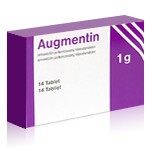
Augmentin is the original brand-name formulation of Amoxicillin + Clavulanate combination antibiotic — one of the most globally recognised and widely-prescribed broad-spectrum antibiotics in modern medicine. Developed by Beecham (later GlaxoSmithKline) and FDA-approved in 1984, Augmentin combines the well-established aminopenicillin Amoxicillin with the β-lactamase inhibitor Clavulanate, dramatically extending the spectrum of bacterial coverage.
The combination works through complementary mechanisms. Amoxicillin remains the active antibiotic component, inhibiting bacterial cell wall synthesis. Clavulanate (potassium clavulanate) serves as a "suicide inhibitor" of β-lactamase enzymes that many bacteria produce to inactivate β-lactam antibiotics. By neutralising these resistance enzymes, Clavulanate protects Amoxicillin from degradation — extending the spectrum to include β-lactamase producing organisms including resistant Haemophilus influenzae, Moraxella catarrhalis, methicillin-sensitive Staphylococcus aureus, and many anaerobes.
Augmentin is FDA-approved for treatment of acute bacterial otitis media, acute bacterial sinusitis, lower respiratory tract infections, urinary tract infections, skin and soft tissue infections, and selected dental infections. It is particularly valuable for infections caused by β-lactamase producing organisms, recurrent or treatment-resistant cases, bite wounds requiring anaerobic coverage, and aspiration pneumonia where mouth flora are involved.
The medication is available in multiple formulations: Augmentin immediate-release tablets (250/125 mg, 500/125 mg, 875/125 mg), Augmentin XR extended-release (1000/62.5 mg), Augmentin ES extra-strength pediatric suspension (600/42.9 mg per 5 mL), and standard pediatric suspensions. Twice-daily dosing with the 875/125 mg formulation supports excellent adherence.
Common side effects include diarrhea (more frequent than with plain Amoxicillin due to Clavulanate), rash, nausea, and yeast infections. Taking Augmentin with food substantially reduces gastrointestinal effects. Generic Amoxicillin/Clavulanate is widely available as an affordable alternative. The combination is included on the WHO Model List of Essential Medicines.
Free prescription
Discrete packaging
Have questions?
Quality Assurance


- Treatment Failure Otitis: For acute otitis media with treatment failure on plain Amoxicillin within 48-72 hours;
- Maxillary Sinusitis: For acute bacterial maxillary sinusitis with risk factors for β-lactamase producing organisms;
- Frontal Sinusitis: For acute frontal sinusitis where broader spectrum is needed for serious anatomical involvement;
- Recurrent Tonsillitis: For recurrent bacterial tonsillitis where β-lactamase producing organisms are suspected;
- Strep Carrier Eradication: For Group A Streptococcus carriage eradication where Amoxicillin alone has been insufficient;
- Acute Bronchitis: For acute bacterial bronchitis with documented bacterial pathogens requiring broader coverage;
- Lower Respiratory Infection: For lower respiratory tract infections including pneumonia with β-lactamase resistance concerns;
- Severe Pneumonia: For more severe community-acquired pneumonia where broader spectrum than Amoxicillin is needed;
- Bite Wound Care: First-line oral antibiotic for animal and human bite wounds requiring anaerobic coverage;
- Dog Bite Antibiotic: For dog bite wounds covering Pasteurella, Staphylococcus, and anaerobic mouth flora;
- Cat Bite Antibiotic: For cat bites with high risk of Pasteurella multocida infection — cornerstone therapy;
- Aspiration Pneumonia: For aspiration pneumonia where anaerobic mouth flora are major pathogens;
- Mild Diabetic Foot Infection: For mild-to-moderate diabetic foot infections per IDSA outpatient guidelines;
- Perianal Abscess: For perianal abscess and other infections with mixed aerobic-anaerobic flora;
- Wound Care Antibiotic: For contaminated wounds and surgical site infections requiring broader coverage;
- UTI In Pregnancy: For urinary tract infections during pregnancy — pregnancy-safe broad-spectrum option;
- Pediatric Brand Antibiotic: Brand-name option for pediatric patients where parents prefer familiar branded medication;
- Specialist Prescribed Antibiotic: Frequently prescribed by ENT, dental, and infectious disease specialists for resistant cases;
- Hospital Discharge Antibiotic: Common oral step-down therapy following IV antibiotic treatment in hospital;
- Empirical Step Down Therapy: For oral step-down following IV β-lactam therapy when broader coverage is needed.
- Less Pain: Reduction in pain associated with infections requiring expanded antibiotic spectrum;
- Better Wound Healing: Bite wounds and contaminated wounds heal as both aerobic and anaerobic bacteria clear;
- Less Cough: Resolution of productive cough in lower respiratory infections;
- Better Breathing: Improvement in respiratory symptoms as resistant respiratory infections resolve;
- Less Sinus Pain: Reduction in facial pressure and pain of resistant sinusitis;
- Less Ear Pain: Relief from persistent or treatment-failure otitis media pain;
- Better Sleep: Resolution of nighttime ear pain in children — transformative for parents and child;
- Better Energy: Recovery from fatigue as resistant bacterial infection clears;
- Faster Recovery: Resolution of resistant infections that failed plain Amoxicillin therapy;
- Less Wound Discharge: Resolution of purulent drainage from infected bite wounds and abscesses;
- Better Daily Function: Return to work, school, and normal activities;
- Less Treatment Repeats: Broader spectrum reduces need for second or third antibiotic course;
- Brand Augmentin: Original GlaxoSmithKline brand of Amoxicillin/Clavulanate with established global clinical reputation since 1984;
- GSK Heritage: Developed by GlaxoSmithKline pharmaceutical research with decades of formulation refinement;
- Globally Recognized Antibiotic: Most internationally recognised broad-spectrum antibiotic brand — familiar to clinicians worldwide;
- Generic Amoxicillin Clavulanate: Affordable generic versions of Augmentin available for cost-sensitive patients;
- Augmentin XR: Extended-release formulation for sustained drug levels supporting twice-daily dosing in lower respiratory infections;
- Augmentin ES: Extra-strength pediatric suspension delivering high-dose Amoxicillin with proportional Clavulanate for resistant pediatric otitis media;
- Beta Lactamase Inhibitor Combo: Clavulanate neutralises β-lactamase resistance enzymes — extends Amoxicillin spectrum dramatically;
- Extended Antibiotic Spectrum: Covers β-lactamase producing organisms that plain Amoxicillin cannot treat;
- Anaerobic Coverage Antibiotic: Adds anaerobic activity particularly against Bacteroides — essential for bite wounds and aspiration;
- MSSA Coverage: Active against methicillin-sensitive Staphylococcus aureus through Clavulanate protection;
- Bite Wound Antibiotic: First-line oral antibiotic for animal and human bite wounds per international guidelines;
- Pediatrician Recommended Brand: Most-recommended brand-name antibiotic in pediatric ENT and primary care;
- Specialist Trusted Antibiotic: Widely prescribed by ENT, dental, and infectious disease specialists for resistant cases;
- Treatment Failure Rescue: Effective when plain Amoxicillin has failed due to β-lactamase resistance;
- Cosmetically Acceptable Brand: Pediatric formulations engineered for taste and acceptability in young children;
- Patient Brand Familiarity: Recognised brand encourages treatment completion and improves perceived efficacy;
- Twice Daily Brand Dosing: 875/125 mg twice-daily regimen supports excellent real-world adherence;
- WHO Essential Medicine: Listed on the WHO Model List of Essential Medicines for broad-spectrum antibiotic therapy;
- 40 Plus Year History: Extensive real-world safety and efficacy data since 1984 across billions of patient courses;
- Take With Food: Food substantially reduces gastrointestinal side effects from the Clavulanate component;
- Multiple Strengths: Available in tablet, suspension, and XR formulations — flexibility for different patient needs;
- Stable Storage: Tablets stable at room temperature, oral suspension requires refrigeration after reconstitution;
- Globally Available: Widely supplied in international markets in branded and generic forms.
Generic Augmentin (Amoxicillin and Clavulanate 375 mg) Medication guide:
📖 What is Augmentin - amoxicillin plus clavulanate
Augmentin is the fixed-dose combination of two distinct molecules: amoxicillin, the aminopenicillin antibiotic, and potassium clavulanate, a beta-lactamase inhibitor. The combination, originally developed by Beecham Research Laboratories and approved by the FDA in 1984, was the first widely successful beta-lactamase inhibitor combination antibiotic and remains one of the most prescribed extended-spectrum oral antibiotics worldwide. In the United Kingdom and several other markets, the same combination is dispensed under the generic name co-amoxiclav rather than the Augmentin brand.
The clinical importance of Augmentin derives from the spectrum extension that clavulanate provides over amoxicillin alone. Clavulanic acid has minimal antibacterial activity by itself but binds and irreversibly inactivates a wide range of bacterial beta-lactamases — the enzymes that bacteria use to destroy beta-lactam antibiotics before they can reach their PBP target. By protecting amoxicillin from beta-lactamase destruction, clavulanate extends the spectrum to include methicillin-sensitive Staphylococcus aureus, beta-lactamase-producing Haemophilus influenzae, most Moraxella catarrhalis, many anaerobes including Bacteroides fragilis, and some Enterobacteriaceae that ampicillin or amoxicillin alone cannot reach.
- Drug class
- Aminopenicillin (amoxicillin) plus beta-lactamase inhibitor (clavulanic acid as potassium clavulanate); extended-spectrum oral antibiotic combination
- Original manufacturer
- Beecham Research Laboratories (United Kingdom); subsequently SmithKline Beecham and GlaxoSmithKline; generic amoxicillin-clavulanate now widely available from many manufacturers globally
- International brand names
- Augmentin (US, EU, much of the world); Co-amoxiclav (UK BNF generic designation); Clavulin (Canada); various local brand names
- FDA approval
- Original Augmentin tablets: NDA 050575 (1984); subsequent NDAs for chewables, suspensions, and Augmentin XR; multiple generic approvals since the 1990s
- UK launch
- 1981, ahead of the US approval; the UK clinical experience with co-amoxiclav predates US Augmentin use by several years
- Half-life
- Amoxicillin component: approximately 1 to 1.3 hours; clavulanate component: approximately 1 hour; the paired pharmacokinetics align well for dosing
- Standard strengths
- 500 mg/125 mg and 875 mg/125 mg tablets (immediate-release); 1000 mg/62.5 mg extended-release (XR); pediatric suspensions in 200/28.5 mg/5 mL, 400/57 mg/5 mL, 600/42.9 mg/5 mL (ES-600), and other strengths
The therapeutic positioning of Augmentin is as a first-line oral antibiotic for several indications where amoxicillin alone is inadequate because of beta-lactamase-producing pathogens. These include acute bacterial sinusitis with risk factors, treatment failure of amoxicillin in acute otitis media, animal and human bite wound infections, mild-to-moderate diabetic foot infections, mild community-acquired intra-abdominal infections, and selected respiratory tract infections. The breadth of these indications combined with the established safety record and oral administration makes Augmentin one of the most clinically useful antibiotic combinations ever developed.
The antimicrobial stewardship consideration is that Augmentin should be reserved for scenarios where the extended spectrum is genuinely needed, rather than being used reflexively when amoxicillin alone would suffice. The clavulanate component carries real adverse effect cost (substantially more diarrhoea than amoxicillin alone, occasional hepatotoxicity) and contributes to resistance pressure on the clavulanate-susceptible beta-lactamases. Section 24 of this guide details the decision between Augmentin and amoxicillin alone in clinical practice.
🕰️ Clavulanate discovery - the 1976 Beecham breakthrough
The discovery of clavulanic acid is one of the most consequential events in antimicrobial drug development since the discovery of penicillin itself. The compound was identified at Beecham Research Laboratories in the early 1970s through a targeted search for naturally occurring beta-lactamase inhibitors. The need was clear: by the 1960s, bacterial resistance to penicillin via beta-lactamase production was undermining the clinical utility of the natural penicillins and aminopenicillins. The Beecham team sought a compound that could be paired with existing penicillins to restore activity against beta-lactamase-producing organisms.
The breakthrough came when the team identified beta-lactamase-inhibiting activity in fermentation broths of Streptomyces clavuligerus, a soil-dwelling actinomycete. Purification and characterisation produced clavulanic acid, a compound with a beta-lactam structure but with structural differences from penicillins that conferred remarkable specificity: clavulanate bound and inactivated class A beta-lactamases without significant antibacterial activity in its own right. The compound was a near-perfect beta-lactamase inhibitor partner for existing penicillins.
Key milestones in clavulanate and Augmentin development
| Year | Milestone |
|---|---|
| 1959 | 6-aminopenicillanic acid (6-APA) isolated at Beecham, enabling the semi-synthetic penicillin programme that produced ampicillin and amoxicillin |
| 1961 | Ampicillin launched by Beecham, the first aminopenicillin |
| 1972 | Amoxicillin launched by Beecham, the orally-optimised aminopenicillin |
| 1972-1975 | Beecham team initiates targeted search for naturally occurring beta-lactamase inhibitors; screening of Streptomyces fermentation broths |
| 1976 | Brown AG, Butterworth D, Cole M, Hanscomb G, Hood JD, Reading C, Rolinson GN publish "Naturally-occurring beta-lactamase inhibitors with antibacterial activity" in the Journal of Antibiotics 29:668-669 — the landmark introductory paper for clavulanic acid from Streptomyces clavuligerus |
| 1977 | Reading C and Cole M publish "Clavulanic acid: a beta-lactamase-inhibiting beta-lactam from Streptomyces clavuligerus" in Antimicrobial Agents and Chemotherapy 11:852-857 — the companion pharmacology paper documenting the suicide inhibitor mechanism |
| 1981 | Augmentin launched in the United Kingdom by Beecham — the first commercially available beta-lactamase inhibitor combination antibiotic |
| 1984 | FDA approval of Augmentin tablets as NDA 050575 for the US market |
| 1986 | Unasyn (ampicillin-sulbactam) launched, the parenteral counterpart with a different beta-lactamase inhibitor |
| 1993 | Zosyn (piperacillin-tazobactam) launched, expanding the beta-lactamase inhibitor combination class |
| 2002 | Augmentin XR (extended-release, 1000/62.5 mg) approved by the FDA for adult sinusitis and CAP — addresses penicillin-non-susceptible pneumococcus |
| 1990s-2000s | Generic amoxicillin-clavulanate becomes widely available globally; the combination becomes one of the most prescribed extended-spectrum oral antibiotics |
| 2010 | Bush K, Jacoby GA publish the updated functional classification of beta-lactamases (AAC 54:969-976) — the contemporary framework for understanding which enzymes clavulanate inhibits |
The commercial heritage of Augmentin traces from Beecham Research Laboratories through SmithKline Beecham (1989 merger) to GlaxoSmithKline (2000 merger), with the brand persisting through multiple corporate restructurings. The original Augmentin branding remains in many markets as a heritage product, while generic amoxicillin-clavulanate now dominates dispensing globally. Patients receiving Augmentin in 2026 are using a combination whose chemistry was established in the same UK laboratories that produced ampicillin, amoxicillin, and the entire aminopenicillin family.
The historical significance of clavulanate extends beyond Augmentin itself. The discovery established the principle of beta-lactamase inhibitor combinations as a viable strategy for extending the useful life of beta-lactam antibiotics in the face of growing resistance. Subsequent inhibitors — sulbactam (Unasyn), tazobactam (Zosyn, Tazocin), avibactam (Avycaz), vaborbactam (Vabomere), relebactam (Recarbrio), and others — all follow the framework that clavulanate established. The Beecham discovery of 1976 launched a continuing line of antibiotic combinations that remains central to contemporary infectious diseases practice.
🧬 How clavulanate works - suicide inhibition of beta-lactamases
Augmentin works through a two-component mechanism. The amoxicillin component provides the antibacterial activity by inhibiting bacterial penicillin-binding proteins (PBPs) and blocking cell wall synthesis — the same mechanism described in detail in section 3 of the amoxicillin guide. The clavulanate component contributes no significant direct antibacterial activity but instead protects the amoxicillin from enzymatic destruction by bacterial beta-lactamases. The combined result is restoration of amoxicillin activity against organisms whose only resistance mechanism is beta-lactamase production.
The molecular details of clavulanate as a suicide inhibitor are elegant. Clavulanate itself has a beta-lactam ring (the same chemical feature it targets in the beta-lactamase enzymes), but its overall structure differs from penicillins enough that it has very limited affinity for PBPs and consequently minimal antibacterial activity. The beta-lactamase enzymes recognise clavulanate as a substrate and bind it like any other beta-lactam — but the reaction that ensues does not simply hydrolyse the clavulanate. Instead, clavulanate forms an irreversible covalent bond with the active site serine of the enzyme, permanently inactivating it. The enzyme is destroyed in the process of attempting to destroy the inhibitor, hence the term "suicide inhibitor".
The two-component mechanism of Augmentin in parallel
| Step | Amoxicillin action | Clavulanate action |
|---|---|---|
| 1. Drug delivery to bacterial cell | Reaches the periplasm (gram-negative) or cell wall (gram-positive) | Reaches same compartments alongside amoxicillin |
| 2. Encounter with beta-lactamase | Would normally be hydrolysed and destroyed by the enzyme | Binds the beta-lactamase active site preferentially |
| 3. Clavulanate reaction | Amoxicillin remains intact, free to reach target | Forms irreversible covalent bond with enzyme; enzyme is permanently inactivated |
| 4. Amoxicillin reaches PBP target | Binds penicillin-binding proteins; blocks cell wall synthesis | Has no significant PBP affinity |
| 5. Bactericidal effect | Cell wall fails; bacterial lysis | No direct antibacterial contribution |
The spectrum of beta-lactamases that clavulanate inhibits follows the Bush-Jacoby classification framework (discussed in section 5 of this guide). Clavulanate is principally active against class A beta-lactamases including the TEM, SHV, and CTX-M families. It has variable activity against class C (AmpC) beta-lactamases and is generally not active against class B (metallo-beta-lactamases) or against most ESBLs (extended-spectrum beta-lactamases) at clinically achievable concentrations.
The pharmacokinetic alignment between amoxicillin and clavulanate is favourable. Both components have similar half-lives (approximately 1 hour), similar oral absorption, similar distribution, and similar renal clearance. This alignment means that the two components reach the site of infection together at proportional concentrations and decline in parallel after each dose. The clavulanate component remains present at adequate concentrations to protect amoxicillin throughout the dosing interval.
The limitations of the clavulanate mechanism are clinically important:
- Altered PBP resistance is not addressed — for organisms whose resistance mechanism is altered penicillin-binding proteins (MRSA via PBP2a, penicillin-non-susceptible S. pneumoniae), clavulanate does not help. The amoxicillin still cannot bind effectively to the altered target
- Some beta-lactamases escape clavulanate — many AmpC beta-lactamases (class C), metallo-beta-lactamases (class B), and most ESBL variants are not effectively inhibited by clavulanate at therapeutic concentrations
- Reduced permeability and efflux — gram-negative resistance through outer membrane porin changes or active efflux pumps is not addressed by clavulanate, which targets only the enzyme component
- Clavulanate concentration matters — the inhibition is partial when clavulanate concentrations fall below the enzyme inhibition threshold; consistent dosing maintains protection
The practical clinical implication of these mechanism details is that Augmentin works well against organisms whose resistance is purely beta-lactamase-mediated (MSSA, beta-lactamase-producing H. influenzae, M. catarrhalis, many Bacteroides) but does not solve all amoxicillin resistance scenarios. For altered PBP organisms (MRSA, highly resistant pneumococcus), for ESBL producers, and for intrinsically resistant gram-negatives (Pseudomonas, Klebsiella, Enterobacter), alternative agents are needed.
🌈 The combined spectrum extension over amoxicillin alone
The spectrum extension that clavulanate provides over amoxicillin alone is the central clinical rationale for using Augmentin. The extension covers a specific set of bacterial pathogens whose resistance mechanism is clavulanate-susceptible beta-lactamase production. Understanding which organisms gain coverage and which do not is essential for appropriate Augmentin selection.
Augmentin spectrum extension over amoxicillin alone
| Organism category | Amoxicillin alone | Augmentin | Clinical relevance |
|---|---|---|---|
| Methicillin-sensitive S. aureus (MSSA) | Resistant (over 90% produce beta-lactamase) | Covered | Important for SSTI, animal bites, mild osteomyelitis |
| Beta-lactamase-producing H. influenzae | Resistant (30-40% of clinical isolates) | Covered | Important for sinusitis, otitis media, respiratory infections |
| Moraxella catarrhalis | Mostly resistant (over 90% beta-lactamase producers) | Covered | Important for sinusitis, AECB |
| Beta-lactamase-producing E. coli (some) | Variable; commonly resistant | Variable; many susceptible | Some clinical scenarios; not first-line for empirical UTI |
| Klebsiella pneumoniae (non-ESBL) | Intrinsically resistant | Many susceptible | Some intra-abdominal infections |
| Bacteroides fragilis group | Resistant (beta-lactamase producers) | Covered (most strains) | Important for intra-abdominal, bite wounds, aspiration pneumonia |
| Other anaerobes (Peptostreptococcus, Fusobacterium, Prevotella) | Mostly susceptible to amoxicillin alone | Covered (plus expanded for beta-lactamase producers) | Polymicrobial mixed flora coverage |
| Pasteurella multocida | Susceptible | Covered | Animal bite wound coverage; amoxicillin alone also adequate |
| Eikenella corrodens | Susceptible | Covered | Human bite wound coverage |
| Capnocytophaga canimorsus | Variable | Covered | Dog bite wound coverage in immunocompromised |
| MRSA | Resistant | Resistant (different mechanism) | Not appropriate for MRSA; alternative agents needed |
| ESBL-producing E. coli or Klebsiella | Resistant | Resistant (clavulanate does not inhibit ESBLs) | Not appropriate for confirmed ESBL infections |
| Pseudomonas aeruginosa | Resistant | Resistant | Antipseudomonal agents required |
| Enterobacter, Serratia, Citrobacter | Resistant or variable | Variable; commonly resistant | Susceptibility-guided therapy |
| Atypical bacteria (Mycoplasma, Chlamydia, Legionella) | Resistant (no cell wall target) | Resistant (clavulanate does not change target) | Macrolide or doxycycline or fluoroquinolone needed |
The most clinically important spectrum extensions for routine Augmentin practice:
- MSSA coverage — the extension to most methicillin-sensitive S. aureus through beta-lactamase blockade is essential for animal/human bite wounds, mild SSTI, and mild osteomyelitis indications
- Beta-lactamase-producing H. influenzae coverage — central to the use of Augmentin in adult sinusitis with risk factors and pediatric AOM treatment failure
- Moraxella catarrhalis coverage — relevant for sinusitis and acute exacerbations of chronic bronchitis
- Bacteroides fragilis coverage — central to the use of Augmentin in intra-abdominal infections and bite wound infections with mixed aerobic-anaerobic flora
- Pasteurella and oral anaerobe coverage — the polymicrobial flora of bite wounds is comprehensively covered by Augmentin
The spectrum NOT extended includes important pathogens that clavulanate cannot address. The most clinically relevant are:
- MRSA — resistance via altered PBP2a; clavulanate does not help
- ESBL-producing E. coli and Klebsiella — rising prevalence in community urinary isolates and healthcare-associated infections; not addressed by clavulanate
- Pseudomonas aeruginosa — intrinsic multi-mechanism resistance
- Atypical pneumonia pathogens — no cell wall target
- Penicillin-non-susceptible S. pneumoniae — resistance via altered PBPs; high-dose amoxicillin component overcomes most strains but Augmentin standard dose may be inadequate for highly resistant pneumococcus
The clinical decision-making about when Augmentin is appropriate flows from this spectrum analysis. If the suspected pathogen is within the amoxicillin spectrum alone, Augmentin adds nothing and represents unnecessary broadening. If the suspected pathogen is outside both the amoxicillin and Augmentin spectrum (MRSA, ESBL, Pseudomonas, atypicals), alternative agents are needed. Augmentin is uniquely appropriate when the pathogen mix specifically includes the beta-lactamase-producing organisms that the clavulanate addition addresses.
📜 Bush-Jacoby beta-lactamase classification context
The contemporary framework for understanding which bacterial beta-lactamases clavulanate can and cannot inhibit comes from the Bush-Jacoby functional classification of beta-lactamases, developed by Karen Bush and George Jacoby and published in its current form in Antimicrobial Agents and Chemotherapy in 2010 (volume 54, pages 969-976). This classification organises the more than 1,300 known beta-lactamase variants into functional groups based on substrate preferences, susceptibility to inhibitors, and Ambler structural class. Understanding the classification clarifies why Augmentin works against some resistant organisms and not others.
The Ambler structural classification (predating Bush-Jacoby) groups beta-lactamases into four classes based on amino acid sequence: class A, B, C, and D. The Bush-Jacoby framework refines this by adding functional groupings within each class. Clavulanate principally inhibits class A enzymes, with limited activity against class C and very limited activity against classes B and D.
Beta-lactamase classes and clavulanate inhibition
| Ambler class | Active site | Common enzyme examples | Clavulanate inhibition |
|---|---|---|---|
| Class A | Serine | TEM, SHV, CTX-M, KPC, PER, GES, VEB | Excellent (TEM, SHV, CTX-M); poor or variable (KPC, some ESBLs) |
| Class B (metallo) | Zinc dependent | NDM, VIM, IMP, SPM, GIM | Poor (clavulanate is a serine enzyme inhibitor) |
| Class C | Serine | AmpC (chromosomal and plasmid), CMY, DHA, ACT, FOX | Variable, generally limited |
| Class D | Serine | OXA family | Variable, generally limited |
The class A beta-lactamases are the most important target for clavulanate. These include:
- TEM-1 — the original plasmid-mediated beta-lactamase, first described in the 1960s; widely prevalent in Enterobacteriaceae and confers resistance to amoxicillin and ampicillin; effectively inhibited by clavulanate
- SHV-1 — chromosomal beta-lactamase of Klebsiella pneumoniae; similar properties to TEM-1; effectively inhibited by clavulanate
- Staphylococcal beta-lactamase — produced by most MSSA strains; effectively inhibited by clavulanate; restores MSSA coverage with Augmentin
- Haemophilus influenzae beta-lactamase — predominantly TEM-1 type; effectively inhibited; restores H. influenzae coverage
- Moraxella catarrhalis BRO-1 and BRO-2 — produced by most clinical isolates; effectively inhibited; restores M. catarrhalis coverage
- Bacteroides fragilis CepA — class A cephalosporinase; effectively inhibited; supports Augmentin activity against most B. fragilis strains
- Extended-spectrum beta-lactamases (ESBLs)
- A subset of class A beta-lactamases that have evolved to hydrolyse not only amoxicillin and ampicillin but also the third-generation cephalosporins (ceftriaxone, ceftazidime). Common ESBL families: TEM-extended (TEM-3 onward), SHV-extended (SHV-2 onward), CTX-M (CTX-M-15 the predominant variant globally). Clavulanate has variable activity against ESBLs — some ESBL variants are inhibited at clinically achievable concentrations, but in practice ESBL-producing E. coli and Klebsiella infections should NOT be treated with amoxicillin-clavulanate. Carbapenems are the preferred therapy.
- AmpC beta-lactamases (class C)
- Chromosomal AmpC enzymes are produced by Enterobacter, Citrobacter, Serratia, Morganella, Providencia, and indole-positive Proteus. Plasmid-mediated AmpC enzymes (CMY, DHA, ACT) have spread to E. coli, Klebsiella, and Salmonella. Clavulanate is generally not effective against AmpC enzymes, and Augmentin is not appropriate for confirmed AmpC-producer infections.
- Carbapenemases (KPC, NDM, OXA-48 family)
- Beta-lactamases that hydrolyse carbapenems in addition to other beta-lactams. KPC is class A and theoretically clavulanate-susceptible but in practice the resistance level is too high for clinical utility. NDM and VIM are class B metallo enzymes that clavulanate cannot inhibit. OXA-48 family is class D with limited clavulanate response. Carbapenemase-producing organisms require alternative agents (ceftazidime-avibactam, meropenem-vaborbactam, imipenem-relebactam, cefiderocol, polymyxins).
- Metallo-beta-lactamases (class B)
- Zinc-dependent enzymes that hydrolyse essentially all beta-lactams including carbapenems. NDM-1 emerged from the Indian subcontinent and has spread globally. VIM and IMP are predominantly Pseudomonas-associated. Clavulanate is mechanistically incapable of inhibiting these enzymes (different active site chemistry). Treatment requires newer agents or polymyxin-based combinations.
The practical implication of the beta-lactamase classification for clinical Augmentin use is that susceptibility testing matters. The microbiology laboratory uses the EUCAST framework (under Gunnar Kahlmeter leadership) or CLSI framework to report whether a given organism is susceptible to amoxicillin-clavulanate. The susceptibility prediction is essentially: clavulanate-inhibitable beta-lactamase organisms are susceptible; ESBL, AmpC, MBL, and carbapenemase producers are resistant. The reported susceptibility result captures this without the clinician needing to know the specific enzyme.
The research framework developed by Karen Bush, Patricia Bradford, and their collaborators continues to evolve as new beta-lactamase variants emerge. The Bush 2018 review in AAC provides the current overview of the resistance landscape and the inhibitor combinations being developed to address gaps in coverage. Clavulanate remains the foundational beta-lactamase inhibitor against which all newer agents are compared.
🎯 FDA-approved indications
The FDA-approved indications for Augmentin span a range of bacterial infections where the extended spectrum over amoxicillin alone is genuinely needed. The current labelling reflects more than four decades of accumulated evidence and contemporary stewardship principles that have refined when amoxicillin-clavulanate is preferred over narrower alternatives.
Respiratory tract infections
- Acute bacterial sinusitis — first-line per IDSA Chow 2012 guidelines for adult bacterial sinusitis in many scenarios
- Acute exacerbations of chronic bronchitis (AECB) — in patients with risk factors for beta-lactamase-producing H. influenzae or M. catarrhalis
- Community-acquired pneumonia — in adults with comorbidities (IDSA/ATS 2019); not first-line for healthy adults where amoxicillin alone is preferred
- Acute otitis media in children — for amoxicillin treatment failure or specific risk factors per AAP Lieberthal 2013 guidelines
Skin, soft tissue, and bone infections
- Animal bite wound infections — first-line per IDSA guidelines for dog, cat, and human bite wounds; covers Pasteurella, MSSA, oral anaerobes, Capnocytophaga, Eikenella
- Mild-to-moderate diabetic foot infections — per IDSA Lipsky guidelines; covers MSSA plus mild gram-negative components
- Selected cellulitis and skin infections — particularly polymicrobial or post-trauma infections
- Erysipelas and complicated SSTI in selected scenarios
Intra-abdominal infections
- Mild-to-moderate community-acquired complicated intra-abdominal infections — per IDSA/SIS Solomkin 2010 guidelines as an outpatient or oral step-down option
- Selected acute uncomplicated diverticulitis — when antibiotic therapy is indicated and outpatient management is appropriate
- Mild biliary tract infections — cholangitis or cholecystitis in selected mild outpatient cases
Genitourinary tract infections
- Asymptomatic bacteriuria in pregnancy — when isolate is susceptible (covers beta-lactamase E. coli that amoxicillin alone misses)
- Complicated UTI in selected scenarios when susceptibility is confirmed and oral therapy is appropriate
- Pyelonephritis step-down after parenteral initial therapy when susceptibility allows
The indications NOT appropriate for Augmentin in contemporary practice:
- Uncomplicated bacterial infections where amoxicillin alone would suffice — streptococcal pharyngitis, AOM in young children without risk factors, healthy adult outpatient CAP without comorbidities; the broader spectrum adds adverse effect burden without benefit
- Viral upper respiratory tract infections — common cold, viral pharyngitis, viral bronchitis; antibiotics are inappropriate
- Methicillin-resistant Staphylococcus aureus (MRSA) infections — clavulanate does not address altered PBP resistance
- Atypical pneumonia — Mycoplasma, Chlamydia, Legionella have no cell wall target
- Pseudomonas, ESBL Enterobacteriaceae, AmpC organisms — alternative agents needed
- Most uncomplicated UTI in non-pregnant women — nitrofurantoin, TMP-SMX, fosfomycin preferred; Augmentin only when these alternatives are inappropriate or susceptibility is confirmed
- Streptococcal pharyngitis — amoxicillin or penicillin V is appropriate; the broader Augmentin spectrum adds nothing
The principle of appropriate antibiotic selection requires matching the agent spectrum to the suspected pathogens. Augmentin is the right choice when the suspected pathogen mix specifically includes beta-lactamase-producing organisms (MSSA, beta-lactamase H. influenzae or M. catarrhalis, Bacteroides, mixed flora bite wounds). For narrower-spectrum scenarios, amoxicillin alone is preferred; for broader-spectrum scenarios involving organisms outside Augmentin spectrum, alternative agents are needed.
The antimicrobial stewardship principle applied to Augmentin is to use it for the specific indications where the clavulanate spectrum extension is genuinely needed. The combination has real adverse effect cost (substantially more diarrhoea than amoxicillin alone) and contributes to clavulanate-susceptible beta-lactamase resistance pressure. Reserving Augmentin for the indications where it provides unique value preserves both clinical effectiveness and antimicrobial sustainability.
💊 Standard adult dosing
Standard adult dosing of Augmentin varies by indication and by tablet strength. The two principal immediate-release adult formulations are 500/125 mg (500 mg amoxicillin plus 125 mg clavulanate) and 875/125 mg (875 mg amoxicillin plus 125 mg clavulanate). The Augmentin XR formulation (1000/62.5 mg extended-release) is a separate option specifically positioned for adult sinusitis and CAP in penicillin-non-susceptible pneumococcus scenarios.
Standard adult Augmentin dosing by indication
| Indication | Adult dose | Frequency | Duration |
|---|---|---|---|
| Acute bacterial sinusitis (uncomplicated) | Augmentin 500/125 mg or 875/125 mg | 875/125 BID or 500/125 TID | 5 to 7 days |
| Acute bacterial sinusitis (severe, risk factors) | Augmentin XR 2000/125 mg (two 1000/62.5 mg tablets BID) | BID | 5 to 7 days |
| Community-acquired pneumonia (with comorbidities) | Augmentin 875/125 mg or Augmentin XR | BID | 5 to 7 days (plus macrolide or doxycycline for atypicals) |
| Acute exacerbation chronic bronchitis | Augmentin 875/125 mg | BID | 5 to 7 days |
| Animal or human bite wound infection | Augmentin 875/125 mg | BID | 5 to 14 days depending on severity |
| Mild-moderate diabetic foot infection | Augmentin 875/125 mg | BID | 1 to 2 weeks per Lipsky guidelines |
| Mild community-acquired intra-abdominal infection | Augmentin 875/125 mg | BID | 4 to 7 days post source control per IDSA/SIS |
| Complicated UTI / step-down pyelonephritis (susceptible) | Augmentin 875/125 mg | BID | 7 to 14 days |
| Asymptomatic bacteriuria in pregnancy | Augmentin 500/125 mg or 875/125 mg | BID or TID | 3 to 7 days |
The 500/125 mg three-times-daily versus 875/125 mg twice-daily choice is one of the practical decisions in Augmentin prescribing. The two regimens deliver similar total daily amoxicillin and similar total daily clavulanate, but the dosing intervals and convenience differ.
- 500/125 mg three times daily
- Total daily: 1500 mg amoxicillin plus 375 mg clavulanate. Dosing every 8 hours. Pharmacodynamic profile maintains amoxicillin time above MIC well. Convenient meal-time anchoring (with breakfast, lunch, dinner). Modestly higher total daily clavulanate exposure may produce more diarrhoea.
- 875/125 mg twice daily
- Total daily: 1750 mg amoxicillin plus 250 mg clavulanate. Dosing every 12 hours. Higher peak amoxicillin per dose; longer trough between doses. Better adherence with twice-daily regimen. Lower total daily clavulanate may produce less diarrhoea.
- Augmentin XR 2000/125 mg twice daily
- Total daily: 4000 mg amoxicillin plus 250 mg clavulanate. Dosing every 12 hours. Substantially higher amoxicillin exposure for penicillin-non-susceptible pneumococcus. Specifically positioned for adult sinusitis and CAP where high-dose amoxicillin is needed.
The antimicrobial stewardship perspective on adult Augmentin dose selection: 875/125 mg BID is generally preferred for outpatient adult therapy because of better adherence at modestly lower clavulanate exposure. 500/125 mg TID remains appropriate when patients prefer three-times-daily dosing or when the smaller individual amoxicillin dose is desired. Augmentin XR is reserved for the specific indications (sinusitis, CAP) where the high-dose amoxicillin is needed for resistant pneumococcus.
The renal dose adjustment for Augmentin focuses on the amoxicillin component since clavulanate has minimal renal accumulation concerns. The standard adjustments parallel those for amoxicillin alone:
| eCrCl (mL/min) | Augmentin dose adjustment |
|---|---|
| Over 30 | No adjustment needed |
| 10-30 | 500/125 mg every 12 hours; avoid 875/125 mg tablets (excess amoxicillin) |
| Under 10 | 500/125 mg every 24 hours; consider alternative if longer course |
| Augmentin XR | Not recommended in eCrCl under 30 |
| Haemodialysis | 500/125 mg every 24 hours; supplemental dose after dialysis |
Section 21 discusses renal dose adjustment in more detail. The XR formulation specifically warrants attention because the high amoxicillin content (1000 mg per tablet, 2000 mg twice daily) accumulates substantially in renal impairment.
Augmentin can be taken with or without food, though many patients find that taking with the start of a meal reduces gastrointestinal upset (particularly the clavulanate-associated diarrhoea). The 875/125 mg and XR tablets are larger than typical antibiotic tablets and may be difficult for some patients to swallow; the suspensions provide an alternative when swallowing is an issue.
👶 Pediatric dosing and weight-based calculations
Pediatric Augmentin dosing is one of the more nuanced antibiotic prescribing decisions in primary care and pediatrics because of the multiple available suspension strengths with different amoxicillin-to-clavulanate ratios. The contemporary recommendations from the AAP Red Book Committee on Infectious Diseases and condition-specific guidelines (Lieberthal 2013 AOM, AAP sinusitis guidance) provide the framework. The dosing is weight-based and calibrated to deliver the high-dose amoxicillin needed for penicillin-non-susceptible pneumococcus while keeping the clavulanate dose at a level that minimises diarrhoea.
Pediatric Augmentin formulations
| Suspension strength | Amoxicillin / clavulanate per 5 mL | Amoxicillin:clavulanate ratio | Typical use |
|---|---|---|---|
| Augmentin 200/28.5 | 200 mg / 28.5 mg | 7:1 | Older standard; lower-dose pediatric scenarios |
| Augmentin 400/57 | 400 mg / 57 mg | 7:1 | Higher-dose pediatric scenarios; preferred for AOM |
| Augmentin ES-600 | 600 mg / 42.9 mg | 14:1 | High-dose pediatric AOM and sinusitis — the contemporary preferred suspension for these high-dose indications |
| Augmentin 125/31.25 | 125 mg / 31.25 mg | 4:1 | Older formulation; less commonly used |
| Augmentin 250/62.5 | 250 mg / 62.5 mg | 4:1 | Older formulation; less commonly used |
The contemporary pediatric Augmentin dosing uses the high-dose amoxicillin strategy (90 mg/kg/day of amoxicillin) for AOM, sinusitis, and pneumonia, which requires careful suspension selection to deliver this amoxicillin dose without excessive clavulanate.
Pediatric Augmentin dosing by indication
| Indication | Amoxicillin component | Frequency | Preferred suspension |
|---|---|---|---|
| AOM treatment failure or risk factors | 90 mg/kg/day | Divided BID | Augmentin ES-600 (14:1 ratio); avoids excess clavulanate |
| Acute bacterial sinusitis (high-risk) | 80-90 mg/kg/day | Divided BID | Augmentin ES-600 (14:1 ratio) |
| Pediatric CAP with comorbidities | 80-90 mg/kg/day | Divided BID | Augmentin ES-600 (14:1 ratio) |
| Animal bite wound (children) | 45 mg/kg/day | Divided BID | 400/57 (7:1) or chewable tablets |
| Mild SSTI | 45 mg/kg/day | Divided BID | 400/57 (7:1) |
| Mild-moderate intra-abdominal infection | 45 mg/kg/day | Divided BID | 400/57 (7:1) |
Example calculation for a 20 kg child with AOM treatment failure:
- Target dose: 90 mg/kg/day amoxicillin = 1800 mg/day
- Divided BID: 900 mg amoxicillin per dose
- Using Augmentin ES-600 (600 mg amoxicillin per 5 mL): 7.5 mL twice daily
- Clavulanate dose: 7.5 mL of ES-600 contains 64 mg clavulanate per dose, 128 mg/day
- If using 400/57 instead: would need 11.25 mL twice daily delivering 128 mg clavulanate per dose (256 mg/day) — substantially more clavulanate, more diarrhoea
- The ES-600 ratio (14:1) delivers the needed amoxicillin with about half the clavulanate exposure of the 7:1 suspensions
The 14:1 ratio rationale (Augmentin ES-600) directly addresses the principal pediatric dosing challenge. The high-dose amoxicillin needed for pneumococcus is approximately 90 mg/kg/day, but this dose with the older 7:1 ratio suspensions delivers excessive clavulanate (over 6.4 mg/kg/day) that produces unacceptable diarrhoea rates. The 14:1 ratio delivers the same high-dose amoxicillin with clavulanate around 3-3.5 mg/kg/day — sufficient for beta-lactamase inhibition but with substantially better tolerability. ES-600 is specifically positioned for the high-dose pediatric indications.
The chewable tablet alternative is available for older children and offers the same advantages as for amoxicillin alone: no refrigeration requirement, no shake-before-use, easier transport. Augmentin chewable tablets are available in 200/28.5 mg and 400/57 mg strengths. For children over age 4 who can chew, this form is often more practical than suspension for school-age dosing.
The practical pediatric dosing workflow:
- Confirm appropriate indication for Augmentin (amoxicillin alone preferred for first-line scenarios; Augmentin for treatment failure or risk factors)
- Calculate target amoxicillin dose by weight (90 mg/kg/day for high-dose indications, 45 mg/kg/day for lower-dose)
- Select suspension: ES-600 (14:1) for high-dose AOM/sinusitis/pneumonia; 400/57 (7:1) for lower-dose indications
- Convert to mL per dose
- Round to convenient volume; pharmacy can dispense oral syringe with appropriate measuring
- Counsel family on suspension reconstitution, refrigeration, shake-before-use, and dose measurement
- Duration per indication-specific guideline
The tolerability of pediatric Augmentin is generally good when the appropriate suspension is selected. The 14:1 ES-600 formulation specifically addresses the clavulanate-related diarrhoea that limited use of higher doses with older 7:1 suspensions. Adherence is supported by the BID dosing, the pleasant flavours (bubble gum, fruit), and the family-friendly suspension presentation.
📋 Augmentin formulations - tablets, suspensions, XR
Augmentin is available in multiple formulations reflecting the breadth of patient populations and indications. The portfolio includes immediate-release tablets in adult strengths, extended-release tablets for high-dose adult indications, chewable tablets for school-age children, and oral suspensions in multiple strengths and ratios for pediatric use. Understanding the formulation options supports practical prescribing.
| Formulation | Amoxicillin / clavulanate | Ratio | Typical use |
|---|---|---|---|
| Augmentin 500/125 mg tablets | 500 mg / 125 mg | 4:1 | Adults requiring three-times-daily dosing or smaller individual amoxicillin dose |
| Augmentin 875/125 mg tablets | 875 mg / 125 mg | 7:1 | Standard adult twice-daily dosing for most indications |
| Augmentin XR 1000/62.5 mg tablets | 1000 mg / 62.5 mg | 16:1 | Adult sinusitis or CAP requiring high-dose amoxicillin; taken as two tablets BID for 2000 mg amoxicillin per dose |
| Augmentin chewable 200/28.5 | 200 mg / 28.5 mg | 7:1 | Children able to chew; lower-dose pediatric indications |
| Augmentin chewable 400/57 | 400 mg / 57 mg | 7:1 | Children able to chew; higher-dose pediatric indications |
| Augmentin suspension 200/28.5 per 5 mL | 200 mg / 28.5 mg per 5 mL | 7:1 | Pediatric use; lower-dose indications |
| Augmentin suspension 400/57 per 5 mL | 400 mg / 57 mg per 5 mL | 7:1 | Pediatric use; intermediate indications |
| Augmentin ES-600 suspension | 600 mg / 42.9 mg per 5 mL | 14:1 | High-dose pediatric AOM, sinusitis, pneumonia; the 14:1 ratio minimises clavulanate exposure at high amoxicillin doses |
| Augmentin 125/31.25 per 5 mL (historical) | 125 mg / 31.25 mg per 5 mL | 4:1 | Older pediatric formulation; less commonly dispensed |
| Augmentin 250/62.5 per 5 mL (historical) | 250 mg / 62.5 mg per 5 mL | 4:1 | Older pediatric formulation; largely superseded |
Formulation selection by clinical scenario
- Standard adult outpatient infections
- Augmentin 875/125 mg twice daily is the most commonly prescribed regimen. Available as generic with wide availability and modest cost.
- Adult sinusitis with risk factors
- Augmentin XR 2000/125 mg (two 1000/62.5 mg tablets twice daily) provides the high-dose amoxicillin needed for penicillin-non-susceptible pneumococcus. Specifically positioned for this scenario.
- Adult community-acquired pneumonia (with comorbidities)
- Augmentin XR per IDSA/ATS 2019 recommendation for the beta-lactam component of combination CAP therapy in patients with comorbidities. Must be combined with macrolide or doxycycline for atypical pathogen coverage.
- Pediatric AOM treatment failure or risk factors
- Augmentin ES-600 suspension (14:1 ratio) provides 90 mg/kg/day amoxicillin while keeping clavulanate dose tolerable. Specifically positioned for high-dose pediatric indications.
- Pediatric lower-dose indications
- Augmentin 400/57 suspension (7:1 ratio) or chewable tablets for the 45 mg/kg/day amoxicillin scenarios (bite wounds, mild SSTI, mild intra-abdominal infection).
- Patients with swallowing difficulties
- Suspension forms regardless of age; chewable tablets for those who can chew but not swallow whole tablets.
The tablet manipulation considerations matter for Augmentin:
- Standard tablets (500/125, 875/125): may be cut in half if needed, though the relatively large tablet size makes this clinically uncommon
- Augmentin XR tablets: must NOT be cut, crushed, or chewed — the extended-release matrix is destroyed by tablet manipulation, converting the dose to an immediate-release bolus
- Chewable tablets: designed to be chewed; swallowing whole is acceptable for older children/adults who prefer
- Suspension: shake well before each dose; refrigerate after reconstitution; measure with oral syringe (not household teaspoons)
The tablet size discussion for adult Augmentin warrants attention. The 875/125 mg tablets and especially the XR 1000/62.5 mg tablets are physically large (approximately 18-19 mm), substantially larger than typical antibiotic tablets. Some patients have difficulty swallowing them whole. The suspension or chewable forms provide alternatives when tablet size is an issue. For elderly patients or those with dysphagia, the suspension is often the better choice despite the additional preparation and storage requirements.
The generic availability across all formulations is broad. The 500/125 mg and 875/125 mg adult tablets are universally available as generic at low cost. The XR 1000/62.5 mg formulation has generic versions but at modestly higher cost than the immediate-release tablets. Pediatric suspensions in all common strengths are available generically. The brand Augmentin persists in many markets as a heritage product but generic substitution is widespread and cost-effective.
⚖️ The amoxicillin-to-clavulanate ratios - 2:1, 4:1, 7:1, 14:1
One of the distinctive features of the Augmentin product family is the variation in amoxicillin-to-clavulanate ratios across formulations: 2:1, 4:1, 7:1, and 14:1 (with the XR formulation at approximately 16:1). The ratio evolution reflects the recognition that the amoxicillin dose needs to be increased for penicillin-non-susceptible pneumococcus while keeping the clavulanate dose at a level that maintains efficacy without producing excessive diarrhoea. Understanding the ratio logic clarifies why different products exist and how to select among them.
The clavulanate dose needed for effective beta-lactamase inhibition has been studied extensively. Adult therapeutic effect appears to be achieved at clavulanate doses of approximately 250 mg per day or higher, with the lower bound around 125-250 mg per day. Below 125 mg per day, clavulanate concentrations may be inadequate to maintain enzyme inhibition throughout the dosing interval. Above 500 mg per day, the diarrhoea burden becomes substantial without proportional clinical benefit.
Augmentin ratio history and rationale
| Ratio | Formulations | Total daily clavulanate (typical adult) | Rationale and position |
|---|---|---|---|
| 2:1 | Historical original formulations | Very high relative clavulanate | Pre-1980s; replaced by lower ratios due to diarrhoea burden |
| 4:1 | 500/125 mg tablets; older pediatric suspensions | 375 mg (500/125 TID) or 250 mg (500/125 BID) | Original Augmentin standard; widely used 1984-1990s; still appropriate for many adult indications |
| 7:1 | 875/125 mg tablets; 200/28.5 and 400/57 suspensions; chewables | 250 mg (875/125 BID) | Contemporary standard for most adult indications; allows higher amoxicillin without excessive clavulanate |
| 14:1 | Augmentin ES-600 pediatric suspension | ~3.5 mg/kg/day pediatric | Specifically for high-dose pediatric AOM, sinusitis, pneumonia; minimises clavulanate at 90 mg/kg/day amoxicillin |
| 16:1 (approximate) | Augmentin XR 1000/62.5 mg | 250 mg (XR 2000/125 BID) | Adult sinusitis and CAP requiring high-dose amoxicillin; XR releases amoxicillin gradually |
The 4:1 versus 7:1 ratio choice for adult immediate-release Augmentin reflects a real practical tradeoff. The 500/125 mg TID (4:1 ratio) regimen delivers total daily 1500 mg amoxicillin plus 375 mg clavulanate; the 875/125 mg BID (7:1 ratio) regimen delivers 1750 mg amoxicillin plus 250 mg clavulanate. The 7:1 regimen has somewhat higher amoxicillin exposure and somewhat lower clavulanate exposure. Most contemporary practice has shifted to the 875/125 BID standard because of the better tolerability with adequate efficacy.
The 14:1 pediatric ratio (Augmentin ES-600) was specifically developed to address the high-dose pediatric AOM scenario. The AAP Lieberthal 2013 guideline recommends 90 mg/kg/day amoxicillin for AOM in children at risk of penicillin-non-susceptible pneumococcus. Achieving this amoxicillin dose with the 7:1 ratio suspensions would deliver approximately 6.4 mg/kg/day clavulanate — well above the threshold where diarrhoea becomes severe in children. The ES-600 formulation delivers the same 90 mg/kg/day amoxicillin with only about 3.5 mg/kg/day clavulanate, substantially improving tolerability while maintaining beta-lactamase inhibition.
- When to use the 14:1 ES-600 ratio specifically
- Pediatric AOM with treatment failure, recurrent AOM, age under 2 years with severe symptoms, or risk factors for penicillin-non-susceptible pneumococcus. Pediatric acute sinusitis with risk factors. Pediatric CAP with comorbidities. All scenarios where high-dose (90 mg/kg/day) amoxicillin is needed and clavulanate tolerability matters.
- When to use the 7:1 suspensions instead
- Pediatric indications where the lower 45 mg/kg/day amoxicillin dose is appropriate — animal bites, mild SSTI, mild intra-abdominal infection, mild sinusitis without resistance risk factors. The 7:1 formulations deliver adequate clavulanate at these lower amoxicillin doses without excess.
- When to use Augmentin XR adult
- Adult sinusitis with severe symptoms or risk factors for penicillin-non-susceptible pneumococcus. Adult CAP with comorbidities (per IDSA/ATS 2019). The XR formulation delivers 4000 mg amoxicillin daily (2000 mg BID) with only 250 mg total daily clavulanate — the optimal ratio for high-dose amoxicillin therapy with manageable clavulanate exposure.
The practical clinical workflow for ratio selection:
- Determine target amoxicillin dose by indication and patient weight
- If high-dose amoxicillin needed (90 mg/kg/day pediatric or equivalent adult): select ratio that delivers amoxicillin without excessive clavulanate (ES-600 14:1 for pediatric; XR for adult)
- If standard amoxicillin dose adequate: select 7:1 ratio formulations (875/125 BID adult; 400/57 or 200/28.5 BID pediatric)
- Confirm formulation availability at the patient pharmacy
- Educate the patient or family about the specific formulation prescribed; do not substitute between ratio formulations without dose recalculation
The ratio variation is one of the practical complexities of Augmentin prescribing that has no parallel in single-agent antibiotics. Clinicians prescribing Augmentin need to be aware of the available formulations, the dose math for the target amoxicillin component, and the clavulanate exposure that results. The framework is well established but requires more attention than simpler single-agent dosing.
😍 Augmentin in acute bacterial sinusitis - IDSA first-line
Acute bacterial sinusitis is one of the most important Augmentin indications in contemporary practice. The IDSA Clinical Practice Guideline by Chow and colleagues, published in Clinical Infectious Diseases in 2012 (volume 54, pages e72-e112), establishes amoxicillin-clavulanate as first-line therapy for adult bacterial sinusitis in many scenarios — a positioning that reflects both the spectrum match for the relevant pathogens and the antimicrobial stewardship principle of using narrower-spectrum agents when adequate.
The principal pathogens of acute bacterial sinusitis are Streptococcus pneumoniae, Haemophilus influenzae, and Moraxella catarrhalis. Amoxicillin alone covers susceptible S. pneumoniae and beta-lactamase-negative H. influenzae but not beta-lactamase-producing H. influenzae or M. catarrhalis. Augmentin extends coverage to all three principal pathogens through the clavulanate addition, making it the appropriate first-line agent when beta-lactamase prevalence is significant.
IDSA Chow 2012 sinusitis treatment recommendations
| Patient population | First-line therapy | Rationale |
|---|---|---|
| Adults without risk factors for resistant pathogens | Augmentin 500/125 mg TID OR 875/125 mg BID | Covers S. pneumoniae, H. influenzae (including beta-lactamase), M. catarrhalis |
| Adults with risk factors for resistant pathogens | Augmentin XR 2000/125 mg BID (two 1000/62.5 mg tablets) | High-dose amoxicillin for penicillin-non-susceptible pneumococcus; risk factors include age over 65, recent antibiotic, recent hospitalisation, immunocompromise, severe symptoms |
| Children (uncomplicated, no risk factors) | Amoxicillin 80-90 mg/kg/day BID | Augmentin reserved for risk factors or failure |
| Children with risk factors | Augmentin ES-600 90 mg/kg/day BID | High-dose amoxicillin with optimal clavulanate ratio for pediatric tolerability |
| Penicillin allergy, non-anaphylactic | Doxycycline or respiratory fluoroquinolone | Avoid beta-lactams; doxycycline preferred for stewardship reasons |
| Penicillin allergy, anaphylactic | Doxycycline or respiratory fluoroquinolone | Same as non-anaphylactic; consider allergy evaluation |
The diagnostic criteria for acute bacterial sinusitis (per IDSA Chow) distinguish bacterial from viral disease and identify which patients warrant antibiotic therapy:
- Persistent symptoms: nasal symptoms or facial pain lasting 10 or more days without clinical improvement
- Severe symptoms: high fever (over 39 degrees Celsius / 102.2 F) AND purulent nasal discharge or facial pain for at least 3 to 4 consecutive days at start of illness
- "Double sickening": worsening of symptoms or new fever, headache, or increased nasal discharge after an initial viral upper respiratory infection that had been improving
Patients without these features are likely to have viral rhinosinusitis and should NOT receive antibiotic therapy. The viral aetiology accounts for the vast majority of "sinus symptoms" presenting to primary care, and antibiotic prescribing for viral illness is one of the most common antimicrobial stewardship problems.
- Why Augmentin first-line over amoxicillin for adult sinusitis
- The IDSA Chow guideline departed from earlier recommendations of amoxicillin first-line specifically because of rising beta-lactamase prevalence among H. influenzae and the universal beta-lactamase production by M. catarrhalis. With H. influenzae accounting for 20-40% of bacterial sinusitis and M. catarrhalis another 10-15%, empirical amoxicillin alone has unacceptable failure rates against these pathogens. Augmentin first-line addresses the spectrum gap.
- High-dose Augmentin XR rationale
- The Augmentin XR 2000/125 mg BID regimen delivers 4000 mg amoxicillin daily — high enough to overcome most penicillin-non-susceptible S. pneumoniae strains. The XR formulation maintains amoxicillin concentrations above the higher MIC of resistant pneumococci throughout the dosing interval. Reserved for patients with risk factors for resistant pathogens where standard amoxicillin doses would be inadequate.
- Duration of therapy
- Adult: 5 to 7 days for uncomplicated bacterial sinusitis. Pediatric: 10 to 14 days due to slower bacterial clearance from pediatric sinuses. The shorter adult duration reflects the antimicrobial stewardship "shorter is better" principle supported by trial evidence.
- Failure or worsening on Augmentin
- If symptoms fail to improve after 3 to 5 days of Augmentin therapy, consider: viral aetiology that has not improved; structural sinusitis requiring ENT evaluation; alternative resistant pathogen (penicillin-non-susceptible pneumococcus requiring high-dose Augmentin XR or fluoroquinolone); or complication (orbital cellulitis, intracranial extension) requiring imaging and specialist input. Continued Augmentin without reassessment is inappropriate.
The antimicrobial stewardship perspective on Augmentin for sinusitis emphasises:
- Restricting antibiotic prescribing to patients meeting the diagnostic criteria for bacterial (not viral) sinusitis
- Using the shortest evidence-supported duration (5-7 days adult)
- Not extending therapy without clinical evidence of bacterial cure
- Considering imaging or ENT referral for treatment failure rather than empirical broader antibiotics
- Patient education about the limited role of antibiotics in viral sinusitis
The contemporary positioning of Augmentin as first-line for adult bacterial sinusitis represents one of the clearer cases where the broader spectrum is genuinely needed. Unlike many other indications where amoxicillin alone suffices, sinusitis pathogen mix demands the clavulanate addition. This positioning is supported by trial evidence, guideline endorsement, and accumulated clinical experience.
🫁 Augmentin in respiratory tract infections
Beyond sinusitis specifically, Augmentin plays a role in several other respiratory tract infections where the spectrum extension over amoxicillin alone is clinically important. The indications include community-acquired pneumonia (CAP) in adults with comorbidities, acute exacerbations of chronic bronchitis (AECB) in selected patients, and pediatric pneumonia in specific scenarios. Each indication has its own framework and rationale.
- Community-acquired pneumonia (adult, with comorbidities)
- Per IDSA/ATS Metlay 2019 guidelines, adults with comorbidities (chronic heart, lung, liver, renal disease; diabetes; alcoholism; immunosuppression) requiring outpatient CAP therapy should receive combination beta-lactam plus macrolide or doxycycline. The preferred beta-lactam is Augmentin 875/125 mg BID or Augmentin XR 2000/125 mg BID, plus azithromycin or clarithromycin or doxycycline for atypical pathogen coverage. The combination addresses both typical (S. pneumoniae, H. influenzae) and atypical (Mycoplasma, Chlamydia, Legionella) pathogens.
- Healthy adults without comorbidities
- Per IDSA/ATS Metlay 2019, healthy adults with outpatient CAP and no comorbidities receive amoxicillin 1 g three times daily as first-line monotherapy. Augmentin is NOT first-line for this population because the spectrum match for the principal pathogens (susceptible S. pneumoniae and beta-lactamase-negative H. influenzae) does not require the clavulanate addition. The simpler narrower-spectrum amoxicillin is preferred for stewardship reasons.
- Acute exacerbations of chronic bronchitis (AECB)
- For patients with significant COPD experiencing AECB, antibiotic therapy is appropriate when there is increased sputum purulence plus increased sputum volume or increased dyspnea (the Anthonisen criteria). Augmentin covers the principal AECB pathogens: S. pneumoniae, H. influenzae (including beta-lactamase), M. catarrhalis. Augmentin 875/125 mg BID for 5-7 days is the standard regimen. Patients with severe COPD or recent antibiotic exposure may warrant fluoroquinolone instead due to higher likelihood of resistant pathogens.
- Pediatric pneumonia (PIDS/IDSA guidelines)
- For pediatric CAP with comorbidities or risk factors, Augmentin ES-600 at 90 mg/kg/day BID provides the high-dose amoxicillin for resistant pneumococcus with the clavulanate addition for beta-lactamase H. influenzae. Combined with macrolide for atypical pathogen coverage in school-age children. For uncomplicated pediatric CAP without resistance risk factors, amoxicillin alone is preferred.
- Aspiration pneumonia (selected outpatient cases)
- Augmentin covers oral anaerobes and the typical aerobic aspiration pneumonia pathogens, making it appropriate for mild outpatient aspiration pneumonia. The anaerobic spectrum of clavulanate-protected amoxicillin matches the oral flora aspirated. For hospitalised aspiration pneumonia, ampicillin-sulbactam (Unasyn) or other parenteral agents typically preferred.
- Indications NOT appropriate for Augmentin in respiratory infection
- Viral upper respiratory tract infections (common cold, viral bronchitis, viral pharyngitis); most cases of acute uncomplicated bronchitis in healthy adults (over 90% viral); streptococcal pharyngitis (amoxicillin alone preferred); persistent cough alone without other pneumonia features; MRSA pneumonia (vancomycin or linezolid needed); Pseudomonas pneumonia in healthcare-associated cases.
The IDSA/ATS Metlay 2019 CAP guideline framework illustrates the stewardship-conscious positioning of Augmentin. For healthy adults, the simpler narrower-spectrum amoxicillin is preferred; for adults with comorbidities, Augmentin combination therapy is appropriate. The framework prevents the reflexive use of broader-spectrum antibiotics for all CAP patients while ensuring appropriate coverage for higher-risk populations.
| CAP scenario | Preferred outpatient regimen |
|---|---|
| Healthy adult, no comorbidities | Amoxicillin 1 g TID monotherapy OR doxycycline 100 mg BID OR macrolide (where local pneumococcal resistance under 25%) |
| Adult with comorbidities | Augmentin 875/125 BID or Augmentin XR 2000/125 BID PLUS azithromycin or clarithromycin or doxycycline |
| Penicillin allergy | Respiratory fluoroquinolone (levofloxacin or moxifloxacin) monotherapy |
| Severe CAP (admission needed) | Beyond outpatient scope; IV regimen |
The duration of CAP therapy has been progressively shortened in line with the antimicrobial stewardship "shorter is better" movement led by Brad Spellberg and others. Current evidence supports 5 days of therapy for most outpatient adult CAP cases, with extension to 7 days only for patients clinically unstable at day 5 or with complications. The historical 10-to-14-day courses are no longer recommended for uncomplicated outpatient CAP.
The practical clinical workflow for Augmentin in respiratory tract infections:
- Confirm bacterial (not viral) aetiology based on clinical features and imaging where indicated
- Apply indication-specific guideline (Chow sinusitis, Metlay CAP, etc.) to identify when Augmentin is appropriate
- Select formulation: 875/125 BID for most; XR for high-dose adult sinusitis or CAP; ES-600 for high-dose pediatric
- Add macrolide or doxycycline for CAP with comorbidities for atypical coverage
- Use shortest evidence-supported duration (5 days adult CAP, 5-7 days sinusitis)
- Reassess at 48-72 hours; treatment failure warrants diagnostic reassessment rather than empirical antibiotic switching
- Document the indication, choice, and duration for stewardship feedback
The continued role of Augmentin in respiratory tract infections reflects the appropriate clinical positioning for situations where the clavulanate spectrum extension is genuinely needed. The stewardship-conscious framework reserves Augmentin for the specific scenarios where its broader spectrum is required, while maintaining amoxicillin alone as first-line for the simpler indications where it suffices.
👂 Augmentin in acute otitis media treatment failure
Acute otitis media is one of the most common pediatric indications for antibiotic therapy, and Augmentin plays a specific role in this clinical context. The framework comes from the American Academy of Pediatrics Clinical Practice Guideline by Lieberthal and colleagues, published in Pediatrics in 2013 (volume 131, pages e964-e999). The guideline positions amoxicillin as first-line for uncomplicated AOM and reserves Augmentin for specific scenarios where amoxicillin alone is inadequate.
The principal pathogens of AOM are Streptococcus pneumoniae, nontypeable Haemophilus influenzae, and Moraxella catarrhalis. For uncomplicated AOM in the first episode, amoxicillin at 80-90 mg/kg/day adequately treats most cases — including most beta-lactamase-negative H. influenzae and the high-dose-susceptible S. pneumoniae strains. Augmentin becomes the appropriate choice when factors suggest beta-lactamase-producing organisms or when amoxicillin therapy has already failed.
AAP Lieberthal 2013 indications for Augmentin in AOM (rather than amoxicillin)
- Treatment failure of amoxicillin: no clinical improvement after 48-72 hours of appropriate amoxicillin therapy at 80-90 mg/kg/day
- Recent amoxicillin exposure: amoxicillin in the previous 30 days, suggesting selection for beta-lactamase-producing organisms in nasopharyngeal flora
- Concurrent purulent conjunctivitis: the otitis-conjunctivitis syndrome strongly suggests nontypeable H. influenzae, which is more frequently beta-lactamase-producing
- Recurrent AOM: history of multiple AOM episodes increases likelihood of beta-lactamase-producing pathogens
- Severe AOM symptoms: high fever, moderate-to-severe otalgia, or bilateral involvement in young children may warrant broader spectrum first-line
The Augmentin dose for pediatric AOM is 90 mg/kg/day amoxicillin component, divided twice daily. Achieving this dose with the appropriate clavulanate exposure requires careful suspension selection.
| Suspension | Ratio | Calculation for 20 kg child needing 1800 mg amoxicillin/day BID | Clavulanate exposure |
|---|---|---|---|
| Augmentin ES-600 | 14:1 | 7.5 mL (900 mg) BID | 3.2 mg/kg/day clavulanate — acceptable |
| Augmentin 400/57 | 7:1 | 11.25 mL (900 mg) BID | 6.4 mg/kg/day clavulanate — high, more diarrhoea |
| Augmentin 200/28.5 | 7:1 | 22.5 mL (900 mg) BID | 6.4 mg/kg/day clavulanate — high; large suspension volume |
The Augmentin ES-600 (14:1 ratio) is specifically positioned for this high-dose pediatric scenario. The formulation delivers the 90 mg/kg/day amoxicillin needed for AOM with the clavulanate dose limited to approximately 3-3.5 mg/kg/day — sufficient for beta-lactamase inhibition while keeping diarrhoea tolerable. The older 7:1 suspensions deliver excessive clavulanate at these amoxicillin doses and produce unacceptable diarrhoea rates.
The duration of pediatric Augmentin for AOM follows the age-stratified Lieberthal recommendations:
- Children under 2 years: 10 days
- Children 2-5 years: 7 days
- Children 6 years and older: 5-7 days
- Augmentin failure in AOM
- If clinical improvement is not observed after 48-72 hours of appropriate Augmentin therapy, treatment failure should be considered. Options include: ceftriaxone 50 mg/kg IM single dose (1-3 doses for documented failures); levofloxacin per pediatric guidelines if no other options; tympanocentesis with culture-guided therapy at specialist centers; ENT consultation for refractory or recurrent cases.
- Common reasons for apparent AOM treatment failure
- Viral aetiology that has not resolved; persistent middle ear effusion that is not infection; resistant S. pneumoniae requiring higher doses or different agent; resistant H. influenzae beta-lactamase-positive strain with additional resistance mechanisms; mastoiditis or other complication requiring different management; adherence issues with the prescribed course.
- Considerations for AOM treatment failure on Augmentin
- Confirm appropriate Augmentin dose (90 mg/kg/day with ES-600 ratio). Review adherence with family. Consider whether middle ear effusion persists vs active otitis. Imaging if mastoiditis is suspected. ENT referral for recurrent or complicated cases. Tympanostomy tubes for selected children with recurrent AOM.
The contemporary clinical workflow for pediatric AOM with Augmentin:
- Confirm AOM diagnosis with purulent middle ear fluid plus acute inflammation signs (not just acute otalgia)
- Apply Lieberthal age/laterality/severity framework for decision on observation vs immediate antibiotic
- For first-line antibiotic: amoxicillin 80-90 mg/kg/day BID unless Augmentin indications present
- For Augmentin scenarios: Augmentin ES-600 90 mg/kg/day BID for the duration appropriate to age
- Return advice if no improvement at 48-72 hours
- For documented treatment failure: ceftriaxone IM or specialist input
- Document indication, agent, dose, duration for stewardship feedback
The specific positioning of Augmentin for AOM treatment failure or risk factors illustrates the stewardship-conscious approach. Augmentin is not first-line for all AOM (the broader spectrum is unnecessary for the majority of cases that respond to amoxicillin) but is appropriately reserved for the specific scenarios where the beta-lactamase coverage adds genuine value. This positioning preserves amoxicillin for its primary role while making Augmentin available for the secondary indication where it matters most.
🐶 Augmentin for animal and human bite wound infections
Animal and human bite wound infections are one of the clearest indications where Augmentin is the preferred first-line therapy. The polymicrobial flora of bite wounds — combining oral aerobes, oral anaerobes, MSSA, and species-specific pathogens — matches the Augmentin spectrum almost perfectly. The combination of clavulanate-protected amoxicillin covers the principal organisms that cause bite wound infection while avoiding the unnecessary broader spectrum of alternatives.
The microbiology of bite wound infections varies by source animal but consistently involves polymicrobial flora reflecting the biting animal oral cavity:
Principal pathogens by bite wound source
| Bite source | Principal organisms | Augmentin coverage |
|---|---|---|
| Dog bites | Pasteurella canis, Pasteurella multocida, Capnocytophaga canimorsus, MSSA, oral anaerobes (Fusobacterium, Bacteroides, Prevotella) | Excellent — covers all principal pathogens |
| Cat bites | Pasteurella multocida (over 75% of cat bite infections), MSSA, anaerobes; Bartonella henselae in cat scratch disease (different syndrome) | Excellent for routine bite wound; B. henselae requires alternative |
| Human bites | Eikenella corrodens, viridans streptococci, S. aureus including MSSA, oral anaerobes including Bacteroides, Prevotella | Excellent — covers principal human bite pathogens |
| Other mammal bites | Polymicrobial reflecting species oral flora; Pasteurella common in many species | Generally excellent; specialist input for unusual species |
Capnocytophaga canimorsus deserves special mention. This gram-negative bacillus is part of normal dog and cat oral flora and rarely causes infection in healthy hosts, but in immunocompromised patients (splenectomy, alcoholism, immunosuppression) can cause fulminant sepsis, DIC, and high mortality. Augmentin covers Capnocytophaga and is the appropriate prophylactic agent for immunocompromised patients with dog or cat bites. The clinical importance of considering this organism in bite wound management warrants attention.
The IDSA guidelines for animal and human bite wounds position Augmentin as first-line empirical therapy in essentially all settings:
Augmentin therapy for bite wounds
| Scenario | Augmentin regimen | Duration |
|---|---|---|
| Adult bite wound infection (established) | Augmentin 875/125 mg BID | 5-10 days depending on severity |
| Adult bite wound prophylaxis | Augmentin 875/125 mg BID | 3-5 days |
| Pediatric bite wound (any size) | Augmentin 45 mg/kg/day BID (lower dose; broader spectrum coverage) | 5-10 days |
| Penicillin allergy, non-anaphylactic | Doxycycline plus clindamycin OR levofloxacin plus clindamycin OR moxifloxacin monotherapy | 5-10 days |
| Penicillin allergy, anaphylactic | Doxycycline plus clindamycin OR moxifloxacin monotherapy | 5-10 days |
| Bite wound in pregnant woman | Augmentin (Category B safety in pregnancy) | Standard duration |
| Severe bite wound or complications | Hospital admission; ampicillin-sulbactam IV or piperacillin-tazobactam IV | Per inpatient management |
When to use Augmentin prophylactically (no infection yet)
- Cat bites (any location) — high infection risk due to deep puncture wound mechanism and Pasteurella prevalence
- Bite wounds to hands, feet, face, genitals, joints, or near prosthetic hardware — cosmetic, functional, or infection consequences justify prophylaxis
- Bite wounds with significant tissue damage or deep penetration
- Bite wounds in immunocompromised patients — including splenectomy, alcoholism, immunosuppression for Capnocytophaga risk
- Bite wounds in patients with prosthetic joints or heart valves
- Human bites — almost always warrant prophylaxis due to Eikenella and oral flora
- Bites with delayed presentation (over 8-12 hours) where infection may be developing
The practical clinical workflow for bite wound management:
- Obtain detailed history: animal species, circumstances, location of wound, time since bite, vaccination status of biting animal where relevant
- Examine wound: depth, extent of tissue damage, signs of infection if presentation delayed
- Imaging if bone, joint, or hardware involvement is suspected
- Wound irrigation and debridement — the most important physical intervention
- Tetanus prophylaxis as appropriate
- Rabies prophylaxis for unprovoked attacks by unknown or untested animals, particularly bats
- Decision on wound closure: human and uncomplicated bite wounds often left open; cosmetic facial wounds may be sutured under specific circumstances
- Antibiotic prophylaxis or therapy: Augmentin 875/125 BID for adults, ES-600 45 mg/kg/day BID for children
- Wound check at 48-72 hours; longer if infection develops
- Patient education on warning signs (worsening pain, swelling, redness, fever) requiring return
The continued centrality of Augmentin in bite wound management reflects the durability of the spectrum match. The polymicrobial bite wound flora has not changed substantially over time, and no alternative agent matches Augmentin for the combination of pathogen coverage, oral administration convenience, established safety, and reasonable cost. The drug is one of the clearest cases where amoxicillin-clavulanate is genuinely the optimal choice rather than the unnecessary broader-spectrum option.
The antimicrobial stewardship perspective on bite wound Augmentin use is straightforward: this is an indication where the broader spectrum is genuinely needed. The clavulanate-protected amoxicillin precisely matches the pathogen mix. Using narrower agents (amoxicillin alone, penicillin V) leaves coverage gaps; using broader agents (fluoroquinolones, third-generation cephalosporins) adds unnecessary spectrum without clinical benefit. Augmentin first-line for bite wounds is correct, indication-appropriate prescribing.
🩶 Augmentin in mild-moderate diabetic foot infection
Augmentin plays a specific role in the management of mild-to-moderate diabetic foot infections. The contemporary framework comes from the IDSA Clinical Practice Guideline by Lipsky and colleagues. The guideline establishes a severity-stratified approach where mild infections (cellulitis under 2 cm without systemic signs) and moderate infections (cellulitis over 2 cm or deeper tissue involvement) may be appropriately treated with oral Augmentin in selected patients.
The polymicrobial flora of diabetic foot infections includes aerobic gram-positive cocci (Staphylococcus aureus, streptococci, Enterococcus), aerobic gram-negative bacilli (in some cases), and anaerobes. The relative contribution of each varies by infection chronicity and depth, but for outpatient mild-to-moderate cases the principal pathogens are typically Staphylococcus aureus (predominantly MSSA) and streptococci, with anaerobic contribution in deeper or more chronic infections.
Diabetic foot infection severity and treatment approach
| Severity | Clinical features | Treatment approach |
|---|---|---|
| Mild | Skin/SC involvement only; cellulitis under 2 cm beyond ulcer; no systemic features | Outpatient oral therapy: Augmentin 875/125 mg BID OR alternative based on MRSA risk and prior antibiotic exposure |
| Moderate | Cellulitis over 2 cm; lymphangitis; deeper tissue involvement; no systemic toxicity | Often outpatient: Augmentin or alternative; closer monitoring; consider initial IV if uncertain |
| Severe | Systemic toxicity; sepsis; deep abscess; gangrene; need for source control | Hospital admission; IV broad-spectrum agents; surgical involvement |
The Augmentin dose for diabetic foot infection is the standard adult 875/125 mg BID. Duration depends on the severity, response, and depth of infection:
- Mild skin and soft tissue infection: 1-2 weeks of Augmentin typically adequate
- Moderate infection with deeper involvement: 2-3 weeks of Augmentin
- Confirmed osteomyelitis: extended courses (6 weeks or longer) typically with parenteral initial therapy
- Treatment failure or progression: switch to broader-spectrum agent and reassess
- When Augmentin is appropriate for diabetic foot
- Mild-to-moderate infection severity per Lipsky framework. No risk factors for MRSA. No recent antibiotic exposure that would select for resistant pathogens. Adequate oral absorption (no severe gastroparesis). Patient with capacity for outpatient follow-up. Foot in adequate state for outpatient management (no deep abscess requiring drainage).
- When alternative agents are preferred over Augmentin
- High suspicion or documentation of MRSA — consider doxycycline plus trimethoprim-sulfamethoxazole, or linezolid; vancomycin if hospitalised. Risk factors for Pseudomonas (chronic ulcer, prior Pseudomonas isolation, recent broad antibiotic exposure) — fluoroquinolone-based regimen. Severe infection requiring IV therapy — ampicillin-sulbactam, piperacillin-tazobactam, or carbapenem. ESBL risk — carbapenem. Patient inability to take oral therapy.
- Important considerations specific to diabetic foot
- Underlying tissue oxygenation: poorly perfused tissue limits antibiotic delivery. Adequate offloading: continued weight-bearing on the infected foot impedes healing. Glycemic control: hyperglycemia impairs immune function and bacterial clearance. Vascular assessment: peripheral arterial disease may require revascularisation. Wound care and debridement: physical interventions are as important as antibiotic therapy.
- Multidisciplinary care
- Diabetic foot infections benefit from coordinated multidisciplinary care including primary care, podiatry, infectious diseases, vascular surgery, endocrinology, and wound care services. Augmentin is one component of a broader treatment strategy, not standalone therapy.
The practical clinical workflow for outpatient Augmentin therapy of mild-to-moderate diabetic foot infection:
- Confirm infection by clinical examination: erythema, warmth, swelling, purulence, tenderness, lymphangitis
- Assess severity per Lipsky framework: mild, moderate, severe
- Assess MRSA risk: prior MRSA isolation, hospital exposure, recent antibiotic exposure, severity
- Wound cultures from debrided tissue where feasible (superficial swab cultures are unreliable)
- Imaging if osteomyelitis is suspected (radiograph initially, MRI if uncertain)
- Vascular assessment: peripheral pulses, ankle-brachial index if compromised perfusion suspected
- Initiate empirical Augmentin 875/125 mg BID for mild-to-moderate infection without MRSA risk
- Wound care: debridement of necrotic tissue, offloading of pressure, appropriate dressings
- Glycemic optimisation
- Follow-up at 1 week to assess clinical response
- Adjust therapy based on response and culture results
- Multidisciplinary referral as appropriate
The continued role of Augmentin in diabetic foot infections reflects the spectrum match for the principal pathogens of mild-to-moderate infections without MRSA risk factors. For this specific scenario, Augmentin provides appropriate coverage with the convenience of oral therapy that supports outpatient management. The framework is well established but requires appropriate patient selection — severe infections, MRSA risk, or complex foot wounds require alternative approaches.
The broader perspective on diabetic foot infection care is that antibiotic therapy is necessary but rarely sufficient. Successful management requires the combination of appropriate antibiotic (Augmentin for the specific scenarios where it fits), wound care interventions, offloading, glycemic control, vascular optimisation, and multidisciplinary coordination. Augmentin contributes to favourable outcomes when integrated into this broader framework.
🚨 Side Effects Overview - amoxicillin-clavulanate safety profile
The side effect profile of Augmentin includes both the adverse effects shared with amoxicillin alone and the additional effects attributable to the clavulanate component. The most clinically prominent distinguishing feature is the substantially higher rate of diarrhoea, occurring in approximately 10-30% of recipients compared to under 5% for amoxicillin alone. A second important Augmentin-specific concern is idiosyncratic hepatotoxicity — a cholestatic liver injury that is rare but well-documented and represents one of the most common causes of drug-induced liver injury (DILI) in clinical surveillance databases.
The frequency descriptors below follow the CIOMS/MedDRA convention: very common (over 10% of patients), common (1 to 10%), uncommon (0.1 to 1%), rare (0.01 to 0.1%), very rare (under 0.01%). Frequencies derive from pooled clinical trial data, post-marketing surveillance, and large observational cohorts.
| Frequency | Adverse events |
|---|---|
| Very common | Diarrhoea (10-30% with the higher-clavulanate regimens), nausea |
| Common | Vomiting, abdominal discomfort, vulvovaginal candidiasis, maculopapular rash (benign), urticaria, headache, dizziness, mild elevation of hepatic enzymes |
| Uncommon | Significant rash, urticaria with systemic symptoms, eosinophilia, dyspepsia, dental discoloration (suspension; reversible) |
| Rare | Clostridioides difficile-associated diarrhoea, cholestatic hepatitis, interstitial nephritis, haemolytic anaemia, leucopenia, thrombocytopenia, anaphylaxis, severe cutaneous adverse reactions (Stevens-Johnson syndrome, toxic epidermal necrolysis, DRESS syndrome) |
| Very rare | Acute generalised exanthematous pustulosis (AGEP), serum sickness-like reaction, severe hepatic failure (very rare but well documented) |
The features distinguishing Augmentin adverse effects from amoxicillin alone:
- Diarrhoea rate substantially higher — 10-30% vs under 5%; attributable to the clavulanate component; section 17 discusses in detail
- Hepatotoxicity risk — idiosyncratic cholestatic injury occurs in approximately 1 in 3,000-10,000 courses; section 18 discusses this Augmentin-specific concern
- Higher rate of Clostridioides difficile — the broader spectrum produces greater gut flora disruption than amoxicillin alone, with somewhat higher CDI rates although still less than fluoroquinolones or clindamycin
- Otherwise similar profile — the allergic spectrum (Type I IgE-mediated, delayed maculopapular, SCAR), the EBV-amoxicillin rash phenomenon, the haematologic effects all parallel amoxicillin alone
Patient and family education: patients prescribed Augmentin should be specifically warned about the higher diarrhoea rate compared to amoxicillin alone, advised to take with food to reduce GI effects, told that mild diarrhoea is expected and usually self-limited, instructed to seek attention for severe persistent diarrhoea (particularly with fever or abdominal pain suggesting CDI), and informed of the rare but serious hepatotoxicity that may present with jaundice, dark urine, pale stools, or right upper quadrant pain (warranting immediate medical attention).
The important point about hepatotoxicity deserves emphasis. Although rare, Augmentin-associated cholestatic hepatitis is one of the most commonly reported causes of antibiotic-related drug-induced liver injury in pharmacovigilance databases. The injury typically appears 1-6 weeks after the antibiotic course, often after the patient has completed Augmentin and returned to baseline health. Awareness of the delayed presentation pattern is essential because patients and clinicians may not initially connect the symptoms to a recent antibiotic course.
The broader perspective on Augmentin tolerability: most patients tolerate the medication well, particularly with the lower-clavulanate-ratio formulations (7:1 standard adult tablets, 14:1 ES-600 pediatric). The combination of efficacy for the specific indications where it is needed plus reasonable tolerability for most patients supports continued widespread use. The adverse effects discussed in detail in the next sections (diarrhoea, hepatotoxicity, allergic reactions) are manageable with awareness, patient education, and appropriate response to warning signs.
A particularly important clinical point: the Augmentin penicillin allergy considerations parallel those of amoxicillin alone (sections 18 and 19 of this guide). Patients carrying penicillin allergy labels should be evaluated using the framework discussed in the amoxicillin guide section 23, with the goal of accurate identification of true allergy versus intolerance. The same PEN-FAST score and delabelling pathways apply.
💩 Diarrhoea - the clavulanate problem
Diarrhoea is the single most prominent adverse effect of Augmentin and the principal feature distinguishing the combination from amoxicillin alone. The rate of clinically significant diarrhoea with Augmentin is 10-30% in many studies, substantially exceeding the 3-7% rate with amoxicillin alone. The clavulanate component is responsible for the majority of this excess. Understanding the clavulanate-related diarrhoea pattern, distinguishing it from C. difficile infection, and managing the symptom are practical clinical skills for any clinician prescribing Augmentin.
The mechanism of clavulanate-related diarrhoea involves several factors. Clavulanate appears to have direct effects on gut motility, producing increased small intestinal motility through unclear mechanisms. The combination of amoxicillin malabsorption with clavulanate gut effects produces more disruption of normal colonic flora than amoxicillin alone. The result is the high rate of mostly mild, mostly self-limited diarrhoea that affects a substantial fraction of Augmentin recipients.
| Antibiotic | Approximate diarrhoea rate | Clinical context |
|---|---|---|
| Amoxicillin oral | 3-7% | Mild, self-limited; rarely causes discontinuation |
| Ampicillin oral | 7-12% | Higher than amoxicillin; clavulanate-free |
| Augmentin (lower ratios, 4:1 or 7:1) | 10-20% | Predominantly mild; clavulanate-attributable |
| Augmentin (higher clavulanate exposure) | 15-30% | Some require discontinuation |
| Augmentin ES-600 (14:1 ratio) | Approximately 8-15% | Lower clavulanate dose; better pediatric tolerability |
| Clindamycin | 15-25% | Higher C. difficile risk than aminopenicillins |
| Fluoroquinolones | 3-10% but higher C. difficile risk | Different mechanism; different CDI implications |
- Augmentin-associated diarrhoea (typical pattern)
- Onset within days of starting therapy; watery non-bloody stools; mild to moderate severity in most cases; usually self-limited; resolves spontaneously with discontinuation or completion of the antibiotic course; not associated with fever, severe abdominal pain, or systemic features. Most Augmentin-associated diarrhoea fits this pattern and does not require specific treatment beyond supportive measures.
- Clostridioides difficile infection (CDI) on Augmentin
- Distinct from common AAD: foul-smelling diarrhoea, fever, leucocytosis, abdominal pain or cramping, frequency 3 or more loose stools per day. Onset typically 5-10 days after starting antibiotic but can range from during therapy to weeks after completion. Augmentin carries somewhat higher CDI risk than amoxicillin alone but substantially less than fluoroquinolones, clindamycin, or third-generation cephalosporins. Requires laboratory confirmation (stool toxin EIA or PCR) and specific treatment.
- Strategies to reduce Augmentin diarrhoea
- Take with food: substantially reduces GI effects. Select 7:1 ratio formulations over 4:1 where appropriate (875/125 BID rather than 500/125 TID). Use ES-600 14:1 ratio for pediatric high-dose to minimise clavulanate exposure. Probiotics (Saccharomyces boulardii, Lactobacillus rhamnosus GG) have modest evidence for prevention. Use shortest effective duration. Ensure adequate hydration during therapy.
- When to suspect CDI rather than common AAD
- Severe persistent diarrhoea; foul-smelling stools; fever; leucocytosis; abdominal pain; diarrhoea developing days after antibiotic completion (delayed pattern); elderly patient, prior CDI, recent hospitalisation; concurrent PPI use. These features warrant stool testing for C. difficile toxin or PCR.
- When to discontinue Augmentin for diarrhoea
- Severe diarrhoea preventing oral intake or causing dehydration; concurrent fever or systemic symptoms; suspected CDI pending confirmation; persistent diarrhoea worsening despite supportive measures; patient unable to tolerate the course. Discuss with prescribing clinician; alternative agent may be needed.
The practical clinical workflow for Augmentin-related diarrhoea:
- Counsel the patient at prescription about expected diarrhoea (more common than with amoxicillin alone); advise taking with food
- Continue the course if diarrhoea is mild and improving; ensure adequate hydration
- Encourage probiotics (Saccharomyces boulardii or Lactobacillus rhamnosus GG) for prevention support
- If diarrhoea is severe or persistent: reassess for CDI; consider stool toxin or PCR
- For confirmed CDI: discontinue Augmentin; switch to alternative agent for the original indication; treat CDI per severity (fidaxomicin or oral vancomycin first-line)
- For common AAD without CDI features: supportive care, complete the prescribed course, monitor for progression
- For complete Augmentin intolerance: substitute alternative agent appropriate to the indication
The prevention strategies for Augmentin-associated diarrhoea center on the same antimicrobial stewardship principles that apply to other antibiotics: use the narrowest effective spectrum (amoxicillin alone if adequate), use the shortest effective duration, avoid antibiotics for non-bacterial indications, consider probiotics, maintain hydration, and avoid unnecessary acid suppression in CDI-risk patients.
The real-world implication of the high Augmentin diarrhoea rate is that this adverse effect contributes to discontinuation in approximately 5-10% of recipients. Patient counselling that anticipates this possibility, alternative formulations (ES-600 for pediatric), and the option to switch agents when intolerance occurs all support successful Augmentin therapy when it is the appropriate choice.
🫀 Hepatotoxicity - the Augmentin-specific concern
Augmentin-associated hepatotoxicity is a rare but well-documented adverse effect that distinguishes the combination from amoxicillin alone. The hepatotoxicity is principally attributed to the clavulanate component (with possible synergistic contribution from amoxicillin in genetically susceptible patients) and presents as cholestatic or mixed hepatocellular-cholestatic injury. Despite the low overall incidence (approximately 1 in 3,000 to 10,000 courses), Augmentin is consistently one of the most commonly reported causes of antibiotic-related drug-induced liver injury (DILI) in pharmacovigilance databases worldwide.
The clinical presentation of Augmentin hepatotoxicity has several distinctive features that make awareness important for clinicians and patients:
- Delayed onset
- Symptoms typically appear 1 to 6 weeks after starting Augmentin, often after the patient has completed the course and returned to baseline health. The delayed presentation distinguishes the hepatic injury from most antibiotic adverse effects and is a critical feature for diagnosis. Patients and clinicians may not initially connect new symptoms to a recently completed antibiotic course.
- Cholestatic or mixed pattern
- The injury is predominantly cholestatic (elevated alkaline phosphatase and bilirubin with relatively preserved transaminases) or mixed hepatocellular-cholestatic. Pure hepatocellular injury is less common with Augmentin. Histology shows bile duct injury and cholestasis. The pattern distinguishes Augmentin DILI from many other drug-induced liver injuries.
- Symptomatic presentation
- Jaundice (yellowing of skin and sclera), dark urine, pale clay-coloured stools, pruritus (often severe and refractory), fatigue, nausea, right upper quadrant pain. Severity ranges from mild biochemical abnormality without symptoms to severe symptomatic cholestasis requiring extended recovery. Acute liver failure is very rare.
- Risk factors
- Older age (over 55 years carries higher risk than younger). Male sex (modestly higher than female). Longer Augmentin courses (over 14 days). Repeat exposures (prior Augmentin therapy with hepatic effect substantially increases risk of recurrence). Specific HLA genotypes (HLA-DRB1*15:01 associated with cholestatic Augmentin DILI in genetic susceptibility studies).
- Resolution and outcome
- Most cases resolve over weeks to months after discontinuation, with full clinical and biochemical recovery. A subset develop more prolonged cholestasis lasting 6 months or more. Acute liver failure is very rare. Mortality from Augmentin DILI is approximately 1-2% of cases (substantially below the population mortality from acute liver failure of any cause).
The epidemiology of Augmentin hepatotoxicity in surveillance databases is striking. The combination appears repeatedly in the top antibiotic causes of DILI:
- Spanish DILI registry: Augmentin among top antibiotic causes of DILI; over 50% of reported antibiotic DILI cases in some periods
- US Drug-Induced Liver Injury Network (DILIN): Augmentin consistently among the top reported drugs in prospective DILI cohorts
- FDA Adverse Event Reporting System (FAERS): substantial reporting of Augmentin hepatotoxicity over multiple decades
- Hy Law applicability: Augmentin DILI cases meeting the Hy Law criteria (ALT over 3x ULN plus total bilirubin over 2x ULN without alternative explanation) have substantial mortality risk
The clinical workflow when Augmentin hepatotoxicity is suspected:
- Recognise the presentation: new jaundice, dark urine, pale stools, pruritus, or unexplained transaminase elevation in a patient with recent (within 6 weeks) Augmentin exposure
- Obtain liver function tests: ALT, AST, alkaline phosphatase, total and direct bilirubin, INR (synthetic function), albumin
- Discontinue Augmentin immediately if the drug is still being taken
- Evaluate for alternative causes: viral hepatitis (HAV, HBV, HCV, HEV, CMV, EBV), autoimmune hepatitis, biliary obstruction (imaging), other medications, alcohol use
- Imaging: abdominal ultrasound to exclude biliary obstruction; MRI or MRCP if uncertainty about biliary anatomy
- Hepatology consultation for significant injury, particularly if synthetic function is impaired (elevated INR, hypoalbuminemia)
- Symptomatic management: hydration; cholestyramine for severe pruritus; ursodeoxycholic acid in selected cases (evidence variable)
- Monitor recovery: weekly liver function tests until resolution; longer-term follow-up for residual or progressive disease
- Document the reaction in the medical record: specific notation of "Augmentin-induced hepatotoxicity" with avoidance recommendation for future antibiotic prescribing
- Report to pharmacovigilance system: FDA MedWatch or equivalent for ongoing surveillance
The future antibiotic prescribing in patients with Augmentin hepatotoxicity history requires specific consideration:
- Avoid future Augmentin exposure: rechallenge carries elevated risk and is generally not warranted; document strictly
- Amoxicillin alone: generally safe in patients with Augmentin DILI; the hepatotoxicity is principally attributable to clavulanate. However, some practitioners advise caution and consider alternative agents
- Other beta-lactam choices: cephalosporins, carbapenems, and other beta-lactams are generally safe; no specific cross-reactivity for hepatotoxicity
- Cephalexin is appropriate for many indications where Augmentin would otherwise be used in patients with prior Augmentin DILI
- Inform the patient about the prior reaction and the recommendation to avoid Augmentin in future
Patient education at Augmentin prescription: while severe hepatotoxicity is rare, patients should be informed that delayed presentation of jaundice, dark urine, pale stools, or pruritus weeks after Augmentin requires immediate medical attention. This anticipatory guidance ensures that patients connect symptoms to recent antibiotic exposure rather than dismissing or misattributing them. The clinical importance of recognising delayed Augmentin DILI cannot be overstated — early discontinuation and supportive care produce the best outcomes.
The broader perspective on Augmentin hepatotoxicity is that the absolute risk per course is low (about 1 in 3,000-10,000) but the population impact is meaningful because Augmentin is one of the most prescribed antibiotics worldwide. The pharmacovigilance prominence reflects both the genuine hepatotoxic potential and the high prescribing volume. Awareness of the presentation pattern, timely recognition and discontinuation, and avoidance of rechallenge are the key clinical priorities. For appropriate Augmentin candidates, the hepatotoxicity risk does not preclude use but does warrant patient counselling and clinical vigilance.
💢 Allergic reactions and EBV rash phenomenon
The allergic reactions to Augmentin span the same spectrum as reactions to other penicillins because the amoxicillin component carries the principal antigenic determinants. The clavulanate component contributes minimally to the allergic profile, although rare clavulanate-specific allergic reactions have been reported. The clinical management of suspected Augmentin allergy parallels the framework discussed in detail for amoxicillin in section 20 of the amoxicillin guide.
The categories of allergic reaction are:
- Immediate (Type I, IgE-mediated) reactions
- Onset within minutes to 1-2 hours of exposure. Urticaria, angioedema, bronchospasm, hypotension, and anaphylaxis. True immediate IgE-mediated penicillin allergy occurs in approximately 0.5-1% of penicillin courses. Strict avoidance of all penicillins until evaluation; allergy specialist input.
- Delayed maculopapular rash (typically benign)
- Onset 4 to 14 days after starting therapy. Diffuse maculopapular eruption without systemic symptoms. Most of these are NOT true IgE-mediated allergy and do NOT predict future anaphylaxis. Patients can often be safely rechallenged after evaluation.
- EBV-amoxicillin rash phenomenon
- The same EBV phenomenon affecting amoxicillin and ampicillin (sections 22 and 18 of those guides) applies to Augmentin. Patients with active infectious mononucleosis exposed to Augmentin develop widespread non-allergic maculopapular rash in 70-95% of cases. The rash is NOT true allergy and does not predict future penicillin intolerance. Document specifically as "EBV-amoxicillin rash — not a true allergy".
- Severe cutaneous adverse reactions (SCAR)
- Stevens-Johnson syndrome, toxic epidermal necrolysis, DRESS syndrome, acute generalised exanthematous pustulosis. Mucous membrane involvement, fever, blistering, peeling, organ involvement. Rare but life-threatening. Lifetime avoidance of the implicated drug and chemically related agents.
- Drug-induced hepatic reaction
- Distinct from the standard allergic reactions: the Augmentin hepatotoxicity (section 18) has an immune component (genetic HLA susceptibility) but presents as cholestatic hepatitis rather than typical allergic features. Discussed separately because the clinical implications differ.
The cross-reactivity across the aminopenicillin family and beyond:
- Cross-reactivity with amoxicillin and ampicillin: essentially complete; a patient allergic to Augmentin should be considered allergic to amoxicillin and ampicillin
- Cross-reactivity with natural penicillins: high; patients with confirmed amoxicillin or Augmentin allergy should also avoid penicillin G and V
- Cross-reactivity with cephalosporins: 1-2% for first-generation cephalosporins; less for later generations. For non-anaphylactic Augmentin allergy, second and third generation cephalosporins are generally safe
- Carbapenems: cross-reactivity is now considered low (under 1%) based on contemporary research; reasonable alternative in patients with non-anaphylactic penicillin allergy who require broad-spectrum coverage
- Aztreonam: distinct structure; safe in patients with penicillin allergy including anaphylaxis history
The PEN-FAST score (Trubiano JAMA Internal Medicine 2020;180:745-752) discussed in detail in the amoxicillin guide section 23 applies to patients with Augmentin allergy labels. Low-risk patients (PEN-FAST 0-2) are candidates for direct oral challenge or allergy delabelling evaluation. Moderate-to-high risk patients warrant allergy specialist evaluation before consideration of penicillin therapy.
The EBV-Augmentin rash documentation deserves specific emphasis. The phenomenon was originally described with ampicillin and amoxicillin but applies equally to Augmentin and other aminopenicillins. Patients given Augmentin during active mononucleosis develop the characteristic widespread rash that is non-allergic. The rash is NOT true penicillin allergy and patients should NOT be labelled "penicillin allergic" based on this reaction. Document specifically as "EBV-related rash — not a true allergy" to prevent the unwarranted lifetime penicillin avoidance label.
| Reaction history | Implication for Augmentin use |
|---|---|
| Childhood "penicillin rash" without details, occurring more than 10 years ago | Most likely benign; consider PEN-FAST scoring and possible challenge or delabelling |
| Urticaria or angioedema within hours of any penicillin | True IgE allergy until proven otherwise; allergy specialist referral; avoid Augmentin |
| Anaphylaxis to any penicillin | Strict lifetime avoidance of all penicillins including Augmentin; allergy specialist evaluation |
| Maculopapular rash appearing days into a penicillin course, no systemic symptoms | Likely benign; future penicillin use after evaluation often acceptable |
| Stevens-Johnson syndrome, TEN, DRESS, AGEP history | Absolute lifetime avoidance of Augmentin and related agents |
| "Stomach upset" or diarrhoea on Augmentin | Not an allergy; intolerance only; future use possible with awareness |
| Family history of penicillin allergy | Not a contraindication; not a personal allergy |
| Prior Augmentin hepatotoxicity (DILI) | Avoid future Augmentin; amoxicillin alone generally acceptable |
| Mononucleosis-related rash with prior Augmentin | EBV phenomenon; not true allergy; future penicillin generally safe |
The practical clinical approach when an Augmentin allergy label is encountered follows the same framework as for amoxicillin:
- Detailed history of the reaction: what symptoms, what timing, what treatment was needed, what concurrent illness was present
- Distinguish true allergy (immune-mediated) from intolerance (pharmacological side effect) from EBV-related rash
- For non-anaphylactic, non-severe history, consider PEN-FAST scoring and possible penicillin allergy evaluation
- For confirmed true allergy, use appropriate alternative agent based on the clinical scenario
- For anaphylactic history, strict avoidance of all penicillins; cephalosporin use only after specialist evaluation
- Update the medical record with the specific reaction details rather than generic "allergic" label
The broader importance of accurate Augmentin allergy assessment is the same as for amoxicillin: enabling first-line therapy for the indications where Augmentin is uniquely appropriate (bite wounds, sinusitis with risk factors, mild diabetic foot) when the label can be safely removed. The penicillin allergy delabelling movement preserves access to optimal antibiotic therapy for many patients who would otherwise receive inferior alternatives.
⛔ Contraindications and Warnings
The contraindications and precautions for Augmentin reflect both the immunological reactions of the penicillin class and the specific concerns of the combination including the clavulanate-related effects. Both absolute and relative contraindications should be reviewed at prescribing, with attention to changes in patient status (renal function, hepatic function, infectious mononucleosis status, prior antibiotic exposure) that may shift the risk-benefit calculation.
Absolute contraindications to Augmentin
- History of immediate hypersensitivity reaction (urticaria, angioedema, anaphylaxis, bronchospasm) to amoxicillin, ampicillin, penicillin V, penicillin G, or any other penicillin
- History of severe cutaneous adverse reaction (Stevens-Johnson syndrome, toxic epidermal necrolysis, DRESS syndrome, acute generalised exanthematous pustulosis) to any penicillin
- Prior Augmentin-associated hepatotoxicity (or amoxicillin-clavulanate-associated cholestatic hepatitis under any brand or generic name) — substantial recurrence risk on rechallenge
- History of drug-induced haemolytic anaemia attributed to penicillins
- Known severe hypersensitivity to clavulanic acid specifically (rare but documented)
Relative contraindications and special precautions
- History of non-immediate, non-severe rash with a penicillin — potential allergy delabelling evaluation appropriate; use alternative agent in the interim
- Active infectious mononucleosis (Epstein-Barr virus infection) — high risk of non-allergic widespread rash; defer Augmentin if alternative is acceptable
- Significant hepatic impairment — cautious use; consider alternative; baseline LFTs; monitor during therapy
- Prior hepatic enzyme elevation on aminopenicillin or other beta-lactam — cautious use with monitoring
- Renal impairment (eGFR under 30) — dose adjustment required as detailed in section 21; XR formulation not recommended in eGFR under 30
- Prior antibiotic-associated colitis — particularly recent C. difficile infection; use only when no narrower alternative is appropriate
- Concurrent allopurinol — increased risk of rash; not a contraindication but warrants patient education
- Concurrent methotrexate — potential methotrexate level increase; monitor in patients on chronic methotrexate
- Active phenylketonuria (PKU) — Augmentin chewable tablets contain phenylalanine; use suspension or capsules instead
- Atopic constitution with multiple drug allergies — cautious use with monitoring
- Pregnancy and breastfeeding — generally safe; see section 22
- Patients planning to start methotrexate or on chronic methotrexate — monitor methotrexate levels
The most clinically important specific contraindication considerations:
The prior Augmentin hepatotoxicity contraindication is critical and warrants emphasis. The recurrence risk on rechallenge is substantially elevated (approximately 50% or higher in some series) and the second injury may be more severe than the first. Patients with documented Augmentin DILI should be strictly avoided from future Augmentin and amoxicillin-clavulanate exposure under any brand or generic name. The medical record documentation must be specific and reliable. Amoxicillin alone is generally acceptable for these patients, but Augmentin in any form is contraindicated.
The active infectious mononucleosis consideration applies to Augmentin as it does to amoxicillin and ampicillin. The EBV-aminopenicillin rash phenomenon affects 70-95% of mononucleosis patients exposed to any aminopenicillin. When mononucleosis is suspected, defer Augmentin if alternative is acceptable. If Augmentin is needed despite the mononucleosis, the rash that develops should be recognised as the EBV phenomenon and documented specifically (not as "penicillin allergy").
The significant hepatic impairment consideration requires individual judgment. Patients with established cirrhosis, active hepatitis, or significant cholestasis at baseline may be at elevated risk of additional Augmentin hepatic injury. Alternative agents (cephalexin for many indications, doxycycline, others) may be preferred. When Augmentin is genuinely needed, baseline liver function tests and monitoring during therapy are appropriate.
The renal impairment considerations are particularly important for the XR formulation. Augmentin XR delivers 4000 mg amoxicillin daily, and renal impairment substantially elevates plasma concentrations. XR is contraindicated in eGFR under 30 because the accumulation risk is too high. For these patients, immediate-release Augmentin at adjusted dose may be appropriate or alternative agents preferred.
The concurrent allopurinol interaction is the same as for amoxicillin. Patients on allopurinol who develop maculopapular rash on Augmentin should be reassured that this is likely the allopurinol interaction rather than true penicillin allergy. The rash is benign in most cases but can be confused with hypersensitivity, leading to inappropriate penicillin allergy labelling.
The concurrent methotrexate interaction can be clinically significant in patients on methotrexate for rheumatoid arthritis, psoriasis, or oncology indications. Augmentin and other penicillins compete with methotrexate for renal tubular secretion, potentially increasing methotrexate plasma levels and producing methotrexate toxicity. For short antibiotic courses, monitoring may suffice; for longer courses, methotrexate dose reduction may be needed in consultation with the prescribing specialist.
The hepatotoxicity warning matters most: of all the contraindications discussed, prior Augmentin-induced hepatotoxicity stands out as the strict avoidance label that absolutely requires reliable documentation. The recurrence risk is substantial, the second injury may be severe, and there is no clinical scenario where rechallenging a patient with documented Augmentin DILI is appropriate. Reliable medical record documentation that survives across encounters and EMR systems is essential.
📉 Renal dose adjustment
The amoxicillin component of Augmentin is predominantly cleared by the kidneys, making renal dose adjustment essential in significant renal impairment. The clavulanate component has different pharmacokinetics — partial renal clearance plus some hepatic metabolism — with less dramatic accumulation in renal impairment. Both components warrant attention, but the amoxicillin dose is the principal driver of the adjustment.
The contemporary dosing adjustments for renal impairment use the estimated creatinine clearance (eCrCl) or estimated glomerular filtration rate (eGFR).
Augmentin dose adjustment by renal function
| eCrCl or eGFR (mL/min) | Renal stage | Augmentin dose adjustment |
|---|---|---|
| Over 30 | Normal to mild impairment | No adjustment needed; standard 875/125 BID |
| 10-30 | Moderate-severe impairment | 500/125 mg every 12 hours; do NOT use 875/125 tablets (excess amoxicillin); avoid Augmentin XR |
| Under 10 (not on dialysis) | End-stage renal disease | 500/125 mg every 24 hours; avoid Augmentin XR; consider alternative for prolonged courses |
| Haemodialysis | ESRD on HD | 500/125 mg every 24 hours; supplemental dose after each dialysis session |
| Peritoneal dialysis | ESRD on PD | 500/125 mg every 24 hours |
| Augmentin XR specifically | Any eGFR under 30 | Contraindicated; high amoxicillin content (1000 mg per tablet, 4000 mg/day at 2 tablets BID) accumulates dangerously in renal impairment |
The XR formulation warning deserves specific emphasis. Augmentin XR delivers 4000 mg amoxicillin daily, the highest oral aminopenicillin exposure in routine use. Renal impairment substantially extends the plasma half-life of amoxicillin, and accumulated plasma levels can produce neurotoxicity (encephalopathy, seizures) at very high concentrations. The labelling explicitly contraindicates Augmentin XR in eGFR under 30, and clinical practice should respect this restriction strictly.
The pediatric renal adjustment follows weight-based principles. The standard pediatric dose already accounts for body size; specific renal adjustment follows the same logic as adult dosing with extended intervals or reduced doses for significant impairment. Specific pediatric renal calculations typically benefit from pharmacy consultation in significant impairment.
- Practical considerations for Augmentin in renal impairment
- Use 500/125 mg tablets, not 875/125 mg: the excess amoxicillin in the higher-strength tablet accumulates more in renal impairment. Avoid Augmentin XR: contraindicated in eGFR under 30. Extended dosing intervals: every 12 to 24 hours rather than every 8 hours. Monitor for CNS effects: agitation, confusion, myoclonus, rarely seizures in severe impairment with inadequate adjustment. Consider alternative agents for prolonged courses (over 7 days) in severe renal impairment.
- Dialysis considerations
- Amoxicillin is significantly removed by haemodialysis (approximately 50% per session). Clavulanate is less effectively dialysed. The principal daily dose is typically given after dialysis on dialysis days. Supplemental post-dialysis dosing maintains therapeutic plasma levels of amoxicillin.
- Acute kidney injury during therapy
- Patients receiving Augmentin who develop acute kidney injury require prompt dose adjustment. Continuing the standard dose during evolving AKI risks accumulation toxicity. The cause of AKI should be evaluated: drug-induced interstitial nephritis (Augmentin can cause this rare reaction), volume depletion from diarrhoea, sepsis-related renal injury, or other concurrent factors. Adjust dose or switch agent based on the clinical picture.
- Pre-existing renal impairment
- Patients with chronic kidney disease often have ongoing complex medication regimens, and adding Augmentin requires consideration of cumulative renal load. Coordination with the nephrology team is appropriate for significant CKD patients requiring Augmentin therapy.
The monitoring during Augmentin therapy in renal impairment:
- Baseline serum creatinine and eGFR before starting
- Repeat measurements at 3-5 days for courses longer than 5 days, particularly with concurrent nephrotoxic agents
- Watch for CNS effects in severe impairment with high-dose regimens
- Monitor for signs of interstitial nephritis (worsening renal function, fever, rash, eosinophilia)
- Discontinue if AKI develops on therapy until cause is clarified
The tolerance margin for Augmentin in normal renal function is wide, supporting widespread use across diverse patient populations. The narrow margin in severe renal impairment requires careful attention to dose adjustment and formulation selection. Most patients on standard Augmentin doses with mild-to-moderate renal impairment tolerate the adjusted regimens without difficulty, though the XR formulation should be avoided in the under-30 eGFR range.
The practical workflow for Augmentin in renal impairment:
- Check baseline serum creatinine and eGFR before starting in patients with known or suspected renal impairment
- Apply the dose adjustment table
- Use 500/125 mg tablets rather than 875/125 mg in moderate impairment
- Avoid Augmentin XR in eGFR under 30
- For prolonged courses (over 7 days) in moderate impairment, monitor renal function during therapy
- For dialysis patients, coordinate dose timing with dialysis schedule
- If acute kidney injury develops on therapy, evaluate causes and consider therapy adjustment
- For unusual scenarios or extended high-dose therapy in renal impairment, consider pharmacy consultation for dose optimisation
🤰 Pregnancy and breastfeeding considerations
Augmentin has a favourable pregnancy and breastfeeding safety profile, with extensive observational data and an established role in obstetric practice. The amoxicillin component has one of the most favourable pregnancy profiles of any antibiotic, and the clavulanate component has not produced clear evidence of pregnancy-related concerns over decades of use. The pregnancy considerations for Augmentin are therefore principally about when to use it for which indication rather than whether it is safe.
Under the older FDA pregnancy category system (replaced by the Pregnancy and Lactation Labeling Rule), Augmentin was Category B — animal studies showed no fetal risk and human data did not suggest harm. The contemporary PLLR-style assessment supports the same conclusion: Augmentin is considered appropriate for use in pregnancy when an indication requires the combination beta-lactam plus beta-lactamase inhibitor coverage.
- Established pregnancy indications
- Asymptomatic bacteriuria in pregnancy — Augmentin appropriate when isolate is susceptible (covers beta-lactamase E. coli that amoxicillin alone misses). Pregnancy UTI — complicated cases or treatment failure of narrower agents. Animal bite wound infection during pregnancy — Augmentin first-line as in non-pregnant patients. Maternal sinusitis or respiratory tract infection — standard adult dosing applies during pregnancy. Maternal mild SSTI — appropriate for the indications where Augmentin would otherwise be used.
- Pregnancy-specific pharmacokinetic considerations
- Pregnancy produces several pharmacokinetic changes: increased glomerular filtration rate (eGFR rises 30-50% during pregnancy), increased volume of distribution from blood volume expansion. The amoxicillin component clearance is enhanced during pregnancy, producing somewhat lower plasma concentrations at the same dose. Standard adult doses remain appropriate; specific dose adjustments for pregnancy are not required for most Augmentin indications.
- Placental transfer
- Both amoxicillin and clavulanate cross the placenta. Fetal serum and amniotic fluid concentrations approach maternal levels. This is therapeutically advantageous for treating intra-amniotic infection (where the components reach the pathogens in amniotic fluid) and for transmission prevention. The placental transfer also means fetal exposure occurs whenever maternal Augmentin is administered.
- Breastfeeding considerations
- Both amoxicillin and clavulanate are excreted in breast milk in small amounts. The infant exposure through breast milk is well below therapeutic doses. The American Academy of Pediatrics lists amoxicillin among medications usually compatible with breastfeeding, and clavulanate is similarly considered compatible. Possible effects in the breastfed infant include alteration of bowel flora producing soft stools or diarrhoea, candidiasis (thrush), and rare allergic sensitisation. None of these is sufficient to contraindicate maternal Augmentin therapy during lactation.
- Trimester considerations
- Augmentin can be used throughout pregnancy without trimester-specific restrictions. Unlike tetracyclines (avoided after first trimester), sulfonamides (avoided near term), or fluoroquinolones (avoided throughout), Augmentin has no trimester-specific concerns. This consistency makes it a convenient choice for pregnant patients across the gestational range.
- PPROM consideration
- Augmentin specifically should be avoided in preterm premature rupture of membranes (PPROM) due to evidence from the ORACLE I trial (Kenyon et al. Lancet 2001) of increased risk of necrotising enterocolitis in neonates exposed to Augmentin in this specific scenario. Alternative regimens (erythromycin in the ORACLE II framework, or other agents) are preferred. The PPROM avoidance is one specific obstetric scenario where Augmentin is contraindicated despite the broader favourable pregnancy profile.
The ORACLE I trial result regarding PPROM deserves emphasis. The 2001 Kenyon et al. publication in The Lancet demonstrated that pregnant women with PPROM who received Augmentin (rather than erythromycin or placebo) had increased neonatal necrotising enterocolitis. Subsequent follow-up studies confirmed the signal. The mechanism is not fully elucidated but appears related to specific gut flora effects in the very preterm infant. The clinical implication is that Augmentin should not be used for prophylaxis in PPROM; erythromycin is the preferred agent in this specific scenario. For pregnant women without PPROM who develop infections requiring antibiotic therapy, Augmentin remains safe and appropriate.
The practical clinical workflow for Augmentin in pregnant or lactating patients:
- Apply standard indication-based selection (sinusitis with risk factors, bite wounds, mild diabetic foot, etc.)
- Confirm not in PPROM context where Augmentin is contraindicated
- Confirm penicillin allergy status; pursue delabelling where feasible
- Use standard adult dose for pregnancy; no specific adjustments
- Counsel about expected adverse effects (diarrhoea, candidiasis)
- Document the indication, regimen, and outcomes
- Coordinate with obstetric team for complex scenarios
The broader perspective on Augmentin in pregnancy is that the agent is safe and widely used for appropriate indications. The PPROM contraindication is the only specific obstetric scenario where Augmentin should be avoided in favour of alternatives. For other pregnancy-related infections amenable to Augmentin spectrum, the combination provides appropriate coverage with established safety. The maternal-fetal medicine consultation is appropriate for complex scenarios, while routine outpatient Augmentin for typical indications is handled in standard obstetric or family medicine practice.
The continued role of Augmentin in obstetric infections reflects the durability of the appropriate clinical positioning. For asymptomatic bacteriuria with E. coli that is amoxicillin-resistant but Augmentin-susceptible, the combination is the appropriate choice. For pregnant women with bite wounds, the broad polymicrobial coverage matches the clinical need. The drug remains a foundational option for obstetric infections requiring the aminopenicillin plus beta-lactamase inhibitor spectrum.
🌐 Drug interactions overview
Augmentin has a drug interaction profile that broadly parallels amoxicillin alone with several considerations specific to the combination. The amoxicillin component carries the interaction patterns discussed in section 26 of the amoxicillin guide; the clavulanate component contributes minimally to interaction concerns. The combination drug does not significantly inhibit or induce cytochrome P450 enzymes and has minimal protein binding.
Augmentin drug interactions grouped by mechanism
| Interaction class | Specific agents | Clinical effect and management |
|---|---|---|
| Renal tubular secretion competition | Probenecid, methotrexate | Probenecid blocks renal secretion of amoxicillin component; raises plasma levels. Methotrexate levels may rise with concurrent Augmentin, increasing toxicity risk in chronic methotrexate therapy. Monitor in patients on chronic methotrexate. |
| Allopurinol | Allopurinol (xanthine oxidase inhibitor) | Increased frequency of maculopapular rash when amoxicillin or Augmentin given to patients on allopurinol. Mechanism unclear; rash is usually benign. Counsel patients about higher rash risk. |
| Warfarin | Warfarin and other vitamin K antagonists | Theoretical increase in INR through gut flora alteration reducing vitamin K production. Clinical effect inconsistent. Monitor INR more frequently during longer Augmentin courses. |
| Oral contraceptives | Combined oral contraceptive pills | Theoretical reduction in contraceptive efficacy. Meta-analyses do not show meaningful increase in failure rate. Counselling about backup contraception is no longer routinely recommended. |
| Live oral typhoid vaccine | Live Salmonella typhi Ty21a vaccine (Vivotif) | Augmentin inactivates the live oral typhoid vaccine. Vaccine should not be given within 72 hours before or 3 days after Augmentin. Inactivated parenteral typhoid vaccine is unaffected. |
| BCG vaccine | Live BCG vaccine | Augmentin may interfere with BCG vaccine immune response. Separate administration timing. |
| Mycophenolate mofetil | Mycophenolate (in transplant patients) | Augmentin can reduce mycophenolate plasma levels through gut flora disruption affecting enterohepatic recirculation. Monitor mycophenolate exposure in transplant patients. |
| Disulfiram-like reactions (rare) | Disulfiram with concurrent alcohol | Rare reports of disulfiram-like reaction with Augmentin plus alcohol. Mechanism unclear; not clinically common but counselling about alcohol limitation during therapy is reasonable. |
| Tetracyclines and macrolides | Doxycycline, azithromycin combination | Theoretical antagonism between bactericidal beta-lactams and bacteriostatic agents. Clinical significance is limited; combinations widely used in CAP (Augmentin plus azithromycin). |
| Anticoagulants beyond warfarin | Direct oral anticoagulants (DOACs) | Limited specific interaction data; gut flora effects could theoretically alter absorption. Monitor anticoagulation parameters during prolonged Augmentin courses. |
The most clinically important interactions in routine Augmentin practice:
- Methotrexate: patients on chronic methotrexate for rheumatoid arthritis, psoriasis, or oncology indications may experience methotrexate toxicity (myelosuppression, mucositis, hepatic) with concurrent Augmentin. For short antibiotic courses, monitoring may suffice; longer courses may warrant methotrexate dose adjustment
- Allopurinol: patients on chronic allopurinol who develop maculopapular rash on Augmentin should be reassured that this is likely the allopurinol interaction rather than true penicillin allergy. The label should reflect the interaction context rather than generic "penicillin allergy"
- Warfarin: monitor INR more closely during Augmentin courses of more than 5 days; significant INR shifts are uncommon but can occur
- Mycophenolate in transplant patients: monitor mycophenolate levels and clinical response when Augmentin is added to transplant immunosuppression
- Live oral typhoid vaccine: travellers must space the vaccination from any Augmentin use; the parenteral inactivated alternative avoids this issue
The interactions NOT a major issue with Augmentin parallel those of amoxicillin and most beta-lactams:
- Most cardiovascular medications, antidiabetic medications, proton pump inhibitors, antidepressants, thyroid medications, asthma medications, and immunosuppressants other than methotrexate — no significant interactions
The pyridoxine-amoxicillin question that historically concerned plain L-DOPA users is not relevant to Augmentin because aminopenicillins do not have the L-DOPA-pyridoxine pharmacological relationship. The combination is safe with standard multivitamins and pyridoxine supplements.
The practical clinical workflow for Augmentin in patients on complex polypharmacy:
- Medication reconciliation before prescribing Augmentin
- Check for methotrexate (most clinically important interaction in routine practice)
- Note allopurinol or warfarin concurrent therapy
- For transplant patients, coordinate with transplant team for mycophenolate level monitoring
- For travelers, space oral typhoid vaccine from Augmentin appropriately
- Counsel about alcohol limitation during therapy (modest evidence; conservative approach)
- Document any interactions identified and management plan
The institutional infrastructure for managing Augmentin interactions in hospital and outpatient practice includes pharmacy review of orders, automated EMR alerts for specific high-risk interactions, and antimicrobial stewardship review of complex regimens. The interaction profile is favourable enough that no special restrictions on Augmentin use are needed, but specific clinical scenarios warrant attention to the documented interactions.
⚖️ Augmentin vs amoxicillin alone - when to use which
One of the most common antibiotic selection decisions in primary care and outpatient practice is the choice between Augmentin and amoxicillin alone. The two agents share the amoxicillin component identically; the difference is the clavulanate addition. The decision framework is fundamentally about whether the spectrum extension that clavulanate provides is genuinely needed for the suspected pathogen mix in the specific clinical scenario.
The antimicrobial stewardship principle favours amoxicillin alone whenever clinically adequate, reserving Augmentin for the specific scenarios where the broader spectrum addresses real clinical need. The cost of unnecessary Augmentin use is real: substantially higher diarrhoea rate (10-30% vs 3-7%), risk of hepatotoxicity, modest cost difference, and ongoing resistance pressure on clavulanate-susceptible enzymes.
Decision matrix: Augmentin vs amoxicillin alone
| Clinical scenario | Preferred agent | Rationale |
|---|---|---|
| Streptococcal pharyngitis | Amoxicillin (or penicillin V) | GAS does not produce beta-lactamase; clavulanate adds nothing |
| Pediatric AOM (uncomplicated first episode) | Amoxicillin 80-90 mg/kg/day | Initial therapy; Augmentin reserved for failure or risk factors |
| Pediatric AOM treatment failure or recent amoxicillin | Augmentin ES-600 | Beta-lactamase H. influenzae more likely |
| Adult acute bacterial sinusitis | Augmentin 875/125 BID or XR | IDSA Chow 2012 first-line; beta-lactamase H. influenzae and M. catarrhalis common |
| Pediatric acute bacterial sinusitis (high-risk) | Augmentin ES-600 | Same beta-lactamase concerns plus pneumococcus dose |
| Healthy adult outpatient CAP, no comorbidities | Amoxicillin 1 g TID | IDSA/ATS Metlay 2019; narrower adequate |
| Adult outpatient CAP with comorbidities | Augmentin plus macrolide/doxycycline | Combination therapy; Augmentin part of regimen |
| H. pylori eradication | Amoxicillin (not Augmentin) | H. pylori is amoxicillin-susceptible; clavulanate adds nothing and increases adverse effects |
| Endocarditis prophylaxis before dental procedures | Amoxicillin 2 g single dose | AHA Wilson 2007; narrow spectrum appropriate |
| Animal or human bite wounds | Augmentin 875/125 BID | Polymicrobial flora with beta-lactamase producers |
| Mild diabetic foot infection | Augmentin (if no MRSA risk) | Polymicrobial flora; MSSA common |
| Uncomplicated UTI (cystitis) | Nitrofurantoin, TMP-SMX, fosfomycin | NEITHER amoxicillin nor Augmentin first-line in most regions due to E. coli resistance |
| Pregnancy asymptomatic bacteriuria with E. coli | Augmentin if isolate amoxicillin-resistant | Some pregnancy UTI organisms are amoxicillin-resistant but Augmentin-susceptible |
| Acute exacerbation chronic bronchitis | Augmentin in selected patients | Beta-lactamase H. influenzae and M. catarrhalis common in COPD |
| Lyme disease early | Amoxicillin alone | Borrelia is amoxicillin-susceptible |
The key decision principle: Augmentin is appropriate when the suspected pathogen mix specifically includes beta-lactamase-producing organisms that amoxicillin alone cannot reach (MSSA, beta-lactamase H. influenzae, M. catarrhalis, Bacteroides, mixed-flora bite wounds). For simple infections where the suspected pathogens are within the amoxicillin spectrum, the clavulanate addition adds adverse effects without benefit.
- When amoxicillin alone is preferred
- Streptococcal pharyngitis (GAS susceptible to amoxicillin alone); pediatric AOM first episode without risk factors; healthy adult outpatient CAP; H. pylori eradication; Lyme disease early stage; endocarditis prophylaxis. For all these, amoxicillin alone is the narrower, equally effective, better-tolerated choice.
- When Augmentin is preferred
- Adult bacterial sinusitis (beta-lactamase H. influenzae prevalent); pediatric AOM treatment failure or risk factors; animal/human bite wounds (polymicrobial); mild-moderate diabetic foot without MRSA risk; mild community-acquired intra-abdominal infections (outpatient); adult CAP with comorbidities (combination with macrolide). For these indications, the clavulanate spectrum extension addresses real clinical need.
- When NEITHER is preferred
- Uncomplicated UTI (nitrofurantoin, TMP-SMX, fosfomycin preferred due to E. coli resistance to both); confirmed MRSA infection (neither covers); confirmed atypical pneumonia (no cell wall target); confirmed Pseudomonas (intrinsic resistance to both); viral infections (no antibiotic appropriate).
The practical clinical workflow for the Augmentin-vs-amoxicillin decision:
- Confirm bacterial (not viral) aetiology of the infection
- Identify the suspected pathogen mix based on the syndrome and clinical context
- Ask: are beta-lactamase-producing organisms (MSSA, beta-lactamase H. influenzae, M. catarrhalis, Bacteroides) likely in this scenario?
- If yes: Augmentin is appropriate
- If no: amoxicillin alone is appropriate and preferred for stewardship
- If the suspected pathogen mix includes organisms outside both Augmentin and amoxicillin spectrum (MRSA, Pseudomonas, ESBL, atypicals): use alternative agent
- For dose and duration, follow indication-specific guidelines
- Document the indication, choice, and rationale
The institutional support for stewardship-conscious Augmentin selection includes order sets that present the appropriate choice for each indication, prescribing decision support that recommends amoxicillin first-line where appropriate, audit and feedback on Augmentin prescribing rates, and educational content reinforcing the indication-based selection framework.
The broader perspective: Augmentin is one of the most-prescribed antibiotics globally, and a meaningful proportion of those prescriptions are for indications where amoxicillin alone would suffice. The "use the narrowest effective spectrum" principle, when applied to the Augmentin-vs-amoxicillin decision, would shift many prescriptions toward amoxicillin alone with measurable improvements in adverse effect burden and antimicrobial sustainability. The framework is well established but requires sustained attention to indication-appropriate selection.
⚖️ Augmentin vs other beta-lactam combinations
Augmentin is one member of the broader beta-lactam plus beta-lactamase inhibitor combination class, which includes parenteral and oral options at varying spectrum breadth. Understanding how Augmentin compares to its alternatives clarifies appropriate selection.
| Agent | Components | Route | Spectrum | Typical role |
|---|---|---|---|---|
| Augmentin (amoxicillin-clavulanate) | Amoxicillin + clavulanate | Oral | Aminopenicillin + most class A beta-lactamase producers | Outpatient sinusitis, bite wounds, mild diabetic foot, AOM failure |
| Unasyn (ampicillin-sulbactam) | Ampicillin + sulbactam | Parenteral (IV) | Similar to Augmentin; sulbactam adds Acinetobacter activity | Hospital intra-abdominal, severe SSTI, animal bites, mixed flora |
| Zosyn (piperacillin-tazobactam) | Piperacillin + tazobactam | Parenteral (IV) | Very broad: Pseudomonas, anaerobes, many gram-negatives including some ESBL variants | Hospital-acquired infections, severe sepsis, neutropenic fever |
| Sultamicillin | Ampicillin-sulbactam ester | Oral | Similar to Augmentin spectrum | Oral alternative to Augmentin; not US-available; some international markets |
| Avycaz (ceftazidime-avibactam) | Ceftazidime + avibactam | Parenteral (IV) | Broad including ESBL, KPC, some AmpC; not against metallo-beta-lactamases | Resistant gram-negative infections including CRE |
| Vabomere (meropenem-vaborbactam) | Meropenem + vaborbactam | Parenteral (IV) | Very broad including KPC carbapenemase | CRE and other resistant gram-negative infections |
| Recarbrio (imipenem-cilastatin-relebactam) | Imipenem-cilastatin + relebactam | Parenteral (IV) | Very broad including some KPC and AmpC | Resistant gram-negative infections |
| Zerbaxa (ceftolozane-tazobactam) | Ceftolozane + tazobactam | Parenteral (IV) | Anti-Pseudomonas; some ESBL coverage | Pseudomonas infections including resistant strains |
- Augmentin vs Unasyn (ampicillin-sulbactam)
- The two are essentially equivalent in antibacterial spectrum, with Augmentin available orally and Unasyn parenterally. Sulbactam has intrinsic activity against Acinetobacter that clavulanate lacks (relevant for resistant Acinetobacter therapy). Augmentin is preferred for outpatient management; Unasyn for hospital inpatient parenteral therapy. The two cover the same fundamental indication spectrum from their respective administration routes.
- Augmentin vs Zosyn (piperacillin-tazobactam)
- Zosyn is substantially broader than Augmentin, with anti-Pseudomonas activity, better coverage of resistant gram-negatives, and some activity against ESBL producers. Zosyn is parenteral only and substantially more expensive. The choice is indication-based: Augmentin for outpatient bite wounds, mild sinusitis, and mild diabetic foot where Zosyn would be unnecessary broadening; Zosyn for hospital-acquired infections, severe sepsis, neutropenic fever, and Pseudomonas-suspected scenarios where Augmentin is inadequate.
- Augmentin vs cephalosporins
- First-generation cephalosporins (cephalexin) provide MSSA coverage and good streptococcal coverage but limited gram-negative coverage. Second-generation cephalosporins (cefuroxime, cefprozil) cover beta-lactamase H. influenzae similar to Augmentin. Third-generation oral (cefpodoxime, cefdinir) cover broader gram-negatives. For penicillin-allergic patients, cephalosporins are often the appropriate alternative to Augmentin; for non-allergic patients, Augmentin offers narrower-spectrum advantage with anaerobic coverage.
- Augmentin vs fluoroquinolones (oral)
- Fluoroquinolones (ciprofloxacin, levofloxacin, moxifloxacin) provide much broader spectrum including Pseudomonas (cipro, levo), atypicals (moxi, levo), and some resistant gram-negatives. The toxicity burden of fluoroquinolones (tendon rupture, QT prolongation, dysglycemia, CNS effects, peripheral neuropathy, aortic dissection risk) is substantially higher than Augmentin. For sinusitis, CAP, AECB where both could be used, Augmentin is generally preferred for stewardship reasons unless penicillin allergy precludes it.
- Augmentin vs carbapenems
- Carbapenems (meropenem, ertapenem, imipenem) provide very broad coverage including ESBL producers, AmpC organisms, and some carbapenemase-susceptible strains. Substantially broader than Augmentin and more expensive. Reserved for serious infections and resistant organism scenarios where Augmentin is inadequate. Carbapenem use should be carefully managed for stewardship to preserve their effectiveness for future serious infections.
- Augmentin vs newer beta-lactamase inhibitor combinations
- Newer combinations (Avycaz, Vabomere, Zerbaxa, Recarbrio) address specific resistance mechanisms beyond clavulanate spectrum. These are reserved for confirmed resistant organism infections where the specific inhibitor profile is needed. They are not alternatives to Augmentin for routine outpatient indications.
The institutional framework for beta-lactam plus inhibitor combination selection follows the antimicrobial stewardship principle of using the narrowest effective spectrum:
- Augmentin for routine outpatient indications matching its spectrum
- Unasyn for hospital inpatient parenteral therapy with similar spectrum needs
- Zosyn for broader hospital infections requiring Pseudomonas coverage
- Carbapenems for serious infections with resistant gram-negative concerns
- Newer agents for specific resistant organism scenarios where their unique spectrum is needed
The positioning of Augmentin within this family is as the foundational oral beta-lactam plus beta-lactamase inhibitor combination. Most patients with Augmentin-spectrum indications receive Augmentin appropriately. The broader and more expensive alternatives are reserved for genuine clinical need. This stewardship-conscious framework preserves the effectiveness of all the agents in the class while ensuring appropriate therapy for each patient.
The continued centrality of Augmentin for its specific indications reflects the combination of adequate spectrum, oral administration convenience, established safety profile, broad regulatory approval, and universal generic availability. No newer agent has displaced Augmentin from the outpatient sinusitis, bite wound, and mild diabetic foot indications because these scenarios genuinely match the Augmentin spectrum.
🚫 Resistance patterns
Bacterial resistance to Augmentin is shaped by the combined response to the amoxicillin component and the clavulanate-susceptibility of the beta-lactamases involved. The mechanisms parallel those for amoxicillin (discussed in section 5 of the amoxicillin guide) but with the added consideration of resistance to clavulanate itself. Understanding the contemporary resistance landscape clarifies appropriate Augmentin selection.
Contemporary Augmentin resistance patterns by organism
| Organism | Approximate Augmentin resistance rate | Clinical implication |
|---|---|---|
| Streptococcus pyogenes (Group A) | Less than 1% globally | Universal susceptibility maintained |
| Streptococcus agalactiae (Group B) | Less than 1% globally | Universal susceptibility maintained |
| Streptococcus pneumoniae | Variable; high-dose Augmentin overcomes most penicillin-non-susceptible strains | Augmentin XR for high-resistance scenarios |
| Methicillin-sensitive S. aureus (MSSA) | Less than 5% Augmentin-resistant (MRSA excluded) | Augmentin reliable for MSSA |
| Methicillin-resistant S. aureus (MRSA) | Universal resistance (altered PBP) | Not appropriate for MRSA |
| Haemophilus influenzae | 5-15% Augmentin-resistant (despite covering beta-lactamase producers) | Augmentin reliable for most H. influenzae |
| Moraxella catarrhalis | Less than 5% Augmentin-resistant | Augmentin reliable |
| Escherichia coli (community) | 15-25% Augmentin-resistant in many regions | Empirical Augmentin for E. coli UTI not optimal |
| ESBL-producing E. coli or Klebsiella | Universal resistance | Augmentin not appropriate; carbapenem needed |
| Klebsiella pneumoniae (non-ESBL) | 10-30% Augmentin-resistant | Susceptibility testing matters |
| Bacteroides fragilis | Less than 5% Augmentin-resistant (some emerging resistance) | Augmentin generally reliable |
| Pasteurella multocida (animal bites) | Less than 1% resistant | Augmentin reliable for bite wound coverage |
| Pseudomonas aeruginosa | Essentially universally resistant | Augmentin never appropriate |
| Enterobacter, Serratia, Citrobacter (AmpC producers) | Variable; commonly resistant | Susceptibility-guided therapy |
| Atypical bacteria (Mycoplasma, Chlamydia, Legionella) | Universal resistance (no cell wall) | Augmentin never appropriate |
The resistance mechanisms most clinically important for contemporary Augmentin practice:
- ESBL production: extended-spectrum beta-lactamases hydrolyse the third-generation cephalosporins and escape clavulanate inhibition. CTX-M variants (particularly CTX-M-15) are the predominant global ESBLs. Carbapenems are the treatment of choice. The rising prevalence of community ESBL E. coli affects the appropriateness of Augmentin for UTI
- AmpC beta-lactamases: chromosomal in Enterobacter, Citrobacter, Serratia; plasmid-mediated in some E. coli and Klebsiella. Generally not effectively inhibited by clavulanate. Augmentin is not appropriate for confirmed AmpC-producer infections
- Carbapenemases: not relevant to Augmentin directly (alternative agents needed for carbapenemase-producing infections), but their emergence has driven the development of newer agents
- Altered PBP resistance: not addressed by clavulanate. MRSA, penicillin-non-susceptible S. pneumoniae, and beta-lactamase-negative ampicillin-resistant H. influenzae all use this mechanism
- Geographic variation in Augmentin resistance
- Resistance rates vary substantially by region. Higher Augmentin resistance is observed in Southern Europe, parts of South Asia, and some Latin American settings; lower in Northern Europe and selected US regions. Local antibiograms produced by the patient laboratory provide the most accurate information for empirical prescribing. The EUCAST and CLSI frameworks (under Gunnar Kahlmeter EUCAST leadership) standardise susceptibility reporting.
- Resistance evolution trajectory
- Augmentin resistance has slowly increased over recent decades, driven by widespread global use and selection pressure on the clavulanate-susceptible enzymes. ESBL emergence in the 2000s and 2010s has been the most significant resistance development affecting Augmentin clinical use. The trajectory is expected to continue, with ongoing surveillance and stewardship efforts attempting to slow the rate of resistance development.
- Resistance surveillance
- National and international surveillance programmes track Augmentin resistance trends: EARS-Net (European Antimicrobial Resistance Surveillance Network), NHSN (US National Healthcare Safety Network), CANWARD (Canadian Antimicrobial Resistance Alliance under George Zhanel), SENTRY (international surveillance programme). These data inform clinical decisions about empirical antibiotic selection.
- Local antibiogram use
- The most directly applicable resistance data come from the local microbiology laboratory antibiogram — the institutional summary of susceptibility rates for relevant pathogens. Augmentin selection should consider local susceptibility patterns; an indication where Augmentin would be first-line in one region may be problematic in another with high resistance rates.
The specific organisms where Augmentin retains its preferred role:
- Streptococcus pneumoniae (with high-dose for resistance scenarios) - reliable for respiratory infection treatment
- MSSA - reliable; relevant for SSTI, bite wounds, mild osteomyelitis
- Haemophilus influenzae including beta-lactamase producers - reliable for respiratory infections
- Moraxella catarrhalis - reliable for sinusitis and AECB
- Bacteroides fragilis - reliable for intra-abdominal and bite wound infections
- Pasteurella multocida - reliable for animal bite wound coverage
- Eikenella corrodens - reliable for human bite wound coverage
- Susceptible Enterobacteriaceae - reliable where confirmed by susceptibility
The response to Augmentin resistance at the clinical and policy level includes the standard antimicrobial stewardship strategies: appropriate prescribing for indications matching the spectrum, narrow-spectrum preference (amoxicillin alone when adequate), shorter durations when supported by evidence, infection prevention measures that reduce overall antibiotic demand, and ongoing surveillance to track resistance trends. None of these eliminates resistance, but together they slow the trajectory.
The continued role of Augmentin for its remaining preferred indications reflects the durability of the spectrum match for those specific clinical scenarios. While resistance has reduced Augmentin appropriateness for certain indications (uncomplicated UTI in most regions, some H. pylori scenarios), the agent remains a first-line option for the specific indications — bite wounds, sinusitis, mild diabetic foot — where the spectrum-pathogen match remains robust.
❌ When Augmentin fails - next steps
When Augmentin therapy fails to produce clinical improvement, the differential diagnosis includes incorrect diagnosis, resistant organism outside Augmentin spectrum, inadequate dose or duration, poor adherence, complications requiring source control, host factors, and adverse effects compromising therapy. The diagnostic and therapeutic response depends on which factor predominates. Given that Augmentin is used for various indications from outpatient sinusitis to mild diabetic foot infection, the failure assessment varies by clinical scenario.
The general timeline for assessing Augmentin response is 48 to 72 hours for outpatient indications, with longer expected response for deeper-tissue infections (osteomyelitis, sinusitis with thick mucus). Patients not improving at this point warrant clinical reassessment.
Differential diagnosis of Augmentin treatment failure
- Wrong diagnosis
- The condition may be viral (common cold mistaken for sinusitis), allergic (allergic rhinitis with secondary sinus pressure), inflammatory, or structural. Reassessment of the original diagnosis may be needed.
- Wrong organism (resistance or outside spectrum)
- Examples: ESBL-producing E. coli in apparent Augmentin-treated UTI; penicillin-non-susceptible S. pneumoniae in sinusitis or CAP (high-dose Augmentin XR may overcome); MRSA in apparent SSTI; atypical pneumonia in apparent CAP; Pseudomonas in apparent diabetic foot.
- Inadequate dose
- Standard 875/125 BID may be inadequate for high-MIC pneumococcus; Augmentin XR or alternative needed. Standard ES-600 90 mg/kg/day adequate for most pediatric AOM; high-dose if highly resistant pneumococcus.
- Source control failure
- Some bacterial infections require physical intervention: drainage of sinus or abscess; surgical debridement of infected tissue; removal of foreign body. Pharmacological therapy alone cannot succeed.
- Poor adherence
- The most common cause in real-world practice. Missed doses, premature discontinuation due to diarrhoea, incompatible administration. Direct questioning often reveals adherence as the underlying issue.
- Adverse effects compromising therapy
- Severe diarrhoea forcing discontinuation; allergic reaction; emerging hepatotoxicity. May necessitate switch to alternative agent rather than continuing Augmentin.
- Host factors
- Immunocompromise; poorly controlled diabetes; structural abnormalities; vascular insufficiency in diabetic foot. May need management alongside antibiotic optimisation.
The practical clinical workflow when Augmentin appears to be failing:
- Re-evaluate the diagnosis comprehensively
- Confirm adherence specifically; missed doses or premature discontinuation are common
- Consider obtaining cultures from accessible sites for organism identification and susceptibility
- Verify dose and duration match contemporary guidelines for the indication
- Assess for complications requiring source control (imaging if appropriate)
- Switch antibiotic based on the likely cause of failure
- Consider specialist input for unusual scenarios or complex patients
The specific switch agents by failure scenario:
| Failure scenario | Alternative agent |
|---|---|
| Sinusitis or CAP with penicillin-non-susceptible pneumococcus suspected | Augmentin XR if not already used; respiratory fluoroquinolone (levofloxacin, moxifloxacin) |
| Sinusitis or CAP with atypical pathogen suspected | Add azithromycin or doxycycline; or switch to respiratory fluoroquinolone |
| UTI with ESBL-producing organism | Carbapenem (ertapenem outpatient possible; meropenem inpatient) |
| AOM treatment failure on Augmentin | Ceftriaxone 50 mg/kg IM single or repeated doses |
| Bite wound treatment failure | Reassess: infection or non-infectious complication; debridement may be needed; switch to broader agent or imaging |
| Diabetic foot failure | Hospital admission; broader-spectrum IV therapy; surgical evaluation; vascular assessment |
| Augmentin diarrhoea forcing discontinuation | Alternative agent appropriate to original indication: amoxicillin alone (if spectrum adequate); doxycycline; cephalosporin |
| Augmentin hepatotoxicity | Discontinue immediately; supportive care; alternative agent (amoxicillin alone, cephalexin, doxycycline depending on indication) |
The broader stewardship perspective on Augmentin failure: many apparent failures are not antibiotic failures but reflect adherence issues, source control needs, or diagnostic uncertainty. Thoughtful reassessment usually clarifies the situation. Mechanical escalation to broader-spectrum agents without diagnostic clarification represents both poor stewardship and frequently inadequate clinical management.
The specific scenarios that warrant prompt escalation:
- Significant clinical worsening at 48 hours despite appropriate Augmentin therapy
- Development of systemic toxicity or sepsis
- Complications: orbital cellulitis from sinusitis; deep abscess from cellulitis; severe systemic features from diabetic foot
- Documentation of resistant organism on culture
- Inability to maintain the prescribed regimen due to adverse effects
The continued role of Augmentin for its appropriate indications is supported by its generally favourable success rate when used for indications matching its spectrum. Most failures reflect adherence issues, complications, or diagnostic ambiguity rather than drug failure per se. The systematic approach to apparent failure (reassess, identify cause, address specific factor) generally restores successful clinical management.
💡 Antimicrobial stewardship considerations
Antimicrobial stewardship has substantially shaped contemporary Augmentin prescribing. The combination is one of the most prescribed extended-spectrum oral antibiotics worldwide, and a meaningful proportion of prescriptions are for indications where amoxicillin alone or alternative agents would be more appropriate. The stewardship framework applied to Augmentin produces several specific principles.
- Prefer amoxicillin alone when adequate
- For indications where the suspected pathogen mix is within the amoxicillin spectrum (streptococcal pharyngitis, pediatric AOM first episode without risk factors, healthy adult CAP, H. pylori), amoxicillin alone is preferred. The clavulanate addition adds adverse effects (diarrhoea, hepatotoxicity, C. difficile risk) without compensating clinical benefit.
- Use Augmentin for genuine indications
- Adult bacterial sinusitis (IDSA Chow first-line), animal bite wounds, mild-moderate diabetic foot without MRSA risk, pediatric AOM treatment failure, mild community-acquired intra-abdominal infections (oral outpatient). For these scenarios, the spectrum extension addresses real clinical need and Augmentin is the appropriate choice.
- Use the shortest evidence-supported duration
- 5-7 days for adult sinusitis; 5-10 days for bite wounds depending on severity; 1-2 weeks for mild diabetic foot. The "shorter is better" antimicrobial stewardship principle (advanced by Spellberg and others) applies to Augmentin as to other antibiotics. Older 10-14 day default courses for many indications have been substantially shortened.
- Avoid antibiotics for non-bacterial indications
- Viral upper respiratory tract infections; viral pharyngitis; viral bronchitis; viral diarrhoea. Augmentin (or any antibiotic) provides no benefit and contributes to adverse effects, resistance, and cost.
- Avoid Augmentin for indications outside its spectrum
- MRSA infections (vancomycin, doxycycline plus TMP-SMX, linezolid); ESBL-producing organisms (carbapenems); Pseudomonas (antipseudomonal agents); atypical pneumonia (macrolide, doxycycline, fluoroquinolone). Mechanical use of Augmentin for resistant organism scenarios is both ineffective and contributes to ongoing resistance pressure.
- Coordinate IV-to-PO transition
- For inpatient Unasyn or other parenteral aminopenicillin-inhibitor therapy, transition to oral Augmentin when patient is improving and oral therapy is appropriate. This supports earlier hospital discharge and reduced IV line complications without compromising outcomes.
The institutional infrastructure for Augmentin stewardship includes:
- Order sets embedding appropriate indication-specific selection between amoxicillin and Augmentin
- Clinical decision support recommending amoxicillin alone for indications where it suffices
- Audit and feedback on Augmentin prescribing patterns by indication and clinician
- Educational content reinforcing the spectrum-based selection framework
- Local antibiograms informing empirical prescribing for indications where Augmentin may have variable activity
- Pharmacy review of selected Augmentin prescriptions for indication appropriateness
- Patient education materials about appropriate antibiotic use including alternatives to Augmentin
The contemporary stewardship leaders shaping Augmentin practice include Helen Boucher at Tufts, Sara Cosgrove at Johns Hopkins, Brad Spellberg at USC, Lauri Hicks at the CDC, Mark Wilcox at Leeds, and George Zhanel at Manitoba. Their work has produced frameworks for distinguishing Augmentin from amoxicillin alone, evidence for shorter courses, and surveillance data informing local prescribing decisions.
The CDC "Be Antibiotic Aware" campaign, led by Lauri Hicks, has been the national-level US effort to promote appropriate antibiotic prescribing including Augmentin. The campaign provides patient materials, prescriber resources, and outpatient practice tools.
The practical workflow for stewardship-conscious Augmentin prescribing:
- Confirm bacterial (not viral) aetiology of the infection
- Identify the suspected pathogen mix based on the clinical syndrome
- Apply the Augmentin-vs-amoxicillin decision framework (section 24)
- If Augmentin is appropriate, select the right formulation (875/125 BID for most; XR for high-dose sinusitis/CAP; ES-600 14:1 for pediatric high-dose)
- Use the shortest evidence-supported duration
- Counsel patient about expected adverse effects, particularly diarrhoea
- Plan follow-up at 48-72 hours for early failure detection
- Document indication, choice, duration, and outcomes
The stewardship value of preserving Augmentin for its specific indications is substantial. For bite wounds, severe sinusitis, mild diabetic foot, and the other indications where Augmentin provides unique value, the agent must remain effective. Inappropriate use (for viral conditions, for indications where amoxicillin alone suffices, for ESBL-producing organisms) contributes to resistance without compensating clinical benefit and ultimately threatens the agent effectiveness for the indications where it remains uniquely valuable.
The systems-level investment in antimicrobial stewardship produces measurable returns: reduced C. difficile rates with narrower-spectrum selection, lower fluoroquinolone use with appropriate Augmentin substitution where applicable, reduced adverse drug events from inappropriate prescribing, slower trajectory of community resistance, lower healthcare costs, and better outcomes for patients with genuine bacterial infections.
💰 Cost considerations - brand vs generic
Augmentin cost considerations involve both the brand-versus-generic distinction (substantial price difference) and the comparison with alternative antibiotics (Augmentin generally moderately priced). The widespread availability of generic amoxicillin-clavulanate has made the combination affordable in most healthcare settings, though absolute prices remain higher than for amoxicillin alone.
| Market and formulation | Approximate cost | Notes |
|---|---|---|
| US generic Augmentin 875/125 mg tablets, course of 14 tablets | $15 to $40 retail without insurance | Less with insurance copay or pharmacy discount programmes |
| US brand Augmentin tablets | 2-4x generic cost | Brand still available but generic dominates |
| US generic Augmentin XR 1000/62.5 mg, course of 20 tablets (2 BID for 5 days) | $40 to $80 retail | Higher than immediate-release; XR generic available but more expensive than IR generic |
| US generic Augmentin ES-600 suspension, 100 mL | $20 to $40 retail | Pediatric formulation; generic available |
| UK NHS prescription co-amoxiclav | NHS prescription charge or free for exempt patients | NHS pays approximately 2-5 GBP for the medication |
| European Union typical pricing | 5 to 20 euros per course | Varies by national reimbursement |
| India and other low-cost markets | $1 to $5 per course | Extensive generic manufacturing |
Factors influencing real cost of Augmentin therapy
- Generic vs brand: generic universally preferred; bioequivalence is established
- Formulation: immediate-release tablets cheapest; XR modestly more expensive; ES-600 pediatric suspension intermediate
- Strength: 500/125 mg and 875/125 mg similar generic prices per tablet; XR more
- Insurance formulary placement: generic Augmentin typically on lower copay tier
- Pharmacy choice: discount programmes (Walmart $4 list, Costco, GoodRx, Mark Cuban Cost Plus) often have Augmentin at minimal cost
- Duration: typical 5-10 day courses; longer for diabetic foot (1-2 weeks)
- International cost variation: 5-10x differences across markets for similar products
The cost comparison with alternatives places Augmentin in moderate range:
- Amoxicillin alone: substantially cheaper than Augmentin; one of the lowest-cost antibiotics globally
- Doxycycline: comparable to or cheaper than Augmentin; one of the cheapest oral antibiotics
- Cephalexin: comparable to Augmentin
- Azithromycin: comparable to Augmentin or modestly higher
- Levofloxacin or moxifloxacin: comparable to Augmentin or higher
- Cefdinir or cefpodoxime: similar to or modestly higher than Augmentin
- Linezolid: substantially more expensive than Augmentin; reserved for resistant organism scenarios
The cost-effectiveness of Augmentin for its appropriate indications is favourable. The clinical impact of curing serious infections (bite wounds preventing tissue destruction; sinusitis preventing complications; diabetic foot preventing limb loss) far exceeds the modest drug cost. The economic case for appropriate Augmentin use is strong; the case for inappropriate use (for viral conditions, for indications where amoxicillin alone suffices) is weak.
The cost-effectiveness comparison with amoxicillin alone deserves attention. For indications where amoxicillin alone would be appropriate, choosing Augmentin instead represents unnecessary cost beyond the modest absolute price difference. The added adverse effect burden (diarrhoea requiring management, hepatotoxicity risk) and the unnecessary resistance pressure also have indirect cost implications. The economic case favours amoxicillin alone when clinically adequate.
The insurance and access considerations vary by jurisdiction. In the United States, generic Augmentin is on essentially all insurance formularies at favourable copay tiers. In the UK, the NHS provides co-amoxiclav at the standard prescription charge or free for exempt patients. In healthcare systems with universal coverage, Augmentin is generally accessible without significant cost barriers. In settings without insurance, the absolute generic prices ($15-40 in the US) are manageable for most patients.
The economic argument for stewardship-conscious Augmentin prescribing:
- Avoid cost of unnecessary Augmentin when amoxicillin alone would suffice
- Avoid cost of broader alternatives (fluoroquinolones, third-generation cephalosporins) when Augmentin would suffice
- Avoid cost of adverse event management (C. difficile, severe diarrhoea, hepatotoxicity)
- Avoid cost of treatment failures from inappropriate empirical choices
- Preserve agent effectiveness for future patients with genuine indications
The specialty pharmacy and OPAT considerations are limited for Augmentin because the agent is exclusively oral. There is no parenteral Augmentin formulation; the parenteral equivalent is Unasyn (ampicillin-sulbactam). For prolonged outpatient antibiotic therapy of serious infections requiring beta-lactam plus beta-lactamase inhibitor coverage, Unasyn via OPAT is the alternative; Augmentin oral therapy is straightforward in any setting.
The broader perspective: Augmentin provides good cost-effectiveness for its appropriate indications. The combination of moderate drug cost, generic availability, oral administration convenience, and effectiveness for the specific scenarios where the broader spectrum is needed produces favourable economic outcomes. The framework requires stewardship-conscious indication-based selection to maximise the cost-effectiveness benefit.
📦 Storage and stability of Augmentin formulations
Proper storage of Augmentin preserves the potency of both the amoxicillin and clavulanate components throughout the prescription period. The clavulanate component is less stable than amoxicillin alone, which influences the storage requirements particularly for the suspension formulations.
Augmentin storage requirements by formulation
| Formulation | Temperature | Light/humidity | Special considerations |
|---|---|---|---|
| Tablets (immediate-release and XR) | Below 25-30 degrees Celsius; room temperature acceptable | Protect from light and excessive moisture | Standard medication storage; bedroom drawer or kitchen cabinet preferred over humid bathroom; XR tablets must not be cut or crushed |
| Chewable tablets | Below 25-30 degrees Celsius; room temperature | Protect from light and moisture | Standard tablet storage |
| Oral suspension powder (before reconstitution) | Below 25-30 degrees Celsius; room temperature acceptable | Protect from light and moisture | Stable for manufacturer expiration if unopened |
| Oral suspension (after reconstitution) | Refrigerate at 2-8 degrees Celsius | Protect from light; keep tightly capped | Use within 10 days of reconstitution (shorter than amoxicillin suspension because of clavulanate instability); some products labelled for 7 days |
The suspension stability is particularly important. The clavulanate component degrades faster than amoxicillin in solution, making the reconstituted Augmentin suspension less stable than reconstituted amoxicillin alone. The 10-day stability window after reconstitution (some products 7 days) is shorter than the 14-day amoxicillin window. Doses beyond the stability period have reduced clavulanate activity and may not adequately treat beta-lactamase-producing infections.
The general storage principles for Augmentin:
- Refrigerate suspension immediately after reconstitution — room temperature degradation is more rapid than for amoxicillin alone
- Shake well before each suspension dose — settled active ingredient distribution
- Use within 10 days (or label-specified window) — clavulanate stability limits the prescription window
- Do not freeze — freezing damages the formulation
- Keep tablets in original container — light and moisture protection
- Do not transfer to unmarked containers — obscures medication identity
- Out of reach of children and pets — pediatric ingestion can cause serious effects
- Check expiration dates — do not use expired or physically altered medication
- Travel considerations
- Keep medication in carry-on baggage when flying. For suspension, use an insulated bag with cold packs for transport — the refrigeration requirement is more critical for Augmentin suspension than for amoxicillin alone because of the shorter stability window. Carry prescription label or pharmacy receipt. Account for time zone changes by maintaining approximate dose intervals.
- Climate considerations
- Hot climates require attention to heat exposure of tablets. Do not leave Augmentin in vehicles, direct sunlight, or poorly ventilated areas during summer months. Sustained temperatures above 30 degrees Celsius accelerate degradation.
- Disposal of unused Augmentin
- Tablets: pharmacy take-back programmes where available; otherwise follow local disposal guidance. Suspension: pour into sealed container with inedible material before household trash disposal. Do not save for future use; do not share with family members.
- Recognising degraded suspension
- Discolouration (yellowing or browning), unusual odour, settling that does not redistribute with shaking, separation. Degraded suspension should not be used; return to pharmacy for replacement or dispose appropriately.
The practical workflow for Augmentin storage:
- For tablets: receive from pharmacy in original container; store at room temperature in dry location away from light
- For suspension powder: receive from pharmacy; the pharmacist reconstitutes with the appropriate volume of water
- For reconstituted suspension: refrigerate immediately at 2-8 degrees Celsius
- Shake well before each dose; ensure homogeneous distribution
- Use within the stability window (10 days typical)
- Discard any unused suspension after the prescription course or stability period
- Travel: keep in carry-on, insulated bag for suspension, prescription documentation available
The institutional pharmacy considerations for hospital Augmentin stocking include rotating inventory to use older stock first, monitoring storage area conditions, ensuring adequate stocking of multiple formulations (875/125 tablets, XR, ES-600 suspension), and coordinating with antimicrobial stewardship for appropriate selection.
The shorter suspension stability of Augmentin compared to amoxicillin alone is one of the practical differences worth understanding. The 10-day (or shorter) reconstituted stability means longer courses may require a second prescription mid-course, or the pharmacy may dispense two bottles to be reconstituted at different times. Patients should be counselled about the stability window so that they do not continue using suspension beyond the appropriate period.
💧 Suspension preparation and reconstitution
The Augmentin oral suspension preparation involves the same pharmacy reconstitution process as for amoxicillin alone but with attention to the shorter stability window and the multiple ratio formulations available. Understanding the practical aspects of suspension preparation, administration, and storage supports successful pediatric therapy.
Augmentin suspension concentrations and ratios
| Suspension | Amoxicillin / clavulanate per 5 mL | Ratio | Reconstituted bottle size |
|---|---|---|---|
| Augmentin 125/31.25 | 125 mg / 31.25 mg per 5 mL | 4:1 | 75 mL or 100 mL typical |
| Augmentin 200/28.5 | 200 mg / 28.5 mg per 5 mL | 7:1 | 50, 75, or 100 mL |
| Augmentin 250/62.5 | 250 mg / 62.5 mg per 5 mL | 4:1 | Older formulation; less commonly available |
| Augmentin 400/57 | 400 mg / 57 mg per 5 mL | 7:1 | 50, 75, or 100 mL |
| Augmentin ES-600 | 600 mg / 42.9 mg per 5 mL | 14:1 | 75, 100, 125, 150, or 200 mL |
The reconstitution process at the dispensing pharmacy:
- Tap the powder bottle to loosen the powder before adding water
- Add the precise volume of purified water specified by the manufacturer (varies by suspension strength)
- Cap firmly and shake vigorously to disperse the powder fully
- Allow to stand for a few minutes; shake again to ensure complete dispersion
- Label with reconstitution date and beyond-use date (10 days typical)
- Dispense with appropriate measuring device (oral syringe; not household teaspoons)
Storage and stability of reconstituted suspension
- Refrigerate immediately after reconstitution at 2-8 degrees Celsius
- Use within 10 days (some products 7 days per label); after this period, clavulanate activity may be inadequate
- Shake well before each dose — settled distribution affects dose accuracy
- Do not freeze — freezing damages the formulation
- Keep tightly capped when not in use
- Discard any unused suspension after the prescribed course or stability window
The administration technique for parents and caregivers:
- Shake the bottle vigorously for 15-30 seconds before drawing each dose
- Use the oral syringe or measuring cup provided by the pharmacy — not household teaspoons
- Measure the dose at eye level on a flat surface
- Place the oral syringe in the side of the child's mouth and slowly depress the plunger
- For toddlers and infants who resist, the dose may be mixed with a small amount of milk or fruit juice, but the full mixture must be consumed to ensure correct dose delivery
- Return the bottle to the refrigerator immediately after each dose
- Track each dose administered to support adherence and avoid missed or duplicate doses
The flavour formulations of Augmentin suspension (bubble gum, fruit, orange, strawberry) support pediatric acceptance. The Augmentin suspensions are generally well accepted by children, though the clavulanate component may produce a slightly bitter taste that some children find less acceptable than amoxicillin alone. Pharmacy substitution between generic manufacturers can sometimes address palatability concerns when one flavour is rejected.
The specific suspension selection by indication and weight (discussed in section 8) determines which suspension is prescribed. The pharmacist or prescriber should ensure that the selected suspension delivers the right amoxicillin dose with appropriate clavulanate exposure:
- For high-dose pediatric AOM, sinusitis, pneumonia: Augmentin ES-600 (14:1 ratio) preferred
- For lower-dose pediatric SSTI, bite wounds: 7:1 ratio suspensions appropriate
- For children able to chew: chewable tablets are practical alternatives
The practical adherence challenges with Augmentin suspension:
- Refrigeration requirement — complicates daycare administration and travel
- Limited 10-day stability — shorter than amoxicillin alone; longer courses may need second bottle dispensing
- Multiple available suspensions — risk of family confusion if previously had different strength prescribed
- Diarrhoea rate — higher than amoxicillin; counsel family about expected adverse effect
- Bottle exhaustion timing — pharmacy must dispense sufficient bottle for the course or arrange refill within stability window
The chewable tablet alternative for school-age children avoids most suspension-specific challenges: no refrigeration required, no shake-before-use, no measurement accuracy concerns. Children old enough to chew (typically age 4 and above) often accept chewables. Augmentin chewable tablets are available in 200/28.5 mg and 400/57 mg strengths, both at the 7:1 ratio appropriate for lower-dose pediatric indications.
The institutional pharmacy approach to Augmentin suspension stocking and dispensing includes maintaining all common strengths (200/28.5, 400/57, ES-600), educating families about the specific suspension prescribed (not interchangeable with different strengths), and coordinating refills for courses extending beyond suspension stability.
⏰ If you miss a dose of Augmentin
Missing a dose of Augmentin is a common occurrence during the typical 5-14 day antibiotic course. The appropriate response depends on the formulation, how much time has passed, and proximity to the next scheduled dose. The general principle — do not double up to make up for missed doses — applies universally, but the timing of the next dose requires judgment.
- Augmentin 875/125 mg BID, missed dose within 2 hours
- Take the missed dose immediately. Continue the rest of the schedule unchanged. The brief delay produces minimal impact on plasma exposure.
- Augmentin 875/125 mg BID, missed dose 2-4 hours past
- Take the missed dose now. Adjust the rest of the day forward modestly to maintain a reasonable interval before the next dose. Resume the standard schedule the following day.
- Augmentin 875/125 mg BID, missed dose more than 4 hours past
- If the next scheduled dose is within 4 hours, skip the missed dose and take the next scheduled dose at the regular time. Do NOT take a double dose.
- Augmentin 500/125 mg TID, missed dose
- Similar principles but with shorter dosing intervals. If less than 2 hours past, take missed dose. If close to next dose (within 1-2 hours), skip and take next dose. The 8-hour dosing interval provides less margin than BID dosing.
- Augmentin XR 2000/125 mg BID, missed dose
- Apply the same BID principles. The longer-acting amoxicillin component provides some buffer against missed doses but does not eliminate the consequence.
- Pediatric suspension missed dose
- If less than 4 hours past missed dose: administer missed dose. If close to next scheduled dose: skip and give next on time. Track doses given to maintain adherence and avoid duplicate dosing.
- Multiple consecutive missed doses
- Contact prescribing clinician. Significant interruption in antibiotic exposure may require restarting the course, switching to alternative agent, or other modification. Do not simply resume without clinical guidance.
The strategies to reduce missed doses:
- Pair with consistent daily activities: with morning brushing/breakfast for first dose, with dinner for second dose (BID)
- Smartphone reminder apps: support medication tracking
- Pill organisers: helpful for adults on multiple medications
- Visible bottle placement: in frequently used location
- Family member engagement: particularly for pediatric and cognitively impaired patients
- Pharmacy refill synchronisation: avoid running out mid-course
- Written dose log: for caregivers administering pediatric suspension
The specific scenarios that matter for Augmentin missed doses:
- Severe sinusitis or CAP: missed doses may compromise bacterial eradication; particular attention to adherence warranted
- Bite wound infections: typically 5-10 day courses; missed doses generally manageable but family adherence reinforcement is reasonable
- Mild diabetic foot infection: courses 1-2 weeks; the longer duration provides some buffer for occasional missed doses but consistency matters for treatment success
- Pediatric AOM: occasional missed doses in standard pediatric AOM courses rarely jeopardise outcome if overall adherence is reasonable
The completion of the prescribed course remains generally recommended despite the broader stewardship principle that "shorter is better" for many indications. The duration the prescribing clinician selected reflects evidence or clinical assessment. Stopping early because the patient feels better often leads to inadequate bacterial eradication and possible relapse. The exception is when adverse effects warrant discontinuation, in which case the patient should contact the prescribing clinician rather than simply stopping.
When to call rather than self-manage: if a prescribed Augmentin course has been interrupted by significant adverse effects (severe diarrhoea, signs of allergic reaction, hepatic symptoms), by missed doses exceeding the simple "skip one dose" scenario, or by any concern about the antibiotic continuation, contact the prescribing clinician. A brief phone call resolves most situations without requiring an in-person visit.
The specific consideration for Augmentin diarrhoea: the higher diarrhoea rate (10-30%) compared to amoxicillin alone means that some patients may discontinue Augmentin prematurely due to this adverse effect rather than tolerating the course. If diarrhoea is severe, the prescribing clinician should be contacted to consider alternative agents or supportive measures rather than self-discontinuation that leaves the original infection inadequately treated.
The practical guidance for families with pediatric Augmentin:
- Set a consistent dosing schedule (with breakfast and dinner)
- Keep the suspension bottle refrigerated and visible
- Use the provided oral syringe; not household teaspoons
- Shake well before each dose
- Track doses given
- If a dose is missed: administer if close to the missed time; skip and give next dose on schedule if too far past
- If multiple doses are missed: contact pediatrician
- Complete the prescribed course unless significant adverse effects
✋ Penicillin allergy considerations
Penicillin allergy considerations for Augmentin parallel those for amoxicillin in essentially all respects because the amoxicillin component carries the principal antigenic determinants. The framework for assessing penicillin allergy labels, applying PEN-FAST risk stratification, and pursuing delabelling when appropriate (discussed in detail in section 23 of the amoxicillin guide) applies equally to patients being considered for Augmentin therapy.
The clinical stakes for accurate Augmentin allergy assessment are substantial because Augmentin is the preferred first-line agent for several indications — sinusitis, bite wounds, mild diabetic foot — where the alternative agents (fluoroquinolones, doxycycline, clindamycin) carry significant trade-offs in safety and effectiveness.
- Most "penicillin allergy" labels are inaccurate
- Approximately 10% of the population in many healthcare systems carries a penicillin allergy label, but formal evaluation reveals that over 90% of these patients are not truly allergic. The mismatch matters because penicillin allergy labels force the use of broader, more toxic, more expensive antibiotic alternatives for indications where Augmentin would be the appropriate choice.
- PEN-FAST scoring
- The Trubiano JAMA Internal Medicine 2020 framework (PEN-FAST) provides a five-feature scoring tool for risk stratification. Patients with PEN-FAST 0-2 are low risk and candidates for direct oral challenge or delabelling evaluation. Patients with PEN-FAST 3-5 are moderate-to-high risk and warrant allergy specialist evaluation before consideration of penicillin therapy.
- Delabelling pathways
- Three principal pathways: history-based delabelling for clearly non-allergic reactions (intolerance, family history alone, EBV-related rash); direct oral challenge for low-risk patients in monitored settings; skin testing followed by oral challenge for moderate-risk patients in specialty allergy settings. The contemporary direction is toward expanded use of direct oral challenge for appropriate candidates.
- Augmentin-specific considerations
- Patients with documented Augmentin-induced hepatotoxicity should be strictly avoided from future Augmentin (rechallenge carries substantial recurrence risk) but generally can receive amoxicillin alone safely (the hepatotoxicity is principally attributable to clavulanate). Patients with the EBV-amoxicillin rash phenomenon should not be labelled "penicillin allergic" — the reaction is not true allergy and future Augmentin or amoxicillin use is generally acceptable.
- Cross-reactivity considerations
- Patients with confirmed true Augmentin or amoxicillin allergy must avoid all penicillins. Cross-reactivity with cephalosporins is approximately 1-2% for first-generation cephalosporins, less for later generations. For non-anaphylactic allergy, second and third generation cephalosporins are generally safe substitutes. Carbapenems have very low cross-reactivity (under 1%). Aztreonam has no cross-reactivity and is safe even in anaphylactic penicillin allergy.
The alternative antibiotics for confirmed penicillin allergy by Augmentin indication:
| Augmentin indication | Penicillin-allergic alternative | Considerations |
|---|---|---|
| Acute bacterial sinusitis | Doxycycline OR levofloxacin OR moxifloxacin | Doxycycline preferred for stewardship; fluoroquinolone for severe disease |
| Adult outpatient CAP with comorbidities | Respiratory fluoroquinolone monotherapy | Standard alternative when beta-lactam contraindicated |
| Acute exacerbation chronic bronchitis | Doxycycline OR azithromycin OR fluoroquinolone | Choice depends on local resistance and severity |
| Pediatric AOM (non-anaphylactic allergy) | Cefdinir, cefuroxime, or cefpodoxime | Cephalosporin cross-reactivity low; acceptable for non-anaphylactic history |
| Pediatric AOM (anaphylactic allergy) | Azithromycin or clindamycin | Avoid all beta-lactams |
| Animal bite wounds (non-anaphylactic) | Doxycycline plus clindamycin OR moxifloxacin | Coverage for polymicrobial flora including Pasteurella and anaerobes |
| Animal bite wounds (anaphylactic) | Doxycycline plus clindamycin OR moxifloxacin | Same as non-anaphylactic; avoid beta-lactams |
| Diabetic foot mild-moderate | Doxycycline plus TMP-SMX OR clindamycin plus levofloxacin | Coverage depends on MRSA risk and pathogen spectrum |
| Mild community-acquired intra-abdominal infection | Levofloxacin plus metronidazole OR moxifloxacin monotherapy | Fluoroquinolone-based regimen for outpatient management |
The inpatient delabelling consideration for hospitalised patients with penicillin allergy labels who would benefit from Augmentin therapy: inpatient allergy consultation for supervised challenge or skin testing has become increasingly available. The institutional infrastructure for inpatient delabelling supports both patient need for optimal therapy and the antimicrobial stewardship goal of using first-line agents whenever appropriate.
The perinatal patient consideration is particularly important. Pregnant women with inappropriate penicillin allergy labels lose access to Augmentin for asymptomatic bacteriuria treatment, bite wound infections, and other appropriate indications. Antenatal evaluation and delabelling, where appropriate, enables the optimal penicillin-based regimens.
The practical clinical workflow when managing Augmentin therapy in patients with penicillin allergy labels:
- Take detailed allergy history at admission or initial encounter
- Distinguish true allergy from intolerance from EBV-related rash from family history
- Apply PEN-FAST or similar risk stratification
- For low-risk labels, refer for inpatient or outpatient delabelling evaluation
- For high-risk labels requiring serious infection therapy, consider desensitisation if alternative agents are inadequate
- For confirmed true allergy, use appropriate alternative agent per the indication-specific table above
- Document the assessment and recommendations clearly
- Communicate findings to subsequent treating clinicians
The broader importance of accurate Augmentin allergy management is the same as for amoxicillin: enabling first-line therapy for the specific indications where Augmentin is uniquely appropriate. The penicillin allergy delabelling movement has substantial value for the Augmentin indications because of the clinical importance of the spectrum match for sinusitis, bite wounds, and mild diabetic foot.
⏰ Augmentin XR - the extended-release formulation
Augmentin XR is the extended-release tablet formulation specifically positioned for adult sinusitis and community-acquired pneumonia in scenarios requiring high-dose amoxicillin coverage of penicillin-non-susceptible Streptococcus pneumoniae. The formulation was approved by the FDA in 2002 (NDA 050864) and addresses the gap between standard immediate-release Augmentin (which may provide inadequate amoxicillin concentrations for resistant pneumococcus) and broader-spectrum alternatives (which may be more than needed).
The pharmacokinetic rationale for Augmentin XR centers on the time-above-MIC pharmacodynamic requirement for beta-lactam efficacy. Penicillin-non-susceptible S. pneumoniae has elevated amoxicillin MIC values requiring higher amoxicillin plasma concentrations sustained throughout the dosing interval. Standard immediate-release Augmentin 875/125 BID produces peak amoxicillin concentrations that may exceed the MIC of resistant pneumococcus but cannot sustain those concentrations throughout the 12-hour dosing interval. Augmentin XR releases amoxicillin gradually from a polymer matrix, sustaining higher trough concentrations and improving time-above-MIC performance for resistant pneumococcus.
Augmentin XR specifications
| Feature | Specification |
|---|---|
| Tablet composition | 1000 mg amoxicillin + 62.5 mg clavulanate |
| Approximate ratio | 16:1 (amoxicillin to clavulanate) |
| Typical dosing | 2 tablets twice daily (2000 mg amoxicillin + 125 mg clavulanate per dose; 4000 mg amoxicillin + 250 mg clavulanate per day) |
| Time to peak | 2-3 hours (vs 1 hour for immediate-release) |
| Half-life | Effective extension over standard formulation |
| Tablet manipulation | Must NOT be cut, crushed, or chewed — destroys extended-release matrix |
| FDA-approved indications | Adult bacterial sinusitis (severe symptoms or risk factors); adult community-acquired pneumonia (with comorbidities) |
- When to use Augmentin XR rather than standard Augmentin
- Adult bacterial sinusitis with risk factors for penicillin-non-susceptible S. pneumoniae: age over 65, recent antibiotic exposure (within 30 days), recent hospitalisation, immunocompromise, severe symptoms. Adult outpatient CAP with comorbidities requiring high-dose amoxicillin beta-lactam component (per IDSA/ATS Metlay 2019). Pediatric scenarios do NOT use XR; ES-600 suspension provides the high-dose pediatric equivalent.
- When standard Augmentin is preferred
- Sinusitis or CAP in patients without risk factors for resistant pneumococcus — standard 875/125 BID adequate. Bite wounds, mild diabetic foot, mild SSTI, intra-abdominal infections — standard formulation provides appropriate amoxicillin exposure for the principal pathogens.
- Contraindications specific to XR
- Renal impairment (eGFR under 30) is an absolute contraindication for Augmentin XR because the high amoxicillin content accumulates to toxic levels. Patients on haemodialysis should not receive XR. Pediatric use is not approved (ES-600 suspension is the pediatric high-dose equivalent).
- Tablet integrity requirement
- Augmentin XR tablets must be swallowed whole. Cutting, crushing, or chewing destroys the extended-release polymer matrix and converts the dose to an immediate-release bolus — producing a high peak concentration without the sustained release. The bolus characteristic may not provide the time-above-MIC benefit XR is designed to deliver, and may produce more GI adverse effects.
- Practical dosing considerations
- XR dose is 2 tablets BID (2000 mg/dose, 4000 mg/day amoxicillin). The 1000 mg per tablet content means patients take a relatively large pill burden. Available generically though more expensive than immediate-release. Best taken with food to reduce GI effects from the high amoxicillin dose.
The clinical positioning of Augmentin XR is narrow and specific. The formulation is reserved for adult sinusitis and CAP scenarios where the high-dose amoxicillin overcoming penicillin-non-susceptible pneumococcus is needed. For all other Augmentin indications, the standard 875/125 mg BID formulation provides adequate amoxicillin exposure with the better tolerability of the lower dose. The XR is NOT a routine choice for all sinusitis or all CAP; it is the high-dose option for the specific scenarios where resistance concerns demand it.
The economic considerations for Augmentin XR favour selective use. Generic versions are available but at higher cost than immediate-release Augmentin. The pill burden is doubled (2 tablets BID vs 1 tablet BID). The adverse effect burden is somewhat higher due to the elevated total amoxicillin exposure. Reserving XR for the indication where it provides unique value supports both clinical effectiveness and cost-effectiveness.
The practical clinical workflow for Augmentin XR prescribing:
- Confirm appropriate indication: adult sinusitis with risk factors or adult CAP with comorbidities
- Confirm no contraindications: renal impairment (eGFR under 30), penicillin allergy, prior Augmentin hepatotoxicity
- Counsel patient about correct administration: swallow whole tablets, do not cut or crush, take with food
- Prescribe 2 tablets BID for 5-10 days as appropriate for the indication
- For CAP with comorbidities: add macrolide or doxycycline for atypical coverage
- Counsel about expected adverse effects, particularly diarrhoea; potential for hepatotoxicity worth mentioning
- Follow-up at 48-72 hours for response assessment
- Document indication, choice, and rationale for stewardship feedback
The contemporary positioning of Augmentin XR in the antibiotic landscape is as the specialised high-dose oral option for the adult sinusitis and CAP scenarios where it provides unique value. Newer agents (respiratory fluoroquinolones, ceftaroline) compete for some of the same indications but each has its own trade-offs. The XR formulation remains a useful option in the prescribing armamentarium for the specific scenarios where penicillin-non-susceptible pneumococcus is the principal concern in adult outpatient therapy.
📊 Long-term outlook on amoxicillin-clavulanate therapy
The long-term outlook on amoxicillin-clavulanate therapy reflects both the durable clinical value of the combination for its specific indications and the broader trajectory of antimicrobial resistance and stewardship. After more than four decades since the FDA approval of Augmentin in 1984, the combination remains a foundational extended-spectrum oral antibiotic with a clear role in contemporary practice. The drug has not been displaced by newer agents for the indications where it works, and contemporary practice positions it more consciously rather than less prominently than in earlier decades.
The features that have made Augmentin durable are the same features that supported its initial success: extension of the amoxicillin spectrum to beta-lactamase-producing organisms, oral administration convenience, broad indication applicability, established safety profile, universal global generic availability, and reasonable cost-effectiveness. None of these has been superseded for the indications where Augmentin is preferred.
The contemporary role of Augmentin (2026 perspective)
- First-line for several specific indications
- Adult acute bacterial sinusitis (IDSA Chow 2012); pediatric AOM treatment failure or risk factors; animal and human bite wound infections (IDSA guidelines); mild-to-moderate diabetic foot without MRSA risk (IDSA Lipsky); mild-to-moderate community-acquired intra-abdominal infections (IDSA/SIS Solomkin 2010); adult outpatient CAP with comorbidities (IDSA/ATS Metlay 2019, as beta-lactam component of combination therapy).
- Stewardship-conscious prescribing
- Reserved for indications where the spectrum extension over amoxicillin alone is genuinely needed. Shorter courses than historically used (5-7 days adult sinusitis). Preference for amoxicillin alone over Augmentin when adequate. Use of Augmentin XR limited to specific high-dose indications. Avoidance of antibiotic prescription for viral conditions.
- Penicillin allergy delabelling
- Contemporary emphasis on evaluating and removing inappropriate penicillin allergy labels has expanded Augmentin access to many patients previously locked out of first-line therapy. This trend produces measurable system-level benefits for the indications where Augmentin is uniquely valuable.
- Resistance considerations
- Augmentin susceptibility remains stable for the organisms where it retains its preferred role (streptococci, MSSA, H. influenzae, M. catarrhalis, Bacteroides, Pasteurella, susceptible E. coli). ESBL emergence has reduced Augmentin appropriateness for some scenarios but has not displaced it from its core indications.
- Adverse effect awareness
- Improved recognition of the Augmentin-specific concerns: substantial diarrhoea rate (10-30%), idiosyncratic cholestatic hepatotoxicity (rare but well-documented), C. difficile risk. Patient counselling about these effects supports successful Augmentin therapy when it is the appropriate choice.
The resistance trajectory for Augmentin is mixed. Susceptibility remains stable for the principal target organisms: streptococci (over 99% susceptible), MSSA (over 95% Augmentin-susceptible with the beta-lactamase blockade), beta-lactamase-producing H. influenzae and M. catarrhalis (well-covered), Bacteroides (over 95% susceptible), Pasteurella (universally susceptible), Eikenella (universally susceptible). The principal resistance development — ESBL-producing E. coli and Klebsiella — has reduced Augmentin appropriateness for empirical UTI therapy but has not displaced it from its other indications.
The antibiotic stewardship movement has been the most important development of the past two decades affecting Augmentin prescribing. The frameworks advocated by Helen Boucher at Tufts, Sara Cosgrove at Johns Hopkins, Brad Spellberg at USC, Lauri Hicks at the CDC, Mark Wilcox at Leeds, George Zhanel at Manitoba, Karen Bush, Patricia Bradford, Joseph Solomkin at Cincinnati, and Gunnar Kahlmeter at EUCAST have collectively shifted practice toward more thoughtful, indication-appropriate, narrower-spectrum, evidence-supported antibiotic use. Augmentin features in this framework as the appropriate choice for its specific indications — not as the broader default when amoxicillin would suffice, but as the correct first-line for situations genuinely requiring the spectrum extension.
The practical patient perspective on Augmentin in 2026:
- When prescribed Augmentin for an appropriate indication, expect the drug to work effectively in the majority of cases
- Anticipate diarrhoea as a more common adverse effect than with amoxicillin alone; take with food to mitigate
- Recognise warning signs of hepatotoxicity (jaundice, dark urine, pale stools, pruritus) that may appear weeks after the course completes; seek prompt medical attention if these develop
- The "penicillin allergy" label deserves reassessment if it dates from childhood, is poorly characterised, or describes intolerance rather than true allergy
- Shorter courses than historically used reflect contemporary evidence; complete the prescribed course rather than empirically extending
- The drug remains affordable and widely available globally
The future of Augmentin in clinical practice is broadly secure for the foreseeable horizon. New antibiotic development continues but has focused largely on resistant gram-negative pathogens (newer beta-lactamase inhibitor combinations like Avycaz, Vabomere, Recarbrio), novel mechanisms for difficult organisms, and specific niche indications — not on agents that would displace Augmentin from its core indications. The combination developed at Beecham Research Laboratories in the 1970s and 1980s continues to serve patients across more than 100 countries as one of the most consequential extended-spectrum oral antibiotics in the history of medicine.
The continued institutional commitment to Augmentin reflects its unique clinical position. For animal bite wounds, no agent matches the spectrum match; for adult sinusitis, no alternative provides equivalent coverage with the safety profile; for AOM treatment failure, the ES-600 ratio specifically addresses the pediatric dosing challenge. The pharmacological position is genuinely optimal for these scenarios, and clinical practice reflects this rather than the inertia of historical familiarity.
This concludes the comprehensive medication guide for Augmentin (amoxicillin-clavulanate). The combination embodies the principles of effective antibiotic therapy: appropriate spectrum extension matched to specific clinical indications, oral administration enabling outpatient management, predictable pharmacokinetics, established safety with widespread global experience, low cost supporting universal access, and ongoing relevance despite four decades of widespread use. With thoughtful prescribing for the specific indications where it remains preferred, awareness of the Augmentin-specific adverse effects (diarrhoea, hepatotoxicity), recognition of the importance of accurate penicillin allergy assessment, and ongoing patient education, Augmentin will continue to be one of the most clinically valuable extended-spectrum oral antibiotics in modern medicine.
Augmentin — Frequently Asked Questions
-
What is Augmentin (Amoxicillin and Clavulanate)?
Augmentin is a prescription antibiotic medication that combines amoxicillin and clavulanate potassium. It is used to treat a variety of bacterial infections. -
How Does Augmentin Work?
Augmentin works by inhibiting the growth of bacteria. Amoxicillin targets bacterial cell walls, while clavulanate potassium helps overcome bacterial resistance. -
What Infections Does Augmentin Treat?
Augmentin is commonly prescribed for respiratory tract infections, urinary tract infections, skin and soft tissue infections, and other bacterial infections. -
Is Augmentin Effective Against Viral Infections?
No, Augmentin is specifically designed to treat bacterial infections and is not effective against viral infections like the flu or common cold. -
When Should I Take Augmentin?
Take Augmentin as prescribed by your healthcare provider, typically with food to enhance absorption and minimize stomach upset. -
Can Augmentin Be Used for Sinus Infections?
Augmentin is often prescribed for bacterial sinus infections. Follow your healthcare provider's guidance on dosage and duration. -
Can Augmentin Be Used During Pregnancy?
Augmentin is generally considered safe during pregnancy, but consult with your healthcare provider to assess individual risks and benefits.
See all Augmentin questions (32)
📚 Drug Description Sources:
This Augmentin medication guide draws on the original Beecham Research Laboratories discovery publications for clavulanic acid, the FDA approval documentation for the Augmentin product family, the contemporary infectious diseases society guidelines that direct amoxicillin-clavulanate clinical use, and the beta-lactamase pharmacology literature that underlies the rationale for the combination. The sources below are specifically selected for their direct relevance to amoxicillin-clavulanate therapy and its position as the first widely successful beta-lactamase inhibitor combination antibiotic.
🏛️ Regulatory and official labeling references
- FDA NDA 050575 — original Augmentin tablets approval (1984) and current amoxicillin-clavulanate prescribing information
- FDA NDA 050597 — Augmentin oral suspension approval; enables pediatric use across multiple strengths and ratios
- FDA NDA 050864 — Augmentin XR extended-release formulation (2002) for adult sinusitis and CAP
- EMA monograph for amoxicillin-clavulanate — European Medicines Agency assessment and pharmacovigilance documentation
- MHRA Summary of Product Characteristics — UK regulatory documentation for co-amoxiclav formulations under the British generic designation
- WHO Essential Medicines List — amoxicillin-clavulanate classified in the Access tier of the WHO AWaRe categorisation
📚 Clinical reference databases and prescribing tools
- Sanford Guide to Antimicrobial Therapy — clinician reference covering amoxicillin-clavulanate dosing and indications across infection sites
- UpToDate "Penicillins, cephalosporins, and other beta-lactam antibiotics" and beta-lactamase inhibitor topics — comprehensive clinical reference
- IDSA practice guidelines covering CAP, sinusitis, intra-abdominal infections, diabetic foot infection, and other amoxicillin-clavulanate indications
- AAP Red Book — American Academy of Pediatrics Committee on Infectious Diseases, covering pediatric amoxicillin-clavulanate dosing in AOM, sinusitis, and other indications
- Cochrane reviews — systematic reviews of amoxicillin-clavulanate for respiratory infections, urinary tract infections, and other indications
💊 Foundational clavulanate pharmacology literature
- Brown AG, Butterworth D, Cole M, Hanscomb G, Hood JD, Reading C, Rolinson GN. 1976. "Naturally-occurring beta-lactamase inhibitors with antibacterial activity" (Journal of Antibiotics 29:668-669) — the landmark Beecham paper that introduced clavulanic acid following its discovery from Streptomyces clavuligerus
- Reading C, Cole M. 1977. "Clavulanic acid: a beta-lactamase-inhibiting beta-lactam from Streptomyces clavuligerus" (Antimicrobial Agents and Chemotherapy 11:852-857) — the companion pharmacology paper documenting the suicide inhibitor mechanism of beta-lactamase inactivation
- Bush K, Jacoby GA. 2010. "Updated functional classification of beta-lactamases" (Antimicrobial Agents and Chemotherapy 54:969-976) — the contemporary definitive classification framework for beta-lactamases that informs clavulanate inhibitor positioning
- Bush K. 2018. "Past and present perspectives on beta-lactamases" (Antimicrobial Agents and Chemotherapy 62:e01076-18) — comprehensive review of the beta-lactamase resistance landscape including clavulanate-susceptible enzymes
- "Mandell, Douglas, and Bennetts Principles and Practice of Infectious Diseases" (Elsevier) — standard reference textbook covering beta-lactam antibiotics and beta-lactamase inhibitor combinations
🩺 Indication-specific clinical guidelines
- IDSA Clinical Practice Guideline for Acute Bacterial Rhinosinusitis (Chow AW et al., Clinical Infectious Diseases 2012;54:e72-e112) — amoxicillin-clavulanate as first-line for adult bacterial sinusitis in many scenarios
- AAP Clinical Practice Guideline for Acute Otitis Media (Lieberthal AS et al., Pediatrics 2013;131:e964-e999) — amoxicillin-clavulanate for AOM treatment failure or specific risk factors
- IDSA/SIS Complicated Intra-abdominal Infection Guidelines (Solomkin JS et al., Clinical Infectious Diseases 2010;50:133-164) — amoxicillin-clavulanate role in mild-moderate community-acquired intra-abdominal infections
- IDSA Diabetic Foot Infection Guidelines (Lipsky BA et al.) — amoxicillin-clavulanate for mild-moderate diabetic foot infections
- IDSA Animal Bite Guidelines and parallel clinical guidance — amoxicillin-clavulanate as first-line for animal and human bite wound infections covering Pasteurella, Eikenella, oral anaerobes, MSSA
- NICE Guidelines (United Kingdom) for antibiotic prescribing — co-amoxiclav indications under the UK British National Formulary framework
🩺 Medical Expert Review:
Karen Bush, PhD — Professor of Practice in Biology, Indiana University Bloomington; previously Senior Research Fellow, Johnson and Johnson Pharmaceutical Research and Development; international authority on beta-lactamase enzymology.
Prof. Bush is the co-developer of the Bush-Jacoby functional classification of beta-lactamases, the contemporary definitive framework for understanding the resistance landscape that clavulanate addresses. Her decades of research on beta-lactamase enzymology and the development of beta-lactamase inhibitors directly inform the contemporary positioning of amoxicillin-clavulanate and the rational selection of beta-lactamase inhibitor combinations across clinical scenarios.
Expertise: Beta-lactamase classification · Bush-Jacoby framework · Beta-lactamase inhibitor pharmacology
Patricia A. Bradford, PhD — Independent antimicrobial development consultant; previously Senior Director of Microbiology at Astellas Pharmaceuticals; co-author of the principal contemporary reviews on beta-lactamases with Karen Bush.
Dr. Bradford has co-authored the most widely cited contemporary reviews on beta-lactamase enzymology and beta-lactamase inhibitor combinations. Her work with Karen Bush has defined the framework for understanding which resistance mechanisms clavulanate can address (class A beta-lactamases) and which require alternative inhibitor strategies, providing the scientific basis for clavulanate-amoxicillin combination clinical use.
Expertise: Beta-lactamase enzymology · Antimicrobial resistance reviews · Inhibitor combination science
George G. Zhanel, PharmD, PhD — Professor, Department of Medical Microbiology and Infectious Diseases, University of Manitoba, Winnipeg, Canada; Director, Canadian Antimicrobial Resistance Alliance (CARA).
Prof. Zhanel has authored extensive comparative pharmacology and clinical reviews on amoxicillin-clavulanate and other beta-lactam antibiotics. His leadership of the Canadian Antimicrobial Resistance Alliance has produced contemporary surveillance data on amoxicillin-clavulanate susceptibility patterns and informed Canadian and international stewardship recommendations for the combination.
Expertise: Amoxicillin-clavulanate pharmacology · Antimicrobial surveillance · Beta-lactam comparative research
Joseph S. Solomkin, MD, FACS — Emeritus Professor of Surgery, University of Cincinnati College of Medicine; founding member of the Surgical Infection Society; co-author of the IDSA/SIS Complicated Intra-abdominal Infection Guidelines.
Prof. Solomkin has led the development of the international guidelines for management of intra-abdominal infections, where amoxicillin-clavulanate features as first-line therapy for community-acquired mild-moderate infections. His clinical and trial research has shaped how the combination is positioned alongside alternative regimens in the spectrum of intra-abdominal infection severity.
Expertise: Intra-abdominal infection guidelines · Surgical infection · Beta-lactamase inhibitor combination clinical use
Gunnar Kahlmeter, MD, PhD — Professor of Clinical Microbiology, Linnaeus University, Vaxjo, Sweden; Chairman of the European Committee on Antimicrobial Susceptibility Testing (EUCAST).
Prof. Kahlmeter chairs the EUCAST committee that establishes European clinical breakpoints for antimicrobial susceptibility testing, including the categorisation of organisms as susceptible, intermediate, or resistant to amoxicillin-clavulanate. His leadership has shaped how laboratories worldwide report susceptibility for this and other beta-lactam/inhibitor combinations, directly influencing clinical decisions about Augmentin use.
Expertise: EUCAST chair · Antimicrobial susceptibility testing · Beta-lactam clinical breakpoints
More Antibiotics Medications