Buy Clofert (Clomiphene Citrate 50mg) Online - Svizera and Healing Pharma Generic Clomid SERM Ovulation Induction Fertility Therapy


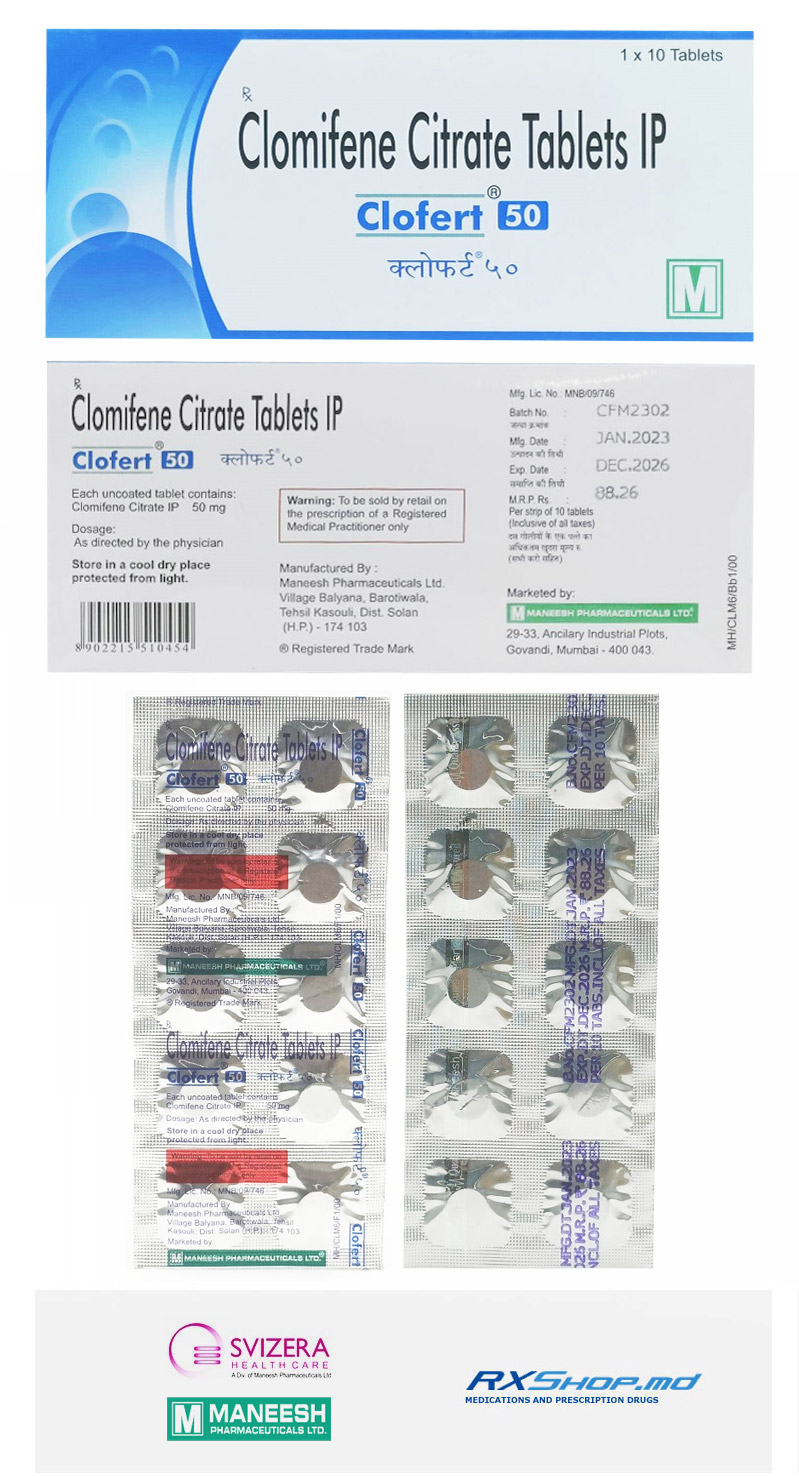
Clofert (Clomiphene Citrate 50mg) represents the foundational first-line fertility medication for ovulation induction in women with anovulatory infertility — the world's most widely used oral fertility drug with over 55 years of continuous clinical use since FDA approval in 1967. Originally developed as Clomid (Sanofi/Aventis) and Serophene (EMD Serono), clomiphene citrate established the entire pharmacological approach to ovulation induction and remains the standard first-line therapy for anovulatory infertility including polycystic ovary syndrome (PCOS). Clofert on rxshop.md is manufactured by Svizera Healthcare and Healing Pharma India — two trusted Indian pharmaceutical manufacturers providing bioequivalent generic clomiphene citrate at the standard 50 mg starting strength with WHO-GMP quality standards. This dual manufacturer availability provides patients with choice while ensuring consistent bioequivalent quality from established pharmaceutical companies.
Clomiphene citrate works as a Selective Estrogen Receptor Modulator (SERM) through paradoxical anti-estrogenic action at the hypothalamus. First, clomiphene binds hypothalamic estrogen receptors as antagonist blocking normal estrogen negative feedback. Second, this increases GnRH (gonadotropin-releasing hormone) pulsatility from the hypothalamus. Third, elevated GnRH stimulates pituitary FSH and LH release promoting ovarian follicular development. Fourth, mature follicles produce estradiol triggering the LH surge and ovulation. Fifth, clomiphene provides predictable ovulation timing approximately 5-10 days after last dose enabling timed intercourse or intrauterine insemination scheduling. Clinical trials demonstrate 60-80 percent ovulation induction and 40-50 percent cumulative pregnancy rate over 6 cycles in appropriate candidates.
Clofert serves multiple infertility indications. Primary FDA-approved use is ovulatory dysfunction including PCOS-related anovulation. Off-label uses include unexplained infertility, luteal phase deficiency, hypothalamic amenorrhea, and superovulation for intrauterine insemination protocols.
Clofert dosed 50 mg daily × 5 days starting cycle days 3-5. Expected ovulation days 14-16. Escalate ? 100 mg then 150 mg if inadequate response. Maximum 6 ovulatory cycles typical trial. Contraindicated in pregnancy (Category X), liver disease, undiagnosed uterine bleeding, ovarian cysts (except PCOS), pituitary tumor, and hormone-sensitive cancers. Requires reproductive endocrinology supervision.
Free prescription
Discrete packaging
Have questions?
Quality Assurance


- Polycystic Ovary Syndrome PCOS: Most common cause of anovulatory infertility - clomiphene first-line therapy ??? PCOS ovulation induction;
- Unexplained Infertility: Off-label empirical use with intrauterine insemination for couples without identifiable infertility cause;
- Luteal Phase Deficiency: Selected use ??? inadequate corpus luteum function producing progesterone deficiency;
- Hypothalamic Amenorrhea: Functional hypothalamic amenorrhea with adequate estrogen may respond to clomiphene stimulation;
- Anovulatory Infertility: General category of infertility caused by absent or irregular ovulation responding to ovulation induction;
- Superovulation for IUI: Multiple follicle development for intrauterine insemination protocols increasing pregnancy rates;
- Ovulation Induction: Comprehensive category for inducing predictable ovulation in fertility treatment protocols;
- First Line Fertility Therapy: Standard initial pharmacological approach before more intensive fertility interventions;
- PCOS Ovulation Induction: Specifically for PCOS patients with anovulation and desire for pregnancy;
- Male Hypogonadism Off Label: Restoration of testosterone in secondary male hypogonadism ????? hypothalamic stimulation;
- Timed Intercourse Support: Predictable ovulation timing enables optimal timed intercourse for natural conception attempts;
- SERM Ovulation Induction Class: Selective estrogen receptor modulator specifically for ovulation induction indication;
- Hypothalamic GnRH Stimulation: Increases hypothalamic GnRH pulsatility through estrogen receptor antagonism at hypothalamus;
- Pituitary FSH LH Stimulation: Increases pituitary FSH and LH release stimulating ovarian follicular development;
- Menstrual Cycle Regularization: Predictable ovulation restores regular menstrual cycles in anovulatory women;
- Progestin Withdrawal Alternative: Restoration of natural ovulation vs progestin-induced withdrawal bleeding ? anovulatory patients;
- Reproductive Endocrinology Therapy: Standard therapy in reproductive endocrinology and fertility specialist care;
- Oligoovulation Treatment: Irregular ovulation with cycles longer than 35 days benefits from ovulation induction;
- Generic Clomid/Serophene Therapy: Bioequivalent Svizera and Healing Pharma generic alternatives at accessible cost.
- Improves Fertility: Restores ovulatory cycles enabling natural or assisted conception with 40-50 percent cumulative pregnancy rate over 6 cycles;
- Non Invasive Treatment: Oral tablet therapy without injections or surgical procedures - convenient first-line fertility approach;
- High Success Rate: 60-80 percent ovulation induction rate and 40-50 percent pregnancy rate over multiple cycles in appropriate candidates;
- Minimal Side Effects: Generally well-tolerated with hot flashes most common (10%) - substantially safer than injectable gonadotropins;
- First Line Treatment: Standard initial fertility therapy for anovulatory infertility before more intensive interventions;
- Better Oral Convenience: Simple oral tablet dosing 5 days per cycle - convenient compared to injectable fertility medications;
- Better Predictable Ovulation Timing: Expected ovulation days 14-16 enables precise timed intercourse or IUI scheduling;
- Better PCOS Response: Particularly effective for PCOS-related anovulation - most common infertility cause responsive to clomiphene;
- Better Dose Escalation Option: Progressive dose escalation from 50 to 100 to 150 mg enables individualized therapy optimization;
- Better Long Term Safety Record: Over 55 years of continuous clinical use with well-established safety profile;
- Better Non Injection Approach: Oral therapy avoids injection burden of gonadotropin-based ovulation induction;
- Better Menstrual Cycle Restoration: Regular ovulatory cycles restored in majority of anovulatory patients providing hormonal regularization;
- Better Endogenous Progesterone Production: Successful ovulation produces natural corpus luteum progesterone supporting endometrial development;
- Better Cost Effective Fertility Therapy: Substantially more affordable than injectable gonadotropins for initial fertility treatment;
- Better Empirical Unexplained Infertility Use: Combined with IUI provides pregnancy rate enhancement for unexplained infertility couples;
- Better Reversible Effects: Effects reverse after discontinuation - no lasting hormonal disruption after therapy completion;
- Better 5 Day Cycle Regimen: Simple 5-day dosing per cycle vs longer therapies improving adherence and convenience;
- Better Two Manufacturer Options: Svizera Healthcare and Healing Pharma provide bioequivalent generic options with WHO-GMP quality;
- Better Quality of Life: Successful pregnancy through effective fertility therapy dramatically improves quality of life for couples struggling with infertility.
Generic Clofert (Clomiphene 50 mg) Medication guide:
Clofert (Clomiphene Citrate 50mg) represents the foundational first-line fertility medication for ovulation induction in women with anovulatory infertility - the world's most widely used oral fertility drug with over 55 years of continuous clinical use since FDA approval in 1967. Originally developed as Clomid (Sanofi/Aventis) and Serophene (EMD Serono), clomiphene citrate established the entire pharmacological approach to ovulation induction and remains the standard first-line therapy for anovulatory infertility including polycystic ovary syndrome (PCOS). Clofert on rxshop.md is manufactured by Svizera Healthcare and Healing Pharma India - two trusted Indian pharmaceutical manufacturers providing bioequivalent generic clomiphene citrate at the standard 50 mg starting strength with WHO-GMP quality standards. This comprehensive medication guide covers every aspect of Clofert therapy including SERM pharmacology, hypothalamic-pituitary-ovarian axis mechanism, comprehensive indications, cycle-based dosing protocols, dose escalation strategy, monitoring approaches, critical contraindications for pregnancy and hormone-sensitive conditions, visual disturbance warnings, multiple pregnancy considerations, and long-term fertility therapy management.
💊 Introduction to Clofert
Clofert is a prescription oral medication containing clomiphene citrate 50 mg as its active ingredient in tablet form. Clomiphene citrate is a Selective Estrogen Receptor Modulator (SERM) specifically developed for ovulation induction in women with anovulatory infertility. Clomiphene citrate was originally developed and FDA-approved as Clomid by Merrell Dow (later acquired by Sanofi/Aventis) in 1967 - establishing the pharmacological approach to ovulation induction that has remained the gold standard first-line fertility therapy for over 55 years. The alternate original brand Serophene is marketed by EMD Serono. Worldwide, clomiphene citrate is available under numerous brand names including Clomid, Serophene, Milophene, Ovinum, Fertyl, Clostilbegyt, and Clofert among others.
The Clofert brand available on rxshop.md provides two trusted manufacturer options: Svizera Healthcare - an established Indian pharmaceutical company producing bioequivalent generic clomiphene citrate at accessible cost - and Healing Pharma India - a major Indian pharmaceutical manufacturer with comprehensive generic portfolio and WHO-GMP quality standards. Both manufacturers produce 50 mg tablets at the standard starting dose strength. This manufacturer choice enables patients and prescribers to select based on availability, cost considerations, or prior experience while ensuring consistent bioequivalent quality from established pharmaceutical companies.
Clomiphene citrate has established itself as the most prescribed fertility medication worldwide due to its combination of proven efficacy, oral convenience, cost-effectiveness compared to injectable gonadotropins, and well-characterized safety profile from over five decades of clinical use. As Selective Estrogen Receptor Modulator (SERM), clomiphene works through paradoxical anti-estrogenic action at the hypothalamus - blocking estrogen negative feedback and thereby increasing endogenous gonadotropin production to stimulate ovarian follicular development and ovulation. This mechanism enables predictable ovulation induction with straightforward oral therapy across five treatment days per cycle.
🏭 Two Manufacturer Options
Svizera Healthcare
Svizera Healthcare credentials:
- Established Indian pharmaceutical manufacturer with generic pharmaceutical portfolio
- WHO-GMP certification ensuring quality manufacturing standards
- Bioequivalent generic quality comparable to brand-name clomiphene formulations
- Cost-effective manufacturing enabling accessible fertility therapy pricing
- Regional distribution serving Indian and international markets
Healing Pharma India
Healing Pharma India credentials:
- Major Indian pharmaceutical manufacturer with diverse generic portfolio
- WHO-GMP certification - World Health Organization Good Manufacturing Practice
- Multiple therapeutic categories including skincare, sleeping aids, weight loss, women's health
- Extensive international distribution across multiple markets
- Cost-effective quality manufacturing for accessible generic pharmaceuticals
Manufacturer Choice
Both Svizera and Healing Pharma produce bioequivalent clomiphene citrate 50 mg with equivalent expected clinical outcomes. Patient choice between manufacturers may depend on availability, pricing, prior experience, or prescriber preference. Both formulations undergo bioequivalence testing ensuring equivalent pharmacokinetic delivery of clomiphene citrate to the systemic circulation.
🧬 Understanding SERM Class
Selective Estrogen Receptor Modulators
SERM class characteristics:
- Tissue-selective estrogen action: Different tissues respond differently to SERM binding
- Agonist or antagonist activity by tissue: Same drug can be estrogenic in one tissue and antiestrogenic in another
- Clomiphene: Antiestrogen at hypothalamus (produces fertility effect), mixed effects elsewhere
- Tamoxifen: Antiestrogen at breast, mixed effects elsewhere - used for breast cancer
- Raloxifene: Selective for osteoporosis prevention with reduced breast cancer risk
- Ospemifene: Selective for vulvovaginal atrophy treatment
- Bazedoxifene: Used with conjugated estrogens for menopause symptoms
Clomiphene as First SERM
Clomiphene citrate is one of the earliest developed SERMs and the only SERM approved specifically for ovulation induction. Its tissue-selective action producing antiestrogenic effects at the hypothalamus while having variable effects at other tissues (including antiestrogenic effects on cervical mucus and endometrium that can complicate fertility outcomes) makes it a unique pharmacological tool for reproductive endocrinology.
🧪 Chemistry and Mechanism
Clomiphene citrate has the chemical formula C26H28ClNO·C6H8O7 with molecular weight approximately 598.1 g/mol. Chemically, clomiphene is a triphenylethylene derivative structurally related to tamoxifen and other early SERMs. The clinical formulation is the citrate salt of clomiphene providing enhanced water solubility and pharmaceutical stability. Clomiphene exists as a mixture of two isomers: enclomiphene (60%) with primarily antiestrogenic activity and zuclomiphene (40%) with mixed estrogenic and antiestrogenic activity. The clinical effect derives primarily from the enclomiphene isomer.
Mechanism of Action
Clomiphene citrate mechanism at hypothalamic level:
- Hypothalamic estrogen receptor binding: Clomiphene binds estrogen receptors in hypothalamus as antagonist
- Blocks estrogen negative feedback: Normal estrogen negative feedback on hypothalamus is prevented
- Increased GnRH pulsatility: Hypothalamus perceives low estrogen and increases GnRH release frequency
- Pituitary stimulation: Elevated GnRH stimulates pituitary FSH and LH release
- Ovarian follicular development: Increased FSH stimulates recruitment and growth of ovarian follicles
- Estradiol production: Growing follicles produce increasing estradiol
- LH surge triggering ovulation: Peak estradiol triggers pituitary LH surge inducing ovulation
- Predictable ovulation timing: Ovulation occurs approximately 5-10 days after last clomiphene dose
Additional Tissue Effects
Clomiphene has variable effects on other estrogen-responsive tissues that can affect fertility outcomes:
- Cervical mucus: Antiestrogenic effect may thicken cervical mucus reducing sperm penetration
- Endometrium: Antiestrogenic effect may thin endometrium reducing implantation success
- Breast tissue: Mixed effects
- Vaginal epithelium: Mixed effects may cause vaginal dryness
Pharmacokinetic Profile
| Parameter | Value | Clinical Significance |
|---|---|---|
| Oral bioavailability | Well absorbed | Predictable oral therapy |
| Time to peak (Tmax) | 6-8 hours | Peak plasma concentration |
| Half-life (enclomiphene) | Approximately 5-7 days | Sustained hypothalamic effect |
| Half-life (zuclomiphene) | Very long - weeks | Persists in body after dosing |
| Metabolism | Hepatic | Liver function affects clearance |
| Elimination | Primarily biliary (fecal) | Enterohepatic circulation |
| Onset of ovulation induction | 5-10 days after last dose | Predictable ovulation timing |
| Duration of effect per cycle | One ovulatory cycle per treatment | Cycle-based therapy |
🧬 Understanding Ovulation and Anovulation
Normal Ovulation Cycle
Normal menstrual/ovulation cycle overview:
- Follicular phase (days 1-14): FSH stimulates follicle growth, estradiol rises
- Ovulation (day 14): LH surge triggers follicle rupture and egg release
- Luteal phase (days 15-28): Corpus luteum produces progesterone supporting endometrium
- Menstruation (day 1 of next cycle): If no pregnancy, corpus luteum regresses
- Hypothalamic-pituitary-ovarian axis: Coordinates entire cycle through GnRH, FSH, LH
Causes of Anovulation
- PCOS (Polycystic Ovary Syndrome): Most common cause of anovulatory infertility
- Hypothalamic amenorrhea: Functional suppression from stress, exercise, low body weight
- Hypothyroidism: Thyroid dysfunction affecting ovulation
- Hyperprolactinemia: Elevated prolactin suppressing ovulation
- Premature ovarian insufficiency: Early menopause
- Obesity: Metabolic effects on ovulation
- Extreme weight loss: Loss of adequate estrogen production
- Age-related decline: Diminished ovarian reserve
PCOS and Fertility
Polycystic Ovary Syndrome (PCOS) is the most common cause of anovulatory infertility affecting approximately 5-10% of reproductive-age women. Clomiphene citrate is first-line pharmacological therapy for PCOS-related ovulation induction with well-established efficacy in this population. Key PCOS considerations for clomiphene therapy:
- 60-80% ovulation induction rate in PCOS with clomiphene
- 40-50% cumulative pregnancy rate over 6 cycles
- Weight loss adjunct: Improves clomiphene response in obese PCOS patients
- Metformin combination: May improve response in insulin-resistant PCOS
- Clomiphene-resistant PCOS: Alternative therapies include letrozole or gonadotropins
🎯 FDA Approved Indications
Primary FDA Approved Indication
- Ovulatory dysfunction in women desiring pregnancy who otherwise would be candidates for pregnancy but ovulation is absent or infrequent
Common Off-Label Uses
- Unexplained infertility: Empirical use with intrauterine insemination
- Luteal phase deficiency: Selected use for corpus luteum dysfunction
- Superovulation for IUI: Multiple follicle development for insemination
- Male hypogonadism: Off-label use to restore testosterone in secondary hypogonadism
- PCOS metabolic support: With metformin combination therapy
- Anti-estrogen effect testing: Rare diagnostic uses
Ideal Patient Selection
Clofert most appropriate for:
- Women with anovulatory infertility desiring pregnancy
- PCOS patients with normal male partner semen analysis
- Women with hypothalamic amenorrhea (adequate estrogen levels)
- Couples with unexplained infertility for empirical therapy
- Patients able to undergo cycle monitoring
- Women without contraindications to hormonal therapy
- Patients with intact hypothalamic-pituitary-ovarian axis
- Women accepting risk of multiple pregnancy
- Patients with adequate ovarian reserve
🚫 Contraindications and Precautions
Absolute Contraindications
- Pregnancy (Category X): Not for use during pregnancy - discontinue if pregnancy occurs
- Liver disease: Severe hepatic dysfunction contraindicated
- Undiagnosed abnormal uterine bleeding: Evaluate cause before therapy
- Ovarian cysts: Except polycystic ovaries in PCOS
- Uncontrolled thyroid dysfunction: Treat thyroid disease first
- Uncontrolled adrenal dysfunction: Treat adrenal disease first
- Pituitary tumor: Neurosurgical evaluation needed
- Hormone-sensitive cancers: Breast, endometrial, ovarian
- Visual disturbances from prior clomiphene use: Discontinue permanently
- Hypersensitivity to clomiphene or excipients
Precautions
Use with caution in:
- Advanced age: Reduced efficacy over age 35 due to diminished ovarian reserve
- Obesity: Reduced efficacy; weight loss improves response
- Depression history: Mood changes possible
- Endometriosis: May worsen symptoms
- Ovarian hyperstimulation history: Increased OHSS risk
- Multiple pregnancy concerns: 8-10% twin risk with clomiphene
- Visual symptoms: Discontinue if visual disturbances develop
- Ectopic pregnancy history: Slightly increased ectopic risk
💉 Dosage and Administration
Standard Starting Dose Protocol
Standard clomiphene dosing protocol:
- Starting dose: 50 mg once daily for 5 consecutive days
- Cycle timing: Start on cycle day 3, 4, or 5 (day 1 = first day of menstruation)
- Continue for 5 days: Days 3-7, or 4-8, or 5-9
- Expected ovulation: Cycle days 14-16 (approximately 5-10 days after last dose)
- Timed intercourse: Every other day starting cycle day 10 through 18
- Ovulation confirmation: Basal body temperature, LH kits, or progesterone testing
Cycle Day Timing Protocol
| Cycle Day | Action | Purpose |
|---|---|---|
| Day 1 | First day of menstrual period | Cycle reference start |
| Day 3-5 | Start clomiphene 50 mg daily | Induce follicular development |
| Day 7-9 | Last clomiphene dose | Complete 5-day course |
| Day 10-18 | Timed intercourse every other day | Cover ovulation window |
| Day 14-16 | Expected ovulation | LH surge triggers egg release |
| Day 21-22 | Progesterone level check | Confirm ovulation occurred |
| Day 28 or later | Pregnancy test if no menstruation | Assess conception |
Dose Escalation Strategy
Dose escalation protocol for inadequate response:
| Cycle | Dose | Response Assessment |
|---|---|---|
| Cycle 1 | 50 mg x 5 days | Confirm ovulation via progesterone |
| Cycle 2 if no ovulation | 100 mg x 5 days (2 tablets) | Escalation for non-response |
| Cycle 3 if no ovulation | 150 mg x 5 days (3 tablets) | Maximum dose escalation |
| If ovulation but no pregnancy | Continue same effective dose | Up to 6 ovulatory cycles |
| If 150 mg fails | Discontinue clomiphene | Consider alternative therapies |
Maximum trial: 6 ovulatory cycles. Beyond this, consider alternative fertility therapies (letrozole, gonadotropins, IVF).
Administration Guidelines
- Take at consistent time each day during 5-day treatment cycle
- Swallow tablet whole with water
- Can take with or without food
- Do not skip doses during treatment cycles
- Report any visual disturbances immediately - permanent discontinuation required
- Track menstrual cycles carefully
- Confirm ovulation via basal body temperature, LH kits, or progesterone testing
- Time intercourse or IUI appropriately for ovulation window
- Pregnancy test if no menstruation by cycle day 28-30
- Discontinue immediately if pregnancy suspected
- Maintain regular follow-up with reproductive endocrinologist
🔬 Monitoring Ovulation
Ovulation monitoring methods:
- Basal body temperature (BBT): Daily morning temperature tracking - biphasic pattern indicates ovulation
- LH urine ovulation predictor kits: Detect LH surge 24-36 hours before ovulation
- Progesterone level testing: Cycle day 21-22 progesterone above 3 ng/mL confirms ovulation
- Cervical mucus monitoring: Clear, stretchy mucus indicates fertile window
- Transvaginal ultrasound: Follicle tracking and confirmation of ovulation - most accurate
- Endometrial thickness: Ultrasound assessment particularly important since clomiphene can thin endometrium
📊 Clinical Effectiveness Data
| Metric | Response Data |
|---|---|
| Ovulation induction rate | 60-80 percent of appropriate patients |
| Pregnancy rate per cycle | 15-20 percent |
| Cumulative pregnancy rate (6 cycles) | 40-50 percent |
| Multiple pregnancy rate (twins) | Approximately 8-10 percent |
| Higher-order multiples | Rare (less than 1 percent) |
| Miscarriage rate | Comparable to natural pregnancy |
| Ovulation response at 50 mg | Approximately 50 percent of women |
| Ovulation response at 100 mg | Additional 25 percent respond |
| Ovulation response at 150 mg | Additional 10 percent respond |
| Clomiphene-resistant patients | Approximately 15-20 percent |
⚠️ Side Effects
Common Side Effects
- Hot flashes: Approximately 10 percent - most common side effect
- Ovarian enlargement: Approximately 14 percent
- Abdominal discomfort or bloating: Approximately 5 percent
- Breast tenderness: Common
- Nausea or vomiting: Approximately 2 percent
- Headache: Common
- Mood changes: Emotional lability, depression, anxiety
- Vaginal dryness: From antiestrogenic effects
- Endometrial thinning: Paradoxical antiestrogenic effect
- Cervical mucus thickening: May reduce sperm penetration
- Insomnia: Occasional
- Weight changes: Minor
Visual Disturbances Critical Warning
CRITICAL: Visual disturbances require immediate discontinuation
Clomiphene can cause visual disturbances that may become permanent if therapy continues. All patients must be aware of this critical safety concern.
Warning signs requiring immediate discontinuation:
- Blurred vision
- Spots or flashes in vision (scotoma)
- Double vision (diplopia)
- Light sensitivity (photophobia)
- Halos around lights
- Visual field defects
If any visual disturbances occur, discontinue Clofert immediately and consult ophthalmologist. Do not restart therapy - visual disturbances may become permanent with continued use.
Ovarian Hyperstimulation Syndrome (OHSS)
OHSS risk with clomiphene (rare):
- OHSS is rare with clomiphene compared to injectable gonadotropins
- Symptoms: severe abdominal pain, distension, nausea, vomiting
- Serious cases: fluid accumulation, kidney dysfunction, thromboembolism
- Higher risk with PCOS, higher doses, previous OHSS
- Requires immediate medical evaluation
Multiple Pregnancy Risk
Multiple pregnancy considerations:
- Twin pregnancy risk: Approximately 8-10 percent
- Higher-order multiples: Rare but possible (triplets or more)
- Increased pregnancy risks: Preterm birth, preeclampsia, gestational diabetes
- Neonatal considerations: Higher risk of prematurity complications
- Discuss with prescriber: Understand risks before starting therapy
- Ultrasound monitoring: Can identify multiple gestation early
Other Serious Adverse Events
Seek immediate medical attention for:
- Any visual disturbances: Discontinue immediately
- Severe abdominal pain: Possible OHSS or ovarian torsion
- Signs of ovarian torsion: Sudden severe unilateral pelvic pain
- Signs of ectopic pregnancy: Pelvic pain with positive pregnancy test
- Severe depression or mood changes
- Signs of allergic reaction: Rash, angioedema, difficulty breathing
- Signs of thromboembolism: Leg pain/swelling, chest pain, shortness of breath
- Severe headache with vision changes
- Signs of liver injury: Jaundice, dark urine, right upper pain
🔄 Drug Interactions
| Drug/Substance | Interaction |
|---|---|
| Ospemifene | Both SERMs - avoid concurrent use |
| Tamoxifen | Both SERMs with breast cancer use - competing effects |
| Bexarotene | May reduce clomiphene efficacy |
| Danazol | Competing hormone effects |
| Gonadotropins (FSH, HCG) | Used in combination for ovulation induction protocols |
| GnRH agonists/antagonists | Complex interactions in ART protocols |
| Estrogen supplements | May counteract clomiphene antiestrogenic action |
| Metformin | Combined use in PCOS may enhance response |
| Corticosteroids | Sometimes used adjunctively in PCOS treatment |
| Bromocriptine or cabergoline | For concurrent hyperprolactinemia management |
🛡️ Special Populations
- Reproductive Age Women
- Standard indication population. Comprehensive fertility workup required before therapy. Reproductive endocrinology supervision recommended.
- Pregnancy (Category X)
- ABSOLUTELY CONTRAINDICATED during pregnancy. Discontinue immediately if pregnancy suspected. Rule out pregnancy before each cycle initiation. Not for use if any doubt about pregnancy status.
- Lactation
- Not indicated during breastfeeding as it may reduce milk production. Complete lactation before fertility therapy for next pregnancy attempts.
- PCOS Patients
- Primary indication population. First-line therapy for PCOS-related anovulatory infertility. Weight loss adjunct improves response. Metformin combination may enhance efficacy in insulin-resistant patients.
- Obese Patients
- Reduced clomiphene efficacy with obesity. Weight loss of 5-10 percent may substantially improve ovulation rates. Consider weight management strategies before or during therapy.
- Advanced Reproductive Age (Over 35)
- Diminished ovarian reserve affects response. Consider ovarian reserve testing (AMH, AFC, FSH). Reduced overall fertility success rates. May proceed more quickly to alternative therapies.
- Hypothalamic Amenorrhea Patients
- Requires adequate estrogen production for clomiphene response. If hypoestrogenic, clomiphene may not be effective. Consider gonadotropin therapy for hypothalamic hypogonadism.
- Depression History
- May worsen mood symptoms. Monitor for mood changes throughout therapy. Consider mental health support during fertility treatment.
- Endometriosis Patients
- May worsen endometriosis symptoms. Consider treatment of endometriosis before or with fertility therapy. Reproductive endocrinology consultation essential.
- Male Hypogonadism (Off-Label)
- Off-label use to restore testosterone in secondary hypogonadism. Increases endogenous testosterone through hypothalamic-pituitary stimulation. Requires urologist or endocrinologist supervision.
- Prior Ovarian Surgery Patients
- Assess ovarian reserve and function. May have reduced response depending on surgery extent. Consider ovarian reserve testing.
- Diabetic Patients
- Ensure adequate diabetes control before pregnancy attempts. Pre-pregnancy folic acid supplementation. Coordination with endocrinology for optimal glycemic control.
🔄 When Clomiphene Fails
Alternative therapies when clomiphene fails:
- Letrozole (Femara): Aromatase inhibitor - first-line PCOS alternative in modern practice
- Gonadotropins (FSH, HMG): Injectable ovulation induction with more precise control
- Metformin combination: Add to clomiphene for insulin-resistant PCOS
- Ovarian drilling: Laparoscopic surgical option for clomiphene-resistant PCOS
- Intrauterine insemination (IUI): With clomiphene or gonadotropins for unexplained infertility
- In vitro fertilization (IVF): Advanced reproductive technology for treatment-resistant infertility
- Weight loss: Substantially improves fertility in obese patients
- Address underlying conditions: Thyroid, prolactin, adrenal disorders
📆 Long-Term Follow-Up
Long-term therapy considerations:
- Regular reproductive endocrinology follow-up: Cycle-by-cycle assessment
- Maximum 6 ovulatory cycles: Beyond this consider alternative therapies
- Ovarian cancer surveillance: Some evidence of increased risk with more than 12 cycles
- Endometrial monitoring: Ultrasound assessment given antiestrogenic effects
- Pregnancy planning: Prenatal counseling before pregnancy attempts
- Folic acid supplementation: Standard preconception vitamin
- Diabetes screening: Particularly for PCOS patients
- Cardiovascular assessment: PCOS carries cardiovascular risk factors
- Weight management: Ongoing lifestyle intervention
📦 Storage and Handling
- Store at room temperature between 15°C and 30°C (59°F and 86°F)
- Protect from light, moisture, and heat
- Keep tablets in original packaging
- Keep out of reach of children and pets
- Do not use past expiration date
- Do not share medication with others
- Return unused medication to pharmacy for proper disposal
👨⚕️ When to Contact Your Doctor
- Any visual disturbances - discontinue immediately and seek ophthalmology evaluation
- Severe abdominal pain - possible OHSS or ovarian torsion
- Signs of ovarian torsion: sudden severe unilateral pelvic pain
- Signs of ectopic pregnancy: pelvic pain with positive pregnancy test
- Severe depression or suicidal thoughts
- Signs of allergic reaction: rash, angioedema, difficulty breathing
- Signs of thromboembolism: leg pain/swelling, chest pain, shortness of breath
- Severe headache with vision changes
- Signs of liver injury: jaundice, dark urine, right upper pain
- Suspected pregnancy - discontinue immediately
- Absence of menstruation - pregnancy test needed
- Failure to ovulate after cycle - dose escalation discussion
- Multiple pregnancy identified on ultrasound
- Any concerning symptoms during treatment
- Time for scheduled monitoring appointments
- Consideration of dose escalation or alternative therapy
🌟 Key Takeaways
Essential points about Clofert therapy:
- Clofert is Svizera Healthcare or Healing Pharma India generic clomiphene citrate 50 mg tablets
- Selective Estrogen Receptor Modulator (SERM) originally FDA-approved as Clomid in 1967
- Over 55 years of continuous clinical use as first-line ovulation induction therapy
- Works through hypothalamic estrogen receptor antagonism blocking negative feedback
- Increases GnRH pulsatility, FSH, and LH stimulating ovarian follicular development
- First-line therapy for PCOS-related anovulatory infertility
- Standard dosing: 50 mg daily for 5 days starting cycle day 3-5
- Expected ovulation cycle days 14-16
- Dose escalation to 100 mg then 150 mg for inadequate response
- Maximum 6 ovulatory cycles typical trial
- 60-80 percent ovulation induction rate, 40-50 percent cumulative pregnancy over 6 cycles
- Approximately 8-10 percent twin pregnancy risk
- CRITICAL: Any visual disturbances require immediate discontinuation
- Pregnancy Category X - contraindicated during pregnancy
- Contraindicated in liver disease, ovarian cysts (except PCOS), pituitary tumor, hormone-sensitive cancers
- Common side effects: hot flashes, ovarian enlargement, breast tenderness, mood changes
- Requires reproductive endocrinology supervision
- Cycle monitoring recommended (BBT, LH kits, progesterone, ultrasound)
- Alternative therapies if clomiphene fails: letrozole, gonadotropins, IVF
- Two manufacturer options: Svizera Healthcare or Healing Pharma India
Important Medical Disclaimer: This medication guide provides general information about Clofert (Svizera Healthcare or Healing Pharma India generic clomiphene citrate 50 mg tablets) and does not constitute individualized medical advice. Every patient situation is unique and requires comprehensive fertility evaluation by a reproductive endocrinologist or fertility specialist before starting therapy. Clomiphene therapy requires cycle-by-cycle monitoring with ovulation confirmation and progression assessment. Pregnancy Category X - absolutely contraindicated during pregnancy. Rule out pregnancy before each cycle initiation. CRITICAL: Any visual disturbances require immediate discontinuation and ophthalmology evaluation - do not restart therapy as visual disturbances may become permanent. Contraindicated in liver disease, undiagnosed abnormal uterine bleeding, ovarian cysts (except PCOS), pituitary tumor, hormone-sensitive cancers, and prior visual disturbances from clomiphene. Report severe abdominal pain (possible OHSS or ovarian torsion), suspected ectopic pregnancy, severe depression, allergic reactions, or thromboembolism signs immediately. Multiple pregnancy risk approximately 8-10 percent twins requires discussion before therapy initiation. Maximum 6 ovulatory cycles recommended - beyond this consider alternative fertility therapies including letrozole, gonadotropins, or in vitro fertilization. Coordinate care with reproductive endocrinologist for optimal fertility outcomes. If you experience concerning symptoms contact your healthcare provider promptly. The information provided here should complement but never replace direct professional medical guidance from your fertility specialist.
Clofert — Frequently Asked Questions
-
What is Clofert (Clomiphene)?
Clofert, known by its generic name Clomiphene, is a medication used to treat infertility in women. It stimulates ovulation to increase the chances of conception. -
How does Clofert work?
Clofert works by blocking estrogen receptors in the brain, which increases the production of hormones that stimulate the ovaries to release eggs. -
Who can benefit from taking Clofert?
Women with ovulatory dysfunction, such as those with Polycystic Ovary Syndrome (PCOS) or other conditions that affect ovulation, can benefit from taking Clofert. -
How should I take Clofert?
Clofert is taken orally, usually for five days early in the menstrual cycle. Follow your healthcare provider's instructions on the exact dosage and timing. -
When should I start taking Clofert?
Typically, Clofert is started on the fifth day of your menstrual cycle, but your healthcare provider may adjust this based on your specific situation. -
What are the common side effects of Clofert?
Common side effects include hot flashes, abdominal discomfort, nausea, breast tenderness, mood swings, and headaches. -
How long does it take for Clofert to work?
Ovulation usually occurs about 5-10 days after the last dose of Clofert. Your healthcare provider will monitor your response to determine the effectiveness.
See all Clofert questions (32)
More Women's Health Medications