Buy Lotensin (Benazepril) Online — Novartis ACE Inhibitor for Hypertension in Adults & Pediatric Patients (6+) with Lotrel Amlodipine Combination Available

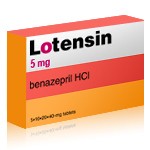
Lotensin is the original brand-name formulation of Benazepril Hydrochloride manufactured by Novartis — a popular third-generation angiotensin-converting enzyme (ACE) inhibitor with the distinction of being the active component in Lotrel, one of the most prescribed ACE-i + CCB fixed-dose combinations globally. FDA-approved since 1991, Lotensin offers proven hypertension efficacy with the convenience of once-daily dosing and FDA approval for both adult and pediatric (6+ years) patients. Available as standalone Lotensin and as the combinations Lotensin HCT (+ hydrochlorothiazide) and Lotrel (+ amlodipine CCB — landmark ACCOMPLISH trial 2008 demonstrated superiority over ACE-i + thiazide for cardiovascular outcomes). Listed on national essential medicine formularies as an established cost-effective ACE-i option.
The active ingredient is Benazepril Hydrochloride, an ACE inhibitor prodrug rapidly hydrolyzed in the liver to its active metabolite benazeprilat. Benazeprilat inhibits ACE — blocking conversion of angiotensin I to the potent vasoconstrictor angiotensin II, and reducing aldosterone secretion. Results: arterial and venous vasodilation, reduced peripheral vascular resistance, reduced afterload and preload, blood pressure reduction. Mid-range half-life of active metabolite ~10-11 hours supports once-daily dosing in most patients (BID in some). Both hepatic and renal excretion of benazeprilat.
Lotensin is FDA-approved for hypertension in adults and pediatric patients (6+ years). Off-label uses include heart failure (LV systolic dysfunction), diabetic nephropathy (reduces proteinuria, delays progression), LV dysfunction post-MI, chronic kidney disease (proteinuria reduction including AASK trial African American population), and combination therapy for resistant hypertension.
Available as Lotensin 5 mg, 10 mg, 20 mg, and 40 mg tablets, plus Lotensin HCT and Lotrel combinations. Standard adult HTN dosing: 10 mg once daily start, titrate to 20-40 mg/day (once or BID). Pediatric (6+): 0.2 mg/kg start, max 0.6 mg/kg/day. Take consistently at the same time daily.
Critical safety: boxed warning regarding pregnancy (Category D in 2nd/3rd trimester — fetal renal toxicity, discontinue when pregnancy detected). Dry cough (5-20%, ACE-i class effect), angioedema (rare but serious), hyperkalemia, first-dose hypotension, renal dysfunction (bilateral renal artery stenosis contraindication), elevated creatinine, dizziness, fatigue, headache.
Free prescription
Discrete packaging
Have questions?
Quality Assurance
- Pediatric Hypertension 6Plus: FDA-approved for pediatric hypertension 6+ years — signature indication among ACE-i;
- Heart Failure CHF: Off-label for heart failure (LV systolic dysfunction);
- Heart Failure Reduced EF: For HFrEF symptomatic management;
- LV Dysfunction Post MI: Off-label for LV dysfunction following myocardial infarction;
- Diabetic Nephropathy: Off-label for diabetic nephropathy — reduces proteinuria;
- Proteinuria Reduction: Reduces proteinuria in diabetic and non-diabetic kidney disease;
- Renoprotection CKD: Renoprotection in chronic kidney disease with proteinuria;
- AASK Trial African American Kidney: AASK trial — renoprotection in African American kidney disease patients;
- Post Myocardial Infarction: For post-MI patients to prevent progression to symptomatic HF;
- Mild Hypertension: For mild hypertension (stage 1);
- Moderate Hypertension: For moderate hypertension (stage 2);
- Severe Hypertension: For severe hypertension (combination therapy via Lotensin HCT or Lotrel);
- Resistant Hypertension Add On: Add-on for resistant hypertension — Lotrel ACCOMPLISH-supported combination;
- HTN With Diabetes: HTN in diabetic patients with nephropathy/proteinuria — preferred class;
- HTN With Heart Failure: Dual treatment for HTN with concomitant HF;
- HTN With CKD: HTN with chronic kidney disease — renoprotection benefit;
- HTN African American Population: For HTN in African American patients — AASK-supported renoprotection;
- Hypertension Pediatric Renal: For pediatric hypertension secondary to renal disease;
- Cardiovascular Risk Reduction: CV risk reduction — ACCOMPLISH demonstrated Lotrel benefit;
- Step Up To Combination: Step-up from monotherapy to combination via Lotrel or Lotensin HCT.
- Better 24-Hour BP Coverage: Convenient 24-hour BP coverage with once-daily dosing;
- Better Pediatric BP Control: Effective pediatric hypertension control (6+ years FDA-approved);
- Less Heart Failure Symptoms: Reduces HF symptoms (off-label);
- Less Proteinuria: Significant reduction in proteinuria in diabetic/non-diabetic kidney disease;
- Better Kidney Function Preservation: Preserves kidney function in diabetic nephropathy and CKD;
- Less ESRD Risk Diabetic: Delays progression to end-stage renal disease in diabetic patients;
- Better African American Renoprotection: AASK trial — renoprotection in African American kidney disease;
- Better Post MI Outcomes: Improves post-MI LV dysfunction outcomes;
- Better Cardiovascular Outcomes Lotrel: Lotrel combination superior to ACE-i+HCTZ ??? CV outcomes — ACCOMPLISH trial benefit;
- Less LV Remodeling: Reduces adverse LV remodeling in HF and post-MI;
- Less Cardiovascular Events: Reduces cardiovascular events in high-risk patients (Lotrel ACCOMPLISH benefit);
- Less Stroke Risk: Contributes to stroke risk reduction with effective BP control;
- Better Daily Function: Return to normal daily activities with effective BP control;
- Better Quality of Life: Substantial improvement in quality of life;
- Better Compliance Once Daily: Once-daily dosing improves compliance;
- Better Combination Therapy via Lotrel: Convenient ACE-i + CCB combination for resistant HTN;
- Better Combination Therapy via Lotensin HCT: Convenient ACE-i + thiazide combination;
- Brand Lotensin Novartis: Original Novartis brand of Benazepril — established clinical reputation since 1991;
- Generic Benazepril: Affordable generic Benazepril versions expand global access to ACE-i therapy;
- Lotrel Amlodipine Combination: Lotrel (benazepril + amlodipine) — landmark ACCOMPLISH trial superior CV outcomes;
- Lotensin HCT Combination: Lotensin HCT combination with hydrochlorothiazide;
- Angiotensin Converting Enzyme Inhibitor: ACE inhibitor — blocks angiotensin I to II conversion, reduces aldosterone;
- Prodrug Hepatic Activation: ACE inhibitor prodrug — hepatic activation to benazeprilat;
- Benazeprilat Active Metabolite: Active metabolite benazeprilat — mid-range half-life ~10-11h;
- Pediatric HTN Approved 6Plus: FDA-approved for pediatric hypertension 6+ years — signature ACE-i indication;
- AASK Trial African American Kidney: AASK trial — African American kidney disease renoprotection;
- ACCOMPLISH Trial CV Outcomes: ACCOMPLISH trial — Lotrel superior to ACE-i+HCTZ ??? cardiovascular outcomes;
- Once Daily Dosing: Once-daily dosing supports convenience and compliance;
- Affordable ACE Inhibitor: Affordable third-generation ACE inhibitor — cost-effective option;
- Renoprotection Established: Established renoprotection — diabetic and non-diabetic kidney disease;
- 30 Plus Year Clinical History: 30+ years of clinical use since 1991 — extensive global evidence base.
Generic Lotensin (Benazepril 5 mg) Medication guide:
💊 What Lotensin Is and Who Should Take It
Lotensin is the brand name of a prescription pill called benazepril. It belongs to a large family of medicines called ACE inhibitors - short for angiotensin-converting enzyme inhibitors. If that sounds technical, do not worry - the idea is simple. Your body makes a hormone that tightens blood vessels and raises blood pressure. Benazepril blocks the enzyme that makes that hormone. The result: blood vessels stay wider, blood pressure comes down, and the heart and kidneys work under less strain.
Lotensin has been in use since the early 1990s, and benazepril is now available as a cheap generic worldwide. Doctors prescribe it mainly for high blood pressure - either on its own, or combined in a single pill with amlodipine (called Lotrel). It is also used to protect the kidneys in people with diabetes and to help manage heart failure. This guide walks through everything a client on Lotensin needs to know in plain language.
This guide is written for you if:
- A doctor has just prescribed Lotensin (or generic benazepril) and you want to understand what you are about to take
- You have been on Lotensin for months or years and want a plain-language refresher
- You take Lotrel (the combination pill with amlodipine) and want to understand what each ingredient does
- You have diabetes or kidney disease and were told an ACE inhibitor protects your kidneys
- You have developed the classic dry ACE cough and are wondering what to do
- You need to know how the pill fits with alcohol, food, travel, an upcoming operation, or pregnancy planning
BRAND
Lotensin
Originator: Ciba-Geigy (now Novartis); also sold as generic benazepril
ACTIVE INGREDIENT
Benazepril
A prodrug - the liver converts it into the active form called benazeprilat
STRENGTHS
5, 10, 20, 40 mg
Scored tablets can be split at the score line where needed
HOW OFTEN
Once a day, sometimes twice
Effect lasts about 24 hours; twice daily only at higher doses or if BP drifts at end of day
What Lotensin is not:
- Not a beta blocker - it does not slow the heart rate directly
- Not a water pill (diuretic) - it does not make you pass more urine
- Not an ARB - though ARBs (like losartan, valsartan) work on the same hormone system in a different way. Section 4 explains the difference.
- Not a sedative or sleeping pill - it does not make you drowsy on its own
- Not addictive - the body does not develop craving or withdrawal
- Not a rescue pill - it must be taken every day; occasional use will not lower BP meaningfully
How to use this guide
Sections 2-5 explain how Lotensin works, what it treats, when it differs from ARBs, and what the Lotrel combination is. Sections 6-15 cover practical daily use: timing, food, alcohol, coffee, salt, exercise, home BP, blood tests. Section 16 is the Side Effects anchor. Section 17 covers the classic ACE cough. Section 18 is the important angioedema emergency warning. Section 19 covers missed doses. Sections 20-33 cover specific situations. Section 34 is the Contraindications anchor. Section 35 covers switching to another ACE inhibitor or an ARB. Section 36 covers how to stop the pill safely and the yearly review structure.
🧬 How Lotensin Works Inside Your Body - Simple Explanation
To understand what Lotensin does, imagine your body has a hormone system that controls blood pressure and fluid balance. It is called the renin-angiotensin-aldosterone system (RAAS for short) - do not worry about the long name; what matters is what it does. This system produces a chemical messenger called angiotensin II that squeezes your blood vessels tighter and tells your kidneys to hold on to more salt and water. Both actions push your blood pressure up.
Angiotensin II is not made directly - the body first makes a weaker version (angiotensin I), and then an enzyme in your lungs and blood vessels called the angiotensin-converting enzyme (ACE) converts angiotensin I into the active angiotensin II. Benazepril blocks that converting enzyme. Result: less active angiotensin II gets made. Vessels stay wider. Kidneys let go of a little extra salt and water. Blood pressure comes down. This is why the drug class is called "ACE inhibitors" - they inhibit that specific enzyme.
The main things Lotensin does inside you
1. Relaxes blood vessels
Vessels stay wider - blood flows with less pressure - the heart pumps against less resistance.
2. Reduces salt and water retention
Kidneys let go of a bit more sodium and water - blood volume settles - pressure drops further.
3. Protects heart and kidneys long-term
Angiotensin II also causes long-term thickening of heart muscle and stresses the kidney filters. Blocking it slows this damage over the years.
4. The bradykinin side
The same converting enzyme also breaks down another chemical called bradykinin. Blocking ACE means bradykinin builds up - this is what causes the ACE cough and the rare angioedema (Sections 17, 18).
Benazepril is a "prodrug" - what that means
The tablet you swallow contains benazepril, which is not directly active. Once absorbed, your liver quickly converts it into the active form called benazeprilat, which is what actually blocks the ACE enzyme. This "prodrug" design is common in this class - it improves absorption. In practical terms: you need reasonable liver function for benazepril to work as expected. Very severe liver disease can affect this (Section 29).
How quickly does Lotensin work?
Benazepril starts working within about 1 hour and reaches its strongest effect by 2-4 hours after each dose. But the full blood pressure result you and your doctor are aiming for usually settles over 2 to 4 weeks. This is why the first office visit or blood test after starting Lotensin is planned around week 2. Do not judge the drug by day one - it needs a couple of weeks to show its true effect. The effect from a single dose lasts about 24 hours, which is why once-daily dosing usually works.
📝 What Doctors Prescribe Lotensin For
Doctors prescribe Lotensin for several conditions, but the two that come up most often are high blood pressure and kidney protection in diabetes. Understanding which one applies to you helps you use the rest of this guide and helps you spot when things change.
The main conditions Lotensin is prescribed for
High blood pressure (hypertension)
Dose: start 10 mg once daily; usual range 10-40 mg per day (some people take 20 mg twice daily). The most common use. Often combined with amlodipine in a single pill called Lotrel (Section 5).
Kidney protection in diabetes with protein in the urine
Dose: 10-40 mg per day. Diabetes damages the kidneys over years; ACE inhibitors slow that damage. Even if your BP is normal, an ACE inhibitor may be prescribed if protein is leaking into the urine.
Chronic kidney disease (whether or not you have diabetes)
Dose: individualised. If your kidney filter score is dropping and there is protein in the urine, an ACE inhibitor slows the decline. Section 24 covers this use.
Heart failure with reduced pumping (HFrEF)
Dose: started low (5-10 mg once daily) and titrated up over weeks. ACE inhibitors are one of the four foundational pills for heart failure (along with beta blockers, an MRA, and an SGLT2 inhibitor). Benazepril is not the most-commonly-used ACE inhibitor for heart failure specifically (enalapril, ramipril, and lisinopril have more trial evidence) but it works.
Less common uses
- After a heart attack (post-MI) - ACE inhibitors are standard; benazepril is one option, though ramipril or lisinopril are more commonly used for this specific indication
- Certain rare kidney conditions where protein leakage is a target
What Lotensin is NOT usually prescribed for
- Occasional headaches or one-off high readings - Lotensin is a daily maintenance drug, not a rescue pill
- Migraine prevention - a different ARB called candesartan has more evidence there
- Anxiety or stress
- Pregnancy - ACE inhibitors are specifically avoided in pregnancy (Section 25)
One question worth asking at your next appointment
"Doctor, what am I taking Lotensin for - blood pressure, kidney protection, heart failure, or a combination? What is my target home BP and how will we know if the pill is working?" The answer changes what to bring to your next visit.
⚖️ ACE Inhibitors vs ARBs - When Each Is Preferred
You may have heard the terms ACE inhibitors and ARBs used together. Both work on the same hormone system (the RAAS from Section 2), but they block it at different points. Understanding the difference helps you understand why your doctor picked one rather than the other, and what will happen if you ever need to switch.
ACE inhibitors vs ARBs - side by side
| Feature | ACE inhibitors (Lotensin, Capoten, Coversyl, Altace) | ARBs (Cozaar, Diovan, Benicar, Atacand) |
|---|---|---|
| Where they act | Block the enzyme that MAKES active angiotensin II | Block the receptor that RECEIVES angiotensin II |
| BP-lowering effect | Very similar - about equal | Very similar - about equal |
| Kidney protection | Established | Also established (irbesartan, losartan) |
| Dry cough | Common (15-20%) - the classic "ACE cough" | Rare (placebo range) |
| Angioedema | Rare (0.1-0.5%) | Very rare (0.05% or less) |
| Cost | Very cheap in generic form | Very cheap in generic form (losartan) |
| Pregnancy | Avoided (Section 25) | Also avoided |
✅ When ACE inhibitors are typically first choice
- Cost is the main constraint - both classes are cheap generics but ACE inhibitors were the first available
- You have not tried either class before - starting with an ACE inhibitor and switching to an ARB if the cough appears is a common approach
- Post-heart-attack care - very established evidence base
- Heart failure - long track record
When doctors switch clients from ACE inhibitor to ARB
- Persistent ACE cough - the #1 reason (Section 17)
- Angioedema from ACE inhibitor - specialist review before considering an ARB
- Personal preference or intolerance
- Formulary or cost change in some countries
Do NOT combine an ACE inhibitor with an ARB
Taking Lotensin at the same time as an ARB (like losartan or valsartan) was tried in large studies (ONTARGET, ALTITUDE) and found to cause more side effects (very low BP, kidney injury, high potassium) without giving extra benefit. Do not combine them. Rare specialist exceptions exist in refractory heart failure or proteinuric renal disease, but that is a specialist decision.
🔗 Lotrel - The Benazepril and Amlodipine Combination Pill
You may have been prescribed a pill called Lotrel rather than Lotensin. Lotrel is a fixed-dose combination of two BP medicines in one tablet: benazepril + amlodipine. The benazepril is the same ACE inhibitor as in Lotensin. Amlodipine is a calcium channel blocker that also lowers BP by relaxing blood vessels but through a different mechanism. This section explains the logic of the combination and how it differs from taking Lotensin alone.
Lotrel - what is inside
| Strength | Amlodipine (mg) | Benazepril (mg) |
|---|---|---|
| Lotrel 2.5/10 | 2.5 | 10 |
| Lotrel 5/10 | 5 | 10 |
| Lotrel 5/20 | 5 | 20 |
| Lotrel 10/20 | 10 | 20 |
| Lotrel 5/40, 10/40 | 5 or 10 | 40 |
✅ Why the combination is often better than either drug alone
- Two different mechanisms - benazepril blocks a hormone; amlodipine relaxes vessels through calcium channels. Different routes to the same goal.
- Bigger BP drop than pushing either drug alone to its maximum dose
- Fewer side effects at lower doses of each ingredient
- Ankle swelling from amlodipine is reduced when combined with an ACE inhibitor - the ACE inhibitor addresses the fluid-related side effect
- One tablet is easier to remember than two separate prescriptions
The ACCOMPLISH trial - what it showed
In 2008, a large study called ACCOMPLISH compared benazepril + amlodipine (like Lotrel) against benazepril + hydrochlorothiazide (a water pill combination) in over 10,000 high-risk BP clients. Result: the amlodipine combination had significantly fewer heart attacks, strokes, and cardiovascular deaths.
This is the study most often cited when doctors pick Lotrel-style combinations over ACE-inhibitor-plus-water-pill combinations in high-risk clients.
When Lotrel is NOT the right choice
- The doctor wants to change only one component (benazepril but not amlodipine, or the reverse) - separate tablets allow finer adjustment
- One of the two ingredients causes intolerance
- Costs vary - in some countries the two separate generics are cheaper than the combination brand
▶️ Your First Week on Lotensin - What to Expect
The first week on Lotensin is a settling-in period. Your body is adjusting to a lower blood pressure and a slightly different fluid balance. Most clients feel fine after a few days; some notice mild dizziness on standing or a period of slight tiredness. Knowing what to expect makes the first week easier.
Day-by-day: what you might notice
Day 1 to 3
Mild dizziness on standing up quickly is common - your blood vessels are relaxing. Stand up slowly. Drink water. Avoid alcohol.
Day 4 to 7
Blood pressure has started to fall. Home readings should show clear improvement. Some clients notice a mild dry cough beginning - if it persists, see Section 17.
Day 8 to 14
Most early side effects have appeared and settled. Blood pressure is close to its new baseline. This is when your doctor usually orders the first follow-up blood test (potassium and kidney function - Section 15).
End of week 2 and beyond
Discuss with your doctor whether to keep the dose, raise it, or add a second BP pill. Home BP logs guide the decision.
✅ Normal in the first two weeks
- Mild dizziness on standing up quickly
- Feeling a bit tired the first few days
- Blood pressure readings dropping toward target
- Mild dry cough (in about 1 in 5 clients - see Section 17)
- Small increase in creatinine on the blood test (10-15% rise is expected)
🚩 Call your doctor or go to emergency if:
- You faint or nearly faint
- Blood pressure drops below 90/60 with symptoms
- Sudden ankle swelling
- Any facial swelling, lip swelling, or trouble swallowing - EMERGENCY (Section 18)
- Muscle weakness or unusual tingling (possible high potassium)
One practical tip for the first two weeks
Buy a home blood pressure monitor if you do not already have one. Take a morning reading before your pill and an evening reading before dinner. Two weeks of readings is what your doctor uses to decide the next step. Section 14 explains exactly how to measure correctly.
🕐 Best Time of Day to Take Lotensin
Lotensin can be taken at any time of day, but consistency matters more than the specific hour. Take it at the same time every day so your blood level stays even. Most clients pick morning; some pick bedtime. Both work.
Morning versus evening dosing - practical comparison
| Time | Good for | Less good for |
|---|---|---|
| Morning (with breakfast or after) | People with high morning BP; those who forget evening pills | People whose BP spikes at night |
| Evening (with dinner or before bed) | People with high night-time BP; those who wake early with headaches | People who wake for the bathroom at night |
| Twice a day | Only at higher doses (20 mg twice daily) or if the effect wears off at end of day | Extra reminder needed |
Trick for not forgetting: attach the pill to a habit you already have
Take Lotensin at a fixed moment in your daily routine you never skip: right after brushing your teeth in the morning, or with your first coffee, or with dinner, or just before bed. A weekly pillbox with seven small compartments is one of the most reliable adherence tools.
A note for shift workers and travellers
If your schedule flips (night shifts, frequent time-zone travel, or new baby at home), do not stress about hitting the exact same clock hour every day. Aim for approximately the same time within your body's day. See Section 20 for shift workers, and Section 32 for travel with time-zone changes.
🍽️ Should You Take Lotensin with Food or on an Empty Stomach?
Lotensin can be taken with food or on an empty stomach. Food does not meaningfully change how much of the drug reaches your blood at steady state - the manufacturer says food does not significantly affect absorption. What matters more is consistency - take it the same way every day. If you decide with breakfast, do that every day; if you decide before breakfast, do that every day.
Practical guidance
| With food | Fine. Gentler on the stomach if you have any nausea. |
| Without food | Also fine. Some clients prefer this to make the pill part of their first-thing routine. |
| Never crush or split (unless doctor says so) | Tablets can usually be split at the score line for dose flexibility. Swallow whole with water. |
Foods to be aware of (details in Section 13)
- Grapefruit and grapefruit juice: no meaningful interaction with benazepril. Safe to eat.
- Salt substitutes labelled "low sodium": often contain potassium chloride. Because Lotensin already tends to hold potassium in your body, using these freely can push potassium too high. Section 12.
- Very high potassium foods eaten in huge amounts (a whole avocado plus banana plus potato at every meal, plus supplements) can push potassium high. Normal servings are fine.
- Licorice (real licorice root, not artificial sweets): can raise blood pressure and reduce the benefit of Lotensin. Avoid regular use.
Fasting and Lotensin
During a religious fast like Ramadan, or during intermittent fasting for weight management, Lotensin can usually be shifted to the eating window without difficulty. Talk to your doctor before starting or continuing a fast. Do not skip doses for the whole day of fasting - a missed dose is worse than shifting the time.
🍷 Alcohol and Lotensin - What You Really Need to Know
Alcohol and Lotensin need care because both lower blood pressure. Alcohol relaxes blood vessels and reduces adrenaline signalling. Combined with Lotensin, the BP drop can be sharper than either alone, particularly on standing. This section explains what happens and gives simple rules for social drinking.
What actually happens when you drink on Lotensin
Alcohol lowers blood pressure temporarily. Lotensin lowers blood pressure over 24 hours. Combined effects can produce:
- Sharper drop in blood pressure than usual, with dizziness on standing
- Warmer or flushed feeling
- Stronger hangover, since dehydration adds to the BP drop
- Rarely, fainting - especially standing up quickly after a long dinner
Long-term heavy drinking has separate harms: it can push BP UP over time (paradoxically) and damage the heart and liver.
✅ Usually acceptable
1 standard drink per day for women, up to 2 for men, ideally not every day
One standard drink = 350 ml beer / 150 ml wine / 45 ml spirit
⚠️ Use caution
A glass or two at a party. Sit down, drink water alongside, do not stand up quickly. Especially avoid on hot days.
🚩 Avoid
Binge drinking. Daily drinking. Drinking during a stomach illness. Drinking before driving. Drinking if you have liver disease.
Practical rules for a night out
- Take your Lotensin at the usual time. Do not skip it because you plan to drink; skipping causes BP to swing.
- Alternate every alcoholic drink with a full glass of water. Dehydration is what turns a mild BP drop into fainting risk.
- Eat while you drink. Food slows alcohol absorption.
- Stand up slowly at the end of the evening. Sit on the edge of the seat first.
- Do not drive.
Situations where you should not drink at all
- You are being treated for heart failure or recovering from a heart attack
- You have liver disease
- You are also on a water pill (diuretic) - dehydration risk multiplies
- You are on multiple blood pressure medicines at high doses
- You are older than 75 and frail
- You have already fainted once on Lotensin
- You are pregnant or trying to become pregnant (Lotensin itself is unsafe in pregnancy - Section 25)
☕ Lotensin with Coffee, Tea and Energy Drinks
Caffeine - the stimulant in coffee, tea, cola, chocolate and energy drinks - has a temporary effect on blood pressure. This does not mean you must give it up on Lotensin, but you should know how it interacts with your reading and your daily habit.
How caffeine affects your blood pressure while on Lotensin
One cup of coffee typically raises the top blood pressure number (systolic) by about 5-10 mmHg for 1-3 hours in most adults. Lotensin is still working during those hours - but the reading you take right after coffee will look higher than the same reading taken before coffee. That is why the standard advice for home BP measurement is: no caffeine for at least 30 minutes before you measure.
Regular daily coffee drinkers develop partial tolerance, so the effect is smaller than for occasional drinkers. The "no caffeine before measuring" rule still stands.
Typical caffeine amounts
| Drink | Caffeine (approximate) | Lotensin-friendly? |
|---|---|---|
| Espresso, single shot | 60-80 mg | 1-3 per day, fine |
| Filter coffee, standard mug | 80-120 mg | 1-3 per day, fine |
| Black tea, cup | 30-50 mg | Generally very safe |
| Green tea, cup | 20-40 mg | Very safe |
| Cola / soft drink, 330 ml | 30-45 mg | Occasional, watch the sugar |
| Energy drink, 250 ml can | 80-160 mg (plus other stimulants) | Avoid or limit sharply |
| Pre-workout supplements | 150-300 mg (plus other stimulants) | Avoid; ask doctor |
🚩 Energy drinks and pre-workouts
Energy drinks contain high caffeine plus other stimulants (taurine, guarana, ginseng) that raise BP and heart rate. On Lotensin, this pushes against everything the pill is doing. Avoid energy drinks. Avoid pre-workout stimulant powders. Ask your doctor about safer alternatives if you feel you need them for a workout.
A note on decaf and herbal teas
Decaffeinated coffee is generally fine. Most herbal teas are fine. Two to note: hibiscus tea slightly lowers BP (adds mildly to Lotensin's effect); licorice tea can raise it (avoid regular use). Green tea in normal amounts is not a concern.
🚬 Smoking, Vaping and Your Blood Pressure Pill
Tobacco smoking is one of the strongest independent causes of high blood pressure and heart disease. If you are on Lotensin and still smoking, the pill is trying to protect your heart and vessels while cigarettes are actively damaging them. This section explains the picture and what to expect if you stop.
What smoking does while you are on Lotensin
- Every cigarette raises your blood pressure temporarily - the top number can climb 10-20 mmHg for 20-30 minutes. Lotensin is still working, but you are fighting it.
- Nicotine speeds up the heart rate and constricts vessels - opposite of what Lotensin does
- Smoking damages the inner lining of blood vessels, making them stiffer over years. Leads to heart attacks and strokes even in people with well-treated BP.
- Smoking can worsen the ACE cough (Section 17) - if you have the cough and you smoke, the cough is harder to attribute correctly
What about vaping (e-cigarettes)?
Vaping still delivers nicotine, which still raises BP and heart rate. Vaping is less harmful than smoking because the products of combustion are absent, but it is not harmless. If you are already vaping, aim to reduce and eventually quit nicotine too.
What to expect when you stop smoking on Lotensin
- Within 24 hours: BP and heart rate begin to return to baseline
- Within 2-4 weeks: Lotensin may work relatively more strongly - home BP drops a bit further; tell your doctor as dose may need reduction
- Within 3 months: circulation improves; walking distance improves; cough clears (if it was smoking-related)
- Within 1 year: risk of heart attack falls by about half
Practical advice
Ask your doctor about nicotine replacement (patches, gum, lozenges) or a smoking cessation medication. Most are safe with Lotensin. Stopping tobacco is likely the single most impactful thing you can do for your heart while on Lotensin.
🧂 Salt, Salt Substitutes and Potassium on Lotensin
Salt and potassium balance on Lotensin needs care because ACE inhibitors tend to hold potassium in the body. Combined with a potassium-based salt substitute, or potassium supplements, or certain other drugs, potassium can rise into the danger zone. This section explains the practical rules.
Why cutting salt helps Lotensin work
Extra sodium pulls water into your bloodstream, raising blood volume and BP. Lotensin lowers BP by blocking the hormone system, but on a high-salt diet the effect is blunted. Cutting salt makes Lotensin work better.
Target for most adults: under 2,300 mg of sodium per day (about a level teaspoon of table salt). For heart failure or kidney disease: under 1,500 mg per day.
🚩 The "low sodium" salt substitute trap
Products labelled "low sodium salt", "heart salt" or "reduced sodium salt" usually replace half or more of the sodium chloride with potassium chloride.
On Lotensin, your body already holds on to more potassium than normal (that is part of how the drug works). Adding potassium chloride at every meal can push blood potassium into the danger zone - high potassium can affect your heart rhythm.
Rule: do not switch to a potassium-based salt substitute on Lotensin without asking your doctor. If you already use one, mention it at the next visit.
Safer ways to reduce salt
- Read labels: aim for under 400 mg sodium per serving on packaged foods
- Cook more at home; restaurant food is one of the biggest hidden salt sources
- Use lemon juice, vinegar, herbs, garlic, chili, pepper, and cumin for flavour
- Rinse canned beans and vegetables (removes about 40% of the added salt)
- Watch hidden salt in bread, cheese, cured meats, soy sauce, sauces, condiments, olives, pickles
Do I need to eat more potassium on Lotensin?
Not usually. Lotensin already helps hold potassium in your body. Most clients on Lotensin do not need extra potassium. Normal servings of high-potassium foods (banana, orange, tomato, potato, avocado, spinach) are fine. Do not add potassium supplements without your doctor's advice. Your blood tests (Section 15) tell you and the doctor whether the level is where it should be.
🍌 Foods, Supplements and Other Drugs That Interact with Lotensin
Several drugs and supplements interact with Lotensin. Most are not dangerous, but a few can raise potassium unsafely, blunt the BP effect, or push another drug into the toxic range. This section lists what to watch for.
Items to be careful with on Lotensin
| Item | Concern | Guidance |
|---|---|---|
| Potassium supplements | Raises blood potassium; heart rhythm risk | Do not take without doctor's advice |
| Salt substitutes with potassium chloride | Same as above (Section 12) | Do not use freely |
| ARBs (losartan, valsartan) and aliskiren | Dual RAAS blockade - more hyperkalemia, AKI, syncope; no CV benefit | Do not routinely combine |
| Potassium-sparing water pills (spironolactone, eplerenone, amiloride) | Add to potassium-holding effect | Only combine under specialist care with blood test monitoring |
| Ibuprofen, naproxen, diclofenac (NSAIDs) daily | Blunt BP effect; kidney damage risk with the "triple whammy" (see below) | Occasional dose fine; avoid daily. Prefer paracetamol / acetaminophen |
| Lithium (mood stabiliser) | Lotensin reduces lithium clearance - lithium can reach toxic levels | Do not start Lotensin without telling the psychiatrist; lithium level checks needed |
| Cold and flu remedies with pseudoephedrine or phenylephrine | Raise BP and heart rate | Ask pharmacist for a Lotensin-friendly alternative |
| Trimethoprim / cotrimoxazole (antibiotic) | Adds to potassium-raising effect | Blood test if course lasts more than 5 days |
| Sacubitril-valsartan (Entresto, an ARNI) | Contains an ARB; must not be combined with an ACE inhibitor - angioedema risk | Never combine. If switching to Entresto, stop Lotensin 36 hours before starting. |
| Real licorice root | Raises BP, lowers potassium - opposite of what you want | Avoid regular use |
| Grapefruit and grapefruit juice | No meaningful interaction with benazepril | Safe to eat and drink |
The "triple whammy" combination to know about
The combination of an ACE inhibitor (like Lotensin), a water pill (diuretic), plus a daily painkiller from the ibuprofen family (NSAID) is nicknamed the "triple whammy" - it can damage kidneys quickly, especially during a stomach bug or dehydration. If you take Lotensin plus a water pill and need pain relief, use paracetamol (acetaminophen) instead of ibuprofen.
The pharmacist counter rule
Whenever a new medicine is added (from a doctor, pharmacist, or supplement shop), take 30 seconds to say: "I take Lotensin - it is benazepril, an ACE inhibitor." That one sentence prevents most bad interactions.
🩺 Home Blood Pressure Monitoring - A Simple Step-by-Step Guide
A home blood pressure monitor is one of the most useful tools you can own once you start Lotensin. Office readings can be misleading. Only home data shows what is happening across your ordinary days.
What kind of monitor to buy
- Upper arm cuff, automatic (digital) - most accurate for home use
- Right cuff size - cuff should cover about 80% of the arm circumference
- Validated model - ask your pharmacist
- Wrist and finger monitors are usually less accurate - do not use them for tracking
- Cost - a good monitor costs around 30-70 US dollars and lasts years
How to take a correct reading - step by step
- No caffeine, no cigarette, no exercise, no big meal for 30 minutes before
- Empty your bladder
- Sit in a chair with back support, feet flat on floor, uncrossed legs
- Rest quietly for 5 minutes
- Put the cuff on bare skin, not over a shirt sleeve
- Arm at heart level - support it on a table
- Take two readings a minute apart - write down both
- Repeat morning (before pill) and evening (before dinner) for two weeks before your appointment
Understanding the two numbers
The top number (systolic) is the pressure when the heart pumps. The bottom number (diastolic) is the pressure when the heart rests between beats. A reading like 128/82 means top is 128 and bottom is 82.
| Home reading (average) | Category |
|---|---|
| Under 120/75 | Excellent |
| 120-134 / 75-84 | Good target for most |
| 135-149 / 85-94 | Above target - talk to doctor |
| 150+ / 95+ | Uncontrolled - see doctor |
| Under 100/60 with dizziness | Too low - talk to doctor |
Bring your log to every appointment
A two-week log with morning and evening readings is 100 times more useful than one reading in the clinic. Most doctors change Lotensin doses based on home readings, not office readings.
🩸 Understanding Your Blood Tests on Lotensin
Your doctor will order blood tests periodically while you are on Lotensin. This section explains what each test measures, why it matters, and what typical results look like. Once you understand what the numbers mean, blood test appointments feel purposeful rather than random.
The three main tests your doctor watches
1. Potassium
What it is: a mineral in your blood essential for heart rhythm.
Normal range: roughly 3.5 to 5.0 mmol/L.
Why on Lotensin: ACE inhibitors hold potassium in the body. In most people the level stays normal. In people with reduced kidney function, or on certain other drugs, or eating potassium supplements, it can rise into the danger zone. Symptoms of high potassium usually appear late - which is why the blood test matters.
2. Creatinine and kidney filter score
What creatinine is: a waste product from muscle metabolism. Higher creatinine = kidneys filtering less.
Kidney filter score (called eGFR - estimated glomerular filtration rate): higher is better. 90+ is excellent, 60-89 is mild reduction, 30-59 is moderate, under 30 is severe.
Why on Lotensin: a small rise in creatinine (10-15%) after starting is EXPECTED - it means the drug is protecting your kidneys the way it should. A bigger rise (over 30%) needs investigation.
3. Sodium (only if you are also on a water pill)
What it is: the main mineral in your body's salt balance.
Why on Lotensin: combined with a water pill, sodium can occasionally drop, particularly in older clients. Symptoms include confusion, tiredness, headache. Blood test picks it up before symptoms.
Typical blood test schedule
| Before starting Lotensin | Baseline potassium, sodium, creatinine, kidney filter score |
| 1-2 weeks after starting | Repeat the same tests |
| 1-2 weeks after any dose change | Same |
| Annually on stable dose | More often in higher-risk clients |
| Extra test if you start a new interacting drug | Especially spironolactone, potassium supplements, some antibiotics, chronic NSAIDs, lithium |
Ask for a copy of your results
Keep the numbers in a folder or on a patient portal. Trends over time matter more than any single reading.
🩹 Side Effects - Common Reactions and What to Expect
Most people tolerate Lotensin well. This section walks through the side effects you might notice, how likely each is, whether it usually settles, and when it deserves a call to your doctor. Two important side-effect topics have their own sections: the classic ACE cough (Section 17) and the emergency swelling called angioedema (Section 18).
✅ The honest picture
ACE inhibitors have been in use since the late 1970s. Most clients tolerate Lotensin well long term. Of those who stop, the most common reason is the ACE cough - which is a nuisance rather than a danger. Serious side effects (angioedema, kidney injury, very high potassium) are uncommon and usually predictable from blood tests and situations.
Common and less common side effects
| Effect | How likely | When it happens / what to do |
|---|---|---|
| Dry cough | Common (15-20%) | Section 17 - the classic ACE cough |
| Dizziness on standing | Common early on | Usually settles in 1-2 weeks. Stand up slowly. Drink water. |
| Mild headache | Common early on | Usually settles. Paracetamol / acetaminophen safe if needed. |
| Feeling tired | Common early on | Usually settles in 2-4 weeks. |
| Small rise in creatinine on blood test | Very common | 10-15% rise is EXPECTED and shows the drug is working. See Section 15. |
| Potassium rise | Uncommon | Blood test picks it up before symptoms. See Sections 12, 13, 15. |
| Change in sense of taste | Uncommon | Usually mild and temporary; more common with captopril than benazepril |
| Diarrhoea or stomach upset | Uncommon | Usually mild |
| Skin rash | Rare | Stop and see doctor if widespread or itchy |
| Angioedema (facial/throat swelling) | Rare | EMERGENCY - see Section 18 |
Call your doctor if:
- You feel dizzy or faint more than a few days after starting or after a dose change
- Home BP is repeatedly under 100/60 with symptoms
- Persistent dry cough that affects your sleep or daily life (Section 17)
- Muscle weakness or unusual tingling (possible high potassium)
- Persistent skin rash
- Confusion or unusual tiredness (particularly if you are elderly)
Keeping side effects in perspective
High blood pressure is often called "the silent killer" because it damages arteries, heart, brain and kidneys silently over years. The side effects of treating it are almost always smaller and more reversible than the damage from leaving it untreated. If a specific side effect is affecting your life, talk to your doctor - alternatives (including switching to an ARB - Section 35) exist.
🌬️ The ACE Cough - Why It Happens and What to Do
The dry, tickly cough that appears in some clients on ACE inhibitors is one of the most distinctive features of this drug class. It happens in roughly 15-20% of clients on Lotensin, more often in women, and more often in East Asian populations. It is not dangerous - but it can be really annoying, and it is the #1 reason clients switch from an ACE inhibitor to an ARB. This section explains why the cough happens and what to do.
Why the cough happens
The ACE enzyme has two jobs - it makes angiotensin II (which is why Lotensin blocks it) AND it breaks down another chemical called bradykinin. When ACE is blocked, bradykinin accumulates in the airways. In sensitive people, bradykinin irritates the cough reflex.
This is why the cough is a class effect of ALL ACE inhibitors - not specific to Lotensin. Switching from benazepril to captopril or ramipril will not solve it.
What the ACE cough is like
- Dry - no phlegm
- Tickly - starts in the throat
- Persistent - not linked to colds or allergies
- Worse at night when lying flat
- Worse in cold air or with talking a lot
- Appears weeks to months after starting the drug - not usually on day one
- Cough syrups do not help - because the cause is chemical, not viral
Is the cough dangerous?
No - it is a nuisance, not a danger to your lungs or heart. But it can disrupt sleep, make you self-conscious in meetings, or lead to voice hoarseness over months. It also makes it harder for you or your doctor to spot a real chest infection because you are always coughing.
✅ What to do if you develop the ACE cough
- Give it 2-4 weeks - occasionally it settles on its own
- Confirm it is Lotensin-related - tell your doctor; consider a short pause (under supervision) to see if the cough resolves
- Switch to an ARB - losartan, valsartan, candesartan, olmesartan and similar ARBs work on the same hormone system but without affecting bradykinin. The cough does not appear on ARBs.
- Do not push through if the cough is severely affecting your life - the switch to an ARB is usually seamless
The switch to an ARB
The switch does not need a washout period. Stop Lotensin one evening, start the ARB the next morning at the equivalent dose. The cough should resolve over 1-2 weeks. If it does not, it may not have been the ACE cough after all - and further investigation is needed.
🚩 Angioedema - The Rare But Emergency Warning You Must Recognise
This section is the most important warning in this guide. Angioedema is a rare but potentially life-threatening allergic-type swelling that can happen with ACE inhibitors like Lotensin. It affects roughly 0.1-0.5% of clients - so uncommon, but when it happens it can be fatal, and it is completely different from a normal side effect. You need to know the signs so you can act fast if it ever happens.
🚩 STOP LOTENSIN AND GO TO EMERGENCY IF YOU HAVE:
- Swelling of lips, tongue, or inside of the mouth
- Swelling around the eyes or face
- Trouble swallowing, breathing, or speaking
- Sudden change in voice or hoarseness
- A feeling of throat tightness
- Severe unexplained abdominal pain without other cause (a rare form affects the gut)
Airway swelling can close the throat within minutes. Do not wait to see if it settles. Call emergency services even if the swelling seems small at first.
Why does angioedema happen on ACE inhibitors?
The same bradykinin that causes the ACE cough (Section 17) also plays a role in angioedema. In a small proportion of people, bradykinin builds up in tissues, causing painless swelling of the deeper skin layers. In the face, mouth or throat, that swelling can obstruct the airway.
Standard allergy treatments (antihistamines, adrenaline, steroids) do not work well against bradykinin-mediated angioedema. Specific antidotes (icatibant, C1-inhibitor concentrate) exist and may be given in emergency.
When can angioedema appear?
- Any time - not only in the first days. Some cases appear after months or years of trouble-free use.
- Usually without warning - no rash, no itching, no "typical allergy" signs
- Sometimes triggered by dental work, minor mouth injury, or upper respiratory infection
- More common in people of African descent, though it happens in all populations
- More common in smokers, women, and those with prior angioedema
If it happens once, you must never take an ACE inhibitor again
Even mild angioedema on Lotensin means all ACE inhibitors are off the table permanently. ARBs (losartan, valsartan, etc.) can rarely also trigger it, so the switch is done cautiously with clear counselling on emergency signs. Make sure the incident is on your medical record and, if possible, wear a medical alert bracelet or add the drug to allergy alerts on your phone.
How to tell angioedema from a normal side effect
A normal side effect (dizziness, tiredness, headache, cough) is gradual, mild, and does not affect breathing or swallowing. Angioedema is fast, visible (face/lips), and affects airway function. If you are ever unsure, go to emergency - mistakes in the safe direction are always the right choice with this specific problem.
⏰ What to Do If You Forget or Miss a Dose
Missing a dose of Lotensin happens to everyone eventually - a busy morning, a change of routine, a night away from home. This section tells you exactly what to do so a missed dose does not cause a BP swing or accidental double dose.
Rules for missed doses
| Situation | What to do |
|---|---|
| Once daily; realised within 6-8 hours | Take the dose now. Continue usual schedule tomorrow. |
| Once daily; more than 8 hours late | Skip that dose. Take the next one at the usual time. Do not double up. |
| Twice daily; realised within 4 hours | Take it. Stay on schedule. |
| Twice daily; more than 4 hours late | Skip; take next dose at usual time |
| Missed 2-3 days in a row | Resume as normal. BP re-settles over 1-2 days. Monitor at home. |
| Missed a week or more | Resume, monitor home BP for a week, and tell your doctor at the next appointment. |
Do not double up
Doubling a dose of Lotensin does not give you extra protection - but it does raise the risk of a BP drop, dizziness, and falls. Especially avoid doubling if you are older, on any water pill, or during any illness.
Practical tricks to not forget
- Weekly pillbox with 7 compartments - fill it Sunday evening
- Phone alarm at the same time daily, labelled "Lotensin"
- Anchor to a habit you never skip - brushing teeth, coffee, dinner
- Leave the bottle where you will see it - next to your toothbrush, coffee maker, or bedside
- Refill before you run out - most pharmacies allow a refill 3-5 days before you finish
- If you travel, take a few extra days' supply in your carry-on
🌙 Lotensin for People Who Work Night Shifts or Rotating Shifts
If you work night shifts, rotating shifts, or have a very irregular schedule, taking a daily BP pill needs a little more thought than for someone on a standard 9-to-5 routine. This section is for shift workers on Lotensin.
Why shift work matters for blood pressure
Shift work disrupts the natural body clock. Blood pressure normally dips at night - but for night workers this dip pattern can flip or disappear. Shift workers also tend to have higher salt intake, more coffee, less sleep, and more stress - all pushing BP up.
Two approaches to Lotensin timing on shift work
Approach 1: Same clock time every day
Pick one clock hour (say 8 AM) and take Lotensin at that time whether you are sleeping, working, or between shifts. Simplest option for rotating shifts.
Approach 2: Same body clock time
Take the pill at the same point in your personal day - on waking, or with your main meal, or before your sleep period. Suits people on stable long-term shifts.
Both approaches work. What matters is consistency.
Extra tips for shift workers
- Take home BP readings at consistent points in your shift cycle
- Watch caffeine on night shifts
- Bring the pill to work in original packaging
- Prioritise sleep quality - poor sleep raises BP directly
- Watch for morning-shift dizziness after a rough night shift
- Tell your doctor about your schedule
A note if you are transitioning off shift work
If you retire from night shifts, your BP may drift over the following months as your body clock resets. Home BP monitoring during the transition is useful - the Lotensin dose sometimes needs adjustment.
🚗 Lotensin for Drivers and People Who Operate Machinery
If your work or lifestyle involves driving, operating machinery, working at heights, or any activity where a moment of dizziness could hurt you or someone else, this section matters.
When Lotensin-related dizziness is most likely
- First 1-2 weeks after starting
- First 1-2 weeks after a dose increase
- After alcohol (Section 9)
- After a hot bath, sauna, or long time in the sun
- When dehydrated (illness, hard workout, poor fluid intake)
- Standing up quickly
Practical rules for drivers and machine operators
- Do not drive right after your first Lotensin dose or after any dose increase
- Do not drive if you feel dizzy or unusually tired
- Avoid alcohol before driving
- Stand up slowly from a car seat after a long journey
- Keep water within reach in the vehicle, especially in hot weather
Commercial drivers and safety-critical jobs
Pilots, commercial drivers, train operators and other safety-critical workers should check the specific rules of their regulator or employer. Lotensin is generally acceptable once you are stable on the dose, but declaration may be required. Do not stop the drug to hide it.
🏃 Lotensin, Exercise and Sports - Practical Advice
Regular exercise is one of the best things you can do for your BP and heart - it usually adds to the benefit of Lotensin. Physical activity relaxes vessels, improves heart pumping strength, and lowers BP by 5-10 mmHg on its own.
✅ What is generally safe on Lotensin
- Walking, jogging, cycling, swimming at moderate intensity
- Gym cardio at moderate intensity
- Yoga, pilates, tai chi
- Moderate weight training with rest between sets
- Recreational team sports
- Aim for at least 150 minutes of moderate activity per week
What to be careful with
- Very heavy strength training - spikes BP acutely
- Long-duration endurance in hot climates
- Hot yoga, saunas after workout
- Pre-workout stimulant supplements
- Sudden intense workouts after months of inactivity
If you compete in sport
Benazepril is not on the World Anti-Doping Agency prohibited list. ACE inhibitors are not banned in sport. If you compete in a tested sport, still declare your prescription according to your federation's rules.
🍬 Lotensin If You Also Have Diabetes
Diabetes and Lotensin often go together. In fact, ACE inhibitors like benazepril are among the most-preferred BP pills for people with diabetes - because they protect the kidneys from the specific damage diabetes causes, on top of lowering BP. This section covers what to know.
Why doctors often pick an ACE inhibitor for diabetic clients
Diabetes damages small blood vessels - especially in the kidneys. Angiotensin II (the hormone Lotensin blocks) makes this damage worse over time. By blocking angiotensin production at the kidney level, Lotensin slows the progression of diabetic kidney disease. This is one of the reasons ACE inhibitors are often preferred over other BP classes in diabetic clients.
Both ACE inhibitors and ARBs work here - the choice is often driven by cost, tolerability, and prior experience.
Lotensin and blood sugar
- Lotensin does not directly change blood sugar in a meaningful way
- It may slightly improve insulin sensitivity - a mild side benefit
- It does not require adjustment of insulin or diabetes tablets in most cases
- Rare cases of hypoglycemia in insulin-treated diabetics have been reported - watch home glucose when starting
Extra kidney monitoring for diabetic clients
People with diabetes should have a urine test roughly once a year that checks for early protein leakage from the kidneys (medical name: albumin-to-creatinine ratio, or ACR - a simple urine sample). If protein appears in the urine, your doctor will usually push the Lotensin dose higher, because that is the situation where ACE inhibitors give the most kidney protection. Section 24 covers this in detail.
Sick day rules if you have both diabetes and Lotensin
During episodes of vomiting, diarrhoea or fever, Lotensin, metformin and SGLT2 inhibitors may all need to be paused temporarily to protect your kidneys. See Section 30 for full guidance.
🧫 Lotensin for Chronic Kidney Disease and Protein in the Urine
One of the strongest evidence-based uses of Lotensin - and ACE inhibitors as a class - is slowing chronic kidney disease progression, especially when there is protein leaking into the urine. If your kidney filter score is dropping and there is protein in the urine, Lotensin is one of the standard drugs prescribed to protect what remains. This section explains why and what to expect.
Why ACE inhibitors protect kidneys
Angiotensin II (the hormone Lotensin blocks) puts pressure on the tiny filters inside the kidney. In people with high BP, diabetes, or existing kidney damage, that pressure gradually destroys the filters over years. Lotensin reduces the pressure and slows this damage.
The protection is measurable through two markers: the kidney filter score (which drops more slowly on Lotensin than off) and the amount of protein leaking into the urine (which decreases on Lotensin).
✅ The expected small creatinine rise (normal)
After you start Lotensin, your creatinine on the blood test may rise by 10-15% and your kidney filter score may drop by a similar amount. This is expected. It reflects the fact that the drug has taken pressure off the filtering system - it does NOT mean the kidney is being damaged. The number usually stabilises within 2-4 weeks.
A rise of more than 30% is NOT expected and needs investigation.
What kidney function means for your Lotensin dose
| Kidney filter score | Approach |
|---|---|
| 60 or higher | Standard doses; standard monitoring |
| 30-59 (moderate CKD) | Standard doses often useful; blood tests every 3 months; watch potassium |
| 15-29 (severe CKD) | Start lower (5 mg); careful monitoring; nephrology input |
| Under 15 / dialysis | Nephrology-led decisions |
One kidney condition where Lotensin must NOT be used
If both of your kidney arteries are severely narrowed (bilateral renal artery stenosis), or if you have only one working kidney and its artery is narrowed, Lotensin is not safe. In these situations, the kidney relies on angiotensin to maintain filtration, and blocking it can cause acute kidney failure. Your doctor screens for this before starting. If creatinine suddenly rises a lot after starting Lotensin, this condition is one thing the doctor will investigate.
🤰 Lotensin and Pregnancy - Serious Warning
Lotensin and pregnancy do not mix. This is one of the most important warnings in the entire guide. ACE inhibitors carry a boxed warning for use in pregnancy because they can seriously harm the developing baby. If you are pregnant, might be pregnant, or are planning to become pregnant, you must talk to your doctor before continuing Lotensin.
🚩 STOP LOTENSIN IMMEDIATELY IF PREGNANCY IS CONFIRMED OR SUSPECTED
Benazepril crosses the placenta and can seriously harm the developing baby, especially in the second and third trimester. Reported harms include:
- Kidney failure in the baby
- Reduced amniotic fluid (oligohydramnios)
- Poor development of the baby's lungs
- Skull deformation
- Newborn death in the worst cases
First-trimester exposure carries less risk than later exposure but is still avoided.
If you are planning to become pregnant
Do not wait for a positive pregnancy test. Talk to your doctor BEFORE you start trying. Your doctor will switch you to a pregnancy-safe BP medication before conception. This gives you time to make sure the new pill controls your BP well.
Common pregnancy-safe alternatives include: labetalol, methyldopa, and slow-release nifedipine.
If you find out you are pregnant while taking Lotensin
- Do not panic and do not stop cold-turkey without a plan. Uncontrolled BP is also bad for the pregnancy.
- Call your doctor or obstetrician the same day.
- Your doctor will arrange a switch to a pregnancy-safe pill, usually within 24-48 hours.
- You may be offered a detailed ultrasound to check on the baby.
- First-trimester exposure is thought to be less severe than exposure later in pregnancy - but it is still not safe, so the sooner the switch, the better.
Contraception is important on Lotensin
If you are a woman of childbearing age on Lotensin, use effective contraception. Lotensin does not reduce the effectiveness of hormonal birth control. Common oral contraceptives work fine alongside it. Barrier methods (condoms) are also fine.
🤱 Lotensin While Breastfeeding
The evidence on benazepril during breastfeeding is limited. Some ACE inhibitors (captopril, enalapril) have well-established compatibility with breastfeeding; benazepril has less data. Because pregnancy-safe alternatives are typically continued after birth in breastfeeding mothers, Lotensin is not usually the first-choice BP pill for a breastfeeding mother.
Current guidance for breastfeeding on a BP pill
- For newly diagnosed high BP after birth, doctors usually pick a well-established pill: labetalol, nifedipine, or one of the ACE inhibitors with more lactation data (captopril, enalapril)
- If you were on Lotensin before pregnancy, you were likely switched off it early in pregnancy; the same alternative is usually continued through breastfeeding
- If Lotensin is specifically preferred for you, some specialist support of the compatibility may be available - discuss with your obstetrician
- Baby monitored for slow feeding, unusual sleepiness in the first days if you continue an ACE inhibitor
Practical tips for new mothers
- Take home BP readings - the first months after birth are a time of change
- Ask about safe painkillers: paracetamol is generally fine while breastfeeding
- Report any severe headache, vision change, or persistent very high BP promptly
- Continue whichever BP pill your doctor chose, at the recommended time each day
Returning to Lotensin after weaning
Once you have stopped breastfeeding, you can generally return to Lotensin if it worked well for you before pregnancy. Discuss timing with your doctor. Blood tests should be repeated at the switch and 1-2 weeks after.
👶 Lotensin for Children and Teenagers
Lotensin can be used in children over the age of 6 for high blood pressure, and is used in younger children under specialist care for certain kidney conditions. All paediatric use is specialist-guided.
Practical picture
- Approved from age 6 for high BP in the United States and many countries
- Weight-based dosing - much smaller than adult doses
- Blood tests and BP monitoring more frequent than in stable adults
- Tablets can be split at the score line; oral suspension can be prepared where needed
- Same pregnancy warning applies from menarche onward (Section 25)
Practical for parents
- Give doses at the same time every day
- Watch for dizziness during play or sports
- Watch for facial or lip swelling (angioedema - Section 18)
- Never let a child take extra Lotensin to catch up
- Store safely - even one adult tablet can cause dangerous BP drop in a small child
- Tell the school if your child takes Lotensin
- Teen girls - the pregnancy warning applies from menarche; discuss contraception if sexually active
- Regular follow-up - paediatric BP care involves growth checks, blood tests, and specialist visits every 3-6 months
Long-term outlook
Many children on Lotensin grow up to have healthy heart and kidney function because their BP was controlled early. As the child grows and the underlying cause is treated, some can eventually reduce or stop the pill under specialist guidance.
👵 Lotensin for Older Clients (65 and Above)
Older clients on Lotensin need slightly different care. The body responds more strongly to BP-lowering after 65, and thirst signals are weaker so dehydration is easier. Many older clients do well on Lotensin, but the dose needs to be titrated more slowly and monitored more closely.
Starting Lotensin after 65
- Gentler starting dose - usually 5 mg once daily
- Slower titration - 4-6 weeks between dose increases
- Blood tests more often - potassium, creatinine, sodium every 3 months
- Standing BP check at every appointment
- Home BP monitoring valuable - white-coat effect common
- Attention to thirst signals - older clients often drink less than they should
Falls are the main risk
A fall in an older person can be more serious than the condition being treated. Every older client on Lotensin should be assessed regularly for:
- Dizziness on standing
- New unsteadiness or trips
- Home BP drops after standing up
- Getting up at night to urinate (fall risk)
If any of these appear, the Lotensin dose is often reduced.
Practical home tips for older clients (and family carers)
- Keep a night light in the hallway for the bathroom trip
- Sit on the edge of the bed for 30 seconds before standing
- Weekly pillbox with 7 clearly labelled compartments
- Bring the pillbox to every appointment
- Keep a "current medication list" in your wallet for emergencies
- Hydrate - drink regularly rather than waiting for thirst
🏥 Lotensin If You Have Kidney or Liver Problems
Kidney and liver function both matter for Lotensin. The active form of benazepril is cleared mostly by the kidneys, so severe kidney disease affects the dose. The prodrug conversion happens in the liver, so significant liver disease affects how much active drug is made. This section covers both.
Lotensin and kidney function
Section 24 covers this in detail. Short version: standard doses for kidney filter score 60+; slower titration for 30-59; specialist input under 30; nephrology-led on dialysis. A small creatinine rise (10-15%) after starting is expected and shows the drug is working.
Lotensin and liver problems
| Fatty liver disease (very common) | Usually fine at standard doses; no special restriction |
| Hepatitis B or C (controlled) | Usually fine at standard doses |
| Mild to moderate liver disease | Standard doses usually acceptable; monitor |
| Severe liver failure | Prodrug conversion may be impaired; alternatives may be preferred (captopril and lisinopril do not need liver activation) |
| Cirrhosis with fluid buildup (ascites) | Specialist-led; RAAS blockade can precipitate hepatorenal syndrome |
Alcohol becomes especially important if you have any liver disease
Any degree of liver disease means the safe amount of alcohol on Lotensin drops significantly - often to zero. Ask your doctor for a specific alcohol rule.
🤒 Lotensin During Illness - Vomiting, Diarrhoea, Fever
Lotensin is one of the pills that needs a temporary pause during significant illness. A stomach bug, food poisoning, or a fever with heavy sweating already causes fluid loss - adding an ACE inhibitor on top can drop BP sharply and stress the kidneys. This section covers the "sick day rules".
🚩 Pause Lotensin (skip doses) during any of these:
- Two or more episodes of vomiting in a short time
- Heavy watery diarrhoea lasting more than 12 hours
- High fever with heavy sweating and low fluid intake
- Unable to keep fluids down for more than 12 hours
- Signs of dehydration: dark urine, dizziness, dry mouth, weak feeling
- Symptoms of severe infection: confusion, rapid breathing (this is emergency territory - go to hospital)
Other pills that usually get paused at the same time
Water pills (diuretics), ARBs (if you were somehow on both - which you should not be), other kidney-active drugs, metformin, SGLT2 inhibitors, and daily painkillers of the ibuprofen family. Beta blockers and heart-rhythm medicines usually continue. Keep a note of what you paused so you can restart correctly.
When to restart Lotensin
- You are eating and drinking normally again for a full 24 hours
- Urine is a normal pale colour
- Vomiting and diarrhoea have stopped
- You do not feel dizzy on standing
- Then take your next scheduled dose - do not double up for missed doses
Call your doctor if
The illness lasts more than 48 hours, you cannot keep fluids down, you are elderly or diabetic (dehydration risks are higher), or you have kidney disease. A blood test for potassium and kidney function may be needed either during the illness or shortly after.
💉 Lotensin Before Surgery, Dental Work or Anaesthesia
Any operation, procedure, or dental work involves stress on the body. Lotensin needs to be considered in the pre-operative plan. This section covers what to expect and what to tell the team.
Typical pre-operative approach
- For most planned operations under general anaesthetic: the anaesthetist commonly recommends holding Lotensin on the morning of surgery. This reduces the risk of very low BP during anaesthesia induction.
- For minor procedures under local anaesthetic: usually continue Lotensin as normal.
- For heart surgery: the cardiac team gives specific instructions; usually Lotensin continues.
- For emergency surgery: the anaesthetist handles it - just tell them you take benazepril (Lotensin).
Before surgery: what to tell the team
- The full name of your BP medication (Lotensin, or generic benazepril)
- Your exact dose and how often
- All other medications
- Your most recent home BP readings if you can
- Whether you have ever had angioedema on Lotensin or an ACE inhibitor (critical)
- Any recent blood test results (potassium, kidney function)
Dental procedures
Continue Lotensin for routine dental work. Local anaesthetic used by dentists sometimes contains adrenaline - this can briefly raise BP but is safe.
Be aware: dental infections and some mouth injuries have been rare triggers for angioedema (Section 18). Watch for swelling after dental work and go to emergency if in doubt.
After surgery: restarting Lotensin
The surgical team will tell you when to restart. Usually this is when you are eating and drinking normally, urine output is normal, and your BP is stable.
✈️ Travelling With Lotensin - Practical Checklist
Travelling with Lotensin is straightforward if you plan a little. This section is your practical checklist for holidays, business trips, or moving between countries.
Packing checklist for Lotensin
- Enough tablets for the whole trip + 3-5 extra days
- Pack in your carry-on bag
- Keep in original packaging
- Prescription copy or letter naming benazepril and dose
- Note the generic name - Lotensin is one brand; other countries use different brands
- Home BP monitor if there is space
- List of your other medications and allergies
Crossing time zones
- Time difference of 3 hours or less: shift dose immediately - no need to be gradual
- Time difference of 4-8 hours: shift dose by 1-2 hours per day over 2-4 days
- Very long trips: aim to be on local time by the second full day
- On the plane itself: take Lotensin at your usual home clock time; adjust after landing
Hot climates
Hot weather makes BP drop more than usual on Lotensin. Drink water regularly, ease off alcohol, stand up slowly. Take home BP readings if you brought a monitor.
Getting sick abroad
Apply the sick day rules from Section 30. Have travel insurance that covers medical care.
📦 How to Store Lotensin Properly at Home
Lotensin tablets are stable and easy to store, but a few simple rules keep them at their best and safe from anyone who should not have them.
Storage rules for Lotensin tablets
| Temperature | Ordinary room temperature (15-30 C / 59-86 F). No fridge needed. |
| Humidity | Keep tablets in original blister pack or bottle. |
| Location - avoid | Bathroom cabinets (humidity), kitchens next to the stove (heat), car glove boxes |
| Location - good | Bedroom drawer, kitchen shelf away from stove, hallway cupboard |
| Children and pets | Out of reach |
| Expiry date | Do not use past expiry |
| Weekly pillbox | Fine for the current week. Refill weekly from the original bottle. |
Disposal
Take unused Lotensin back to a pharmacy - most pharmacies accept unused medicines for safe disposal. Do not flush down the toilet or put in household rubbish loose.
🛑 Contraindications - When Lotensin Must NOT Be Used
The word "contraindications" simply means situations where a medicine must not be used because the risk clearly outweighs any benefit. Lotensin works well for most clients - but for some specific medical conditions and situations, it is unsafe. This section lists the contraindications clearly.
🛑 ABSOLUTE CONTRAINDICATIONS - LOTENSIN MUST NOT BE USED IF:
- You are pregnant or planning pregnancy without switching first (Section 25)
- You have ever had angioedema on Lotensin, any other ACE inhibitor, or an ARB (Section 18)
- You have both kidney arteries severely narrowed - or the artery to a single working kidney narrowed (Section 24)
- You are allergic to benazepril or any ingredient in the tablet
- You are taking sacubitril-valsartan (Entresto) or you took it within the last 36 hours
- You have diabetes AND take aliskiren - the combination raises risk of kidney injury and high potassium
⚠️ RELATIVE CONTRAINDICATIONS - USE WITH CAUTION IF:
- You have ever had angioedema from any cause
- Your baseline potassium is already above 5.5 mmol/L
- You have severe aortic stenosis or another condition where BP drops are risky
- You take chronic NSAIDs plus a diuretic (the "triple whammy")
- You are volume-depleted, have active gastroenteritis, or are dehydrated - correct first
- You have severe hyponatraemia - correct first
- You have severe liver disease (Section 29)
The dual RAAS blockade rule
Do not combine Lotensin with an ARB (losartan, valsartan, etc.), or aliskiren, or sacubitril-valsartan. Studies have shown this combination causes more side effects without cardiovascular benefit.
🔄 Switching Between Lotensin and Other ACE Inhibitors or ARBs
Sometimes doctors decide to switch a client between Lotensin and another ACE inhibitor, or between an ACE inhibitor and an ARB. This section covers the common reasons for switching and how the transition works.
Common reasons your doctor might switch you
- ACE cough (Section 17) - switch to an ARB is the #1 reason
- Angioedema (Section 18) - never restart any ACE inhibitor; ARB use is a specialist decision
- BP still high on maximum Lotensin - switch to a longer-acting ARB or add a partner drug
- Cost pressure - many ACE inhibitors and ARBs are cheap generics
- Formulary change from your insurer or pharmacy
- Heart failure specific evidence - if starting heart failure treatment, some doctors prefer ramipril or enalapril (more trial evidence in HF)
Approximate dose equivalence between ACE inhibitors and ARBs
| Lotensin dose | Equivalent ACE inhibitor | Equivalent ARB |
|---|---|---|
| 10 mg | Lisinopril 10 mg / Ramipril 5 mg / Enalapril 10 mg | Losartan 50 mg / Valsartan 80 mg |
| 20 mg | Lisinopril 20 mg / Ramipril 10 mg / Enalapril 20 mg | Losartan 100 mg / Valsartan 160 mg |
| 40 mg | Lisinopril 40 mg / Ramipril 10 mg BID / Enalapril 20 mg BID | Valsartan 320 mg / Olmesartan 40 mg |
How switches actually happen in practice
Most switches between ACE inhibitors, or from ACE inhibitor to ARB, do not need a gap. You take the last Lotensin dose one day and start the new pill the next day at the equivalent dose. Monitor home BP for 2-3 weeks. Check potassium and creatinine at 2 weeks after the switch.
The 36-hour gap rule for sacubitril-valsartan (Entresto)
If you are switching from Lotensin to sacubitril-valsartan (a heart failure combination pill), a mandatory 36-hour gap is required to lower the risk of angioedema. Take your last Lotensin dose, wait at least 36 hours, then start Entresto.
📈 How to Stop Lotensin and What to Expect at Your Yearly Review
This section combines how to stop Lotensin safely (which is different from stopping some other BP pills) with the yearly review structure that keeps your treatment on track for the long haul.
✅ Stopping Lotensin - the good news
Unlike beta blockers (rebound tachycardia) or clonidine (severe rebound BP), Lotensin can be stopped abruptly without a rebound emergency. Your BP simply drifts back up over 1-2 weeks. This makes Lotensin convenient to pause during illness (Section 30) or when a switch is needed.
Legitimate reasons to stop Lotensin (usually with your doctor)
- Pregnancy confirmed or planned - stop immediately (Section 25)
- Angioedema occurred - never restart any ACE inhibitor (Section 18)
- Persistent ACE cough - switch to ARB (Section 17)
- Severe hyperkalaemia - hold, correct, decide next step
- Acute kidney injury (creatinine rise over 30%) - hold, investigate, resume if reversible
- Persistent very low BP with symptoms - dose reduction preferred
- Severe stomach illness or fever - temporary pause (Section 30)
- Switch to a different drug - the doctor plans a transition (Section 35)
Do NOT stop Lotensin on your own just because:
- Your BP is finally in the normal range - the pill is what is holding it there
- You "feel fine" - high BP itself is silent
- You are going on holiday for a week - keep taking it
- You are trying to save money - generic benazepril is very cheap
The yearly review structure
1. Home BP log reviewed
Bring 2 weeks of morning and evening readings.
2. Standing BP check
Sitting, then after 1 and 3 minutes standing.
3. Blood tests
Potassium, sodium, creatinine, kidney filter score.
4. Urine test (mainly if diabetic)
Once a year for diabetic clients, urine protein leakage check.
5. Weight, waist, lifestyle
Weight change, exercise, salt intake, alcohol, smoking, sleep quality.
6. Review of ALL your medications
Bring a full list including painkillers, supplements, herbal remedies.
7. Contraception check
For women of childbearing age - the pregnancy warning (Section 25) matters.
What to bring to the appointment
- Two-week home BP log
- List of ALL medications including over-the-counter and supplements
- Weekly pillbox if you use one
- Any recent blood test results you have received
- Questions you want to ask - write them down
Lotensin for the long haul
For most people, taking Lotensin every day is a lifelong commitment. The evidence for continued benefit is strong: fewer strokes and heart attacks, slower kidney decline in diabetes and chronic kidney disease. The pill is small, cheap in its generic form, and well tolerated (once past any early cough). A structured yearly review keeps everything aligned so the pill stays a helpful tool for you.
📚 Drug Description Sources:
The information in this Lotensin (benazepril hydrochloride) guide is compiled from authoritative pharmaceutical, medical, and regulatory sources covering cardiovascular medicine, nephrology, hypertension treatment guidelines, and over three decades of benazepril clinical experience spanning its 1991 FDA approval through modern ACE inhibitor positioning shaped by the Hou 2006 landmark advanced CKD trial and ACCOMPLISH combination therapy evidence.
🏛️ Regulatory and government agencies
- FDA (US Food and Drug Administration) - benazepril hydrochloride (Lotensin) approval 1991 for hypertension; subsequent expansions to heart failure and chronic kidney disease; Ciba-Geigy (now Novartis) developed and commercialized; current prescribing information at DailyMed
- EMA (European Medicines Agency) - benazepril European regulatory framework
- MHRA (UK Medicines and Healthcare products Regulatory Agency) - Cibacen summary of product characteristics
- Health Canada - Lotensin product monograph
- TGA (Australian Therapeutic Goods Administration) - benazepril product information
- DailyMed (NIH/NLM) - current Lotensin US prescribing information
📚 Professional societies and clinical guidelines
- ACC/AHA 2017 Hypertension Guideline - ACE inhibitor positioning as first-line antihypertensive therapy
- ESC/ESH 2023 Hypertension Guideline - ACE inhibitor indications
- NICE NG136 - ACE inhibitors first-line for clients under 55 non-African-Caribbean descent
- KDIGO 2022 Diabetes Management in CKD Guideline - ACE inhibitors in albuminuric CKD; benazepril specifically supported by Hou 2006 evidence
- KDIGO 2024 Evaluation and Management of CKD - RAAS blockade in advanced CKD stages
- ACC/AHA/HFSA 2022 Heart Failure Guideline - ACE inhibitor cornerstone therapy
- ADA Standards of Care - ACE inhibitor positioning in diabetic hypertension
🔬 Landmark clinical research
- Hou et al. (Efficacy and Safety of Benazepril for Advanced Chronic Renal Insufficiency, N Engl J Med 2006) - 422 non-diabetic CKD clients with serum creatinine 3.1-5.0 mg/dL; benazepril reduced doubling of serum creatinine, ESRD or death by 43 percent; foundational advanced CKD ACE inhibitor evidence
- ACCOMPLISH Trial (Avoiding Cardiovascular Events through Combination Therapy, N Engl J Med 2008) - 11 506 high-risk hypertensive clients; benazepril + amlodipine reduced cardiovascular events by 20 percent versus benazepril + hydrochlorothiazide
- AASK Trial (African American Study of Kidney Disease and Hypertension) - foundational hypertensive nephrosclerosis trial in African-American clients (used ramipril but informs ACE inhibitor class positioning)
- Marin 2001 Meta-analysis - benazepril hypertension comparative effectiveness
- Kanno et al. Japanese Benazepril CKD Trials - benazepril nephroprotection in Asian populations
📖 Medical references and textbooks
- Goodman and Gilman Pharmacological Basis of Therapeutics - renin-angiotensin system inhibitors chapter
- Braunwald's Heart Disease - definitive cardiology reference on ACE inhibitor positioning
- Brenner and Rector's The Kidney - definitive nephrology reference on RAAS blockade in CKD
- Harrison's Principles of Internal Medicine - hypertension and CKD chapters
- Katzung Basic and Clinical Pharmacology - ACE inhibitor pharmacology fundamentals
- Kaplan's Clinical Hypertension - dedicated hypertension textbook
- UpToDate - benazepril clinical monographs
- Lexicomp and Micromedex - drug interactions, renal dosing tables, adverse reactions
Note: This information is educational and does not replace consultation with qualified healthcare providers. Individual medical circumstances vary substantially. Always follow prescriber instructions and report concerns promptly.
🩺 Medical Expert Review:
Content based on the published research and clinical practice of cardiovascular medicine and nephrology authorities with particular expertise in ACE inhibitor pharmacology, advanced chronic kidney disease nephroprotection, and the landmark Hou 2006 and ACCOMPLISH trials that established benazepril's modern positioning. The following experts represent authoritative research and clinical practice perspectives on benazepril use.
Prof. Fan Fan Hou, MD, PhD, FASN
Professor and Chief, Division of Nephrology, Nanfang Hospital, Southern Medical University — Guangzhou, China
Prof. Hou served as principal investigator of the foundational 2006 N Engl J Med trial of benazepril in advanced CKD, which enrolled 422 non-diabetic clients with serum creatinine 3.1-5.0 mg/dL and demonstrated that benazepril reduced doubling of serum creatinine, ESRD or death by 43 percent. This trial fundamentally established ACE inhibitor safety and efficacy in advanced non-diabetic CKD. He served as President of the Chinese Society of Nephrology and has led major Asian CKD outcome studies.
Prof. Kenneth A. Jamerson, MD
Professor of Internal Medicine, Division of Cardiovascular Medicine, University of Michigan Medical School — Ann Arbor, USA
Prof. Jamerson served as principal investigator of the ACCOMPLISH trial published in N Engl J Med 2008, which enrolled 11 506 high-risk hypertensive clients and directly compared benazepril + amlodipine against benazepril + hydrochlorothiazide. ACCOMPLISH fundamentally reshaped combination antihypertensive therapy recommendations, favouring ACE inhibitor + CCB pairs over ACE inhibitor + thiazide pairs. He has authored influential research on hypertension in African-American clients.
Prof. Lawrence J. Appel, MD, MPH
Professor of Medicine, Epidemiology and International Health; Director, Welch Center for Prevention, Epidemiology and Clinical Research, Johns Hopkins University — Baltimore, USA
Prof. Appel served as a principal investigator on the AASK trial and the foundational DASH (Dietary Approaches to Stop Hypertension) studies published in N Engl J Med. His scholarship on hypertension prevention, dietary sodium and cardiovascular epidemiology has substantially informed ACC/AHA and international guidelines. He served on multiple JNC hypertension guideline panels and has authored over 500 peer-reviewed publications.
Prof. Jean-Michel Halimi, MD, PhD, FESC
Professor of Nephrology and Hypertension, Department of Nephrology, Hypertension, Dialysis and Kidney Transplantation, Tours University Hospital, University of Tours — Tours, France
Prof. Halimi is an internationally recognised authority on the intersection of hypertension and chronic kidney disease. He served as President of the French Society of Hypertension and on multiple European Renal Association and ESH working groups. His scholarship on RAAS blockade in CKD, transplant hypertension and cardiovascular-renal risk has substantially informed European guidelines. He has authored over 300 peer-reviewed publications.
Prof. Norberto Perico, MD
Head, Laboratory of Kidney Diseases, Aldo e Cele Dacco Clinical Research Center for Rare Diseases, Mario Negri Institute for Pharmacological Research — Bergamo, Italy
Prof. Perico is an internationally recognised authority on chronic kidney disease progression and nephroprotection. He collaborated closely with Giuseppe Remuzzi at Mario Negri on foundational ACE inhibitor and ARB nephroprotection studies including REIN, BENEDICT and DIAL. His scholarship on proteinuria reduction, kidney transplantation and rare renal diseases has substantially informed European and international nephrology guidelines.
Disclosure: Expert names and credentials are cited for educational reference. This content is not endorsed by named experts. Content prepared by RXshop editorial team based on published literature and clinical guidelines.
More Blood Pressure Medications