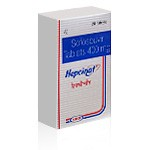
Buy Hepsera (Adefovir Dipivoxil) Online — Oral Antiviral for Chronic Hepatitis B


Hepsera (Adefovir Dipivoxil 10 mg) represents the nucleotide analog reverse transcriptase inhibitor therapy - the historic second-generation antiviral for chronic hepatitis B virus (HBV) infection management. Originally developed and marketed as Hepsera by Gilead Sciences and FDA-approved in 2002 as the second FDA-approved oral antiviral for chronic HBV (after lamivudine), adefovir dipivoxil established the nucleotide analog approach to HBV suppression that later evolved into tenofovir therapy. Hepsera on rxshop.md is manufactured by Cipla Ltd - one of India top pharmaceutical companies with WHO-GMP certification, US FDA-inspected manufacturing facilities, and comprehensive hepatology and antiviral product portfolio.
NOTE: Hepsera is currently out of stock. Modern hepatology guidelines (AASLD 2018, EASL 2017) recommend tenofovir or entecavir as first-line therapy over adefovir due to higher potency and lower resistance rates. Consider these preferred alternatives available on rxshop: Baraclude (Entecavir) for treatment-naive patients, Viread (Tenofovir Disoproxil Fumarate), or Hepbest (Tenofovir Alafenamide) - the newer safer tenofovir prodrug with reduced kidney and bone effects.
Adefovir dipivoxil works as a prodrug of adefovir - the active nucleotide analog of adenosine monophosphate. First, adefovir dipivoxil undergoes hydrolysis to adefovir after intestinal absorption. Second, adefovir undergoes cellular phosphorylation to adefovir diphosphate - the active antiviral metabolite. Third, adefovir diphosphate competitively inhibits HBV DNA polymerase preventing viral genome replication. Fourth, adefovir diphosphate incorporates into growing viral DNA chains as chain terminator stopping viral DNA synthesis. Fifth, sustained HBV suppression allows gradual normalization of liver enzymes and slower liver disease progression.
Hepsera primary FDA indication is treatment of chronic hepatitis B in adults with evidence of active viral replication including compensated liver disease with viremia and elevated ALT, and decompensated liver disease. Standard dosing: 10 mg once daily continued long-term. CRITICAL BLACK BOX WARNINGS: severe acute HBV exacerbations upon discontinuation, HIV resistance if used as monotherapy in undiagnosed HIV coinfection, nephrotoxicity with prolonged use, and lactic acidosis with hepatic steatosis. HIV testing mandatory before initiation. Monitor renal function and phosphate levels throughout therapy.
Free prescription
Discrete packaging
Have questions?
Quality Assurance
- HBeAg-Positive Chronic Hepatitis B: Reduces HBV DNA, normalises ALT, and induces HBeAg seroconversion in a meaningful proportion of treated patients over 1-2 years;
- HBeAg-Negative Chronic Hepatitis B: Effective in HBeAg-negative (pre-core mutant) disease, where sustained virologic suppression depends on continuous long-term therapy;
- Lamivudine-Resistant Hepatitis B: Active against HBV strains carrying YMDD mutations conferring lamivudine resistance — historically the first oral option for this difficult-to-treat population;
- HBV with Compensated Cirrhosis: Used in patients with compensated cirrhosis to suppress viral replication, normalise liver enzymes, and slow histological progression;
- HBV with Decompensated Cirrhosis: Often combined with another HBV antiviral (lamivudine, entecavir, tenofovir) for synergistic suppression in advanced liver disease and pre-transplant settings;
- Pre-Liver-Transplant HBV: To suppress HBV viral load prior to liver transplantation, reducing the risk of post-transplant graft re-infection;
- Post-Liver-Transplant HBV: Used alongside hepatitis B immune globulin (HBIG) to prevent graft re-infection after liver transplantation for HBV-related liver disease;
- HBV Reactivation Prophylaxis: For chronic HBV carriers receiving cancer chemotherapy, immunosuppressive therapy, or rituximab-containing regimens, where HBV reactivation can be life-threatening;
- HBV/HIV Coinfection (specialist use): Used only as part of a full antiretroviral regimen that also includes HIV-active drugs — never as standalone in HIV+ patients due to resistance risk;
- Chronic Hepatitis B in Pregnancy (specialist use, off-label): Selected use in late pregnancy to reduce viral load and lower mother-to-child transmission risk in highly viraemic mothers;
- Pediatric Chronic Hepatitis B: Approved for adolescents 12 years and older with chronic HBV;
- Persistent ALT Elevation from HBV: Effective in patients with biochemically active disease and elevated transaminases;
- HBV Combination Therapy: Often combined with lamivudine or telbivudine in difficult-to-treat or treatment-experienced patients to delay or overcome resistance;
- Salvage HBV Therapy: For patients who develop resistance or non-response on first-line agents and require an alternative nucleotide backbone.
- Active Against Lamivudine-Resistant HBV: Historically the first oral option for HBV strains carrying YMDD-mutation lamivudine resistance — still useful as a salvage strategy;
- Convenient Once-Daily Oral Dosing: A single 10 mg tablet daily, with or without food — supports long-term medication adherence;
- Normalises Serum ALT Liver Enzymes: Reduces hepatic inflammation and brings ALT into the normal range in the majority of patients within 6-12 months;
- Improves Liver Histology: Documented reduction in necroinflammatory activity and fibrosis on follow-up liver biopsies;
- Induces HBeAg Seroconversion: Meaningful proportion of HBeAg-positive patients achieve seroconversion (HBeAg loss + anti-HBe development) with longer-term therapy;
- Reduces Hepatocellular Carcinoma Risk: Long-term HBV viral suppression lowers the risk of progression to liver cancer in chronic HBV carriers;
- Effective in HBV Cirrhosis: Slows progression to decompensation in patients with established compensated cirrhosis;
- Useful for HBV Reactivation Prophylaxis: Prevents life-threatening flares in HBV carriers undergoing chemotherapy, immunosuppression, or organ transplantation;
- FDA-Approved Since 2002: Over two decades of real-world clinical experience with established safety and efficacy data;
- WHO Essential Medicine: Listed on the WHO Model List of Essential Medicines for chronic hepatitis B therapy;
- Compatible with Combination HBV Therapy: Pairs effectively with lamivudine, telbivudine, or entecavir for synergistic suppression in difficult cases;
- Suitable for Pre- and Post-Transplant HBV Management: Established role in transplant centers for viral load suppression and graft re-infection prevention;
- Approved for Adolescents 12+: Authorised for use in adolescents with chronic HBV who require oral antiviral therapy;
- Established Renal Monitoring Protocols: Well-defined guidelines for periodic serum creatinine monitoring make long-term use predictable and safe;
- Renal Dose Adjustments Available: Predictable adjustments for patients with reduced creatinine clearance maintain efficacy while limiting toxicity risk;
- Modest Resistance Profile: Adefovir-specific resistance mutations (rtA181V/T, rtN236T) develop slowly and are well-characterised — predictable management strategies exist;
- Predictable Pharmacokinetics: Linear pharmacokinetics, minimal CYP-mediated metabolism — few major drug-drug interactions;
- Useful in HBeAg-Negative HBV: Particularly valuable in HBeAg-negative pre-core mutant disease where lifelong viral suppression is required;
- Stable at Room Temperature: No refrigeration required — practical for travel, long-term home storage, and humanitarian distribution;
- Reduced Need for Liver Transplantation: Sustained HBV suppression reduces the likelihood of progression to end-stage liver disease;
- Featured in HBV Treatment Guidelines: Recognised in AASLD, EASL, and APASL hepatitis B treatment recommendations as a second-line nucleotide option;
- Cost-Effective in Resource-Limited Settings: Generic versions are widely available and significantly more affordable than newer nucleotide analogs;
- Carefully Defined Discontinuation Protocols: Established guidelines for monitored treatment cessation reduce the risk of post-discontinuation HBV flares;
- Compatible with Sequential Interferon Therapy: Can be used before or after peginterferon in selected sequential HBV treatment strategies;
- Long-Term Viral Suppression: With continued therapy, durable HBV DNA suppression is achievable in the majority of compliant patients;
- Backbone Option for Treatment-Experienced HBV Patients: Provides a non-cross-resistant alternative for patients failing first-line nucleoside agents;
- Globally Available: Widely stocked across international markets, supporting continuity of HBV care across travel and relocation.
Generic Hepsera (Adefovir Dipivoxil 10 mg) Medication guide:
Brief History
Originally, Hespera drug was being developed as a treatment for people infected with HIV, but in 1999 FDA (US Food and Drug Administration) has advised against continuing the research, as Hespera proved to be rather toxic when used in increased dosage over moderate periods of time. It was estimated that people on treatment from HIV would have to take starting doses of 60 mg with potential increase to the 120 mg daily, which proved to severely increase liver toxicity.
Even with that, the project was not shut down, and closer research on Hespera’s effects on liver showed that in lower doses it can be successfully used to treat hepatitis B infections.
The full chemical formula of the drug is C8H12N5O5P and it achieves the results by blocking a production of an enzyme crucial for reproduction of Hepatitis B virus.
How to use this drug?
Hespera is one of the several drugs used to combat hepatitis B virus after it has already infected someone and became active. This happens often in Africa and Asia, as the virus has been under control on the old continent as well as in the USA, but there are cases that need treating here and there, and Hepsera has several distinct advantages when compared to other drugs made to combat hepatitis B.
Main advantage, of course, is the fact that Hespera is not addictive and can be safely discontinued after years of use. However, much more important is the fact that other treatments for this type of hepatitis usually lose effectiveness over the course of two to three years, as the virus develops drug resistance. The trials have shown that Hespera is successful in combating the virus even after decade and a half of use.
The drug comes in the form of a pill, meant for oral use only. Regular Adefovir dose (a common brand name for Hespera drug) is one pill per day, but you can also buy Adefovir Dipivoxil, which contains two doses in a single pill. The pill is to be swallowed with water after a meal, and it is not to be crushed or chewed on. Standard starting dose of adults is in the realm of 10 mg, but you should always consult with your doctor so he can adjust the dose if necessary.
Contraindications
First thing you should know about Hespera is the fact that it an active allergen, and can cause immediate moderate reaction. This is one of the reasons behind the fact that it’s a prescription drug, and your doctor should run thorough tolerance tests before he prescribes this hepatitis B treatment drug. Common effects of allergy include: difficulties with breathing, swelling of face, lips, tongue and throat as well as breaking of red hives. If you experience any of these while on Hespera treatment, seek immediate medical attention.
Like with any other drugs that mess with the liver chemistry, there are other, more serious long-term side effects that you can experience while using Hespera. One of the most acute conditions it can cause is lactic acidosis, which is a buildup of lactic acid in the muscles, which can be fatal if not treated. This is something that can be encountered after months of successful Hespera use.
So you should always be mindful of the following effects:
- Muscle weakness or pain;
- Numbness of extremities;
- Persistent problems with breathing;
- Dizziness, light headedness, vertigo and weakness;
- Stomach pain, moderate or severe nausea with vomiting;
- Uneven heart beat rate.
These effects can start as barely noticeable, but will slowly increase in intensity, so inform your doctor immediately if you experience any of these symptoms.
Other negative side effects you may experience that would require immediate consultation with your doctor are:
- Problems with urinating - a risk with every drug that alters liver chemistry;
- Moderate nausea, stomach problems, dark urine and yellowing of the skin or eyes (jaundice).
There are minor side effects that can be experienced as well, including:
- Light nausea and vertigo;
- Gas and stomach pain;
- Mild skin itching (if it starts as you start your treatment, check in with your doctor to make sure it’s not an allergic reaction);
- Headache.
A drug of this caliber has risk of both mild and serious side effects, which is why it is paramount to keep in contact with your doctor and not to alter your prescribed dose in any way. Bear in mind that barely under 2% of the consumers have experienced any of the moderate or severe side effects, and less than 8% experienced mild side effects.
Advice and consumer experiences
- Do not chew the drug or crush it before use. It’s always best if it can get to your stomach as it is, dissolving and getting absorbed into the bloodstream there;
- While it is not a necessity to take your dose of Hepsera after meal, doing so increases the absorption rate, giving much better results;
- If you have accidentally skipped a dose, do not take it out of term and do not double the next dose in an attempt to catch up. It can lead to overdosing and it will definitely increase the chances of experiencing negative side effects of Hepsera;
- If you chose to order Hepsera online, make sure you do so from a reputable supplier.
It’s easy to find Hepsera testimonials online on health related forums and blogs. Almost all of the comments found show consumers who are satisfied with how Hepsera helped with their hepatitis B problem, and these include men and women who have been using it for years. The drug has not been selected by scammers and there are no fake online orders of Hepsera reported, so it’s pretty safe to buy Hepsera from web sites, especially since the discounts offered are definitely better than what you can see in a local drug store.
Hepsera — Frequently Asked Questions
-
What is Hepsera (Adefovir Dipivoxil)?
Hepsera is a prescription medication containing Adefovir Dipivoxil, used in the treatment of chronic hepatitis B. -
How Does Hepsera Work?
Hepsera works by inhibiting the replication of the hepatitis B virus, reducing its activity and helping to control the infection. -
Is Hepsera a Cure for Hepatitis B?
Hepsera is not a cure but is an effective antiviral medication that helps manage and control chronic hepatitis B. -
What Forms Does Hepsera Come In?
Hepsera is available in tablet form for oral administration, and the recommended dosage may vary based on individual health conditions. -
Can Hepsera Be Used Alone for Hepatitis B Treatment?
Hepsera is often prescribed as a monotherapy or in combination with other antiviral medications for comprehensive hepatitis B treatment. -
What Should I Do If I Miss a Dose of Hepsera?
If a dose is missed, take it as soon as possible. However, if it's almost time for the next dose, skip the missed one and continue with the regular schedule. -
Does Hepsera Have Common Side Effects?
Common side effects may include weakness, headache, and nausea. These effects are usually mild, but consult your doctor if they persist.
See all Hepsera questions (30)
More Antiviral Medications