Buy Clarinex (Desloratadine) Online — Pre-Activated Non-Sedating Antihistamine for Allergies & Pediatric Use

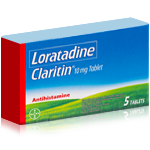
Clarinex is one of the most prescribed second-generation antihistamines worldwide — a refined, advanced formulation specifically engineered to deliver the active metabolite of loratadine directly, without requiring liver activation. The active ingredient is Desloratadine, the principal active form of loratadine (Claritin), FDA-approved since 2001 and now available globally under multiple brand names including Aerius, Azomyr, and Neoclarityn. By delivering the pre-activated compound directly, Clarinex bypasses the variability of first-pass hepatic metabolism and achieves consistent, reliable allergy relief across all patient populations.
Desloratadine works as a selective peripheral H1-receptor antagonist, blocking histamine at sites in the nasal mucosa, skin, and conjunctiva where allergic symptoms originate. Like all modern second-generation antihistamines, Clarinex has been carefully designed to avoid significant central nervous system penetration — minimising sedation, cognitive impairment, and anticholinergic side effects associated with older first-generation antihistamines.
A defining clinical advantage of Clarinex is its broad age approval: it is one of the few prescription antihistamines authorised for use in infants from 6 months of age, making it particularly valuable in pediatric allergy care. This early pediatric approval is supported by extensive safety data and well-defined weight-based oral syrup dosing protocols.
Clarinex is FDA-approved for seasonal allergic rhinitis caused by pollens, perennial allergic rhinitis from indoor allergens such as dust mites and pet dander, and chronic idiopathic urticaria — long-lasting hives of unknown cause. It is also widely used internationally for symptomatic management of allergic skin reactions, allergic conjunctivitis, and associated allergic complaints.
The medication is available in multiple convenient formulations: 5 mg standard tablets, 5 mg orally disintegrating RediTabs for patients who have difficulty swallowing pills, and 2.5 mg/5 mL oral syrup for pediatric use. The standard adult dose is one 5 mg tablet once daily, providing 24-hour symptom relief due to Desloratadine's long half-life of approximately 27 hours.
Clarinex has an excellent tolerability profile, with mild headache being the most commonly reported side effect. Affordable generic Desloratadine is widely available globally, and the medication is listed on the WHO Model List of Essential Medicines — reflecting its global importance in modern allergy care.
Free prescription
Discrete packaging
Have questions?
Quality Assurance

- Year Round Allergies: For continuous management of perennial nasal symptoms triggered by indoor allergens such as dust mites, animal dander, and indoor moulds;
- Chronic Hives: For ongoing daily management of unexplained chronic urticaria in patients aged 6 years and older;
- Toddler Allergies: One of the most widely approved antihistamines for toddlers aged 2+ with seasonal or perennial nasal allergy symptoms;
- School Age Allergies: Once-daily dosing with chewable, syrup, or tablet options fits school routines and improves classroom focus;
- Family Allergies: One medication, multiple formulations — supports families with allergic members across multiple ages;
- Working Adult Allergies: Non-sedating profile supports daytime productivity, concentration, and driving performance throughout allergy season;
- Itchy Eyes: Reduces ocular itching, redness, and watering associated with seasonal and perennial allergic rhinitis;
- Allergic Skin Itching: Symptomatic relief of pruritus from urticaria, mild allergic skin reactions, and contact dermatitis flares;
- Hives Episodes: For patients with recurrent intermittent urticaria episodes where on-demand or continuous dosing provides symptom control;
- Travel Allergies: Convenient OTC availability and stable formulations support travellers experiencing unexpected allergen exposure abroad;
- Insect Bite Reactions: For systemic relief of itching and localised swelling from mosquito bites, bee stings, and other insect allergic responses;
- Mild Drug Allergy: Symptomatic relief of non-severe drug-related allergic reactions presenting as hives or itching;
- Pre Travel Prophylaxis: Started days before travelling to a known allergy trigger region for pre-emptive symptom suppression;
- Long Term Allergies: Decades of safety data support chronic daily use without tolerance development or accumulated risk;
- Immunotherapy Adjunct: Adjunctive symptomatic control during sublingual or subcutaneous desensitization protocols.
- Less Runny Nose: Reduces rhinorrhea associated with seasonal and perennial allergic rhinitis;
- Less Eye Itching: Reduces ocular itching, tearing, and irritation associated with allergic conjunctivitis;
- Less Watery Eyes: Decreases tear production from allergic reactions, supporting clearer vision during activities;
- Less Nasal Itching: Calms persistent itching inside the nose during allergy season;
- No Drowsiness: Negligible sedating effects supporting normal daytime functioning during allergy season;
- Daytime Alertness: Maintains energy and focus throughout the workday without sedation common with older antihistamines;
- 24 Hour Coverage: Once-daily 10 mg dosing maintains continuous symptom relief day and night;
- Once Daily Dosing: Simple once-daily regimen supports medication adherence during long allergy seasons;
- Better Sleep: Effective allergy symptom control supports restful sleep during peak allergen exposure;
- Quality of Life: Measurable improvements in sleep, work productivity, school performance, and athletic activity during allergy season;
- Driving Safety: No clinically meaningful impact on driving performance or workplace safety at therapeutic doses;
- Better Cognition: Documented absence of effects on memory, attention, and reaction time in clinical studies;
- Non Sedating Antihistamine: Negligible CNS penetration supports clear thinking, work productivity, and study performance;
- Second Generation Antihistamine: Modern antihistamine class with significantly better tolerability than older first-generation agents;
- Original Loratadine: The foundational second-generation antihistamine that defined modern non-sedating allergy care since 1993;
- Brand Claritin: Most internationally recognised non-sedating antihistamine brand — familiar to patients and pharmacists worldwide;
- Clarityn Equivalent: Same Loratadine molecule as UK and European brand Clarityn — familiar option across global markets;
- Generic Loratadine: Affordable generic versions of Claritin available globally for cost-sensitive long-term use;
- OTC Antihistamine: Available without prescription since 2002 in US and many countries — rapid access during peak allergy season;
- Hay Fever Relief: Effective relief from sneezing, runny nose, and itchy eyes during tree, grass, and weed pollen seasons;
- Chronic Hives Relief: For chronic idiopathic urticaria in patients 6 years and older;
- Allergic Rhinitis Relief: Reduces nasal allergy symptoms with reliable 24-hour coverage from single daily dose;
- Toddler Antihistamine: One of the most widely approved second-generation antihistamines for the youngest pediatric allergy patients from age 2;
- Pediatric Antihistamine: Approved across all pediatric ages with age-appropriate syrup, chewable, and tablet formulations;
- Family Antihistamine: Single brand covers parents, teens, and children — simplifies family allergy management;
- RediTab Antihistamine: Orally disintegrating tablet dissolves on tongue without water — perfect for travel, school, and patients with swallowing difficulties;
- Liqui Gel Antihistamine: Smooth swallowing soft capsules for patients who prefer not to chew or dissolve tablets;
- Pediatric Syrup Antihistamine: Pleasant-tasting 5 mg/5 mL syrup with weight-based dosing supports children from age 2;
- Long Half Life Antihistamine: Combined parent and active metabolite half-life supports forgiveness for occasionally missed doses;
- Travel Friendly Antihistamine: Stable at room temperature, available globally, accessible without prescription in most countries;
- Pre Season Prophylaxis: Starting before peak pollen exposure reduces overall seasonal symptom burden;
- Pregnancy Safety: One of the antihistamines with reassuring pregnancy data in clinical use;
- Breastfeeding Compatible: Considered safe during lactation when antihistamine therapy is needed;
- Few Drug Interactions: Compatible with most chronic medications, useful in polypharmacy patients;
- Multiple Formulations: Tablets, RediTabs, liqui-gels, and pediatric syrup support diverse patient needs;
- Stable Storage: Stable at room temperature — convenient for travel kits, school bags, and emergency allergy supplies;
- Globally Available: Widely stocked across international markets in branded and generic forms.
Generic Claritin (Loratadine 100 mg) Medication guide:
💊 What is Claritin (Loratadine) and what it treats
Claritin is one of the most recognised brand names in modern allergy medicine, containing the active ingredient loratadine. First approved by the U.S. FDA in 1993, Claritin was the original second-generation non-sedating prescription antihistamine in the United States and helped define what modern allergy treatment looks like. After more than 30 years of clinical use and inclusion on the WHO Essential Medicines List, loratadine is now one of the most-used antihistamines globally.
What Claritin treats
- 🤧 Seasonal allergic rhinitis (hay fever) - the original FDA-approved indication
- 🍃 Perennial allergic rhinitis - year-round indoor allergens
- 🌹 Chronic idiopathic urticaria - recurring hives lasting 6+ weeks
- 👁 Allergic conjunctivitis - eye symptoms from allergens
- 💨 Various allergic skin conditions with histamine-mediated itch
- Active ingredient: loratadine
- Drug class: second-generation non-sedating H1 antihistamine
- Originally developed by: Schering-Plough (now Bayer in the US OTC market)
- U.S. FDA approval: 1993 (one of the first 2nd-gen antihistamines in the US)
- U.S. OTC transition: 2002 (landmark in pharmaceutical industry history)
- Standard adult dose: 10 mg once daily
- Formulations: tablet, RediTabs ODT, syrup, Claritin-D combo
- Pediatric approval: from 2 years (syrup form)
- Half-life: 8-12 hours (becomes desloratadine in the liver)
- WHO Essential Medicines List: included
- Markets: OTC in most major countries globally
Why Claritin matters historically
- First non-sedating Rx antihistamine in US (1993)
- Established the second-generation antihistamine market
- Became one of the best-selling Rx medications in the late 1990s
- Famous 2002 OTC switch - largest in pharmaceutical history
- Schering-Plough relied on Claritin for over half its revenue
- Loratadine on WHO Essential Medicines List - recognised globally as essential medication
- Reference standard against which newer antihistamines are compared
Key advantages of Claritin
- OTC availability in most countries (no prescription needed)
- Very low cost as generic loratadine
- Once-daily dosing for simple regimen
- Non-sedating profile (~8% sedation rate)
- Long-established safety over 30+ years
- Most extensive pregnancy safety data of any antihistamine
- Multiple formulations (tablet, ODT, syrup, decongestant combo)
- WHO Essential Medicines - globally recognised
- Familiar brand - patient trust and pharmacist familiarity
What Claritin does NOT do
Claritin is not appropriate for:
- Severe acute allergic reactions like anaphylaxis (requires epinephrine)
- Anxiety disorders (unlike Atarax, no anxiolytic effect)
- Insomnia (essentially non-sedating)
- Pre-operative sedation
- Asthma alone (uses inhaled steroids and bronchodilators)
- Non-allergic skin conditions without histamine involvement
For over three decades, Claritin has been one of the cornerstones of allergy treatment globally. The combination of FDA approval, OTC availability, WHO Essential Medicines List inclusion, extensive pregnancy safety data, and low cost makes loratadine one of the most accessible effective antihistamines anywhere in the world. While newer alternatives exist, Claritin remains a foundational choice for most allergy treatment scenarios.
📜 The Claritin breakthrough story - 1993 FDA and 2002 OTC
The story of how Claritin came to be one of the world's most widely used medications involves landmark moments in pharmaceutical history. From its 1981 synthesis through the 1993 FDA approval as the first non-sedating prescription antihistamine in the United States, and the famous 2002 OTC switch (the largest in pharmaceutical history), Claritin's journey changed how Americans treat allergies and how pharmaceutical companies approach blockbuster drugs.
The early years (1981-1993)
- 1981: Loratadine synthesised by Schering-Plough researchers in New Jersey
- 1981-1990: Preclinical development and early human trials
- 1980s: Schering-Plough recognises the potential of non-sedating antihistamines as an enormous market opportunity
- 1988: Loratadine first approved in Belgium (and several other countries shortly after)
- April 1993: U.S. FDA approves Claritin as the first non-sedating prescription antihistamine in the United States
The market dominance years (1993-2002)
- The only non-sedating Rx antihistamine in the US for the early 1990s
- Patients tired of sedating Benadryl-class antihistamines flocked to Claritin
- Massive direct-to-consumer advertising (legal after 1997 FDA changes)
- Peak revenue: Claritin generated over $3 billion annually for Schering-Plough at its peak
- For some years, Claritin represented over 50% of Schering-Plough's revenue
- One of the most-prescribed medications in the United States
- "Claritin Clear" became a household phrase
The 2002 OTC switch - landmark in pharmaceutical history
- Schering-Plough patent expiring: Generic loratadine threatened to dominate the Rx market
- The unprecedented move: Major insurance company WellPoint (and others) petitioned the FDA to switch Claritin from prescription to over-the-counter without Schering-Plough's request
- The reasoning: If Claritin was truly non-sedating, it didn't need a prescription - and OTC sales would force insurance off the hook for paying for it
- Schering-Plough resisted initially - OTC would mean lower margins and no insurance coverage
- 2002: FDA approved the OTC switch
- This was the largest Rx-to-OTC switch in U.S. pharmaceutical history at the time
- It changed how insurance companies could pressure for OTC switches on other medications
What changed after OTC switch
| Aspect | Pre-2002 (Rx) | Post-2002 (OTC) |
|---|---|---|
| Cost per pill | High (insurance covered) | Low (paid out of pocket) |
| Annual revenue | $3+ billion peak | Sharply dropped |
| Access | Doctor visit required | Walk-in to pharmacy |
| Generic versions | Coming after patent expiry | Flooded the market |
| Schering-Plough's strategy | Defend Claritin | Develop Clarinex (desloratadine) |
| Consumer experience | Prescribed by doctor | Self-selected at pharmacy |
The corporate journey
| Era | Owner |
|---|---|
| 1981-2009 | Schering-Plough (developer) |
| 2009-2014 | Merck (acquired Schering-Plough) |
| 2014-present (US OTC) | Bayer (acquired Merck consumer health) |
| Generic loratadine | Many international manufacturers |
The Clarinex spin-off strategy
- Knowing OTC Claritin would erode revenue, Schering-Plough prepared Clarinex (desloratadine)
- Clarinex is the active metabolite of loratadine - same drug essentially
- Clarinex got FDA approval in December 2001, just months before Claritin's OTC switch
- This let Schering-Plough push patients toward prescription Clarinex (with insurance coverage)
- Critics called this a "patent extension" strategy
- Many doctors and patients stayed with cheaper OTC Claritin
What this means for patients today
Because of the 2002 OTC switch and subsequent generic flood, loratadine became one of the cheapest and most accessible antihistamines anywhere. A month's supply costs only a few dollars in most countries. The medication is available without prescription in over 100 countries. For patients with allergies, this transformation made effective treatment dramatically more accessible than the prescription-only era.
Claritin's journey from breakthrough prescription medication in 1993 to inexpensive OTC staple by 2002 represents one of the most consequential transitions in modern pharmaceutical history. Beyond the individual patient impact, the Claritin OTC switch demonstrated how insurance companies could pressure for OTC transitions on other medications. For better or worse, this changed pharmaceutical industry dynamics in lasting ways.
🌍 Where Claritin is available globally - WHO Essential Medicine
Claritin (loratadine) holds a distinction shared by relatively few modern medications: inclusion on the World Health Organization (WHO) Essential Medicines List. This recognition reflects loratadine's central role in global allergic disease management. Combined with OTC availability in most major markets and very low generic cost, Claritin is one of the most universally accessible modern antihistamines in the world.
Brand names by region
| Region | Brand name | Status |
|---|---|---|
| United States | Claritin (Bayer) | OTC since 2002 |
| European Union | Claritine, Clarityne | OTC or Rx (varies) |
| UK | Clarityn | OTC available |
| Canada | Claritin | OTC since 1998 |
| Australia | Claratyne | OTC available |
| Russia | Claritin (Lomilan, Lorano) | OTC |
| Brazil | Claritin, Loratamed | OTC |
| Mexico | Claritine | OTC |
| India | Lorfast, Lorinol, Loridin, many generics | OTC |
| China | Kailei De (Claritin), generics | OTC |
| Generic name | Loratadine | Consistent internationally |
The WHO Essential Medicines List recognition
- The WHO Essential Medicines List identifies medications considered essential for basic health needs of populations
- Inclusion means the medication meets criteria for safety, effectiveness, and global public health relevance
- Listed medications receive priority access in low-income countries
- Used to guide national essential medicines lists and procurement programs
- Loratadine is included as the representative non-sedating antihistamine
- Clarinex (desloratadine) is NOT included on this list - a meaningful distinction
- This recognition reflects loratadine's role in global allergic disease management
OTC availability worldwide
- United States - since 2002
- Canada - since 1998
- Australia - since 1998
- Most EU countries - varies; many OTC
- UK - OTC available
- Latin America - widely OTC
- Asia - OTC in most markets
- Africa - widely OTC where available
- Russia - OTC
- Over 100+ countries total with OTC access
Cost considerations globally
| Market | Cost characteristic |
|---|---|
| USA brand Claritin OTC | Low to moderate |
| USA generic loratadine OTC | Very low (often under $10 per month) |
| EU branded | Low |
| EU generic | Very low |
| Latin America | Reasonable; widely affordable |
| India generic | Extremely low - among the cheapest antihistamines |
| African markets | Lower than most alternatives |
The corporate journey internationally
- 1981-2009: Schering-Plough manufactured and marketed Claritin globally
- 2009: Merck acquired Schering-Plough, gaining Claritin
- 2014: Bayer acquired Merck's consumer health unit, including OTC Claritin in the US
- Different regions: may have different brand owners (Bayer in US, Schering-Plough/Merck in some markets, generics dominant)
- Generic manufacturers: many international companies make loratadine
For travelers
- Almost universally available as OTC in major travel destinations
- Look for "loratadine" generic name if "Claritin" not available
- 10 mg standard dose is universal across brands
- Bring small supply for immediate travel needs
- Easily replaceable at most international pharmacies
- No prescription needed in most countries
The combination of OTC availability in over 100 countries, WHO Essential Medicines List inclusion, and very low generic cost makes loratadine one of the most universally accessible modern antihistamines globally. For patients with allergic conditions, this accessibility translates directly to better treatment outcomes - effective allergy control is available almost anywhere in the world at minimal cost.
🧪 What loratadine becomes in your body - the desloratadine metabolite
An interesting aspect of how Claritin works is that loratadine itself is converted in your liver to an active metabolite called desloratadine. This metabolite is the same compound sold separately as the prescription medication Clarinex. Understanding this parent-metabolite relationship helps clarify why Claritin and Clarinex are related, why they have similar effects, and why some people might respond differently to one versus the other.
The liver conversion explained
- You take Claritin (loratadine) by mouth
- Loratadine is absorbed from your digestive system into your bloodstream
- The bloodstream carries loratadine to your liver
- In the liver, two enzymes (CYP3A4 and CYP2D6) convert loratadine to desloratadine
- This conversion happens within hours of taking your dose
- Most of loratadine becomes desloratadine
- Both loratadine and desloratadine have some antihistamine activity, but desloratadine carries most of the therapeutic effect
The two-compound antihistamine action
| Compound | Effect | Duration |
|---|---|---|
| Loratadine (parent) | Some antihistamine activity | Half-life 8-12 hours |
| Desloratadine (active metabolite) | Strong antihistamine activity | Half-life 27 hours |
Why this matters - individual variation
- The conversion depends on individual CYP3A4 and CYP2D6 enzyme activity
- Some people convert loratadine to desloratadine quickly and efficiently
- Other people convert it more slowly (called "slow metabolizers")
- About 7% of Caucasians and 2-3% of Africans are CYP2D6 poor metabolizers
- Slow metabolizers may experience reduced effect from Claritin
- For these patients, switching to Clarinex (which bypasses conversion) may help
- Drug interactions that block CYP enzymes can also reduce conversion
Drug interaction implications
| Interaction class | Effect on Claritin |
|---|---|
| CYP3A4 inhibitors (macrolides, antifungals) | May increase loratadine levels; reduce conversion |
| CYP2D6 inhibitors (fluoxetine, paroxetine) | May reduce desloratadine formation |
| CYP enzyme inducers (rifampin) | Speed up conversion; may reduce effect |
| Grapefruit juice | May affect loratadine metabolism mildly |
The Schering-Plough business angle
- Schering-Plough scientists isolated desloratadine and patented it separately
- They positioned desloratadine as a "purified active form" of loratadine
- This allowed them to develop Clarinex as a prescription product
- When Claritin patent expired (2002), they had Clarinex (2001 FDA approval) waiting
- Critics called this "patent extension via metabolite isolation"
- Other pharmaceutical companies have used similar strategies (cetirizine to levocetirizine, etc.)
Other parent-metabolite drug pairs
| Parent drug | Active metabolite |
|---|---|
| Loratadine (Claritin) | Desloratadine (Clarinex) |
| Hydroxyzine (Atarax) | Cetirizine (Zyrtec) |
| Cetirizine (Zyrtec) | Levocetirizine (Xyzal) |
| Terfenadine (withdrawn) | Fexofenadine (Allegra) |
Should you take Claritin or Clarinex?
- Most patients get the same effect from either - Claritin's conversion works fine
- For most situations Claritin OTC is more practical (cheaper, no Rx needed)
- If Claritin hasn't worked well despite adequate dosing, you may be a slow metabolizer - Clarinex might work better
- If you take CYP-affecting medications regularly, Clarinex (which bypasses conversion) may be more reliable
- For routine seasonal allergies, the OTC convenience and low cost of Claritin usually wins
- Don't take both together - this is essentially double-dosing desloratadine
Loratadine being converted to desloratadine in your liver is the normal way Claritin works. For most patients this conversion works well and Claritin provides effective allergy control. The Clarinex marketing has emphasized this metabolite to position itself as "the active form," but for most patients the practical difference is minimal. The OTC availability and low cost of Claritin make it the more practical choice for routine allergy treatment.
🔬 How Claritin works - selective H1 mechanism
Claritin (loratadine) is a selective H1 histamine receptor antagonist. This means it blocks the H1 receptors that drive allergic symptoms while minimally affecting other receptor systems that older first-generation antihistamines also blocked. Understanding the mechanism explains both Claritin's therapeutic benefits and what to expect from treatment.
The H1 receptor blockade
- When you encounter an allergen, mast cells in your tissues release histamine
- Histamine normally binds to H1 receptors on blood vessels, nerves, and other tissues
- This binding triggers:
- - Vasodilation (causing congestion, redness)
- - Increased vascular permeability (causing runny nose, swelling, hives)
- - Sensory nerve activation (causing itching, sneezing)
- - Mucus secretion
- Loratadine and its metabolite desloratadine block H1 receptors
- This prevents histamine from triggering the allergic cascade
The selectivity profile
| Receptor | Loratadine activity | Clinical implication |
|---|---|---|
| H1 histamine | Strong blockade | Anti-allergic effect |
| H2 histamine (stomach) | Minimal | No stomach effects |
| Muscarinic acetylcholine | Minimal | Minimal dry mouth, no urinary retention |
| Serotonin receptors | Minimal | No serotonergic effects |
| Alpha-adrenergic | Minimal | No blood pressure effects |
| Dopamine receptors | Minimal | No dopaminergic effects |
| hERG potassium (cardiac) | Minimal at therapeutic doses | No clinically significant QT effects |
Brain penetration and sedation
- Loratadine and desloratadine cross the blood-brain barrier poorly
- The molecule is designed with properties that limit brain entry
- Brain H1 receptors involved in alertness are minimally affected
- Sedation rate of about 8% at standard 10 mg dose
- Significantly less than first-generation antihistamines (30-60%)
- Slightly more sedation than fexofenadine
- About the same as Clarinex (~6-8%)
- Less sedation than cetirizine in most studies
Pharmacokinetic profile of Claritin
| Parameter | Value | Clinical relevance |
|---|---|---|
| Absorption | Well absorbed orally | No food restrictions |
| Time to peak (loratadine) | 1-1.5 hours | Initial effects begin |
| Time to peak (desloratadine) | 3 hours | Maximum antihistamine effect |
| Half-life (loratadine) | 8-12 hours | Parent compound elimination |
| Half-life (desloratadine) | 27 hours | Sustained effect via metabolite |
| Plasma protein binding | ~97% | Standard |
| Metabolism | CYP3A4 and CYP2D6 to desloratadine | Some drug interactions possible |
| Excretion | Renal and biliary | Adjustment in severe renal/hepatic impairment |
The dual-compound advantage
- You take loratadine - peaks in 1-1.5 hours
- Loratadine has 8-12 hour half-life but is converted to desloratadine
- Desloratadine has 27-hour half-life - sustained effect
- So the parent compound provides initial fast action
- The metabolite provides sustained 24-hour coverage
- This explains why once-daily dosing works despite short loratadine half-life
- Steady-state desloratadine develops over 5-7 days of daily dosing
How the effects develop over time
| Time after dose | What is happening |
|---|---|
| 30-60 minutes | Initial absorption; effects begin |
| 1-1.5 hours | Loratadine peak; conversion starting |
| 1-3 hours | Significant H1 blockade; clear symptom relief |
| 3 hours | Peak desloratadine concentration; maximum effect |
| 4-24 hours | Sustained antihistamine effect via desloratadine |
| 24 hours | Time for next dose; metabolite levels still significant |
| 5-7 days regular use | Steady-state metabolite levels developed |
Claritin combines two compounds working through the same H1 receptor mechanism: loratadine providing the fast initial action, and desloratadine providing the sustained 24-hour coverage. This dual approach explains why a medication with 8-12 hour parent half-life can provide reliable once-daily dosing. The poor blood-brain barrier penetration and clean receptor selectivity result in effective allergy treatment with minimal collateral effects.
🤧 Claritin for seasonal allergic rhinitis - the classic indication
Seasonal allergic rhinitis (hay fever) is the indication for which Claritin was originally FDA-approved in 1993 and remains its primary use today. The combination of OTC availability, once-daily dosing, very low generic cost, and excellent long-term safety has made Claritin one of the world's most-used treatments for seasonal allergies. Hundreds of millions of people use loratadine annually for pollen-driven nasal symptoms.
What seasonal allergic rhinitis symptoms feel like
- Sneezing - sometimes in rapid succession
- Runny nose with clear watery discharge
- Nasal congestion - stuffiness affecting breathing
- Itchy nose, throat, palate, or ears
- Postnasal drip with throat clearing
- Eye symptoms - itchy, watery, red eyes (often called rhinoconjunctivitis)
- Fatigue from chronic symptoms and disrupted sleep
- "Allergic shiners" - dark circles under eyes from congestion
Claritin dosing for seasonal allergies
| Age | Dose | Form |
|---|---|---|
| Adults and children 6+ | 10 mg once daily | Tablet or RediTabs |
| Children 2-5 | 5 mg once daily | Syrup (5 mL) |
| Under 2 years | Not approved | Use Clarinex syrup or alternatives |
Clinical effectiveness for seasonal rhinitis
- Significantly better than placebo in symptom reduction
- Effective for sneezing, runny nose, and itch
- Modest effect on congestion (where Claritin-D may help)
- Effective for eye symptoms due to systemic action
- Sustained 24-hour effect with once-daily dosing
- Excellent long-term tolerability
- Quality of life improvement documented in many studies
Common seasonal triggers
| Season | Common allergens |
|---|---|
| Spring | Tree pollens (oak, birch, maple, cedar) |
| Late spring / early summer | Grass pollens (Timothy, Bermuda, rye) |
| Late summer / fall | Ragweed and weed pollens |
| Summer | Outdoor moulds |
Pre-treatment strategy
For known seasonal patterns, start Claritin 1 to 2 weeks before your typical allergy season. The medication takes time to build to steady-state plasma levels of desloratadine (5-7 days). Pre-loading allows full antihistamine effect when allergen exposure begins, providing dramatically better control than starting after symptoms emerge.
What to expect with Claritin treatment
- Day 1: Initial absorption; some symptom improvement noticeable
- Day 2-3: Building toward steady state
- Day 5-7: Full effect via desloratadine accumulation
- Throughout season: Continuous daily use prevents breakthrough
- End of season: Can stop when allergen exposure ends
Combining Claritin with other treatments
| Combination | When useful |
|---|---|
| Claritin + intranasal corticosteroid | Moderate-severe persistent symptoms |
| Claritin-D (with pseudoephedrine) | When congestion is dominant |
| Claritin + antihistamine eye drops | Severe eye symptoms |
| Claritin + saline rinses | High allergen exposure days |
| Claritin + allergen immunotherapy | Severe persistent allergies |
The OTC convenience factor
- No doctor visit needed before treatment
- Can start immediately when symptoms appear
- Easy to maintain supply for multi-month seasons
- Stockpile-friendly (long shelf life)
- Travel-friendly (don't need prescription documentation)
- Family-friendly (one trip to pharmacy for multiple users)
- Low cost makes long-term use sustainable
For the millions of people with seasonal allergies, Claritin represents one of the most practical and accessible treatment options. The combination of OTC availability, low cost, once-daily dosing, and proven effectiveness over 30+ years makes it a sensible first choice for routine hay fever. The pre-treatment strategy and combination options provide flexibility for varying severity.
🍃 Claritin for perennial allergic rhinitis
Perennial allergic rhinitis - year-round nasal allergy symptoms from indoor allergens like dust mites, pet dander, and moulds - is one of Claritin's important indications. The combination of OTC availability, low cost, once-daily dosing, and excellent long-term tolerability makes Claritin particularly well-suited for the continuous daily use that perennial allergies require.
How perennial differs from seasonal
| Feature | Seasonal | Perennial |
|---|---|---|
| Timing | Specific months | Year-round |
| Allergens | Outdoor (pollens, moulds) | Indoor (mites, pets, mould) |
| Symptom pattern | Acute flares | Continuous low-grade |
| Dominant symptom | Sneezing | Nasal congestion |
| Treatment duration | Months | Years |
| Asthma coexistence | Some | Higher (very common) |
Common perennial allergens
| Allergen | Where it lives |
|---|---|
| House dust mites | Mattresses, pillows, carpets, upholstery |
| Cat dander | Cat skin flakes; lingers in homes for months |
| Dog dander | Dog saliva and skin |
| Cockroach allergen | Urban environments; particularly poor housing |
| Mouse / rat allergen | Older buildings with rodents |
| Indoor moulds | Bathrooms, basements, water-damaged areas |
| Year-round pollens | Tropical climates with continuous pollen |
Claritin dosing for perennial rhinitis
- Adults and children 6+: 10 mg once daily, every day, indefinitely
- Children 2-5: 5 mg syrup once daily
- Same time daily for consistency
- No food restrictions
- Continuous daily use required for symptom control
- Stopping for even a few days allows symptoms to return
Why daily continuous treatment is necessary
Unlike seasonal allergies where pre-treatment before exposure works, perennial allergies require continuous daily medication because:
- Indoor allergen exposure happens every day
- Dust mites and pet dander don't go away
- Stopping medication allows symptoms to return within days
- The desloratadine metabolite needs steady-state for full effect
- Long-term daily loratadine use is safe and well-established
The role of allergen avoidance
- Dust mite reduction: Hot wash bedding weekly; mite-proof mattress and pillow covers
- Carpet management: Remove or vacuum with HEPA filter regularly
- Pet allergens: Keep pets out of bedroom; HEPA air filters
- Mould control: Reduce humidity below 50%; fix leaks; improve ventilation
- Air filtration: HEPA air filters for bedroom and living areas
- Cockroach control: Professional pest management; secure food storage
- Allergen testing: Identify specific triggers (skin test or blood test)
Long-term safety of daily Claritin
| Safety aspect | Long-term Claritin record |
|---|---|
| Years of clinical use | 30+ years |
| Tolerance development | No tolerance documented |
| Cumulative toxicity | None documented |
| Pediatric long-term effects | No effect on growth or development |
| Cognitive effects | No long-term cognitive concerns |
| Cardiovascular effects | No long-term cardiac concerns |
| Long-term compatibility | Compatible with most chronic medications |
Pediatric perennial rhinitis
- Syrup available from 2 years
- Pleasant taste for pediatric acceptance
- Once-daily dosing simple for parents
- No school performance impact
- Safe for years of daily use in children
- OTC convenience for families managing multiple kids
- Low cost sustainable for chronic pediatric use
When Claritin alone is insufficient
| Situation | Add-on approach |
|---|---|
| Persistent congestion | Intranasal corticosteroid (e.g. fluticasone) |
| Heavy congestion + symptoms | Claritin-D temporarily |
| Eye symptoms breakthrough | Antihistamine eye drops |
| Asthma coexistence | Combine with asthma treatment |
| Severe persistent | Consider allergen immunotherapy |
Perennial allergic rhinitis is a chronic condition requiring chronic management. Claritin's combination of effectiveness, daily dosing simplicity, OTC accessibility, low cost, and excellent long-term tolerability makes it a sustainable foundation for years of treatment. For most patients with perennial allergies, daily Claritin alone provides adequate control. Combination therapy with intranasal corticosteroids handles the moderate-severe cases.
🌹 Claritin for chronic urticaria - hives lasting more than 6 weeks
Chronic urticaria - recurring hives lasting more than 6 weeks - is one of Claritin's three core FDA-approved indications. Despite being older than newer alternatives, loratadine is supported by EAACI urticaria guidelines and remains widely used for this often-difficult condition. The combination of effectiveness, minimal sedation, and the ability to safely dose-escalate makes Claritin a reasonable choice for many patients with chronic urticaria.
What chronic urticaria looks like
- Hives (wheals) - raised red itchy welts on skin
- Itching - often severe; the most distressing symptom
- Angioedema - swelling of deeper tissues (lips, eyelids, hands)
- Episodic appearance - lesions come and go over hours
- Often worse at night - intense itch disrupts sleep
- Often no identifiable trigger - chronic spontaneous urticaria
- Duration: by definition lasting more than 6 weeks; often years
- Quality of life impact: comparable to severe asthma
Standard Claritin dosing for chronic urticaria
| Age | Standard dose |
|---|---|
| Adults and children 6+ | 10 mg once daily |
| Children 2-5 | 5 mg syrup once daily |
The international urticaria treatment ladder
| Step | Treatment | Claritin role |
|---|---|---|
| 1 | Non-sedating antihistamine at standard dose | Claritin 10 mg daily - first-line |
| 2 | Same antihistamine at up to 4 times standard dose | Claritin up to 40 mg daily (off-label, specialist supervision) |
| 3 | Add omalizumab (anti-IgE biologic) | Claritin continues as adjunct |
| 4 | Cyclosporine or other immunosuppressant | For refractory cases |
Up-dosing strategy
- 10 mg once daily (standard) - first-line
- 20 mg once daily (2x) - if standard insufficient after 2-4 weeks
- 30 mg once daily (3x) - continued breakthrough
- 40 mg once daily (4x maximum) - per EAACI; specialist supervision
- Add omalizumab - if 4x dose still inadequate
Why Claritin works for urticaria
- Once-daily dosing simpler than alternatives
- Minimal sedation allows continued work and activities
- Long-term safety well-established
- Can be dose-escalated safely
- OTC availability - no Rx needed for standard dose
- Low cost sustainable for long-term use
- Pediatric urticaria coverage from age 2
What to expect on Claritin for urticaria
- Day 1-3: Some symptom improvement
- Week 1: Significant reduction in hives and itching
- Week 2-4: Steady-state effect via desloratadine
- Week 4+: Sustainable long-term control
- If insufficient at 10 mg: Discuss dose escalation
- Breakthrough symptoms: Discuss with prescriber
The remission perspective
Chronic spontaneous urticaria has a natural tendency to remit. Studies show that about 50% of patients achieve remission within 1 year and roughly 80% within 5 years. While the wait can feel endless, the condition is not usually permanent. Claritin helps maintain quality of life and sleep during that period of waiting for natural resolution.
Long-term use of Claritin for urticaria
- Claritin is safe for long-term daily use
- No tolerance develops to effect
- No withdrawal on discontinuation
- Periodic reassessment recommended to test for remission
- Watch for natural remission - can sometimes stop after months symptom-free
- Trigger identification remains important when possible
Pediatric urticaria specifically
- Available from age 2 years in syrup form
- Effective for childhood urticaria
- Non-sedating preserves school performance
- Long history of pediatric use establishes safety
- Allows participation in normal activities
- OTC convenience for parents
- For infants under 2, Clarinex syrup (from 6 months) is alternative
When to consider other treatments
| Scenario | Consideration |
|---|---|
| No response to 10 mg | Try 4x dose; consult specialist |
| No response to 40 mg | Switch to omalizumab |
| Acute severe flare | Short oral steroid burst |
| Angioedema severe | May need epinephrine; emergency care |
| Slow metabolizer suspected | Switch to Clarinex (bypasses conversion) |
For most patients with chronic urticaria, Claritin provides reliable symptom control with the practical advantages of OTC availability, low cost, and simple once-daily dosing. When standard dose is inadequate, the ability to escalate to 4x dose before considering biological therapy provides flexibility. Combined with EAACI guideline endorsement and 30+ years of clinical experience, Claritin remains a sensible first-line choice for chronic urticaria.
👁 Claritin for eye allergies and conjunctivitis
Allergic conjunctivitis - the eye component of allergic disease - frequently accompanies nasal allergy symptoms. Claritin's systemic antihistamine action reaches eye tissues and reduces eye allergy symptoms along with nasal symptoms. For patients with combined nose-and-eye allergic disease (allergic rhinoconjunctivitis), Claritin provides integrated treatment with a single oral medication.
What allergic conjunctivitis feels like
- Itching - the cardinal symptom; very specific for allergy
- Watery discharge - clear, often profuse
- Redness - conjunctival injection
- Burning sensation
- Eyelid swelling - particularly upper eyelid puffiness
- Light sensitivity
- Foreign body sensation - "something in my eye"
How Claritin helps eye symptoms
As an oral systemic antihistamine, Claritin distributes throughout the body including eye tissues. This means:
- Blocks histamine at H1 receptors in conjunctiva
- Reduces vascular permeability in eye blood vessels
- Reduces histamine-mediated itch from sensory nerves
- Provides 24-hour coverage with single daily dose
- Treats nose and eyes simultaneously with one medication
Clinical effectiveness for eye symptoms
- Significant reduction in eye symptom scores vs placebo
- Reduced ocular itching within hours
- Improved tear quality measures
- Reduced conjunctival redness
- Effective for moderate symptoms
- Better than placebo in environmental exposure studies
When Claritin is sufficient for eye allergies
| Severity | Claritin role |
|---|---|
| Mild eye + nasal symptoms | Often sufficient alone |
| Moderate eye symptoms | Claritin + eye drops as needed |
| Severe eye-dominant | Eye drops primary; Claritin adjunct |
| Eye-only (no nasal) | Eye drops often more practical |
Combining Claritin with eye drops
- Antihistamine eye drops (olopatadine, ketotifen) for breakthrough
- Mast cell stabiliser drops (cromolyn, lodoxamide) for prevention
- Combination drops with both mechanisms
- Artificial tears for comfort and to dilute allergens
- Cool compresses for symptom relief
- Avoid decongestant eye drops for chronic use
Lifestyle measures for eye allergies
- Sunglasses outdoors reduce direct allergen exposure to eyes
- Avoid rubbing eyes - releases more histamine, worsens symptoms
- Cool compresses for acute relief
- Saline eye rinses after high-exposure activities
- Remove contact lenses during severe flares
- Daily disposable contacts better than monthly during allergy season
- Wash hands frequently before touching face
When eye symptoms warrant ophthalmology
- Eye pain (not just itching or burning)
- Vision changes
- Severe redness in one eye only
- Thick yellow or green discharge
- Light sensitivity with pain
- Symptoms persisting despite proper treatment
- Contact lens wear with eye symptoms
Pediatric eye allergies
- Effective from age 2 years (syrup form)
- Often easier than administering eye drops to young children
- Eye symptoms common with allergic rhinitis in children
- Once-daily dosing simple for parents
- School performance unaffected
- Sustained 24-hour coverage
- OTC accessibility for parents
Comparison with Clarinex for eye allergies
| Feature | Claritin | Clarinex |
|---|---|---|
| Eye effectiveness | Effective | Effective |
| OTC availability | Widely OTC | Rx in USA |
| Pediatric youngest | 2 years | 6 months |
| Cost | Very low | Moderate |
For most patients with allergic rhinoconjunctivitis (nose + eyes), oral Claritin effectively addresses both areas simultaneously. For severe eye-dominant symptoms or breakthrough on Claritin alone, adding antihistamine or mast cell stabiliser eye drops provides excellent complementary coverage. This combined oral-plus-topical strategy delivers comprehensive allergic disease control with minimal medication burden and OTC accessibility.
📋 Standard Claritin dosing for adults and children
Claritin dosing is straightforward across age groups, with adult dosing of 10 mg once daily serving as the standard for over 30 years. Pediatric dosing is appropriately scaled down for younger children, with syrup formulation available from age 2. The few situations requiring adjustment (severe organ disease) are easy to identify.
Claritin dosing by age
| Age | Dose | Form |
|---|---|---|
| Adults and children 6+ | 10 mg once daily | Tablet or RediTabs |
| Children 2-5 years | 5 mg once daily (5 mL syrup) | Syrup |
| Under 2 years | Not approved | Use Clarinex syrup (from 6 months) or alternatives |
Adjustments for organ function
- Severe hepatic impairment: 10 mg every other day
- Severe renal impairment: 10 mg every other day
- Mild-moderate impairment: No adjustment
- Hemodialysis: Standard dose appropriate (not removed by dialysis)
Dosing for chronic urticaria - escalation strategy
- Step 1: 10 mg once daily (standard)
- Step 2: 20 mg once daily (2x standard, if inadequate)
- Step 3: 30 mg once daily (3x standard)
- Step 4: 40 mg once daily (4x standard maximum)
- Step 5: Add omalizumab or escalate further
Maximum daily doses
| Indication | Approved maximum | Off-label maximum |
|---|---|---|
| Allergic rhinitis | 10 mg/day | Standard dose usually sufficient |
| Chronic urticaria | 10 mg/day per label | Up to 40 mg/day per EAACI |
| Pediatric (2-5 years) | 5 mg/day | Higher not recommended |
What time of day to take Claritin
- Any time of day works - no food restriction
- Morning common for daytime allergy symptoms
- Bedtime alternative for nocturnal symptoms
- Consistent daily time for steady-state plasma levels
- Sustained 24-hour effect via desloratadine metabolite
Starting Claritin - what to expect
- Day 1: Initial dose; loratadine effects begin within 1-3 hours
- Day 1-3: Building desloratadine metabolite levels
- Day 5-7: Steady-state metabolite levels developed
- Week 1+: Full benefit appreciated
- No titration needed for standard dose
- If insufficient: Discuss escalation for urticaria
Special situation dosing
| Situation | Dose consideration |
|---|---|
| Severe hepatic disease | 10 mg every other day |
| Severe renal disease | 10 mg every other day |
| Hemodialysis | Standard dose; not removed |
| CYP-affected (slow metabolizer) | Standard dose; consider Clarinex if inadequate |
| Pregnancy | Standard dose - most-studied antihistamine |
| Elderly | Standard dose; no adjustment for age alone |
Practical dosing tips
- Standard regimen: 10 mg tablet once daily, any time
- For children 2-5: 5 mL syrup once daily
- Phone alarm helpful for consistency
- Same time daily easier than precise dosing
- Missing single dose has minimal impact due to desloratadine half-life
- For urticaria flare, discuss escalation
- Stockpile-friendly as OTC for chronic users
Claritin offers simple, predictable dosing: 10 mg once daily for adults and children 6+, 5 mg syrup once daily for ages 2-5, with no food timing concerns. The few situations requiring adjustment (severe renal or hepatic disease) are easy to identify and manage. The standard 10 mg dose has been the established standard for over 30 years.
💊 Claritin 10 mg tablets - the original standard form
The standard Claritin 10 mg tablet is the original form approved by the FDA in 1993 and remains the most commonly used today. After more than 30 years of clinical use, this once-daily oral tablet is one of the most familiar dosage forms in pharmacy. Understanding the practical aspects of taking Claritin tablets correctly helps patients get the full benefit.
Tablet characteristics
- Strength: 10 mg loratadine
- Appearance: White, round, scored tablet (Claritin brand); varies by manufacturer
- Size: Approximately 7-8 mm diameter
- Marking: "10" or "C10" (brand); varies by generic manufacturer
- How to take: Swallow whole with water
- Food: Take with or without food - no restriction
- Storage: Room temperature
How to take Claritin tablets
| Step | Instruction |
|---|---|
| 1. Swallow whole | Swallow the tablet whole with water |
| 2. Any beverage works | Water, coffee, tea, juice, milk all fine |
| 3. Food optional | Take with or without meals |
| 4. Splitting | Scored tablets can be split if needed |
| 5. Avoid chewing | Bitter taste; designed to be swallowed |
| 6. Consistent timing | Same time daily for steady state |
If you have trouble swallowing tablets
- Tilt head slightly forward - helps tablet go down
- Drink water before tablet to lubricate throat
- Plenty of water with tablet - minimum half glass
- If still difficult: Switch to Claritin RediTabs orodispersible form
- Syrup form available for adults who prefer liquid
- For elderly: Consider syrup if swallowing is consistently difficult
Brand vs generic loratadine tablets
| Aspect | Brand Claritin | Generic loratadine |
|---|---|---|
| Active ingredient | 10 mg loratadine | 10 mg loratadine (same) |
| Therapeutic effect | Standard | Identical (FDA bioequivalence) |
| Cost | Higher | Very low (often 90% cheaper) |
| Appearance | Consistent | Varies by manufacturer |
| Packaging | Branded | Plain or store-brand |
The generic loratadine value
Generic loratadine 10 mg tablets are pharmacologically identical to brand Claritin and provide the same therapeutic effect at a fraction of the cost. For most patients, store-brand or generic loratadine offers excellent value. The brand "Claritin" name commands premium pricing but provides no additional therapeutic benefit. Pharmacist recommendations often favor generic for this reason.
Storage of tablets
| Storage detail | Recommendation |
|---|---|
| Temperature | Room temperature, 15-25°C |
| Humidity | Dry place; avoid bathroom |
| Light | Away from direct sunlight |
| Original packaging | Keep in original bottle/blister |
| Children safety | Out of reach |
| Expiry | Check periodically; tablets stable for years |
Common questions about Claritin tablets
| Question | Answer |
|---|---|
| Can I take with coffee? | Yes; no significant effect |
| Can I take with milk? | Yes; no interaction |
| Should I take with food? | Optional; either works equally |
| Can I split the tablet? | Scored versions can be split; check yours |
| What if I chew it? | Bitter; better to swallow whole |
| Generic OK? | Yes - therapeutically identical |
The standard 10 mg Claritin tablet has been the established standard for over 30 years. Simple to take, well-tolerated, and available as cheap generic loratadine, this is the form most patients will use. The combination of OTC availability, generic options, and decades of familiar use makes Claritin tablets one of the most accessible effective antihistamines globally.
🍬 Claritin RediTabs orally disintegrating tablets
Claritin RediTabs are the orally disintegrating tablet (ODT) form of loratadine. Designed to dissolve instantly on the tongue without water, RediTabs are particularly useful for children, patients with swallowing difficulties, or anyone wanting medication convenience without water access. The pleasant taste and quick dissolution make RediTabs widely accepted.
What Claritin RediTabs are
- Strength: 5 mg or 10 mg loratadine
- Pediatric strength: 5 mg (children 6-11 may prefer this)
- Adult strength: 10 mg (adults and children 12+)
- Dissolves on tongue within seconds
- No water needed
- Pleasant flavor (varies by brand: mint, fruit, etc.)
- Highly moisture-sensitive in packaging
How to take RediTabs
| Step | Instruction |
|---|---|
| 1. Hands clean and dry | Tablet dissolves with any moisture |
| 2. Remove from blister carefully | Peel foil back gently |
| 3. Place on tongue | Center of tongue |
| 4. Allow to dissolve | Takes seconds; do not chew |
| 5. Swallow with saliva | Once fully dissolved |
| 6. Water optional | Can drink water after; not required |
Why RediTabs are useful
- Children who can't or won't swallow tablets
- Adults with dysphagia from various causes
- Elderly with swallowing difficulties
- Travel and on-the-go dosing without water
- School-age children at school (no water bottle needed)
- Hospital patients NPO sometimes
- Quick action - some absorption begins in mouth
- Better adherence in patients who fear tablets
Pediatric considerations for RediTabs
| Age | RediTabs use |
|---|---|
| Under 2 years | Use Clarinex syrup or alternatives |
| 2-5 years | Use Claritin syrup (choking risk with ODT) |
| 6-11 years | 5 mg or 10 mg RediTabs ideal |
| 12+ years | 10 mg RediTabs or standard tablet |
Critical storage requirements for RediTabs
- Keep in original blister until immediate use
- Do not transfer to pill organizer - will degrade
- Dry hands when handling
- Press through foil carefully to remove
- Use immediately after removal from blister
- Discard if exposed to moisture
- Avoid humid environments like bathrooms
The taste consideration
RediTabs are designed with patient acceptance in mind:
- Pleasant flavor profiles (typically mint or fruit)
- No bitter aftertaste as with crushed tablets
- Quick dissolution limits taste exposure time
- Acceptable to most children
- Adult-friendly flavors available
Adult use of RediTabs
While popular for children, RediTabs are useful for adults too:
- Adults with swallowing difficulty
- Travel convenience without water access
- Hospital patients with specific restrictions
- Adults who fear tablets
- Quick dosing at work without water break
- Easier than crushing tablets
Cost considerations
- Generally more expensive than standard tablets
- Specialized manufacturing required for orodispersibility
- Generic ODT options increasingly available
- Worth it for specific patient needs
- Brand RediTabs command premium pricing
- Store-brand generic ODT often available
For children aged 6+ who can't swallow tablets, adults with dysphagia, or anyone wanting medication convenience without water access, Claritin RediTabs are an excellent option. The pleasant taste and quick dissolution make them well-accepted, while the strict moisture sensitivity requires careful handling. For patients without these specific needs, the standard tablet is more practical and economical.
🍼 Claritin syrup for children from 2 years
Claritin syrup is the pediatric liquid formulation of loratadine, designed for children from 2 years of age who cannot easily swallow tablets. Available at 1 mg/mL concentration, the syrup provides accurate weight-appropriate dosing with pleasant taste for pediatric acceptance. For children under 2, Clarinex syrup (approved from 6 months) is the alternative.
Syrup characteristics
- Concentration: 1 mg/mL loratadine
- Bottle size: Typically 60 mL or 120 mL
- Color: Clear yellow or amber
- Flavor: Fruit punch, grape, or similar pediatric flavors (varies by brand)
- Sugar: Most formulations contain sugar; sugar-free versions exist
- Alcohol-free: Most formulations
- Measuring device: Calibrated oral syringe or measuring cup provided
Pediatric dosing for syrup
| Age | Dose | Volume of syrup |
|---|---|---|
| Under 2 years | Not approved | Use Clarinex syrup (from 6 months) |
| Children 2-5 years | 5 mg once daily | 5 mL |
| Children 6-11 years | 10 mg once daily | 10 mL |
| Adolescents and adults | 10 mg once daily | 10 mL |
How to give Claritin syrup
| Step | Instruction |
|---|---|
| 1. Shake bottle gently | Ensure uniform mixture |
| 2. Use provided measuring device | Oral syringe or measuring cup; NOT kitchen spoons |
| 3. Measure precise volume | Read at eye level; accurate dosing |
| 4. Administer to child | Give to child to drink or squirt into cheek pouch |
| 5. Encourage swallowing | Follow with sip of water or juice if needed |
| 6. Rinse measuring device | Clean for next use |
Tips for giving syrup to children
- Children 2-3: Use oral syringe for precise dosing
- Older children: Encourage them to drink medicine themselves
- Avoid mixing with full bottle: Child may not finish entire amount
- Small amount of juice OK for taste masking if needed
- Same time daily for routine
- Distraction can help reluctant kids
- Reward systems work well for routine medication
The 2-year minimum age explanation
- FDA approved loratadine syrup from age 2 years
- Pediatric safety studies were conducted in this age range
- For infants 6-23 months: Clarinex syrup is FDA-approved from 6 months
- The Clarinex extension to 6 months reflects later pediatric studies
- For families with very young children, Clarinex syrup is the alternative
- Both medications work through the same mechanism
Specific pediatric uses
| Condition | Syrup role |
|---|---|
| Pediatric allergic rhinitis | First-line oral therapy |
| Pediatric urticaria | Effective and established |
| Childhood allergic conjunctivitis | Easier than eye drops in young children |
| Acute hives in children | Symptomatic relief |
| Insect bite reactions | Reduces itch and systemic effects |
Storage of syrup
- Room temperature - do not refrigerate
- Original bottle with tight cap
- Out of reach of children - sweet taste; child-resistant cap important
- Mark opening date
- Use within manufacturer's recommended period after opening
- Discard if discolored or particles visible
- Bring measuring device when traveling
School nurse considerations
For children needing daytime dosing at school:
- Most children can take syrup at home morning - lasts 24 hours
- School nurse storage if needed - coordinate with school
- RediTabs may be easier for school administration once age 6+
- Once-daily simplifies school medication policies
- School emergency form should list medication
The OTC advantage for parents
Unlike many pediatric prescription medications, Claritin syrup is available over-the-counter in most countries. Parents can pick it up alongside their child's other allergy season supplies without needing a doctor's visit. The generic loratadine syrup is widely available and very affordable, making it sustainable for chronic pediatric allergy management.
For children aged 2 and older with allergic rhinitis or urticaria, Claritin syrup provides accurate dosing with pleasant taste, once-daily simplicity, and OTC accessibility. For families with very young children (under 2), Clarinex syrup (from 6 months) is the alternative. The combination of pediatric availability, low generic cost, and 30+ years of established pediatric use makes Claritin syrup a foundational pediatric allergy medication.
💨 Claritin-D - the pseudoephedrine combination for congestion
One feature that distinguishes Claritin from many other antihistamines is the availability of Claritin-D, a combination product that adds the decongestant pseudoephedrine to standard loratadine. This addresses the gap in pure antihistamine therapy: loratadine alone reduces sneezing, itch, and runny nose effectively but has only modest effect on nasal congestion. Pseudoephedrine fills that gap. Notably, there is no equivalent "Clarinex-D" product in the market, making Claritin-D a Claritin-specific combination.
What Claritin-D contains
| Formulation | Loratadine | Pseudoephedrine | Dosing |
|---|---|---|---|
| Claritin-D 12 Hour | 5 mg | 120 mg ER | Every 12 hours |
| Claritin-D 24 Hour | 10 mg | 240 mg ER | Once daily |
Why combine loratadine and pseudoephedrine
- Loratadine blocks H1 receptors - effective for itch, sneezing, runny nose, eye symptoms
- Loratadine is only modestly effective for nasal congestion
- Pseudoephedrine constricts blood vessels in the nose - directly reduces congestion
- Together they cover all major allergic rhinitis symptoms
- This is the most complete oral allergy treatment for combined symptoms
When Claritin-D is the right choice
| Situation | Claritin-D fit |
|---|---|
| Allergic rhinitis with severe congestion | Ideal indication |
| Cold + allergy overlap | Often appropriate |
| Sinus pressure with allergic component | Useful |
| Pure sneezing/itch without congestion | Plain Claritin better |
| Hypertension | Avoid pseudoephedrine |
| Heart disease | Avoid pseudoephedrine |
| Insomnia issues | Avoid (pseudoephedrine is stimulating) |
Pseudoephedrine restrictions in the United States
- Pseudoephedrine can be used to manufacture methamphetamine
- U.S. federal law (CMEA 2005) restricts OTC purchases of pseudoephedrine products
- Claritin-D is kept behind the pharmacy counter in the United States
- Customer must show photo ID and sign a register
- Monthly purchase limits apply (typically 9 grams of pseudoephedrine)
- Some U.S. states require a prescription for pseudoephedrine products
- This is not the case in most other countries
Side effects unique to the pseudoephedrine component
- Stimulant-like effects: jitteriness, increased heart rate, mild blood pressure rise
- Insomnia: particularly with evening dosing
- Dry mouth: beyond what loratadine alone causes
- Reduced appetite in some patients
- Anxiety or nervousness in sensitive patients
- Urinary retention in older men with BPH
- Headache
Contraindications for Claritin-D
- Uncontrolled high blood pressure
- Heart disease (coronary artery disease, arrhythmia)
- Recent heart attack or stroke
- Severe hypertension
- Significant prostate enlargement (urinary retention risk)
- Closed-angle glaucoma
- Severe kidney disease
- Severe liver disease
- Hyperthyroidism (uncontrolled)
- MAO inhibitor use (within 14 days)
- Diabetes (caution; may affect blood sugar)
When to step down from Claritin-D to Claritin
Claritin-D is generally for short-term use during congestion-dominant periods:
- Peak allergy season with significant congestion
- Acute viral cold with allergic component
- Travel with altitude or environmental triggers
- Switch to plain Claritin once congestion improves
- Avoid long-term continuous Claritin-D use if possible
- Pseudoephedrine tachyphylaxis can develop with continuous use
Special situations
| Situation | Claritin-D consideration |
|---|---|
| Pregnancy | Avoid - especially first trimester (pseudoephedrine concerns) |
| Breastfeeding | Pseudoephedrine may reduce milk supply |
| Pediatric (under 12) | Not recommended |
| Elderly | Caution - cardiovascular and BPH risks |
| Athletes | Pseudoephedrine is banned in competition by WADA |
| Sleep disorders | Avoid - stimulant effect |
Best practices for Claritin-D use
- Morning dosing preferred to avoid insomnia
- 12-hour formulation easier to manage timing
- 24-hour formulation simpler dosing schedule
- Take with water; no food restriction
- Limit duration when possible (days to weeks, not months)
- Switch to plain Claritin + intranasal steroid for chronic management
- Bring ID when purchasing in the US
For patients with allergic rhinitis where nasal congestion is a major symptom, Claritin-D provides comprehensive coverage that plain Claritin doesn't. The pseudoephedrine addition addresses the one symptom dimension where pure loratadine is weakest. The trade-offs include U.S. purchasing restrictions, stimulant side effects, and cardiovascular cautions. For appropriate patients during appropriate periods, Claritin-D is a valuable option not available in alternative antihistamine product lines.
🚀 How quickly Claritin starts working - onset and peak
Claritin begins working within 1 to 3 hours of taking a dose, with loratadine itself peaking in plasma around 1-1.5 hours and the active desloratadine metabolite peaking at about 3 hours. This dual-compound pharmacokinetic profile explains why Claritin provides reasonable initial relief while building toward sustained 24-hour coverage as the metabolite accumulates over the first week of dosing.
The Claritin onset timeline
| Time after dose | What is happening | What you notice |
|---|---|---|
| 0-30 minutes | Absorption begins | Nothing yet |
| 1-1.5 hours | Loratadine plasma peak; conversion begins | Effects starting |
| 1-3 hours | Significant H1 blockade | Clear symptom relief |
| 3 hours | Desloratadine metabolite peak | Maximum effect |
| 4-12 hours | Sustained effect via metabolite | Steady symptom control |
| 12-24 hours | Continued metabolite activity | Consistent relief |
| 2-3 days regular use | Metabolite accumulating | Building effect |
| 5-7 days regular use | Steady-state desloratadine | Maximum sustained effect |
Comparison with other antihistamines
| Medication | Onset | Peak |
|---|---|---|
| Cetirizine (Zyrtec) | 30 min - 1 hour | 1 hour |
| Loratadine (Claritin) | 1-3 hours | 1.5 hours (loratadine) / 3 hours (metabolite) |
| Desloratadine (Clarinex) | 1-3 hours | 3 hours |
| Fexofenadine (Allegra) | 1-3 hours | 2-3 hours |
| Bilastine (Billargic) | 1 hour | 1.3 hours |
| Levocetirizine (Xyzal) | 30 min - 1 hour | 1 hour |
Why Claritin's onset is acceptable
- 1-3 hour onset is moderate among second-generation antihistamines
- Slower than cetirizine (30-60 minutes) or bilastine (1 hour)
- Allergic rhinitis and urticaria are not emergencies
- Once-daily dosing means peak timing matters less
- After first week, steady-state metabolite levels smooth out
- For acute severe symptoms, ER medications are appropriate, not oral pills
What relief feels like across the first day
| Hours after dose | Typical experience |
|---|---|
| 1 hour | Some reduction in itching |
| 1.5 hours | Loratadine peak; clear symptom improvement |
| 3 hours | Peak effect via metabolite |
| 6-12 hours | Sustained relief |
| 12-24 hours | Effect continues via desloratadine |
| 24 hours | Time for next dose; significant metabolite remains |
The build-up phase
- After 5-7 days of daily dosing, desloratadine reaches steady state
- At steady state, peak-trough variation is smaller
- Relief feels more consistent throughout the day
- The "wait for it to work" phase is gone
- This is why first-day experience differs from week-2 experience
- Long-term users report consistent control
Pre-treatment strategy implications
For seasonal allergies, the 1-3 hour onset plus 5-7 day steady-state buildup means starting 1-2 weeks before your typical allergy season is genuinely valuable. By the time pollen counts rise, you have steady-state desloratadine and the medication is working at full effect from the first day of exposure.
If Claritin seems slower than expected
| Concern | Possible cause | Solution |
|---|---|---|
| No effect first hour | Normal - onset is 1-3 hours | Wait longer; check at 3 hours |
| First few days incomplete relief | Building to steady state | Continue daily; full effect at week 1 |
| Wearing off before 24 hours | Inadequate dose | Discuss escalation |
| Need faster relief | Acute symptoms need different approach | Add intranasal antihistamine or eye drops |
| Claritin generally weak | May be slow metabolizer (CYP2D6) | Switch to Clarinex (bypasses conversion) |
Claritin's 1-3 hour onset is moderate among second-generation antihistamines - slower than cetirizine but comparable to fexofenadine and desloratadine. For chronic daily allergy management, this profile works well because steady-state metabolite levels develop over the first week and provide smooth 24-hour coverage thereafter. For patients needing faster onset for acute breakthrough, alternatives like cetirizine or topical preparations may be more practical.
⏰ The 24-hour coverage with 8-12 hour half-life - how it works
An interesting aspect of Claritin's pharmacology is that loratadine itself has only an 8-12 hour half-life, yet the medication provides genuine 24-hour symptom coverage with once-daily dosing. This apparent paradox is explained by the active metabolite desloratadine, which has a much longer 27-hour half-life. Understanding this two-compound pharmacology helps explain why Claritin can provide sustained relief despite the parent compound's relatively short half-life.
The two-compound pharmacology
- Loratadine (parent): half-life 8-12 hours; provides initial fast-onset effect
- Desloratadine (metabolite): half-life 27 hours; provides sustained long-duration effect
- After taking Claritin, both compounds are present in your body
- The parent compound provides rapid initial relief
- The metabolite provides extended coverage through the dosing interval
- This combination gives genuine 24-hour effect with once-daily dosing
Half-life comparison among antihistamines
| Medication | Half-life | Time to full elimination |
|---|---|---|
| Diphenhydramine (Benadryl) | 4-8 hours | 1-2 days |
| Hydroxyzine (Atarax) | 20 hours | 4-5 days |
| Levocetirizine (Xyzal) | 8 hours | 2 days |
| Cetirizine (Zyrtec) | 10 hours | 2-3 days |
| Loratadine (Claritin) parent | 8-12 hours | 2-3 days |
| Loratadine (Claritin) metabolite | 27 hours | 5-6 days |
| Bilastine (Billargic) | 14-15 hours | 3-4 days |
| Fexofenadine (Allegra) | 14 hours | 3 days |
| Desloratadine (Clarinex) | 27 hours | 5-6 days |
Why the metabolite provides the extended effect
- You take loratadine 10 mg orally
- Loratadine is converted in the liver to desloratadine (the metabolite)
- Desloratadine has very long half-life (27 hours)
- So even as loratadine is eliminated quickly, desloratadine remains active
- This metabolite maintains H1 receptor blockade through the dosing interval
- The result is 24-hour coverage from once-daily dosing
- Steady-state desloratadine develops over 5-7 days of daily use
The steady-state concept
| Day of treatment | Desloratadine status |
|---|---|
| Day 1 | First dose; building up |
| Day 2-3 | Levels increasing as residual builds |
| Day 4-5 | Approaching steady state |
| Day 5-7 | Steady state achieved |
| Day 7+ | Stable maintenance |
What stopping Claritin looks like
| Days after stopping | Drug level status |
|---|---|
| Day 1 after stopping | Loratadine declining; desloratadine still active |
| Day 2 after stopping | Loratadine eliminated; metabolite half remaining |
| Day 3-4 after stopping | Metabolite quarter; symptoms may begin returning |
| Day 5-6 after stopping | Essentially eliminated |
| Week 1+ after stopping | Pre-treatment baseline; symptoms return fully if condition active |
The five advantages of the dual-compound pharmacology
- 1. Fast initial onset via loratadine itself
- 2. Sustained 24-hour coverage via the long-acting metabolite
- 3. Smooth plasma levels at steady state
- 4. Forgiving of occasional missed doses
- 5. Slow washout when stopping
Comparison with other once-daily antihistamines
- Cetirizine: 10-hour half-life; relies on receptor binding affinity for 24-hour effect
- Loratadine: 8-12 hour parent + 27-hour metabolite = 24-hour effect
- Desloratadine: 27-hour half-life directly; smoothest profile
- Fexofenadine: 14-hour half-life; somewhat shorter coverage
- Bilastine: 14-15 hour half-life; intermediate
Practical implications for daily life
- Missing your morning dose has minimal impact because metabolite levels remain
- Skipping a single day causes only modest symptom return
- Stopping abruptly: effects continue 3-5 days before symptoms return
- Travel timing variations: easily managed by the long-acting metabolite
- Restarting after a gap: takes a few days to rebuild steady state
The combination of loratadine's reasonable parent half-life (8-12 hours) with desloratadine's exceptionally long metabolite half-life (27 hours) is what enables Claritin to provide genuine 24-hour coverage with once-daily dosing. This dual-compound system is one of the elegant aspects of loratadine pharmacology - the body essentially generates its own long-acting medication from a faster-acting parent compound.
🌅 Best time of day to take Claritin
Because Claritin has no food restrictions and provides genuine 24-hour coverage via the desloratadine metabolite, you can take it at virtually any time of day with minimal practical difference. Understanding the considerations that might tilt your timing choice helps establish a sustainable daily routine.
Why timing flexibility matters
Claritin works equally well morning, afternoon, evening, or bedtime. The long desloratadine metabolite half-life (27 hours) provides such smooth plasma levels at steady state that exact timing is less important than for shorter-acting medications. Choose what fits your routine.
Common timing strategies
| Timing strategy | When useful |
|---|---|
| First thing in morning | Daytime symptom dominance |
| With breakfast | Easy routine integration |
| Mid-morning | After morning routine settled |
| With lunch | Easy to remember with midday meal |
| Evening / with dinner | If morning routine difficult |
| Bedtime | For nocturnal symptoms |
The morning approach (most common)
- Wake up
- Take Claritin with any beverage
- Continue normal morning routine
- Loratadine peak effect by mid-morning
- Sustained through evening via metabolite
The evening approach
- After dinner or at bedtime
- Combined with bedtime routine
- Peak effect during sleep
- Significant levels next morning via metabolite
- Useful for nocturnal symptoms (chronic urticaria, dust mite allergies)
Timing for specific patient situations
| Situation | Recommended timing |
|---|---|
| Seasonal pollen allergies | Morning - covers daytime outdoor exposure |
| Dust mite allergies | Evening - covers overnight bedroom exposure |
| Chronic urticaria | Bedtime - nocturnal hives common |
| Pet dander | Any time - ongoing exposure |
| Workplace allergens | Before work |
| School-age children | Morning at home - no school dose needed |
| Shift workers | Consistent time regardless of shift |
Special timing consideration for Claritin-D
- The pseudoephedrine component is stimulating
- Evening or bedtime dosing of Claritin-D can cause insomnia
- Morning is strongly preferred for Claritin-D
- This differs from plain Claritin where any time works
- 12-hour Claritin-D: morning and afternoon (not evening)
- 24-hour Claritin-D: single morning dose
Travel and time zone changes
| Travel scenario | Timing approach |
|---|---|
| Same-day travel within country | Maintain normal time |
| 3-6 hour time zone change | Adjust gradually over 2-3 days |
| 8+ hour time zone change | Switch to new local time after 1-2 days |
| Long flights | Take when convenient on flight |
Claritin's combination of no food restrictions and long-acting metabolite provides genuine timing flexibility that older antihistamines couldn't match. Pick a time that fits your life, anchor it to existing routine, and stay reasonably consistent. The medication accommodates real-world life rather than demanding strict scheduling. The one exception is Claritin-D, where morning dosing is preferred to avoid insomnia from pseudoephedrine.
😊 Why Claritin made history as the first non-sedating Rx
Before Claritin was approved by the FDA in April 1993, the only antihistamines available in the United States were first-generation drugs like diphenhydramine (Benadryl) and chlorpheniramine - effective but profoundly sedating. Claritin's introduction as the first non-sedating prescription antihistamine in the US represented a genuine medical breakthrough that transformed how Americans treated allergies. Understanding this history helps appreciate why Claritin became such a cultural and commercial phenomenon.
The first-generation problem (pre-1993)
- Only first-generation antihistamines available: diphenhydramine (Benadryl), chlorpheniramine, brompheniramine, hydroxyzine
- Sedation rates of 40-60% in clinical trials
- Patients often had to choose between allergy symptoms or functional impairment
- Driving and operating machinery were genuinely impaired
- Productivity at work and school suffered
- Anticholinergic effects: dry mouth, blurred vision, urinary retention
- Dosing 3-6 times daily for effective coverage
- Allergic patients accepted these trade-offs as the price of treatment
The Claritin breakthrough (April 1993)
- First non-sedating prescription antihistamine in the US
- Sedation rate of 8% in trials - dramatically less than Benadryl-class
- Once-daily dosing instead of 3-6 times
- Preserved cognitive function and driving ability
- Allowed normal work and school performance while controlling allergies
- No anticholinergic side effects to speak of
The "Claritin Clear" cultural phenomenon
- 1997 FDA changes allowed direct-to-consumer pharmaceutical advertising on TV
- Schering-Plough invested massively in Claritin advertising
- "Claritin Clear" became one of the most-played pharmaceutical ad campaigns
- Patients began asking their doctors specifically for Claritin
- By the late 1990s, Claritin was one of the best-known pharmaceutical brands
- It generated $3+ billion in annual revenue at its peak
- For some years, Claritin represented over 50% of Schering-Plough's revenue
The non-sedating innovation explained
| Property | First-generation | Claritin (2nd-gen) |
|---|---|---|
| Blood-brain barrier penetration | Crosses freely | Poor crossing (designed) |
| CNS H1 receptor blockade | Significant | Minimal |
| Sedation rate | 40-60% | 8% |
| Anticholinergic effects | Significant | Minimal |
| Cognitive impairment | Documented | None detected |
| Driving impairment | Significant | None |
| Dosing frequency | 3-6 times daily | Once daily |
How Schering-Plough designed loratadine
- Schering-Plough chemists started with the histamine receptor mechanism
- Goal: block peripheral H1 receptors (allergy symptoms) without blocking brain H1 receptors (alertness)
- Designed a molecule with properties that limit blood-brain barrier crossing
- Result: effective allergy treatment without sedation
- Loratadine was the breakthrough demonstrating this approach worked clinically
- This established the template for subsequent second-generation antihistamines
The competitive landscape (1993-2002)
| Year | Major non-sedating antihistamine approvals (US) |
|---|---|
| 1985 | Terfenadine (Seldane) - first US non-sedating; later withdrawn for QT issues |
| 1993 | Loratadine (Claritin) - landmark |
| 1995 | Cetirizine (Zyrtec) |
| 1996 | Fexofenadine (Allegra) |
| 2001 | Desloratadine (Clarinex) - Claritin's metabolite |
| 2007 | Levocetirizine (Xyzal) |
The legacy
Claritin demonstrated that effective allergy treatment without sedation was possible. This shifted the entire pharmaceutical industry's approach to antihistamine development. Every subsequent second-generation antihistamine - cetirizine, fexofenadine, desloratadine, levocetirizine, bilastine - followed the design principles Claritin established. For patients, this meant access to effective treatment without the cognitive cost. For the industry, it created a new template for blockbuster pharmaceuticals.
Claritin's 1993 FDA approval was a genuine medical breakthrough - the first non-sedating prescription antihistamine in the US, with sedation rates dropping from 40-60% to 8% compared to the previous generation. This dramatic improvement in side effect profile, combined with massive direct-to-consumer advertising after 1997, made Claritin one of the most recognised pharmaceutical brands in history. The Clarinex spin-off and 2002 OTC switch are subsequent chapters, but the original 1993 approval is what changed allergy treatment forever.
🚗 Claritin and driving - safety profile
One of Claritin's defining historical advantages was the dramatic improvement in driving safety compared to first-generation antihistamines. Studies consistently show that Claritin at standard doses does not impair driving performance. For patients whose lives require driving, this preservation of function is among the most practical advantages of modern non-sedating antihistamines.
The driving safety evidence
- Lane-keeping performance preserved at standard 10 mg dose
- Reaction time not significantly affected
- Steering control maintained
- Attention to road generally preserved
- At standard 10 mg dose: no documented driving impairment
- At higher doses (urticaria): assess individual response
- Compared to Benadryl studies show dramatic difference
Comparison with other antihistamines for driving
| Medication | Driving safety |
|---|---|
| Hydroxyzine, Diphenhydramine | Significant impairment; do not drive |
| Cetirizine (Zyrtec) | Mild impairment possible |
| Loratadine (Claritin) | No documented impairment |
| Desloratadine (Clarinex) | Minimal impairment |
| Fexofenadine (Allegra) | No documented impairment |
| Bilastine (Billargic) | No impairment documented |
Why driving safety matters
- Daily commuters - safety on long-distance drives
- Parents driving children - family safety priority
- Rural area residents - cannot avoid driving
- Healthcare workers - on-call driving
- Long-distance drives - sustained alertness needed
- Night drivers - already lower alertness from sleep
Standard dose driving safety
For the vast majority of patients on standard 10 mg daily Claritin, driving is safe and unaffected. The medication is considered "non-impairing" for driving purposes in most regulatory contexts. Claritin's record on driving safety is one of the best among modern antihistamines.
The Claritin-D consideration
- Plain Claritin: safe for driving
- Claritin-D: also safe for driving in most patients
- Pseudoephedrine is stimulating, not sedating
- However, jitteriness from pseudoephedrine can affect performance
- Individual response should be assessed
- Most patients drive normally on Claritin-D
Professional driver considerations
| Profession | Claritin consideration |
|---|---|
| Commercial truck drivers | Generally acceptable at standard dose |
| Pilots (FAA-regulated) | Loratadine often permitted; check with AME |
| Bus drivers | Acceptable |
| Taxi/Uber drivers | Acceptable |
| Train operators | Case-by-case |
| Emergency services | Acceptable |
Combined with alcohol
- Claritin has minimal additive effects with moderate alcohol
- Dramatically less than first-generation antihistamines
- However, alcohol itself impairs driving
- Legal alcohol limits apply normally
- Combined effects should be considered
- Avoid driving if any sedation perceived
Driving while allergy symptoms occur
Untreated severe allergic rhinitis can itself impair driving:
- Sneezing fits - momentary loss of attention
- Eye irritation and tearing - reduced vision
- Fatigue from poor sleep - reduced alertness
- Distraction from itch - reduced focus
- Congestion-related headache - impaired concentration
For these reasons, treating allergies with Claritin may actually improve driving safety compared to driving while symptomatic.
Claritin's driving safety record is one of the most established in modern medicine. For patients whose lives require driving, Claritin provides effective allergy control without functional impairment. The combination of OTC availability, low cost, and preserved driving safety makes Claritin among the most practical antihistamines for working adults with allergies.
🚨 Claritin Side Effects Overview
Claritin has an excellent side-effect profile established over more than 30 years of global clinical use. Most reported effects are mild and uncommon, often occurring at rates similar to placebo in clinical trials. For most patients, Claritin causes no noticeable adverse effects beyond the symptom relief itself.
🔔 Side effect zones (quick reference)
Green zone - mostly mild and uncommon
What helps: usually resolves with continued use; rarely requires intervention. |
Yellow zone - monitor
Best move: contact prescriber; reassessment may be needed. |
Red zone - seek care (extremely rare)
Action: emergency department if severe. |
📌 Most common side effects with frequency
- Headache: 12% (vs 11% placebo)
- Sleepiness: 8% (vs 6% placebo)
- Fatigue: 4%
- Dry mouth: 3%
- Nervousness: 3% (mostly in pediatric)
- Dizziness: 3%
- Abdominal pain: 2%
- Nausea: 2%
- Diarrhea: 2%
📋 Side effect comparison with other antihistamines
| Side effect | Claritin | Clarinex | Zyrtec | Benadryl |
|---|---|---|---|---|
| Sedation | 8% | 6% | 12-15% | 40-60% |
| Dry mouth | 3% | 3% | 5-10% | 25% |
| Headache | 12% | 14% | 5-10% | 10% |
| Fatigue | 4% | 3% | 5-10% | 25% |
| QT prolongation | None at standard dose | None | Minimal | Minor |
Time course of side effects
| Time | What to expect |
|---|---|
| Day 1 | Mild headache or fatigue possible |
| Week 1 | Adaptation; side effects usually improve |
| Week 2-4 | Most patients have minimal effects |
| Long-term | Excellent tolerability over years |
Pediatric side effects
- Excellent tolerability overall
- Nervousness sometimes reported (3% in pediatric trials)
- Wheezing sometimes reported (less than placebo)
- Fatigue minimal
- No effect on growth with long-term use
- No effect on school performance
Claritin-D specific side effects
- Insomnia - particularly with evening dosing
- Jitteriness - stimulant-like effect
- Increased heart rate
- Mild blood pressure rise
- Reduced appetite
- Anxiety in sensitive patients
- Urinary retention in older men with BPH
Rare serious side effects
- Severe allergic reaction (facial swelling, difficulty breathing, hives)
- Severe skin reaction with blistering
- Stevens-Johnson syndrome (extremely rare)
- Severe persistent headache with neurological symptoms
- Yellowing of skin or eyes (jaundice)
- Severe palpitations or chest pain
- Seizures (extremely rare)
🟢 Common Claritin side effects and management
The common side effects of Claritin are generally mild and well-tolerated. Most patients experience minimal effects beyond the allergy symptom relief itself. Understanding what to expect and how to manage these effects helps you use this medication confidently.
The most common Claritin side effects detailed
| Side effect | Frequency | Character |
|---|---|---|
| Headache | ~12% (similar to placebo 11%) | Usually mild and transient |
| Sleepiness | ~8% (vs 6% placebo) | Usually mild; improves with continued use |
| Fatigue | ~4% | Mild; rarely problematic |
| Dry mouth | ~3% | Mild; manageable with hydration |
| Nervousness | ~3% (mostly pediatric) | Usually mild |
| Dizziness | ~3% | Mild, usually transient |
| Abdominal pain | ~2% | Mild GI upset |
| Nausea | ~2% | Usually mild |
Headache - the most common effect
- 12% rate in clinical trials, but similar in placebo group
- Suggests headache may not be specifically drug-related for most patients
- Usually mild and transient
- Manageable with standard pain relievers (acetaminophen, ibuprofen)
- If persistent, discuss with prescriber
- Rarely requires medication change
Managing dry mouth
- Drink water frequently throughout day
- Sugar-free gum or candy stimulates saliva
- Lip balm for chapped lips
- Saliva substitutes available OTC
- Humidifier at bedtime if persistent
- Generally mild on Claritin; less than 1st-gen antihistamines
What to expect on day 1
- Most patients: no noticeable side effects
- Some patients: mild headache or fatigue
- Rare patients: noticeable drowsiness
- Symptoms improving within hours of dose
- Side effects (if any) usually resolve within days
- Tolerance to side effects develops in 1-2 weeks
Quick problem-solving table
| Side effect | First steps | When to escalate |
|---|---|---|
| Headache | Hydrate; acetaminophen | Severe or persistent |
| Sleepiness | Shift dose to bedtime | Affecting daily function |
| Dry mouth | More water; sugar-free gum | Severe; dental concerns |
| Fatigue | Adjust dose timing; rest | Significant daily impact |
| GI upset | Take with food | Persistent or severe |
| Nervousness | Often improves with continued use | Significant or persistent |
Pediatric common side effects
- Nervousness: Sometimes reported (3% in trials)
- Wheezing: Sometimes reported (less than placebo)
- Fatigue: Minimal
- Headache: Less common than adults
- Behavioral changes: Rare; report if observed
- Generally very well-tolerated by children
Why side effects are typically mild
- Selective H1 receptor targeting - minimal off-target effects
- Poor brain penetration - minimal CNS effects
- Minimal anticholinergic activity
- Active metabolite (desloratadine) with similar clean profile
- Excellent safety record over 30+ years
What worsens common side effects
| Factor | Effect |
|---|---|
| Higher doses (20-40 mg for urticaria) | Mild increase in side effects |
| Claritin-D (vs plain Claritin) | Adds pseudoephedrine effects |
| Alcohol | Some additive sedation |
| Sleep deprivation | May amplify fatigue perception |
| Severe organ dysfunction | Higher drug levels may increase effects |
For most patients, Claritin side effects are minimal and rarely affect quality of life or treatment continuation. The most common effects (headache, mild fatigue) often occur at rates similar to placebo, suggesting they may not be specifically drug-related for most patients. The genuinely Claritin-related effects are typically mild and manageable.
💧 Less common and rare Claritin side effects
Beyond the well-known mild side effects, Claritin has some less common but documented side effects worth knowing about. Most patients will never experience these, but awareness helps you recognize them if they occur and seek appropriate care. The 30+ years of clinical pharmacovigilance has well-characterized these uncommon effects.
Less common documented side effects
| Side effect | Frequency | Notes |
|---|---|---|
| Diarrhea | ~2% | Usually mild and self-limited |
| Vomiting | < 1% | Uncommon |
| Mild weight gain | Rare | Some patients report |
| Insomnia | < 1% | Uncommon |
| Vivid dreams | Rare | Rare report |
| Mild palpitations | < 1% | Despite minimal QT effect |
| Skin rash (allergic) | Rare | Allergy to loratadine itself |
| Photosensitivity | Very rare | Rare report |
| Mild liver enzyme elevation | Rare | Usually mild and reversible |
| Hyperactivity (children) | Rare | Paradoxical response |
| Increased appetite | < 1% | Antihistamine effect |
| Hair loss | Very rare | Anecdotal reports |
Paradoxical reactions in children
- Instead of calm, child becomes more agitated, hyperactive, or excited
- More common with first-gen antihistamines; uncommon with Claritin
- Can occur particularly in toddlers and preschoolers
- Mechanism not fully understood
- If observed in your child, discontinue and contact prescriber
- Switch to alternative antihistamine usually resolves
Rare serious side effects
- Hypersensitivity reactions - allergic reaction to loratadine itself; very rare
- Anaphylaxis - severe allergic reaction; extremely rare
- Stevens-Johnson syndrome - severe skin reaction; extremely rare
- Severe liver dysfunction - very rare
- Severe arrhythmia - extremely rare at standard doses
- Seizures - very rare
- Severe rash with eosinophilia (DRESS) - extremely rare
Side effects with higher doses
- Side effect frequency may increase modestly
- More patients report sedation at higher doses
- Dry mouth may be more noticeable
- Headache rate may increase slightly
- Still generally well-tolerated
- Specialist supervision appropriate for high-dose regimens
Side effects in special populations
| Population | Specific considerations |
|---|---|
| Elderly | Side effect profile similar to general adults |
| Children 2+ | Excellent tolerability; nervousness sometimes |
| Pregnancy | Most extensive antihistamine safety data |
| Severe liver disease | Reduce dose; may have more side effects |
| Severe kidney disease | Reduce dose; may have more side effects |
| Asthma | No bronchospasm risk |
Reasons people stop Claritin (clinical observation)
| Reason | Frequency |
|---|---|
| Insufficient effectiveness | Most common reason for discontinuation |
| Side effects | ~2% discontinuation rate |
| Symptoms remitted | Some urticaria patients |
| Switched to alternative | Sometimes for additional symptom control |
| Pregnancy (continue) | Actually preferred during pregnancy |
Heat-related concerns
- Minimal anticholinergic activity - less effect on sweating than 1st-gen
- Heat tolerance largely preserved
- No significant thirst suppression
- Safer in hot climates than 1st-gen antihistamines
- Compared to Benadryl, much less concern for heat-related issues
Pharmacovigilance considerations
Claritin has been used clinically since 1993 with extensive pharmacovigilance monitoring. Over 30+ years:
- No unexpected safety signals have emerged at standard doses
- Cardiovascular safety remains excellent
- Long-term tolerability well-established
- Pediatric safety confirmed across the 2-and-older population
- Pregnancy safety the most-studied of any antihistamine
- Special population safety remains favorable
The less common side effects of Claritin are worth knowing about for completeness, but most users will never experience them. The medication is well-tolerated across all age groups at standard doses for the vast majority of patients. The 30+ year safety record is one of the strongest among any prescription or OTC medication globally. Report any unexpected effects to your prescriber.
🚫 Claritin Contraindications and Warnings
Claritin has relatively few absolute contraindications, reflecting its clean pharmacological profile and over 30 years of established safety. The few situations where Claritin should not be used or should be used with caution are specific and well-defined. For most patients with allergic conditions, Claritin is suitable without significant concern.
🚫 Absolute contraindications (do not use)
- Known hypersensitivity to loratadine or any inactive ingredients
- Hypersensitivity to desloratadine (cross-reactivity expected)
- Severe allergic reaction to previous loratadine or desloratadine dose
🟡 Relative contraindications (use with caution)
- Severe renal impairment - reduce dose to 10 mg every other day
- Severe hepatic impairment - reduce dose to 10 mg every other day
- Breastfeeding - generally compatible; monitor infant
- Infants under 2 years - not approved; use Clarinex syrup or alternatives
- Phenylketonuria (PKU) - some RediTabs contain phenylalanine; check label
🟢 Conditions that are NOT contraindications
- Adults of all ages including elderly
- Children from 2 years (in syrup form)
- Mild to moderate kidney impairment
- Mild to moderate liver impairment
- Diabetes
- Hypertension (plain Claritin; not Claritin-D)
- Asthma
- COPD
- Depression and anxiety disorders
- Patients on multiple medications
- Substance use recovery
- Most cardiac conditions (minimal QT effect at standard dose)
- Most psychiatric conditions
- Driving (at standard doses)
- Pregnancy (notably the most-studied antihistamine for pregnancy safety)
Decision guide - should you start Claritin?
| Patient situation | Recommendation |
|---|---|
| Healthy adult with seasonal allergies | Proceed - ideal candidate |
| Adult with chronic urticaria | Proceed - first-line per EAACI |
| Child 2+ with allergic rhinitis | Proceed with syrup or appropriate form |
| Infant under 2 | Use Clarinex syrup (from 6 months) |
| Pregnant patient | Proceed - often preferred first-line |
| Elderly with multiple medications | Proceed - well-tolerated |
| Mild kidney disease | Proceed - no adjustment |
| Severe kidney disease | Caution - 10 mg every other day |
| Mild liver disease | Proceed - no adjustment |
| Severe liver disease | Caution - 10 mg every other day |
| Breastfeeding | Generally OK; monitor infant |
| Known loratadine allergy | Do not use |
| Desloratadine allergy history | Avoid - cross-reactivity |
Special warnings for Claritin-D (different from plain Claritin)
- Uncontrolled high blood pressure
- Heart disease (coronary artery disease, arrhythmia)
- Recent heart attack or stroke
- Severe hypertension
- Significant prostate enlargement (urinary retention risk)
- Closed-angle glaucoma
- Uncontrolled hyperthyroidism
- MAO inhibitor use (within 14 days)
- Pediatric under 12
What to disclose before starting Claritin
- Complete medication list including OTC and supplements
- Prior reactions to antihistamines, especially desloratadine
- Allergies to medications
- Pregnancy status or planning
- Breastfeeding
- Kidney or liver disease severity
- Cardiac history (especially for Claritin-D)
- Hypertension (especially for Claritin-D)
- Children's age and indication (for pediatric purchase)
- PKU status if considering RediTabs
Compared with first-generation antihistamine contraindications
| Condition | Diphenhydramine (Benadryl) | Claritin |
|---|---|---|
| Closed-angle glaucoma | Avoid | No concern |
| BPH (enlarged prostate) | Avoid | No concern |
| Elderly Beers criteria | Flagged | Not flagged |
| Pregnancy | Avoid first trimester | Most-studied; safe |
| Driving | Avoid | Safe |
| Multiple anticholinergic drugs | Avoid combination | No concern |
The contraindication list for plain Claritin is remarkably short. For most adults with allergic conditions, including elderly patients, patients on multiple medications, pregnant women, and patients with various chronic conditions, Claritin is a safe choice without significant pre-prescription concerns. The main routine considerations are loratadine/desloratadine allergy (rare) and severe organ dysfunction. Claritin-D has additional cardiovascular and BPH considerations due to pseudoephedrine.
🤰 Claritin during pregnancy - the most-studied antihistamine
One of Claritin's most distinctive advantages is its extensive pregnancy safety data - the most comprehensive of any second-generation antihistamine. With over 30 years of accumulated post-market surveillance, multiple large registry studies, and meta-analyses, loratadine has the strongest pregnancy safety profile in its class. For pregnant women requiring allergy treatment, Claritin is typically the preferred first-choice antihistamine.
What we know about Claritin in pregnancy
- 30+ years of human use with extensive monitoring
- Multiple large registry studies have shown no increased risk of major birth defects
- Meta-analyses of pregnancy exposures consistently reassuring
- Animal studies have not shown teratogenicity at therapeutic doses
- FDA pregnancy category B historically (older classification)
- Both ACOG and AAAAI consider loratadine an appropriate choice in pregnancy
- European guidelines similarly endorse pregnancy use when needed
Pregnancy guideline rankings of antihistamines
| Antihistamine | Pregnancy preference |
|---|---|
| Loratadine (Claritin) | Most extensive data; preferred |
| Cetirizine (Zyrtec) | Extensive data; also preferred |
| Chlorpheniramine | Older drug with long pregnancy use |
| Desloratadine (Clarinex) | Less data; loratadine often preferred |
| Fexofenadine (Allegra) | Moderate data |
| Levocetirizine (Xyzal) | Less extensive data |
| Bilastine (Billargic) | Limited pregnancy data |
Trimester-specific considerations
| Trimester | Claritin status |
|---|---|
| First trimester | Generally acceptable; most extensive antihistamine data here |
| Second trimester | Safe use when clinically needed |
| Third trimester | Safe use; preferred over many alternatives |
| Near term / labor | Continue if needed; standard clinical approach |
The hypospadias question (early 2000s)
- A 2001 Swedish registry study suggested a possible association between loratadine and hypospadias (mild male birth defect)
- This created concern in the early 2000s
- Multiple subsequent large studies could not replicate this finding
- 2004 CDC analysis and later studies confirmed no association
- FDA and other regulators concluded loratadine was safe in pregnancy
- This thorough investigation strengthened confidence in loratadine pregnancy safety
- The CDC, FDA, ACOG all consider loratadine safe in pregnancy
Pregnancy conditions where Claritin helps
| Pregnancy condition | Claritin role |
|---|---|
| Pregnancy rhinitis | Effective and safe |
| Seasonal allergies during pregnancy | First-line antihistamine |
| Atopic eruption of pregnancy | Symptomatic relief |
| Pruritic urticarial papules and plaques (PUPPP) | Symptomatic relief |
| Pregnancy itching | Symptomatic relief |
| Chronic urticaria continued | Generally safe to continue |
The Claritin-D pregnancy exception
- Plain Claritin: safe and preferred in pregnancy
- Claritin-D should be avoided especially first trimester
- Pseudoephedrine has been associated with potential birth defects in first trimester
- If decongestant is needed, alternatives include nasal saline or short-term phenylephrine
- After first trimester, Claritin-D may be used cautiously short-term if needed
- Generally use plain Claritin during pregnancy
Pre-conception planning
- Discuss with obstetrician before conception
- If currently on Clarinex or bilastine, consider switching to loratadine
- If currently on Claritin, generally continue
- If currently on Claritin-D, switch to plain Claritin + nasal saline
- Document medication regimen for healthcare team
- Discuss any specific concerns with prescriber
Untreated allergy concerns in pregnancy
- Severe untreated rhinitis: Sleep deprivation, fatigue, asthma worsening
- Severe untreated urticaria: Stress, sleep loss
- Asthma worsening from poor allergy control: more concerning than antihistamine use
- Maternal stress from uncontrolled symptoms
- Effective control with Claritin is generally the right answer
For pregnant women with allergies, Claritin (plain loratadine, not Claritin-D) is one of the most studied and trusted antihistamine options. The extensive 30+ years of pregnancy data, multiple registry studies, and endorsement by ACOG and major guidelines make it a confident choice. The Hypospadias concern from 2001 was thoroughly investigated and ruled out. For most pregnant women needing antihistamine treatment, Claritin is the preferred choice.
🤱 Claritin during breastfeeding - extensive safety data
Claritin has extensive lactation safety data establishing it as one of the preferred antihistamines during breastfeeding. The combination of minimal milk transfer, low infant exposure, and non-sedating profile makes loratadine generally considered safe and compatible with breastfeeding by lactation experts including LactMed and the American Academy of Pediatrics.
What we know about Claritin in breastfeeding
- Loratadine passes into breast milk in very small amounts
- Estimated infant exposure: less than 1% of maternal dose
- Active metabolite desloratadine also passes in small amounts
- Multiple clinical studies have confirmed minimal infant impact
- LactMed (NIH database): classifies as one of preferred antihistamines
- Hale's Lactation Risk Category: L1 (safest)
- AAP: considers loratadine compatible with breastfeeding
Lactation classifications
| Antihistamine | Lactation safety |
|---|---|
| Loratadine (Claritin) | L1 (safest) - preferred |
| Cetirizine (Zyrtec) | L2 (probably safe) |
| Fexofenadine (Allegra) | L2 (probably safe) |
| Desloratadine (Clarinex) | L2 (probably safe) |
| Diphenhydramine (Benadryl) | L3 (use with caution) |
| Hydroxyzine (Atarax) | L3 (use with caution) |
What to watch for in the breastfed infant
- Unusual sleepiness - though loratadine causes minimal sedation
- Poor feeding - difficulty waking for feeds
- Weight gain pattern - should remain normal
- Behavioral changes
- Skin rash - rare allergic reaction in infant
- GI symptoms
The Claritin-D breastfeeding caution
- Plain Claritin: safe and preferred during breastfeeding
- Claritin-D may reduce milk supply - pseudoephedrine effect on prolactin
- Pseudoephedrine can reduce milk production by up to 24% in some studies
- For established lactation: limited use may be acceptable
- For newly established or low milk supply: avoid Claritin-D
- Generally use plain Claritin during breastfeeding
- If decongestant needed: nasal saline or short-term nasal sprays preferred
Strategies for safe breastfeeding on Claritin
| Strategy | Benefit |
|---|---|
| Use lowest effective dose | Less drug in milk |
| Take immediately after feeding | Maximum time before next feed |
| Monitor infant carefully | Catch any effects early |
| Use plain Claritin not Claritin-D | Avoid milk supply effects |
| Consult lactation specialist if concerns | Expert guidance |
Postpartum allergy considerations
Postpartum is a particularly relevant time for antihistamine therapy:
- Hormonal changes can affect allergic responses
- Sleep deprivation from infant care
- Stress of new parenthood
- Need for full cognitive function while caring for infant
- Non-sedating preferred for safety while caring for baby
- Claritin's minimal sedation particularly valuable postpartum
- OTC availability makes self-care easy
When to consider alternatives
- If specific infant concerns arise: switch to fexofenadine (similar safety)
- If Claritin causes sedation in mother: try non-sedating alternatives
- If milk supply concerns with Claritin-D: switch to plain Claritin
- For severe allergies: combine Claritin with intranasal corticosteroid (also safe)
- For specific situations: lactation pharmacist consultation
Claritin is one of the most extensively documented antihistamines for breastfeeding safety. With L1 lactation rating (safest), minimal milk transfer, and AAP endorsement of compatibility, plain Claritin can be used confidently during breastfeeding. The main caution is avoiding Claritin-D due to potential effects on milk supply. For most breastfeeding mothers needing allergy treatment, plain Claritin is an excellent and reassuring choice.
👶 Claritin in infants and children from 2 years
Claritin is FDA-approved for children from 2 years of age in syrup form, and from 6 years for tablets and RediTabs. With over 30 years of pediatric clinical use, Claritin has one of the most established pediatric safety records of any antihistamine. For children younger than 2, the related medication Clarinex (desloratadine) is FDA-approved from 6 months of age.
Pediatric approvals and dosing
| Age | Dose | Form |
|---|---|---|
| Under 2 years | Not approved | Use Clarinex syrup (from 6 months) |
| 2-5 years | 5 mg once daily (5 mL syrup) | Syrup only (choking risk with tablets/ODT) |
| 6-11 years | 10 mg once daily | Tablet, RediTabs, or syrup (10 mL) |
| 12+ years | 10 mg once daily | Any form (adult dose) |
Pediatric age range comparison
| Antihistamine | Youngest approved age |
|---|---|
| Cetirizine syrup | 6 months |
| Desloratadine (Clarinex) syrup | 6 months |
| Loratadine (Claritin) syrup | 2 years |
| Fexofenadine | 2 years |
| Bilastine | 6 years |
Conditions where Claritin helps children
| Condition | Claritin role |
|---|---|
| Pediatric allergic rhinitis | First-line oral therapy |
| Childhood urticaria | Effective and established |
| Allergic conjunctivitis in young children | Easier than eye drops |
| Acute hives | Symptomatic relief |
| Insect bite reactions | Reduces local itch |
| Atopic dermatitis with itch | Reduces systemic itch component |
Pediatric side effects on Claritin
- Excellent tolerability overall
- Nervousness sometimes (3% in pediatric trials)
- Minimal sedation - school performance preserved
- No effect on growth in long-term use
- No effect on learning or cognitive development
- Behavioral changes rare
- Pleasant-tasting syrup for acceptance
Practical tips for parents
| Situation | Practical tip |
|---|---|
| Infants under 2 needing antihistamine | Use Clarinex syrup (FDA-approved from 6 months) |
| Toddlers (2-3) | Syrup with oral syringe |
| Preschoolers (4-5) | Syrup; encourage drinking |
| School-age (6+) | Switch to RediTabs or tablet |
| Teenagers | Standard adult tablet |
| Daily routine | Same time daily; morning common |
| Travel and school days | Once daily simplifies medication management |
Long-term pediatric use
For children with chronic perennial allergies or chronic urticaria, daily Claritin over years has excellent established safety. No effect on growth, learning, behavior, or development has been documented over 30+ years. The combination of effectiveness, complete preservation of cognitive function, and OTC availability makes Claritin particularly well-suited for childhood chronic allergic conditions.
The Claritin-D pediatric restriction
- Claritin-D is NOT approved for children under 12
- The pseudoephedrine component is not recommended for young children
- Pediatric congestion: use plain Claritin + nasal saline
- If decongestant needed: brief courses of pediatric decongestants under prescriber supervision
Pediatric special populations
| Situation | Considerations |
|---|---|
| Asthma comorbid | Safe; complementary |
| Atopic dermatitis | Helps systemic itch component |
| ADHD with stimulants | Safe combination |
| Developmental delays | Standard dosing |
| Seizure disorder | Safe; no seizure precipitation |
| Congenital heart disease | No QT concerns at standard dose |
For children from 2 years and older, Claritin offers one of the most thoroughly established pediatric antihistamine experiences available. The 30+ years of clinical experience, OTC availability, low cost, and excellent safety record make it a workhorse for childhood allergic conditions. For infants younger than 2 needing antihistamine treatment, Clarinex syrup (from 6 months) is the alternative. Together these related products cover virtually the entire pediatric age range.
👴 Claritin in older adults - geriatric considerations
Older adults can use Claritin confidently. The medication has no anticholinergic effects, no QT prolongation at standard doses, no significant cognitive effects, and is not flagged by the Beers Criteria. Unlike first-generation antihistamines that are contraindicated in elderly, Claritin is a safe and effective option for the older adult population.
Why Claritin is well-suited for older adults
- No anticholinergic burden - major concern in elderly
- Minimal sedation - preserves cognitive function
- No falls risk amplification
- No QT prolongation at standard dose - cardiac safety preserved
- Once-daily dosing - simple regimen
- Not on Beers Criteria - unlike Benadryl/Atarax
- Long-term safety established - 30+ years of use
- OTC convenience for elderly self-care
- Very low cost as generic
The Beers Criteria contrast
| Antihistamine | Beers Criteria status |
|---|---|
| Hydroxyzine | Flagged; avoid in elderly |
| Diphenhydramine | Flagged; avoid in elderly |
| Chlorpheniramine | Flagged; avoid |
| Cetirizine | Not flagged |
| Loratadine (Claritin) | Not flagged - acceptable |
| Desloratadine (Clarinex) | Not flagged |
| Fexofenadine | Not flagged |
Standard dosing for elderly
- Standard adult dose - 10 mg once daily
- No reduction needed for normal aging alone
- Reduction needed only for severe kidney or liver impairment
- Same time daily for consistency
- No food restriction simplifies routine
The Claritin-D consideration for elderly
- Plain Claritin: safe and well-tolerated in elderly
- Claritin-D adds cardiovascular concerns due to pseudoephedrine
- Elderly often have hypertension - pseudoephedrine raises BP
- Elderly men often have BPH - pseudoephedrine can cause urinary retention
- Elderly cardiac history - avoid Claritin-D
- For congestion in elderly: combine plain Claritin + nasal corticosteroid instead
Polypharmacy and elderly
| Polypharmacy concern | Claritin relevance |
|---|---|
| Drug interactions | Some CYP-mediated; usually mild |
| QT-prolonging drugs | No additive QT risk at standard dose |
| Multiple anticholinergics | Claritin adds minimal |
| Sedating combinations | Claritin adds minimal |
| Severe kidney/liver dose | 10 mg every other day if severe |
| Cognitive concerns | Minimal impact |
| Falls history | No significant falls risk |
Elderly-specific allergy concerns
Allergic conditions in older adults have specific characteristics:
- Late-onset allergic rhinitis increasingly recognised in elderly
- Chronic urticaria can appear at any age
- Drug-induced allergic reactions common with polypharmacy
- Skin conditions with itch component
- Sleep disruption from allergies impacts elderly significantly
- Quality of life particularly affected in older patients
Specific elderly populations
- Active elderly - preserves driving and activities
- Memory-concerned elderly - no anticholinergic burden
- Polypharmacy patients - relatively clean profile
- Cardiac history - no QT concerns at standard dose
- BPH patients - no urinary effects (plain Claritin)
- Glaucoma patients - no anticholinergic eye effects
- Falls history - minimal contribution
- Mild kidney impairment - no adjustment
Plain Claritin is among the safer antihistamines for older adults, offering effective allergy control without the anticholinergic, sedation, or interaction concerns that limit older antihistamines. The clean profile, lack of dose adjustment for normal aging, OTC accessibility, and low cost make it particularly well-suited to elderly patients including those with multiple medications. Caution applies only to Claritin-D where pseudoephedrine raises cardiovascular and BPH concerns.
🫀 Claritin with kidney or liver impairment
Claritin requires modest dose adjustment only in severe renal or hepatic impairment. For mild to moderate organ disease, no adjustment is needed. This reflects loratadine's metabolism through liver enzymes (CYP3A4 and CYP2D6) and elimination through both biliary and renal pathways.
The general principle
- Mild-moderate kidney or liver impairment: NO adjustment
- Severe kidney impairment: 10 mg every other day
- Severe hepatic impairment: 10 mg every other day
- Hemodialysis: Standard dose appropriate (not removed by dialysis)
Renal impairment specifics
| Renal function | Claritin dose |
|---|---|
| Normal (CrCl > 80) | 10 mg once daily |
| Mild impairment (CrCl 50-80) | 10 mg once daily (no adjustment) |
| Moderate impairment (CrCl 30-50) | 10 mg once daily (no adjustment) |
| Severe impairment (CrCl < 30) | 10 mg every other day |
| Hemodialysis | 10 mg once daily; not removed by dialysis |
Hepatic impairment specifics
| Hepatic function | Claritin dose |
|---|---|
| Normal | 10 mg once daily |
| Mild impairment (Child-Pugh A) | 10 mg once daily (no adjustment) |
| Moderate impairment (Child-Pugh B) | 10 mg every other day |
| Severe impairment (Child-Pugh C) | 10 mg every other day |
Why these adjustments are needed
- Liver metabolism is critical: loratadine becomes desloratadine in the liver
- Hepatic impairment: slows conversion AND reduces elimination of both compounds
- Renal impairment: reduces excretion of desloratadine and metabolites
- Mild-moderate impairment: effects are clinically insignificant
- Severe impairment: can result in elevated plasma levels - reduce dosing frequency
- Every-other-day dosing: maintains effect while preventing accumulation
Comparison with bilastine
| Organ status | Claritin | Bilastine (Billargic) |
|---|---|---|
| Normal | Standard dose | Standard dose |
| Mild renal/hepatic | Standard dose | Standard dose |
| Moderate renal | Standard dose | Standard dose |
| Severe renal/hepatic | 10 mg every other day | No adjustment (unique) |
Practical recommendations
- Discuss kidney/liver status with prescriber before starting
- Check labs periodically if existing organ disease
- Same time daily on dosing days (even with every-other-day)
- Calendar marking to track dose days
- Report new symptoms that might indicate worsening organ function
- Coordinate with specialist as needed
Specific patient situations
| Patient situation | Claritin approach |
|---|---|
| Diabetic nephropathy (early) | Standard dose if mild-moderate |
| Advanced CKD | Reduce to every other day |
| Hemodialysis patient | Standard dose; not removed by dialysis |
| Transplant patient | Standard dose; consider interactions |
| Chronic hepatitis | Standard if mild; reduce if moderate-severe |
| Decompensated cirrhosis | Every other day; Child-Pugh B or C |
For the vast majority of patients with mild to moderate organ impairment, Claritin requires no dose adjustment. Only patients with severe renal (CrCl < 30) or moderate-severe hepatic impairment need the every-other-day dosing schedule. This is similar to Clarinex (which has the same adjustment rules) but compares less favorably to bilastine (no adjustment ever). For most patients with chronic organ disease, the every-other-day Claritin schedule is manageable.
🍇 Claritin with food, alcohol, and beverages
Claritin's complete lack of food restrictions is one of its practical advantages. Unlike fexofenadine (which has fruit juice interactions) or bilastine (which requires empty stomach), Claritin can be taken with virtually anything. The exception is Claritin-D where pseudoephedrine adds some considerations.
The simple rules
- Take with or without food - no restriction
- Any beverage works - water, coffee, tea, juice, milk
- Grapefruit juice fine - unlike fexofenadine
- Alcohol - see discussion below
- Consistency matters more than exact timing
Food and meal timing
| Meal pattern | Claritin effect |
|---|---|
| Heavy meal before | Minor delay in absorption (~30 min); clinically insignificant |
| High-fat meal | Slightly slower absorption; equivalent total |
| Empty stomach | Standard absorption |
| With breakfast | Easy routine integration |
| Snack only | Minimal effect |
| Fasting state | Standard absorption |
Beverage compatibility
| Beverage | Compatibility |
|---|---|
| Water | Ideal |
| Coffee (any preparation) | Compatible |
| Tea (any kind) | Compatible |
| Milk (any kind) | Compatible |
| Orange juice | Compatible |
| Apple juice | Compatible |
| Grapefruit juice | Minor interaction; clinically modest |
| Cranberry juice | Compatible |
| Soft drinks | Compatible |
| Sports drinks | Compatible |
| Alcohol | See alcohol discussion |
Grapefruit juice and Claritin
- Grapefruit juice inhibits CYP3A4 (one of the enzymes that converts loratadine to desloratadine)
- Theoretically could affect loratadine metabolism slightly
- In practice, the effect is modest and clinically insignificant
- This is much less of a concern than for some other drugs
- Patients who drink grapefruit juice regularly need not avoid it
- Compare to fexofenadine (Allegra) which has significant grapefruit issues
Alcohol and Claritin
- Claritin has minimal interaction with alcohol at the pharmacological level
- Alcohol itself is sedating independent of medication
- Combined effect: alcohol contributes most of any sedation
- Dramatically less than first-generation antihistamines
- Moderate alcohol use compatible with Claritin
- Heavy alcohol use: address separately as health concern
- Driving: standard alcohol limits apply
Claritin-D specific food/beverage considerations
- Pseudoephedrine is stimulating
- Avoid additional caffeine excess (already stimulating)
- Alcohol + pseudoephedrine can interact (rare but possible)
- Take with food may reduce stomach upset
- Avoid evening consumption (insomnia)
- Stay well hydrated
Foods that have NO effect
- Spicy foods - no interaction
- Dairy products - compatible
- Caffeine - no interaction (with plain Claritin)
- High-fat meals - slight absorption delay only
- Vegetarian or vegan diets - no interaction
- Religious dietary practices - compatible
- Cuisine specifics (Asian, Mexican, Indian) - no concerns
The lack of food restrictions makes plain Claritin one of the most practical antihistamines for real-world use. No coordinating with meals, no avoiding specific juices (though grapefruit has very minor effect), no timing complications. The exception is Claritin-D where pseudoephedrine adds some considerations about timing and combination with stimulants.
🔄 Claritin with other medications - drug interactions
Claritin has some drug interactions through CYP3A4 and CYP2D6 metabolism - more than Clarinex (the active metabolite which bypasses these enzymes) but typically clinically manageable. Most common medications can be safely combined with Claritin, with attention to a few specific categories.
Common medications - compatibility quick reference
| Category | Compatibility | Notes |
|---|---|---|
| Most antibiotics | ✅ Safe | Continue normally |
| Macrolides (erythromycin, clarithromycin) | 🟡 Moderate interaction | CYP3A4 inhibition increases loratadine levels |
| Azole antifungals (ketoconazole) | 🟡 Moderate interaction | CYP3A4 inhibition; may raise levels |
| Antivirals | ✅ Safe | No significant interaction |
| Acetaminophen / NSAIDs | ✅ Safe | Standard combination |
| Blood pressure medications | ✅ Plain Claritin safe | Claritin-D may raise BP |
| Statins | ✅ Safe | No interaction |
| Diabetes medications | ✅ Safe | No interaction |
| Thyroid medications | ✅ Safe | No interaction |
| Anticoagulants | ✅ Safe | No coagulation effects |
| Birth control pills | ✅ Safe | No effect on contraception |
| Asthma inhalers | ✅ Safe | Often complementary |
| SSRIs (fluoxetine, paroxetine) | 🟡 Mild interaction | CYP2D6 inhibition may affect conversion |
| Sedatives | 🟡 Mild additive sedation | Watch sedation effects |
| MAOIs | 🚫 Avoid with Claritin-D | Plain Claritin OK |
Important CYP-mediated interactions
- Erythromycin - CYP3A4 inhibitor; increases loratadine levels modestly
- Ketoconazole - strong CYP3A4 inhibitor; can significantly raise levels
- Clarithromycin - CYP3A4 inhibitor
- Cimetidine - mild CYP inhibitor
- Fluoxetine, Paroxetine - CYP2D6 inhibitors; reduce metabolite formation
- Rifampin - CYP3A4 inducer; reduces effectiveness
- Anti-seizure medications (phenytoin, carbamazepine) - CYP inducers
Combination with other allergy medications
| Combination | Compatibility |
|---|---|
| Claritin + intranasal corticosteroid | ✅ Excellent combination |
| Claritin + intranasal antihistamine | ✅ Safe; complementary |
| Claritin + antihistamine eye drops | ✅ Safe; targeted eye coverage |
| Claritin + montelukast | ✅ Compatible |
| Claritin + omalizumab | ✅ Compatible; sequential urticaria therapy |
| Claritin + another oral antihistamine | 🟡 Usually redundant |
| Claritin + Clarinex (desloratadine) | 🚫 Redundant (desloratadine is metabolite of loratadine) |
The loratadine/desloratadine redundancy
- Loratadine (Claritin) is converted to desloratadine (Clarinex) in your body
- Taking both means you're getting desloratadine twice
- This is essentially a double dose of antihistamine activity
- Increases side effect risk without therapeutic benefit
- Make sure not to inadvertently combine these
- Watch for combination cold medications containing loratadine
Claritin-D specific drug interactions
- MAO inhibitors - within 14 days; can cause hypertensive crisis
- Blood pressure medications - pseudoephedrine raises BP, reducing efficacy
- Stimulants - additive cardiovascular effects
- Other decongestants - additive vasoconstriction
- Tricyclic antidepressants - cardiovascular effects
- Digoxin - cardiac arrhythmia risk
What to tell your prescriber
- All prescription medications
- Over-the-counter medications (cold remedies, sleep aids, etc.)
- Herbal supplements (St. John's wort, etc.)
- Vitamins and minerals
- Recreational substances including cannabis
- Alcohol use patterns
- Recent medication regimen changes
- Other antihistamines (particularly Clarinex!)
For most non-allergy medications, Claritin combines without significant concerns. The CYP-mediated interactions (macrolides, azole antifungals, some SSRIs) are more relevant for Claritin than for Clarinex (which is already the active metabolite). For patients with significant drug interactions, switching to Clarinex is one option. The most important practical caution is avoiding combination with Clarinex itself (double-dosing). Claritin-D has additional cardiovascular and MAOI considerations.
🆚 Claritin vs Clarinex - parent vs active metabolite
The comparison between Claritin and Clarinex is pharmacologically interesting because they are intimately connected - loratadine (Claritin) is converted in your body to desloratadine (Clarinex). The same essential drug is delivered in two forms. Understanding why both products exist and when to choose between them helps clarify their respective roles.
The pharmacological relationship
- Loratadine approved in 1993 (Claritin)
- The liver converts most loratadine to desloratadine
- Desloratadine carries most of loratadine's antihistamine activity
- Desloratadine approved as Clarinex in 2001
- Both were developed by Schering-Plough originally
- Both work through the same H1 receptor mechanism
Side-by-side comparison
| Feature | Claritin (loratadine) | Clarinex (desloratadine) |
|---|---|---|
| Approval year | 1993 | 2001 |
| OTC status US | OTC since 2002 | Prescription only |
| Standard dose | 10 mg once daily | 5 mg once daily |
| Onset | 1-3 hours | 1-3 hours |
| Peak plasma | 1.5 hours (loratadine) / 3 hours (metabolite) | 3 hours |
| Half-life | 8-12 hours (parent) + 27 hours (metabolite) | 27 hours |
| Sedation rate | ~8% | ~6% |
| CYP dependence | High (needs CYP3A4 + CYP2D6 conversion) | Some metabolism but doesn't need conversion |
| Drug interactions | Some (macrolides, antifungals affect conversion) | Fewer |
| Variability between patients | Higher (CYP variation) | Lower |
| Pregnancy data | Most extensive of any antihistamine | Limited |
| Cost | Very low (OTC generic) | Higher (prescription) |
| WHO Essential Medicines | Yes | No |
| Pediatric youngest | 2 years (syrup) | 6 months (syrup) |
| Decongestant combo | Claritin-D available | No equivalent |
Where Claritin has advantages over Clarinex
- Cost - OTC generic far cheaper
- Pregnancy - most extensive safety data
- Breastfeeding - L1 lactation rating
- OTC convenience - no prescription needed
- Mild to moderate allergies - loratadine often sufficient
- WHO Essential Medicines List recognition
- Claritin-D option for congestion combo
- Cost-sensitive patients
- Established success on Claritin
Where Clarinex has advantages over Claritin
- Slow metabolizers - bypasses CYP conversion
- Significant CYP-affecting medications being taken
- Pediatric under 2 years - Clarinex approved from 6 months
- Patient hasn't responded well to Claritin
- More predictable kinetics needed
- Higher dose escalation for urticaria more explicitly endorsed
The metabolite advantage explained
- Skips the liver conversion step
- Bypasses individual variation in CYP2D6 and CYP3A4 enzymes
- Patients with reduced enzyme activity get full effect
- More predictable plasma levels
- Less affected by drug interactions on CYP enzymes
- In practice, differences are usually modest
Switching between Claritin and Clarinex
| Switching scenario | Direction |
|---|---|
| Cost reduction | Clarinex to Claritin |
| Pregnancy planning | Clarinex to Claritin (better data) |
| Insufficient effect on Claritin | Claritin to Clarinex |
| Drug interaction concern | Claritin to Clarinex |
| Pediatric under 2 | Use Clarinex syrup |
| Established success on either | No reason to switch |
The do-not-combine warning
Taking loratadine and desloratadine together is essentially double-dosing desloratadine. This is redundant and increases side effect risk without therapeutic benefit. Watch for:
- Combination cold medications containing loratadine
- OTC products you might forget about
- Family members taking both
- Switching without clear stopping of previous
For most patients with routine seasonal allergies, Claritin (loratadine) is an excellent first-choice OTC option with extensive safety data, low cost, WHO Essential Medicines List recognition, and Claritin-D combo flexibility. Clarinex offers slight theoretical advantages (bypasses CYP conversion, more predictable kinetics) that may matter for specific patients including slow metabolizers, those on significant CYP-affecting medications, or very young children (6 months+). The fundamental similarity between these two medications - one being the parent of the active metabolite - means most differences are modest in practice.
🆚 Claritin vs Zyrtec - the classic OTC comparison
Cetirizine (Zyrtec) and loratadine (Claritin) are the two most commonly used second-generation antihistamines globally, both available OTC at low cost. The Claritin-vs-Zyrtec comparison is one of the classic decisions in allergy treatment. Both effectively treat allergic rhinitis and chronic urticaria, but they differ in several practical respects including sedation, onset speed, and individual response.
Side-by-side comparison
| Feature | Claritin (loratadine) | Zyrtec (cetirizine) |
|---|---|---|
| Approval year | 1993 | 1995 |
| OTC status | OTC since 2002 | OTC since 2007 |
| Standard adult dose | 10 mg once daily | 10 mg once daily |
| Onset | 1-3 hours | 30 minutes - 1 hour |
| Half-life | 8-12 hours + 27 hours (metabolite) | 10 hours |
| Sedation rate | ~8% | ~12-15% |
| Food restriction | None | None |
| Driving impairment | None documented | Mild possible |
| Pregnancy data | Most extensive | Extensive |
| Pediatric youngest | 2 years | 6 months |
| WHO Essential Medicines | Yes | Yes |
| Decongestant combo | Claritin-D available | Zyrtec-D available |
| Cost | OTC; very low | OTC; very low |
The pharmacological backstory
- Claritin (loratadine) is converted to desloratadine in the body
- Zyrtec (cetirizine) is the active metabolite of hydroxyzine (Atarax)
- Both are essentially "refined active metabolite" drugs in some sense
- Both work through similar H1 receptor blockade
- Both are second-generation non-sedating antihistamines
Where Claritin has advantages over Zyrtec
- Less sedation matters (8% vs 12-15%)
- Driving critical for occupation
- Zyrtec causes drowsiness in patient
- Pregnancy - most extensive data of any antihistamine
- Longer sustained coverage via desloratadine metabolite
- Smoother profile across the day
Where Zyrtec has advantages over Claritin
- Faster onset needed (30 min vs 1-3 hours)
- Established success on cetirizine
- Younger children (Zyrtec approved from 6 months)
- Acute breakthrough situations
- Chronic urticaria with severe itch (some patients respond better)
Side effect comparison
| Side effect | Claritin | Zyrtec |
|---|---|---|
| Drowsiness | 8% | 12-15% |
| Dry mouth | 3% | 5-10% |
| Headache | 12% | 5-10% |
| Fatigue | 4% | 5-10% |
Switching between Claritin and Zyrtec
Switching between these antihistamines is straightforward:
- No washout period needed
- Direct substitution at appropriate dose
- If switching for sedation: Claritin usually less sedating
- If switching for speed: Zyrtec faster onset
- If switching for pregnancy: Claritin most data
- If both fail: try fexofenadine or specialist referral
The pharmacist recommendation perspective
- "Try Claritin first" - lower sedation, well-established
- "If you need faster onset, try Zyrtec"
- "If one doesn't work, try the other" - they work slightly differently
- "For pregnancy, Claritin has more data"
- "For severe itch, Zyrtec may be slightly stronger"
- "Generic of either is fine"
For routine seasonal allergies, both Claritin and Zyrtec are excellent choices with very similar therapeutic effect. The main practical differentiators are sedation rate (Claritin slightly less) and onset speed (Zyrtec slightly faster). For patients who experience drowsiness on cetirizine, Claritin is a meaningful upgrade. For patients needing faster onset for acute breakthrough, Zyrtec may work better. Many patients try one and stay with it; others alternate between them for different situations. Both are excellent OTC options.
🆚 Claritin vs Allegra - non-sedating OTC alternatives
Fexofenadine (Allegra) is another second-generation non-sedating antihistamine available OTC. Together with Claritin and Zyrtec, these three form the "OTC non-sedating triangle" of allergy treatment. The Claritin-vs-Allegra comparison reveals two similarly effective medications with slightly different practical characteristics.
Side-by-side comparison
| Feature | Claritin (loratadine) | Allegra (fexofenadine) |
|---|---|---|
| Approval year | 1993 | 1996 |
| OTC status US | Since 2002 | Since 2011 |
| Standard adult dose | 10 mg once daily | 120-180 mg once daily |
| Onset | 1-3 hours | 1-3 hours |
| Half-life | 8-12 hours + 27 hours (metabolite) | 14 hours |
| Sedation rate | ~8% | ~2-3% |
| Food restriction | None | Avoid fruit juices |
| Driving impairment | None documented | None documented |
| Pregnancy data | Most extensive | Moderate |
| Pediatric youngest | 2 years | 2 years |
| WHO Essential Medicines | Yes | No |
| Decongestant combo | Claritin-D | Allegra-D |
Where Claritin has advantages over Allegra
- No fruit juice restriction - can have orange juice with breakfast
- Longer sustained effect via 27-hour metabolite
- Pregnancy - most extensive data
- Breastfeeding - L1 lactation rating
- WHO Essential Medicines List recognition
- Allegra hasn't worked well
Where Allegra has advantages over Claritin
- Lower sedation rate (2-3% vs 8%)
- Truly non-sedating driver concerns
- Established success on fexofenadine
- No CYP-mediated drug interactions (fewer drug interactions overall)
The fruit juice issue
- Fexofenadine has significant fruit juice interaction
- Apple, orange, and grapefruit juice reduce absorption substantially (up to 50%)
- Patients need to avoid these juices around dosing
- Claritin has NO such restriction
- For patients with morning juice habits, Claritin is more practical
- For children who drink juice, Claritin is easier
Effectiveness comparison
In clinical trials directly comparing these two antihistamines:
- Both show similar reduction in nasal symptoms
- Both show similar improvement in eye symptoms
- Both show similar effect on quality of life
- Fexofenadine has slightly lower sedation rate
- Claritin has longer sustained effect via metabolite
- Either is effective for routine allergic rhinitis
Switching between Claritin and Allegra
| Switching reason | Direction |
|---|---|
| Fruit juice restriction inconvenient | Allegra to Claritin |
| Pregnancy | Allegra to Claritin |
| Lower sedation needed | Claritin to Allegra |
| Drug interaction concerns | Claritin to Allegra (fewer CYP issues) |
Both are excellent modern non-sedating OTC antihistamines with similar effectiveness. Allegra offers the lowest sedation rate of any major antihistamine. Claritin offers freedom from fruit juice restrictions, more extensive pregnancy data, WHO Essential Medicines List recognition, and the longer sustained effect via desloratadine metabolite. The choice often comes down to specific patient preferences: dietary patterns, pregnancy status, and individual response to each medication.
📅 If you miss a dose of Claritin
Claritin's dual-compound pharmacology (loratadine + the long-acting desloratadine metabolite) makes it relatively forgiving of occasional missed doses. The 27-hour desloratadine half-life means significant drug remains in your system even when you miss a single dose. Still, consistent dosing produces the best results.
The general rules
- If you remember same day: take it when you remember
- If you remember next day at usual time: take regular dose; don't double
- If you remember multiple days late: resume regular dosing
- Never double-dose to make up for a missed one
- Desloratadine metabolite half-life provides forgiveness
Different scenarios - what to do
| Scenario | What to do |
|---|---|
| Forgot morning dose, remembered at lunch | Take it now; tomorrow morning as usual |
| Forgot morning, remembered at dinner | Take it now or skip; tomorrow morning normal |
| Forgot whole day | Resume normal dosing next day; do not double |
| Missed 2-3 days | Resume normal dosing; symptoms may worsen briefly |
| Missed week or more | Resume; takes 5-7 days to rebuild steady state |
Special considerations for Claritin-D missed doses
- Same principles as plain Claritin
- For 12-hour Claritin-D: skip if too close to next dose
- Don't take evening dose late (insomnia risk)
- Don't double-dose pseudoephedrine (cardiovascular risk)
- If missed and significant congestion: consider taking later in day
What happens when you miss doses
| Time past dose | Expected impact |
|---|---|
| 12 hours past | Significant drug remains; effects continue |
| 24 hours past | Loratadine eliminated; metabolite still active |
| 48 hours past | Metabolite at half level; symptoms may emerge |
| 72 hours past | Effective washout occurring |
| 5-6 days past | Drug essentially eliminated |
| 1+ week past | Pre-treatment baseline; symptoms return if condition active |
No withdrawal concerns
- No physical dependence - unlike some medications
- No withdrawal syndrome - can stop safely
- No rebound allergies - symptoms return to underlying level only
- No taper needed - can stop abruptly
- Restarting straightforward
- Note for Claritin-D: very long-term continuous use may have mild pseudoephedrine adaptation
Adherence strategies
| Strategy | Best for |
|---|---|
| Phone alarms | Most patients |
| Daily routine linkage | "With breakfast" common |
| Pill organizer | Visual dose tracking |
| Smartphone apps | Track adherence over time |
| Bedside or kitchen location | Visible reminder |
| Family reminders | Children and elderly |
| Travel pack | Carry with you for variability |
Travel and time zones
- Short trips: Pack adequate supply; maintain schedule
- Time zone changes: Adjust gradually; long metabolite half-life forgives
- Long-distance flights: Take whenever convenient on schedule
- Always carry on plane: Never in checked luggage
- OTC availability worldwide means replacement easy if needed
- 27-hour metabolite half-life makes travel easy
If you stop and want to restart later
- Resume standard 10 mg once daily
- No loading dose needed
- Steady-state metabolite levels rebuild over 5-7 days
- Full effect within first week
- Initial doses may feel less effective than at steady state
- Continue daily for sustained effect
Claritin's combination of parent loratadine and long-acting desloratadine metabolite makes it relatively forgiving of real-world adherence variations. Missing an occasional dose has minimal impact. There is no withdrawal, no rebound, no dependence. Build a sustainable routine and treat occasional misses as one-time events rather than failures.
🧊 Storing Claritin safely and shelf life
Proper storage preserves Claritin's effectiveness over its shelf life. The medication is relatively stable in normal storage conditions, but specific requirements vary slightly between formulations (tablets, RediTabs ODT, and syrup). Understanding how to store each form correctly prevents both clinical problems and unnecessary expense.
Standard storage requirements
- Temperature: Below 30°C (86°F); ideally room temperature 15-25°C
- Humidity: Dry location; protect from moisture (critical for ODT)
- Light: Original packaging protects from light
- Original packaging until use
- Out of reach of children
- Check expiry periodically
- Refrigeration not needed for any form
Temperature considerations
| Temperature | Effect on Claritin |
|---|---|
| Below 0°C (freezing) | Avoid; can affect syrup; OK for tablets briefly |
| 15-25°C (room) | Ideal |
| 25-30°C (warm) | Acceptable; within label |
| Above 30°C (hot) | Above label; avoid prolonged exposure |
| Above 40°C | Potential degradation; discard if exposed |
Storage by formulation
| Form | Specific storage |
|---|---|
| 10 mg tablets | Room temperature; original bottle; standard storage |
| RediTabs ODT | Highly moisture-sensitive; keep in blister; do not transfer |
| Syrup | Room temperature; original bottle; do not refrigerate |
| Claritin-D | Standard tablet storage; keep dry |
Where NOT to store Claritin
- Bathrooms - humidity degrades medication, especially ODT
- Kitchen near stove - heat exposure
- Direct sunlight - UV affects stability
- Cars in summer - extreme heat
- Above heat-producing appliances
- Refrigerator (for syrup) - can cause precipitation
Better storage locations
- Bedroom drawer or shelf
- Kitchen cabinet away from stove
- Medicine cabinet (not in bathroom)
- Office desk drawer if not in direct sun
- Living room cabinet
Special considerations for RediTabs (ODT)
- Highly moisture-sensitive - designed to dissolve quickly
- Keep in original blister until immediate use
- Do not transfer to pill organizer - will degrade
- Dry hands when handling
- Press through foil carefully to remove
- Use immediately after removal from blister
- Discard if exposed to moisture
Special considerations for syrup
- Room temperature - do not refrigerate
- Tight cap after each use
- Child-resistant cap - particularly important; sweet taste
- Mark opening date on bottle
- Use within manufacturer period after opening
- Discard if discolored or contains particles
- Bring measuring device when traveling
Travel with Claritin
- Carry enough for trip plus extra week as backup
- Pack in carry-on luggage - never checked baggage
- Original packaging for customs (OTC in most countries)
- Generic name "loratadine" universal internationally
- Cool bag for hot climates or tropical travel
- Not a controlled substance - minimal customs concerns
- Approved in 100+ countries - replacement available everywhere
- Claritin-D has more travel restrictions due to pseudoephedrine
International availability for travelers
| Region | Travel considerations |
|---|---|
| USA | Claritin OTC; Claritin-D behind counter |
| EU | Clarityne/Clarityn widely available |
| Canada | Claritin OTC |
| Australia | Claratyne OTC |
| Latin America | Widely available OTC |
| Asia | Available; OTC in most markets |
| Tropical destinations | Heat/humidity protection important |
Signs of medication deterioration
- Tablets stuck together (humidity exposure)
- Tablet color change or surface changes
- Unusual smell
- Past expiry date
- Packaging compromised
- RediTabs crumbled or partially dissolved in blister
- Syrup discolored or contains particles
Disposal of expired or unused Claritin
- Pharmacy take-back program - first choice; environmentally responsible
- Drug collection sites - periodic events
- Household trash - mixed with unpalatable substance (coffee grounds, kitty litter)
- Do not flush down toilet or sink
- Remove personal information from prescription label
- Empty syrup bottle first into absorbent material
- Claritin-D requires careful disposal due to pseudoephedrine content
Claritin is stable in normal storage conditions. The main considerations are protecting from extreme heat, humidity (especially for RediTabs orodispersible form), and keeping in original packaging. The three formulations have slightly different requirements, with tablets being most forgiving and RediTabs requiring the most careful moisture protection. International travel is minimal concern since Claritin is OTC in over 100 countries.
Claritin — Frequently Asked Questions
-
What is Claritin, and how does it work?
Claritin is an antihistamine used to relieve allergy symptoms by blocking the action of histamine, a natural substance in the body. -
Is Claritin available over the counter?
Yes, Claritin is available without a prescription and can be purchased over the counter. -
How should I take Claritin?
Follow the dosage instructions on the packaging or your doctor's recommendations. Take it with or without food as directed. -
Can I take Claritin with other allergy medications?
Consult your doctor before combining Claritin with other allergy medications to avoid potential interactions. -
When is the best time to take Claritin?
Claritin is usually taken once a day. Choose a time that fits your schedule, and try to take it at the same time each day for consistency. -
Can I take Claritin if I have food allergies?
Claritin is not designed to treat food allergies. Consult your doctor for advice on managing food allergies. -
Is Claritin safe for children?
Claritin is approved for children, but the dosage depends on the child's age and weight. Follow your doctor's recommendations.
See all Claritin questions (30)
📚 Drug Description Sources:
📚 Drug Description Sources
The clinical and regulatory information for loratadine on this page is compiled from authoritative regulatory agencies, the World Health Organization Essential Medicines List, peer-reviewed clinical evidence databases, and international allergy treatment guidelines. As one of the most widely prescribed antihistamines globally for over 30 years, loratadine has extensive documentation across virtually all major regulatory and clinical reference systems.
- U.S. Food and Drug Administration (FDA) - landmark 1993 approval (first non-sedating Rx antihistamine in US); historic 2002 OTC switch
- European Medicines Agency (EMA) - centralised European approval and ongoing pharmacovigilance
- Health Canada - Therapeutic Products Directorate; OTC since 1998
- UK MHRA - Medicines and Healthcare products Regulatory Agency; OTC available
- TGA Australia - Therapeutic Goods Administration; OTC since 1998
- PMDA Japan - Pharmaceuticals and Medical Devices Agency
- ANVISA Brazil - National Health Surveillance Agency
- COFEPRIS Mexico - Federal Commission for Protection against Sanitary Risk
- WHO Essential Medicines List - loratadine is listed under non-sedating antihistamines as an essential medicine for global allergic disease management (a recognition not granted to all 2nd-generation antihistamines)
- WHO Model Formulary - reference dosing for adult and pediatric use
- WHO Pharmacopoeia - quality standards for loratadine
- PAHO Essential Medicines - Pan American Health Organization regional reference
- ARIA (Allergic Rhinitis and its Impact on Asthma) - WHO-initiated allergic rhinitis guidelines naming loratadine as first-line therapy
- EAACI Position Papers - European Academy of Allergy and Clinical Immunology including urticaria treatment ladder
- AAAAI / ACAAI Joint Task Force - US allergy practice parameters
- BSACI Guidelines - British Society for Allergy and Clinical Immunology
- Cochrane Library - systematic reviews of antihistamine effectiveness
- BMJ Clinical Evidence - evidence-based summaries
- UpToDate - clinical decision support reference
- DynaMed - peer-reviewed clinical reference
- Drugs and Lactation Database (LactMed) - NIH-maintained breastfeeding safety data
🩺 Medical Expert Review:
👨⚕️ Medical Expert Review Panel
The Medication Guide content for Claritin has been reviewed and informed by published research and clinical guidance from the following recognised authorities in allergic disease, clinical immunology, and antihistamine pharmacology. All listed experts have substantial peer-reviewed publication records and have contributed to international clinical guidelines on second-generation antihistamines including loratadine.
Distinguished Professor Emerita of Pediatrics & Child Health and Immunology at the University of Manitoba. One of the world's most cited authorities on H1-antihistamines, having authored the foundational textbook chapter "Histamine and H1-Antihistamines" used in pediatric immunology training globally. Her decades of research established much of what is known about loratadine pharmacology in children and adults.
Professor of Medicine and Director of the Division of Immunology, Allergy, and Rheumatology at the University of Cincinnati. International authority on chronic urticaria with hundreds of publications on antihistamine therapy including loratadine dose escalation strategies. Past Editor-in-Chief of the Journal of Asthma and contributor to EAACI urticaria guidelines.
Professor of Pediatrics at Nippon Medical School and Past President of the World Allergy Organization (WAO). Leading authority on allergic rhinitis and the global allergy epidemic, with extensive research on the use of loratadine across diverse Asian and global populations. Co-author of the WAO White Book on Allergy.
Honorary Consultant Allergist and rhinology specialist at the Royal National TNE Hospital, University College London. Lead author of the BSACI Guidelines for Rhinitis and longstanding contributor to evidence reviews on non-sedating antihistamines including loratadine.
Professor of Pediatrics and former Director of the Allergy and Immunology Research Institute at Catholic University of Cordoba. Past President of the World Allergy Organization. Internationally recognised researcher on allergic rhinitis in pediatric and Latin American populations, with extensive work on antihistamine treatment strategies including loratadine.
Note: this panel reflects published evidence and guidance from the listed authorities; it does not imply individual endorsement of this specific medication guide.
More Allergy Medications