Buy Sibelium (Flunarizine 5/10mg) Online - Calcium Channel Blocker for Migraine Prophylaxis and Vertigo


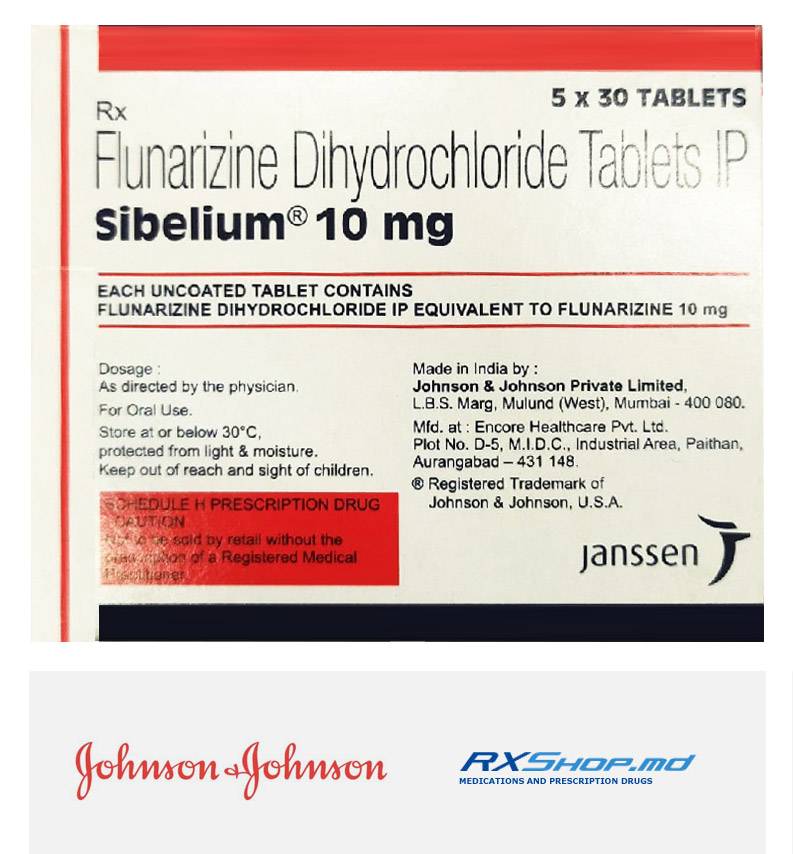
Sibelium (Flunarizine 5/10mg) stands as one of the most prescribed calcium channel blocker migraine prophylaxis medications worldwide — particularly popular in Europe, Asia, and Latin America for both migraine prevention and vertigo treatment. Developed by Johnson & Johnson / Janssen Pharmaceutica, flunarizine offers a unique dual therapeutic profile targeting both the vascular and neurological components of migraine pathophysiology while additionally treating vestibular disorders and peripheral circulatory issues. Available in 5 mg starter and 10 mg standard adult doses for once-daily bedtime administration, Sibelium provides sustained migraine prevention without the daytime drowsiness common to other prophylactic medications.
Flunarizine works through non-selective calcium channel blockade — inhibiting both T-type and N-type voltage-gated calcium channels in neuronal cell membranes. This blocks calcium influx that triggers neuronal hyperexcitability and vascular spasm involved in migraine pathophysiology. Additionally, flunarizine has H1 antihistamine effects and mild dopamine D2 receptor blockade, providing complementary mechanisms that contribute to migraine prevention and vertigo relief. The compound has a uniquely long 18-day half-life — meaning steady-state levels develop over 2-3 months of daily dosing and effects persist even after discontinuation. Clinical response: migraine frequency decreases 50-60% in responders over 3-4 months of consistent therapy, vertigo attacks reduce substantially for patients with vestibular disorders, and peripheral circulation improves in patients with vascular symptoms.
Sibelium serves multiple neurological indications. The primary use is migraine prophylaxis in adults with frequent or severe migraine attacks unresponsive to lifestyle modifications alone. The medication also treats vertigo from various causes including Meniere's disease, vestibular neuritis, and benign paroxysmal positional vertigo; vestibular migraine combining migraine with vertigo symptoms; peripheral vascular disorders improving circulation; and various neurological conditions as adjunctive therapy. Non-sedating profile makes Sibelium suitable for patients who need daytime function preservation.
Sibelium requires once-daily oral dosing at bedtime (10 mg standard adult dose, 5 mg for elderly or reduced clearance). Peak concentrations at 2-4 hours, 18-day half-life. Migraine prevention benefits develop over 2-3 months of consistent therapy. Johnson & Johnson / Janssen quality standards apply to brand Sibelium.
Free prescription
Discrete packaging
Have questions?
Quality Assurance

- Migraines: Recurrent moderate-to-severe headaches benefiting from prophylactic therapy;
- Frequent Migraines: Men and women with 4+ migraine days monthly benefiting from daily prophylactic therapy;
- Chronic Migraines: 15+ headache days monthly with 8+ migraine days responding to prophylactic treatment;
- Vestibular Migraine: Combined migraine with vertigo symptoms responding to flunarizine dual action;
- Vertigo: Spinning sensation from various causes responding to flunarizine vestibular effects;
- Menieres Disease: Inner ear disorder with vertigo hearing loss and tinnitus responding to flunarizine;
- Vestibular Neuritis: Vestibular nerve inflammation causing severe vertigo responding to therapy;
- Benign Paroxysmal Positional Vertigo: BPPV symptom management as adjunct to physical maneuvers;
- Vestibular Disorders: Various balance and orientation disorders benefiting from flunarizine action;
- Balance Problems: Recurring balance issues from vestibular causes responding to therapy;
- Peripheral Vascular Disorders: Circulatory issues in extremities responding to calcium channel blockade;
- Raynauds Phenomenon: Off-label use for peripheral vasospastic disorders;
- Cerebral Ischemia: Reduced brain blood flow benefiting from vascular protective effects;
- Adjunctive Neurological Therapy: Various neurological disorders benefiting from calcium channel modulation;
- Migraine with Vertigo Symptoms: Migraine patients with vestibular component particularly benefit from dual action;
- Menstrual Migraine Prevention: Hormone-triggered migraines benefiting from continuous prophylactic therapy;
- Non Sedating Migraine Prevention: Bedtime dosing avoids daytime drowsiness common with other prophylactic medications;
- Calcium Channel Blocker Therapy: Drug class targeting voltage-gated calcium channels for neurological effects;
- Generic Sibelium Therapy: Bioequivalent generic alternative to brand Sibelium at substantially lower cost.
- Better Migraine Prevention: Daily prophylactic therapy reduces migraine days per month substantially;
- Better Vertigo Relief: Vertigo attacks reduce substantially for patients with vestibular disorders;
- Better Vestibular Migraine Response: Dual action addresses both migraine and vertigo components;
- Less Menieres Disease Symptoms: Meniere symptoms including vertigo improve with calcium channel therapy;
- Better Balance Function: Balance disorders from vestibular causes improve with therapy;
- Less Migraine Severity: When migraines still occur intensity reduces with prophylactic therapy;
- Better Neuronal Stabilization: Calcium channel blockade stabilizes hyperexcitable neurons in migraine pathways;
- Better Vascular Reactivity Control: Reduced vasospasm and vascular hyperreactivity involved in migraine;
- Better Blood Circulation: Peripheral vascular circulation improves through calcium channel modulation;
- Less Daytime Sedation: Bedtime dosing avoids daytime drowsiness common with other prophylactic medications;
- Better Once Daily Dosing: 18-day half-life enables convenient once-daily bedtime administration;
- Less Acute Migraine Medication Use: Reduced need for triptans and other rescue medications through prevention;
- Less Medication Overuse Risk: Reduced acute medication use decreases medication-overuse headache risk;
- Better Daily Functioning: Reduced migraine or vertigo impact allows normal work travel and family activities;
- Better Sustained Effects: Long half-life provides consistent protection between doses;
- Better Long Term Management: Sustained migraine and vertigo prevention over months of consistent therapy;
- Better Dual Action Migraine and Vertigo: Single medication addresses migraine plus vestibular symptoms in patients with both;
- Better Generic Cost: 85-95% lower cost than brand Sibelium makes proven prophylactic therapy accessible;
- Better Quality of Life: Daily wellbeing improves dramatically as migraine and vertigo attacks decrease.
Generic Sibelium (Flunarizine 5 mg) Medication guide:
Sibelium (Flunarizine 5mg or 10mg by Janssen Pharmaceutica / Johnson & Johnson) is a calcium channel blocker used for migraine prevention (prophylaxis) and vertigo management. Unlike Depakote (anticonvulsant) or acute triptans like Maxalt and Imitrex, Sibelium works through an entirely different mechanism — blocking calcium channels in cerebral blood vessels and neurons to prevent the neurovascular instability that triggers migraines. Widely used across Europe, Asia, Latin America and Canada for decades (not FDA-approved in the US, which is why it remains less familiar to American patients), flunarizine is considered a first-line preventive option in many international headache guidelines. Its once-daily bedtime dosing, sedating profile (which helps sleep-related migraines), and dual effectiveness for both migraine prevention AND vestibular disorders (vertigo, Meniere's disease) make it uniquely versatile. This guide covers the preventive approach with focus on the calcium channel blocker mechanism, the once-daily bedtime protocol, the required treatment breaks to prevent neurological side effects, and when Sibelium is preferred over Depakote or other preventive options.
💊 What Sibelium Provides (Preventive Treatment)
Sibelium is a preventive (prophylactic) migraine medication — taken daily to reduce migraine frequency, intensity, and duration over time. Unlike acute medications (triptans like Maxalt) taken during attacks, Sibelium works by preventing attacks from occurring in the first place.
The Prophylactic Approach
Sibelium as preventive therapy:
- Taken once daily at bedtime (not during attacks)
- Reduces migraine frequency over 2-3 months
- Reduces attack severity when they still occur
- Reduces attack duration
- Does NOT stop an active migraine (use acute medication for that)
- Also prevents vertigo attacks (dual benefit)
- Requires 6-12 month treatment course with mandatory breaks
Who Benefits From Preventive Therapy
Migraine prevention with Sibelium is appropriate when you have:
- 4 or more migraine days per month
- Severe migraines significantly disrupting life
- Migraines with prolonged aura or neurological symptoms
- Vestibular migraines (dizziness/vertigo component)
- Meniere's disease with migraine component
- Inability to use or tolerate acute medications
- Overuse of acute medications (medication-overuse headache risk)
- Failed adequate trials of other preventive options
What Sibelium Does NOT Do
- Does not stop an active migraine attack in progress
- Does not work immediately (takes 2-3 months for full effect)
- Does not eliminate all migraines (typical goal is 50% reduction)
- Does not replace lifestyle trigger management
- Does not cure the underlying migraine tendency
🔬 The Calcium Channel Blocker Mechanism
How Flunarizine Works
Flunarizine is a selective calcium channel blocker with unique properties — it blocks calcium entry into cells but focuses primarily on cerebral blood vessels and central nervous system neurons rather than cardiac muscle (unlike standard cardiovascular calcium channel blockers).
Multiple Mechanisms
Flunarizine works on multiple levels:
- Blocks calcium overload in cerebral blood vessels
- Prevents vessel spasm associated with migraine aura
- Stabilizes neuronal membranes reducing cortical hyperexcitability
- Reduces vestibular nucleus overactivity (vertigo benefit)
- Mild antihistamine activity (contributes to sedation)
- Weak dopamine receptor antagonism (source of some side effects)
Why This Works for Migraine
Migraine involves cortical spreading depression — a wave of neuronal hyperexcitability followed by depression that spreads across the brain surface. Flunarizine's calcium channel blockade helps stabilize neurons preventing this spreading depression, while its cerebral vascular effects prevent the vessel changes contributing to migraine pain.
Why This Also Works for Vertigo
Vestibular disorders often involve overactive signaling in the vestibular nuclei of the brainstem. Flunarizine dampens this overactivity, making it uniquely effective for men experiencing both migraines AND vertigo — a common overlap in vestibular migraine syndrome.
🎯 Who Should Use Sibelium
✅ Sibelium is appropriate if you:
- Have 4+ migraine days per month
- Need preventive (not acute) treatment
- Have vestibular migraine (migraine with vertigo)
- Have Meniere's disease
- Cannot tolerate other preventive medications
- Prefer once-daily dosing
- Would benefit from sedating effect (nighttime dosing helps sleep)
- Are committed to 3-month trial for full effect
- Understand need for treatment breaks
- Do NOT have history of depression
- Do NOT have Parkinson's disease or movement disorders
🚨 Do NOT use Sibelium if you:
- Have current or history of clinical depression
- Have Parkinson's disease
- Have other extrapyramidal movement disorders
- Are pregnant or trying to conceive
- Are breastfeeding
- Have severe liver disease
- Are allergic to flunarizine
- Take MAOIs
- Have history of neuroleptic malignant syndrome
💊 The Two Dose Options (5mg vs 10mg)
Standard Dosing Approach
| Population | Recommended Dose |
|---|---|
| Adults under 65 | 10mg once daily at bedtime |
| Adults over 65 | 5mg once daily at bedtime |
| Sensitive patients starting out | 5mg starter with possible titration |
| Patients with side effects at 10mg | 5mg maintenance |
Why Bedtime Dosing
Bedtime dosing is specifically recommended because:
- Flunarizine has sedating properties
- Taking at bedtime avoids daytime drowsiness
- The sedative effect helps with sleep quality
- Long half-life means once-daily is sufficient
- Peak levels overnight when body is at rest
Maximum Dose
Do not exceed 10mg per day. Higher doses do not provide additional benefit but significantly increase side effect risk. If 10mg is not sufficient, discussion with doctor about alternative or combination therapy is appropriate rather than dose escalation.
📋 How to Take Sibelium
The Daily Protocol
- Take one tablet at bedtime every evening
- Swallow whole with water
- Take with or without food
- Take at same time each night for consistent levels
- Do not miss doses during active treatment period
- Continue for at least 3 months to assess effectiveness
- Plan mandatory breaks per doctor's schedule (typically after 6-12 months)
Setting Expectations
Timeline for effectiveness:
- First 2-4 weeks: minimal migraine change (drug building up)
- 4-8 weeks: initial improvement typically noted
- 2-3 months: full preventive effect established
- 3-6 months: continued benefit assessment
- 6-12 months: reevaluate for continued need
Missed Dose
- If remembered soon after missed time, take that evening
- If close to next scheduled dose, skip and continue regular schedule
- Do not double dose to catch up
- Occasional missed dose won't destroy months of prevention
- Frequent missed doses reduce effectiveness significantly
⏳ The Mandatory Treatment Break
🚨 Sibelium requires mandatory treatment breaks — typically 4-8 weeks off after every 6-12 months of continuous use.
This is critical to prevent accumulation-related neurological side effects.
Why Breaks Are Necessary
Flunarizine accumulates in body tissues with long-term use. Its half-life is approximately 18 days, meaning it stays in the body for weeks after each dose. Without periodic breaks, cumulative effects on dopamine systems can develop:
- Drug-induced parkinsonism (movement problems)
- Tardive dyskinesia (involuntary movements)
- Depression or worsening depression
- Cognitive dulling
- Weight gain acceleration
Typical Break Schedule
| Treatment Phase | Duration |
|---|---|
| Initial treatment | 6-12 months |
| Mandatory break | 4-8 weeks off completely |
| Reevaluate need | After break |
| Restart if needed | Another 6-12 months, then break again |
During the Break
During break period:
- Have acute medication (triptan) available for breakthroughs
- Track migraine frequency
- Assess whether preventive still needed
- Consider alternative preventive if migraines return
- Many patients maintain reduced frequency temporarily off medication
😴 Common Side Effects
Frequently Reported
- Sedation/drowsiness (most common, why taken at bedtime)
- Weight gain (significant concern, 3-10 kg possible)
- Increased appetite
- Fatigue during day
- Dry mouth
- Nasal congestion
- Mild depression symptoms (monitor carefully)
Weight Gain Management
Weight gain is common with Sibelium. Strategies to minimize:
- Anticipate increased appetite — do not give in
- Structured meal times, avoid grazing
- Track weight weekly
- Increase physical activity
- Limit carbohydrates and sugar
- Discuss significant weight gain with doctor (may warrant switching)
Depression Monitoring
🚨 Depression is a known side effect. If you experience persistent low mood, loss of interest, sleep changes, feelings of hopelessness, or suicidal thoughts, contact doctor immediately — may need to discontinue Sibelium.
🧠 Serious Neurological Side Effects
🚨 Long-term use of flunarizine can cause drug-induced parkinsonism and tardive dyskinesia.
This is why treatment breaks are mandatory and duration limits exist.
Drug-Induced Parkinsonism
Flunarizine has weak dopamine receptor antagonist properties. With prolonged use, especially in older adults, this can cause parkinsonian symptoms:
- Tremor at rest
- Muscle rigidity
- Slowness of movement (bradykinesia)
- Shuffling gait
- Reduced facial expression
- Difficulty initiating movement
Tardive Dyskinesia
Involuntary movements of face, tongue, lips, jaw, or extremities. May be persistent even after stopping medication. Report ANY unusual involuntary movements immediately.
Risk Factors for Neurological Side Effects
- Age over 65 (much higher risk)
- Female gender (higher risk than male)
- Long-term continuous use without breaks
- Higher doses
- Pre-existing movement disorders
- Family history of movement disorders
- Coadministration of other dopamine-affecting drugs
If Symptoms Develop
If parkinsonian or dyskinetic symptoms develop:
- Stop flunarizine immediately
- Contact doctor same day
- Do not restart flunarizine
- Consider alternative preventive medications
- Neurological evaluation recommended
- Most symptoms resolve within weeks to months after stopping
🌀 The Dual Vertigo Benefit
Vestibular Migraine Advantage
Sibelium uniquely benefits patients with vestibular migraine — migraine with prominent dizziness/vertigo component. It treats both the migraine headache AND the vertigo simultaneously, unlike other preventive medications requiring separate treatment.
Conditions Sibelium Also Treats
| Condition | Sibelium Effect |
|---|---|
| Vestibular migraine | Reduces vertigo AND migraine attacks |
| Meniere's disease | Reduces vertigo attack frequency |
| Vestibular neuritis | Aids recovery, reduces symptoms |
| Chronic peripheral vertigo | Symptomatic improvement |
| Basilar migraine | Prevention (fewer treatment options exist) |
Why This Matters
Vestibular migraine affects approximately 1% of the population and often responds poorly to standard migraine preventives. Flunarizine's dual mechanism — cerebral vascular stabilization plus vestibular nucleus dampening — makes it particularly suited to this population.
💊 Drug Interactions
Major Interactions
Do NOT combine with:
- MAOIs (phenelzine, tranylcypromine, selegiline)
- Other dopamine receptor blockers (typical/atypical antipsychotics)
- Metoclopramide (also dopamine blocker)
- Prochlorperazine (compazine)
Use With Caution
- Alcohol (increases sedation)
- Benzodiazepines (additive sedation)
- Sleep medications (excessive sedation)
- Antihistamines (additive sedation and antimuscarinic effects)
- Opioid pain medications (additive sedation)
- Antidepressants (monitor mood carefully)
- Other blood pressure medications (potential additive effects)
Foods and Supplements
- Alcohol: minimize during treatment (sedation)
- Grapefruit juice: no significant interaction
- St. John's Wort: may reduce effectiveness
- Caffeine: no direct interaction but affects migraines
🍺 Alcohol Guidelines
Alcohol should be minimized during Sibelium treatment. Combined with flunarizine's sedating effects, alcohol impairs coordination, thinking, and reaction time. Additionally, alcohol is a common migraine trigger — defeating the purpose of preventive therapy.
Practical Rules
- Best to avoid alcohol entirely during first weeks of treatment
- If drinking, limit to minimal amounts (1 drink or less)
- Never drink and drive on Sibelium
- Avoid triggering alcoholic beverages (red wine, dark spirits)
- Identify personal alcohol-migraine triggers
🤰 Pregnancy and Reproductive Considerations
🚨 Sibelium should NOT be used during pregnancy.
Pregnancy Category
Flunarizine is not recommended during pregnancy due to insufficient safety data. Its long half-life (approximately 18 days) means residual drug persists weeks after discontinuation.
Planning Pregnancy
- Discontinue Sibelium at least 4-8 weeks before attempting conception
- Discuss alternative migraine management with doctor
- Migraines often improve during pregnancy naturally
- Non-pharmacological approaches (biofeedback, magnesium supplementation) may help
- Acute treatment options during pregnancy are limited
Breastfeeding
Not recommended during breastfeeding. Flunarizine is likely excreted in breast milk and could affect infant.
🌡️ Storage
Basic Storage Rules
- Room temperature 15-30°C
- Original packaging with cap tight
- Away from bathroom humidity
- Away from direct sunlight
- Away from heat sources
- Out of reach of children
Preventive Medication Storage
Because Sibelium is taken daily, consistent access matters:
- Keep at bedside for consistent bedtime dosing
- Bring travel supply on any trip
- Never allow supply to run out mid-treatment (disrupts prevention)
- Order refills 2 weeks before running out
🌍 International Perspective
Global Usage vs US Status
Flunarizine is widely used across Europe (approved since 1980s), Latin America, Asia, and Canada as first-line migraine prevention. It is NOT FDA-approved in the United States, though this is due to regulatory factors rather than safety or efficacy concerns. International headache guidelines consistently include flunarizine among recommended preventive options.
Where Sibelium is Available
- All European Union countries
- United Kingdom
- Canada
- Australia
- Most Asian countries
- Latin America
- Middle East
- Africa
Why Not FDA-Approved in US
Flunarizine's US approval was withdrawn in the 1980s due to concerns about tardive dyskinesia risk in elderly patients — a risk that led to the mandatory break protocol used internationally. In practice, with appropriate patient selection and treatment breaks, safety has been well-established elsewhere. American patients often access flunarizine through international pharmacies or when receiving care abroad.
💊 Sibelium vs Other Preventive Options
Preventive Medication Comparison
| Medication | Class | Key Characteristic |
|---|---|---|
| Sibelium (flunarizine) | Calcium channel blocker | Once daily; also treats vertigo |
| Depakote (divalproex) | Anticonvulsant | Requires blood monitoring |
| Topiramate | Anticonvulsant | Weight loss vs weight gain |
| Propranolol | Beta blocker | Also treats blood pressure |
| Amitriptyline | Tricyclic | Also treats depression |
| CGRP antagonists (Aimovig, etc) | Monoclonal antibody | Newest, monthly injection |
When Sibelium Is Preferred
- Vestibular migraine (dual vertigo benefit)
- Meniere's disease with migraines
- Once-daily dosing preferred
- Sedating effect helpful (insomnia component)
- Blood monitoring not desired (unlike Depakote)
- Cannot tolerate weight-loss side effects (topiramate)
- No depression history
When Other Options Better
- History of depression: avoid Sibelium; try topiramate or CGRP antagonists
- Concerned about weight gain: topiramate (weight loss) or CGRP
- Concurrent hypertension: propranolol (dual benefit)
- Bipolar disorder: Depakote (dual benefit)
- Older age with movement disorder risk: avoid Sibelium; consider CGRP
- Pregnancy planning: avoid Sibelium (long half-life); consider beta blocker
💊 Sibelium vs Depakote (Head-to-Head)
Detailed Comparison
| Feature | Sibelium | Depakote |
|---|---|---|
| Mechanism | Calcium channel blocker | GABA enhancement / sodium channels |
| Frequency | Once daily (bedtime) | Twice daily typically |
| Blood monitoring | Not required | Required (drug levels, liver, blood counts) |
| Vertigo benefit | Yes (unique advantage) | No |
| Weight effect | Weight gain | Weight gain |
| Sedation | Yes (bedtime dosing minimizes) | Less sedating |
| Depression risk | Higher (major concern) | Lower (may help mood) |
| Treatment breaks needed | Yes (mandatory) | No (can be continuous) |
| Pregnancy safe | No | No (worse — teratogenic) |
When to Choose Sibelium
- Vestibular migraine or Meniere's component
- Prefer once-daily dosing
- Sleep-onset migraines (bedtime sedation helpful)
- Cannot tolerate frequent blood draws
- Failed Depakote trial
- Concerned about Depakote liver monitoring
When to Choose Depakote
- History of depression (Sibelium contraindicated)
- Concurrent seizure disorder
- Concurrent bipolar disorder (dual benefit)
- Cannot tolerate mandatory Sibelium breaks
- Failed Sibelium trial
🛑 When to Reevaluate
Reasons to Reconsider
- Insufficient effectiveness after 3-month trial
- Weight gain unacceptable
- Depression symptoms emerging
- Any unusual movement or neurological symptoms
- Persistent excessive sedation despite bedtime dosing
- Planning pregnancy
- Reached maximum recommended duration (12 months)
Stopping Sibelium
Because of the long half-life (approximately 18 days), gradual tapering is not necessary in the same way as with some other preventive medications. Simply stopping the drug allows gradual natural clearance over several weeks. During this washout period:
- Migraine prevention gradually decreases
- Preventive effect may persist for weeks
- Watch for migraine frequency return
- Have acute medication ready
- Consider alternative if migraines return significantly
Alternative Preventive Options
- Depakote (anticonvulsant — different mechanism)
- Topiramate (anticonvulsant — different profile)
- Propranolol (beta blocker — blood pressure benefit)
- Amitriptyline (tricyclic — sleep benefit)
- Candesartan (angiotensin blocker)
- CGRP monoclonal antibodies (newest class)
- Botox injections (chronic migraine)
☎️ When to Contact Your Doctor
Contact Doctor Immediately
Do not wait for scheduled appointment for:
- Any unusual involuntary movements (face, tongue, limbs)
- Tremor development
- Muscle stiffness or slowness of movement
- Persistent depression or hopelessness
- Suicidal thoughts
- Severe allergic reactions
- Excessive weight gain (over 5 kg in first months)
Regular Follow-Up
- After first month of treatment
- At 3 months for effectiveness assessment
- At 6 months for continuing need review
- Before planned treatment break
- Before considering restart
- Any significant life changes affecting migraine management
Report at Any Visit
- Migraine frequency changes (improving or worsening)
- Weight changes
- Mood changes
- Sleep pattern changes
- New medications from other prescribers
- Questions about alternative options
Medical disclaimer: This guide provides general usage information for Sibelium (flunarizine 5mg or 10mg by Janssen Pharmaceutica) and does not replace individualized medical advice. Sibelium is a calcium channel blocker used for migraine PREVENTION (prophylaxis) — taken daily to reduce migraine frequency, NOT to abort active attacks. Full preventive effect requires 2-3 months of continuous daily dosing at bedtime. Sibelium also uniquely treats vestibular disorders (vertigo, Meniere's disease). NOT FDA-approved in the United States but widely used and considered first-line preventive across Europe, Asia, Latin America, and Canada. ABSOLUTELY CONTRAINDICATED in patients with current or history of clinical depression, Parkinson's disease, or other movement disorders. MANDATORY treatment breaks (4-8 weeks off) required after every 6-12 months of continuous use to prevent accumulation-related drug-induced parkinsonism and tardive dyskinesia. These serious neurological side effects are why patient selection matters and duration limits exist. Common side effects include weight gain (significant, 3-10 kg), sedation (why taken at bedtime), and depression (monitor carefully — stop immediately if mood changes develop). Do not combine with MAOIs, dopamine receptor blockers, or other antipsychotic medications. Not for use during pregnancy (long half-life of approximately 18 days means residual drug persists weeks after discontinuation — discontinue at least 4-8 weeks before attempting conception). Not for breastfeeding. Report ANY unusual involuntary movements, tremor, muscle rigidity, or mood changes immediately. Sibelium is preferred over other preventive options in patients with vestibular migraine or Meniere's disease due to dual mechanism benefit. Manufactured by Janssen Pharmaceutica, subsidiary of Johnson & Johnson, one of the world's largest pharmaceutical companies with global quality standards.
Sibelium — Frequently Asked Questions
-
What is Flunarizine (Sibelium)?
Flunarizine is a calcium channel blocker used primarily for preventing migraines and treating vertigo. -
How does Flunarizine work for migraines?
It reduces the frequency and severity of migraine attacks by preventing the constriction of brain blood vessels. -
Can Flunarizine cure my migraines?
Flunarizine is not a cure but can significantly reduce the occurrence of migraine episodes. -
How long does it take for Flunarizine to work?
It may take several weeks to notice a reduction in migraine frequency. -
Is Flunarizine effective for all types of vertigo?
It's most effective for vertigo associated with vestibular disorders. Consult your healthcare provider for specific advice. -
What are the common side effects of Flunarizine?
Side effects can include weight gain, drowsiness, dry mouth, and, in rare cases, depression. -
Can I take Flunarizine during pregnancy?
Flunarizine should be used during pregnancy only if clearly needed and prescribed by a healthcare provider.
See all Sibelium questions (32)
More Migraine Medications