Period Pain: Causes, Treatment and When to Worry

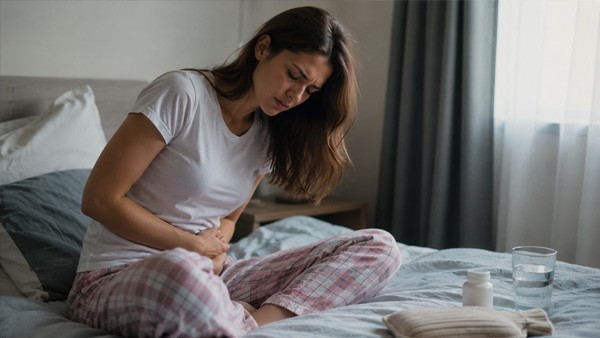
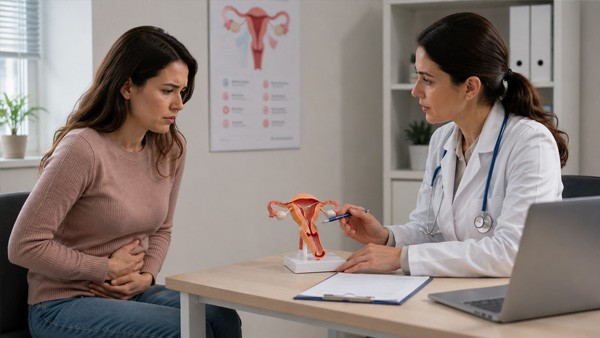
Period pain is common enough that it gets treated as an unavoidable fact of life, and that assumption causes two distinct problems. Women endure pain that would respond well to straightforward treatment, and women whose pain signals an underlying condition wait years before anyone investigates it.
Some discomfort during menstruation is genuinely normal. Pain that stops you working, studying or getting out of bed is not, whatever anyone has told you. This guide covers why periods hurt, how to treat the pain properly — which most people do not — and how to tell ordinary cramps from something that needs looking into.
🧠 The single most useful thing in this article: anti-inflammatory painkillers work by blocking the production of the chemicals that cause the pain, not by blocking the pain itself. Once those chemicals have been released, the drug cannot undo it. That means an NSAID started a day before bleeding begins, and taken on a schedule rather than when the pain gets bad, works dramatically better than the same drug taken the usual way. Almost nobody is told this.
🔬 Why periods hurt
At the end of a cycle where no pregnancy has occurred, the lining of the uterus breaks down. As it does, it releases prostaglandins — signalling molecules that make the muscular wall of the uterus contract in order to expel the lining and limit bleeding.
Those contractions are the cramps. When they are strong enough, they compress the blood vessels supplying the uterine muscle, briefly reducing its own blood supply. Muscle deprived of blood hurts, which is the same reason angina hurts, and it is why period pain has a cramping, gripping quality rather than a steady one.
Prostaglandins also circulate beyond the uterus, which explains the symptoms that accompany the pain and puzzle people: nausea, vomiting, diarrhoea, headache, dizziness and general unwellness. Those are not separate problems; they are the same chemicals acting elsewhere.
Women with severe period pain have been shown to produce more prostaglandins than those without. This is a measurable physiological difference rather than a difference in pain tolerance, and it is worth saying plainly to anyone who has been told they are making a fuss.
⚖️ Two kinds of period pain
| Primary dysmenorrhoea | Secondary dysmenorrhoea | |
|---|---|---|
| Cause | Prostaglandins alone, no underlying disease | An underlying condition |
| Typical onset | Within a year or two of periods starting | Later, often in the twenties, thirties or beyond |
| Timing of pain | Begins with bleeding or just before; lasts one to three days | Often begins days before bleeding and continues after it stops |
| Course over time | Frequently improves with age and after childbirth | Tends to worsen |
| Other symptoms | Nausea, headache, loose stools | Heavy bleeding, pain during sex, bowel or bladder symptoms, infertility |
| Response to NSAIDs | Usually good | Often partial or poor |
The distinction matters because primary dysmenorrhoea is treated symptomatically and secondary dysmenorrhoea requires finding and treating the cause. A change in the character of pain that was previously manageable is one of the more useful signals that something has developed.
🔍 What causes secondary period pain
| Condition | Features |
|---|---|
| Endometriosis | Tissue similar to the uterine lining growing outside it; pain before and during periods, pain during sex, bowel and bladder symptoms, fatigue, subfertility |
| Adenomyosis | The same tissue growing into the uterine muscle wall; heavy bleeding with an enlarged tender uterus, often in the thirties and forties |
| Fibroids | Benign muscular growths; heavy bleeding, pressure symptoms, pain depending on position |
| Pelvic inflammatory disease | Infection, usually sexually transmitted; abnormal discharge, fever, pain between periods |
| Ovarian cysts | Pain that may be one-sided |
| Copper intrauterine device | Commonly increases both pain and bleeding, particularly in the first months |
| Cervical stenosis | Narrowed cervical canal obstructing flow |
| Structural differences of the uterus | Present from birth; cause severe pain from the very first periods in adolescents |
🔴 Endometriosis deserves particular attention because of how long it takes to diagnose. Studies across multiple countries consistently find an average delay of seven to ten years between symptoms starting and a diagnosis being made. The reasons are documented: pain is normalised by families, friends and clinicians; symptoms are attributed to bowel problems or anxiety; and there is no simple test, since a normal scan does not exclude it. Anyone whose period pain is severe, who has pain during sex or when opening the bowels around periods, or who has been trying to conceive without success, deserves a proper assessment rather than reassurance.
🚩 When to have it looked at
- Pain that prevents normal activity — missing work, school or social life regularly
- Pain not controlled by over-the-counter treatment taken properly
- Pain beginning days before bleeding or continuing after it stops
- Pain during or after sex
- Pain on opening the bowels or passing urine, especially around periods
- Bleeding that is heavy — flooding, large clots, changing protection hourly, or anaemia
- Bleeding between periods or after sex
- A change in previously manageable pain
- Difficulty conceiving alongside painful periods
- Fever, unusual discharge or feeling unwell with the pain, suggesting infection
- Severe pain from the very first periods in a teenager
💊 Using anti-inflammatories properly
NSAIDs are the most effective treatment for primary dysmenorrhoea, and they are more effective than paracetamol because they act on the actual mechanism rather than only on pain perception.
How they are taken determines how well they work, and the standard approach — waiting until the pain is bad and then taking one — is close to the least effective way to use them.
| What to do | Why |
|---|---|
| Start one to two days before bleeding is expected | These drugs block prostaglandin production; they cannot remove prostaglandins already released |
| Take regularly, on a schedule | Maintaining a level prevents the pain; intermittent dosing chases it |
| Use an adequate dose | Sub-therapeutic doses are a very common reason for apparent failure |
| Continue for the first two to three days | Prostaglandin release is highest early in the period |
| Take with food | Reduces stomach irritation |
| Try a different one if the first does not help | Individual response varies considerably between NSAIDs |
Where cycles are irregular and pre-emptive dosing is impractical, starting at the very first sign of bleeding or the earliest twinge is the next best approach.
| Drug | Note |
|---|---|
| Mefenamic acid | Specifically licensed for period pain and heavy bleeding; also reduces menstrual blood loss |
| Naproxen | Longer acting, so fewer doses across the day |
| Ibuprofen | Widely available and well established |
| Diclofenac | Effective; cardiovascular caution with prolonged use |
| Paracetamol | Less effective alone, but useful added to an NSAID or where NSAIDs cannot be taken |
Mefenamic acid has a particular place here because it is licensed for this indication specifically and reduces menstrual blood loss as well as pain — useful where heavy bleeding accompanies the cramps.
NSAIDs are avoided or used cautiously with a history of stomach ulcers, asthma triggered by aspirin or NSAIDs, kidney disease, significant cardiovascular disease, and alongside anticoagulants. Anyone in those groups should have the choice discussed rather than assumed.
🔬 Hormonal treatment
Where NSAIDs are insufficient or unsuitable, hormonal methods work by reducing or removing the lining that produces prostaglandins in the first place.
Combined hormonal contraception — the pill, patch or ring — thins the lining and prevents ovulation, reducing both pain and bleeding substantially. It suits women who also want contraception, and the effect on pain is a genuine treatment rather than a side benefit.
Taking it continuously, skipping the withdrawal bleed, is now recognised as appropriate rather than something to feel uneasy about. The monthly bleed on the pill is a withdrawal bleed built into the original design for reasons of acceptability, not a physiological necessity. For someone with severe pain, having fewer or no bleeds is a straightforward and legitimate option.
Progestogen-only methods — the pill, injection or implant — suit women who cannot take oestrogen, and frequently reduce or stop periods altogether.
The hormonal intrauterine system releases progestogen directly into the uterus, thinning the lining markedly. It substantially reduces pain and bleeding, is often the preferred option in adenomyosis and endometriosis, and lasts several years.
Note the contrast with the copper coil, which contains no hormones and typically makes both pain and bleeding worse, particularly in the first months. The two devices are frequently confused and have opposite effects on this problem.
Dydrogesterone and similar progestogens taken cyclically have a role in specific situations — endometriosis, irregular bleeding, luteal phase support — but they are not first-line treatment for uncomplicated period pain, where NSAIDs and combined contraception have far stronger evidence.
🔥 What else genuinely helps
Heat is the most underestimated treatment available. Trials comparing a heat patch or hot water bottle against oral analgesia have found comparable relief, and combining the two works better than either alone. It is cheap, safe, immediate and has no side effects, and it deserves better than being treated as a fallback.
Exercise reduces period pain in trials, both regular activity between periods and light activity during them. The instinct to lie still is understandable and gentle movement generally helps more.
TENS — a small device delivering mild electrical stimulation to the skin — has reasonable evidence at higher frequency settings and is a useful option for anyone who cannot take NSAIDs.
Some supplements have modest supporting evidence, notably magnesium, thiamine and omega-3 fatty acids. The effects are smaller than medication and the trials are not large, but they are low-risk options for anyone wanting to add something.
Stopping smoking is associated with less severe period pain, alongside every other reason.
Acupuncture has mixed evidence, with some trials showing benefit and methodological limitations throughout. It is reasonable to try and not something to rely on as a primary approach.
✅ A combination usually beats any single measure. An NSAID started pre-emptively and taken regularly, plus heat applied to the lower abdomen or back, plus light movement, addresses the problem from three directions and is more effective than escalating the dose of one drug. Most women who conclude that nothing helps have tried one thing, started too late, at too low a dose.
🏥 If it is endometriosis
Because endometriosis is the commonest serious cause of secondary period pain and the most frequently missed, a brief outline of what happens next is worth having.
Diagnosis begins with the history, which is more informative than any test. Examination and ultrasound can show some forms, particularly ovarian endometriomas and deep disease, but a normal scan does not exclude endometriosis — superficial disease is invisible on imaging. Definitive diagnosis has traditionally required laparoscopy, though current guidance increasingly supports starting treatment on clinical grounds rather than delaying care for surgical confirmation.
Treatment includes the same first-line measures — NSAIDs, combined contraception taken continuously, the hormonal coil — alongside specific options such as progestogens, GnRH analogues and surgery to remove or destroy the deposits. Fertility considerations shape the choice, since some treatments are contraceptive.
Danazol is an older treatment still used in some circumstances, generally after other options, because of its side effect profile.
Endometriosis is a long-term condition, and the aim is control rather than cure. Specialist referral is appropriate where symptoms are severe, where fertility is a concern, or where first-line treatment has not worked.
❌ Things that are not true
Severe period pain is not something to simply put up with. This belief is the reason so many women present late, and it is passed down through families and reinforced by dismissive responses. Pain that interferes with life warrants treatment and, where it is severe, investigation.
Pregnancy does not cure period pain. Primary dysmenorrhoea does often improve after childbirth, but this is unreliable, and it is not a reason to have a child. Where endometriosis is the cause, pregnancy suppresses symptoms temporarily and they usually return afterwards.
You will not necessarily grow out of it. Primary dysmenorrhoea frequently eases with age; secondary dysmenorrhoea tends to worsen. Waiting to grow out of pain that is getting worse is how years get lost.
Exercise during a period is fine and generally helps.
Swimming, bathing and tampon use during periods are all fine.
A normal ultrasound does not mean nothing is wrong. Superficial endometriosis does not appear on imaging, and a normal scan alongside significant symptoms is a reason to keep investigating rather than to stop.
Hormonal contraception used for period pain does not affect future fertility. Fertility returns after stopping, and by controlling conditions such as endometriosis it may protect it.
📋 A practical approach
For most women with period pain, working through this sequence resolves it or identifies why it will not.
Track the pattern for two or three cycles — when pain starts relative to bleeding, how long it lasts, what accompanies it, and how heavy bleeding is. This makes any consultation far more productive than trying to recall it.
Use an NSAID properly: started a day or two before bleeding, at an adequate dose, on a schedule, for the first two or three days. Add heat and gentle movement.
If that is insufficient, try a different NSAID before concluding the class does not work.
If still insufficient, discuss hormonal options, including continuous use to reduce the number of bleeds and the hormonal coil.
Seek assessment if pain starts before bleeding or persists after it, if sex or bowel movements hurt, if bleeding is heavy, if the pattern has changed, or if conception is proving difficult. The average delay to an endometriosis diagnosis is measured in years, and the way it shortens is women describing symptoms specifically and asking directly whether it has been considered.
Anti-inflammatory treatment is stocked in the pain medication category, including Ponstel (mefenamic acid), which is licensed specifically for period pain and heavy menstrual bleeding, with hormonal options in the womens health category.
❓ Frequently asked questions
How much period pain is normal?
Some cramping in the first day or two is normal. Pain that regularly stops you working, studying or getting out of bed is not, and neither is pain that is not controlled by over-the-counter treatment taken properly. Women with severe period pain have been shown to produce more prostaglandins than those without, so this is a measurable physiological difference rather than a difference in how much pain someone can tolerate.
When should I take painkillers for period pain?
One to two days before bleeding is expected, and then on a regular schedule for the first two or three days. Anti-inflammatories work by blocking production of the chemicals that cause the pain, and they cannot remove chemicals already released. Waiting until the pain is bad and then taking one is close to the least effective way to use them, and it is what almost everyone does.
Why are anti-inflammatories better than paracetamol?
Because they act on the actual mechanism. Prostaglandins released as the uterine lining breaks down cause the muscle contractions that produce the pain, and NSAIDs block their production. Paracetamol acts on pain perception without touching the cause. Paracetamol is still useful added to an NSAID, or for anyone who cannot take NSAIDs because of ulcers, asthma, kidney or cardiovascular problems.
Why does mefenamic acid come up specifically for periods?
Because it is licensed for this indication rather than being a general painkiller applied to it, and because it reduces menstrual blood loss as well as pain. That makes it particularly suitable where heavy bleeding accompanies the cramps. Like other NSAIDs it works best started before bleeding begins and taken on a schedule for the first days rather than as needed.
Does a heat pack really work?
Yes, and it is consistently underrated. Trials comparing heat against oral pain relief have found comparable effect, and using both together works better than either alone. It is cheap, immediate, has no side effects and can be used by anyone, including those who cannot take anti-inflammatories. Applied to the lower abdomen or the lower back, whichever suits.
What suggests endometriosis rather than ordinary cramps?
Pain starting several days before bleeding and continuing after it stops, pain during or after sex, pain on opening the bowels or passing urine around periods, heavy bleeding, fatigue, and difficulty conceiving. Pain that has changed from previously manageable is also significant. The average delay to diagnosis runs to seven to ten years, largely because symptoms get normalised, so describing them specifically matters.
My scan was normal, so it cannot be endometriosis?
Not so. Ultrasound detects ovarian endometriomas and some deep disease, but superficial endometriosis is invisible on imaging. A normal scan alongside significant symptoms is a reason to keep investigating rather than to stop. Current guidance increasingly supports starting treatment on clinical grounds rather than waiting for surgical confirmation, which was previously the main cause of delay.
Can I skip periods on the pill to avoid the pain?
Yes, and continuous use is now recognised as appropriate rather than something to be uneasy about. The monthly bleed on combined contraception is a withdrawal bleed built into the original design for acceptability, not a physiological necessity. For someone with severe pain, having fewer or no bleeds is a straightforward option worth discussing with a prescriber.
Will a coil make my periods worse?
It depends entirely on which one. The copper coil contains no hormones and typically makes both pain and bleeding worse, particularly in the first months. The hormonal intrauterine system releases progestogen directly into the uterus, thins the lining markedly and substantially reduces both pain and bleeding — it is often preferred in adenomyosis and endometriosis. The two are frequently confused and have opposite effects.
Does having a baby cure period pain?
Primary dysmenorrhoea often does improve after childbirth, but this is unreliable and it is certainly not a reason to have a child. Where endometriosis is the cause, pregnancy suppresses symptoms temporarily and they usually return afterwards. Being told to have a baby as treatment for pelvic pain is outdated advice that still circulates.
Will taking the pill for pain affect my fertility later?
No. Fertility returns after stopping hormonal contraception. Where an underlying condition such as endometriosis is present, controlling it may actually protect fertility by limiting progression. The concern is common and understandable and is not supported by evidence, and the alternative — years of untreated pain from an untreated condition — carries the greater risk.
Why do I get nausea and diarrhoea with my period?
Because the prostaglandins released as the uterine lining breaks down do not stay in the uterus. Circulating elsewhere they affect the gut and blood vessels, producing nausea, vomiting, loose stools, headache and dizziness. These are the same chemicals causing the cramps rather than separate problems, which is why anti-inflammatories often improve them along with the pain.
📑 Sources and editorial
- NICE guidance on endometriosis diagnosis and management, and on heavy menstrual bleeding
- ACOG committee opinions on dysmenorrhoea and endometriosis in adolescents
- Cochrane reviews of NSAIDs, combined oral contraceptives, heat therapy, exercise and TENS for dysmenorrhoea
- Research on prostaglandin concentrations in menstrual fluid and their relation to pain severity
- Studies of diagnostic delay in endometriosis across multiple health systems
- FDA prescribing information for mefenamic acid, naproxen and ibuprofen
- Related products: pain medication category, womens health category
- RXshop Editorial Team — reviewed by Anita Sharma, MD, FACOG, Obstetrics and Gynecology
Medical Disclaimer: The information in this article is for educational and informational purposes only and is not a substitute for professional medical advice, diagnosis, or treatment. Always seek guidance from a qualified healthcare provider with any questions you may have regarding a medical condition, and before starting, stopping or changing any medication.