Six Ways a Medicine Is Made, and Why It Matters

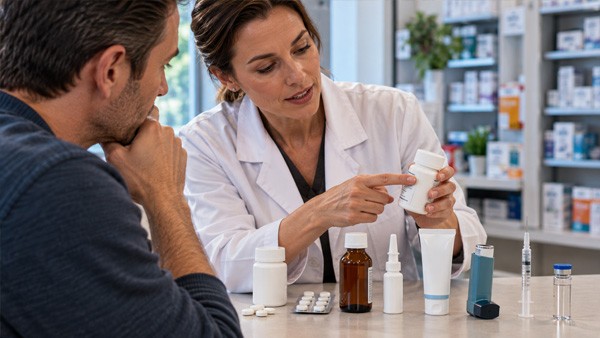

The same active substance can reach a patient by six quite different routes, and they are not variations of one thing. They differ in what testing was required, who verified it, what the manufacturer had to prove, and how much confidence the label deserves.
Most confusion about medicine pricing, quality and safety dissolves once these six are separated, and the separation is not complicated.
💡 The distinction that matters most is not brand against generic. Those two are held to the same standard for the substance itself, and the price gap between them reflects development costs already recovered rather than a difference in the tablet. The distinction that actually matters is between medicines produced under regulatory oversight of any kind and medicines produced outside it entirely — the sixth category below, which is not a cheaper version of anything. It is a different object wearing the same packaging.
🏭 One. The originator
The company that discovered the molecule, tested it and obtained approval.
What that involves is genuinely enormous. Screening candidate compounds, laboratory and animal work, then three phases of human trials — safety in small numbers, then effectiveness in larger ones, then a large comparison against placebo or existing treatment. Most candidates fail somewhere along that path, and the cost of the failures is carried by the ones that succeed.
In exchange the company receives a period of exclusivity. Patents run for around twenty years from filing, but a large part of that is consumed by development itself, so the period of actually selling without competition is typically far shorter than the headline number suggests.
During that window the price reflects the whole enterprise rather than the manufacturing. Once it ends, others may produce the same molecule, and the price collapses — frequently by eighty or ninety percent, which tells you how little of the original price was the tablet.
🧬 Two. The generic
The most misunderstood category, and the one carrying the most unearned suspicion.
A generic must contain the same active ingredient, in the same amount, in the same form, taken by the same route as the original. What it must additionally prove is bioequivalence: that it delivers that ingredient into the bloodstream to a comparable degree and at a comparable rate.
What it is not required to do is repeat the effectiveness trials. That is often presented as a shortcut and it is the opposite — it would be unethical to run placebo-controlled trials of a molecule already proven to work in order to establish something already established. The question a generic has to answer is narrower: does this version deliver the same substance the same way. If it does, the original effectiveness data applies to it.
📐 The bioequivalence standard is widely misquoted, so it is worth stating precisely. Regulators require that the ninety percent confidence interval for the ratio of the generic to the original, on both total exposure and peak concentration, falls entirely within a defined range. That is frequently reported as meaning a generic may differ by up to twenty or twenty-five percent from the original. It does not. It is a statistical requirement on the confidence interval, which in practice means the observed difference has to be very much smaller than that for the interval to fit inside the limits at all. Studies of approved generics find average differences of a few percent.
🏷️ Three. The authorised generic
A category most people have never heard of and which quietly answers a common worry.
An authorised generic is the originator’s own product, made on the same line, sold without the brand name — sometimes by the same company under a different label, sometimes by a subsidiary, sometimes licensed to another company.
It is chemically and physically identical to the branded product in every respect, and it is sold considerably cheaper. Its existence is a useful demonstration that a large part of what a brand name costs is the name.
🧫 Four. The biosimilar
Not a generic, and treating it as one causes real confusion.
The medicines discussed so far are small molecules assembled by chemistry — reproducible exactly, every batch identical. Biological medicines are different. They are large complex proteins produced by living cells, and living cells do not produce identical output. Even the originator’s own product varies slightly between batches within accepted limits.
So an exact copy is not achievable, and the standard is different: a biosimilar must be highly similar with no clinically meaningful differences in safety, purity or potency. Demonstrating that requires far more than bioequivalence — extensive analytical comparison, functional testing, pharmacokinetic studies and usually clinical trials in patients.
A biosimilar is therefore held to a more demanding standard than a generic, not a lesser one. The confusion arises because the word sounds like an approximation, when it describes a category where exactness is physically impossible even for the original.
⚗️ Five. The compounded preparation
A medicine made up by a pharmacy for a specific individual, rather than manufactured in batches.
It exists to fill genuine gaps that mass production cannot. A liquid version for a child who cannot swallow tablets. A cream at a strength that is not commercially available. A version without a dye or preservative that a particular person reacts to. A combination prepared for one patient’s circumstances.
This is legitimate and sometimes essential. The important difference is regulatory: a compounded preparation has not been through premarket approval, because it is made for one person rather than sold as a product. Its quality therefore depends entirely on the standards of the pharmacy preparing it, and shelf life is usually short.
The category deserves care where it strays from filling a genuine gap into marketing — compounded hormone preparations sold as safer or more natural alternatives to approved products are the common example, and the claims made for them generally exceed the evidence.
🚫 Six. The falsified medicine
The only one of the six that is not a legitimate route, and the reason the other five are worth understanding.
A falsified medicine deliberately misrepresents what it is, what is in it, or who made it. It may contain no active ingredient at all, a different one, a fraction of the stated dose, or contaminants. Packaging is frequently excellent, because that is what is being sold.
The World Health Organization has estimated that around one in ten medical products in low and middle income countries is substandard or falsified. The consequences run from a treatment silently not working — which for an antibiotic, an antiepileptic or a cardiac drug is dangerous in itself — through to direct poisoning.
Two things matter here and they are frequently conflated. A cheap generic from an established manufacturer is not a falsified medicine. And an expensive product in convincing packaging is not necessarily genuine. Price is not the signal; provenance is.
📊 The six side by side
| Route | What must be proven | Relative cost |
|---|---|---|
| Originator | Safety and effectiveness from scratch, through full clinical trials | Highest |
| Generic | Same ingredient, same amount, same form; bioequivalent delivery | Typically a small fraction of the original |
| Authorised generic | Nothing further — it is the original product without the name | Lower than the brand, identical product |
| Biosimilar | Highly similar with no clinically meaningful difference; analytical, functional and usually clinical evidence | Lower than the originator biological, still expensive |
| Compounded | No premarket approval; quality rests on the preparing pharmacy | Variable |
| Falsified | Nothing. It is a crime, not a category | Any price at all |
💰 Why the same molecule costs three times more
This is the question that brings most people to this subject, and the answer is usually mundane.
Take a real example from this catalogue. Three products contain armodafinil 150 mg — the same molecule at the same strength — from three different manufacturers, and they range from $1.65 to $2.80 per tablet. That is a seventy percent spread for identical drug at an identical dose.
What accounts for it:
- Manufacturer scale and reputation. A large producer with wide international regulatory exposure prices accordingly, and part of what is being bought is the name
- Which regulators have approved the plant, since holding approvals in demanding markets costs money to maintain
- Production volume, since unit cost falls steeply with scale
- Packaging, distribution and market
What does not generally account for it is a difference in the tablet. There is no published evidence that the three products above perform differently at the same dose. The comparison of those products sets the arithmetic out in full.
The honest position is that a higher price sometimes buys reassurance and sometimes buys nothing, and that the buyer is entitled to know which is which rather than assuming either.
🔍 What legitimately differs between generics
Generics are equivalent in the active ingredient and genuinely differ in other respects, and knowing where matters occasionally.
Inactive ingredients. Fillers, binders, coatings, colourings, preservatives. Someone who reacts to a particular dye, or who cannot tolerate lactose, may do fine on one version and not another — which is a real explanation worth checking in the ingredient list rather than dismissing.
Appearance. Size, shape, colour and markings differ, since the original’s appearance is often protected. A tablet looking different from last time is expected and is not itself a sign of a problem, though it is worth confirming when it happens unexpectedly.
Whether it is scored. Directly practical where half doses are used, since an unscored tablet does not split cleanly.
Shelf life and storage.
⚠️ For a small number of drugs, consistency of manufacturer genuinely matters. Where the gap between an effective dose and a toxic one is narrow — lithium, warfarin, thyroid hormone, several antiepileptics, anti-rejection drugs — small variations that would be irrelevant elsewhere can be clinically significant. Prescribers often prefer to keep a person on one consistent version rather than switching between manufacturers, and where a switch does happen, monitoring afterwards is reasonable. For the great majority of medicines this does not apply.
🌍 Where medicines are actually made
Worth stating plainly, because assumptions here are often wrong.
A very large share of the world’s generic medicines is manufactured in India, including a substantial proportion of those dispensed in the United States and Europe under familiar names. Major plants are inspected by the same regulators that inspect facilities anywhere else, and products supplied into regulated markets carry those approvals.
Country of manufacture is therefore a poor proxy for quality in either direction. What matters is the specific manufacturer, which approvals its facility holds, and whether the supply chain from that facility to you is accountable.
🛡️ Telling a legitimate product from a falsified one
Nothing here is conclusive on its own, and together they cover most of what can be checked without a laboratory.
On the packaging: the manufacturer’s name and address present and specific; a batch number and expiry date, printed clearly and matching between the outer box and the blister; spelling and print quality that do not look approximate; seals intact.
On the product itself: tablets uniform in colour, size and markings; no crumbling, chipping or powder; no unexpected smell; consistent with previous orders of the same product.
In use: a medicine that previously worked and suddenly does not, or unexpected effects from a product taken uneventfully for months, are worth taking seriously rather than explaining away.
About the source: an identifiable seller with a contactable address; willingness to say who manufactured the product; and an absence of the things that mark disreputable sellers — prices far below everyone else, no requirement of any kind, and pressure to buy quickly.
Anything genuinely suspicious is worth reporting to the seller and to a national medicines regulator, since falsified batches are traced through exactly these reports.
📋 What this means practically
A generic is not an imitation. It is the same substance held to a defined delivery standard, and it is what the great majority of people in every developed country take.
A biosimilar is not a generic, and it is held to a more demanding standard rather than a lesser one.
Price differences within the same molecule are usually about the manufacturer, not the tablet — and are worth knowing about before ordering rather than after.
Where you react badly to one version and not another, look at the inactive ingredients rather than assuming the active one is at fault.
For a handful of narrow-margin drugs, staying with one manufacturer is a reasonable preference.
Provenance matters more than price, in both directions.
Every product in this catalogue lists its manufacturer, its strength and its full prescribing information on the product page. The guide to reading that information covers how to get the useful parts out of it, and the catalogue lists what is available.
❓ Frequently asked questions
Is a generic as good as the brand?
For the active ingredient, yes — it must contain the same substance in the same amount and form, and must demonstrate that it delivers it into the bloodstream comparably. It is not required to repeat the effectiveness trials, because the molecule has already been proven to work and repeating placebo-controlled studies would be unethical. The price gap reflects development costs already recovered, not the tablet.
I read that generics can differ by up to 25 percent. Is that right?
No, that is a widely repeated misreading. The requirement is that the ninety percent confidence interval for the ratio of generic to original, on both total exposure and peak concentration, falls entirely inside a defined range. That is a statistical requirement on the interval, which in practice means the observed difference must be far smaller for the interval to fit. Studies of approved generics find average differences of a few percent.
What is an authorised generic?
The originator's own product, made on the same production line, sold without the brand name — sometimes by the same company under a different label, sometimes by a subsidiary or a licensee. It is chemically and physically identical to the branded version in every respect and costs considerably less, which is a useful demonstration of how much of a brand price is the name.
Is a biosimilar just a generic of a biological drug?
No. Biological medicines are large proteins produced by living cells, which do not produce identical output — even the originator's own batches vary slightly. An exact copy is physically impossible, so the standard is highly similar with no clinically meaningful differences, demonstrated through extensive analytical, functional, pharmacokinetic and usually clinical evidence. That is more demanding than bioequivalence, not less.
Why do two products with the same molecule cost so differently?
Usually because of the manufacturer rather than the tablet. Scale, reputation, which regulators have approved the production facility, production volume, packaging and market all feed into the price. Three products in this catalogue contain armodafinil 150 mg and range from $1.65 to $2.80 per tablet, with no published evidence of a performance difference at the same dose.
My new tablets look different. Should I be worried?
Not by itself. Size, shape, colour and markings legitimately differ between manufacturers, since the original's appearance is often protected. It is still worth confirming when it happens unexpectedly, and worth checking the ingredient list if you react differently — fillers, coatings, dyes and preservatives vary between versions even when the active ingredient does not.
One version disagreed with me and another did not. How?
Most likely the inactive ingredients. Fillers, binders, coatings, colourings and preservatives differ between manufacturers, and someone sensitive to a particular dye or unable to tolerate lactose may do fine on one version and not another. That is a real explanation worth checking in the ingredient list rather than concluding the active substance is at fault.
Are there medicines where I should not switch manufacturer?
A small number, where the gap between an effective dose and a toxic one is narrow — lithium, warfarin, thyroid hormone, several antiepileptics and anti-rejection drugs among them. There, variations that would be irrelevant elsewhere can matter, so prescribers often prefer one consistent version and monitor after any switch. For the great majority of medicines this does not apply.
Does it matter which country a medicine was made in?
Less than people assume. A very large share of the world's generics is manufactured in India, including a substantial proportion of what is dispensed in the United States and Europe under familiar names, and major plants are inspected by the same regulators that inspect facilities anywhere. What matters is the specific manufacturer, which approvals its facility holds, and whether the supply chain is accountable.
How do I tell whether a medicine is genuine?
Check that the manufacturer's name and address are present and specific, that a batch number and expiry date are clearly printed and match between the box and the blister, that spelling and print quality do not look approximate, and that seals are intact. Then check the tablets themselves for uniform colour, size and markings, no crumbling or powder, no unexpected smell, and consistency with previous orders.
Does a low price mean a fake?
No, and the assumption cuts both ways. A cheap generic from an established manufacturer is a legitimate medicine, and an expensive product in convincing packaging is not necessarily genuine — packaging is precisely what falsifiers invest in. Price is not the signal. Provenance is: an identifiable seller, a named manufacturer, and a supply chain someone is accountable for.
Is a compounded medicine safer because it is made individually?
Not inherently, and the reverse is closer to the truth in one respect: a compounded preparation has not been through premarket approval, because it is made for one person rather than sold as a product, so quality depends entirely on the preparing pharmacy and shelf life is usually short. It exists to fill genuine gaps mass production cannot, which is legitimate and sometimes essential. Claims that compounded versions are safer or more natural than approved products generally exceed the evidence.
📑 Sources and editorial
- FDA guidance on abbreviated new drug applications and bioequivalence requirements
- European Medicines Agency guideline on the investigation of bioequivalence
- Published analyses of observed bioequivalence differences among approved generic products
- FDA and EMA frameworks for biosimilar development and approval
- Regulatory guidance on authorised generics
- World Health Organization reports on substandard and falsified medical products
- Guidance on narrow therapeutic index medicines and manufacturer switching
- Literature on excipient-related intolerance and generic substitution
- Regulatory inspection frameworks for overseas manufacturing facilities
- Related reading: how to read a drug monograph, same molecule, different prices
- Related products: full catalogue
- RXshop Editorial Team — reviewed by Sarah Mitchell, PharmD, Clinical Pharmacist and Chief Editorial
Medical Disclaimer: The information in this article is for educational and informational purposes only and is not a substitute for professional medical advice, diagnosis, or treatment. Always seek guidance from a qualified healthcare provider with any questions you may have regarding a medical condition, and before starting, stopping or changing any medication.