Urso (Ursodiol): Indications, Dosing, Precautions and Contraindications

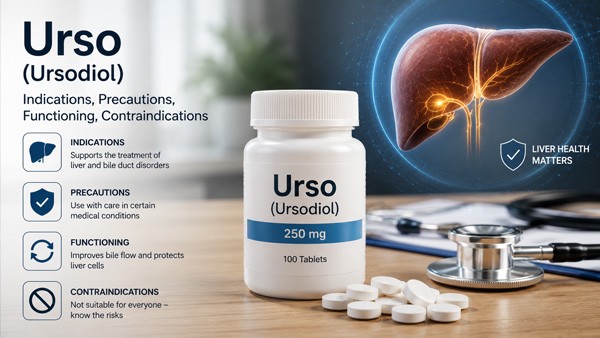
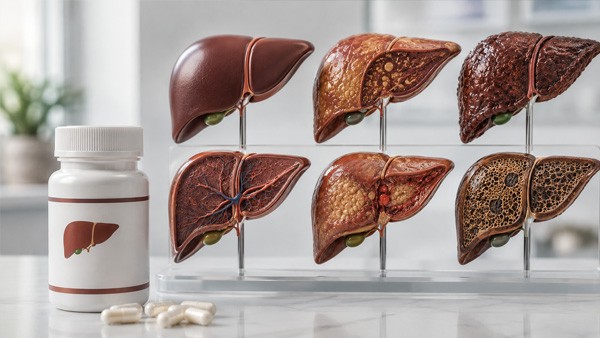
Ursodiol is one of the few drugs in modern medicine that was borrowed rather than invented. Ursodeoxycholic acid occurs naturally in human bile, where it makes up only a small percentage of the total bile acid pool — and it takes its name from the bear, in whose bile it is abundant and from which traditional East Asian medicine drew it for centuries before the molecule was isolated and synthesised.
What makes it clinically interesting is not its origin but its behaviour. It is a hydrophilic bile acid in a system dominated by hydrophobic ones, and that single chemical difference is what allows it to dissolve certain gallstones and to protect liver cells from the bile they are bathed in. Urso is that molecule in 150 mg and 300 mg tablets.
🧬 The short version: ursodiol has two well-established uses — slowing primary biliary cholangitis and dissolving small cholesterol gallstones in carefully selected patients — plus one preventive use during rapid weight loss. Outside those, the evidence thins quickly, and in one condition high doses are actively harmful. The detail below is what separates the three.
🧪 How it actually works
Ursodiol acts through three distinct mechanisms, and knowing which one applies to a given patient explains both the dose and how long treatment must run.
| Mechanism | What happens | Which use it serves |
|---|---|---|
| Cholesterol desaturation | Reduces cholesterol secretion into bile and its absorption from the gut, so bile can hold cholesterol in solution instead of precipitating it | Gallstone dissolution and prevention |
| Bile acid displacement | Progressively replaces toxic hydrophobic bile acids in the circulating pool with a gentler hydrophilic one | Primary biliary cholangitis |
| Cytoprotection and choleresis | Stabilises hepatocyte and bile duct cell membranes and increases bile flow, reducing the concentration of injurious bile | Cholestatic liver disease generally |
Two consequences follow directly. First, nothing here is fast: bile composition changes over weeks and gallstones dissolve over months, so treatment measured in days makes no sense. Second, the drug does not remove the cause — it changes the chemistry of the bile while it is being taken, which is why stones frequently return after treatment stops.
🎯 What it is prescribed for, and at what dose
Dosing is weight-based for liver disease and lower for stone work, which surprises people who assume the bigger problem needs the bigger dose. The logic is different: in liver disease the aim is to shift the entire bile acid pool, whereas for stones it is only to desaturate the cholesterol.
| Indication | Typical dose | Duration |
|---|---|---|
| Primary biliary cholangitis | 13–15 mg per kg of body weight daily | Long-term, usually lifelong |
| Cholesterol gallstone dissolution | 8–10 mg per kg daily, in divided doses | 6–24 months, with imaging checks |
| Prevention during rapid weight loss | Commonly 600 mg daily | Through the weight-loss period |
Both strengths on the shelf exist for that reason: the 150 mg tablet allows the weight-based dose to be built accurately for smaller patients, while 300 mg suits most adult PBC regimens. Doses are usually split across the day for stone dissolution and may be given once daily in PBC, depending on tolerance.
🕑 Timing detail that affects absorption: aluminium-containing antacids, cholestyramine, colestipol and activated charcoal all bind bile acids in the gut and reduce how much ursodiol is absorbed. Separate them by at least two hours. Oestrogens and clofibrate work against the drug from the other direction — they increase the cholesterol saturation of bile, which is exactly what treatment is trying to reverse.
💎 Gallstones: who is genuinely a candidate
This is the section where honest information saves people months of futile treatment. Ursodiol dissolves cholesterol stones and does nothing to pigment or calcified stones, and the selection criteria are narrow.
✅ Reasonable candidate
Radiolucent cholesterol stones under about 20 mm, ideally under 10 mm, a functioning gallbladder, no calcification on imaging, mild or no symptoms, and a patient who is not a surgical candidate or prefers to avoid surgery.
❌ Not a candidate
Calcified or pigment stones, a non-functioning gallbladder, large stones, frequent biliary colic, acute cholecystitis or cholangitis, biliary obstruction, or any stone complication requiring surgery. Medication is not an alternative in these cases.
Even in well-selected patients the outcome deserves framing. Complete dissolution is achieved in a minority to around half of suitable cases, small stones respond far better than large ones, treatment runs for many months, and recurrence is common once the drug stops — a substantial share of patients form stones again within five years, because the underlying tendency to secrete lithogenic bile is unchanged. Ultrasound is repeated at intervals to confirm progress rather than assuming it.
🩸 Primary biliary cholangitis: what response looks like
PBC is a chronic autoimmune disease in which small bile ducts are progressively destroyed, bile accumulates, and the liver scars over years. Ursodiol has been first-line therapy for decades, and it is one of the clearer success stories in hepatology — not because it cures the disease, but because it demonstrably slows progression and delays or avoids transplantation in a large share of patients.
Response is measured biochemically rather than by symptoms. Alkaline phosphatase is the key marker, alongside GGT, transaminases and bilirubin, and improvement typically becomes visible within three to six months of reaching the full weight-based dose. Formal response criteria used in hepatology define an adequate response by how far ALP and bilirubin fall after a year of treatment.
📊 If the response is inadequate: roughly a third of patients do not achieve the biochemical targets on ursodiol alone. That is a recognised clinical situation with established second-line options added under specialist care — it is not a reason to stop the drug or to double it independently. Itching and fatigue, the two symptoms patients care most about, are treated separately, because ursodiol often improves the blood tests without touching the itch.
🤔 The off-label uses, told straight
Two situations account for most off-label prescribing, and both have evidence worth knowing accurately rather than hopefully.
Intrahepatic cholestasis of pregnancy. Ursodiol has been widely used for the intense itching and raised bile acids of this third-trimester condition, and it does reduce pruritus in many women. What a large randomised trial published in The Lancet in 2019 did not find was an improvement in the perinatal outcomes that matter most — which changed how the drug is discussed in obstetric care without removing it from practice. Any use in pregnancy belongs entirely with the team managing the pregnancy.
Primary sclerosing cholangitis. Here the caution is sharper. A trial of high-dose ursodiol in PSC was stopped early because patients on the high dose did worse than those on placebo, with more serious adverse outcomes. High-dose therapy in PSC is therefore not recommended, and this is a case where more drug is not merely useless but harmful.
🔴 The general rule this illustrates: ursodiol is well tolerated, which makes it tempting to treat as harmless and to increase or extend informally. Dose in this drug is indication-specific, and the PSC experience is the clearest evidence that a dose appropriate for one biliary condition can be the wrong dose in another.
⚠️ Precautions, side effects and contraindications
For a drug taken over months to years, ursodiol has an unusually mild profile. Diarrhoea is the most frequently reported effect, generally mild and dose-related; nausea, abdominal discomfort and headache appear less often. Serious reactions are rare, and true allergy is uncommon but requires immediate medical attention if signs appear.
- Do not use for calcified or pigment stones — the mechanism simply does not apply to them.
- Not for a non-functioning gallbladder, biliary obstruction, acute cholecystitis or cholangitis, or a biliary-gastrointestinal fistula.
- Frequent biliary colic points toward surgical assessment rather than a dissolution attempt.
- Advanced liver disease — ascites, hepatic encephalopathy or variceal bleeding — requires specialist management; the drug is not a substitute for it.
- Report all other medicines, in particular antacids, bile acid binders, oestrogens, hormonal contraception and lipid-lowering agents.
Overdose is unlikely to cause serious harm; the expected consequence of excessive intake is diarrhoea. That reassurance should not be read as licence to self-adjust the dose, because in this drug the dose carries the indication.
💰 Practical use and what it costs
Because courses run for months at minimum and for life in PBC, continuity matters more than any single order. Urso here is manufactured by Sun Pharmaceutical Industries as a generic of the Abbott brand, in both strengths, with pack sizes from 30 to 120 tablets.
| Strength | Pack range | Price range | Typical use |
|---|---|---|---|
| 150 mg | 30–120 tablets | $90–$260 | Fine-tuning a weight-based dose |
| 300 mg | 30–120 tablets | $120–$360 | Standard adult PBC and prevention regimens |
Three practical habits make long treatment easier: take the tablets at the same times each day so a missed dose is obvious rather than uncertain; keep the two-hour gap from any antacid or bile acid binder; and order the next pack before the current one runs low, since dissolution and PBC therapy both depend on uninterrupted dosing. Prices are current at the time of writing — check the product page before ordering.
❓ Frequently asked questions
How long does it take to dissolve gallstones?
Months rather than weeks. Treatment typically runs from six months to two years, with ultrasound at intervals to confirm that stones are shrinking. Small radiolucent cholesterol stones respond considerably better than large ones, and dissolution is not achieved in every suitable patient. If imaging shows no change after a reasonable trial, continuing rarely helps.
Will the stones come back after treatment?
Frequently, yes. Ursodiol changes the composition of bile while it is being taken but does not correct the underlying tendency to secrete cholesterol-saturated bile. A substantial proportion of patients form stones again within about five years of stopping. That recurrence risk is one of the main reasons surgery is preferred where a patient is fit for it and symptoms are significant.
Does ursodiol work on every kind of gallstone?
No. It acts only on cholesterol stones that are radiolucent, meaning not calcified. Pigment stones and calcified stones do not dissolve, and a non-functioning gallbladder prevents the drug reaching the stones in adequate concentration. Imaging establishes stone type and gallbladder function before treatment is considered, because starting without that assessment wastes months.
How soon do liver blood tests improve in PBC?
Alkaline phosphatase and other cholestatic markers usually begin improving within three to six months of reaching the full weight-based dose, and formal response is assessed after about a year. Symptoms such as itching and fatigue often do not track the blood tests and are managed separately, so an improving ALP with unchanged itching is a common and expected pattern rather than treatment failure.
What if ursodiol does not work for my PBC?
Around a third of patients do not reach biochemical response targets on ursodiol alone. This is an established clinical scenario, and specialists add second-line therapy rather than abandoning the first. It is not a reason to stop the drug or increase the dose independently — the assessment involves specific criteria applied to blood results after a defined period of adequate dosing.
What are the common side effects?
Diarrhoea is the most frequent and is usually mild and dose-related. Nausea, abdominal discomfort, headache and occasional flu-like symptoms are reported less often. Serious reactions are rare. Any sign of an allergic reaction, such as rash with swelling or difficulty breathing, requires immediate medical attention rather than waiting to see whether it settles.
Which medicines interfere with it?
Aluminium-containing antacids, cholestyramine, colestipol and activated charcoal bind bile acids in the gut and reduce absorption, so they should be separated from ursodiol by at least two hours. Oestrogens, hormonal contraception and clofibrate increase the cholesterol saturation of bile and work against the drug’s purpose. Tell the prescriber about everything being taken, including over-the-counter products.
Can it be taken during pregnancy?
It is used in intrahepatic cholestasis of pregnancy and reduces itching in many women, but a large randomised trial published in 2019 did not show improvement in the perinatal outcomes that matter most. That nuance changed how the drug is discussed in obstetric care without removing it from practice. Any use in pregnancy must be decided and monitored by the team managing the pregnancy.
Is a higher dose more effective?
No, and in one condition it is harmful. Doses are indication-specific: weight-based and higher for primary biliary cholangitis, lower for gallstone dissolution. In primary sclerosing cholangitis a trial of high-dose therapy was halted early because outcomes were worse than with placebo. Dose changes belong with the prescriber who knows which condition is being treated.
Why are there 150 mg and 300 mg tablets?
Because dosing in liver disease is calculated per kilogram of body weight, and two strengths allow that figure to be reached accurately without splitting tablets awkwardly. The 300 mg tablet covers most adult regimens, while 150 mg is useful for smaller patients, for fine adjustment, and for the divided dosing often used in gallstone dissolution.
📑 Sources and editorial
- FDA prescribing information for ursodiol — indications, weight-based dosing, patient selection criteria for gallstone dissolution, interactions
- EASL and AASLD clinical practice guidelines on the management of primary biliary cholangitis — first-line ursodeoxycholic acid therapy and biochemical response criteria
- Lindor KD et al. — trial of high-dose ursodeoxycholic acid in primary sclerosing cholangitis, terminated early for worse outcomes
- Chappell LC et al. (2019), The Lancet — randomised trial of ursodeoxycholic acid in intrahepatic cholestasis of pregnancy
- Product information: Urso (ursodiol) 150 mg and 300 mg in the digestive and liver category
- RXshop Editorial Team — reviewed by Emily Chen, MD, MPH, Internal Medicine
Medical Disclaimer: The information in this article is for educational and informational purposes only and is not a substitute for professional medical advice, diagnosis, or treatment. Always seek guidance from a qualified healthcare provider with any questions you may have regarding a medical condition, and before starting, stopping or changing any medication.