Back Pain and Spinal Degeneration: What Actually Helps

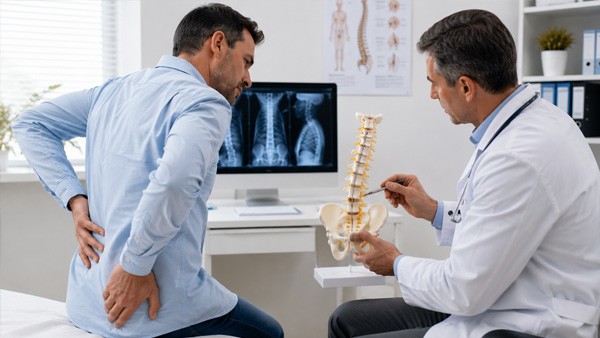

Back pain is among the leading causes of disability worldwide, and the way it is investigated and treated has changed considerably. Much of what was standard practice twenty years ago — scanning early, resting, traction, long-term corsets — is now known to be unhelpful and in some cases actively counterproductive.
The central insight behind that shift is straightforward and surprising: the changes visible on a spinal scan frequently have very little to do with whether someone is in pain.
🧠 The finding that reframes this whole subject: studies scanning people with no back pain at all found disc degeneration in roughly a third of those in their twenties and in the large majority of those in their eighties, along with disc bulges, height loss and other changes at similar rates. These findings are a normal part of ageing, like grey hair. Being told a scan shows degeneration therefore explains far less than it appears to, and being told it at the wrong moment measurably worsens outcomes.
🔤 A note on the word
The term osteochondrosis is used in some countries to describe degenerative change in the spine, and it does not carry that meaning in English-language medicine, where it refers to a group of childhood growth-plate conditions affecting the knee, hip, spine and foot.
What is described here — wear-related change in the discs and joints of the spine — is called degenerative disc disease, spondylosis, or simply age-related spinal change. The clinical problem it produces is usually classified as back pain rather than by the imaging appearance, for reasons the next section explains.
🔴 What needs urgent attention
Most back pain is not dangerous. A small number of presentations are, and one of them is measured in hours.
🔴 Cauda equina syndrome is a surgical emergency. Compression of the nerve roots at the base of the spinal cord causes permanent damage if not decompressed quickly. Go to an emergency department immediately, without waiting for an appointment, if back pain is accompanied by: difficulty passing urine or loss of the sensation of needing to; loss of bowel control; numbness in the saddle area — the inner thighs, buttocks and around the genitals and anus; new numbness or weakness in both legs; or loss of sexual sensation. Delay of even a day can mean permanent incontinence, and people frequently wait because the back pain itself does not feel dramatic.
Other features that need prompt rather than routine assessment:
| Feature | Concern |
|---|---|
| Age over fifty with new back pain, or under twenty | Raises the likelihood of a specific cause |
| History of cancer | Spinal metastasis |
| Unexplained weight loss, night sweats, fever | Cancer or infection |
| Pain that is constant, progressive and worse at night or at rest | Distinguishes it from mechanical pain, which eases with position change |
| Recent significant trauma, or minor trauma in someone with osteoporosis | Fracture |
| Long-term corticosteroids, immune suppression, injecting drug use | Infection or fracture |
| Progressive weakness in a leg | Significant nerve compression |
| Morning stiffness lasting over an hour in someone under forty, improving with exercise | Inflammatory spinal arthritis, which is treated entirely differently |
🗂️ The three categories
Clinically, back pain divides into three groups with very different management.
| Category | Share | Features |
|---|---|---|
| Non-specific back pain | The large majority | No identifiable structural cause. Pain in the back and sometimes buttocks, varying with position and activity |
| Radicular pain and radiculopathy | A minority | Nerve root involvement: pain radiating below the knee in a defined pattern, with numbness, tingling or weakness. Sciatica is the common example |
| Specific pathology | A small minority | Fracture, infection, cancer, inflammatory arthritis, cauda equina compression |
The word non-specific frustrates people, and it is honest rather than dismissive. It means the pain is genuinely present and no single structure can be reliably identified as its source. That matters because treatments aimed at a specific structure — injections, surgery, manipulation of a particular level — work poorly when there is no specific structure to aim at.
🖥️ Why scanning early makes things worse
This is counterintuitive and it is well established.
Guidelines internationally recommend against imaging for back pain in the absence of red flags. The reasons are specific.
It finds things that are not causing the pain. Given how common degenerative changes are in people without symptoms, a scan will almost always show something, and that something will be assumed to be the explanation.
Being told about those findings worsens outcomes. Trials comparing early imaging with no imaging in people without red flags found that those who were scanned reported more pain, had worse function, and used more healthcare over the following months. Hearing that you have degeneration, wear and tear, or a crumbling spine changes how someone moves, how much they avoid, and how they interpret every subsequent twinge.
It leads to procedures that do not help. Surgery aimed at incidental degenerative changes in someone with non-specific back pain has poor outcomes, and the pathway to it frequently begins with a scan that was not indicated.
Imaging is genuinely useful where red flags are present, where nerve compression is causing progressive weakness, and where surgery is being seriously considered. Outside those situations it answers a question nobody needed to ask.
🩺 What causes it
Contributors to degenerative change include age, which is the dominant factor, genetics, which matters more than most people expect, smoking, which impairs the blood supply to the discs, obesity, physical inactivity, previous injury, and occupational exposure to heavy lifting or whole-body vibration.
Contributors to pain from that change are partly different, which is the important distinction. They include muscle deconditioning, poor sleep, psychological distress, fear of movement, low job satisfaction, and previous episodes of back pain. These predict who develops persistent pain considerably better than any imaging finding does.
🏃 What actually helps
Staying active is the single most important thing, and it reverses the advice most people were given.
Bed rest was standard for decades and is now known to prolong recovery and worsen outcomes. Continuing ordinary activities within the limits of pain, and returning to normal function early, produces faster recovery than resting. Movement does not damage a degenerating spine, and the fear that it might is itself a strong predictor of chronic pain.
Exercise has the best evidence of any intervention for both treating and preventing recurrence. Which type matters much less than expected — walking, swimming, strength training, yoga, Pilates and general conditioning all show benefit, and adherence matters more than choosing correctly. Core stability exercises have not proved superior to general exercise despite their reputation.
Education that explains the imaging-symptom disconnect, that hurt does not equal harm, and that the outlook is generally good, measurably improves outcomes on its own.
Manual therapy — manipulation, mobilisation, massage — provides modest short-term relief and works best combined with exercise rather than as a course of passive treatment.
Heat helps in the acute phase and costs nothing.
Psychological approaches including cognitive behavioural therapy and mindfulness have good evidence in persistent back pain, addressing fear of movement and catastrophic interpretation rather than implying the pain is imagined.
💊 Medication
Anti-inflammatory painkillers are the first-line drug treatment, taken at an adequate dose for a short period rather than intermittently at the first twinge.
| Drug | Notes |
|---|---|
| Meloxicam | Once daily, preferentially COX-2 selective, which gives a somewhat better stomach profile |
| Naproxen | Twice daily; among the more favourable cardiovascular profiles in the class |
| Ibuprofen | Widely available and well established |
| Diclofenac | Effective; more cardiovascular caution with prolonged use |
| Celecoxib | COX-2 selective, better gastric tolerance; cardiovascular assessment applies |
| Topical anti-inflammatory | Useful with far less systemic exposure, particularly in older people |
All carry stomach, kidney and cardiovascular considerations with prolonged use, and gastric protection is added where risk factors are present.
Paracetamol deserves a specific note: trial evidence found it no better than placebo for acute low back pain. It remains useful for people who cannot take anti-inflammatories and as an addition, and it should not be relied on as the main treatment.
Muscle relaxants provide modest short-term benefit for acute pain with spasm and are used for days rather than weeks, given sedation and dependence considerations.
Drugs for nerve pain — gabapentin, pregabalin, amitriptyline, duloxetine — have a role where genuine radicular pain is present. Their evidence in ordinary non-specific back pain is poor, and they are widely prescribed for it anyway.
Opioids are not recommended for chronic back pain. Long-term evidence shows small and diminishing benefit alongside accumulating harm, including a phenomenon where the drug itself increases pain sensitivity.
❌ Treatments without supporting evidence
Several long-standing recommendations do not hold up, and continuing them wastes time and money and can cause harm.
Spinal traction has been repeatedly studied and does not improve pain or function. It remains widely offered.
Long-term corset or brace use weakens the muscles that support the spine, producing dependence and worse function over time. Short-term use during a severe acute episode is a different matter.
Bed rest, as above, prolongs recovery.
B vitamins have no evidence for degenerative spinal pain in people who are not deficient, despite being routinely included in treatment regimens in some countries.
Chondroprotectors — glucosamine, chondroitin and similar — have not demonstrated benefit for spinal degeneration.
Injections into the facet joints or discs have limited evidence outside specific and narrowly defined situations.
Surgery for non-specific back pain without nerve compression has poor outcomes. It is genuinely effective for radicular pain from a disc pressing on a nerve where symptoms have not settled, and for spinal stenosis causing significant walking limitation.
🧠 Why some pain becomes persistent
Most episodes of back pain improve substantially within weeks. Predicting who develops persistent pain is done more accurately by psychological and social factors than by anything on a scan, and these are known as yellow flags.
- Believing that pain means damage and that activity will cause further injury
- Catastrophic interpretation — expecting the worst outcome, ruminating on the pain
- Fear-avoidance — withdrawing from activity, which leads to deconditioning and more pain
- Low mood and anxiety
- Poor sleep, which lowers pain thresholds independently
- Job dissatisfaction, and expectation of not returning to work
- Ongoing compensation or litigation
These are identified early precisely because they are modifiable. Addressing them is not a suggestion that the pain is psychological — it is recognition that these factors measurably influence how a genuinely painful condition develops, through effects on the nervous system rather than through imagination.
🛡️ Preventing recurrence
Back pain recurs, and what reduces recurrence is narrower than the usual advice suggests.
Exercise is the only intervention with consistent evidence for preventing recurrence. Regular activity, of essentially any type, continued indefinitely. Programmes stop working when they stop.
Education combined with exercise adds further benefit.
Stopping smoking improves disc nutrition and is associated with less back pain.
Maintaining a reasonable weight reduces load.
Sleeping well matters more than the mattress. On mattresses specifically, medium-firm performs better than very firm in trials, which reverses the traditional advice to sleep on a hard surface.
What has not been shown to prevent back pain: back belts in the workplace, shoe insoles, ergonomic interventions in isolation, and specific lifting techniques taught without accompanying exercise. Sitting posture matters far less than commonly believed — the important variable is changing position regularly rather than holding any particular one.
✅ What to do during an acute episode: keep moving within what the pain allows, avoid bed rest, use heat, take an anti-inflammatory at an adequate dose for a short period, expect substantial improvement over days to weeks, and do not seek a scan unless a red flag is present. If the pain radiates below the knee with numbness or weakness, or if anything in the emergency list appears, that changes the plan entirely.
📈 What to expect
The outlook is generally good and is worse than people assume. Most acute episodes improve substantially within six weeks, though complete resolution takes longer and some residual symptoms are common.
Recurrence is the norm rather than a sign of failure — back pain behaves as an episodic condition for many people, and an episode does not mean the previous recovery was incomplete or that damage has accumulated.
A minority develop persistent pain, and even then function usually improves with the right approach even where pain does not resolve entirely. Aiming for function rather than for a pain score of zero produces better outcomes and considerably less frustration.
🚨 When to seek help
- Any of the cauda equina features — bladder or bowel changes, saddle numbness, weakness in both legs — immediately, at an emergency department
- Progressive weakness in a leg
- Fever, unexplained weight loss or night pain
- A history of cancer with new back pain
- Significant trauma, or minor trauma with osteoporosis
- Pain not improving after six weeks of appropriate management
- Pain radiating below the knee with numbness or weakness that is not settling
- Morning stiffness over an hour in someone under forty, which suggests inflammatory disease
Anti-inflammatory treatment is stocked in the pain medication category, including Mobic (meloxicam), taken once daily. Medication supports activity and rehabilitation rather than substituting for them, and it works best used at an adequate dose for a defined period rather than continuously.
❓ Frequently asked questions
My scan shows disc degeneration. Is that why my back hurts?
Probably not, or at least not straightforwardly. Studies scanning people with no back pain at all found disc degeneration in roughly a third of those in their twenties and in the large majority of those in their eighties, along with bulges and height loss at similar rates. These changes are a normal part of ageing, like grey hair, and finding them does not establish that they are causing symptoms.
Why will nobody scan my back?
Because guidelines internationally recommend against it without red flags, and for a specific reason: trials comparing early imaging with no imaging found that people who were scanned reported more pain, had worse function and used more healthcare afterwards. Scans almost always find age-related changes, those changes get assumed to be the cause, and hearing about them changes how people move and interpret every subsequent twinge.
Which back symptoms are an emergency?
Difficulty passing urine or losing the sensation of needing to, loss of bowel control, numbness in the saddle area — inner thighs, buttocks, around the genitals — new numbness or weakness in both legs, or loss of sexual sensation. These suggest cauda equina syndrome, which causes permanent damage if not decompressed quickly. Go to an emergency department immediately; people frequently wait because the back pain itself does not feel dramatic.
Should I rest until the pain settles?
No — bed rest prolongs recovery and worsens outcomes, and that advice has been reversed. Continuing ordinary activities within the limits of pain and returning to normal function early produces faster recovery. Movement does not damage a degenerating spine, and fear that it might is itself one of the stronger predictors of pain becoming chronic.
Which exercise is best for the back?
Exercise has the best evidence of any treatment, and which type matters far less than expected. Walking, swimming, strength training, yoga, Pilates and general conditioning all show benefit, and adherence matters more than choosing correctly. Core stability exercises have not proved superior to general exercise despite their reputation. Exercise is also the only intervention with consistent evidence for preventing recurrence.
Does spinal traction work?
No. It has been studied repeatedly and does not improve pain or function, despite remaining widely offered. Long-term corset or brace use is similarly unhelpful and worse than that — it weakens the muscles supporting the spine, producing dependence and poorer function over time. Short-term use during a severe acute episode is a different matter.
Do B vitamins or chondroprotectors help?
Not for this. B vitamins have no evidence for degenerative spinal pain in people who are not deficient, despite being routinely included in treatment regimens in some countries. Glucosamine, chondroitin and similar supplements have not demonstrated benefit for spinal degeneration either. Both are widely used and neither changes the outcome.
Is paracetamol useful?
Less than assumed. Trial evidence found it no better than placebo for acute low back pain, which was a surprising result and changed guidance. It remains useful for people who cannot take anti-inflammatories and as an addition to them, but it should not be the mainstay. Anti-inflammatory painkillers taken at an adequate dose for a short period are the first-line drug treatment.
What does non-specific back pain mean?
That the pain is genuinely present and no single structure can be reliably identified as its source. It is honest rather than dismissive, and it accounts for the large majority of cases. It matters practically because treatments aimed at a specific structure — injections, surgery, manipulation of a particular level — work poorly when there is no specific structure to aim at.
When is surgery appropriate?
For radicular pain from a disc pressing on a nerve where symptoms have not settled with time and conservative treatment, and for spinal stenosis causing significant limitation of walking. It is genuinely effective in those situations. Surgery for non-specific back pain without nerve compression has poor outcomes, and the pathway toward it frequently begins with a scan that was not indicated.
What kind of mattress should I use?
Medium-firm performs better than very firm in trials, which reverses the traditional advice to sleep on a hard surface. Beyond that, sleeping well matters more than what you sleep on, since poor sleep lowers pain thresholds independently. Sitting posture likewise matters less than commonly believed — the important variable is changing position regularly rather than maintaining any particular one.
Why does my back pain keep coming back?
Because back pain behaves as an episodic condition for many people, and recurrence is the norm rather than a sign that the previous recovery failed or that damage has accumulated. What reduces recurrence is regular exercise continued indefinitely — the only intervention with consistent evidence for prevention — along with not smoking, maintaining a reasonable weight and sleeping adequately.
📑 Sources and editorial
- NICE guideline on low back pain and sciatica in over 16s
- Lancet series on low back pain and its global burden
- Brinjikji W et al. — systematic review of imaging features of spinal degeneration in asymptomatic populations
- Trial evidence on early imaging and outcomes in low back pain without red flags
- Cochrane reviews of traction, bed rest, exercise therapy and lumbar supports for low back pain
- Williams CM et al. — trial of paracetamol for acute low back pain
- Literature on yellow flags and psychosocial predictors of chronicity
- FDA prescribing information for meloxicam, naproxen and celecoxib
- Related products: pain medication category
- RXshop Editorial Team — reviewed by Emily Chen, MD, MPH, Internal Medicine
Medical Disclaimer: The information in this article is for educational and informational purposes only and is not a substitute for professional medical advice, diagnosis, or treatment. Always seek guidance from a qualified healthcare provider with any questions you may have regarding a medical condition, and before starting, stopping or changing any medication.