Fit and Overweight: What Exercise Does and Does Not Fix

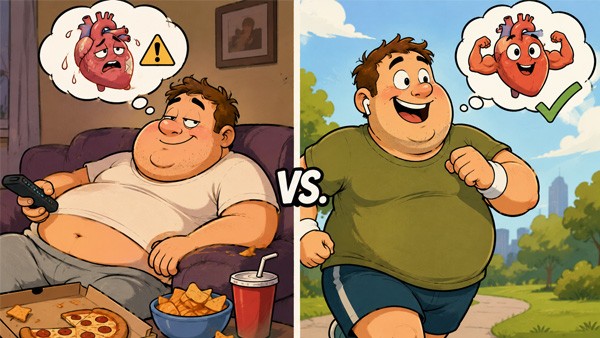
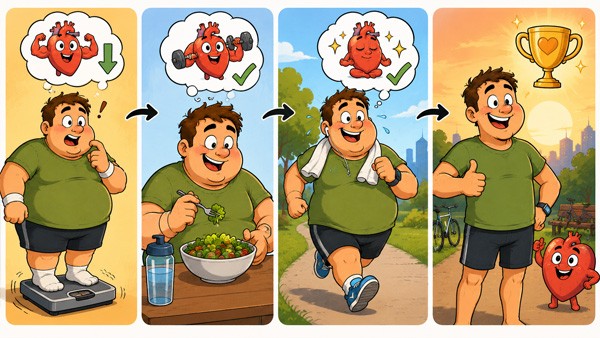
The question in the title gets answered badly from both directions. One camp says being active makes weight irrelevant. The other says exercise is pointless without weight loss. Both are wrong, and the second is more damaging, because it discourages the one behaviour most people can actually sustain.
The accurate answer is less satisfying and more useful: physical activity does not eliminate the health risk associated with excess weight, it reduces that risk substantially, and it delivers major benefits that have nothing to do with what the scales say.
🧠 The distinction that resolves most of the argument: studies showing that activity does not fully offset excess weight generally measure risk factors — blood pressure, cholesterol, blood glucose. Studies showing that fitness matters enormously generally measure outcomes — heart attacks, cancer, death. Both sets of findings are real, and they are not in conflict. Weight influences the numbers on a lab report; fitness influences whether you are alive in twenty years.
📊 What the large studies found
The research that prompted the original version of this article examined over half a million Spanish working adults and compared activity levels across weight categories. Its finding was that active people with obesity still had considerably higher rates of high blood pressure, raised cholesterol and diabetes than inactive people of normal weight.
That finding is sound and worth taking seriously. Activity does not make excess adiposity metabolically neutral, and anyone told otherwise has been misinformed.
What the same study also showed, and what got less attention, is that within every weight category, activity reduced risk. Active people with obesity had better metabolic profiles than inactive people with obesity, by a wide margin. The conclusion was that activity is not sufficient on its own, not that it is useless.
Alongside this sits a substantial body of work on cardiorespiratory fitness — how well the body delivers and uses oxygen, measured directly rather than inferred from self-reported activity. In cohort after cohort, fitness is among the strongest single predictors of death from any cause, and the difference between the least fit and moderately fit groups is larger than the difference attributable to most other measurable risk factors. In several of these cohorts, fit individuals with obesity had lower mortality than unfit individuals of normal weight.
Reconciling the two: excess adiposity carries metabolic risk that activity does not erase, and low fitness carries risk that normal weight does not erase. Someone can be exposed to one, both or neither.
🏃 What exercise does regardless of weight change
This is the part most often lost, and it is the reason the pointless-without-weight-loss framing is wrong.
| Benefit | Occurs without weight loss |
|---|---|
| Improved insulin sensitivity | Yes, and measurably within days of starting |
| Reduced visceral fat | Yes — exercise preferentially reduces the fat around the organs even when total weight is unchanged |
| Lower blood pressure | Yes |
| Improved lipid profile | Yes, particularly triglycerides and HDL |
| Reduced liver fat | Yes, an important effect in fatty liver disease |
| Better mental health and sleep | Yes, with effects comparable to some treatments |
| Preserved muscle and bone | Yes, and increasingly important with age |
| Reduced risk of several cancers | Yes |
| Lower all-cause mortality | Yes, and this is the strongest finding of all |
The visceral fat point deserves emphasis. Not all fat carries the same risk. Fat stored around the abdominal organs is metabolically active, drives insulin resistance and inflammation, and is what most of the health consequences track with. Fat stored under the skin on the hips and thighs is far less harmful. Exercise reduces visceral fat preferentially, which means someone can improve their metabolic risk substantially while the scale barely moves — and then conclude, wrongly, that nothing is happening.
⚖️ The problem with BMI
Almost all of this literature uses body mass index, which is a crude instrument being asked to do work it was not designed for.
It was devised as a population-level statistic, not an individual diagnostic. It cannot distinguish muscle from fat, so muscular people are classified as overweight while people with low muscle and high fat can sit within the normal range. It says nothing about where fat is distributed, which is what actually matters. And the thresholds derived from European populations underestimate risk in South Asian and some East Asian populations, where metabolic problems appear at lower BMI values — which is why several countries use lower cut-offs.
Waist circumference and waist-to-height ratio are more informative because they capture central fat distribution. A practical rule with reasonable supporting evidence is keeping waist circumference under half your height. It requires only a tape measure and predicts metabolic risk better than BMI alone.
🔬 Metabolically healthy obesity
A proportion of people with obesity have normal blood pressure, normal lipids, normal glucose and normal insulin sensitivity. The category is real and has been studied extensively.
Two things are true about it and both matter.
It genuinely exists at any given moment. These individuals have substantially lower short-term risk than people with obesity and metabolic abnormalities, and treating them identically is not supported by evidence.
It is frequently temporary. Follow-up studies find that a large share transition to metabolically unhealthy status over five to ten years. Risk relative to metabolically healthy normal-weight individuals also remains modestly elevated over long periods, particularly for heart failure.
The practical reading is that metabolically healthy obesity is a reason for continued monitoring rather than either alarm or complacency, and that maintaining fitness is one of the things most associated with staying in that category.
📉 What actually reduces risk
Ranking interventions honestly, from the evidence rather than from what sells:
| Intervention | Effect on health outcomes | How achievable |
|---|---|---|
| Moving from inactive to moderately active | Large, and the biggest single step available | Highly achievable and sustainable |
| Stopping smoking | Very large | Difficult, and treatment exists |
| Modest weight loss of five to ten per cent | Substantial improvement in blood pressure, glucose and lipids | Achievable; maintaining it is the hard part |
| Improving diet quality independent of weight | Meaningful | Achievable |
| Adequate sleep | Meaningful and consistently underestimated | Achievable for many |
| Large sustained weight loss by diet alone | Large where achieved | Achieved and maintained by a minority |
| Reducing alcohol | Meaningful | Variable |
The first row deserves attention. The largest health gain in the whole activity literature comes not from the difference between moderately active and very active, but from the difference between doing nothing and doing something. Someone entirely sedentary who begins walking regularly captures the majority of the available benefit, and the curve flattens considerably after that.
✅ Why this matters for someone who has failed at dieting repeatedly: sustained large weight loss is achieved by a minority, while becoming and staying moderately active is achievable by most people. If the choice is framed as lose weight or nothing, many people end up with nothing. If it is framed as move more, improve fitness and aim for modest weight loss, most of the achievable health benefit becomes available. That is not a consolation prize — it reflects what the mortality data actually shows.
🏋️ What kind of activity
Guidelines converge on roughly one hundred and fifty minutes of moderate activity per week, or half that at vigorous intensity, plus muscle-strengthening on two or more days.
Moderate means you can talk but not sing — brisk walking, cycling on the flat, swimming steadily, gardening that raises a sweat. Vigorous means you can say a few words at a time — running, fast cycling, sport.
Resistance training is under-prioritised relative to its value. It preserves muscle, improves glucose handling independently of aerobic exercise, protects bone, and matters increasingly with age. Two sessions weekly is a reasonable target and can be done with body weight alone.
Breaking up sitting has an effect independent of formal exercise. Prolonged uninterrupted sitting worsens glucose and lipid handling even in people who exercise regularly, and standing up briefly every half hour measurably improves it. The suggestion in the original article — standing up from your chair thirty times across a working day — captures this reasonably well and is a genuinely sensible starting point for someone who does nothing at present.
Starting point matters more than the ideal. Someone currently inactive should not begin with a target that guarantees failure. Ten minutes daily that continues indefinitely is worth more than an hour daily that stops in three weeks.
🧠 The stigma problem
This has health consequences and is rarely discussed in articles like this one.
Weight stigma is associated with avoidance of medical care, which means conditions get diagnosed later. It is associated with increased rather than decreased disordered eating. And experiencing it produces a physiological stress response with its own metabolic effects.
People with obesity report being told to lose weight for problems unrelated to weight, having symptoms attributed to weight without investigation, and avoiding appointments as a result. The practical consequence is that shame does not motivate change and does measurably interfere with care.
The relevance to the question in the title is direct: framing exercise as pointless unless it produces weight loss adds to that burden and removes the motivation for the behaviour with the strongest evidence behind it.
📋 A reasonable position
Pulling the evidence together:
Excess adiposity carries real metabolic risk, particularly visceral adiposity, and activity does not neutralise it. Anyone told that exercise makes weight irrelevant has been misled.
Fitness carries independent benefit that is large. An active person with obesity is considerably better off than an inactive one, and in mortality terms may be better off than an unfit person of normal weight.
Both are worth pursuing, and the combination outperforms either alone.
Modest weight loss delivers most of the metabolic benefit. Five to ten per cent produces meaningful improvement in blood pressure, glucose and lipids. The target does not have to be a normal BMI to be worthwhile, and framing it that way makes it achievable.
Where weight is driving metabolic problems and lifestyle measures have not been enough, medication is a legitimate option rather than a failure. It works best alongside activity and dietary change rather than instead of them.
Available options are stocked in the weight management category, including Lodonak BP (naltrexone with bupropion), which acts on appetite and food reward, and Xenical (orlistat), which reduces absorption of dietary fat. Both require assessment, and naltrexone with bupropion is not suitable for anyone with a history of seizures, eating disorders or opioid use.
❓ Frequently asked questions
Can you be overweight and healthy?
At any given time, yes — a proportion of people with obesity have entirely normal blood pressure, lipids, glucose and insulin sensitivity. The category is real and their short-term risk is substantially lower than those with metabolic abnormalities. Follow-up studies find, though, that a large share move into the metabolically unhealthy category over five to ten years, so it is a reason for continued monitoring rather than complacency.
Does exercise cancel out the risk of excess weight?
No, and studies of large populations are clear about this — active people with obesity still have higher rates of high blood pressure, raised cholesterol and diabetes than inactive people of normal weight. What the same studies also show is that within every weight category, activity substantially reduces risk. It is not sufficient on its own, which is a different statement from being useless.
Is exercise worth doing if I do not lose weight?
Very much so. Insulin sensitivity improves within days, visceral fat around the organs falls preferentially even when total weight does not, blood pressure and triglycerides improve, liver fat reduces, sleep and mental health improve, muscle and bone are preserved, and all-cause mortality falls. Cardiorespiratory fitness is among the strongest single predictors of survival in the entire epidemiological literature.
Why does the scale not move when I exercise?
Because exercise changes body composition and fat distribution more than total mass, at least initially. It reduces visceral fat around the organs preferentially, which is the fat that drives insulin resistance and inflammation, while muscle is maintained or gained. Someone can improve their metabolic risk considerably while the scale barely shifts, and then conclude wrongly that nothing is happening.
Is BMI a reliable measure?
It is a population statistic being used as an individual diagnostic. It cannot distinguish muscle from fat, says nothing about where fat sits, and its thresholds underestimate risk in South Asian and some East Asian populations, several of which use lower cut-offs. Waist circumference and waist-to-height ratio are more informative, and keeping waist under half your height is a practical rule with reasonable evidence behind it.
Why does visceral fat matter more than other fat?
Because it is metabolically active in a way subcutaneous fat is not. Fat packed around the abdominal organs drives insulin resistance and inflammation and is what most health consequences track with, while fat stored under the skin on hips and thighs is considerably less harmful. This is why waist measurement predicts risk better than weight, and why exercise helps even without weight change.
How much weight loss actually makes a difference?
Five to ten per cent of body weight produces meaningful improvement in blood pressure, blood glucose and lipids, and it is the threshold used in clinical guidance. The target does not have to be a normal BMI to be worthwhile. Framing it as five to ten per cent rather than as reaching an ideal weight makes it both achievable and sufficient for most of the metabolic benefit.
How much exercise is enough?
Guidelines converge on about one hundred and fifty minutes of moderate activity weekly, or half that at vigorous intensity, plus muscle-strengthening twice weekly. Moderate means you can talk but not sing. Worth knowing though: the largest health gain comes from the step between doing nothing and doing something, not from the difference between moderately and very active. The curve flattens considerably after that first step.
Does sitting matter if I exercise regularly?
Yes, independently. Prolonged uninterrupted sitting worsens glucose and lipid handling even in people who exercise regularly, and standing up briefly every half hour measurably improves it. Standing up from your chair thirty or so times across a working day is a reasonable practical target, and it is a sensible starting point for anyone doing nothing at present.
Is resistance training necessary or is walking enough?
Walking delivers a great deal, and resistance training adds things walking does not. It preserves muscle, improves glucose handling through a separate mechanism, protects bone density, and becomes more important with age as muscle is lost naturally. Two sessions weekly is a reasonable target and can be done with body weight alone, without equipment or a gym.
Is it better to be thin and inactive or heavier and fit?
In mortality terms, several large cohorts have found fit individuals with obesity doing better than unfit individuals of normal weight. That does not make excess weight harmless — its metabolic effects are real and separate. The useful reading is that low fitness and excess adiposity are two distinct exposures, and someone can carry one, both or neither. Addressing either helps; addressing both helps more.
When is weight loss medication reasonable?
Where weight is contributing to health problems and lifestyle measures have not been sufficient, typically above defined thresholds or lower where conditions such as type 2 diabetes, sleep apnoea or hypertension are present. It is a legitimate option rather than an admission of failure, and it works alongside activity and dietary change rather than replacing them. Assessment is needed, since the options have real contraindications.
📑 Sources and editorial
- Ortega FB et al. and colleagues — analyses of physical activity, weight status and cardiovascular risk factors in large Spanish working cohorts
- Blair SN and colleagues — cardiorespiratory fitness and all-cause mortality across body composition categories
- Evidence reviews on exercise-induced visceral adipose tissue reduction independent of weight loss
- Longitudinal studies of metabolically healthy obesity and transition to metabolically unhealthy status
- WHO global guidelines on physical activity and sedentary behaviour
- Literature on waist-to-height ratio as a predictor of cardiometabolic risk, and on ethnicity-specific BMI thresholds
- Research on weight stigma and its effects on healthcare engagement and health outcomes
- Related reading: dieting and metabolism
- Related products: weight management category
- RXshop Editorial Team — reviewed by Daniel Kim, MD, Endocrinology
Medical Disclaimer: The information in this article is for educational and informational purposes only and is not a substitute for professional medical advice, diagnosis, or treatment. Always seek guidance from a qualified healthcare provider with any questions you may have regarding a medical condition, and before starting, stopping or changing any medication.