Hormone Therapy for Prostate Cancer: How It Works


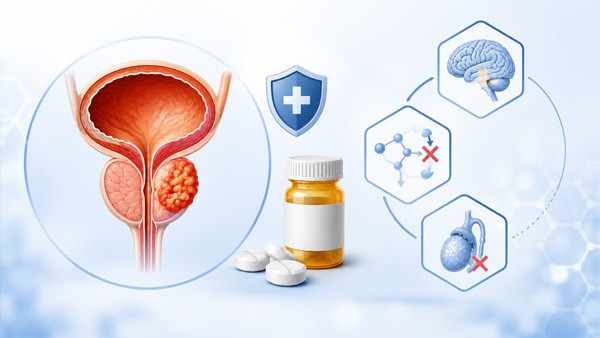
Prostate cancer depends on testosterone to grow. Remove or block that testosterone and the cancer shrinks — an observation made in the 1940s that earned a Nobel Prize and remains the foundation of treatment for advanced disease more than eighty years later.
Hormone therapy, more precisely called androgen deprivation therapy, is used at several points in the course of prostate cancer and almost never on its own for early disease. Understanding when it applies, which of the several very different drug classes is involved, and how its considerable side effects are managed makes the difference between tolerating treatment and being defeated by it.
🧠 What hormone therapy does and does not do: it controls prostate cancer rather than curing it. In localised disease it is used alongside radiotherapy to improve the chance of cure, not instead of definitive treatment. In advanced disease it can hold the cancer in check for years, sometimes many. What it cannot do is eliminate the disease permanently on its own, and treatments that promise otherwise should be regarded with suspicion.
🧬 Why testosterone matters
Prostate cells, healthy and cancerous alike, carry androgen receptors. Testosterone and its more potent form dihydrotestosterone bind those receptors, which then act on the cell nucleus to drive growth and survival. Most prostate cancers retain this dependence, which is what makes them uniquely vulnerable among solid tumours.
Around ninety per cent of circulating testosterone is made by the testicles, under instruction from the pituitary gland, which is itself directed by a hormone released from the hypothalamus. The remainder comes from the adrenal glands and, in advanced disease, from the tumour itself. Every class of hormone therapy interrupts this chain at a different point, and knowing which point explains both how quickly a drug works and what it will not achieve alone.
🎯 When it is used
This is where older patient information most often misleads, by presenting hormone therapy as one of four interchangeable options. It is not. Its place is quite specific.
| Situation | Role of hormone therapy |
|---|---|
| Low-risk localised cancer | Not used. Active surveillance is standard, with regular PSA testing, examination and biopsy |
| Intermediate or high-risk localised cancer | Given alongside radiotherapy, typically for months to years, which improves survival compared with radiotherapy alone |
| After surgery, with adverse features | Sometimes added to salvage radiotherapy |
| Locally advanced or node-positive | A core part of treatment, usually long term and combined with radiotherapy |
| Rising PSA after treatment | May be started, with timing individualised; earlier is not always better |
| Metastatic disease | The backbone of treatment, now almost always combined with a second agent |
Two things follow from this table. Hormone therapy is not a substitute for surgery or radiotherapy in a man whose cancer is confined to the prostate and curable. And it is not withheld until symptoms appear in metastatic disease, where starting promptly and combining agents changes survival substantially.
💊 The drug classes
Several quite different approaches all get called hormone therapy, and confusing them causes real problems — particularly the assumption that an anti-androgen tablet is equivalent to an injection that shuts down testosterone production.
| Approach | Mechanism | Practical notes |
|---|---|---|
| Surgical orchiectomy | Removes the source of testicular testosterone | Immediate, permanent, no ongoing cost; irreversible, and now chosen less often for that reason |
| LHRH agonists (leuprolide, goserelin, triptorelin) | Overstimulate the pituitary until it shuts down | Depot injections monthly to yearly; cause an initial testosterone flare |
| GnRH antagonists (degarelix, relugolix) | Block the pituitary receptor directly | No flare; testosterone falls within days; relugolix is oral |
| Anti-androgens (bicalutamide, flutamide, nilutamide) | Block the receptor rather than lowering testosterone | Oral; used with injections, as flare cover, or occasionally alone |
| Androgen synthesis inhibitors (abiraterone) | Blocks androgen production everywhere including within the tumour | Requires a steroid alongside; used in advanced disease |
| Second-generation receptor blockers (enzalutamide, apalutamide, darolutamide) | Bind the receptor far more tightly than older anti-androgens | Used with standard therapy in advanced disease |
⚠️ The flare phenomenon. LHRH agonists paradoxically raise testosterone for one to two weeks before suppressing it, because the pituitary is initially stimulated before it becomes exhausted. In a man with extensive bone metastases or spinal involvement, that surge can worsen pain or, rarely, compress the spinal cord. An anti-androgen tablet is therefore started before or with the first injection and continued for a couple of weeks to block the effect. GnRH antagonists avoid the problem entirely, which is why they are preferred where the risk is high.
🧪 Bicalutamide in practice
Bicalutamide is the anti-androgen in routine use, and it has three distinct roles that involve quite different doses and expectations.
As flare cover, it is given for a short period around the start of an LHRH agonist. As combined androgen blockade, it is continued alongside injections to block the residual androgens produced by the adrenal glands. As monotherapy, at a higher dose, it is occasionally used in men who want to preserve sexual function and bone density, accepting somewhat less effective cancer control in exchange.
Compared with the older anti-androgens it replaced, its advantages are practical: once-daily dosing rather than three times a day, and a much better safety record than flutamide, which carries a meaningful risk of severe liver injury and has largely fallen out of use for that reason. Nilutamide causes visual disturbance and lung problems and is similarly uncommon now.
Points that matter for anyone taking it:
- Liver function is checked before starting and periodically afterwards; any jaundice, dark urine or right-sided abdominal pain needs prompt review
- Breast tenderness and enlargement are common, particularly on monotherapy, and can be reduced by preventive radiotherapy to the breast tissue or by tamoxifen
- It interacts with warfarin, increasing its effect; anticoagulation needs closer monitoring
- It is taken continuously, at the same time each day, with or without food
- It does not lower testosterone — blood testosterone may even rise slightly, which is why it is not equivalent to an injection and why PSA remains the measure of whether it is working
🔗 Why single-agent therapy has been superseded
For metastatic prostate cancer, androgen deprivation alone was the standard for decades. It no longer is, and this is the most important change in the field in a generation.
Trials have consistently shown that adding a second agent at the outset — docetaxel chemotherapy, or one of the newer hormonal drugs such as abiraterone, enzalutamide, apalutamide or darolutamide — produces substantially longer survival than androgen deprivation on its own. Triplet combinations extend this further in selected men. The practical implication is that a man starting treatment for metastatic disease today should expect a discussion about combination therapy rather than an injection alone, and anyone on injections alone is entitled to ask why.
This intensification carries more side effects and more cost, and it is not right for every patient — frailty, other conditions and personal priorities all bear on it. But it should be a decision made, not a question never raised.
⚠️ Side effects and what helps
Removing testosterone from an adult male body has wide-ranging consequences. Most are manageable, and several respond to measures that are simple but easy to overlook.
| Effect | What helps |
|---|---|
| Hot flashes | Very common. Layered clothing, avoiding triggers; medication options exist for severe cases |
| Loss of libido and erectile dysfunction | Near universal on full suppression; PDE5 inhibitors help erection but not desire; discuss openly rather than assuming it is untreatable |
| Fatigue | Exercise is the most effective intervention, counterintuitive as that sounds; also check for anaemia |
| Bone thinning and fracture | Baseline bone density scan, calcium and vitamin D, resistance exercise, bone-protecting drugs where risk is high |
| Muscle loss and weight gain | Resistance training and dietary attention from the start, not after the change has happened |
| Metabolic change | Monitoring of glucose and lipids; insulin resistance increases |
| Cardiovascular risk | Blood pressure, lipids and smoking managed actively; relevant to the choice of agent in men with existing heart disease |
| Mood change and depression | Common and under-recognised; treatable, and worth raising unprompted |
| Memory and concentration | Reported by many; usually mild, improves if therapy stops |
| Breast tenderness and enlargement | Preventive radiotherapy or tamoxifen, most relevant with anti-androgen monotherapy |
| Anaemia | Contributes to fatigue; checked on routine blood tests |
✅ Exercise is the closest thing to a general antidote. Supervised programmes combining resistance and aerobic training during androgen deprivation improve fatigue, muscle mass, bone density, insulin sensitivity, mood and quality of life, with a consistency across trials that few drug interventions match. It is the single most valuable thing a man on this treatment can do for himself, and it should be started at the beginning rather than after decline has set in.
🦴 Bone health deserves separate attention
Testosterone maintains bone. Remove it and bone density falls measurably within the first year, with fracture risk rising over time. In men who also have bone metastases, the picture is more complex, since the disease itself weakens bone.
Sensible management is not complicated: a baseline bone density scan before or shortly after starting long-term therapy, adequate calcium and vitamin D, weight-bearing and resistance exercise, attention to smoking and alcohol, and bone-protecting medication where fracture risk assessment indicates it. Fracture in this setting is not a minor event — a hip fracture in an older man carries substantial mortality — and prevention is far easier than repair.
⏸️ Continuous or intermittent
Because the side effects accumulate, intermittent therapy has been studied extensively: treatment is given until PSA falls to a low level, then paused, then restarted when PSA rises again.
The findings are reasonably consistent. Quality of life during off-treatment periods improves, with return of sexual function and energy for some men. Cancer control appears comparable in some settings, particularly in biochemical recurrence without metastases, while in overt metastatic disease continuous therapy remains the safer choice. It is a genuine option worth discussing rather than a compromise, and it suits some men considerably better than others.
📉 When it stops working
Over time, prostate cancer adapts. It amplifies the androgen receptor, alters it so that it activates without much stimulus, or begins producing its own androgens. PSA starts rising despite testosterone remaining at castrate levels, and the disease is then described as castration resistant.
This is not the end of treatment. It is the point at which the approach changes, and the options available now are considerably better than a decade ago: the second-generation receptor blockers, abiraterone, chemotherapy, radioligand therapy targeting a protein on the surface of prostate cancer cells, PARP inhibitors where specific gene mutations are present, and bone-targeted agents. Genetic testing of the tumour and of the patient has become part of the standard pathway here, because it determines which of these options apply.
Importantly, androgen deprivation is continued rather than stopped, since withdrawing it allows the remaining hormone-sensitive cancer cells to grow.
📋 Monitoring and what to ask
Treatment is followed with PSA testing at intervals, testosterone measurement to confirm suppression is adequate, blood counts, liver and kidney function, glucose and lipids, blood pressure, bone density, and imaging when the picture changes.
Questions worth putting to the treating team:
- What is the aim here — cure alongside radiotherapy, or long-term control?
- How long is this intended to continue?
- Should a second agent be added, given current evidence for combination therapy?
- What is my baseline bone density, and does it need protecting?
- Is intermittent therapy appropriate for my situation?
- Is an exercise programme available through the service?
- Given my heart history, does that affect which agent is chosen?
🔴 This is not a condition to self-manage. Prostate cancer treatment depends on staging, PSA trends, imaging and regular review by a urologist or oncologist. Hormone therapy is prescribed and monitored within that framework, and taking an anti-androgen without diagnosis, staging and follow-up is not treatment — it suppresses PSA and can mask progression while the disease advances. Ongoing prescriptions are a legitimate part of long-term care; starting treatment without a specialist is not.
🔭 Screening, briefly
Because this article is often reached by men worried about risk rather than already diagnosed, a short note on screening is warranted.
PSA testing is not a straightforward good. It detects cancers that would never have caused harm alongside those that would, and treating the former causes incontinence and erectile dysfunction for no benefit. Current guidance therefore frames it as a shared decision: a conversation from around age fifty for men at average risk, earlier for those with a family history or of African ancestry, weighing the reduction in prostate cancer deaths against the risk of over-diagnosis. Active surveillance for low-risk disease has substantially reduced the harm of over-treatment, which strengthens the case for testing compared with twenty years ago, but it remains a decision rather than an automatic recommendation.
The claim that every man over forty-five should simply be screened annually oversimplifies a genuinely balanced question.
The anti-androgen discussed here is stocked as Casodex (bicalutamide 50 mg), with Calutide as the generic equivalent, in the cancer medications category. Both require an established diagnosis and specialist supervision.
❓ Frequently asked questions
Does hormone therapy cure prostate cancer?
On its own, no. It controls the disease, sometimes for many years. Given alongside radiotherapy for intermediate or high-risk localised cancer it does improve the chance of cure, which is why it is used there. In metastatic disease the aim is long-term control rather than eradication. Any source presenting hormone therapy alone as curative for advanced disease is misleading.
What is the difference between an anti-androgen tablet and an injection?
They work at different points. Injections such as LHRH agonists and GnRH antagonists act on the pituitary to shut down testosterone production, so blood testosterone falls to very low levels. Anti-androgen tablets such as bicalutamide block the receptor instead, leaving testosterone circulating normally or even slightly raised. They are not interchangeable, and a tablet is not a substitute for suppression where full suppression is the goal.
What is testosterone flare and why does it matter?
LHRH agonists initially stimulate the pituitary before exhausting it, so testosterone rises for one to two weeks before falling. In men with extensive bone disease or spinal involvement that surge can worsen pain or rarely compress the spinal cord. An anti-androgen is therefore started before or with the first injection and continued a couple of weeks as cover. GnRH antagonists do not cause flare, which is why they are preferred when the risk is significant.
Why is bicalutamide used instead of flutamide now?
Practicality and safety. Bicalutamide is taken once daily rather than three times, and flutamide carries a meaningful risk of severe liver injury that led to its decline in routine use. Nilutamide, the third older anti-androgen, causes visual disturbance and lung complications. Bicalutamide became the standard oral anti-androgen because it achieves comparable effect with a considerably better tolerability profile.
Is androgen deprivation alone still standard for metastatic disease?
No, and this is the biggest change in the field in a generation. Adding a second agent at the outset — docetaxel, or abiraterone, enzalutamide, apalutamide or darolutamide — produces substantially longer survival than androgen deprivation alone. Combination should be discussed with every man starting treatment for metastatic disease, even where frailty or other conditions ultimately argue against it.
Will hormone therapy end my sex life?
Full androgen suppression causes loss of libido and erectile difficulty in almost all men, which is one of the hardest aspects of treatment. PDE5 inhibitors can help with erection but do not restore desire. Anti-androgen monotherapy preserves sexual function considerably better in exchange for somewhat less effective cancer control, and intermittent therapy allows recovery during off periods. These options exist and are worth raising rather than accepting the outcome as fixed.
How much does hormone therapy affect bone?
Measurably, and within the first year. Testosterone maintains bone density, and removing it accelerates loss with rising fracture risk over time. Management is straightforward: a baseline density scan before or shortly after starting long-term therapy, adequate calcium and vitamin D, resistance and weight-bearing exercise, and bone-protecting medication where risk assessment supports it. Hip fracture in an older man is a serious event, and prevention is far easier than repair.
Does exercise really help during treatment?
Yes, and the evidence is unusually consistent. Programmes combining resistance and aerobic training improve fatigue, muscle mass, bone density, insulin sensitivity, mood and overall quality of life during androgen deprivation. It is the most valuable self-directed intervention available, and it works best started at the beginning of treatment rather than after decline has already occurred.
What does castration resistant mean?
That PSA is rising and the cancer is progressing despite testosterone being at castrate levels. The cancer has adapted — amplifying the androgen receptor, altering it so it activates with minimal stimulus, or making its own androgens. It is not the end of treatment: second-generation receptor blockers, abiraterone, chemotherapy, radioligand therapy, PARP inhibitors for specific mutations and bone-targeted agents all apply. Androgen deprivation continues rather than stopping.
Can treatment be paused?
Intermittent therapy is a recognised option: treatment until PSA falls low, then a break, then restarting when it rises. Quality of life during off periods improves, with return of energy and sexual function for some men. Cancer control appears comparable in some settings, particularly biochemical recurrence without metastases, while continuous therapy remains safer in overt metastatic disease. It is a genuine discussion to have rather than a compromise.
Should every man over forty-five be screened annually?
That oversimplifies a genuinely balanced question. PSA testing detects cancers that would never have caused harm alongside those that would, and treating the harmless ones causes incontinence and erectile dysfunction for no benefit. Guidance frames it as a shared decision from around age fifty, earlier with a family history or African ancestry. Active surveillance for low-risk disease has reduced the harm of over-treatment, but testing remains a decision rather than an automatic recommendation.
Does bicalutamide interact with other medicines?
The interaction that matters most is with warfarin, whose effect it increases, requiring closer anticoagulation monitoring. Liver function is checked before starting and periodically afterwards, and jaundice, dark urine or right-sided abdominal pain warrant prompt review. A full medication list should always be given to the prescribing team, since prostate cancer patients are frequently taking treatments for several other conditions.
📑 Sources and editorial
- NCCN and EAU clinical practice guidelines for prostate cancer
- Huggins C and Hodges CV — original work establishing androgen dependence of prostate cancer
- Trial evidence for treatment intensification in metastatic hormone-sensitive prostate cancer, including docetaxel and second-generation hormonal agents
- Studies of intermittent versus continuous androgen deprivation
- Evidence reviews on exercise oncology during androgen deprivation therapy
- FDA prescribing information for bicalutamide, flutamide and nilutamide
- Related products: Casodex bicalutamide, cancer medications category
- RXshop Editorial Team — reviewed by Michael Reeves, MD, FACS, Urology
Medical Disclaimer: The information in this article is for educational and informational purposes only and is not a substitute for professional medical advice, diagnosis, or treatment. Always seek guidance from a qualified healthcare provider with any questions you may have regarding a medical condition, and before starting, stopping or changing any medication.