Is Effective Hepatitis C Treatment Available to Everyone

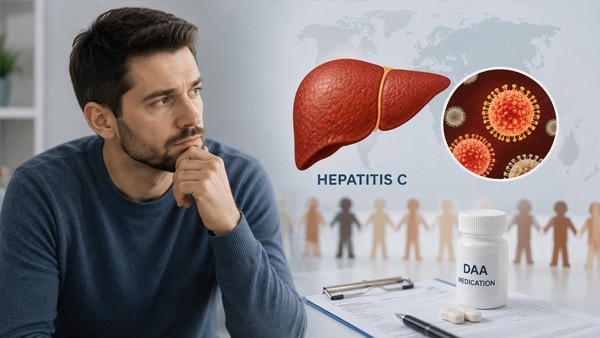

Hepatitis C is one of the few chronic viral infections that modern medicine can actually cure, and it happened within a single decade. Before 2014 treatment meant a year of interferon injections with flu-like symptoms, depression and anaemia, and a cure rate around half. Today it means one tablet a day for eight to twelve weeks, minimal side effects, and cure in more than 95% of people treated.
The medical problem was solved. What remains is an access problem, and it is a very different kind of obstacle: most people carrying the virus do not know they have it. This guide covers what the virus does, how the cure works, why the price collapsed, what testing and treatment involve now, and what still stands between a curable infection and the people who need curing.
🧬 The scale, in current figures: the World Health Organization estimates around 50 million people live with chronic hepatitis C worldwide, with roughly a million new infections each year. Only about a third have been diagnosed, and a considerably smaller share have been treated. The gap between what is possible and what is happening is the entire story of this disease now.
🦠 What the virus actually does
Hepatitis C is a bloodborne virus that infects liver cells. In roughly a quarter of people the immune system clears it spontaneously within six months. In the remaining majority it establishes chronic infection, and that is where the damage accumulates.
The defining feature is silence. Chronic hepatitis C typically produces no symptoms for years or decades — perhaps fatigue, perhaps nothing at all — while persistent inflammation gradually replaces functioning liver tissue with scar tissue. That process, fibrosis, advances through stages until it reaches cirrhosis, at which point complications begin: portal hypertension, fluid accumulation, bleeding from varices, confusion from accumulated toxins, and a substantially raised risk of liver cancer.
| Stage | What is happening | Typical timescale |
|---|---|---|
| Acute infection | Usually asymptomatic; a quarter clear it spontaneously | First 6 months |
| Chronic infection, mild fibrosis | Ongoing inflammation, few or no symptoms | Years to decades |
| Advanced fibrosis | Substantial scarring, still often silent | Typically after 20 years or more |
| Cirrhosis | Architecture of the liver disrupted; complications begin | In a significant minority of untreated cases |
| Decompensation or liver cancer | Liver failure, or hepatocellular carcinoma | Annual risk once cirrhosis is established |
Progression varies enormously between individuals. Alcohol accelerates it markedly, as do coinfection with HIV or hepatitis B, fatty liver disease, male sex and older age at infection. Some people reach thirty years with minimal scarring; others develop cirrhosis in fifteen.
💉 How transmission happens
Hepatitis C spreads through blood-to-blood contact. Understanding the actual routes matters because misplaced fear causes stigma while genuine risks go unrecognised.
- Sharing injecting equipment — the dominant route in most countries today, including sharing anything used in preparation, not just needles.
- Medical procedures with inadequate sterilisation — historically important and still relevant in some settings.
- Blood transfusion before screening began — a large share of older diagnoses trace to transfusions received before the early 1990s.
- Tattooing and piercing with unsterile equipment, including informal settings.
- Mother to child at birth — uncommon, higher where the mother also has HIV.
- Sexual transmission — inefficient in heterosexual couples, but a recognised route in specific contexts involving blood exposure.
It does not spread through sharing food, hugging, kissing, coughing, breastfeeding with intact nipples, or ordinary household contact. Saying so plainly matters, because unwarranted fear of casual transmission is one reason people conceal the diagnosis and avoid care.
💊 What changed in 2014
The transformation came from direct-acting antivirals — drugs that target specific viral proteins rather than stimulating the immune system as interferon did. Where interferon caused misery for a year and cured about half, DAAs cure almost everyone in two or three months with side effects rarely worse than a headache.
Three classes are combined in current regimens: NS5B polymerase inhibitors such as sofosbuvir, NS5A inhibitors such as velpatasvir or daclatasvir, and NS3/4A protease inhibitors. Combining agents that attack different viral targets suppresses replication so completely that the virus is eliminated rather than merely controlled.
| Aspect | Interferon era | Direct-acting antivirals |
|---|---|---|
| Cure rate | Roughly 50%, varying by genotype | Over 95% across genotypes |
| Duration | 24 to 48 weeks | 8 to 12 weeks in most cases |
| Administration | Weekly injections plus tablets | Tablets only, once daily |
| Side effects | Flu-like illness, depression, anaemia, hair loss | Mild — headache and fatigue most commonly |
| Eligibility | Many excluded for psychiatric or haematological reasons | Suitable for nearly everyone, including cirrhosis |
| Genotype testing | Essential for choosing therapy | Often unnecessary with pangenotypic regimens |
The pangenotypic development matters practically as much as the efficacy. Older treatment required identifying which of the six main viral genotypes a person carried, an extra test and an extra delay. Current combinations work across all genotypes, which removes a step that was itself a barrier in resource-limited settings.
💰 Why the price collapsed
Sofosbuvir launched in the United States at a list price that made headlines worldwide — tens of thousands of dollars for a twelve-week course. That figure triggered a global argument about pharmaceutical pricing that shaped access policy for years afterwards.
What changed the picture was voluntary licensing. The patent holders granted licences to generic manufacturers, predominantly in India, to produce and sell the same molecules in a defined list of low and middle income countries. Combined with competition among those manufacturers, the effect on price was dramatic: a full curative course became available for a tiny fraction of the originator price in licensed territories.
⚠️ What this means in practice for a patient: the same active molecule, made to the same bioequivalence standard, costs radically different amounts depending on where it is purchased and under which licence. The licensing arrangements are geographic rather than clinical — the medicine is identical. That is why access to hepatitis C treatment became a question of jurisdiction and paperwork rather than of pharmacology.
Generic sofosbuvir is available here as Hepcinat and Hepcvir, both 400 mg. Ribavirin, once central to every regimen and now needed only in specific situations, is listed as Copegus and Rebetol.
🔬 Getting tested is the real bottleneck
Since the medicine works and the price has fallen, the limiting factor is diagnosis. Roughly two thirds of people with chronic hepatitis C worldwide do not know they have it, because the infection produces no symptoms until the liver is already substantially damaged.
Testing happens in two steps. An antibody test shows whether a person has ever been exposed — it stays positive for life, including in those who cleared the virus spontaneously or were cured. A positive antibody result therefore requires a second test, for HCV RNA, which detects the virus itself and confirms whether the infection is current.
Who should be tested: anyone who has ever injected drugs, even once decades ago; anyone who received a blood transfusion or organ transplant before screening was introduced; people with unexplained abnormal liver enzymes; anyone with HIV; children born to mothers with hepatitis C; people who received medical or dental care in settings with uncertain sterilisation; recipients of tattoos or piercings in informal settings; and anyone who simply wants to know. Several countries now recommend testing all adults at least once, precisely because risk-based screening misses too many.
✅ The practical sequence after a positive RNA test: assessment of liver fibrosis, usually with a non-invasive score calculated from routine blood tests or with elastography rather than biopsy; screening for hepatitis B and HIV; a review of every other medicine being taken, because interactions matter here; and then treatment selection. Genotype testing is no longer needed for most pangenotypic regimens.
📋 What treatment involves now
For a person without cirrhosis and without previous treatment, the course is typically eight to twelve weeks of one or two tablets daily. Monitoring during treatment is minimal in straightforward cases — a marked contrast with the interferon era, when frequent blood counts were mandatory.
The result is judged twelve weeks after finishing, by measuring HCV RNA again. An undetectable result at that point is called sustained virological response, and it is regarded as cure: late relapse after SVR12 is rare enough to be a curiosity.
Several situations complicate the standard picture and require specialist management: established cirrhosis, particularly if decompensated; previous treatment failure; coinfection with hepatitis B, which can reactivate during DAA therapy and requires monitoring; significant kidney impairment; and pregnancy, where treatment is generally deferred.
🔴 Interactions deserve genuine attention. Several DAAs interact with common medicines. Amiodarone combined with sofosbuvir can cause severe bradycardia and has been fatal. Certain anticonvulsants, rifampicin and St John wort reduce DAA levels enough to cause treatment failure. Some statins accumulate to toxic levels. A complete medication review — including herbal products and anything bought without prescription — is part of treatment planning rather than an afterthought.
✅ What cure means, and what it does not
Cure means the virus is gone. Liver inflammation settles, fibrosis frequently improves over subsequent years, and the risk of liver failure falls substantially. For most people treated before cirrhosis develops, life expectancy returns close to normal.
Three things it does not mean deserve stating clearly.
- It does not confer immunity. Reinfection is entirely possible if exposure recurs, and it happens. Cure removes the virus, not the susceptibility.
- It does not reverse established cirrhosis. Scarring may improve partially, but anyone with cirrhosis at the time of cure needs continued surveillance for liver cancer — typically ultrasound every six months, indefinitely. The risk falls after cure but does not disappear, and this is the most commonly neglected part of post-treatment care.
- It does not undo other liver damage. Alcohol-related injury and fatty liver disease continue on their own trajectory, and addressing them matters as much after cure as before.
🚧 What still stands in the way
Given a cure that works in over nineteen cases out of twenty and costs relatively little in much of the world, the persistence of the epidemic requires explanation. The barriers are structural rather than scientific.
Undiagnosed infection is the largest single factor. People cannot be treated for a condition nobody has identified, and the silence of the disease means it is usually found incidentally or too late.
Stigma deters testing and disclosure, particularly where infection is associated with injecting drug use. That association also produces the paradox that the group with the highest prevalence frequently has the poorest access to care.
Fragmented care pathways lose people between steps: a positive antibody test that never leads to an RNA test, an RNA result that never reaches the patient, a specialist referral that never happens. Simplifying the pathway — testing and treating in the same setting, by non-specialists where appropriate — consistently improves completion rates.
Cost in high-income countries remains a barrier in systems where treatment is restricted by fibrosis stage or by insurance criteria, even as the same drugs sell for a fraction of the price elsewhere.
🎯 The 2030 target
The World Health Organization has set a goal of eliminating viral hepatitis as a public health threat by 2030, defined as a 90% reduction in new infections and a 65% reduction in deaths compared with the 2015 baseline. A small number of countries are on track. Most are not, and the shortfall is almost entirely about diagnosis and linkage to care rather than about the availability of effective drugs.
What would close the gap is unglamorous: broader testing, simplified pathways that do not require a specialist for straightforward cases, harm reduction services that reach people who inject drugs, and treatment offered without waiting for liver damage to accumulate. Each of those is a policy decision rather than a scientific problem.
For the medication itself — how sofosbuvir works, what a course involves and what it costs — see our guide to Hepcinat and sofosbuvir. The full range is in the antiviral category.
❓ Frequently asked questions
Is hepatitis C actually curable?
Yes. Direct-acting antiviral therapy cures more than 95% of people, usually in eight to twelve weeks of daily tablets. Cure is confirmed by an undetectable viral load twelve weeks after finishing treatment, and late relapse after that point is rare. This is a genuine cure in the sense of eliminating the virus, unlike treatments that suppress a virus indefinitely.
Why do most people not know they have it?
Because chronic hepatitis C usually produces no symptoms for years or decades while liver scarring accumulates silently. Around two thirds of people with the infection worldwide are undiagnosed. That is why several countries now recommend one-off testing for all adults rather than testing only those with recognised risk factors, which misses too many.
What is the difference between the antibody test and the RNA test?
The antibody test shows whether you have ever been exposed and stays positive for life, including after spontaneous clearance or successful treatment. The RNA test detects the virus itself and shows whether infection is current. A positive antibody result always requires an RNA test to establish whether treatment is needed — a step that is frequently missed.
Why did treatment become so much cheaper?
Voluntary licensing. The patent holders granted licences to generic manufacturers, mainly in India, to produce the same molecules for sale in a defined list of low and middle income countries. Competition among those manufacturers drove prices down dramatically. The medicine is identical and made to the same bioequivalence standard; what differs is the licensing territory.
Do I still need a genotype test?
Usually not. Current pangenotypic regimens work across all six main genotypes, which removed a testing step that used to delay treatment and complicate access in resource-limited settings. Genotype testing remains relevant in specific situations, such as previous treatment failure or where a non-pangenotypic regimen is being considered.
Can I be reinfected after being cured?
Yes. Clearing the virus does not produce protective immunity, so reinfection follows the same routes as the original infection. That makes harm reduction and safe injecting practices as relevant after treatment as before, and it is a reason for repeat testing where exposure risk continues rather than assuming the matter is closed.
If I am cured, do I still need liver monitoring?
It depends on how much damage existed before treatment. Anyone with cirrhosis at the time of cure needs continued surveillance for liver cancer, typically ultrasound every six months, indefinitely — the risk falls after cure but does not disappear. People treated before significant fibrosis developed generally need no ongoing liver surveillance.
What interactions matter during treatment?
Several are clinically important. Amiodarone with sofosbuvir can cause severe and occasionally fatal bradycardia. Rifampicin, certain anticonvulsants and St John wort reduce antiviral levels enough to cause treatment failure. Some statins accumulate to toxic concentrations. A full medication review, including over-the-counter and herbal products, is a required part of treatment planning.
Is ribavirin still used?
Rarely, and only in specific situations such as some cases of decompensated cirrhosis or retreatment after failure. It was central to the interferon era and caused much of the anaemia and fatigue associated with that treatment. Most modern regimens do not include it, which is one reason current therapy is so much better tolerated.
How is hepatitis C not transmitted?
It does not spread through hugging, kissing, sharing food or utensils, coughing, sneezing, or ordinary household contact. Breastfeeding is not a route unless nipples are cracked and bleeding. Saying this clearly matters, because unwarranted fear of casual transmission drives stigma, and stigma is one of the main reasons people avoid testing and treatment.
Should treatment wait until the liver is damaged?
No. Current guidance recommends treating everyone with chronic infection regardless of fibrosis stage, because treating early prevents damage rather than repairing it, reduces onward transmission, and avoids the risk of the person being lost from care while waiting. Restrictions based on fibrosis stage were a funding decision rather than a clinical one, and most systems have moved away from them.
What is the 2030 elimination target?
A World Health Organization goal of eliminating viral hepatitis as a public health threat by 2030, defined as reducing new infections by 90% and deaths by 65% against a 2015 baseline. A minority of countries are on track. The shortfall is driven by undiagnosed infection and fragmented care pathways rather than by any lack of effective medicines.
📑 Sources and editorial
- World Health Organization — global hepatitis reports, prevalence and diagnosis coverage estimates, and elimination targets
- EASL and AASLD clinical practice guidelines on hepatitis C management, including pangenotypic regimens and treatment of all fibrosis stages
- FDA prescribing information for sofosbuvir-based regimens, including the amiodarone interaction warning
- Medicines Patent Pool and voluntary licensing documentation on generic access in low and middle income countries
- Related reading on RXshop: Hepcinat and sofosbuvir treatment
- RXshop Editorial Team — reviewed by Emily Chen, MD, MPH, Internal Medicine
Medical Disclaimer: The information in this article is for educational and informational purposes only and is not a substitute for professional medical advice, diagnosis, or treatment. Always seek guidance from a qualified healthcare provider with any questions you may have regarding a medical condition, and before starting, stopping or changing any medication.