Otitis Media: Symptoms, Treatment and When Antibiotics Are Needed

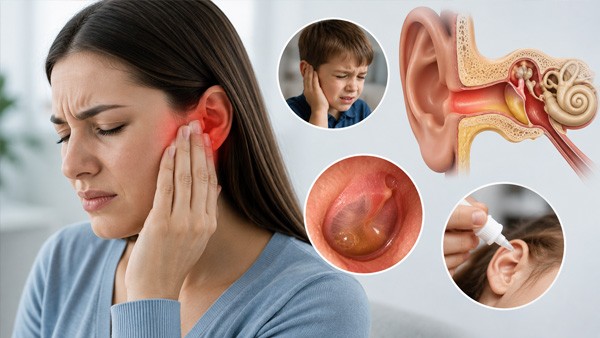

Ear infection is the commonest reason children are prescribed antibiotics, and a substantial share of those prescriptions are unnecessary. Most cases of acute otitis media resolve without them, the antibiotic makes no difference to how quickly the pain settles in the first day, and the thing that actually helps the child in the first twenty-four hours is analgesia rather than amoxicillin.
That is not an argument against antibiotics. Specific groups clearly benefit and should receive them without delay. It is an argument for knowing which group a particular child belongs to. This guide covers how the diagnosis is actually made, when to treat and when to wait, which antibiotic and for how long, what does not work, and when an ear problem stops being routine.
🧭 The three questions that determine everything: how old is the child, are both ears affected, and how severe are the symptoms? Those three answers place a child either in the treat-now group or in the group where waiting 48 to 72 hours is a legitimate and evidence-based choice.
👂 What is actually happening
The middle ear is an air-filled space behind the eardrum, connected to the back of the nose by the Eustachian tube. That tube equalises pressure and drains fluid. In young children it is shorter, narrower and more horizontal than in adults, which is the anatomical reason ear infections are overwhelmingly a childhood problem.
A viral upper respiratory infection causes swelling that blocks the tube. Fluid accumulates in the middle ear with nowhere to drain, and bacteria that normally live harmlessly in the nasopharynx multiply in it. The result is pressure behind the eardrum, pain and fever — and, in a proportion of cases, the eardrum ruptures, releasing pus into the ear canal and relieving the pain abruptly.
By age three, the large majority of children have had at least one episode, with incidence peaking between six and twenty-four months. The organisms most often responsible are Streptococcus pneumoniae, non-typeable Haemophilus influenzae and Moraxella catarrhalis — though viruses alone account for a meaningful share, which is part of why antibiotics do less than expected.
🔍 Getting the diagnosis right
This is where a great deal of over-treatment originates. Acute otitis media requires more than a red eardrum, and a child who has been crying will frequently have red eardrums with no infection at all.
| Finding | What it means |
|---|---|
| Bulging eardrum | The key diagnostic sign — indicates fluid under pressure behind the membrane |
| Reduced mobility on pneumatic otoscopy | Confirms fluid; the membrane does not move normally with pressure changes |
| New discharge from the ear | Perforation with pus — diagnostic when other causes are excluded |
| Redness alone | Non-specific; crying, fever and cerumen removal all produce it |
| Fluid without bulging or pain | Otitis media with effusion — a different condition, not treated with antibiotics |
That last row matters enormously. Otitis media with effusion means fluid sitting in the middle ear without acute infection — typically after an episode has resolved. It causes muffled hearing rather than pain, it is extremely common, and antibiotics do not help it. Treating every child with fluid behind the eardrum as though they had an acute infection is one of the main sources of unnecessary prescribing.
💊 Treat now or wait
Current paediatric guidance divides children into two groups, and the division is based on age, laterality and severity.
| Situation | Approach |
|---|---|
| Under 6 months | Antibiotics, always |
| 6 to 23 months, both ears affected | Antibiotics |
| Any age with severe symptoms — marked pain, fever above 39 degrees, or ear discharge | Antibiotics |
| 6 to 23 months, one ear, mild symptoms | Antibiotics or observation for 48–72 hours, decided with the family |
| 2 years and over, one or both ears, mild symptoms | Observation for 48–72 hours is reasonable |
| Immunocompromised, cochlear implant, craniofacial anomaly | Antibiotics; these children are not candidates for watchful waiting |
Watchful waiting only works with a safety net: reliable pain relief from the outset, a clear plan for reassessment, and the ability to get an antibiotic quickly if the child is not improving. Many services use a delayed prescription — the family leaves with a prescription and instructions to fill it only if symptoms fail to improve within two to three days. That approach substantially reduces antibiotic use without increasing complications.
✅ What actually helps in the first 24 hours: adequate analgesia. Paracetamol or ibuprofen at proper weight-based doses does more for a child in pain than any antibiotic, because antibiotics take a day or two to affect symptoms at all. Under-dosing analgesia while focusing on the antibiotic question is the commonest practical error in managing this condition.
🧪 Which antibiotic, and for how long
When treatment is indicated, the choice is well established and the dose matters more than the brand.
Amoxicillin at high dose remains first-line for most children, available here as Amoxil and Labmox. The high dose exists specifically to overcome intermediate-level pneumococcal resistance, and using a lower dose is a recognised cause of treatment failure.
Amoxicillin with clavulanate — Augmentin, Amoxyheal CV, Clavam — is chosen where the child has had amoxicillin within the previous month, where conjunctivitis accompanies the ear infection (suggesting Haemophilus), or where amoxicillin has already failed.
For penicillin allergy, a cephalosporin such as Ceftin or Ceclor is preferred where the reaction was not severe. Macrolides including azithromycin are less effective against the relevant organisms because of resistance, and are a fallback rather than a first alternative.
| Age and severity | Course length |
|---|---|
| Under 2 years, or severe symptoms at any age | 10 days |
| 2 to 5 years, mild to moderate | 7 days |
| 6 years and over, mild to moderate | 5 to 7 days |
Improvement should be evident within 48 to 72 hours. Persistent fever and pain beyond that point suggests the wrong antibiotic, a resistant organism, or a diagnosis that was never correct — and warrants reassessment rather than simply adding a second drug.
🚫 What does not work
Several widely used remedies have been studied and do not help, and a couple can cause harm.
- Decongestants and antihistamines. Extensively tested in this condition and shown not to speed resolution or reduce complications. They add side effects, and in young children the risks outweigh any theoretical benefit.
- Antibiotic ear drops on an intact eardrum. The medicine cannot reach the middle ear through the membrane. Drops have a role when there is a perforation or a grommet in place — not otherwise.
- Antibiotics for otitis media with effusion. Fluid without acute infection resolves on its own in the majority of cases over weeks to months; antibiotics do not accelerate it meaningfully.
- Ear candling and similar practices. No benefit, documented risk of burns and canal obstruction.
- Warm oil or home remedies poured into the ear where perforation is possible — nothing should be put into an ear that may have a hole in the eardrum.
⚠️ On persistent fluid and hearing: effusion after an infection commonly lasts several weeks and sometimes up to three months. During that period hearing is reduced, which matters for a child acquiring language. Watchful waiting is appropriate, but hearing should be assessed if fluid persists beyond three months, particularly in both ears — that is the point at which referral for consideration of grommets becomes reasonable.
🚨 When it is not routine
Complications of otitis media are uncommon but consequential, and a small set of features should prompt urgent assessment rather than a repeat prescription.
| Warning sign | What it may indicate |
|---|---|
| Swelling, redness or tenderness behind the ear, with the ear pushed forward | Mastoiditis — requires urgent hospital assessment |
| Facial weakness on the same side | Facial nerve involvement |
| Severe headache, neck stiffness, drowsiness, vomiting | Intracranial spread — emergency |
| Unsteadiness, vertigo, hearing loss that does not recover | Inner ear involvement |
| Foul-smelling chronic discharge | Chronic suppurative infection or cholesteatoma — needs ENT assessment |
| Failure to improve after two different antibiotics | Reassessment of diagnosis and possible referral |
🔴 One adult-specific red flag worth knowing: persistent fluid in one ear in an adult, without a preceding infection, is not simply an ear problem. It can be the first sign of a nasopharyngeal mass obstructing the Eustachian tube, and it warrants examination of the nasopharynx rather than repeated courses of decongestants. Unilateral effusion in an adult is a referral, not a watchful wait.
🔧 Grommets and surgery
Tympanostomy tubes — grommets — are small ventilation tubes placed through the eardrum to drain the middle ear and equalise pressure. They fall out on their own after several months to a year.
The two established indications are recurrent acute infections — conventionally three episodes in six months or four in a year with at least one recent — and persistent effusion beyond three months with documented hearing loss, particularly bilateral, or with speech and language delay. Adenoid removal is sometimes performed alongside, especially in older children or on repeat procedures.
Swimming with grommets is generally permitted without earplugs for surface swimming, though diving and deep underwater swimming are usually restricted — specific advice varies and should follow the operating surgeon.
🛡️ Prevention that actually works
Several measures reduce the frequency of episodes, and they are worth knowing because recurrent otitis media disrupts a family disproportionately.
- Vaccination. Pneumococcal conjugate vaccine reduces episodes caused by the covered serotypes, and annual influenza vaccination reduces the viral infections that precipitate them.
- Breastfeeding for at least six months is consistently associated with fewer episodes.
- Avoiding bottle feeding while lying flat, which allows milk to reflux toward the Eustachian tube.
- Limiting pacifier use after six to twelve months, which is associated with increased incidence.
- Eliminating tobacco smoke exposure — one of the clearest modifiable risk factors.
- Reducing group childcare exposure where feasible in the highest-risk age window, since it multiplies viral exposure.
For the broader question of when antibiotics are and are not appropriate, see our guide to antibiotic use and resistance, and the full range in the antibiotics category.
❓ Frequently asked questions
Does every ear infection need an antibiotic?
No. Children under six months, those aged six to twenty-three months with both ears affected, and any child with severe symptoms should be treated. Older children with mild one-sided infection can reasonably be observed for 48 to 72 hours with good pain relief and a plan for reassessment, since most episodes resolve without antibiotics.
What helps the pain fastest?
Paracetamol or ibuprofen at proper weight-based doses. Antibiotics take a day or two to affect symptoms at all, so analgesia is what changes the first night. Under-dosing pain relief while focusing on whether to give an antibiotic is the commonest practical mistake families and clinicians make in this condition.
Is a red eardrum enough for a diagnosis?
No. Crying, fever and even examination itself redden the eardrum. The key sign is bulging of the membrane, indicating fluid under pressure, ideally confirmed by reduced mobility on pneumatic otoscopy. Diagnosing on redness alone is a major source of unnecessary antibiotic prescribing in young children.
What is the difference between an ear infection and fluid in the ear?
Acute otitis media is infected fluid under pressure, producing pain and fever. Otitis media with effusion is fluid without acute infection, producing muffled hearing rather than pain, and typically following a resolved episode. The second does not respond to antibiotics and usually clears on its own over weeks, though persistent cases with hearing loss need assessment.
Which antibiotic is used and why high dose?
Amoxicillin at high dose is first-line for most children, and the dose is deliberately high to overcome intermediate-level pneumococcal resistance — a standard dose is a recognised cause of failure. Amoxicillin with clavulanate is used where amoxicillin was given in the previous month, where conjunctivitis coexists, or where treatment has already failed.
Do decongestants or antihistamines help?
No. They have been studied extensively in otitis media and do not speed resolution or prevent complications, while adding side effects that matter particularly in young children. The same applies to antibiotic ear drops when the eardrum is intact, since the medicine cannot cross the membrane to reach the middle ear.
The eardrum burst and pus came out. Is that dangerous?
It is alarming to see but usually relieves the pain immediately, because the pressure is released. Most perforations heal on their own within a few weeks. The child needs medical review, antibiotic drops may be appropriate once there is a perforation, and the ear should be kept dry. Persistent discharge or failure to heal requires ENT assessment.
When should we go to hospital?
Swelling, redness or tenderness behind the ear with the ear pushed forward suggests mastoiditis and needs urgent assessment. So do facial weakness, severe headache with neck stiffness or drowsiness, persistent vomiting, and marked unsteadiness. Failure to improve after two different antibiotic courses also warrants reassessment rather than a third prescription.
When are grommets considered?
Two situations: recurrent acute infections, conventionally three in six months or four in a year with at least one recent, and persistent fluid beyond three months with documented hearing loss, particularly in both ears or with speech delay. Adenoid removal is sometimes performed alongside, especially in older children or repeat procedures.
What actually prevents recurrence?
Pneumococcal and influenza vaccination, breastfeeding for at least six months, avoiding bottle feeding while the child lies flat, limiting pacifier use after six to twelve months, and eliminating exposure to tobacco smoke. Reducing time in group childcare during the highest-risk age window helps where that is practical, since it lowers viral exposure.
Can adults get otitis media?
Yes, though far less often, because the Eustachian tube changes shape with growth. One presentation deserves particular attention: persistent fluid in one ear in an adult without a preceding infection can indicate a nasopharyngeal mass obstructing the tube, and requires examination of the nasopharynx rather than repeated decongestants.
Will repeated infections affect hearing or speech?
Temporary hearing reduction during and after episodes is expected and usually resolves. What matters is duration: fluid persisting beyond three months, particularly in both ears during the period a child is acquiring language, warrants formal hearing assessment. Permanent hearing loss from otitis media is uncommon but is the reason persistent effusion is followed rather than ignored.
📑 Sources and editorial
- American Academy of Pediatrics clinical practice guideline on the diagnosis and management of acute otitis media
- Clinical practice guidelines on otitis media with effusion and on tympanostomy tube placement in children
- Cochrane reviews of antibiotics for acute otitis media and of decongestants and antihistamines in this condition
- Published evidence on delayed antibiotic prescribing strategies and on pneumococcal vaccination and otitis media incidence
- Related reading on RXshop: Antibiotics: when they work and when they do not
- RXshop Editorial Team — reviewed by Emily Chen, MD, MPH, Internal Medicine
Medical Disclaimer: The information in this article is for educational and informational purposes only and is not a substitute for professional medical advice, diagnosis, or treatment. Always seek guidance from a qualified healthcare provider with any questions you may have regarding a medical condition, and before starting, stopping or changing any medication.