Gallstones: When Ursodiol Can Replace Surgery

Gallstones are extremely common and mostly harmless. Around one adult in ten has them, the large majority never develop a symptom, and stones found by chance on a scan done for something else usually need nothing at all.
Where they do cause trouble, surgery is the definitive answer. Ursodeoxycholic acid can dissolve some stones without an operation, and the question worth answering properly is which stones, in which people, and with what likelihood — because the criteria are narrower than most descriptions suggest.
🧠 The honest summary of dissolution therapy: it works only for small, purely cholesterol, non-calcified stones in a gallbladder that still functions, it takes six months to two years, and even in ideal candidates it succeeds in a minority. Crucially, around half of those who do clear their stones develop them again within five years, because the gallbladder that produced them is still there doing the same thing. That does not make it useless — it makes it a specific option for specific people rather than an alternative to surgery in general.
🔬 What gallstones are
The gallbladder stores bile made by the liver and releases it into the intestine when fatty food arrives. Stones form when the balance of the components of bile shifts and material crystallises out.
| Type | Share | Composition |
|---|---|---|
| Cholesterol stones | Around four in five | Predominantly cholesterol, forming when bile is supersaturated with it. These are the ones that can potentially be dissolved |
| Pigment stones | The remainder | Made of bilirubin, associated with conditions that break down red cells rapidly, with cirrhosis and with biliary infection. These cannot be dissolved |
Stones may also become calcified over time, which matters practically: calcium makes a stone impervious to dissolution regardless of what is underneath, and it shows up on a plain X-ray or CT, which is how the assessment is made.
👥 Who gets them
The traditional summary is crude but not entirely wrong, and the more accurate list is:
- Female sex, particularly during reproductive years, and pregnancy specifically
- Increasing age
- Obesity
- Rapid weight loss — a genuinely important one, covered separately below
- Family history, which contributes more than commonly assumed
- Certain ethnic backgrounds, with notably high rates in some populations
- Diabetes and metabolic syndrome
- Medications — oestrogen-containing contraception and hormone therapy, some cholesterol drugs, octreotide, ceftriaxone
- Crohn disease or surgery involving the terminal ileum, which disrupts bile acid recycling
- Prolonged fasting or intravenous feeding, where the gallbladder does not empty
😕 What symptoms actually feel like
Around four in five people with gallstones never have any symptom at all. Stones found incidentally in someone with no history of biliary pain do not require treatment, and removing a gallbladder because stones were seen on a scan is not indicated.
Where symptoms occur, the characteristic one is biliary colic, and its name is misleading.
Despite being called colic, the pain is not colicky — it does not come and go in waves. It is constant, severe, and builds to a plateau, sitting in the upper abdomen either centrally or on the right, frequently radiating to the right shoulder blade or the back. It typically begins within an hour or two of a meal, particularly a fatty one, lasts anywhere from thirty minutes to several hours, and then settles completely. Nausea and vomiting are common. People often pace or cannot find a comfortable position.
Between attacks there are usually no symptoms at all.
⚠️ Vague indigestion, bloating, wind and general upper abdominal discomfort are frequently blamed on gallstones and frequently are not caused by them. Because stones are so common, they are often present as an innocent bystander alongside reflux, functional dyspepsia or irritable bowel symptoms. Removing the gallbladder in that situation leaves the symptoms unchanged and the person without a gallbladder. The pain that responds to surgery is the discrete, severe, episodic pain described above.
🔴 The complications
These are what make gallstones worth taking seriously, and recognising them changes the urgency completely.
| Complication | Features |
|---|---|
| Acute cholecystitis | A stone blocks the outlet and the gallbladder becomes inflamed and infected. Pain lasts more than a few hours, is accompanied by fever and marked tenderness, and does not settle. Needs hospital assessment |
| Stone in the bile duct | Jaundice, dark urine, pale stools, itching. The stone blocks drainage from the liver |
| Ascending cholangitis | Infection of the blocked bile duct: fever with rigors, jaundice and upper abdominal pain together. This is an emergency with real mortality and needs urgent drainage of the duct |
| Gallstone pancreatitis | A stone obstructs the pancreatic outflow. Severe upper abdominal pain radiating through to the back, with vomiting. Emergency |
| Gallbladder perforation or empyema | Severe illness following untreated cholecystitis |
| Gallbladder cancer | Rare; associated with long-standing stones and with a calcified gallbladder wall |
🔴 Seek emergency care for pain lasting more than a few hours, fever with shaking chills, yellowing of the skin or eyes, or severe pain radiating through to the back with vomiting. The combination of fever, jaundice and upper abdominal pain together is the classic presentation of infection in a blocked bile duct, which deteriorates rapidly and requires urgent drainage rather than antibiotics alone.
🧪 Diagnosis
Ultrasound is the test of choice for gallstones in the gallbladder — sensitive, quick, without radiation, and it also shows wall thickening and duct dilatation.
It is considerably less good at seeing stones that have moved into the bile duct, which is why MRCP, a specialised MRI of the biliary tree, or endoscopic ultrasound is used where duct stones are suspected.
Blood tests show the pattern: liver enzymes and bilirubin rising with duct obstruction, inflammatory markers rising with infection, and amylase or lipase rising in pancreatitis.
For anyone being considered for dissolution therapy specifically, imaging is also needed to establish whether the stones are calcified and whether the gallbladder still empties, since both determine whether the treatment can work at all.
🔪 Surgery
Removing the gallbladder is the definitive treatment, and it is worth being clear that it is the standard against which everything else is measured.
It is usually done laparoscopically, through small incisions, frequently as a day case, with recovery over one to two weeks. The gallbladder is a reservoir rather than an essential organ — bile continues to flow from the liver into the intestine without it, and the great majority of people notice no difference afterwards.
The clear indications are symptomatic stones causing recurrent biliary pain, and any of the complications above. Removing it prevents recurrence permanently, which is the fundamental advantage over dissolution.
A proportion of people develop looser stools afterwards, because bile now drips continuously into the intestine rather than being released in response to meals. This is bile acid diarrhoea, it usually settles over months, and where it does not it responds well to a bile acid binder.
💊 Dissolving stones with ursodiol
Ursodeoxycholic acid reduces the cholesterol content of bile, which allows cholesterol already in a stone to dissolve back into it gradually.
The reason it works only in narrow circumstances follows directly from that mechanism.
| Requirement | Why |
|---|---|
| Cholesterol stones | Pigment stones contain no cholesterol to dissolve |
| Not calcified | Calcium forms an impervious shell. Visibility on X-ray or CT indicates calcification and rules the treatment out |
| Small — generally under about ten millimetres, ideally under five | Dissolution proceeds from the surface inward, so larger stones take impractically long |
| A functioning gallbladder | The drug must reach the stones and the gallbladder must empty for treated bile to circulate |
| Patent cystic duct | A blocked duct means the treated bile never reaches the stones |
| Stones occupying less than about half the gallbladder | Higher stone burden makes success unlikely |
What to expect: treatment continues for six months to two years, with ultrasound every six months or so to check progress. In carefully selected candidates meeting all of the above, complete dissolution occurs in a minority — commonly quoted in the region of a third to a half. Across all-comers, success is considerably lower.
Treatment is usually stopped if there has been no reduction after six to twelve months, since further persistence is unlikely to succeed.
Recurrence is the main limitation. Roughly half of those who clear their stones form new ones within five years, and the proportion continues rising afterwards. The gallbladder and the metabolic conditions that produced the stones are unchanged.
Who it genuinely suits: people who cannot safely undergo surgery because of other conditions, people who decline surgery, those with small stones and mild infrequent symptoms, and occasionally as a bridge while surgery is arranged.
Who it does not suit: anyone with a complication, anyone with frequent or severe attacks, anyone with large or calcified stones, and anyone who is a straightforward surgical candidate — for whom an operation offers a permanent solution in place of two years of tablets with a minority chance of temporary success.
📉 Preventing stones during weight loss
This use is well supported and is more relevant than most people realise, since it applies to a growing group.
Rapid weight loss is a strong trigger for gallstone formation. Losing weight quickly mobilises cholesterol, which is excreted into bile, while reduced fat intake means the gallbladder empties less often and bile stagnates. The combination produces stones in a substantial proportion of people undergoing very low calorie diets or bariatric surgery.
Ursodeoxycholic acid taken during the period of rapid loss substantially reduces that risk, and it is used routinely in some bariatric programmes for the first months after surgery.
Reducing the risk without medication involves losing weight at a moderate rather than extreme rate, and not eliminating dietary fat entirely, since some fat intake is what triggers the gallbladder to empty. This is relevant to anyone following an aggressive weight loss regime, and it is covered alongside the wider picture in the guide to dieting and metabolism.
📋 Taking ursodiol
The dose is weight-based, and under-dosing is a recognised reason for treatment failing. For stone dissolution it is usually divided across the day, with a portion at bedtime, since bile becomes most concentrated overnight.
Take it with food.
Separate it by several hours from anything that binds bile acids — cholestyramine, colestipol and aluminium-containing antacids all bind ursodiol directly and prevent absorption. Taking them together means the treatment does nothing at all, and this is a common and entirely avoidable failure.
Oestrogen-containing contraception and hormone therapy increase cholesterol saturation of bile and work against the treatment.
Liver tests are monitored periodically.
Side effects are generally mild, with loose stools the commonest, along with occasional nausea. Splitting the dose usually helps.
Detailed prescribing information is covered in the guide to ursodiol indications and precautions, and its use in liver disease in the guide to primary biliary cholangitis.
❌ The gallbladder flush
This deserves addressing directly because it is widely promoted and the evidence against it is unusually clear-cut.
The procedure involves drinking a large quantity of olive oil with lemon or grapefruit juice, after which green or brown pellets appear in the stool and are presented as expelled gallstones.
Those pellets have been analysed. They contain no cholesterol and no bile pigment. They are soap — the fatty acids in the oil reacting with digestive juices and minerals to form saponified material, which then solidifies. Ultrasound scans performed before and after such flushes show the gallstones still present and unchanged.
Beyond being ineffective, the large fat load causes vigorous gallbladder contraction, which in someone with stones can precipitate an attack, or push a stone into the bile duct and cause obstruction or pancreatitis. It is not merely useless.
🍽️ Diet
Reducing fat intake reduces attacks in someone with symptomatic stones, because fat is what triggers gallbladder contraction. It does not dissolve stones or prevent complications, and it is a way of managing symptoms while a decision is made rather than a treatment.
Eliminating fat entirely is counterproductive, since a gallbladder that never empties concentrates bile and encourages further stone formation.
For prevention, the evidence supports regular meals rather than prolonged fasting, gradual rather than rapid weight loss, a diet with adequate fibre and unsaturated fats, and regular physical activity. Coffee consumption is associated with lower gallstone risk in observational data, which is interesting rather than a recommendation.
✅ A reasonable way to decide. Stones found by chance with no symptoms: nothing needed. Recurrent biliary pain in someone fit for surgery: an operation, which solves it permanently. Any complication: hospital, then surgery. Small non-calcified stones with mild infrequent symptoms in someone who cannot or will not have surgery: ursodiol is a legitimate option, with realistic expectations about the time required, the chance of success and the likelihood of recurrence. Rapid weight loss: ursodiol prevents stones forming in the first place, which is its most reliable use in this area.
🚨 When to seek help
- Pain lasting more than a few hours, or not settling
- Fever, particularly with shaking chills
- Yellowing of the skin or eyes, dark urine, pale stools
- Severe pain radiating through to the back with vomiting
- Persistent vomiting or inability to keep fluids down
- Increasingly frequent attacks
- Any attack in someone with diabetes or reduced immunity, where complications develop more readily and with fewer warning signs
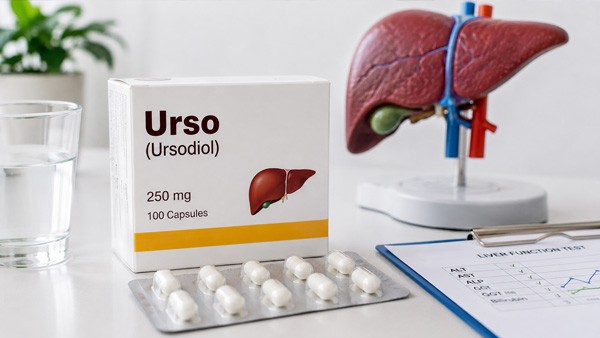
Ursodeoxycholic acid is stocked as Urso (ursodiol 300 mg) in the digestive and liver category. Whether dissolution therapy is appropriate depends on the type, size and calcification of the stones and on gallbladder function, so it requires assessment with imaging rather than being started on the basis of stones having been seen.
❓ Frequently asked questions
Can ursodiol dissolve my gallstones?
Only under narrow conditions: the stones must be cholesterol rather than pigment, not calcified, generally under about ten millimetres, occupying less than half the gallbladder, with the gallbladder still functioning and the duct open. In candidates meeting all of those, complete dissolution occurs in a minority, and it takes six months to two years. Imaging is needed to establish whether those conditions are met.
If the stones dissolve, will they come back?
Frequently. Around half of people who clear their stones with dissolution therapy form new ones within five years, and the proportion continues rising afterwards. The reason is straightforward: the gallbladder and the metabolic conditions that produced the stones are unchanged. That recurrence is the fundamental difference between dissolution and surgery, which removes the source permanently.
I have gallstones but no symptoms. Do I need treatment?
Generally not. Around four in five people with gallstones never develop symptoms, and stones found incidentally on a scan done for another reason do not require removal or dissolution. Removing a gallbladder because stones were seen, in someone who has never had biliary pain, is not indicated. Exceptions exist for specific situations and are individual decisions.
What does gallstone pain actually feel like?
Despite being called biliary colic, it is not colicky. It is constant, severe, builds to a plateau, and sits in the upper abdomen centrally or on the right, often radiating to the right shoulder blade or back. It usually starts within an hour or two of a meal, particularly a fatty one, lasts thirty minutes to several hours, then settles completely. Nausea is common, and people often cannot find a comfortable position.
Could my bloating and indigestion be gallstones?
Possibly not. Because stones are so common, they are frequently present as innocent bystanders alongside reflux, functional dyspepsia or irritable bowel symptoms. Removing the gallbladder in that situation leaves the symptoms unchanged and the person without a gallbladder. The pain that reliably responds to surgery is the discrete, severe, episodic pain described above, not general upper abdominal discomfort.
When does a gallstone attack become an emergency?
Pain lasting more than a few hours or not settling, fever particularly with shaking chills, yellowing of the skin or eyes, or severe pain radiating through to the back with vomiting. Fever, jaundice and upper abdominal pain occurring together is the classic presentation of infection in a blocked bile duct, which deteriorates rapidly and needs urgent drainage rather than antibiotics alone.
Does the olive oil gallbladder flush work?
No. The green pellets that appear afterwards have been analysed and contain no cholesterol and no bile pigment — they are soap, formed when fatty acids in the oil react with digestive juices and minerals. Scans before and after show the stones still present and unchanged. It is also not harmless: the large fat load causes vigorous gallbladder contraction, which can precipitate an attack or push a stone into the bile duct.
Why does rapid weight loss cause gallstones?
Because losing weight quickly mobilises cholesterol, which is excreted into bile, while reduced fat intake means the gallbladder empties less often and bile stagnates. The combination produces stones in a substantial proportion of people on very low calorie diets or after bariatric surgery. Ursodeoxycholic acid taken during that period substantially reduces the risk and is used routinely in some bariatric programmes.
Should I cut out fat completely?
No, and doing so is counterproductive. Reducing fat reduces attacks, because fat triggers gallbladder contraction, and that is a way of managing symptoms rather than a treatment. But a gallbladder that never empties concentrates bile and encourages further stone formation. Regular meals rather than prolonged fasting, and gradual rather than rapid weight loss, are what actually reduce stone formation.
What happens after the gallbladder is removed?
Very little, for most people. The gallbladder is a reservoir rather than an essential organ, and bile continues flowing from the liver into the intestine without it. A proportion develop looser stools, because bile now drips in continuously rather than being released with meals. This usually settles over months, and where it persists it responds well to a bile acid binder.
Why must ursodiol be separated from antacids?
Because cholestyramine, colestipol and aluminium-containing antacids bind bile acids in the gut, and they bind ursodiol just as effectively, preventing its absorption. Taking them together means the treatment does nothing at all. Separate them by several hours. Oestrogen-containing contraception and hormone therapy also work against it, by increasing the cholesterol saturation of bile.
Surgery or tablets?
For someone fit for surgery with recurrent biliary pain, an operation solves the problem permanently and is the standard. Dissolution is a legitimate option for people who cannot safely have surgery, who decline it, or who have small non-calcified stones with mild infrequent symptoms — provided expectations are realistic about two years of treatment, a minority chance of success, and around half recurring within five years.
📑 Sources and editorial
- NICE guideline on gallstone disease diagnosis and management
- EASL clinical practice guidelines on the prevention, diagnosis and treatment of gallstones
- Evidence on oral bile acid dissolution therapy: selection criteria, success rates and recurrence
- Trial evidence for ursodeoxycholic acid in preventing gallstone formation during rapid weight loss and after bariatric surgery
- Analyses of material passed after olive oil and juice gallbladder flushes
- Literature on the poor correlation between dyspeptic symptoms and gallstones
- FDA prescribing information for ursodiol
- Related reading: primary biliary cholangitis, ursodiol indications and precautions
- Related products: digestive and liver category
- RXshop Editorial Team — reviewed by Sarah Mitchell, PharmD, Clinical Pharmacy
Medical Disclaimer: The information in this article is for educational and informational purposes only and is not a substitute for professional medical advice, diagnosis, or treatment. Always seek guidance from a qualified healthcare provider with any questions you may have regarding a medical condition, and before starting, stopping or changing any medication.