Primary Biliary Cholangitis: Diagnosis and Treatment

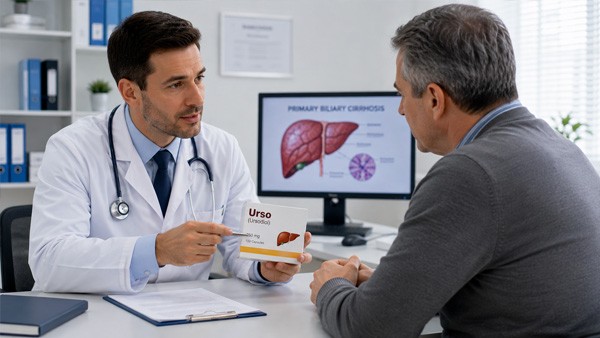
Primary biliary cholangitis is a chronic condition in which the immune system slowly destroys the small bile ducts inside the liver. Bile backs up, damages liver tissue, and over years can lead to scarring. It affects women far more than men, usually appearing between forty and sixty, and it is frequently found on a routine blood test before it has caused any symptoms at all.
It is also one of the clearer examples of a condition where one long-established treatment, taken consistently and started early, substantially changes what happens over the following decades.
🧠 The name changed for a reason worth knowing. This condition was called primary biliary cirrhosis until 2015, when it was renamed primary biliary cholangitis. The old name was inaccurate — most people with it never develop cirrhosis, particularly when treated — and it caused real harm: patients were assumed to have alcohol-related liver disease, faced difficulty with insurance and employment, and were told at diagnosis that they had cirrhosis when they did not. Older articles still use the previous name, including the earlier version of this one.
🫀 What is actually happening
The liver produces bile, which drains through a branching network of ducts into the intestine, where it helps digest fat and absorb fat-soluble vitamins.
In this condition the immune system attacks the smallest of those ducts, deep within the liver. As they are progressively destroyed, bile cannot drain properly and accumulates — a state called cholestasis. Bile is caustic to liver tissue, so retained bile damages surrounding cells, producing inflammation and, over years, fibrosis. In a minority that fibrosis eventually becomes cirrhosis.
The pace is the important part. This is a slow disease, measured in decades rather than years, and effective treatment slows it further. Many people diagnosed today will have a normal life expectancy and never develop advanced liver disease.
👥 Who it affects
Around nine in ten people with the condition are women, and it typically presents between forty and sixty. It is autoimmune in nature and, like other autoimmune conditions, clusters both in families and within individuals — people with one autoimmune condition are more likely to have another.
Conditions commonly found alongside it:
- Sjogren syndrome — dry eyes and dry mouth, very frequently present and often not connected to the liver diagnosis
- Autoimmune thyroid disease, usually underactive
- Raynaud phenomenon — fingers going white and painful in the cold
- Coeliac disease
- Rheumatoid arthritis and scleroderma
A family history of the condition or of other autoimmune disease raises risk. Environmental factors including smoking and certain infections have been implicated without any single cause being established.
😕 Symptoms
A large proportion of people are diagnosed with no symptoms at all, after a routine blood test shows a raised liver enzyme. Where symptoms occur, two dominate and they are not the ones people expect from a liver condition.
Fatigue affects the majority and is consistently rated the most disabling symptom. It is not proportionate to how advanced the liver disease is — someone with early disease can be profoundly fatigued and someone with more advanced disease can have none — and it does not improve with the main treatment. It is frequently dismissed, both by others and by the person themselves, precisely because the liver tests look reasonable.
Itch affects a large share and can be severe. It is characteristically worse at night and in warm conditions, often affects the palms and soles, and is not accompanied by a rash beyond the marks of scratching. It has its own specific treatments, which are covered below, and it responds poorly to the antihistamines usually offered first.
Other features include dry eyes and mouth, discomfort in the upper right abdomen, and later, as cholestasis advances, yellowing of the skin and eyes, fatty deposits around the eyes and tendons, and darker urine with paler stools.
⚠️ The fatigue and the itch are frequently under-treated because they do not track the liver test results. Someone whose blood tests have improved on treatment can still be exhausted and still be scratching, and both get attributed to something else or accepted as unavoidable. They are separate problems requiring separate management, and they are worth raising specifically at every review rather than waiting to be asked.
🧪 How it is diagnosed
Diagnosis is usually straightforward and, importantly, does not require a liver biopsy in most cases.
Two of the following three establish it:
| Criterion | Detail |
|---|---|
| Raised alkaline phosphatase | The liver enzyme that rises in cholestasis, typically raised for at least six months. Usually the finding that starts the process |
| Anti-mitochondrial antibody | Present in around ninety-five per cent, and highly specific to this condition |
| Characteristic biopsy findings | Needed only where the first two are not both present |
Additional tests define the picture: other liver enzymes, bilirubin, albumin and clotting to assess liver function; imaging to exclude blockage of the larger bile ducts; and specific antibodies where the anti-mitochondrial antibody is negative, since a small proportion have the condition without it.
Non-invasive fibrosis assessment — transient elastography, which measures liver stiffness using a probe on the skin, and blood-based scores — has largely replaced repeated biopsy for tracking how much scarring has developed.
One point worth understanding: a positive anti-mitochondrial antibody with entirely normal liver tests does not mean the person has the condition. Some individuals carry the antibody for years without ever developing it, and monitoring rather than treatment is appropriate in that situation.
💊 Ursodeoxycholic acid
This is the cornerstone of treatment and has been for decades.
Ursodeoxycholic acid is a naturally occurring bile acid, present in small quantities in human bile. Given in therapeutic doses it does several things: it shifts the composition of the bile acid pool toward less toxic acids, it stimulates bile flow, and it protects the cells lining the bile ducts from injury. The effect is to reduce the ongoing damage rather than to suppress the immune attack.
What it achieves, in people who respond:
- Improvement in liver blood tests, usually apparent within months
- Slowed progression of fibrosis
- Delayed need for transplantation, and improved survival
Practical points:
The dose is weight-based, and under-dosing is a recognised reason for apparent non-response. It is worth knowing your own dose relative to your weight.
It is taken indefinitely. The benefit depends on continuous use, and stopping allows the enzymes to rise again within months.
Take it with food, and split the dose across the day where the total is large, which improves both absorption and tolerability.
Separate it from antacids, cholestyramine and other bile acid binders by several hours, since these bind it directly and prevent absorption. This matters particularly because cholestyramine is used for the itch, so someone taking both needs to space them carefully.
Side effects are generally mild — loose stools are the commonest, along with occasional nausea and weight gain, and they frequently settle or respond to dose splitting.
📊 Measuring whether it is working
Response is assessed after around a year using defined criteria based on how far the alkaline phosphatase and bilirubin have fallen. This matters more than it sounds, because response strongly predicts long-term outcome.
People who respond adequately have a life expectancy approaching that of the general population.
People who respond inadequately — roughly a third — face higher risk and are the group for whom additional treatment exists.
Younger age at diagnosis and male sex are both associated with poorer response, which is one reason younger patients are followed more closely.
Second-line options for inadequate responders include obeticholic acid, a modified bile acid that acts on a nuclear receptor regulating bile acid production, and fibrates, which were developed for cholesterol and have shown genuine benefit here. Both are specialist decisions, and obeticholic acid in particular requires careful dosing in advanced disease.
😱 Treating the itch
Cholestatic itch is different from other itch, does not respond well to antihistamines, and has its own treatment sequence that is frequently not applied.
| Step | Treatment | Notes |
|---|---|---|
| First | Cholestyramine or a related bile acid binder | Binds bile acids in the gut. Must be taken hours apart from ursodeoxycholic acid and most other medicines, since it binds those too |
| Second | Rifampicin | An antibiotic used here for its effect on bile acid handling; liver tests monitored |
| Third | Naltrexone | An opioid blocker; itch in cholestasis involves opioid pathways |
| Fourth | Sertraline | Has evidence in this specific situation independent of any effect on mood |
| Refractory | Specialist procedures | Including plasma-based approaches; severe intractable itch is itself an indication for transplant assessment |
Alongside these: keeping cool, particularly at night; lukewarm rather than hot showers; emollients; cotton clothing and bedding; short nails; and avoiding alcohol, which worsens it.
Sedating antihistamines may help someone sleep through the itch, which is a genuine benefit, but they do not treat the itch itself.
😫 Treating the fatigue
This is harder and honesty helps more than optimism.
Ursodeoxycholic acid does not improve fatigue, and no treatment reliably does. What is worth doing is excluding the contributors that are treatable, because several are common in this population and all get attributed to the liver:
- Underactive thyroid, given the autoimmune overlap
- Anaemia and iron deficiency
- Coeliac disease
- Depression
- Sleep disruption, frequently caused by the itch itself
- Drops in blood pressure on standing, which occur in this condition and cause daytime exhaustion
- Sleep apnoea
Beyond that, pacing, maintaining physical activity within limits, and treating sleep are what remain. The fatigue is real, it is not a measure of how bad the liver disease is, and being believed about it makes a material difference to how people cope with it.
🦴 The complications worth monitoring
Several of these are silent and are found only by looking.
Osteoporosis is considerably commoner in this condition than in the general population, through impaired vitamin D absorption and other mechanisms. Bone density scanning is part of standard care, with calcium and vitamin D supplementation and bone-protecting treatment where indicated. This is covered in the guide to osteoporosis, and the population overlaps almost entirely — women in their fifties.
Fat-soluble vitamin deficiency follows from impaired fat absorption when bile flow is reduced. Vitamins A, D, E and K are checked and replaced where low, and low vitamin K affects clotting.
Raised cholesterol is common and behaves unusually: the pattern seen in cholestasis does not appear to carry the cardiovascular risk that the same numbers would in the general population, and it frequently does not require statin treatment. Cardiovascular risk is still assessed conventionally, but the lipid result alone should not drive treatment.
Portal hypertension can develop, sometimes before cirrhosis is established, and endoscopy to look for varices is done where indicated.
Liver cancer surveillance with six-monthly imaging applies to those with cirrhosis.
Dry eyes and mouth from associated Sjogren syndrome warrant treatment in their own right, including attention to dental health, since reduced saliva causes rapid tooth decay.
🏥 When the liver fails
A minority progress to end-stage liver disease. Liver transplantation works well in this condition, with among the best outcomes of any indication.
Two features are worth knowing. Transplant assessment is triggered not only by liver failure but also by intractable itch, which can be disabling enough to justify it on its own. And the condition can recur in the transplanted liver in some people over years, generally in a milder form and manageable with treatment.
📋 Living with it
Take the treatment consistently. This is the single most important thing, and adherence is the commonest modifiable reason for inadequate response. A slow-moving condition with few symptoms is one people forget to treat.
Attend for monitoring. Blood tests every few months, fibrosis assessment periodically, bone density scanning, and vitamin levels. Much of what matters here is silent and found only by checking.
Avoid alcohol or keep it minimal, since it adds a second insult to a liver already under strain and worsens the itch.
Stop smoking, which is associated with faster progression.
Check medications and supplements before taking anything new, including herbal products, several of which cause liver injury.
Get vaccinated against hepatitis A and B, since additional liver infection is worth avoiding.
Ask specifically about fatigue and itch rather than reporting only what the blood tests show.
✅ The framing worth holding on to: this is a slow condition with an effective long-established treatment. Someone diagnosed early who responds adequately to ursodeoxycholic acid has a life expectancy approaching normal and will most likely never develop cirrhosis. The name change from cirrhosis to cholangitis was made precisely because the old name implied an outcome that most people never reach.
🚨 When to seek advice
- New or worsening yellowing of the skin or eyes
- Itch that is severe or preventing sleep — there is a specific treatment sequence for it
- Swelling of the abdomen or ankles
- Vomiting blood or black tarry stools — emergency
- Confusion or unusual drowsiness
- Fever with abdominal pain
- Unexplained bruising or bleeding
- Fatigue that is disabling, which warrants looking for treatable contributors
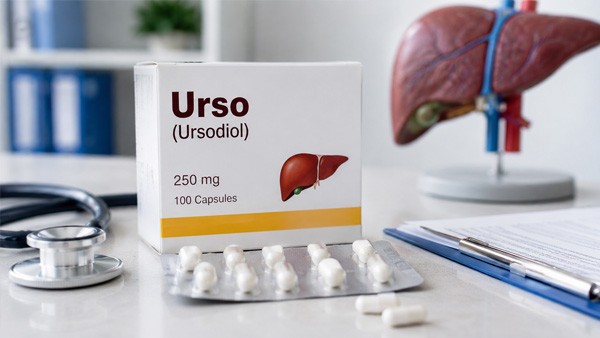
Ursodeoxycholic acid is stocked as Urso (ursodiol) in the digestive and liver category. It is a long-term prescription requiring weight-based dosing and periodic monitoring of liver tests, and its detailed use is covered in the guide to ursodiol indications and precautions.
❓ Frequently asked questions
Why did the name change from cirrhosis to cholangitis?
Because the old name was inaccurate and caused harm. Most people with this condition never develop cirrhosis, particularly when treated, yet patients were told at diagnosis that they had it. They were also assumed to have alcohol-related liver disease and faced difficulty with insurance and employment as a result. The change was made in 2015, and older articles still use the previous term.
Do I need a liver biopsy?
Usually not. Diagnosis requires two of three criteria: a raised alkaline phosphatase sustained for six months, a positive anti-mitochondrial antibody, and characteristic biopsy findings. Since the antibody is present in around ninety-five per cent, most people meet the first two and biopsy is unnecessary. Liver stiffness measurement by elastography has also largely replaced repeat biopsy for tracking scarring.
How long do I take ursodeoxycholic acid for?
Indefinitely. The benefit depends on continuous use and stopping allows the liver enzymes to rise again within months. The dose is weight-based, and under-dosing is a recognised reason for apparent non-response, so it is worth knowing your own dose relative to your weight. Take it with food, and split larger totals across the day for better absorption and tolerance.
How will I know if the treatment is working?
Response is assessed after around a year using defined criteria based on how far alkaline phosphatase and bilirubin have fallen, and it strongly predicts long-term outcome. People who respond adequately have a life expectancy approaching that of the general population. Roughly a third respond inadequately, and second-line options exist for that group, including obeticholic acid and fibrates.
Why do antihistamines not stop the itch?
Because cholestatic itch is not driven by histamine. It has its own treatment sequence: cholestyramine or another bile acid binder first, then rifampicin, then naltrexone, then sertraline, which has evidence here independent of any effect on mood. Sedating antihistamines may help someone sleep through it, which is a genuine benefit, but they do not treat the itch itself.
Can I take cholestyramine and ursodeoxycholic acid together?
Yes, but they must be separated by several hours. Cholestyramine binds bile acids in the gut, which is how it relieves the itch, and it binds ursodeoxycholic acid just as effectively, preventing its absorption. It binds many other medications too. Taking them at the same time means the liver treatment does nothing, which is a genuinely common and avoidable problem.
Why am I so tired when my blood tests are fine?
Because fatigue in this condition does not track the liver test results or the stage of disease, and it does not improve with ursodeoxycholic acid. It is real and frequently disabling. What is worth doing is excluding treatable contributors that are common in this population: underactive thyroid, anaemia, coeliac disease, depression, sleep disrupted by itch, blood pressure drops on standing, and sleep apnoea.
Should my bones be checked?
Yes, and it is part of standard care. Osteoporosis is considerably commoner in this condition than in the general population, partly through impaired vitamin D absorption when bile flow is reduced. Bone density scanning, calcium and vitamin D supplementation, and bone-protecting treatment where indicated all apply. The population overlaps almost entirely with the group already at risk — women in their fifties.
My cholesterol is high. Do I need a statin?
Not necessarily. Raised cholesterol is common in this condition and behaves unusually — the pattern seen in cholestasis does not appear to carry the cardiovascular risk that the same numbers would in the general population. Cardiovascular risk is still assessed conventionally, using the full picture, but the lipid result on its own should not drive treatment here as it would elsewhere.
I have the antibody but normal liver tests. Do I have the condition?
Not on that basis alone. Some people carry the anti-mitochondrial antibody for years without ever developing the condition, and diagnosis requires two of the three criteria rather than the antibody by itself. Monitoring rather than treatment is appropriate in that situation, with periodic liver tests to detect any change early.
Will I need a liver transplant?
Most people will not, particularly those diagnosed early who respond adequately to treatment. Where it is needed, outcomes in this condition are among the best of any transplant indication. Two things trigger assessment: liver failure, and intractable itch, which can be disabling enough to justify transplantation on its own. The condition can recur in the new liver over years, generally in a milder and manageable form.
What else should I be checked for?
Associated autoimmune conditions, since they cluster: Sjogren syndrome causing dry eyes and mouth, which is very common and often not connected to the liver diagnosis; autoimmune thyroid disease; coeliac disease; and Raynaud phenomenon. Also fat-soluble vitamins A, D, E and K, which are poorly absorbed when bile flow is reduced, and bone density. Much of what matters in this condition is silent and found only by looking.
📑 Sources and editorial
- EASL clinical practice guidelines on the management of cholestatic liver diseases
- AASLD practice guidance on primary biliary cholangitis
- Joint statement on the change of nomenclature from primary biliary cirrhosis to primary biliary cholangitis
- Evidence on ursodeoxycholic acid and transplant-free survival, and on biochemical response criteria
- Trial evidence for obeticholic acid and for fibrates in inadequate responders
- Guidance on the management of cholestatic pruritus
- Literature on bone disease and fat-soluble vitamin deficiency in chronic cholestasis
- Related reading: ursodiol indications and precautions, osteoporosis
- Related products: digestive and liver category
- RXshop Editorial Team — reviewed by Emily Chen, MD, MPH, Internal Medicine
Medical Disclaimer: The information in this article is for educational and informational purposes only and is not a substitute for professional medical advice, diagnosis, or treatment. Always seek guidance from a qualified healthcare provider with any questions you may have regarding a medical condition, and before starting, stopping or changing any medication.