Chronic Bronchitis: Causes, Diagnosis and Treatment

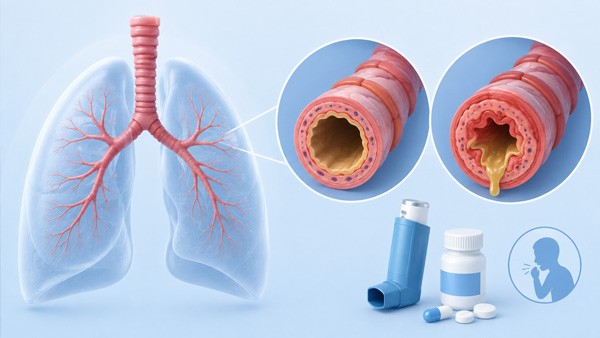

Chronic bronchitis has a precise definition: a productive cough on most days for at least three months of the year, in two consecutive years, with other causes excluded. That definition matters, because it separates a long-term structural condition from the two-week chest infection that shares part of its name.
The two are treated almost entirely differently. Acute bronchitis is usually viral, resolves on its own and rarely needs antibiotics. Chronic bronchitis is a form of chronic obstructive pulmonary disease, is not curable, and requires ongoing management that determines how much lung function is lost over the following decades.
🧠 The most consequential point in this article: anyone with a cough productive of sputum for months needs spirometry — a breathing test measuring airflow. Without it, chronic bronchitis and chronic obstructive pulmonary disease are frequently treated as a series of chest infections for years while lung function declines silently. By the time breathlessness becomes obvious, a substantial proportion of lung capacity has already gone, and it does not come back.
🔬 What is happening in the airways
The airway lining normally produces a thin layer of mucus, which tiny hair-like cilia sweep steadily upward, carrying trapped particles out. In chronic bronchitis, prolonged irritation disrupts both halves of that arrangement.
The mucus-producing cells multiply and enlarge, and the glands beneath the airway lining expand, so the volume of mucus rises considerably. At the same time the cilia are damaged and beat less effectively, so clearance falls. More mucus, moved less well, accumulates — producing the daily cough that defines the condition.
Chronic inflammation follows, with immune cells infiltrating the airway walls. Over years this causes structural change: the walls thicken, the smallest airways narrow and become distorted, and some collapse during exhalation. That small airway remodelling is what converts a nuisance cough into fixed airflow obstruction, and it is largely irreversible.
The stagnant mucus also provides an environment where bacteria persist, which explains the repeated infections and the flare-ups that punctuate the condition.
⚖️ Acute and chronic are different diseases
This distinction is worth setting out plainly, because conflating the two leads directly to inappropriate antibiotics on one side and years of missed diagnosis on the other.
| Acute bronchitis | Chronic bronchitis | |
|---|---|---|
| Duration | One to three weeks | Months every year, for years |
| Cause | Viral in the great majority | Long-term irritant exposure, usually smoke |
| Lung function | Returns to normal | Progressive airflow obstruction |
| Antibiotics | Rarely indicated | Only for specific exacerbations |
| Outcome | Full recovery | Manageable, not curable |
| Main treatment | Time and symptom relief | Stopping the exposure, inhalers, rehabilitation, vaccination |
Chronic bronchitis sits within chronic obstructive pulmonary disease alongside emphysema, and most people with one have some degree of the other. The chronic bronchitis picture is dominated by cough and sputum; the emphysema picture by breathlessness with less sputum. The distinction is clinically useful because some treatments target the mucus side specifically.
🚬 What causes it
| Cause | Notes |
|---|---|
| Tobacco smoking | By far the dominant cause; risk relates to total lifetime exposure |
| Biomass fuel smoke | Cooking and heating with wood, coal or dung indoors — a leading cause worldwide, particularly in women who never smoked |
| Occupational exposure | Dust, fumes, grain, welding, mining, textiles, cleaning chemicals |
| Outdoor air pollution | Contributes, particularly with long-term exposure to particulates |
| Alpha-1 antitrypsin deficiency | An inherited condition causing disease at an unusually young age; a simple blood test finds it and it is routinely missed |
| Severe childhood respiratory illness | Associated with reduced lung function reached in adulthood |
| Second-hand smoke | A genuine risk factor, not merely an irritant |
Two of these deserve emphasis. Household biomass smoke affects an enormous number of people globally and is frequently overlooked because the picture does not fit the assumed smoker profile. And alpha-1 antitrypsin deficiency should be tested for in anyone developing obstructive lung disease young, with a family history, or without proportionate smoking exposure — the diagnosis changes management and matters for relatives.
🫁 How it presents
The condition typically develops so gradually that people adjust to it without noticing.
A morning cough productive of sputum comes first, often dismissed as a smokers cough — a phrase that has probably delayed more diagnoses than any other in respiratory medicine. Sputum is usually clear or white, turning yellow or green during infections. Breathlessness on exertion follows, initially only on hills or stairs, and people commonly attribute it to age or being out of condition. Wheeze, chest tightness and frequent winter chest infections complete the picture.
Later features include breathlessness at rest, weight and muscle loss, ankle swelling from strain on the right side of the heart, and progressive limitation of daily activity. Anxiety and depression are extremely common and substantially under-treated.
🧪 Getting the diagnosis right
Spirometry is the essential test and the one most often skipped. It measures how much air can be blown out and how fast, before and after a bronchodilator. Airflow obstruction that does not fully reverse confirms chronic obstructive pulmonary disease and grades its severity. A diagnosis made without it is not a diagnosis.
Chest imaging excludes other causes and identifies emphysema. Blood tests check for anaemia, for a raised red cell count from chronic low oxygen, for eosinophils that guide treatment choice, and for alpha-1 antitrypsin where indicated. Oxygen saturation is measured, and arterial blood gases where it is low. Sputum culture is useful in repeated exacerbations.
Alternative explanations for a chronic productive cough must be considered rather than assumed away: bronchiectasis, tuberculosis, asthma, heart failure, reflux, post-nasal drip and medication side effects all produce a similar complaint, and some are entirely reversible.
🔴 Symptoms that require prompt investigation rather than another course of antibiotics: coughing blood, unexplained weight loss, night sweats, a cough that has changed in character, chest pain, or hoarseness lasting more than three weeks. These raise the possibility of lung cancer or tuberculosis, both of which occur in exactly this population and are both delayed by the assumption that a cough in a smoker needs no explanation.
📉 What actually changes the outcome
Treatments divide into those that alter the course of the disease and those that relieve symptoms. Both matter; conflating them does not help.
Stopping smoking is the only intervention proven to slow the decline in lung function. Nothing else comes close. The rate of loss falls back toward normal after quitting, at any stage and any age, and the cough frequently improves within months. Combining medication — nicotine replacement, varenicline or bupropion — with behavioural support roughly doubles success compared with willpower alone, and repeated attempts are the normal path rather than evidence of failure.
Vaccination reduces exacerbations and hospital admissions: influenza annually, pneumococcal, COVID-19 boosters, and RSV vaccination in older adults where available.
Pulmonary rehabilitation is the most under-used effective treatment in the whole field. A structured programme of supervised exercise and education improves breathlessness, exercise capacity and quality of life more than any drug, and reduces admissions after an exacerbation. It is offered to a small fraction of eligible people, and declined by many who are offered it because exercising while breathless seems counterintuitive. It is not.
Removing other exposures — occupational dust and fumes, indoor biomass smoke, second-hand smoke — matters as much as the person own smoking.
💨 Inhaled treatment
Inhalers relieve symptoms and reduce flare-ups. They do not reverse the underlying damage, and expectations should be set accordingly.
| Type | Role | Notes |
|---|---|---|
| Short-acting bronchodilator (albuterol) | Relief as needed | Fast onset; increasing use signals worsening control |
| Long-acting beta agonist (salmeterol) | Regular maintenance | Taken every day whether or not symptoms are present |
| Long-acting antimuscarinic | Regular maintenance | A cornerstone of maintenance therapy; often combined with a beta agonist |
| Inhaled corticosteroid combinations (fluticasone with salmeterol) | Added where exacerbations continue | Most useful with frequent flares or raised blood eosinophils; carries a pneumonia risk |
The role of inhaled steroids differs from asthma and this is worth understanding. In asthma they are foundational. In chronic obstructive pulmonary disease they are added selectively — to people who keep having exacerbations despite bronchodilators, or who have raised blood eosinophils suggesting they will respond — because in this population they carry a measurable increase in pneumonia risk. Used in the right person they substantially reduce flare-ups; used indiscriminately they add risk without benefit.
⚠️ Inhaler technique is not a detail. Studies repeatedly find that a large proportion of patients use their device incorrectly, meaning much of the drug never reaches the airways. Common errors are not exhaling fully first, inhaling too slowly from a dry powder device or too quickly from a pressurised one, not holding the breath afterwards, and not rinsing the mouth after a steroid inhaler — which causes oral thrush and hoarseness. Technique should be checked at every review, and a spacer improves delivery considerably with pressurised inhalers.
💊 Other medication
Mucolytics such as carbocisteine and N-acetylcysteine thin sputum and modestly reduce exacerbations in people with a chronic productive cough. The effect is not dramatic, and they are inexpensive and well tolerated.
Roflumilast is specifically relevant here, because it is licensed for the chronic bronchitis phenotype — severe disease with chronic cough and sputum and frequent exacerbations. It reduces flare-ups, with nausea, diarrhoea and weight loss as common limitations.
Long-term azithromycin, taken three times weekly, reduces exacerbations in carefully selected people. The considerations are real: hearing effects, heart rhythm changes and antibiotic resistance, so it is used with monitoring and not routinely.
Long-term oxygen therapy improves survival in people whose blood oxygen is persistently low, and it is prescribed on that basis after formal measurement. It does not relieve breathlessness in people whose oxygen levels are normal, which surprises many, and it is not a treatment for the sensation of breathlessness itself.
Cough suppressants are generally avoided, since the cough is clearing mucus that otherwise sits in the airways.
🚨 Exacerbations
An exacerbation is a sustained worsening beyond normal day-to-day variation, and it matters more than it appears: each one accelerates lung function decline, and admission to hospital with one carries a substantial risk that is easily underestimated.
The signs are increased breathlessness, increased sputum volume, a change in sputum colour, more coughing and wheeze, and sometimes fever or confusion. Treatment depends on which features are present.
Increased bronchodilator use is the first step. Oral corticosteroids for a short course speed recovery where breathlessness has increased significantly. Antibiotics are indicated where sputum has become purulent, not simply because a flare has occurred — a considerable proportion of exacerbations are viral or triggered by pollution, and treating all of them with antibiotics drives resistance without benefit.
Many people are given a rescue pack to keep at home with a written plan for when to start it. That works well when the plan specifies which symptoms trigger which medicine, and badly when the pack is simply handed over.
Emergency assessment is needed for severe breathlessness at rest, blue lips or fingers, confusion or drowsiness, chest pain, or an inability to speak in full sentences.
🏠 Managing it day to day
Several practical measures make a genuine difference and cost nothing.
Airway clearance techniques taught by a physiotherapist — the active cycle of breathing, or huffing rather than forceful coughing — clear mucus more effectively and with less exhaustion than repeated hard coughing. For anyone producing sputum daily this is among the most useful things to learn.
Pursed-lip breathing during breathlessness keeps the small airways open longer during exhalation and reduces air trapping. It is simple, works immediately, and is rarely taught.
Staying active matters more than resting. Breathlessness leads to avoidance, avoidance leads to deconditioning, and deconditioning produces more breathlessness at lower levels of activity. Breaking that spiral is the entire logic of pulmonary rehabilitation.
Nutrition deserves attention in both directions: weight loss and muscle wasting worsen outcomes in advanced disease, while excess weight increases the work of breathing.
Mental health should be raised. Anxiety and depression affect a large proportion of people with chronic lung disease, worsen the perception of breathlessness, reduce adherence and are readily treatable.
✅ What to ask at a review: has spirometry been done and what did it show; is my inhaler technique correct; am I on the right combination for my exacerbation frequency; have I been referred for pulmonary rehabilitation; are my vaccinations up to date; do I have a written action plan; and has anyone assessed my mood. Those seven questions cover most of what determines outcome, and several are routinely missed.
📋 What to expect
Chronic bronchitis is a long-term condition. Damage already done is permanent, and treatment is aimed at preserving what remains, controlling symptoms and preventing flare-ups. Framed honestly, that is a realistic and worthwhile goal rather than a discouraging one.
Trajectory depends heavily on whether the exposure stops. Continued smoking produces steady decline; stopping brings the rate back toward that of the general population, which over twenty years is an enormous difference. Frequent exacerbations predict faster decline, which is why preventing them — through vaccination, correct inhaler use, rehabilitation and prompt treatment — carries more weight than it first appears.
The claim that uncomplicated bronchitis responds to treatment and resolves belongs to acute bronchitis. Applying it to the chronic condition sets an expectation that cannot be met and discourages the long-term management that actually helps.
Maintenance and reliever inhalers are stocked in the respiratory category, including Advair Diskus (fluticasone with salmeterol) for maintenance and albuterol for relief. Which combination is appropriate depends on spirometry and exacerbation frequency, so treatment should follow assessment.
❓ Frequently asked questions
What is the difference between acute and chronic bronchitis?
They are different conditions sharing part of a name. Acute bronchitis lasts one to three weeks, is viral in the great majority of cases, resolves completely and rarely needs antibiotics. Chronic bronchitis means a productive cough on most days for at least three months a year over two consecutive years, is a form of chronic obstructive pulmonary disease, causes progressive airflow obstruction and is managed rather than cured.
Why is spirometry so important?
Because without it the diagnosis is a guess, and the commonest consequence is years of treating a chronic condition as a series of chest infections while lung function declines unmeasured. Spirometry shows how much air can be blown out and how fast, before and after a bronchodilator, confirming airflow obstruction and grading severity. By the time breathlessness is obvious, a large share of lung capacity has already been lost permanently.
Can chronic bronchitis be cured?
No. Structural damage to the airways is permanent, and treatment aims at preserving remaining function, controlling symptoms and preventing flare-ups. That is a realistic goal rather than a discouraging one, because the trajectory differs enormously depending on whether the exposure stops. Sources claiming that uncomplicated bronchitis resolves with treatment are describing acute bronchitis, not the chronic condition.
Does stopping smoking help once damage is done?
Yes, and it is the only intervention proven to slow the decline in lung function. After quitting, the rate of loss falls back toward that of the general population, at any stage and any age, and the cough frequently improves within months. Over twenty years that difference is enormous. Combining nicotine replacement, varenicline or bupropion with behavioural support roughly doubles the success rate compared with willpower alone.
Do I need antibiotics every time symptoms flare?
No. Antibiotics are indicated where sputum has become purulent, not simply because a flare has occurred. A considerable proportion of exacerbations are viral or triggered by air pollution, and treating all of them with antibiotics drives resistance without benefit. Increased bronchodilator use is the first step, and a short course of oral corticosteroids speeds recovery where breathlessness has increased significantly.
Why are inhaled steroids used differently here than in asthma?
In asthma they are foundational treatment. In chronic obstructive pulmonary disease they are added selectively, because they carry a measurable increase in pneumonia risk in this population. They are most useful in people who continue to have exacerbations despite bronchodilators, or who have raised blood eosinophils predicting a response. In the right person they substantially reduce flare-ups; used indiscriminately they add risk without benefit.
What is pulmonary rehabilitation and is it worth doing?
A structured programme of supervised exercise and education, and it is probably the most under-used effective treatment in respiratory medicine. It improves breathlessness, exercise capacity and quality of life more than any drug, and reduces hospital admissions after an exacerbation. Many people decline it because exercising while breathless seems counterintuitive, but avoidance leads to deconditioning, which produces more breathlessness at lower activity levels.
Am I using my inhaler correctly?
Quite possibly not — studies repeatedly find a large proportion of patients make errors that mean much of the drug never reaches the airways. Common mistakes are failing to exhale fully first, inhaling too slowly from a dry powder device or too fast from a pressurised one, not holding the breath afterwards, and not rinsing the mouth after a steroid inhaler. Technique should be checked at every review, and a spacer improves delivery considerably.
Can someone who never smoked get chronic bronchitis?
Yes. Household smoke from cooking or heating with wood, coal or dung is a leading global cause and affects large numbers of women who have never smoked. Occupational exposure to dust, fumes, grain, welding or textiles contributes, as does long-term outdoor air pollution and second-hand smoke. Alpha-1 antitrypsin deficiency causes obstructive lung disease at an unusually young age and is found with a simple blood test.
Would oxygen help my breathlessness?
Only if blood oxygen is genuinely low, and this surprises many people. Long-term oxygen therapy improves survival in those with persistent hypoxaemia and is prescribed after formal measurement on that basis. It does not relieve the sensation of breathlessness in people whose oxygen levels are normal. Breathlessness with normal oxygen is addressed through bronchodilators, breathing techniques, rehabilitation and pacing.
Should I take something to stop the cough?
Generally not. The cough is clearing mucus that would otherwise sit in the airways and provide a place for bacteria to persist, so suppressing it is usually counterproductive. Mucolytics such as carbocisteine or N-acetylcysteine thin the sputum and modestly reduce exacerbations instead. Airway clearance techniques taught by a physiotherapist — huffing rather than forceful coughing — clear mucus more effectively and with far less exhaustion.
When should a cough be investigated rather than treated again?
Coughing blood, unexplained weight loss, night sweats, a cough that has changed in character, chest pain, or hoarseness lasting more than three weeks. These raise the possibility of lung cancer or tuberculosis, both of which occur in exactly this population and are both delayed by the assumption that a cough in a smoker needs no further explanation. Repeated antibiotic courses without reassessment are how those diagnoses get missed.
📑 Sources and editorial
- Global Initiative for Chronic Obstructive Lung Disease (GOLD) strategy report
- NICE guideline on chronic obstructive pulmonary disease in over 16s
- Cochrane reviews on pulmonary rehabilitation, mucolytics and prophylactic antibiotics in COPD
- Evidence on inhaled corticosteroid use, blood eosinophils and pneumonia risk in COPD
- WHO data on household air pollution and chronic respiratory disease
- FDA prescribing information for fluticasone with salmeterol, salmeterol and albuterol
- Related products: Advair Diskus, respiratory category
- RXshop Editorial Team — reviewed by Emily Chen, MD, MPH, Internal Medicine
Medical Disclaimer: The information in this article is for educational and informational purposes only and is not a substitute for professional medical advice, diagnosis, or treatment. Always seek guidance from a qualified healthcare provider with any questions you may have regarding a medical condition, and before starting, stopping or changing any medication.