Endometriosis: Why Diagnosis Takes Years and What Treats It

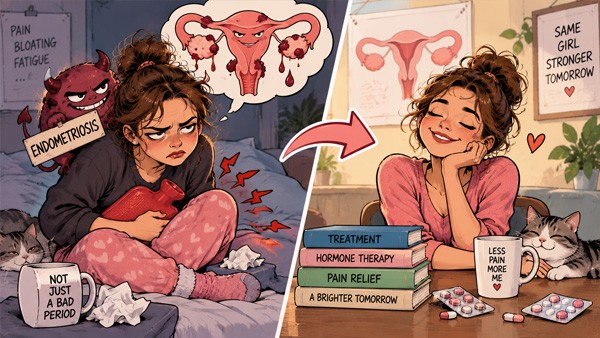
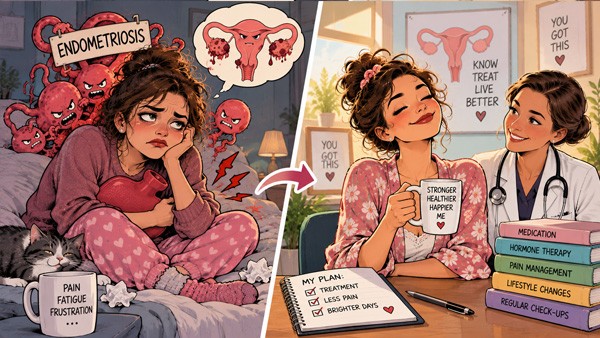
Endometriosis affects roughly one woman in ten of reproductive age, which makes it about as common as asthma. It also takes, on average, somewhere between seven and ten years to diagnose — a delay with no real parallel among conditions of that frequency.
Understanding why that delay happens explains most of what goes wrong with this condition, and it is not primarily a failure of technology.
🔍 Four things combine to produce the delay. Severe period pain is widely assumed, by women and by clinicians, to be normal — so it is not reported and, when reported, not investigated. The pain is often cyclical rather than constant, so between episodes everything appears fine. A normal ultrasound does not exclude it, and a normal scan is regularly taken as a negative result when it is not one. And the symptoms extend well beyond periods — bowel, bladder, pain with sex, fatigue — so women are sent to gastroenterology, urology and psychiatry before anyone connects the pattern.
🔬 What it actually is
Tissue resembling the lining of the uterus grows outside the uterus — on the peritoneum lining the pelvis, on the ovaries, on the ligaments supporting the uterus, on the bowel and bladder, and occasionally further afield including the diaphragm.
That tissue responds to the same hormonal signals as the lining inside the uterus. It thickens and bleeds cyclically. Unlike the lining inside, it has nowhere to drain. The trapped blood and tissue provoke inflammation, and repeated inflammation produces scarring and adhesions that bind organs to one another.
This distinction matters and the older description of this condition frequently gets it wrong. Endometriosis is outside the uterus. Adenomyosis is when similar tissue grows into the muscular wall of the uterus itself. They are related, they often coexist, and they are not the same thing — adenomyosis typically causes heavy and painful periods with a bulky tender uterus, and it is diagnosed and treated somewhat differently.
❓ Why some women and not others
The oldest explanation is that menstrual blood flows backward through the tubes into the pelvis. That does happen, and the problem with it as a complete explanation is that it happens in the large majority of women, while only about one in ten develops the disease.
So something else determines whether displaced tissue implants, survives and grows — differences in immune clearance, in the local inflammatory environment, and in genetics, since the condition runs in families. Other mechanisms are needed to explain cases in women who have never menstruated and the rare reported cases in men, which point toward cells elsewhere in the body transforming into endometrial-like tissue.
The practical consequence of this uncertainty is that there is currently no way to prevent it, and no cure. Treatment controls it.
⚖️ The fact that reframes everything
Endometriosis is graded in four stages describing how much disease is present and how deeply it infiltrates. The staging is useful for surgical planning and for research.
It correlates poorly with how much pain a woman has. A woman with a few small superficial deposits can be in severe, life-limiting pain. A woman with extensive disease and large ovarian cysts can have minimal symptoms and be diagnosed incidentally.
Two consequences follow, and both are frequently mishandled.
Being told the disease is mild is not a reason to dismiss severe symptoms, and a woman whose pain is disproportionate to what was found is not exaggerating. Nerve involvement, the depth rather than the area of infiltration, inflammatory activity and changes in pain processing all contribute more than total volume does.
And treatment is directed at symptoms and at fertility goals, not at the stage. There is no obligation to treat aggressively because a stage number is high, and no justification for withholding treatment because it is low.
📋 What it feels like
Period pain is the best-known symptom and it is far from the only one.
| Symptom | Character |
|---|---|
| Period pain | Often starting a day or more before bleeding, worsening over years, and not adequately relieved by ordinary painkillers |
| Deep pain during or after sex | Felt deep rather than at the entrance, often worse in certain positions and worse around the period. One of the more specific symptoms and one of the least reported |
| Chronic pelvic pain | Present between periods once the disease is established |
| Painful bowel movements | Particularly around the period; sometimes with cyclical rectal bleeding |
| Bladder pain or blood in urine | Cyclical, tracking with the period |
| Bloating | Marked abdominal distension, often cyclical, frequently misattributed to diet |
| Fatigue | Genuine and substantial, from chronic inflammation, disturbed sleep and often iron deficiency |
| Difficulty conceiving | Sometimes the presenting problem in a woman with few other symptoms |
| Cyclical pain elsewhere | Shoulder tip or chest pain around the period, from deposits on the diaphragm. Rare and highly characteristic |
The unifying clue is a cyclical pattern in a symptom that has nothing obviously to do with the uterus. Bowel symptoms that worsen predictably every month, bladder pain that tracks the cycle, or shoulder pain that arrives with bleeding are all worth stating explicitly, because they are the details that convert a vague picture into a specific suspicion.
💡 The overlap with irritable bowel syndrome is a common trap. Bloating, altered bowel habit and abdominal pain describe both, and a great many women with endometriosis carry a bowel diagnosis for years first. The distinguishing feature is the cycle: symptoms that reliably worsen in the days before and during a period, and settle afterwards, point toward a hormonal driver rather than a purely bowel one. It is worth keeping a record showing that pattern, because a pattern on paper is far more persuasive than a description from memory.
🧠 Why the pain outlives the disease
Some women have all visible disease removed surgically and continue to have pain. This is genuinely common and it is not a sign that the surgery failed or that nothing was ever wrong.
Prolonged pain changes how the nervous system processes pain signals. Pathways become more sensitive, the threshold falls, and the system starts generating pain from inputs that would not previously have caused it. Once that has developed, removing the original source does not automatically reverse it.
Alongside this, muscles of the pelvic floor tighten protectively over months and years of pain, and that tension becomes an independent source of pain, along with painful sex, urinary urgency and difficulty emptying the bowel.
Both are treatable, and neither responds to more hormone treatment or more surgery. Pelvic floor physiotherapy with a specialist practitioner produces real improvement, as does a pain management approach aimed at the nervous system rather than at the pelvis. Continuing to search for more disease to remove, when this is the mechanism, leads to repeated operations without benefit.
🔎 How it is diagnosed now
This has changed, and the change is worth knowing because a lot of material still describes the old approach.
Laparoscopy is no longer required to make the diagnosis. Current guidance accepts diagnosis on the basis of symptoms and imaging, and supports starting treatment on clinical grounds without an operation. That removes a major source of delay, since waiting for surgery to confirm what the history already suggests could add years.
Imaging finds some disease and misses other disease. A specialist ultrasound performed by an experienced operator detects ovarian endometriomas and deep infiltrating disease well. MRI adds detail for deep disease. But superficial deposits on the peritoneum — the commonest form — are not visible on any scan. This is the single most important point in this section: a normal ultrasound does not exclude endometriosis, and being told the scan was clear is not the same as being told you do not have it.
There is no blood test. CA-125 rises in endometriosis and in many other conditions and is not recommended for diagnosis.
Laparoscopy still has a role — where the diagnosis remains uncertain, where treatment has not worked, where surgical treatment is planned, and in some fertility assessments. Where it is done, disease should be treated at the same time rather than simply looked at.
💊 Medical treatment
All hormonal treatment works on the same principle: reducing or removing the cyclical hormonal stimulation that drives the tissue. None of it eliminates the disease, and symptoms generally return after stopping.
| Option | How it is used |
|---|---|
| Anti-inflammatory painkillers | First line for pain, most effective started a day before the pain is expected rather than once it has arrived |
| Combined hormonal contraception | Frequently taken continuously without a break, since fewer bleeds means fewer painful episodes. Widely used and inexpensive |
| Progestogens | Taken continuously to suppress the tissue. Norethisterone acetate and dienogest are the ones specifically used at endometriosis doses |
| Hormone-releasing intrauterine device | Acts locally with fewer systemic effects; particularly good where heavy bleeding is also a problem |
| GnRH agonists and antagonists | Induce a temporary menopausal state. Effective, and used with add-back hormone therapy and for limited periods because of bone loss |
| Aromatase inhibitors | Reserved for disease resistant to everything else, since endometriotic tissue can produce its own oestrogen |
About the progestogens
Norethisterone acetate at 5 mg is one of the long-established treatments for this condition specifically. Taken continuously it suppresses the endometrial-like tissue and usually stops periods altogether, which is the point rather than a side effect. It is inexpensive, it has decades of use behind it, and it works for a large proportion of women.
Practical points worth knowing before starting. Irregular breakthrough bleeding is common in the first three months and usually settles — stopping at week six because of it is the commonest reason it appears to fail. It is taken every day without a break. Side effects can include bloating, breast tenderness, mood change and acne, and it is not suitable in pregnancy or where there is a history of blood clots. It is not a contraceptive at this dose and in this regimen, which catches people out.
Not every progestogen is interchangeable here. Some are used to bring on a monthly bleed in women with irregular cycles, which is a different objective; for endometriosis the aim is continuous suppression. Dydrogesterone, useful for cycle regulation, is not the standard choice for this purpose.
✂️ Surgery
Surgery is considered where medication has not controlled symptoms, where there is a large ovarian endometrioma, where organs are distorted, or as part of fertility treatment.
The important distinction is between cutting the disease out and burning the surface of it. Excision removes the whole deposit including what lies beneath the surface, and is generally preferred for deep disease, with lower recurrence. Ablation treats what is visible from above and may leave deeper tissue behind.
Where disease involves the bowel, bladder or ureters, surgery belongs in a specialist centre with the relevant surgeons present. Recurrence after surgery is common, and hormonal treatment afterwards reduces it.
🔴 A hysterectomy is not a guaranteed cure, and this is one of the most damaging misunderstandings in this condition. Endometriosis is by definition outside the uterus, so removing the uterus does not remove it. A hysterectomy treats adenomyosis and heavy bleeding definitively; it treats endometriosis only insofar as the deposits are also removed at the same operation. Removing the ovaries as well lowers oestrogen and often helps considerably, at the cost of surgical menopause — a substantial decision at a young age, with its own consequences for bone and cardiovascular health. Women have had this operation expecting resolution and been left with the same pain, and the disappointment is entirely avoidable with an honest conversation beforehand.
🤰 Fertility
Endometriosis is associated with difficulty conceiving in a substantial proportion of women, through several mechanisms: adhesions distorting the tubes and ovaries, the inflammatory environment in the pelvis, and reduced ovarian reserve where ovarian cysts are present.
Several honest points.
Many women with endometriosis conceive without difficulty. A diagnosis is not a diagnosis of infertility.
Hormonal treatment does not improve fertility — most of it prevents pregnancy while being taken. It controls symptoms and is paused when trying to conceive.
Surgery on ovarian cysts reduces ovarian reserve. Removing an endometrioma removes some healthy ovarian tissue with it, and repeated surgery to the same ovary does so repeatedly. Anyone considering it who may want children should have this discussed specifically, with ovarian reserve assessed beforehand.
Time matters. Where fertility is a priority, the sequence of treatments should be planned around that rather than decided one step at a time.
❌ What is not true
That pregnancy cures it. Symptoms often improve during pregnancy and breastfeeding because of the hormonal state, and they return afterwards. Advising a woman to have a baby as treatment is poor advice medically and worse advice personally, and it is still given.
That the menopause always ends it. It usually improves substantially, and deep disease and scarring can continue to cause symptoms, particularly on hormone replacement therapy.
That severe period pain is normal. Pain that stops you working, studying or getting out of bed, or that ordinary painkillers do not touch, is not normal at any age.
That teenagers do not get it. They do, and symptoms frequently begin with the first periods. Dismissing severe adolescent period pain is one of the main reasons the diagnostic delay is so long.
That it is caused by tampons, by infection, or by anything the woman did. None of these.
That a specific diet treats it. Evidence for dietary approaches is weak. Some women find particular changes help their bloating or bowel symptoms, which is worth doing if it helps them; it is not treatment for the disease, and expensive elimination protocols sold as cures are not supported.
📋 Making the appointment count
Keep a symptom diary for two or three cycles, recording pain scores by day, where the pain is, bowel and bladder symptoms, pain with sex, and days missed from work or study. The cyclical pattern on paper is the single most persuasive thing you can bring.
Say the specific things. Deep pain during sex, pain on opening the bowels around your period, cyclical bladder symptoms. These are the details that change the direction of an assessment, and they are the ones most often left unsaid.
State the impact in concrete terms — days off, activities abandoned, effects on the relationship. Impact drives investigation more effectively than pain scores.
Ask directly about endometriosis if it has not been mentioned.
Know that a normal scan does not close the question, and say so if it is presented as though it does.
🩺 When to seek advice
- Period pain that stops you working, studying or functioning, at any age
- Pain not controlled by ordinary painkillers, or worsening year on year
- Pain starting before the bleeding does
- Deep pain during or after sex
- Bowel or bladder symptoms that follow your cycle
- Cyclical rectal bleeding or blood in the urine
- Difficulty conceiving after a year, or six months if over thirty-five
- Persistent fatigue with heavy or painful periods — ask for ferritin
- Pain continuing after surgery, which needs a different approach rather than more surgery
- Sudden severe pelvic pain — urgent, as a cyst can rupture or twist
Treatment is stocked in the womens health category, including Aygestin (norethindrone acetate 5 mg) for continuous suppression, Provera (medroxyprogesterone), and Femara (letrozole) where an aromatase inhibitor is used in resistant disease. Which is appropriate depends on symptoms, fertility plans and what has already been tried.
❓ Frequently asked questions
My scan was normal. Does that rule out endometriosis?
No, and this is the most important thing to know about diagnosis. Ultrasound and MRI detect ovarian cysts and deep infiltrating disease well, but superficial deposits on the peritoneum — the commonest form — are not visible on any scan. A clear scan is not the same as not having the condition, and being told otherwise is a frequent reason women wait years for a diagnosis.
Why does diagnosis take so long?
Four things combine. Severe period pain is widely assumed to be normal, so it is not reported or not investigated. The pain is cyclical, so everything looks fine between episodes. A normal scan is taken as a negative result when it is not one. And the symptoms extend to bowel, bladder, sex and fatigue, so women are sent to several other specialties before anyone connects the pattern.
I was told my endometriosis is mild but the pain is severe. How?
Because the stage describes how much disease is present and correlates poorly with pain. A few small superficial deposits can cause life-limiting pain, and extensive disease can be almost silent. Depth of infiltration, nerve involvement, inflammatory activity and changes in pain processing matter more than total volume. Being told the disease is mild is not a reason to dismiss the symptoms.
Is this the same as adenomyosis?
No, though they often coexist and are frequently confused. Endometriosis is tissue resembling the womb lining growing outside the uterus. Adenomyosis is similar tissue growing into the muscular wall of the uterus itself, typically causing heavy painful periods with a bulky tender uterus. They are diagnosed and treated somewhat differently, and a hysterectomy resolves adenomyosis in a way it does not resolve endometriosis.
Will a hysterectomy cure it?
Not on its own. Endometriosis is by definition outside the uterus, so removing the uterus does not remove it — only the deposits removed during the same operation are dealt with. Removing the ovaries too lowers oestrogen and often helps considerably, at the cost of surgical menopause, which is a substantial decision at a young age. Women have had this expecting resolution and kept the same pain.
Does having a baby cure endometriosis?
No. Symptoms often improve during pregnancy and breastfeeding because of the hormonal state, and they return afterwards. Advising a woman to have a child as treatment is poor advice medically and worse personally, and it is still given. Similarly, the menopause usually improves it substantially without always ending it, particularly where there is deep disease or hormone replacement therapy.
Why do I still have pain after surgery removed everything?
Because prolonged pain changes how the nervous system processes signals — pathways become more sensitive and start generating pain from inputs that previously would not have caused it. Alongside that, pelvic floor muscles tighten protectively over years and become an independent source of pain. Both are treatable, and neither responds to more hormones or more surgery. Pelvic floor physiotherapy and a pain-focused approach are what help.
What should I expect from norethisterone acetate?
Taken continuously it suppresses the tissue and usually stops periods altogether, which is the objective rather than a side effect. Irregular breakthrough bleeding is common in the first three months and usually settles — stopping at week six because of it is the commonest reason it appears to fail. It is taken daily without a break, and at this dose and regimen it is not a contraceptive, which catches people out.
Does endometriosis mean I cannot have children?
No — many women with it conceive without difficulty, and a diagnosis is not a diagnosis of infertility. It is associated with subfertility in a proportion, through adhesions distorting the tubes and ovaries, the inflammatory environment, and reduced ovarian reserve where cysts are present. Where fertility is a priority, the sequence of treatments should be planned around that from the start.
Should I have my ovarian cyst removed?
It depends, and one point must be part of the conversation: removing an endometrioma takes some healthy ovarian tissue with it, so ovarian reserve falls, and repeated surgery on the same ovary does so repeatedly. Anyone who may want children should have ovarian reserve assessed beforehand and the trade-off discussed explicitly rather than discovering it afterwards.
My bowel symptoms were called IBS. Could it be this?
Possibly, and it is a common trap since bloating, altered bowel habit and abdominal pain describe both. The distinguishing feature is the cycle — symptoms that reliably worsen in the days before and during a period and settle afterwards point toward a hormonal driver. Keep a record showing that pattern, because a pattern on paper is far more persuasive than a description from memory.
Can a teenager have endometriosis?
Yes, and symptoms frequently begin with the very first periods. Dismissing severe adolescent period pain as something to be grown out of is one of the main reasons the average delay to diagnosis runs to years. Pain that stops a girl attending school, or that ordinary painkillers do not touch, warrants assessment rather than reassurance.
📑 Sources and editorial
- ESHRE guideline on the diagnosis and management of endometriosis, including the move away from mandatory laparoscopy
- NICE guideline on endometriosis diagnosis and management
- Studies of diagnostic delay in endometriosis across health systems
- Evidence on the poor correlation between revised ASRM stage and pain severity
- Literature on retrograde menstruation and alternative mechanisms of disease origin
- Research on central sensitisation and pelvic floor dysfunction in persistent pelvic pain
- Trials of progestogens, combined hormonal contraception and GnRH analogues in endometriosis
- Evidence on ovarian reserve following endometrioma excision
- Reviews of dietary interventions in endometriosis
- Prescribing information for norethisterone acetate, medroxyprogesterone and letrozole
- Related reading: period pain, irregular cycles
- Related products: womens health category
- RXshop Editorial Team — reviewed by Anita Sharma, MD, FACOG, Obstetrician-Gynecologist and Womens Health
Medical Disclaimer: The information in this article is for educational and informational purposes only and is not a substitute for professional medical advice, diagnosis, or treatment. Always seek guidance from a qualified healthcare provider with any questions you may have regarding a medical condition, and before starting, stopping or changing any medication.