Brand Premarin FAQ - Answers on Conjugated Estrogens, HRT Dosing, and Menopause Care
1.What brand-name womens health medications are available?
This category features original-manufacturer brand medications from Pfizer:
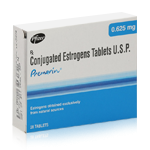
Premarin 0.625mg - conjugated equine estrogens for menopause symptom relief, genitourinary symptoms, and osteoporosis prevention. Over 80 years of clinical use as the reference standard for hormone replacement therapy.
2.What is the difference between brand and generic Premarin?
Brand Premarin is manufactured by Pfizer using the original patented formulation - a specific mixture of conjugated equine estrogens standardized to the exact composition used in decades of clinical research.
Generic alternatives (like Estrace with estradiol only) contain synthetic estradiol - a single molecule. Both effectively treat menopausal symptoms, but the formulations differ. Women doing well on Premarin often prefer to continue the same trusted formulation.
3.What exactly is in Premarin (conjugated equine estrogens)?
Premarin contains a standardized mixture of estrogens:
- Estrone sulfate - the major component
- Equilin sulfate - unique to conjugated equine estrogens
- 17-alpha-dihydroequilin sulfate
- 17-alpha-estradiol sulfate
- Various minor estrogen sulfates in specific proportions
This complex mixture provides synergistic estrogen effects that differ from single-molecule estradiol products.
4.When would I choose Premarin over generic estradiol?
Brand Premarin is most appropriate when:
- You are currently doing well on Premarin and want to continue
- Generic alternatives have not provided satisfactory symptom control
- Your physician specifically prescribes branded Premarin
- You want the exact formulation used in landmark HRT studies
For most women starting HRT, either option is reasonable - discuss with your gynecologist which fits your situation.
5.What is the standard Premarin dose and how do I take it?
Standard dosing for Premarin 0.625mg:
- Dose: One 0.625mg tablet once daily
- Timing: Same time each day for consistent blood levels
- Food: With or without meals
- Water: Swallow whole with water
- Response: Hot flashes improve in 2-4 weeks; maximum benefit at 8-12 weeks
6.Why does 0.625mg strength work for most women?
0.625mg represents the balance between effectiveness and safety for most postmenopausal women. It provides adequate symptom control while minimizing dose-related side effects.
Some women respond well to lower doses (0.3-0.45mg), particularly for milder symptoms. Others may need higher doses (0.9-1.25mg) for severe symptoms. Your physician adjusts based on response. Modern guidance emphasizes lowest effective dose for shortest necessary duration.
7.Do I need to take progestin with Premarin?
Women with intact uterus MUST take progestin
Unopposed estrogen dramatically increases endometrial cancer risk (5-10 fold). Progestin protects the endometrium.
Options include Provera (medroxyprogesterone) or Duphaston (dydrogesterone) - available in the generic Womens Health category. Women without a uterus (after hysterectomy) do NOT need progestin.
8.When should I take Premarin - morning or night?
Consistency matters more than specific time of day. Take Premarin at the same time each day for stable blood levels.
Many women prefer morning administration to associate it with their daily routine. Others take it at bedtime if morning schedule is unpredictable. Choose whatever time you will remember consistently. Missing an occasional dose does not significantly affect treatment, but do NOT double doses to catch up.
9.How long until I feel the benefits of Premarin?
Response timelines vary by symptom type:
- Hot flashes: Improvement begins 2-4 weeks; maximum benefit at 8-12 weeks
- Sleep quality: Often improves within first month as night sweats reduce
- Vaginal symptoms: 2-3 months for maximum benefit
- Mood improvements: Weeks to months
- Bone protection: Ongoing while therapy continues
Do NOT abandon treatment early if response seems modest - full effect takes time.
10.How long should I stay on Premarin?
Modern approach emphasizes lowest effective dose for shortest duration needed. Most women can gradually taper off HRT after 3-5 years if symptoms have resolved.
Some women need longer treatment for severe symptoms or high fracture risk. Others may resume after tapering if symptoms return. Individual decision-making with your gynecologist is essential - annual reassessment of continued need is standard practice.
Abrupt discontinuation often causes symptom rebound - gradual tapering over 3-6 months is preferred.
11.What are the common side effects of Premarin?
Common side effects of Premarin include:
- Breast tenderness - especially in first months
- Nausea - usually mild and temporary
- Headache - can be persistent for some women
- Bloating and fluid retention
- Mood changes
- Breakthrough bleeding - especially initially
- Vaginal discharge
Most side effects improve within 3 months. Persistent problems warrant dose adjustment or formulation change.
12.Who should NOT take Premarin?
Absolute contraindications:
Pregnancy, breast cancer (personal history), estrogen-dependent cancer, undiagnosed vaginal bleeding, active blood clots (DVT, PE), recent stroke or heart attack, active liver disease
Use with caution if you have: strong family history of breast cancer, gallbladder disease, migraine with aura, hypertension, diabetes, fibroids, elevated triglycerides, or are a smoker over 35.
13.What are the cardiovascular considerations with Premarin?
The "timing hypothesis" is important: HRT started within 10 years of menopause or before age 60 has neutral or possibly favorable cardiovascular effects. Started later, small increase in cardiac events in first year.
Your physician assesses your individual cardiovascular risk profile including age, blood pressure, cholesterol, diabetes, and family history before starting. Blood pressure monitoring during therapy is essential. Transdermal estrogen alternatives may be considered for higher-risk women.
14.Does Premarin increase breast cancer risk?
Combined estrogen-progestin therapy causes a small increase in breast cancer risk that becomes measurable after about 5 years of use. Absolute risk is small - approximately 8 additional cases per 10,000 women per year.
Interestingly, estrogen-only therapy (for women without uterus, no progestin needed) does NOT appear to increase breast cancer risk and may slightly reduce it in some studies. Annual mammograms and clinical breast exams are essential during therapy. Risk returns to baseline within 5 years of stopping.
15.What is the blood clot risk with Premarin?
Oral HRT roughly doubles blood clot risk, especially in first year of therapy. Absolute risk increase is modest but real.
Higher risk factors include age over 60, obesity, personal or family history of clots, prolonged immobility, and genetic clotting disorders. Transdermal estrogen preparations (patches) may have lower clot risk than oral tablets.
Report leg pain/swelling, chest pain, or shortness of breath immediately while on Premarin.
16.What should I do if I have vaginal bleeding on Premarin?
Any unexplained postmenopausal bleeding requires prompt gynecological evaluation - endometrial cancer must be ruled out.
Some breakthrough bleeding is common in first 3-6 months of combined HRT and often improves. However, new bleeding after previous stability, heavy bleeding, or bleeding that persists beyond initial months warrants ultrasound and possibly endometrial biopsy. Do NOT ignore this symptom.
17.What if I miss a dose of Premarin?
Take the missed dose as soon as remembered, unless it is close to the next scheduled dose. In that case, skip the missed dose and continue with normal schedule.
Do NOT double doses to make up. Occasional missed doses do not significantly affect treatment effectiveness. Chronic missing suggests reviewing timing or reminder strategies. Consistent daily administration provides most stable blood levels and symptom control.
18.What alternatives exist for women who cannot take Premarin?
Non-hormonal options exist for various symptoms:
- Hot flashes: SSRIs (paroxetine), SNRIs (venlafaxine), gabapentin, clonidine
- Vaginal symptoms: Vagifem local estrogen (minimal systemic absorption), moisturizers, lubricants
- Osteoporosis: Bisphosphonates (Fosamax), SERMs (Evista), calcium plus vitamin D
- Sleep: Sleep hygiene, address night sweats, occasionally sleep medications
- Mood: SSRIs, counseling, exercise
Cognitive behavioral therapy can reduce menopausal symptom distress even without medication.
19.Should I use systemic Premarin or just local vaginal estrogen?
Choice depends on your primary symptoms. Systemic Premarin treats hot flashes, night sweats, mood symptoms, and provides bone protection alongside genitourinary benefits.
Local vaginal estrogen like Vagifem targets only genitourinary symptoms (vaginal dryness, painful intercourse, recurrent UTIs) with minimal systemic absorption and much lower risk profile - no progestin needed even with intact uterus.
Choose Premarin when you have systemic symptoms or need bone protection. Choose local only when genitourinary symptoms are your primary concern.
20.How should I store Premarin?
Store Premarin at room temperature (15-30 degrees Celsius), away from moisture and light, in the original bottle with cap tight.
Avoid bathroom storage due to humidity. Keep out of reach of children. Check expiration date regularly. Do NOT use if tablets appear discolored, cracked, or damaged. Store away from other medications to prevent confusion.
21.What follow-up monitoring is needed on Premarin?
Standard monitoring schedule while on HRT:
Reassess continued need at least yearly - modern approach emphasizes shortest effective duration.
22.How do I order brand Premarin from RXshop.md?
Ordering Brand Premarin 0.625mg from RXshop.md is straightforward:
Consider ordering 3-6 month supply for continuous therapy. We do NOT accept credit cards, PayPal, or USDT.
More Women's Health Brand Medications