Generalised Anxiety Disorder: Symptoms and Treatment

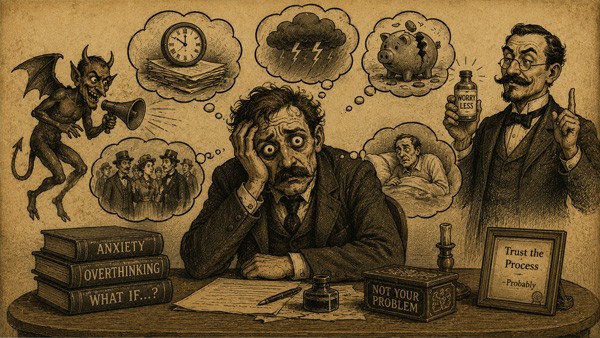
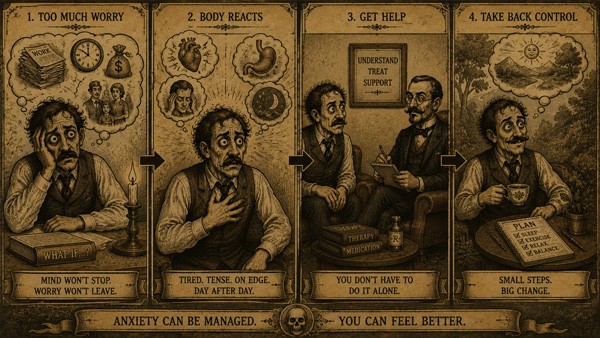
Everyone worries. Generalised anxiety disorder is not an unusually large quantity of ordinary worry — it is worry that has stopped being under the person control, attaches itself to whatever is available, and produces physical symptoms that frequently bring people to a doctor for something else entirely.
It is common, it responds well to treatment, and it goes untreated for years because the symptoms are attributed to personality on one side and to physical illness on the other. This guide covers what distinguishes it, what actually works, and the specific things that go wrong when treatment is started.
🧠 The point that prevents most early treatment failure: antidepressants for anxiety frequently make anxiety worse for the first one to two weeks before they help. Restlessness, jitteriness and increased worry in the first fortnight are expected, not evidence that the drug is wrong. Almost everyone who stops in week one and concludes the medication made things worse stopped during precisely the phase they were warned about, or would have been if anyone had told them.
🔬 What the condition actually is
Generalised anxiety disorder involves excessive, difficult-to-control worry about multiple areas of life, present more days than not for at least six months, accompanied by physical symptoms, and causing real interference with functioning.
Three features distinguish it from ordinary worry.
It is uncontrollable. The person cannot switch it off or reason it away, and attempts to do so tend to extend it. This is the feature people describe most consistently — not that they worry, but that they cannot stop.
It moves. Resolve one concern and it attaches to another within days. Health, money, work, family, an appointment next month, something said last week. The content shifts; the process does not.
It is physical as much as mental. Muscle tension, headaches, fatigue, disturbed sleep, restlessness, irritability, difficulty concentrating, digestive upset, palpitations, sweating and dizziness are part of the condition rather than separate problems.
That last point explains a common pathway. People present with chest tightness, palpitations, headaches or bowel symptoms, are investigated for a physical cause, are told nothing is wrong, and leave without an explanation for symptoms that are entirely real. Anxiety produces genuine physiology; being told the tests are normal is not the same as being told what is happening.
⚖️ What it is not
| Condition | Distinguishing feature |
|---|---|
| Ordinary worry | Proportionate to circumstance, controllable, resolves when the situation does, does not impair functioning |
| Panic disorder | Discrete attacks of overwhelming fear peaking within minutes, with fear of further attacks |
| Social anxiety disorder | Focused specifically on scrutiny and judgement by others |
| Health anxiety | Focused on having or developing a serious illness; reassurance helps briefly then fades |
| Obsessive compulsive disorder | Intrusive thoughts experienced as alien, with compulsions performed to neutralise them |
| Post-traumatic stress disorder | Follows trauma; re-experiencing, avoidance and hypervigilance |
| Depression | Low mood and loss of pleasure predominate, though the overlap with anxiety is extensive |
These frequently coexist. The distinctions matter because treatment differs in emphasis, and because a person told they have anxiety without further specification often does not get the version of therapy that would help most.
The overlap with depression deserves particular attention: a large share of people with generalised anxiety disorder also meet criteria for depression, and untreated anxiety is a risk factor for developing it. Treating one while ignoring the other is a frequent reason for partial response.
🩺 How it is assessed
Diagnosis is clinical. A brief questionnaire called the GAD-7 is widely used — seven questions scored over the past two weeks, giving a severity score. It is a screening and monitoring tool rather than a diagnosis in itself, and it is genuinely useful for tracking whether treatment is working, because change is easier to see in a number than in memory.
Assessment also covers what else could explain the symptoms.
| To exclude or address | Why |
|---|---|
| Overactive thyroid | Produces palpitations, tremor, sweating, restlessness and weight loss — readily mistaken for anxiety |
| Caffeine | Frequently underestimated; high intake alone can produce the full symptom picture |
| Alcohol and substance use | Both the substances and withdrawal from them cause anxiety |
| Medications | Salbutamol inhalers, decongestants, thyroid replacement, steroids, stimulants |
| Cardiac arrhythmia | Palpitations with an actual rhythm disturbance behind them |
| Anaemia | Palpitations, breathlessness and fatigue |
| Sleep apnoea | Causes irritability, poor concentration and nocturnal waking with a racing heart |
| Perimenopause | Anxiety, palpitations and sleep disruption are common and often unrecognised as hormonal |
None of this means the anxiety is not real if something else is found. It means the treatable contributors should be treated, and several of them are.
🧠 Psychological treatment
Cognitive behavioural therapy has the strongest evidence of any treatment for this condition, and its effects persist after treatment ends in a way medication effects do not.
What it actually involves is frequently misunderstood as thinking positively, which it is not. For generalised anxiety specifically it works on:
Worry postponement. Rather than trying to suppress worry, which reliably increases it, the person defers it to a scheduled period each day. This sounds trivial and works, partly because much of what seemed urgent has evaporated by then.
Intolerance of uncertainty. The central driver in generalised anxiety is not fear of a specific outcome but an inability to sit with not knowing. Therapy works directly on tolerating uncertainty rather than on resolving each individual worry, which is why treating worries one at a time never finishes.
Beliefs about worry itself. Many people hold two contradictory beliefs simultaneously — that worrying is dangerous and uncontrollable, and that it is useful and protective. Both maintain the problem, and both are examined.
Behavioural experiments. Testing predictions in reality rather than debating them mentally. Deliberately not checking, not reassurance-seeking, not over-preparing, and observing what actually happens.
Reducing safety behaviours. Excessive checking, seeking reassurance, over-planning and avoidance all provide brief relief and maintain the condition, because they prevent the person discovering that the feared outcome does not follow.
Applied relaxation and mindfulness-based approaches also have supporting evidence and suit some people better. Guided self-help based on cognitive behavioural principles works for milder presentations and is far more accessible than waiting lists allow for face-to-face therapy.
💊 Medication
Antidepressants are first-line pharmacological treatment, and the fact that they are called antidepressants confuses a great many people. They treat anxiety in their own right, at similar or slightly higher doses, regardless of whether depression is present.
| Drug | Class | Notes |
|---|---|---|
| Escitalopram | SSRI | Licensed for generalised anxiety; among the best tolerated; few interactions |
| Sertraline | SSRI | Widely used first choice; good evidence across anxiety disorders; safe in most physical conditions |
| Citalopram | SSRI | Effective; dose limits apply because of effects on cardiac conduction |
| Paroxetine | SSRI | Effective, but the most difficult to stop and the most associated with weight gain and sexual effects |
| Venlafaxine | SNRI | Licensed for generalised anxiety; blood pressure monitoring at higher doses; difficult discontinuation |
| Duloxetine | SNRI | Licensed for generalised anxiety; useful where chronic pain coexists |
Differences in effectiveness between them are modest. The choice turns on tolerability, interactions, other conditions present, and how difficult the drug is to stop later — which is a consideration people are rarely given at the point of starting and frequently wish they had been.
Escitalopram and sertraline are generally preferred as first choices because they combine good evidence in anxiety with the fewest complications. Paroxetine works, and has fallen out of favour as a first choice for a specific reason: its short half-life and potency make discontinuation considerably harder than with the alternatives, and it carries the highest rates of weight gain and sexual side effects in the class.
⚠️ The first two weeks
This section is the most practically important in the article.
SSRIs and SNRIs commonly produce an increase in anxiety, restlessness, jitteriness and sleep disturbance during the first one to two weeks, before the therapeutic effect appears. In someone already anxious, this is alarming and feels like confirmation that the drug is harmful.
What reduces it:
- Starting at half the usual dose, or lower, for the first week or two — standard practice in anxiety and frequently skipped
- Knowing it is coming, which changes the experience substantially
- Taking it at a consistent time, in the morning or evening depending on whether it energises or sedates that individual
- Reducing caffeine during this period, since the effects add
- Continuing through it rather than stopping, since it settles
Other early effects include nausea, headache and altered sleep, most of which improve within two to three weeks. Sexual side effects are common, do not settle on their own, and are a leading unstated reason people stop — they are worth raising rather than enduring, since dose adjustment, switching or adding another agent all help.
🔴 One warning that belongs in every discussion of starting an antidepressant. In people under twenty-five, there is a small increase in suicidal thinking in the early weeks of treatment and after dose changes. This does not mean these drugs should not be used in younger people — untreated anxiety and depression carry their own substantial risk — it means closer monitoring during that period. Any new or worsening thoughts of self-harm should be reported immediately rather than waiting for the next appointment.
⏳ How long, and how to stop
Response is slow by design. Some improvement typically appears at two to four weeks, and a fair assessment takes six to eight weeks at an adequate dose. Judging failure at three weeks is the second commonest error after stopping in week one.
Where treatment works, it is generally continued for six to twelve months after full response before any attempt to stop. Stopping as soon as things feel better carries a high relapse rate, and this is one of the most consistent findings in the field.
Discontinuation must be gradual. Stopping abruptly, or too quickly, produces a recognised syndrome: dizziness, electric-shock sensations often described as brain zaps, nausea, flu-like symptoms, vivid dreams, irritability and a return of anxiety. It is not addiction — there is no craving and no dose escalation — but it is genuinely unpleasant and it is worse with paroxetine and venlafaxine than with the alternatives.
Reducing over weeks to months, in progressively smaller steps as the dose gets lower, prevents most of it. The last stages of a taper are typically harder than the first, which is the opposite of what people expect.
🚫 Why benzodiazepines are avoided
Diazepam, lorazepam and similar drugs work immediately and impressively for anxiety, which is exactly the problem.
Tolerance develops within weeks, so the same dose does less. Physical dependence follows, and withdrawal after regular use is genuinely difficult and occasionally dangerous, requiring a slow supervised taper. Rebound anxiety between doses often exceeds the original level. Cognitive effects and sedation impair memory, concentration and driving, and increase falls in older people.
There is a further reason less often mentioned. Benzodiazepines interfere with the psychological treatment that works. Cognitive behavioural therapy for anxiety depends on the person experiencing anxiety without the feared outcome occurring, which is how the fear extinguishes. A drug taken before every anxiety-provoking situation functions as a safety behaviour, and learning does not take place. People treated with both frequently do worse when the medication stops than those treated with therapy alone.
Their legitimate role is short and specific: a few days to a couple of weeks during a crisis or while waiting for an antidepressant to take effect, at the lowest useful dose, with a planned end date agreed at the start.
🧪 Other medication options
Pregabalin is licensed for generalised anxiety disorder in Europe and works differently from antidepressants, with effect appearing faster. It causes drowsiness, dizziness and weight gain, and it has recognised misuse potential and a withdrawal syndrome, so it is used with the same care as any controlled drug.
Buspirone is an option with modest effect, no dependence potential and no sedation, taking a couple of weeks to work. It is unhelpful for panic and is sometimes added to an SSRI.
Propranolol and similar beta blockers reduce the physical manifestations — tremor, palpitations, sweating — without touching the worry itself. They suit performance situations and people whose main complaint is the bodily symptoms. They are avoided in asthma.
Hydroxyzine, a sedating antihistamine, has some evidence in generalised anxiety and is occasionally used short term where a non-dependence-forming sedative is wanted.
Quetiapine at low dose has evidence in generalised anxiety but is not usually first-line because of metabolic effects and sedation.
Regarding supplements: the evidence is thin. Some for kava, which carries a risk of liver injury and is restricted in several countries. Limited and inconsistent evidence for passionflower, lavender oil preparations and magnesium. None approaches the effect of established treatment, and products marketed for anxiety are not regulated for content in most jurisdictions.
🏃 Measures that genuinely help
Exercise has reasonable evidence in anxiety, with effects that appear both acutely and cumulatively. Aerobic exercise in particular reduces both the psychological and physical symptoms, and the mechanism partly involves repeated exposure to the bodily sensations of raised heart rate in a safe context.
Caffeine reduction is the single most productive change many people can make and is consistently resisted. Caffeine directly produces the physiology of anxiety, and people with anxiety disorders are measurably more sensitive to it. Reduce gradually to avoid withdrawal headaches.
Alcohol deserves a specific warning because it is the commonest self-treatment. It reduces anxiety for a few hours and then produces rebound anxiety as levels fall, typically overnight, which is why anxiety on waking after drinking is so characteristic. Regular use to manage anxiety escalates reliably and worsens the underlying condition.
Sleep runs in both directions — anxiety disrupts sleep and poor sleep amplifies anxiety. Treating insomnia directly, ideally with cognitive behavioural therapy for insomnia rather than sedatives, breaks the loop.
Worry time, described earlier, is worth trying independently: a fixed fifteen to thirty minutes daily to worry deliberately, with worries outside that period noted and deferred rather than engaged with.
Reducing reassurance-seeking is uncomfortable and effective. Repeatedly checking, asking others whether things will be all right, and searching symptoms online all deliver brief relief and strengthen the cycle.
✅ Combining approaches works better than either alone for moderate to severe presentations. Medication reduces the baseline level of arousal enough that therapy becomes possible, and therapy produces the durable change that persists after medication stops. Being offered only one of the two is common and is worth asking about, since availability rather than clinical judgement is often what determines which one is offered.
🚩 When to seek help promptly
- Thoughts of self-harm or suicide — this requires immediate help rather than an appointment in due course
- Anxiety preventing work, study or leaving the house
- Increasing alcohol or drug use to manage symptoms
- Panic attacks occurring regularly
- Physical symptoms that are new or different from the usual pattern, which need assessing rather than assuming
- Symptoms worsening after starting medication, beyond the expected first fortnight
- No improvement after eight weeks at an adequate dose, which indicates review rather than persistence
📋 What to expect
Generalised anxiety disorder responds well to treatment. The majority of people improve substantially with therapy, medication or both, and many recover fully.
It does tend to be recurrent, which is worth knowing in advance rather than experiencing as failure. Relapse is commonest after stopping treatment early and during periods of significant stress. What reduces it is completing the full course rather than stopping at first improvement, maintaining the skills learned in therapy after it ends, and recognising early signs and acting on them rather than waiting.
The most common obstacle is not that treatment fails. It is that it is stopped in the first two weeks because it felt worse, or at week three because it had not yet worked, or two months after improvement because things seemed fine. Each of those is avoidable with information given at the start.
Medication for anxiety is stocked in the antidepressants category, including Lexapro (escitalopram) and its generic equivalent Lexaheal, both licensed for generalised anxiety disorder. Treatment requires assessment, dose titration and supervision, particularly during the first weeks and when stopping.
❓ Frequently asked questions
How is this different from normal worrying?
Three things. It is uncontrollable — the person cannot switch it off, and attempts to do so extend it. It moves, attaching to a new subject within days of one being resolved, so the content shifts while the process continues. And it is physical as much as mental, producing muscle tension, fatigue, disturbed sleep, palpitations and digestive symptoms. Ordinary worry is proportionate, controllable and resolves when the situation does.
Why did the medication make my anxiety worse at first?
Because that is expected. SSRIs and SNRIs commonly increase anxiety, restlessness and sleep disturbance for the first one to two weeks before the therapeutic effect appears. Starting at half the usual dose reduces it considerably, as does knowing in advance that it is coming and cutting caffeine during that period. Almost everyone who stops in week one stops during precisely the phase that was going to settle.
Why am I taking an antidepressant if I am not depressed?
Because these drugs treat anxiety in their own right, at similar or slightly higher doses, regardless of whether depression is present. The name reflects what they were developed for rather than the full range of what they do. Several are specifically licensed for generalised anxiety disorder. Anxiety and depression also overlap heavily, and treating one while ignoring the other is a common reason for partial response.
How long before it works?
Some improvement typically appears at two to four weeks, with a fair assessment requiring six to eight weeks at an adequate dose. Judging failure at three weeks is the second commonest error after stopping in week one. Where it does work, treatment is generally continued for six to twelve months after full response before any attempt to stop, because stopping as soon as things improve carries a high relapse rate.
Are antidepressants addictive?
No. There is no craving and no escalation of dose, which are the defining features of addiction. What does happen is a discontinuation syndrome if they are stopped abruptly — dizziness, electric-shock sensations, nausea, flu-like symptoms, vivid dreams and returning anxiety. It is unpleasant rather than dangerous and is largely prevented by reducing gradually over weeks to months, in progressively smaller steps.
Which SSRI is best for anxiety?
Differences in effectiveness are modest, and escitalopram and sertraline are generally preferred first choices because they combine good evidence in anxiety with the fewest complications. Paroxetine works but has fallen out of favour as a first choice: its short half-life makes it the hardest to stop, and it carries the highest rates of weight gain and sexual side effects in the class.
Why will nobody prescribe me diazepam?
Because tolerance develops within weeks, physical dependence follows, withdrawal is genuinely difficult, and rebound anxiety between doses often exceeds the original level. There is also a less obvious reason: benzodiazepines interfere with the therapy that works, functioning as a safety behaviour that prevents the learning cognitive behavioural therapy depends on. Their legitimate role is days to a couple of weeks in a crisis, with an end date agreed at the start.
What does CBT for anxiety actually involve?
Not thinking positively. For generalised anxiety it works on postponing worry to a scheduled period rather than suppressing it, on tolerating uncertainty rather than resolving each individual worry, on examining contradictory beliefs about worry being both dangerous and useful, on testing predictions in reality through behavioural experiments, and on reducing safety behaviours such as checking, reassurance-seeking and over-preparing.
Could my symptoms be something physical?
Worth checking, and several things mimic anxiety closely. An overactive thyroid produces palpitations, tremor, sweating and restlessness. High caffeine intake alone can produce the whole picture. Salbutamol inhalers, decongestants, thyroid replacement and steroids all contribute. Cardiac arrhythmia, anaemia, sleep apnoea and perimenopause are others. Finding one does not mean the anxiety is not real; it means a treatable contributor can be treated.
Why is my anxiety worse in the morning after drinking?
Because alcohol reduces anxiety for a few hours and then produces rebound anxiety as blood levels fall, typically overnight. Morning anxiety after drinking is the characteristic pattern. Alcohol is the commonest self-treatment for anxiety, and regular use for that purpose escalates reliably and worsens the underlying condition, which makes it one of the more important things to address early.
Does exercise really help or is that just standard advice?
It has reasonable supporting evidence, with effects appearing both immediately after a session and cumulatively over weeks. Aerobic exercise reduces both psychological and physical symptoms, and part of the mechanism is repeated exposure to the bodily sensations of a raised heart rate in a context where nothing bad follows — which is the same principle therapy uses deliberately.
Should I take medication or have therapy?
For moderate to severe presentations, combining them works better than either alone. Medication reduces baseline arousal enough that therapy becomes workable, and therapy produces durable change that persists after medication stops — which medication alone does not. Being offered only one is common, and availability rather than clinical judgement often determines which, so it is worth asking about the other.
📑 Sources and editorial
- NICE guideline on generalised anxiety disorder and panic disorder in adults
- DSM-5 diagnostic criteria for generalised anxiety disorder
- Spitzer RL et al. — development and validation of the GAD-7
- Cochrane and network meta-analyses of pharmacological and psychological treatments for generalised anxiety disorder
- Dugas MJ and colleagues — intolerance of uncertainty model and treatment of generalised anxiety
- Evidence on benzodiazepine interference with exposure-based therapy
- Literature on antidepressant discontinuation syndrome and tapering strategies
- FDA prescribing information for escitalopram, sertraline, paroxetine, venlafaxine and duloxetine
- Related products: antidepressants category
- RXshop Editorial Team — reviewed by Thomas Walsh, MD, Psychiatry
Medical Disclaimer: The information in this article is for educational and informational purposes only and is not a substitute for professional medical advice, diagnosis, or treatment. Always seek guidance from a qualified healthcare provider with any questions you may have regarding a medical condition, and before starting, stopping or changing any medication.