Alcohol and Depression: How They Drive Each Other

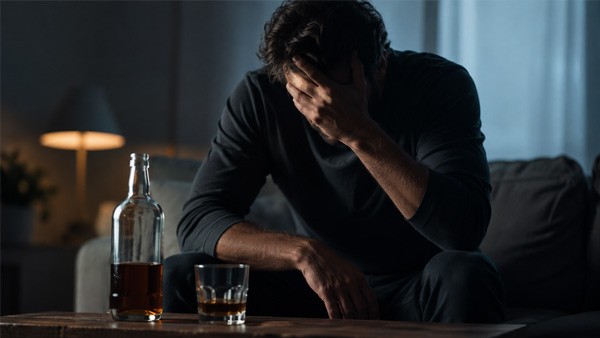
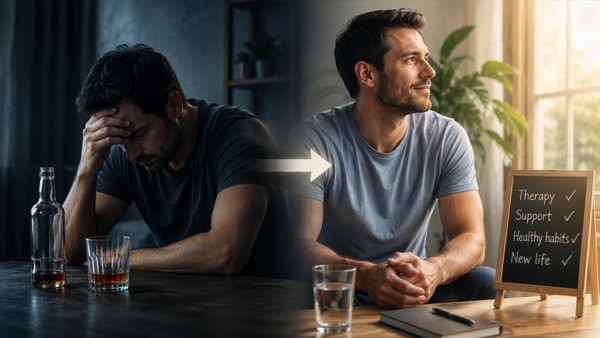
Alcohol is a depressant in the pharmacological sense and, with sustained use, in the psychiatric sense too. People drink to lift mood and the drinking produces the low mood it was meant to relieve, which is the central fact about this problem and the reason it is so difficult to escape from the inside.
The good news is more substantial than most people are told: the majority of depressive symptoms in someone drinking heavily are caused by the alcohol, and they lift within weeks of stopping, without any antidepressant at all.
🧠 The distinction that determines the whole treatment plan: depression in heavy drinkers is usually substance-induced rather than an independent illness. Studies of people entering treatment consistently find that a large majority of those meeting criteria for depression on admission no longer meet them after two to four weeks of abstinence, with no antidepressant given. That is why the first step is stopping or substantially reducing the drinking and reassessing afterwards, rather than starting a tablet while the cause continues.
🧬 What alcohol actually does to mood
The short-term effect and the long-term effect run in opposite directions, which is what makes the pattern self-reinforcing.
Acutely, alcohol enhances GABA, the main inhibitory signal in the brain, and suppresses glutamate, the main excitatory one. The result is sedation, relaxation and reduced anxiety within the first hour or two. That is the effect people are seeking.
As levels fall, the brain compensates in the opposite direction. GABA activity drops below baseline and glutamate rebounds above it, producing anxiety, agitation, disturbed sleep and low mood. This is why anxiety on waking after drinking is so characteristic, and why the relief lasts hours while the rebound lasts considerably longer.
Over months and years, the brain adapts structurally to the constant presence of alcohol. Baseline levels of the transmitters involved in mood regulation shift, and the person begins to need alcohol simply to feel normal rather than to feel good. Serotonin function is affected, sleep architecture is disrupted, and the frontal regions involved in judgement and impulse control are impaired.

⚖️ Two kinds of depression
Separating these is the main diagnostic task, and it cannot be done reliably while someone is still drinking heavily.
| Substance-induced | Independent depression | |
|---|---|---|
| Timing | Began after heavy drinking was established, or worsened with it | Present before drinking began, or during a substantial period of abstinence |
| Course with abstinence | Improves markedly within two to four weeks | Persists beyond that window |
| Family history | May be absent | Often present |
| Response needed | Treating the drinking | Treating both conditions |
The practical consequence is a sequence rather than a choice. Reduce or stop the alcohol, provide support and monitoring through that period, and reassess mood after two to four weeks of abstinence. What remains at that point is what needs treating as depression.
This does not mean withholding help in the meantime. Someone who is acutely suicidal, or who has a clear history of depression preceding the drinking, is treated without waiting. It means that for the common case, starting an antidepressant during active drinking treats a symptom whose cause is still being consumed daily.
🔴 Stopping suddenly can be dangerous
This is absent from a great deal of writing on the subject and it matters more than anything else here.
In someone who is physically dependent, abruptly stopping alcohol produces withdrawal that ranges from unpleasant to life-threatening.
| Timing after last drink | What can occur |
|---|---|
| 6 to 12 hours | Tremor, sweating, anxiety, nausea, headache, insomnia |
| 12 to 24 hours | Hallucinations, usually visual, with awareness that they are not real |
| 24 to 48 hours | Seizures — which can occur in someone who has never had one |
| 48 to 72 hours and beyond | Delirium tremens: confusion, disorientation, agitation, fever, severe autonomic instability |
🔴 Delirium tremens carries a real mortality even when treated, and a considerably higher one untreated. Anyone who drinks daily and heavily, who shakes in the morning, who drinks to stop the shakes, or who has had a withdrawal seizure or delirium before, must not stop abruptly and unsupervised. Medically supervised withdrawal, usually with a benzodiazepine taper, makes it safe. This is one of the few situations where continuing to drink is safer than stopping unaided while help is arranged.
Higher-risk features include daily drinking of large amounts, morning drinking, previous withdrawal seizures or delirium, older age, physical illness and poor nutrition.

🧪 Thiamine, and why it is not optional
Heavy drinkers become deficient in thiamine, or vitamin B1, through poor intake, impaired absorption and increased losses. Deficiency causes Wernicke encephalopathy — confusion, unsteadiness and abnormal eye movements — which, untreated, progresses to permanent memory impairment.
Two points are worth knowing because they are easy to get wrong.
The classic triad of symptoms is frequently incomplete, so the diagnosis is missed. Confusion alone in a heavy drinker is enough to warrant treatment.
Giving glucose without thiamine can precipitate it. Sugary drinks, glucose infusions and carbohydrate-heavy meals consume the last of the available thiamine. Thiamine is therefore given first, or at the same time, in anyone at risk.
Thiamine supplementation is routine in alcohol withdrawal for exactly this reason, and anyone reducing their drinking should ask about it.
⚠️ Suicide risk
This has to be stated plainly. Alcohol is involved in a large proportion of suicides, and the combination of alcohol and depression carries substantially higher risk than either alone.
The reasons compound. Alcohol is depressogenic over time. It is disinhibiting in the moment, removing the restraint that would otherwise prevent acting on an impulse. It worsens sleep, and insomnia is independently associated with suicide risk. It damages relationships, employment and finances, producing the losses that precipitate crises. And intoxication impairs judgement precisely when judgement matters.
Periods of highest risk include acute intoxication, the days after a heavy episode when rebound low mood peaks, early withdrawal, and after a significant loss or humiliation.
Asking directly about suicidal thoughts does not plant the idea — this is well established and contradicts a widespread fear. Where there is intent, a plan, access to means, or an unexplained calm after a period of distress, seek help immediately.
💊 Treating the drinking
Medication for alcohol dependence is genuinely effective, considerably under-prescribed, and it is the treatment most likely to resolve the depression.
| Medication | How it works | Practical points |
|---|---|---|
| Naltrexone | Blocks opioid receptors, reducing the reward from drinking and the craving that follows a first drink | Can be started while still drinking; reduces heavy drinking days; must not be taken with opioid painkillers; liver function checked |
| Acamprosate | Acts on the glutamate system disrupted by chronic alcohol; supports maintained abstinence | Started after stopping; taken three times daily; renal function checked |
| Disulfiram | Blocks alcohol breakdown, so drinking causes flushing, nausea, vomiting and palpitations | Works through deterrence; requires full commitment and ideally supervised dosing; reactions can be severe |
Naltrexone is the usual first choice for most people, and one feature makes it particularly useful: it can be started before someone has stopped drinking. Somebody not yet ready for complete abstinence but wanting to drink less has a genuine option, which matters because insisting on total abstinence as the entry requirement excludes a great many people who would benefit.
Disulfiram works differently and works well for the right person — someone committed to abstinence, ideally with a family member or clinician supervising the daily dose. It does nothing about craving; it makes drinking physically unpleasant. Reactions can be severe, and hidden alcohol in mouthwash, cough syrup, sauces and some medicines can trigger them.

🧠 Antidepressants, and when they fit
If depression persists beyond two to four weeks of abstinence, or clearly predated the drinking, it is treated as depression — alongside continued treatment of the alcohol use rather than instead of it.
Which drug matters here more than in most situations, for two specific reasons.
Overdose risk. Suicide risk in this group is high, and tricyclic antidepressants are dangerous in overdose, causing cardiac arrhythmias and death at relatively modest quantities. Modern antidepressants are far safer in this respect, which is a serious consideration when prescribing to someone at elevated risk.
Interaction with alcohol. Tricyclics are markedly sedating and the effect is additive with alcohol, producing impairment that is dangerous when driving and that increases the risk of accidents and of respiratory depression at high combined doses.
For those reasons an SSRI such as sertraline is generally preferred as a first choice in this population. Tricyclics such as imipramine remain effective antidepressants and are used where other options have failed or where a specific reason favours them, with attention to quantities dispensed and to liver function.
Two further practical points. Antidepressants take four to six weeks for full effect, so patience is needed after the abstinence window. And they do not reduce drinking — treating depression alone in someone who continues to drink heavily produces disappointing results in both conditions.
⚠️ Alcohol and antidepressants together. Alcohol worsens the depression the medication is treating, adds to sedation, and increases the risk of accidents. It also makes it impossible to tell whether the treatment is working. Complete abstinence during treatment is what is advised; where that is not immediately achievable, being honest with the prescriber about actual intake matters far more than reporting what feels acceptable, because the treatment plan depends on it.
🗣️ Treatment that is not medication
Medication works better alongside psychological and social support than alone, and the reverse is also true.
Cognitive behavioural therapy for alcohol use works on the situations, thoughts and feelings that precede drinking, and on developing alternatives. Where depression coexists, integrated treatment addressing both together outperforms treating them separately or sequentially.
Motivational approaches work with ambivalence rather than against it, which matters because almost everyone with a drinking problem holds both wanting to stop and not wanting to stop simultaneously. Confrontation reliably increases resistance.
Mutual aid groups — whether twelve-step or the secular alternatives — have reasonable evidence, and their availability, cost and frequency are advantages no clinical service matches.
Practical and social help is not peripheral. Housing, debt, employment, isolation and relationship damage are frequently what maintain the drinking, and addressing them changes outcomes more than another appointment does.
😴 Sleep, and why it matters here
Alcohol is widely used as a sleep aid and is among the worst available.
It shortens the time taken to fall asleep, then fragments the second half of the night badly as levels fall. It suppresses REM sleep, which rebounds later with vivid unpleasant dreams. Overall sleep quality is substantially reduced, and the person wakes unrefreshed and anxious.
The consequence for recovery is specific: insomnia after stopping drinking is one of the strongest predictors of relapse. Sleep is genuinely disrupted for weeks to months after stopping, as sleep architecture recovers, and someone who was drinking to sleep now cannot sleep at all. Knowing this is coming, and that it improves, prevents a great many people concluding that abstinence has made things worse.
Cognitive behavioural therapy for insomnia is the most effective treatment and works in this population. Sleeping tablets are a poor choice, given cross-tolerance with alcohol and dependence potential in someone already vulnerable to it.

📈 What recovery actually looks like
Setting expectations prevents the disappointment that drives relapse.
| Period | What typically happens |
|---|---|
| First week | Withdrawal symptoms, poor sleep, anxiety. The hardest physical phase, and it passes |
| Weeks two to four | Mood begins to lift markedly in substance-induced depression. Sleep still poor. Cravings prominent |
| Months one to three | Sleep gradually improves. Energy and concentration return. Low mood and anhedonia may persist in waves |
| Months three to twelve | Continued improvement in mood, cognition and sleep. Cravings become less frequent and less intense |
| Beyond a year | Cognitive recovery continues; some improvement in brain structure has been demonstrated |
The pattern of low mood and flatness persisting in waves for weeks after the acute phase is often called post-acute withdrawal, and it is a recognised phenomenon rather than evidence that treatment has failed or that an underlying depression has emerged. It improves.
Relapse is common and is not failure. Most people who achieve lasting recovery do so after more than one attempt, and treating a lapse as a catastrophe converts a slip into a full return to previous drinking. The useful response is resuming treatment quickly rather than waiting until things are bad again.
👪 For family and friends
Living alongside this is difficult, and a few things help more than instinct suggests.
Confrontation increases resistance. Expressing concern about specific observable things — missed events, changed sleep, money — works better than labels and ultimatums, which reliably produce defensiveness.
Do not remove the alcohol abruptly from someone physically dependent. Pouring drink away sounds decisive and can precipitate dangerous withdrawal. Help arrange supervised reduction instead.
Ambivalence is normal. Someone can genuinely want to stop and genuinely not want to stop at the same time, and treating that as dishonesty misreads it.
Look after your own health. Support exists specifically for families, and living with someone else drinking carries its own substantial toll on mental health.
Take suicidal statements seriously, particularly during or after heavy drinking, and act rather than waiting to see.

🚨 When to get help urgently
- Any thoughts of ending life, particularly during or after drinking
- Confusion, disorientation or hallucinations during withdrawal
- A seizure, whether or not there is a previous history
- Vomiting blood, or black tarry stools, which can indicate bleeding from the gut
- Yellowing of skin or eyes, swollen abdomen, or confusion, suggesting liver failure
- Unsteadiness with confusion or abnormal eye movements, suggesting thiamine deficiency
- Severe shaking, sweating and agitation after stopping
- Inability to stop despite wanting to, which is a reason to seek help rather than to keep trying alone
✅ The most hopeful finding in this whole area is the one at the top of this article. Most of the depression experienced by people drinking heavily is caused by the alcohol and lifts within a few weeks of stopping. That means someone who feels their life has become permanently grey and meaningless is frequently describing a reversible chemical state rather than a fixed reality — and the improvement, when it comes, tends to surprise them.
Medication for alcohol dependence is stocked in the alcohol treatment category, including Revia (naltrexone) and its generic equivalent Nodict, and Antabuse (disulfiram). Antidepressants are in the antidepressants category. All require assessment, and anyone physically dependent on alcohol needs medically supervised withdrawal rather than stopping alone.
❓ Frequently asked questions
Is the depression caused by the drinking or the other way round?
Usually the drinking, and this is the most useful thing to know. Studies of people entering treatment consistently find that a large majority meeting criteria for depression on admission no longer meet them after two to four weeks of abstinence, with no antidepressant given. What remains after that window is what needs treating as depression in its own right. It cannot be reliably determined while someone is still drinking heavily.
Is it dangerous to stop drinking suddenly?
It can be. In someone physically dependent, abrupt withdrawal produces tremor and anxiety within hours, hallucinations by twelve to twenty-four hours, seizures at twenty-four to forty-eight hours, and delirium tremens beyond that — which carries a real mortality even when treated. Anyone who drinks daily and heavily, shakes in the morning, or has had a withdrawal seizure before must not stop unsupervised.
Why do I feel so anxious the morning after drinking?
Because of rebound. Alcohol enhances the brain main inhibitory signal and suppresses the excitatory one, producing relaxation. As levels fall the brain compensates in the opposite direction, so inhibition drops below baseline and excitation rebounds above it. The relief lasts hours; the rebound lasts considerably longer, which is exactly the pattern that makes drinking to relieve anxiety self-defeating.
Can I take medication for drinking before I have stopped?
With naltrexone, yes, and that is one of its main advantages. It reduces the reward from drinking and the craving that follows a first drink, so it can be started by someone not yet ready for complete abstinence but wanting to drink less. Requiring total abstinence as an entry condition excludes a great many people who would benefit. Acamprosate is started after stopping, and disulfiram requires commitment to abstinence.
How does disulfiram differ from naltrexone?
Entirely. Naltrexone reduces craving and the reward from alcohol, working on the wish to drink. Disulfiram does nothing about craving — it blocks alcohol breakdown so that drinking causes flushing, nausea, vomiting and palpitations, working purely through deterrence. It suits someone committed to abstinence, ideally with supervised daily dosing, and hidden alcohol in mouthwash, cough syrup and sauces can trigger reactions.
Should I start an antidepressant straight away?
Usually not, unless there is acute suicidal risk or a clear history of depression predating the drinking. Starting one during active drinking treats a symptom whose cause is still being consumed daily, and makes it impossible to tell what is being treated. The usual sequence is reducing or stopping the alcohol with support, then reassessing mood after two to four weeks of abstinence.
Which antidepressant is safer here?
An SSRI such as sertraline is generally preferred in this population, for two specific reasons. Suicide risk is high, and tricyclic antidepressants are dangerous in overdose, causing fatal cardiac arrhythmias at relatively modest quantities. Tricyclics are also markedly sedating, and that effect is additive with alcohol. They remain effective antidepressants used where other options have failed, with attention to quantities dispensed.
Why is thiamine given?
Because heavy drinkers become deficient through poor intake, impaired absorption and increased losses, and deficiency causes Wernicke encephalopathy — confusion, unsteadiness and abnormal eye movements — which progresses to permanent memory impairment if untreated. Importantly, giving glucose without thiamine can precipitate it, so thiamine comes first. Confusion alone in a heavy drinker is enough to warrant treatment.
I stopped drinking and cannot sleep at all. Is that permanent?
No, though it takes weeks to months to settle as sleep architecture recovers. Alcohol shortens time to fall asleep and then fragments the second half of the night while suppressing REM sleep, so someone who was drinking to sleep finds they now cannot sleep at all. This is one of the strongest predictors of relapse, which is why knowing it is coming and that it improves matters. Cognitive behavioural therapy for insomnia works well here; sleeping tablets are a poor choice.
How long before I feel normal again?
Mood typically begins lifting markedly at two to four weeks in substance-induced depression. Sleep improves gradually over one to three months. Energy, concentration and cognition continue improving across the first year and beyond. Low mood and flatness persisting in waves during that period is called post-acute withdrawal and is a recognised phenomenon rather than evidence of failure or of underlying depression.
I relapsed. Does that mean treatment failed?
No. Most people who achieve lasting recovery do so after more than one attempt, and relapse is part of the pattern rather than proof it cannot work. What converts a lapse into a full return to previous drinking is treating it as a catastrophe. The useful response is resuming treatment quickly rather than waiting until things have become bad enough to justify asking for help again.
How can I help someone who is drinking too much?
Express concern about specific observable things rather than using labels or ultimatums, since confrontation reliably increases resistance. Do not pour away the alcohol of someone physically dependent, which can precipitate dangerous withdrawal — help arrange supervised reduction instead. Expect ambivalence, since wanting to stop and not wanting to stop coexist genuinely. And look after your own health, since support exists for families too.
📑 Sources and editorial
- NICE guidance on alcohol use disorders: diagnosis, assessment and management of harmful drinking and alcohol dependence
- Schuckit MA and colleagues — research distinguishing substance-induced from independent depressive episodes
- Evidence reviews on naltrexone, acamprosate and disulfiram for alcohol use disorder
- Guidance on management of alcohol withdrawal, delirium tremens and Wernicke encephalopathy prophylaxis
- Literature on sleep disturbance as a predictor of relapse in alcohol dependence
- Studies of alcohol involvement in suicide and of combined alcohol and depression risk
- FDA prescribing information for naltrexone, disulfiram and sertraline
- Related reading: generalised anxiety disorder
- Related products: alcohol treatment category
- RXshop Editorial Team — reviewed by Thomas Walsh, MD, Psychiatry
Medical Disclaimer: The information in this article is for educational and informational purposes only and is not a substitute for professional medical advice, diagnosis, or treatment. Always seek guidance from a qualified healthcare provider with any questions you may have regarding a medical condition, and before starting, stopping or changing any medication.