Tonsillitis: Why It Returns and When Tonsils Come Out

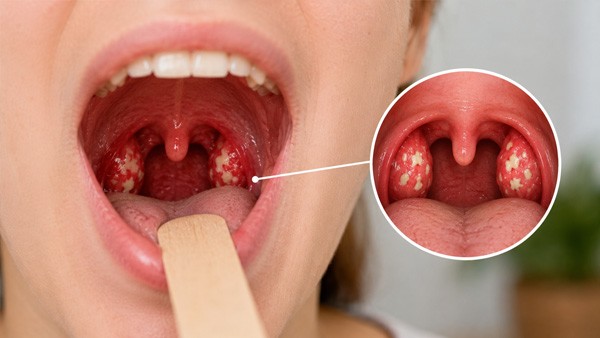

A single episode of tonsillitis is a sore throat that resolves. The questions that actually trouble people are different ones: why it comes back four times a year, why the antibiotic that worked in March did nothing in September, what the foul-smelling white lumps are, and whether the tonsils should simply come out.
This article is about the tonsils as an organ and about repeated and persistent disease. For a single acute sore throat — whether it is bacterial or viral, and whether it needs an antibiotic at all — the separate article on pharyngitis covers that decision in detail.
💡 The fact that explains recurrence. Group A streptococcus has never developed resistance to penicillin, anywhere, in eighty years of use. Yet penicillin routinely fails in people with repeated tonsillitis — not because the streptococcus resists it, but because other bacteria living in the tonsil crypts produce an enzyme that destroys penicillin locally before it can act. That is why an antibiotic protected against that enzyme succeeds where plain penicillin has failed, and it is the single most useful thing to know about recurrent tonsillitis.
🛡️ What tonsils actually do
The palatine tonsils sit at either side of the back of the throat and are part of a ring of lymphoid tissue guarding the entrance to the airway and digestive tract, alongside the adenoids above and the lingual tonsil at the base of the tongue.
Their function is immunological sampling. Air and food pass directly over them, and their surface is folded into deep clefts called crypts that dramatically increase the area exposed. Immune cells sitting in those crypts encounter incoming organisms and generate a response. In early childhood, when almost every organism encountered is new, this work is substantial, which is why tonsils are proportionally largest between roughly three and seven years old and shrink steadily after puberty.
The crypts are also the source of most tonsil problems. A deep, folded, moist surface traps debris, harbours bacteria that are difficult to reach, and permits biofilm formation. The same architecture that makes tonsils good at immune surveillance makes them good at sheltering organisms.
The often-asked question of whether removing them harms immunity has a reassuring answer: the rest of the immune system compensates fully, and no meaningful long-term immune deficiency follows tonsillectomy. Tonsils are useful, not essential, and by adulthood their contribution is small.
🔁 Why it keeps coming back
Recurrence has three main explanations, and distinguishing them changes what to do.
Beta-lactamase producing neighbours
The tonsil crypts in someone with repeated infection are not sterile between episodes. They are colonised by organisms including Staphylococcus aureus, Haemophilus influenzae, Moraxella catarrhalis and various anaerobes, many of which produce beta-lactamase — an enzyme that breaks the chemical ring penicillin depends on.
These organisms are not themselves causing the tonsillitis. They simply destroy the penicillin in the immediate vicinity, so the streptococcus that is causing it survives a drug to which it remains fully sensitive. The phenomenon has a name, indirect pathogenicity, and it accumulates with each course of antibiotics a person takes.
The practical consequence is that plain penicillin or plain amoxicillin, entirely correct for a first episode, becomes progressively less reliable with repeated episodes, while an agent protected against the enzyme continues to work.
Biofilm in the crypts
Bacteria within the crypts organise into biofilm — a structured community embedded in a protective matrix, in which organisms are dramatically less susceptible to antibiotics than the same organisms floating free. Biofilm has been demonstrated on the tonsils of people with recurrent tonsillitis considerably more often than in controls. It explains why an infection can be suppressed repeatedly yet never eliminated.
The carrier state
Between five and twenty percent of children carry group A streptococcus in the throat continuously without being ill. A carrier who then catches an ordinary viral sore throat has a positive swab, gets an antibiotic, and appears to have had bacterial tonsillitis — and the pattern repeats with every viral illness, producing an apparent history of recurrent streptococcal tonsillitis that is nothing of the sort.
Carriers are at very low risk of complications and are not meaningfully contagious. Repeatedly treating them achieves nothing and costs a great deal in antibiotics.
📊 Acute, recurrent and chronic are different problems
| Picture | Approach | |
|---|---|---|
| Acute tonsillitis | A discrete episode of sore throat, fever, swollen tonsils, tender neck glands, resolving within a week or so | Decide whether it is bacterial; treat symptoms; antibiotic if indicated |
| Recurrent tonsillitis | Repeated discrete episodes with genuine wellness between them | Count and document episodes; consider a protected antibiotic; consider surgery if thresholds are met |
| Chronic tonsillitis | Persistent low-grade throat discomfort, halitosis, tonsil stones, tender neck glands, never fully well | Poorly responsive to short antibiotic courses; surgery is more often the answer |
| Obstructive hypertrophy | Large tonsils with little or no infection — snoring, pauses in breathing, mouth breathing, disturbed sleep. Mainly children | An airway problem rather than an infection problem. The commonest reason for surgery today |
The last row matters because it inverts a common assumption. Most tonsillectomies performed now are not for infection at all but for obstructed breathing during sleep, and the two situations have almost nothing in common apart from the organ involved.
💊 Antibiotics: which, and which not
Where a bacterial cause is established, treatment aims to shorten the illness modestly, reduce transmission, and prevent the uncommon complications.
| Agent | Role | Notes |
|---|---|---|
| Penicillin V or amoxicillin | First episode, first line | Group A streptococcus has never developed resistance. Ten days, and the full ten matters |
| Amoxicillin with clavulanate | Recurrent tonsillitis, treatment failure, chronic disease | Clavulanate blocks the enzyme that destroys penicillin in the crypts. The rational choice on a repeat episode |
| Clindamycin | Recurrence, failure, abscess | Effective including against anaerobes; carries a higher risk of C. difficile colitis |
| Cephalosporins | Alternative, mild penicillin allergy | Reasonable eradication rates |
| Azithromycin, clarithromycin | Reserve, for genuine penicillin allergy | Unlike penicillin, streptococcal resistance to macrolides is real and reaches substantial levels in many regions |
The last row is worth stating plainly because macrolides are frequently used as a default. Azithromycin is a legitimate option for someone with a genuine penicillin allergy and it is not a first choice for anyone else, precisely because it is one of the few antibiotic classes to which group A streptococcus has developed meaningful resistance. Reaching for it routinely wastes a drug that is needed for the people who cannot take penicillin.
Ten days, not five. Streptococcal throat infection is one of the conditions where the longer course genuinely matters, because eradicating the organism — rather than merely relieving symptoms — is what prevents rheumatic fever. Symptoms settle in two or three days and the remaining seven are doing different work.
🔴 Do not take amoxicillin for a sore throat with glandular fever. Infectious mononucleosis, caused by Epstein-Barr virus, closely mimics bacterial tonsillitis — severe sore throat, heavily coated tonsils, high fever, dramatically swollen neck glands. Giving amoxicillin or ampicillin to someone with it produces a striking widespread rash in a large proportion of cases. The rash is not a penicillin allergy and being labelled allergic for life on the strength of it is a genuine and lasting harm. Suspect glandular fever in a teenager or young adult with marked fatigue, swollen glands beyond the neck, or an illness dragging on beyond a week, and confirm it before treating.
Two further points about glandular fever. It causes an enlarged spleen in many cases, which is vulnerable to rupture from a blow, so contact sports are avoided for at least three to four weeks. And the fatigue outlasts the sore throat by weeks or occasionally months, which is normal and not a sign that something was missed.
🚨 Quinsy — the complication to recognise
A peritonsillar abscess, traditionally called quinsy, is a collection of pus in the tissue beside a tonsil. It is the commonest serious complication of tonsillitis and it is recognisable if you know what to look for.
| Sign | What it means |
|---|---|
| Pain clearly worse on one side | Ordinary tonsillitis is symmetrical. Marked one-sidedness is the first clue |
| Difficulty opening the mouth | Spasm of the muscles beside the abscess. The most specific sign of all |
| A muffled, thickened voice | Often described as sounding as though speaking with a hot potato in the mouth |
| Drooling, or inability to swallow saliva | Swallowing has become too painful or too obstructed |
| The uvula pushed to one side | Visible displacement away from the swollen side |
| Pain referred to the ear | On the affected side, with a normal-looking ear |
Quinsy does not resolve on oral antibiotics alone. It requires the pus to be drained, and it is a same-day problem rather than a wait-and-see one. Untreated it can extend into the deep spaces of the neck, which is a far more serious situation.
One rare complication deserves naming because it affects exactly the age group who assume a sore throat is trivial. Lemierre syndrome is an infection, usually with Fusobacterium necrophorum, that spreads from the throat into the internal jugular vein, causing clots that seed infection to the lungs and elsewhere. It occurs in previously healthy teenagers and young adults, and the pattern is a sore throat that seems to be settling followed several days later by high fever, rigors, neck pain and breathlessness. It is uncommon and it is a medical emergency.
🪨 Tonsil stones
Tonsilloliths are among the most searched and least explained tonsil problems, and they are usually far more distressing than they are dangerous.
They form when the crypts trap a mixture of shed cells, food particles, mucus and bacteria, which compacts and gradually calcifies into firm white or yellowish lumps. They are not infection and they are not a sign of poor hygiene.
What makes them memorable is the smell. Anaerobic bacteria within them produce volatile sulphur compounds — the same chemistry responsible for the odour of rotten eggs — which is why a stone the size of a grain of rice can cause halitosis out of all proportion to its size, and why the person who coughs one up rarely forgets it.
Typical symptoms are persistent bad breath resistant to brushing and mouthwash, a sensation of something stuck in the throat, occasional mild ear pain, and visible white specks in the tonsils.
| Approach | Comment |
|---|---|
| Gargling with salt water | Dislodges small stones and reduces the debris that forms them. First thing to try |
| A water flosser on its lowest setting | Effective at flushing crypts. Low pressure only — the tissue damages easily |
| Gentle dislodging with a cotton bud | Works for visible stones. Poking with anything sharp risks bleeding and infection |
| Good oral hygiene and hydration | Reduces the material available to accumulate |
| Cryptolysis | Reduces crypt depth by laser or coblation. An option before considering removal |
| Tonsillectomy | Definitively cures them, and is a substantial operation for a problem that is usually not dangerous |
A stone that grows large, causes persistent one-sided discomfort, or is accompanied by an ulcer or a lump that does not settle deserves examination rather than home management, since a persistent one-sided tonsil abnormality is one of the presentations of something more serious.
✂️ When tonsils should come out
Tonsillectomy is a real operation with a genuinely unpleasant recovery, and the decision rests on whether the disease is severe enough to justify it. Modern criteria exist precisely because it was for decades performed far too readily.
The widely used thresholds for recurrent infection are:
| Frequency | Over what period |
|---|---|
| Seven or more episodes | In the past year |
| Five or more episodes per year | In each of the past two years |
| Three or more episodes per year | In each of the past three years |
Crucially, the episodes have to be real ones — documented, with fever, tonsillar exudate, swollen tender neck glands or a positive streptococcal test, rather than every occasion of a scratchy throat. This is why keeping a written record with dates matters: a person who has genuinely met the threshold and cannot demonstrate it is in a much weaker position when the question is considered.
Other accepted indications: recurrent peritonsillar abscess, obstructive sleep-disordered breathing from enlarged tonsils, persistent chronic tonsillitis unresponsive to treatment, marked asymmetry or a suspicious appearance requiring tissue diagnosis, and tonsil stones severe enough to affect daily life after other measures have failed.
⚠️ What the operation actually costs. Recovery is genuinely painful, typically seven to fourteen days, and is markedly worse in adults than in children — a fact frequently understated beforehand. Pain often peaks around days five to seven rather than immediately, and ear pain on both sides during recovery is normal referred pain rather than an ear infection. Bleeding after the operation occurs in a small percentage of cases, can happen up to two weeks afterwards, and is the reason it is done where surgical care is available. Set against that, the benefit in someone genuinely meeting the criteria is real: fewer episodes, fewer days lost, and in children with obstructed breathing, a transformation.
The honest position on benefit is that it is clear and substantial in severely affected people, and modest in those who only just meet the criteria. In adults with borderline frequency, the number of sore throats avoided over the following years is smaller than most expect, and worth weighing against two weeks of significant pain.
😴 Children, breathing and sleep
The commonest reason for tonsil surgery in children today has nothing to do with infection. Enlarged tonsils and adenoids narrow the airway, and during sleep, when muscle tone falls, that narrowing can obstruct breathing repeatedly through the night.
What parents notice: loud habitual snoring, visible pauses in breathing followed by a gasp, restlessness and unusual sleeping positions with the neck extended, mouth breathing, and sweating during sleep.
What is less often connected to it: daytime irritability, poor concentration, hyperactivity, difficulties at school, bedwetting that had stopped, and in some children slowed growth. Children with disrupted sleep frequently present as overactive rather than tired, which is the opposite of the adult pattern and the reason the cause is missed.
Over years, chronic mouth breathing also affects the development of the face and the alignment of teeth.
Removing tonsils and adenoids in a child with genuine obstructive sleep-disordered breathing produces among the most striking results in routine surgery — sleep, behaviour, concentration and often growth improve substantially. This is a situation where the operation is straightforwardly worth it, and a child who snores loudly every night with pauses deserves assessment rather than reassurance.
🧊 Relieving the symptoms
Whether or not antibiotics are involved, the throat has to be got through, and some measures work considerably better than others.
Anti-inflammatory painkillers outperform paracetamol for throat pain in direct comparison, because the pain is substantially inflammatory. Either is reasonable, and ibuprofen is generally more effective if there is no reason to avoid it.
A single dose of an oral corticosteroid is well supported for severe sore throat, reducing the time to meaningful relief. It is a prescribed intervention rather than a self-administered one, and worth knowing exists when the pain is severe enough to prevent drinking.
Salt water gargling is cheap, safe and modestly effective. Half a teaspoon in a glass of warm water, several times daily.
Lozenges containing a local anaesthetic or anti-inflammatory provide short-lived but real relief, and matter mainly by making swallowing possible.
Cold rather than hot suits most people, and ice lollies are genuinely useful in children who will not drink.
Fluids above everything. The commonest reason a child with tonsillitis needs hospital admission is not the infection but dehydration from refusing to swallow. Regular small amounts, timed to follow a dose of painkiller when the throat is at its least sore, work far better than urging large drinks.
Honey soothes and has modest evidence behind it, and is not given to infants under one year.
🔬 The complications antibiotics are actually for
Sore throats are treated with antibiotics largely to prevent two things, and their frequency has changed enormously.
Rheumatic fever is an immune reaction following streptococcal infection that can damage heart valves permanently. It is now rare in high-income countries and remains a major cause of heart disease in many parts of the world. Antibiotic treatment of streptococcal throat infection reduces the risk, and this is the principal reason for the ten-day course.
Post-streptococcal glomerulonephritis affects the kidneys and appears one to two weeks afterwards with dark urine, facial puffiness and raised blood pressure. Notably, antibiotic treatment does not reliably prevent it, so it is not an argument for treating every sore throat.
Alongside these sit the local complications — peritonsillar abscess, spread into the deep neck spaces, and the rare Lemierre syndrome described above — which are the ones most likely to be encountered in practice.
📋 A practical approach
For a first or occasional episode, establish whether it is bacterial before treating, and treat symptoms properly regardless. The pharyngitis article sets out how that decision is made.
If an antibiotic is indicated for a first episode, penicillin or amoxicillin for ten days, completed.
If this is a repeat episode or the last course failed, a protected agent is the rational choice, because the problem is almost certainly enzyme production in the crypts rather than resistance in the streptococcus.
Keep a written record with dates, temperature and what was found. It is what determines whether surgery is available later.
Look for the treatable contributors — smoking and vaping, untreated reflux, poor dental health, and chronic nasal obstruction forcing mouth breathing all sustain tonsil problems.
If episodes meet the thresholds, or breathing is obstructed at night, ask for an ENT opinion rather than accepting a fifth course of antibiotics in a year.
🩺 When to seek medical care
- Difficulty breathing, or drooling because swallowing is impossible — emergency
- Inability to open the mouth fully, with one-sided pain and a muffled voice — likely quinsy, same day
- Neck swelling, stiffness, or a swollen tender area below the jaw
- Unable to drink, or signs of dehydration in a child
- A sore throat lasting beyond a week, or getting worse after appearing to improve
- High fever with rigors several days after a sore throat seemed to settle
- A rash after taking amoxicillin for a sore throat — this needs correctly identifying rather than a lifelong allergy label
- One tonsil persistently larger than the other, or an ulcer that does not heal
- Loud snoring with pauses in breathing, in a child or an adult
- Repeated episodes approaching the surgical thresholds
Treatment is stocked in the antibiotics category, including Amoxyheal CV (amoxicillin with clavulanate) and Augmentin for recurrent disease, Amoxil (amoxicillin) for a first episode, Cleocin (clindamycin) where anaerobic cover is needed, and Zithromax (azithromycin) for those with a genuine penicillin allergy.
❓ Frequently asked questions
Why does penicillin work one time and not the next?
Not because the streptococcus became resistant — it has never developed penicillin resistance anywhere. Other bacteria colonising the tonsil crypts produce beta-lactamase, an enzyme that destroys penicillin locally before it can act, and that colonisation builds up with repeated infections and repeated antibiotic courses. An agent protected against the enzyme, such as amoxicillin combined with clavulanate, works where plain penicillin has failed.
Is azithromycin a good choice for tonsillitis?
Only for someone with a genuine penicillin allergy. Unlike penicillin, group A streptococcus has developed real resistance to macrolides, reaching substantial levels in many regions, so using azithromycin as a default risks treatment failure and wastes a drug needed by people who cannot take penicillin. For everyone else, penicillin or amoxicillin first, and a clavulanate-protected combination on recurrence.
Why ten days when I feel better in three?
Because the last seven days are doing different work. Symptom relief comes quickly; eliminating the organism entirely takes longer, and it is eradication rather than symptom relief that prevents rheumatic fever, an immune reaction that can permanently damage heart valves. Streptococcal throat infection is one of the genuine exceptions to the general move toward shorter antibiotic courses.
What are the white lumps I keep coughing up?
Tonsil stones. The crypts trap shed cells, food debris, mucus and bacteria, which compact and calcify into firm whitish lumps. They are not infection and not a hygiene failure. The smell comes from anaerobic bacteria producing volatile sulphur compounds, which is why something the size of a grain of rice causes badly disproportionate bad breath. Salt water gargling and a water flosser on its lowest setting manage most cases.
How many episodes justify removing tonsils?
The usual thresholds are seven or more episodes in one year, five or more per year across two years, or three or more per year across three years. The episodes must be documented and genuine — fever, tonsillar exudate, swollen tender neck glands or a positive streptococcal test — rather than any scratchy throat. Keeping a dated written record is what makes the case demonstrable later.
How bad is the recovery from tonsillectomy?
Genuinely painful for seven to fourteen days, and considerably worse in adults than children, which is often understated beforehand. Pain frequently peaks around days five to seven rather than immediately. Ear pain on both sides during recovery is normal referred pain, not an ear infection. Bleeding occurs in a small percentage of cases and can happen up to two weeks afterwards.
Will I get more infections without my tonsils?
No. Tonsils are part of a larger ring of lymphoid tissue and the rest of the immune system compensates fully after removal, with no meaningful long-term immune deficiency. Their immunological work is greatest in early childhood, when most encountered organisms are new, and diminishes steadily after puberty. They are useful rather than essential.
One side hurts far more and I cannot open my mouth. What is that?
Probably a peritonsillar abscess, or quinsy, and it needs same-day assessment. Ordinary tonsillitis is symmetrical, so marked one-sidedness is the first clue, and difficulty opening the mouth is the most specific sign. A muffled voice, drooling, and the uvula visibly pushed away from the swollen side complete the picture. It will not resolve on oral antibiotics alone — the pus has to be drained.
I got a rash after amoxicillin. Am I allergic to penicillin?
Very possibly not. Glandular fever mimics bacterial tonsillitis closely, and giving amoxicillin or ampicillin to someone who has it produces a widespread rash in a large proportion of cases. That rash is not an allergy. Being labelled penicillin-allergic for life on the strength of it is a real and lasting harm, since it removes the safest and most effective antibiotic from every future illness. It is worth having properly assessed.
My swab is always positive. Does that mean constant infection?
Not necessarily. Between five and twenty percent of children carry group A streptococcus in the throat continuously without being ill. A carrier who catches an ordinary viral sore throat swabs positive, receives an antibiotic, and appears to have had bacterial tonsillitis — repeating with every viral illness. Carriers are at very low risk of complications and are not meaningfully contagious, and treating them repeatedly achieves nothing.
My child snores loudly every night. Does that matter?
It can matter a great deal. Enlarged tonsils and adenoids narrow the airway, and during sleep that narrowing can obstruct breathing repeatedly. Watch for pauses followed by a gasp, mouth breathing, restlessness and an extended neck. The daytime consequences are often missed because children with disrupted sleep present as overactive and irritable rather than tired. Surgery in genuine cases produces among the most striking results in routine practice.
What actually helps the pain?
Anti-inflammatory painkillers outperform paracetamol in direct comparison, because the pain is largely inflammatory. Salt water gargling is cheap and modestly effective, lozenges with a local anaesthetic help enough to make swallowing possible, and cold suits most people better than hot. For severe cases a single dose of an oral corticosteroid is well supported. Fluids matter most — dehydration, not infection, is what usually puts a child in hospital.
📑 Sources and editorial
- IDSA guideline on the diagnosis and management of group A streptococcal pharyngitis
- AAO-HNS clinical practice guideline on tonsillectomy in children
- Paradise criteria and subsequent trials of tonsillectomy for recurrent throat infection
- Research on beta-lactamase producing copathogens and indirect pathogenicity in recurrent tonsillitis
- Studies of tonsillar biofilm in recurrent and chronic tonsillitis
- Cochrane reviews of corticosteroids and of antibiotics for sore throat
- Surveillance data on macrolide resistance in group A streptococcus
- Literature on peritonsillar abscess and on Lemierre syndrome
- Evidence on adenotonsillectomy for paediatric obstructive sleep-disordered breathing
- Related reading: pharyngitis and the sore throat decision, what azithromycin is actually for
- Related products: antibiotics category
- RXshop Editorial Team — reviewed by Emily Chen, MD, MPH, Internal Medicine
Medical Disclaimer: The information in this article is for educational and informational purposes only and is not a substitute for professional medical advice, diagnosis, or treatment. Always seek guidance from a qualified healthcare provider with any questions you may have regarding a medical condition, and before starting, stopping or changing any medication.