Buy Armod (Armodafinil 150mg) Online - Original Nuvigil Brand Emcure Generic R-Enantiomer Wakefulness Promoter

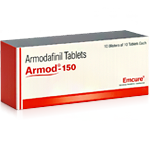

Armod (Armodafinil 150 mg) represents the R-enantiomer wakefulness-promoting therapy - the more potent and longer-acting successor to modafinil for excessive daytime sleepiness management. Originally developed as Nuvigil by Cephalon (later acquired by Teva Pharmaceuticals in 2011) and FDA-approved in 2007 as the first single R-enantiomer wakefulness promoter, armodafinil provides more selective pharmacology than racemic modafinil with longer clinical duration. Armod on rxshop.md is manufactured by Emcure Pharmaceuticals Ltd - Pune-based Indian pharmaceutical company founded 1981 with WHO-GMP certification, US FDA-inspected manufacturing facilities, and global operations in over 70 countries.
NOTE: Armod is currently out of stock. As alternative wakefulness therapy, consider our Modvigil (Modafinil) or Modalert (Modafinil) as racemic modafinil alternatives with equivalent FDA indications and similar mechanism of action.
Armodafinil works as a selective wakefulness-promoting agent through multiple central nervous system pathways. First, armodafinil inhibits dopamine reuptake at the dopamine transporter (DAT) with higher selectivity than amphetamines. Second, armodafinil activates hypothalamic orexin/hypocretin neurons promoting arousal and wakefulness. Third, armodafinil modulates histamine H1 signaling through tuberomammillary nucleus activation. Fourth, armodafinil enhances norepinephrine transmission in wake-promoting brain regions. Fifth, armodafinil reduces GABA-mediated inhibition in cortical wakefulness pathways. Combined effects produce sustained wakefulness without the euphoria or abuse potential of classical stimulants.
Armod primary FDA indications include narcolepsy for reduction of excessive daytime sleepiness, obstructive sleep apnea (OSA) adjunctive therapy to CPAP for residual sleepiness, and shift work sleep disorder (SWSD) for improved wakefulness during scheduled awake periods. Common off-label uses include ADHD in adults, depression augmentation particularly for fatigue and apathy symptoms, chronic fatigue syndrome, jet lag management, and cognitive enhancement in select populations.
Armod at 150 mg strength provides efficacy equivalent to modafinil 200 mg with longer duration of action (armodafinil half-life approximately 15 hours vs modafinil 12 hours) enabling more consistent all-day wakefulness with single morning dosing. Schedule IV controlled substance requiring prescription. Standard dosing: 150 mg once daily in the morning for narcolepsy and OSA; 150 mg one hour before shift start for SWSD.
Free prescription
Discrete packaging
Have questions?
Quality Assurance

- Excessive Daytime Sleepiness: Persistent difficulty staying awake during appropriate wake hours affecting work performance and safety;
- Obstructive Sleep Apnea: Sleep disorder with breathing pauses causing fragmented sleep and residual daytime sleepiness;
- Shift Work Sleep Disorder: Circadian rhythm disorder in night-shift workers causing sleepiness during scheduled awake periods;
- Cataplexy Support: Sudden muscle weakness triggered by strong emotions commonly occurring with narcolepsy diagnosis;
- ADHD in Adults: Off-label use for attention deficit hyperactivity disorder providing focus without amphetamine effects;
- Depression Augmentation: Off-label augmentation therapy for depression with prominent fatigue and apathy symptoms;
- Chronic Fatigue Syndrome: Off-label use for debilitating chronic fatigue with post-exertional malaise disorders;
- Jet Lag Management: Off-label use for circadian disruption from rapid transmeridian travel affecting alertness;
- Cognitive Enhancement: Off-label use for cognitive performance in sleep-deprived states requiring sustained attention;
- Sleep Deprivation Effects: Countering acute sleep deprivation effects in essential occupations requiring sustained alertness;
- Multiple Sclerosis Fatigue: Off-label use for debilitating fatigue in multiple sclerosis affecting quality of life;
- Post Anesthesia Sedation: Off-label use for reversal of persistent post-anesthesia sedation in selected patients;
- Parkinson Disease Fatigue: Off-label use for daytime sleepiness in Parkinson disease affecting daily functioning;
- Idiopathic Hypersomnia: Chronic disorder of excessive daytime sleepiness without clear underlying cause;
- Sleep Attacks Prevention: Prevention of sudden overwhelming sleep episodes disrupting activities and posing safety risks;
- Wakefulness Promotion: Selective wakefulness enhancement without stimulant euphoria or classical amphetamine effects;
- CPAP Adjunctive Therapy: Combined with CPAP for obstructive sleep apnea patients with residual daytime sleepiness;
- Night Shift Alertness: Improved alertness during scheduled night-shift work hours requiring sustained attention;
- Long Duration Wakefulness: Extended wakefulness benefit from longer half-life R-enantiomer compared to racemic modafinil.
- Less Daytime Sleepiness: Substantial reduction in excessive daytime sleepiness across narcolepsy and OSA populations;
- Better Focus: Improved sustained attention and concentration during work and study activities;
- Better Cognitive Performance: Improved cognitive function in sleep-deprived states enabling productive work performance;
- Fewer Sleep Attacks: Reduced frequency of sudden overwhelming sleep episodes in narcolepsy patients over months;
- Longer Duration Effect: Extended duration of action from 15-hour half-life vs modafinil 12-hour half-life;
- Once Daily Convenience: Simple once-daily morning dosing provides all-day wakefulness benefit;
- Better Work Performance: Improved workplace productivity and safety through sustained alertness during work hours;
- Better Driving Safety: Reduced drowsy driving risk in patients with narcolepsy or OSA affecting road safety;
- Better Quality of Life: Substantial quality of life improvements from reduced excessive sleepiness symptoms;
- Better Mood Stability: Improved mood as chronic exhaustion resolves supporting daily functioning improvements;
- Better Social Functioning: Improved social engagement as daytime alertness enables interactions and relationships;
- Less Fatigue: Reduced chronic fatigue in narcolepsy CFS and MS populations affecting daily life;
- Better Motivation: Improved motivation and engagement in activities previously abandoned due to sleepiness;
- Improved Reaction Time: Faster reaction times in sleep-deprived states supporting safety and performance;
- Better Memory Function: Improved working memory and consolidation during sustained wakefulness states;
- Lower Abuse Potential: Substantially lower euphoria and abuse potential than classical amphetamine stimulants;
- Better Shift Work Adaptation: Improved adaptation to night shift schedules for shift work sleep disorder patients;
- Less Depression Fatigue: Off-label reduction in depression-related fatigue and apathy as augmentation therapy;
- Better Overall Alertness: Substantially improved daytime alertness enabling engagement in activities previously affected.
Generic Armod (Armodafinil 150 mg) Medication guide:
💡 Introduction to Modaheal and the Eugeroic Class
Modaheal is a brand of modafinil, a prescription wakefulness-promoting medication approved by the FDA in 1998 for the treatment of excessive daytime sleepiness. Modaheal tablets, manufactured by Healing Pharma in India, contain the same 200 mg of modafinil as the original Provigil brand and are used worldwide for narcolepsy, shift work sleep disorder, and residual sleepiness in obstructive sleep apnea despite CPAP therapy. The tablet is scored, oval, and taken once in the morning, with effects that last through a full waking day.
Modafinil belongs to a drug class called eugeroics - from the Greek words for good wakefulness. The class name reflects a central clinical observation: modafinil produces alertness without the full stimulant signature of amphetamines or methylphenidate. There is no acute euphoria, no racing heart in most users, no dramatic increase in blood pressure at therapeutic doses. People taking modafinil typically describe feeling the way they feel on a good night sleep, not the way they feel after a double espresso.
🎯 What Modaheal is prescribed for
Narcolepsy - A chronic neurologic disorder of sleep-wake regulation caused by loss of hypocretin-producing neurons; the single most studied indication.
Shift Work Sleep Disorder - Difficulty staying awake during night shifts or rotating schedules; dosed one hour before the shift begins.
Obstructive Sleep Apnea (residual sleepiness) - For patients using CPAP therapy who still experience daytime sleepiness; not a replacement for CPAP.
The clinical reason modafinil earned a place of its own in sleep medicine comes down to mechanism. Classical stimulants (amphetamine, methylphenidate) raise dopamine and norepinephrine broadly across the brain, including reward centres and cardiovascular centres. Modafinil engages the wakefulness circuits more selectively - the dopamine transporter at modest affinity, the hypocretin or orexin system that drives natural alertness, and histamine release from the tuberomammillary nucleus. The result is targeted wakefulness with a cleaner side-effect profile for sleep-medicine indications.
Modafinil is a Schedule IV controlled substance in the United States under the DEA controlled-substance system. The scheduling reflects the drug dopamine activity shown by the 2009 Volkow JAMA imaging study and the recognised but low potential for dependence. Prescriptions are regulated similarly to benzodiazepines and sleep medications, not similarly to amphetamines (which sit higher on the schedule).
💡 The key idea in one sentence: Modafinil is a prescription wakefulness-promoter that engages the brain natural alertness circuits more selectively than classical stimulants, approved for narcolepsy and two other sleep-wake disorders where excessive daytime sleepiness is the central problem.
⚖️ Not a Classical Stimulant - Modafinil vs Amphetamine
The question people reach for first is: is modafinil just a legal amphetamine? The pharmacology says no. Modafinil and amphetamine both increase wakefulness, but they do it through different molecular routes, with different clinical signatures, different cardiovascular effects, and different scheduling.
| ⚖️ Feature | Modafinil (Modaheal) | Amphetamine (Adderall) | Methylphenidate (Ritalin) |
|---|---|---|---|
| Drug class | Eugeroic (wakefulness-promoter) | Phenethylamine stimulant | Piperidine stimulant |
| Main mechanism | Weak dopamine reuptake inhibition + orexin + histamine activation | Strong dopamine and norepinephrine release | Dopamine and norepinephrine reuptake inhibition |
| DEA Schedule | IV (lowest regulated stimulant) | II (high restriction) | II (high restriction) |
| Peak euphoria potential | Low (feels like a rested day) | Moderate to high | Moderate |
| Half-life | 12-15 hours | 9-14 hours (depending on form) | 2-4 hours (immediate) up to 12 hours (ER) |
| Heart rate effect | Minimal at therapeutic doses | Clear increase of 5-10 bpm | Clear increase of 5-10 bpm |
| Appetite suppression | Mild | Marked | Marked |
| Primary FDA indication | Narcolepsy / OSA / shift work | ADHD, narcolepsy | ADHD, narcolepsy |
Clinically, the subjective experience matters as much as the receptor binding chart. People on amphetamine typically describe peaks of focus with a comedown; people on modafinil describe a flat, consistent level of alertness that fades smoothly. The dopamine-related reward activation is lower, which is why modafinil carries less abuse liability in clinical use and lower withdrawal effects when stopped.
🔵 What eugeroic actually means in daily life
A patient with narcolepsy who starts modafinil usually reports being able to function through a workday without unplanned sleep attacks rather than feeling wired or racing. The medication raises the baseline of alertness; it does not push alertness past a normal ceiling. This is why modafinil is a poor choice for anyone looking for a performance surge, and a good choice for anyone whose problem is simply staying awake.
Even so, modafinil is not harmless. It has dopamine activity (hence the Schedule IV), it has a long enough half-life to disrupt night sleep if taken late, and it has a serious skin reaction warning that no classical stimulant shares. The next sections unpack these details.
🔬 The Modafinil Mechanism - Dopamine Orexin Histamine
Modafinil mechanism is one of the more interesting stories in modern sleep pharmacology, and it is still partly incomplete. The drug does not have a single target the way most medications do. Instead it engages three or four parallel pathways that all push the brain toward wakefulness. The result is an alertness effect that is strong clinically but less sharply focused than a classical stimulant.
🔬 Four targets modafinil engages
- Dopamine transporter (DAT) inhibition - Modafinil binds the dopamine reuptake pump at modest affinity, raising dopamine in brain regions including the nucleus accumbens; this is the Schedule IV-relevant action demonstrated by Volkow 2009.
- Hypocretin (orexin) activation - Modafinil increases firing of neurons in the lateral hypothalamus that produce orexin, the master wakefulness peptide; patients with narcolepsy have lost most of these neurons, so modafinil amplifies what remains.
- Histamine release from the tuberomammillary nucleus - Histaminergic neurons promote wakefulness; modafinil increases their activity indirectly through hypothalamic signals.
- Reduced GABA release - Modafinil modestly reduces GABA (the brain main sleep-promoting neurotransmitter) in several arousal centres, pushing the balance toward wakefulness.
- Noradrenergic effects - Modafinil also engages the alpha-1 adrenergic system weakly, which contributes to its alertness profile but not to a strong sympathetic push.
The DAT binding deserves a closer look because it is the piece that connects modafinil to the controlled-substance list. The 2009 JAMA PET study (Volkow and colleagues) showed that modafinil at therapeutic doses occupies roughly 50 percent of dopamine transporters in the striatum, raising extracellular dopamine measurably. This is similar in magnitude to a therapeutic methylphenidate dose. However, modafinil binds the transporter in a different conformation and releases dopamine more slowly, which likely explains the lower abuse potential compared to amphetamine.
The hypocretin story is where sleep medicine finds its target. Hypocretin (also called orexin) is a peptide produced by about 70,000 neurons in the lateral hypothalamus. These cells send fibres throughout the brain and keep it awake. Patients with narcolepsy with cataplexy have lost 90 percent or more of these neurons in an autoimmune process. The surviving neurons still work, and modafinil increases their output - this is one reason the drug works so well in narcolepsy even when hypocretin tissue is depleted.
🧠 Where modafinil differs from caffeine
Caffeine blocks adenosine receptors, delaying the sleep-pressure signal that builds up through the day. Modafinil engages wakefulness circuits directly without touching adenosine. The practical consequence: caffeine effect fades after one half-life (5 hours) and leaves you more tired than before (adenosine rebound). Modafinil effect lasts 12 to 15 hours and fades cleanly, without a sleep debt crash.
The incomplete understanding of the full mechanism matters for one thing specifically: modafinil remains a poor model drug for amphetamine addiction research or for cognitive-enhancement claims. The receptor profile is distinctive enough that findings do not transfer cleanly either way. Each clinical use has to be studied in its own population.
💡 In plain language: Modafinil works through four different wakefulness circuits at once, which is why it produces strong clinical alertness without the sharp dopamine spike of amphetamine or the adenosine crash of caffeine.
⏱️ Modaheal Pharmacokinetics and the Long Half-Life
Modafinil pharmacokinetics is defined by one critical number: a plasma half-life of 12 to 15 hours. This half-life is the reason modafinil is dosed once daily in the morning rather than twice or three times. It is also the reason an evening dose will often cause insomnia at bedtime, because meaningful drug levels are still present 12 to 15 hours after swallowing the tablet.
| ⏱️ Pharmacokinetic parameter | Value for modafinil | Clinical meaning |
|---|---|---|
| Oral bioavailability | Approximately 80 percent (not studied in a strict absolute sense) | High and predictable absorption |
| Peak plasma concentration | 2 to 4 hours after a dose | Alertness clearly on by the second hour |
| Food effect | Delays peak by 1 hour but does not reduce total absorption | Can be taken with or without food |
| Protein binding | Approximately 60 percent (bound to albumin) | Fewer displacement interactions than mefenamic acid or warfarin |
| Elimination half-life | 12 to 15 hours (racemic average) | Once-daily dosing; evening dosing causes insomnia |
| Primary metabolism | Liver, via CYP3A4 (induction) and CYP2C19 (inhibition) | Major interactions with hormonal contraceptives and triazolam |
| Elimination route | Urine (less than 10 percent unchanged, rest as metabolites) | Significant hepatic burden; adjust in liver disease |
| Steady state | Reached after 2-4 days of once-daily dosing | Full effect visible after a working week |
Three practical consequences follow from these numbers.
First, the long half-life means evening dosing is a problem. A 200 mg tablet taken at 6 p.m. still has meaningful activity at 6 a.m. the next morning. Patients who miss their morning dose and remember at noon can usually still take it; patients who remember at 5 p.m. should skip and resume the next morning. This decision rule is one of the most important daily points of using modafinil correctly.
Second, the CYP3A4 induction matters for anyone on hormonal contraception. Modafinil activates CYP3A4, which breaks down ethinyl estradiol more quickly. The effectiveness of combined oral contraceptive pills drops, and in the first month of modafinil therapy women can experience breakthrough bleeding or unplanned pregnancy. The pill section covers backup contraception in detail.
Third, the CYP2C19 inhibition raises levels of certain other drugs cleared through this enzyme - most notably phenytoin, diazepam, and warfarin. These interactions are modest but worth flagging in anyone on these medications.
🟡 Who may clear modafinil slowly
Severe hepatic impairment can roughly double the half-life, so the dose is reduced to half (100 mg daily) in these patients. Older adults may clear the drug slightly more slowly; starting at 100 mg and titrating is sensible after age 65. Patients with normal renal function do not need dose adjustment because the kidneys handle less than 10 percent of modafinil clearance.
Steady state means something specific for modafinil. By day 3 or 4 of consistent morning dosing, the body has reached a stable blood level. The full effect of a given dose is not visible on day 1 - most patients notice modest alertness on the first day and clear alertness by the end of the first working week. This is why dose adjustment decisions are made after 7 to 14 days of consistent use, not after a single tablet.
💡 The one timing rule to remember: Modafinil in the morning. Full stop. If you missed the morning, skip the day rather than disturb that night sleep.
💊 Modaheal Tablet Strength and Standard Adult Dose
Modaheal is a generic modafinil manufactured by Healing Pharma in Mumbai, India, and sold internationally through pharmacy networks. The active ingredient is identical to the original brand Provigil (Cephalon, now Teva); the inactive ingredients differ slightly between manufacturers but do not change clinical effect. The tablet strength available for Modaheal is 200 mg.
📦 Modafinil tablets available worldwide
- Provigil 100 mg and 200 mg (United States, originator) - the original Cephalon brand, now marketed by Teva; both strengths were used for narcolepsy at 200-400 mg daily total.
- Modiodal (France and parts of Europe) - European trade name; 100 mg and 200 mg strengths; indication restricted to narcolepsy in the EU since 2010.
- Alertec (Canada) - Canadian trade name; 100 mg tablets.
- Modaheal 200 mg (Healing Pharma, India) - the Indian generic in international distribution; scored tablet which can be split for 100 mg initial dosing.
- Modalert 200 mg (Sun Pharma, India) - another major Indian generic; similar bioequivalence profile.
- Modvigil 200 mg (HAB Pharma, India) - a budget Indian generic.
- Nuvigil / Waklert / Artvigil (armodafinil 150 mg) - the longer-acting R-enantiomer, discussed in its own section.
The standard adult dose for most indications is 200 mg once daily. Some patients with narcolepsy respond to 100 mg; a smaller group with severe daytime sleepiness benefit from 400 mg daily, which is the FDA-approved upper limit. For Modaheal 200 mg tablets, these doses translate to:
| 💊 Target dose | How to achieve with Modaheal 200 mg | Typical patient |
|---|---|---|
| 100 mg daily | Half tablet (score line) each morning | Starter dose, older adults, mild residual sleepiness |
| 200 mg daily | One tablet each morning | Standard adult dose for narcolepsy, OSA, shift work |
| 300 mg daily | One and a half tablets each morning | Partial response at 200 mg; stepped up with prescriber approval |
| 400 mg daily (FDA maximum) | Two tablets each morning (or morning and midday) | Severe narcolepsy with incomplete 200 mg response |
Splitting a Modaheal tablet is acceptable because the tablet is scored. Each half contains approximately 100 mg of active modafinil, with a tolerance of around 5 percent variation between halves (standard pharmaceutical tolerance). For patients starting therapy, splitting lets a prescriber try 100 mg first and step up to 200 mg based on response.
🔵 Comparing Modaheal to brand Provigil
Bioequivalence - Indian modafinil generics including Modaheal have been studied against Provigil and show bioequivalent plasma profiles within standard FDA tolerance. Clinical effect - Patients switching between brand and Indian generics generally report no change in effect. Cost - Modaheal is dramatically less expensive than Provigil, which is one of the main reasons it has broad international demand. Appearance - Modaheal tablets are white, oval, and scored, different from Provigil appearance.
Storage is simple: dry location, room temperature (15 to 30 C or 59 to 86 F), away from humidity. Modafinil tablets are chemically stable for 24 to 36 months from manufacture when stored properly. Blister packaging protects individual tablets from moisture better than bottles opened repeatedly.
💡 The tablet in one line: Modaheal 200 mg scored tablet, one tablet with breakfast, is the default adult dose for narcolepsy, OSA, and shift work; split in half for a starter dose or for an older adult.
🧬 Modafinil vs Armodafinil - The Enantiomer Choice
Modafinil as sold is a racemic mixture of two mirror-image molecules called the R-enantiomer and the S-enantiomer. The two halves have slightly different pharmacokinetics but similar biological effect. In 2007 the FDA approved the R-enantiomer alone as a separate drug: armodafinil, sold under the brand Nuvigil and generically as Waklert or Artvigil. Patients and prescribers sometimes see the two drugs side by side and ask which one to pick.
🧬 The enantiomer story in six lines
- Modafinil is 50 percent R-enantiomer and 50 percent S-enantiomer as sold under the Provigil / Modaheal brand.
- The R-enantiomer (armodafinil) has a half-life of about 15 hours; the S-enantiomer has a shorter half-life around 5 hours.
- In practice, modafinil has a mixed pharmacokinetic profile that peaks early (both enantiomers active) and tails off over 12-15 hours as the S half fades first.
- Armodafinil has a flatter, longer plasma curve because only the long-acting half is present.
- 150 mg armodafinil is roughly equivalent clinically to 200 mg modafinil for a full day of alertness.
- Clinical signatures differ subtly: modafinil has a stronger early peak, armodafinil has a flatter and later-peaking curve.
What does this mean in practice? For most patients the two drugs are interchangeable. For specific groups, one works better than the other:
🔵 When patients prefer modafinil (Modaheal)
Standard 9-to-5 schedule - The early peak of modafinil matches typical morning work demand.
Sensitive to overnight stimulation - The faster decline of modafinil tails means less interference with sleep onset at 10 or 11 p.m.
Narcolepsy with cataplexy - Historically more clinical trial data on modafinil for this indication.
Cost sensitivity - Modaheal and other generic modafinil are often more affordable than armodafinil.
🟢 When patients prefer armodafinil (Nuvigil, Waklert)
Longer work days above 10 hours - The flatter curve supports late afternoon alertness.
Shift work or rotating schedules - The late peak at 6-8 hours fits the pattern of a shift starting at 11 p.m. or midnight.
Narcolepsy with afternoon crashes - Patients who find modafinil wears off by 2 p.m. often do better on armodafinil.
Narcolepsy with strong morning grogginess - The slower peak aligns with the mid-morning window when alertness is often needed.
Switching between the two is straightforward because they share mechanism and metabolism. The usual approach is to try one for two weeks at the standard dose (200 mg modafinil, or 150 mg armodafinil), note the alertness curve through the day, and switch only if there is a clear mismatch between drug action and daily need.
🟡 What is not different
The side-effect profile is nearly identical between modafinil and armodafinil. The skin reaction warning (Stevens-Johnson syndrome) applies to both. Hormonal contraceptive interaction through CYP3A4 induction applies to both. Schedule IV classification applies to both. Switching from one to the other does not reduce any of these risks.
💡 The honest comparison: Think of modafinil and armodafinil as two settings of the same device. Modafinil is the full-wave setting with an early peak; armodafinil is the extended-afternoon setting with a late peak. Clinical effect over the full day is similar in most patients; the day shape is where they differ.
📋 FDA-Approved Modafinil Uses and Off-Label Fringe
Modafinil has three FDA-approved indications in the United States. In Europe the EMA restricted the drug to a single indication in 2010, which illustrates that the clinical case for the drug varies by regulator and by the specific population studied. For patients and prescribers, the FDA label remains the most expansive and the most commonly used worldwide.
🟢 FDA-approved indications
Narcolepsy - To improve wakefulness in adult patients with excessive sleepiness associated with narcolepsy; the primary indication with the most trial data.
Obstructive Sleep Apnea (OSA) - For residual excessive sleepiness in patients already using CPAP therapy; not a replacement for CPAP, used alongside it.
Shift Work Sleep Disorder (SWSD) - To improve wakefulness in patients with excessive sleepiness associated with shift work schedules.
Each indication has its own dosing pattern and its own clinical considerations.
| 📋 Indication | Typical dose | Timing | Duration of treatment |
|---|---|---|---|
| Narcolepsy | 200 mg daily, up to 400 mg | Morning with breakfast | Lifelong (narcolepsy is chronic) |
| OSA residual sleepiness | 200 mg daily | Morning (alongside CPAP) | Long-term if CPAP cannot be optimised |
| Shift Work Sleep Disorder | 200 mg before shift | One hour before shift start | As long as shift pattern continues |
Off-label uses deserve a mention because they drive a substantial share of real prescriptions outside the FDA label.
🔵 Off-label uses with varying evidence
Idiopathic hypersomnia - Rare sleep-wake disorder; off-label but commonly prescribed; strong clinical rationale.
Multiple sclerosis fatigue - Mixed evidence; some patients respond, some do not.
ADHD in adults - Not FDA-approved; EMA has consistently rejected this indication; evidence is weak and side-effect balance uncertain.
Depression augmentation - Small evidence base; some clinicians use modafinil for residual fatigue in antidepressant-treated patients.
Chronic fatigue syndrome - Weak evidence; not recommended.
Cognitive enhancement in healthy adults - Covered in a dedicated section; evidence is modest and the ethical questions are significant.
The EMA restriction to narcolepsy only reflects a different regulatory judgment about the risk-benefit balance for shift work and OSA. European prescribers can only use modafinil for shift work or OSA off-label; FDA labelling in the US allows all three.
Modafinil is not approved for use in children or adolescents. The 2006 STEPS trial raised specific concerns about serious skin reactions in pediatric users, and FDA has not revisited pediatric approval since.
💡 Fit-for-purpose test: Modafinil fits best when the patient problem is excessive daytime sleepiness tied to a defined sleep-wake disorder. It fits poorly as a general-purpose stimulant, a cognitive enhancer, or a treatment for ordinary tiredness from insufficient sleep.
🔐 Modafinil as Schedule IV - What the Classification Means
The DEA placed modafinil on Schedule IV in 1998 when it was first approved, and the classification has not changed. This is the lowest tier of controlled substances in the US system and sits alongside benzodiazepines (alprazolam, lorazepam, diazepam), the sleep aids zolpidem and eszopiclone, and the appetite suppressant phentermine. The question some patients ask - why is modafinil scheduled if it is not a classical stimulant - has a specific answer rooted in the drug pharmacology.
🔐 Three reasons modafinil is a controlled substance
- Dopamine transporter activity - The Volkow 2009 JAMA study demonstrated that modafinil raises dopamine in reward centres of the brain. Any drug that does this falls under some level of regulatory oversight because dopamine elevation underlies the biology of dependence.
- Documented self-administration - Preclinical primate studies show primates will self-administer modafinil, a classical signal of abuse potential. The frequency and intensity are lower than for amphetamine, which is why modafinil landed on Schedule IV rather than Schedule II.
- Case reports of misuse - Dependence and misuse case reports have appeared in the medical literature, particularly for high doses taken for cognitive enhancement rather than for approved sleep disorders. The absolute numbers are low but nonzero.
- Precedent - Scheduling of structurally related wakefulness-promoters was already in place when modafinil was reviewed; consistency with the broader class guided the DEA decision.
What does Schedule IV mean in practice?
| 📜 Schedule IV rule | What it means in daily use |
|---|---|
| Prescription required | No over-the-counter sales anywhere; a licensed prescriber must authorise |
| Refill limits | Up to 5 refills within 6 months of the original prescription in the US |
| Prescription duration | Valid for 6 months from issue; new prescription needed after that |
| Importation and travel | Must carry documentation; some countries require declaration at customs |
| Military and aviation | Specific policies apply; may require waiver or disclosure |
| Workplace drug testing | Modafinil is not routinely tested; some sport authorities do test (WADA has it on the prohibited list in sport) |
The WADA note is worth highlighting: modafinil is on the World Anti-Doping Agency prohibited list for competitive sport. Athletes with narcolepsy or other medical indications need a therapeutic use exemption (TUE) to compete while on modafinil. Recreational or amateur athletes without a competition context are unaffected.
🟡 Dependence risk in clinical practice
Among patients taking modafinil as prescribed for narcolepsy, OSA, or shift work, dependence is uncommon. Patients do not typically escalate the dose over time, and stopping the medication produces mild and transient effects (daytime sleepiness returns, which is the underlying disease rather than a withdrawal state). Cases of dependence have mostly come from off-label use at supratherapeutic doses, especially in the cognitive-enhancement space. Prescribed as directed, the risk is low enough that clinicians can continue therapy for years.
Buying modafinil without a prescription is a legal matter rather than a safety matter in most countries. Modaheal and other Indian generics are sold through international pharmacy networks that may or may not require a prescription at the point of sale, depending on jurisdiction. In the US, UK, and EU, importing modafinil without a prescription is a violation of controlled substance laws and the shipments can be stopped at customs.
💡 The scheduling in one line: Modafinil is Schedule IV because the pharmacology shows modest dopamine activity and abuse potential, but at prescribed doses for approved indications the clinical dependence risk is low.
😴 Narcolepsy - The Primary Modafinil Indication
Narcolepsy is a chronic neurologic disorder of sleep-wake regulation caused by the loss of hypocretin-producing neurons in the lateral hypothalamus. These 70,000 or so neurons normally secrete hypocretin (also called orexin), the master wakefulness peptide that keeps the brain alert during the day. When they are destroyed, the brain cannot maintain stable wakefulness and the symptoms of narcolepsy appear.
The disease affects roughly 1 in 2,000 people. Onset is usually in the teens or twenties. There are two main types: narcolepsy type 1 (narcolepsy with cataplexy, caused by hypocretin loss) and narcolepsy type 2 (narcolepsy without cataplexy, biology less clear). Modafinil is the first-line pharmacologic treatment for both types for the excessive daytime sleepiness component.
🔵 The five classical features of narcolepsy
Excessive daytime sleepiness - Unavoidable sleep attacks during the day, present in every patient; the main target of modafinil therapy.
Cataplexy - Sudden brief muscle weakness triggered by strong emotion (laughter, surprise, anger); present only in type 1 narcolepsy.
Sleep paralysis - Inability to move for seconds to minutes when falling asleep or waking up; present in roughly half of patients.
Hypnagogic hallucinations - Vivid dream-like experiences at sleep onset; present in roughly half of patients.
Fragmented night sleep - Frequent awakenings through the night; present in most patients and often overlooked.
Modafinil treats the daytime sleepiness directly but does not touch the other four features. Cataplexy specifically needs a separate drug (sodium oxybate, venlafaxine, or pitolisant). Sleep paralysis and hallucinations are usually not treated unless disabling. Fragmented sleep is sometimes helped by sleep hygiene measures or by sodium oxybate.
📊 Modafinil efficacy in narcolepsy
- US Modafinil in Narcolepsy Study (Neurology 2000) showed 200 mg and 400 mg daily significantly reduced sleep attacks compared to placebo over 9 weeks.
- Maintenance of Wakefulness Test (MWT) scores improved by roughly 2 minutes on the 20-minute version, a clinically meaningful change.
- Epworth Sleepiness Scale dropped by an average of 4 to 5 points, moving most patients from clearly abnormal into near-normal range.
- Long-term follow-up (US and European cohorts) showed sustained benefit over 2 to 5 years without clinical tolerance.
- Patient-reported outcomes: driving confidence, workplace performance, and quality-of-life measures all improved consistently.
The starting dose for narcolepsy is 200 mg each morning. Patients who respond partially can be stepped up to 300 or 400 mg daily. The 400 mg dose is sometimes split as 200 mg in the morning and 200 mg at midday (never later, because of the half-life and sleep interference). For patients who are highly sensitive, 100 mg is a reasonable starting dose with step-up after 2 weeks.
Narcolepsy is a lifelong condition. Modafinil is taken daily, including weekends in most cases (some patients take a drug holiday on weekends when sleep demand is lower, but this is a personal decision). There is no cure for narcolepsy; the treatment manages the symptoms.
🟡 Behaviour measures alongside modafinil
Modafinil is more effective when combined with consistent sleep schedules (same bedtime and wake time), planned 15 to 20 minute daytime naps, avoidance of heavy carbohydrate lunches, and daily moderate exercise. Narcolepsy patients who take modafinil but ignore sleep hygiene often say the drug does not work; the drug works, but the fatigue load from poor habits exceeds what pharmacology can overcome.
💡 Clinical pearl: For a patient newly diagnosed with narcolepsy, start modafinil 200 mg each morning, keep a sleep diary for 2 weeks, measure Epworth before and after, and adjust based on the actual pattern of residual sleepiness through the day. Dose escalation to 400 mg is reasonable only after a true 2 to 4 week trial at 200 mg.
🌙 Shift Work Sleep Disorder and Modafinil Timing
Shift Work Sleep Disorder (SWSD) is defined by the AASM as excessive sleepiness during work hours, insomnia at planned sleep hours, or both, directly tied to a work schedule that overlaps the natural circadian low. The condition affects nurses on 12-hour nights, air traffic controllers on rotating shifts, long-haul drivers, factory workers on three-shift rotation, and anyone whose employer requires work when the body naturally wants to sleep.
The problem is biological rather than psychological. Melatonin rises in the evening, cortisol falls, body temperature drops, and the brain begins producing the sleep-pressure signals that make midnight to 4 a.m. the hardest hours to stay alert. Shift workers who try to work through this low fight against hormones and brain chemistry that evolved for daytime activity.
🌙 Modafinil for shift work - the Czeisler NEJM evidence
The Czeisler 2005 New England Journal of Medicine randomised 209 shift workers to modafinil 200 mg one hour before shift versus placebo. The modafinil group showed significant improvement in alertness during night shift as measured by the Maintenance of Wakefulness Test, reduction in near-crashes on simulated driving, and improvement in subjective sleep quality. The effect was clinically meaningful although not dramatic.
The dosing for shift work differs from narcolepsy in one key way: modafinil is taken one hour before the shift starts, not in the morning. For a 11 p.m. to 7 a.m. shift, the dose is at 10 p.m. For a graveyard shift starting at midnight, the dose is at 11 p.m. For an evening shift that ends at 11 p.m., the dose is at 2 or 3 p.m.
| 🌙 Shift pattern | Dose timing | After the shift |
|---|---|---|
| Night shift 11 p.m.-7 a.m. | 200 mg at 10 p.m. | Dim light on commute; blackout curtains at home; sleep by 9 a.m. |
| Rotating shifts | 1 hour before each shift when working night block only | Not used on days off or during day-shift blocks |
| Evening shift 3 p.m.-11 p.m. | 200 mg at 2 p.m. | Modafinil at 2 p.m. may delay sleep onset by 1-2 hours; usually acceptable |
| 12-hour night shift | 200 mg at start; sometimes 100 mg additional midway | Interact with occupational medicine for workplace policy |
🟡 What modafinil does not fix in shift work
Modafinil improves alertness during the shift but does not change the circadian misalignment causing the problem. Long-term night shift workers have higher rates of cardiovascular disease, diabetes, gastrointestinal problems, and cancer regardless of modafinil use. The drug is a work-performance tool, not a health intervention. If a worker can shift to day work after 2 to 5 years of night shift, the health benefit far outweighs any medication effect.
Shift workers also need to use the drug differently from narcolepsy patients in one more way: only on working days. A nurse who works three nights a week takes modafinil on those three nights only. The off days use normal sleep schedules without medication. This selective pattern matches the drug long half-life and the natural rhythm of the body.
The European Medicines Agency removed shift work as a modafinil indication in 2010, citing concerns that long-term shift work alertness medication could enable unhealthy work patterns. The FDA kept the indication. The practical consequence: European prescribers use modafinil off-label for shift work; American prescribers use it as labelled.
💡 Honest pearl for shift workers: Modafinil helps you survive the shift. It does not make night work healthy. Combine it with blue-light goggles for evening sun exposure, blackout curtains, and planned naps during the shift (where allowed) for the best outcome.
🫁 Obstructive Sleep Apnea - When CPAP Needs Backup
Obstructive Sleep Apnea (OSA) is the repeated collapse of the upper airway during sleep, causing brief pauses in breathing, oxygen drops, and brief awakenings that fragment sleep without the person remembering them. The usual treatment is continuous positive airway pressure (CPAP), which keeps the airway open with pressurised air through a mask. CPAP works for most patients; it does not work for all.
Modafinil is approved for residual excessive sleepiness in OSA patients who are already using CPAP therapy and still feel sleepy during the day. This is a specific niche. Modafinil is not a replacement for CPAP, not a treatment for the underlying airway obstruction, not approved for untreated OSA.
🚫 Modafinil must not replace CPAP
Taking modafinil instead of using CPAP masks the symptom (sleepiness) without treating the cause (airway collapse). Untreated OSA continues to drop oxygen levels through the night, stress the cardiovascular system, raise blood pressure, raise diabetes risk, and strain the heart. Modafinil without CPAP is a harmful shortcut that leaves the underlying disease untreated.
Why do CPAP-treated patients still have daytime sleepiness? Several reasons:
🔵 Why residual sleepiness happens on CPAP
Partial CPAP tolerance - Mask discomfort or air pressure feels wrong, leading to night-time removal and incomplete therapy.
Pre-therapy neural damage - Years of oxygen drops before diagnosis may have caused subtle changes in wakefulness circuits that do not fully recover.
Comorbid insomnia - Separate sleep disorder reduces total sleep time regardless of OSA treatment.
Comorbid narcolepsy - Rare but occurs; needs separate workup if sleepiness is severe.
Mild sleep debt accumulation - Even with CPAP, work and family demand often reduces total sleep below what the patient needs.
Before modafinil is prescribed for OSA residual sleepiness, the clinician usually confirms:
| ✅ Prerequisite | How confirmed |
|---|---|
| Correct CPAP pressure | Download machine data to verify effective pressure and AHI below 5 per hour |
| Adequate CPAP adherence | At least 4 hours per night on 70 percent of nights (Medicare threshold); 6+ hours is better |
| Mask fit optimised | Sleep technician review for leaks and discomfort before adding medication |
| Sleep hygiene reviewed | Patient getting at least 7 hours of sleep per 24; shift work excluded |
| Other causes considered | Thyroid test, iron studies, depression screening, medication review |
The dose for OSA residual sleepiness is 200 mg each morning, same as narcolepsy. The expected effect is modest: Epworth Sleepiness Scale typically improves by 2 to 3 points, Maintenance of Wakefulness Test improves by 1 to 2 minutes on the 20-minute version. Patients often describe the feeling as filling in the last 20 percent of alertness that CPAP alone did not provide.
If modafinil does not help after 4 to 6 weeks of consistent use, the diagnosis of residual sleepiness may need rethinking. Patients sometimes have both OSA and narcolepsy, and the latter needs a different treatment approach. A referral back to sleep medicine for repeat polysomnography and a multiple sleep latency test may be helpful.
💡 The OSA rule: CPAP first, modafinil second. Never modafinil instead of CPAP. If modafinil is being considered, CPAP compliance data and adequate pressure should be documented first.
💊 Modafinil Dosing - Morning Timing and 200 mg Baseline
Modafinil dosing is more predictable than most psychotropic medications because the pharmacokinetics are consistent across patients. The three dose levels used in practice (100, 200, and 400 mg daily) cover almost every clinical situation. The decision rules focus more on when to take the dose than on how much.
🟢 Standard adult dosing
Starter dose - 100 mg (half of a 200 mg Modaheal tablet) each morning for 1 to 2 weeks.
Standard dose - 200 mg (one tablet) each morning. Most patients stay at this dose indefinitely.
Partial response - Step up to 300 mg (1.5 tablets) after 2 weeks if 200 mg is insufficient and well-tolerated.
Maximum FDA dose - 400 mg daily, usually split as 200 mg morning + 200 mg at noon (never later).
Older adults or liver impairment - 100 mg daily; may step up slowly if needed.
Timing is where most dosing errors happen. The 12 to 15 hour half-life means the drug is still active at bedtime if taken too late in the day. This is the most common cause of insomnia on modafinil, and most of these cases resolve by moving the dose earlier.
| 📅 Scenario | Dose timing |
|---|---|
| Narcolepsy, standard day | 7 to 8 a.m. with breakfast |
| Split dose, 400 mg total | 7 a.m. (200 mg) + noon (200 mg) |
| Missed morning dose, remembered by noon | Take it; expect normal sleep that night |
| Missed morning dose, remembered after 2 p.m. | Skip the day; resume tomorrow morning |
| Shift work, night shift | One hour before shift starts |
| Non-work day on narcolepsy regimen | Usually same morning dose; some patients hold off |
The missed-dose rule is simple: take modafinil in the morning or skip the day. There is no catch-up dose later in the day. The drug built-in alertness effect over 12 to 15 hours means a late dose produces a night of insomnia that often reverses the daytime benefit.
🔵 Dose adjustment in long-term use
Most patients find that 200 mg once daily remains the right dose for years. Modafinil does not develop clinical tolerance in the way some stimulants do. Patients who feel the dose is working less often have other causes: more work hours, less night sleep, concurrent medication that induces metabolism (rifampin, phenytoin, carbamazepine). Investigate those before raising the dose.
Dose escalation above 400 mg is not FDA-approved and provides little additional alertness benefit based on dose-response studies. The risk-benefit curve flattens around 200 to 400 mg. Higher doses increase side effects (headache, anxiety, insomnia) without proportional improvement.
🟡 Weekend holidays
Some patients take modafinil Monday through Friday only, skipping weekends when they have less demand for daytime alertness. This is acceptable for shift work indication where work days drive the need. For narcolepsy, skipping weekends can lead to sleep attacks on weekend driving or activities and is usually not recommended. The decision belongs to the patient and the prescriber.
💡 The dosing summary: Modaheal 200 mg one tablet each morning. If missed by noon, skip. If missed by lunch, do not catch up. For most patients this is the start, the standard, and the long-term maintenance dose all at once.
⌛ How Soon Modafinil Starts Working Each Morning
Patients want a reliable sense of when alertness kicks in and how long it lasts. For modafinil the answers are consistent across people and across days: effect begins by the end of hour one, peaks at hours two to four, and tapers smoothly through the afternoon and evening.
⌛ What to expect by the clock
- 0 to 30 minutes after a dose - No noticeable effect yet; tablet dissolving and drug absorbing.
- 45 to 60 minutes - First softening of sleepiness; most patients describe this as the mental fog lifting.
- 1 to 2 hours - Clear alertness; mental focus returns; often the point at which patients feel ready to work.
- 2 to 4 hours - Peak plasma level and peak subjective effect.
- 4 to 10 hours - Sustained alertness; most patients remain functional through the day.
- 10 to 15 hours - Gradual fade; some patients notice reduced alertness by late afternoon, others carry through to bedtime.
- 12 to 15 hours - Drug still present at low levels; this is why evening dosing causes insomnia.
A few things can shift this timeline. A heavy fatty meal at the time of dosing can delay peak concentration by about one hour without reducing total absorption. Caffeine added to a modafinil dose does not accelerate onset but does add a short-term boost that layers onto the modafinil curve. Previous night sleep debt reduces how fully the patient feels the alertness effect; a tired brain responds less dramatically than a well-slept one.
Compared with other wakefulness and stimulant options:
| 🔄 Agent | Time to first alertness | Peak | Duration |
|---|---|---|---|
| Modafinil 200 mg | 45-60 minutes | 2-4 hours | 12-15 hours |
| Armodafinil 150 mg | 60-90 minutes | 4-6 hours | 14-17 hours |
| Caffeine 200 mg | 15-30 minutes | 30-60 minutes | 3-5 hours |
| Amphetamine (Adderall IR) 10 mg | 30-45 minutes | 1-2 hours | 4-6 hours |
🔵 The flat-curve advantage
Modafinil long duration without a sharp peak is one of its clinical strengths. Patients get consistent alertness through the day without a mid-afternoon crash and without a 4 p.m. "when do I take the next pill" moment. This matches the natural need of a sleep-wake disorder patient, which is sustained alertness, not acute boosts.
The fade is also smooth. Unlike caffeine (which produces an adenosine rebound that leaves you more tired than before) and amphetamine (which has a documented comedown with low mood), modafinil fades without a crash. The drug level drops gradually and the native sleep pressure of the day returns naturally.
💡 Timing pearl: If you take modafinil at 7 a.m., you can plan around a 9 a.m. peak and a slow decline through the day. If you need alertness extended past 10 p.m., choose armodafinil instead or discuss a split-dose plan with your prescriber.
🍽️ Modaheal and Food - When Timing Matters
Food and modafinil is a smaller topic than food and NSAIDs but worth getting right. The drug can be taken with or without food; neither reduces absorption. What food does do is slow the rate of absorption, delaying peak plasma concentration by roughly one hour.
🍽️ How food affects modafinil
Empty stomach - Peak plasma at 2 hours; alertness noticeable at 45 minutes.
Standard breakfast - Peak plasma at 3 hours; alertness noticeable at 60-75 minutes.
Heavy fatty breakfast - Peak plasma at 4 hours; alertness noticeable at 90 minutes.
Total amount absorbed - Essentially the same across all three; the area under the curve does not change.
The practical choice depends on the daily schedule. A narcolepsy patient waking at 6 a.m. with work at 8 a.m. might prefer to take modafinil on an empty stomach for the fastest onset. A patient with a longer morning routine (shower, breakfast, commute) can take it with breakfast without losing clinical effect. There is no wrong answer; consistency matters more than the choice.
Modafinil tolerance to the stomach is generally good. Unlike NSAIDs, which irritate gastric mucosa, modafinil is chemically unremarkable to the stomach and does not require food for stomach-lining protection. The gastrointestinal side effects (nausea, mild upset) are usually central nervous system effects rather than direct stomach irritation.
🟡 Specific food and drink interactions
Grapefruit juice - Theoretically inhibits CYP3A4 and could raise modafinil levels, but the practical effect is minor; avoid very large daily grapefruit intake if on modafinil.
Coffee or tea - No pharmacokinetic interaction; many patients drink coffee alongside modafinil without problem.
High-protein breakfast - No interaction; neutral effect on absorption.
Herbal supplements (St. John wort) - Induces CYP3A4; can lower modafinil levels modestly; avoid if possible.
Nicotine (smoking) - Induces some metabolic enzymes; smokers may clear modafinil slightly faster, though effect is small.
Hydration matters more than food. Modafinil has a mild diuretic effect in some patients and sweating is common, especially during exercise on medication days. Drink an extra one to two liters of water on modafinil days, particularly in warm weather or during physical activity. Dehydration can present as headache, which is sometimes mistaken for a modafinil side effect when the real cause is low fluid intake.
Caffeine deserves its own section (covered later) but a brief point here: modafinil does not interact unfavourably with coffee or tea. Patients who are used to morning coffee can continue it. The additive alertness is modest, usually less than people expect. The combination is not dangerous.
🟢 A sensible morning routine on Modaheal
7 a.m. wake; glass of water; Modaheal 200 mg with or without a light breakfast; coffee if desired; by 8:30 a.m. clear alertness is beginning. If appetite is reduced through the day, structure the main meal at lunch when hunger returns naturally. Maintain hydration (2+ liters total) through the day.
💡 The food rule in short: Modaheal with or without breakfast, your preference. Hydration more important than food. Consistent timing more important than consistent food choice.
🧠 Modafinil Off-Label - What the Evidence Really Says
Modafinil has acquired a reputation as a cognitive enhancer or "smart drug" that healthy adults use off-label to study, work longer hours, or push through demanding projects. This use is widespread enough that major universities have surveyed its prevalence, and specialty literature has debated the ethics for over a decade. The honest clinical answer is more nuanced than headlines suggest.
🟡 What the research actually shows
Alertness in sleep-deprived healthy adults - Clear benefit; modafinil keeps a tired brain functional, equivalent to or exceeding caffeine.
Working memory in rested healthy adults - Modest or absent effect; well-rested brains perform near their ceiling anyway.
Complex problem solving - Mixed evidence; some studies show small gains, others show no change or trade-offs (improved focus but reduced creativity).
Reaction time - Faster in sleep-deprived adults; similar in rested adults.
Learning and memory consolidation - No clear benefit beyond caffeine.
Risk-taking behaviour - Some evidence of increased risk tolerance, which may be a disadvantage in careful work.
The clearest finding in the research is that modafinil helps the sleep-deprived brain perform closer to its rested baseline, but does not push a rested brain beyond its natural ceiling. For a resident on a 24-hour on-call shift, modafinil can be the difference between making a safe decision and missing a step. For a well-rested student studying with 7 hours sleep the night before, modafinil adds very little that caffeine does not already provide.
🔵 Who uses modafinil off-label for performance
Military and aviation - Several armed forces have studied and used modafinil for pilot alertness; narrowly cleared for operational use with physician oversight.
Medical residents and surgeons - Documented use during long shifts; not FDA-sanctioned.
University students - Surveys from Oxford, Cambridge, Harvard suggest 10 to 30 percent prevalence depending on institution and year.
Startup and finance workers - Anecdotal reports of regular use for high-demand workdays.
Chess and competitive gamers - Both have banned modafinil in sanctioned play.
The risks of off-label use are not trivial. Modafinil is a Schedule IV controlled substance, so purchasing without a prescription is a legal violation in most countries. The skin reaction warning (Stevens-Johnson syndrome) applies regardless of indication; healthy users who develop a rash in month 2 of use face the same emergency as narcolepsy patients. The cardiovascular monitoring appropriate for medical use is often skipped when the drug is bought online. And the drug reduces oral contraceptive efficacy for women of reproductive age, which is relevant regardless of indication.
🔴 What off-label cognitive use does not do
It does not make the user smarter at baseline. It does not cure fundamental problems with motivation, time management, or inadequate sleep. It does not replace the mental benefit of a good night rest. It does not come without medical risks. A user who swaps 6 hours of sleep for modafinil is trading short-term alertness for long-term health, which is a bad bargain.
From a clinical perspective, the honest statement is: modafinil is a legitimate medication for sleep-wake disorders. Its use outside those indications is a personal choice with legal, medical, and ethical dimensions. RXshop does not endorse off-label cognitive-enhancement use; the clinical case rests firmly on the three FDA-approved indications.
💡 The cognitive-enhancement reality: If you are considering modafinil to work longer hours, ask whether you need more sleep instead. For most adults, sleep is the first intervention that improves cognitive function, and no drug substitutes for it reliably.
🌱 Modafinil During Pregnancy and Fertility Planning
Modafinil during pregnancy and in women trying to conceive is a tricky area. The drug carries an FDA pregnancy category C historically (now described using the current PLLR narrative labelling), and more recent registry data suggest a small but real increase in congenital malformations among infants exposed in utero. The practical guidance is to avoid modafinil during pregnancy unless no alternative exists.
🚫 Modafinil pregnancy data
Teva Pregnancy Registry - Published 2018 data showing congenital malformation rate of 13 percent in modafinil-exposed pregnancies (US cohort), compared with 3 percent in the general population.
Specific malformations - Congenital heart defects, hypospadias, and limb anomalies have been reported.
Mechanism concern - Modafinil crosses the placenta; animal studies in rats and rabbits showed developmental effects at supra-therapeutic doses.
Current FDA labelling - Advises against use during pregnancy; recommends effective non-hormonal contraception during modafinil therapy.
The contraception issue deserves emphasis because modafinil reduces the effectiveness of hormonal contraception through CYP3A4 induction. Combined oral contraceptive pills, progestogen-only pills, hormonal patches, and vaginal rings all lose some efficacy. The 2004 label changes recommend adding a non-hormonal method (barrier contraception, copper IUD) for the duration of modafinil treatment plus one month after stopping.
🟡 Reliable contraception while on modafinil
Copper intrauterine device (ParaGard) - Not affected by CYP3A4 induction; the most reliable option.
Barrier methods (condom, diaphragm) - Not affected by CYP3A4; higher failure rate than IUD but reliable with correct use.
Hormonal IUD (Mirena) - Local hormone action, less affected by systemic enzyme induction.
Combined oral pill plus barrier - Acceptable if the woman wishes to continue the pill; barrier reduces breakthrough-pregnancy risk.
Pill alone - Not recommended; higher breakthrough-pregnancy rate on modafinil.
For a woman with narcolepsy who is trying to conceive, the approach is to:
🌱 Preconception plan
- Discuss with the prescribing clinician (usually a neurologist or sleep medicine specialist) at least 3 months before trying to conceive.
- Consider a trial off modafinil to see whether narcolepsy symptoms are manageable without medication (naps, lifestyle, caffeine).
- Explore alternatives: pitolisant (not a stimulant, works through histamine, FDA-approved for narcolepsy) has a more favourable pregnancy profile but less data overall.
- Plan driving and work for the medication-free period; some women reduce work hours during this time.
- Resume modafinil after delivery if not breastfeeding, or defer resumption if breastfeeding (covered in a separate section).
If a woman becomes pregnant unexpectedly while on modafinil, stop the drug and contact the obstetrician immediately. Early-pregnancy exposure does not automatically mean a major problem; many women on modafinil have had healthy pregnancies. But the registry data make the pattern clear enough that stopping is the standard advice, and the pregnancy warrants early fetal monitoring (nuchal translucency, detailed anatomic ultrasound at 18 to 20 weeks).
🚨 If pregnancy is confirmed on modafinil
- Stop modafinil immediately; do not taper
- Contact the obstetric team the same day
- Expect increased daytime sleepiness; plan safe driving arrangements
- Register the pregnancy with the manufacturer registry if available
- Arrange detailed first-trimester and anatomic second-trimester ultrasound
💡 The pregnancy rule: Modafinil and pregnancy do not mix well. Plan ahead for conception; use reliable non-hormonal contraception while on treatment; stop immediately if pregnancy occurs and loop in obstetrics the same day.
🚗 Driving and Workplace Safety on Modafinil
Driving and modafinil raise a specific set of questions that other sleep-disorder medications do not. The drug is prescribed to improve wakefulness, which should make driving safer. But modafinil does not fully resolve narcolepsy or OSA sleepiness, and sleep attacks can still occur. Patients, employers, and licensing authorities need a clear picture of what the drug does and does not fix behind the wheel.
🚗 What modafinil does for driving
Reduces daytime sleep attacks - Important for narcolepsy drivers; attacks drop substantially though not to zero.
Improves alertness during long drives - Patients report fewer microsleeps and better lane-keeping on highway driving.
Does not fix cataplexy - Emotional triggers can still cause muscle weakness; cataplexy drivers need separate treatment.
Does not change licensing rules - Patients with narcolepsy need to disclose the diagnosis to driving authorities regardless of treatment.
Driving authorities in most countries have specific policies for narcolepsy drivers. In the United States, the Federal Motor Carrier Safety Administration (FMCSA) requires commercial drivers with narcolepsy to demonstrate stable treatment (usually at least 6 to 12 weeks of modafinil with documented improvement) and often a Maintenance of Wakefulness Test showing acceptable alertness. In Europe, driving regulations vary by country but generally require medical certification.
🟡 Workplace safety considerations
Operating heavy machinery - Same rules as driving; narcolepsy workers need stable treatment documented. Night-shift medical work - Modafinil can help a nurse or surgical resident stay alert, but does not guarantee performance; sleep deprivation remains dangerous. Air traffic control and aviation - Country-specific rules; often require waiver or medical certification. Drug testing policies - Modafinil is not routinely tested in standard workplace drug panels; some sport authorities test; prescribers can provide documentation.
The realistic rule for the narcolepsy driver is that modafinil improves safety but does not create a bulletproof wake state. Driving should still be:
| 🚗 Driving situation | Modafinil-era practical rule |
|---|---|
| Short local trips, well-rested | Generally safe; modafinil adds a buffer |
| Long highway drive | Break every 90 minutes regardless of alertness level |
| Night driving | Avoid if possible; narcolepsy adds risk even on modafinil |
| After missed modafinil dose | Treat as untreated narcolepsy for driving decisions |
| Commercial driving (truck, bus) | Requires medical certification; follow jurisdiction rules strictly |
| Any new or increased sleepiness episode | Stop driving; see the sleep team |
Insurance coverage of modafinil for commercial drivers is often tied to the medical certification required. Some occupational insurers will cover modafinil only when the drivers condition is formally diagnosed and the medication is prescribed by a sleep specialist.
🔴 Driving after a sleep attack
If a narcolepsy patient on modafinil experiences a sleep attack (unavoidable sleep episode) during the day, driving is not safe for at least the rest of that day. Return to the sleep clinic to review whether the dose needs adjustment or whether a different drug is needed. Patients with repeat sleep attacks despite modafinil may need combination therapy (modafinil plus sodium oxybate at night, for example).
💡 Driving pearl: Modafinil is a tool, not a license to ignore narcolepsy. Keep the modafinil dose consistent, break on long drives, and reassess with the sleep team any time daytime sleepiness returns.
🕰️ Modafinil for Older Adults After Age Sixty
Older adults with sleep-wake disorders are an uncommon but real population. Narcolepsy onset is in the teens and twenties, so patients over 65 taking modafinil are usually long-term users rather than new starters. OSA residual sleepiness, however, often shows up for the first time in the 50 to 70 age range, and modafinil may be newly prescribed. The pharmacologic considerations change with age.
🟡 Age-related adjustments
Starting dose - 100 mg (half tablet) each morning, titrating to 200 mg if needed; avoid starting at the full 200 mg.
Metabolism slower - Hepatic CYP3A4 activity declines gradually with age; drug levels may be 20 to 30 percent higher at the same dose compared with younger adults.
Cardiovascular monitoring - Blood pressure and heart rate checked at baseline and after 2-4 weeks; older adults have higher background cardiovascular disease prevalence.
Insomnia risk higher - Older adults have more fragmented sleep at baseline; later dosing (even late morning) can disrupt night sleep.
Interaction load heavier - Older adults are typically on 5 to 10 medications; CYP3A4 and CYP2C19 interactions multiply.
Specific concerns for older adults using modafinil:
🕰️ Common issues after age 60
Headache - Can be more pronounced; often responds to hydration and dose reduction.
Anxiety or jitteriness - More common in older users at full doses; respond to 100 mg dosing.
Blood pressure rise - Modest (3-5 mmHg systolic typical) but matters if hypertension is borderline.
Dry mouth - More noticeable in older adults who already have reduced saliva production.
Appetite reduction - Can be a problem if the older adult is already underweight or has reduced appetite from other causes.
Older adults with atrial fibrillation, uncontrolled hypertension, or recent cardiovascular events are usually not candidates for modafinil. For OSA residual sleepiness in these patients, optimising CPAP therapy and addressing comorbidities (weight, alcohol, sleep hygiene) is a safer path than adding modafinil.
💓 Cardiovascular pre-check for older starters
- Resting blood pressure on 2 occasions at least a week apart.
- Resting ECG to screen for underlying arrhythmia or ischaemic changes.
- Review of all medications for CYP interactions.
- History of chest pain, palpitations, or exertional dyspnoea explicitly asked.
- Repeat BP at 2 and 4 weeks after starting modafinil.
If modafinil is started and the patient reports any new palpitations, chest discomfort, or significant anxiety, the dose should be reduced or the drug stopped. These symptoms are uncommon but more consequential in an older cardiovascular reserve.
Older adults with mild cognitive impairment or early dementia occasionally receive modafinil off-label for apathy or hypoactivity. The evidence is weak; this is not an FDA-approved indication and should be avoided. The drug can worsen agitation or sleep fragmentation in dementia and is not an appropriate treatment for the cognitive symptoms.
💡 The age-specific rule: After 65, start lower, titrate slower, and monitor cardiovascular signs more carefully. The alertness benefit is real, but the margin of safety narrows with age.
🚨 Modaheal Side Effects Common and Serious Reactions
Modafinil side effects range from the very common and manageable (headache, nausea) to the rare and life-threatening (Stevens-Johnson syndrome, severe psychiatric reactions). Most side effects appear in the first two weeks of therapy and either fade or require dose adjustment; a smaller set appears later and can be more serious.
The overall tolerability of modafinil is better than classical stimulants like amphetamine or methylphenidate in several ways. There is less cardiovascular signal, less appetite suppression, less emotional lability, and no rebound crash. But the drug has its own specific pattern of adverse effects that any user should recognise.
🟡 Common modafinil side effects (more than 5 percent of users)
Headache - 34 percent in trials; the single most common side effect; often responds to hydration and dose timing.
Nausea - 11 percent; usually mild; reduced by taking with food.
Nervousness or anxiety - 8 percent; more common at 400 mg than 200 mg.
Insomnia - 5 percent; nearly always from late-day dosing.
Dizziness - 5 percent; usually transient.
Dry mouth - 4 percent; manageable with hydration.
Diarrhea - 4 percent; mild and self-limited.
Decreased appetite - 4 percent; often mild and brief.
🔵 Less common effects (1-5 percent of users)
Palpitations and increased heart rate - Usually mild; prompt cardiology if persistent.
Mild blood pressure elevation - 3 to 5 mmHg systolic typical; usually not clinically significant.
Chest pain - Uncommon; requires same-day evaluation if it occurs.
Depression or low mood - Mixed data; some patients report low mood on modafinil, others report improvement.
Confusion or disorientation - Rare; prompt dose reduction or discontinuation.
Rhinitis or nasal symptoms - Mild; often confused with seasonal allergies.
Elevated liver enzymes - Usually asymptomatic, found on routine labs.
🚨 Rare serious effects - stop and seek emergency care
- Any skin rash especially within the first 1-3 months of use (Stevens-Johnson syndrome is the central concern)
- Severe skin reaction with blisters, mucous membrane involvement, fever - true dermatologic emergency
- Severe allergic reaction with swelling of the face or throat, breathing difficulty
- Severe mental changes - hallucinations, mania, suicidal thoughts
- Chest pain, severe palpitations, or shortness of breath
- Signs of liver injury - yellowing of skin, dark urine, severe fatigue, right upper abdominal pain
- DRESS syndrome - rash with fever, lymph node swelling, organ involvement
The skin reaction warning is the single most important safety signal for modafinil. The next section covers it in detail. The headline rule: any new rash on modafinil is a reason to stop the drug immediately and seek medical review the same day.
Side effects often fade over the first 2 to 4 weeks as the body adjusts. Headaches in particular tend to be worst in the first few days and settle. If a side effect persists past 4 weeks or is severe at any time, the standard response is dose reduction (e.g., from 200 mg to 100 mg), timing change, or switch to armodafinil.
🟡 Managing common side effects at home
Headache - Drink an extra 500 mL to 1 L water; try paracetamol; ensure dose is before 10 a.m. Nausea - Take with food; smaller breakfast if a large one feels wrong. Insomnia - Move the dose earlier (6 or 7 a.m. instead of 9 or 10 a.m.); avoid any afternoon dose. Anxiety - Reduce caffeine intake; consider dose reduction to 100 mg. Dry mouth - Increase water intake; sugar-free gum helps.
Modafinil can be stopped without a taper. The drug does not produce physical dependence that requires gradual withdrawal. The sleep-wake disorder it was treating does return once the medication stops, which can feel like a withdrawal but is actually the underlying disease reappearing.
💡 Side-effect threshold rule: New symptom that would make you call a doctor if it happened on its own - stop modafinil and get medical review. New rash, chest pain, severe mood change, breathing problem - treat as emergency.
🤕 Headache - The Most Common Modafinil Complaint
Headache is the most common side effect of modafinil, reported by about one in three users in clinical trials. For many patients it fades after the first week or two. For a smaller group it persists and becomes the main reason to adjust dose or stop therapy. Understanding why it happens helps manage it.
🤕 Why modafinil causes headaches
- Mild vasoconstriction - Modafinil has modest effects on cerebral blood vessel tone; some patients are sensitive.
- Dehydration - The drug mildly increases water loss through sweating and reduced thirst awareness; dehydration headache is the single most common pattern.
- Low food intake - Appetite suppression leads some users to skip meals; hypoglycaemic headache follows.
- Caffeine combination - Patients who add coffee to modafinil can get stacked vasoconstriction that drives headache.
- Tension pattern - Longer continuous work hours (which modafinil enables) can lead to neck tension and tension headache.
- Jaw clenching - Modest subclinical bruxism on modafinil, especially overnight after a late dose; causes morning headache.
The typical modafinil headache is a mild to moderate frontal or temporal headache that appears 2 to 6 hours after dosing. Severity varies with hydration, caffeine, and meal timing. Severe or migraine-pattern headaches are less common but worth attention.
🔵 Managing modafinil headaches
Hydration first - One extra litre of water per day on modafinil days; often resolves the headache within 48 hours.
Eat consistent meals - Breakfast with the dose, lunch at a regular time, do not skip meals because appetite is reduced.
Reduce caffeine - Cut back on coffee or tea during the first 2 weeks; reintroduce slowly if desired.
Paracetamol - 500 to 1000 mg for the acute headache; works well.
Ibuprofen - Also effective for the acute headache; avoid daily use to prevent medication overuse headache.
Dose reduction - If headache persists after 4 weeks, step down to 100 mg and reassess.
Switch to armodafinil - Some patients tolerate the enantiomer with less headache; worth trying.
Headaches should improve or at least stabilise over the first month. If they get worse rather than better, the response is to pause the drug and investigate. New-onset severe headache on modafinil - especially if different from any previous pattern - deserves medical review, because serious causes (cerebrovascular events, intracranial pressure) are rare but exist and could coincide with starting a new drug.
🔴 Headaches that warrant stopping modafinil and seeking care
Sudden severe headache different from previous patterns (thunderclap headache). Headache with visual disturbance (bright flashes, blurring, double vision). Headache with neurologic symptoms (weakness, slurred speech, confusion). Headache with fever and stiff neck (meningitis mimic). Headache that keeps worsening over 2 to 3 days despite usual measures. These are not usually modafinil side effects, but modafinil cannot be assumed innocent in their presence.
For patients with a history of migraine, modafinil can trigger migraine in a subset. The pattern is typical: aura, unilateral throbbing, nausea, light sensitivity. If migraines appear or worsen on modafinil, discuss with the sleep team; alternatives (armodafinil, pitolisant, methylphenidate) may fit better.
💡 Headache rule: Water first, meals second, medication adjustment third. Most modafinil headaches respond to the first two before medication adjustment becomes necessary.
🩻 Skin Rash and the Black Box - SJS Awareness
The FDA label for modafinil carries a Warning on Serious Rash including Stevens-Johnson syndrome. This warning sits near the top of the prescribing information for a reason: the drug can cause rare but life-threatening skin reactions, and the window for recognising them is short. Any patient taking modafinil should know what to look for.
🚨 Serious skin reactions reported with modafinil
- Stevens-Johnson syndrome (SJS) - rash that spreads, blisters on skin and mucous membranes, fever, severe illness
- Toxic Epidermal Necrolysis (TEN) - more severe form of SJS with skin peeling across large areas
- DRESS syndrome - Drug Reaction with Eosinophilia and Systemic Symptoms; rash with fever, lymph node swelling, organ involvement
- Hypersensitivity reactions - fever, rash, swollen lymph nodes, elevated liver enzymes
- Multi-organ hypersensitivity reactions - involving liver, heart, kidneys
The epidemiology: SJS and TEN are rare in adults on modafinil, with case reports in roughly 1 in 10,000 to 1 in 100,000 users. In children the rate is higher, which is one of the reasons modafinil is not FDA-approved for pediatric use. Most reactions occur within the first one to five weeks of starting therapy, which is the critical observation window.
🔴 What SJS looks like at onset
Day 0-1 - Flu-like feeling: fever, sore throat, body aches. Patient feels generally unwell.
Day 1-3 - Red or purple rash appears, often starting on the face or torso. May be itchy or painful. Mouth sores can appear.
Day 3-5 - Rash spreads; blisters form; skin may begin peeling. Eyes may become red and painful. Mucous membranes involved.
Day 5+ - If untreated, large areas of skin shed, with high risk of infection and dehydration.
Early recognition saves lives. The rule is simple: any rash in the first 2 to 3 months of modafinil treatment is a reason to stop the drug and seek medical review the same day. Most such rashes turn out to be minor and unrelated (viral exanthems, contact dermatitis), but the few that are SJS need rapid action.
🟡 Rashes that should raise the SJS flag
Any rash with fever - SJS almost always has a febrile prodrome.
Rash that spreads over hours to days - Benign rashes stay in place or spread slowly.
Rash with mouth or eye involvement - Mucosal involvement is a hallmark.
Rash with blistering or peeling - Not seen with benign reactions.
Rash with facial or lymph node swelling - Points to hypersensitivity syndromes.
Any rash that worsens despite stopping any new medication - Needs evaluation.
Patients who develop a true drug rash on modafinil should never take modafinil (or armodafinil) again. Rechallenge in a sensitised patient can cause an even more severe reaction. The patient should also carry documentation of the allergy for future medical encounters, and all health records should list it.
🚭 Why pediatric approval was declined
The 2006 FDA Pediatric Advisory Committee reviewed the STEPS trial of modafinil for ADHD in children. Among 1,000 children treated, there was one case of SJS, giving a rate of 1 in 1,000 - far higher than the adult rate. The committee declined pediatric approval because of this skin safety signal. Modafinil remains off-label and generally avoided in children for this reason.
The counsel for a new modafinil patient is clear: look at your skin and your mouth every morning for the first 6 weeks. Any new rash, mouth sores, unexplained fever, or facial swelling means stop the drug and call the prescriber. For most patients nothing happens; the vigilance is for the small minority at risk.
💡 The SJS rule in one line: New rash plus modafinil equals stop the drug and see a doctor today. There is no circumstance in which continuing modafinil through a developing rash is correct.
🧠 Mental Health Effects of Modafinil in Practice
Mental health effects on modafinil are mixed. Most patients experience mild and manageable changes: slightly more alertness-related anxiety early on, better mood from being able to function during the day. A smaller group experience more significant psychiatric effects that require dose adjustment or discontinuation.
🧠 Common and expected mental effects
Mild anxiety or jitteriness - Especially in the first week; often resembles the feeling after too much coffee.
Improved mood from functional improvement - Narcolepsy patients often report better quality of life as they can engage in work and social activities.
Insomnia if dosed late - Trouble falling asleep at the usual bedtime; usually fixed by moving the dose earlier.
Mild irritability - Especially at higher doses (300-400 mg) or in combination with heavy caffeine use.
Decreased sense of pleasure (anhedonia) - Reported in a minority; may reflect dopamine pathway modulation.
🔴 Serious psychiatric reactions - stop and seek urgent review
Mania or hypomania - Elevated mood, decreased need for sleep, rapid speech, grandiose thinking; stop the drug immediately.
Psychosis - Hallucinations, delusions, severe disorganised thinking; emergency psychiatric evaluation.
Suicidal thoughts or self-harm thoughts - New appearance on modafinil is a reason to stop and seek same-day help.
Severe depression - New or markedly worsened depression; stop and reassess.
Severe panic attacks - New-onset panic that was not present before; dose reduction and clinical review.
Specific populations deserve attention when starting modafinil:
| 🧠 Pre-existing condition | Modafinil risk | Prescribing approach |
|---|---|---|
| Bipolar disorder | Can trigger mania or mixed states | Avoid or use only with mood stabiliser in place; psychiatric input |
| Psychotic disorders | Can worsen psychosis | Generally avoid |
| Major depressive disorder | Mixed; can help residual fatigue or worsen anhedonia | Carefully, in collaboration with psychiatry if used |
| Anxiety disorders | May worsen anxiety, especially at higher doses | Start low (100 mg); monitor; reduce caffeine |
| Past substance use disorder | Low abuse potential but non-zero | Prescribe cautiously; limited quantities; monitor use pattern |
| ADHD without narcolepsy | Not FDA-approved; evidence weak | Use standard ADHD medications instead |
🟡 What to tell new modafinil users about mood
Day 1-7 - Expect some mild anxiety or jitteriness; it usually settles. Week 2-4 - Mood should feel stable or improved; narcolepsy quality of life often rises. Any time - New depression, anxiety spikes, mania-like episodes, or suicidal thoughts are reasons to stop and talk to the prescriber the same day. Family and partners - Ask them to watch for mood changes; sometimes a partner notices before the patient.
Modafinil can be used alongside most antidepressants without major concern. SSRIs (sertraline, escitalopram) and SNRIs (venlafaxine, duloxetine) have no significant pharmacokinetic interaction. Bupropion is theoretically additive on dopamine; combination is possible but used with caution. MAOIs are a specific exception - combining modafinil with an MAO inhibitor is not safe.
💡 Mental-health rule: If you have a history of bipolar disorder or psychosis, modafinil is probably not for you. If you have well-controlled depression or anxiety, modafinil is often fine but needs monitoring. Any new mental-health symptom is a reason to pause and reassess.
🔒 Modafinil Dependence Potential and Stopping Pattern
Dependence on modafinil is low but not zero. The Schedule IV classification reflects this balance: lower abuse potential than Schedule II stimulants, higher than non-controlled drugs. For patients taking modafinil as prescribed for narcolepsy or OSA, dependence is uncommon enough that it rarely drives clinical decisions. For users taking the drug for cognitive enhancement or outside medical supervision, the pattern can differ.
🔵 What dependence looks like
Tolerance - Rare clinically; most narcolepsy patients stay at 200 mg for years without needing dose escalation.
Craving or compulsive use - Uncommon at prescribed doses; more documented in supratherapeutic use for performance.
Withdrawal symptoms - Not a classical withdrawal syndrome; stopping the drug produces return of the underlying sleepiness, which can feel like withdrawal but is actually the disease.
Psychological dependence - Patients may feel reliant on the drug for daily function; this is often appropriate given narcolepsy, but can become problematic in healthy off-label users.
Clinical dependence case reports in the medical literature are limited. Most describe:
📋 Modafinil dependence case patterns
- Starting dose was supratherapeutic - 400 to 800 mg daily, often self-escalated outside prescription.
- Use was for cognitive performance rather than approved sleep-wake indications.
- Previous substance use history was present in roughly 50 to 60 percent of case reports.
- Craving-type symptoms emerged over months of continuous use.
- Clinical withdrawal (anergic depression, hypersomnolence) appeared on sudden stopping, resolved over 1 to 2 weeks.
The clinical message: at prescribed doses for approved indications, modafinil has a low dependence profile that is manageable in practice. The main group at elevated risk is healthy adults using supratherapeutic doses for cognitive enhancement without medical supervision.
🟡 Stopping modafinil - what to expect
Day 1 off - Mild extra tiredness beyond baseline; the drug is still clearing (half-life 12-15 hours means residual effect).
Day 2-3 - Full return of baseline sleepiness; for narcolepsy patients this means sleep attacks resume.
Day 4-7 - Mood may be slightly low (dopamine readjustment); this is transient.
Week 2 - Steady state without medication is reached; this is the normal untreated condition.
No formal taper is needed - Modafinil can be stopped abruptly; the underlying sleep disorder returning is not a withdrawal.
Patients who are concerned about psychological reliance on modafinil can structure the therapy to minimise it: skip weekends, use the drug only on days when alertness is needed for work or driving, and periodically take a drug holiday (e.g., one week per year) with the sleep team support. This is not required for everyone, but it is an option for patients who prefer not to use medication daily indefinitely.
For patients with a history of substance use disorder, modafinil can still be prescribed but with more structure: smaller prescription quantities, close follow-up for the first 3 months, open conversation about use patterns, and lower threshold for discontinuation if any concerning signs appear. Sleep medicine and addiction medicine specialists sometimes collaborate on these cases.
🔴 Signs that modafinil use needs clinical review
Taking more than prescribed - Finishing supplies early, requesting early refills.
Taking modafinil for reasons outside the original indication - Using it recreationally or socially.
Using in combination with alcohol or other substances - Not safe and not appropriate.
Hiding use from family or clinician - A classic sign of problem use.
Feeling unable to function without the drug for work or social events - Psychological reliance warranting review.
💡 Dependence rule: Prescribed doses for approved reasons produce low dependence risk in most patients. Off-label high doses carry higher risk. If modafinil use feels out of control or hidden, that is a reason to involve the prescriber or an addiction medicine clinician.
🚨 Modafinil Overdose and Combination Warnings
Modafinil overdose is unusual but has been reported, including both accidental overdose and intentional self-poisoning. The drug has a reassuring overdose profile compared with amphetamine or classical stimulants: fatal overdose on modafinil alone is extremely rare. Serious outcomes almost always involve very high doses or combination with other substances.
Case series published in Clinical Toxicology and poison centre data describe doses up to 8 grams ingested (40 tablets of 200 mg each) with full recovery under supportive care. This does not mean overdose is safe - any suspected overdose warrants medical evaluation - but the clinical margin of modafinil is wider than for most stimulants.
🟡 What modafinil overdose looks like
Mild overdose (400-800 mg) - Headache, insomnia, mild agitation, nausea; usually self-limited within 24 hours.
Moderate overdose (1-3 g) - Tachycardia, elevated blood pressure, anxiety, insomnia, mild chest discomfort.
Severe overdose (over 3 g) - Significant tachycardia and hypertension, chest pain, agitation, hallucinations, mild hyperthermia.
Very high doses (over 8 g) - Cardiac arrhythmias possible; chest pain; psychiatric agitation.
Delayed effects - Insomnia for 24-48 hours after a large overdose; depressed mood for several days as the drug clears.
🚨 Suspected modafinil overdose - emergency department now
- Call emergency services or go to the nearest emergency department
- Bring the medication bottle so the dose and timing can be confirmed
- Report any other drugs or alcohol taken alongside (particularly critical)
- Do not try to induce vomiting at home
- Monitor for chest pain, severe agitation, or confusion while waiting for care
Hospital management focuses on supportive care: cardiac monitoring, blood pressure management (benzodiazepines if agitation drives tachycardia; antihypertensives for severe hypertension), hydration, and observation for 6 to 12 hours. There is no specific antidote. Activated charcoal within one hour of ingestion can reduce absorption. The drug is not dialysable because of significant protein binding and tissue distribution.
The combination overdose picture is where real danger lies. Modafinil combined with:
🔴 Dangerous combination overdoses
Amphetamine or methylphenidate - Additive cardiovascular and CNS stimulation; higher arrhythmia risk.
MDMA or cocaine - Severe cardiovascular and hyperthermia risk; often fatal in combination overdose.
Alcohol in large quantity - Masks the sedative component but does not reduce the cardiovascular effect; respiratory depression possible.
MAO inhibitors - Hypertensive crisis risk; this combination should never be used.
Tricyclic antidepressants - Combined cardiovascular effects; arrhythmia risk.
Accidental overdose - taking an extra tablet by mistake - is almost never an emergency unless there are symptoms. A patient who swallowed 400 mg instead of 200 mg will likely experience headache and insomnia that night, with no serious consequence. The same patient at 600 mg (three tablets) is still in a manageable range if cardiovascularly healthy. Call the poison control centre if symptoms are concerning or if the overdose was significant.
Intentional overdose is a medical emergency regardless of the dose taken, and warrants emergency department evaluation. Co-ingestions and the mental state of the patient are usually more clinically relevant than the modafinil dose itself.
🟢 Prevention measures
Keep Modaheal in its original blister pack, away from children. Store a small supply only (prescription quantities make this easier). If a household includes anyone with suicidal ideation or active substance use, discuss safer prescribing patterns with the clinician. Blister packs are safer than bottles because they slow the pace of ingestion.
💡 Overdose summary: Modafinil overdose is rarely life-threatening in isolation but always warrants evaluation. Combination with other stimulants, MAOIs, or large alcohol doses raises risk substantially. Supportive care is the standard treatment.
🍷 Alcohol and Modafinil - What You Should Know
Alcohol and modafinil is a less dangerous combination than alcohol and amphetamine, but still worth getting right. The two drugs act on opposite ends of the central nervous system: alcohol depresses it, modafinil wakes it up. Mixing them produces a mental state that masks the sedation of alcohol while leaving its judgment effects intact, which is where the practical risks lie.
🟡 How modafinil interacts with alcohol
Alertness persists - You may not feel drunk at a blood alcohol level that would ordinarily make you sleepy; this leads to overdrinking.
Judgment is impaired as usual - Alcohol affects decision-making regardless of modafinil; feeling awake does not mean you are thinking clearly.
Blood pressure stacking - Modafinil has a mild pressor effect; alcohol in large amounts also raises blood pressure; combination is a stress on the cardiovascular system.
Dehydration doubled - Alcohol is a diuretic; modafinil increases water loss too; combined dehydration can cause headache or more serious effects.
Sleep quality destroyed - Alcohol fragments sleep architecture; modafinil taken the same day keeps the brain on edge; the night sleep after a combination is often disastrous.
The medical literature does not report severe acute toxicity from combination at normal doses. The risks are more subtle and situational: driving decisions, sexual decisions, work decisions made with impaired judgment but preserved alertness.
🔵 Practical rules for drinking on modafinil days
Light drinking (1-2 standard drinks with food) - Generally acceptable in healthy adults; drink water alongside.
Moderate drinking (3-4 drinks) - Not recommended on modafinil days; dehydration and sleep disruption likely.
Heavy drinking (over 4 drinks) - Avoid entirely; the combination of effects multiplies rapidly.
Binge drinking - Dangerous on modafinil; the preserved alertness leads to higher total alcohol intake than normal.
Driving after drinking - Never; modafinil does not make you less impaired, only less sleepy.
For a narcolepsy patient attending a social event in the evening, the usual pattern is to take the morning modafinil dose as normal, limit alcohol to one or two drinks with food, hydrate well, and plan for sleep to be worse than usual that night. The next morning dose can be taken as usual; the drug does not interact with residual alcohol in a dangerous way.
🔴 Specific contexts to avoid
Modafinil to recover from a hangover - Masks the symptom without treating the dehydration or sleep debt; takes a bad situation and papers over it.
Modafinil at a party to drink longer - This off-label pattern is dangerous; it leads to higher total alcohol intake with the same judgment loss.
Modafinil before driving after any drinks - Still not safe to drive; the alertness is misleading.
Modafinil in a heavy-drinker patient - If someone drinks regularly to intoxication, modafinil is not the right medication; a different sleep-wake approach fits better.
Chronic heavy alcohol users have one additional consideration: alcohol-induced liver changes affect CYP3A4, which metabolises modafinil. Drug levels can be unpredictable. The clinical approach is to address the alcohol pattern first; modafinil considerations come later.
💡 The alcohol rule for Modaheal: Light social drinking with food is acceptable. Everything heavier is bad for sleep and bad for judgment, and modafinil preserves alertness in a way that lets you drink more than you otherwise would without feeling it. Choose carefully.
🔗 Modafinil Drug Interactions - OC Warfarin CYP3A4
Modafinil has a meaningful list of drug interactions because of its metabolic effects on CYP3A4 (induction) and CYP2C19 (inhibition). These two enzymes together handle a wide range of medications, and the interaction pattern is one of the main things prescribers check before starting modafinil.
🔴 Major interactions
Hormonal contraceptives (combined pill, progestogen pill, patch, ring) - CYP3A4 induction reduces efficacy; add a non-hormonal backup method for the duration of modafinil use plus one month after stopping.
Warfarin - CYP2C19 inhibition and CYP3A4 effects alter INR; check INR within 1-2 weeks of starting modafinil and after any dose change.
Cyclosporine and tacrolimus (transplant medicines) - Levels can drop below therapeutic range; close monitoring and often dose adjustment needed.
Triazolam and midazolam (short-acting benzodiazepines) - Levels can rise through CYP2C19; dose adjustment often needed.
Phenytoin and carbamazepine (antiepileptics) - Mutual induction; both drug levels may change; neurology input before combination.
MAO inhibitors - Theoretical hypertensive risk; combination should be avoided.
🟡 Moderate interactions
Statins (simvastatin, atorvastatin) - Metabolised by CYP3A4; levels may drop; usually no clinically significant effect at standard doses.
Protease inhibitors (HIV antiretrovirals) - Mutual CYP3A4 effects; needs infectious disease input for dose adjustments.
Tricyclic antidepressants (amitriptyline, nortriptyline) - Levels may rise via CYP2C19 inhibition; monitor for TCA toxicity signs.
Clopidogrel - Mutual interaction possible; cardiology input if combination needed.
Dextroamphetamine or methylphenidate - Additive cardiovascular effects; usually not needed clinically; separate dosing if combined.
Omeprazole and other PPIs - Minor CYP2C19 interaction; usually not clinically significant.
Diazepam - CYP2C19 inhibition raises levels modestly; relevant for long courses only.
🔵 Minimal or no clinical interaction
SSRIs (sertraline, escitalopram, fluoxetine) - No significant interaction; commonly combined without problem.
SNRIs (venlafaxine, duloxetine) - No significant interaction.
Beta blockers (metoprolol, atenolol) - No clinically significant interaction.
Levothyroxine - No interaction.
Metformin and most oral diabetes drugs - No significant interaction.
Most antibiotics (penicillins, cephalosporins, macrolides) - No significant interaction, though macrolides have theoretical CYP3A4 interaction.
The oral contraceptive issue deserves specific emphasis because many women on modafinil are reproductive age and the interaction has real consequences. The 2004 FDA label update specifically called out this interaction after post-marketing reports of pregnancy on combined modafinil plus combined oral contraceptive therapy.
🚨 Contraceptive counselling for modafinil-starting women
- If currently on combined oral contraceptive: add a barrier method (condom) for duration of modafinil + 1 month after stopping
- Alternative: switch to copper IUD (not affected by CYP3A4 induction)
- Alternative: Mirena IUD (local hormone action, less affected)
- Do not rely on pill alone; breakthrough pregnancies have been documented
- If pregnancy is desired, discuss plan with the prescribing clinician before stopping modafinil
A specific point about St. John wort: this herbal supplement is a potent CYP3A4 inducer and would further speed modafinil metabolism, reducing clinical effect. Patients should mention any herbal supplements to the prescriber.
💡 Interaction habit: Before starting modafinil, review every medication the patient takes (including hormonal contraception, blood thinners, antiepileptics, immunosuppressants, antiretrovirals, and herbal supplements). The three to confirm specifically are hormonal contraception, warfarin, and transplant medicines.
☕ Modafinil and Caffeine - Managing the Combination
Caffeine and modafinil is a question almost every new user asks: can I still have my morning coffee? The answer is yes, with awareness. The two drugs act through different mechanisms, so there is no direct pharmacokinetic conflict. The practical considerations are about cumulative alertness, side-effect stacking, and timing.
☕ How caffeine and modafinil work together
Different mechanisms - Caffeine blocks adenosine receptors; modafinil activates dopamine, orexin, and histamine systems. No shared pathway.
Additive alertness - Combined effect is somewhat stronger than either alone, but less dramatic than people expect.
Additive anxiety - If modafinil causes mild jitteriness, caffeine on top can make it worse.
Additive heart effects - Both drugs mildly raise heart rate; combined effect may be noticeable in sensitive users.
Shared headache mechanism - Both drugs are mild vasoconstrictors; combination can trigger or worsen headaches.
The practical pattern for most patients: enjoy coffee as usual, cap intake at the first two cups, and watch for anxiety, jitteriness, or headache. Patients who normally drink 4 or 5 cups of coffee a day often find that modafinil reduces their need by half; the extra caffeine stops feeling necessary.
| 🎯 Scenario | Combined pattern |
|---|---|
| Normal narcolepsy day | Modafinil 200 mg at 7 a.m., coffee with breakfast; usually plenty |
| Mid-afternoon slump | Small coffee or green tea at 2-3 p.m. acceptable; avoid caffeine past 4 p.m. |
| First week of modafinil | Reduce caffeine intake temporarily; let the modafinil effect become visible |
| Headache from both drugs | Cut caffeine first; usually resolves without modafinil adjustment |
| Anxiety or jitteriness | Cut caffeine; keep modafinil at same dose |
| Energy drinks | Avoid; the sugar + caffeine + modafinil combination is unnecessary and can cause cardiovascular stress |
🟡 Caffeine and night sleep on modafinil
Caffeine half-life is about 5 hours. A 3 p.m. coffee has meaningful caffeine still present at 10 p.m. Modafinil taken that morning is also still present at 10 p.m. The combination can tip a borderline insomnia into clear insomnia. Stop caffeine by early afternoon on modafinil days.
Patients who have been using caffeine chronically to compensate for narcolepsy or OSA sleepiness often find that modafinil replaces that compensation entirely. In those cases, maintaining the previous caffeine load becomes counterproductive; the user ends up overstimulated by lunchtime. A graduated reduction in caffeine over the first two weeks of modafinil is a reasonable approach.
For decaffeinated coffee or tea, there is no interaction with modafinil. These drinks offer the ritual and the taste without the pharmacology stacking.
💡 Caffeine rule: Keep coffee if you like it, cap at two cups, stop by early afternoon, watch for stacked side effects. Most patients end up drinking less coffee on modafinil without missing it.
🍼 Modafinil During Breastfeeding and Infant Exposure
Modafinil during breastfeeding sits in the limited evidence category. The drug does transfer into breast milk at low levels, but the amount of safety data in nursing infants is limited enough that clinicians usually recommend avoiding modafinil while breastfeeding unless the clinical need is clear and alternatives are not acceptable.
🍼 Breastfeeding and modafinil summary
Drug transfer to milk - Yes; modafinil crosses into breast milk at low to moderate concentrations.
Infant exposure - Estimated at 5 to 10 percent of weight-adjusted maternal dose; above the usual 10 percent concern threshold.
Safety data in infants - Limited; no large cohort studies.
Theoretical concerns - Infant stimulation (irritability, poor feeding, sleep disturbance), developing CNS exposure to a dopaminergic drug.
Clinical recommendation - Avoid during breastfeeding; use alternatives if possible.
For a narcolepsy mother who absolutely needs modafinil (unable to drive otherwise, severe cataplexy risk), the clinical options are:
🔵 Options for the breastfeeding narcolepsy mother
Delay modafinil until weaning - If the baby is near weaning age (12+ months), this is often preferred.
Pump and dump pattern - Not reliably safe for a drug with 12-15 hour half-life; the drug is in milk for most of a day.
Formula feeding instead - Allows unrestricted modafinil; a legitimate choice for the mother who needs the medication.
Mixed feeding - Breast feeds in the morning (before modafinil peak), formula for later feeds; practical for some mothers.
Alternative medication (pitolisant) - Less data in breastfeeding too, but a different pharmacology profile; discuss with the sleep team.
Mothers who choose to continue modafinil while breastfeeding should watch the baby for:
🟡 Infant signs that may indicate drug effect
Reduced sleep or increased wakefulness compared to the baby baseline. Irritability or jitteriness that is new. Poor feeding or reduced interest in the breast. Any skin rash (modafinil can rarely cause rash in infants exposed through breast milk). Any weight gain concern on routine paediatric visits. Any of these would prompt a review by the paediatrician and consideration of switching to formula.
For shift work or OSA-residual sleepiness indications, breastfeeding mothers can usually manage without modafinil by adjusting work schedule, optimising CPAP, or taking a medication holiday during the breastfeeding period. These indications are not usually urgent enough to override the breastfeeding caution.
Prescribing clinicians generally bring up the breastfeeding question as part of family-planning discussion with any reproductive-age woman on modafinil, so the mother is not confronting the question for the first time in the postpartum period.
💡 The breastfeeding rule: Modafinil and breastfeeding are a bad fit for most situations. Plan ahead where possible: delay modafinil restart until weaning, choose formula feeding if medication is essential, or discuss alternatives with the sleep team.
🩸 Cardiovascular Monitoring While Taking Modafinil
Cardiovascular safety on modafinil is less of a concern than on amphetamine but is not nothing. The drug has modest effects on heart rate and blood pressure, and in patients with pre-existing cardiovascular disease these effects can matter. Prescribers routinely check cardiovascular status before starting modafinil, and some patients need ongoing monitoring.
🩸 What modafinil does to the heart
Heart rate increase - Typically 3 to 7 beats per minute at 200 mg; sometimes imperceptible.
Blood pressure increase - Typically 3 to 5 mmHg systolic; usually within normal variation.
Chest discomfort - Uncommon (less than 1 percent); more likely at 400 mg than 200 mg.
Palpitations - Uncommon but reported; worth asking about at follow-up.
ECG changes - No consistent effect at therapeutic doses; sporadic QT prolongation reported.
🔴 Cardiovascular conditions where modafinil is contraindicated or avoided
Recent myocardial infarction (within 3 months) - Avoid; the heart needs stability during recovery.
Unstable angina - Avoid; stimulant-type effect may worsen demand on diseased arteries.
Significant valvular heart disease - Caution; cardiology input before use.
Uncontrolled hypertension - Avoid until blood pressure is controlled; then may use with monitoring.
Severe arrhythmias - Avoid; cardiology input mandatory.
Hypertrophic cardiomyopathy - Avoid; stimulant-type drugs are not safe in this condition.
Left ventricular hypertrophy - Caution; may develop in long-term heavy modafinil users.
The pre-start cardiovascular check for a new modafinil patient is typically:
💓 Pre-treatment cardiovascular assessment
- Resting blood pressure on at least one occasion (two if borderline).
- Resting pulse rate and screen for irregular rhythm.
- History of chest pain, palpitations, syncope, exertional dyspnoea, or sudden cardiac death in the family.
- ECG if any concerning history, borderline pulse or BP, age over 50, or a known cardiac risk profile.
- Echocardiogram rarely needed unless cardiology specifically requests.
During treatment, blood pressure and heart rate should be checked at 2 to 4 weeks after starting and periodically through the first year. For patients with controlled hypertension already on medication, more frequent monitoring (every 1 to 2 months initially) is sensible.
🚨 Cardiovascular warning signs - stop and seek care
- Chest pain or pressure lasting more than a few minutes
- Severe palpitations or racing heartbeat that will not stop
- Shortness of breath at rest or with mild exertion
- Severe dizziness or near-fainting
- Fainting episodes
- Blood pressure consistently above 160/100 on monitoring
- Sudden onset of weakness, slurred speech, or facial droop
Specific attention goes to patients with left ventricular hypertrophy on CPAP for OSA, because they have a heart that is already working against resistance. Adding modafinil without cardiology awareness is risky. In many cases these patients benefit from optimising CPAP, blood pressure control, and weight management before stimulant-type additions.
💡 Cardiovascular rule: For most patients with normal cardiovascular status, modafinil is safe at 200 mg daily. For patients with any significant cardiac history, modafinil needs cardiology input and ongoing monitoring. Most sudden cardiovascular events on modafinil have been in patients with underlying disease.
✈️ Modaheal Travel Storage and Supply Planning
Travel with modafinil requires planning that goes beyond ordinary medication logistics because the drug is a Schedule IV controlled substance in some countries and the legal status varies by destination. Patients who travel often need to know the rules of the countries on their itinerary.
✈️ Travel documentation for Modaheal
Prescription label on original packaging - Keep the pharmacist label visible on the box; the name, dose, and prescriber details should be readable.
Prescription letter from clinician - A short letter stating diagnosis (narcolepsy, OSA, shift work) and medication indication; helpful at customs in strict countries.
Carry in hand luggage - Not checked baggage; temperature extremes and loss risk make this important.
Supply quantity - Carry only what the trip needs; large quantities can trigger customs questions.
Country research - Look up controlled substance rules for the destination; some Gulf states and Southeast Asian countries have strict rules.
| 🌍 Destination region | Legal status | Documentation needed |
|---|---|---|
| United States, Canada | Schedule IV controlled substance | Original prescription packaging; prescriber letter helpful |
| European Union | Prescription only; varies by country | Prescription letter; Schengen schedule declaration if large quantity |
| UK | Schedule IV; prescription only | Prescription letter advised |
| UAE, Saudi Arabia | Strict control; require advance authorisation in some cases | Pre-approved travel permit from destination health authority |
| Japan | Prescription only; strict rules | Yakkan Shoumei (import certificate) for larger quantities |
| India | Widely available (Modaheal, Modalert etc. are Indian products) | Standard prescription practice; local supply is simple |
| Australia, New Zealand | Prescription only; Schedule 4 | Prescription packaging and letter |
🌡️ Storage for travel
Keep Modaheal in the original blister pack and box. Avoid hot cars (interior temperatures above 60 C can degrade the drug) and humid environments (bathrooms). For long international flights, hand luggage keeps the drug at cabin temperature rather than cargo hold cold or heat. For hot-climate destinations, an insulated medication pouch helps.
Time zone changes raise a practical dosing question. For a traveller crossing 6 or more time zones, the question is: take modafinil on local time or on home time? The usual answer is local time, aiming for alertness during the local work or activity hours. Travellers east through 6 to 10 time zones have a particularly rough adjustment, and modafinil during the first 2 to 4 days of the trip can help the morning alertness problem.
🔵 Running out abroad
If you run out of modafinil during a trip, the options are: (1) local prescription from a visited physician (usually requires a diagnosis letter from your home prescriber); (2) emergency supply from a specialist pharmacy in some countries; (3) ibuprofen and caffeine as a short-term stopgap for mild cases. Preventing this is better than solving it: carry 1 to 2 weeks extra supply beyond the planned trip length.
For long-haul flights where sleep aid rather than wakefulness is the goal, modafinil is not the right drug - it will prevent sleep. For narcolepsy patients, keep the regular morning dose timing but adjust to the local morning after arrival.
💡 Travel rule: Research the destination controlled-substance rules before you fly. Carry prescription packaging and a letter. Keep medication in cabin baggage. Carry extra supply. Enjoy the trip.
🛑 Discontinuation Pattern - Stopping Modafinil Cleanly
Stopping modafinil is simpler than starting it. The drug does not require a formal taper. The underlying sleep-wake disorder returns when the medication stops, but this is the disease reappearing rather than a withdrawal syndrome. Patients and prescribers often confuse the two, which creates unnecessary anxiety about discontinuation.
🔄 What stopping modafinil looks like
Day 1 off - Drug still partly present (half-life 12-15 hours); mild extra tiredness.
Day 2 - Drug mostly cleared; baseline sleepiness returning. Narcolepsy sleep attacks may resume.
Day 3-5 - Full return of baseline condition. Patients often describe this as similar to how they felt before diagnosis.
Day 7+ - Steady state without medication. Mood may be slightly low for a week (dopamine readjustment); transient.
No formal withdrawal - No tremors, no sweats, no autonomic instability. Not like benzodiazepine or alcohol withdrawal.
Reasons patients might stop modafinil:
🛑 Common reasons to discontinue
- Side effects that cannot be managed - Persistent headache, mood changes, cardiovascular signs.
- Pregnancy planning - Modafinil is not safe during pregnancy; stopping is routine before conception attempts.
- Lack of effect - If 200 mg has not helped after 4-8 weeks and 400 mg does not help after another month, modafinil may not be the right drug.
- Interaction with new medication - Starting a drug with a serious interaction may force the switch.
- Patient preference - Wanting a drug holiday, a different pattern, or a non-pharmacologic approach.
- Change in sleep disorder diagnosis - If a previous OSA diagnosis is revised, or if narcolepsy is reclassified, treatment may change.
- Serious adverse event - Rash, severe psychiatric reaction, cardiovascular event: stop immediately and permanently.
🟡 Planning around discontinuation
If you are stopping modafinil by choice, plan the first week off around a lower-demand period. Avoid long drives, major deadlines, or shift work in those first few days. If you have narcolepsy, let family or workplace know that sleep attacks may return during this window. If the stop is permanent (switch to another drug or decision not to retreat), the sleep team will usually help plan the transition.
Patients considering a drug holiday - a planned period off modafinil to see how the underlying disease is doing or to reduce long-term exposure - should discuss the plan with the prescriber. Common patterns include one weekend off per month, one week off every 6 months, or one month off per year. These are not required for safety; some patients use them to reset perception of baseline function.
🟢 Restarting after a break
Restarting modafinil after a break (days to months) does not require re-titration if the previous stable dose was tolerated. Resume at the same dose and timing. The clinical effect returns within a few days. If the break was longer than 6 months or if any new medical conditions have arisen, a check-in with the prescriber is sensible before restart.
Switching from modafinil to armodafinil (or vice versa) is straightforward because of the shared pharmacology. Stop one Wednesday evening, start the other Thursday morning. No washout period is needed.
Switching from modafinil to an unrelated drug (methylphenidate, sodium oxybate, pitolisant) requires a transition plan that depends on the drugs involved. The sleep team will typically design the transition to maintain acceptable alertness during the switch.
💡 Discontinuation rule: Modafinil can be stopped abruptly without a taper. The baseline disease returns, which is not withdrawal. Plan the first week around lower-demand activities, and loop in the sleep team if the stop is permanent or you need a transition plan.
💬 Choosing Modaheal - A Decision Guide For Patients
After reading through the mechanism, the indications, the side effects, and the restrictions, the practical question remains: is Modaheal the right drug for me? Four scenarios cover the most common decisions.
🟢 Scenario 1: Diagnosed narcolepsy with daytime sleep attacks
Modafinil is first-line. Start at 100 or 200 mg each morning, titrate to effect, continue indefinitely. Treat cataplexy separately if present. This is the single best-studied, best-supported use.
🔵 Scenario 2: OSA with residual sleepiness despite CPAP
Modafinil is appropriate after CPAP is optimised. Confirm good CPAP use (6+ hours per night) and effective pressure first. Add modafinil 200 mg each morning if sleepiness remains. Never substitute modafinil for CPAP.
🌙 Scenario 3: Shift work with inability to stay alert at night
Modafinil is helpful on working nights. Take 200 mg one hour before shift. Combine with proper sleep hygiene on off days, blue-light goggles for commutes, and workplace nap breaks where allowed. Not a substitute for improving the work schedule if possible.
🔴 Scenario 4: General daytime fatigue without diagnosed sleep disorder
Modafinil is not the right answer. Fatigue without a sleep-wake disorder diagnosis usually responds better to improving sleep hygiene, treating any underlying cause (thyroid, anemia, depression), and lifestyle changes. If sleep apnea is suspected, pursue proper testing before considering modafinil.
Personal factors that affect the decision:
| ⚖️ Factor | Shifts toward Modaheal | Shifts away from Modaheal |
|---|---|---|
| Sleep disorder diagnosis | Confirmed narcolepsy, OSA, SWSD | Undiagnosed fatigue, poor sleep hygiene |
| Cardiovascular status | Normal BP, no cardiac history | Recent cardiac event, uncontrolled hypertension |
| Mental health | Stable; no bipolar or psychotic history | Bipolar disorder, active psychosis, severe anxiety |
| Pregnancy status | Not pregnant, not planning, using reliable contraception | Pregnant, trying to conceive, breastfeeding |
| Current medications | No major CYP3A4/2C19 interactions | Warfarin, transplant medications, MAO inhibitors |
| Skin reaction history | No prior serious skin reaction to any drug | Past SJS, DRESS, or any serious drug rash |
| Age | 18-65 with normal metabolism | Under 17 (not FDA-approved); over 70 with liver impairment |
💬 What to ask the prescriber
(1) Do I have a confirmed sleep-wake disorder diagnosis? (2) Have I optimised non-pharmacologic approaches (sleep hygiene, CPAP where relevant, schedule changes)? (3) Am I on any medication that interacts significantly? (4) Am I at an age or life stage where modafinil is appropriate? (5) What is the plan if side effects appear? Clear answers to these five questions usually resolve the decision.
💡 Modaheal in one line: It is a well-studied prescription wakefulness-promoter for defined sleep-wake disorders, less abuse-liable than classical stimulants, with specific skin and contraceptive warnings that any user needs to understand before starting.
⛔ Modaheal Contraindications - When To Avoid Modafinil
Contraindications divide into absolute (modafinil must not be used), relative (used with caution and specific monitoring), and often mistaken for contraindications but are not. This section lays out all three.
🚫 Absolute contraindications - Modaheal must not be used
Known hypersensitivity to modafinil or armodafinil - Prior severe reaction is an absolute bar to any further exposure.
History of Stevens-Johnson syndrome, DRESS, or TEN with any medication - Markedly elevated risk of recurrence; alternative treatment needed.
Recent myocardial infarction (within 3 months) - Heart needs stability during post-infarction period.
Significant left ventricular hypertrophy - Documented safety signal; stimulant-type effect contraindicated.
Mitral valve prolapse syndrome with hemodynamic instability - Historical FDA caution.
Severe uncontrolled hypertension - Must be controlled first; then only cautious use.
Age under 17 (per FDA label) - Not approved; higher skin reaction risk in children.
MAO inhibitor therapy (within 14 days) - Hypertensive crisis risk.
Pregnancy - Registry data show significant malformation signal.
History of modafinil-induced psychiatric reaction - Mania, psychosis, severe depression on previous exposure.
🔵 Relative contraindications - caution required
History of bipolar disorder - Mania risk; use only with mood-stabiliser and psychiatric input.
History of psychosis - Avoid or use only with careful psychiatric coordination.
Severe hepatic impairment - Reduce dose to 100 mg daily; monitor liver function.
Controlled hypertension or cardiac disease - Monitor BP and heart rate during first 1-3 months.
History of substance use disorder - Use with structure and close follow-up; smaller supply quantities.
Age over 65 - Start at 100 mg; titrate slowly; monitor cardiovascular signs.
Breastfeeding - Generally avoid; use alternatives if possible.
Anxiety disorders - May worsen anxiety; start low; reduce caffeine.
On warfarin or hormonal contraception - Not contraindicated but requires specific management (INR monitoring, backup contraception).
Pre-conception planning - Use effective non-hormonal contraception throughout treatment plus 1 month after.
🟢 Not contraindications - common misconceptions
Mild stable hypertension on treatment - Not a contraindication; monitor BP during use.
Mild depression on antidepressant - Not a contraindication; usually compatible with SSRIs or SNRIs.
Occasional caffeine use - Not a contraindication; just cap intake.
Social drinking - Not a contraindication at light levels; just avoid heavy drinking on medication days.
Previous poor response to amphetamine - Not a contraindication; different drug class entirely.
History of ADHD - Not a contraindication; just not an approved indication by itself.
Previous mild side effects on modafinil that resolved - Not a contraindication to restart at lower dose.
🚨 Stop Modaheal immediately and seek care
- New skin rash of any kind (SJS concern)
- Fever, swollen lymph nodes, or facial swelling
- Any mouth sores or eye redness with rash
- Chest pain, severe palpitations, shortness of breath
- Mania-like episode, psychosis, suicidal thoughts
- Signs of liver injury (jaundice, dark urine, severe fatigue)
- Pregnancy confirmed or suspected
- Severe allergic reaction (face/throat swelling, breathing difficulty)
💡 The final rule: Modafinil has a defined place in sleep medicine. Used by the right person for the right indication, with the right pre-screening and ongoing attention, it is a highly effective medication with a tolerable side-effect profile. Outside those boundaries, it carries risks that are often underestimated. Diagnosis-first prescribing, cardiovascular and dermatologic awareness, careful contraception counselling, and ongoing follow-up are the core practices that keep this drug safe for long-term use.
Armod — Frequently Asked Questions
-
What is Armodafinil (Armod)?
Armodafinil, marketed as Armod, is a medication prescribed to promote wakefulness and treat sleep disorders.
-
How does Armodafinil differ from Modafinil?
Armodafinil is the R-enantiomer of Modafinil, providing a longer duration of action and slightly different pharmacokinetics.
-
What conditions does Armodafinil treat?
Armodafinil is primarily prescribed for narcolepsy, sleep apnea, and shift work sleep disorder.
-
Is Armodafinil a stimulant?
While Armodafinil shares stimulant-like effects with Modafinil, it has a lower potential for abuse. -
Can Armodafinil be taken daily?
Armodafinil is generally taken once daily in the morning, following the doctor's recommendation. -
How quickly does Armodafinil take effect?
Armodafinil usually takes effect within 1 to 2 hours after ingestion. -
Is Armodafinil addictive?
Armodafinil has a lower risk of addiction compared to traditional stimulants, but it should be used as prescribed.
📚 Drug Description Sources:
The information in this Modaheal (modafinil) guide is compiled from authoritative pharmacologic, regulatory, and sleep-medicine sources covering a wakefulness-promoting agent approved by the FDA in 1998 and used worldwide for narcolepsy, obstructive sleep apnea, and shift work sleep disorder. Sources were selected to reflect the pharmacology (an eugeroic distinct from classical stimulants), the clinical indications and dosing, and the safety profile including the FDA-mandated skin reaction warning.
🏛️ Regulatory and government agencies
- FDA NDA 020717 (Provigil, 1998) - original New Drug Application for modafinil 100 mg and 200 mg tablets, approved to Cephalon; label carries the Warning on Serious Rash including Stevens-Johnson syndrome, especially in children.
- FDA Pediatric Advisory Committee (2006, STEPS trial) - review of modafinil in children for ADHD; FDA declined pediatric approval citing skin reactions and psychiatric effects; modafinil remains unapproved for children.
- DEA Schedule IV classification (1998, current) - modafinil is a controlled substance in the United States because of its potential for dependence; same schedule as benzodiazepines.
- EMA scientific review (2010-2011) - European regulators restricted modafinil to narcolepsy only after 2010 safety review; shift work and OSA indications were removed in the EU although they remain FDA-approved in the US.
- MHRA Drug Safety Update (United Kingdom, 2011) - restrictions on cardiovascular and psychiatric monitoring for modafinil prescribing.
📚 Professional societies and clinical guidelines
- American Academy of Sleep Medicine (AASM) Clinical Practice Guideline 2021 - Central Disorders of Hypersomnolence - recommends modafinil as first-line pharmacotherapy for excessive daytime sleepiness in narcolepsy with cataplexy and narcolepsy without cataplexy.
- European Federation of Neurological Societies (EFNS) Guideline on Management of Narcolepsy (2011) - modafinil 200-400 mg daily as first-line stimulant for narcolepsy.
- American Academy of Sleep Medicine Position Statement on Shift Work Disorder (2015) - modafinil approved pharmacologic therapy with specific guidance on timing.
- British Association for Psychopharmacology Guidelines (2019) - specific placement of modafinil in sleep-wake disorders, with safety guidance.
🔬 Landmark clinical research
- Mignot E et al. (Lancet 2000;355:39-40) - foundational finding that human narcolepsy is caused by hypocretin (orexin) deficiency, the biology that modafinil targets.
- Volkow ND et al. (JAMA 2009;301:1148-1154) - PET imaging study showing modafinil increases dopamine in the human brain by blocking dopamine transporters, a finding that led to Schedule IV classification.
- US Modafinil in Narcolepsy Multicenter Study Group (Neurology 2000;54:1166-1175) - the foundational 283-patient trial that established 200 mg and 400 mg daily as the effective doses for narcolepsy.
- Pack AI et al. (American Journal of Respiratory and Critical Care Medicine 2001;164:1675-1681) - trial establishing modafinil efficacy for residual sleepiness in CPAP-treated OSA patients.
- Czeisler CA et al. (New England Journal of Medicine 2005;353:476-486) - 209-worker trial establishing modafinil for shift work sleep disorder.
📖 Medical references and textbooks
- Goodman and Gilman - The Pharmacological Basis of Therapeutics, 14th edition (2023), Chapter 22 - detailed modafinil pharmacology including the dopamine transporter affinity, orexin pathway activation, and the chemical distinction from amphetamine.
- Principles and Practice of Sleep Medicine, 7th edition (Kryger, Roth, Dement; 2022), Chapters 94-96 - clinical sleep-medicine use of modafinil in narcolepsy, OSA, and shift work.
- Katzung Basic and Clinical Pharmacology, 15th edition (2021), Chapter 9 - CNS stimulant chapter covering the eugeroic class.
- Nestler, Hyman, Malenka - Molecular Neuropharmacology, 4th edition (2020), Chapter 13 - the neurobiology of wakefulness and the molecular targets modafinil engages.
Note: This information is educational and does not replace consultation with qualified healthcare providers. Modafinil is a prescription controlled substance; diagnosis of the underlying sleep disorder, screening for skin and psychiatric contraindications, and ongoing monitoring belong in the hands of a clinician familiar with sleep medicine.
🩺 Medical Expert Review:
Content reviewed against the published work of five international authorities on narcolepsy biology, modafinil pharmacology, and the clinical use of wakefulness-promoting agents. These experts represent the discovery of the hypocretin pathway, the FDA-approval clinical trials, and the current sleep-medicine guideline evidence base.
Prof. Emmanuel J.M. Mignot, MD, PhD
Craig Reynolds Professor of Sleep Medicine, Director of the Stanford Center for Narcolepsy, Stanford University School of Medicine — Palo Alto, California, USA
Prof. Mignot is the researcher who discovered that human narcolepsy is caused by hypocretin (orexin) deficiency, published in Lancet 2000;355:39-40. His work rewrote the understanding of why patients with narcolepsy need wakefulness-promoting medication and established the biological target that modafinil interacts with. He has run the Stanford narcolepsy registry since 1991 and received the 2001 McKnight Neuroscience Investigator Award for this work.
Prof. Thomas E. Scammell, MD
Professor of Neurology, Harvard Medical School; Division of Sleep Medicine, Beth Israel Deaconess Medical Center — Boston, Massachusetts, USA
Prof. Scammell is a leading researcher on the neurobiology of wakefulness and author of over 200 peer-reviewed papers on sleep-wake regulation. His 2007 review in the New England Journal of Medicine on treatment of narcolepsy is one of the most cited clinical references on modafinil. He contributed to the AASM 2021 Clinical Practice Guideline on Central Disorders of Hypersomnolence that defines modafinil as first-line therapy.
Prof. Nora D. Volkow, MD
Director, National Institute on Drug Abuse (NIDA), National Institutes of Health — Bethesda, Maryland, USA
Prof. Volkow led the 2009 JAMA PET imaging study (JAMA 2009;301:1148-1154) that demonstrated modafinil blocks dopamine transporters in the human brain, raising dopamine levels in the nucleus accumbens. The findings informed the DEA Schedule IV classification. She has directed NIDA since 2003 and is one of the most cited researchers in substance-use neuroscience.
Prof. Yves Dauvilliers, MD, PhD
Professor of Physiology and Head of the Sleep Disorders Centre, Gui-de-Chauliac Hospital, University of Montpellier — Montpellier, France
Prof. Dauvilliers coordinates the European Narcolepsy Network (EU-NN) and co-authored the EFNS Guideline on Management of Narcolepsy. His clinical research on long-term modafinil use in narcolepsy across European cohorts informs current prescribing practice. He has published over 400 peer-reviewed papers in sleep medicine.
Prof. Michael J. Thorpy, MD
Director of the Sleep-Wake Disorders Center, Montefiore Medical Center; Professor of Clinical Neurology, Albert Einstein College of Medicine — Bronx, New York, USA
Prof. Thorpy is a co-author of the US Modafinil in Narcolepsy Multicenter Study (Neurology 2000;54:1166-1175) that established the FDA-approved doses. He has served as president of the American Academy of Sleep Medicine and chaired the International Classification of Sleep Disorders workgroup. His textbook contributions anchor clinical narcolepsy diagnosis worldwide.
Disclosure: Expert names and credentials are cited for educational reference based on published literature and public affiliations. This content is not endorsed by the named experts. Content prepared by the RXshop editorial team.
More Anti-Narcoleptic Medications