Chickenpox in Adults: Why It Hits Harder Than in Children, and the 24-Hour Window for Treatment

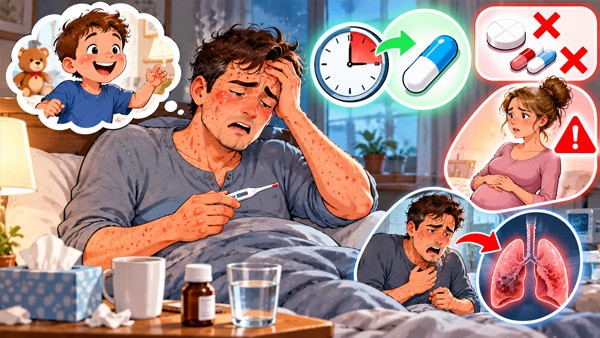
Everyone treats chickenpox as a childhood nuisance. Spots, a week off school, calamine lotion, done.
Then an adult catches it, and it turns out to be a completely different illness. Higher fever, hundreds more spots, two weeks flat on their back, and a real chance of ending up in hospital. Adults are vastly more likely to be hospitalised or to die from chickenpox than children are — and almost nobody is warned about that before it happens.
💡 The two things that change the outcome.
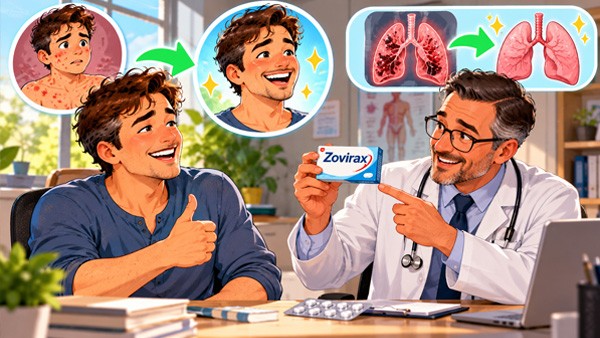
🔹 Antiviral treatment has a 24-hour window. Started within about a day of the first spots, it shortens the illness and reduces complications. Started on day three, it does very little. Nothing else on this page matters as much as acting fast.
🔹 Do not reach for the usual painkillers. Aspirin is dangerous in chickenpox, and ibuprofen is best avoided too. Paracetamol is the one to use. This catches people out constantly.
👶 Why adults get it so much worse
It is the same virus doing the same thing. What differs is the response to it.
| Healthy child | Healthy adult | |
|---|---|---|
| Fever | Mild, one to three days | Higher and longer, often four to five days |
| Number of spots | Typically 200 to 300 | Often 500 or more, more widespread |
| Feeling unwell | Usually still playing | Genuinely floored — aches, headache, exhaustion |
| Recovery | About a week | Two weeks is common |
| Pneumonia risk | Rare | The main complication, and the reason adults are hospitalised |
| Antivirals | Usually not needed | Recommended |
That last row is the practical difference. Treating a healthy five-year-old with antivirals changes little, which is why it is usually not done. Treating an adult within the first day changes the illness noticeably, which is why it is.
Some adults are at higher risk still: smokers, whose lungs are already compromised and who have a markedly higher pneumonia rate; pregnant women; anyone on steroids, chemotherapy or immune-suppressing drugs; people with chronic lung or skin conditions; and anyone with HIV or another cause of weakened immunity. For these groups chickenpox is a reason to contact a doctor the same day, not to wait and see.
🧫 How it spreads, and for how long
Chickenpox is one of the most contagious infections there is. In a household where one person has it and the others have never had it or been vaccinated, almost everyone catches it.
- 💨 Through the air. Breathing, talking and coughing release virus. Being in the same room is enough — you do not need to touch anyone
- 🤚 Direct contact with the blister fluid, which is loaded with virus
- 🛏️ Contaminated bedding, towels and clothing, to a lesser degree
📌 The timing people get wrong.
You are contagious before you know you have it. Infectiousness starts roughly one to two days before the rash appears, which is why outbreaks spread invisibly through schools, offices and households.
It ends when every lesion has crusted over — not when you feel better, and not when the fever goes. That usually takes about five to seven days from the first spots, sometimes longer in adults because new crops keep appearing.
And the incubation period is long: ten to twenty-one days from exposure, most often fourteen to sixteen. So if you were exposed, the spots may be more than two weeks away.
One more thing worth knowing: you can catch chickenpox from someone with shingles, through contact with their blisters, if you have never had chickenpox or the vaccine. The reverse does not happen — you cannot catch shingles directly. See our guide to shingles for why.
🪶 What the rash actually looks like
The appearance is distinctive enough that it is usually diagnosed by looking at it, with no test needed.
Each spot moves through four stages: a flat red mark, then a raised bump, then a small fluid-filled blister which is the itchiest and most infectious stage, then a crust that falls off over a week or two.
✅ The single feature that identifies chickenpox.
New spots keep arriving in crops over three to five days, so at any one moment you can see flat marks, fresh blisters and dry crusts all at the same time, side by side.
Most other rashes move through their stages together. This one does not. If every spot on the body is at a different stage, that is chickenpox.
Two details that catch adults out. The rash usually starts on the trunk, face and scalp rather than the arms and legs, which surprises people expecting it to start at the extremities. And it can appear inside the mouth, throat and on the genitals — painful ulcers rather than blisters there, which makes eating and drinking difficult and is a common reason adults get dehydrated.
Before the rash there is often a day or two of fever, headache, aching and loss of appetite, easily mistaken for flu.
⏱️ The 24-hour window
This is the part that decides how the next two weeks go.
Antivirals do not kill the virus. They stop it copying itself, which means they only help while it is still actively multiplying — the first day or so of the rash. After that the virus has largely done its work and the drug has much less to act on.
So the rule is simple and unforgiving: start within 24 hours of the first spots appearing, and ideally sooner. Up to about 48 hours is still worth doing in an adult. Beyond that the benefit falls away sharply.
In practice this means not waiting for an appointment to see how things develop. If you are an adult with spots that look like chickenpox, that is a same-day contact.
| Drug | Adult dose for chickenpox | Notes |
|---|---|---|
| Zovirax (Acyclovir) | 800 mg five times daily for 7 days | The established treatment. Five doses a day is demanding — roughly every four hours while awake, no night dose needed |
| Valtrex (Valacyclovir) | 1000 mg three times daily for 7 days | Converts to acyclovir in the body but is far better absorbed, so three doses instead of five. Much easier to take correctly |
| Famvir (Famciclovir) | 500 mg three times daily for 7 days | Also well absorbed, three doses daily. Virovir and Famcimac are the same drug |
Which one in practice? All three work. The honest difference is not potency but how likely you are to actually take every dose. A seven-day course of five-times-daily tablets while feeling dreadful is frequently not completed, and a half-taken course is a wasted course. If that sounds like a problem, the three-times-daily options exist for exactly that reason.
Side effects are generally mild — nausea, headache, occasional diarrhoea. Drink plenty of fluid throughout, because these drugs are cleared by the kidneys and dehydration is the main thing that causes trouble with them. Anyone with reduced kidney function needs a lower dose, so mention it.
🚫 The painkiller rule
Two drugs that seem obvious for a feverish, aching illness are the wrong ones here.
⚠️ Never give aspirin to a child or teenager with chickenpox.
The combination is linked to Reye syndrome — a rare but frequently fatal condition causing swelling of the brain and liver failure. It is the oldest and most important safety rule in chickenpox and it is still not widely known.
Check the label of anything you reach for. Aspirin hides in combination cold and flu remedies under names like acetylsalicylic acid and salicylate, so a product bought for the fever may contain it without the word aspirin on the front.
📌 Ibuprofen and other anti-inflammatories are also best avoided in chickenpox.
Their use during chickenpox has been associated with severe bacterial infection of the skin, including the aggressive deep-tissue infections that follow when streptococcus gets into broken skin. The link is not fully settled, but with a readily available alternative there is no reason to take the chance.
Use paracetamol for fever and discomfort, at the normal dose for weight and age.
🧴 Getting through the itch
The itching peaks around days three to five and is genuinely hard to bear in adults, who have more lesions. It also matters medically: scratching is what causes scarring and bacterial infection, so controlling it is treatment, not just comfort.
- 🛁 Cool baths with colloidal oatmeal or bicarbonate of soda, several times a day. Pat dry rather than rubbing
- 🧴 Calamine lotion on the itchiest areas, reapplied freely
- 💊 An oral antihistamine, particularly at night. The older sedating ones are often more useful here precisely because they help you sleep through the worst of it
- 💅 Nails cut short and filed smooth. For children, cotton mittens or socks on the hands at night
- 👕 Loose cotton clothing and a cool room. Heat and sweat make it dramatically worse
- 🥤 Cold drinks, ice lollies and soft food if there are mouth ulcers. Avoid salty, acidic and spicy food, which stings badly
- 🚿 Salt-water mouth rinses for oral lesions in adults
On scarring: most chickenpox marks fade over months without leaving anything permanent. The ones that scar are the ones that were scratched open or became infected. That is the whole case for taking the itch seriously.
🫁 Pneumonia, and the other complications
This section exists because adult chickenpox is the version that puts people in hospital, and the warning signs are specific.
| Complication | What to watch for | Who is at risk |
|---|---|---|
| Varicella pneumonia | Cough, breathlessness, chest pain or rapid breathing, typically appearing days three to five | Adults, and smokers above all. Also pregnancy and weakened immunity |
| Bacterial skin infection | A spot becoming increasingly red, hot, swollen, painful or oozing pus; red streaks spreading from it; fever returning after it had settled | Anyone who scratches, children especially |
| Dehydration | Mouth and throat ulcers making drinking painful, little urine, dizziness | Adults with heavy oral involvement, and young children |
| Neurological involvement | Severe headache, neck stiffness, confusion, drowsiness, seizures, or an unsteady wobbly walk | Rare, any age |
| Widespread severe disease | Lesions that keep coming, bleeding into the spots, very high fever | Immunosuppressed patients |
The pattern worth memorising is fever that settles and then comes back. Chickenpox fever should fall as the illness turns the corner. If it rises again several days in, something has been added on top — usually a bacterial infection, sometimes the lungs. See our guide to chest infections and when to go in.
🤰 Chickenpox and pregnancy
This deserves its own section because it is the situation where delay does the most harm.
Most adults are already immune, including most pregnant women, so this applies to the minority who never had chickenpox and were never vaccinated.
- 🫁 The mother is at higher risk of varicella pneumonia than other adults, and it can be severe
- 👶 Infection in the first half of pregnancy carries a small risk of congenital varicella syndrome, which affects the baby's limbs, skin, eyes and brain
- ⚠️ Infection around the time of delivery is the dangerous window — roughly from five days before birth to two days after. The baby can develop severe neonatal chickenpox, and this needs urgent specialist treatment
- 💉 Exposure without immunity is urgent, not routine. There are treatments given after exposure that can prevent or soften the illness, but they are time-critical, within days
- 🚫 The chickenpox vaccine must not be given during pregnancy, because it is a live vaccine. Pregnancy should also be avoided for a period after vaccination
Practical advice: a pregnant woman who has never had chickenpox and has been near someone with it should seek medical advice the same day, before any spots appear. Waiting to see whether a rash develops throws away the window in which something can be done.
💉 The vaccine, and what to do after exposure
Chickenpox vaccine is a live attenuated vaccine given as two doses. It is highly effective, and people who do catch chickenpox despite it almost always get a much milder version with fewer spots.
The part that is useful to know and rarely mentioned: the vaccine also works after exposure. Given within about three to five days of contact with an infected person, it can prevent the illness or considerably reduce it. So being exposed is not automatically the end of the matter.
It is not suitable during pregnancy or for people with significantly weakened immunity. For those groups there are antibody preparations given after exposure instead, which again work only within a narrow time window.
Adults who do not know whether they are immune can have a blood test for it. This is worth doing for anyone planning a pregnancy, working in healthcare or childcare, or about to start immune-suppressing treatment, since knowing beforehand is far better than finding out during an outbreak.
🔄 Why it comes back decades later
Chickenpox never fully leaves. Once the illness resolves, the virus retreats into nerve cell clusters near the spine and stays dormant there for life, held in check by the immune system.
Years or decades later it can reactivate, travel back down a single nerve, and produce shingles — a painful band of blisters on one side of the body, following the territory of that one nerve. Same virus, different illness.
Reactivation becomes more likely with age, with physical or emotional stress, and with anything that weakens immunity. Shingles is treated with the same antiviral drugs listed above, and again has a window of a few days in which treatment helps most. There is also a separate and very effective shingles vaccine for older adults, different from the childhood chickenpox one.
Our guide to shingles covers the warning signs and why early treatment matters so much for preventing lasting nerve pain.
🔎 What else it could be
The all-stages-at-once rash is fairly distinctive, but a few things get confused with it:
- 🦐 Hand, foot and mouth disease — blisters concentrated on palms, soles and in the mouth, usually fewer, and the trunk is spared
- 🐛 Insect bites — grouped, on exposed skin, no fever, no progression through stages
- 🧴 Scabies — intense itch worse at night, between fingers and at wrists, no fever, lasts weeks
- 💊 A drug rash — usually flat and widespread rather than blistering in crops
- 🌡️ Shingles — blisters in a band on one side only, with pain often preceding the rash
- 🦠 Impetigo — golden crusts, usually localised around the mouth and nose
Two things that should always prompt a proper assessment rather than self-diagnosis: a rash that does not fade when pressed with a glass, and any rash with severe headache, neck stiffness or confusion.
📞 When to seek help
🚨 Urgent, same day: breathlessness, chest pain or coughing; severe headache with neck stiffness, confusion or drowsiness; seizures; an unsteady walk; a rash that does not fade under pressure; bleeding into the spots; inability to drink; or no urine passed for many hours.
Contact a doctor the same day, before waiting:
- You are an adult or teenager with the first spots — the antiviral window is about 24 hours
- You are pregnant, whether exposed or already showing spots
- You are a smoker, because of the pneumonia risk
- You take steroids, chemotherapy or any immune-suppressing drug, or have HIV or another cause of weakened immunity
- A newborn baby has been exposed, or a baby under four weeks develops spots
- You have a chronic lung or skin condition such as asthma or eczema
- You were exposed and do not know if you are immune — post-exposure options are time-limited
Worth an appointment:
- Fever that settles and then returns, which usually means something has been added on top
- A spot becoming red, hot, swollen or oozing, with spreading redness around it
- Fever lasting beyond about four days or above what paracetamol controls
- Mouth ulcers preventing drinking
- Spots in or around the eye
- New spots still appearing after a week
- Someone in the household is pregnant, a newborn or immunosuppressed
❓ Frequently asked questions
Is chickenpox worse in adults?
Considerably. Adults get higher fever, far more spots, a longer illness and a much higher rate of hospitalisation, with pneumonia as the main complication. Smokers are at particular risk.
How soon must antivirals be started?
Within about 24 hours of the first spots, and up to 48 hours is still worth doing in an adult. The drugs stop the virus copying itself, so they only help while it is still actively multiplying.
What is the acyclovir dose for chickenpox in adults?
Typically 800 mg five times daily for seven days. Valacyclovir 1000 mg three times daily and famciclovir 500 mg three times daily are alternatives that are easier to take correctly.
How long is chickenpox contagious?
From one to two days before the rash appears until every lesion has crusted over, usually about five to seven days after the spots start. Feeling better is not the signal, crusting is.
Why must aspirin be avoided in chickenpox?
In children and teenagers it is linked to Reye syndrome, a rare but often fatal condition causing brain swelling and liver failure. Check combination cold remedies, where it hides as salicylate.
Can I take ibuprofen for chickenpox?
Best avoided. Anti-inflammatory painkillers during chickenpox have been associated with severe bacterial skin infection. Paracetamol is the recommended choice for fever and discomfort.
What is the incubation period for chickenpox?
Ten to twenty-one days from exposure, most commonly fourteen to sixteen. So spots may appear more than two weeks after contact with an infected person.
Is chickenpox dangerous in pregnancy?
Yes, for non-immune women. Risks include maternal pneumonia, congenital varicella syndrome in early pregnancy, and severe neonatal chickenpox if infection occurs around delivery. Seek advice the same day.
Will chickenpox leave scars?
Most marks fade over months without scarring. The ones that scar are those scratched open or infected, which is why controlling the itch with cool baths, calamine, antihistamines and short nails is treatment rather than comfort.
Can you get chickenpox twice?
A second episode is uncommon but possible, particularly if the first was very mild or occurred in infancy. The virus stays dormant for life and can instead reactivate decades later as shingles.
📑 Sources and editorial
- Public health and infectious disease guidance on varicella zoster virus infection, including incubation period, period of infectivity and routes of transmission
- Comparative data on varicella severity, hospitalisation and mortality in adults versus children, and on risk factors including smoking, pregnancy and immunosuppression
- Clinical guidance on antiviral therapy for varicella, including indications by age and risk group, the requirement to initiate within 24 to 48 hours of rash onset, and the limited role of antivirals in otherwise healthy young children
- Prescribing information for aciclovir, valaciclovir and famciclovir, including adult varicella and herpes zoster dosing regimens, renal dose adjustment and adverse effect profiles
- Literature on Reye syndrome and the contraindication of salicylates in children and adolescents with varicella or influenza-like illness
- Evidence and regulatory advisories on non-steroidal anti-inflammatory drugs during varicella and the association with severe invasive group A streptococcal soft tissue infection
- Guidance on varicella pneumonia, including incidence in adults, timing of onset and risk in smokers
- Obstetric guidance on chickenpox in pregnancy, covering maternal risk, congenital varicella syndrome, neonatal varicella and the perinatal exposure window
- Immunisation guidance on live attenuated varicella vaccine, two-dose schedules, post-exposure prophylaxis timing, and contraindications in pregnancy and immunosuppression
- Guidance on post-exposure management of non-immune high-risk contacts, including antibody preparations and time limits for administration
- Literature on varicella zoster latency in sensory ganglia and reactivation as herpes zoster
- Supportive care guidance on itch management, secondary bacterial infection and scarring in varicella
- Related reading: shingles, chest infections and when to go in, valacyclovir explained
- Related products: Zovirax (Acyclovir), Valtrex (Valacyclovir), Famvir (Famciclovir), Virovir, antiviral category
- RXshop Editorial Team — reviewed by Emily Chen, MD, MPH — Internal Medicine Specialist
Medical Disclaimer: The information in this article is for educational and informational purposes only and is not a substitute for professional medical advice, diagnosis, or treatment. Always seek guidance from a qualified healthcare provider with any questions you may have regarding a medical condition, and before starting, stopping or changing any medication.