Menopause Symptom Relief: What Works for Hot Flushes, Sleep and Dryness

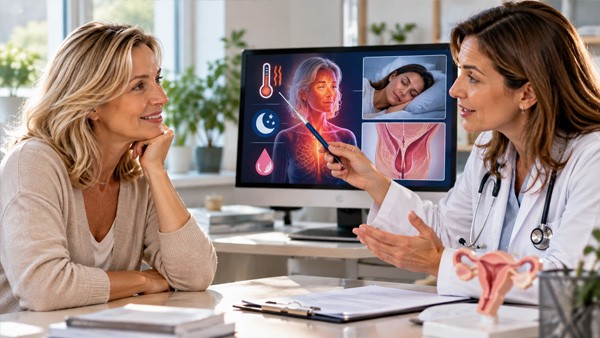

Menopause is one day: twelve months after the last period. Everything around it, the years of changing cycles before and the years of adjustment after, is where the symptoms live. Some women barely notice. Others spend three or four years sleeping badly, flushing in meetings and wondering why their body suddenly reacts differently to wine, stress and late meals.
Most of it is treatable. The decision that matters is not whether to endure it, but which symptom is doing the most damage to your life and which tool fits it best. Hot flushes, sleep, mood and dryness respond to different treatments, and the dryness in particular is treated in a way that has almost nothing in common with the rest.
This guide sets out the options, including hormone therapy with its risks in actual numbers rather than adjectives.
🌡️ Why the symptoms happen
Oestrogen does much more than run the menstrual cycle. As levels fall, the part of the brain that regulates temperature becomes narrower in its comfort range, so a small rise in core temperature triggers a full heat-dumping response: flushing, sweating, then chills. At the same time the tissues of the vulva, vagina and bladder lose thickness and elasticity, and bone turnover speeds up.
Sleep then becomes the multiplier. Night sweats fragment it, and poor sleep worsens mood, concentration and appetite the next day, which makes everything else feel less manageable.
| Symptom group | What it looks like | Typical duration |
|---|---|---|
| Vasomotor | Hot flushes, night sweats, sudden heat and chills | Average around 7 years; longer if they start early |
| Sleep | Waking at 3 a.m., light broken sleep | Often follows the flushes |
| Mood and thinking | Irritability, anxiety, low mood, word-finding difficulty | Usually improves after the transition |
| Genitourinary | Dryness, soreness, pain with sex, urinary urgency, repeated infections | Does not improve with time; it progresses |
| Bone and heart | Faster bone loss, changes in cholesterol and fat distribution | Long term |
That last row is the one most people do not know. Flushes fade eventually. Vaginal and urinary symptoms do not, which is why treating them is not cosmetic.
🔥 Hot flushes: what actually helps
Start with the practical layer, which costs nothing and helps mild symptoms: layered clothing, a cool bedroom, cotton bedding, a fan, and tracking triggers for a fortnight. Alcohol in the evening, hot drinks, spicy food and stress spikes are the usual culprits. Cognitive behavioural therapy, done properly, reduces how much flushes bother people even when it does not reduce their number.
When flushes disrupt work or sleep, medication is reasonable.
| Option | How well it works | Notes |
|---|---|---|
| Oestrogen (HRT) | Most effective; reduces flushes by around 75 percent | Also helps sleep, mood, joints and bone |
| SSRIs and SNRIs (escitalopram, venlafaxine, paroxetine) | Moderate; about half the effect of HRT | Useful when HRT is unsuitable. Paroxetine interferes with tamoxifen |
| Gabapentin | Moderate, particularly for night sweats | Taken at night; drowsiness is common |
| Clonidine | Weak | Largely superseded |
| Newer non-hormonal tablets acting on the brain temperature pathway | Good in trials | Not in our catalogue |
| Herbal remedies | Mostly no better than placebo in trials; black cohosh has liver safety concerns | Tell your doctor what you take |
Antidepressants used for flushes are in our antidepressants category, including Lexapro (Escitalopram) and Effexor (Venlafaxine), and gabapentin as Neurontin (Gabapentin). The doses used for flushes are lower than those used for depression or nerve pain.
💊 Hormone therapy in plain numbers
HRT spent two decades being feared because of headline coverage of one large study. The current position, after re-analysis and newer trials, is more specific and more useful: for most women under 60, or within 10 years of their last period, the benefits of HRT for troublesome symptoms outweigh the risks.
| Question | What is known |
|---|---|
| Breast cancer | Combined oestrogen plus progestogen slightly increases risk with use beyond about 5 years. In absolute terms it is a small number of extra cases per thousand women, comparable to the effect of drinking two units of alcohol daily or being overweight. Oestrogen alone, after hysterectomy, does not appear to increase it |
| Blood clots | Oral oestrogen raises clot risk. Patches and gels do not, because they bypass the liver. This is why transdermal HRT is preferred with obesity, migraine or clot history |
| Stroke | Small increase with oral oestrogen; little or none with patches at standard doses |
| Heart disease | Started under 60, HRT does not increase risk and may reduce it. Started many years after menopause, the picture is less favourable |
| Bone | Reduces fractures while taken |
💡 The two rules that shape a prescription. If you still have a uterus, oestrogen must be combined with a progestogen to protect the womb lining. And the route matters more than most people realise: patches and gels carry a lower clot risk than tablets, so they are the safer starting point for many women.
Options in our women's health category include Estrace (Estradiol), Progynova (Estradiol Valerate), Premarin (Conjugated Estrogens) and the progestogen Provera (Medroxyprogesterone). Which combination suits you, and at what dose, is a medical decision that takes your history into account.
🌸 Dryness and urinary symptoms: treated differently
Genitourinary symptoms deserve their own section because they behave unlike the rest. They start gradually, they do not fade with time, and they respond to a treatment that carries almost none of the concerns attached to systemic HRT.
Vaginal oestrogen is applied locally as a tablet, cream or ring. Very little is absorbed into the bloodstream, so it does not carry the breast cancer or clot considerations of systemic therapy, and it does not usually require a progestogen. It restores tissue thickness over weeks to months and also reduces recurrent urinary tract infections, which is an underused benefit in older women. It is available as Vagifem (Estradiol).
Alongside it: a vaginal moisturiser two or three times a week for maintenance, and a lubricant for sex, which are different products doing different jobs. Pelvic floor physiotherapy helps when pain has led to muscle guarding. Our guide to vulvovaginitis explains how to tell dryness apart from infection, since the two are often confused.
🔴 Any bleeding after menopause needs assessment, even light spotting, and even if dryness seems the obvious explanation. It is usually benign, but it must be checked.
😴 Sleep
If night sweats are waking you, treating the flushes fixes the sleep. If sleep is broken without sweats, treat it directly: a fixed wake time seven days a week, morning daylight, no caffeine after early afternoon, alcohol away from bedtime, and a cool room. Cognitive behavioural therapy for insomnia works better than any tablet in the long run.
Two hidden causes appear at this age and are frequently missed: sleep apnoea, which becomes more common after menopause and is not only a problem of heavy snorers, and restless legs, often linked to low iron. Both are treatable and worth asking about if sleep stays broken.
🧠 Mood and concentration
Low mood, irritability and anxiety are more common during the transition than before or after it, and word-finding problems and distractibility are real rather than imagined. For most women, thinking returns to baseline after the transition.
HRT often improves mood related to the transition itself. It is not a treatment for clinical depression, and where depression is present it should be treated in its own right. If mood symptoms are severe, persistent or unlike you, that deserves proper assessment rather than being filed under menopause.
🦴 The long game: bones and heart
Bone loss accelerates in the first years after menopause. The measures that matter are unglamorous and effective:
- 🏋️ Strength training two or three times a week, plus weight-bearing activity such as brisk walking
- 🥛 Calcium from food where possible, and vitamin D, especially in winter
- 🚬 Stopping smoking, which speeds bone loss and worsens flushes
- 📊 Bone density scan if you have risk factors: early menopause, steroid use, low body weight, previous fracture or a family history
- 🫀 Blood pressure, cholesterol and glucose checks, since cardiovascular risk rises after menopause
Where bone loss is established, treatments include Fosamax (Alendronate) and Evista (Raloxifene), prescribed according to fracture risk rather than symptoms.
📅 Early menopause is a different situation
Menopause before 45, and particularly before 40, is not simply an early version of the same thing. Without treatment it carries higher long-term risks to bone and heart health, so hormone therapy is usually recommended at least until the average age of natural menopause, and the risk calculations that apply to women in their fifties do not apply. Our guide to early menopause covers it in detail.
📝 Making the decision
A useful way to prepare for the appointment:
- Write down your three most disruptive symptoms, in order
- Note how long they have been happening and what you have already tried
- List all medicines and supplements you take
- Mention family history of breast cancer, clots, heart disease or osteoporosis
- Ask specifically about route of treatment, tablet versus patch or gel, and why
- Agree a review date, usually about three months in
Treatment is not a one-way door. Doses are adjusted, routes are changed, and stopping is possible at any point, ideally by reducing gradually.
📞 When to see a doctor
- Any bleeding after menopause — always
- Symptoms affecting work, sleep or relationships
- Pain during sex or recurrent urinary infections
- Menopause before 45
- Low mood or anxiety that is severe or persistent
- Chest pain, breathlessness, or leg swelling and pain while on HRT — urgent
- A new breast lump or change in breast shape or skin
❓ Frequently asked questions
How long do hot flushes last?
On average about seven years, and longer for women whose flushes start before their periods stop. Frequency and intensity vary widely, and treatment is reasonable whenever they disrupt daily life.
Is HRT safe?
For most women under 60 or within 10 years of menopause, the benefits for troublesome symptoms outweigh the risks. Combined HRT slightly increases breast cancer risk with longer use, oral oestrogen raises clot risk while patches and gels do not, and the decision depends on personal history.
Why are patches often preferred over tablets?
Because oestrogen absorbed through the skin bypasses the liver and does not raise the risk of blood clots the way oral oestrogen does. Patches and gels are usually chosen for women with obesity, migraine or a clot history.
What if I cannot take hormones?
Non-hormonal options include certain antidepressants such as escitalopram or venlafaxine, gabapentin for night sweats, and cognitive behavioural therapy. They give roughly half the relief of HRT but are genuinely effective.
Is vaginal oestrogen the same as HRT?
No. It is applied locally, very little is absorbed, and it does not carry the breast cancer or clot considerations of systemic therapy. It usually does not need a progestogen and also reduces recurrent urinary infections.
Will dryness get better on its own?
No. Unlike hot flushes, genitourinary symptoms tend to progress without treatment. Moisturisers, lubricants and vaginal oestrogen all help, and treatment works better started early.
Does menopause cause weight gain?
Ageing and reduced activity drive most of the weight gain, while falling oestrogen shifts fat towards the abdomen. Strength training and adequate protein protect muscle and help more than dieting alone.
Is brain fog permanent?
Usually not. Word-finding and attention problems are common during the transition and typically return to baseline afterwards. Protecting sleep helps most, and persistent memory problems deserve assessment.
Do herbal remedies work for hot flushes?
In trials most perform no better than placebo, and black cohosh has been linked to rare liver injury. Tell your doctor about any supplement, because several interact with prescribed medicines.
When should I worry about bleeding?
Any bleeding after twelve months without a period needs medical assessment, even light spotting. It is usually benign but must be checked.
📑 Sources and editorial
- Menopause society position statements on hormone therapy and non-hormonal treatments
- National guidance on the diagnosis and management of menopause
- Analyses of breast cancer and cardiovascular risk by age at initiation and route of administration
- Evidence on vaginal oestrogen for genitourinary syndrome of menopause and recurrent urinary tract infection
- Trials of SSRIs, SNRIs and gabapentin for vasomotor symptoms
- Guidance on premature ovarian insufficiency and early menopause
- Related reading: early menopause, vulvovaginitis
- Related products: Estrace (Estradiol), Vagifem (Estradiol), women's health category
- RXshop Editorial Team — reviewed by Anita Sharma, MD, FACOG
Medical Disclaimer: The information in this article is for educational and informational purposes only and is not a substitute for professional medical advice, diagnosis, or treatment. Always seek guidance from a qualified healthcare provider with any questions you may have regarding a medical condition, and before starting, stopping or changing any medication.