Chronic and Recurrent Otitis Media: What to Know

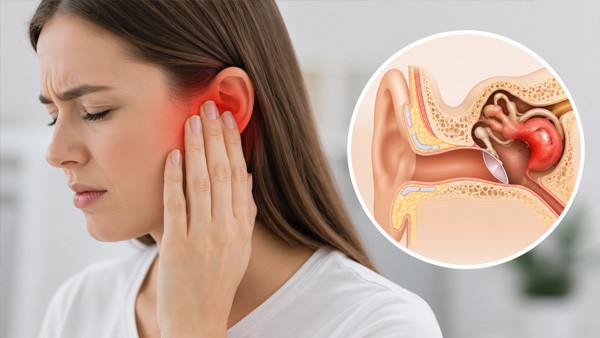

Most people meet otitis media once: a child wakes screaming at two in the morning, gets treated, and recovers within a few days. What gets far less attention is what happens to the children whose ears never quite settle — the fluid that lingers for months, the infections that return every few weeks, the discharge that will not stop, and the small number of cases where something more serious is developing behind the eardrum.
Those situations are managed quite differently from a single acute episode, and several of them are not treated with antibiotics at all. This guide covers the spectrum beyond the acute attack, including the two adult presentations that should never be dismissed.
🧠 The distinction that changes management: fluid behind the eardrum with pain and fever is an infection. Fluid behind the eardrum without pain or fever is not, and antibiotics do nothing for it. That second state — called otitis media with effusion, or glue ear — is extremely common after an infection resolves, causes muffled hearing rather than pain, and is one of the largest sources of unnecessary antibiotic prescribing in childhood.
🧏 Why ears go wrong in the first place
The middle ear is an air-filled chamber behind the eardrum, containing the three small bones that transmit sound. It connects to the back of the nose through the Eustachian tube, which equalises pressure and drains fluid.
In young children that tube is shorter, narrower and lies more horizontally than in adults, so it drains poorly and blocks easily. Add the frequent upper respiratory infections of early childhood and the immature immune system, and the result is the pattern seen everywhere: ear infections peak between six months and two years, then decline steadily as the anatomy matures.
When the tube blocks, air in the middle ear is absorbed and negative pressure develops, drawing fluid out of the lining. That fluid may stay sterile, causing hearing loss without pain, or bacteria from the nose may multiply in it, producing an acute infection. Both start from the same event.
🗂️ The spectrum of middle ear disease
| Condition | What it is | Treatment approach |
|---|---|---|
| Acute otitis media | Infected fluid under pressure; pain, fever, bulging eardrum | Pain relief, and antibiotics for defined groups |
| Otitis media with effusion | Fluid without infection; muffled hearing, no pain | Watchful waiting; antibiotics do not help |
| Recurrent acute otitis media | Repeated separate episodes with recovery between | Prevention; ventilation tubes in selected children |
| Chronic suppurative otitis media | Persistent discharge through a hole in the eardrum | Ear cleaning and topical antibiotic drops |
| Cholesteatoma | Skin growing into the middle ear and eroding bone | Surgery; medication does not treat it |
| Otitis externa | Infection of the ear canal, not the middle ear | Topical drops; commonly confused with the above |
The last row is worth noting because the two are frequently mixed up. Otitis externa causes pain when the outer ear is pulled or pressed and often follows swimming or use of cotton buds; middle ear infection does not hurt when the ear is touched. They are treated differently.
🔄 Why some children keep getting them
Recurrent acute otitis media is usually defined as three or more episodes in six months, or four or more in a year with at least one recently. Several factors raise the likelihood.
| Factor | Notes |
|---|---|
| Age under two | The dominant factor; anatomy and immunity both contribute |
| Group childcare | More respiratory infections, therefore more ear infections |
| Tobacco smoke exposure | One of the few genuinely modifiable factors, and a substantial one |
| Bottle feeding, particularly lying flat | Breastfeeding is protective; feeding position matters |
| Dummy use beyond infancy | Associated with increased episodes |
| Family history | Suggests inherited Eustachian tube anatomy |
| Cleft palate, Down syndrome, craniofacial differences | Structural predisposition; these children need closer follow-up |
| Allergic rhinitis | Contributes through nasal congestion and tube blockage |
| First episode before six months | Predicts a more difficult course |
Most of these are not changeable. Two are: reducing tobacco smoke exposure in the home, and completing the childhood vaccination schedule, since pneumococcal and influenza vaccination both measurably reduce episodes.
👂 Glue ear and hearing
Otitis media with effusion is the commonest cause of hearing loss in children, and it is easily missed because it does not hurt.
A child with fluid in both middle ears hears as though underwater. The effects show up as behaviour rather than as a complaint: turning the television up, not responding when called, mishearing, appearing inattentive, becoming frustrated, falling behind at school, or delayed speech in a younger child. Parents and teachers frequently interpret this as inattention or defiance.
The reassuring part is that most cases resolve on their own. The great majority clear within three months, which is why guidelines recommend a period of watchful waiting with hearing assessment rather than immediate intervention.
⚠️ What does not work for glue ear: antibiotics, oral or nasal decongestants, antihistamines and oral corticosteroids have all been studied and none produces lasting benefit. Autoinflation — blowing up a special balloon through the nose — has modest supporting evidence and is harmless to try. The main treatment is time, with hearing monitored so that a child who is not clearing gets help before their language development is affected.
Ventilation tubes, known as grommets, are considered when fluid persists beyond about three months in both ears with documented hearing loss, or when a child is falling behind in speech or learning. The tube is a tiny cylinder placed through the eardrum that lets air in and fluid drain, restoring hearing immediately. It works its way out on its own over six to eighteen months as the eardrum heals.
What grommets do reliably is restore hearing while they are in place. What they do less predictably is change the long-term course, since most children would have cleared eventually. That balance is why the decision rests on how much the hearing loss is affecting the individual child rather than on the presence of fluid alone. Adenoid removal is sometimes performed alongside, particularly in older children or those needing a second set of tubes.
💧 Persistent discharge
Chronic suppurative otitis media means ongoing discharge from the ear through a perforation in the eardrum, lasting weeks or months. It is uncommon where healthcare access is good and remains a major cause of preventable hearing loss globally.
The management principles differ from acute infection in a way that surprises people. Topical antibiotic drops work better than oral antibiotics, because they deliver far higher concentrations directly to the infected tissue. Careful cleaning of the ear canal by someone trained to do it makes the drops considerably more effective, since they cannot reach the infection through accumulated discharge. And drops containing aminoglycosides are used cautiously with a perforated eardrum because of potential inner ear toxicity, which is why the choice of drop matters.
Keeping the ear dry during treatment is standard, and persistent discharge that does not respond needs specialist assessment rather than repeated courses of the same treatment — because of what it might be hiding.
🔴 Cholesteatoma
This is the diagnosis that must not be missed, and most people have never heard of it.
A cholesteatoma is a growth of skin cells in the middle ear, where skin does not belong. It typically develops when long-standing negative pressure draws part of the eardrum inward, forming a pocket that traps shed skin. The mass expands slowly and erodes whatever it touches — the small bones of hearing first, and potentially the bone separating the ear from the facial nerve, the balance organs and the brain.
It is not cancer and it is not an infection, but it behaves destructively and it does not resolve. The typical presentation is persistent, foul-smelling ear discharge with progressive hearing loss in one ear. That combination should always prompt specialist referral.
Treatment is surgical. Antibiotics may temporarily settle the associated infection, which is precisely what makes it dangerous: the symptoms improve while the growth continues. Untreated, it can cause permanent deafness, facial weakness, dizziness, meningitis or brain abscess.
🧑 Otitis media in adults
Middle ear infection is much less common in adults, and that rarity is itself informative.
A single episode after a heavy cold is usually straightforward and managed like the childhood version. What requires a different response is persistent fluid in one ear in an adult, particularly without a preceding infection.
🔴 Unilateral middle ear effusion in an adult requires examination of the nasopharynx. A tumour at the back of the nose can block the Eustachian tube on one side, and a persistent one-sided effusion is a recognised presenting sign of nasopharyngeal carcinoma. The examination is straightforward, most cases turn out to have an innocent explanation, and skipping it is how that diagnosis gets delayed by months. Treating an adult with a persistent one-sided effusion with repeated antibiotics and nothing else is not adequate.
Adults with recurrent ear problems are also assessed for allergic rhinitis, chronic sinus disease, reflux and, in some cases, Eustachian tube dysfunction that responds to balloon dilation. Barotrauma from flying or diving with a blocked tube is another recognised cause.
🚨 Complications to recognise
Serious complications are uncommon in settings with good healthcare access, and they are the reason ear infections are taken seriously rather than ignored entirely.
| Complication | Signs |
|---|---|
| Mastoiditis | Swelling, redness and tenderness behind the ear, the ear pushed forward, fever |
| Facial nerve palsy | Weakness of one side of the face |
| Labyrinthitis | Severe vertigo, vomiting, hearing loss |
| Meningitis | Severe headache, neck stiffness, photophobia, drowsiness |
| Brain abscess or venous sinus thrombosis | Persistent headache, altered consciousness, seizures |
| Permanent hearing loss | From damage to the ossicles or inner ear |
Any of these requires immediate hospital assessment. The practical message is not to be alarmed by an ordinary ear infection but to know which developments change the picture entirely.
💊 Antibiotics, used properly
For acute infection where antibiotics are indicated, amoxicillin remains first-line, at high dose, because it covers the main organisms and has a long safety record.
Amoxicillin with clavulanate is the usual second-line choice, and it is the relevant one in exactly the situations this article covers: when a course of amoxicillin has failed, when an infection has recurred within a month, when the child has had recent antibiotic exposure, or where beta-lactamase producing organisms are likely. The clavulanate component blocks the enzyme those bacteria use to destroy amoxicillin.
Macrolides such as azithromycin and clarithromycin are reserved for genuine penicillin allergy. They are less effective against the main pathogens, particularly Haemophilus influenzae, and resistance rates are high in many regions. Using a macrolide as a routine first choice is a common but poor substitution.
Topical drops rather than tablets are the treatment for discharge through a perforation or through a ventilation tube, as described above.
Antibiotics have no role at all in glue ear, and no lasting role in preventing recurrence, since long-term prophylactic antibiotics produce only a marginal reduction in episodes at the cost of resistance and side effects.
❌ Persistent myths
Cold weather and wet hair do not cause middle ear infections. They follow viral upper respiratory infections, which are commoner in winter for reasons of indoor crowding and virus behaviour rather than temperature.
Water in the ear does not cause middle ear infection in an intact eardrum, because the eardrum separates the canal from the middle ear. Water is relevant to otitis externa, and to ears with a perforation or grommets, where advice differs.
Swimming with grommets is largely permitted in current guidance. Routine ear plugs are not required for ordinary surface swimming, though diving and deep underwater swimming warrant caution.
Ear candling does nothing useful and has caused burns, canal obstruction and perforation.
Cotton buds push wax inward, damage the canal skin and cause the very problems they are used to address.
Decongestants and antihistamines do not clear glue ear, despite being widely used for it.
🛡️ What actually reduces episodes
The measures with real supporting evidence are a short list.
Pneumococcal and influenza vaccination both reduce ear infections measurably, and the pneumococcal vaccine has changed the pattern of the disease since its introduction.
Eliminating tobacco smoke exposure in the home is the single most effective modifiable factor.
Breastfeeding is protective, and where a baby is bottle fed, feeding upright rather than lying flat reduces risk.
Reducing dummy use beyond infancy has a modest effect.
Treating allergic rhinitis where present improves Eustachian tube function.
Hearing checks for any child with repeated infections or persistent fluid, because the consequence that matters most is the one nobody can see.
✅ The point most worth remembering: in the acute episode, pain relief matters more than the antibiotic in the first day. In everything that follows, hearing matters more than the ear itself. A child with fluid in both ears for months is not in pain and will not complain — but is missing part of what is said to them during the years when language is being built. Checking hearing is what turns that from a hidden problem into a solvable one.
Antibiotics used for treatment failure and recurrent infection are stocked in the antibiotics category, including Augmentin and Amoxil. Which is appropriate depends on the diagnosis, previous treatment and age, so it should follow assessment. For the management of a first acute episode, see the guide to acute otitis media.
❓ Frequently asked questions
What is glue ear and how is it different from an ear infection?
Glue ear, properly called otitis media with effusion, is fluid sitting in the middle ear without infection. It causes muffled hearing rather than pain or fever, and it very commonly follows an acute infection as the fluid takes weeks to clear. Antibiotics do nothing for it. An acute infection means that fluid is infected and under pressure, producing pain, fever and a bulging eardrum.
How would I know if my child has hearing loss from fluid?
It shows up as behaviour rather than as a complaint, because it does not hurt. Turning the television up, not responding when called, mishearing, appearing inattentive or frustrated, falling behind at school, or delayed speech in a younger child are the usual signs. These are frequently interpreted as inattention or defiance. Any child with repeated infections or persistent fluid should have a hearing test.
When are grommets needed?
Usually when fluid has persisted beyond about three months in both ears with documented hearing loss, or when a child is falling behind in speech or learning. The tube restores hearing immediately and works its way out on its own over six to eighteen months. What it changes reliably is hearing while it is in place; most children would clear eventually anyway, which is why the decision rests on how much the hearing loss is affecting that particular child.
Can my child swim with grommets?
In most cases yes. Current guidance permits ordinary surface swimming without routine ear plugs, which represents a change from older advice. Diving and deep underwater swimming warrant more caution because of the pressure involved. Follow the specific advice given by the team who placed the tubes, since individual circumstances vary.
Why do antibiotics not help glue ear?
Because there is no active infection to treat — the fluid is sterile or contains only small numbers of organisms, and the problem is drainage rather than infection. Antibiotics, decongestants, antihistamines and oral corticosteroids have all been studied for this and none produces lasting benefit. Time is the main treatment, with hearing monitored so intervention happens before language development is affected.
What counts as recurrent ear infections?
Generally three or more separate episodes within six months, or four or more within a year with at least one recent. The key word is separate — with genuine recovery between them, which distinguishes recurrence from a single infection that never fully cleared. Children meeting this threshold are assessed for ventilation tubes and for the modifiable factors that contribute, particularly tobacco smoke exposure at home.
What does persistent smelly ear discharge mean?
It needs specialist assessment. Persistent foul-smelling discharge with progressive hearing loss in one ear is the classic presentation of cholesteatoma — skin growing into the middle ear where it does not belong, slowly eroding bone. It is not cancer and not simply an infection, it does not resolve, and treatment is surgical. Antibiotics may settle the associated infection temporarily, which is exactly what makes it dangerous.
Why do drops work better than tablets for a discharging ear?
Because they deliver far higher antibiotic concentrations directly to the infected tissue than oral treatment can achieve. Careful cleaning of the ear canal by someone trained to do it makes them considerably more effective, since drops cannot reach the infection through accumulated discharge. The choice of drop matters where the eardrum is perforated, because some ingredients carry a risk of inner ear toxicity.
Should an adult with fluid in one ear be worried?
It requires proper assessment rather than worry. Persistent fluid in one ear in an adult, particularly without a preceding infection, calls for examination of the nasopharynx, because a tumour at the back of the nose can block the Eustachian tube on one side. Most cases turn out to have an innocent explanation, but skipping that examination is how nasopharyngeal carcinoma gets diagnosed months late.
Which antibiotic is used when the first one fails?
Amoxicillin with clavulanate is the usual second-line choice, because the clavulanate blocks the enzyme that resistant organisms use to destroy amoxicillin. It is also used when infection recurs within a month, or where there has been recent antibiotic exposure. Macrolides such as azithromycin are reserved for genuine penicillin allergy, since they are less effective against the main pathogens and resistance is widespread.
What are the warning signs of a serious complication?
Swelling, redness or tenderness behind the ear with the ear pushed forward suggests mastoiditis. Weakness of one side of the face suggests facial nerve involvement. Severe vertigo with vomiting, or severe headache with neck stiffness and drowsiness, suggest spread beyond the ear. All of these require immediate hospital assessment. They are uncommon where healthcare access is good, which is precisely why ear infections are followed up rather than ignored.
Can anything actually prevent ear infections?
A short list with real evidence. Pneumococcal and influenza vaccination both reduce episodes measurably. Eliminating tobacco smoke in the home is the most effective modifiable factor. Breastfeeding is protective, and bottle feeding upright rather than lying flat helps. Reducing dummy use beyond infancy has a modest effect, and treating allergic rhinitis improves Eustachian tube function. Long-term preventive antibiotics are not recommended.
📑 Sources and editorial
- American Academy of Otolaryngology clinical practice guidelines on otitis media with effusion and on tympanostomy tubes in children
- NICE guidance on otitis media with effusion and on antimicrobial prescribing for acute otitis media
- WHO reports on chronic suppurative otitis media and preventable hearing loss
- Cochrane reviews on antibiotics, decongestants, antihistamines and autoinflation for otitis media with effusion
- Evidence on pneumococcal conjugate vaccination and the incidence of acute otitis media
- FDA prescribing information for amoxicillin and amoxicillin with clavulanate
- Related reading: acute otitis media
- Related products: antibiotics category
- RXshop Editorial Team — reviewed by Emily Chen, MD, MPH, Internal Medicine
Medical Disclaimer: The information in this article is for educational and informational purposes only and is not a substitute for professional medical advice, diagnosis, or treatment. Always seek guidance from a qualified healthcare provider with any questions you may have regarding a medical condition, and before starting, stopping or changing any medication.