Contact Dermatitis: Causes, Testing and Treatment

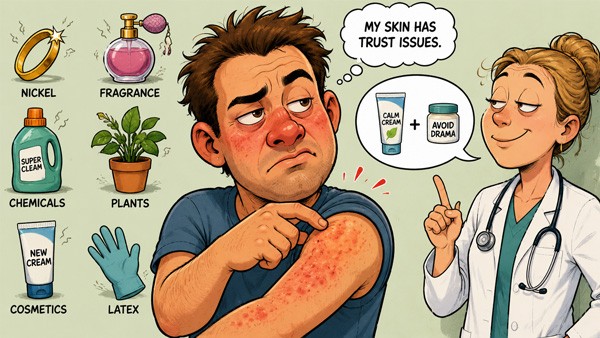
Contact dermatitis is inflammation of the skin caused by something touching it. That sounds simple enough to diagnose by observation, and it usually is not, because the reaction people most want to identify appears one to three days after the contact that caused it.
By then they have used a dozen other products, changed washing powder, and settled on the wrong culprit. Understanding that delay is the single most useful thing in this subject, and it is what separates the two forms of the condition.
🧠 The timing tells you which type you have: irritant dermatitis appears within minutes to hours of exposure, gets worse the more contact there is, and can happen to anyone on first exposure. Allergic contact dermatitis appears one to three days later, requires previous sensitisation, and is triggered by tiny amounts. So a rash that appears the same evening points to an irritant, while one that appears on Wednesday was probably caused by something touched on Monday.
⚖️ Two different mechanisms
| Irritant contact dermatitis | Allergic contact dermatitis | |
|---|---|---|
| Share of cases | Roughly four in five | Roughly one in five |
| Mechanism | Direct chemical or physical damage to the skin barrier | Delayed immune reaction involving T cells |
| Prior exposure needed | No — can occur the first time | Yes — sensitisation must have happened previously |
| Timing | Minutes to hours | One to three days after contact |
| Amount required | Dose-dependent; more contact means worse reaction | Tiny amounts are enough once sensitised |
| Who it affects | Anyone with enough exposure | Only those sensitised to that specific substance |
| Sensation | Burning, stinging, soreness | Itching, often intense |
| Borders | Often sharply confined to the contact area | Can spread beyond it |
| Duration | Improves once exposure stops | Persists for weeks; recurs on any re-exposure, permanently |
The permanence of allergic sensitisation matters. Once someone has become allergic to nickel or to a fragrance chemical, that allergy is lifelong. It does not get outgrown and it does not resolve with avoidance — avoidance controls the symptoms while the sensitivity remains.
The two also overlap constantly. Damaged skin absorbs allergens more readily, so irritant dermatitis of the hands frequently leads to allergic sensitisation on top of it, producing a mixed picture that is harder to unpick.
🗂️ What causes it
| Allergen or irritant | Where it is found |
|---|---|
| Nickel | Jewellery, watch straps, belt buckles, jean studs, phones, keys, spectacle frames — the commonest contact allergen worldwide |
| Fragrance chemicals | Cosmetics, soaps, cleaning products, air fresheners, and anything labelled unscented that uses masking fragrance |
| Preservatives | Methylisothiazolinone and relatives in wet wipes, shampoos, paints and cleaning products; formaldehyde releasers |
| Hair dye | Paraphenylenediamine, which also cross-reacts with some black temporary tattoos |
| Rubber accelerators | Gloves, elastic waistbands, shoes, condoms |
| Topical antibiotics | Neomycin in particular is a frequent sensitiser |
| Topical corticosteroids | Yes, genuinely — suspect this where a steroid cream stops working or makes things worse |
| Plants | Poison ivy and relatives, primula, chrysanthemum, tulip bulbs |
| Water, soap and detergents | The dominant irritants, particularly with frequent hand washing |
| Solvents, oils, cement, acids and alkalis | Occupational irritants |
⚠️ Hypoallergenic and natural mean nothing. Neither term is regulated in most jurisdictions, and neither indicates that a product is less likely to cause a reaction. Plant extracts and essential oils are among the more potent sensitisers available — tea tree, propolis and various botanical extracts appear regularly in patch test results. Unscented is also not the same as fragrance-free: unscented products often contain masking fragrance to cover the smell of the base.
A specific development worth knowing about is the rise in allergy to methylisothiazolinone, a preservative introduced widely into cosmetics, wet wipes and household products in the 2000s. It produced a documented epidemic of contact allergy, particularly facial dermatitis from wipes and shampoos, before regulators restricted its concentration. Anyone with unexplained facial or hand dermatitis should look at wet wipes and liquid soaps specifically.
👋 Hands, and work
Hand dermatitis is the commonest presentation and among the most disabling, because hands cannot be rested and are washed constantly.
Occupations with high rates are consistent across studies: hairdressers, exposed to dyes, bleaches, shampoos and constant wet work; healthcare workers, from hand hygiene and gloves; catering and cleaning staff, from wet work and detergents; construction workers, from cement, which is both alkaline and a source of chromate allergy; mechanics, from oils and solvents; and florists and gardeners, from plants.
The mechanism in most is the same: repeated wetting and drying strips the skin barrier, cracks develop, irritants penetrate more easily, and allergens gain access through damaged skin. What starts as irritant dermatitis becomes mixed.
Two practical points frequently go unmentioned. Occupational skin disease is reportable and often compensable in many countries, and employers have obligations regarding protective equipment and substitution of hazardous substances. And gloves are not straightforward — occlusive gloves worn for long periods trap sweat and worsen irritant dermatitis, while rubber accelerators in them cause allergy in their own right. Cotton liners under gloves, taking gloves off periodically, and choosing accelerator-free options where allergy is suspected all help.
🧪 Patch testing
This is the test that identifies allergic contact dermatitis, and it is different from the skin prick testing used for immediate allergies.
How it works. Small amounts of standardised allergens are applied to the back under adhesive chambers and left in place. It takes three visits across roughly a week: application, removal and first reading at forty-eight hours, and a second reading at ninety-six hours or later. That final reading matters, because some reactions only appear then and reading too early misses them.
What to expect. The back must stay dry for the whole period, so no showering or swimming. Sunbathing beforehand and topical steroids on the back must be avoided, since both suppress reactions. Oral steroids and immunosuppressants also interfere and usually need discussing beforehand.
What it can and cannot do. A positive result shows sensitisation to that substance. Whether it explains the current rash requires matching it to actual exposure, which is why a good history matters as much as the result. A negative test does not exclude allergy to something not on the panel — testing with the person own products is sometimes added for this reason.
Patch testing is worth requesting where dermatitis is persistent, recurs without explanation, affects the hands or face, is occupational, or has not responded to treatment. It is not needed for a straightforward irritant reaction with an obvious cause.
💊 Treating it properly
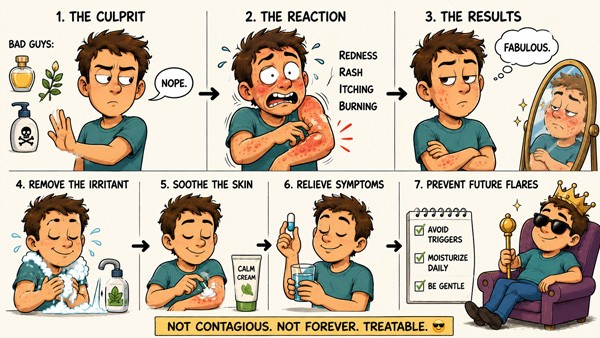
Removing the cause is the only thing that resolves it rather than suppressing it. Everything below manages the inflammation while that happens.
Topical corticosteroids are the mainstay for active dermatitis, and how they are used determines both whether they work and whether they cause problems.
| Site | Potency |
|---|---|
| Face, eyelids, genitals, skin folds | Mild only — skin here is thin and absorbs readily |
| Trunk, arms, legs | Moderate |
| Hands, feet, thickened chronic patches | Potent — palms and soles are thick and resist absorption |
Three practical points determine success.
Use enough. The standard measure is the fingertip unit — the amount squeezed from the tube onto the last segment of an adult index finger, which covers an area about the size of two flat adult palms. Under-application is extremely common and is the main reason a correctly chosen steroid appears not to work.
Use it properly for long enough, then stop. Typically once or twice daily until the skin is clear, then stopping rather than tapering into indefinite intermittent use.
Do not stop too early out of fear. Anxiety about steroid creams is widespread and leads to under-treatment, which prolongs the dermatitis and paradoxically results in more total steroid use over time. The genuine risks — skin thinning, stretch marks, absorption — come from potent steroids used continuously for long periods on thin skin, not from a properly conducted course.
🔴 If a steroid cream stops working or makes things worse, consider allergy to the cream itself. Contact allergy to corticosteroids is well recognised, as is allergy to preservatives and lanolin in the base. So is allergy to topical antibiotics, neomycin especially. A dermatitis that worsens on treatment is a specific pattern worth reporting rather than treating with something stronger.
Where the skin is broken, weeping or secondarily infected, a combination of a corticosteroid with an antibacterial is used, such as betamethasone with gentamicin. Scratched hand and flexural dermatitis becomes infected readily, and treating inflammation alone in that situation does not clear it. These combinations are for short courses — prolonged use of a topical antibiotic drives resistance and raises the risk of becoming sensitised to the antibiotic itself. For uncomplicated dermatitis with intact skin, a plain corticosteroid is preferred.
Emollients are the least glamorous and most consistently useful part of treatment. Applied generously and frequently they restore the barrier, reduce irritant penetration, relieve itch and reduce the amount of steroid needed. Ointments are more effective than creams and creams more than lotions, at the cost of feeling greasier. Fragrance-free is essential here for obvious reasons.
🤷 Why antihistamines do little
This is worth stating clearly because antihistamines are routinely recommended for contact dermatitis and are of limited value in it.
The itch in urticaria is driven by histamine, which is why antihistamines work well there. The itch in contact dermatitis is driven by a delayed cell-mediated immune reaction with other mediators involved, and blocking histamine addresses little of it.
Where a sedating antihistamine helps at all it is by improving sleep in someone kept awake by scratching, which is a real benefit and a different mechanism from treating the rash. Non-sedating antihistamines add very little in this condition, which is the reverse of their role in urticaria and angioedema.
Topical antihistamine creams should be avoided entirely. They are poorly effective and are themselves a recognised cause of contact allergy, which is a particularly unhelpful combination in someone already reacting to something applied to their skin.
🧴 When it becomes infected
Broken, scratched dermatitis is readily colonised and infected, most often by staphylococci.
Signs are increasing pain rather than itch, spreading redness with warmth, yellow crusting, weeping or pus, and sometimes fever. Small clustered blisters with punched-out erosions suggest herpes simplex infection of the dermatitis, which is a different and more urgent problem requiring antiviral treatment.
Localised infection is treated with a topical antibacterial or a steroid-antibacterial combination; more extensive infection needs oral antibiotics. Reducing scratching, keeping nails short and using emollients generously all reduce the risk in the first place.
🛡️ Preventing recurrence
Identify and avoid is the whole of the cure. That means reading ingredient lists, which is tedious and effective. Patch test clinics usually provide a written list of what to avoid and the many names a single allergen appears under.
Reduce wet work where possible — less frequent washing, lukewarm rather than hot water, thorough drying especially between fingers, and using an emollient after every wash.
Use gloves thoughtfully. Wear them for wet work and chemicals, keep the duration short, use cotton liners, and avoid latex if there is any suspicion of latex allergy, which is a separate and potentially more serious condition.
Barrier creams have modest evidence and are a supplement to gloves rather than a replacement for them.
Simplify the routine. Fewer products means fewer possible culprits and easier identification if something does react. Fragrance-free everything is a reasonable default for anyone with a history of contact dermatitis.
Address it early at work. Occupational hand dermatitis becomes chronic and job-limiting if it continues, and early substitution of the offending substance, better protection or a change of task prevents that far more effectively than treating repeated flares.
❌ Common misconceptions
A reaction to something used for years does not exclude allergy. Sensitisation requires prior exposure by definition, so allergy typically develops to things already in regular use. The familiar phrase — I have used this for years, it cannot be that — is exactly backwards.
Natural products are not safer. Plant extracts and essential oils are among the more frequent sensitisers found on patch testing.
Contact dermatitis is not contagious and cannot be passed to anyone else.
The rash is not always where the contact was. Allergens are transferred by fingers to the face, eyelids and neck, and eyelid dermatitis from nail varnish is a classic example that confuses people entirely.
Steroid creams are not something to fear at appropriate strength and duration. Under-treatment prolongs the condition and results in more total steroid over time.
🧑⚕️ When to see someone
- The rash is not settling after a week or two of appropriate treatment and avoidance
- It keeps recurring without an identifiable cause — this is the main indication for patch testing
- It affects the hands or face, where the impact and the diagnostic difficulty are both higher
- It appears related to work, since early intervention prevents a chronic occupational problem
- Signs of infection — increasing pain, spreading redness, crusting, pus or fever
- Clustered blisters with punched-out erosions, suggesting herpes infection of the dermatitis
- It worsens on treatment, which suggests allergy to the treatment itself
- It is widespread or severe
Topical treatment for dermatitis with broken or infected skin is stocked in the skin care category, including Diprogenta (betamethasone with gentamicin). Combination products are for short courses where infection is present or likely; uncomplicated dermatitis with intact skin is better treated with a plain corticosteroid chosen for the site.
❓ Frequently asked questions
How do I tell irritant from allergic contact dermatitis?
Mainly by timing. Irritant reactions appear within minutes to hours, get worse with more contact, can happen on first exposure and feel like burning or stinging. Allergic reactions appear one to three days after contact, require previous sensitisation, are triggered by tiny amounts and itch intensely. A rash appearing on Wednesday was probably caused by something touched on Monday.
Can I become allergic to something I have used for years?
Yes, and this is the normal pattern rather than an exception. Sensitisation requires prior exposure by definition, so allergy typically develops to things already in regular use. The familiar reasoning — I have used this for years, it cannot be that — is exactly backwards, and it delays identification of the culprit more than almost anything else.
Does hypoallergenic mean it will not cause a reaction?
No. Neither hypoallergenic nor natural is a regulated term in most jurisdictions, and neither indicates lower risk. Plant extracts and essential oils are among the more potent sensitisers found on patch testing. Unscented is also not fragrance-free — unscented products frequently contain masking fragrance to cover the smell of the base ingredients.
What does patch testing involve?
Standardised allergens applied to the back under adhesive chambers, with three visits across about a week: application, removal and first reading at forty-eight hours, and a second reading at ninety-six hours or later. That final reading matters because some reactions only appear then. The back must stay dry throughout, and sunbathing, topical steroids on the back and oral immunosuppressants all interfere.
Why is my rash somewhere I never touched the product?
Because allergens are transferred by the fingers. Eyelid dermatitis from nail varnish is the classic example, and the eyelids are affected because the skin there is thin and readily reacts. Facial and neck dermatitis from products handled but never applied to the face is common for the same reason. This transfer pattern is one of the things that makes contact dermatitis genuinely difficult to trace without testing.
How much steroid cream should I use?
The standard measure is the fingertip unit — the amount squeezed onto the last segment of an adult index finger, which covers an area about the size of two flat adult palms. Under-application is extremely common and is the main reason a correctly chosen steroid appears not to work. Use it once or twice daily until the skin is clear, then stop.
Are steroid creams dangerous?
Not when matched to the site and used for a defined course. Skin thinning, stretch marks and absorption come from potent steroids used continuously over long periods on thin skin, not from proper treatment. Anxiety about them leads to under-treatment, which prolongs the dermatitis and results in more total steroid use over time. Potency should match the site: mild on face and folds, potent on hands and feet.
My steroid cream is making it worse. Why?
Consider allergy to the cream itself. Contact allergy to corticosteroids is well recognised, as is allergy to preservatives and lanolin in the base, and to topical antibiotics such as neomycin where a combination product is being used. Dermatitis that worsens on treatment is a specific pattern worth reporting rather than escalating to something stronger. Infection is the other explanation to consider.
Do antihistamines help contact dermatitis?
Not much, which surprises people. The itch here comes from a delayed cell-mediated immune reaction rather than from histamine, so blocking histamine addresses little of it. A sedating antihistamine may help someone kept awake by scratching, which is a genuine benefit through a different mechanism. Topical antihistamine creams should be avoided entirely, since they work poorly and cause contact allergy themselves.
When is a combination steroid and antibiotic cream appropriate?
Where the skin is broken, weeping or secondarily infected, which happens readily in scratched hand and flexural dermatitis. Treating inflammation alone in that situation does not clear it. Combinations are for short courses, since prolonged topical antibiotic use drives resistance and raises the risk of becoming sensitised to the antibiotic. Uncomplicated dermatitis with intact skin is better treated with a plain corticosteroid.
Will wearing gloves solve hand dermatitis?
Only partly, and gloves cause problems of their own. Worn for long periods they trap sweat and worsen irritant dermatitis, and rubber accelerators in them are a recognised cause of allergy. Use them for wet work and chemicals, keep the duration short, use cotton liners underneath, and consider accelerator-free options where allergy is suspected. Barrier creams have modest evidence and supplement gloves rather than replacing them.
Does contact dermatitis ever go away permanently?
Irritant dermatitis resolves once the exposure stops and the barrier recovers. Allergic sensitisation is lifelong — it is not outgrown and does not fade with avoidance. What avoidance achieves is control of symptoms while the underlying sensitivity remains, so the substance has to be avoided indefinitely. Knowing exactly what to avoid, which is what patch testing provides, is therefore worth the effort.
📑 Sources and editorial
- British Association of Dermatologists and European Society of Contact Dermatitis guidance on the diagnosis and management of contact dermatitis
- European baseline series for patch testing and its periodic revisions
- Literature on the methylisothiazolinone contact allergy epidemic and subsequent regulatory restriction
- Evidence on occupational skin disease incidence by industry and on glove-related dermatitis
- Fingertip unit methodology for topical corticosteroid quantification
- Reports of contact allergy to topical corticosteroids and to topical antibiotics
- Related reading: allergies explained
- Related products: skin care category
- RXshop Editorial Team — reviewed by Emily Chen, MD, MPH, Internal Medicine
Medical Disclaimer: The information in this article is for educational and informational purposes only and is not a substitute for professional medical advice, diagnosis, or treatment. Always seek guidance from a qualified healthcare provider with any questions you may have regarding a medical condition, and before starting, stopping or changing any medication.