Sun Allergy: The Rash, the Hives and the Medicine Cabinet

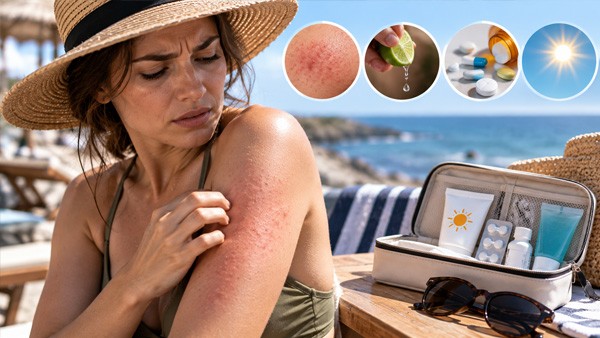

The first properly sunny week of spring arrives, and a day or two later the chest and forearms are covered in an itchy rash of small red bumps. It fades over a week, returns with the next strong sun, and by midsummer has mysteriously stopped happening. Many people go through this every year without ever finding out what it is.
Yes, you can react to the sun. But "sun allergy" is not one condition. It is a handful of quite different reactions that happen to share a trigger, and working out which one you have determines what helps — including, in a surprising number of cases, simply looking at what is in the medicine cabinet or the drinks cabinet.
☀️ The type of light matters more than people assume. Sunburn is caused mainly by the shorter ultraviolet wavelengths, which are largely blocked by window glass. Most light-triggered rashes are caused by the longer wavelengths, which pass through glass and are poorly blocked by sunscreens that only carry a high burn-protection number.
So someone can react while sitting by a window, driving, or wearing high-factor sunscreen that prevents burning but not the rash. The fix is usually a sunscreen with strong protection against those longer wavelengths, which is labelled separately from the burn-protection factor.
🔎 Which reaction is it
| Reaction | How it behaves |
|---|---|
| Polymorphic light eruption | The commonest by far. Itchy red bumps or small blisters appearing hours to a day or two after strong sun, on exposed skin such as the chest, arms and legs. Worst in spring, often improving as summer goes on |
| Solar urticaria | Rare. Hives within minutes of sun exposure, fading within hours once out of the light |
| Medicine-triggered reaction | An exaggerated burn or an eczema-like rash on exposed skin, after starting a medicine. Common and frequently missed |
| Plant-and-sun reaction | Streaks, blisters or odd shapes where juice from limes, celery, parsley, figs or certain wild plants touched the skin before sun exposure |
| Sunscreen reaction | A rash where a particular sunscreen was applied, sometimes only after sun exposure |
| A condition made worse by sun | Lupus, rosacea and eczema can all flare with light. Rash plus joint pain or fatigue needs particular attention |
🌱 The common one, and why it fades by summer
Polymorphic light eruption affects a meaningful share of people in temperate climates, more often young women, and it follows a recognisable seasonal pattern. The skin reacts to the first intense exposure after months of winter, and then gradually adapts — a process sometimes called hardening — so that the same sun in July produces far less than it did in April.
That adaptation is the basis of its management:
- Increase exposure gradually in spring, a little more each day, rather than going from winter indoors to a full day outside
- Use a sunscreen with high protection against the longer wavelengths, not just a high burn factor, applied generously and reapplied
- Cover up with clothing during the first strong weeks, and seek shade at midday
- Plan the first beach holiday carefully, since a sudden week of intense sun is the classic trigger
For people badly affected every year, dermatologists can deliberately harden the skin in early spring with a short course of controlled light treatment, and occasionally use tablets through the high-risk weeks. For individual flares, a short course of a steroid cream settles the rash and an antihistamine helps the itch.
⚡ Hives within minutes
Solar urticaria is uncommon and distinctive: raised, itchy welts appear within minutes of exposure and disappear within hours of getting out of the light. Some people react through clothing or window glass. Large areas of exposure can occasionally cause dizziness or faintness.
The main treatment is a non-sedating antihistamine taken before exposure, rather than after the hives appear. Doses higher than the standard allergy dose are sometimes used, but only under medical supervision. Protective clothing and broad-spectrum sunscreen help, and specialist treatments exist for people who do not respond.
💊 When the medicine is the cause
This is the reaction most worth checking for, because it is common, because the cause is often right there in the kitchen drawer, and because it is almost never connected to the medicine by the person experiencing it.
There are two patterns. The more common is an exaggerated sunburn — much quicker and more severe than normal, limited to exposed skin, sometimes blistering. The less common is an eczema-like rash that is itchy rather than burning, may spread beyond the exposed areas, and can persist.
| Medicine group | Examples |
|---|---|
| Tetracycline antibiotics | Doxycycline in particular, often taken for months for acne or before travel. One of the commonest causes |
| Other antibiotics | Ciprofloxacin and related drugs, and co-trimoxazole |
| Water tablets | Hydrochlorothiazide, including inside combination blood pressure tablets |
| Anti-inflammatory painkillers | Piroxicam especially; some anti-inflammatory gels can cause a reaction lasting long after use |
| Heart rhythm medicine | Amiodarone, which can also cause lasting blue-grey discolouration |
| Acne and skin treatments | Retinoid tablets and creams |
| Some psychiatric and anti-sickness drugs | The phenothiazine group, including promethazine |
| Herbal remedies | St John of Jerusalem wort |
Do not stop a prescribed medicine because of this without advice — usually the answer is better protection or a switch. But mention the reaction, particularly if it began after starting something new. The article on sun damage covers the longer-term skin cancer concern with hydrochlorothiazide, and the article on co-trimoxazole describes its own sun sensitivity.
🍋 The margarita burn
This one catches people on holiday every summer. Certain plants contain compounds that, once on the skin, react with sunlight to cause a burn-like reaction. Lime juice is the classic culprit — squeezing limes for drinks outdoors — along with lemon, celery, parsley, parsnip, figs, and some wild plants such as giant hogweed.
The giveaway is the shape. The rash appears as streaks, drips, splashes or handprints, exactly where juice ran or where a hand touched the skin, often a day after exposure. It can blister, and it frequently leaves brown marks that last for weeks or months.
Prevention is simple once known: wash hands and skin promptly after handling these plants or juices, especially before going into the sun. Giant hogweed deserves particular caution, since its reactions can be severe.
🧴 When the sunscreen is the problem
Some people react to sunscreen itself, specifically to certain chemical filters, occasionally only once the treated skin is exposed to light. The rash appears where the product was applied, and it can easily be mistaken for the sun reaction the sunscreen was supposed to prevent.
Mineral sunscreens based on zinc oxide or titanium dioxide cause such reactions far less often and are a reasonable switch. A patch test through a dermatologist can identify the specific ingredient.
🔴 Signs that the sun reaction may be part of something else:
- A rash across the cheeks and bridge of the nose, particularly after sun
- Sun-triggered rash together with joint pain, mouth ulcers, hair loss, unexplained fever or marked fatigue — these can point to lupus and warrant a blood test
- Blistering and fragile skin on the backs of the hands after sun
- A reaction that is getting steadily worse year on year rather than settling
Emergency care is needed for widespread blistering, a rash with fever and feeling very unwell, or any swelling of the face, lips or throat, or difficulty breathing.
💊 Treating it
| Option | Where it helps |
|---|---|
| Non-sedating antihistamines | Itch in polymorphic light eruption, and prevention in solar urticaria when taken before exposure |
| Short course of a steroid cream | Settling a flare of polymorphic light eruption or a medicine-triggered eczema-like rash |
| Broad-spectrum sunscreen | Prevention in every type, provided it has strong protection against the longer wavelengths |
| Clothing and shade | The most reliable protection of all, particularly in spring |
| Specialist light hardening | For people severely affected every spring |
| Reviewing medicines | Where a drug is the cause, which resolves the problem at its source |
A note on the older sedating antihistamines: some, such as promethazine, can themselves cause sun sensitivity, so they are a poor choice for this particular problem. The non-sedating ones are preferred.
🩺 When to seek help
- Swelling of the face, lips or throat, or difficulty breathing — emergency
- Widespread blistering, or a rash with fever — emergency
- A rash across the cheeks and nose, or sun rash with joint pain, mouth ulcers or fatigue — needs assessment for lupus
- A reaction that began after starting a new medicine — mention it, and do not stop the medicine without advice
- Hives within minutes of sun — worth a proper diagnosis and a plan
- Reactions worsening each year or not responding to protection
- Blisters or fragile skin on the backs of the hands after sun
Non-sedating antihistamines are stocked in the allergy category, including Allegra (fexofenadine), Zyrtec (cetirizine) and Clarinex (desloratadine). For solar urticaria they work best taken before exposure, and doses above the standard allergy dose should only be used under medical supervision.
When itching keeps you awake, a sedating antihistamine taken in the evening, such as Atarise (hydroxyzine), can help you sleep through the worst nights. It causes drowsiness, so it is not for daytime use before driving.
❓ Frequently asked questions
Can you really be allergic to the sun?
Yes, though the term covers several different reactions. The commonest is polymorphic light eruption, an itchy rash appearing hours to a day or two after strong sun. Others include hives within minutes of exposure, reactions caused by medicines or plant juices combined with sunlight, and conditions such as lupus that flare with light. Identifying which one determines what helps.
Why do I only get it in spring?
Because the skin reacts to the first intense exposure after months of winter, then gradually adapts over the season. That is why the same sun in July produces far less than it did in April. Increasing exposure gradually in spring, using strong broad-spectrum protection and covering up during the first strong weeks all help.
Why do I react even with high-factor sunscreen?
Because the burn-protection number mainly reflects the shorter wavelengths that cause sunburn, while most light-triggered rashes are caused by longer wavelengths. Those pass through window glass and are poorly blocked by sunscreens that are not specifically strong against them. Choose a product with high protection against the longer wavelengths, labelled separately from the burn factor.
Could my medication be causing it?
Quite possibly. Doxycycline and other tetracyclines, ciprofloxacin and related antibiotics, co-trimoxazole, hydrochlorothiazide, piroxicam, amiodarone, retinoids, phenothiazines and St John of Jerusalem wort all commonly cause sun sensitivity. The result is usually an exaggerated sunburn, sometimes an eczema-like rash. Do not stop a prescribed medicine without advice — usually better protection or a switch is the answer.
What is a lime juice burn?
A reaction where compounds in certain plants react with sunlight on the skin. Lime juice is the classic culprit, along with lemon, celery, parsley, figs and some wild plants. It appears as streaks, drips or handprints exactly where juice touched, often a day later, can blister, and may leave brown marks for months. Washing skin promptly after handling these, before sun exposure, prevents it.
What helps the itch?
A non-sedating antihistamine for the itch, and a short course of a steroid cream to settle a flare. Cool showers and loose clothing help comfort. Avoid older sedating antihistamines such as promethazine for this problem, since some of them can themselves increase sensitivity to sunlight.
What are hives from the sun?
Solar urticaria: raised itchy welts appearing within minutes of exposure and fading within hours once out of the light. It is rare. A non-sedating antihistamine taken before exposure is the main treatment, with higher doses only under medical supervision. Large exposed areas occasionally cause faintness, and any swelling of the face or throat is an emergency.
Can I be allergic to my sunscreen?
Yes. Some people react to particular chemical filters, sometimes only once the treated skin meets sunlight, which is easily mistaken for the sun reaction itself. Mineral sunscreens based on zinc oxide or titanium dioxide cause such reactions far less often. A dermatologist patch test can identify the specific ingredient.
When could a sun rash mean lupus?
When it appears across the cheeks and the bridge of the nose, or when sun-triggered rash comes together with joint pain, mouth ulcers, hair loss, unexplained fever or marked fatigue. Those combinations warrant a blood test. Most sun rashes are nothing of the kind, but this is the pattern worth taking seriously.
Can it be prevented before a holiday?
Largely. Build exposure gradually in the weeks before, use strong broad-spectrum sunscreen and clothing in the first days, avoid midday sun early in the trip, and check whether any medicine you take causes sun sensitivity. People badly affected every year can ask a dermatologist about controlled light hardening in early spring.
📑 Sources and editorial
- Clinical literature on the idiopathic photodermatoses, including polymorphic light eruption and solar urticaria
- Evidence on the action spectra of photodermatoses and the role of longer ultraviolet wavelengths
- Guidance on prophylactic phototherapy and seasonal hardening
- Pharmacological literature on phototoxic and photoallergic drug reactions by drug class
- Literature on phytophotodermatitis and implicated plants
- Evidence on photoallergic contact dermatitis to sunscreen filters
- Guidance on antihistamine dosing in urticaria, including updosing under supervision
- Diagnostic features of cutaneous lupus and photosensitivity as a systemic disease marker
- Related reading: sun damage and skin cancer, co-trimoxazole, phenothiazines
- Related products: allergy category
- RXshop Editorial Team — reviewed by Sarah Mitchell, PharmD, Clinical Pharmacist and Chief Editorial
Medical Disclaimer: The information in this article is for educational and informational purposes only and is not a substitute for professional medical advice, diagnosis, or treatment. Always seek guidance from a qualified healthcare provider with any questions you may have regarding a medical condition, and before starting, stopping or changing any medication.