Physiotherapy: What Works for Back, Knee and Neck Pain


Most people picture physiotherapy as something done to them: a massage, a machine, ultrasound, heat packs, someone manipulating a joint while they lie still. That picture is out of date, and it explains why many people finish a course of treatment feeling better for an afternoon and no better a month later.
Modern physiotherapy is built on the opposite principle. The treatments with the strongest evidence are the ones that change what the body can do — graded exercise, loading tissue progressively, restoring movement patterns, and teaching people how to manage flare-ups themselves. Hands-on techniques still have a place, but mostly as a way of making the active work possible rather than as the treatment itself.
This article covers what physiotherapy actually achieves for the most common problems, what the evidence says about medication alongside it, which medicines are less useful than people assume, and the warning signs that mean a person needs a doctor rather than an exercise programme.
🏋️ Active beats passive. Across back pain, neck pain, knee and hip arthritis, shoulder problems and rehabilitation after injury, the consistent finding is that treatments requiring the patient to do something outperform treatments done to a passive patient.
Manual therapy, massage and heat can genuinely reduce pain in the short term, and that relief is useful because it allows movement and exercise to happen. But relief alone tends not to last. A course of treatment that leaves you with an exercise programme you understand is worth far more than one that leaves you booking another appointment.
🩺 What physiotherapists treat
Physiotherapy covers considerably more than sports injuries and back pain, although those are the most common reasons people attend.
| Area | Examples |
|---|---|
| Spine | Low back pain, neck pain, sciatica, posture-related pain, tension headache |
| Joints | Knee and hip osteoarthritis, shoulder problems, tennis elbow, ankle and foot pain |
| After injury or surgery | Ligament and tendon injuries, fractures, joint replacement, ligament reconstruction |
| Neurological | Stroke, multiple sclerosis, Parkinson disease, nerve injuries, balance problems |
| Chest and lungs | Chronic lung disease, clearing secretions, breathing pattern problems |
| Heart | Cardiac rehabilitation after a heart attack or procedure |
| Pelvic floor | Urinary incontinence, pelvic pain, recovery after childbirth |
| Older adults | Falls prevention, strength and balance, maintaining independence |
🧍 Back pain: the biggest single reason people attend
Low back pain is one of the most common reasons for seeking healthcare anywhere in the world, and it is also the condition where the gap between popular belief and evidence is widest.
Most back pain is not caused by damage that can be seen. The great majority of episodes have no identifiable structural cause, and imaging findings such as disc bulges and degeneration are extremely common in people with no pain at all. That is why scans are not recommended for ordinary back pain in the first weeks: they rarely change treatment, and they frequently frighten people into moving less, which makes recovery slower.
The two most important pieces of advice are counterintuitive to anyone taught to rest.
| Advice | Why |
|---|---|
| Stay active | Prolonged bed rest delays recovery and increases stiffness, weakness and fear of movement. Continuing normal activity as far as pain allows produces faster recovery |
| Keep moving even while sore | Hurt does not equal harm in ordinary back pain. Gradually increasing activity is part of the treatment, not a risk |
| Exercise therapy | The best-supported treatment for persistent back pain. The type matters less than doing it consistently |
| Manual therapy | Modest short-term pain relief, best combined with exercise rather than used alone |
| Psychological support | For persistent pain, approaches addressing fear of movement and coping improve outcomes measurably |
Most episodes of acute back pain improve substantially within weeks, and the main job of early treatment is to prevent the episode from turning into a long-term problem. The strongest predictors of that transition are not the severity of the pain or the findings on a scan, but fear of movement, avoidance of activity, low mood and prolonged inactivity.
🚨 When back pain is not ordinary back pain
🔴 These features need medical assessment rather than physiotherapy, and some need emergency care.
Emergency, the same day: difficulty passing urine or loss of bladder or bowel control, numbness around the genitals, buttocks or inner thighs, or severe weakness in both legs. This combination can indicate compression of the nerves at the base of the spine, where the window to prevent permanent damage is measured in hours.
Urgent assessment: pain after a significant fall or accident, especially with osteoporosis or long-term steroid use; fever with back pain; a history of cancer with new back pain; unexplained weight loss; night pain that wakes you and does not ease with position change; progressive weakness in a leg or foot; or a first episode of significant back pain after the age of about fifty-five.
🦵 Knee and hip osteoarthritis
For arthritis of the knee and hip, exercise therapy is recommended as a core treatment for essentially everyone, regardless of severity, age or what the scan shows. It reduces pain and improves function, and the effect is comparable to that of common painkillers without the side effects.
Three components matter:
- Strengthening the muscles around the joint, particularly the thigh muscles for knee arthritis
- General aerobic activity such as walking, cycling or swimming
- Weight management where relevant, since load through the knee is several times body weight during walking
A common worry is that exercise will wear the joint out faster. It does not. Cartilage is maintained by loading, and appropriate exercise improves symptoms rather than accelerating damage. Pain that settles within a day of activity is acceptable; pain that increases steadily over weeks means the programme needs adjusting rather than abandoning.
The article on exercise explains why the wider health benefits of activity appear well before any change in weight.
🎯 Neck, shoulder and headache
Neck pain follows the same principles as back pain: stay active, avoid prolonged rest and collars, and use exercise as the mainstay. Neck-related headache is covered in the article on tension headache, which sets out honestly how much physiotherapy achieves for that problem and where medication fits.
Shoulder problems deserve a specific mention, because expectations are frequently wrong. Rotator cuff pain responds well to a structured strengthening programme, but the programme takes three months or more, and abandoning it at six weeks is the usual reason people conclude physiotherapy failed. Frozen shoulder follows a different course again, often lasting many months with a painful phase, a stiff phase and a gradual recovery phase, and treatment is matched to the phase.
💪 Pelvic floor, lungs, heart and neurology
Several forms of physiotherapy have strong evidence outside the usual musculoskeletal picture.
Pelvic floor training is first-line treatment for stress urinary incontinence and helps urge symptoms too. It requires correct technique and at least three months of consistent practice, and supervised training clearly outperforms a leaflet — the detail is set out in the article on urinary incontinence.
Pulmonary rehabilitation for chronic lung disease improves breathlessness, exercise capacity and quality of life, and reduces hospital admissions. Cardiac rehabilitation after a heart attack or procedure reduces further events and deaths, and is under-used, particularly by women, as described in the article on heart health in women.
Neurological physiotherapy after stroke, and in conditions such as multiple sclerosis and Parkinson disease, maintains function, balance and independence. In multiple sclerosis, the heat sensitivity described in the article on that condition needs planning around rather than avoiding exercise altogether.
💊 Where medication genuinely helps, and where it does not
Medication and physiotherapy are not alternatives. Used well, pain relief makes movement possible, and movement is what produces lasting improvement. Used badly, medication substitutes for the treatment that would have worked.
| Medicine | Where it stands |
|---|---|
| Paracetamol | Trials show it performs little better than placebo for low back pain, which surprises most people. It remains a reasonable option for some other pain and where anti-inflammatories cannot be used |
| Oral anti-inflammatories | Modest benefit in back pain and osteoarthritis. Best used at the lowest effective dose for the shortest period, with attention to stomach, kidney and blood pressure effects |
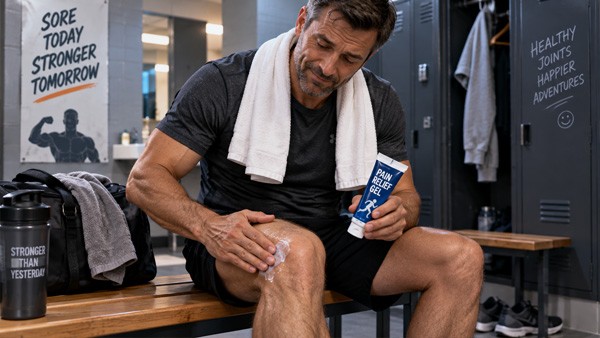
| Topical anti-inflammatory gel | First-choice medication for knee and hand osteoarthritis in several guidelines. Much less absorbed into the body than tablets, so far fewer systemic side effects |
| Muscle relaxants | Short courses can help acute back pain with muscle spasm. They cause drowsiness, so timing matters, and they are not for long-term use |
| Nerve pain medicines | Used for genuine nerve pain such as sciatica with clear nerve symptoms, though evidence in sciatica is weaker than commonly assumed |
| Duloxetine | Has evidence in osteoarthritis and chronic musculoskeletal pain, particularly where pain has become widespread or persistent |
| Opioids | Not recommended for ordinary back pain or osteoarthritis. Benefits are small and short-lived, and long-term use can increase pain sensitivity as well as causing dependence |
The topical gel row is the most practically useful for many people. For knee arthritis in particular, a topical anti-inflammatory delivers useful relief to the joint with a fraction of the systemic exposure of tablets, which matters for anyone older, with kidney problems, on blood pressure medicines, or with a history of stomach ulcers.
⚠️ Anti-inflammatories are not harmless just because they are familiar. They raise blood pressure and cause fluid retention, blunting the effect of several blood pressure medicines; they can damage the stomach lining; and in combination with medicines ending in pril or sartan and a water tablet, they can impair kidney function. The article on blood pressure covers this interaction, and it is one reason the topical form is often preferred.
❌ What does not work well
- Prolonged rest — delays recovery in almost every musculoskeletal problem
- Passive treatment alone, with no exercise component — short-lived relief
- Repeated scans for ordinary back pain — findings are common in pain-free people and frequently increase fear
- Long-term opioids for musculoskeletal pain
- Waiting for the pain to stop before starting — movement is part of the treatment, not a reward for recovery
- Chasing a perfect posture — changing position regularly matters more than achieving one ideal position
📋 Getting the most from treatment
The single strongest predictor of a good outcome is not which technique is used but whether the person does the exercises. A few things make that more likely.
- Agree clear goals at the first appointment — specific activities you want to return to, not just less pain
- Ask for a short programme you will actually do, rather than a long one you will not
- Ask what a flare-up means and what to do when it happens, before it happens
- Expect some discomfort during exercise, and ask what level is acceptable
- Ask how long before change is expected — usually six to twelve weeks, and three months or more for shoulders and pelvic floor
- Say if something is not working, so the programme can be adjusted rather than abandoned
- Keep going after discharge. Gains fade if the exercise stops entirely
🚑 When to seek help
- Loss of bladder or bowel control, numbness in the saddle area, or severe weakness in both legs — emergency
- Back pain with fever, or after a significant fall — urgent
- New back pain with a history of cancer, or with unexplained weight loss — urgent
- Progressive weakness, numbness or foot drop
- Night pain that wakes you and does not change with position
- Joint that is hot, swollen and very painful, particularly with fever — needs same-day assessment
- Pain not improving after six to twelve weeks of appropriate treatment
- Escalating painkiller use, particularly opioids
- Stomach pain, black stools or swelling while taking anti-inflammatories
Pain relief that supports rehabilitation is stocked in the pain medicine category, including the topical anti-inflammatory Jonac (diclofenac gel), which is a first-choice option for knee and hand osteoarthritis, alongside oral options such as Naprosyn (naproxen) and Mobic (meloxicam). Short-term muscle relaxants such as Robaxin (methocarbamol) are available in the muscle relaxer category. Medication works best as support for an active rehabilitation programme rather than as a replacement for it.
❓ Frequently asked questions
Should I rest my back or keep moving?
Keep moving, as far as pain allows. Prolonged bed rest delays recovery and leads to stiffness, weakness and fear of movement. Continuing normal activity, even while sore, produces faster recovery in ordinary back pain, and gradually increasing what you do is part of the treatment rather than a risk.
Do I need a scan for back pain?
Usually not in the first weeks. Disc bulges and degeneration are extremely common in people with no pain at all, so scans rarely change treatment and often increase fear and inactivity. Imaging is needed when warning features are present, such as fever, a history of cancer, significant trauma, unexplained weight loss or progressive weakness.
Does paracetamol help back pain?
Trials show it performs little better than a dummy tablet for low back pain, which surprises most people. Anti-inflammatories give modest benefit, and topical gels are useful for joint pain. Medication is best seen as something that makes movement possible rather than as the treatment itself.
Will exercise wear out my arthritic knee?
No. Cartilage is maintained by loading, and appropriate exercise improves pain and function rather than accelerating damage. Exercise is recommended as a core treatment for knee and hip arthritis regardless of severity. Soreness that settles within a day is acceptable; pain rising steadily over weeks means the programme needs adjusting.
How long before physiotherapy works?
Usually six to twelve weeks for back and knee problems, and three months or more for shoulder programmes and pelvic floor training. Stopping at six weeks is the commonest reason people conclude it failed. Ask at the first appointment how long change is expected to take.
Is massage or manipulation enough on its own?
It can reduce pain in the short term, which is useful because it allows movement. But relief alone rarely lasts. Treatment that includes an exercise programme you understand and continue produces considerably better long-term results than passive treatment alone.
Is a gel better than tablets for knee pain?
For knee and hand osteoarthritis, topical anti-inflammatory gel is a first-choice option in several guidelines. Much less is absorbed into the body than with tablets, so there are far fewer effects on the stomach, kidneys and blood pressure, which matters particularly for older people and anyone on blood pressure medicines.
Are opioids appropriate for back pain?
They are not recommended for ordinary back pain or osteoarthritis. Benefits are small and short-lived, and long-term use causes dependence and can increase pain sensitivity, making the underlying problem worse. Escalating opioid use is a reason to review treatment rather than increase the dose.
What back pain symptoms are an emergency?
Loss of bladder or bowel control, difficulty passing urine, numbness around the genitals, buttocks or inner thighs, or severe weakness in both legs. That combination can mean compression of the nerves at the base of the spine, where the window to prevent permanent damage is hours. Fever with back pain, or back pain after a significant fall, also needs urgent assessment.
What else do physiotherapists do?
Far more than joints and sports injuries. Pelvic floor training for incontinence, pulmonary rehabilitation for lung disease, cardiac rehabilitation after a heart attack, rehabilitation after stroke and in multiple sclerosis and Parkinson disease, and falls prevention and balance work for older adults, which protects independence.
📑 Sources and editorial
- Clinical guidelines on the assessment and management of low back pain and sciatica
- Evidence on activity versus bed rest and on imaging in non-specific back pain
- Systematic reviews of exercise therapy for low back pain and neck pain
- Guidelines on osteoarthritis management, including exercise as core treatment and topical anti-inflammatories as first-line medication
- Trial evidence on paracetamol in low back pain
- Evidence on opioids in musculoskeletal pain and on opioid-induced hyperalgesia
- Reviews of pelvic floor muscle training, pulmonary rehabilitation and cardiac rehabilitation outcomes
- Guidance on red flag features requiring urgent assessment, including cauda equina syndrome
- Related reading: tension headache, urinary incontinence, physical activity, fibromyalgia
- Related products: pain medicine category, muscle relaxer category
- RXshop Editorial Team — reviewed by Emily Chen, MD, Internal Medicine
Medical Disclaimer: The information in this article is for educational and informational purposes only and is not a substitute for professional medical advice, diagnosis, or treatment. Always seek guidance from a qualified healthcare provider with any questions you may have regarding a medical condition, and before starting, stopping or changing any medication.