Five Foods for Stress: What They Really Do

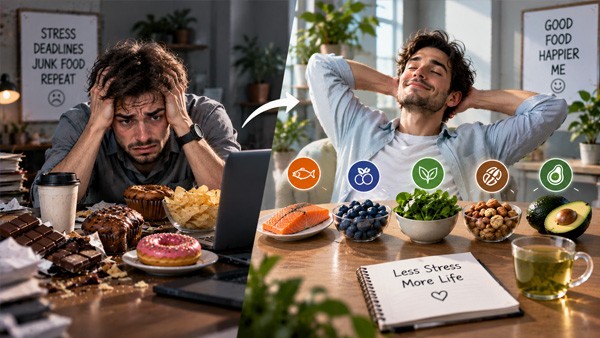
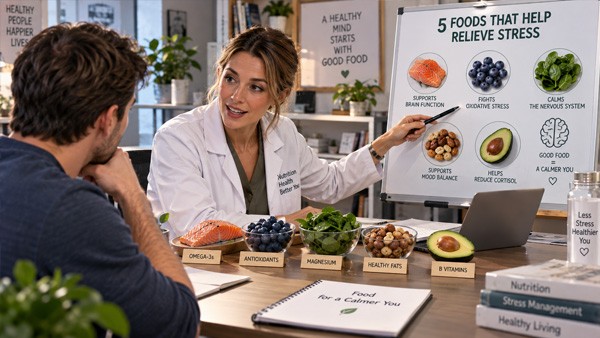
Food genuinely affects how you feel, and almost everything written about which foods and why is wrong in the details. The popular explanations rest on a chain of reasoning that sounds convincing and falls apart on inspection, which is a shame, because there is a real and more interesting story underneath.
These five foods are worth eating. What follows is what each one actually does, how strong the evidence is, and what matters considerably more than any of them.
🧠 Start with the claim everything else is built on, because it is not true as usually stated. The story goes: this food contains tryptophan, tryptophan becomes serotonin, serotonin makes you happy. The gap is in the middle. Tryptophan has to cross from the blood into the brain, and it uses a transporter it shares with several other amino acids that compete for the same doorway. Protein-rich foods raise tryptophan and raise its competitors at the same time, so the amount reaching the brain barely moves — and can fall. Eating a food because it contains tryptophan does very little on its own.
🔬 The mechanism that does work
There is a real version of that story and it involves carbohydrate rather than protein.
Eating carbohydrate raises insulin. Insulin drives most amino acids out of the bloodstream into muscle — but it affects tryptophan much less, because a large share of tryptophan travels bound to a blood protein and is shielded. So after a carbohydrate-containing meal, the ratio of tryptophan to its competitors rises, more gets through the doorway, and brain tryptophan goes up.
This is why a carbohydrate meal can produce a mild sense of calm and drowsiness while a purely protein one does not, and it gives the craving for something starchy under stress a genuine physiological basis rather than a purely psychological one.
Two further corrections, both of which appear constantly in writing on this subject.
Eating serotonin does nothing. Bananas, walnuts, tomatoes and several other foods contain serotonin itself. It does not cross into the brain. Serotonin taken by mouth has no effect on mood whatsoever.
Most of the body’s serotonin is not in the brain at all. The overwhelming majority sits in the gut, regulating gut movement and secretion. Measurements of serotonin in the blood say almost nothing about what is happening in the brain.
🥣 Porridge and whole grains

What is claimed: B vitamins for the nervous system, and tryptophan for serotonin.
What actually stands up: the steadiest and most useful effect on this whole list, and it has nothing to do with either claim.
Oats contain a soluble fibre that slows the release of glucose considerably, so blood sugar rises gently and falls gently instead of spiking and dropping. That matters because the symptoms of a blood sugar drop are almost indistinguishable from the symptoms of anxiety — shakiness, a racing heart, sweating, irritability, poor concentration and a sense of unease.
Someone whose breakfast is sweet coffee and something white, whose morning ends in a crash at eleven, spends part of every day with a physical state that closely resembles anxiety and gets interpreted as stress. Changing that one meal produces a noticeable difference within days, and it is the most reliable food intervention in this article.
Whole grains also carry magnesium and B vitamins, and their fibre feeds gut bacteria that produce compounds increasingly thought to influence the brain — a genuinely interesting area of research that is not yet settled enough to make promises about.
Practically: rolled or steel-cut oats rather than instant, which is processed enough to behave more like a fast sugar. Add protein and fat — nuts, seeds, yoghurt — which flatten the curve further.
🌰 Nuts

What is claimed: brain food, magnesium protects the nervous system.
What actually stands up: the magnesium point is the most defensible of the popular claims, with an honest caveat.
Magnesium is involved in regulating the receptors that govern nervous system excitability and in the hormonal stress response. Low magnesium is associated with anxiety symptoms in observational studies, and intake is genuinely low in a substantial share of people eating a diet built on refined foods.
The caveat is that correcting a shortfall is not the same as supplementing someone who has enough. Trials of magnesium supplements in people who are not deficient show small and inconsistent effects. If your intake is poor, improving it plausibly helps. If it is already adequate, more will not calm you down.
Nuts also contribute B vitamins, vitamin E, and in walnuts a plant form of omega-3 — though the body converts that form to the useful ones inefficiently, so walnuts are not a substitute for fish.
The other real benefit is practical. A handful of nuts is one of the few genuinely convenient snacks that does not spike blood sugar, which brings it back to the mechanism in the previous section.
Practically: a small handful, unsalted, unsweetened. Pumpkin seeds, almonds and cashews are the strongest for magnesium. They are calorie-dense, so a handful rather than a bag.
🍌 Bananas

What is claimed: serotonin, magnesium, potassium, and a mood lift.
What actually stands up: less than the reputation, and something worth knowing anyway.
The serotonin claim is the clearest example of the error described above. Bananas do contain serotonin. It does not reach the brain. That part contributes nothing.
The magnesium content is moderate rather than remarkable — nuts, seeds and leafy greens all supply considerably more. The potassium content is genuine and matters for blood pressure and muscle function rather than for mood.
What bananas actually offer is a portable carbohydrate that raises blood sugar without dropping it sharply afterwards, thanks to their fibre. Combined with the insulin mechanism described earlier, a banana eaten as a snack does mildly favour tryptophan getting into the brain — which is the honest version of the mood claim, and a modest one.
Eating one with a few nuts is better than either alone, since the fat and protein steady the release further.
🍫 Dark chocolate

What is claimed: antioxidants that break down stress hormones, tryptophan, and mood improvement.
What actually stands up: a real but small effect, arriving by routes other than the one usually given.
The claim that antioxidants break down stress hormones is not a real mechanism. Cortisol is not disposed of by antioxidants and nothing eaten dismantles it.
What cocoa does contain is flavanols, which improve the function of the blood vessel lining and increase blood flow, including to the brain. Trials of cocoa flavanols have found modest improvements in some cognitive measures and small effects on mood. The effect is real, it is small, and it requires genuinely high cocoa content — most chocolate sold contains far too little to be relevant.
A second route is more honest than it sounds: eating something you find delicious improves mood immediately, through the reward system, and that effect is real even though it is not nutritional. It is also short-lived, which is why it does not work as a strategy.
Two cautions. Dark chocolate contains caffeine and a related stimulant in meaningful amounts at high cocoa percentages, so a large evening portion can disturb sleep and, in caffeine-sensitive people, increase anxiety rather than reduce it. And chocolate is the classic food eaten in response to stress rather than for enjoyment, which is a pattern worth noticing in itself.
Practically: seventy percent cocoa or above, a couple of squares rather than a bar, not in the evening.
🐟 Oily fish

What is claimed: omega-3 fats with a calming effect by lowering adrenaline.
What actually stands up: the strongest evidence of the five, though not for the reason stated.
The adrenaline claim is not established. What is reasonably well supported is something broader.
The long-chain omega-3 fats found in oily fish are structural components of brain cell membranes and influence inflammatory signalling. Analyses of trials find a modest but genuine benefit in depressive symptoms, most consistently where one particular omega-3 predominates and at doses corresponding to more than most people eat. Evidence in anxiety is thinner and points the same direction.
Modest is the operative word. This is not a treatment for a mood disorder and it is a real, replicated effect — which puts it well ahead of anything else on this list.
Note that the plant forms of omega-3 in walnuts, flaxseed and rapeseed oil convert to the useful long-chain forms very inefficiently, so they are not equivalent. For anyone not eating fish, algae-derived supplements provide the long-chain forms directly.
Practically: two portions of oily fish a week — salmon, mackerel, sardines, herring — which is the standard recommendation and is more than most people manage.
📊 The five, ranked honestly
| Food | What actually works | Strength of evidence |
|---|---|---|
| Oily fish | Long-chain omega-3 with modest effects on mood | Best of the five — replicated trials, small effect |
| Whole grains and oats | Steady blood glucose, avoiding symptoms that mimic anxiety | Strong mechanism, immediately noticeable |
| Nuts | Magnesium where intake is low; a snack that does not spike sugar | Reasonable, with the caveat about being replete already |
| Dark chocolate | Cocoa flavanols on blood flow; immediate pleasure | Real but small; needs high cocoa content |
| Bananas | Portable carbohydrate favouring tryptophan transport | Weakest — the popular claims do not hold |
⚖️ What matters more than any of them
Single foods are a small lever. These are the larger ones, and they are worth putting first.
The overall pattern rather than individual items. A trial that put people with significant depression on a Mediterranean-style diet — vegetables, legumes, whole grains, fish, olive oil, less processed food — produced meaningful improvement compared with a control group. It was small and it has been partially replicated, and it points to the diet as a whole rather than to any hero ingredient.
Regular meals. Skipping meals and then eating a large one produces exactly the glucose swings described earlier. Eating something every four or five hours does more for how you feel than any specific food does.
Alcohol. The most consequential item on this list. It relieves anxiety for an hour or two and produces a rebound as it clears, so anxiety the following day is higher than baseline. It also reliably fragments the second half of the night. A person drinking most evenings to manage stress is in a self-sustaining loop and will get more from addressing that than from any dietary change.
Caffeine. A stimulant that produces a physical state — raised heart rate, alertness, tremor — that overlaps closely with anxiety, and people vary enormously in sensitivity because of how quickly they clear it. Anyone prone to anxiety who drinks several coffees a day is running an experiment worth pausing for a fortnight.
Sleep. Short sleep raises emotional reactivity measurably and reduces the capacity to regulate it. It is upstream of almost everything else here.
Exercise. The single most effective lifestyle intervention for anxiety and low mood, with substantially better evidence than any food. Regular aerobic activity produces effects large enough to be clinically meaningful, which is not true of anything on the list above.
⚠️ The uncomfortable summary: if you did only one thing from this article, it should not be a food. Cutting evening alcohol, moving caffeine to the morning, sleeping an extra hour and walking briskly for half an hour most days will each do more than adding salmon to your week. The foods are worth eating and they operate at the margins. Being honest about that is more useful than a list that implies stress is a nutritional deficiency.
🚫 What food cannot do
Diet supports mental health. It does not treat mental illness, and the difference matters.
No food, supplement or dietary pattern treats an anxiety disorder, depression, panic disorder or post-traumatic stress. Where those are present, dietary change is a useful accompaniment to treatment and is not a substitute for it, and time spent adjusting meals while a treatable condition goes untreated is time lost.
Be particularly wary of anything sold as a natural alternative to treatment. Supplements marketed for stress are largely unregulated, frequently contain far less than the label claims, occasionally contain things the label does not mention, and can interact with prescribed medication — St John’s wort in particular interferes with a long list of drugs including hormonal contraception and antidepressants.
🩺 When stress has become something else
Ordinary stress is a response to circumstances, fluctuates with them, and eases when they do. These features suggest it has crossed into something that needs assessment.
- Worry that will not switch off, most days, for months, about multiple things
- Persistent low mood or loss of enjoyment lasting more than two weeks
- Panic attacks — sudden intense fear with palpitations, breathlessness, and a sense of impending disaster
- Avoiding situations you used to manage
- Sleep disturbed most nights, particularly waking early and unable to return to sleep
- Physical symptoms with no explanation — tension headaches, gut symptoms, chest tightness, persistent fatigue
- Drinking more, or using anything else, to cope
- Function affected — work, relationships, or day-to-day tasks
- Thoughts of harming yourself — seek help immediately rather than waiting
Both talking therapies and medication are effective for anxiety and depression, and the article on generalised anxiety disorder covers what assessment and treatment involve. Prescription options are stocked in the antidepressant category, and which if any is appropriate is a decision for a prescriber who knows the whole picture rather than something to select from a list.
📋 A week that would actually help
Breakfast with slow carbohydrate and some protein — oats with nuts and yoghurt, or something equivalent. This alone changes how the late morning feels.
Something every four or five hours rather than a long gap and a large meal.
Oily fish twice across the week.
Nuts or seeds as the default snack, a handful at a time.
Caffeine before midday only, and less of it than you currently have.
Alcohol on fewer evenings, and not as a way of unwinding.
Half an hour of brisk walking most days, which does more than everything above combined.
A consistent bedtime, which does more than most of it too.
Dark chocolate when you want it, in the afternoon, enjoyed rather than eaten absently.
❓ Frequently asked questions
Does eating tryptophan raise serotonin?
Barely, on its own. Tryptophan crosses into the brain through a transporter it shares with several competing amino acids, and protein-rich foods raise the competitors alongside the tryptophan, so the amount getting through hardly moves and can fall. The version that works involves carbohydrate: insulin clears the competitors into muscle while leaving tryptophan relatively unaffected, so the ratio shifts and more gets in.
Bananas contain serotonin. Does that help my mood?
No. Serotonin from food does not cross into the brain, so eating it has no effect on mood at all. The same applies to walnuts, tomatoes and the other foods cited for this. Worth adding that the overwhelming majority of the body's serotonin sits in the gut regulating digestion, so blood serotonin levels say almost nothing about what is happening in the brain.
Which of these five is actually worth prioritising?
Oily fish has the best evidence — replicated trials showing a modest but real effect of long-chain omega-3 on mood. Whole grains have the strongest immediate mechanism, by keeping blood glucose steady and avoiding symptoms that closely mimic anxiety. Nuts are reasonable if your magnesium intake is low. Chocolate has a small real effect. Bananas are the weakest, since the popular claims do not hold up.
Why does skipping meals make me feel anxious?
Because the symptoms of a blood sugar drop are almost indistinguishable from anxiety — shakiness, a racing heart, sweating, irritability and poor concentration. Someone whose breakfast is sweet coffee and something white will crash mid-morning into a physical state that gets read as stress. Changing that one meal to slow carbohydrate with some protein produces a noticeable difference within days.
Do antioxidants break down stress hormones?
No, that is not a real mechanism — cortisol is not disposed of by antioxidants and nothing you eat dismantles it. What cocoa genuinely contains is flavanols, which improve blood vessel function and increase blood flow including to the brain, with modest effects on mood and cognition in trials. It needs seventy percent cocoa or above; most chocolate contains far too little to matter.
Can dark chocolate make anxiety worse?
It can. High-cocoa chocolate contains caffeine and a related stimulant in meaningful amounts, so a large evening portion can disturb sleep and, in caffeine-sensitive people, increase anxiety rather than settle it. A couple of squares in the afternoon is the sensible version. It is also the classic food eaten in reaction to stress rather than for enjoyment, which is a pattern worth noticing.
Will a magnesium supplement calm me down?
Only if your intake is genuinely low, which it may be on a diet built on refined foods. Correcting a shortfall is not the same as supplementing someone already replete, and trials in people who are not deficient show small and inconsistent results. Nuts, seeds, whole grains, leafy greens and dark chocolate are all good dietary sources.
Are walnuts as good as fish for omega-3?
No. Walnuts, flaxseed and rapeseed oil contain a plant form of omega-3 that the body converts to the useful long-chain versions very inefficiently, so they are not equivalent to oily fish. Two portions of salmon, mackerel, sardines or herring a week is the standard recommendation. For anyone not eating fish, algae-derived supplements supply the long-chain forms directly.
Does a glass of wine in the evening help with stress?
For an hour or two, and it costs more than it gives. Alcohol produces a rebound as it clears, so anxiety the following day runs higher than baseline, and it reliably fragments the second half of the night. Someone drinking most evenings to unwind is in a self-sustaining loop and will get more from addressing that than from any dietary change in this article.
If I only change one thing, what should it be?
Not a food. Half an hour of brisk walking most days has substantially better evidence for anxiety and low mood than anything on this list. After that, cutting evening alcohol, moving caffeine to the morning and keeping a consistent bedtime each do more than adding a particular food. The foods are worth eating and they operate at the margins.
Can diet treat depression or anxiety?
No. Diet supports mental health and does not treat mental illness. A trial putting people with significant depression on a Mediterranean-style diet did produce meaningful improvement, which points to the overall pattern rather than to any single ingredient — and it was studied alongside treatment, not instead of it. Time spent adjusting meals while a treatable condition goes untreated is time lost.
Are herbal stress supplements a safe alternative?
Treat them cautiously. Supplements marketed for stress are largely unregulated, frequently contain considerably less than the label claims, occasionally contain things not on the label at all, and can interact with prescribed medication. St John's wort in particular interferes with a long list of drugs including hormonal contraception and antidepressants, which is a genuine and regularly missed problem.
📑 Sources and editorial
- Research on tryptophan transport across the blood-brain barrier and competition with large neutral amino acids
- Studies of carbohydrate intake, insulin and the tryptophan ratio
- Meta-analyses of omega-3 fatty acid supplementation in depression and anxiety
- Trials of cocoa flavanols on endothelial function, cerebral blood flow, mood and cognition
- Observational and interventional literature on magnesium status and anxiety symptoms
- The SMILES randomised controlled trial of dietary improvement in major depression, and subsequent replication work
- Research on reactive hypoglycaemia symptoms and their overlap with anxiety
- Evidence on alcohol, rebound anxiety and sleep architecture
- Meta-analyses of exercise for anxiety and depressive symptoms
- Reviews of supplement quality, labelling accuracy and St John's wort drug interactions
- Related reading: generalised anxiety disorder, persistent tiredness
- Related products: antidepressant category
- RXshop Editorial Team — reviewed by Sarah Mitchell, PharmD, Clinical Pharmacist and Chief Editorial
Medical Disclaimer: The information in this article is for educational and informational purposes only and is not a substitute for professional medical advice, diagnosis, or treatment. Always seek guidance from a qualified healthcare provider with any questions you may have regarding a medical condition, and before starting, stopping or changing any medication.