Shaken Baby Syndrome: Prevention Starts With Crying

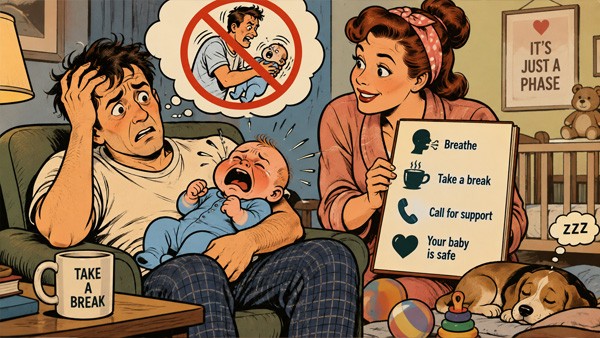

Shaken baby syndrome, also called abusive head trauma, happens when a baby is shaken violently. It takes only a few seconds, and it can cause bleeding and swelling in the brain, blindness, seizures, lasting disability or death.
It almost always happens in the same situation: a caregiver, exhausted and at the end of their tether, with a baby who will not stop crying. Understanding that situation — and having a plan for it — is the most effective prevention there is.
🔴 Never shake a baby, for any reason. If you feel frustration rising, put the baby down safely on their back in the cot, leave the room, and take a few minutes to calm down. A baby crying safely in a cot for a short while will come to no harm. Shaking can cause permanent harm in seconds.
🧠 Why babies are so vulnerable
Babies have large, heavy heads relative to their bodies and weak neck muscles. Their brains are soft and still developing. When a baby is shaken, the head whips back and forth, and the brain moves inside the skull. Blood vessels tear, causing bleeding around the brain and in the back of the eyes, and the brain can swell.
The harm is serious. A significant proportion of babies who are shaken die, and most survivors have lasting problems, which can include learning difficulties, vision loss, seizures, cerebral palsy and behavioural problems.
Normal, gentle play does not cause this. Bouncing a baby on your knee, gently rocking, jogging with a pram or an accidental minor bump are not the same as violent shaking.
👶 Understanding crying
Crying is the main trigger, so understanding normal crying is central to prevention.
| Fact | What it means |
|---|---|
| Crying increases from around two weeks | It is expected, not a sign that something is wrong |
| It peaks at around six to eight weeks | This is the most difficult period, and the time when shaking most often happens |
| It usually eases by three to four months | The phase passes |
| Some crying cannot be soothed | Even when everything is done right, a healthy baby may keep crying |
| Crying is often worse in the evening | Exactly when parents are most tired |
Crying that cannot be soothed is not a sign of bad parenting, and it is not the baby being difficult on purpose. Knowing that it is normal and temporary helps many parents stay calm.
📋 A plan for when crying will not stop
- Check the basics — hunger, nappy, too hot or cold, wind, tiredness
- Check for illness — fever, unusual crying, poor feeding or floppiness need medical advice
- Try soothing — holding close, gentle rocking, a walk, a car ride, quiet background noise, a warm bath
- If you feel frustrated or angry, put the baby down safely on their back in the cot
- Leave the room and close the door
- Calm yourself — breathe slowly, have a drink of water, sit down for ten to fifteen minutes
- Call someone — a partner, friend, family member, health visitor or helpline
- Check on the baby once you feel calmer
✅ Share this plan with everyone who looks after your baby — partners, grandparents, babysitters and friends. Anyone can reach breaking point, and people who have not cared for a crying baby before may not expect how hard it is.
💭 Exhaustion, stress and postnatal depression
The risk rises when caregivers are exhausted, isolated, under financial or relationship stress, or struggling with their mental health. Postnatal depression affects mothers and also fathers and partners, and it makes coping with a crying baby much harder.
| Warning sign in a parent | What to do |
|---|---|
| Low mood lasting more than two weeks | Speak to a doctor or health visitor |
| Feeling unable to cope, overwhelmed or angry | Ask for practical help and support |
| Feeling detached from the baby | Tell a health professional — it is common and treatable |
| Thoughts of harming yourself or the baby | Seek help urgently, the same day |
The difference between normal early sadness and depression is explained in the article on baby blues. Asking for help is a responsible and protective step, not a failure.
🚨 Signs a baby may have been shaken
🔴 Call emergency services immediately if a baby shows any of these, particularly after a possible shaking or injury:
- Extreme sleepiness or difficulty waking
- Floppiness or unresponsiveness
- Seizures or twitching
- Breathing problems or pauses in breathing
- Vomiting without another obvious cause
- Poor feeding or refusing to feed
- A bulging soft spot on the head
- Pale or blue skin
- Unusual irritability or high-pitched crying
If a baby has been shaken, even for a moment, get medical help straight away and tell the doctors what happened. Early treatment can make a real difference to the outcome.
🛡️ If you are worried about a baby
If you suspect a baby is being harmed, contact emergency services if there is immediate danger, or your local child protection services. You do not need to be certain to raise a concern.
🩺 When to seek help
- Any of the emergency signs above — call emergency services
- A baby under three months with a fever — seek urgent medical advice
- Crying that sounds different, weak or high-pitched, or comes with poor feeding
- Feeling unable to cope with crying — ask for help before reaching breaking point
- Low mood or anxiety after the birth lasting more than two weeks, in any parent
- Thoughts of harming yourself or the baby — seek help the same day
Postnatal depression is treatable, and for some parents antidepressant medicine is part of that treatment. Options are available in the antidepressants category, including Sertafine (sertraline), which is commonly used during breastfeeding. Any treatment should be discussed with a doctor.
❓ Frequently asked questions
What is shaken baby syndrome?
A serious brain injury caused by violently shaking a baby. The head moves back and forth, causing bleeding and swelling in the brain and bleeding at the back of the eyes. It can lead to lasting disability or death, and it can happen in just a few seconds.
Can bouncing or playing cause shaken baby syndrome?
No. Gentle bouncing on a knee, rocking, jogging with a pram or minor everyday bumps do not cause it. It results from violent shaking, usually when a caregiver is overwhelmed by frustration.
When does baby crying peak?
Crying typically increases from around two weeks, peaks at about six to eight weeks, and eases by three to four months. Some crying cannot be soothed even when everything is done right. This peak period is when shaking most often happens.
What should I do if my baby will not stop crying?
Check feeding, nappy, temperature and signs of illness, then try soothing. If you start to feel frustrated, put your baby safely on their back in the cot, leave the room, calm down for ten to fifteen minutes and call someone for support before going back.
Is it safe to leave a crying baby in the cot?
Yes, for a short time. A baby lying safely on their back in a cot while you take a few minutes to calm down will come to no harm. It is far safer than continuing to hold a crying baby when you feel overwhelmed.
What are the signs a baby has been shaken?
Extreme sleepiness, floppiness, seizures, breathing problems, vomiting, poor feeding, a bulging soft spot, pale or blue skin, or unusual irritability. Call emergency services immediately and tell doctors what happened.
Does postnatal depression increase the risk?
Exhaustion, isolation and depression all make coping with crying harder. Postnatal depression can affect mothers, fathers and partners, and it is treatable. Seeking help early protects both the parent and the baby.
Who should know about the coping plan?
Everyone who cares for the baby, including partners, grandparents, babysitters and friends. People who have not looked after a crying baby before may not expect how difficult it can be.
What if I think someone is harming a baby?
Contact emergency services if there is immediate danger, or local child protection services. You do not need to be certain before raising a concern.
Can babies recover from shaken baby syndrome?
Some recover well, but many have lasting effects such as learning difficulties, vision loss, seizures or cerebral palsy, and some do not survive. Getting medical help immediately after any shaking improves the chances of a better outcome.
📑 Sources and editorial
- Public health guidance on the prevention of abusive head trauma in infants
- Research on normal infant crying patterns and the crying peak
- Clinical literature on outcomes of abusive head trauma
- Guidance on postnatal depression in mothers and partners
- Related reading: baby blues and postnatal depression, preventing depression
- Related products: antidepressants category
- RXshop Editorial Team — reviewed by Anita Sharma, MD, Obstetrics and Gynaecology
Medical Disclaimer: The information in this article is for educational and informational purposes only and is not a substitute for professional medical advice, diagnosis, or treatment. Always seek guidance from a qualified healthcare provider with any questions you may have regarding a medical condition, and before starting, stopping or changing any medication.