Buy Acular LS (Ketorolac) Online - NSAID Eye Drops Generic for Eye Inflammation and Allergies

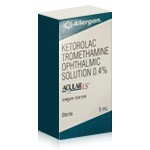
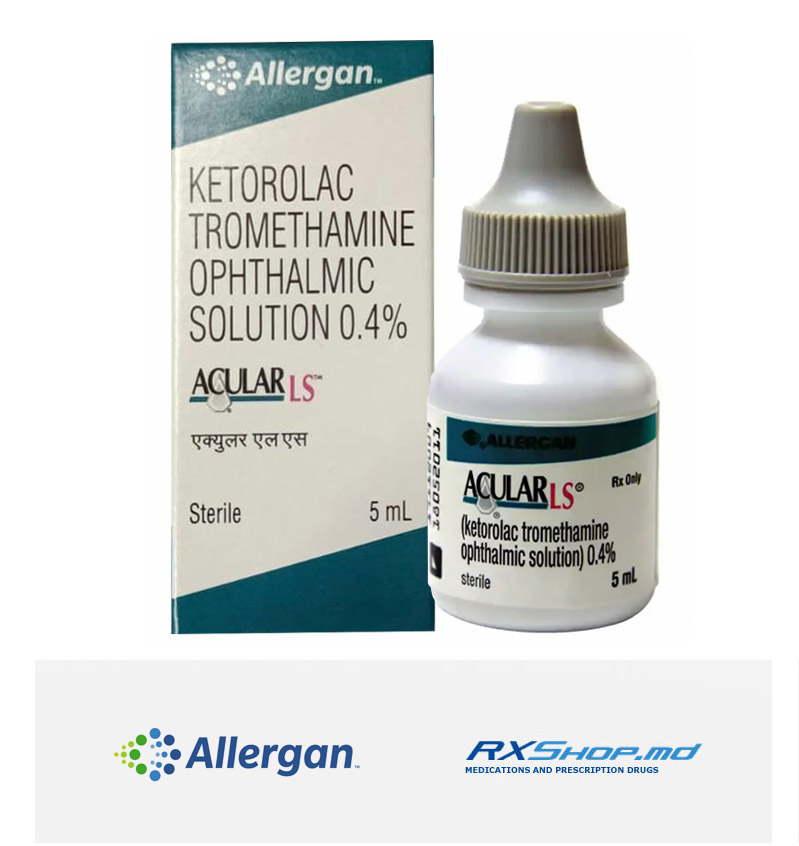
Acular LS (Ketorolac Tromethamine) represents the lower-strength preservative-friendly formulation of one of the most prescribed ophthalmic NSAID eye drops for managing eye pain, inflammation, and allergic conditions. As a non-steroidal anti-inflammatory drug (NSAID) applied directly to the eye, Acular LS works locally to reduce ocular prostaglandin synthesis without the side effects of corticosteroid eye drops, making it ideal for post-surgery use and chronic allergic eye conditions. The 0.4% ophthalmic solution delivers targeted anti-inflammatory relief with excellent corneal tolerability.
Ketorolac tromethamine works by competitively inhibiting both cyclooxygenase-1 (COX-1) and cyclooxygenase-2 (COX-2) enzymes in eye tissues, blocking conversion of arachidonic acid to inflammatory prostaglandins. This local NSAID action prevents the prostaglandin-mediated vasodilation, vascular permeability, and nerve sensitization that cause eye pain, redness, swelling, and itching. The result: ocular inflammation reduces within hours of application, eye pain decreases 50-70%, allergic itching subsides, and surgical recovery accelerates without delaying corneal healing.
Acular LS serves multiple eye care indications across surgical and allergic conditions. For post-cataract surgery, the medication reduces postoperative inflammation and macular edema while improving visual recovery. For post-LASIK and post-PRK refractive surgery, Acular LS provides crucial pain control during the first 24-72 hours of corneal healing with its lower 0.4% strength minimizing burning sensation. For seasonal allergic conjunctivitis, the eye drops relieve persistent itching, redness, and tearing in patients sensitive to pollen dust or pet dander. The medication also treats corneal abrasion pain and ocular itching from various causes.
Acular LS offers convenient 4 times daily dosing (1 drop in affected eye QID), with the preservative-friendly lower-strength formulation providing better corneal comfort than 0.5% Acular. The medication acts locally with minimal systemic absorption, avoiding the gastrointestinal and cardiovascular effects of oral NSAIDs. Generic ketorolac ophthalmic from quality manufacturers provides identical therapeutic effects to brand Acular LS by Allergan/AbbVie at substantially lower cost. The active ingredient remains chemically identical across both branded and generic versions of this established NSAID eye drop therapy.
Free prescription
Discrete packaging
Have questions?
Quality Assurance

- Eye Pain: Discomfort or sharp pain in eye following injury surgery or inflammatory conditions requiring relief;
- Eye Itching: Persistent irritation and scratching sensation in eyes caused by allergies or inflammation;
- Allergic Conjunctivitis: Eye inflammation from allergens like pollen pet dander dust causing itching redness and tearing;
- Eye Allergies: Allergic reactions affecting eyes causing itching swelling tearing and discomfort during allergy season;
- Seasonal Allergic Conjunctivitis: Cyclical eye allergies occurring during pollen seasons requiring symptomatic relief;
- Post Cataract Surgery Inflammation: Inflammation and pain following cataract removal surgery requiring anti-inflammatory therapy;
- Post LASIK Surgery Pain: Acute pain during first 24-72 hours after LASIK refractive surgery requiring NSAID relief;
- Post Refractive Surgery Pain: Pain following PRK LASEK or other refractive procedures during corneal healing phase;
- LASIK Recovery Pain: Discomfort during corneal flap healing benefiting from lower-strength NSAID drops;
- Cataract Recovery: Postoperative inflammation control following cataract surgery preventing macular edema;
- Macular Edema Prevention: Reducing risk of cystoid macular edema after cataract surgery through NSAID prophylaxis;
- Corneal Abrasion Pain: Pain from scratched cornea benefiting from topical NSAID relief during epithelial healing;
- Ocular Injury Pain: Mild eye trauma pain managed through topical anti-inflammatory and analgesic action;
- Ocular Itching: Eye itching from various causes including allergies dry eye or chronic inflammation;
- Eye Redness Inflammatory: Eye redness from inflammatory causes responding to topical NSAID rather than vasoconstrictor drops;
- NSAID Eye Drops Therapy: Non-steroidal anti-inflammatory eye drop class for ocular inflammation without corticosteroid risks;
- Steroid Sparing Eye Therapy: Alternative to corticosteroid eye drops avoiding pressure elevation and cataract formation risks;
- Ophthalmic Pain Management: Topical analgesic therapy for ocular pain without systemic NSAID gastrointestinal risks;
- Topical Eye Drops Therapy: Direct eye application providing local concentrated effect with minimal systemic absorption.
- Less Eye Inflammation: Ocular redness swelling and tissue irritation decrease through prostaglandin synthesis blockade;
- Less Eye Itching: Allergic itching sensation in eyes resolves through inflammatory mediator suppression;
- Less Eye Redness: Inflammatory eye redness fades as conjunctival vasodilation reduces during treatment;
- Less Allergic Eye Symptoms: Tearing burning and irritation from seasonal allergies improve significantly;
- Less Conjunctivitis Symptoms: Allergic conjunctivitis symptoms including itching redness and tearing resolve effectively;
- Faster Eye Recovery: Post-surgical healing accelerates as inflammation reduces enabling tissue repair;
- Less Post Surgery Pain: Pain following cataract LASIK or PRK surgery decreases during critical first days;
- Better LASIK Recovery: Lower-strength 0.4% formulation provides post-LASIK pain control with minimal burning sensation;
- Better Cataract Surgery Recovery: Postoperative inflammation control improves visual recovery and patient comfort;
- Less Macular Edema Risk: Cystoid macular edema after cataract surgery prevention through anti-inflammatory effect;
- Less Corneal Abrasion Pain: Pain from corneal injury improves during epithelial healing phase with NSAID drops;
- Less Steroid Use: NSAID alternative reduces need for corticosteroid eye drops avoiding pressure elevation risks;
- Better Corneal Comfort: Lower 0.4% strength provides better corneal tolerability than 0.5% standard Acular;
- Less Burning Sensation: Reduced burning on application compared to higher-strength formulations improves adherence;
- Less Systemic NSAID Effects: Minimal systemic absorption avoids gastrointestinal and cardiovascular oral NSAID risks;
- Better Visual Recovery: Reduced post-surgery inflammation enables clearer faster visual restoration;
- Better Eye Allergy Control: Long-term allergic conjunctivitis management without sedating systemic antihistamine side effects;
- Four Times Daily Application: Simple 1 drop in affected eye 4 times daily fits easily into morning daytime and evening routine;
- Better Quality of Life: Daily wellbeing improves as bothersome eye symptoms resolve and post-surgery comfort returns.
Generic Acular LS (Ketorolac 5 ml 0.4 %) Medication guide:
📖 What Acular LS Is and How Ketorolac Works
Acular LS is ketorolac tromethamine 0.4 percent ophthalmic solution, a nonsteroidal anti-inflammatory drug (NSAID) eye drop. The "LS" stands for lower strength (0.4 percent vs original Acular 0.5 percent) and lower preservative concentration. Introduced by Allergan in 2003. Standard adjunctive therapy after cataract surgery to reduce inflammation and prevent cystoid macular edema. Also used for allergic conjunctivitis and post-refractive surgery discomfort. Applied topically as eye drops - not swallowed.
Acular LS at a glance
| Active ingredient | Ketorolac tromethamine |
| Concentration | 0.4 percent (4 mg/mL) |
| Class | Ophthalmic NSAID |
| FDA approval (Acular LS) | 2003 |
| Original ketorolac ophthalmic | Approved 1992 |
| Route | Topical ophthalmic (eye drops) |
| Standard dose (post-cataract) | 1 drop four times daily typically |
| Bottle size | 5 mL typical |
| Preservative | Reduced benzalkonium chloride 0.006 percent |
| Manufacturer | Allergan (AbbVie); generic manufacturers |
How ketorolac works
Blocking prostaglandin production
Ketorolac blocks cyclooxygenase (COX) enzymes - both COX-1 and COX-2. These enzymes convert arachidonic acid to prostaglandins. Prostaglandins mediate inflammation, pain, and vascular permeability. In the eye - reduces post-surgical inflammation, prevents cystoid macular edema, controls allergic itching, and reduces pain.
Primary indications
Where ketorolac ophthalmic is standard therapy
- Post-cataract surgery inflammation - most common use; standard adjunctive therapy
- Cystoid macular edema prevention - particularly high-risk clients
- Allergic conjunctivitis - seasonal or perennial; itching relief
- Post-refractive surgery discomfort (LASIK, PRK) - short-term use
- Corneal abrasion pain - selected cases; controversial
- Uveitis anterior - adjunctive to steroids
The cataract surgery context
Most common surgery worldwide
Cataract surgery - approximately 4 million procedures annually in United States, 25+ million globally. Most successful surgery in medicine. Modern phacoemulsification with intraocular lens (IOL) implantation. Postoperative inflammation management is standard - typically combination of steroid plus NSAID eye drops for 4-6 weeks. Acular LS commonly used NSAID component.
Where Acular LS does NOT fit
Not appropriate for
- Hypersensitivity to NSAIDs including aspirin
- Aspirin-exacerbated respiratory disease (Samter triad)
- Active corneal ulceration
- Severe corneal epithelial defects
- Bleeding disorders untreated
- Herpes simplex keratitis active
- Bacterial keratitis without concurrent antibiotic
- Late pregnancy (third trimester) - some caution
The role in cataract surgery care
Standard combination therapy
Modern cataract surgery postoperative regimen typically includes - antibiotic (moxifloxacin, gatifloxacin) 1 week, corticosteroid (prednisolone, dexamethasone) tapering over 4-6 weeks, NSAID (ketorolac, bromfenac, nepafenac) for 4-6 weeks. Ketorolac (Acular LS) is one common NSAID choice.
Compared to systemic ketorolac
Different concept
- Systemic ketorolac (Toradol) - IM/IV/oral for acute pain
- Ophthalmic ketorolac (Acular LS) - eye drops for eye inflammation
- Different indications, different concerns
- Topical - minimal systemic absorption
- Systemic effects rare with eye drops at normal doses
- Do not confuse the two forms
The preservative-reduced advantage
Improved tolerability
Acular LS contains reduced benzalkonium chloride (BAK) preservative - 0.006 percent vs 0.01 percent in original Acular. BAK can be irritating and toxic to corneal epithelium with chronic use. Lower BAK - better tolerated, particularly with 4x daily dosing over weeks. Also lower ketorolac concentration (0.4 vs 0.5 percent) - similar efficacy with less irritation.
Short-term vs long-term use
Duration considerations
- Post-cataract surgery - typically 4-6 weeks
- Allergic conjunctivitis - as needed during allergy season
- Post-refractive surgery - 1-3 days typically
- Not for chronic long-term use - corneal complications increase with prolonged use
- Follow specific ophthalmologist instructions for duration
This guide walks through what Acular LS does, its major indications (cataract surgery, CME prevention, allergic conjunctivitis), proper instillation technique, side effects and monitoring, and modern positioning in cataract care. Treat this guide as a companion to what your ophthalmologist tells you.
👁️ Acular LS for Post-Cataract Surgery Inflammation
Post-cataract surgery inflammation management is the primary Acular LS indication - standard adjunctive therapy.
Cataract surgery background
Most successful surgery
Cataract surgery is one of the most common and successful surgeries. Cloudy lens (cataract) removed and replaced with clear artificial intraocular lens (IOL). Modern phacoemulsification through small (2-3 mm) corneal incision. Same-day procedure typically. Vision restoration substantial. Approximately 4 million annual procedures in US alone.
Post-surgical inflammation
Expected but managed
- All eye surgery causes some inflammation
- Prostaglandins released by tissue trauma
- Blood-aqueous barrier disruption
- Inflammatory cells in anterior chamber
- Untreated - discomfort, delayed healing, complications
- Managed with eye drop regimen (steroid + NSAID + antibiotic)
The NSAID role
Complementary to steroid
Steroids and NSAIDs have complementary anti-inflammatory mechanisms. Steroids affect wide range of inflammatory mediators. NSAIDs specifically block prostaglandin synthesis. Combined - more comprehensive inflammation control than either alone. Standard modern cataract postoperative regimen.
Standard post-cataract regimen
Typical protocol
- Antibiotic (moxifloxacin, gatifloxacin) - 4x daily for 1 week; endophthalmitis prevention
- Steroid (prednisolone acetate, dexamethasone) - 4x daily tapering over 4-6 weeks
- NSAID (Acular LS ketorolac, bromfenac, nepafenac) - 4x daily for 4-6 weeks
- Total drop count - 12+ drops daily initially
- Space drops at least 5 minutes apart
Pre-operative use
Sometimes started before
Some protocols start Acular LS 1-3 days before cataract surgery. Rationale - loaded tissue levels reduce miosis (pupil constriction) intraoperatively, improve visualization, and reduce postoperative inflammation. Widely varying practice - depends on surgeon preference and client factors.
Intraoperative pupil considerations
Pupil dilation maintenance
- Prostaglandins cause intraoperative miosis (pupil constriction)
- Small pupil complicates surgery
- NSAID pretreatment reduces this
- Better pupil dilation maintained during surgery
- Improved visualization for surgeon
- Reduced complication risk
Post-operative timing
Started immediately
Acular LS typically started day of surgery or day after. Continue 4x daily for 4-6 weeks depending on protocol. Sometimes extended for high-risk clients (diabetes, prior CME, complicated surgery). Follow specific ophthalmologist instructions.
Duration of therapy
Standard durations
- Standard post-cataract - 4 weeks typically
- Extended for high-risk - 6-8 weeks or longer
- Diabetic clients - often extended
- Prior CME history - often extended
- Complicated surgery - extended
- Individual ophthalmologist protocols vary
Benefits observed
Multiple advantages
NSAID (including Acular LS) addition to standard postoperative regimen provides - faster recovery of vision, reduced anterior chamber inflammation, lower rate of cystoid macular edema, reduced postoperative discomfort, and potentially better long-term outcomes. Established through multiple clinical trials.
Same-day expectations
Post-op experience
- Blurred vision immediately after surgery (normal)
- Mild discomfort - typically manageable
- Eye drop regimen begins day of surgery
- Follow-up next day, 1 week, 1 month typical
- Substantial vision improvement over days
- Full recovery over weeks
The multi-drop challenge
Complex regimen
Postoperative regimen with multiple drops 4x daily complex for many clients. Adherence issues common. Written schedule helpful. Alternatives - dropless surgery (intraocular sustained delivery), combination drops (single bottle with multiple agents), or newer sustained-release options.
Newer alternatives to drops
Modern innovations
- Dropless cataract surgery - intraocular injection of steroid/antibiotic combinations
- Dexamethasone intracanalicular insert (Dextenza) - punctal steroid
- Sustained-release dexamethasone intraocular (Dexycu)
- Combination drops - multiple agents in single bottle
- Traditional drops (including Acular LS) remain widely used
The high-risk considerations
Enhanced NSAID role
High-risk clients for CME or excessive inflammation - diabetes, uveitis history, retinal disease, complicated surgery, epiretinal membrane. Extended NSAID therapy for these clients. Sometimes started earlier before surgery. Combined with intraocular steroid injection. Individualized approach.
Post-cataract surgery inflammation - primary Acular LS indication. Standard combination with steroid and antibiotic. 4-6 weeks typical duration. Sometimes started pre-operatively. Reduces inflammation, prevents CME, improves comfort. Individualized regimen based on client factors. Newer alternatives available for those preferring simplified approach.
🎯 Acular LS Cystoid Macular Edema Prevention Role
Cystoid macular edema (CME) prevention is a key Acular LS role - particularly in high-risk clients.
Cystoid macular edema background
Post-surgical complication
Cystoid macular edema - fluid accumulation in the macula (central retina) causing blurred central vision. Most common cause of unexpected visual loss after cataract surgery. Peak incidence 4-6 weeks post-surgery. Irvine-Gass syndrome. Substantial impact on visual outcomes if severe.
CME incidence and impact
Substantial condition
- Clinical CME - approximately 1-2 percent uncomplicated cataract surgery
- Angiographic CME - up to 20 percent (many subclinical)
- Higher risk with diabetes - up to 10 percent
- Higher risk with complicated surgery
- Higher risk with uveitis
- Vision impact - can be substantial and prolonged
The pathophysiology
Prostaglandin-mediated
CME thought to be prostaglandin-mediated. Surgical inflammation releases prostaglandins that increase vascular permeability in retinal vessels. Fluid leaks into macula causing cystic spaces. Blocking prostaglandin synthesis (with NSAIDs) reduces this. Mechanism basis for NSAID prevention.
High-risk clients
Enhanced attention
- Diabetes with retinopathy - substantial CME risk
- Prior CME in other eye
- Uveitis history
- Epiretinal membrane
- Vein occlusion history
- Complicated cataract surgery (posterior capsule rupture, vitrectomy)
- Prostaglandin analog glaucoma drops (latanoprost, others)
- Age-related macular degeneration
The prevention evidence
Substantial reduction
Multiple trials show NSAID (including ketorolac) prevents CME in high-risk clients. Wittpenn et al. 2008 - reduced CME risk substantially with ketorolac plus steroid vs steroid alone. Similar evidence for bromfenac and nepafenac. NSAID plus steroid combination now standard for high-risk cataract clients.
Prevention protocol
Typical approach
- Start NSAID 1-3 days pre-op for high-risk clients
- Continue through surgery day
- Postoperative 6-12 weeks for high-risk (extended vs standard 4 weeks)
- Combined with topical steroid standard
- OCT monitoring at 4-6 weeks post-op for high-risk
CME symptoms
Watch for these
CME symptoms - blurred central vision, distorted vision (straight lines appear wavy), reduced contrast, central visual dimness. Peak 4-6 weeks postoperatively. If vision does not improve as expected after cataract surgery, or if vision worsens - report to ophthalmologist. OCT imaging confirms diagnosis.
Established CME treatment
If CME develops
- Intensify topical NSAID (frequency increase)
- Add or intensify topical steroid
- Periocular steroid injection (subtenon)
- Intravitreal steroid injection
- Anti-VEGF injection in some cases
- Retina specialist involvement often helpful
Prostaglandin analog consideration
Glaucoma drops
Prostaglandin analog glaucoma drops (latanoprost, travoprost, bimatoprost, tafluprost) associated with CME risk after cataract surgery. Some surgeons stop these temporarily around surgery. Others continue but extend NSAID coverage. Individualised approach.
Diabetic clients
Substantial focus
Diabetic clients have baseline retinal vascular issues plus surgical inflammation. CME rates substantially higher. Extended NSAID prophylaxis common - 8-12 weeks. Preoperative optimization of diabetic retinopathy. Sometimes concurrent intravitreal steroid injection at time of surgery. Retina co-management often helpful.
OCT monitoring
Objective assessment
- Optical coherence tomography (OCT) visualizes macula
- Detects subclinical CME
- Baseline pre-operative useful
- 4-6 weeks post-operative for high-risk clients
- Any unexplained vision loss
- Standard imaging in modern cataract care
The prevention vs treatment consideration
Better to prevent
CME prevention substantially better than treatment. Once developed, can be persistent even with treatment. Visual outcomes better with prevention. NSAID prophylaxis modest cost-benefit for standard risk; substantial for high-risk. Modern practice increasingly uses NSAID for most cataract surgery clients.
Duration for CME prevention
Beyond standard 4 weeks
For CME prevention in high-risk clients - NSAID duration often 6-12 weeks. Covers the peak CME risk period. Standard cataract cases - 4 weeks typically. Diabetes, complicated surgery, prior CME - extended. Individualized based on risk factors.
CME prevention key Acular LS role - particularly high-risk clients (diabetes, prior CME, complicated surgery). Prostaglandin-mediated mechanism blocked by NSAID. Multiple trials support NSAID plus steroid vs steroid alone for CME prevention. Extended duration (6-12 weeks) for high-risk. OCT monitoring supports assessment. Prevention substantially better than treatment.
🌸 Acular LS for Allergic Conjunctivitis and Itching
Allergic conjunctivitis treatment is another Acular LS indication - for itching and inflammation.
Allergic conjunctivitis background
Common condition
Allergic conjunctivitis - hypersensitivity reaction of conjunctiva to allergens. Very common - affects 15-20 percent of population. Seasonal (pollens) or perennial (dust mites, pet dander, molds). Symptoms - itching (hallmark), redness, tearing, swelling. Often accompanied by allergic rhinitis (hay fever).
Types of allergic conjunctivitis
Different presentations
- Seasonal allergic conjunctivitis - spring/fall; pollens
- Perennial allergic conjunctivitis - year-round; indoor allergens
- Vernal keratoconjunctivitis - severe form; children/young; giant papillae
- Atopic keratoconjunctivitis - severe form; atopic dermatitis
- Contact lens-associated papillary
Standard treatment approach
Multiple options
Standard treatments - antihistamine/mast cell stabilizer drops (olopatadine, ketotifen, azelastine) first-line. Cold compresses for symptom relief. Artificial tears. Oral antihistamines if systemic allergy. Topical NSAIDs (Acular LS) - specific indication for itching. Topical steroids - severe cases.
Acular LS role in allergic conjunctivitis
Specific benefits
- FDA-approved for ocular itching from allergic conjunctivitis
- Anti-inflammatory action
- Not typically first-line (antihistamine/mast cell stabilizer preferred)
- Alternative or adjunct for inadequate response
- Onset within hours
- Duration 4-6 hours per dose
Modern first-line antiallergy drops
Preferred class
Modern first-line for allergic conjunctivitis - dual-action antihistamine plus mast cell stabilizer drops (olopatadine, ketotifen, azelastine, epinastine, alcaftadine, bepotastine, cetirizine ophthalmic). Better tolerability, less frequent dosing (once or twice daily), effective for itching. Acular LS reserved for specific situations or adjunct.
When Acular LS is chosen
Selection scenarios
- Inadequate response to antihistamine drops
- Concurrent post-surgical inflammation
- Vernal or atopic keratoconjunctivitis (severe forms)
- Adjunct to steroid therapy (steroid-sparing)
- Individual preference or availability
Dosing for allergic conjunctivitis
Four times daily
1 drop 4 times daily in affected eye(s). Duration - during symptom period. Can be used seasonally or year-round for perennial allergy. Not for chronic long-term daily use over months (corneal complications risk).
Combination with other allergy therapies
Multi-modal approach
- Allergen avoidance - primary approach
- Cold compresses - symptom relief
- Antihistamine drops - primary pharmacotherapy
- Artificial tears - dilute allergens; symptomatic
- Oral antihistamines - systemic allergy
- NSAIDs - adjunctive
- Nasal corticosteroids - concurrent rhinitis
- Immunotherapy - severe cases
Contact lens considerations
Not compatible with contacts
Acular LS not for use with contact lenses. Preservative (BAK) absorbs into contact lens material. Remove contacts before instillation. Wait 15 minutes before reinserting. During allergic symptoms, contact lens wear often suspended or reduced.
The severe forms
Vernal and atopic keratoconjunctivitis
- Severe forms with corneal involvement
- Substantial impact on vision
- Multiple modalities usually needed
- Topical steroid pulses
- Topical calcineurin inhibitors (cyclosporine, tacrolimus)
- NSAIDs (Acular LS) as adjunct
- Ophthalmology specialist care
Duration for chronic allergy
Season or short bursts
Seasonal allergy - use during allergy season (weeks to months). Perennial allergy - intermittent use for flares. Not recommended continuous use over many months (corneal complications risk). Antihistamine/mast cell stabilizer preferred for chronic daily allergy management.
When to consult ophthalmology
Specialist referral for
- Inadequate response to standard therapy
- Vision changes
- Severe symptoms substantially impacting function
- Suspected vernal or atopic keratoconjunctivitis
- Corneal involvement
- Contact lens complications
- Persistent symptoms despite treatment
Allergic conjunctivitis - Acular LS one option but not first-line. Modern antihistamine/mast cell stabilizer drops preferred for typical allergic conjunctivitis. Acular LS for inadequate response, concurrent inflammation, or severe forms (vernal, atopic). Not for contact lens wear. Multi-modal approach combines allergen avoidance, drops, and other measures.
🔬 Acular LS Refractive Surgery Post-LASIK PRK Use
Post-refractive surgery use is another Acular LS role - short-term pain and inflammation control.
Refractive surgery background
Vision correction
Refractive surgery - vision correction procedures reshaping cornea to reduce dependence on glasses/contacts. Common types - LASIK (laser in situ keratomileusis; flap technique), PRK (photorefractive keratectomy; surface ablation), SMILE (small incision lenticule extraction), and others. Different pain and recovery profiles.
Post-LASIK discomfort
Usually mild and brief
LASIK - typically minimal pain due to flap technique preserving corneal epithelium. Mild burning, foreign body sensation first hours. Substantial discomfort uncommon. Ketorolac Acular LS sometimes used for first day or two. Not routinely used long-term.
Post-PRK considerations
Substantial pain typical
PRK - surface ablation removes corneal epithelium. Substantial pain during 3-5 days of epithelial healing. Multiple pain management modalities used - bandage contact lens, oral analgesics, topical NSAIDs, cold compresses. Acular LS one option but corneal healing concerns limit duration.
Duration limitations
Corneal complication concern
Ophthalmic NSAIDs can cause corneal complications - epithelial breakdown, corneal melting, delayed healing - particularly with prolonged use after PRK or with epithelial defects. FDA warnings issued. Duration typically limited to 3-5 days maximum after PRK. Avoid in delayed epithelial healing.
Modern PRK pain management
Multiple modalities
- Bandage contact lens - immediate post-op protection
- Topical NSAIDs (Acular LS, others) - 3-5 days max
- Topical steroids - anti-inflammatory
- Topical antibiotics - infection prevention
- Oral analgesics - acetaminophen, sometimes narcotic short-term
- Cold compresses - symptomatic
- Artificial tears (preservative-free)
- Dim lighting - light sensitivity
The corneal complications history
FDA warnings 1990s-2000s
Reports of corneal melting after generic diclofenac ophthalmic in early 2000s led to FDA scrutiny of ophthalmic NSAIDs. Newer formulations (Acular LS lower-strength, Voltaren emulsion, bromfenac, nepafenac) have better safety profiles. Duration limits and monitoring important particularly after refractive surgery.
SMILE and other newer procedures
Evolving landscape
- SMILE - small incision lenticule extraction; less flap creation
- Femtosecond LASIK - laser flap creation
- Wavefront-guided procedures
- Topography-guided procedures
- Post-op NSAID use varies by procedure and surgeon
- Individual protocols
Dosing for post-refractive
Limited duration
Typical - 1 drop 4 times daily for 1-3 days after LASIK. After PRK - 4 times daily until epithelium heals (typically 3-5 days). Not continued long-term. Follow specific surgeon protocol.
Corneal epithelial healing monitoring
Critical assessment
Ophthalmologist monitors corneal epithelial healing after PRK. If delayed healing - discontinue Acular LS. If epithelial defect persists over 5 days - substantial concern. Do not continue NSAID beyond healing. Follow specific instructions carefully.
Post-op infection prevention
Antibiotic essential
Refractive surgery post-op regimen always includes antibiotic drops (moxifloxacin, gatifloxacin) 4 times daily for 1 week. Prevents keratitis. Acular LS if used is adjunctive - does not replace antibiotic. Combined regimen important.
Ophthalmologist follow-up
Close monitoring
- Day 1 post-op
- Day 3-5 (epithelial healing check for PRK)
- 1 week
- 1 month
- 3 months
- Additional as needed
- Report any vision changes or persistent pain
Contraindications post-refractive
Do not use if
- Delayed epithelial healing
- Persistent epithelial defect
- Corneal melting concern
- Substantial dry eye syndrome
- Prior corneal disease
- Diabetes with corneal complications
- Immunocompromised state
The individualized post-refractive approach
Surgeon-specific
Post-refractive protocols vary by surgeon. Some use Acular LS routinely, others avoid. Individualized based on procedure, corneal condition, healing progress. Follow specific surgeon instructions. Report any concerns promptly.
Post-refractive surgery use of Acular LS - short-term pain and inflammation control. LASIK - modest role (1-3 days). PRK - pain management during epithelial healing (3-5 days max). Corneal complications concern limits duration. Modern protocols individualized. Not for use with delayed healing or persistent epithelial defects.
🧬 How Ketorolac Blocks Cyclooxygenase Prostaglandin Production
Understanding ketorolac mechanism clarifies its effects and appropriate use.
The cyclooxygenase target
Both COX-1 and COX-2
Ketorolac blocks cyclooxygenase (COX) enzymes - both COX-1 and COX-2. Non-selective NSAID. These enzymes convert arachidonic acid to prostaglandins. Blocking COX reduces prostaglandin synthesis. In eye - reduces inflammation-mediating and pain-mediating prostaglandins.
The prostaglandin cascade
Multiple mediators
- Membrane phospholipids - source
- Phospholipase A2 - releases arachidonic acid
- COX-1/COX-2 - converts to PGH2 (blocked by ketorolac)
- Downstream synthases - produce specific prostaglandins
- PGE2, PGD2, PGF2 alpha, thromboxanes - final products
- Mediate inflammation, pain, vascular changes
Effects in the eye
Multiple beneficial actions
Ophthalmic ketorolac produces multiple beneficial effects - reduced anterior chamber inflammation, reduced ciliary body inflammation, reduced vascular permeability (retinal vessels, blood-aqueous barrier), reduced pain (through reduced prostaglandin sensitization of nociceptors), reduced miosis (pupil constriction during surgery), and reduced macular edema.
Step-by-step mechanism
The topical effect sequence
- Instill drop in eye
- Drop distributes across tear film
- Penetrates through cornea and conjunctiva
- Enters anterior chamber and reaches ciliary body
- Some penetrates to posterior segment
- Binds COX-1 and COX-2 enzymes
- Blocks prostaglandin synthesis
- Reduces inflammatory mediators over hours
- Reduced inflammation and pain
- Effect duration 4-6 hours (dosing 4x daily)
The COX-1 vs COX-2 distinction
Different functions
- COX-1 - constitutive; housekeeping functions (gastric protection, platelet aggregation, kidney function)
- COX-2 - inducible; primarily inflammation-related
- Ketorolac blocks both - non-selective NSAID
- Topical use minimizes systemic COX-1 effects
- Corneal COX distribution - both present
Corneal absorption
Multi-layer penetration
Ketorolac penetrates cornea reaching anterior chamber. Corneal barriers - epithelium (lipophilic), stroma (hydrophilic), endothelium. Ketorolac molecule balances these characteristics. Adequate anterior chamber levels achieved with 4x daily topical dosing.
Posterior segment penetration
Reaching macula
- Some ketorolac penetrates to posterior segment
- Concentration lower than anterior
- Sufficient for CME prevention
- Different for different NSAIDs (nepafenac better posterior penetration)
- All ophthalmic NSAIDs effective for CME prevention
Pharmacokinetics
| Route | Topical ophthalmic |
| Onset | Within hours |
| Duration | 4-6 hours (dosing 4x daily) |
| Systemic absorption | Minimal (nasolacrimal, conjunctival) |
| Systemic effects | Rare at typical doses |
| Metabolism | Systemic - hepatic; topical - locally metabolized |
The systemic absorption
Minimal but present
Small amount of ophthalmic ketorolac reaches systemic circulation through nasolacrimal drainage and conjunctival absorption. Systemic levels far below therapeutic doses of oral ketorolac. Systemic side effects rare with normal ophthalmic use. Punctal occlusion technique reduces systemic absorption.
Corneal epithelial effects
Healing effects
NSAIDs may delay corneal epithelial healing. Mechanism - prostaglandins involved in wound healing. Blocking prostaglandin synthesis affects epithelial recovery. Relevant particularly in PRK, corneal abrasions, dry eye. Time-limited use minimizes concern.
Mechanism-driven effects
What COX blockade produces
- Reduced inflammation - therapeutic
- Reduced pain - therapeutic
- Reduced miosis intraoperative - beneficial for surgery
- Reduced CME risk - therapeutic
- Reduced allergic itching - therapeutic
- Delayed epithelial healing - potential concern
- Corneal complications possible - rare
- Local irritation - common minor effect
The COX inhibition vs prostaglandin function
Balance
Prostaglandins have both harmful (inflammation, pain, edema) and beneficial (wound healing, tissue protection) functions. Ketorolac blocks both. Short-term use - benefits outweigh healing concerns. Long-term use - healing concerns may accumulate. Duration limits balance effects.
Ketorolac blocks COX-1 and COX-2 enzymes reducing prostaglandin synthesis. Produces anti-inflammatory, analgesic, and CME-preventive effects in eye. Adequate corneal penetration reaching anterior chamber and modestly posterior segment. Minimal systemic absorption. Can delay epithelial healing - duration limits balance benefits and risks.
💧 Acular LS Preservative-Reduced Formulation Advantage
The preservative-reduced formulation is a key Acular LS distinguishing feature - improved tolerability.
The preservative challenge
Necessary but potentially problematic
Multi-dose eye drop bottles require preservatives to prevent bacterial contamination. Benzalkonium chloride (BAK) is most common preservative. BAK is effective antimicrobial but can be toxic to corneal epithelium with chronic exposure. High-frequency dosing over weeks amplifies BAK effects.
Original Acular vs Acular LS
Comparison
| Feature | Original Acular | Acular LS |
|---|---|---|
| Ketorolac concentration | 0.5 percent | 0.4 percent |
| BAK concentration | 0.01 percent | 0.006 percent |
| Approval | 1992 | 2003 |
| Tolerability | More irritation | Improved |
| Efficacy | Reference | Comparable |
The BAK reduction rationale
Better tolerability
40 percent BAK reduction in Acular LS - substantially improved tolerability with 4x daily dosing over weeks. Less stinging on instillation. Less corneal epithelial toxicity. Better client comfort supports adherence. Similar efficacy to higher concentration.
BAK toxicity mechanisms
How BAK affects the eye
- Direct detergent effect on cell membranes
- Disruption of tear film lipid layer
- Corneal epithelial cell damage
- Loss of goblet cells (mucin producers)
- Inflammatory changes with chronic exposure
- Dry eye symptoms
- Punctate keratopathy
Post-cataract regimen challenge
Cumulative BAK exposure
Post-cataract regimen - antibiotic, steroid, NSAID drops each 4 times daily for weeks. Total cumulative BAK exposure substantial. Ocular surface effects can develop. Reduced BAK formulations like Acular LS help minimize this. Preservative-free options ideal but limited availability.
Preservative-free alternatives
Options where available
- Some ophthalmic NSAIDs available preservative-free
- Single-use vials
- More expensive typically
- Limited availability
- Ideal for very sensitive clients
- Preservative-free artificial tears widely available for supplementation
Client comfort improvement
Practical benefit
Reduced stinging on Acular LS instillation compared to original Acular. Some clients cannot tolerate original Acular but tolerate Acular LS. Better tolerability supports adherence to postoperative regimen - important for outcomes.
Preservative-free tears as adjunct
Standard supplementation
- Preservative-free artificial tears widely used with cataract regimens
- 4-6 times daily typical
- Dilutes preservatives from other drops
- Supports tear film
- Reduces symptoms
- Space at least 5 minutes from other drops
Other preservative-reduced ophthalmics
Growing category
Multiple modern ophthalmics use lower BAK concentrations or alternative preservatives. Trend toward better ocular surface tolerability. Polyquad, Purite, sodium chlorite (Purite) - alternative preservatives with better tolerability. Preservative-free multi-dose bottles (special dispensing) increasingly available.
The dry eye consideration
Common comorbidity
Dry eye syndrome common in cataract population (age-related). Preserved drops worsen dry eye. Cataract postoperative regimen substantial BAK exposure. Preservative-reduced formulations preferred. Adjunctive preservative-free tears essential. Address dry eye separately as part of comprehensive care.
Modern practice
Preservative reduction favored
Modern cataract postoperative practice favors preservative-reduced formulations where possible. Acular LS represents this trend. Similar - Voltaren emulsion, bromfenac (Bromsite lower BAK), preservative-free options for sensitive clients. Overall improved ocular surface care.
The efficacy question
Comparable to original
Acular LS at 0.4 percent ketorolac - similar anti-inflammatory and analgesic efficacy to original Acular at 0.5 percent. Slightly lower drug concentration but adequate for post-cataract inflammation. Improved tolerability trade-off worth it.
Acular LS preservative-reduced formulation - 40 percent lower BAK than original Acular. Improved tolerability with 4x daily use over weeks. Slightly reduced ketorolac concentration (0.4 vs 0.5 percent) but comparable efficacy. Modern trend toward reduced preservative burden in ocular formulations. Combined with preservative-free tears for optimal ocular surface protection during cataract post-op regimen.
⚖️ Acular LS vs Other Ophthalmic NSAIDs Comparison
Multiple ophthalmic NSAIDs available. Understanding differences guides choice.
The ophthalmic NSAID class
Multiple options
Modern ophthalmic NSAIDs include - ketorolac (Acular LS, Acuvail), bromfenac (Bromday, Prolensa, Bromsite), nepafenac (Nevanac, Ilevro), diclofenac (Voltaren emulsion), and flurbiprofen. Similar mechanism but different pharmacokinetics and dosing.
Comparison overview
| NSAID | Brand | Dosing | Advantages |
|---|---|---|---|
| Ketorolac 0.4% | Acular LS | 4x daily | Long-established; reduced BAK |
| Ketorolac 0.45% | Acuvail | 2x daily | Preservative-free single-use; twice daily |
| Bromfenac 0.09% | Bromday | Once daily | Once daily convenience |
| Bromfenac 0.075% | Prolensa | Once daily | Once daily; lower BAK |
| Bromfenac 0.075% | Bromsite | 2x daily | DuraSite delivery; enhanced ocular residence |
| Nepafenac 0.1% | Nevanac | 3x daily | Prodrug; posterior segment penetration |
| Nepafenac 0.3% | Ilevro | Once daily | Once daily; suspension |
| Diclofenac 0.1% | Voltaren | 4x daily | Long-established |
| Flurbiprofen 0.03% | Ocufen | Every 30 min pre-op | Intraoperative miosis prevention |
Ketorolac advantages
Established therapy
Ketorolac ophthalmic - longest-established topical NSAID (approved 1992). Substantial clinical experience. Multiple formulations. Cost-effective particularly generic. Widely available globally. Preservative-reduced (Acular LS) improved tolerability. Preservative-free (Acuvail) for very sensitive.
Bromfenac advantages
Once-daily convenience
- Once or twice daily dosing (vs 4x daily for ketorolac)
- Simpler regimen improves adherence
- Enhanced ocular penetration due to bromine substitution
- Lower drug concentration achieves similar effect
- Newer formulations lower BAK
- Widely used in modern cataract practice
Nepafenac advantages
Prodrug with posterior penetration
Nepafenac is prodrug converted to active amfenac in ocular tissues. Better posterior segment penetration than other NSAIDs. Theoretical advantage for macular effects (CME prevention). Once-daily Ilevro formulation convenient. Suspension requires shaking.
Diclofenac considerations
Historical concerns
- Generic diclofenac associated with corneal melting in early 2000s
- Branded Voltaren emulsion remained available
- Less commonly used than ketorolac or bromfenac
- Still option in some regions
- Similar efficacy to other NSAIDs
The dosing frequency consideration
Simpler is better
Post-cataract clients on multiple drops - simpler regimens improve adherence. Once-daily NSAID (bromfenac, nepafenac Ilevro) substantially simpler than 4x daily (Acular LS). Total drop burden reduced. Better outcomes possible with better adherence.
The cost consideration
Substantial differences
- Generic ketorolac substantially less expensive
- Branded once-daily NSAIDs more expensive
- Insurance coverage varies
- Cost-benefit analysis for individual clients
- Ketorolac remains popular for cost-effective care
Efficacy comparison
All effective
All modern ophthalmic NSAIDs effective for post-cataract inflammation and CME prevention. Class effect. Individual studies comparing agents typically show similar efficacy. Differences more in tolerability, dosing convenience, cost than absolute efficacy.
Practical choice considerations
Individualized selection
Cost priority - generic ketorolac. Adherence priority - once-daily bromfenac or nepafenac. Sensitivity/dry eye - preservative-reduced or preservative-free ketorolac (Acuvail). Posterior focus - nepafenac. Established use - ketorolac Acular LS.
Switching between NSAIDs
Considerations
- Direct switch typically without issue
- Class effect means similar outcomes
- Different dosing schedules
- Individual tolerability may differ
- Follow specific instructions for chosen agent
Regional availability
Varies globally
Availability varies by country. Ketorolac widely available globally. Bromfenac and nepafenac newer, more expensive, more variable availability. Individual client access considerations. Formulary and insurance influence practical choice.
The class effect view
Overall similar
Modern view - ophthalmic NSAIDs are a class with similar overall efficacy. Individual differences in pharmacokinetics, dosing frequency, preservative content, and cost guide specific choices. Ketorolac (including Acular LS) remains widely prescribed globally due to availability, cost, and established use.
Multiple ophthalmic NSAIDs available - ketorolac (Acular LS), bromfenac, nepafenac, diclofenac, flurbiprofen. Similar class efficacy for cataract post-op. Differences in dosing frequency (4x daily ketorolac vs once daily bromfenac/nepafenac), preservative content, cost. Individual choice based on tolerability, adherence support, cost, and availability. Ketorolac remains widely used.
🤝 Acular LS Combined with Steroid Drops Protocol
Fludrocortisone combined with steroid drops is standard post-cataract regimen - complementary anti-inflammatory action.
The standard combination
NSAID plus steroid
Modern cataract postoperative regimen typically includes both NSAID (Acular LS) and topical corticosteroid. Combined anti-inflammatory action more comprehensive than either alone. Standard practice for most cataract clients globally.
The complementary mechanisms
Different anti-inflammatory pathways
- Corticosteroids - broad anti-inflammatory; affect many mediators; suppress phospholipase A2 (upstream of NSAIDs)
- NSAIDs - specific COX blockade; targeted prostaglandin reduction
- Combined - more comprehensive coverage than either alone
- Additive or synergistic in most contexts
- Steroid-sparing effect of NSAID
Steroid options
Common cataract post-op steroids
- Prednisolone acetate 1 percent (Pred Forte) - most common; requires shaking
- Dexamethasone 0.1 percent (Maxidex, others)
- Loteprednol etabonate (Lotemax) - lower IOP-raising risk
- Difluprednate 0.05 percent (Durezol) - potent; 4x daily
- Fluorometholone - lower potency, lower IOP risk
Standard dosing schedule
Tapered steroid, sustained NSAID
Typical - steroid drops (prednisolone) 4 times daily first week, 3 times daily second week, 2 times daily third week, 1 daily fourth week (or similar taper). NSAID (Acular LS) - 4 times daily throughout 4-6 weeks. Antibiotic - 4 times daily for 1 week.
Drop instillation timing
Space between drops
- At least 5 minutes between different drops
- Second drop washes out first if too close
- Any order acceptable (usually antibiotic first if included)
- Steroid and NSAID space at least 5 minutes
- Written schedule helpful
The steroid-sparing effect
Reduces steroid needs
Adding NSAID (Acular LS) to steroid allows adequate inflammation control with less steroid than steroid alone. Reduces steroid-related side effects - IOP rise, cataract acceleration (irrelevant post-cataract but relevant if other eye), delayed wound healing. Steroid-sparing valuable long-term.
The IOP consideration
Steroid concern
Corticosteroids can raise intraocular pressure - steroid responders (approximately 33 percent). Substantial elevation possible. IOP monitoring at 2-3 weeks post-op. If elevation - reduce steroid, add glaucoma drops, or switch to lower-potency steroid (fluorometholone, loteprednol). NSAID does not raise IOP - can continue.
The wound healing consideration
Both affect healing
Corticosteroids delay wound healing. NSAIDs also affect wound healing (through prostaglandin blockade). Modern cataract wounds are small (2-3 mm) and largely self-sealing - not clinically significant. Larger wounds or complicated surgery - more attention to healing.
The CME prevention synergy
Better than either alone
NSAID plus steroid better than steroid alone for CME prevention (multiple trials). Additive effect on vascular permeability. Standard combination for CME prevention particularly in high-risk clients (diabetes, prior CME, complicated surgery).
Duration considerations
Different tapers
- Steroid - taper over 4-6 weeks; abrupt stop can cause rebound
- NSAID - can stop abruptly at 4-6 weeks; no taper needed
- Antibiotic - stop after 1 week
- High-risk cases - both extended 6-12 weeks
- Individual variation
Newer combination approaches
Simplifying regimens
- Dropless cataract - intraocular sustained-release steroid at surgery; may still use NSAID drops
- Punctal steroid insert (Dextenza) - eliminates steroid drops; NSAID drops continue
- Combination antibiotic-steroid drops - single bottle
- Traditional multi-bottle regimen remains widely used
Client instructions
Written schedule critical
Multiple drops with different schedules - written schedule essential. Include drop name, frequency, duration, order, spacing. Clients should keep schedule visible. Family or caregiver assistance often helpful. Simplified regimens for those unable to manage complex schedules.
Monitoring the combination
Ophthalmology follow-up
- Day 1 post-op
- Week 1 post-op
- Month 1 post-op
- Additional as needed
- Assess inflammation, IOP, vision, healing
- Adjust regimen based on findings
The comprehensive approach
Multi-drop regimen
Standard cataract post-op combines antibiotic, steroid, and NSAID for comprehensive infection prevention and inflammation control. Each addresses different aspect. Combined regimen represents modern cataract care. Individualized based on client factors and surgeon protocol.
Acular LS combined with steroid drops - standard post-cataract regimen. Complementary anti-inflammatory mechanisms. Steroid tapered over 4-6 weeks, NSAID sustained. IOP monitoring for steroid response. NSAID steroid-sparing effect. Space drops 5 minutes apart. Written schedule essential. Newer approaches (dropless, punctal inserts) available for those preferring simpler regimens.
⏰ Acular LS Dose Schedule Around Cataract Surgery
Acular LS dosing around cataract surgery involves pre-operative, surgery day, and postoperative phases.
Standard post-cataract dosing
Four times daily
Standard - 1 drop in operated eye 4 times daily for 4-6 weeks post-cataract surgery. Consistent daily schedule. Space at least 5 minutes from other drops. Can be with or without food.
Pre-operative use
Sometimes started before surgery
- 1-3 days pre-op - 4 times daily
- Rationale - loaded tissue levels; better intraoperative pupil dilation; reduced post-op inflammation
- Surgeon-specific - varying protocols
- Some start day of surgery only
- High-risk clients - more likely pre-op use
Day of surgery
Continue if started pre-op
If started pre-op - continue morning of surgery. Some protocols additional drops closer to surgery (30 min, 15 min pre-op). Post-op - Acular LS as instructed. Surgery day dosing per specific surgeon protocol.
Post-operative dosing
Sustained 4x daily
- Start - day of surgery or next day
- Frequency - 4 times daily
- Standard duration - 4 weeks
- Extended for high-risk - 6-12 weeks
- Can stop abruptly at end - no taper needed
- Follow specific ophthalmologist instructions
Dose timing suggestions
Even spacing
4 times daily - space approximately every 4-6 hours during waking hours. Example - 7 AM, 11 AM, 3 PM, 8 PM. Not necessarily exactly 6 hours apart. Consistent daily schedule supports adherence.
Dosing for other indications
| Indication | Dose | Duration |
|---|---|---|
| Post-cataract surgery | 4x daily | 4-6 weeks |
| CME prevention high-risk | 4x daily | 6-12 weeks |
| Allergic conjunctivitis | 4x daily | During symptoms |
| Post-LASIK | 4x daily | 1-3 days |
| Post-PRK | 4x daily | 3-5 days max |
| Uveitis anterior (adjunct) | 4x daily | Individualized |
Bilateral surgery considerations
Sequential typically
- Cataract surgery typically sequential (one eye at a time, 1-6 weeks apart)
- Second eye may need concurrent drop regimen for both eyes
- Complex schedules manageable
- Different eyes may be at different post-op stages
- Written schedule critical
Bottle usage
5 mL bottle typical
Standard Acular LS bottle 5 mL. Approximately 100+ drops per bottle. 4 times daily use - approximately 30 days per bottle if used only one eye. Second bottle typically needed for full 4-6 week course. Insurance and refills - plan accordingly.
Missed dose approach
Take when remembered
If dose missed - take as soon as remembered unless close to next dose. Then skip missed dose. Do not double up. Section 23 covers detail. Single missed doses have modest impact on overall inflammation control.
Duration considerations
Not for chronic use
- Acular LS not for continuous long-term daily use
- Corneal complications increase with prolonged use
- 4-6 weeks typical post-cataract
- Extended (12 weeks) for specific indications
- Intermittent seasonal use for allergy
- Not chronic daily for months without ophthalmology guidance
Discontinuation
Simple stop
Acular LS can be stopped abruptly at end of prescribed course. No taper needed. Corticosteroid drops (if concurrent) typically tapered separately. Complete the prescribed course fully - stopping early may not adequately prevent CME.
Extended dosing for high-risk
Longer courses
Diabetic clients, prior CME, complicated surgery, other high-risk factors - extended dosing common. 8-12 weeks post-op. Continues through peak CME risk period (4-6 weeks post-op). Individualised by ophthalmologist.
Age considerations
Similar dosing across age
- Standard dosing across adult ages
- Older adults - focus on drop instillation technique support
- Caregiver assistance if needed
- Pediatric use - specialist ophthalmology
- No age-specific dose adjustments typically
The consistent regimen
Adherence matters
Consistent 4x daily dosing throughout prescribed duration important for optimal outcomes. Missed doses reduce effectiveness. Written schedule, alarms, family reminders support adherence. Complete the full course.
Acular LS dosing 4x daily for 4-6 weeks post-cataract standard. Pre-operative 1-3 days for some protocols. Extended 6-12 weeks for high-risk clients. Simple stop at end of course (no taper). 5 mL bottle approximately 30 days for one eye 4x daily. Consistent regimen supports adherence and outcomes.
📅 Starting Acular LS - Pre-Op and Post-Op Timeline
Starting Acular LS around cataract surgery involves specific pre-op and post-op timeline understanding.
The cataract surgery timeline
Structured phases
Cataract surgery involves distinct phases - pre-operative preparation (days-weeks before), surgery day (procedure typically outpatient), immediate post-op (first week), recovery (weeks 2-6), full recovery (weeks 6-12). Acular LS use spans these phases per protocol.
Pre-operative preparation
Days before surgery
- Ophthalmology assessment complete
- IOL power calculation
- Medical clearance obtained
- Prescriptions filled
- Acular LS may start 1-3 days pre-op (surgeon protocol)
- Practice drop instillation technique
- Fasting instructions (typically 8+ hours pre-op)
- Ride home arranged
If starting pre-op
Load tissue
If protocol includes pre-op Acular LS - typically start 1-3 days before. 4 times daily. Continue through surgery day and beyond. Loading achieves tissue levels for intraoperative pupil maintenance and immediate post-op inflammation control.
Surgery day
Practical management
- Morning Acular LS - if started pre-op, continue day of surgery
- Additional pre-op drops per surgical facility (dilating drops typically)
- Surgery typically 15-30 minutes
- Outpatient - home same day
- Post-op drops start per surgeon protocol
- Some start day of surgery, others next morning
First week post-op
Initial recovery
Day 1 follow-up appointment. Vision blurry initially - improves over days. Modest discomfort typical - manageable. Complete drop regimen 4x daily each (antibiotic, steroid, Acular LS). Space drops. Avoid heavy lifting, straining, rubbing eye. Continue routine activities. Sleep with eye shield first nights.
Week 1 assessment
Follow-up visit
- Visual acuity check
- IOP measurement
- Anterior chamber assessment
- Wound check
- Adjust regimen if needed
- Antibiotic typically stops at this visit
- Steroid taper begins
- Acular LS continues 4x daily
Weeks 2-4
Steroid taper period
Vision substantially improved. Return to most activities. Steroid drops taper according to schedule. Acular LS continues 4x daily. Watch for CME symptoms (blurred central vision, distorted vision). IOP check if steroid response concern.
Month 1 follow-up
Comprehensive assessment
- Best-corrected visual acuity
- Refraction (glasses prescription)
- IOP
- Dilated exam - retina check
- OCT if high-risk or concerns
- Decide continuation vs discontinuation of drops
- Address any complications
Setting expectations
Practical points for cataract clients
- Vision blurry initially - improves over days to weeks
- Modest discomfort first day or two
- Colors brighter - notice difference
- Multiple drops daily - written schedule essential
- Follow-up appointments - do not skip
- Report vision changes - CME can develop 4-6 weeks post-op
- Complete full drop course
- New glasses - typically 4-6 weeks post-op
Warning signs
Contact ophthalmologist immediately for
- Substantial pain beyond mild discomfort
- Substantial vision loss or sudden decrease
- Substantial redness or discharge
- Flashes of light or new floaters
- Curtain over vision
- Nausea/vomiting with eye pain (IOP concern)
- Distorted vision - straight lines wavy (CME concern)
- Fever with eye pain (endophthalmitis concern)
Home instillation practice
Before surgery preparation
- Practice drop instillation with artificial tears before surgery
- Ensures technique understood
- Family or caregiver may help
- Some tools available (drop guides)
- Section 13 covers technique detail
Second eye considerations
Sequential timing
Bilateral cataract - second eye typically 1-6 weeks after first. Some surgeons prefer allowing first eye recovery. May have both eyes on drops simultaneously briefly. Complex schedule but manageable with written plan.
Lifestyle during recovery
Practical guidance
- Return to work typically 1-3 days
- No heavy lifting first week
- No strenuous exercise 1-2 weeks
- No swimming 2 weeks
- Sunglasses outdoors (photosensitivity)
- Avoid eye rubbing throughout
- Sleep on unaffected side first nights
The overall experience
Substantial improvement typical
Modern cataract surgery with appropriate postoperative care yields substantial vision improvement for most clients. Acular LS part of comprehensive regimen. Complete drop schedule, keep follow-up appointments, report concerns promptly - key to optimal outcomes.
Acular LS use timeline around cataract surgery - pre-op start 1-3 days (some protocols), day of surgery, 4-6 weeks post-op standard. Extended for high-risk. Combined with steroid and antibiotic drops. Written schedule essential. Follow-up appointments critical. Report warning signs promptly. Complete full course for optimal outcomes.
📏 Acular LS Response Assessment and Duration
Acular LS response assessment focuses on visual outcomes, inflammation resolution, and adverse effects during treatment duration.
Response parameters
Multiple assessments
Acular LS response assessed through - visual acuity (improvement or maintenance), anterior chamber cells (resolving), IOP, comfort, corneal integrity, and macular status (OCT if high-risk).
Expected recovery timeline
Post-cataract typical
- Day 1 - blurred vision expected; some inflammation
- Week 1 - substantial vision improvement; minimal inflammation
- Week 2-3 - functional vision restored; inflammation clearing
- Week 4 - stable vision; refraction stable
- Week 6-8 - full recovery; new glasses possible
- Individual variation
Assessing inflammation control
Ophthalmologic examination
Anterior chamber cell grading (0 to 4+) - central objective measure. Optimal - resolving over weeks. Persistent significant inflammation - regimen intensification. Adequate control - typical trajectory. Ophthalmologist assessment at follow-up visits.
Common adjustments
| Situation | Action |
|---|---|
| Adequate inflammation control | Continue as scheduled |
| Slow inflammation resolution | Extend duration; consider intensification |
| Persistent inflammation | Intensify steroid; extend NSAID; investigate cause |
| CME development | Intensify NSAID; add periocular or intravitreal steroid |
| Severe stinging on instillation | Consider switch to bromfenac (less stinging) or preservative-free ketorolac |
| Corneal complications | Discontinue NSAID; may need therapy |
| Delayed epithelial healing | Discontinue NSAID |
| Excellent early recovery | Consider standard duration; possible earlier taper for low-risk |
Signs of inadequate response
Watch for
- Persistent anterior chamber cells beyond 2-3 weeks
- Persistent conjunctival redness
- Persistent photophobia
- Vision not improving as expected
- Distorted central vision (CME concern)
- Ongoing discomfort
Signs of over-response or complications
Concerning signs
- Severe corneal irritation, breakdown
- Corneal ulceration
- Substantial epithelial defects
- Corneal melting concern
- Substantial IOP elevation (steroid-related)
- Endophthalmitis symptoms (severe pain, redness, decreased vision) - EMERGENCY
CME assessment
Peak 4-6 weeks post-op
CME peak incidence 4-6 weeks after cataract surgery. Symptoms - blurred central vision, distortion, reduced contrast. If vision not improving as expected or worsening at 4-6 weeks - OCT indicated. If CME confirmed - intensify treatment.
Extended duration decisions
When to extend beyond 4-6 weeks
- High-risk clients from start (planned)
- Persistent inflammation at week 4-6
- CME development
- Complicated recovery
- Individual ophthalmologist protocol
Ocular surface consideration
Watch corneal health
Ocular surface complications can develop from prolonged drop use. Superficial punctate keratopathy from BAK. Dry eye worsening. Corneal epithelial breakdown possible. Regular ophthalmologist assessment. Preservative-free artificial tear supplementation helpful.
IOP monitoring
Steroid response check
- IOP checked at 2-3 week visit
- Baseline glaucoma clients particular attention
- Substantial elevation - reduce steroid or add glaucoma drops
- NSAID does not raise IOP - can continue
- Steroid response reversible on discontinuation
The individualized approach
Response-guided
Modern cataract post-op management increasingly individualized. Standard protocols adjusted based on response. High-risk clients extended coverage. Low-risk clients may have shorter courses. Response assessment central to optimization.
Long-term outcome considerations
Beyond immediate recovery
- Long-term visual outcomes assessed at 3-6 months
- Overall cataract surgery outcomes typically excellent
- Modern IOL technology substantially improves vision
- Presbyopia-correcting IOLs available for glasses independence
- Contralateral eye evaluation for eventual surgery
Reporting response
Communication with team
Report vision changes, discomfort, any concerns to ophthalmology team promptly. Do not wait for scheduled follow-up if concerns develop. Adjustments to regimen based on response support optimal outcomes.
Acular LS response - visual recovery, inflammation resolution, CME prevention. Adjustment based on response - extend for persistent inflammation or high-risk; discontinue if corneal complications. IOP monitoring during steroid tapering. CME assessment 4-6 weeks. Individualized modern management. Report vision changes promptly.
💊 How to Instill Acular LS Eye Drops Properly
Proper Acular LS eye drop instillation technique is essential for effective delivery and minimizing side effects.
Basic instillation technique
Systematic approach
Proper technique - wash hands, tilt head back, pull lower lid down to create pocket, look up, squeeze one drop into pocket without touching eye or lashes with bottle tip, close eye gently (do not squeeze), press inner corner (nasolacrimal duct) for 1-2 minutes.
Step-by-step instructions
Detailed technique
- Wash hands thoroughly with soap and water
- Shake bottle if suspension (Acular LS is solution - not needed)
- Remove cap; do not touch dropper tip
- Tilt head back and look up
- Pull lower eyelid down with clean finger to create pocket
- Hold bottle over eye pointing down
- Squeeze one drop into pocket without touching eye or lashes
- Close eye gently - do not squeeze tightly
- Press finger on inner corner of eye (nasolacrimal duct) for 1-2 minutes
- Wipe excess with tissue
- Replace cap immediately
The nasolacrimal occlusion technique
Reduces systemic absorption
Pressing inner corner (nasolacrimal duct) blocks drop from draining into nose. Two benefits - reduces systemic absorption (minimizes systemic effects), keeps drop on ocular surface longer (better efficacy). 1-2 minutes of gentle pressure. Simple, effective technique.
Common mistakes
Watch for these
- Bottle tip touching eye or lashes (contamination)
- Multiple drops (single drop adequate; extra wasted)
- Squeezing eye tightly (pumps drop out)
- Not tilting head back enough
- Instilling drops close together (washout)
- Missing eye entirely (aim into pocket)
- Not washing hands first
- Leaving bottle cap off (contamination)
Bottle handling
Best practice
- Never touch dropper tip to anything
- Do not clean tip with tissue (removes preservative)
- Replace cap immediately after use
- Store at room temperature
- Do not share bottles with others
- Discard if contaminated or expired
- One bottle per person
Spacing between drops
Five minutes minimum
If multiple drops needed - wait at least 5 minutes between each. Otherwise second drop washes out first. Any order acceptable. Sometimes suggested antibiotic first, then anti-inflammatories. Individual preference within 5-minute rule.
Special situations
Adapted approaches
- Difficulty seeing bottle - use magnifier or ask helper
- Tremor - support hand or use assistive device
- Arthritis - eye drop guides available
- Reduced dexterity - family member assistance
- Lying down technique - alternative for some
- Mirror assistance - helps aim
Post-instillation
Rest eye briefly
After drop - eye closed for 1-2 minutes with nasolacrimal occlusion. Do not blink excessively. Do not rub eye. Let drop stay on surface. Then normal activities. Brief blurring possible immediately after instillation - resolves within seconds to minutes.
Contact lens consideration
Remove first
Remove contact lenses before instilling Acular LS. Preservative (BAK) absorbs into contact lens material. Wait 15 minutes before reinserting lens. During post-cataract or acute post-surgical use - contacts typically not worn.
Practical adherence tips
Supporting daily habit
- Written schedule visible daily
- Set 4 alarms for 4 times daily
- Pair with meals or routine activities
- Keep bottles in visible location
- Log doses if helpful
- Family reminders if needed
Assistance for difficulty
Family or caregiver help
Some clients (older adults, arthritis, limited dexterity) have difficulty with drops. Family member or caregiver can instill drops. Practice technique with helper. Some ophthalmologist offices provide training. Do not skip doses due to difficulty - get help.
Drop delivery tools
Assistive devices
- Eye drop guides (position bottle over eye)
- Autodrop devices
- Ezy Drop dispensers
- Available at pharmacies
- Helpful for tremor, reduced vision, arthritis
The proper technique importance
Effective therapy
Proper drop instillation technique substantially affects therapy effectiveness. Missed eye - no benefit. Contamination - infection risk. Systemic drainage - increased side effect potential. Learning and using proper technique supports optimal outcomes.
Learning support
Video and demonstration
Ophthalmology office typically demonstrates technique. Video demonstrations available online. Practice with artificial tears before starting therapy. Written instructions helpful. Do not hesitate to ask questions or request demonstration.
Proper Acular LS instillation - wash hands, tilt head back, pull lower lid, instill in pocket without touching eye, gentle closure, nasolacrimal occlusion 1-2 minutes. Space multiple drops 5 minutes apart. Remove contact lenses first. Assistive devices for difficulty. Practice technique. Family help if needed. Proper technique essential for therapy effectiveness.
🍴 Food Timing and Nutritional Considerations
Food and dietary considerations with Acular LS ophthalmic - minimal because of topical route.
Food timing not relevant
Topical route
Acular LS is applied topically as eye drops - food does not affect it. Can be used with or without meals. No dietary restrictions related to drop use. Different from systemic (oral) ketorolac where food considerations relevant.
General nutritional support post-cataract
Eye health nutrition
- Balanced diet supports overall health and healing
- Adequate protein for wound healing
- Adequate hydration
- Antioxidants (vitamins A, C, E) support eye health
- Omega-3 fatty acids support tear film
- Zinc and lutein for macular health
- Balanced overall diet more important than specific supplements
Vitamin supplements consideration
Age-related eye conditions
AREDS formula supplements (vitamins C, E, zinc, copper, lutein, zeaxanthin) reduce progression of intermediate age-related macular degeneration. Individual assessment. Discuss with ophthalmologist. Not routinely recommended for all cataract clients.
Hydration
General health
- Adequate fluid intake supports overall health
- Dry eye common post-cataract
- Hydration helps tear film
- Balance with any medical conditions requiring fluid restriction
Systemic NSAID consideration
Oral NSAIDs with meals
If also taking systemic (oral) NSAIDs for other conditions (arthritis, pain) - take with food to reduce GI upset. Systemic NSAIDs plus topical NSAID - typically not problematic; some additive systemic effect but minimal from topical.
Diabetes considerations
Optimize diabetes management
Diabetes clients undergoing cataract surgery - optimize glucose control before and after surgery. Elevated glucose affects healing and CME risk. Consistent dietary approach. Continue diabetes medications. Coordinate with diabetes team around surgery.
Alcohol consideration
Alcohol consideration - not directly relevant to topical Acular LS. Standard moderate alcohol acceptable. Post-surgical clients - consider alcohol effects on general recovery. Section 15 covers detail.
Weight management
General health
- Not affected by Acular LS
- General health support
- Not part of eye drop considerations
Timing suggestions for drops
Practical
4x daily dosing - simplest to associate with meals plus bedtime. Example - breakfast, lunch, dinner, bedtime. Or every 4-6 hours during waking hours. Consistent daily approach. Set alarms if helpful.
Cataract nutrition for other eye
Progression prevention
- Balanced diet with antioxidants may slow progression
- Not proven to prevent cataract
- Second eye typically develops cataract eventually if first did
- Overall health approach
- UV protection (sunglasses) helpful
Post-cataract lifestyle
General wellness
Post-cataract clients benefit from general healthy lifestyle - balanced diet, regular exercise, weight management, no smoking, UV protection. Supports eye health for second eye and long-term outcomes. Not specific to Acular LS but overall care.
Salt intake
Not relevant to drops
- Dietary sodium not affected by Acular LS
- Follow individual medical recommendations
- Not eye drop consideration
The straightforward nutrition context
Overall health focus
Acular LS as topical eye drop has minimal nutritional considerations. General healthy diet supports overall health and eye health. Follow diabetes management, cardiovascular considerations, and other medical dietary recommendations independently.
Food does not affect topical Acular LS - minimal dietary considerations. General healthy diet supports overall health and eye recovery. AREDS supplements for AMD - individual assessment. Adequate hydration. Diabetes management important around cataract surgery. Otherwise standard dietary approach independent of ophthalmic ketorolac use.
🍷 Alcohol Rules During Acular LS Therapy
Alcohol rules during Acular LS therapy - minimal considerations because of topical route.
The basic rule
No direct interaction
Alcohol does not directly interact with topical Acular LS. Minimal systemic absorption from eye drops means minimal alcohol-drug interaction potential. Standard moderate alcohol acceptable during Acular LS use.
Guidelines for moderation
Standard limits
- Men - up to 2 standard drinks daily
- Women - up to 1 standard drink daily
- Standard drink - 12 oz beer, 5 oz wine, 1.5 oz spirits
- Individual assessment - other conditions and medications
- Avoid excessive amounts
Post-surgical considerations
Recovery priority
Post-cataract clients using Acular LS - recovery period. Alcohol effects on overall health and healing. Moderate alcohol acceptable but not immediately post-surgery. Some surgeons recommend abstinence for first week. Individual guidance from surgeon.
Systemic NSAID plus alcohol
Different concern
If also taking oral NSAIDs (ibuprofen, naproxen) for other conditions - alcohol increases GI bleeding risk. This is systemic NSAID concern, not topical. Topical Acular LS not the issue. Discuss with team if regular oral NSAID plus alcohol.
Immediate post-surgery avoidance
Sedation and anesthesia
Immediately after cataract surgery - avoid alcohol for at least 24 hours. Anesthesia effects, sedation from oral medications, general recovery considerations. Not Acular LS-specific but surgery recovery.
Vision effects
Alcohol and vision
- Alcohol can affect vision temporarily
- Impaired judgment
- Difficulty driving
- Not directly Acular LS-related
- Vision recovering from surgery - additional caution
Dry eye consideration
Modest concern
Alcohol can worsen dry eye symptoms (dehydration effect). Cataract post-op clients often have some dry eye. Adequate hydration helps. Preservative-free tears supplementation. Modest concern - not contraindication.
Elderly considerations
Falls concern
Elderly cataract clients - alcohol plus recovering vision plus eye drop schedule complexity - fall risk consideration. Moderate alcohol only. Careful in first weeks post-op when vision changing.
Practical guidance
If drinking
If choosing to drink during Acular LS course - moderate amounts, adequate hydration, avoid immediately post-surgery, do not skip drop doses. Individual assessment based on other conditions and medications.
Drop adherence during social occasions
Do not skip
- Continue drops on schedule even during social events
- Set alarms if likely to forget
- Small bottle can accompany you
- Alcohol does not exempt from drop regimen
- Consistency matters for outcomes
Special situations to minimize alcohol
Consider abstinence in
- First week post-cataract surgery
- Substantial dry eye syndrome
- Ongoing oral NSAID use for other conditions
- Alcohol use disorder
- Complicated post-op course
- Older adults at fall risk
- Pregnancy
The straightforward context
Minimal drug consideration
Topical Acular LS has minimal alcohol interaction consideration. Standard moderate alcohol acceptable for most clients. Post-surgical recovery period is main concern - not Acular LS specifically. Individual assessment based on other health factors.
Alcohol rules on Acular LS - minimal because of topical route. No direct drug-alcohol interaction. Standard moderate limits acceptable. Immediate post-surgical avoidance for 24-48 hours. Systemic NSAID plus alcohol different concern. Do not skip drops even during social occasions. Individual assessment for other conditions.
🚨 Acular LS Side Effects Complete Overview and Warnings
Acular LS side effects are primarily local. Systemic effects rare with topical use.
Common local side effects
Frequent local effects
- Transient stinging or burning on instillation - most common
- Ocular irritation
- Conjunctival hyperemia (redness)
- Superficial ocular infection susceptibility
- Allergic reactions (rare)
- Corneal edema (uncommon)
- Blurred vision temporarily after instillation
- Headache
- Eye pain
Serious side effects (rare)
Uncommon but substantial
- Corneal epithelial breakdown
- Corneal thinning
- Corneal ulceration
- Corneal melting (very rare; associated with prolonged use)
- Corneal perforation (very rare)
- Delayed wound healing
- Increased bleeding tendency (topical - minimal but possible)
- Severe hypersensitivity (very rare)
Managing stinging
Common but manageable
Transient stinging on instillation common with Acular LS. Usually settles within seconds. Improved with Acular LS (lower BAK) vs original Acular. If severe or persistent - consider switch to alternative (bromfenac has less stinging). Preservative-free formulations for very sensitive clients.
The corneal complications concern
Historical issue
Ophthalmic NSAIDs (particularly generic diclofenac historically) associated with corneal complications - epithelial breakdown, thinning, melting. FDA warnings issued. Newer formulations safer. Risk factors - prolonged use, delayed healing, epithelial defects, dry eye, diabetes. Modern practice - duration limits, monitoring.
Risk factors for corneal complications
Enhanced attention
- Prolonged use (over 14 days without ophthalmology assessment)
- Delayed epithelial healing
- Persistent epithelial defect
- Substantial dry eye syndrome
- Prior corneal disease
- Diabetes
- Rheumatoid arthritis and other autoimmune
- Immunocompromised state
- Prior corneal surgery
- Concurrent topical steroids may mask signs
Systemic side effects (rare)
Minimal absorption
Topical ophthalmic NSAIDs - minimal systemic absorption. Systemic side effects rare. Nasolacrimal occlusion further reduces. Systemic NSAID effects (GI, kidney, bleeding, cardiovascular) essentially not concerns with typical ophthalmic use.
The systemic NSAID category effects
Class effects (rare from topical)
- GI upset (rare from topical)
- Kidney effects (rare from topical)
- Cardiovascular effects (not from topical)
- Aspirin cross-reactivity in Samter triad clients
- Modest bleeding risk (topical minimal)
Allergic reactions
Rare but possible
Hypersensitivity to ketorolac or NSAIDs - allergic reactions possible. Watch for - itching, substantial redness, swelling, rash. Aspirin-exacerbated respiratory disease (Samter triad) - avoid all NSAIDs including topical. Discontinue if allergic reaction develops.
When to contact ophthalmologist
Contact promptly for
- Substantial worsening pain
- Substantial vision loss or decrease
- Substantial redness or discharge
- Substantial swelling
- Persistent burning after instillation
- Rash around eye
- Corneal appearance changes visible
- Any other concerning symptoms
Endophthalmitis awareness
Post-cataract emergency
Endophthalmitis - devastating post-cataract infection. Not caused by Acular LS but part of postoperative concern. Symptoms - severe pain, substantial vision loss, marked redness, discharge, hypopyon. EMERGENCY. Immediate ophthalmology contact. Rare (approximately 0.05 percent).
Prolonged use complications
Duration matters
Corneal complications increase with prolonged use. Standard 4-6 weeks post-cataract - acceptable risk profile. Extended courses (over 8-12 weeks) - increased vigilance. Chronic long-term daily use - not recommended without specific ophthalmology guidance.
Age considerations
Older adult considerations
- Higher rate of dry eye
- More susceptible to corneal complications
- Slower healing
- Regular ophthalmology monitoring important
- Adequate tear supplementation
The overall safety profile
Well-tolerated with monitoring
Acular LS generally well-tolerated at standard post-cataract dosing. Most side effects mild transient stinging. Serious complications rare. Modern formulation (Acular LS) improved tolerability vs original. Ophthalmology monitoring during use supports safe therapy.
Comparison with alternatives
Class safety
Ophthalmic NSAID class similar safety profile overall. Individual differences in stinging on instillation (bromfenac often better tolerated), specific formulation effects (preservative content). Ketorolac Acular LS well-established safety with reduced BAK. Comparable to other modern ophthalmic NSAIDs.
Acular LS side effects primarily local - stinging, mild irritation, transient blurring. Serious complications rare - corneal breakdown, ulceration with prolonged use or risk factors. Systemic effects minimal from topical. Report unusual symptoms promptly. Duration limits and ophthalmology monitoring support safe therapy. Modern formulation improved tolerability.
👀 Acular LS Ocular Surface Effects Stinging Burning
Ocular surface effects - stinging, burning, and irritation - are the most common Acular LS side effects.
Transient stinging on instillation
Most common effect
Stinging or burning on instillation - most frequent Acular LS side effect. Approximately 20-40 percent of clients report some sensation. Usually mild and transient (few seconds). Settles quickly. Generally not requiring intervention.
Mechanisms of stinging
Multiple factors
- Ketorolac molecule itself (weak organic acid)
- Preservative (BAK) effect
- pH of formulation
- Osmolarity considerations
- Preexisting ocular surface disease
- Individual sensitivity
Acular LS vs original Acular
Improved tolerability
Acular LS (0.4 percent ketorolac, 0.006 percent BAK) causes less stinging than original Acular (0.5 percent ketorolac, 0.01 percent BAK). Reduced concentrations improve comfort while maintaining efficacy. Better adherence with less irritation.
Managing stinging
Practical approaches
- Refrigerate bottle - cold drops sting less (widely used technique)
- Preservative-free tears before - dilutes preservative effect
- Instill and immediately close eye - reduces exposure to surface irritation
- Nasolacrimal occlusion - reduces contact time on nasal surface
- Compress lids after - distributes drop
- Cool compress after - relieves burning
- If severe - consider switch to bromfenac (less stinging)
The refrigeration technique
Widely used
Storing eye drops in refrigerator (or bringing chilled) reduces sensation of stinging. Cold sensation partly masks stinging. Bottle remains stable at refrigerator temperatures. Many clients prefer this. Standard tip from ophthalmology offices.
Conjunctival hyperemia
Redness common
- Conjunctival redness common
- Multiple causes - preservatives, drop effects, post-surgical
- Usually improves as course progresses
- Substantial worsening warrants ophthalmology assessment
- Distinguish from allergic reaction
Foreign body sensation
Common early post-op
Sense of grittiness or foreign body in eye - common early after cataract surgery. Not specific to Acular LS. Improves as healing progresses. Preservative-free artificial tears help. If severe or persistent - ophthalmology assessment.
Dry eye syndrome
Common comorbidity
Dry eye common in cataract population (age-related). Multi-drop regimen (BAK exposure) can worsen. Ocular surface effects compound. Preservative-free artificial tears throughout - 4-6+ times daily. Sometimes lipid-containing tears for meibomian gland dysfunction. Individual assessment important.
Preservative-free tears role
Standard adjunct
- Preservative-free tears widely used with cataract regimens
- Multiple manufacturers, single-use vials
- 4-6+ times daily as needed
- Dilutes preservatives from other drops
- Supports tear film
- Reduces symptoms substantially
- Space at least 5 minutes from medicated drops
Blurred vision after instillation
Brief and expected
Immediate blurring after any eye drop - normal. Drop disrupts tear film briefly. Clears within seconds to minutes. Not a side effect but expected physiology. Do not drive immediately after instillation. Wait for vision to clear.
Photophobia
Post-cataract common
- Light sensitivity common early post-cataract
- Not specific to Acular LS
- Sunglasses outdoors
- Improves over weeks
- Substantial persistent photophobia - ophthalmology assessment
Distinguishing allergic reaction
When to be concerned
Allergic reaction to Acular LS - substantial itching (not typical for cataract post-op), marked redness, swelling of lids, rash around eye, breathing difficulty. Different from typical stinging. Discontinue and contact team. True NSAID allergy - avoid class.
Punctate keratopathy
Corneal surface findings
Superficial punctate keratopathy - small corneal surface defects from BAK preservative exposure or NSAID effect. Ophthalmologist may see this on examination. Usually mild and asymptomatic. Preservative-free tear supplementation helps. If severe - review medication regimen.
Overall ocular surface impact
Manageable
Ocular surface effects of Acular LS generally manageable. Refrigeration reduces stinging. Preservative-free tears support ocular surface. Most clients complete post-cataract course without substantial issues. Modern formulation minimizes irritation vs original Acular.
When to switch
Consider alternative if
- Substantial persistent stinging affecting adherence
- Substantial ocular surface complications
- Preexisting substantial dry eye
- Alternative better tolerated - bromfenac, nepafenac
- Preservative-free ketorolac (Acuvail) for very sensitive
Client education role
Set expectations
Pre-emptive education about expected transient stinging supports client acceptance. Understanding that brief burning is normal helps clients continue therapy. Explanation of comfort measures (refrigeration, tears) empowers self-management.
Ocular surface effects - stinging and burning most common Acular LS effects. Usually transient and mild. Refrigeration technique reduces sensation. Preservative-free tears help ocular surface. Distinguish from allergic reactions. Punctate keratopathy possible with extended use. Alternative formulations for those with substantial issues. Client education supports acceptance.
🩹 Acular LS Corneal Complications Rare but Serious
Corneal complications are rare but serious concerns with ophthalmic NSAIDs including Acular LS.
The corneal complication spectrum
Range of severity
Corneal complications from ophthalmic NSAIDs range from mild epithelial changes (common) to severe corneal melting (very rare). Understanding this spectrum guides monitoring and appropriate use. Modern formulations and duration limits substantially reduce risk.
Superficial punctate keratopathy
Common mild finding
- Small corneal surface defects
- Ophthalmologist sees on slit lamp
- Usually asymptomatic or mild irritation
- From BAK preservative or NSAID effect
- Preservative-free tear supplementation helps
- Not typically requiring discontinuation
Corneal epithelial breakdown
More substantial
Substantial epithelial defects - larger areas of missing corneal surface. Increased pain, blurred vision, tearing, photophobia. More common with prolonged use, risk factors. Ophthalmology assessment required. Discontinue NSAID typically. Healing support - lubrication, sometimes bandage contact lens.
Corneal thinning
Substantial concern
Corneal stromal thinning - progressive reduction of corneal thickness. Substantial risk for melting and perforation. Very serious. Discontinue NSAID immediately. Aggressive lubrication. Sometimes bandage contact lens, amniotic membrane, tarsorrhaphy. Ophthalmology emergency.
Corneal melting
Rare but devastating
Corneal melting - progressive stromal dissolution. Very rare but devastating. Historical association with generic diclofenac ophthalmic (early 2000s). Modern ophthalmic NSAIDs (including Acular LS) much safer. Risk factors - prolonged use, dry eye, diabetes, autoimmune disease, post-refractive surgery, epithelial defects. If suspected - immediate ophthalmology emergency care.
The pathophysiology
Multiple mechanisms
Corneal complications involve - prostaglandin blockade affecting wound healing, matrix metalloproteinase activation, direct toxicity to keratocytes, preservative effects, altered corneal metabolism. Combination of factors. Individual susceptibility variable.
Risk factor summary
Enhanced attention required
- Prolonged use - over 14 days without monitoring
- Diabetes mellitus - impaired healing
- Rheumatoid arthritis and other autoimmune diseases
- Substantial dry eye syndrome
- Previous corneal disease
- Previous refractive surgery (PRK, LASIK)
- Immunocompromised state
- Prior corneal surgery (transplant, others)
- Delayed epithelial healing
- Concurrent topical steroid may mask signs
- Elderly age
Symptoms of corneal complications
Warning signs
- Substantially increased pain
- Substantially increased redness
- Substantial photophobia
- Substantial tearing
- Substantial vision decrease
- Blurred vision worsening
- Foreign body sensation severe
- Corneal opacity visible
Prevention strategies
Minimizing risk
- Duration limits - typically 4-6 weeks post-cataract
- Regular ophthalmology monitoring
- Identify high-risk clients pre-op
- Preservative-free tears throughout
- Discontinue if concerning signs
- Avoid NSAIDs in specific contraindications
- Modern formulations preferred
Management of complications
Discontinue and support
If corneal complications develop - discontinue NSAID immediately. Aggressive lubrication (preservative-free tears frequently). Bandage contact lens for larger defects. Sometimes autologous serum tears. Amniotic membrane if severe. Corneal melting - emergency intervention including tissue adhesive, tarsorrhaphy, transplantation.
Monitoring during therapy
Standard schedule
- Day 1 post-op assessment
- Week 1 follow-up
- Month 1 follow-up
- Corneal examination each visit
- Higher-risk clients - more frequent
- Report symptoms between visits
The historical context
Learning from experience
FDA warnings about corneal complications in early 2000s (particularly generic diclofenac) led to improved understanding, formulation improvements, and monitoring guidelines. Modern practice with duration limits and monitoring - very safe overall. Acular LS represents modern improved formulation.
Autoimmune disease considerations
Enhanced risk
Rheumatoid arthritis, lupus, Sjogren, other autoimmune diseases - baseline corneal fragility. Enhanced monitoring during NSAID use. Sometimes shorter duration. Individual risk-benefit assessment. Alternative approaches may be considered.
Overall safety perspective
Rare with proper use
Corneal complications from Acular LS at standard post-cataract dosing are rare. Modern formulation with reduced BAK improved safety. Duration limits and monitoring further reduce risk. Individual susceptibility variable. Report symptoms promptly. Ophthalmology follow-up supports safe therapy.
Corneal complications from Acular LS - rare but serious concern. Spectrum from mild punctate keratopathy to severe melting. Risk factors include prolonged use, diabetes, autoimmune disease, dry eye, prior refractive surgery. Prevention through duration limits, ophthalmology monitoring, appropriate client selection. Discontinue if concerning signs. Modern formulation and practice substantially reduced risk.
👁️ Acular LS Systemic Absorption and Whole Body
Systemic absorption from Acular LS is minimal but relevant to understand for comprehensive care.
The minimal absorption
Topical route
Topical ophthalmic ketorolac has minimal systemic absorption. Small amounts reach systemic circulation through nasolacrimal drainage (into nose then swallowed) and conjunctival vascular absorption. Systemic levels far below those from oral or injectable ketorolac. Systemic effects rare with typical eye drop use.
Nasolacrimal drainage pathway
Where drops go
- Excess drop drains through nasolacrimal duct
- Reaches nasal cavity
- Swallowed and absorbed
- Enters systemic circulation
- Nasolacrimal occlusion (finger on inner corner) blocks this pathway
- Reduces systemic absorption substantially
Nasolacrimal occlusion importance
Simple effective technique
Pressing inner corner of eye for 1-2 minutes after drop instillation - reduces nasolacrimal drainage. Two benefits - less systemic absorption (reduced systemic effect risk), drop stays on eye longer (better efficacy). Standard technique taught by ophthalmology.
Rare systemic effects
Very uncommon
- Systemic side effects rare at typical dosing
- Higher risk with proportional use in both eyes
- Higher risk without nasolacrimal occlusion
- Higher risk with pediatric use (smaller body weight)
- Higher risk with prolonged extended courses
- Bleeding, kidney, GI, cardiovascular effects theoretical
Bleeding considerations
Modest concern
NSAIDs (systemic) increase bleeding risk by affecting platelet function. Topical ophthalmic ketorolac - minimal systemic absorption means bleeding effects unlikely. Some concern with concurrent anticoagulants or bleeding disorders - typically not contraindication. Individual assessment with team.
Renal considerations
Minimal from topical
Systemic NSAIDs can affect kidney function. Topical ophthalmic ketorolac - minimal systemic absorption means kidney effects unlikely. Not contraindication in CKD. Standard ophthalmic use safe.
Cardiovascular considerations
Modest issue
- Systemic NSAIDs have cardiovascular concerns
- Topical - minimal absorption
- Not typically contraindication in cardiovascular disease
- Standard ophthalmic use safe for cardiovascular clients
- HF and hypertension - individual assessment
GI considerations
Very rare from topical
Systemic NSAIDs can cause GI upset, ulceration, bleeding. Topical ophthalmic - minimal absorption; GI effects very rare. Not typically contraindication in peptic ulcer disease at standard ophthalmic doses.
Asthma consideration
Samter triad
Aspirin-exacerbated respiratory disease (Samter triad) - avoid all NSAIDs including topical. Even minimal systemic absorption can trigger reaction in these clients. Absolute contraindication. Alternative approaches for eye conditions.
Pregnancy considerations
Third trimester concern
Systemic NSAIDs contraindicated third trimester (ductus arteriosus closure). Topical ophthalmic - minimal absorption. But theoretical concern in late pregnancy. Section 28 covers detail. Individual assessment with obstetrics.
Systemic NSAID concurrent use
Usually acceptable
- Oral NSAIDs (ibuprofen, naproxen) for other conditions - typically acceptable with Acular LS
- Modest additive effect - clinically minimal
- Aspirin cardioprotection - continue as prescribed
- Systemic NSAIDs main effects - GI, kidney, bleeding, cardiovascular
- These not substantially affected by topical addition
Special populations
Pediatric considerations
Pediatric use - smaller body weight means proportionally higher systemic exposure. Ophthalmic ketorolac still generally safe but ophthalmology specialist assessment. Not commonly used in young children. Adults - standard safety profile.
Reducing systemic absorption
Practical measures
- Nasolacrimal occlusion 1-2 minutes after drop
- One drop only per dose (extra unnecessary and adds absorption)
- Close eyes after instillation
- Wipe excess
- Do not touch nose/throat area if drop spills
The reassurance context
Generally very safe
Topical ophthalmic ketorolac (Acular LS) - very safe from systemic perspective. Minimal absorption. Systemic effects rare. Even with comorbid conditions (CKD, cardiovascular disease, GI disease) - typically not contraindication at standard dosing. Nasolacrimal occlusion further improves safety profile.
When to discuss with team
Individual considerations
Discuss with team if - Samter triad (avoid), pregnancy in third trimester (avoid), substantial NSAID hypersensitivity (avoid), very young child (assess), concurrent multiple systemic NSAIDs (assess). Otherwise ophthalmic use safe at standard dosing.
Acular LS systemic absorption minimal - primarily through nasolacrimal drainage. Systemic effects rare. Nasolacrimal occlusion reduces absorption. Bleeding, kidney, GI, cardiovascular effects unlikely from topical use. Absolute contraindication in Samter triad. Third trimester pregnancy caution. Otherwise very safe for adults at standard ophthalmic dosing.
💉 Acular LS Drug Interactions Complete Overview and Warnings
Acular LS drug interactions are limited given topical route but require awareness for comprehensive care.
Interaction categories
Main mechanisms
Acular LS interactions primarily through - local ocular effects (with other eye drops), additive NSAID effects (with systemic NSAIDs), bleeding considerations (with anticoagulants), and rare systemic considerations (essentially minimal).
Substantial local interactions
Other eye drops
- Other topical drops - space at least 5 minutes to prevent washout
- Topical corticosteroids - standard combination; complementary effects
- Topical antibiotics - standard cataract combination
- Prostaglandin analog glaucoma drops - potential CME concern; separate considerations
- Cycloplegic drops - fine to combine
- Preservative-free tears - support ocular surface
Systemic NSAID interaction
Modest additive effect
Concurrent systemic NSAID (oral ibuprofen, naproxen, celecoxib) - modest additive effect. Topical adds minimal to systemic exposure. Not typically contraindication. Cardioprotective aspirin - continue as prescribed. Regular oral NSAID for arthritis - continue with awareness.
Anticoagulant considerations
Minimal impact
Anticoagulants (warfarin, apixaban, rivaroxaban, dabigatran, edoxaban) - topical ophthalmic NSAIDs minimal effect on systemic anticoagulation. Not typically contraindication. Continue anticoagulants around cataract surgery per surgeon protocol. Ophthalmic ketorolac does not substantially affect INR or bleeding.
Antiplatelet considerations
Continue typically
- Aspirin (cardioprotective) - continue for cataract surgery
- Clopidogrel - continue typically
- Prasugrel, ticagrelor - continue
- Small incision cataract surgery minimal bleeding risk
- Antiplatelet interruption for cataract typically not indicated
- Individual assessment with cardiology if concerns
Vaccine considerations
No interaction
Vaccines do not interact with topical Acular LS. All vaccines acceptable. Continue Acular LS normally around vaccination. Section 27 covers detail.
Corticosteroid combination
Standard combination
Combination with topical corticosteroid (prednisolone, dexamethasone) is standard cataract post-op practice - not an interaction to avoid but rather intended combined therapy. Additive anti-inflammatory effect. Space drops 5 minutes apart.
Prostaglandin analog interaction
Theoretical concern
NSAIDs and prostaglandin analog glaucoma drops - theoretical concern that NSAID may reduce prostaglandin analog efficacy (NSAIDs block prostaglandin synthesis; analogs mimic prostaglandin action). Clinical significance debated. Individual case management. Space drops adequately.
Common concurrent medications
Typically acceptable
- Systemic antihypertensives - continue
- Statins - fine
- Diabetes medications - continue
- Thyroid medications - fine
- Anticoagulants - continue for cataract
- Antibiotics (oral) - fine
- Antidepressants - fine
Alpha-1 blocker (BPH) consideration
Intraoperative floppy iris syndrome
Tamsulosin (Flomax) and other alpha-1 blockers for BPH - associated with intraoperative floppy iris syndrome during cataract surgery. Not Acular LS interaction but surgical concern. Surgeon awareness essential. Sometimes drug interruption before surgery. Individual protocols.
Over-the-counter considerations
OTC awareness
- Systemic NSAIDs (ibuprofen, naproxen) - modest additive effect
- Aspirin - continue if cardioprotective
- Vitamin E - modest bleeding risk theoretically
- Fish oil - modest bleeding theoretical
- Ginkgo, garlic supplements - bleeding concerns
- Preservative-free artificial tears - beneficial supplement
Herbal supplement considerations
Minimal direct interaction
Herbal supplements - typically no direct interaction with topical Acular LS. General bleeding risk with some (ginkgo, garlic, ginger, high-dose fish oil) - modest overall. Disclose all supplements to team. Around cataract surgery - discuss with surgeon whether to continue.
Medication review approach
Comprehensive assessment
- Complete medication list at cataract pre-op
- Include OTC and supplements
- Special attention to Samter triad (avoid NSAIDs)
- Alpha-1 blocker awareness (surgical)
- Anticoagulant continuation decision
- Other eye drops timing
The straightforward interaction profile
Limited concerns
Topical Acular LS has limited drug interaction concerns. Main practical consideration - spacing other eye drops at least 5 minutes. Systemic interactions minimal due to minimal absorption. Anticoagulants can typically continue. Standard cataract surgery care includes Acular LS with multiple concurrent medications.
Acular LS drug interactions primarily local ocular - space other eye drops 5 minutes. Standard combination with topical steroids and antibiotics. Minimal systemic interaction potential given minimal absorption. Anticoagulants continue typically. Samter triad absolute contraindication. Regular medication review supports safe comprehensive care.
🛑 Acular LS Anticoagulants Systemic NSAIDs Interactions
Anticoagulants, systemic NSAIDs, and specific interactions warrant specific attention with Acular LS.
Anticoagulant considerations
Continue typically
Modern cataract surgery has minimal bleeding risk due to small incisions. Anticoagulants typically continued through surgery. Topical Acular LS does not substantially affect systemic anticoagulation. Standard practice - continue warfarin, DOACs, and antiplatelets.
Warfarin considerations
Standard approach
- Continue warfarin around cataract surgery
- Target INR in therapeutic range
- Very high INR (over 3.5) may warrant delay
- Acular LS does not significantly affect INR
- Individual assessment with cardiology if concerns
DOAC considerations
Continue typically
Direct oral anticoagulants (apixaban Eliquis, rivaroxaban Xarelto, dabigatran Pradaxa, edoxaban Savaysa) - typically continue for cataract surgery. Small incision, minimal bleeding risk. Acular LS topical use does not substantially affect DOAC anticoagulation.
Antiplatelet considerations
Continue typically
- Aspirin - continue (cardioprotective)
- Clopidogrel (Plavix) - continue
- Prasugrel (Effient) - continue
- Ticagrelor (Brilinta) - continue
- Dual antiplatelet therapy - continue
- Interruption for cataract typically not indicated
- Cardiology consultation if very recent stent
Systemic NSAID considerations
Modest additive effect
Oral NSAIDs (ibuprofen Advil/Motrin, naproxen Aleve, celecoxib Celebrex, others) - continue for other conditions. Modest additive systemic effect with topical Acular LS - minimal clinically. GI, kidney, cardiovascular considerations from oral NSAIDs primarily.
Aspirin specifically
Cardioprotective use
- Low-dose aspirin (81 mg) commonly for CV disease prevention
- Continue through cataract surgery and Acular LS use
- Not contraindication
- Regular aspirin doses same
- Aspirin allergy - Samter triad concern (avoid Acular LS)
The Samter triad consideration
Absolute contraindication
Samter triad (aspirin-exacerbated respiratory disease) - asthma + nasal polyps + aspirin/NSAID sensitivity. Avoid all NSAIDs including topical. Even minimal absorption can trigger severe reaction. Alternative approaches for eye conditions. Identify pre-op through history.
Bleeding disorders consideration
Modest concern
Substantial bleeding disorders (hemophilia, severe thrombocytopenia) - individual assessment. Topical Acular LS unlikely to substantially affect systemic bleeding. Cataract surgery itself minimal bleeding. Coordinated care between hematology and ophthalmology.
Multiple ophthalmic medication schedule
Coordination important
- Antibiotic drops (weeks 1)
- Corticosteroid drops (weeks 1-6)
- NSAID Acular LS (weeks 1-6)
- Preservative-free tears (as needed)
- Glaucoma drops (if applicable)
- Space each 5 minutes minimum
- Written schedule essential
Glaucoma medication considerations
Continue typically
Existing glaucoma clients on drops - continue glaucoma drops through cataract surgery and post-op. Prostaglandin analogs - theoretical CME risk; some surgeons temporarily hold. Individualized approach. Beta-blockers, alpha-agonists, carbonic anhydrase inhibitors continue.
Dry eye medications
Complementary
- Cyclosporine ophthalmic (Restasis, Cequa) - continue if using
- Lifitegrast (Xiidra) - continue
- Preservative-free tears - beneficial supplementation
- Autologous serum tears - continue
- Space drops appropriately
Antihistamine considerations
Fine to continue
Oral or topical antihistamines for allergies - fine with Acular LS. Different classes, no interaction. Both can be used together for allergic conjunctivitis if needed.
Corticosteroid considerations
Multiple aspects
- Topical eye steroids - standard combination with Acular LS
- Inhaled steroids - continue
- Systemic steroids for other conditions - continue
- Not typically interaction concern
- Steroid-related IOP rise - separate consideration
Alpha-1 blocker surgical consideration
Not drug interaction but surgical
Tamsulosin (Flomax), silodosin, alfuzosin for BPH - associated with intraoperative floppy iris syndrome. Not Acular LS drug interaction but relevant cataract surgical consideration. Surgeon awareness essential. Sometimes drug interruption before surgery. Alternative techniques.
Pre-operative medication review
Complete assessment
- All prescription medications
- All OTC medications
- All supplements and herbal products
- Aspirin and other NSAIDs
- Anticoagulants and antiplatelets
- Eye drops for other conditions
- Alpha-1 blockers
- NSAID allergy history
Practical medication management
Comprehensive approach
Complete pre-operative medication assessment identifies contraindications and interactions. Most medications continue through cataract surgery and Acular LS use. Communication between ophthalmology, primary care, and other specialists supports comprehensive care.
Anticoagulants and antiplatelets - continue for cataract typically. Systemic NSAIDs continue with awareness of modest additive effect. Aspirin cardioprotective continues. Samter triad absolute contraindication. Multiple eye drops - space 5 minutes. Alpha-1 blockers surgical consideration. Comprehensive pre-op medication review supports safe care.
💊 Acular LS with Other Eye Drops Timing Protocol
Acular LS with other eye drops requires proper spacing and administration protocols.
The multi-drop cataract regimen
Complex but manageable
Standard cataract post-op typically includes 3-5 different eye drop bottles - antibiotic, steroid, NSAID (Acular LS), sometimes glaucoma drops, preservative-free tears. Complex regimen but manageable with organization.
The 5-minute rule
Fundamental principle
At least 5 minutes between different eye drops. Without spacing, second drop washes out first before absorption. Substantial reduction in efficacy of first drop. 5 minutes allows adequate absorption of first drop before second applied.
Typical order
Common sequence
- 1. Antibiotic drop
- 2. Wait 5 minutes
- 3. Steroid drop
- 4. Wait 5 minutes
- 5. NSAID (Acular LS)
- 6. Wait 5 minutes
- 7. Preservative-free tears if needed
- Order can vary; consistency more important than specific order
Suspension vs solution
Different handling
Prednisolone acetate (common steroid) - suspension; requires shaking before use. Acular LS - solution; no shaking needed. Nepafenac Nevanac/Ilevro - suspension; shake. Know each drop type for proper preparation.
Written schedule
Essential tool
- List each drop with frequency and duration
- Time schedule (e.g., 7 AM, 11 AM, 3 PM, 8 PM)
- Bottle appearance description
- Which eye if only one
- Notes on shaking or refrigeration
- Post visibly at home
- Family copy
Timing options
Practical scheduling
4x daily - example schedule 7 AM, 11 AM, 3 PM, 8 PM. Approximately 4-6 hours apart during waking hours. Match times to daily routine - waking, before/after meals, bedtime. Consistent daily times support adherence.
Prostaglandin analog glaucoma drops
Special consideration
Prostaglandin analog glaucoma drops (latanoprost Xalatan, travoprost Travatan, bimatoprost Lumigan, tafluprost Zioptan) - taken at bedtime typically. Theoretical interaction with NSAID (both prostaglandin-related). Some surgeons temporarily hold prostaglandin analog after cataract surgery. Individualized decision.
Other glaucoma drops
Continue typically
- Beta-blockers (timolol) - continue
- Alpha-agonists (brimonidine) - continue
- Carbonic anhydrase inhibitors (dorzolamide, brinzolamide) - continue
- Combination drops - continue
- Rho kinase inhibitors (netarsudil Rhopressa) - continue
- Space with other post-cataract drops
Cycloplegic drops
Sometimes used
Cycloplegic drops (cyclopentolate, tropicamide, atropine) - used during eye exams or postoperatively for uveitis or comfort. Compatible with Acular LS. Space appropriately.
Contact lens rewetting drops
Not with contacts
Acular LS not for use with contact lenses. During post-cataract or acute use - contacts typically not worn. Rewetting drops for contact lens comfort not relevant during Acular LS use.
Combining with allergy drops
Different mechanisms
- Antihistamine drops (olopatadine, etc.) - can be combined
- Different anti-allergy mechanism
- Space 5 minutes apart
- Adjunctive effect for severe allergy
- Combination typically not needed but acceptable
Ointments with drops
Ointment last
If using both drops and ointments (e.g., lubricating ointment at bedtime), always apply drops first (drops cannot penetrate through ointment). Apply ointment 10-15 minutes after last drop. Ointment lasts longer overnight.
The refrigeration coordination
Multiple bottles
- Some drops benefit from refrigeration (reduces stinging)
- Others must be room temperature
- Read individual bottle labels
- Common refrigerated - NSAIDs like Acular LS (client preference)
- Common room temperature - suspensions like prednisolone acetate
Bilateral use
Sequential surgery
Bilateral cataract - typically sequential (1-6 weeks apart). Post-op period may include drops in both eyes simultaneously briefly. Different eyes at different stages. Complex but manageable schedule. Written plan critical.
Adherence support
Multiple strategies
- Written schedule visible
- Set 4 alarms for 4x daily
- Timer for 5-minute intervals between drops
- Log doses if helpful
- Family reminders
- Simplify if possible (consider newer once-daily options)
The organizational approach
Systematic management
Multi-drop regimen requires organized approach. Written schedule, consistent times, proper spacing, understanding each drop's purpose. Ophthalmology office provides education. Family or caregiver assistance if helpful. Substantial benefit for outcomes with proper adherence.
Acular LS with other eye drops requires 5-minute spacing between different drops. Standard cataract regimen includes antibiotic, steroid, NSAID. Written schedule essential. Prostaglandin analog glaucoma drops special consideration. Ointments applied after drops. Bilateral surgery has complex schedule. Adherence support important for outcomes.
⏱️ What to Do If You Miss Acular LS Dose
Missed doses of Acular LS handled simply - resume normal schedule without doubling up.
The basic rule
Take when remembered
If you miss a dose - take it as soon as remembered. If close to next scheduled dose - skip missed dose. Never double up - two drops at once provides no additional benefit and may cause more local irritation.
Time-based decision
Practical timing
- Within 1-2 hours of usual time - take missed dose
- Halfway to next dose - take dose
- Close to next scheduled dose - skip missed dose
- Next morning realizing missed evening - take usual morning dose; skip previous
- Never take double
Why single missed doses are OK
Cumulative effect
Acular LS anti-inflammatory effect cumulative over weeks. Single missed doses have minimal impact on overall inflammation control or CME prevention. Regular consistent dosing more important than any single dose. Occasional missed doses do not compromise outcomes meaningfully.
Multiple missed doses
Adherence concern
Multiple missed doses (multiple days) - resume normal schedule. Increased CME risk if substantial. Consider extending duration to compensate for missed doses. Report to ophthalmologist. Address adherence barriers.
If bottle contamination suspected
Safety first
- If bottle tip touched eye or contaminated - discontinue
- Obtain new bottle
- Resume regular schedule
- If concerns about infection - contact ophthalmologist
- Watch for increased redness, pain, discharge
If drop misses eye
Try again
If drop misses eye entirely (lands on cheek, closed eyelid) - safe to try again with another drop. Better to get drop in eye than skip dose. If uncertain whether drop got in - single retry acceptable.
If double dose accidentally
Usually inconsequential
- Accidental double dose (two drops) - typically inconsequential
- Eye holds limited fluid; excess drains
- Slight increase in irritation possible
- Skip next scheduled dose
- Continue normal schedule thereafter
- No substantial harm
Post-op monitoring during missed doses
Watch symptoms
If missed multiple doses post-cataract - watch for signs of inflammation return (increased redness, discomfort, vision changes). CME can develop 4-6 weeks post-op even with adequate treatment. Prolonged missed doses may increase risk. Contact ophthalmologist for concerns.
Strategies to reduce misses
Adherence support
Written schedule visible. Multiple alarms (one per dose time). Pair with daily routines. Same location daily. Family reminders. Log doses. Consider newer once-daily NSAIDs if adherence challenging - bromfenac or nepafenac alternatives.
Vacation or travel considerations
Plan ahead
- Bring bottles in original packaging
- Carry-on luggage
- Small bottles fit standard travel guidelines
- Adjust for time zones (shift schedule gradually)
- Do not skip due to travel disruption
- Have refills available
Running out of medication
Refill early
Refill Acular LS before running out. Do not skip doses waiting for refill. Contact pharmacy or ophthalmologist office if refill delay. Sometimes emergency short supply available. Do not stop mid-course due to prescription lapse.
The adherence importance
Outcomes matter
Complete drop course as prescribed - typically 4-6 weeks post-cataract. Adherence affects CME prevention effectiveness. Occasional missed doses acceptable; frequent missed doses reduce benefit. Contact team if adherence challenging.
When missed doses become concerning
Communication with team
If missing drops regularly (over multiple doses per week) - discuss with ophthalmologist. Address barriers. Consider simplified regimen. Not completing course reduces outcomes. Contact team rather than silently discontinuing.
Missed Acular LS doses - take if remembered soon, skip if close to next dose. Never double. Single missed doses minimal impact due to cumulative effect. Multiple missed doses - resume normal schedule; discuss with team. Refill early. Adherence support strategies. Complete prescribed course for optimal outcomes.
🩺 Acular LS Monitoring Vision Comfort and Healing
Acular LS monitoring focuses on vision recovery, comfort, and healing during the treatment period.
Vision monitoring
Central assessment
Visual acuity is central monitoring parameter. Expected trajectory - initially blurred (immediately post-op), improving over days to weeks, stable by 4-6 weeks. Any deviation from expected recovery warrants ophthalmology contact.
Home vision self-monitoring
Simple assessments
- Check each eye separately (cover the other)
- Reading distance vision
- Distance vision (TV, signs)
- Amsler grid for central distortion (CME concern)
- Compare left and right eye
- Note trend over days
Comfort monitoring
Track symptoms
Expected symptoms - mild discomfort first days, gritty sensation, mild redness. Improving over week. Persistent or worsening symptoms - contact team. Note pain level, discharge, redness patterns.
Ophthalmology follow-up schedule
| Timing | Assessment |
|---|---|
| Day 1 post-op | Visual acuity, IOP, anterior chamber, wound |
| Week 1 | Same as day 1; regimen adjustment |
| Month 1 | Comprehensive - vision, refraction, dilated exam, OCT if indicated |
| 3 months | Final assessment; new glasses |
| Additional | As needed for concerns |
IOP monitoring
Steroid response
IOP checked at each visit particularly during steroid taper. Steroid-induced IOP rise possible - typically 2-6 weeks after start. Substantial elevation warrants steroid change or glaucoma drop addition. Acular LS itself does not raise IOP.
Anterior chamber assessment
Inflammation grading
- Slit lamp examination each visit
- Cell and flare grading 0-4+
- Expected resolution over weeks
- Persistent inflammation may need extended treatment
- Objective assessment
Corneal monitoring
Watch for complications
Corneal examination at each visit - epithelium, stroma, endothelium. Look for punctate keratopathy, epithelial defects, thinning. Preservative-free tears if surface issues. Discontinue NSAID if substantial corneal complications develop.
Wound healing assessment
Modern small incisions
- Cataract wounds small (2-3 mm)
- Typically self-sealing
- Sometimes single suture
- Check for leak (Seidel test)
- Assess wound stability
- Sutures removed at follow-up if used
CME monitoring
Peak 4-6 weeks post-op
CME can develop 4-6 weeks postoperatively. Watch for - decreased vision, central distortion, straight lines wavy. Amsler grid useful for self-monitoring. OCT at month 1 visit for high-risk clients. Standard for all if any concern.
Warning signs to report
Contact ophthalmologist for
- Substantial vision decrease
- Substantial pain increase
- Substantial redness or swelling
- Discharge (yellow, green, thick)
- Flashes of light or new floaters
- Curtain over vision
- Distorted vision or central spots
- Severe photophobia
- Fever with eye pain (infection concern)
Endophthalmitis awareness
Emergency
Post-cataract endophthalmitis - devastating infection. Symptoms - severe pain, substantial vision loss, marked redness, discharge. Peak days 3-7 post-op. Emergency - immediate ophthalmology. Rare (0.05 percent) but life-threatening to vision.
Bilateral cataract monitoring
Two eyes
- Sequential surgery - first eye at different post-op stage than second
- Different drop regimens possible for each
- Monitor both eyes independently
- Written schedule critical
- Comparison useful (better eye vs treated eye)
Long-term monitoring
Beyond Acular LS course
After Acular LS course completed - ongoing ophthalmology follow-up per standard schedule. IOL positioning, capsular changes (posterior capsule opacification), retinal health. Annual eye exams typical.
Refraction and new glasses
Post-cataract vision
- Refraction stable by 4-6 weeks typically
- New glasses prescription then
- Reading glasses commonly needed
- Distance improved substantially
- Multifocal or toric IOLs - reduced glasses need
Second eye timing
Typically 2-6 weeks after first
Second cataract typically scheduled after first eye stable (2-6 weeks). Some surgeons prefer allowing more time. Individual approach. Second eye same regimen typically. Comparison of eyes possible.
Documentation
Client records
- Keep records of ophthalmology visits
- IOL power and type (for future reference)
- Medication list
- Postoperative vision measurements
- Any complications or issues
The comprehensive monitoring approach
Multi-parameter
Comprehensive Acular LS monitoring integrates - visual acuity, comfort, ophthalmology examination (anterior chamber, cornea, IOP), OCT (high-risk), and symptom tracking. Regular ophthalmology follow-up supports optimal recovery and detects issues early.
Acular LS monitoring focuses on vision recovery, comfort, healing. Home vision self-monitoring supplemented by ophthalmology assessment at day 1, week 1, month 1. Watch for warning signs. IOP monitoring for steroid response. OCT for CME concerns. Corneal complications assessment. Comprehensive approach for optimal outcomes.
👵 Acular LS in Older Adults Cataract Surgery Focus
Acular LS in older adults is common as cataract surgery is primarily performed in elderly population.
Cataract is age-related
Predominantly elderly
Cataract surgery predominantly performed in older adults. Age-related lens changes universal by 70s-80s. Approximately 4 million cataract surgeries annually in US - majority in age 65+. Acular LS commonly used in this population.
Age-related considerations
Multiple factors
- Dry eye common - baseline reduced tear production
- Slower healing - age-related tissue changes
- Reduced dexterity - drop instillation challenges
- Cognitive considerations - schedule complexity
- Polypharmacy - multiple medications
- Multiple comorbidities common
- Vision impaired - contributes to difficulties
Drop instillation challenges
Common difficulty
Older adults commonly have difficulty with eye drops - tremor, reduced dexterity, arthritis, vision issues, ability to hold head back. Substantial number of missed drops or improper technique. Family or caregiver assistance often needed. Assistive devices (drop guides) helpful.
Support strategies
Practical measures
- Family or caregiver assistance
- Home health nursing for those living alone
- Drop delivery devices (Autodrop, drop guides)
- Simplified regimen if possible
- Written schedule large font
- Multiple alarms
- Newer once-daily NSAIDs consideration (bromfenac, nepafenac)
Dry eye in older adults
Substantial concern
Dry eye common baseline in elderly. Post-cataract multi-drop regimen with preservatives can worsen. Preservative-free tears essential adjunct. Some elderly may benefit from preservative-free formulations of anti-inflammatory drops.
Corneal complications risk
Enhanced concern
Older adults with baseline dry eye, diabetes, autoimmune disease - enhanced corneal complications risk. Regular ophthalmology monitoring important. Adequate lubrication support. Individual assessment. Duration limits per usual.
Slower healing
Age-related
- Corneal epithelium heals more slowly
- Wound healing overall slower
- Extended monitoring may be needed
- Nutrition and hydration support healing
- Diabetes further slows healing
Cognitive considerations
Support needed
Cognitive impairment (dementia, mild cognitive impairment) - substantial challenge for complex drop regimens. Caregiver essential. Written schedules with pictures. Simplified regimens preferable. Sometimes hospice or nursing care considerations. Alternative approaches (dropless surgery, punctal inserts) valuable.
Polypharmacy in elderly
Multiple medications
- Anticoagulants common - continue for cataract typically
- Glaucoma drops common - continue
- Alpha-1 blockers common - surgical consideration
- Systemic NSAIDs sometimes - modest additive
- Regular medication review
CME risk in elderly
Substantial
Older adults have higher CME risk after cataract surgery. Diabetes prevalence high. Existing retinal conditions. Extended NSAID coverage often beneficial for high-risk elderly. OCT monitoring supports early detection.
Simplified alternatives consideration
Modern options
- Dropless cataract surgery - intraocular sustained-release; eliminates drops
- Punctal steroid inserts (Dextenza) - replaces steroid drops
- Once-daily NSAIDs (bromfenac, nepafenac Ilevro) - simpler than Acular LS
- Combination drops
- Individual assessment for those unable to manage complex regimens
Falls prevention
Substantial concern
Elderly with cataracts have higher fall risk. Cataract surgery reduces this. Recovery period - vision changing; extra caution during first weeks. Not related to Acular LS specifically but general recovery consideration. Sunglasses outdoors, avoid tripping hazards.
Independence considerations
Supporting autonomy
Elderly clients value independence. Balance realistic assessment of drop instillation ability with respect for autonomy. Simple regimens support independence. Family support without taking over. Assistive devices empower.
Post-cataract outcomes
Excellent typically
Cataract surgery outcomes in elderly typically excellent. Substantial vision improvement. Quality of life benefit. Reduced fall risk. Enhanced independence. Modern IOLs including presbyopia-correcting options. Acular LS supports optimal outcomes through inflammation control.
Assisted living and nursing home
Care coordination
- Facility staff can administer drops
- Clear written schedule for staff
- Communication with ophthalmology
- Follow-up transportation arrangements
- Sometimes home health nursing for drops
- Individual arrangements based on setting
The elderly cataract perspective
Life-changing procedure
Cataract surgery for elderly - often substantially life-changing. Vision restoration enables independence, reading, driving, safety. Modern techniques safe for very elderly. Postoperative care including Acular LS supports optimal outcomes. Age alone not contraindication.
Acular LS in older adults - common given cataract surgery predominantly elderly. Age-related considerations - dry eye, slower healing, dexterity issues, cognitive challenges, polypharmacy. Support strategies - family help, assistive devices, simplified regimens. Simplified alternatives available. Excellent outcomes typical with comprehensive care.
🤒 Sick Days and Illness During Acular LS Use
Sick days and illness during Acular LS use require attention to eye drop schedule and overall recovery.
Standard illness
Continue drops typically
Standard illness (cold, flu, minor infection) - continue Acular LS drops normally. Systemic illness does not affect topical eye drop schedule. Do not skip drops due to illness unless unable to instill.
When unable to instill drops
Practical difficulties
- Severely fatigued
- Vomiting persistent
- Bedbound
- Family or caregiver assistance
- Do not skip more than necessary
- Resume normal schedule when able
Fever considerations
Not eye-related
Fever from illness does not affect eye drop schedule. Continue Acular LS. If concurrent eye pain and fever - concerning for endophthalmitis (post-cataract emergency). Immediate ophthalmology contact.
Vomiting considerations
Different from oral
- Vomiting does not affect eye drops (unlike oral medications)
- Continue drops during nausea/vomiting
- Time drops between vomiting episodes if constant
- Family assistance if severely ill
Upper respiratory infections
Modest concern
Upper respiratory infections often cause eye watering, mild conjunctivitis. Distinguish from post-cataract complications. Continued Acular LS acceptable. Preservative-free tears help ocular surface. Contact ophthalmology if concerns about post-op status.
COVID-19 considerations
Continue drops
- COVID-19 diagnosis does not affect Acular LS use
- Continue drops through illness
- Isolate per current guidelines
- Ophthalmology follow-up may need rescheduling if symptomatic
- Emergency ophthalmology as needed
Post-op infection concerns
Endophthalmitis emergency
Post-cataract endophthalmitis symptoms - severe pain, substantial vision loss, marked redness, discharge, hypopyon (pus in front of eye). Peak days 3-7 post-op. Fever plus eye symptoms particularly concerning. Immediate ophthalmology emergency contact.
Distinguishing eye infection from cold
Different presentations
- Cold-related eye symptoms - watering, mild redness, similar to nasal symptoms; usually bilateral
- Post-cataract complications - severe pain, substantial vision loss, purulent discharge; typically unilateral in operated eye
- Substantial symptoms warrant ophthalmology contact
- Do not wait if concerning
Follow-up appointment during illness
Communicate
If scheduled follow-up during illness - contact office. Non-urgent visit may be rescheduled if too ill. Urgent post-op assessment - still attend with precautions. Ophthalmology practices have infection control protocols. Communicate symptoms in advance.
Adherence during illness
Effort worth it
- Try to maintain drop schedule during illness
- Family assistance if needed
- Occasional missed doses acceptable
- Multiple missed days - inform ophthalmology
- Complete course when recovered
Recovery from illness
Resume normal schedule
When illness resolves - resume normal Acular LS schedule. Missed doses during illness typically manageable. Contact ophthalmology if concerns about post-op status.
Systemic medication changes
Review interactions
- New medications for illness (antibiotics, antivirals) - typically no interaction with Acular LS
- Corticosteroids for asthma flare - no interaction
- NSAIDs for symptom relief - modest additive
- Aspirin for fever - continue cardioprotective
Contact team when
During illness contact ophthalmology for
- Any concerning eye symptoms
- Substantial vision changes
- Severe eye pain
- Fever with eye symptoms
- Multiple missed drop doses
- Any post-op complications concerns
The straightforward approach
Continue drops through most illness
Standard illness - continue Acular LS drops. Systemic illness does not require drop changes. Attention to whether symptoms represent eye complications vs general illness. Post-op emergencies (endophthalmitis) require immediate attention. Otherwise normal drop continuation.
Sick days with Acular LS - continue drops through standard illness. Systemic illness does not affect eye drops. Family assistance if unable to instill. Distinguish post-op eye complications (endophthalmitis emergency) from general illness. Contact team for concerning eye symptoms or multiple missed doses. Resume normal schedule when recovered.
📅 Vaccinations While Using Acular LS Eye Drops
Vaccinations proceed normally during Acular LS use - no interactions.
Vaccine safety with topical NSAID
No interaction
Topical Acular LS does not affect immune response to vaccines. All vaccines can be received on schedule. Different from immunosuppressive medications where live vaccines might be avoided. Continue Acular LS normally around vaccination.
Standard adult vaccinations
Recommended for adults
- Influenza (annual) - all clients
- COVID-19 - per current guidance
- Tdap - every 10 years
- Pneumococcal - age 65+ or high-risk
- Zoster (shingles) - age 50+
- RSV - age 75+ (60+ high-risk)
Cataract clients and vaccination
Elderly population importance
Cataract clients predominantly elderly - vaccination particularly important. Influenza and pneumococcal reduce serious respiratory illness. Shingles vaccine reduces zoster (which can affect eye). All recommended vaccines beneficial for cataract population.
Timing around cataract surgery
Flexible
- Vaccines can be given before or after cataract surgery
- Ideally not day of surgery (unrelated timing)
- During Acular LS course - fine
- Post-op recovery period - fine
- Coordinate with routine vaccination schedule
Shingles vaccine importance
Eye protection
Herpes zoster ophthalmicus - shingles affecting eye. Substantial cause of vision loss. Shingles vaccination (Shingrix) reduces incidence and severity. Particularly important for older adults. Not contraindicated by Acular LS use.
Post-vaccine symptoms
Common reactions
- Post-vaccination fever, aches common
- Continue Acular LS drops normally
- Acetaminophen for symptoms (avoid oral NSAIDs during Acular LS if possible)
- Typically resolves 1-2 days
- Contact primary care if concerning
Travel vaccinations
Standard protocols
Travel vaccines (yellow fever, typhoid, hepatitis A, others) - proceed normally on Acular LS. No interaction. Travel clinic assessment as usual. Post-cataract clients discussing travel - consider timing relative to recovery.
Live vaccine considerations
All acceptable
Live vaccines (MMR, varicella, zoster live, yellow fever, oral typhoid) - all acceptable during topical Acular LS. Not immunosuppressive. Different from oral corticosteroids where live vaccines might be avoided.
Systemic corticosteroid consideration
Different from topical
If on systemic corticosteroids for other conditions (over 20 mg prednisone daily over 14 days) - live vaccines avoided. Topical Acular LS not the concern. Combined with topical eye steroid at replacement doses - not immunosuppressive. Individual assessment.
Pediatric vaccine considerations
Standard schedule
- Children (rare Acular LS use) - standard vaccine schedule
- No modification for eye drops
- Pediatric ophthalmology guidance
- Pediatric considerations
Post-vaccination follow-up
Continue normally
Post-vaccination - continue Acular LS drops. Scheduled ophthalmology follow-up - keep as planned. Do not delay ophthalmology visits due to routine vaccination. Illness from vaccine reaction may warrant rescheduling if very ill.
Age-appropriate vaccinations
Elderly focus
- High-dose influenza vaccine 65+
- Pneumococcal PCV20 or PCV15+PPSV23 for 65+
- Shingrix for 50+ (2 doses)
- RSV for 75+ (60+ if high-risk)
- COVID-19 boosters per current guidance
The straightforward context
No vaccine restrictions
Acular LS as topical NSAID has no vaccine interactions. All vaccine types acceptable. Continue drops normally. Standard age-appropriate vaccinations recommended. Post-cataract elderly clients particularly benefit from comprehensive vaccination.
Vaccinations on Acular LS - no restrictions. All vaccine types acceptable. Continue drops normally. Standard adult schedule per age (influenza, COVID, pneumococcal, shingles, RSV). Live vaccines acceptable. No timing restrictions around cataract surgery. Post-cataract elderly particularly benefit from comprehensive vaccination.
🤰 Acular LS in Pregnancy Avoid Third Trimester
Acular LS in pregnancy - avoid particularly in third trimester due to fetal considerations.
The pregnancy consideration
Third trimester avoidance
Systemic NSAIDs contraindicated in third trimester due to premature ductus arteriosus closure risk. Topical ophthalmic NSAIDs have minimal systemic absorption but theoretical concern exists. Acular LS avoided in third trimester. First and second trimester - individual assessment.
Pregnancy category
FDA category C
Ketorolac ophthalmic historically FDA Pregnancy Category C. Animal studies showed some effects. Human data limited. Avoid if not essential. Discussion with obstetrics before use in pregnancy. Alternative approaches for eye conditions.
First and second trimester
Individual assessment
- Minimal systemic absorption from topical
- Theoretical concerns less than systemic NSAIDs
- If essential - short-term use may be considered
- Discussion with obstetrics
- Alternative approaches preferred if possible
- Cataract surgery typically postponed until postpartum
Third trimester specific concerns
Fetal risks
Third trimester NSAID use - premature ductus arteriosus closure (life-threatening for fetus), oligohydramnios, delayed labor, increased postpartum bleeding. Topical ophthalmic risk lower but theoretical. Avoid in third trimester.
Cataract surgery in pregnancy
Typically deferred
Cataract in pregnancy - rare (typically age-related; occasional in younger clients from trauma, congenital cataract, disease). Surgery typically deferred until postpartum unless urgent (vision severely impacted). Avoids medication considerations.
Emergency situations
If essential in pregnancy
- Urgent cataract situations (rare)
- Emergency post-op management
- Multidisciplinary team decision
- Minimize duration
- Nasolacrimal occlusion (reduces systemic absorption)
- Alternative approaches considered
Alternatives during pregnancy
Non-NSAID approaches
For post-cataract inflammation - topical corticosteroids alone (without NSAID). For allergic conjunctivitis - mast cell stabilizers (cromolyn, lodoxamide) considered safer. Individual assessment. Multidisciplinary decision.
Pre-conception planning
Optimizing before pregnancy
- Complete cataract surgery before planned pregnancy if possible
- Chronic allergy management with pregnancy-safe alternatives
- Discuss any pregnancy plans with ophthalmologist
- Refractive surgery generally not planned during pregnancy years
If inadvertent use in pregnancy
Discuss with team
If Acular LS used before pregnancy known - contact obstetrics. Minimal systemic absorption from topical eye drops - very unlikely to cause fetal harm. Not typically reason for concern with brief early use. Discontinue and monitor pregnancy per usual.
Ocular changes in pregnancy
Normal physiological
- Refractive changes common (usually reversible)
- Dry eye may worsen
- Diabetic retinopathy can progress in pregnancy
- Not typically requiring intervention
- Ophthalmology assessment if concerns
The obstetric consultation
Multidisciplinary
Any medication decisions in pregnancy - obstetric input important. Individual assessment of benefits and risks. Alternative approaches considered first. Written documentation of decisions.
Fetal monitoring
Standard obstetric care
If NSAID use in third trimester unavoidable - fetal monitoring for ductus arteriosus. Amniotic fluid assessment. Standard high-risk obstetric care. Very unusual scenario for topical ophthalmic use.
Postpartum use
Different consideration
- Postpartum breastfeeding considerations (Section 29)
- Post-cataract surgery postponed pregnancies
- Standard adult approach after delivery
- Coordinate with pediatrician if breastfeeding
The comprehensive approach
Individualized decisions
Pregnancy considerations with Acular LS individualized. Third trimester avoidance. First and second trimester - benefits vs risks assessment. Alternatives preferred. Cataract surgery typically deferred. Ophthalmology plus obstetrics coordination. Uncommon scenario given cataract age demographics.
Acular LS in pregnancy - avoid third trimester (fetal ductus arteriosus concerns). First and second trimester - individual assessment; minimal systemic absorption. Cataract surgery typically deferred in pregnancy. Alternative approaches preferred. Multidisciplinary decisions. Ophthalmic pregnancy considerations different from systemic NSAIDs but caution reasonable.
🍼 Breastfeeding While Using Acular LS Ophthalmic
Breastfeeding while using Acular LS - generally acceptable given minimal systemic absorption.
Minimal transfer to milk
Topical route
Topical ophthalmic ketorolac has minimal systemic absorption. Very small amount reaches breast milk. Infant exposure very low. Generally considered acceptable during breastfeeding by lactation experts. LactMed database rates as acceptable.
Systemic ketorolac comparison
Different consideration
- Systemic ketorolac (Toradol) - some transfer to milk but low levels
- Topical ophthalmic - substantially less exposure
- Short-term systemic ketorolac generally considered acceptable during breastfeeding
- Topical use even safer
- Individual assessment
Post-cataract breastfeeding
Continue drops typically
Postpartum cataract surgery clients on Acular LS - continue breastfeeding. Minimal exposure to infant. Not typically requiring breastfeeding cessation. Coordinate with pediatrician if concerns.
Nasolacrimal occlusion importance
Reduces systemic absorption
- Press inner corner of eye 1-2 minutes after drop
- Reduces nasolacrimal drainage
- Less systemic absorption
- Less transfer to breast milk
- Simple safety measure
Infant monitoring
Watch for unusual signs
Breastfed infant of mother on Acular LS - watch for any unusual signs (feeding difficulties, unusual sleepiness, unusual fussiness). Very unlikely at topical maternal doses. Report any concerns to pediatrician.
Timing considerations
Minimal impact of timing
- No specific need to time drops around feeds
- Very minimal milk transfer regardless of timing
- Continue normal drop schedule
- Continue normal breastfeeding
- Coordination with baby's schedule for practical reasons
Alternative options if concerns
Discussion with team
If concerns - discuss with team. Alternative approaches possible - shorter duration, alternative NSAIDs, or topical steroids only. Individual assessment based on cataract surgery type and needs.
Coordinated care
Multiple providers
- Ophthalmologist - post-cataract management
- Obstetrician or gynecologist - postpartum care
- Pediatrician - infant health
- Lactation consultant - breastfeeding support
- Coordinated care supports optimal outcomes
Duration considerations
Standard course fine
Standard 4-6 week post-cataract Acular LS course - fine during breastfeeding. Not requiring shortened duration typically. Complete regimen for optimal outcomes.
Cataract surgery timing
Postpartum considerations
- Cataract surgery in breastfeeding mother - individual assessment
- Medications during and after surgery reviewed
- Rare in typical breastfeeding age but possible (young cataract)
- Anesthesia considerations for breastfeeding
The overall assessment
Generally safe
Topical Acular LS during breastfeeding - generally considered safe. Minimal systemic absorption means minimal infant exposure. Not typically requiring modification. Coordinated care between multiple providers. Standard cataract post-op care fine.
Common questions
Breastfeeding questions
- Pump and dump needed? - No, generally not needed for topical Acular LS
- Stop breastfeeding? - No, generally acceptable to continue
- Timing around feeds? - No specific timing needed
- Effects on milk supply? - Not affected by topical Acular LS
- Infant effects? - Very unlikely at topical maternal doses
Uncommon scenario
Age demographics
Cataract surgery in breastfeeding age uncommon (cataract predominantly elderly). But possible scenarios include - young cataract from trauma, congenital, disease, or refractive surgery indications. Individual assessment when needed.
Discussion with pediatrician
Reassurance available
Discuss with pediatrician if any concerns. Reassurance about minimal infant exposure. Standard infant monitoring. Report unusual symptoms. Continued breastfeeding supported.
Acular LS acceptable during breastfeeding - minimal systemic absorption means minimal infant exposure. Nasolacrimal occlusion further reduces. No specific timing around feeds needed. Continue breastfeeding through drop course. Coordinated care between providers. Uncommon scenario given cataract age demographics but manageable when needed.
⚕️ Acular LS Around Other Procedures and Surgery
Acular LS around other procedures and surgery requires attention to bleeding, healing, and drug considerations.
General surgery approach
Continue typically
Topical Acular LS typically continues around other surgeries. Minimal systemic absorption means minimal impact on surgical bleeding or healing. Different from oral NSAIDs which may be held. Individual surgeon protocols vary.
Bleeding considerations
Minimal impact
- Topical Acular LS - minimal systemic absorption
- Systemic bleeding effect minimal
- Different from oral NSAIDs
- Cataract surgery small bleeding risk anyway
- Not typically held for other surgery
Pre-operative planning
Inform surgeons
Include Acular LS in preoperative medication review for any surgery. Ophthalmology surgery notes eye drops. Non-ophthalmology surgery - typically continue drops. Anesthesia team aware. Individual assessment.
Ophthalmology procedures
Post-cataract context
- Second eye cataract surgery - continue Acular LS on first eye
- YAG capsulotomy (posterior capsule opacity) - Acular LS may be used briefly post-procedure
- Glaucoma laser procedures - continue existing drops
- Refractive surgery - specific NSAID protocols
- Intravitreal injections - anesthetic drops separately
Dental procedures
Continue normally
Routine dental care - continue Acular LS drops. Extractions or oral surgery - continue drops; oral NSAID interaction consideration if used. Dental office should know eye drop schedule but no procedure changes needed.
Colonoscopy considerations
Continue drops
- Continue Acular LS eye drops during bowel prep and procedure
- Sedation with drops fine
- Bring drops to procedure if timing overlap
- Family or nursing help if needed
Contrast studies
No interaction
CT or MRI with contrast - no interaction with Acular LS. Continue drops. Other considerations (contrast nephropathy risk, allergies) separate.
Emergency surgery
Continue if possible
- Emergency surgery proceeds without Acular LS concerns
- Continue drops if possible during hospitalization
- Nursing staff can administer
- Do not delay surgery for eye drops
Post-operative resumption
Continue normally
After other surgery - continue Acular LS drops normally. No adjustment needed. Resume as soon as able. Hospital may administer during stay.
Skin biopsies and minor procedures
No consideration
Skin biopsies, minor dermatology procedures, injections - no interaction with Acular LS. Continue drops normally.
Cardiac procedures
Continue drops
- Cardiac catheterization - continue Acular LS
- Pacemaker/ICD implantation - continue
- CABG surgery - continue drops if hospitalized
- Multi-day hospitalizations - inform nursing about drop schedule
Orthopedic surgery
Continue drops
Joint replacement, fracture surgery - continue Acular LS drops. Hospital or facility staff can administer. Inform surgical team about eye drop schedule.
Cataract surgery for other eye
Sequential management
- Continue Acular LS in first eye
- Start Acular LS in second eye after surgery
- May have both eyes on drops briefly
- Complex schedule but manageable
- Written plan critical
Communication with surgical team
Standard practice
Include Acular LS in medication list for all surgical planning. Even though minimal systemic effect - full medication list important. Continue drops during hospitalization with nursing administration.
The straightforward approach
Minimal impact
Topical Acular LS has minimal impact on other surgical procedures. Continue drops typically. No adjustment needed. Communication with all surgical teams supports comprehensive care. Cataract post-op continues normally.
Hospitalization considerations
Continuity of care
- Bring bottles to hospital
- Inform nursing about drop schedule
- Ophthalmology consultation if issues
- Multiple missed doses during hospitalization - address after discharge
Acular LS around other procedures - typically continue drops. Minimal systemic absorption means minimal impact on bleeding or healing. Include in medication lists. Nursing administration during hospitalization. No hold or adjustment typically needed. Post-cataract regimen continues through non-eye surgeries.
🔄 Switching Ophthalmic NSAIDs and Alternative Options
Switching Acular LS - between formulations, to alternative ophthalmic NSAIDs, or to other approaches.
Between ketorolac formulations
Multiple options
Ketorolac ophthalmic formulations - Acular (0.5 percent), Acular LS (0.4 percent reduced BAK), Acuvail (0.45 percent preservative-free single-use). All similar efficacy. Different tolerability and dosing convenience.
Acular LS to preservative-free (Acuvail)
Better tolerance
- For clients with substantial ocular surface issues
- Preservative-free single-use vials
- Twice daily dosing (vs 4x for Acular LS)
- More expensive
- Limited availability
- Consider for very sensitive clients
Switch to bromfenac
Once daily option
Bromfenac (Bromday 0.09%, Prolensa 0.075%) - once daily dosing. Simpler regimen than Acular LS 4x daily. Better adherence potential. Less stinging on instillation. Different NSAID class member. Similar efficacy.
Switch to nepafenac
Prodrug alternative
- Nepafenac (Nevanac 3x daily, Ilevro 1x daily)
- Prodrug with better posterior segment penetration
- Theoretical advantage for CME prevention
- Suspension requires shaking
- Once daily Ilevro simpler regimen
Switch to diclofenac
Alternative option
Diclofenac (Voltaren emulsion) - 4x daily like ketorolac. Similar efficacy. Historical corneal complications with generic diclofenac - branded emulsion safer. Less commonly used than ketorolac or bromfenac. Regional availability varies.
Reasons for switch
Common triggers
- Substantial stinging with Acular LS
- Preference for once-daily convenience (bromfenac, Ilevro)
- Substantial ocular surface issues (preservative-free needed)
- Adherence challenges with 4x daily
- Cost considerations (Acular LS often less expensive)
- Availability issues
- Insurance formulary preferences
Switching to steroid-only
Less common option
In specific situations - severe NSAID intolerance, corneal complications - switch to steroid-only regimen. Less comprehensive but avoids NSAID risks. May extend steroid duration. Individual assessment. Often not preferred as NSAID beneficial for CME prevention.
Switching to alternative approaches
Modern innovations
- Dropless cataract surgery - intraocular sustained-release
- Dexamethasone punctal insert (Dextenza) - replaces steroid drops
- Intracameral steroid (Dexycu) - sustained release
- Combination drops
- Reduces drop burden
Practical switching approach
Direct switch
Between ophthalmic NSAIDs - direct switch typically. Class effect means similar outcomes. Different dosing schedules per specific formulation. Monitor response.
Discontinuation without switch
Sometimes appropriate
- Corneal complications - discontinue completely
- Systemic NSAID hypersensitivity discovered - discontinue
- End of prescribed course
- Ophthalmologist decision
Monitoring after switch
Assess response
After switch to different NSAID - monitor inflammation response, comfort, ocular surface. Ophthalmology follow-up as usual. Adjust further if needed. Class effect means similar outcomes typically expected.
Cost considerations
Substantial differences
- Generic ketorolac often least expensive
- Branded formulations more expensive
- Once-daily formulations more expensive
- Preservative-free single-use most expensive
- Insurance coverage varies
- Individual assessment
The individualization principle
Personalized
Switching decisions individualized based on tolerability, adherence, cost, availability, and specific client factors. Ophthalmologist guidance for specific transitions. Ophthalmic NSAID class effect means most switches straightforward.
The stability perspective
Complete the course
Once started on Acular LS, most clients complete the course without needing switch. Standard tolerability. Cataract post-op is limited-duration therapy. Switch only if substantial issues develop or specific reasons.
Switching Acular LS - within ketorolac family (Acular, Acuvail preservative-free) or to alternative ophthalmic NSAIDs (bromfenac, nepafenac, diclofenac). Class effect means similar outcomes. Reasons include tolerability, dosing convenience, adherence, cost. Newer alternatives (dropless surgery, punctal inserts) reduce drop burden. Individualized approach.
🛑 Acular LS Contraindications When to Avoid Ketorolac Drops
Acular LS has specific contraindications requiring identification before use.
Absolute contraindications
Do not use Acular LS if
- Hypersensitivity to ketorolac or other NSAIDs
- Aspirin-exacerbated respiratory disease (Samter triad)
- Anaphylaxis history to any NSAID
- Active corneal ulceration
- Severe corneal epithelial defects
- Third trimester pregnancy
- Herpes simplex keratitis active
- Contact lens wear (during use)
Relative contraindications (use with caution)
Requires careful assessment
- Mild NSAID sensitivity - individual assessment
- Substantial dry eye syndrome - corneal complication risk
- Diabetes mellitus - delayed healing
- Rheumatoid arthritis and other autoimmune diseases
- Prior corneal surgery
- Prior refractive surgery (PRK, LASIK)
- Corneal grafts
- Immunocompromised state
- First and second trimester pregnancy
- Bleeding disorders - modest concern
- Prolonged use over 14 days - increased complication risk
Samter triad
Absolute contraindication
Aspirin-exacerbated respiratory disease (AERD, Samter triad) - asthma + nasal polyps + aspirin/NSAID sensitivity. Even minimal systemic absorption from ophthalmic can trigger severe reaction. Absolute contraindication. Identify through history - "aspirin allergy with asthma." Alternative approaches for eye conditions.
NSAID hypersensitivity
Cross-reactivity
- True NSAID allergy - avoid all NSAIDs including topical
- Anaphylaxis history with any NSAID - absolute contraindication
- Mild reactions (GI upset from oral) - not typically contraindication for topical
- Individual history important
Active corneal ulceration
Absolute avoidance
Active corneal ulcers - Acular LS delays healing and can worsen. Avoid. Treat underlying infection or cause first. Return to consideration after healing.
Corneal epithelial defects
Substantial concern
Substantial corneal epithelial defects - NSAID can delay healing and increase complication risk. Small defects healing normally - not contraindication. Substantial or persistent defects - avoid until healed.
Herpes simplex keratitis
Active infection
Active herpes simplex keratitis - avoid Acular LS. Can worsen viral disease. Treat with antivirals. Return to consideration after resolution.
Third trimester pregnancy
Fetal considerations
Third trimester - avoid Acular LS due to theoretical premature ductus arteriosus closure risk. Even minimal systemic absorption. First and second trimester - individual assessment. Section 28 covers detail.
Contact lens consideration
Do not wear
Contact lens wear during Acular LS use - not recommended. BAK preservative absorbs into contact lens material. Wait 15 minutes after drop before reinserting lens. During cataract post-op - contacts typically not worn.
Bleeding disorders
Modest concern
Bleeding disorders (hemophilia, severe thrombocytopenia, uncontrolled anticoagulation) - individual assessment. Topical Acular LS minimal systemic bleeding effect. Not typically contraindication. Cataract surgery small bleeding risk. Hematology consultation for substantial disorders.
Diabetes considerations
Careful monitoring
Diabetes not contraindication but risk factor for corneal complications. Enhanced monitoring during use. Diabetic retinopathy management continues. Adequate hydration and ocular surface support. Standard duration limits.
Prior corneal surgery
Individual assessment
Prior corneal transplant, PRK, LASIK - individual assessment. Some scenarios avoid NSAIDs. Others use with monitoring. Ophthalmology guidance based on specific history and current corneal status.
Autoimmune diseases
Corneal fragility
Rheumatoid arthritis, lupus, Sjogren syndrome - baseline corneal fragility. Enhanced complication risk with topical NSAIDs. Careful monitoring. Sometimes shorter duration. Individual risk-benefit assessment. Alternative approaches considered.
Immunocompromised state
Enhanced monitoring
- HIV, cancer therapy, transplant clients
- Infection risk baseline
- Corneal complications more likely
- Enhanced monitoring during use
- Individual assessment
Duration considerations
Prolonged use concern
Prolonged use over 14 days without ophthalmology monitoring - substantial corneal complication risk. Standard post-cataract 4-6 weeks acceptable with monitoring. Chronic long-term daily use not recommended.
The screening approach
Pre-op assessment
Pre-operative ophthalmology assessment identifies contraindications. NSAID allergy history, corneal status, systemic conditions all reviewed. Alternative approaches for those with contraindications. Standard practice.
The comprehensive contraindication assessment
Individualized
Acular LS contraindications range from absolute (Samter triad, active corneal ulceration, third trimester pregnancy) to relative (dry eye, autoimmune disease, diabetes, prior refractive surgery). Individualized assessment. Alternative approaches available. Standard cataract post-op management typically appropriate.
Acular LS absolute contraindications - NSAID hypersensitivity, Samter triad, active corneal ulceration, active herpes keratitis, third trimester pregnancy, contact lens wear. Relative contraindications - dry eye, autoimmune disease, diabetes, prior refractive surgery, corneal grafts, prolonged use. Pre-op screening identifies contraindications. Alternative approaches available.
📦 Storage Bottle Handling and Long-term Considerations
Storage, bottle handling, and long-term considerations complete the practical Acular LS guide.
Standard storage
Room temperature
Store Acular LS at room temperature (68-77 degrees F / 20-25 C). Protect from light. Keep bottle upright. Away from children and pets. Do not freeze. Do not expose to extreme heat.
Refrigeration option
Comfort technique
Many clients refrigerate Acular LS to reduce stinging on instillation. Cold sensation partly masks stinging. Bottle stable at refrigerator temperatures. Client preference. Widely used technique. Remove and let warm briefly if very cold.
Storage practical tips
Optimal storage
- Original bottle preferred
- Keep cap on tightly when not in use
- Do not touch dropper tip
- Away from direct sunlight
- Do not share bottles
- Discard if contaminated
- Check expiration date
Bottle handling
Contamination prevention
Never touch dropper tip - to eye, lashes, hands, or any surface. Contamination introduces bacteria. Multi-dose bottle relies on preservative for bacterial control. Contaminated bottle should be discarded. New bottle if any concerns about contamination.
Post-opening use
Duration guidelines
- Once opened, use within 28-30 days typically
- Check individual product package for specific timeframe
- Discard remaining drops after this period
- New bottle if longer therapy needed
- Second bottle typical for full 4-6 week course
Travel considerations
Practical planning
Travel with Acular LS - carry-on luggage. Small bottle (5 mL) fits standard travel size guidelines. Original bottle with pharmacy label helps at security. Multiple bottles if long trip. Not exposed to extreme heat or freezing.
Post-course discontinuation
End of therapy
- Standard 4-6 week course completed
- Can stop abruptly (no taper needed)
- Discard remaining Acular LS
- Steroid drops may continue tapering separately
- Preservative-free tears may continue for dry eye
Refills and continuity
Plan refills
Standard cataract course requires typically 2 bottles for one eye or 2-3 bottles for bilateral. Plan refills. Do not run out mid-course. Contact pharmacy or ophthalmology for refills.
Cost considerations
Comparative costs
- Generic ketorolac often less expensive
- Brand Acular LS varies by region and insurance
- Insurance coverage typically applies
- Newer NSAIDs (bromfenac, nepafenac) generally more expensive
- Preservative-free formulations most expensive
Signs to escalate
Contact ophthalmologist for
- Substantial vision changes
- Severe pain
- Substantial redness or swelling
- Purulent discharge
- Corneal changes visible
- Severe photophobia
- Fever with eye symptoms
- Flashes of light, new floaters
Long-term follow-up
Beyond Acular LS course
After Acular LS course - ongoing ophthalmology follow-up per standard schedule. Annual eye exams typical. Post-cataract lifetime considerations - posterior capsule opacification (may need YAG laser), IOL positioning, retinal health, ongoing macular monitoring.
Second eye considerations
Sequential timing
- Second eye typically 1-6 weeks after first
- Same Acular LS regimen typical
- May overlap regimens briefly
- Second eye same or different IOL type
- Complete assessment of first eye before second
The completed course
Standard 4-6 weeks
Complete prescribed Acular LS course fully - typically 4-6 weeks post-cataract. Do not shorten course. Complete duration supports optimal outcomes and CME prevention. Then discontinue simply.
Modern cataract experience
Excellent outcomes typical
- Modern cataract surgery highly successful
- Comprehensive post-op regimen supports outcomes
- Acular LS contributes to reduced complications
- Substantial vision improvement typical
- Life-changing procedure for many
- Approximately 4 million annual US cases
Summary of key points
Acular LS essentials
- Ophthalmic NSAID - ketorolac 0.4 percent with reduced BAK
- Standard post-cataract care - reduces inflammation, prevents CME
- 4 times daily for 4-6 weeks typical
- Combined with steroid and antibiotic
- Proper instillation technique essential
- Space 5 minutes between different drops
- Refrigerate for comfort if preferred
- Minimal systemic absorption
- Corneal complications rare with proper use
- Avoid Samter triad, active corneal ulcers, third trimester pregnancy
- Complete prescribed course for optimal outcomes
Storage at room temperature or refrigerator for comfort. Bottle handling prevents contamination. Post-opening use within 30 days typically. Travel considerations. Discard after course completion. Complete prescribed course fully. Long-term ophthalmology follow-up. Acular LS modern well-tolerated formulation supporting optimal cataract surgery outcomes.
Acular LS — Frequently Asked Questions
-
What is Acular LS (Ketorolac) used for?
Acular LS is used to relieve pain, swelling, and inflammation in the eyes, typically after surgery such as cataract removal or to manage allergic conjunctivitis -
How does Acular LS (Ketorolac) work?
Acular LS contains Ketorolac, an NSAID that reduces inflammation by inhibiting the production of prostaglandins, substances that cause swelling and pain in the eyes. -
How quickly does Acular LS work?
You may start to feel relief from pain and inflammation within a few hours of using the drops, though it may take a few days to notice significant improvements. -
How often should I use Acular LS?
It is typically prescribed as 1 drop in the affected eye(s) four times a day, depending on your doctor's instructions. -
Can I use Acular LS for eye allergies?
Yes, Acular LS can be used to relieve inflammation and itching caused by allergic conjunctivitis. -
Is Acular LS safe for long-term use?
Acular LS is generally used for short-term relief following surgery or during acute episodes of eye inflammation. Always follow your doctor's guidelines regarding duration of use. -
Can I wear contact lenses while using Acular LS?
Contact lenses should generally be avoided while using Acular LS, as they can interfere with the effectiveness of the medication. Consult your doctor for specific guidance.
See all Acular LS questions (32)
📚 Drug Description Sources:
The information in this Acular LS (ketorolac tromethamine 0.4 percent ophthalmic solution) guide is drawn from ophthalmology, cataract surgery, and clinical pharmacology sources. Content reflects over 30 years of clinical experience with ophthalmic ketorolac since introduction. Acular LS is manufactured by Allergan (now AbbVie). Ketorolac is a nonsteroidal anti-inflammatory drug (NSAID) used topically for eye inflammation. Standard adjunctive therapy after cataract surgery. Also used for allergic conjunctivitis and other inflammatory eye conditions.
🏛️ Regulatory and government agencies
- FDA (US Food and Drug Administration) - ketorolac ophthalmic approved 1992; Acular LS 0.4 percent approved 2003; current DailyMed prescribing information
- EMA (European Medicines Agency) - ketorolac ophthalmic authorised across European Union
- MHRA (UK) - ketorolac ophthalmic summary of product characteristics
- Health Canada - ketorolac ophthalmic product monograph
- CDSCO (India) - manufacturer regulation
📚 Professional societies and clinical guidelines
- American Academy of Ophthalmology (AAO) Cataract Preferred Practice Pattern
- American Society of Cataract and Refractive Surgery (ASCRS) - cataract surgery guidelines and consensus
- European Society of Cataract and Refractive Surgeons (ESCRS) - guidelines including endophthalmitis prophylaxis
- Royal College of Ophthalmologists (UK) - cataract surgery guidelines
- American Optometric Association - clinical practice guidelines
- NICE (UK) - cataract guidance
🔬 Clinical research
- ACME Study - ketorolac plus steroid vs steroid alone for CME prevention after cataract surgery
- Wittpenn et al. 2008 - ketorolac reduces CME after cataract surgery in high-risk clients
- Multiple prospective trials - ophthalmic NSAID efficacy for post-cataract inflammation
- Meta-analyses - NSAID plus steroid combination for CME prevention
- Preservative-reduced formulation studies - improved tolerability with lower BAK concentration
- Endothelial cell studies - safety with topical NSAIDs
📖 Medical references and textbooks
- Yanoff and Duker Ophthalmology - comprehensive ophthalmology reference
- Kanski Clinical Ophthalmology
- Basic and Clinical Science Course (AAO) - ophthalmology teaching series
- Cataract Surgery (Steinert, Koch) - specialised cataract reference
- Goodman and Gilman Pharmacological Basis of Therapeutics
- UpToDate - ophthalmic NSAID monographs
- Journal of Cataract and Refractive Surgery, Ophthalmology, JAMA Ophthalmology - specialised research journals
Note: This information is educational and does not replace consultation with an ophthalmologist. Ophthalmic ketorolac has an established safety and effectiveness profile over 30+ years. Standard cataract surgery care. Requires proper drop instillation technique. Never for oral use. Always follow the treating team specific instructions.
🩺 Medical Expert Review:
Content reviewed for accuracy by authorities in cataract surgery, anterior segment ophthalmology, and ocular pharmacology - the disciplines shaping ophthalmic NSAID use worldwide.
Prof. Eric D. Donnenfeld, MD
Founding Partner, Ophthalmic Consultants of Long Island; Clinical Professor of Ophthalmology; New York University — New York, USA
Prof. Donnenfeld is one of the foremost anterior segment surgeons globally. His scholarship on cataract surgery techniques, ocular surface disease, and ophthalmic NSAID use shaped modern cataract practice. Past President of American Society of Cataract and Refractive Surgery (ASCRS). Multiple key publications on postoperative inflammation management.
Prof. Douglas D. Koch, MD
Allen, Mosbacher and Law Chair in Ophthalmology; Department of Ophthalmology; Baylor College of Medicine — Houston, Texas, USA
Prof. Koch is a global authority on cataract and IOL surgery. His scholarship on IOL calculations, refractive cataract surgery, and postoperative inflammation management shapes contemporary cataract practice. Past editor of Journal of Cataract and Refractive Surgery. Multiple landmark contributions to cataract surgery.
Prof. Terry Kim, MD
Professor of Ophthalmology; Chief, Cornea and External Disease Division; Duke Eye Center; Duke University School of Medicine — Durham, North Carolina, USA
Prof. Kim is a leading cornea and cataract scholar. His scholarship on corneal disease, cataract surgery, and ophthalmic pharmaceuticals shapes contemporary ophthalmology practice. Past President of American Society of Cataract and Refractive Surgery. Multiple key publications on postoperative regimens.
Prof. Kerry D. Solomon, MD
Director, Carolina Eyecare Research Institute; Adjunct Clinical Professor of Ophthalmology; Medical University of South Carolina — Mount Pleasant, South Carolina, USA
Prof. Solomon is a leading cataract research authority. His scholarship on cataract surgery outcomes, IOL technology, and postoperative pharmaceutical regimens shapes contemporary cataract practice. Past President of American Society of Cataract and Refractive Surgery. Multiple clinical trials of postoperative anti-inflammatory therapy.
Prof. David F. Chang, MD
Clinical Professor of Ophthalmology; University of California San Francisco; Altos Eye Physicians — Los Altos, California, USA
Prof. Chang is a widely recognized authority on cataract surgery education and practice. His scholarship on complex cataract surgery, intraoperative floppy iris syndrome, and cataract surgery safety shapes global cataract practice. Past President of ASCRS. Multiple leading contributions to cataract surgery.
More Eye Care Medications