Buy Xalatan (Latanoprost) Online - First-Line Prostaglandin Eye Drops Generic for Glaucoma Treatment

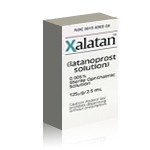
Xalatan (Latanoprost) stands as the most prescribed first-line glaucoma medication worldwide and the original prostaglandin F2-alpha analog eye drop revolutionizing intraocular pressure management. As a selective prostaglandin FP receptor agonist, Xalatan works through a unique outflow mechanism that increases natural aqueous humor drainage rather than reducing fluid production, providing potent IOP reduction with simple once-daily dosing. The 0.005% ophthalmic solution delivers consistent eye pressure control with proven long-term safety across millions of glaucoma patients globally.
Latanoprost works as a prodrug that converts to active latanoprost acid in the cornea, then binds prostaglandin FP receptors in the ciliary muscle and trabecular meshwork. This binding remodels the extracellular matrix around the ciliary body increasing uveoscleral outflow of aqueous humor — the alternative drainage pathway that accounts for 5-10% of normal outflow but becomes the primary therapeutic target with prostaglandin therapy. The result: intraocular pressure drops 25-35% from baseline within 2-4 weeks, eye pressure stays consistently low throughout 24 hours with single evening dose, and optic nerve damage progression slows dramatically reducing vision loss risk.
Xalatan earned first-line status across all major glaucoma treatment guidelines including American Academy of Ophthalmology and European Glaucoma Society. The medication serves multiple distinct glaucoma forms including primary open-angle glaucoma (the most common form), ocular hypertension (elevated pressure without nerve damage requiring preventive therapy), pseudoexfoliative glaucoma (with characteristic dandruff-like deposits), pigmentary glaucoma (from iris pigment dispersion), and selected childhood glaucoma cases. Beyond IOP reduction, latanoprost provides cosmetic benefits through eyelash growth and thickening, a side effect later commercialized separately as Latisse for cosmetic use.
Xalatan offers convenient once-daily evening dosing with single drop in affected eye, providing 24-hour pressure coverage from peak effect 8-12 hours after instillation. The medication requires refrigerated storage before opening but tolerates room temperature for 6 weeks after first use. Generic latanoprost from quality manufacturers provides identical therapeutic effects to brand Xalatan by Pfizer at substantially lower cost. The active ingredient remains chemically identical across both branded and generic versions of this established prostaglandin glaucoma therapy.


Free prescription
Discrete packaging
Have questions?
Quality Assurance


- Open Angle Glaucoma: Most common chronic glaucoma form with gradual optic nerve damage from elevated pressure;
- Primary Open Angle Glaucoma: Most prevalent glaucoma type without underlying cause requiring lifelong eye pressure management;
- High Eye Pressure: Elevated intraocular pressure above 21 mmHg damaging optic nerve over time causing blindness;
- Intraocular Pressure: Fluid pressure inside eye that when elevated damages retinal ganglion cells and optic nerve;
- Elevated Intraocular Pressure: Eye pressure above normal range requiring medication to prevent glaucoma damage progression;
- Ocular Hypertension: Elevated eye pressure without optic nerve damage requiring preventive medication therapy;
- Pseudoexfoliative Glaucoma: Glaucoma form with characteristic dandruff-like deposits clogging drainage channels;
- Pigmentary Glaucoma: Glaucoma caused by iris pigment dispersion blocking trabecular meshwork drainage;
- Childhood Glaucoma: Pediatric glaucoma cases requiring selective use of prostaglandin therapy under specialist care;
- Glaucoma Damage Prevention: Reducing risk of progression from ocular hypertension to actual glaucomatous optic nerve damage;
- Vision Loss Prevention: Slowing or stopping gradual visual field loss caused by glaucoma optic nerve damage;
- Optic Nerve Protection: Preserving optic nerve function through sustained intraocular pressure reduction over years;
- Aqueous Humor Drainage Enhancement: Increasing natural eye fluid outflow through uveoscleral pathway alternative drainage route;
- Steroid Induced Glaucoma: Glaucoma caused by chronic corticosteroid use requiring pressure-lowering therapy intervention;
- Normal Tension Glaucoma: Glaucoma damage despite normal eye pressure requiring further pressure reduction protective therapy;
- Combination Glaucoma Therapy: First-line drop combined with beta blockers carbonic anhydrase inhibitors or other classes;
- Eyelash Growth Enhancement: Cosmetic side benefit of latanoprost causing eyelash lengthening and thickening;
- Prostaglandin Eye Drop Therapy: Prostaglandin analog drug class for first-line glaucoma management with once-daily dosing;
- First Line Glaucoma Treatment: Initial therapy of choice for newly diagnosed glaucoma per global treatment guidelines.
- Better Aqueous Humor Outflow: Uveoscleral drainage increases providing alternative pathway for eye fluid elimination;
- Sustained 24-Hour Pressure Control: Single evening dose maintains low IOP throughout entire 24-hour cycle including critical morning hours;
- Less Glaucoma Progression: Optic nerve damage progression slows dramatically preserving long-term vision;
- Less Optic Nerve Damage: Sustained pressure reduction protects retinal ganglion cells and optic nerve fibers;
- Better Vision Preservation: Glaucoma patients maintain visual field and prevent progressive vision loss long-term;
- Less Visual Field Loss: Progressive narrowing of peripheral vision slows significantly with consistent therapy;
- Less Glaucoma Surgery Need: Effective medical therapy delays or eliminates need for trabeculectomy or laser surgery;
- Better Ocular Hypertension Control: Preventive therapy reduces conversion from ocular hypertension to actual glaucoma damage;
- Less Pseudoexfoliative Damage: Pseudoexfoliative glaucoma progression slows with sustained pressure reduction therapy;
- Less Pigmentary Damage: Pigmentary glaucoma optic nerve protection improves through outflow enhancement;
- Better Normal Tension Glaucoma Outcomes: Even normal eye pressures benefit from further reduction in normal-tension glaucoma cases;
- Better Eyelash Growth: Eyelashes become longer thicker and darker as cosmetic side benefit during treatment;
- Less Multiple Drops Need: Effective monotherapy with single drop eliminates need for multiple eye drop regimens;
- Less Beta Blocker Side Effects: Alternative to topical beta blockers avoiding systemic cardiovascular and respiratory side effects;
- Better Glaucoma Combination Therapy: Foundation drug for combination therapy when monotherapy proves insufficient for IOP target;
- Less IOP Fluctuation: Day-to-day eye pressure variability reduces providing stable consistent protection;
- Once Daily Evening Convenience: Single drop in affected eye each evening fits naturally into nighttime routine improving adherence;
- Better Long Term Outcomes: Decades of safety data and proven effectiveness in glaucoma patients of all ages;
- Better Quality of Life: Daily wellbeing improves from preserved vision reduced surgery anxiety and minimal eye drop burden.
Generic Xalatan (Latanoprost) Medication guide:
Xalatan (Latanoprost 0.005%) is the revolutionary prostaglandin analog eye drop that transformed glaucoma treatment as the first medication providing effective once-daily intraocular pressure reduction with superior efficacy compared to previous glaucoma therapies. Originally developed by Pharmacia and Upjohn and approved by FDA in 1996, latanoprost established prostaglandin analogs as the first-line drug class for open-angle glaucoma and ocular hypertension — a position they retain today. Xalatan achieves 25-35 percent intraocular pressure reduction with a single evening drop by enhancing uveoscleral aqueous humor outflow through a completely different mechanism than earlier glaucoma medications. The version sold on rxshop.md is manufactured by Cipla Limited and Sun Pharmaceutical Industries Ltd. as bioequivalent generic to the original Pfizer brand. This comprehensive medication guide covers every aspect of Xalatan therapy from glaucoma pathophysiology through pharmacology, correct administration, critical side effects including permanent iris darkening, treatment protocols, and special population considerations for optimal treatment outcomes.
👁 Introduction to Xalatan
Xalatan is a prescription ophthalmic solution containing latanoprost 0.005% (equivalent to 50 micrograms latanoprost per ml) as its active ingredient in a sterile aqueous preservative-based formulation. Latanoprost (chemical formula C26H40O5, molecular weight 432.6 g/mol) is a prostaglandin F2-alpha (PGF2α) analog prodrug — a synthetic modification of naturally occurring prostaglandin F2-alpha designed for improved ocular tissue penetration and receptor binding. Originally developed by Pharmacia and Upjohn (later acquired by Pfizer), Xalatan received FDA approval in 1996 becoming the first ophthalmic prostaglandin analog and revolutionizing glaucoma pharmacotherapy.
Related prostaglandin analog eye drops that followed Xalatan include Travatan (travoprost, Alcon 2001), Lumigan (bimatoprost, Allergan 2001), Zioptan (tafluprost preservative-free, 2012), and various generic formulations. All work through similar mechanisms with minor differences in potency, side effect profiles, and duration. Latanoprost remains the most widely prescribed prostaglandin analog worldwide due to its established efficacy, safety record, and cost-effectiveness. The versions sold under the Xalatan brand name on rxshop.md are manufactured by two established Indian pharmaceutical manufacturers — Cipla Limited (Caring for life) and Sun Pharmaceutical Industries Ltd. — both with WHO-GMP certification and extensive international export experience.
Supplied as a 2.5 ml sterile multi-dose dropper bottle, Xalatan delivers approximately 60-80 doses depending on drop volume and application technique. Standard dosing is one drop once daily in the affected eye, preferably in the evening. This convenient once-daily dosing significantly improves patient adherence compared to older glaucoma medications requiring 2-4 daily doses. Because glaucoma is typically a lifelong disease requiring long-term therapy, latanoprost continues to be preferred first-line treatment. Xalatan requires refrigeration (2-8°C) before opening to maintain stability but can be stored at room temperature (up to 25°C) for up to 6 weeks after opening.
🔬 Understanding Glaucoma and Ocular Hypertension
Understanding the pathophysiology of glaucoma is essential for appreciating how latanoprost provides its therapeutic effects and why it has become the standard first-line treatment.
What is Glaucoma?
Glaucoma is a group of progressive optic neuropathies characterized by gradual degeneration of retinal ganglion cells and their axons leading to irreversible vision loss and eventual blindness if untreated. It is the second leading cause of blindness worldwide after cataracts, affecting approximately 80 million people globally. The disease often progresses silently without symptoms until significant vision loss has occurred — earning it the nickname "the silent thief of sight."
Aqueous Humor Dynamics
Normal aqueous humor circulation:
- Production: Ciliary body epithelium produces aqueous humor at approximately 2.5 microliters per minute
- Flow: Aqueous humor circulates from posterior chamber through pupil to anterior chamber
- Conventional outflow (80-85%): Drains through trabecular meshwork into Schlemm canal to episcleral veins
- Uveoscleral outflow (15-20%): Drains through ciliary body and choroid into scleral tissues (target of latanoprost)
- Result: Balance between production and drainage maintains normal intraocular pressure (10-21 mmHg)
Types of Glaucoma
- Primary open-angle glaucoma (POAG): Most common form (70-80% of cases); trabecular meshwork resistance increases gradually
- Normal tension glaucoma: Optic nerve damage despite normal IOP; possible vascular component
- Ocular hypertension: Elevated IOP without optic nerve damage; higher glaucoma risk
- Pigmentary glaucoma: Iris pigment dispersion blocks trabecular meshwork
- Pseudoexfoliative glaucoma: White flaky material deposits in eye affecting drainage
- Steroid-induced glaucoma: Response to prolonged corticosteroid use
- Angle-closure glaucoma: Iris blocks trabecular meshwork - EMERGENCY (different treatment)
- Secondary glaucomas: From trauma, uveitis, tumors, or other causes
- Congenital glaucoma: Present at birth from anterior segment malformation
Glaucoma Risk Factors
- Elevated intraocular pressure: Primary modifiable risk factor
- Age: Risk increases significantly after age 60
- Race: African descent (POAG), Asian descent (angle-closure) at higher risk
- Family history: First-degree relatives have 4-9x higher risk
- Diabetes: Approximately 2x higher risk
- Nearsightedness (myopia): Higher POAG risk
- Farsightedness (hyperopia): Higher angle-closure risk
- Thin central corneal thickness: Independent risk factor
- Prolonged corticosteroid use: Any route can cause steroid-induced glaucoma
- Previous eye trauma or surgery
- Cardiovascular disease and hypotension
- Sleep apnea: Emerging risk factor
Consequences of Untreated Glaucoma
Glaucoma damage is irreversible — once vision is lost it cannot be restored. Untreated glaucoma progresses through predictable stages:
- Early stage: Peripheral vision loss usually unnoticed by patient
- Moderate stage: Increasing visual field defects; may notice difficulty with driving, reading
- Advanced stage: Central vision starts being affected; significant disability
- End stage: Complete blindness in affected eye
- Bilateral impact: Usually affects both eyes though not always symmetrically
- Quality of life: Loss of independence, driving privileges, employment
- Depression: Common consequence of vision loss
🧬 Chemistry and Pharmacology of Latanoprost
Latanoprost has the chemical formula C26H40O5 with molecular weight approximately 432.6 g/mol. It is an isopropyl ester prodrug of a modified prostaglandin F2-alpha analog designed for improved corneal penetration and ocular receptor binding. The isopropyl ester is hydrolyzed by corneal esterases to release the active acid form — latanoprost acid — which binds prostaglandin F receptors (FP receptors) throughout the anterior segment.
Prostaglandin F Receptor Mechanism
Latanoprost intraocular pressure reduction mechanism:
- Corneal penetration: Lipophilic prodrug penetrates corneal epithelium efficiently
- Prodrug activation: Corneal esterases hydrolyze isopropyl ester releasing active latanoprost acid
- FP receptor binding: Latanoprost acid binds prostaglandin F receptors in ciliary body and trabecular meshwork
- Matrix metalloproteinase activation: Increases MMPs remodeling extracellular matrix around ciliary muscle
- Uveoscleral outflow enhancement: Reduced resistance in ciliary body allows increased aqueous drainage
- Trabecular outflow effect: Modest secondary effect on conventional pathway
- Net result: 25-35 percent intraocular pressure reduction with sustained 24-hour effect
Ocular Tissue Distribution
Latanoprost achieves therapeutic concentrations throughout the anterior segment:
- Corneal epithelium: Rapid absorption and prodrug activation
- Aqueous humor: Peak levels 1-2 hours after instillation
- Ciliary body: Target tissue with high FP receptor density
- Trabecular meshwork: Secondary target with FP receptors
- Iris: Melanocytes contain FP receptors (cause of iris darkening)
- Periorbital tissues: Some distribution accounts for eyelash/eyelid effects
Pharmacokinetic Profile
| Parameter | Value | Clinical Significance |
|---|---|---|
| Onset of IOP reduction | 3-4 hours after instillation | Not immediate effect |
| Peak IOP reduction effect | 8-12 hours after instillation | Evening dosing gives daytime peak |
| Duration of effect | 24+ hours after single dose | Supports once-daily dosing |
| Full clinical effect | 2-4 weeks of daily use | Not immediate maximal effect |
| Aqueous half-life | 2-3 hours | Rapid ocular clearance |
| Systemic absorption | Minimal (below detection typically) | Low systemic side effect risk |
| Metabolism | Hepatic (beta-oxidation) | For systemically absorbed portion |
| Systemic half-life | 17 minutes | Very rapid systemic clearance |
| Elimination | Renal (metabolites) | For systemically absorbed portion |
| Solution pH | 6.5 to 7.5 | Near-neutral for tolerability |
| Preservative | Benzalkonium chloride 0.02% | Standard preservative |
🎯 Approved Indications
Primary FDA Approved Indications
- Reduction of elevated intraocular pressure in patients with open-angle glaucoma or ocular hypertension
Specific Glaucoma Types Treated
- Primary open-angle glaucoma (POAG): First-line treatment
- Ocular hypertension: Elevated IOP without optic nerve damage
- Normal tension glaucoma: IOP reduction beneficial despite normal starting pressure
- Pigmentary glaucoma: Secondary open-angle glaucoma
- Pseudoexfoliative glaucoma: Often responds well to prostaglandins
- Steroid-induced glaucoma: After identifying and treating cause
- Post-surgical elevated pressure: Various procedures
- Angle-recession glaucoma: From ocular trauma
Off-Label Uses
- Cosmetic eyelash enhancement: Because of documented eyelash growth (also sold as Latisse formulation)
- Alopecia areata: Small studies suggest eyelash and possibly eyebrow regrowth
- Congenital glaucoma: With pediatric ophthalmology guidance
- Juvenile open-angle glaucoma: Off-label pediatric use
Ideal Patient Selection
Xalatan therapy is most appropriate for:
- Newly diagnosed open-angle glaucoma patients as first-line therapy
- Ocular hypertension patients with elevated glaucoma risk factors
- Patients unable to tolerate beta-blockers due to asthma or heart disease
- Patients with poor adherence to multiple daily doses (once-daily convenience)
- Normal tension glaucoma requiring IOP reduction
- Add-on therapy to other classes when combination therapy needed
- Pseudoexfoliative and pigmentary glaucoma patients
- Elderly patients where systemic medication effects concerning
- Patients accepting potential iris color changes (light-eyed patients particularly)
- Cost-conscious patients (generic latanoprost affordable)
🚫 Critical Contraindications
Absolute Contraindications
Xalatan is absolutely contraindicated in:
- Known hypersensitivity to latanoprost or any component of the formulation
- Hypersensitivity to benzalkonium chloride preservative in the formulation
- Angle-closure glaucoma: Different treatment approach required (laser iridotomy)
Relative Contraindications and Use with Extreme Caution
Use with extreme caution or avoid in:
- Active or history of herpes simplex keratitis: Prostaglandins may trigger reactivation
- Active ocular inflammation or uveitis: May worsen inflammation
- Pseudophakic and aphakic patients: Cystoid macular edema (CME) risk
- Torn posterior lens capsule: CME risk elevated
- Risk factors for macular edema: Diabetes, previous CME, retinal vein occlusion
- Contact lens wearers: Remove lenses before instillation; wait 15 minutes to reinsert
- Pregnancy (Category C): Systemic prostaglandins can cause labor; ophthalmic use likely lower risk but discuss
- Breastfeeding: Minimal amounts likely enter breast milk
- Pediatric patients: Limited safety data in young children
- Recent intraocular surgery: Wait for stable healing
- Cosmetic concerns about iris/eyelash changes: Ensure patient counseling
- Asymmetric or unilateral treatment: Cosmetic differences may develop
💉 Dosage and Administration
Standard Dosing
Recommended Xalatan dosing schedule:
- Standard dose: ONE drop in affected eye(s) ONCE daily
- Preferred timing: Evening administration (peak effect occurs during daytime)
- Consistent time: Same time each day for stable blood/tissue levels
- Bilateral disease: One drop each eye once daily
- Duration: Long-term therapy (glaucoma is chronic)
IMPORTANT: More Is NOT Better
Do NOT increase to twice daily. Studies show that dosing latanoprost more than once daily actually REDUCES its intraocular pressure lowering effect (paradoxical response). Strict once-daily dosing provides maximum benefit.
Evening vs Morning Dosing
Evening dosing is preferred because:
- Peak IOP reduction occurs 8-12 hours after instillation - covers daytime hours when IOP typically highest
- Diurnal IOP variation: Pressures often peak in early morning; evening dose provides best coverage
- Nocturnal spikes: IOP can spike at night; evening dose provides some coverage
- Convenience: Evening bathroom routine timing works for many patients
Proper Instillation Technique
| Step | Action | Reason |
|---|---|---|
| 1 | Wash hands thoroughly with soap and water | Prevents contamination |
| 2 | Remove contact lenses if worn | Preservative binds to soft lenses |
| 3 | Shake bottle gently, remove cap | Ensures uniform concentration |
| 4 | Tilt head back or lie down; look upward | Positions eye to receive drop |
| 5 | Pull lower eyelid down creating pocket | Creates reservoir for drop |
| 6 | Hold dropper 1-2 cm above eye; instill ONE drop | Prevents contamination; more not better |
| 7 | Close eye gently 2-3 minutes | Retains drop on ocular surface |
| 8 | Apply nasolacrimal occlusion 2 minutes | Reduces systemic absorption significantly |
| 9 | Wipe excess from around eye and eyelid | Prevents skin pigmentation/lash changes |
| 10 | Wait 5-10 minutes before other eye drops | Prevents medication washout |
Administration Guidelines
- ONE drop only per dose - never increase frequency (paradoxical loss of effect)
- Apply strict nasolacrimal occlusion for 2 minutes - reduces systemic absorption and eyelid pigmentation
- Wipe excess drops from eyelid and periorbital skin - prevents hyperpigmentation and eyelash overgrowth on cheek
- Do not touch dropper tip to eye, hands, or any surface
- Do not share bottles between people
- Wait 15 minutes before reinserting contact lenses
- Space other eye drops by at least 5-10 minutes
- Never use expired eye drops
- Discard bottle 6 weeks after opening (rather than 28 days for other drops due to storage requirements)
- Take medication consistently daily - glaucoma requires continuous IOP control
- Note any side effects to report at follow-up visits
- Never stop abruptly without ophthalmologist guidance - IOP will rise back within days
📊 Clinical Effectiveness Data
| Metric | Response Data |
|---|---|
| Mean IOP reduction from baseline | 25-35 percent within 2-4 weeks |
| Response rate (target IOP achieved) | 75-85 percent of patients |
| Duration of 24-hour IOP control | Sustained with once-daily dosing |
| Comparison vs timolol (beta-blocker) | Superior IOP reduction, once-daily vs twice |
| Comparison vs brimonidine (alpha-agonist) | Superior IOP reduction with better tolerability |
| Comparison vs dorzolamide (CAI) | Superior IOP reduction; less local irritation |
| Comparison vs other prostaglandins | Similar efficacy; slight differences in side effects |
| Long-term IOP control (5+ years) | Sustained effect in majority of patients |
| Delay/prevention of glaucoma surgery | Significant reduction in surgical rates |
⚠️ Common Local Side Effects
Local ocular side effects are the most frequent adverse events with Xalatan therapy. Many are cosmetically significant and require patient counseling before starting therapy.
Common Local Ocular Effects
Frequent local effects and characteristics:
- Conjunctival hyperemia: Red eyes (10-15%); may decrease over time
- Ocular burning or stinging: Transient after instillation
- Foreign body sensation: Common feeling of grit
- Ocular itching: Mild; usually tolerable
- Blurred vision: Transient immediately after instillation
- Punctate keratitis: Small corneal surface spots
- Eye pain: Mild eye discomfort possible
- Photophobia: Occasional light sensitivity
- Dry eye sensation: Occasional
- Tearing: Reflex response
- Excessive eyelash growth (hypertrichosis): Very common - see specific section
- Iris pigmentation change: Distinctive and permanent - see specific section
Rare Systemic Side Effects
- Muscle/joint aches: Very rare
- Upper respiratory tract irritation: Very rare
- Headache: Occasional
- Dizziness: Rare
- Rash: Very rare skin reactions
- Chest pain: Very rare
- Systemic effects generally minimal due to low systemic absorption
🎨 Iris Color Changes (Permanent)
Iris darkening is PERMANENT and unique to prostaglandin analogs:
Latanoprost causes increased melanin content in iris melanocytes. The color change develops gradually over months to years and does NOT reverse when medication is discontinued. Patient counseling before starting treatment is essential.
Iris Color Change Characteristics
- Mechanism: Increased melanin production in iris melanocytes (not increased cell number)
- Onset: Gradual over months to years
- Direction: Eyes become darker (browner), never lighter
- Susceptibility: Green, hazel, and mixed-color eyes at highest risk (60-80%)
- Blue eyes: Lower risk (approximately 5-10%)
- Brown eyes: Very low risk of noticeable change
- Unilateral treatment: Can cause noticeable color asymmetry (heterochromia)
- Permanence: Changes persist indefinitely after discontinuation
- Cosmetic concern: Some patients find changes bothersome; others don't notice
Counseling Points
- Show patients photographs of iris color changes before starting
- Especially important for green/hazel-eyed patients
- Consider photographic documentation of baseline eye color
- If cosmetic concern is significant, consider alternative glaucoma medications
- If unilateral treatment causes noticeable asymmetry, may need to switch classes
👁️ Eyelash and Periorbital Changes
Eyelash changes - the "Latisse effect":
Latanoprost dramatically stimulates eyelash growth — this effect was so distinctive that Allergan developed Latisse (bimatoprost 0.03% formulation) specifically for cosmetic eyelash enhancement based on this class of medications.
Eyelash Changes
- Length increase: Lashes grow longer
- Thickness increase: Individual lashes become thicker
- Number increase: More lashes visible
- Darkness increase: Lashes become darker
- Direction change: May grow in altered directions
- Unilateral treatment: One eye develops enhanced lashes
- Reversibility: Usually reverses within months of stopping medication
Periorbital Changes
- Eyelid pigmentation: Skin darkening around eyes (usually reversible)
- Prostaglandin-associated periorbitopathy (PAP): Deepening of upper eyelid sulcus, enophthalmos (sunken eye appearance)
- Periorbital fat atrophy: Loss of tissue around eyes with long-term use
- Upper eyelid ptosis: Sometimes develops
- Reversibility: Some changes may reverse; others may not
Minimizing Cosmetic Changes
- Wipe excess drops from eyelids and periorbital skin immediately
- Apply nasolacrimal occlusion to reduce systemic distribution
- Instill drops carefully to avoid excess overflow
- Report bothersome cosmetic changes - may consider alternative medications
⚠️ Serious Adverse Events
Serious Reactions Requiring Immediate Action
Seek immediate medical attention for:
- Signs of severe allergic reaction: facial swelling, difficulty breathing, hives
- Herpetic keratitis reactivation: new dendritic corneal lesion, eye pain
- Cystoid macular edema symptoms: central vision distortion, blurred central vision
- Uveitis or iritis: eye pain, redness, photophobia, decreased vision
- Severe eye pain not typical of glaucoma
- Sudden vision loss or dramatic changes
- Severe or progressive redness
- New floaters or flashes of light
Cystoid Macular Edema (CME)
CME is the most serious ocular side effect — rare but requires immediate attention:
- Higher risk in: aphakic patients, pseudophakic patients (especially with torn capsule), diabetes, previous CME
- Symptoms: Central vision blur or distortion
- Diagnosis: Optical coherence tomography (OCT) shows characteristic cystic changes
- Management: Discontinue latanoprost, treat with NSAIDs and/or corticosteroids
- Usually reversible with prompt treatment
Herpes Simplex Keratitis Reactivation
Prostaglandin analogs may reactivate latent herpes simplex virus:
- Warning signs: Eye pain, dendritic corneal ulcer, unilateral redness
- Risk: History of ocular herpes is relative contraindication
- Treatment: Antiviral therapy (topical trifluridine or oral acyclovir) plus discontinue latanoprost
- Prognosis: Depends on prompt treatment and severity
🔄 Drug Interactions
| Drug/Substance | Interaction |
|---|---|
| Other topical prostaglandin analogs (travoprost, bimatoprost) | Do not combine - no additive benefit, increased side effects |
| NSAID eye drops (ketorolac, bromfenac) | May reduce latanoprost effectiveness (mechanism dependent on prostaglandin action) |
| Other IOP-lowering drugs (timolol, dorzolamide, brimonidine) | Additive IOP reduction - combination therapy common |
| Combination products (Xalacom - latanoprost + timolol) | Available as fixed combinations for convenience |
| Corticosteroid eye drops (prolonged use) | May cause steroid-induced IOP elevation requiring more aggressive therapy |
| Contact lens solutions | Benzalkonium chloride binds to lenses - remove before instillation |
| Systemic medications | Minimal interactions due to negligible systemic absorption |
| Other benzalkonium chloride containing drops | Cumulative preservative toxicity - consider preservative-free alternatives |
| Latisse (bimatoprost cosmetic) | Do not use simultaneously - additive prostaglandin exposure |
🛡️ Special Populations
- Pregnancy
- Category C. Prostaglandins can theoretically induce labor. Systemic absorption from ophthalmic use is minimal but discuss with obstetrician. Alternative glaucoma medications may be preferred during pregnancy.
- Lactation
- Minimal amounts likely enter breast milk. Rapid clearance suggests low infant exposure. Discuss with pediatrician for prolonged breastfeeding.
- Pediatric Population
- Not extensively studied in children. Off-label use for congenital or juvenile open-angle glaucoma with pediatric ophthalmology specialist supervision. Iris and eyelash changes concerns particular in pediatric population.
- Elderly Patients
- Well-tolerated in elderly and no dose adjustment needed. Common users due to peak glaucoma prevalence in this age group. Once-daily dosing supports adherence in patients with multiple medications.
- Herpes Simplex Keratitis History
- Relative contraindication. Prostaglandin analogs may reactivate latent HSV. Consider alternative glaucoma medications or use with careful monitoring. Have oral acyclovir available.
- Aphakic or Pseudophakic Patients
- Increased CME risk. Especially with torn posterior capsule or history of complicated cataract surgery. Use with monitoring; consider alternatives if high risk.
- Diabetic Patients
- Enhanced CME risk and possibly higher susceptibility to prostaglandin-associated periorbitopathy. Monitor carefully.
- Green/Hazel-Eyed Patients
- Highest risk of iris darkening. Thorough counseling before therapy. Baseline eye color photography recommended. Alternative medications available if cosmetic concerns significant.
- Contact Lens Wearers
- Remove contact lenses before instillation. Wait at least 15 minutes before reinserting. Benzalkonium chloride preservative binds to soft lenses causing cumulative toxicity.
- Patients with Active Ocular Inflammation
- Use with extreme caution. May exacerbate uveitis or iritis. Consider alternative medications during acute inflammation.
- Angle-Closure Glaucoma
- Different treatment required. Latanoprost does not adequately address anatomical angle closure. Laser iridotomy is first-line treatment.
- Unilateral Glaucoma
- Cosmetic considerations important. Unilateral treatment may cause noticeable asymmetry in iris color and eyelash appearance. Discuss with patient.
🔬 Comparison with Other Glaucoma Medications
| Class/Medication | Mechanism | IOP Reduction | Dosing |
|---|---|---|---|
| Xalatan (Latanoprost) | Prostaglandin - uveoscleral outflow | 25-35% | Once daily evening |
| Travatan (Travoprost) | Prostaglandin - similar to latanoprost | 25-33% | Once daily |
| Lumigan (Bimatoprost) | Prostamide - both outflow pathways | 28-35% | Once daily |
| Zioptan (Tafluprost) | Prostaglandin preservative-free | 25-30% | Once daily |
| Timolol | Beta-blocker - reduces aqueous production | 20-30% | Twice daily |
| Brimonidine | Alpha-2 agonist - dual mechanism | 18-25% | Twice-thrice daily |
| Dorzolamide/Brinzolamide | Carbonic anhydrase inhibitor | 15-22% | Twice-thrice daily |
| Netarsudil (Rhopressa) | Rho kinase inhibitor - novel mechanism | 18-25% | Once daily evening |
| Pilocarpine (rarely used now) | Cholinergic - miosis, outflow | 15-20% | 3-4 times daily |
📆 Adherence and Compliance
Glaucoma is a lifelong disease requiring consistent daily treatment. Adherence is a major challenge and directly affects treatment outcomes.
Strategies for consistent daily use:
- Once-daily convenience: Latanoprost has advantage of once-daily dosing over most other classes
- Link to daily routine: Bedtime routine, brushing teeth, alarm reminder
- Keep bottle visible: On bathroom counter or bedside table
- Smartphone reminders: Alarm at consistent evening time
- Missed dose: Skip if next dose within a few hours; do not double up
- Track adherence: Notebook, app, or medication tracker
- Family involvement: Family members can help remind
- Refill on time: Order refills before running out (10-21 day shipping consideration)
- Understand consequences: Vision loss from missed doses is permanent
- Discuss barriers: Cost, side effects, cognitive difficulties with ophthalmologist
- Regular follow-up: IOP checks confirm therapy working; motivates adherence
📦 Storage and Handling
Xalatan storage requirements:
- Before opening: Refrigerate at 2°C to 8°C (36°F to 46°F)
- After opening: May store at room temperature up to 25°C (77°F) for 6 weeks
- Protect from light - keep in original packaging
- Do NOT freeze
- Keep cap tightly closed when not in use
- Keep out of reach of children and pets
- Do not touch dropper tip to any surface
- Discard bottle 6 weeks after opening even if solution remains
- Do not share bottle with anyone
- Do not use if solution appears discolored, cloudy, or contains particles
- Do not use past expiration date
- Return unused medication to pharmacy for proper disposal
- Traveling: Keep in cooler for long trips; short trips OK at room temperature
- Ordering ahead: Order refills accounting for 10-21 day shipping to prevent gaps in therapy
👨⚕️ When to Contact Your Doctor
- Missed multiple doses (may need to check IOP)
- Signs of severe allergic reaction: facial swelling, difficulty breathing, hives
- Severe eye pain not typical of glaucoma
- Sudden vision changes or vision loss
- Signs of herpes reactivation: eye pain, dendritic ulcer, unilateral redness
- Central vision distortion or blur (possible CME)
- Signs of uveitis: eye pain, photophobia, decreased vision
- New floaters or flashes of light
- Severe or progressive eye redness
- Bothersome iris color changes for cosmetic reasons
- Severe eyelash overgrowth or unusual growth patterns
- Development of sunken eye appearance (periorbitopathy)
- Difficulty with proper instillation technique
- Adherence problems that need addressing
- Cost concerns affecting ability to continue therapy
- Suspected pregnancy
- Planning surgery (may need to inform ophthalmologist about all medications)
- Development of new medical conditions or medications
- Time for scheduled follow-up appointments (typically every 3-6 months initially)
🌟 Key Takeaways
Essential points about Xalatan (latanoprost 0.005%) therapy:
- Xalatan is Cipla and Sun Pharma generic latanoprost ophthalmic solution at 0.005% concentration in 2.5 ml multi-dose bottles
- Prostaglandin F2-alpha analog prodrug — first-line glaucoma medication class since 1996
- Mechanism: enhances uveoscleral aqueous humor outflow through ciliary body FP receptor binding
- Reduces IOP 25-35% from baseline within 2-4 weeks
- Standard dosing: ONE drop ONCE daily in the evening — more frequent dosing reduces efficacy
- Sustained 24-hour intraocular pressure control from single evening dose
- Primary indications: primary open-angle glaucoma, ocular hypertension, normal tension glaucoma
- Once-daily convenience significantly improves adherence versus older glaucoma medications
- Contraindications: hypersensitivity, angle-closure glaucoma
- Use with extreme caution in: herpes simplex keratitis history, aphakia/pseudophakia (CME risk), active uveitis
- Common side effects: conjunctival hyperemia, burning, eyelash changes, iris color changes
- Iris darkening is PERMANENT — especially in green/hazel-eyed patients; patient counseling essential
- Eyelash growth is basis for cosmetic product Latisse (bimatoprost)
- Prostaglandin-associated periorbitopathy: sunken eye appearance with long-term use
- Storage: REFRIGERATE before opening (2-8°C); room temperature up to 6 weeks after opening
- Apply nasolacrimal occlusion for 2 minutes — reduces systemic absorption and periorbital effects
- Wipe excess drops from eyelids and skin to minimize cosmetic side effects
- Remove contact lenses before instillation; wait 15 minutes to reinsert
- Glaucoma is lifelong disease — continuous adherence prevents irreversible vision loss
- Never stop abruptly without ophthalmologist guidance — IOP rises back within days
Important Medical Disclaimer: This medication guide provides general information about Xalatan (latanoprost 0.005%) ophthalmic solution and does not constitute individualized medical advice. Every patient situation is unique and requires evaluation by a qualified ophthalmology healthcare provider. Glaucoma is a serious sight-threatening condition requiring proper diagnosis with intraocular pressure measurement, optic nerve examination, and visual field testing before treatment. Do not use Xalatan without ophthalmologist prescription and appropriate monitoring. Iris color changes with prostaglandin analogs are PERMANENT and cosmetically significant especially in green/hazel-eyed patients — thorough counseling and informed consent essential before starting therapy. Prostaglandin-associated periorbitopathy including sunken eye appearance may develop with long-term use. Contact lens wear requires care with 15 minute wait between instillation and lens insertion. Refrigerate bottle before opening; room temperature acceptable for 6 weeks after opening. Herpes simplex keratitis history is a relative contraindication requiring careful monitoring. Aphakic and pseudophakic patients have increased cystoid macular edema risk. Report immediately any signs of allergic reaction, herpes reactivation, macular edema symptoms, severe eye pain, or vision changes. Glaucoma is a lifelong disease requiring continuous daily treatment — medication non-adherence causes irreversible vision loss. Never discontinue therapy without ophthalmologist guidance. The information provided here should complement but never replace direct professional ophthalmology guidance.
More Eye Care Medications