Buy Nodict (Generic Naltrexone) Online — International Generic Opioid Antagonist for Addiction Recovery

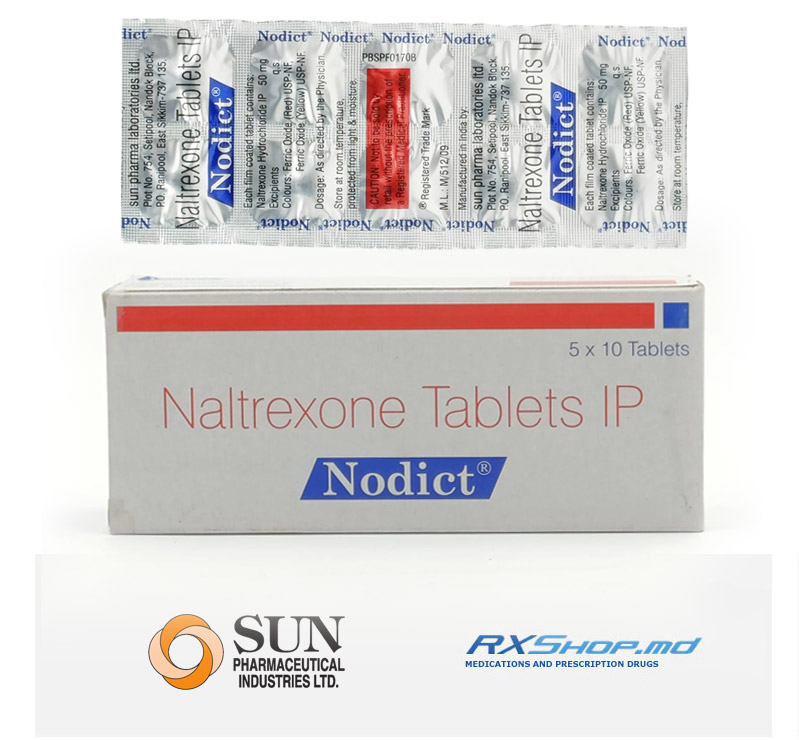
Nodict is a widely-used generic Naltrexone hydrochloride — an internationally available, affordable formulation of the cornerstone opioid receptor antagonist used in the long-term management of both opioid use disorder and alcohol use disorder. Naltrexone is one of the most important medications in modern addiction medicine, with FDA approval dating to 1984 for opioid dependence and 1994 for alcohol use disorder. As a generic Naltrexone, Nodict delivers the same therapeutic action as branded Revia and Vivitrol at a substantially lower price — making medication-assisted recovery accessible across diverse healthcare and economic contexts worldwide.
What distinguishes Nodict from deterrent medications like Disulfiram is its fundamentally different mechanism: Naltrexone does not produce any reaction when alcohol is consumed. Instead, it works upstream of the addiction cycle by competitively blocking mu, delta, and kappa opioid receptors in the brain. By preventing endogenous endorphins from binding to these receptors, generic Naltrexone reduces the pleasurable reward response to alcohol and opioids — weakening the neurological reinforcement that drives compulsive substance use.
This reward-pathway approach makes Nodict particularly suited to patients who have already completed medically supervised detoxification and are working toward sustained sobriety through behavioural therapy, peer support, and lifestyle change. Generic Naltrexone is widely recognised in international guidelines (APA, ASAM, NIAAA, SAMHSA, WHO) as a first-line pharmacotherapy for both opioid and alcohol use disorders, with extensive clinical evidence supporting its role in increasing days of abstinence and reducing relapse severity.
Standard dosing is 50 mg once daily, taken orally with or without food. Some clinicians use higher doses (75-100 mg) for patients with severe cravings or partial response at standard doses. The once-daily oral regimen supports adherence in patients juggling employment, family, and active participation in recovery programmes.
A critical pre-treatment requirement is documented opioid-free status for at least 7-10 days before initiation in patients with opioid use history — otherwise Naltrexone can precipitate severe acute opioid withdrawal. Periodic liver function monitoring is recommended throughout treatment, particularly during the first months.
As a WHO Essential Medicine available in generic form, Nodict represents an accessible foundation for evidence-based addiction recovery globally.
Free prescription
Discrete packaging
Have questions?
Quality Assurance

- Heroin Addiction Recovery: For sustained heroin abstinence after detox — blocks the euphoric effect of any relapse exposure;
- Prescription Opioid Dependence: For oxycodone, hydrocodone, fentanyl, and other prescription opioid use disorder recovery support;
- Post Detox Continuation: Initiated 7-10 days after the last opioid dose — bridges supervised detox to community recovery;
- Court Ordered Opioid Recovery: For drug court, probation, and parole programmes requiring documented opioid abstinence pharmacotherapy;
- Postpartum Recovery: For women in opioid recovery after delivery, where Naltrexone supports continued sobriety;
- Workplace Opioid Recovery: For safety-sensitive professionals in return-to-duty recovery programmes requiring documented abstinence;
- Healthcare Professional Recovery: For physicians, nurses, dentists, and pharmacists in physician health programmes;
- Alcohol Use Disorder: For long-term anti-craving therapy in moderate-to-severe alcohol use disorder;
- Reduced Drinking Therapy: For patients pursuing harm-reduction approaches with reduced alcohol consumption goals rather than strict abstinence;
- Anti Craving Alcohol: For patients with high-intensity alcohol cravings unresponsive to behavioural therapy alone;
- Binge Drinking Control: For patients with episodic heavy drinking patterns rather than continuous heavy use;
- Combined Alcohol Opioid: Single medication treats both substance use disorders in patients with concurrent dependencies;
- Adult Substance Recovery: For working-age adults seeking comprehensive medication-assisted treatment for substance use disorders;
- Geriatric Alcohol Treatment: For older adults with alcohol use disorder where non-sedating profile supports cognitive function preservation;
- Pathological Gambling: Off-label use for compulsive gambling disorder — reduces gambling-related reward seeking;
- Behavioural Addiction Spectrum: Off-label use across reward-dysregulation disorders including compulsive shopping, sexual behaviour, and internet use;
- LDN Chronic Pain: At 1.5-4.5 mg off-label, for fibromyalgia, complex regional pain syndrome, and chronic pain syndromes;
- LDN Inflammatory Conditions: Off-label low-dose use for Crohn's disease, multiple sclerosis, Hashimoto's thyroiditis, and other autoimmune disorders.
- Less Heavy Drinking: Documented reduction in heavy drinking days when added to behavioural therapy;
- Reduced Opioid Use: Blocks euphoric effects of subsequent opioid use, discouraging relapse and supporting abstinence;
- Better Recovery Outcomes: Documented improvement in treatment retention, drug-free urine samples, and clinical recovery measures;
- Less Relapse Severity: Even when use occurs, reward blockade limits relapse intensity and supports rapid re-stabilisation;
- Diminished Pleasure: Reduces rewarding subjective experience of alcohol and opioids, weakening addiction's behavioural reinforcement;
- Better Mood: Reduced substance reward seeking supports stable mood throughout recovery;
- Better Quality of Life: Sustained recovery leads to measurable improvement in mood, relationships, and daily functioning;
- Better Family Life: Successful recovery improves family relationships, child welfare, and economic stability;
- Better Work Life: Sustained recovery improves workplace performance and career advancement;
- Once Daily Dosing: Single 50 mg morning tablet supports adherence in busy recovery patients;
- Reduced Mortality Risk: Successful adherence reduces opioid overdose risk and alcohol-related medical mortality;
- Better Cognition: No cognitive impairment between doses — supports work, study, and parenting responsibilities;
- Opioid Receptor Antagonist: Competitive antagonist at mu, delta, and kappa opioid receptors — broader receptor coverage than selective agents;
- Generic Naltrexone HCl: Internationally available generic version expanding access across global recovery programmes;
- Revia Equivalent: Same Naltrexone molecule as branded Revia at fraction of cost — meets bioequivalence standards;
- Vivitrol Equivalent: Oral alternative to monthly injectable brand Vivitrol with same active molecule;
- Lodonak Equivalent: Same Naltrexone molecule as sibling-generic Lodonak — bioequivalent option;
- Anti Craving Therapy: Reduces cravings rather than producing aversion — fundamentally different from Disulfiram-based deterrents;
- Reward Blockade: Blocks the brain reward response to alcohol and opioids, weakening addiction at its neurochemical foundation;
- Sinclair Method Therapy: Supports pharmacological extinction approach with targeted dosing before drinking;
- Dual Indication Approval: Effective for BOTH alcohol use disorder AND opioid use disorder — particularly valuable in concurrent dependencies;
- No Aversion Reaction: Unlike Disulfiram-based deterrents, no dangerous reaction if alcohol is accidentally consumed — broader safety profile;
- Non Sedating Recovery: No cognitive impairment, drowsiness, or psychomotor effects — supports work, study, driving, and parenting;
- Non Controlled Recovery: Not a controlled substance — no abuse potential, no withdrawal syndrome, no diversion risk;
- Office Based Treatment: Does not require federal opioid treatment programme certification — primary care physicians can prescribe;
- No Withdrawal Risk: Stopping Naltrexone produces no withdrawal syndrome unlike methadone or buprenorphine;
- No Diversion Risk: Unlike methadone or buprenorphine, Naltrexone has no street value and cannot be diverted;
- International Generic Supply: Widely available across global markets — supports continuity of care for international travellers and migrant populations;
- Combinable Acamprosate: Can be combined with acamprosate for multi-modal anti-craving therapy in selected patients;
- Compatible Counselling: Designed to enhance — not replace — psychological treatments like CBT, motivational interviewing, and 12-step programmes;
- LDN Therapy: At 1.5-4.5 mg off-label, used for fibromyalgia, MS, Crohn's disease, and chronic pain syndromes;
- Compulsive Behaviour Spectrum: Off-label evidence supports use in gambling, eating disorders, and compulsive behaviours involving reward dysregulation;
- Liver Function Monitoring: Well-defined LFT monitoring protocols support safe long-term use across patient populations;
- WHO Essential Medicine: Listed on the WHO Model List of Essential Medicines for addiction therapy globally;
- 40 Plus Year History: FDA-approved since 1984 (opioid) and 1994 (alcohol) with extensive real-world safety data;
- Stable Storage: No refrigeration required — practical for home, travel, and humanitarian distribution;
- Globally Available: Wide international availability supports continuity of recovery care across travel and relocation.
Generic Nodict (Naltrexone Hydrochloride 50 mg) Medication guide:
💊 What is Nodict (Naltrexone by Sun Pharma)
Nodict is a brand name for naltrexone hydrochloride, manufactured by Sun Pharmaceutical Industries - India's largest pharmaceutical company and one of the world's leading generic medicine producers. The active ingredient is the same molecule found in branded ReVia, Vivitrol injection (Alkermes), and other naltrexone products worldwide. Nodict is widely used for the treatment of alcohol use disorder (AUD) and opioid use disorder (OUD), working by reducing the rewarding effects of these substances rather than creating an aversive reaction.
Sun Pharma's role as India's largest pharma company gives Nodict particular reach and reliability in supply. Patients across India, export markets, and increasingly international pharmacies have ready access to Nodict at affordable generic pricing. The molecule is identical to branded Western naltrexone; the difference is in price, distribution network, and manufacturer rather than therapeutic effect.
- Brand: Nodict by Sun Pharmaceutical Industries (India)
- Active ingredient: Naltrexone hydrochloride, 50 mg
- Drug class: Mu-opioid receptor antagonist (anti-craving)
- Primary uses: Alcohol use disorder and opioid use disorder
- Mechanism: Blocks opioid receptors; reduces alcohol and opioid reward
- FDA approval of naltrexone: 1984 (oral); 2006 (extended-release injection)
What makes Nodict distinctive
Nodict's distinctive features come from its manufacturer and market context rather than from any pharmacological difference. The active molecule is naltrexone - the same one studied in thousands of clinical trials worldwide. What sets Nodict apart is access: Sun Pharma's distribution network, manufacturing quality recognised by major Western regulators, and pricing that makes naltrexone treatment financially feasible for patients globally.
Nodict is naltrexone - the same evidence-based AUD and OUD medication used worldwide, manufactured by one of the world's largest generic pharmaceutical companies. The pharmacology, dosing, side effects, and efficacy are identical to other naltrexone products. What Nodict offers is reliable access at affordable pricing.
🏭 Sun Pharma and Indian generic pharmaceuticals
Understanding Nodict begins with understanding Sun Pharmaceutical Industries - the company that manufactures it. Sun Pharma is India's largest pharmaceutical company by revenue, the fourth-largest specialty generic pharmaceutical company in the world, and operates manufacturing facilities certified by every major international regulator. The Nodict patient receives a medication produced under the same quality systems that supply markets in the United States, United Kingdom, European Union, and elsewhere.
Company background
Sun Pharma was founded in 1983 by Dilip Shanghvi in Vapi, India, starting with just five products in the psychiatry segment. Over the following four decades the company grew through both organic expansion and strategic acquisitions - including the 2014 acquisition of Ranbaxy Laboratories, which doubled the company's size and broadened its therapeutic reach. Today Sun Pharma has revenues exceeding 5 billion USD, operates in over 100 countries, and ranks among the world's top generic pharmaceutical manufacturers.
Sun Pharma's portfolio extends across multiple therapeutic categories: psychiatry, cardiology, oncology, gastroenterology, ophthalmology, and others. Naltrexone (Nodict) sits within their CNS portfolio alongside other psychiatric and addiction medicine products. The company maintains both branded and generic divisions, with Nodict positioned as a branded generic backed by Sun Pharma's manufacturing infrastructure.
- Founded: 1983 in Vapi, India
- Headquarters: Mumbai, India
- Global presence: 100+ countries
- Manufacturing sites: 40+ globally
- Major regulatory approvals: US-FDA, EU-EMA, UK-MHRA, WHO-GMP
- Ranking: India's largest pharma; world's fourth-largest specialty generic
Why this matters for Nodict patients
The choice of manufacturer is one of the most important practical considerations when receiving a generic medication. With Sun Pharma you get pharmaceutical-grade manufacturing inspected by the US-FDA, EU-EMA, and other major regulators - the same standards required for medications sold in regulated Western markets. Bioequivalence studies establish that Nodict produces the same blood levels as reference naltrexone, meaning the clinical effect is the same.
This matters because the gap between "generic" in regulated markets and "generic" in unregulated markets can be enormous. Sun Pharma's status in the regulated category means Nodict belongs to the former: identical molecule, identical manufacturing standards, identical clinical effect to branded naltrexone, just at a fraction of the price.
When you receive Nodict you are receiving a naltrexone product manufactured to international pharmaceutical standards by one of the world's most established generic manufacturers. The "Indian generic" label reflects pricing and origin - not lower quality.
🌍 Why Nodict matters for global AUD and OUD access
Alcohol use disorder and opioid use disorder are both global health crises, affecting hundreds of millions of people worldwide. Yet medication-assisted treatment remains inaccessible to most who could benefit. Cost, distribution gaps, and absence of approved options in many countries create a treatment gap that pharmacological interventions cannot bridge without affordable generic alternatives. Nodict, as a Sun Pharma branded generic, is one of the medications closing this gap.
The WHO estimates approximately 283 million people have alcohol use disorder globally and another 40+ million have opioid use disorder. Only about 2 out of every 100 people with severe AUD worldwide receive any pharmacological treatment. In low and middle-income countries the rate falls below 1%. Cost is one of the largest barriers, and the area where Indian generics like Nodict make the biggest difference.
Where Nodict provides access
Nodict is widely prescribed across Indian addiction medicine practice for both AUD and OUD treatment. It is used in both public-sector mental health programs and private addiction medicine practices. Through Sun Pharma's global distribution network, Nodict also reaches Sub-Saharan Africa, Southeast Asia, parts of Latin America, and Eastern Europe - regions where branded naltrexone is often unaffordable or unavailable.
The cost-conscious patient profile extends beyond developing markets. Uninsured patients in higher-income countries also benefit from Indian generics when financial constraints would otherwise prevent any medication-assisted treatment. A bottle of Nodict in the hand of a motivated patient is therapeutically more valuable than a prescription for branded ReVia that goes unfilled because the patient cannot afford it.
Cost comparison perspective
Comparison costs vary by region, pharmacy, insurance status, and over time, but the relative magnitudes are consistent. Branded ReVia in the United States typically costs many times more than generic naltrexone in India. The actual molecule is the same; the price difference reflects market position, branding, regulatory cost burden, and distribution rather than manufacturing or therapeutic differences.
Indicative only. Actual pricing depends heavily on local pharmacy, insurance coverage, and individual circumstances. The key point is the order-of-magnitude difference: Nodict provides naltrexone treatment at a fraction of branded Western pricing.
Choosing Nodict versus branded naltrexone should be based on availability and cost - the medication itself is pharmacologically equivalent. For many patients globally, Nodict provides the practical pathway to evidence-based AUD or OUD treatment with naltrexone.
🔀 How naltrexone differs from disulfiram (Antabuse)
The most common medication comparison patients face for AUD is between Nodict (naltrexone) and disulfiram (Antabuse, Carnotol). These two FDA-approved AUD medications work through completely different mechanisms and suit different patient profiles. Understanding the difference is essential for making the right treatment choice - they are not interchangeable.
The core mechanism difference
Naltrexone is an anti-craving medication. It blocks the mu-opioid receptors that normally release endorphins when alcohol is consumed - the chemical pathway that makes drinking rewarding. With Nodict, alcohol becomes less interesting; the satisfaction is removed. The medication does not prevent drinking; it removes the reward from drinking.
Disulfiram is an aversive medication. It blocks the ALDH2 enzyme so that if alcohol is consumed, acetaldehyde accumulates and produces severe physical symptoms - flushing, vomiting, tachycardia, throbbing headache. The medication deters drinking through the threat of unpleasant consequences, not through any direct effect on craving or reward.
- Nodict: "Drinking will not feel good anymore."
- Disulfiram: "Drinking will make me physically sick."
Side-by-side comparison
Choosing between them
Nodict fits patients who experience strong cravings or reward from alcohol and want to reduce those internal drivers. It also fits patients who want flexibility - abstinence is good but moderation may also be acceptable as a treatment goal. Nodict is the only one of the two that also treats opioid use disorder, making it the obvious choice for dual AUD/OUD patients.
Disulfiram fits patients who need an external deterrent against impulsive drinking. The classic profile is "I can be sober for stretches but I keep slipping after one drink." For these patients, the threat of severe reaction provides a hard stop that craving reduction cannot. Disulfiram patients must commit fully to abstinence and accept safety requirements around hidden alcohol sources.
Many patients try one and switch to the other. The mechanisms are so different that response varies significantly between individuals. A failure on naltrexone does not predict failure on disulfiram, and vice versa - they work on entirely different pathways.
Yes - some patients benefit from both medications simultaneously, getting the chemical deterrent of disulfiram plus the reduced craving of naltrexone. Specialist consultation is appropriate. Combined liver function monitoring becomes especially important since both medications have hepatic considerations.
🔬 How Nodict works at the molecular level
Nodict works by blocking mu-opioid receptors in the brain. This single, precise molecular mechanism explains why naltrexone reduces alcohol craving, blocks the effects of exogenous opioids, and works for both AUD and OUD. The pharmacology is well-studied and represents one of the cleanest examples of mechanism-based pharmacotherapy in addiction medicine.
The endorphin connection
When alcohol is consumed, the brain releases endorphins - endogenous opioids that bind to mu-opioid receptors and produce the pleasant "buzz" of drinking. This reward is what reinforces drinking behavior over time. When opioids like morphine or oxycodone are consumed, they bind to the same receptors directly, producing euphoria. Both pathways depend on the mu-opioid receptor.
Naltrexone occupies these receptors with high affinity. When endorphins or exogenous opioids try to bind, they cannot. The reward signal is blocked. Alcohol becomes less satisfying; opioids produce no effect. The mechanism is the same in both cases - just blocking the receptor that mediates reward.
Imagine a lock and key. Endorphins are the key; the mu-opioid receptor is the lock. Normally the key fits the lock and turns it, releasing the reward signal. Naltrexone is a fake key that fits the lock but does not turn it. Now real keys (endorphins, opioids) cannot get in. The lock is occupied without being activated.
Pharmacokinetic profile
Naltrexone has a clean and predictable pharmacokinetic profile. It is well absorbed orally, undergoes extensive first-pass hepatic metabolism to an active metabolite (6-beta-naltrexol), and provides effective receptor blockade with once-daily dosing despite a relatively short half-life of the parent compound.
Pure antagonist, not partial
One important aspect of naltrexone's pharmacology is that it is a pure antagonist. Unlike buprenorphine (a partial agonist), naltrexone has no opioid-like effects of its own. It cannot get you "high," produces no euphoria, has no addiction potential, and does not cause physical dependence. Stopping does not cause withdrawal. This makes it clinically distinct from medications used in opioid maintenance treatment like methadone or buprenorphine.
The receptor selectivity is also worth understanding. Naltrexone binds with highest affinity to mu-opioid receptors (the main target), with moderate affinity to kappa receptors (which contributes to some of the mood-related effects), and lower affinity to delta receptors. At standard 50 mg dosing, the practical effect is dominated by mu-receptor blockade.
Naltrexone is a pure antagonist - it does not produce any opioid-like effects of its own. It cannot get you "high" and has no addiction potential. It simply blocks receptors so other substances (alcohol-released endorphins, exogenous opioids) cannot act through them.
🍺 Nodict for alcohol use disorder
The most common use of Nodict is treatment of alcohol use disorder (AUD). Naltrexone is one of three FDA-approved AUD medications and arguably the most widely prescribed today, particularly in the United States. Its evidence base spans more than four decades of clinical use including landmark trials demonstrating efficacy across diverse patient populations and treatment settings.
What Nodict accomplishes in AUD
Nodict reduces the rewarding feeling of drinking, reduces craving for alcohol, reduces "heavy drinking days" and total alcohol consumed, and supports either abstinence or controlled-drinking goals depending on patient preference. It works alongside counseling and support to enable sustained behavior change. The medication does not force abstinence - it reduces the internal pull toward drinking, leaving patients more able to make sober choices.
Clinical trials consistently show modest but real benefits of naltrexone over placebo for AUD. The effect sizes are not dramatic - this is not a "cure" - but they are real and reproducible. The COMBINE Study (2006), the landmark NIAAA-funded trial, established naltrexone's effectiveness across diverse patient populations and demonstrated that combining medication with behavioral support produces better outcomes than either alone.
Two treatment approaches with Nodict
Naltrexone for AUD can be used in two distinct ways. The standard approach is daily dosing - 50 mg every day regardless of drinking plans, maintaining continuous receptor blockade. This is the most common approach in U.S. clinical practice and aligns with abstinence-focused treatment goals.
The alternative is the Sinclair Method (targeted naltrexone), which involves taking 50 mg only 1-2 hours before any drinking episode. Each drinking session occurs with receptors blocked, gradually extinguishing the drinking habit over weeks to months. This approach aligns with reduction goals rather than abstinence and is covered in detail in the dedicated Sinclair Method section.
Nodict is most effective when combined with counseling. Patients who use medication alone, without behavioral support, see smaller benefits compared to combined treatment. Skills for managing craving, stress, and social drinking situations matter alongside the pharmacological effect. Plan for both pieces from the start.
Nodict provides moderate but real benefit for AUD across a wide range of patient profiles. It is particularly useful when craving is a major feature, when total abstinence is not the only acceptable goal, and when the patient is engaged in counseling alongside medication.
💉 Nodict for opioid use disorder
Beyond AUD, Nodict is also approved for opioid use disorder (OUD). In this role, naltrexone blocks opioid receptors so completely that taking opioids produces no effect - no euphoria, no pain relief, no respiratory depression. This makes it useful for maintaining abstinence after detoxification, but it carries critical safety requirements that differ entirely from naltrexone's AUD use.
Starting Nodict while still opioid-dependent will trigger precipitated withdrawal - sudden, severe withdrawal symptoms that can be medically dangerous. Patient must be fully opioid-free for 7-14 days before starting Nodict. This is the single most important safety rule of naltrexone treatment for OUD.
How Nodict works for OUD
Naltrexone occupies mu-opioid receptors with high affinity, preventing exogenous opioids from binding. If a patient takes opioids while on Nodict, the opioids cannot produce their usual effects - no high, no pain relief, no sedation. This removes the incentive to use. Knowing opioids will not work removes the rational appeal of using them and supports sustained abstinence.
The mechanism is straightforward but the practical challenges are significant. Unlike methadone or buprenorphine (which substitute for the addictive opioid while providing some receptor activity), naltrexone provides nothing - just blockade. Patients on Nodict experience no opioid-like effects of any kind, which is therapeutic but also means there is no positive reinforcement for staying on the medication.
AUD vs OUD use: key differences
When Nodict fits OUD treatment
Naltrexone-based OUD treatment is best suited for patients who have completed detoxification, have strong external motivation (legal requirements, professional licensing situations, family commitments), live in a stable environment with supervision available, exhibit a pattern of relapse from short-term opioid exposure, cannot or prefer not to use buprenorphine or methadone, and are highly motivated to maintain abstinence.
For most patients with severe OUD, buprenorphine or methadone (medication-assisted treatment) have better long-term outcomes than naltrexone. Nodict is a valuable option for specific patient profiles but should not be considered first-line for typical OUD without careful consideration. The choice should be made with addiction medicine specialist input.
When patients stop naltrexone and then relapse to opioid use, their tolerance has dropped significantly during the months on medication. The same dose used before treatment can now cause fatal overdose. This is the single most important safety issue with naltrexone for OUD and is discussed in detail in the dedicated section.
🎯 The Sinclair Method explained
The Sinclair Method is a specific approach to using naltrexone for AUD that emphasises reduced drinking rather than total abstinence as the primary treatment goal. Developed by Finnish researcher Dr. David Sinclair, the method uses pharmacological extinction - the gradual unlearning of drinking habits when the reward is consistently blocked. It has gained substantial support particularly in Europe and has Finnish national endorsement for AUD treatment.
Take Nodict 1-2 hours before any drinking. When alcohol is consumed with receptors already blocked, no reward is felt. Over weeks and months, the brain "unlearns" the association between drinking and reward. Drinking gradually becomes less interesting, less frequent, and for many patients eventually stops being attractive.
How to do the Sinclair Method
The method is conceptually simple but requires honest self-awareness from the patient. The basic steps are: recognise that you are about to drink, take 50 mg of Nodict 1-2 hours before the first drink, drink as you normally would, notice that drinking is less rewarding than before, and repeat this consistently every time you drink. Over 3-6 months of consistent use, drinking patterns shift toward less frequent and less intense drinking.
The crucial element is consistency. The medication must be taken before every drinking session - including unplanned ones, special occasions, and the times when you really want to enjoy a drink. Skipping doses to "have a normal drinking experience" undermines the extinction process. The whole point is that every drinking experience teaches your brain that alcohol is no longer rewarding.
Sinclair Method vs daily naltrexone
Does the Sinclair Method work?
The Sinclair Method has demonstrated efficacy in multiple studies for reducing heavy drinking and helping motivated patients transition toward abstinence. Success rates of 60-80% reduction in drinking volume have been reported in Sinclair Method patients who adhered consistently. The method is officially endorsed for AUD treatment in Finland and recognised across Europe.
The challenge is honest self-application. Patients who "forget" to take naltrexone for special occasions or favorite drinking experiences undermine the entire mechanism. The method is more demanding than it sounds because it requires consistent self-awareness about when drinking is about to happen.
The Sinclair Method requires honest self-assessment - taking Nodict before every drinking session, including unplanned ones. Patients who do not have the self-awareness or honesty to do this consistently will not see the method's benefits. For some patients, daily dosing is more reliable simply because it removes the in-the-moment decision.
👮 Identifying patients who benefit from Nodict
As with any medication, patient selection significantly affects Nodict outcomes. Naltrexone works better for certain AUD and OUD profiles than others. Understanding who benefits most - and who is less likely to benefit - helps providers and patients make appropriate treatment choices and avoid the disappointment of choosing a medication poorly matched to the patient's situation.
Good fit vs poor fit
- Strong craving as a core feature of AUD
- Drinking is rewarding or reinforcing rather than purely compulsive
- Open to either abstinence or reduction goal
- Willing to take medication daily or before drinking consistently
- Liver function reasonable
- Not currently taking opioid medications for pain
- Engaged in counseling alongside medication
- Previous trial of disulfiram failed or unsuitable
- Requires opioid pain medications for chronic pain (cannot effectively use)
- Active opioid use without proper washout period
- Severe liver dysfunction
- Pregnancy
- Cannot maintain daily adherence to oral medication
- Hypersensitivity to naltrexone
- Cannot complete the 7-14 day opioid-free period for OUD treatment
- Drinking driven primarily by withdrawal relief rather than reward
Patient profile types where Nodict particularly helps
Several patient profiles tend to respond well to Nodict. The social drinker who cannot stop after starting often benefits - strong initial reward but difficulty regulating once drinking begins. The "wants to reduce, not stop entirely" patient is the ideal Sinclair Method candidate. The craving-driven relapser who has tried abstinence but craving overwhelms decisions benefits from the direct craving reduction.
For OUD context, the post-detox motivated patient with stable support and external accountability is the appropriate Nodict candidate. Professionals facing licensing consequences (physicians, pilots, healthcare workers under monitoring requirements) often do well because the external structure supports adherence. Patients who have tried disulfiram and found it incompatible with their lifestyle or medical history may switch to naltrexone successfully.
The cost-conscious patient profile also matters globally. For patients without insurance coverage or in markets where Vivitrol injection is unaffordable, Nodict provides the practical pathway to naltrexone treatment. The affordability of Sun Pharma's generic versus branded alternatives can be the deciding factor in whether any pharmacotherapy is feasible at all.
The most important factor
The single biggest predictor of Nodict treatment success is patient motivation and engagement. Even ideal candidates fail without engagement; less-ideal candidates can succeed with strong commitment and support. The medication enables behavior change but does not replace it. Patients who view Nodict as one tool in a broader recovery effort tend to do well; patients who view it as a magic pill that will fix the problem on its own tend to be disappointed.
Before starting Nodict, ask: Is this patient committed to change? Are realistic supports in place? Is there a counseling relationship? Are co-occurring conditions stable? When the answers are yes, Nodict has a real chance of helping. When the answers are no, building the foundation first usually serves the patient better than starting medication prematurely.
📋 Standard Nodict dosing
Nodict dosing is straightforward and identical to other naltrexone products. The standard adult dose is 50 mg once daily. Some patients use lower doses (25 mg) initially or for sensitivity reasons. Higher doses (100 mg) are occasionally used in specific situations but offer marginal additional benefit. The medication is taken with or without food at a consistent time each day.
- 50 mg once daily - the standard maintenance dose for most patients
- Range: 25-100 mg per day
- Maximum: 100 mg per day (rarely needed)
- Can be taken with or without food
- Take at a consistent time each day
Starting Nodict
For new patients, starting at 25 mg for the first 3-5 days is a common approach. This helps assess tolerability before committing to the full dose. If 25 mg is well tolerated for that initial period, increase to the standard 50 mg. Some patients do well long-term on 25 mg and never need to increase further.
Unlike some medications, naltrexone does not require gradual titration. The mechanism is the same at low and high doses - receptor blockade. The 25 mg starting approach is for tolerability assessment, not for the medication building up gradually. If a patient tolerates 25 mg without issues, moving to 50 mg on day 4 or 5 is reasonable.
When to use lower or modified doses
Several situations call for lower dosing. Older adults (65+) often do well on 25 mg long-term, given slower hepatic clearance and increased sensitivity to medication effects. Patients with mild liver function abnormalities should start at 25 mg with closer monitoring; moderate or severe liver disease usually means avoiding naltrexone entirely.
Patients on the Sinclair Method take the standard 50 mg dose, but only 1-2 hours before drinking rather than daily. This is a different dosing schedule, not a different dose. Patients on this approach may use one to several tablets per week rather than daily, depending on their drinking pattern.
When to take Nodict
Morning is the most common dosing time and works well for most patients - pair it with breakfast routine for reliable adherence. Evening dosing is useful if daytime drowsiness is bothersome, allowing the drowsy peak to occur during sleep. The exact time matters less than consistency - whatever time works for your routine, take it at the same time each day.
For Sinclair Method users, timing is different: take Nodict 1-2 hours before the first anticipated drink. The medication needs that head start to occupy receptors before alcohol arrives. If you forget and have started drinking, taking Nodict at that point still helps but provides less benefit.
- Same time daily - consistency more important than specific time
- With or without food - food does not significantly affect absorption
- Do not crush or split tablets unless prescribed
- If you miss a dose, take when remembered same day; do not double
- For OUD patients, missing doses creates relapse risk - build adherence support
⏱️ The critical opioid washout requirement
The single most critical safety requirement for starting Nodict is being completely opioid-free. Starting naltrexone while opioids are still present in the body precipitates immediate, severe withdrawal - a medically dangerous reaction that requires emergency care. This rule applies absolutely. Both patients and providers must understand and respect it without exception.
If naltrexone is taken while opioids occupy mu-receptors, it displaces them with extreme rapidity. This causes severe withdrawal symptoms compressed into minutes rather than the usual hours. The reaction includes profuse vomiting, severe muscle pain, agitation, autonomic instability, and can be life-threatening. Recovery requires emergency medical support and cannot be reversed by giving back the opioid - naltrexone's blockade is too strong.
Required opioid-free periods
The required washout period depends on the type of opioid used. Short-acting opioids (heroin, oxycodone, hydrocodone, morphine) require 7-10 days minimum. Long-acting opioids and methadone require 10-14 days. Buprenorphine has its own protocol and usually requires specialist supervision for transition. Even codeine in cough syrups counts - codeine has opioid activity and triggers the same precipitated withdrawal.
Pre-treatment screening
Before the first Nodict dose, providers typically conduct several screening steps. A detailed patient interview covers history of opioid use including prescription, OTC, and illicit substances - with specific attention to timing and last use. A urine drug screen confirms negative status for all opioid metabolites; this is essentially mandatory pre-naltrexone testing.
Some clinical settings use a naloxone challenge - a small naloxone test dose followed by observation for any withdrawal signs. If withdrawal symptoms appear, the patient is not yet ready for naltrexone. Many providers also start with a 25 mg test dose for the first Nodict dose specifically because the smaller amount produces a smaller reaction if any opioid is still present.
If precipitated withdrawal occurs
Symptoms typically appear within 30-60 minutes of the naltrexone dose. They include severe nausea and vomiting, abdominal cramping, restlessness, profuse sweating, muscle aches, and tachycardia. This is a medical emergency. Call emergency services immediately - the patient needs supportive care including IV fluids, antiemetics, and sometimes clonidine for autonomic symptoms.
The reaction cannot be reversed by giving opioids - naltrexone's blockade is too strong to overcome with reasonable opioid doses. Recovery is supportive and time-limited; symptoms typically resolve in 12-24 hours though they are very distressing during that window. After recovery, the opioid washout must be re-established before another naltrexone attempt.
When in doubt about opioid clearance, wait longer. A negative urine screen plus a few extra days of buffer is much safer than starting Nodict too early. Precipitated withdrawal is the most preventable serious complication in naltrexone treatment - and prevention is entirely about patience with the washout period.
🕑 Nodict timeline - when it starts and how long it lasts
Nodict has a relatively quick onset and short residual effect compared to disulfiram. Naltrexone reaches peak plasma levels within an hour, achieves clinically meaningful receptor blockade within 1-2 hours, and most effects resolve within 1-3 days of stopping. Understanding this timeline helps patients plan around medical procedures, surgery, and any need to stop treatment.
The Nodict timeline at a glance
After taking a 50 mg dose, peak plasma levels occur around 1 hour. Clinically meaningful receptor occupancy is established within 1-2 hours and a single dose provides effective blockade for approximately 24 hours - which is why once-daily dosing works clinically despite the parent compound's relatively short half-life. Steady-state full clinical effect is achieved over 2-3 days of consistent daily dosing.
After stopping Nodict, the medication clears the system in 1-3 days. The active metabolite (6-beta-naltrexol) takes slightly longer than the parent compound. By 3-5 days after the last dose, naltrexone is essentially fully cleared and receptors are fully available for opioid binding again. This is much shorter than disulfiram's 7-14 day residual effect.
- Peak plasma: 1 hour after dose
- Full blockade: within 1-2 hours
- Dose duration: ~24 hours per 50 mg dose
- Steady state: 2-3 days of daily dosing
- Washout after stopping: 1-3 days for clearance
How Nodict compares to other AUD medications
Practical scenarios
The relatively short washout has practical implications. If you missed yesterday's dose, take today's at normal time - the 24-hour coverage from each dose means short gaps have less impact than with some other medications, but building daily routine still matters. If you need surgery, the typical recommendation is to stop Nodict 3-7 days before to allow opioid analgesics to work normally during recovery.
For patients deciding to stop treatment, the effect resolves in 1-3 days. This is much faster than disulfiram and gives flexibility to restart later if needed. For OUD patients specifically, the speed of clearance has a downside - the post-treatment opioid tolerance vulnerability begins as soon as the medication clears, making careful planning of the post-treatment period important.
Travel across time zones is generally not a problem with Nodict. Shift the dose timing by a few hours if necessary; the medication does not require precision timing. Once settled in the new time zone, resume the normal schedule.
Compared to disulfiram's 7-14 day residual, naltrexone clears the system in 1-3 days. This makes planning around medical events easier but also makes adherence to daily dosing more important - skipping a few days leaves you essentially unprotected. Build the routine.
📝 Adherence challenges with daily oral naltrexone
One of the most well-documented limitations of oral naltrexone is adherence. Real-world adherence to daily oral medication for AUD averages only 30-50% over months, and naltrexone specifically faces additional adherence challenges - patients can feel "fine" without it, removing the daily reminder of the problem the medication addresses. Understanding the adherence challenge helps build strategies to overcome it.
The adherence reality
Clinical studies consistently show that approximately 40% of patients remain adherent to oral naltrexone at 6 months and only about 25% at 12 months. This is similar to other chronic-disease medications and reflects the universal challenge of daily medication taking, not a specific failure of patient motivation. The clinical impact is significant: patients who actually take the medication see roughly twice the benefit of patients in studies who are prescribed it but do not consistently take it.
Why is oral naltrexone particularly challenging? Unlike disulfiram, missing a dose does not create an immediate problem you can feel - the receptor blockade just gradually decreases. Unlike opioid maintenance medications, there is no daily craving for the medication itself. Patients between drinking episodes often feel completely normal, which paradoxically makes the medication feel unnecessary on any given day. The cumulative effect of "today seems fine, I will take it tomorrow" decisions is loss of treatment benefit.
- No daily reminder of disease - feels normal between doses
- No immediate consequence for missing a dose
- Ambivalence about being "in treatment" daily
- Side effect discouragement, even mild
- Cost or pharmacy refill barriers
- Active drinking returns and undermines motivation
Strategies to improve adherence
The strategies that work for medication adherence in general work for Nodict. The strongest approach is routine pairing - take Nodict with a fixed daily routine like breakfast, brushing teeth, or morning coffee. Habits stick better than discrete decisions. Combined with a weekly pill organiser that provides visual confirmation each day, this approach handles most adherence challenges for motivated patients.
Phone reminders help during early treatment when the habit is still forming. Family or partner involvement creates external accountability - a brief daily moment of medication taking with someone else watching removes the "did I take it?" uncertainty. Counseling check-ins should regularly address medication taking; ambivalence often surfaces in counseling before it becomes overt non-adherence.
If adherence consistently struggles despite reasonable strategies, switching to Vivitrol (the monthly injection) removes the daily decision entirely. The same naltrexone molecule but delivered monthly by injection eliminates the daily adherence question. This is particularly valuable for OUD patients where missed doses create relapse risk.
If you have been opioid-free during the gap, you can restart Nodict at the full dose. If you used opioids during the gap (even prescribed ones for an unrelated reason), you must re-establish the 7-14 day opioid-free period before resuming naltrexone. Restarting too early risks precipitated withdrawal.
In AUD, missing doses gradually reduces medication benefit. In OUD, missing doses can directly enable relapse - and relapse with reduced tolerance is the leading cause of fatal overdose during naltrexone treatment. Adherence support for OUD patients is critical.
🆚 Nodict (oral) vs Vivitrol (monthly injection)
Vivitrol is the brand name for extended-release injectable naltrexone, manufactured by Alkermes and approved by the FDA in 2006 for OUD and 2010 for AUD. Nodict is the daily oral form; Vivitrol is the same molecule reformulated as a monthly injection. Choosing between them is a meaningful decision affecting adherence, cost, and clinical strategy.
Side-by-side comparison
- 50 mg once daily, oral tablet
- Onset: 1-2 hours
- Washout: 1-3 days after stopping
- Cost: significantly lower per month
- Stop anytime quickly
- Daily adherence required
- Patient controls dosing
- 380 mg intramuscular every 4 weeks
- Onset: days to peak effect
- Washout: approximately 1 month
- Cost: significantly higher
- Cannot stop quickly
- One decision per month
- Requires clinic visit
Detailed comparison
Practical considerations
Switching between Nodict and Vivitrol is straightforward in either direction. To switch from oral to injection: take last oral dose, then within 1-3 days receive the injection. Many patients start oral first to confirm tolerance before committing to the injection. To switch from injection to oral: wait approximately 30 days after the last injection, then start oral naltrexone.
Effectiveness is comparable when both are adhered to. In real-world settings where adherence is the main challenge, Vivitrol often performs better simply because monthly dosing is more reliable than daily. For patients who can reliably take daily medication, oral Nodict provides equivalent benefit at a fraction of the cost.
Availability matters globally. Vivitrol has limited availability and very high cost in many markets. Nodict (oral naltrexone) is far more accessible in India, developing markets, and for uninsured patients in higher-income countries. For most patients worldwide, oral naltrexone is the realistic option simply because injectable formulations are not practically available or affordable.
For most patients globally, Nodict (oral) is the realistic option - affordable, available, flexible. Vivitrol is preferred when adherence is the predominant clinical barrier and cost is not an obstacle. The same molecule works either way; the delivery method matches the patient situation.
👭 Combining Nodict with counseling and support
Nodict alone is not enough. The strongest evidence for naltrexone treatment - including the landmark NIAAA COMBINE Study - consistently shows that medication combined with counseling outperforms medication alone. The pharmacological effect (reduced craving and reduced reward from drinking) enables sustained behavior change; counseling builds the skills that make change last after medication eventually stops.
What COMBINE found
The 2006 NIAAA COMBINE Study tested combinations of medications and behavioral interventions in over 1,300 AUD patients. The major finding: naltrexone combined with brief medical management was as effective as naltrexone combined with intensive cognitive behavioral therapy - both significantly better than naltrexone alone. The behavioral component matters substantially.
Evidence-based counseling approaches
Several counseling approaches have demonstrated effectiveness alongside naltrexone for AUD treatment. Cognitive Behavioral Therapy (CBT) builds coping skills and changes thought patterns about drinking. Motivational Enhancement Therapy (MET) resolves ambivalence and strengthens internal commitment to change. Twelve-Step Facilitation helps patients engage productively with AA-style mutual support, bridging clinical and peer support worlds.
The COMBINE Study also validated Medical Management - brief structured visits with a healthcare provider focused on the medication and basic recovery support - as a highly effective counseling format. This is particularly useful in settings where intensive specialist counseling is not available; even brief structured contact significantly improves outcomes when combined with naltrexone.
Mutual support groups
Several mutual support options pair well with Nodict treatment. Alcoholics Anonymous remains the largest and most accessible group worldwide, with free meetings in virtually every city. SMART Recovery uses a science-based cognitive framework and is secular. Moderation Management aligns particularly well with Sinclair Method users who are working toward reduced rather than zero drinking. Narcotics Anonymous parallels AA for opioid use disorder contexts.
Choosing a support group is personal. Some patients find the spiritual framework of AA helpful; others prefer the secular cognitive approach of SMART Recovery. Some benefit from one-on-one counseling more than groups; others find peer connection essential. Lodonak does not require any specific support model - what matters is having some structured peer or professional engagement alongside medication.
How they work together
Medication and counseling work on different aspects of recovery. Nodict reduces the pharmacological pull toward drinking by removing the reward signal. Counseling addresses the patterns, triggers, and skills needed for sustained behavior change. The medication makes counseling work better by reducing in-session craving; counseling makes medication work better by giving patients the skills to navigate situations where craving still appears.
Build a treatment plan that includes Nodict plus at least one form of counseling or support plus at least one form of peer engagement (formal group or informal network). The medication is one leg of a three-legged stool - all three need to be present for sustained recovery.
🚨 Nodict Side Effects Overview
Side Effects Overview
What to expect from Nodict in routine daily use.
Nodict side effects fall into two patterns: short-term effects during the first few days to weeks (typically mild and self-limiting) and longer-term effects that may persist or develop during ongoing use. Most patients tolerate Nodict well; serious side effects are uncommon but require attention when they occur. Understanding the side effect profile helps patients distinguish between expected adjustments and concerning developments.
Prevalence of common side effects
Approximate frequencies from clinical experience with naltrexone reflect what most patients can expect. Nausea is the most common early side effect, affecting roughly one-third of patients but usually improving within 1-2 weeks. Headache affects about a quarter of patients and is also typically transient. Fatigue or drowsiness occurs in around 18% of patients and may be more persistent. Other common effects include insomnia, dizziness, anxiety, decreased appetite, and mild gastrointestinal upset.
Serious side effects are rare. Significant hepatotoxicity occurs in approximately 1-2% of patients - real but uncommon at standard 50 mg dosing. Severe mood effects (clinically significant depression, suicidal ideation) are very rare but documented. Severe allergic reactions are very rare.
Side effects by frequency category
Very common (many patients): Nausea in the early days, headache, mild fatigue or drowsiness, insomnia or vivid dreams. These typically improve within 2-4 weeks as the body adapts.
Less common (notice but not most): Anxiety, irritability, joint or muscle pain, decreased appetite, mood changes. These often respond to time, dose adjustment, or simple management strategies.
Rare but serious (require medical attention): Hepatotoxicity, severe depression, suicidal thoughts, severe allergic reaction. These warrant stopping the medication and contacting the provider immediately.
- Nausea (early): ~33% of patients
- Headache: ~25%
- Fatigue / drowsiness: ~18%
- Insomnia: ~15%
- Dizziness: ~12%
- Anxiety: ~10%
- Hepatotoxicity (serious): ~1-2%
The most common early side effects typically improve within 2-4 weeks as the body adapts. Serious side effects requiring discontinuation occur in approximately 3-5% of patients. Long-term Nodict use is generally well tolerated with periodic monitoring of liver function.
🟢 Common Nodict side effects
This section covers the day-to-day side effects most Nodict patients may notice. Most are mild, develop early in treatment, and improve as the body adapts over the first few weeks. Understanding each one - what it feels like, why it happens, and what helps - prevents unnecessary worry and supports treatment adherence during the adjustment period.
Common side effects in detail
Nausea is the most distinctive early side effect of naltrexone. It is usually mild to moderate and most prominent in the first 1-2 weeks. Starting at 25 mg for the first few days and taking the medication with food significantly reduces this. For most patients nausea resolves spontaneously within 2 weeks as the body adapts; those for whom it does not should discuss dose adjustment with their provider.
Sleep effects are interesting on naltrexone. Some patients experience mild insomnia, others notice unusually vivid dreams. These usually settle in the first few weeks. If sleep disruption is bothersome, switching the dose timing (morning instead of evening) often helps. Avoid using sleep aids with naltrexone without consulting your provider.
When to call vs manage at home
Side effect resolution timeline
Most common side effects follow a predictable pattern. Weeks 1-2 see peak side effects - nausea, headache, fatigue at their most prominent. Weeks 2-4 typically show significant improvement as the body adapts. Month 2-3 patients are generally stable on the medication with minimal residual effects. Long-term use is generally well tolerated with periodic LFT monitoring as the main ongoing requirement.
Most common side effects appear and peak in the first 2 weeks. If you can get through this period - with starting at lower dose, taking with food, bedtime dosing - the medication is usually well tolerated long-term. Many discontinuations happen in this window when patients give up just before the side effects would have improved.
🟡 Less common and rare side effects
Beyond the common side effects covered in the previous section, Nodict can occasionally cause less frequent but more serious reactions. These rare effects are the reason for periodic monitoring (especially liver function tests) and patient awareness of warning symptoms. Most serious side effects can be detected early - while still reversible - when patients know what to watch for and stay engaged with their treatment team.
Less common side effects (1-3% of patients)
Mood changes deserve particular attention. Naltrexone blocks endorphin signaling, and for a minority of patients this affects mood regulation. New or worsening depression, increased anxiety, or general dysphoria appearing during treatment may be medication-related. If significant, discuss with the provider promptly - the medication can be stopped if needed and mood usually returns to baseline within days.
Rare side effects (less than 1%)
Truly rare but more serious effects include significant hepatotoxicity (marked LFT elevation or clinical hepatitis), severe depression emerging during treatment, suicidal ideation in patients with predisposing factors, and severe allergic reactions including angioedema or anaphylaxis. None of these are common, but all warrant immediate evaluation when they occur.
- Yellow skin or eyes (jaundice) - possible hepatotoxicity
- Dark urine - may indicate liver injury
- Persistent severe nausea or vomiting beyond early treatment
- Severe depression or new suicidal thoughts
- Widespread rash or facial swelling - possible allergic reaction
- Severe abdominal pain - possible hepatic or pancreatic concern
Why rare effects matter
Even though serious side effects are uncommon, they are the reason for the safety monitoring built into Nodict treatment. Pre-treatment LFTs, periodic monitoring during treatment, and patient awareness of warning symptoms are the system that catches problems while they are still reversible. Patients who skip monitoring eliminate this safety net.
The clinical experience is that most patients who develop serious side effects had warning signs days to weeks before the severe phase appeared. Tiredness slightly more than baseline; mild new nausea; vague abdominal discomfort - these subtle changes often precede major problems. Trusting your sense that "something feels different" and contacting your provider is more useful than dismissing minor symptoms.
Rare serious side effects with Nodict are detectable early in most cases. Routine monitoring catches asymptomatic LFT changes; patient awareness catches the subtle symptoms that precede major problems. The system works when both pieces are in place.
🚫 Nodict Contraindications and Warnings
Contraindications and Warnings
Who must NOT take Nodict - and when extra caution applies.
Nodict is contraindicated in several specific situations where the risk of taking the medication clearly outweighs the benefit. Absolute contraindications mean the medication must not be used at all. Relative contraindications mean special caution, additional monitoring, or alternative treatments should be considered. Pre-treatment screening for these is the foundation of safe Nodict prescribing.
Absolute contraindications
Nodict must NOT be prescribed in any of these situations. These are the bright-line rules - exceptions are not appropriate.
- Current opioid dependence - patient still has opioids in system from regular use; causes precipitated withdrawal
- Acute opioid withdrawal - need to complete full 7-14 day washout before starting
- Severe liver disease - acute hepatitis or hepatic failure; metabolic risk too high
- Need for opioid analgesia - chronic pain patients requiring opioids cannot effectively use Nodict
- Naltrexone hypersensitivity - known allergy to naltrexone or related compounds
- Pregnancy (relative absolute) - generally avoided; insufficient safety data
Relative contraindications
These situations call for caution, additional monitoring, or careful weighing of risks versus benefits. Use Nodict only with appropriate adjustments and increased vigilance.
Pre-treatment screening
The pre-treatment screening process establishes that Nodict is safe to start. The screening covers several domains: opioid history (any current or recent opioid use including prescription, OTC, illicit); urine drug screen confirming negative for all opioid metabolites; documented 7-14 day opioid-free period; baseline liver function tests; pregnancy status if applicable; assessment of any chronic pain requiring opioid analgesia; mental health history including depression and suicide risk; renal function assessment; allergy history; and patient education about precipitated withdrawal and post-treatment overdose risk.
- Detailed opioid history including OTC and prescription products
- Urine drug screen negative for opioids
- Documented opioid-free period (7-14 days)
- Baseline LFTs (ALT, AST, bilirubin)
- Pregnancy status if applicable
- Chronic pain assessment - need for ongoing opioid analgesia?
- Mental health history including depression and suicide risk
- Renal function (creatinine)
- Allergy history (naltrexone, related compounds)
- Patient education about precipitated withdrawal and post-treatment risk
Most safety issues with naltrexone fall into one of two categories: (1) precipitated withdrawal at initiation if the patient is not fully opioid-free, and (2) post-treatment overdose if the patient relapses to opioids after stopping. Both are preventable with proper screening and patient education.
🫀 Liver safety with Nodict
Like many medications metabolised by the liver, Nodict can occasionally affect liver function. Hepatotoxicity is the most clinically significant rare adverse effect. While severe liver injury is uncommon at therapeutic doses (estimated 1-2% of patients), the risk is real - and historically there was an FDA black-box warning at one point. This makes pretreatment LFT baseline, periodic monitoring during treatment, and patient awareness of warning symptoms essential parts of safe Nodict use.
Understanding your LFTs
Liver function tests measure enzymes that leak from damaged liver cells. Normal ALT and AST values are below 40 U/L for most labs. Mild elevation (40-120 U/L, or 1-3 times normal) is often clinically insignificant. Moderate elevation (120-200 U/L) warrants reassessment and possible adjustment. Severe elevation (above 200 U/L, or more than 5 times normal) is a clear signal to stop the medication and investigate.
Monitoring schedule
Standard LFT monitoring for Nodict patients starts with a baseline before the first dose. The next check at approximately 1 month catches any early hepatotoxicity. Quarterly monitoring through the first year of treatment establishes the long-term pattern. After the first year, monitoring can typically space out to every 6 months for stable patients. Patients with risk factors for hepatotoxicity should be monitored more frequently throughout.
Warning signs of liver injury
Some patients develop symptoms before LFT changes are detected; others have laboratory abnormalities before symptoms appear. Either way deserves attention. Yellow skin or eyes (jaundice) is the most obvious warning sign and indicates significant liver dysfunction. Dark urine - tea or cola-coloured - suggests bilirubin spillover. Persistent severe nausea beyond the early treatment phase may indicate hepatic involvement.
Other warning signs include increased fatigue notably different from baseline, right upper abdominal pain or discomfort, pale or clay-coloured stools (indicating impaired bile excretion), and a general sense of being unwell that is hard to attribute to other causes. Any of these warrants prompt provider contact rather than waiting for the next scheduled LFT check.
- ALT or AST greater than 5 times upper normal limit
- Clinical hepatitis symptoms (jaundice, RUQ pain, dark urine)
- Rising trend across multiple checks even if each is mild
- Bilirubin elevation beyond mild
- Any of these warrants stopping and investigation
Risk factors for hepatotoxicity
Some patients have higher baseline risk for Nodict-related liver injury. Pre-existing liver disease is the most important - hepatitis B or C, fatty liver disease, cirrhosis, and similar conditions all increase risk. Heavy prior alcohol use leaves the liver less resilient to additional insults. Concurrent hepatotoxic medications (acetaminophen at high or chronic doses, isoniazid, methotrexate, and others) add cumulative risk. Older age generally increases susceptibility.
For patients with one or more risk factors, the standard approach is more frequent monitoring rather than avoidance. Many patients with mild liver concerns can use Nodict safely with monthly LFTs during the first six months and quarterly thereafter. Severe liver disease is a different situation - it crosses into absolute contraindication territory.
Most Nodict-related liver issues are detected early through routine LFT monitoring while still mild and reversible by stopping the medication. The risk is real but manageable. Patients who skip LFT monitoring eliminate the early-warning system that makes Nodict safe to use long-term.
🤰 Nodict during pregnancy
Nodict (naltrexone) is generally avoided during pregnancy. While naltrexone has not been definitively shown to cause birth defects in humans, safety data are limited. The risk-benefit analysis depends heavily on the indication - AUD versus OUD have different pregnancy considerations. Specialist consultation is appropriate for any pregnant patient considering naltrexone.
FDA pregnancy category for naltrexone: limited safety data. Animal studies have shown some adverse effects at high doses. Human exposure data is limited. Generally avoid during pregnancy when alternatives exist; weigh carefully if severe AUD or OUD where alternatives are inadequate. Specialist input is appropriate for borderline cases.
Trimester-specific considerations
The first trimester (weeks 1-12) is the period of organogenesis and the highest-concern phase for any drug exposure. Nodict is particularly avoided during this window. Pregnancy testing before starting naltrexone treatment is recommended, especially since many pregnancies are not recognised until weeks 4-8.
The second trimester (weeks 13-26) sees organ systems established but still developing. Nodict is still avoided in this window. Behavioral approaches remain the mainstay for AUD treatment during pregnancy; OUD treatment in pregnancy is generally handled with methadone or buprenorphine rather than naltrexone.
The third trimester (weeks 27-40) is the fetal growth phase. Nodict is still avoided. Planning for the postpartum AUD or OUD management is important during this trimester - the postpartum period is a known high-risk time for relapse, and having a clear plan in place before delivery improves outcomes.
AUD vs OUD pregnancy considerations
Pre-conception planning
For women on Nodict who may become pregnant or are planning pregnancy, discussion with the addiction medicine provider should happen before attempting conception. The transition plan moves the patient to alternative AUD or OUD treatment before pregnancy. A 1-3 day Nodict washout is adequate before conception attempts since naltrexone clears quickly compared to disulfiram.
During the transition off Nodict, increased engagement with counseling and support is appropriate. This is a vulnerable period - the medication is no longer providing pharmacological support and pregnancy adds stress. Family or partner support becomes even more important during the transition. Engaging obstetric care early in pregnancy planning ensures coordinated treatment when conception occurs.
Untreated alcohol or opioid use during pregnancy causes well-documented harm. The decision is not "Nodict versus nothing" but "Nodict versus alternatives that may be safer during pregnancy." For most pregnant patients, intensive behavioral approaches plus pregnancy-appropriate pharmacotherapy (methadone/buprenorphine for OUD) are the better choice.
🤱 Nodict during breastfeeding
Nodict use during breastfeeding is not generally recommended. Naltrexone and its metabolites pass into breastmilk in detectable amounts, and infant safety data are limited. For breastfeeding mothers requiring AUD or OUD treatment, alternative approaches that allow continued safe breastfeeding are preferred when possible.
Naltrexone passes into breastmilk in detectable amounts. Long-term safety of infant exposure has not been adequately studied. Most guidelines recommend either avoiding Nodict while breastfeeding, transitioning to alternatives, or considering weaning if pharmacotherapy is essential for the mother.
Common questions about Nodict and breastfeeding
Can I take Nodict while breastfeeding? Generally not recommended. Discuss with your provider. Alternative AUD or OUD treatments, or weaning to access Nodict, are usually the preferred paths.
How long should I wait after stopping Nodict before breastfeeding? A standard washout of 3-5 days is typical. Naltrexone clears the system in 1-3 days; metabolites take slightly longer. Confirm timing with the treating provider for your specific situation.
I accidentally took a dose while breastfeeding - what should I do? Contact your provider. The common advice is to "pump and discard" milk for 1-3 days while Nodict clears. Single accidental exposures are unlikely to cause harm, but consultation is appropriate.
What about weaning to start Nodict? Some mothers with severe AUD or OUD may choose to wean to access Nodict treatment. This is a personal decision balancing breastfeeding benefits against pharmacotherapy benefits. Discuss with both the pediatrician and addiction provider before deciding.
Alternatives during breastfeeding
If choosing to wean for Nodict treatment
If the AUD or OUD severity warrants pharmacotherapy and weaning is the path forward, plan it carefully. Gradual weaning over weeks is preferable to sudden cessation - both for maternal comfort and for the infant's adjustment. Coordinate with the pediatrician about transitioning to formula or solid foods depending on the infant's age.
Build support around the transition. Weaning adds emotional and practical stress on top of an already vulnerable postpartum period. Reinforcing counseling engagement and family involvement during this time pays significant dividends. Start Nodict only after the milk supply is fully suppressed - typically 1-2 weeks after the last feeding.
The postpartum period is a known high-risk time for AUD and OUD relapse. Whether or not Nodict is used, ensure robust support: regular treatment provider contact, increased counseling frequency in early postpartum months, family involvement, and contingency plans for difficult days.
👴 Nodict in older adults
Older adults (typically 65 and over) require special considerations when using Nodict. Age-related changes in liver and kidney function, increased side effect sensitivity, higher likelihood of cardiovascular comorbidity, and frequent polypharmacy all affect how the medication should be used. With appropriate adjustments, naltrexone can be used safely in this age group, but the threshold for caution is lower than in younger patients.
Why aging matters for Nodict
Several physiological changes that come with age affect how Nodict works in the body. Hepatic clearance declines, meaning naltrexone metabolites can accumulate at standard doses. Renal function reduces, slowing elimination. Older adults are also more sensitive to side effects from many medications - what feels mild in a 40-year-old can feel disruptive in someone over 70.
The other major consideration is polypharmacy. The average older adult takes five or more medications, creating more chances for drug interactions with Nodict. A thorough medication review before starting is even more important than in younger patients.
Start at 25 mg daily for the first weeks. Many older adults remain on 25 mg long-term and do not need to increase. Slower titration and closer monitoring during the first weeks helps catch any tolerability issues early.
If 25 mg is well tolerated for 2-4 weeks, increase to 50 mg only if clinical response is inadequate at the lower dose. The loading approach is typically skipped entirely - go directly to maintenance dose with gentler titration.
Common challenges in older adults
Monitoring should be more frequent than in younger patients. Liver function tests every 1-2 months during the first six months of treatment, then quarterly long-term. Many older adults also benefit from family or caregiver involvement in monitoring for new side effects they may not report on their own.
"Start low, go slow" applies fully to Nodict in older adults. Beginning at 25 mg/day, monitoring closely, and adjusting upward only if needed is much safer than starting at standard dose and adjusting downward after problems develop.
🪷 Nodict with kidney or liver impairment
Both liver and kidney function affect Nodict metabolism and elimination. The liver metabolises naltrexone into its active metabolite (6-beta-naltrexol); the kidneys excrete both. Patients with impaired organ function need adjusted dosing, more intensive monitoring, or in severe cases avoidance of Nodict altogether. This section provides practical guidance for the spectrum of organ impairment encountered in clinical practice.
Liver impairment
Hepatic impairment is the most common organ-function consideration with Nodict. The clinical approach depends on severity, ranging from standard dosing in mild liver disease to absolute contraindication in decompensated cirrhosis. Mild fatty liver or modest LFT elevation generally allows safe Nodict use with closer monitoring. Moderate impairment requires lower dosing and specialist consultation. Severe impairment typically means avoiding Nodict and using behavioral approaches or alternative medications instead.
Kidney impairment
Naltrexone is primarily renally excreted. Kidney function affects how quickly the medication and its metabolites clear from the body. Significant renal impairment can cause accumulation and increased side effects at standard doses. For most patients with normal-to-mild reduction in kidney function (eGFR above 60), standard dosing is appropriate. Moderate reduction (eGFR 30-60) typically warrants lower dose and more frequent monitoring. Severe reduction (eGFR below 30) generally means avoiding Nodict unless specialist decision supports careful use.
- eGFR >60 mL/min: Standard 50 mg daily; no specific adjustment
- eGFR 30-60 mL/min: Consider 25 mg; more frequent monitoring
- eGFR <30 mL/min: Generally avoid; specialist decision if used
Decision approach
When organ impairment is present, the question becomes whether the benefit of Nodict outweighs the increased risk. For severe alcohol or opioid use disorder where untreated substance use is causing ongoing harm, the answer is often yes - but only with appropriate dose reduction and monitoring. For mild AUD where behavioral approaches alone might suffice, the safer path may be to skip naltrexone entirely.
Specialist consultation - hepatology or nephrology - is the right approach for any uncertain situation. These specialists can assess whether the impairment is stable enough to permit cautious Nodict use and what monitoring frequency is appropriate.
Lower starting dose plus more frequent monitoring lets most patients with mild-to-moderate organ impairment use Nodict safely. The combination of dose adjustment and vigilance is what makes the difference, not just one or the other.
🧠 Nodict in patients with co-occurring mental illness
Alcohol and opioid use disorders commonly co-occur with other mental health conditions: depression, anxiety, PTSD, bipolar disorder, and others. Nodict can be used in patients with mental illness, but the underlying psychiatric condition must be stable and adequately treated first. Active psychosis or untreated severe mental illness are contraindications to starting naltrexone.
The stability principle
Mental health stability before starting Nodict is the fundamental requirement. The medication requires consistent adherence, judgment about avoiding alcohol exposure or opioid relapse, and engagement with treatment - all of which are impaired during acute psychiatric instability. The general rule is to treat the psychiatric condition first, then add Nodict once stable.
This does not exclude dual-diagnosis patients from naltrexone treatment. Quite the opposite - most AUD and OUD patients have at least one co-occurring mental health condition, and naltrexone is an important treatment option. The key is timing and coordination of care between addiction medicine and mental health providers.
Condition-by-condition compatibility
Coordination of psychiatric and addiction care
Both providers - the psychiatric specialist and the addiction medicine provider - need to know what the other is doing. Patients who get their mental health care from one office and their AUD treatment from another can receive conflicting advice or have side effects misattributed. Integrated dual-diagnosis programs handle this naturally; otherwise the patient often needs to be the bridge between providers.
Mood monitoring during Nodict treatment deserves special attention. A minority of patients experience worsened mood on naltrexone, possibly related to endorphin receptor blockade affecting mood circuits. If new or worsening depression appears during treatment, contact the provider promptly. The medication can be stopped if needed.
Stop Nodict and contact your provider or emergency services immediately. Naltrexone is not a common cause of suicidal ideation, but when it appears in patients with predisposing factors, urgent evaluation is appropriate.
Single-condition counseling (just AUD or just depression) is less effective than integrated approaches addressing both simultaneously. Find a treatment team that handles dual diagnosis, or coordinate explicitly between providers if separate offices.
🆘 The opioid emergency problem
One of the most distinctive considerations with Nodict is what happens if you need opioid pain relief while on the medication. Because naltrexone blocks mu-opioid receptors, standard opioid analgesics simply do not work. This creates real problems in emergency situations - severe trauma, sudden surgery, kidney stones, severe cancer pain - where opioids would normally be the first-line treatment.
If you experience a medical emergency requiring opioid pain control while on Nodict, standard doses of morphine, fentanyl, or oxycodone may produce inadequate pain relief. This is not a hypothetical concern - it has real implications for emergency care planning.
Telling emergency staff about Nodict
Always inform emergency medical staff that you are taking naltrexone. The information directly affects their treatment decisions. Carry a medical alert card or wear a medical alert bracelet noting "naltrexone (Nodict) - mu-opioid antagonist." Both the medication name and the mechanism note matter for emergency staff who may not be familiar with naltrexone specifically.
If you are unconscious or unable to communicate, the alert bracelet may be the only way emergency staff know to adjust pain management strategy. This is one situation where the inconvenience of wearing identification is genuinely worth it.
How emergency teams handle pain on naltrexone
The clinical approach depends on urgency. For minor injuries with manageable pain, non-opioid medications often suffice. For severe trauma or major surgery, regional anesthesia and high-dose opioid strategies under close monitoring may be needed. Many anesthesiologists and emergency physicians have encountered naltrexone patients before and have established protocols.
Planning for predictable medical events
For planned procedures, the simplest approach is to stop Nodict ahead of time. A 3-7 day washout before elective surgery allows opioid analgesics to work normally during recovery. After healing, the medication can be resumed. This is discussed in more detail in the surgery section.
For unpredictable emergencies, planning means having the medical alert visible and having had at least one conversation with your AUD treatment provider about emergency scenarios - so you know what to communicate and what to ask for.
Ask your AUD provider: "What would I do if I had a severe injury or surgery while on Nodict?" Their answer will give you a plan and a phone number to call. Five minutes of preparation can prevent serious complications in an emergency.
🏥 Surgery and acute pain management on Nodict
Planned surgery on Nodict requires careful coordination between the addiction medicine provider, the surgeon, and the anesthesiology team. For most elective procedures, the simplest approach is to stop Nodict in advance - allowing opioid analgesics to work normally during recovery, then resuming the medication once healing is complete. Emergency surgery is more complex but still manageable with the right communication.
The basic rule for elective surgery
Naltrexone clears the system in 1-3 days after the last dose; 3-7 days provides a safety margin and ensures opioid receptors are fully available for postoperative pain control.
Tell every member of the surgical team: surgeon, anesthesiologist, pre-op nursing, recovery nursing. The information directly affects medication choices throughout the perioperative period. Many hospitals have specific protocols for patients on naltrexone - some will not perform certain elective procedures unless the medication has been held for the appropriate window.
Pre-surgery timeline
The post-operative period deserves particular attention. Patients restarting Nodict after surgery face the same opioid washout requirement as initial naltrexone treatment - 7 to 14 days off all opioids before the first naltrexone dose. Restarting too early risks precipitated withdrawal, which is dangerous and entirely preventable with patience.
Emergency surgery
If emergency surgery cannot be delayed for naltrexone washout, the anesthesia and pain teams have several options. Regional anesthesia (epidural, spinal, nerve blocks) avoids the need for systemic opioids entirely. High-dose opioids can sometimes overcome receptor blockade with careful titration and monitoring. Non-opioid analgesics like NSAIDs, acetaminophen, and ketamine can manage moderate pain.
For these patients, intensive monitoring during the perioperative period is essential. When Nodict eventually clears and receptors become free again, normal opioid doses can suddenly cause much more sedation and respiratory depression than expected. The transition period requires vigilance from both clinical staff and the patient.
Non-opioid pain strategies
For minor procedures - dental work, dermatology, minor outpatient surgery - non-opioid pain management is often sufficient and Nodict does not need to be stopped. NSAIDs (ibuprofen, naproxen) work normally on Nodict. So does acetaminophen, local anesthetics, and most regional blocks. This avoids the disruption of stopping AUD treatment for minor reasons.
When scheduling any procedure - dental, dermatology, minor surgery - mention naltrexone during the consultation, not on the day of the procedure. This gives the team time to plan pain management appropriately and avoids last-minute schedule changes.
🔄 Drug interactions with Nodict
Nodict has a relatively clean interaction profile compared to many psychiatric medications. The most clinically significant interactions involve opioids (obviously) and a few specific other drug classes. Pre-treatment medication review is straightforward but important, and ongoing vigilance about new prescriptions matters throughout treatment.
Major interactions to know about
The opioid interactions are the central concern. This includes prescription opioids, over-the-counter cough preparations containing codeine, illicit opioids, and even some herbal products. If you are not sure whether a medication contains opioid activity, ask the pharmacist before taking it.
Generally safe combinations
Most psychiatric medications can be used safely with Nodict. SSRIs, SNRIs, mood stabilisers (lithium, lamotrigine), and most antipsychotics have no significant interaction. Most antihypertensives, antidiabetics, and statins also coexist with Nodict without problems. This makes naltrexone considerably easier to use in dual-diagnosis patients than some other addiction medications.
The category that requires more care is hepatotoxic medications. Acetaminophen at standard doses is fine, but high or chronic doses combined with Nodict warrant closer LFT monitoring. Similarly for isoniazid (TB treatment), methotrexate, and a few others.
Practical management
Tell every new prescriber that you take naltrexone. Mention it during pharmacy interactions, dental visits, urgent care, emergency departments. Most providers know about the interactions but they can only adjust if they know you are on the medication. A wallet card listing Nodict as a current medication makes these conversations easy.
- List all prescription medications including OTC, supplements, herbal products
- Specifically ask about any opioid-containing products (cough syrups, pain medications)
- Check for hepatotoxic medications that may compound liver risk
- Identify thioridazine or other interaction-prone psychiatric meds
- Update your pharmacy and electronic medical record so future prescriptions are checked automatically
Use one pharmacy for all your medications when possible. Modern pharmacy systems automatically flag potential interactions if all prescriptions are in one place. Multiple pharmacies fragment the safety check.
🆚 Nodict vs Antabuse/Carnotol (disulfiram)
The most common medication comparison patients face for AUD is between Nodict (naltrexone) and disulfiram (Antabuse, Carnotol). These two FDA-approved AUD medications work through completely different mechanisms and suit different patient profiles. Understanding the difference is essential for making the right treatment choice - they are not interchangeable.
The mechanism difference
Nodict is an anti-craving medication. It blocks the mu-opioid receptors that normally release endorphins when alcohol is consumed - the chemical pathway that makes drinking rewarding. With Nodict, alcohol becomes less interesting; the satisfaction is removed. The medication does not prevent drinking; it removes the reward from drinking.
Disulfiram is an aversive medication. It blocks the ALDH2 enzyme so that if alcohol is consumed, acetaldehyde accumulates and produces severe physical symptoms - flushing, vomiting, tachycardia, throbbing headache. The medication deters drinking through the threat of unpleasant consequences, not through any direct effect on craving or reward.
Side-by-side comparison
Choosing between them
Nodict fits patients who experience strong cravings or reward from alcohol and want to reduce those internal drivers. It also fits patients who want flexibility - abstinence is good but moderation may also be acceptable as a treatment goal. Nodict is the only one of the two that also treats opioid use disorder, making it the obvious choice for dual AUD/OUD patients.
Disulfiram fits patients who need an external deterrent against impulsive drinking. The classic profile is "I can be sober for stretches but I keep slipping after one drink." For these patients, the threat of severe reaction provides a hard stop that craving reduction cannot. Disulfiram patients must commit fully to abstinence and accept safety requirements around hidden alcohol sources.
Many patients try one and switch to the other. The mechanisms are so different that response varies significantly between individuals. A failure on naltrexone does not predict failure on disulfiram, and vice versa - they work on entirely different pathways.
Yes - some patients benefit from both medications simultaneously, getting the chemical deterrent of disulfiram plus the reduced craving of naltrexone. Specialist consultation is appropriate. Combined liver function monitoring becomes especially important since both medications have hepatic considerations.
🆚 Nodict vs Acamprosate for AUD
Acamprosate (Campral and other brands) is the third FDA-approved medication for AUD. It works by modulating glutamate and GABA neurotransmission to reduce the prolonged withdrawal-related discomfort that drives relapse. This is yet another mechanism - completely different from naltrexone's anti-reward approach and disulfiram's aversive approach.
The mechanism difference
Naltrexone (Nodict) acts at the moment of drinking - removing the reward when alcohol is consumed. It is most useful when craving is driven by anticipation of reward.
Acamprosate acts during recovery - helping the brain heal from the prolonged neurochemical disruption of chronic alcohol use. It is most useful when craving is driven by ongoing discomfort, sleep problems, anxiety, and "everything feels wrong" sensations during early sobriety. The neurochemistry it targets takes weeks to months to normalise.
Side-by-side comparison
Which fits which patient
Nodict fits patients whose AUD includes strong reward-seeking - "I crave that feeling I get when drinking." It also fits patients who want flexibility about reduction versus abstinence, and patients who prefer once-daily dosing over three-times-daily.
Acamprosate fits patients who have completed detoxification and are in early recovery struggling with post-acute withdrawal symptoms - poor sleep, anxiety, restlessness, "feeling off" - that drive return to drinking. It is also the preferred choice for patients with liver concerns where naltrexone is risky and disulfiram impossible.
Can they be combined?
Yes. Naltrexone and acamprosate have complementary mechanisms - one removes the moment-of-drinking reward, the other reduces the chronic discomfort of recovery. Some clinical guidelines support combining them in specific patient profiles. The COMBINE Study examined this combination among other treatment combinations and found benefit, though not dramatically more than each medication alone.
Both medications are evidence-based and underused. Most AUD patients who could benefit from pharmacotherapy receive no medication at all. The choice between Nodict and acamprosate is much less important than the choice to start medication-assisted treatment at all.
🆚 Nodict vs other naltrexone brands
Naltrexone is available under several brand names across the world: ReVia (the original Western brand), Vivitrol (the extended-release injection), Nodict (Sun Pharma, India), Naltima (Cipla, India), Lodonak (Macleods, India), and generic naltrexone in many markets. All contain the same active ingredient at the same standard doses. The choice between brands typically comes down to availability and cost rather than therapeutic difference.
Major naltrexone brands
Bioequivalence: the key point
All branded versions of oral naltrexone must demonstrate bioequivalence to reference naltrexone before being approved. This means they produce the same blood levels in the body. The clinical effect, side effects, drug interactions, and contraindications are identical across brands. The drug class is the same; the active ingredient is the same; the dose is the same.
- Price - sometimes by a factor of 10 or more
- Regional availability and distribution networks
- Inactive ingredients (excipients) - rarely matters clinically
- Brand reputation and patient preference
- For Vivitrol specifically: formulation (injection vs oral)
What does NOT differ: therapeutic effect, side effect profile, drug interactions, contraindications.
When to choose which brand
For most patients globally, Nodict or other Indian generics provide the practical pathway - affordable, available through pharmacies and online sources, identical clinical effect to branded ReVia. Patients in markets where Nodict is readily available rarely have reason to seek out more expensive alternatives.
Patients in the United States with good insurance coverage often receive whatever generic naltrexone the pharmacy stocks, or branded ReVia if specifically prescribed. Vivitrol is the choice when adherence is the primary concern - the monthly injection removes daily dosing decisions entirely.
Switching between oral brands is straightforward: same dose, no washout, simply transition from one product to another at next refill. The body cannot tell the difference between oral naltrexone brands. This makes it easy to switch based on cost, availability, or pharmacy stocking decisions without any clinical impact.
The most important factor in choosing a naltrexone brand is which one you can reliably access and afford long-term. A bottle of Nodict in your hand is more therapeutic than a prescription for ReVia that goes unfilled because of cost. All brands work the same way.
⚠️ Post-treatment opioid sensitivity warning
The single most important safety warning for Nodict in the context of opioid use disorder is what happens after the medication is stopped. Tolerance to opioids drops dramatically during naltrexone treatment. If patients relapse to opioid use after stopping Nodict, they face a significantly elevated risk of fatal overdose - because the dose they previously tolerated can now be lethal.
Regular opioid use causes the body to adapt - this is tolerance. Stopping opioids reverses this adaptation over weeks. While on Nodict, the receptor blockade means the body is functionally "opioid-free" even though no withdrawal occurs. Tolerance drops to baseline or below. When Nodict is stopped and opioids are used again, the same dose hits a system without tolerance - and respiratory depression at fatal levels can result.
The clinical reality
Overdose deaths after stopping naltrexone treatment have been documented in multiple studies. The risk is highest in the first few weeks after discontinuation, when tolerance is at its lowest and when patients may be psychologically vulnerable to relapse. This pattern is one reason buprenorphine and methadone are often preferred over naltrexone for severe OUD - they do not produce this discontinuation-related overdose vulnerability.
The risk applies to any stopping of Nodict: planned discontinuation, missed doses leading to gaps, switching to other treatments, or simply forgetting refills. Anyone who has been on naltrexone for OUD must understand this risk before stopping or considering relapse.
Risk reduction strategies
The most effective protection is to not stop Nodict abruptly. If discontinuation is planned, coordinate it with intensive recovery support: increased counseling frequency, family involvement, restricted access to opioids, and clear contingency plans for if cravings appear. The first month after stopping is the period of highest risk.
If relapse to opioid use occurs after stopping Nodict, treat it as a medical emergency requiring immediate evaluation. Naloxone (the opioid overdose reversal medication) should be readily available - in the home, with family members - and the patient and family should know how to use it. Naloxone is available without prescription in many regions.
Patients themselves need to understand and remember this risk. The intuitive sense that "I used X amount before, I can use X amount now" is dangerously wrong after months of Nodict. The same X is far more dangerous than it was before treatment.
Stopping Nodict does not stop OUD - it just removes the receptor blockade, leaving the patient with no tolerance to opioids. Plan stops carefully and have naloxone available; the risk is real and well documented.
🛑 Stopping Nodict safely
Most patients on Nodict will eventually stop the medication - whether due to completed treatment, side effects, life circumstances, or pregnancy planning. The pharmacology of naltrexone makes stopping relatively straightforward compared to disulfiram (1-3 day washout versus 7-14 days). However, the implications of stopping differ dramatically depending on whether treatment is for AUD or OUD, and on what plans exist for ongoing recovery support.
When stopping is appropriate
There is no single right duration of Nodict treatment. Some patients use it for a few months during early recovery, then transition to behavioral approaches alone. Others remain on it for years. The duration of treatment depends on factors including the severity of the original substance use disorder, how stable the patient is in recovery, presence of co-occurring conditions, and the patient's own preference about continuing pharmacotherapy.
How to stop
Naltrexone does not need to be tapered. There is no withdrawal syndrome from stopping. The receptor blockade simply lifts as the medication clears the system over 1 to 3 days. This is one of the easiest medications to stop pharmacologically.
The challenges of stopping are not pharmacological but behavioral. The medication has been providing some level of protection against drinking or opioid use; once stopped, that protection is gone. The success of stopping depends entirely on whether other recovery supports are in place to fill the gap.
Planning the stop
Before stopping, ensure adequate recovery infrastructure is in place: regular counseling sessions, engaged support network, identified high-risk situations and coping plans, and clear contingencies for if cravings reappear. The first weeks after stopping deserve increased rather than decreased treatment intensity for many patients.
If stopping for OUD treatment specifically, the post-discontinuation opioid sensitivity warning becomes critical. See the dedicated section on this topic. Have naloxone available in the home, and ensure family members know how to use it and recognise overdose.
This is not a failure - it is a treatment data point. Many patients restart Nodict after a period off. Contact the prescribing provider promptly to discuss whether resuming naltrexone, switching medications, or intensifying behavioral treatment is the right next step.
Stopping Nodict should be a decision made WITH your provider, not a quiet decision to skip refills. Open communication makes the transition safer and keeps the path back to treatment open if needed.
📅 If you miss a dose of Nodict
Missing a dose of Nodict is not an emergency. Naltrexone's pharmacology forgives short gaps - the active metabolite continues to occupy receptors for some time after the last dose. However, repeated missed doses or sustained gaps undermine the treatment, and for OUD specifically, gaps can create relapse risk. Understanding what to do when a dose is missed helps prevent both unnecessary panic and casual non-adherence.
What to do
- If you remember within a few hours of your usual time, take the missed dose
- If you remember close to the next scheduled dose, skip the missed dose and take the next at the usual time
- Never take two doses in the same day to "make up" for a missed one - this increases side effects without therapeutic benefit
The mechanics are straightforward but the underlying issue often is not. Missing one dose occasionally is human. Missing several over a week is a signal worth examining. Why is it happening? Schedule problems? Pill-management issues? Ambivalence about being on medication? Each underlying cause has a different solution.
Why missed doses matter differently for AUD vs OUD
For AUD treatment, missing a dose has a relatively small immediate effect. Naltrexone's protective effect builds over weeks of consistent dosing; one missed day does not undo that. The risk is gradual undermining of the treatment if missed doses become a pattern.
For OUD treatment, the calculation is different. A patient who misses doses and then encounters opportunity for opioid use faces immediate relapse risk - the receptor blockade is weaker than usual. Adherence support for OUD patients is more important than for AUD patients.
Common scenarios
Realised at lunchtime that morning dose was forgotten: Take it now. Resume normal schedule tomorrow. One day with slightly later dosing is not significant.
Realised at bedtime: Take it before bed. May affect sleep slightly but better than skipping. Resume normal morning schedule next day.
Realised next morning that yesterday was missed: Take today's dose at normal time only. Do not take two doses. Continue normally.
Missed multiple days in a row: Resume daily dose at next opportunity. Contact your provider to discuss the gap - especially important for OUD treatment where extended gaps can create relapse vulnerability.
Preventing missed doses
The strategies that work for medication adherence in general work for Nodict. Pairing the dose with a daily routine (breakfast, brushing teeth, morning coffee) creates an automatic prompt. A weekly pill organiser provides visual confirmation each day. Phone reminders help during early treatment when the habit is still forming. Family or partner involvement creates external accountability.
If you have been on Nodict for OUD and missed doses are happening regularly, the underlying issue may warrant switching to Vivitrol (the monthly injection). The medication is the same molecule but the dosing schedule is built around the patient who cannot reliably take daily medication.
If you were opioid-free during a missed-dose gap, just resume Nodict normally. If you used opioids during the gap (even prescribed ones for an unrelated reason), you must re-establish the 7-14 day opioid-free period before resuming naltrexone. Restarting too early risks precipitated withdrawal.
🧊 Storing Nodict safely
Nodict is a stable medication that does not require refrigeration or special handling. Standard pharmaceutical storage applies. This section covers practical guidance for storing the medication at home, traveling with it, and handling expiration and disposal.
Storage conditions
Store Nodict at room temperature - between 15 and 30 degrees Celsius (59 to 86 degrees Fahrenheit). Avoid direct sunlight, which can degrade the medication over time. Avoid humid environments; the bathroom is generally not a good storage location because of shower humidity and temperature fluctuations.
Keep the medication in its original container with the label intact. This protects against light and humidity, preserves the expiration date information, and makes the medication easy to identify in emergencies. Keep out of reach of children and others who should not access the medication.
- Keep in original container with intact label
- Store in a cool, dry location
- Use a weekly pill organiser for daily access
- Tell family members where it is stored
- Check expiration date periodically
- Bathroom storage (humidity)
- Hot windowsills or near radiators
- Unmarked containers (identification problems)
- Using expired tablets
- Sharing with anyone else
Traveling with Nodict
Carry Nodict in your original container with the prescription label visible. This avoids customs and security questions about identifying the medication. Bring a copy of your prescription or a brief doctor's letter explaining what the medication is for - particularly useful for international travel.
Always pack Nodict in your carry-on luggage rather than checked baggage. Checked bags can be lost, delayed, or exposed to temperature extremes in cargo holds. Bring 25-50% more medication than you need for the trip duration to cover unexpected delays.
Most countries allow personal-use prescription medications. The documentation matters mainly for unusual situations: questioned at customs, lost luggage requiring local pharmacy refill, or medical emergency abroad where the treating provider needs to know your medications.
Expiration and disposal
Nodict tablets typically have a 2-3 year shelf life when stored properly. Check the expiration date on the package before each refill. Do not use expired tablets - potency may decline. Discard expired medication promptly.
For disposal, return unused Nodict to a pharmacy or medication take-back program. Do not flush down the toilet (environmental concerns). Do not throw in regular trash where children or pets could access. Many pharmacies have medication disposal programs for exactly this purpose.
Proper storage protects both the medication's effectiveness and others around you. A simple system - same cool dry location, original container, daily pill organiser - prevents most problems. Make storage and access part of your daily routine, just like the medication itself.
Nodict — Frequently Asked Questions
-
What is Nodict (Naltrexone Hydrochloride) used for?
Nodict is used to help individuals recover from alcohol and opioid dependence. It works by blocking the effects of these substances in the brain, reducing cravings and helping prevent relapse. -
How does Nodict work in the body?
Nodict works as an opioid antagonist. It binds to opioid receptors in the brain, blocking the pleasurable effects of alcohol and opioids. This reduces the desire to consume these substances and supports the recovery process. -
How long does it take for Nodict to start working?
Nodict begins working soon after the first dose. However, the full benefits, such as a reduction in cravings and relapse prevention, may take a few days to weeks, depending on individual response. -
Can Nodict be taken on an empty stomach?
Yes, Nodict can be taken with or without food. However, if you experience any stomach discomfort, it is advisable to take it with food. -
How often should I take Nodict?
Typically, Nodict is taken once daily, as prescribed by a healthcare professional. It is important to follow the prescribed dosage and schedule for optimal results. -
Can Nodict help with alcohol cravings?
Yes, Nodict is effective in reducing alcohol cravings. By blocking the brain's reward system associated with alcohol consumption, it decreases the urge to drink, supporting recovery efforts. -
Is Nodict effective for opioid addiction treatment?
Yes, Nodict is often used to treat opioid addiction. It blocks the effects of opioids in the brain, making the use of these substances less appealing and helping to prevent relapse.
📚 Drug Description Sources:
Information on naltrexone (the active ingredient in Nodict) is drawn from regulatory approvals across India and major Western markets, international treatment guidelines, and decades of peer-reviewed clinical evidence. Nodict is manufactured by Sun Pharmaceutical Industries, India's largest pharmaceutical company and one of the world's leading generic manufacturers. The medication is used widely for alcohol use disorder and opioid use disorder.
- DCGI (India) - Drug Controller General of India; regulatory body for Nodict manufacture and Sun Pharma operations
- U.S. FDA - Naltrexone approved 1984 (oral); Sun Pharma operates FDA-inspected facilities
- European Medicines Agency (EMA) - Naltrexone widely approved across EU member states
- WHO Essential Medicines List - Includes naltrexone for substance use disorder treatment
- UK MHRA, Health Canada, Australia TGA - All recognise naltrexone and Sun Pharma quality standards
- Sun Pharma manufacturing - WHO-GMP certified; US-FDA, EU-EMA, UK-MHRA inspected facilities globally
- APA Practice Guideline for AUD - American Psychiatric Association practice standards
- NIAAA pharmacotherapy guidance - U.S. National Institute on Alcohol Abuse and Alcoholism
- SAMHSA Treatment Improvement Protocols - U.S. federal addiction treatment standards
- ASAM National Practice Guideline - American Society of Addiction Medicine
- WHO substance use treatment framework - Global treatment standards
- European Federation of Addiction Societies - EU-wide guidelines
- Indian Psychiatric Society addiction guidelines - Indian clinical practice standards
- NIAAA COMBINE Study (2006) - Landmark trial confirming naltrexone efficacy in AUD
- Cochrane systematic reviews - Multiple meta-analyses of naltrexone for AUD and OUD
- Sinclair Method evidence base - Targeted naltrexone for drinking reduction
- VIVITROL development trials - Extended-release injection efficacy data
- UpToDate, DynaMed - Clinical decision support databases
- LactMed lactation safety database - Pregnancy and breastfeeding safety information
- FDA FAERS and EMA EudraVigilance - Post-marketing safety surveillance
Sun Pharma bioequivalence studies establish therapeutic equivalence of Nodict with reference naltrexone products.
🩺 Medical Expert Review:
The Medication Guide content for Nodict reflects published research and clinical guidance from internationally recognised authorities in addiction psychiatry and naltrexone pharmacotherapy. All listed authorities have substantial peer-reviewed publication records on naltrexone, AUD, or OUD treatment.
Former Director, Division of Treatment and Recovery Research, NIAAA - National Institutes of Health, USA
Former NIAAA Division Director and one of the leading public-health voices on AUD treatment in the United States. Long career in clinical and translational research on AUD pharmacotherapy including naltrexone. Founded Alltyr Clinic providing modern evidence-based AUD treatment.
University of Pennsylvania Perelman School of Medicine - Philadelphia, USA
Professor of Psychiatry and Director of Treatment Research at the Center for Studies of Addiction at Penn. Decades of NIH-funded clinical research on naltrexone and combination pharmacotherapy for AUD. Author of more than 200 peer-reviewed publications.
Central Institute of Mental Health - Heidelberg University, Germany
Professor and former Director of the Department of Addictive Behavior and Addiction Medicine. Leading European AUD pharmacotherapy researcher. Principal investigator on multiple major trials of AUD medications including naltrexone and nalmefene.
Johns Hopkins University School of Medicine - Baltimore, USA
Professor of Psychiatry and Behavioral Sciences; Director of the Center for Substance Abuse Treatment and Research at Johns Hopkins. Internationally recognised researcher on opioid pharmacology including naltrexone, buprenorphine, and methadone. Frequent FDA and NIDA advisor.
Columbia University Vagelos College of Physicians and Surgeons - New York, USA
Professor of Psychiatry at Columbia and addiction psychiatry researcher with major contributions to pharmacotherapy for substance use disorders. Past President of the American Academy of Addiction Psychiatry. Active researcher on naltrexone and combination treatments.
Note: this panel reflects published evidence and guidance from the listed authorities; it does not imply individual endorsement of this specific medication guide.
More Anti-Alcohol Medications