Hypersomnia: Narcolepsy, Idiopathic and the Impostors

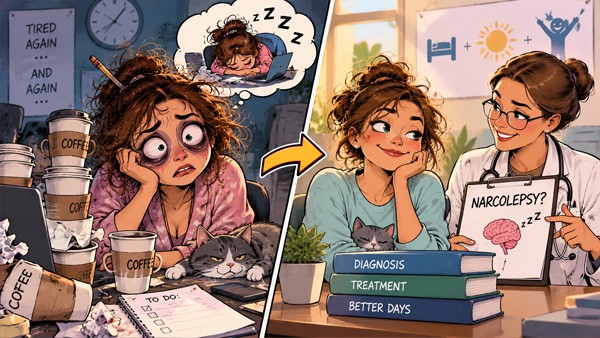
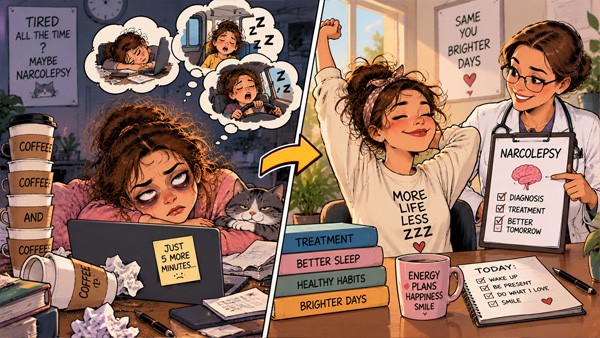
Excessive daytime sleepiness is a symptom, not a diagnosis, and the conditions behind it are more distinct from one another than they first appear. Telling them apart matters, because they are tested for differently, treated differently, and carry different consequences.
The starting distinction is the one people get wrong most often. Tiredness is lacking energy while staying awake. Sleepiness is actually falling asleep when unstimulated — in a meeting, mid-conversation, at traffic lights. They have almost entirely separate causes, and the rest of this article is about the second one.
💡 The single most useful discriminating question: after a short nap, do you wake up better? In narcolepsy naps are typically short and genuinely refreshing — fifteen minutes and the person feels clear for a couple of hours. In idiopathic hypersomnia naps are long and leave the person worse, often groggy and confused for a long time afterwards. In plain sleep deprivation, catching up over a weekend fixes it. Three conditions, three different answers to one question that costs nothing to ask.
🗺️ What sits under the word
Hypersomnia covers several conditions with excessive sleepiness in common and little else.
| Condition | Character |
|---|---|
| Insufficient sleep | Not enough time in bed, sustained. By far the commonest cause and the one that must be excluded first |
| Obstructive sleep apnoea | Sleep fragmented hundreds of times a night by obstructed breathing. Very common and substantially underdiagnosed |
| Narcolepsy type 1 | Sleepiness with cataplexy, from loss of a specific group of brain cells |
| Narcolepsy type 2 | The same sleepiness without cataplexy |
| Idiopathic hypersomnia | Long unrefreshing sleep, extreme difficulty waking, naps that do not help |
| Kleine-Levin syndrome | Rare, episodic, with dramatic behavioural change during episodes and complete normality between them |
| Circadian rhythm disorders | Sleep timing out of step with the required schedule — shift work, delayed phase |
| Secondary hypersomnia | Head injury, stroke, medication, depression, thyroid disease, restless legs disrupting sleep |
❌ The impostors, dealt with first
Before anything specialised, four common explanations account for most excessive sleepiness and are worth ruling out properly.
Chronic insufficient sleep. This is not a trivial category. Someone routinely sleeping six hours who needs eight has accumulated a real deficit and will show every feature of pathological sleepiness. The distinguishing test is simple: given a fortnight of unrestricted sleep — a holiday with no alarm — does it resolve? If it does, that was the answer.
Sleep apnoea. Snoring, witnessed pauses in breathing, waking unrefreshed and morning headache. It is common, it is treatable, and it must be excluded before anything rarer is considered — the article on sleep apnoea covers it.
Medication. Sedating antihistamines, some antidepressants, opioids, anti-seizure drugs, blood pressure medication and anything taken for sleep can all produce daytime sleepiness that resolves on a change.
Depression. Often produces sleepiness or excessive sleeping, and it can also coexist with a genuine sleep disorder, so finding one does not exclude the other.
🧬 What narcolepsy actually is
The mechanism is unusually well understood for a neurological condition, and understanding it makes the symptoms make sense.
A small population of cells deep in the brain — only around seventy thousand of them — produces a signalling chemical called orexin, also known as hypocretin. Its job is to stabilise the boundary between being awake and being asleep, holding each state steady so transitions happen deliberately rather than at random.
In narcolepsy type 1, the great majority of these cells are lost, almost certainly through an autoimmune process in which the body's own immune system destroys them. Evidence supporting this includes a very strong association with a particular immune-system gene variant, and clusters of cases following certain infections and, in 2009 and 2010, following one particular influenza vaccine used in some countries — a genuine and well-documented signal, and one that concerned a specific formulation rather than vaccines in general.
Without orexin, the wake-sleep boundary becomes unstable in both directions. That single fact explains the entire syndrome:
- Sleep intrudes into wakefulness — irresistible sleepiness and sleep attacks during the day
- Features of dream sleep intrude into wakefulness — cataplexy, sleep paralysis, vivid hallucinations at the edges of sleep
- Wakefulness intrudes into sleep — a fragmented, broken night
That last point surprises most people. Narcolepsy is not a condition of sleeping too much. Total daily sleep is often normal. It is a condition of sleeping at the wrong times and being unable to hold either state, and the nights are typically poor.
Narcolepsy type 2 has the same excessive sleepiness without cataplexy, and orexin levels are usually normal, so the underlying cause is less clear.
😮 Cataplexy, which is nothing like fainting
Cataplexy is the most specific feature in all of sleep medicine — it occurs in essentially no other condition — and it is regularly missed because most people expect something dramatic.
It is a sudden loss of muscle tone triggered by emotion, most reliably by laughter, and also by surprise, delight, anger or the moment of a joke landing. It lasts seconds to a couple of minutes.
Consciousness is completely preserved throughout. The person hears everything, is fully aware, and simply cannot move. This is the feature that separates it from fainting and from seizures, and it is what makes the experience frightening rather than merely inconvenient.
The reason it goes unrecognised is that complete collapse is the exception. Far more often it is partial:
- The jaw dropping or the head nodding forward
- Slurred speech or losing the thread mid-sentence while laughing
- Knees buckling or a sudden stumble
- Facial twitching or drooping
- Something dropped from a hand for no apparent reason
- Having to sit down suddenly when something is funny
People develop the habit of avoiding laughter or suppressing amusement without ever consciously deciding to, and describe these events as clumsiness or as being weak with laughter. Asked whether they have ever collapsed, they say no, entirely truthfully, and the diagnosis is delayed by years.
⚠️ The question to ask is not whether you have collapsed. It is: does anything happen to your body when you laugh? Does your jaw go slack, your head drop, your speech slur, your knees give slightly? Do you find yourself needing to sit down or grab something? Those are cataplexy, and describing them explicitly to a doctor changes the direction of an assessment completely. In children it can look different again — a persistently droopy face, tongue protrusion, or an odd unsteady gait — and is frequently mistaken for clumsiness or a movement disorder.
👻 The night-time features
Sleep paralysis is being briefly unable to move or speak while falling asleep or waking, fully aware, sometimes with a sense of pressure on the chest. It lasts seconds to a couple of minutes and always resolves.
Hallucinations at the edges of sleep are vivid, often frightening, and can involve any sense — a figure in the room, footsteps, being touched. They feel entirely real at the time.
Both arise from the same mechanism: elements of dream sleep, including its normal muscle paralysis and its imagery, appearing while the person is partly awake.
Neither is diagnostic on its own. Both occur in people with no sleep disorder at all, particularly when sleep-deprived or after disrupted schedules, and around a quarter of the population experiences sleep paralysis at least once. They add weight to a picture that includes daytime sleepiness; they do not make a diagnosis by themselves.
💤 Idiopathic hypersomnia
Less known than narcolepsy, arguably harder to live with, and frequently mistaken for laziness or depression for years.
The picture is of long sleep that does not restore. Some people sleep eleven hours or more and wake unrefreshed. Others sleep a normal length and are equally sleepy through the day.
The characteristic feature, and the one that most distinguishes it, is severe difficulty waking up — sometimes called sleep drunkenness. Multiple alarms, alarms placed across the room, family members physically involved, and then an hour or more of genuine confusion, poor coordination and inability to function. It is not reluctance and it is not a habit; it is a prolonged failure to make the transition into wakefulness.
Naps are long and unrefreshing, which is the reverse of narcolepsy, and the person often wakes from them worse than before.
There is no cataplexy and usually none of the dream intrusion features. There is no biological marker, so diagnosis rests on the pattern and on excluding everything else — which is precisely why it takes so long and why so many people are told they simply need more discipline.
🌀 Kleine-Levin syndrome
Rare and worth knowing because the pattern is unmistakable once described.
Episodes lasting days to weeks in which the person sleeps enormously — sixteen to twenty hours a day — and during waking hours is confused, detached, and behaves out of character, often with marked overeating and other changes in behaviour. Between episodes they are completely normal.
It mostly affects adolescents, more often male, and episodes tend to become less frequent over years. The episodic pattern with complete normality in between is what identifies it, and the first episode is very frequently attributed to drugs, a psychiatric illness or an infection.
📊 Telling them apart
| Narcolepsy | Idiopathic hypersomnia | Insufficient sleep | Sleep apnoea | |
|---|---|---|---|---|
| Naps | Short, refreshing | Long, unrefreshing | Refreshing | Variable, often unrefreshing |
| Waking up | Usually straightforward | Extremely difficult | Difficult | Unrefreshed, headache |
| Total sleep | Often normal | Often very long | Short by choice or circumstance | Normal length, poor quality |
| Night sleep | Fragmented | Usually deep and continuous | Normal | Snoring, pauses, restless |
| Cataplexy | In type 1 | No | No | No |
| Sleep paralysis, hallucinations | Common | Uncommon | Possible when very short of sleep | Uncommon |
| Resolves with a fortnight of free sleep | No | No | Yes | No |
🔬 Testing, and the preparation that decides whether it is valid
Diagnosis requires an overnight sleep study followed immediately the next day by a nap test, in which the person is given several opportunities to sleep at two-hourly intervals while how quickly they fall asleep, and whether they enter dream sleep, is recorded.
The overnight study serves two purposes: excluding apnoea and other causes, and confirming that enough sleep was actually obtained the night before.
📋 The preparation matters as much as the test, and getting it wrong wastes the whole exercise. Typically required: two weeks of documented adequate sleep beforehand, by diary or wrist monitor, since sleep deprivation alone produces an abnormal result; withdrawal of medications that suppress dream sleep — most antidepressants among them — usually for around a fortnight and always under supervision; no shift work or travel across time zones in the preceding weeks; and a drug screen. Turning up having slept badly, or still on an antidepressant, produces a result that means nothing and a repeat months later. Ask exactly what is required well in advance.
Where the nap test is equivocal, or where a medication genuinely cannot be stopped, the level of orexin in spinal fluid can be measured directly. It is very low or undetectable in narcolepsy type 1 and it settles the question definitively, at the cost of a lumbar puncture.
Genetic testing has limited value on its own. The gene variant associated with narcolepsy type 1 is present in nearly everyone who has it, and also in a substantial share of the general population, so a positive result proves little while a negative one makes it much less likely.
💊 Treatment
Narcolepsy is managed rather than cured, and different symptoms need different treatments — which is the part most often not explained.
| Target | Options |
|---|---|
| Daytime sleepiness | Modafinil and armodafinil first line; newer wake-promoting agents; stimulants where those are insufficient |
| Cataplexy | A different set of drugs entirely. Sodium oxybate, certain antidepressants used specifically for their suppression of dream sleep, and a histamine-acting agent |
| Fragmented night sleep | Sodium oxybate is the main option and the only treatment addressing sleepiness, cataplexy and disturbed nights together |
| Idiopathic hypersomnia | Wake-promoting agents are used, generally with a smaller response than in narcolepsy |
Two honest points about availability. Sodium oxybate is tightly controlled and is not obtainable other than through a specialist service in the countries where it is licensed. And wake-promoting agents do not treat cataplexy at all — someone whose main problem is cataplexy is not helped by them and needs a specific prescription for it.
🔴 Antidepressants used for cataplexy must never be stopped abruptly. They suppress cataplexy by suppressing dream sleep, and stopping them suddenly produces a rebound — occasionally a severe and prolonged run of cataplexy that can last hours and is genuinely dangerous. Any reduction has to be gradual and supervised. This also applies to stopping them in preparation for a sleep study, which is another reason that withdrawal is done under supervision rather than independently.
🗓️ What helps alongside medication
Scheduled short naps are genuinely effective in narcolepsy and are not a fallback. Two or three planned naps of fifteen to twenty minutes, taken at fixed times before sleepiness peaks rather than in response to it, reduce sleep attacks and often reduce the medication required. Their effectiveness is a diagnostic feature in itself.
Regular sleep and wake times, including weekends. An unstable schedule worsens an already unstable system.
Adequate time in bed. Treating a sleep disorder while sleeping six hours produces a poor result.
Care with alcohol, which fragments the second half of the night, and with heavy meals, which deepen the early-afternoon dip.
Exercise and daylight, both of which stabilise the sleep-wake rhythm.
Accommodations at school or work — a place and permission to nap, avoiding early starts, avoiding monotonous tasks in the early afternoon, and, for students, examinations scheduled outside the worst part of the day. These are ordinary adjustments and are more effective than most people expect.
🚗 Driving and safety
Untreated hypersomnia of any cause carries a substantially raised risk of collision, and many jurisdictions require the driver to notify the licensing authority, with stricter rules for professional driving. Well-controlled narcolepsy generally permits driving.
Two practical points. Cataplexy triggered by emotion is a specific hazard in situations that would ordinarily produce laughter or surprise. And a nap before driving, and every two hours on a long journey, is more effective than any amount of coffee or open windows.
Falling asleep at the wheel, or having a near miss from sleepiness, means stopping driving until it has been assessed rather than resolving to be more careful.
🩺 When to seek assessment
- Falling asleep when unstimulated — in meetings, in conversation, at traffic lights
- Anything physical happening when you laugh — jaw dropping, head nodding, slurred speech, knees buckling
- Sleepiness persisting after a fortnight of unrestricted sleep
- Extreme difficulty waking, with an hour or more of confusion afterwards
- Long naps that leave you worse
- Sleep paralysis or vivid hallucinations alongside daytime sleepiness
- Snoring with witnessed pauses — assess this first
- Episodes of days or weeks of excessive sleep with behavioural change, normal in between
- Any sleepiness while driving — urgent
- A child described as lazy or dreamy who is sleeping normal hours
Where excessive daytime sleepiness has been properly diagnosed, treatment is stocked in the anti-narcoleptic category, including Waklert (armodafinil 150 mg), Artvigil and Modalert (modafinil). These treat the sleepiness. They do not treat cataplexy, and they are not a substitute for establishing the diagnosis first.
Wakefulness-promoting medicines are the usual first step for daytime sleepiness in narcolepsy. Alongside modafinil, Armod (armodafinil) lasts longer into the afternoon and is taken once in the morning.
❓ Frequently asked questions
What is the difference between being tired and being sleepy?
Tiredness is lacking energy while staying awake. Sleepiness is actually falling asleep when unstimulated — in a meeting, mid-conversation, at traffic lights. They have almost entirely separate causes and lead to different investigations. The conditions in this article cause sleepiness; persistent tiredness without falling asleep points elsewhere, toward anaemia, thyroid problems, depression and similar.
Do refreshing naps mean anything?
They are the single most useful discriminating question. In narcolepsy naps are short and genuinely refreshing — fifteen minutes produces a couple of hours of clarity. In idiopathic hypersomnia naps are long and leave the person worse, often confused for a long time afterwards. In plain sleep deprivation, catching up over a fortnight resolves everything. Three conditions, three different answers.
What does cataplexy actually look like?
Rarely like collapsing. Far more often the jaw goes slack, the head nods, speech slurs mid-sentence, the knees buckle slightly, or something is dropped — triggered by laughter above all, also surprise or anger, lasting seconds. Consciousness is completely preserved throughout, which is what separates it from fainting. The right question is not whether you have collapsed but whether anything happens to your body when you laugh.
Is narcolepsy sleeping too much?
No, and this surprises most people. Total daily sleep is often entirely normal. It is a disorder of the boundary between sleeping and waking, caused by loss of the brain cells that hold each state steady. Sleep intrudes into the day, dream sleep intrudes into wakefulness as cataplexy and hallucinations, and wakefulness intrudes into the night — so nights are typically fragmented and poor.
I get sleep paralysis. Do I have narcolepsy?
Not on that alone. Sleep paralysis and vivid hallucinations at the edges of sleep occur in people with no sleep disorder at all, particularly when sleep-deprived or after disrupted schedules, and around a quarter of the population experiences sleep paralysis at least once. They add weight to a picture that also includes daytime sleepiness; by themselves they do not diagnose anything.
I need six alarms and an hour to become functional. What is that?
Possibly sleep drunkenness, the hallmark of idiopathic hypersomnia — a prolonged failure to transition into wakefulness, with genuine confusion and poor coordination for an hour or more after waking. It is not reluctance or a bad habit, and people with it are routinely called lazy for years. Combined with long unrefreshing sleep and naps that make things worse, it points away from narcolepsy.
How do I prepare for a sleep study?
Carefully, because poor preparation invalidates the whole test. Usually required: two weeks of documented adequate sleep beforehand, since sleep deprivation alone produces an abnormal result; withdrawal of medications that suppress dream sleep, most antidepressants included, under supervision; no shift work or time zone travel in the preceding weeks; and a drug screen. Ask exactly what is required well in advance.
Will modafinil stop my cataplexy?
No. Wake-promoting agents treat daytime sleepiness and have no effect on cataplexy, which needs an entirely different set of drugs — sodium oxybate, certain antidepressants used specifically for their suppression of dream sleep, or a histamine-acting agent. Someone whose main problem is cataplexy needs a specific prescription for it rather than more of the wakefulness drug.
Can I stop my antidepressant if it was prescribed for cataplexy?
Not abruptly, and not without supervision. These drugs suppress cataplexy by suppressing dream sleep, and stopping suddenly produces a rebound that can occasionally be a severe and prolonged run of cataplexy lasting hours. Any reduction must be gradual and supervised. This applies equally to stopping one in preparation for a sleep study, which is why that withdrawal is arranged rather than done independently.
Do scheduled naps really help?
Substantially, and they are not a fallback for people who cannot get medication. Two or three planned naps of fifteen to twenty minutes, taken at fixed times before sleepiness peaks rather than in response to it, reduce sleep attacks and often reduce the medication needed. That they work so well is itself a diagnostic feature of narcolepsy, and it distinguishes it from idiopathic hypersomnia.
My teenager sleeps for weeks at a time then is fine. What is that?
That pattern suggests Kleine-Levin syndrome — rare, but unmistakable once described. Episodes lasting days to weeks with sixteen to twenty hours of sleep a day, confusion and out-of-character behaviour during waking hours, often with marked overeating, and complete normality between episodes. It mostly affects adolescents and episodes usually become less frequent over years. The first episode is often blamed on drugs or a psychiatric illness.
Can I still drive?
Usually yes once it is well controlled, and many jurisdictions require you to notify the licensing authority, with stricter rules for professional driving. Untreated sleepiness of any cause raises collision risk substantially. Cataplexy triggered by emotion is a specific hazard in situations that would produce laughter or surprise. A nap before driving and every two hours beats any amount of coffee.
📑 Sources and editorial
- International Classification of Sleep Disorders criteria for narcolepsy and idiopathic hypersomnia
- AASM clinical practice guideline on the treatment of central disorders of hypersomnolence
- Research on hypocretin and orexin neuron loss in narcolepsy type 1
- Literature on the autoimmune basis of narcolepsy, including HLA association and post-infectious and post-vaccination case clusters
- Studies of cataplexy phenotype, including partial presentations and presentation in children
- Guidance on multiple sleep latency testing, including preparation and medication withdrawal requirements
- Literature on cerebrospinal fluid hypocretin-1 measurement in diagnosis
- Evidence on scheduled napping as an adjunct in narcolepsy management
- Reports of status cataplecticus following abrupt antidepressant withdrawal
- Prescribing information for modafinil and armodafinil
- Related reading: getting tested for narcolepsy, sleep apnoea, persistent tiredness
- Related products: anti-narcoleptic category
- RXshop Editorial Team — reviewed by James Carter, MD, Neurologist and Sleep Medicine Specialist
Medical Disclaimer: The information in this article is for educational and informational purposes only and is not a substitute for professional medical advice, diagnosis, or treatment. Always seek guidance from a qualified healthcare provider with any questions you may have regarding a medical condition, and before starting, stopping or changing any medication.