Sleep Apnoea: Why It Damages More Than Your Sleep

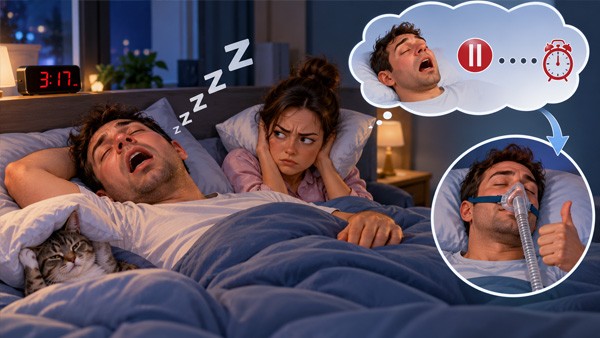
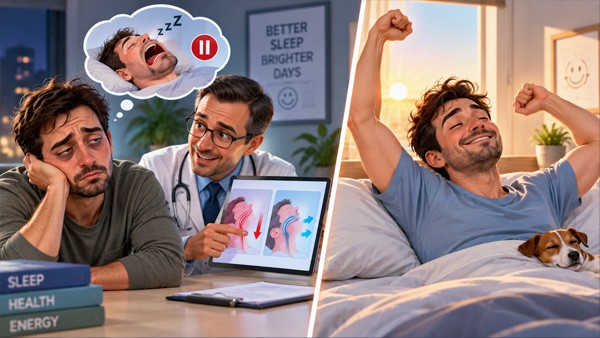
Sleep apnoea has an unusual problem: the person who has it cannot observe it. Everything characteristic happens during unconsciousness, and the daytime consequences arrive so gradually that they get attributed to age, work or stress. It is typically a partner who notices, and frequently a partner who has moved to another room years before anyone raises it.
This matters because the condition is common, substantially underdiagnosed, and does far more harm than the tiredness it is known for.
🫁 What an event actually involves. The muscles holding the throat open relax during sleep, the airway collapses, and breathing stops. Oxygen falls and carbon dioxide rises. The body responds with a surge of stress hormones that spikes blood pressure and heart rate, and a brief arousal from sleep — too short to be remembered — which restores muscle tone and reopens the airway. Then it happens again. In severe cases this cycle repeats thirty or more times an hour, every hour, all night. The tiredness comes from the fragmented sleep. The cardiovascular damage comes from several hundred blood pressure surges and oxygen drops a night, repeated for years.
❤️ The damage beyond tiredness
This is the part that changes how seriously the condition should be taken, and it is rarely explained.
| Consequence | Connection |
|---|---|
| High blood pressure | Strongly associated, and particularly common in blood pressure that resists three or more medications. Untreated apnoea is one of the commonest reversible causes of resistant hypertension |
| Atrial fibrillation | Markedly more common, and considerably more likely to return after treatment of the rhythm if the apnoea is left untreated |
| Stroke and coronary disease | Independently associated, through repeated oxygen drops, blood pressure surges and damage to the blood vessel lining |
| Heart failure | Both a consequence and a cause, since heart failure produces a different pattern of breathing disturbance in its own right |
| Type 2 diabetes | Associated with insulin resistance independently of body weight |
| Night-time urination | An under-recognised cause. The pressure changes in the chest stretch the heart and trigger a hormone that increases urine production overnight |
| Erectile dysfunction | Consistently associated, through vascular effects and reduced testosterone |
| Depression and cognitive difficulty | Poor concentration, memory difficulty and low mood, frequently attributed to anything else |
| Road traffic collisions | Substantially raised risk from daytime sleepiness, and it falls with treatment |
Two of those deserve emphasis because they redirect the diagnosis. Blood pressure that will not come down on multiple medications should prompt a question about snoring and breathing pauses. And getting up repeatedly at night, which men over fifty almost universally attribute to the prostate, is frequently apnoea instead — the article on prostate enlargement covers the other causes of that symptom.
🔄 Two different conditions
Obstructive sleep apnoea is by far the commoner. The brain sends the signal to breathe, the chest and abdomen make the effort, and the airway is blocked. Snoring, choking and gasping are typical because air is being forced past a narrowed passage.
Central sleep apnoea is different in mechanism: the signal to breathe is not sent, so there is no effort and often no snoring at all. It is much less common and it usually points to something else — heart failure, which produces a characteristic waxing and waning pattern of breathing, opioid medication, a stroke, or high altitude. Treating it means treating the cause rather than simply splinting the airway.
A third variety appears in a minority of people only after starting treatment for the obstructive form, and it usually settles with time or an adjustment of the equipment.
🔎 What it looks like
The night-time features are usually reported by somebody else.
At night: loud habitual snoring, pauses in breathing witnessed by a partner, choking or gasping awakenings, restlessness, frequent trips to the bathroom, sweating, dry mouth, and night-time reflux.
During the day: waking unrefreshed regardless of hours in bed, morning headache that eases through the morning, excessive sleepiness, falling asleep while reading or watching television or, importantly, while driving, poor concentration and memory, irritability and low mood, and reduced libido.
The distinction between sleepiness and tiredness is diagnostically useful. Sleepiness means actually falling asleep when unstimulated. Tiredness means lacking energy while remaining awake. Apnoea characteristically produces sleepiness. The article on persistent tiredness covers the causes that produce the other pattern.
👥 Who gets it, and the assumptions that mislead
| Risk factor | Note |
|---|---|
| Excess weight | The strongest modifiable factor. Neck circumference predicts better than overall weight — above about 43 cm in men and 40 cm in women |
| Male sex | Higher rates in men, and the gap narrows considerably after the menopause |
| Age | Prevalence rises with age as tissue tone declines |
| Facial and jaw structure | A set-back or small lower jaw, a narrow airway, a crowded palate. This is why slim people get it |
| Large tonsils and adenoids | The main cause in children and relevant in some adults |
| Nasal obstruction | Deviated septum, polyps, chronic rhinitis |
| Alcohol and sedatives | Reduce airway muscle tone and blunt the arousal that ends an event |
| Smoking | Inflames and swells the upper airway |
| Hypothyroidism and some endocrine conditions | Worth excluding |
| Family history | Partly inherited facial structure |
💡 Three beliefs that keep people undiagnosed. That you have to be overweight — slim people develop it from facial and airway structure, and in some populations it occurs commonly at body weights considered entirely normal. That you have to snore — snoring is typical and not universal, and it is absent in the central form. That it is a mans condition — women get it, particularly after the menopause, and are diagnosed far later for the reason described next.
🧕 Why women are missed
Women with sleep apnoea are diagnosed later and less often, and it is a problem of presentation rather than of prevalence.
The classic picture — a heavy middle-aged man, loud snoring, witnessed pauses, obvious daytime sleepiness — is what clinicians and partners are watching for. Women more often report insomnia, fatigue rather than sleepiness, morning headache, low mood and anxiety. Their events are often shorter and their oxygen drops smaller, so some scoring systems register them as milder. Witnessed pauses are reported less often, partly because a woman living alone has nobody to report them.
The frequent result is a woman treated for depression, insomnia or the menopause for several years while the underlying disorder goes unexamined. Risk rises sharply after the menopause, and persistent unrefreshing sleep in a woman of that age deserves the question asked directly.
🧪 Getting it diagnosed
Diagnosis requires measurement during sleep. Questionnaires are useful for deciding who to test and cannot make the diagnosis.
A home sleep test records airflow, breathing effort, oxygen levels and heart rate over a night at home. It is adequate for most straightforward adults with a high probability of the obstructive form, and it is simpler and quicker to arrange.
Full laboratory sleep study adds brain activity, eye movement, muscle activity and leg movement. It is preferred where the central form is suspected, where there is significant heart or lung disease, where another sleep disorder is possible, where a home test was negative but suspicion remains, and for children.
The result is expressed as the number of breathing events per hour of sleep.
| Events per hour | Category |
|---|---|
| Under 5 | Normal |
| 5 to 15 | Mild |
| 15 to 30 | Moderate |
| Over 30 | Severe |
That number matters and it is not the whole picture. How low the oxygen falls, how long it stays low, how fragmented the sleep is, and how the person actually functions all matter alongside it. Someone with a mild score, profound oxygen drops and disabling sleepiness needs treating; someone with a moderate score, minimal desaturation and no symptoms may not need the same urgency. Treatment decisions follow the whole picture rather than one figure.
💨 CPAP, and the reason it fails
Continuous positive airway pressure is the most effective treatment for moderate and severe obstructive apnoea, and it is mechanically simple: a stream of pressurised air through a mask acts as a splint, holding the airway open so it cannot collapse. It does not breathe for you and it does not deliver oxygen.
When used properly it works — often dramatically, with people describing the first genuinely restorative sleep in years within days.
The problem is not effectiveness. It is that a large proportion of people abandon it, most of them in the first weeks, and almost every reason for abandoning it has a specific fix.
| Problem | What usually solves it |
|---|---|
| Mask leaks, or marks and sores | Wrong size or wrong type. Nasal pillows, nasal mask and full-face mask suit different faces, and refitting is routine rather than a favour |
| Dry nose and mouth, or nosebleeds | Heated humidification, which most machines have and many people never switch on |
| Blocked nose making it unusable | Treat the nose. Nasal steroid, saline rinsing, or addressing a septum or polyps. This is the single most fixable obstacle |
| Pressure feels too strong at the start | The ramp feature, which begins low and builds as you fall asleep |
| Pressure uncomfortable through the night | An auto-adjusting machine, which varies pressure to what is needed moment to moment rather than holding one setting |
| Claustrophobia | Graded desensitisation — hold the mask while awake, then wear it watching television, then sleep with it. A smaller mask helps considerably |
| Air escaping through the mouth | A chin strap, or a full-face mask |
| Swallowing air and bloating | Lower pressure, positional change, or a machine that reduces pressure on exhaling |
| Mask off by morning with no memory of it | Very common early on. Persist — the hours accumulate over weeks |
⚠️ Nobody should give up on CPAP without having worked through that list. The commonest sequence is a poorly fitting mask supplied in a hurry, no humidification, an untreated blocked nose, and a machine in a cupboard within a month — recorded as intolerance when it was a fitting problem. If it is not working, the answer is a review with whoever supplies the equipment rather than abandonment. Equally, if it has genuinely been optimised and remains intolerable, that is a reason to move to a different treatment rather than to go untreated, and the alternatives below are real.
🦷 The alternatives
Mandibular advancement devices. A custom dental appliance holds the lower jaw slightly forward during sleep, pulling the tongue base away from the back of the throat. Less effective than CPAP on measurement, and frequently better tolerated, which means real-world results can be comparable in mild to moderate disease. It needs making by a dentist experienced in them, since over-the-counter versions fit poorly and can move teeth. Side effects are jaw discomfort and gradual changes to the bite, both of which need monitoring.
Positional treatment. In a substantial proportion of people, events occur predominantly or exclusively when lying on the back. Devices that discourage that position — from purpose-built vibrating sensors to the traditional tennis ball sewn into the back of a shirt — are genuinely effective in that group, and a sleep study will say whether it applies.
Weight loss. The only intervention that reduces the severity of the disease itself. Around ten percent of body weight lost produces a meaningful reduction in events, and larger losses can resolve mild disease entirely. Newer weight-loss medications have now been studied specifically in this condition with encouraging results, which is a genuine change in the options available.
Surgery. In children, removing enlarged tonsils and adenoids is first-line and frequently curative — the article on tonsillitis covers that. In adults results are more variable and depend heavily on where the obstruction is; nasal surgery often improves tolerance of CPAP rather than curing the apnoea. Implanted devices that stimulate the nerve controlling the tongue during sleep exist for selected people who cannot tolerate CPAP.
🚩 What makes it worse tonight
Alcohol in the evening is the largest single avoidable factor. It relaxes the airway muscles and blunts the arousal that ends an event, so events become both more frequent and longer, with deeper oxygen drops. Someone whose apnoea is borderline can be substantially worse after a few drinks.
Sleeping tablets, sedatives, muscle relaxants and opioids do the same, and opioids also suppress the drive to breathe directly.
Sleeping on the back, in the positional group.
A blocked nose, which forces mouth breathing and destabilises the airway. Treating rhinitis properly helps both the apnoea and CPAP tolerance — the article on allergic rhinitis covers how.
Weight gain, and sleep deprivation, which deepens subsequent sleep and worsens airway collapse.
💊 Where medication fits
This needs stating precisely, because it is the point at which people go wrong.
No medication treats the obstruction. There is no tablet that holds an airway open, and anyone offered one for that purpose is being misled.
What medication addresses is a specific and narrower situation: sleepiness that persists despite the apnoea itself being treated properly. This does happen. A proportion of people using CPAP consistently, with well-controlled events, remain excessively sleepy, and for them the wakefulness-promoting agents — modafinil and armodafinil among them — are licensed and useful.
🔴 Taking a wakefulness drug instead of treating the apnoea is the one genuinely dangerous mistake in this article. It removes the symptom that would otherwise drive diagnosis and treatment, while leaving every oxygen drop, every blood pressure surge and every consequence in the table above entirely untouched. The person feels better and their arteries do not. If sleepiness is the only thing being treated, the treatment is addressing the least important part of the problem.
So the sequence is fixed: confirm the diagnosis, treat the apnoea, confirm the treatment is being used and is working, and only then consider whether residual sleepiness needs its own treatment. Before reaching for that, it is also worth checking the ordinary explanations — insufficient time in bed, another sleep disorder, depression, thyroid problems, iron deficiency, or medication causing drowsiness.
🚗 Driving, surgery and other people
Driving. Untreated apnoea carries a substantially raised collision risk, and the risk falls with effective treatment. Many jurisdictions require drivers to notify the licensing authority, with stricter rules for professional drivers. Treated and controlled apnoea generally permits normal driving. Falling asleep at the wheel, or having near-misses from sleepiness, means stopping driving until it is assessed, not resolving to be more careful.
Anaesthesia and surgery. Anyone with known or suspected apnoea should tell the anaesthetist before any procedure. Sedatives, anaesthetic agents and post-operative opioids all worsen airway collapse and suppress breathing, and the arrangements made when this is known in advance are different from those made in an emergency at three in the morning. Anyone using CPAP should take their machine into hospital.
Children. Presentation differs and is regularly missed. Rather than sleepiness, children show hyperactivity, irritability, poor concentration and behavioural difficulty, along with mouth breathing, restless sleep with the neck extended, bedwetting that had stopped, and sometimes slowed growth. Enlarged tonsils and adenoids are the usual cause and removing them is usually effective. This is one of the conditions that most often gets mistaken for attention deficit disorder — the article on recognising ADHD covers that overlap.
🩺 When to get assessed
- Snoring with witnessed pauses in breathing — the strongest single indication
- Waking with a choke or a gasp
- Waking unrefreshed despite adequate hours, most days
- Falling asleep when unstimulated, and above all while driving — urgent
- Blood pressure not controlled by three or more medications
- Atrial fibrillation, particularly returning after treatment
- Getting up repeatedly at night, especially alongside snoring
- Morning headaches that ease as the morning goes on
- A child who snores every night, with pauses, mouth breathing or new behavioural difficulty
- Persistent unrefreshing sleep in a woman after the menopause, which is the presentation most often missed
- Still sleepy despite using CPAP consistently — worth reviewing rather than accepting
Where sleepiness persists despite the apnoea itself being adequately treated, options are stocked in the anti-narcoleptic category, including Artvigil (armodafinil 150 mg), Waklert and Modalert (modafinil). None of these treats the apnoea, and none is a substitute for doing so.
❓ Frequently asked questions
Why is sleep apnoea more than just bad sleep?
Because each event produces an oxygen drop and a surge of stress hormones that spikes blood pressure and heart rate. In severe cases that repeats thirty or more times an hour all night, for years. The tiredness comes from fragmented sleep; the association with high blood pressure, atrial fibrillation, stroke, coronary disease and diabetes comes from several hundred oxygen drops and pressure surges every night.
I am slim and I do not snore much. Can I still have it?
Yes. Slim people develop it from facial and airway structure — a set-back or small lower jaw, a narrow airway, a crowded palate — and in some populations it occurs commonly at body weights considered entirely normal. Snoring is typical but not universal, and it is absent in the central form. Both assumptions keep large numbers of people undiagnosed for years.
Why do women get diagnosed so much later?
Because the presentation differs from the picture everyone watches for. Women more often report insomnia, fatigue rather than sleepiness, morning headache and low mood, their events are often shorter with smaller oxygen drops, and witnessed pauses are reported less often. The frequent result is several years of treatment for depression, insomnia or the menopause. Risk rises sharply after the menopause.
My blood pressure will not come down. Is that connected?
It may well be. Untreated sleep apnoea is one of the commonest reversible causes of blood pressure that resists three or more medications, through the repeated overnight surges in stress hormones. Anyone with resistant hypertension should be asked about snoring, witnessed pauses and unrefreshing sleep, and often is not. The same applies to atrial fibrillation returning after treatment.
Could my night-time urination be the apnoea rather than my prostate?
Quite possibly, and this is regularly missed in men over fifty who assume the prostate explains it. The pressure changes in the chest during obstructed breathing stretch the heart, triggering a hormone that increases urine production overnight. If there is also snoring, unrefreshing sleep or witnessed pauses, treating the apnoea can reduce the night-time trips more than a prostate medication would.
What does the number from my sleep study mean?
It is breathing events per hour of sleep: under five is normal, five to fifteen mild, fifteen to thirty moderate, above thirty severe. It matters and it is not the whole picture. How low the oxygen falls, how long it stays low, how fragmented the sleep is and how you actually function all count. A mild score with deep oxygen drops and disabling sleepiness needs treating.
I cannot tolerate CPAP. What should I try before giving up?
Work through the list, because nearly every reason has a fix. Wrong mask size or type is the commonest — refitting is routine. Switch on the heated humidification for dryness. Treat a blocked nose, which is the single most fixable obstacle. Use the ramp for pressure at the start, or an auto-adjusting machine for pressure through the night. Desensitise gradually for claustrophobia. A chin strap for mouth leak.
What are the alternatives to CPAP?
A custom mandibular advancement device made by an experienced dentist, which is less effective on measurement but often better tolerated, so real-world results can be comparable in mild to moderate disease. Positional treatment, where events occur mainly on the back. Weight loss, the only thing that reduces the disease itself. Surgery in selected cases, and implanted nerve stimulation for some who cannot tolerate CPAP.
Does alcohol really make it worse?
Substantially, and it is the largest avoidable factor. Alcohol relaxes the airway muscles and blunts the arousal that ends an event, so events become both more frequent and longer with deeper oxygen drops. Someone borderline can be markedly worse after a few drinks. Sleeping tablets, sedatives and muscle relaxants do the same, and opioids also suppress the drive to breathe directly.
Can I take modafinil instead of using CPAP?
No, and this is the one genuinely dangerous mistake here. No medication treats the obstruction. A wakefulness drug removes the symptom that would otherwise drive diagnosis and treatment while leaving every oxygen drop, blood pressure surge and cardiovascular consequence untouched. These agents are licensed for sleepiness that persists despite the apnoea being treated properly, which is a genuine but much narrower situation.
Do I need to tell anyone about the diagnosis?
Two people. The licensing authority in many jurisdictions, since untreated apnoea raises collision risk substantially, with stricter rules for professional drivers — treated and controlled apnoea generally permits normal driving. And the anaesthetist before any procedure, because sedatives, anaesthetics and post-operative opioids all worsen airway collapse, and knowing in advance changes the arrangements made. Take your machine into hospital.
How does it show up in children?
Not as sleepiness. Children present with hyperactivity, irritability, poor concentration and behavioural difficulty, alongside mouth breathing, restless sleep with the neck extended, bedwetting that had stopped and sometimes slowed growth. Enlarged tonsils and adenoids are the usual cause and removing them is usually effective. This is one of the conditions most often mistaken for attention deficit disorder.
📑 Sources and editorial
- American Academy of Sleep Medicine guidance on the diagnosis and treatment of obstructive sleep apnoea
- AASM clinical practice guideline on home sleep apnoea testing
- Evidence on obstructive sleep apnoea in resistant hypertension and in atrial fibrillation recurrence
- Cohort studies of cardiovascular and metabolic outcomes in untreated sleep-disordered breathing
- Research on sex differences in presentation and diagnostic delay in women
- Trials and reviews of CPAP adherence and of interventions to improve it
- Comparative trials of mandibular advancement devices against positive airway pressure
- Trials of weight reduction, including pharmacological weight loss, on apnoea-hypopnoea index
- Evidence on adenotonsillectomy for paediatric obstructive sleep-disordered breathing
- Licensing and prescribing information for modafinil and armodafinil in residual excessive sleepiness
- Perioperative guidance on the management of patients with obstructive sleep apnoea
- Related reading: persistent tiredness, excessive sleepiness and narcolepsy, tonsils and airway obstruction in children
- Related products: anti-narcoleptic category
- RXshop Editorial Team — reviewed by James Carter, MD, Neurologist and Sleep Medicine Specialist
Medical Disclaimer: The information in this article is for educational and informational purposes only and is not a substitute for professional medical advice, diagnosis, or treatment. Always seek guidance from a qualified healthcare provider with any questions you may have regarding a medical condition, and before starting, stopping or changing any medication.