Morgellons: Real Suffering, Unexplained Fibres and the Care That Actually Helps

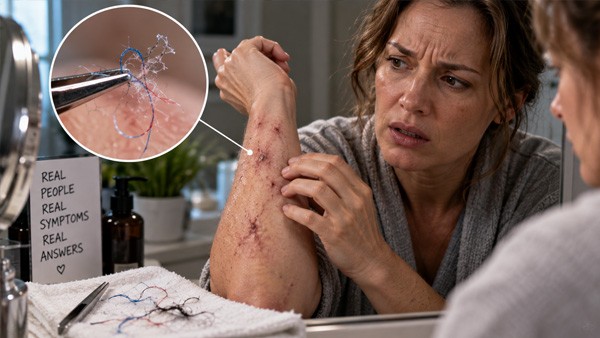

People who describe Morgellons tell remarkably similar stories: crawling, stinging or biting sensations under the skin, sores that will not heal, and tiny threads, fibres or specks that seem to come out of the skin. Many spend years going from doctor to doctor, feeling dismissed, and some become exhausted, isolated and desperate.
The distress is real. What causes it is where the arguments start. Some people are convinced of an infection or parasite. Research has not found one. This guide explains what investigations have shown, the medical conditions that must be ruled out first, and the approaches that genuinely relieve symptoms, whatever name the condition is given.
📋 The symptoms people describe
- 🐜 Crawling, biting or stinging sensations in or under the skin, often worse at night
- 🟥 Sores and scabs that are slow to heal, often on areas within reach of the hands
- 🧵 Fibres, threads or granules seen in or on the skin
- 😴 Fatigue, poor sleep and trouble concentrating
- 😟 Anxiety, low mood and a strong sense of not being believed
Many people collect samples and bring them to appointments. That is understandable: they want someone to see what they see.
🔬 What research has found
The largest investigation, a study by a national public health agency, examined over a hundred people with these symptoms in detail. It used skin biopsies, blood tests and laboratory analysis of the fibres.
| Question | What was found |
|---|---|
| Was there an infection or parasite? | No infectious organism or parasite was identified |
| What were the fibres? | Mostly cotton and other textile material, consistent with clothing and bedding, often trapped in scabs |
| What did the skin show? | Changes typical of chronic scratching and picking, and in some cases insect bites or skin conditions |
| Anything else common? | High rates of fatigue, and in some people depression, anxiety or drug use that can cause crawling sensations |
A small number of researchers have proposed a link with bacteria such as those causing Lyme disease. Those findings have not been confirmed by larger, independent studies.
💡 Not finding an infection does not mean the symptoms are invented. Sensations are produced by the nervous system. When nerve signals from the skin are amplified or misread, the feeling of insects under the skin is completely real to the person experiencing it. Scratching then damages the skin, fibres stick to the sores, and the cycle continues.
🩺 Causes that must be ruled out first
Before anything else, a doctor should look carefully for treatable causes of itch and crawling sensations. This matters, because several of them are common and fixable.
| Cause | Clues |
|---|---|
| Scabies | Intense itching, worse at night, often affecting others in the household; small burrows between fingers, on wrists and waistline |
| Other skin conditions | Eczema, dermatitis, neurodermatitis, insect bites, bed bugs |
| Nerve problems | Diabetes, vitamin B12 deficiency, shingles, spinal nerve irritation |
| Internal causes of itch | Kidney or liver disease, thyroid disorders, iron deficiency, some blood disorders |
| Medicines and substances | Stimulants including amphetamines, cocaine and some ADHD medicines; withdrawal from alcohol, opioids or sleeping tablets; some Parkinson medicines |
| Menopause | Crawling or tingling skin sensations are a recognised symptom |
Scabies deserves special mention because it is so often missed and so easily treated. Permethrin cream applied from the neck down, with close contacts treated at the same time and bedding washed hot, clears it. It is available as Elimite (Permethrin). Itching can persist for a few weeks after successful treatment, which does not mean it failed.
🧠 When no other cause is found
When careful examination and tests find no infection or other explanation, doctors often use the term delusional infestation, or describe the condition as a disorder of how skin sensations are processed. These labels can feel insulting to people who are certain of what they have experienced. Many specialists now avoid arguing about the name and focus on what the person needs: relief of itch, healing of the skin, sleep and support.
Clinics that combine dermatology and mental health care report the best results. The person is examined thoroughly and taken seriously, the skin is treated, and underlying anxiety, depression or sleep problems are addressed.
💊 What helps
- Treating the skin
- Gentle cleansing, emollients, dressings on sores, and treatment for any infection in open wounds. Covering sores helps them heal and reduces picking.
- Calming the itch
- Sedating antihistamines at night, such as Atarax (Hydroxyzin), can reduce night-time scratching and improve sleep. Cooling creams and keeping nails short help too.
- Medicines that reduce the sensations
- For persistent crawling sensations with a firm belief in infestation, low doses of certain antipsychotic medicines have the best evidence and often reduce symptoms substantially within weeks. Examples include risperidone, available as Risperdal (Risperidone). They are prescribed by a doctor who follows the person closely.
- Treating anxiety, depression and sleep
- All three amplify itch and are common after years of symptoms. Treating them often reduces the sensations.
- Stopping triggers
- If stimulants or other substances are involved, stopping them is often the most effective single step.
⚠️ Things that make it worse
🔴 Avoid:
- Harsh chemicals, bleach, pesticides or disinfectants on the skin. They cause burns and worsen sores
- Digging out "fibres" with needles or tweezers, which creates new wounds and infections
- Repeated courses of antiparasitic or antibiotic medicines without a confirmed infection. They cause side effects without helping
- Unregulated online treatments sold as cures
🤝 Getting the most from appointments
- Describe what you feel and how it affects you — sleep, work, relationships
- List every medicine and supplement, including recreational drugs
- Ask for a thorough skin examination and tests for other causes of itch
- Be open to treatments aimed at the sensations, even if the explanation feels uncertain; relief matters more than the label
- Bring someone you trust if appointments have been difficult before
Related chronic itch problems, such as the itch-scratch cycle, are described in our guide to neurodermatitis. The similar debate around reactions to everyday chemicals is covered in our guide to multiple chemical sensitivity.
📞 When to see a doctor
- Persistent itching or crawling sensations, especially if household members itch too
- Sores that are red, hot, swollen or oozing pus, or fever — possible infection
- Sensations that began with a new medicine or substance
- Low mood, hopelessness or thoughts of self-harm — promptly
- Using chemicals or tools on the skin to remove what you feel
❓ Frequently asked questions
Is Morgellons a real disease?
The symptoms and distress are real. Large investigations have not found an infection or parasite, and the fibres examined were mostly textile material. Most specialists view it as a disorder of skin sensation, often called delusional infestation, which responds to treatment.
What are the fibres coming out of my skin?
In laboratory studies, fibres from people with Morgellons symptoms were mostly cotton and other textile fibres from clothing and bedding, which easily become trapped in scabs and sores.
What causes a crawling feeling under the skin?
Common causes include scabies and other skin conditions, nerve problems such as diabetes or B12 deficiency, kidney or liver disease, stimulant drugs or withdrawal from alcohol or sleeping tablets, and menopause. When none is found, the sensation may come from how the nervous system processes skin signals.
How do I know if it is scabies?
Scabies causes intense itching, worse at night, often in several household members, with small burrows between the fingers, on the wrists and around the waist. A doctor can confirm it, and permethrin cream treats it.
What treatment works for Morgellons?
Treating the skin and sores, calming itch with antihistamines, treating anxiety, depression and sleep problems, and, for persistent sensations, low doses of certain antipsychotic medicines, which have the best evidence. Care that combines dermatology and mental health works best.
Why would a doctor suggest an antipsychotic?
At low doses, these medicines can reduce abnormal sensations and the distress around them, and they have the strongest evidence in this condition. It does not mean the doctor thinks you are imagining things. It is a way to calm the nervous system signals producing the symptoms.
Is Morgellons contagious?
No infectious cause has been found, so it is not considered contagious. If several people in a household itch, scabies or bed bugs should be checked, because those do spread.
Can drugs cause the feeling of bugs under the skin?
Yes. Amphetamines, cocaine and some stimulant medicines can cause it, as can withdrawal from alcohol, opioids or sleeping tablets. Stopping the trigger often relieves the sensations.
Should I use disinfectants on my skin?
No. Bleach, pesticides and harsh disinfectants burn the skin and worsen sores. Gentle cleansing, emollients and covering sores help healing.
Can people recover?
Yes. Many people improve substantially with a combination of skin care, itch control, treatment of sleep and mood, and medicines that reduce the sensations, especially when they find a clinician they trust.
📑 Sources and editorial
- Public health agency investigation of unexplained dermopathy
- Reviews and guidance on delusional infestation and its treatment
- Guidance on the diagnosis and treatment of scabies
- Reviews of chronic itch and its systemic and neurological causes
- Studies of combined dermatology and psychiatry clinics
- Related reading: neurodermatitis, multiple chemical sensitivity
- Related products: Elimite (Permethrin), Atarax (Hydroxyzin), skin care category
- RXshop Editorial Team — reviewed by Emily Chen, MD, Internal Medicine
Medical Disclaimer: The information in this article is for educational and informational purposes only and is not a substitute for professional medical advice, diagnosis, or treatment. Always seek guidance from a qualified healthcare provider with any questions you may have regarding a medical condition, and before starting, stopping or changing any medication.