Seasonal Depression: Why It Starts Before You Notice It

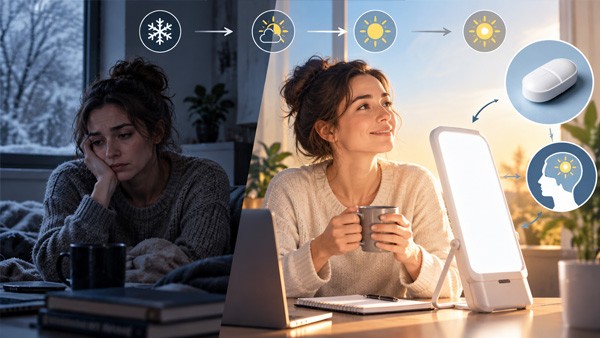

Every year it arrives on roughly the same schedule. Mornings get harder somewhere in October. Sleep stretches to ten hours and still is not enough. Bread and pasta become irresistible, the waistband tightens, and by December the idea of seeing friends feels like an obligation too heavy to lift. Then, sometime in March or April, it lifts — and the whole thing is forgotten until autumn comes round again.
That predictability is the most useful thing about seasonal depression. A condition that arrives on a timetable is one that can be prepared for, and the most effective treatments work considerably better when they start before the symptoms rather than after.
🌅 What is actually happening. The body internal clock is set each day mainly by morning light reaching the eyes. As days shorten, that signal weakens and arrives later, and in susceptible people the clock drifts later relative to the working day. Melatonin, the hormone that signals night, is released later and lasts longer into the morning.
The result is a body that is, in effect, still in the middle of its night when the alarm goes off. That explains the leaden mornings, the oversleeping, and why the most effective treatment is the most literal one: bright light, in the morning, to put the missing signal back.
❄️ Winter blues or something more
Most people in northern latitudes feel somewhat flatter in winter. That is common and is not an illness. Seasonal depression is a recurring episode of genuine depression — one that affects work, relationships and daily function — which returns in the same season for at least two consecutive years and lifts when the season changes.
| Winter blues | Seasonal depression | |
|---|---|---|
| Mood | Somewhat lower, still enjoying things | Persistently low, loss of pleasure and interest |
| Function | Life continues normally | Work, relationships and daily tasks suffer |
| Sleep | Slightly more | Much more, and still unrefreshed |
| Appetite | Mild increase | Strong cravings for carbohydrate, weight gain |
| Social life | Fewer evenings out | Withdrawal, described as hibernating |
| Pattern | Vague | Same season, two or more years running, lifting in spring |
The winter form has a characteristic flavour worth recognising: oversleeping, overeating, craving carbohydrate, and heavy fatigue — the opposite of the sleeplessness and weight loss usually associated with depression. It is more common further from the equator, more common in women, and usually begins in young adulthood.
A less common summer form also exists, with the more typical pattern of poor sleep, poor appetite and agitation.
💡 Light therapy, done properly
Light therapy is first-line treatment for the winter form, and it works for a large share of people — often within one to two weeks. Most failures come from doing it in a way that cannot work.
| Requirement | Why it matters |
|---|---|
| Brightness: 10,000 lux | Ordinary room lighting is a few hundred lux. Anything dimmer needs far longer sessions |
| Timing: within the first hour after waking | The same light in the evening can push the clock later and make things worse |
| Duration: around 30 minutes | Daily, including weekends |
| Distance: as the manufacturer specifies | Brightness falls steeply with distance. Sitting further away is the commonest reason a lamp seems not to work |
| Position: in front, slightly above | Eyes open, not staring at it. Reading or eating breakfast alongside is fine |
| Consistency: every day through the season | Stopping mid-winter usually brings symptoms back within days |
Purpose-made lamps filter out ultraviolet. Tanning beds are not a substitute — they deliver ultraviolet to the skin rather than bright visible light to the eyes, which is both ineffective and harmful. A lamp that turns on gradually before waking, imitating dawn, helps some people as an addition.
Side effects are usually mild: headache, eye strain, feeling wired or agitated, and difficulty sleeping if used too late in the day. Reducing time or moving slightly further away usually helps.
⚠️ Check first if any of these apply: a history of bipolar disorder, since bright light, like antidepressants, can tip mood into hypomania or mania. Eye disease, particularly of the retina. And medicines that make skin or eyes more sensitive to light — tetracycline antibiotics, some psychiatric drugs, St John of Jerusalem wort and others listed in the article on sun damage.
A seasonal pattern is common in bipolar disorder, and the bipolar guide covers why that distinction changes treatment.
💊 The tablet licensed for prevention
Antidepressants that work for depression generally work for seasonal depression too. But one has a specific licence for preventing winter episodes: bupropion in its extended-release form, started in early autumn before symptoms appear and continued until spring.
Its profile suits the winter pattern well. It tends to be activating rather than sedating, is not associated with weight gain, and rarely causes the sexual side effects common with other antidepressants — three features that matter in a condition dominated by oversleeping, weight gain and flat energy.
🔴 Bupropion carries a seizure risk that makes some people unsuitable for it. It must not be used with:
- Epilepsy or a history of seizures
- A current or past eating disorder involving purging or restriction — covered in the article on bulimia
- Abrupt withdrawal from alcohol or sedatives
- Older monoamine oxidase inhibitor antidepressants
Also discuss it first with heavy alcohol use, a head injury, or other medicines that lower the seizure threshold. Never exceed the prescribed dose, and never take two doses together to catch up.
Other points: it can cause insomnia, so it is taken in the morning. Dry mouth and headache are common early on, and it can raise blood pressure in some people. The same drug is sold under a different name for stopping smoking, so it is worth checking that the two are never taken together.
🧠 The option that protects future winters
Talking therapy adapted for seasonal depression works about as well as light therapy in the first winter. Its advantage shows later: in follow-up studies, people treated with therapy had fewer and milder episodes in subsequent winters than those treated with light alone. Light works while it is being used, while the skills learned in therapy carry forward into the following years.
The approach targets the specific traps of the winter pattern: the pull to withdraw and cancel, hibernating, and the belief that nothing can be done until spring. Scheduling activity, especially outdoors and in daylight, is part of it.
📅 A prevention calendar
- Late summer: note when last year symptoms began, and plan to act two to four weeks before that date
- Early autumn: start the lamp before symptoms appear, or discuss starting bupropion if it is part of the plan
- Every morning: fixed wake time, light early, outdoor daylight when possible — even an overcast winter day outdoors is far brighter than indoor lighting
- Exercise: ideally outdoors and in the morning, which combines two helpful signals
- Protect social contact: keep a small number of fixed commitments that are hard to cancel
- Spring: taper treatment gradually rather than stopping suddenly, and note when symptoms lifted for next year
A word on vitamin D: levels fall in winter, and correcting a genuine deficiency is sensible for bone health. The evidence that vitamin D supplements prevent or treat seasonal depression is, however, weak and inconsistent. It is not a substitute for light or treatment.
🩺 When to seek help
- Thoughts of suicide or self-harm — same day, and emergency services if there is immediate risk
- Symptoms affecting work, relationships or daily function — this is treatable, not a matter of enduring winter
- Racing thoughts, reduced need for sleep, or unusually high mood after starting a lamp or antidepressant — stop and seek advice the same day
- A history of bipolar disorder — before starting light therapy or an antidepressant
- A seizure or fainting episode on bupropion — stop and seek urgent assessment
- Symptoms that do not lift in spring — needs reassessment as ongoing depression
- Heavy daytime sleepiness with snoring — consider sleep apnoea, which can imitate the winter pattern
Bupropion is stocked as Wellbutrin. The same active ingredient is sold for smoking cessation as Zyban, and the two must not be taken together. Other options in the antidepressants category, such as Sertafine (sertraline), are used where bupropion is unsuitable. Any antidepressant for this purpose needs a prescriber, particularly to rule out bipolar disorder and the seizure-related contraindications first.
❓ Frequently asked questions
How do I know if it is winter blues or seasonal depression?
By whether it affects function. Winter blues is feeling somewhat flatter while life continues normally. Seasonal depression is a genuine depressive episode that disrupts work, relationships and daily tasks, returns in the same season at least two years running, and lifts when the season changes. The winter form typically involves oversleeping, carbohydrate cravings, weight gain and heavy fatigue.
Why do I sleep so much in winter?
Because shorter days weaken and delay the morning light signal that sets the internal clock. In susceptible people the clock drifts later, melatonin is released later and lingers into the morning, and the body is effectively still in its night when the alarm goes off. That is why bright morning light is so effective — it restores the missing signal.
How do I use a light box correctly?
A 10,000 lux lamp, for about 30 minutes, within the first hour after waking, every day including weekends, at the distance the manufacturer specifies — brightness falls steeply with distance, which is the commonest reason a lamp seems not to work. Eyes open but not staring; reading or eating breakfast alongside is fine. Using it in the evening can make things worse.
Can I use a tanning bed instead?
No. Tanning beds deliver ultraviolet to the skin, while light therapy works through bright visible light reaching the eyes. The first is ineffective for this and adds skin cancer risk. Purpose-made lamps filter out ultraviolet for exactly that reason.
Is there a tablet that prevents it?
Yes. Extended-release bupropion is licensed specifically for preventing winter episodes, started in early autumn before symptoms and continued until spring. It tends to be activating rather than sedating, is not associated with weight gain, and rarely causes sexual side effects. It is unsuitable for anyone with epilepsy, an eating disorder, or during abrupt alcohol or sedative withdrawal.
Why does bupropion carry a seizure warning?
Because it lowers the seizure threshold, particularly at higher doses and in people already at risk. That is why it is not used with epilepsy, eating disorders involving purging or restriction, or abrupt withdrawal from alcohol or sedatives, and why doses should never be exceeded or doubled to catch up. Within those limits it is widely and safely used.
When should I start treatment?
Before the symptoms, not after. Note when they began last year and start light therapy, or bupropion if it is part of the plan, two to four weeks ahead of that point. Treatment started early is considerably more effective than treatment started once the episode is established, which is the practical advantage of a condition that arrives on a timetable.
Does vitamin D help?
Correcting a genuine deficiency is sensible for bone health, and levels do fall in winter. But the evidence that vitamin D prevents or treats seasonal depression is weak and inconsistent. It is not a substitute for light therapy, talking therapy or medication.
Is light therapy safe with bipolar disorder?
It needs caution. Like antidepressants, bright light can tip mood into hypomania or mania, and a seasonal pattern is common in bipolar disorder. It can still be used, but with medical supervision and usually alongside a mood stabiliser. Racing thoughts, reduced need for sleep or unusually high mood after starting a lamp mean stopping and seeking advice.
What helps most in the long run?
Talking therapy adapted for seasonal depression. It works about as well as light in the first winter, and in follow-up studies it produced fewer and milder episodes in later winters, because the skills carry forward while light only works while it is used. Combining approaches, and planning each autumn in advance, gives the best chance of an ordinary winter.
📑 Sources and editorial
- Diagnostic criteria for major depression with seasonal pattern
- Literature on circadian phase delay and melatonin timing in seasonal depression
- Epidemiology by latitude, sex and age of onset
- Trial evidence and practice parameters for bright light therapy, including intensity, timing and duration
- Evidence on dawn simulation as an adjunct
- Regulatory approval and prevention trials of extended-release bupropion started before seasonal onset
- Prescribing information on bupropion seizure risk and contraindications
- Randomised comparisons of cognitive behavioural therapy and light therapy, including recurrence in subsequent winters
- Literature on light therapy and antidepressant-associated switching in bipolar disorder
- Evidence on vitamin D supplementation in seasonal depression
- Related reading: circadian rhythm disorders, bipolar disorder, starting an antidepressant
- Related products: antidepressants category
- RXshop Editorial Team — reviewed by James Carter, MD, Neurology
Medical Disclaimer: The information in this article is for educational and informational purposes only and is not a substitute for professional medical advice, diagnosis, or treatment. Always seek guidance from a qualified healthcare provider with any questions you may have regarding a medical condition, and before starting, stopping or changing any medication.