Oral Thrush in Adults: Why Steroid Inhalers, Dentures and Diabetes Trigger It and When Fluconazole Tablets Are Needed

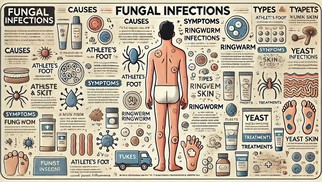

👅 Oral thrush is often thought of as a baby problem, yet adults get it all the time, and almost always for a reason. In an adult, a white or sore mouth from Candida usually points to a trigger: a steroid inhaler used without rinsing, dentures worn day and night, blood sugar that runs high, a recent course of antibiotics, a dry mouth, or an immune system under strain. 🔍 Treating the fungus clears the mouth, but if the trigger stays, the thrush comes back within weeks. This guide explains what adult oral thrush looks like, why each trigger works, how to tell it from other white patches, when an oral gel or drops are enough and when fluconazole tablets are the better choice, how long a course lasts, which medicines clash with fluconazole, and what to do when thrush keeps returning.
🍄 What oral thrush is and why adults get it
🧫 Candida is a yeast that lives in the mouth of a large share of healthy people without causing any harm. Normal saliva flow, the other mouth bacteria and a working immune system keep it in check. Thrush appears when that balance tips and the yeast starts to grow into the lining of the mouth instead of sitting quietly on its surface. In babies the balance is simply immature. In adults something has to tip it, and finding that something is half of the treatment.
🧩 The most common tipping points are local: a film of steroid left on the tongue and throat after an inhaler, a plastic denture that traps yeast against the palate, a dry mouth, or smoking. Others are general: diabetes with high glucose, antibiotics that clear the competing bacteria, steroid tablets, chemotherapy, and conditions that weaken immunity, such as HIV. 📖 For the wider family of yeast infections, including the species that do not respond to fluconazole, see yeast-like fungi: Candida, Malassezia and Cryptococcus. Here we stay with the mouth and throat.
🔎 What it looks and feels like
👀 The classic picture is creamy white spots on the tongue, inner cheeks or palate that can be wiped off, leaving a red, sometimes slightly bleeding surface underneath. Many adults never see white patches at all and notice only soreness, burning or a strange taste. That is why thrush is often missed in people who use inhalers or wear dentures: the mouth simply feels raw.
🗣️ A hoarse voice in someone using a steroid inhaler can be a related problem: the steroid can also irritate the vocal cords, and Candida can grow on the larynx. Pain when swallowing, or food feeling stuck behind the breastbone, suggests the infection has moved down into the oesophagus, which is covered later and always needs a doctor.
🧩 The four forms of oral candidiasis
📋 Doctors describe several patterns. Knowing them matters because the red forms are easy to mistake for simple irritation, and they are exactly the ones seen under dentures and in inhaler users.
| 👅 Form | 👁️ What it looks like | 🧭 Typical setting |
|---|---|---|
| Pseudomembranous | White curd-like plaques that wipe off | Inhalers, antibiotics, weak immunity |
| Erythematous (red) | Red, raw areas, often on the tongue or palate, smooth tongue | Inhalers, antibiotics, dry mouth |
| Denture stomatitis | Red palate exactly in the shape of the upper denture, often painless | Dentures worn at night, poor denture hygiene |
| Angular cheilitis | Cracks and redness at the corners of the mouth | Dentures, deep lip folds, low iron or B vitamins |
| Hyperplastic (rare) | White patch that does not wipe off, often inside the cheek | Smokers; needs a dentist or specialist to exclude other causes |
🔗 How Candida turns from resident to infection
🧪 Candida can switch from round yeast cells to long threads called hyphae, and it is the thread form that invades the surface of the mouth and causes symptoms. Local steroids weaken the immune cells in the mouth lining, sugar feeds the yeast, a denture gives it a protected surface to form a sticky biofilm, and antibiotics remove the bacteria that normally compete with it for space. Each trigger works at a different step, which is why each needs its own fix.
🌬️ Steroid inhalers: the most common adult trigger
🫁 Inhaled corticosteroids are the backbone of asthma and many COPD treatment plans, and they are safe and very effective. The problem is where part of each dose lands. A good share of every puff never reaches the lungs and settles on the tongue, the back of the throat and the voice box, where it quietly suppresses local immunity. Over weeks, Candida takes advantage. The risk rises with higher doses, with combination inhalers that contain a steroid, with poor technique, and when the mouth is never rinsed.
✅ The answer is almost never to stop the inhaler. Stopping a preventer to avoid thrush swaps a minor, treatable problem for a real risk of asthma attacks. The right move is to treat the thrush, fix the technique and, if needed, ask whether a lower dose or a different inhaler would control the lungs just as well. 📖 A full guide to inhaler types and technique is in asthma inhalers: preventer, reliever and technique.
📊 Why some inhaler users get thrush and others do not
⚖️ Two people on the same inhaler can have very different mouths. Most of the difference comes from how much steroid is left behind in the throat and how long it stays there.
🧼 The rinse, gargle and spacer routine
🚰 The routine below is simple, but it has to happen after every single dose, morning and evening, for as long as the inhaler is used. Swallowing the rinse water does not cause harm, but spitting it out removes the steroid from the body entirely, so spitting is preferred.
🦷 Dentures and denture stomatitis
🦷 Denture stomatitis is the most common form of oral thrush in older adults. The palate under an upper denture turns red, sometimes with tiny red dots, and the red area matches the outline of the plate exactly. It is often painless, so many people only learn about it at a dental check-up. The cause is a sticky yeast biofilm on the fitting surface of the denture, made worse when the denture is worn overnight, fits poorly, or is cleaned only with water.
💡 The key point is that the yeast lives on the plastic as well as in the mouth. Treating the mouth without treating the denture almost guarantees a relapse, because the plate reinfects the palate every time it goes back in. A badly fitting denture also rubs the tissue and needs adjusting or replacing. Cracks at the corners of the mouth in denture wearers often come from loss of face height when teeth or dentures wear down, which deepens the folds where saliva and yeast collect.
🧽 Denture care that stops the relapse
🩸 Diabetes and oral thrush
🍬 People with diabetes get oral thrush more often, and the main driver is glucose that stays above target. Higher sugar levels in saliva feed the yeast, and high glucose also slows the white cells that would normally clear it. Diabetes often comes with a dry mouth as well, especially when sugar is high, and dentures and smoking add to the risk. Repeated thrush in an adult with no clear cause is one of the reasons doctors check blood sugar, because it can be the first sign of undiagnosed type 2 diabetes.
💊 Treatment of the thrush itself is the same as for anyone else, but the glucose plan deserves a review at the same time, whether that means lifestyle steps, a dose change or medicines such as Glucophage (Metformin). One practical warning: fluconazole can raise the levels of sulfonylurea tablets such as glipizide, glimepiride and gliclazide, which increases the chance of a low sugar. Metformin does not have this problem. Anyone on a sulfonylurea who starts fluconazole should check glucose more often for the length of the course.
💊 Antibiotics, dry mouth and other everyday triggers
🧪 A course of broad-spectrum antibiotics is a classic trigger for thrush in the mouth as well as in the vagina. The drug clears bacteria that normally keep Candida in check, and the yeast fills the gap, usually during the course or in the week after it. A dry mouth is the other big everyday driver, because saliva washes yeast away and contains natural antifungal proteins.
🧬 When thrush is a sign of something else
🚩 In a healthy adult with no inhaler, no dentures, no diabetes and no recent antibiotics, oral thrush is unusual. Thrush without an obvious trigger is a reason to look for a hidden cause rather than simply to keep treating it. The usual checks are a blood sugar test, a full blood count and, depending on the history, an HIV test. Oral thrush was one of the early signs that drew attention to HIV, and it still often leads to the diagnosis today. 📖 If HIV is found, modern treatment works very well; see starting HIV treatment: the first regimen and the first year.
🔬 Thrush or something else? White and red patches compared
🧐 Not every white or sore mouth is thrush. The simplest clue is whether the white coating wipes off with gauze or a soft brush; thrush usually does, most other white patches do not. A doctor or dentist can usually decide by looking, and a swab is taken when the picture is unclear, when treatment has failed, or when resistant yeast is suspected.
| 🔎 Condition | 📋 Clues | 🧭 What to do |
|---|---|---|
| Oral thrush | Wipes off, red base, soreness, a known trigger | Antifungal and fix the trigger |
| Coated tongue | Even white or yellow fur on the back of the tongue, no pain | Tongue brushing, fluids, review dry mouth |
| Geographic tongue | Smooth red map-like patches with white borders that move over days | Harmless, no antifungal needed |
| Oral lichen planus | Lacy white lines inside the cheeks, both sides, may be sore | Dentist or specialist review |
| Leukoplakia | White patch that does not wipe off, often in smokers | Must be checked; may need a biopsy |
| Ulcer or sore that does not heal in 3 weeks | Any persistent ulcer, lump or red patch | Urgent dental or medical review |
🧴 Mild thrush: start with treatment in the mouth
💧 For a first, mild episode with a clear trigger, treatment applied in the mouth usually works. The two standard choices are miconazole oral gel, spread over the sore areas after meals, and nystatin suspension, held in the mouth before swallowing. Both are used several times a day and continued for about a week, or until around two days after the mouth looks and feels normal, because stopping early lets the yeast return.
⚠️ Local does not always mean harmless. Miconazole gel is absorbed enough to interact strongly with warfarin and can cause dangerous bleeding, so people on warfarin should not use it without their doctor. It can also raise levels of some other medicines. Nystatin does not have this problem, but it tastes unpleasant, needs four doses a day and has to stay in contact with the sore areas, which is hard for some people. Denture wearers need the gel or drops applied to the fitting surface of the plate too.
🧭 When fluconazole tablets are the better choice
💊 Fluconazole is a tablet that works from the inside and reaches the saliva and mouth lining well. For moderate or severe thrush, thrush that has failed local treatment, or when local treatment is impractical, a short course of fluconazole is usually the simpler and more reliable option. It is taken once a day, works whether taken with or without food, and avoids the many daily doses of gels and drops.
📋 Fluconazole for oral thrush: dose and course length
📆 Doses depend on how severe the infection is and on the guideline used, so the prescriber decides the final plan. Unlike vaginal thrush, mouth and throat thrush is not treated with a single tablet; it needs a daily course. Kidney function matters because fluconazole leaves the body mainly through the kidneys, and people with reduced function often need a lower dose on longer courses.
📋 Usual adult courses
💊 Mouth, mild to moderate: 50 to 100 mg once daily for about 7 days
💊 Mouth, moderate to severe: often 200 mg on day 1, then 100 to 200 mg daily for 7 to 14 days
💊 Throat (oesophagus): higher doses for 14 to 21 days, under a doctor
📊 Practical points
⏰ Once a day, at the same time; long half-life of about 30 hours
🍽️ With or without food; absorption is nearly complete
📅 Finish the course even when the mouth feels better
🚰 Keep rinsing after inhalers during and after treatment
💡 Diflucan is the original brand of fluconazole, and Fluconaz is a generic version of the same active substance. The tablet strength in milligrams is what matters, not the brand name, so a 50 mg, 100 mg, 150 mg or 200 mg tablet of either contains the same medicine. The 150 mg strength is designed for single-dose vaginal thrush, so it is not the usual building block for a mouth course unless a prescriber advises it.
⏱️ What to expect during treatment
Burning and soreness begin to ease
White patches fade, taste returns
Course completed, red areas settle
Trigger control keeps it away
🤔 If the mouth is not better after a week, the usual reasons are simple: doses were missed, the trigger is still active, the denture was not treated, the problem is not thrush, or the yeast is a species that fluconazole handles poorly. A swab at this point tells the doctor which yeast is present and which drug will work.
⚠️ Fluconazole interactions that matter
🧪 Fluconazole blocks several liver enzymes that clear other medicines, so it can raise their levels. A short course is safe for most people, but the full medicine list should be checked before the first tablet. The effect can last a few days after the last dose because of the long half-life.
| 💊 Medicine | 📝 What can happen | 🧭 Usual approach |
|---|---|---|
| Warfarin | Stronger blood thinning, bleeding | Check INR during the course |
| Sulfonylureas (glipizide, glimepiride, gliclazide) | Low blood sugar | Check glucose more often |
| Some statins (simvastatin, atorvastatin) | Higher statin levels, muscle pain | Doctor may pause the statin for a short course |
| Medicines that prolong the QT interval | Heart rhythm problems | Some combinations are not allowed; ask first |
| Phenytoin, ciclosporin, tacrolimus | Higher drug levels | Blood level monitoring |
| Rifampicin | Lower fluconazole levels | Higher fluconazole dose may be needed |
🫁 Inhaler users often ask whether fluconazole interacts with their steroid inhaler. Fluconazole has only a moderate effect on how the body clears inhaled steroids, and a short course is generally fine. Stronger enzyme blockers, such as itraconazole and some HIV medicines, can raise inhaled fluticasone or budesonide levels enough to cause steroid side effects over time, which is one reason doctors pay attention to the inhaler when choosing a second-line antifungal.
🚫 Side effects and who needs extra care
🙂 Most people take a short fluconazole course without trouble. The common side effects are nausea, stomach pain, diarrhoea, headache and rash, and they are usually mild. Rare but important problems include liver inflammation, serious skin reactions and heart rhythm changes in people with other risk factors.
🌊 When thrush spreads into the throat
🚨 Candida oesophagitis means the yeast has spread down into the food pipe. The key symptoms are pain when swallowing and a feeling that food sticks behind the breastbone, sometimes with no visible change in the mouth at all. It is much more common in people with weakened immunity, those on steroid tablets or chemotherapy, and people with uncontrolled diabetes, but it can occasionally follow heavy inhaled steroid use.
🩺 Gels and drops do not reach the oesophagus well, so this form is treated with tablets. Fluconazole is the usual first choice, at a higher dose and for 14 to 21 days, and a doctor may arrange a camera test if the diagnosis is uncertain or symptoms do not settle. Anyone who cannot swallow fluids, is losing weight or vomiting blood needs urgent care.
🔁 Thrush that keeps coming back or will not clear
🔍 Recurrent thrush in the mouth is a signal to go back to the triggers before reaching for stronger drugs. In most people the fix is a better inhaler routine, real denture hygiene, better glucose control or a change to a drying medicine. Repeated courses of fluconazole without fixing the cause can encourage less sensitive yeasts to take over.
🧫 Some Candida species, especially Candida glabrata and Candida krusei, are naturally less sensitive or resistant to fluconazole. When thrush fails a proper course, a swab result is far more useful than simply doubling the dose. For people with severe immune weakness who get thrush again and again, a doctor sometimes uses a regular preventive dose, but this is a specialist decision and not a routine plan for inhaler or denture users.
🛡️ Prevention by trigger
| ⚠️ Trigger | ✅ Main prevention | ➕ Extra help |
|---|---|---|
| Steroid inhaler | Rinse, gargle and spit after every dose; spacer for aerosols | Lowest effective dose; ask about inhalers with less mouth effect |
| Dentures | Out at night, brushed and soaked daily | Dental check of fit every year or two |
| Diabetes | Glucose at agreed target | Regular dental care, stop smoking |
| Antibiotics | Only when needed, finish as directed | Early treatment if soreness starts |
| Dry mouth | Review drying medicines, sip water | Sugar-free gum, saliva substitutes |
| Smoking | Stopping smoking | Dentist review of any patch that does not wipe off |
🍭 Many people are told to cut out sugar to starve the yeast. For people without diabetes, there is little evidence that a strict anti-Candida diet prevents oral thrush; the triggers in the table matter far more. Sugary drinks sipped through the day are bad for teeth anyway, and that is a fair reason to reduce them.
🗿 Myths about oral thrush
🚨 When to see a doctor
⛔ See a doctor or dentist promptly if:
🔹 Swallowing is painful or food sticks behind the breastbone.
🔹 You have no obvious trigger, or thrush keeps coming back after treatment.
🔹 You have weakened immunity, are on chemotherapy or steroid tablets, or have a high fever.
🔹 A white or red patch does not wipe off, or any mouth sore lasts more than 3 weeks.
🔹 You are pregnant, take warfarin, or take several regular medicines and need an antifungal.
🔹 You notice thirst, frequent urination or weight loss along with the thrush.
📖 Thrush in other parts of the body follows the same logic of trigger plus yeast; for genital infection see vaginal candidiasis, and for fungal infections of the nails see nail fungus treatment and how long it really takes.
❓ Frequently asked questions
Why do adults get oral thrush?
Usually because of a trigger: a steroid inhaler without rinsing, dentures worn at night, high blood sugar, antibiotics, a dry mouth or weakened immunity.
Can a steroid inhaler cause thrush?
Yes. Part of each dose settles in the mouth and throat. Rinsing, gargling and spitting after every dose and using a spacer greatly reduce the risk.
Should I stop my inhaler if I get thrush?
No. Keep using the preventer, treat the thrush and improve the routine. Ask your doctor if the dose or inhaler type should change.
How long does fluconazole take to work on oral thrush?
Soreness usually starts to ease within 2 to 3 days. The full course is usually 7 to 14 days and should be finished even when the mouth feels better.
Is one fluconazole 150 mg tablet enough for mouth thrush?
Usually not. The single 150 mg dose is for vaginal thrush. Mouth thrush is normally treated with a daily dose for about 7 to 14 days.
What is denture stomatitis?
It is a form of thrush under a denture, seen as a red palate in the shape of the plate. Both the mouth and the denture need treating.
Can I use miconazole gel if I take warfarin?
Not without your doctor. Miconazole gel can greatly increase the effect of warfarin and cause serious bleeding. Nystatin is usually a safer local choice.
Does diabetes cause oral thrush?
High blood sugar makes thrush more likely and harder to clear. Repeated thrush without a cause is one reason doctors test for diabetes.
What if fluconazole does not clear my thrush?
See a doctor. A swab can show if the yeast is resistant or if it is not thrush. Another antifungal such as itraconazole may be needed.
Is oral thrush contagious?
Candida already lives in most mouths, so thrush is rarely passed on in a meaningful way. It appears mainly when a trigger lets the yeast overgrow.
📑 Sources and editorial
- 📘 Clinical practice guidelines on the management of oropharyngeal and oesophageal candidiasis
- 💊 Prescribing information for fluconazole, itraconazole, miconazole oral gel and nystatin suspension
- 🫁 Asthma management guidance on inhaled corticosteroids, spacers and local side effects
- 🦷 Dental and prosthodontic guidance on denture stomatitis and denture hygiene
- 🩸 Reviews of oral infections in diabetes
- ⚠️ Drug safety communications on the interaction between miconazole oral gel and warfarin
- 📖 Related reading: asthma inhalers and technique, yeast-like fungi, vaginal candidiasis, starting HIV treatment, nail fungus treatment
- 🛒 Related products: Diflucan (Fluconazole), Fluconaz (Fluconazole), Sporanox (Itraconazole), Flovent (Fluticasone), Pulmicort (Budesonide), Advair Diskus (Fluticasone + Salmeterol), Ciclohale (Ciclesonide), Glucophage (Metformin)
- 🩺 RXshop Editorial Team — reviewed by Emily Chen, MD — Internal medicine
Medical Disclaimer: The information in this article is for educational and informational purposes only and is not a substitute for professional medical advice, diagnosis, or treatment. Always seek guidance from a qualified healthcare provider with any questions you may have regarding a medical condition, and before starting, stopping or changing any medication.