Night Leg Cramps: Why the Calf Locks at Night, How to Stop a Cramp in Seconds, and Which Treatments Really Prevent Them

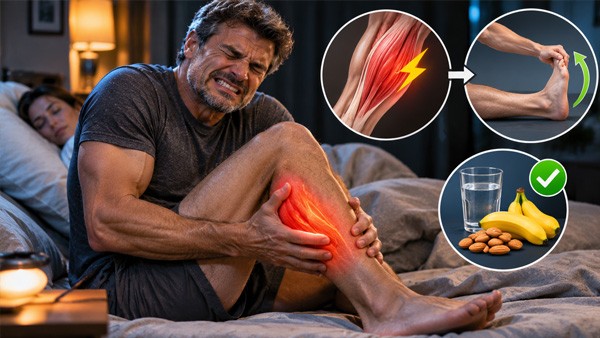

🌙 It usually starts in the small hours: a calf muscle suddenly knots into a hard, painful ball, the foot points downwards and nothing will make it let go. Night leg cramps are one of the most common reasons people over 50 wake in pain, and they are common in pregnancy too. ⏱️ Most cramps last seconds to a few minutes, but the soreness can linger into the next day, and frequent cramps wreck sleep. 🔎 This guide explains why the muscles cramp at night, which medicines and conditions make cramps more likely, how to stop a cramp quickly, and which treatments have real evidence for prevention. It also explains which popular remedies do not work and how to tell cramps apart from restless legs, spasticity and poor circulation.
🧩 What a night cramp actually is
⚡ A cramp is a sudden, involuntary, painful contraction of a muscle that is already shortened. At night the calf is usually shortened because the foot points down under the weight of the bedclothes. 🧠 The trigger is in the nerve rather than the muscle itself: the nerve endings that drive the muscle fire in rapid bursts, and the usual brakes from tendon sensors fail to switch them off. That is why stretching the muscle, which activates those brakes, stops a cramp so quickly.
📍 Where cramps strike
👴 Who gets night cramps
📈 Night cramps become more common with every decade. Muscles and tendons shorten with age and inactivity, and nerve endings become more excitable. Long periods of sitting, standing all day on hard floors, flat feet and unaccustomed exercise all add to the risk. 🤰 In pregnancy, cramps are most frequent in the third trimester and usually settle after birth.
💊 Medicines that can trigger cramps
🔍 A new medicine is one of the most common hidden causes of new cramps. If cramps started within weeks of a new prescription or a dose change, tell the doctor; there is often an alternative. Never stop a heart or blood pressure medicine on your own.
| 💊 Medicine group | 📝 Why and what can help |
|---|---|
| 💧 Diuretics (water tablets) | Lower potassium and magnesium. Blood test; dose or type may change |
| 💨 Long-acting asthma inhalers | Beta agonists such as salmeterol. Often mild; review the inhaler plan |
| 🧪 Statins | More often aching than true cramps. Report it; another statin or dose often helps |
| 💊 Some sleep and mood medicines | Certain antidepressants, antipsychotics and zolpidem have been linked |
| 💊 Pregabalin, raloxifene, teriparatide | Cramps listed as a known side effect |
| 💊 ACE inhibitors and ARBs | Occasionally; usually linked to kidney function or salts |
🩺 Conditions linked to cramps
- 🩸 Low salts in the blood: potassium, magnesium, calcium or sodium, often from diuretics, vomiting or diarrhoea
- 🍬 Diabetes and nerve damage: see diabetic neuropathy
- 🧪 Kidney failure and dialysis: very common, often during or after sessions
- 🍺 Liver cirrhosis: cramps are frequent and often under-treated
- 🦋 Underactive thyroid: stiffness, aches and cramps
- 🦵 Narrowed leg arteries: pain on walking rather than at rest; see leg pain when you walk
- 🧠 Nerve and spinal problems: a trapped nerve in the lower back, and rarely motor neurone disease
🚨 How to stop a cramp right now
🦶 For a cramp in the sole of the foot, pull the toes back towards the shin. For the back of the thigh, straighten the knee and lean forward from the hips. For the front of the thigh, bend the knee and hold the ankle behind you, holding onto something for balance.
📉 How fast the pain fades
🌛 Why cramps prefer the night
🧘 Prevention without tablets
💪 For most people, non-drug measures are the first and often the only treatment needed. Evidence for each is modest, but they are safe and work well together.
📊 Stretching: what a regular routine can do
🧪 These are figures from one trial in older adults who stretched calves and hamstrings before bed; other trials found smaller effects. The routine costs nothing and has no side effects, so it is worth six weeks of consistent effort before judging it.
💊 Treatments with some evidence
⚖️ When cramps are frequent and stretching is not enough, a doctor may consider a medicine. None works for everyone and the evidence for each is limited, so a trial of four weeks with a cramp diary shows whether it helps.
💊 Diltiazem
📊 Reduced cramps in a small trial in older adults
✅ Cardizem (Diltiazem), also used for blood pressure
⚠️ Ankle swelling, slow pulse, many interactions
💊 Gabapentin
📊 Used when cramps come with nerve damage
✅ Neurontin (Gabapentin) at night
⚠️ Drowsiness, dizziness; build up slowly
💊 Vitamin B complex
📊 Helped in one small trial in older adults
✅ Inexpensive, low risk
⚠️ Evidence is thin; avoid high-dose B6 long term
⚠️ Quinine: effective but not for routine use
💊 Quinine does reduce night cramps, by roughly a third in pooled trials. But it can cause rare, serious and sometimes fatal reactions: severe drops in platelets, kidney failure, dangerous heart rhythms and hearing or vision problems. ⛔ Many regulators advise against using it for leg cramps, and where it is still used it is reserved for severe, disabling cramps after other options, with a trial stop every few months. Tonic water contains too little quinine to help, but enough to cause reactions in sensitive people.
🧂 Magnesium: popular, mostly disappointing
📊 Magnesium is the most widely used remedy for cramps. Pooled trials in older adults show it does not reduce ordinary night cramps more than placebo. 🤰 In pregnancy the results are mixed: some trials showed a benefit and others did not. It does help when blood magnesium is actually low, for example on diuretics or after prolonged diarrhoea, which a blood test can show. Magnesium causes loose stools, and people with kidney disease should not take it without advice.
💪 Muscle relaxants: where they fit
🧠 Muscle relaxants are often tried for cramps, but for ordinary night cramps in healthy people the evidence is weak. They play a clearer role when cramps and spasms come from a nerve or spinal condition, such as multiple sclerosis or spinal cord injury.
| 💊 Medicine | 📝 Where it is most useful |
|---|---|
| Lioresal (Baclofen) | Spasms and cramps from MS or spinal cord injury. Drowsiness; never stop suddenly |
| Zanaflex (Tizanidine) | Spasticity and night spasms in neurological conditions; low blood pressure, liver checks |
| Robaxin (Methocarbamol) | Short courses for acute back or muscle spasm, not long-term night cramps |
| Naprosyn (Naproxen) | Eases the next-day soreness, does not prevent cramps |
📖 More on tight muscles from nerve damage: muscle spasticity: causes, treatment and drug doses. On acute spasm after a strain: muscle strain and spasm.
📋 How the options compare
Stretching, bedding position, vitamin B complex
Diltiazem, gabapentin
Magnesium (unless low), tonic water, pickle juice
Quinine
🤰 Cramps in pregnancy
🌙 Leg cramps affect many pregnant women, mostly from the second half of pregnancy, and usually stop after the baby is born. Calf stretching before bed, regular walking, comfortable shoes and enough fluid are the first steps. 💊 Magnesium and calcium have been tried with mixed results; a midwife or doctor can advise. Quinine must not be used. A painful, swollen, warm calf in pregnancy is not a cramp and needs same-day assessment for a clot.
🔍 Cramp, restless legs, spasticity or circulation?
🧪 When tests are worth doing
- 🩸 Blood tests: potassium, magnesium, calcium, kidney and liver function, glucose, thyroid, especially with new cramps or on diuretics
- 🦵 Pulses and ankle pressure check if the pain comes on walking
- ⚡ Nerve tests if there is numbness, weakness or muscle twitching
- 💊 Medicine review: every tablet, inhaler and supplement, with start dates
🗿 Common beliefs about cramps
| 💭 The belief | ✔️ What is actually the case |
|---|---|
| “Cramps mean I am short of potassium.” | Sometimes, on diuretics. Most people with cramps have normal levels |
| “Magnesium fixes cramps.” | Trials in older adults show no benefit over placebo unless levels are low |
| “Tonic water prevents them.” | It holds far too little quinine to work |
| “Only athletes cramp.” | Night cramps are most common in older, less active people |
| “A painkiller will stop the cramp.” | It acts too slowly; stretching stops a cramp |
🚨 When to see a doctor
⛔ Get medical help the same day if:
🔹 The calf stays swollen, warm, red or painful after the cramp has gone (possible clot).
🔹 Cramps come with weakness, numbness or loss of bladder control.
🔹 Cramps start with vomiting, diarrhoea or confusion, or on a new diuretic, which may mean low salts.
📅 Book a routine appointment if cramps happen most nights, began after a new medicine, spread beyond the legs, come with muscle wasting or twitching, or disturb sleep despite six weeks of stretching.
❓ Frequently asked questions
What causes leg cramps at night?
Usually no single cause: ageing muscles, a shortened calf in bed, inactivity, some medicines such as diuretics, pregnancy and conditions like diabetes or kidney disease.
How do I stop a leg cramp quickly?
Pull the toes towards the knee with the leg straight, or stand and put weight on the heel, then massage the muscle.
Does magnesium help night cramps?
In older adults, trials show no benefit over placebo. It helps if blood magnesium is low, and results in pregnancy are mixed.
Is quinine safe for leg cramps?
It works modestly but can cause rare serious blood, kidney and heart reactions, so it is not recommended for routine use.
Which medicines can cause leg cramps?
Diuretics, long-acting asthma inhalers, statins, some antidepressants and pregabalin are among the most common.
Do muscle relaxants help night cramps?
For ordinary night cramps the evidence is weak. Baclofen and tizanidine are more useful when cramps come from MS or spinal cord injury.
Does stretching before bed really work?
Several trials found fewer and milder cramps after weeks of nightly calf and hamstring stretching, though not all agreed.
Why do I get leg cramps in pregnancy?
Extra weight, changes in circulation and minerals all play a part. Cramps are common in late pregnancy and usually stop after birth.
How is a cramp different from restless legs?
A cramp is a painful hard knot that stretching relieves. Restless legs is an urge to move with odd sensations, eased by moving.
When should I worry about leg cramps?
If the calf stays swollen and painful, cramps come with weakness or numbness, or they are frequent and new after a medicine change.
📑 Sources and editorial
- 📘 Clinical reviews and guidance on nocturnal leg cramps in adults
- 📊 Population studies of the frequency of night cramps by age and in pregnancy
- 🧘 Randomised trials of nightly stretching for leg cramps in older adults
- 🧂 Systematic reviews of magnesium for skeletal muscle cramps
- ⚠️ Systematic reviews and regulatory safety warnings on quinine for leg cramps
- 💊 Trials of diltiazem, gabapentin and vitamin B complex for cramps
- 🧪 Reviews of drug-induced muscle cramps
- 📖 Related reading: restless legs syndrome, muscle spasticity, leg pain when you walk, diabetic neuropathy
- 🛒 Related products: Lioresal (Baclofen), Baclof (Baclofen), Zanaflex (Tizanidine), Robaxin (Methocarbamol), Neurontin (Gabapentin), Cardizem (Diltiazem), Naprosyn (Naproxen)
- 🩺 RXshop Editorial Team — reviewed by James Carter, MD — Neurologist
Medical Disclaimer: The information in this article is for educational and informational purposes only and is not a substitute for professional medical advice, diagnosis, or treatment. Always seek guidance from a qualified healthcare provider with any questions you may have regarding a medical condition, and before starting, stopping or changing any medication.