Tobramycin Eye Drops for Bacterial Conjunctivitis: How to Use Them, How Long to Treat, Side Effects and When Drops Fail

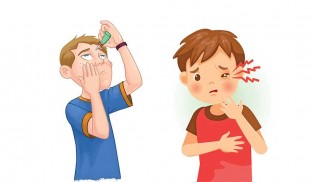
👁️ You wake up with one eye glued shut, the lashes crusted with yellow matter, and the white of the eye looking angry and pink. By lunchtime the other eye feels gritty too. This is the classic picture of bacterial conjunctivitis, and tobramycin eye drops are one of the antibiotics most often used to treat it. 💊 This guide is about using those drops well: how to tell whether a red eye is likely to be bacterial at all, how often to put the drops in, how long a course should last, what side effects to expect, how to handle contact lenses and other eye drops at the same time, and the specific situations where a drop is not enough and the eye needs to be seen the same day.
💊 What tobramycin is and how it works
🧪 Tobramycin belongs to the aminoglycoside family, the same group as gentamicin and neomycin. In the eye it is used as a local antibiotic: a 0.3% solution or ointment that acts on the surface of the eye with very little of the drug reaching the blood. It binds to the part of the bacterial cell that builds proteins (the 30S ribosome), so the germ makes faulty proteins and dies. This killing action is called bactericidal, as opposed to drugs that only stop bacteria from multiplying. 🏷️ The original brand is Tobrex; Tobaren (Tobramycin) is a generic version with the same active ingredient and strength.
🔎 Is your red eye really bacterial?
🤔 Most red eyes in adults are not bacterial. Viral conjunctivitis, often after a cold, is more common, and allergic conjunctivitis is common in spring and summer. The single most useful clue for bacteria is thick, coloured discharge that keeps coming back during the day and glues the lids together in the morning. Itching points strongly towards allergy, while watery discharge with a recent sore throat points towards a virus. No sign is perfect, but put together they give a good guess.
📊 Bacterial, viral or allergic: side by side
| 🔍 Feature | 🦠 Bacterial | 🤧 Viral | 🌼 Allergic |
|---|---|---|---|
| Discharge | Thick, yellow or green, sticky | Watery, sometimes a little mucus | Watery or stringy white |
| Itch | Mild or none | Mild | Strong, the main complaint |
| Eyes affected | Often one, then the other | Often one, then the other | Usually both at once |
| Other clues | Lids glued in the morning | Cold, sore throat, gland by the ear | Sneezing, hay fever, pets, pollen |
| Do antibiotic drops help? | Yes, they shorten it | No | No |
| What helps instead | Antibiotic drops or ointment | Cool compresses, lubricant drops, time | Antihistamine drops or tablets |
🌼 If the itch is the main problem, antibiotics will do nothing for it. Allergic eyes respond to antihistamines, such as tablets like Zyrtec (Cetirizine) or Allegra (Fexofenadine), or to eye drops prescribed for allergy, sometimes including an anti-inflammatory drop such as Acular LS (Ketorolac). 📖 The full picture is in allergic conjunctivitis: when your eyes react to harmless triggers and allergy medicine compared: tablets, sprays and eye drops.
⚖️ Do you need an antibiotic at all?
⏳ Simple bacterial conjunctivitis in a healthy adult often settles on its own within one to two weeks. Antibiotic drops shorten the illness and clear the germs sooner, which matters most when the discharge is heavy, the eye is not improving, or you need to get back to work, school or contact lenses quickly. Many doctors therefore offer either a prescription straight away or a “delayed” prescription to start if the eye is no better after two or three days of cleaning. Both are reasonable for mild cases. What matters more is recognising the red eyes that are not simple conjunctivitis at all.
🦠 What tobramycin covers and what it misses
🎯 Tobramycin is strong against the gram-negative germs that cause eye infections, including Pseudomonas aeruginosa, Haemophilus influenzae and many gut-type bacteria, and it also works against most Staphylococcus aureus. It is less reliable against streptococci, including Streptococcus pneumoniae, which is one reason a doctor may choose a different drop when the picture suggests that germ. It has no effect at all on viruses, fungi or chlamydia.
🧴 Drops or ointment?
💧 Tobramycin comes as drops and as an ointment, with the same 0.3% strength. Drops are easier to use in the daytime and do not blur vision, while ointment stays in the eye longer and suits the night. Many people use drops during the day and a thin line of ointment at bedtime, if a doctor has prescribed both. Children who fight drops sometimes accept ointment better.
⏰ The usual dosing schedule
📋 Always follow the instructions on your prescription, because the doctor may adjust them to the eye in front of them. For adults, the standard label schedule for tobramycin 0.3% drops is 1 to 2 drops every 4 hours for a mild or moderate infection, with much more frequent use only for severe infections under medical supervision.
| 📌 Situation | 💧 Drops 0.3% | 🧴 Ointment 0.3% |
|---|---|---|
| Mild or moderate infection | 1 to 2 drops every 4 hours while awake | About 1 cm ribbon 2 to 3 times a day |
| Severe infection (doctor directed) | 2 drops every hour at first, then less often as it improves | About 1 cm ribbon every 3 to 4 hours |
| Drops by day, ointment at night | Daytime schedule as above | One application at bedtime |
| Usual course | 5 to 7 days for simple conjunctivitis, unless told otherwise | |
🧮 In practice, “every 4 hours while awake” works out at about four or five times a day: for example on waking, mid-morning, mid-afternoon, early evening and at bedtime. Treat both eyes only if both are infected, but watch the second eye closely, since spread from one to the other is common. If you forget a dose, put it in when you remember and carry on; do not double up.
💧 How to put the drops in
🖐️ Good technique doubles the value of every drop. Most people blink the drop straight out or let it run down the cheek, and some touch the bottle tip to the infected eye, which contaminates the whole bottle.
👇 Pressing on the inner corner closes the tear duct for a moment. That keeps the drug on the eye longer and reduces the bitter taste some people notice when a drop drains into the nose and throat. If your label says two drops, wait a minute or so between them.
🌙 Using ointment at night
🛏️ Ointment is the easiest way to keep the antibiotic working through the hours of sleep, when you cannot use drops. A thin ribbon along the inside of the lower lid is enough; more simply smears onto the lashes and blurs vision without adding any benefit.
- 📌 Pull down the lower lid, look up, and squeeze a ribbon of about 1 cm along the pocket
- 📌 Close the eye and roll the eyeball gently to spread the ointment
- 📌 Expect blurred vision for 10 to 20 minutes, so do not drive or read straight after
- 📌 Wipe the tube tip with a clean tissue and replace the cap at once
- 📌 If you use drops as well, put the drops in first and the ointment last
📅 How long to keep using the drops
🗓️ Most courses for simple conjunctivitis last 5 to 7 days. A common, sensible rule is to keep going for about 48 hours after the eye looks normal, then stop, unless the prescription says something different. Stopping on the first good day can let the infection come back, while running on for weeks without review raises the risk of irritation and of resistant or fungal germs taking over.
Full schedule, discharge starts to thin
Less crusting, redness fading
Eye looks normal, finish the course
Throw away the opened bottle
🗑️ Most multi-dose eye drop bottles are meant to be thrown away about four weeks after opening, even if liquid is left. Check the leaflet for your brand and write the opening date on the box. Never share a bottle with a family member, even if their eye looks the same.
📈 What to expect day by day
🔁 When drops do not help, the usual reasons are simple. The red eye was viral or allergic from the start, the germ is one tobramycin covers poorly, or something more serious is going on in the cornea or inside the eye. Switching to another antibiotic drop on your own does not solve any of these; an examination with a slit lamp and a fluorescein stain does.
👓 Contact lenses during treatment
🚫 Do not wear contact lenses while the eye is infected or while you are using the drops.
🔹 Lenses trap bacteria against the cornea and raise the risk of a corneal infection.
🔹 Many eye drops contain a preservative such as benzalkonium chloride, which soft lenses can absorb and which irritates the eye.
🔹 Throw away daily or monthly lenses worn when the infection started, and replace the lens case.
🔹 Go back to lenses only when the eye has been white and comfortable for at least 24 hours after finishing the course, ideally with fresh lenses and fresh solution.
🚨 Contact lens wearers deserve one extra warning. A painful red eye in someone who wears lenses is treated as a possible corneal infection until proven otherwise, and should be seen the same day rather than treated at home. More on this below.
⚠️ Side effects
💧 Because very little tobramycin is absorbed from the eye, side effects are mostly local. Brief stinging or burning straight after the drop is common and harmless; it should fade within a minute. Other effects are less common and some need attention.
🔄 Drop allergy or worsening infection?
🤔 A small number of people become allergic to an aminoglycoside drop, usually after several days of use. The trap is that an allergic reaction looks like the infection getting worse, so people use the drops even more often, which makes the reaction stronger. A few features help tell them apart.
📞 In either case, stop guessing and call the prescriber. People who have reacted to neomycin or gentamicin drops may also react to tobramycin, since the drugs are closely related, so mention any past reaction before starting.
🚫 Who should not use it, or should take care
| 🚫 Situation | 📝 Why |
|---|---|
| Allergy to tobramycin or another aminoglycoside | Cross-reactions between neomycin, gentamicin and tobramycin are possible |
| Painful eye, light sensitivity, reduced vision | May be keratitis, iritis or glaucoma, which need an eye examination first |
| Suspected viral, herpes or fungal infection | The antibiotic does not treat these and delays the right treatment |
| Already receiving aminoglycoside injections | The prescriber may want to keep total exposure in view |
| Recent eye surgery | Use only the drops prescribed by the surgical team |
| Myasthenia gravis | Aminoglycosides can worsen muscle weakness; topical risk is low but worth mentioning |
🤰 Pregnancy, breastfeeding and children
👶 Very little tobramycin reaches the bloodstream from the eye. For this reason doctors do use tobramycin eye drops in pregnancy and while breastfeeding when a bacterial eye infection needs treating, although, as with any medicine, the decision belongs to the prescriber, who will weigh it against simply cleaning the eye and waiting. Pressing on the inner corner after each drop lowers absorption further. In children, tobramycin drops are commonly prescribed for bacterial conjunctivitis beyond the newborn period. 🚨 A newborn baby with sticky or red eyes in the first weeks of life is a different matter: that needs a doctor promptly, because infections caught during birth, such as gonorrhoea and chlamydia, need specific treatment.
🧴 Using tobramycin with other eye drops
⏱️ People often use more than one product: an antibiotic, a lubricant, a glaucoma drop, or an allergy drop. Wait at least 5 minutes between different drops, so the second does not wash out the first, and always put ointment in last, because it forms a film that keeps later drops from reaching the eye.
💡 Glaucoma drops such as latanoprost should usually continue during a short antibiotic course. Do not stop a long-term eye medicine without asking the doctor who prescribed it, and do not use a steroid-containing drop left over from a previous problem.
🚨 When drops are not enough: hyperacute and chlamydial infection
⚠️ Two kinds of bacterial conjunctivitis in adults cannot be treated with eye drops alone, because the germs are also elsewhere in the body. Both are linked to sexually transmitted infections and both need tablets or an injection, plus testing and treatment of partners.
🔍 Chlamydial eye infection is easy to miss because it looks like ordinary conjunctivitis that will not quite go away. A red eye that keeps returning after several courses of antibiotic drops is a reason to ask for a swab, especially in people under 30 or with a new partner. Doxycycline is not used in pregnancy, so the choice of tablet depends on the person.
👓 Contact lens wearers: the corneal infection warning
🦠 Pseudomonas, the germ tobramycin covers so well, is also the classic cause of a dangerous corneal infection in contact lens wearers, especially after sleeping in lenses, swimming in them, or rinsing them with tap water. This infection, bacterial keratitis, can scar the cornea within a day or two, so it is never a do-it-yourself job.
🧭 Signs that it may be keratitis, not conjunctivitis:
🔹 Real pain, not just grittiness, often worse when you blink.
🔹 Light hurts the eye (photophobia).
🔹 Vision stays blurred after blinking.
🔹 A white or grey spot on the clear front of the eye.
🔹 You wear contact lenses, especially overnight.
➡️ Take the lens out, keep the lens and case for testing, and get seen by an eye doctor or emergency department the same day. Eye specialists may then use very frequent antibiotic drops, sometimes stronger hospital-made versions.
📖 A painful eye after a scratch, a fingernail or a branch is a related problem: see scratched eye (corneal abrasion): first aid, drops, healing time and red flags. A red, painful eye with small blisters on the lid or face may be herpes, which antibiotic drops do not treat; see herpes beyond the lips and genitals, including eye herpes.
🧐 Eyelid infections: styes, blepharitis and cellulitis
👁️ Not every bacterial problem around the eye is conjunctivitis. Infections of the lid itself are handled differently, and antibiotic eye drops play only a small part in most of them.
📖 How doctors decide between tablets and watchful waiting for skin infections in general is covered in cellulitis and skin infections: what needs an antibiotic. Any swelling that spreads beyond the lid, or comes with fever, needs to be seen that day.
🧪 Antibiotic plus steroid drops: why caution
💊 Some eye drops combine an antibiotic with a steroid, for example tobramycin with dexamethasone, or Ciplox D (Ciprofloxacin + Dexamethasone). The steroid calms inflammation quickly, which feels like a cure, but it can make a herpes or fungal infection much worse and can raise eye pressure if used for long. These combinations are useful in the right hands: after eye surgery, for certain types of blepharitis, and for some inflamed eyes an eye doctor has examined. They are not a first choice for an undiagnosed red eye.
📋 Plain antibiotic drop or combination?
🔹 Sticky red eye, no pain, no recent surgery → plain antibiotic such as tobramycin, if any.
🔹 Inflamed eye after surgery or diagnosed blepharitis → combination only if the eye doctor prescribes it.
🔹 Steroid drops for more than about 10 days → eye pressure check needed.
📖 How steroid and anti-inflammatory drops are scheduled after an operation is explained in inflammation after cataract surgery: the eye drop schedule and warning signs.
⚖️ Tobramycin compared with other antibiotic drops
🔍 For simple bacterial conjunctivitis, studies have not shown one antibiotic drop to be clearly better than the others. The choice usually comes down to local practice, cost, the likely germ, contact lens use and the dosing schedule a person can manage.
| 💊 Drop | 🧬 Group | 📋 Typical use | 📝 Notes |
|---|---|---|---|
| Tobramycin | Aminoglycoside | Conjunctivitis, lid infections | Strong against Pseudomonas; weaker against streptococci |
| Chloramphenicol | Amphenicol | First choice in some countries | Broad cover; not available everywhere |
| Fusidic acid | Fusidane | Twice-daily drop | Mainly gram-positive cover |
| Ciprofloxacin, ofloxacin, moxifloxacin | Fluoroquinolone | Contact lens wearers, keratitis | Often kept for more serious infections |
| Polymyxin B with trimethoprim | Combination | Common in the United States | Covers many gram-negative and gram-positive germs |
🧼 Stopping the spread at home and work
🤝 Bacterial conjunctivitis spreads by hands, towels, pillows and shared make-up far more than through the air. Simple hygiene protects the other eye and the rest of the household, and it matters during the first few days of treatment, when the discharge is still heavy.
🌳 A simple decision path
🗿 Myths about antibiotic eye drops
🚨 When to see a doctor
⛔ Get the eye checked the same day if:
🔹 The eye is painful, light hurts, or vision stays blurred after blinking.
🔹 You wear contact lenses and the eye is red and sore.
🔹 Pus is very heavy and comes back within minutes of wiping.
🔹 The lid or skin around the eye is swollen and red, or you have a fever.
🔹 It hurts to move the eye, or you see double.
🔹 A newborn baby has sticky or red eyes.
🔹 There was a chemical splash or an injury from something sharp or fast-moving.
📞 Book a routine review if there is no improvement after 48 hours of drops, the eye is still red after the course, or it keeps coming back.
❓ Frequently asked questions
How often should I use tobramycin eye drops?
For a mild or moderate infection in adults the usual label schedule is 1 to 2 drops every 4 hours while awake. Severe infections may need more frequent drops, but only on medical advice.
How long does it take tobramycin to work for pink eye?
Most people notice less discharge within 24 to 48 hours and a normal eye within 5 to 7 days. No improvement at all after 48 hours means the eye should be checked.
How many days should I use tobramycin eye drops?
A usual course for simple bacterial conjunctivitis is 5 to 7 days, often continuing for about 48 hours after the eye looks normal, unless your prescription says otherwise.
Does tobramycin work for viral or allergic pink eye?
No. Tobramycin only kills bacteria. Viral conjunctivitis clears on its own, and allergic conjunctivitis responds to antihistamine drops or tablets.
Can I wear contact lenses while using tobramycin drops?
No. Keep lenses out during the infection and the course, replace the lenses and case, and wait until the eye has been white and comfortable for at least a day after finishing.
What are the side effects of tobramycin eye drops?
Brief stinging after a drop is common. Less often people get itchy, swollen lids from an allergy to the drop. Rash, facial swelling or wheeze needs urgent care.
Should I use drops or ointment?
Drops are easier in the daytime because they do not blur vision. Ointment lasts longer and suits bedtime. Many people use drops by day and ointment at night if both are prescribed.
How long should I wait between tobramycin and other eye drops?
Wait at least 5 minutes between different drops so the second does not wash out the first, and always put any ointment in last.
Can tobramycin eye drops be used in pregnancy?
Very little of the drug reaches the blood from the eye, and doctors do prescribe it in pregnancy when a bacterial eye infection needs treatment. Ask your prescriber first.
When is a red eye an emergency?
Pain, light sensitivity, blurred vision, a red sore eye in a contact lens wearer, very heavy pus, swelling around the eye with fever, or a sticky eye in a newborn all need same-day care.
📑 Sources and editorial
- 📘 Product information and prescribing labels for tobramycin 0.3% eye drops and ointment
- 🩺 Primary care and ophthalmology guidance on the diagnosis and management of acute conjunctivitis in adults
- 🔬 Systematic reviews of antibiotics compared with placebo for acute bacterial conjunctivitis
- 👓 Professional guidance on contact lens related keratitis and red eye triage
- 🧬 Sexual health guidelines on gonococcal and chlamydial conjunctivitis
- 💊 Pharmacist resources on eye drop technique, storage and multi-dose bottle use
- 📖 Related reading: allergic conjunctivitis, scratched eye (corneal abrasion), eye herpes and other herpes forms, inflammation after cataract surgery, cellulitis and skin infections, allergy medicine compared
- 🛒 Related products: Tobaren (Tobramycin), Ciplox D (Ciprofloxacin + Dexamethasone), Acular LS (Ketorolac), Zithromax (Azithromycin), Vibramycin (Doxycycline), Augmentin (Amoxicillin + Clavulanate), Keflex (Cephalexin), Zyrtec (Cetirizine), Allegra (Fexofenadine)
- 🩺 RXshop Editorial Team — reviewed by Sarah Mitchell, PharmD — Clinical Pharmacist
Medical Disclaimer: The information in this article is for educational and informational purposes only and is not a substitute for professional medical advice, diagnosis, or treatment. Always seek guidance from a qualified healthcare provider with any questions you may have regarding a medical condition, and before starting, stopping or changing any medication.